In depth
Monte-Carlo
One quarter of Monaco — not the country. A casino, a composed square and two formal gardens, built from the 1860s on hillside that had nothing on it, and named after the prince who allowed the gamble.
Story · Visit · Route · Links
Choose your depth
Essentials or more detail?
See visiting essentials, or read more about the history and places nearby.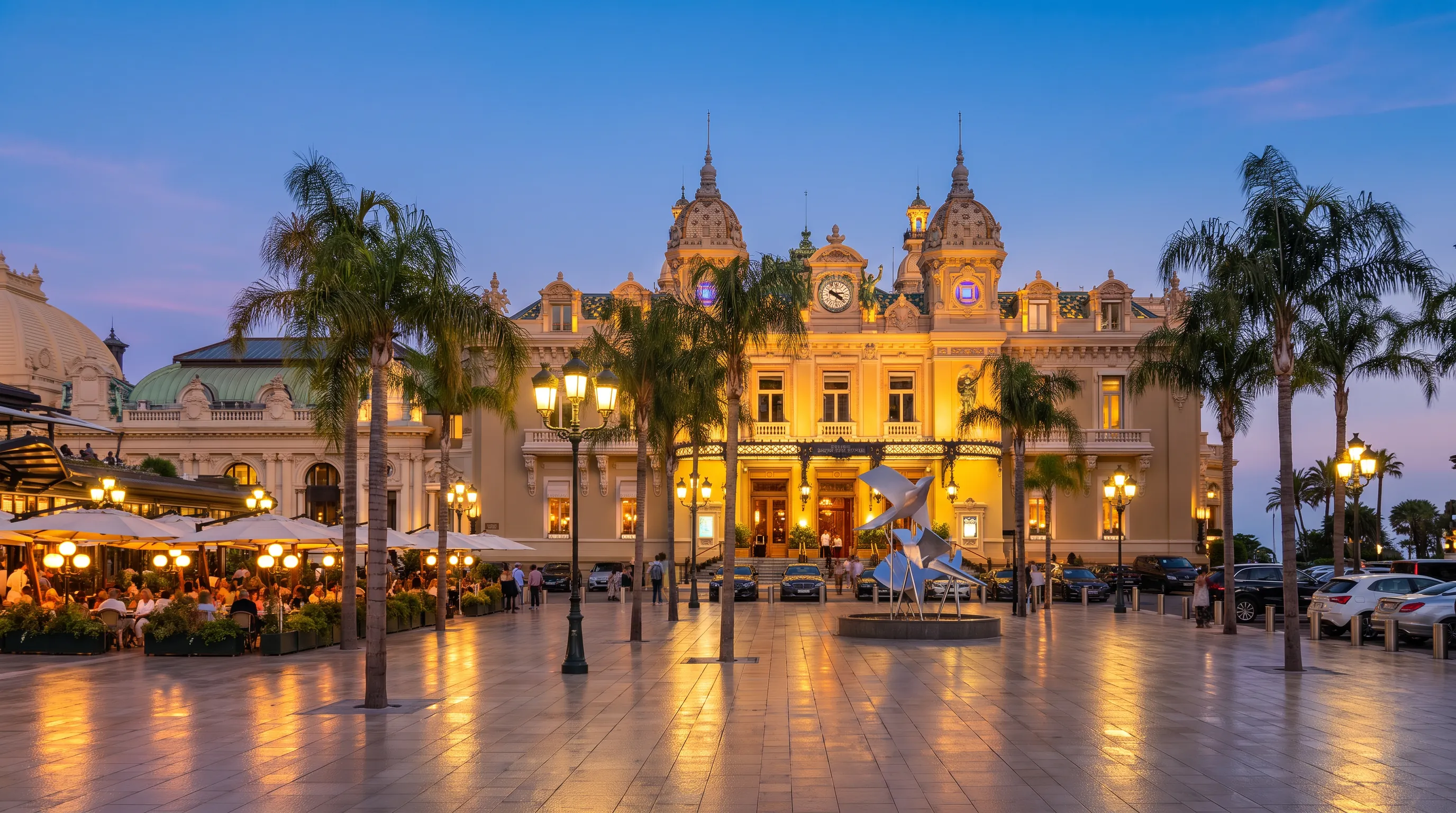
01 The experience
What to expect.
Why it matters
It is a designed quarter, and you can read the design. The Place du Casino is a composed set piece — casino on one side, Hôtel de Paris and Café de Paris facing, formal gardens sloping away below. Édouard André, the French landscape architect, laid out the casino gardens from 1893 at Charles III's instigation. Very little here is accidental.
It is where the money went. The Carré d'Or — the "golden square" of streets around the Place du Casino — is the densest concentration of luxury retail in Europe, and whatever you think of that, it is the direct physical consequence of a nineteenth-century fiscal decision.
And it is free to walk. The square, the gardens, the terraces and the streets cost nothing. The casino interior is the only ticketed thing in the quarter, and even that has a morning visit that most people do not know about.
What visitors should notice
The slope. Monte-Carlo is built on a hillside, and the gardens use it: the Jardins des Boulingrins run as formal French parterres with fountains down a gentle gradient to the foot of the casino. That descent is the quarter's best free experience and most visitors never leave the square to see it.
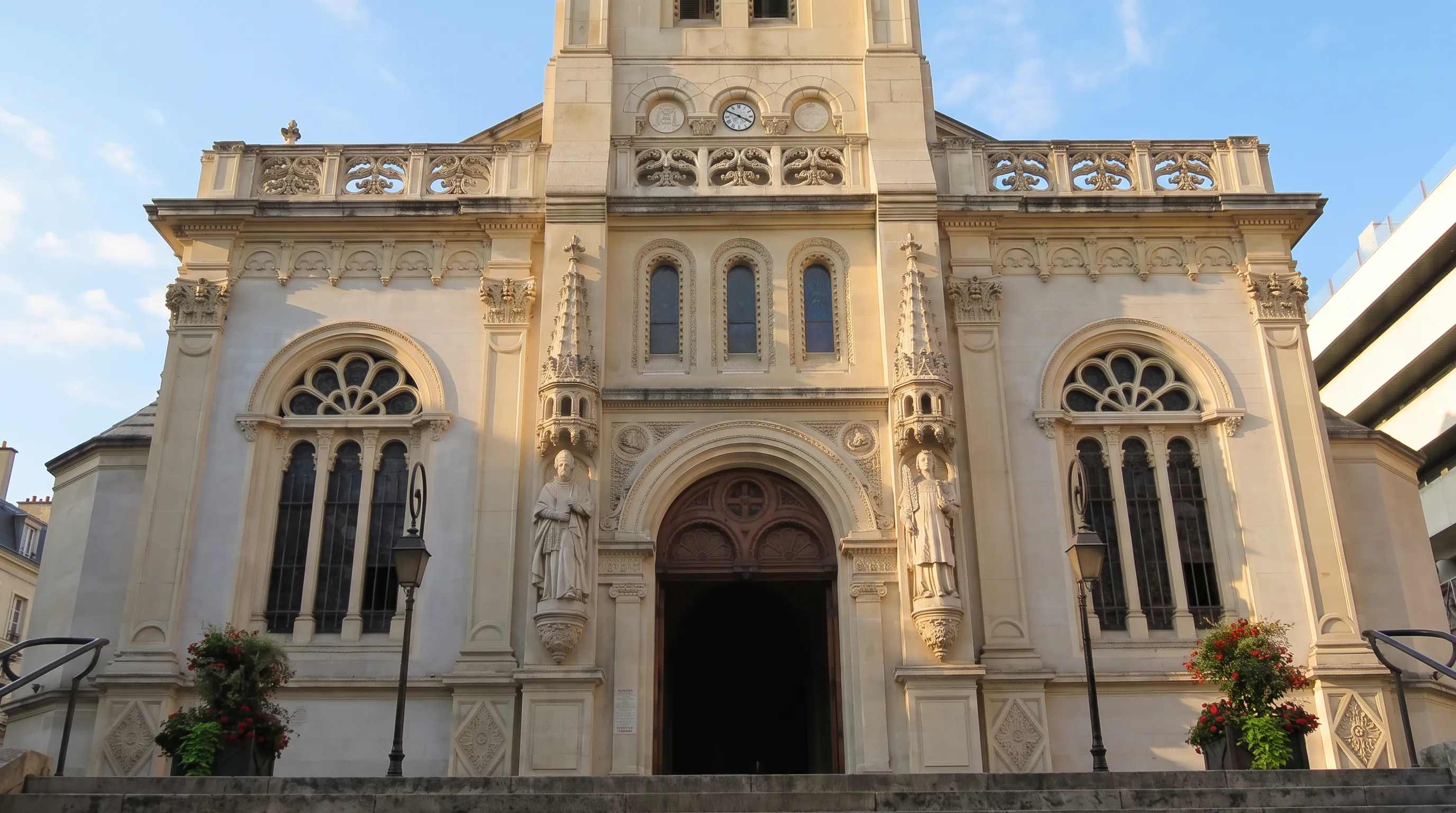
Saint-Charles church, inaugurated in 1883 and restored in 2013, which almost nobody visits — a Renaissance-style building with stained glass and a Romanesque organ, two minutes from the boutiques.
And the road surface. The Grand Prix circuit runs through this quarter, including the Fairmont Hairpin, and the barriers, kerbs and drain covers are the same ones the cars use in May.
Who will enjoy it
Anyone interested in nineteenth-century urban design done as a commercial project. Architecture visitors, for the casino and the Belle Époque frontages. Shoppers, obviously. People who like formal gardens. And Formula 1 followers, for whom the quarter is a walkable lap of the most famous street circuit in the sport.
It also suits an evening better than anywhere else in Monaco — the square is at its best lit, and it is the one part of the principality with a night-time life.
Who may find it difficult
It is expensive, and unapologetically so. Coffee on the Place du Casino costs what it costs, and there is very little in the quarter aimed at a modest budget.
It is a hillside. The gardens are pleasant to walk down and less pleasant to walk back up, and the connections between levels rely on Monaco's public lift network, which is excellent but not obvious to a first-time visitor.
Anyone hoping for old Monaco is in the wrong quarter. There is nothing medieval here and nothing pretending to be — the oldest building of consequence dates from the 1860s.
And anyone visiting during the Grand Prix should expect a controlled environment rather than a walkable quarter: the Place du Casino is a corner of the circuit, and in 2025 it was closed to vehicles and pedestrians alike.
Visitor verdict
Half a day, mostly free, and better in the late afternoon and evening than in the middle of the day. Walk the square, go down through the Boulingrins gardens, look into Saint-Charles, and come back up for the casino façade lit at dusk. Pair it with Monaco-Ville on a separate half-day rather than trying to do both at once — they are different quarters and the walk between them is longer than the map suggests.
The story
History & character.
Before 1856: nothing
This is the unusual thing about the quarter and the fact everything else follows from. Monte-Carlo has no medieval layer, no fishing village underneath, no earlier settlement to build over. The headland called Les Spélugues was rough ground on a hillside above the sea.
Monaco's inhabited history was on the Rock, a mile to the west, and had been since the Genoese built a fortress there in 1215.
1848: the reason
In 1848 Menton and Roquebrune broke away from Monaco, refusing to pay the Grimaldi taxes on olive oil and fruit. They were the overwhelming majority of the principality's territory and effectively all of its productive land.
A sovereign state was left with a rock, a harbour and no revenue.
1856: Charles III permits a casino
Prince Charles III allowed the opening of a gambling house — the proposal having come from his mother, Princess Caroline — as a way of replacing the lost income with money from visitors.
The first attempts failed. The site was remote, the roads were poor, and there was no reason for anyone to come.
1863: François Blanc, and the invention of a quarter
The turning point was a person. François Blanc, who had run the casino at Bad Homburg, founded the Société des Bains de Mer et du Cercle des Étrangers in 1863 and took the concession.
Blanc understood something the earlier attempts had not: a casino is a destination business. It needs access, somewhere to sleep, somewhere to eat, and a reason to stay longer than an evening.
So the Casino, the Hôtel de Paris and the Café de Paris were established around a single square, and the square was the product. Everything in this quarter descends from that one commercial insight.
The area took the name Monte-Carlo — Charles's mount — after the prince who had authorised it.
1878–79: Garnier
Fifteen years in, the casino was transformed by Charles Garnier, architect of the Paris Opéra, and Jules Dutrou — Garnier adding the concert hall now called the Salle Garnier, Dutrou redesigning the gaming rooms.
That campaign is what turned a profitable gambling house into an architectural destination, and it is covered in full in the casino's own guide.
1883: Saint-Charles
The church of Saint-Charles was inaugurated in 1883, in a Renaissance manner, and restored in 2013. It has stained glass and a Romanesque organ.
It is worth noticing what its existence means. Within twenty years of the casino opening, the quarter had enough permanent residents to need a parish church of its own — a real town had grown on ground that had been empty.
1893: Édouard André lays out the gardens
Prince Charles III commissioned the French landscape architect Édouard André to develop the casino gardens from 1893.
What André produced is still the best free thing in the quarter: the Jardins des Boulingrins, formal French parterres punctuated by fountains, running down a gentle slope to the foot of the casino, with the Jardins de la Petite Afrique alongside.
The design uses the hillside deliberately. You descend through a composed perspective and the casino rises in front of you as you climb back — which is the effect a nineteenth-century landscape architect was hired to produce.
The twentieth century: the circuit and the terraces
The Monaco Grand Prix brought the quarter a second identity. The circuit runs through it, including the Fairmont Hairpin, and the Place du Casino is one of its corners. For one week a year the streets stop being streets.
The later twentieth century added the terraces and the reclaimed ground that characterise modern Monaco, and the quarter thickened upward.
2019: One Monte-Carlo
The most recent significant addition is One Monte-Carlo, a contemporary development of shops, restaurants and apartments beside the square, opened in 2019.
It is worth seeing next to the Belle Époque frontages, because it is the same argument in a different century: build something people will travel to, next to the casino, and let the quarter take the value.
Look closer
Highlights and hidden details.
The objects, spaces and small observations that turn a visit into a memorable one.1. The Place du Casino
The centre of the quarter and the reason the quarter exists.
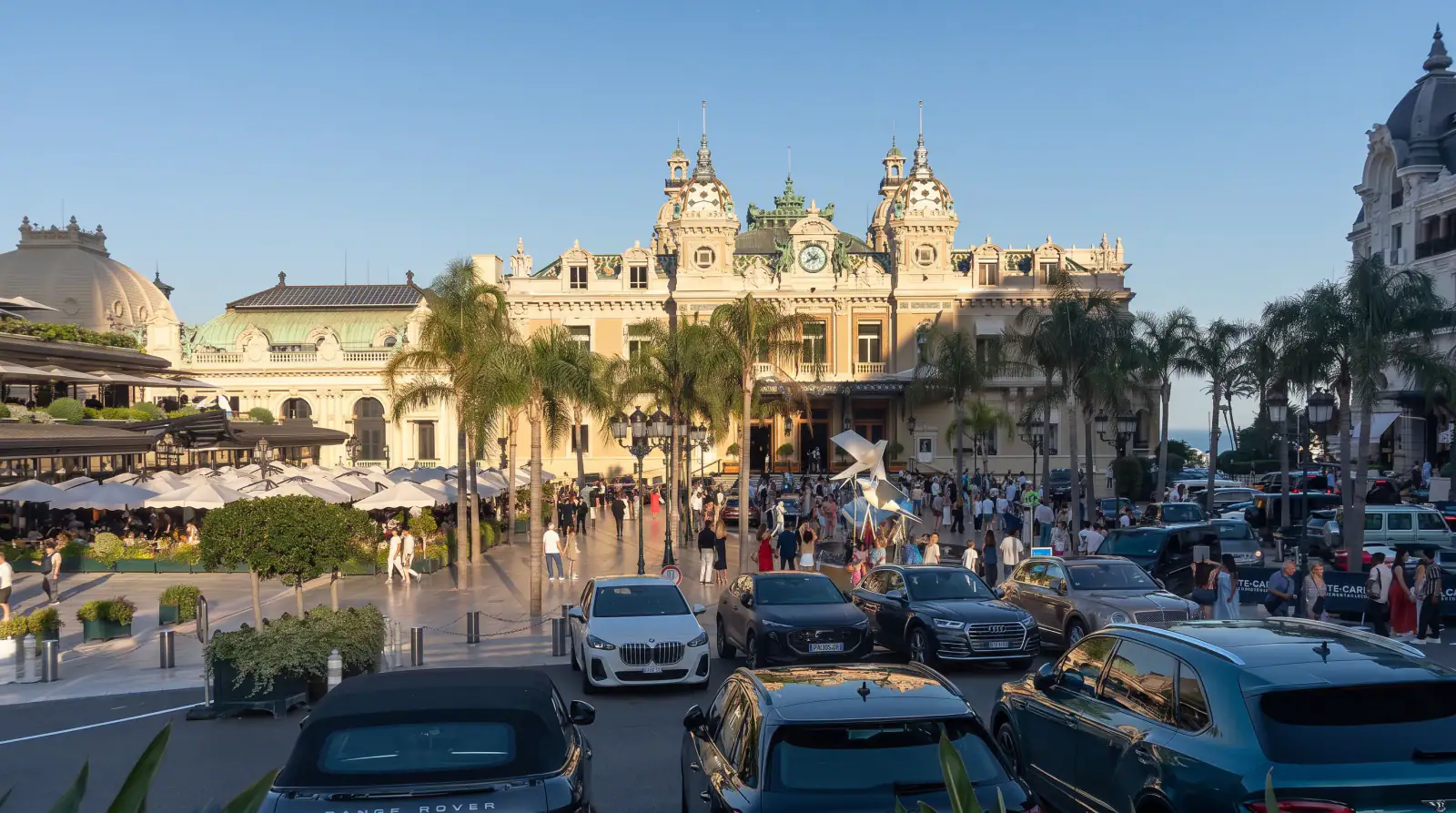
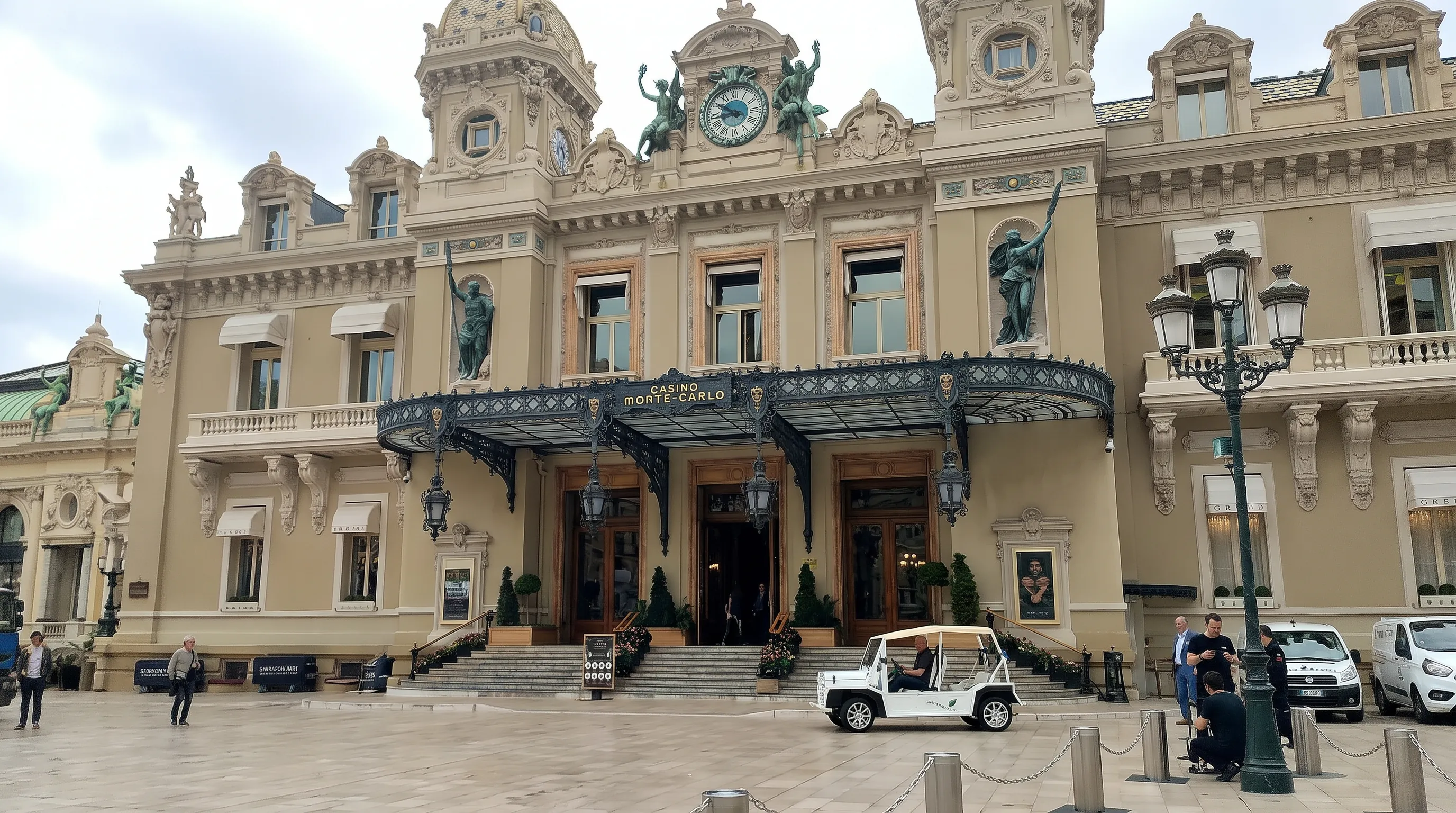
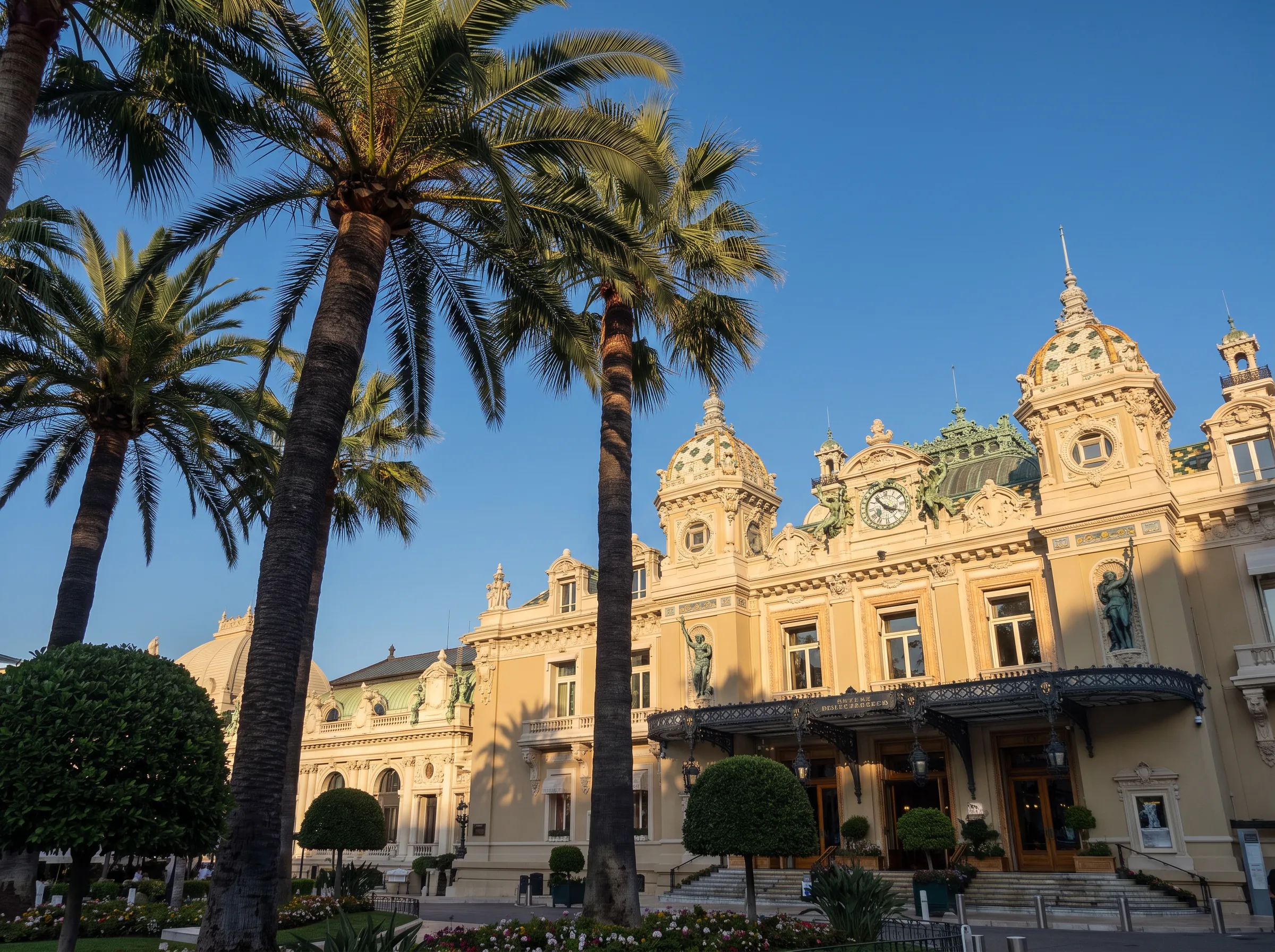
What it is. A composed square: the Casino de Monte-Carlo on one side, the Hôtel de Paris and the Café de Paris facing it, the formal gardens falling away below. Free, public, and open at all hours.
Why it matters. This is not a square that acquired a casino. It is a casino that was given a square, and then a quarter. François Blanc founded the Société des Bains de Mer in 1863 and put the hotel, the café and the gambling house around a single space because he understood that a destination needs more than one reason to visit.
How to see it. Early morning for the empty version and the façade lit from the front. Evening for the lit version, which is the better of the two. The middle of the day is flat light and maximum crowd.
Time required. Twenty minutes, or an evening.
2. The Jardins des Boulingrins
The best free thing in Monte-Carlo, and most visitors never leave the square to find it.
What it is. Formal French parterres punctuated by fountains, running down a gentle slope from the foot of the casino, with the Jardins de la Petite Afrique alongside.
Who made it. Prince Charles III commissioned the French landscape architect Édouard André to develop the casino gardens from 1893 — thirty years after the Société des Bains de Mer was founded, once the quarter had grown enough to want a setting.
How to see it properly. Walk down through them, then turn and look back. The design uses the hillside deliberately: you descend through a composed perspective and the casino rises in front of you on the return. That is the effect André was hired to produce and it only works in that order.
Time required. Thirty minutes. Free.
3. The Casino de Monte-Carlo
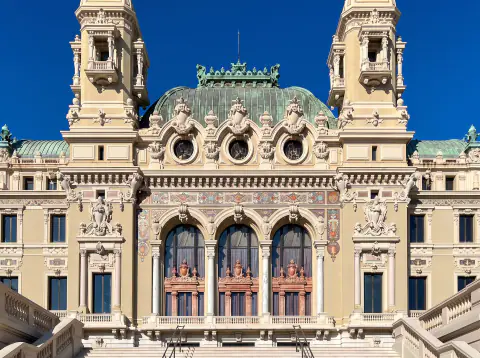
What it is. A Belle Époque building by Charles Garnier and Jules Dutrou, created to rescue Monaco from bankruptcy after Menton and Roquebrune broke away in 1848.
The thing most visitors do not know. You can go inside without gambling. Between 10:00 and 13:00 the historic salons open as a cultural visit — no ID check, no dress code, and daylight. From 14:00 it is a working casino: over-18s, passport or national photo ID, elegant dress.
And the fact that reframes it. Citizens of Monaco are forbidden to enter the gaming rooms — a rule imposed by Princess Caroline, whose idea the casino was.
Time required. An hour for the morning visit.
→ The casino has its own Above Guide entry, covering the architects, the Salle Garnier, the admission conditions and the interior in full.
4. The Carré d'Or
What it is. The "golden square" — the grid of streets around the Place du Casino lined with luxury boutiques, five-star hotels and gastronomic restaurants.
Why it belongs in the highlights even if you buy nothing. It is the physical consequence of a nineteenth-century fiscal decision, and it is free to walk. The density is the point: this is the direct outcome of replacing an agricultural tax base with a visitor economy.
The alternative. Boulevard des Moulins is the older shopping street, with independent boutiques, galleries and jewellers — a different and more browsable experience than the luxury houses on the square.
Time required. An hour, and it costs nothing unless you decide otherwise.
5. The church of Saint-Charles
The quarter's best-kept secret, two minutes from the boutiques and almost never visited.
What it is. A Renaissance-style church inaugurated in 1883 and restored in 2013, with stained glass and a Romanesque organ.
Why it matters. Look at the date. Within twenty years of the casino opening, this quarter had enough permanent residents to need its own parish church — on ground that had been empty hillside a generation earlier. Saint-Charles is the evidence that Monte-Carlo became a real town rather than an amenity.
Time required. Fifteen minutes, free.
6. The seaward terraces
What it is. The casino's other side faces the Mediterranean, and the terraces and gardens there are free and open.
Why. Same building, a fraction of the people, and a sea horizon instead of a crowded square. It is the most under-used public space in the quarter and it has somewhere to sit — which in Monte-Carlo is worth knowing about.
Time required. Twenty minutes. Late afternoon is best.
7. One Monte-Carlo, and the two centuries side by side
What it is. A contemporary development of shops, restaurants and apartments beside the square, opened in 2019.
Why look at it. Stand where you can see it against the Belle Époque frontages. It is the same argument in a different century — build something people will travel to, put it next to the casino, and let the quarter take the value. Monte-Carlo has been doing that since 1863 and has not stopped.
Time required. Ten minutes, and it is a way of thinking rather than a sight.
8. The circuit under your feet
What it is. The Formula 1 circuit runs through this quarter, including the Fairmont Hairpin, and the Place du Casino is one of its corners.
Why it belongs here. The barriers, kerbs and drain covers you are walking on are the ones the cars use in May. Walking the quarter is walking part of a lap, and for anyone who follows the sport that changes what the streets are.
A caution. During race week this stops being a walkable quarter. In the 2025 edition the Place du Casino was closed to vehicles and pedestrians. Check the year you are travelling.
Time required. It costs nothing and it is everywhere.
Details worth slowing down for.
The quarter is named after the man who allowed the gambling
Monte-Carlo means Charles's mount. It is named for Prince Charles III, who permitted the opening of a casino in 1856 to replace the revenue Monaco had lost when Menton and Roquebrune broke away in 1848.
A European state named a district after the ruler who legalised gambling in it, and then built its entire modern identity on that district. Nobody is being coy about it.
There is nothing underneath
Most famous quarters are old places that became famous. This one was empty hillside called Les Spélugues until the 1860s.
No medieval layer, no fishing village, no earlier street plan to inherit. Everything you can see was built as part of a single commercial project, which is why the square works so well as a composition — it was designed as one.
The church is the proof it became a real town
Saint-Charles, two minutes from the boutiques, was inaugurated in 1883 and restored in 2013.
Count the years. The casino opened in the 1860s; within about twenty years the quarter had enough permanent residents to need a parish church of its own. That is the moment Monte-Carlo stopped being an amenity and became somewhere people lived.
Almost nobody goes in. It has stained glass and a Romanesque organ.
The gardens came thirty years late, and they were a hire
The Jardins des Boulingrins feel original to the casino. They are not.
Charles III commissioned Édouard André — the French landscape architect — to develop them from 1893, three decades after the Société des Bains de Mer was founded. The quarter made its money first and bought its setting afterwards.
Walk the gardens downhill or you have wasted them
André designed a perspective, and a perspective has a direction.
The parterres and fountains run down from the foot of the casino. Descend through them and turn, and the building rises in front of you through a composed sequence of levels. Walk up through them from the bottom and you get the same plants in the wrong order.
It costs nothing and it takes thirty minutes, and the overwhelming majority of visitors never leave the square to try it.
Blanc built a destination, not a casino
The Casino, the Hôtel de Paris and the Café de Paris were established together around one square, and that was the actual product.
François Blanc had run the casino at Bad Homburg and understood that gambling alone does not fill a hillside in a country nobody could easily reach. People needed somewhere to sleep, somewhere to eat and a reason to stay more than one evening.
The square is that reasoning, built in stone, and every hotel and restaurant in Monte-Carlo since is a footnote to it.
The quarter is smaller than the name
Monte-Carlo is officially the ward of Monte Carlo/Spélugues, with about 3,500 residents.
The name is also used loosely for a wider area — the informal Monte-Carlo Quarter, which takes in La Rousse/Saint Roman, Larvotto/Bas Moulins and Saint Michel, and holds about 15,000 people.
And it is used, wrongly and constantly, for the whole principality. Three different meanings, and only the first one is a place with a boundary.
The back of the casino is empty and has the view
The Place du Casino is one of the most crowded public spaces in Monaco for most of the day.
Walk round the building. The seaward terraces and gardens are free, open, have somewhere to sit and face the Mediterranean. Same afternoon, same building, a fraction of the people.
You are standing on the circuit
The Formula 1 track runs through this quarter, and the Place du Casino is a corner of it. The Fairmont Hairpin is a few minutes away.
The kerbs, barriers and drain covers under your feet are the ones the cars use in May. In the 2025 edition, the square was closed to vehicles and pedestrians for the race weekend — the only time of year the quarter is not a quarter.
The lifts are the local knowledge
Monte-Carlo is built on a hillside and Monaco runs an extensive network of public lifts and escalators through it.
Residents use them constantly and visitors almost never notice they exist, then complain about the climb. They are signed, they are free, and they remove most of the ascent from the station and the harbour.
This is the single most useful practical thing to know about moving around the quarter, and it is not published in any form a map can show you.
Two centuries of the same argument
Stand where you can see One Monte-Carlo, opened in 2019, against the Belle Époque frontages of the 1860s and 1870s.
The buildings look nothing alike and they are doing exactly the same thing: put something people will travel for next to the casino, and let the quarter take the value. Monte-Carlo has been running that play for a hundred and sixty years without changing it.
04 / Before you go
Plan your visit
Prices & admission
Free to walk. The Place du Casino, the Jardins des Boulingrins, the Jardins de la Petite Afrique, the casino's seaward terraces and the church of Saint-Charles all cost nothing. The only ticketed site in the quarter is the casino interior.
Opening hours
The quarter has no opening hours and costs nothing to walk. The Place du Casino, the Jardins des Boulingrins, the Jardins de la Petite Afrique, the casino's seaward terraces and the church of Saint-Charles are free and open. The casino interior opens as a cultural visit from 10:00 to 13:00 daily, with the gaming rooms from 14:00 for over-18s with photo ID and a dress code.
Plan your experience
Nothing in the quarter requires booking. The casino interior has two regimes — a cultural visit 10:00–13:00 with no ID check or dress code, and gaming rooms from 14:00 for over-18s with a valid passport or national photo ID, in elegant dress. Note that the Place du Casino is a corner of the Formula 1 circuit and was closed to vehicles and pedestrians across the 2025 Grand Prix weekend.
Accessibility
Monte-Carlo has one real advantage over the Rock and one persistent difficulty.
Checked on 4 August 2026. The quarter itself has no opening hours and costs nothing to walk. The volatile facts belong to the businesses in it, and each is flagged.
First, the geography
Monte-Carlo is not Monaco. It is one quarter, officially the ward of Monte Carlo/Spélugues.
The old town, the Prince's Palace, the cathedral and the Oceanographic Museum are in Monaco-Ville — a different quarter about 25 minutes' walk away around Port Hercule and up. Plan them as two separate outings. Almost every disappointing Monaco day comes from assuming they are the same place.
What it costs
Walking Monte-Carlo is free. So are the Place du Casino, the Jardins des Boulingrins, the Jardins de la Petite Afrique, the casino's seaward terraces and the church of Saint-Charles.
The only ticketed thing in the quarter is the casino interior — and its morning cultural visit, 10:00 to 13:00, needs no ID and no dress code. See the casino's own guide.
Everything else costs whatever you choose to spend, and in this quarter that can be a great deal.
How long to allow
| Plan | Time |
|---|---|
| The square and the gardens | 1 hour |
| Above plus Saint-Charles and the shopping streets | 2–3 hours |
| Above plus the casino interior | 4 hours |
| A full evening, square lit | Add 2 hours |
Best time to visit
Late afternoon into evening. This is the one quarter of Monaco with a night-time life, the square is at its best lit, and the gardens are cool. Middle of the day is the worst: flat light, maximum crowds, and a hillside in full sun.
Early morning is the other good window — the square is close to empty and the casino façade is lit from the front.
Season. Open all year and less seasonal than the Rock, since the attractions here are streets and gardens rather than ticketed sites. Spring and autumn are pleasantest. July and August are hot on a slope with limited shade.
Getting there and getting around
By train. Monaco-Monte-Carlo station is about ten minutes away. Monaco's public lift and escalator network covers much of the climb, which is worth using rather than walking up.
By bus. Several lines serve the quarter; the coastal line 100 runs from Nice and Menton.
By car. Unlike Monaco-Ville, Monte-Carlo is not a restricted traffic zone. You can drive here, and there is public parking beneath the casino and around the quarter. It is dense and expensive but not barred.
On foot from the Rock. About 25 minutes around the harbour and up, and it is a real climb at the end. The public lifts remove most of it.
Within the quarter. It is a hillside. Distances are short but there are levels, and the lift network is how residents move between them. Look for the signed public lifts rather than assuming you must walk.
The free walk, in order
- Place du Casino — the composed square: casino, Hôtel de Paris, Café de Paris.
- The casino's seaward terraces — round the back, free, with the sea view and a fraction of the crowd.
- Jardins des Boulingrins — formal French parterres and fountains running downhill from the casino. Walk down through them and look back.
- Jardins de la Petite Afrique — alongside.
- Saint-Charles church — inaugurated 1883, restored 2013, and almost never visited.
- The Carré d'Or — the luxury streets around the square, free to walk whatever your budget.
- Boulevard des Moulins — the older shopping street, with independent boutiques, galleries and jewellers.
That is two to three hours and costs nothing.
Shopping
The Carré d'Or is the concentration of luxury retail around the Place du Casino. One Monte-Carlo, opened in 2019, is the contemporary development beside it. Métropole Shopping Monte-Carlo sits on avenue des Spélugues, and the Monte-Carlo Shopping Promenade runs high-end boutiques and restaurants.
Boulevard des Moulins is the one to walk if the luxury houses are not the point — a historic street with independent shops, galleries and jewellers.
Eating and drinking
The Café de Paris on the square is the practical, everyone-can-go option and the one place in the quarter that works for a family.
The Hôtel de Paris holds Le Louis XV, and the quarter also has Buddha-Bar and Amazónico with its Club Selva. None of these is verified for prices, hours or booking in this guide — check directly.
Budget honestly: this is the most expensive square kilometre in Europe, and there is very little casual eating in the immediate streets around the square.
The casino, in one paragraph
Two different visits. 10:00–13:00 the historic salons open as a cultural visit — no ID check, relaxed dress code, daylight. From 14:00 it is a working casino: over-18s with a valid passport or national photo ID, not barred from playing, in elegant dress. Citizens of Monaco are forbidden to enter the gaming rooms. Full detail is in the casino's own guide.
Race week
The Formula 1 circuit runs through this quarter, including the Fairmont Hairpin, and the Place du Casino is a corner of the track.
In the 2025 edition, under Arrêté Municipal n° 2025-2085, the Place du Casino was closed to vehicles and pedestrians across 22–25 May. Those are 2025 facts. The ordinance is published roughly five weeks before each race and the arrangements are set afresh every year.
During race week, treat Monte-Carlo as inside an event rather than as a walkable quarter, and check the Journal de Monaco for the year you are travelling.
Accessibility in brief
The Place du Casino and the streets around it are level and paved. The gardens run down a slope, with steps in places.
The quarter's real accessibility asset is that it is not a restricted traffic zone — you can be driven to the square and there is parking beneath the casino, which is not true of Monaco-Ville. The public lift network covers much of the climb from the station and the harbour.
Fuller detail, and a long list of what could not be verified, is in the accessibility chapter.
What needs rechecking
| Fact | Cadence | Why |
|---|---|---|
| Casino hours and admission | Quarterly | Operator-set; the pricing is unverified |
| Restaurant and shopping hours | Not published here | Verify directly before recommending |
| Race-week street closures | Annually, five weeks before the race | Published per edition |
| Saint-Charles opening hours | Before recommending a journey | Currently unverified |
| Public lift network coverage | Annually | Not published machine-readably |
Visit your way
Access and family planning.
Written for someone deciding whether a visit is feasible. Monte-Carlo has one real structural advantage over the rest of Monaco and one persistent difficulty, and both are worth knowing before you plan.
The advantage: you can be driven here
Monte-Carlo is not a restricted traffic zone. Unlike Monaco-Ville, where access is barred to all vehicles except those registered in Monaco or the Alpes-Maritimes, this quarter can be reached by car and there is public parking beneath the casino and around the quarter.
For a visitor with mobility needs that is a genuine difference. The Rock requires a lift or a climb; Monte-Carlo does not.
The difficulty: it is a hillside
The quarter is built on a slope, and the levels are the constraint rather than the distances. The Place du Casino and the streets immediately around it are level and paved, but getting between levels — station to square, harbour to square, square to gardens — involves real gradient.
The public lifts
Monaco runs an extensive network of public lifts and escalators through the hillside, and it is the single most useful thing to know about moving around this quarter. Residents use them constantly; visitors rarely notice they exist and then walk up.
They are signed and free, and they cover much of the climb from the Monaco-Monte- Carlo station and from the harbour.
Check that each public lift on your route is operating and step-free at both ends. Opening hours and maintenance closures can affect your journey, especially overnight.
Plan to use them, but do not plan a route that depends on one specific lift being open.
The gardens
The Jardins des Boulingrins are formal parterres running down a slope from the foot of the casino, with the Jardins de la Petite Afrique alongside.
The upper garden sections near the square offer the classic view. The full descent includes terraces and steps; a continuous step-free route is not confirmed.
If the gardens are the reason for the visit, the upper terrace is reachable from the square and gives you most of what the design is doing.
Seating
Better than Monaco-Ville, which is a low bar. The gardens have benches, and the casino's seaward terraces are free, open, quieter than the square and have somewhere to sit.
The Place du Casino itself has little free seating — it is surrounded by cafés that expect you to buy something.
The casino
The operator publishes no accessibility information that this research could find, which is poor for a major paid attraction.
What is established: the square outside is level and free; the morning cultural visit (10:00–13:00) is the calmer of the two visits, with no ID check and a relaxed dress code; the gaming rooms from 14:00 add low light, noise, crowding and a dress code.
Step-free entry into the building is not confirmed at any door. Contact the Société des Bains de Mer before travelling if it is decisive. Full detail is in the casino's own guide.
Saint-Charles church
The church was inaugurated in 1883 and restored in 2013. Check opening times and entrance arrangements before visiting.
Sensory environment
The Place du Casino is busy and loud through the middle of the day, and the traffic around it is constant.
The quiet alternatives are all free: the seaward terraces behind the casino, the lower gardens, and the quarter early in the morning before about 09:30. Boulevard des Moulins is calmer than the streets around the square.
Race week
The Place du Casino is a corner of the Formula 1 circuit. In the 2025 edition it was closed to vehicles and pedestrians across the race weekend under Arrêté Municipal n° 2025-2085.
For a visitor with mobility needs, race week converts the quarter into a controlled environment with barriers, diverted pedestrian routes and crowds. Those are 2025 facts; each year's ordinance is published roughly five weeks before the race.
The short answer
Monte-Carlo is not a children's quarter, and pretending otherwise wastes an afternoon. But there is a genuinely good free hour here — the gardens, the square and the supercars — and Larvotto beach is fifteen minutes away and is the answer to everything else.
Build a Monaco family day around the Oceanographic Museum on the Rock. Use Monte-Carlo as the evening, or as the walk to the beach.
What works, and what doesn't
| Jardins des Boulingrins | Free, downhill, fountains, space. The best thing here for children |
| The supercars on the square | Reliably the actual highlight for most children |
| Larvotto beach, 15 min east | Where a family day in this direction should end up |
| The casino gaming rooms | Over-18s only. Absolute |
| Casino morning cultural visit | Under-18 admission not confirmed — ask first |
| The Carré d'Or | Luxury boutiques. Nothing for children, and expensive to walk through with them |
Age by age
Under 6. The gardens and the fountains, twenty minutes, then somewhere else. The square itself is hard surfaces and crowds.
6–10. The gardens plus the cars. The story helps at this age too: a country ran out of money, so they built a casino to make foreigners pay for it, and this whole neighbourhood grew around it on ground that used to be empty.
11–14. Add the Formula 1 angle, which is the strongest hook the quarter has for this age. You can walk part of a Grand Prix lap: the Place du Casino is a corner, and the Fairmont Hairpin is a few minutes away. The barriers and kerbs are the real ones.
Teenagers. The circuit, the cars, One Monte-Carlo, and the shopping if that is their thing. They cannot enter the gaming rooms and there is no point implying otherwise.
The one thing to plan around
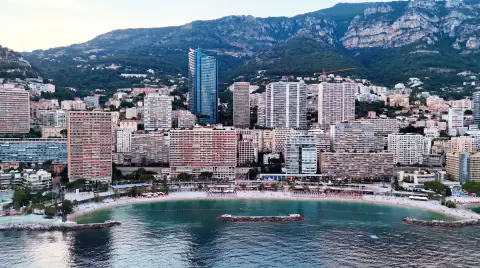
Larvotto beach, about fifteen minutes east along the seafront. Free, renovated, with a promenade — and the natural place for a family to end up after an hour of formal squares.
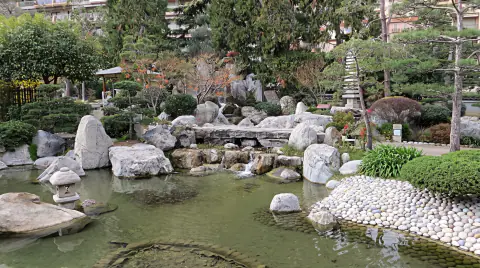
The Japanese Garden is on the way, free, and open 09:00–19:00 from April to October and 09:00–18:00 from November to March.
Pushchairs and the hillside
Monte-Carlo is built on a slope. The gardens run downhill in terraces with steps in places, so a pushchair works on the square and the main streets but not through the full garden descent.
The practical answer is Monaco's public lift and escalator network, which residents use constantly and visitors rarely notice. It removes most of the climb between the station, the harbour and the square. Look for the signs.
Food
The Café de Paris on the square is the one place in the quarter that genuinely works for a family, and it is the practical answer to a quarter where most eating is aimed at a very different budget.
Beyond that, be realistic: this is the most expensive square kilometre in Europe and there is very little casual food around the Place du Casino.
Toilets and facilities
Plan a toilet stop before exploring the quarter. Ask about customer facilities at Café de Paris, or use the beach facilities when visiting Larvotto.
Race week
The Place du Casino is a corner of the Formula 1 circuit. In the 2025 edition it was closed to vehicles and pedestrians across the race weekend.
With children, race week is either the whole point of the trip or a reason to be somewhere else. There is no middle version.
For parents visiting the casino
If one adult is going into the gaming rooms while the other has the children: over 18, valid passport or national photo ID, elegant dress, and set a limit before going in. The house edge is why the quarter exists.
Support in the UK is available from GamCare on 0808 8020 133.
Self-guided walk
Explore beyond the venue.
A practical, step-by-step route connecting this experience with more of Monaco Grand Prix.Stop 1 — Arrive by lift, not on foot
0 minutes. Allow 10.
From Monaco-Monte-Carlo station or from the harbour, find the public lifts and escalators rather than walking up. They are signed, they are free, and they are how residents move around a quarter built on a slope.
This is the single most useful piece of local knowledge in Monte-Carlo and almost no visitor uses it.
Note as you come up that there is no old town here. Until the 1860s this hillside — Les Spélugues — had nothing on it.
Stop 2 — The Place du Casino, before the cars
10 minutes. Allow 20.
Come into the square early. Before about 09:00 it is clear of both crowds and parked supercars, and the casino is lit from the front.
Read the square as a composition rather than a collection of buildings: the Casino on one side, the Hôtel de Paris and the Café de Paris facing, formal gardens falling away below.
That arrangement is the point. François Blanc founded the Société des Bains de Mer in 1863 and put a hotel, a café and a gambling house around one space because he understood that a destination needs more than one reason to visit. The square is the product; everything else in Monte-Carlo is downstream of it.
The quarter is named after Prince Charles III, who permitted the casino in 1856.
Stop 3 — Round the back, to the sea
30 minutes. Allow 20.
Walk round the casino to the seaward terraces and gardens.
Free, open, with somewhere to sit and a Mediterranean horizon — and a fraction of the people who are on the square you just left. It is the most under-used public space in the quarter.
Stop 4 — Down through the Boulingrins
50 minutes. Allow 30.
Now the best free thing in Monte-Carlo, and the stop most visitors never make.
Walk down through the Jardins des Boulingrins: formal French parterres punctuated by fountains, descending a gentle slope from the foot of the casino, with the Jardins de la Petite Afrique alongside.
Prince Charles III commissioned the French landscape architect Édouard André to develop them from 1893 — thirty years after the Société des Bains de Mer was founded. The quarter made its money first and bought its setting afterwards.
Go downhill, then turn round. André designed a perspective and a perspective has a direction: descend through it and the casino rises in front of you through a composed sequence of levels. Walk up from the bottom and you get the same plants in the wrong order.
This is also the best photograph in the quarter that is not the square at dusk.
Stop 5 — Saint-Charles
80 minutes. Allow 15.
Walk up into the streets behind the square to the church of Saint-Charles, inaugurated in 1883 and restored in 2013, with stained glass and a Romanesque organ.
Almost nobody comes here, and the date is why it matters. Within about twenty years of the casino opening, this quarter had enough permanent residents to need its own parish church — on ground that had been empty hillside a generation before. This building is the evidence that Monte-Carlo became a town rather than an amenity.
Check current opening hours before making this a fixed stop; keep an alternative nearby.
Stop 6 — Boulevard des Moulins, then the Carré d'Or
95 minutes. Allow 40.
Walk Boulevard des Moulins first: the older shopping street, with independent boutiques, galleries and jewellers. It is the browsable one.
Then come back through the Carré d'Or — the grid of streets around the Place du Casino lined with luxury houses, five-star hotels and gastronomic restaurants.
It is free to walk whatever your budget, and worth walking for what it represents: the direct physical consequence of replacing an agricultural tax base with a visitor economy in 1863. Somewhere in here, look for One Monte-Carlo, opened in 2019, against the Belle Époque frontages — the same commercial argument, a century and a half apart.
Stop 7 — Under your feet: the circuit
135 minutes. Allow 15.
Back on the square, look down.
The Formula 1 circuit runs through this quarter and the Place du Casino is one of its corners; the Fairmont Hairpin is a few minutes away. The kerbs, barriers and drain covers you have been walking on all morning are the ones the cars use in May.
A caution. In the 2025 edition the Place du Casino was closed to vehicles and pedestrians across the race weekend. During race week this is not a walkable quarter, and the arrangements are set afresh each year.
Stop 8 — The casino, if you want the inside
150 minutes. Allow 60. Morning only.
If it is before 13:00, go in on the cultural visit: no ID check, no dress code, daylight, and Garnier's and Dutrou's interiors without a working casino around you.
From 14:00 it becomes a different building — over-18s, valid passport or national photo ID, elegant dress. Citizens of Monaco are forbidden to enter the gaming rooms.
→ Full detail is in the casino's own Above Guide entry.
Stop 9 — Finish at dusk, or walk east
Allow 30, or 20 to walk.
If it is evening, stay. The square lit at blue hour is the best photograph in Monte-Carlo and the quarter is the only part of Monaco with a night-time life.
If it is afternoon and you have children, walk east instead: the Japanese Garden is ten minutes along the seafront, free, and Larvotto beach is fifteen to eighteen — the point where the quarter stops performing.
Make a record
Photograph it thoughtfully.
The geography that decides your day
Monte-Carlo faces roughly south-east over the Mediterranean and climbs a hillside behind. Two consequences:
The casino façade is a morning subject. It is lit from the front early and in its own shadow by late afternoon.
The gardens and the sea side are afternoon and evening subjects. They keep light longer and they are where the quarter looks best at dusk.
Trying to do both at midday gets you flat light on everything and the largest crowds in Monaco.
The five compositions worth planning
1. The Place du Casino, empty. Before about 09:00 the square is clear of both people and parked cars, and the casino is lit from the front. This is the only reliable clean version of the shot everyone comes for.
2. Up through the Boulingrins gardens. Stand low in the formal parterres and shoot back up the slope with the fountains leading the eye to the casino. This is the composition Édouard André designed in 1893, and it is free, uncrowded and almost never photographed.
3. The square at dusk. The best picture in the quarter. Casino lit, Hôtel de Paris and Café de Paris glowing across, the gardens dark below. Blue hour rather than full night — you want colour left in the sky.
4. The casino's seaward terraces. Free, empty, sea horizon. Late afternoon into golden hour, looking out rather than at the building.
5. Two centuries in one frame. One Monte-Carlo, opened 2019, against the Belle Époque frontages of the 1860s. It takes a bit of walking to find the angle and it is the most interesting photograph the quarter offers.
The cars
The forecourt is where expensive cars park and are photographed, and there is almost always a line of them between you and the building.
Two honest options: go before 09:00 and avoid them, or accept them and make them the subject. They are as much a part of the scene now as the architecture, and pretending otherwise produces a picture of a place that does not exist.
Light through the day
| Hour | Where |
|---|---|
| Before 09:00 | The square, empty, façade lit |
| Morning | The façade, the Carré d'Or frontages |
| Midday | Avoid, or go inside on the casino's 10:00–13:00 visit |
| Late afternoon | The gardens, the seaward terraces, Boulevard des Moulins |
| Blue hour | The square lit — the best shot here |
Inside the casino
Ask staff about photography before entering the gaming rooms, and never photograph anyone at a gaming table.
The morning cultural visit is where to ask. Full detail is in the casino's own guide.
Saint-Charles church
Inaugurated 1883, restored 2013, with stained glass and a Romanesque organ. Standard church manners: no flash, and do not photograph anyone at prayer.
Check the church’s opening hours and ask about photography before visiting.
The circuit
The Place du Casino is a corner of the Formula 1 track and the Fairmont Hairpin is a few minutes away. Out of season, the kerbs, barriers and drain covers photograph well as a subject in their own right — the ordinary street furniture of an extraordinary week.
During race week the quarter is a controlled environment: in the 2025 edition the Place du Casino was closed to vehicles and pedestrians. Photograph from where the public is directed, and record the year in the filename and caption.
Drones
Choose ground-level photography. Arrange the necessary written authorisation with the Monaco authorities before any professional drone work.
Commercial photography
Not confirmed: the permit regime for commercial shoots, filming, tripods or lighting in the quarter. The Place du Casino is heavily managed ground rather than ordinary public highway. Assume anything beyond a handheld camera needs prior permission and approach the Société des Bains de Mer.
Etiquette
This is a residential quarter as well as a shopping one — about 3,500 people live in the ward. Do not shoot into apartment windows.
Do not photograph people at gaming tables under any circumstances, whatever the house policy turns out to be.
Around here
Make more of the area.
Good to know
Questions, answered.
01Is Monte Carlo the same as Monaco?
No, and this is the most common misunderstanding about the principality. Monte-Carlo is one quarter of Monaco — officially the ward of Monte Carlo/Spélugues, with about 3,500 residents. Monaco is the country.
02Where is the old town then?
In Monaco-Ville, also called Le Rocher — a separate quarter about 25 minutes' walk from the Place du Casino, around the harbour and up a 62-metre rock. The Prince's Palace, the cathedral and the Oceanographic Museum are all there, not in Monte-Carlo.
03How far is the casino from the Prince's Palace?
About 25 minutes on foot, or a short bus ride. They are in different quarters. Plan them as two separate outings rather than one walk.
04Is Monte-Carlo free to visit?
Yes. Walking the quarter costs nothing, and so do the Place du Casino, the Jardins des Boulingrins, the Jardins de la Petite Afrique, the casino's seaward terraces and the church of Saint-Charles. The only ticketed thing is the casino interior.
05How long do I need?
An hour for the square and the gardens. Two to three hours to add Saint-Charles and the shopping streets. Four with the casino interior, and add two more for an evening.
06What is the best time to visit?
Late afternoon into evening. The square is at its best lit, the gardens are cool, and this is the only quarter of Monaco with a night-time life. Early morning is the other good window — the square is empty and the casino façade is lit from the front.
07Why is it called Monte-Carlo?
It is named after Prince Charles III, who permitted the opening of a casino in 1856 to replace the revenue Monaco lost when Menton and Roquebrune broke away in
- Monte-Carlo means Charles's mount.
08How old is the quarter?
It effectively begins in the 1860s. Before that the hillside — Les Spélugues — was empty. There is no medieval layer here; the old town is on the Rock.
09Who built it?
François Blanc, who founded the Société des Bains de Mer in 1863 and established the Casino, the Hôtel de Paris and the Café de Paris around a single square. The quarter grew outward from there.
10What is the Carré d'Or?
The "golden square" — the grid of streets around the Place du Casino lined with luxury boutiques, five-star hotels and gastronomic restaurants. It is free to walk.
11Are there gardens?
Yes, and they are the best free thing in the quarter. The Jardins des Boulingrins are formal French parterres with fountains running downhill from the casino, with the Jardins de la Petite Afrique alongside. They were developed from 1893 by the French landscape architect Édouard André. Walk down through them and look back.
12Is there anything old to see?
The church of Saint-Charles, inaugurated in 1883 and restored in 2013, with stained glass and a Romanesque organ — and it is the oldest thing of consequence here. If you want genuinely old Monaco, go to the Rock.
13Can I go inside the casino without gambling?
Yes. Between 10:00 and 13:00 daily the historic salons open as a cultural visit — no ID check and a relaxed dress code. From 14:00 the gaming rooms open to over-18s with a valid passport or national photo ID, in elegant dress.
14Can I drive to Monte-Carlo?
Yes. Unlike Monaco-Ville, which is a restricted traffic zone, Monte-Carlo can be reached by car and there is public parking beneath the casino and around the quarter.
15How do I get around the hill?
Use Monaco's public lifts and escalators. They are signed, free, and cover much of the climb from the station and the harbour. Residents use them constantly and visitors almost never notice they exist.
16Is Monte-Carlo good for children?
Not especially. The gardens and the supercars are a good free hour, but the gaming rooms are over-18s only and the shopping is not aimed at families. Larvotto beach, about fifteen minutes east, is where a family afternoon in this direction should end up — the Japanese Garden is free and on the way.
17What is there for Formula 1 fans?
The circuit runs through the quarter. The Place du Casino is one of its corners and the Fairmont Hairpin is a few minutes away, so walking Monte-Carlo is walking part of a lap. Out of season the barriers and kerbs are ordinary street furniture.
18What happens during the Grand Prix?
The quarter becomes a controlled environment. In the 2025 edition the Place du Casino was closed to vehicles and pedestrians across the race weekend under Arrêté Municipal n° 2025-2085. Each year's ordinance is published about five weeks before the race, so check for the year you are travelling.
19Where should I eat?
Try Café de Paris for a meal or drink on the square. For a more formal occasion, consider Le Louis XV at the Hôtel de Paris. Check menus, prices and reservations directly before visiting.
20What is One Monte-Carlo?
A contemporary development of shops, restaurants and apartments beside the square, opened in 2019. Worth seeing against the Belle Époque frontages — it is the same commercial argument in a different century.
21Is Monte-Carlo worth visiting?
For a free half-day, yes — the square, the gardens and the streets cost nothing and the design is genuinely interesting. It is not the reason to come to Monaco. That is the Rock, and the Oceanographic Museum on it.
Before you visit
Useful links.
Venue and visitor information
Method
Monaco's tourist board and general reference were used for the ward structure, the population and the quarter's contents. The Société des Bains de Mer, which built and still operates much of the quarter, is the authority for the casino and the buildings around the square.
Two categories of fact were deliberately left out. Restaurant and shopping details — hours, prices, booking — are named but not detailed, because none was verified and this quarter's businesses change faster than a guide can track. And the area figure in circulation was excluded as impossible; see the conflict ledger.
The casino itself has its own bundle and its own source register. Facts about the building, its architects and its admission conditions belong there and are summarised here rather than re-sourced.
Sources
| ID | Source | Used for | Retrieved |
|---|---|---|---|
| S01 | VisitMonaco — Monte-Carlo neighbourhood | The quarter's contents and how the tourist board scopes it: the Place du Casino as its centre, the Casino and the Opéra, the church of Saint-Charles (inaugurated 1883, restored 2013, stained glass, Romanesque organ), the Jardins des Boulingrins and Jardins de la Petite Afrique, the Carré d'Or, One Monte-Carlo (2019), Métropole Shopping on avenue des Spélugues, the Monte-Carlo Shopping Promenade, Boulevard des Moulins, the Café de Paris and Le Louis XV, and the Grand Prix circuit including the Fairmont Hairpin | 2026-08-04 |
| S02 | Wikipedia — Monte Carlo | That Monte Carlo is officially the ward of Monte Carlo/Spélugues; that the informal wider quarter also includes La Rousse/Saint Roman, Larvotto/Bas Moulins and Saint Michel; the ward population of about 3,500 and the quarter population of about 15,000; and the disputed area figure recorded in the conflict ledger | 2026-08-04 |
| S03 | VisitMonaco — Jardins du Casino de Monte-Carlo | That the casino gardens were developed from 1893 at Prince Charles III's instigation, by the French landscape architect Édouard André; and the description of the Boulingrins as formal French parterres rhythmed by fountains running down gentle slopes to the foot of the casino | 2026-08-04 |
| S04 | Monaco quarter guides and Société des Bains de Mer material | That Charles III permitted the opening of a casino in 1856; that François Blanc created the Société des Bains de Mer in 1863; and that the Casino Square, the Café de Paris and the Hôtel de Paris were launched together | 2026-08-04 |
| S05 | Arrêté Municipal n° 2025-2085, Journal de Monaco n° 8743, published 14 April 2025 | That the Place du Casino was closed to vehicles and pedestrians across the 2025 Grand Prix weekend, the square being a corner of the circuit | 2026-08-04 |
| S06 | Above Guide's own Monaco datasets — off-track places, closures and the lift network | Venue coordinates; the race-week closures; and the documented limitation that the lift dataset comes from OpenStreetMap, which carries no operator tag, so only named lifts can be treated as public | 2026-08-04 |
Conflict ledger
The area figure is impossible
A figure of "43,878 hectares" circulates for the Monte-Carlo quarter (S02).
The entire principality of Monaco is roughly 200 hectares. The quoted figure is larger than Monaco by more than two hundred times, and larger than many European cities. It is presumably a garbled square-metre value or a unit error somewhere upstream.
Used: nothing. No part of this guide publishes an area for the quarter.
Why this matters beyond one number. A wrong figure with a precise-looking decimal is exactly the kind of fact that propagates — it reads as authoritative because it is specific. Publishing it would have put it into structured data and then into answer engines. It is excluded until a credible source appears.
Which "Monte-Carlo"?
Not a disagreement between sources so much as a genuine ambiguity in the name.
- The official ward is Monte Carlo/Spélugues, about 3,500 residents (S02).
- The informal quarter also takes in La Rousse/Saint Roman, Larvotto/Bas Moulins and Saint Michel, about 15,000 residents (S02).
- The tourist board's own Monte-Carlo page (S01) scopes it to the casino district and does not include Larvotto, the Japanese Garden or the Grimaldi Forum.
Used: the ward, as the tourist board scopes it — the casino, the square, the Carré d'Or, the gardens and Saint-Charles. Larvotto and the rest are treated as neighbours, and the three meanings are explained to the reader rather than silently resolved.
1848, 1856 or 1863?
Three dates, all correct, frequently conflated.
1848 — Menton and Roquebrune broke away, taking most of Monaco's taxable land. That is the cause.
1856 — Charles III permitted the opening of a casino (S04). That is the authorisation.
1863 — François Blanc founded the Société des Bains de Mer (S04). That is when it actually started working.
Used: all three, in that order and with those roles. Sources that give only one are incomplete rather than wrong.
The gardens are not contemporary with the casino
Frequently assumed, and wrong. The Société des Bains de Mer was founded in 1863; the casino gardens were developed from 1893 by Édouard André (S03) — three decades later.
Used: 1893, with the thirty-year gap stated explicitly, because it is the interesting part: the quarter earned its money first and bought its setting afterwards.
Population
The ward figure of about 3,500 and the quarter figure of about 15,000 come from general reference (S02) and have not been confirmed against Monaco's statistics office (IMSEE).
Used: both, described as approximate. A government figure should replace them.
Facts deliberately not asserted
| Fact | Where this guide says so |
|---|---|
| The area of the quarter | Conflict ledger, above — excluded entirely |
| Hours, prices or booking for the Hôtel de Paris, Café de Paris or Le Louis XV | Plan your visit |
| Hours or details for any shopping centre | Plan your visit |
| Opening hours of the church of Saint-Charles | Highlights, and the self-guided walk |
| Step-free status and operating hours of individual public lifts | Accessibility |
| A step-free route through the full garden descent | Accessibility |
| Accessible toilets anywhere in the quarter | Accessibility |
| Hearing loops, braille or tactile provision | Accessibility |
| Blue-badge arrangements in Monte-Carlo | Accessibility |
| The casino's admission prices | Deferred to the casino's own guide, where they are recorded as unverified |
| Public toilet provision in the quarter | Family guide |
The accessibility list is long for a quarter rather than a building, and the reason is specific: Monte-Carlo's accessibility depends almost entirely on the public lift network, which is free, signed, extensively used by residents — and undocumented. That is named as the most useful unverified item in the bundle.
A note on what was not used
No AI-generated encyclopaedia was cited. The anecdotal literature attached to this quarter — systems that broke the bank, fortunes lost in an evening — was excluded wholesale, as it was in the casino's own bundle: it is voluminous, almost never dated or named, and does not survive the standard applied to everything else here.
Opening hours, prices, programmes and access arrangements can change. Confirm critical details with the venue.
Continue exploring / Monaco
More things to do
in Monaco
Explore Monaco activities, sights and places to eat. Compare the time to allow, costs and booking details, then save your favourites to your itinerary.
 01Monaco Grand Prix experienceCasino de Monte-CarloExplore experience →
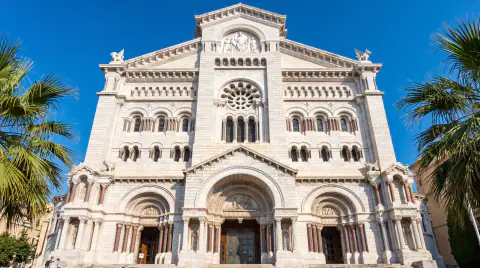 02Monaco Grand Prix experienceCathedral of Notre-Dame-ImmaculéeExplore experience →
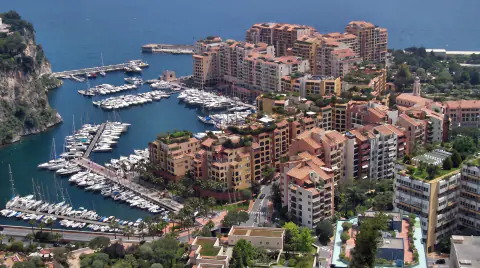 03Monaco Grand Prix experienceFontvieilleExplore experience →
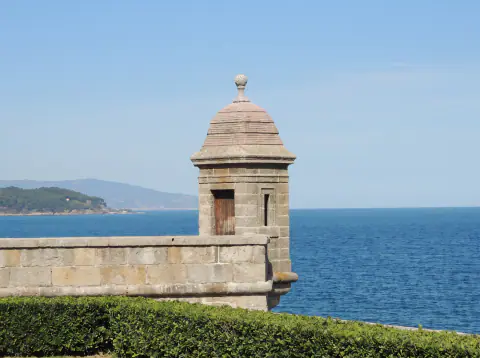 04Monaco Grand Prix experienceFort AntoineExplore experience →
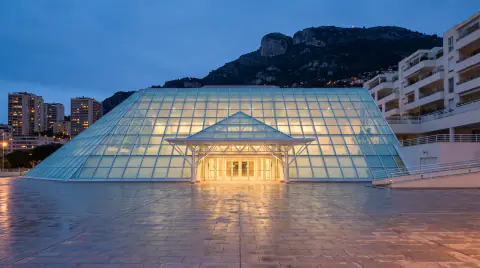 05Monaco Grand Prix experienceGrimaldi ForumExplore experience →
 06Monaco Grand Prix experienceJardin Exotique de MonacoExplore experience →
 07Monaco Grand Prix experienceJardin Japonais de MonacoExplore experience →
 08Monaco Grand Prix experienceLa CondamineExplore experience →
 09Monaco Grand Prix experienceLarvottoExplore experience →
 10Monaco Grand Prix experienceLe Rocher / Monaco-VilleExplore experience →
 11Monaco Grand Prix experienceLes Ballets de Monte-CarloExplore experience →
 12Monaco Grand Prix experienceMareterraExplore experience →
 13Monaco Grand Prix experienceNouveau Musée National de MonacoExplore experience →
 14Monaco Grand Prix experienceOceanographic Museum of MonacoExplore experience →
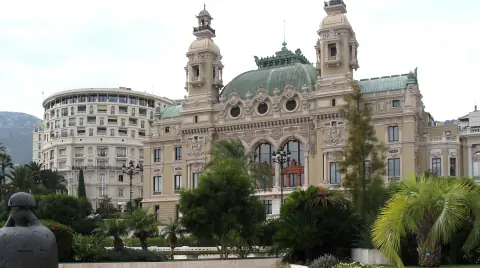 15Monaco Grand Prix experienceOpéra de Monte-CarloExplore experience →
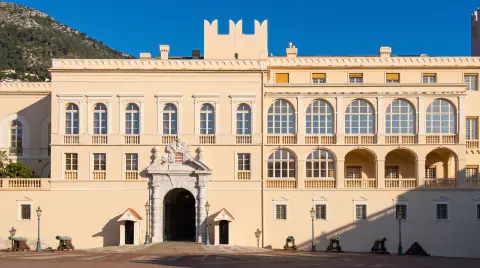 16Monaco Grand Prix experiencePrince's Palace of MonacoExplore experience →
 17Monaco Grand Prix experienceThe Museum of Old MonacoExplore experience →
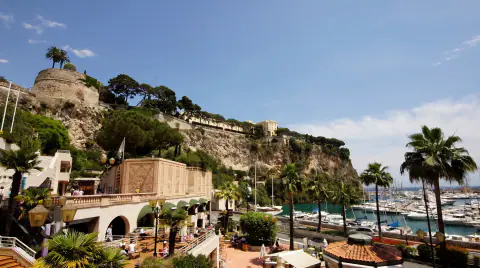 18Monaco Grand Prix experienceThe Museum of Stamps and CoinsExplore experience →
 19Monaco Grand Prix experienceThe Prince's Car CollectionExplore experience →
 Plan / Itinerary builderBuild your Monaco Grand Prix dayStart planning →