In depth
Casino de Monte-Carlo
Charles Garnier's Belle Époque casino, built to rescue Monaco from bankruptcy — and closed to the Monégasques it saved. You can see the interior between 10:00 and 13:00 without ID, dress code or gambling.
Story · Visit · Route · Links
Choose your depth
Essentials or more detail?
See visiting essentials, or read more about the history and places nearby.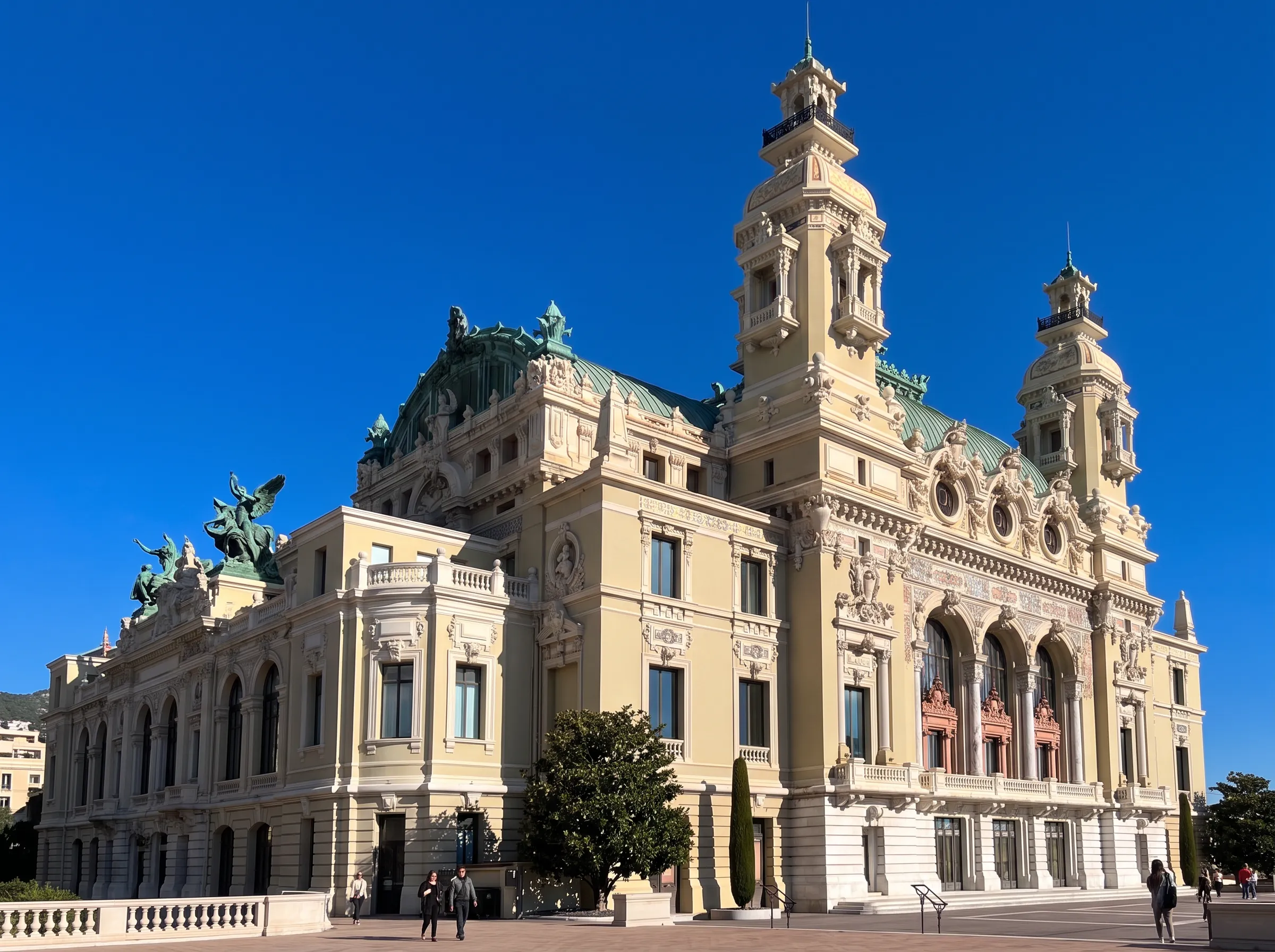
01 The experience
What to expect.
Why it matters
It is the reason modern Monaco exists. Not a flourish on top of a wealthy state — the thing that made the state solvent. Everything else in the principality, the tax status included, follows from a nineteenth-century decision to solve a revenue crisis with a casino.
It is a Garnier building. The architect of the Palais Garnier in Paris designed the concert hall here and worked on the transformation, and the ambition shows. The Salle Garnier went up between May 1878 and January 1879 — under nine months — and opened with Sarah Bernhardt reciting, dressed as a nymph.
And it is architecture you can visit without gambling at all, which a lot of visitors do not realise.
What visitors should notice
The Atrium first: the entrance hall you pass through before anything else, and the part of the building that tells you what register you are in.
Then, in the gaming rooms, the fact that they are rooms — a sequence of named salons rather than a floor of machines. Dutrou's 1878–79 redesign is why the place reads as a set of interiors rather than a hall.
And the seaward side. The casino faces the Mediterranean at the back, and the terraces and gardens on that side are free, open and much quieter than the square.
Who will enjoy it
Anyone interested in Belle Époque architecture, and particularly anyone who has seen Garnier's opera house in Paris — the comparison is the point. Anyone curious about how a micro-state funded itself. Opera-goers, for the Salle Garnier. Photographers, for the façade and the square.
Gamblers, obviously — but they are a minority of the people who come through the door, and this guide is written for the majority who do not.
Who may find it difficult
Monégasque citizens cannot enter the gaming rooms. That is the starkest restriction attached to any building in this guide.
Everyone else needs to be over 18 with a valid passport or national photo ID, and must not be barred from playing. There is a dress code: elegant dress, no sportswear, no flip-flops, no shorts, and a jacket is expected in the evening.
Anyone arriving after 14:00 hoping for a quiet architectural look will find themselves paying gaming-room admission into a working casino. Anyone arriving in beachwear from Larvotto will not get in at all.
And it is not on the Rock. Visitors doing Monaco-Ville in a morning should treat this as a separate trip — about twenty-five minutes' walk around the harbour, or a short bus ride.
Visitor verdict
Come in the morning, before 13:00, and treat it as the architectural visit it actually is. You will see Garnier's interiors without a dress code fight, without an ID check and without spending anything at a table. If you want the evening version instead, dress properly, bring your passport, and set a limit before you walk in.
The story
History & character.
1848: Monaco loses its income
The casino is the answer to a revenue crisis, and the crisis came first.
In 1848 Menton and Roquebrune — the two towns that made up the great majority of the principality's territory and its productive land — broke away, refusing to pay the Grimaldi taxes on olive oil and fruit. Monaco was left with the Rock, the harbour and very little else to tax.
A sovereign state without revenue has few options. The Grimaldis chose the one that worked.
You can go and look at the evidence, for three euros. The scale of what 1848 cost is easiest to grasp not here but in the Museum of Stamps and Coins in Fontvieille. A state that cannot fund a postal service does not issue stamps: from 1851 to 1860 Monaco's letters went out under Sardinian postage, and from 1860 until 1885 under French. The principality did not print a stamp of its own until 1 July 1885 — and when it finally did, the face on it was Charles III, the prince who had lost Menton as a young ruler and answered it with this building.
The museum holds an 1851 envelope from Menton, franked by the kingdom that had taken it. It has its own guide, and it is the cheapest ticket in Monaco.
Princess Caroline's idea
The casino was Princess Caroline's proposal: a gambling concession, licensed by the state, to replace the income the olive groves had provided.
It is worth pausing on that, because the standard telling makes the casino sound like a flourish of nineteenth-century decadence. It was a fiscal instrument, devised by the ruler's mother, to keep a country solvent.
Her son Prince Charles III pursued it. In 1854 he recruited the French entrepreneur Albert Aubert and the businessman Napoleon Langlois to develop plans.
1856–1863: several false starts, then François Blanc
The early attempts failed. The site was remote, the roads were poor, and Monaco was not yet somewhere people went.
The Société des Bains de Mer et du Cercle des Étrangers — the Sea Bathing and Foreigners' Club Company, still the operator today — was established with fifteen million francs of capital.
What made it work was a person. François Blanc had run the casino at Bad Homburg and knew the business better than anyone in Europe. Princess Caroline pursued him persistently; he eventually accepted, became majority stockholder, and took a fifty-year concession running from 1863 to 1913.
Blanc brought the thing the earlier attempts lacked: an understanding that a casino is a destination business. Access, hotels, a reason to come. What followed was not just a gambling house but the invention of Monte-Carlo as a place.
1858–1863: the first building
Construction of the first casino began on 13 May 1858, to designs by Gobineau de la Bretonnerie, and was completed in 1863.
Almost nobody photographs that building, because it is largely not what stands there now.
1878–79: Garnier and Dutrou
Fifteen years after opening, the casino was transformed — and this is the building visitors recognise.
Charles Garnier, architect of the Paris Opéra, and Jules Dutrou (1819–1885) carried out the work between 1878 and 1879. The division of labour is worth knowing: Garnier designed the concert hall, and Dutrou redesigned the gaming rooms.
That is why the interior reads as a sequence of named salons rather than a single hall. Dutrou's plan is still the plan.
The Salle Garnier
Prince Charles III and the Société des Bains de Mer had identified a problem: there was very little to do in Monaco in the 1870s beyond gamble. A concert hall was the answer, and Garnier was the obvious architect.
Construction began in May 1878 and was complete in under nine months — a remarkable pace for an opera house, and a measure of how badly it was wanted.
It was inaugurated on 25 January 1879, with Sarah Bernhardt reciting, dressed as a nymph. The first opera staged there was Robert Planquette's Le Chevalier Gaston, on 8 February 1879.
The architect Henri Schmit modified the hall in 1898–99.
The Salle Garnier went on to become one of the significant opera houses of Europe, and it is still the home of the Opéra de Monte-Carlo.
The rule that has never changed
Citizens of Monaco are forbidden to enter the gaming rooms.
The prohibition was imposed on moral grounds by Princess Caroline — the woman whose idea the casino was. She proposed a gambling house to save the state and then barred the state's own people from using it.
It remains in force. Monégasques may work in the casino, and may enter the parts of the complex that are not gaming rooms; they may not gamble there.
It is the most quoted fact about the institution and it is usually quoted without the second half: that the person who wrote the rule was the person who had the idea.
What the casino built around itself
Blanc's insight was that a casino needs a destination. What grew around this building — the Hôtel de Paris, the Café de Paris, the terraces, the gardens, the square itself — is the physical form of that argument, and the quarter took the name Monte-Carlo after Charles III.
The wider consequence is the modern principality. A state that had lost its agricultural revenue in 1848 was solvent within a generation, and the fiscal arrangements that followed are the reason Monaco is what it is now.
Look closer
Highlights and hidden details.
The objects, spaces and small observations that turn a visit into a memorable one.1. The façade and the Place du Casino
The most photographed building in Monaco, and free to look at.
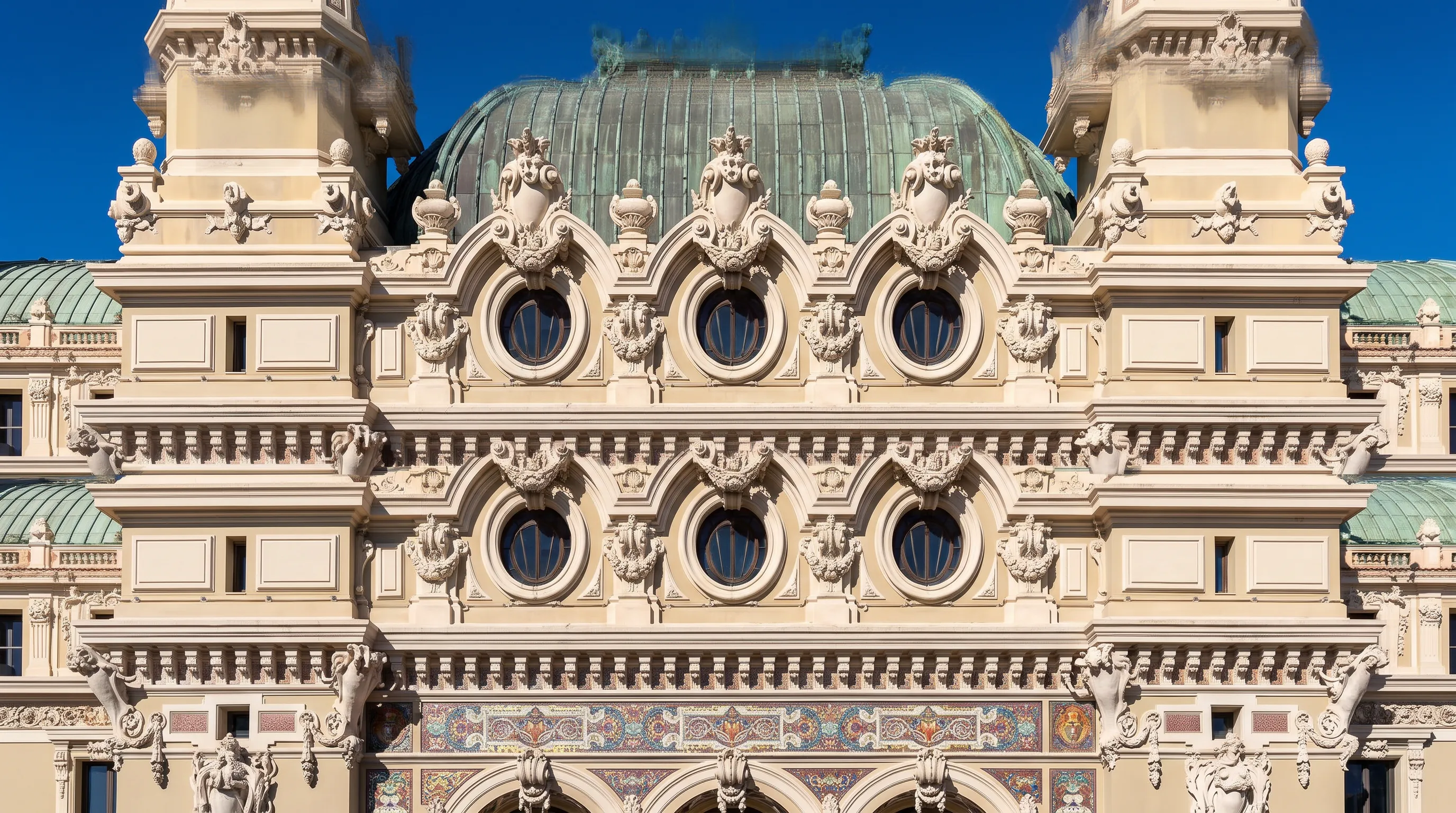
What it is. A Belle Époque front on a formal square, with the fountain and the gardens laid out in front of it and the Hôtel de Paris and the Café de Paris facing across.
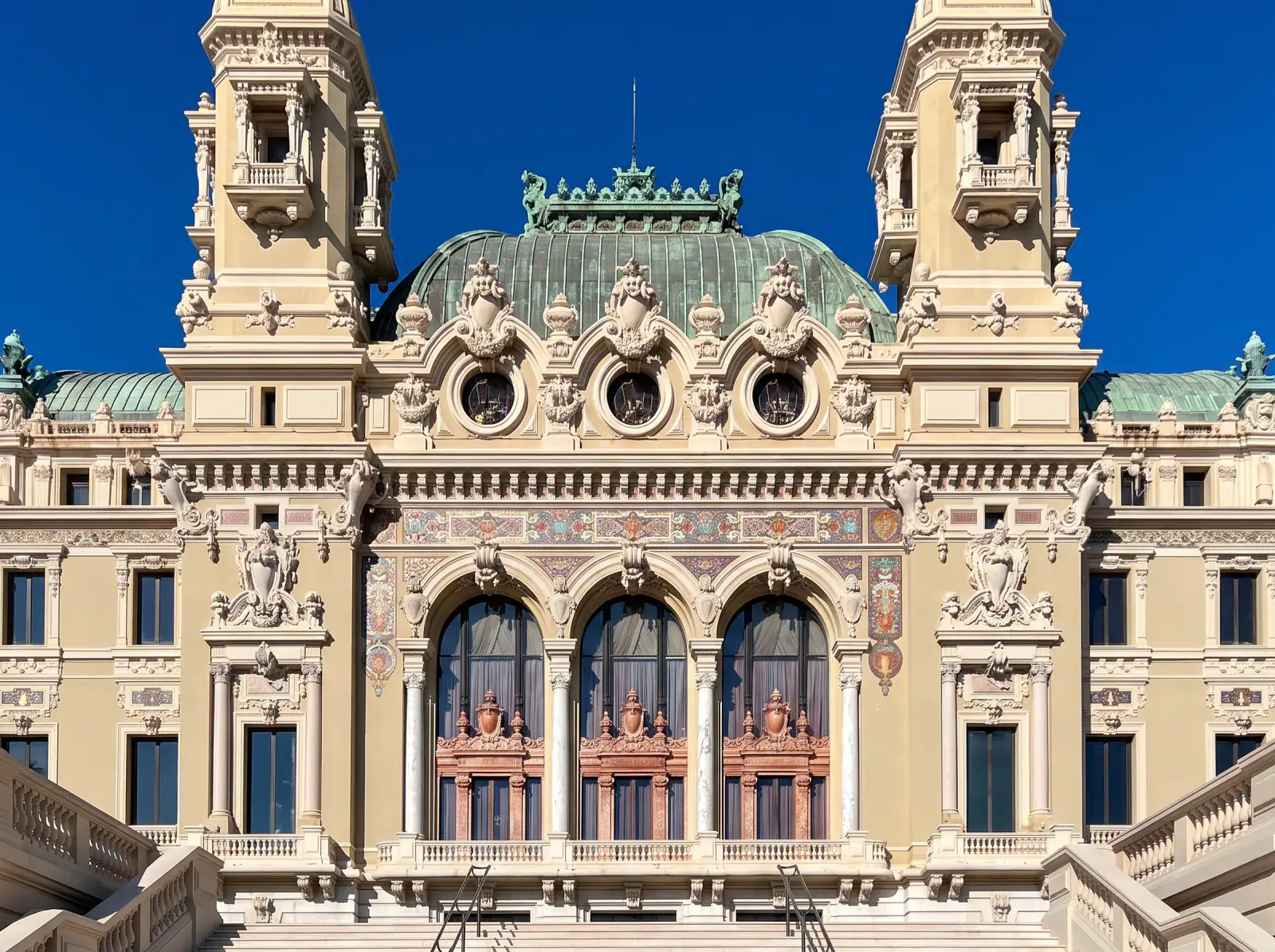
What you are actually looking at. Not one building but three campaigns. Gobineau de la Bretonnerie built the first casino between 1858 and 1863. Charles Garnier and Jules Dutrou transformed it in 1878–79. Henri Schmit altered the opera hall again in 1898–99. The elevation is a nineteenth-century argument about what Monaco was going to be.
When. The square is busy through the day and worst in the middle. Early morning gives you the façade without a crowd; evening gives you it lit.
Time required. Twenty minutes, and it costs nothing.
2. The morning cultural visit
The part most visitors do not know exists.
What it is. Between 10:00 and 13:00 daily the historic salons open as a cultural visit rather than as a casino. No ID check, no gaming-room admission, and a far more relaxed dress code.
Why it is the better visit. You see Garnier's and Dutrou's interiors in daylight, near-empty, without a working casino around you. If you have come for the architecture — and most people have — this is the visit you want, and arriving at 15:00 gets you the wrong one.
Estimated cost: €10–€19, depending on the visit. Check the current tariff before buying.
Time required. About an hour.
3. The Atrium
What it is. The entrance hall you pass through before anything else.
Why it matters. It sets the register for everything beyond it. A casino built to rescue a bankrupt state could have been a shed with tables in it; the Société des Bains de Mer commissioned the architect of the Paris Opéra instead, and the Atrium is where that decision announces itself.
Time required. Ten minutes, and worth stopping rather than crossing.
4. The gaming salons
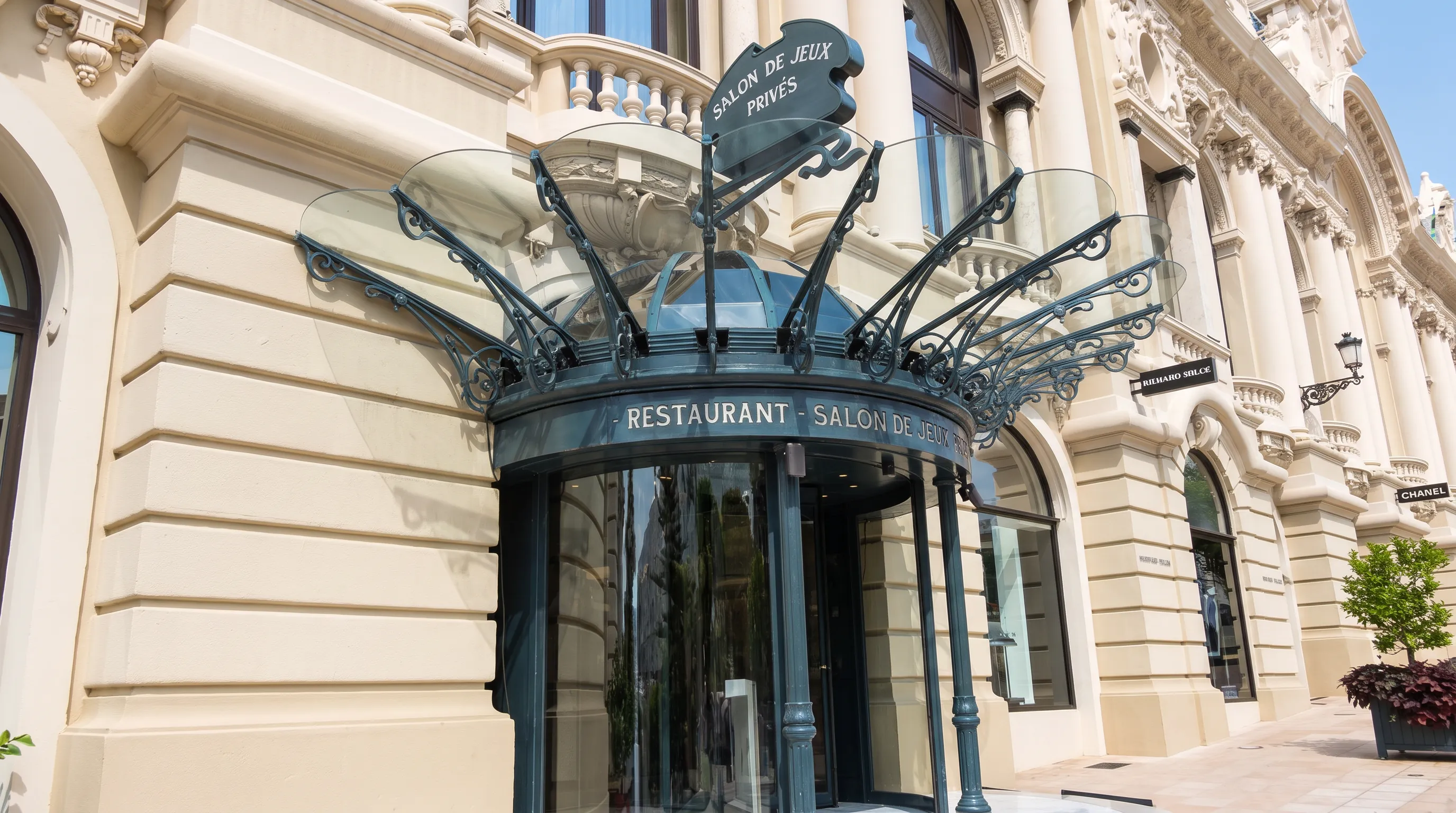
What they are. A sequence of named rooms rather than a single floor — the operator names the Salle Renaissance and the Salon Touzet among them.
Why the plan matters. That arrangement is Jules Dutrou's 1878–79 redesign, carried out in the same campaign in which Garnier built the opera house. It is the reason the interior feels like a suite of drawing rooms, which is a very different proposition from a modern gaming floor.
What is played. French roulette, baccarat, blackjack, craps, Poker Texas Hold'em Ultimate and slot machines.
To go in. From 14:00, over 18, valid passport or national photo ID, not barred from playing, and dressed for it. Monégasque citizens are forbidden to enter.
Time required. As long as you decide in advance.
5. The Salle Garnier
What it is. The opera house inside the casino, designed by Charles Garnier, architect of the Palais Garnier in Paris.
The remarkable part. Construction began in May 1878 and finished in under nine months. It was inaugurated on 25 January 1879 with Sarah Bernhardt reciting, dressed as a nymph. The first opera staged there was Robert Planquette's Le Chevalier Gaston, on 8 February 1879.
Why it was built. There was very little to do in Monaco in the 1870s besides gamble. Charles III and the Société des Bains de Mer built a concert hall to fix that — the casino inventing the rest of Monte-Carlo around itself.
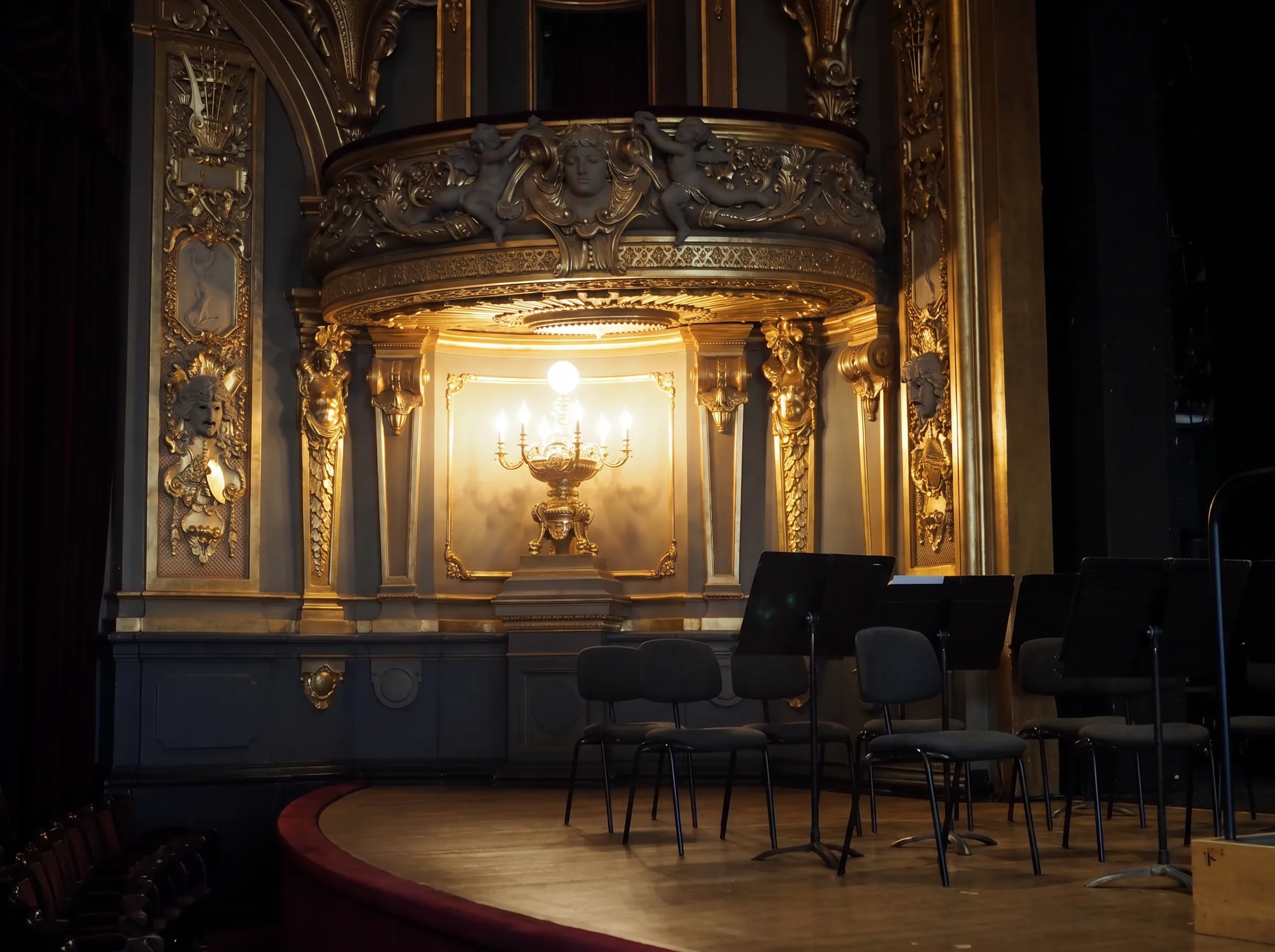
Inside it. A small hall of exceptional density: gilded carved boxes, caryatids and scrollwork over almost every surface, deep red and purple drapery, and composers' names lettered in gold on cartouches around the walls.
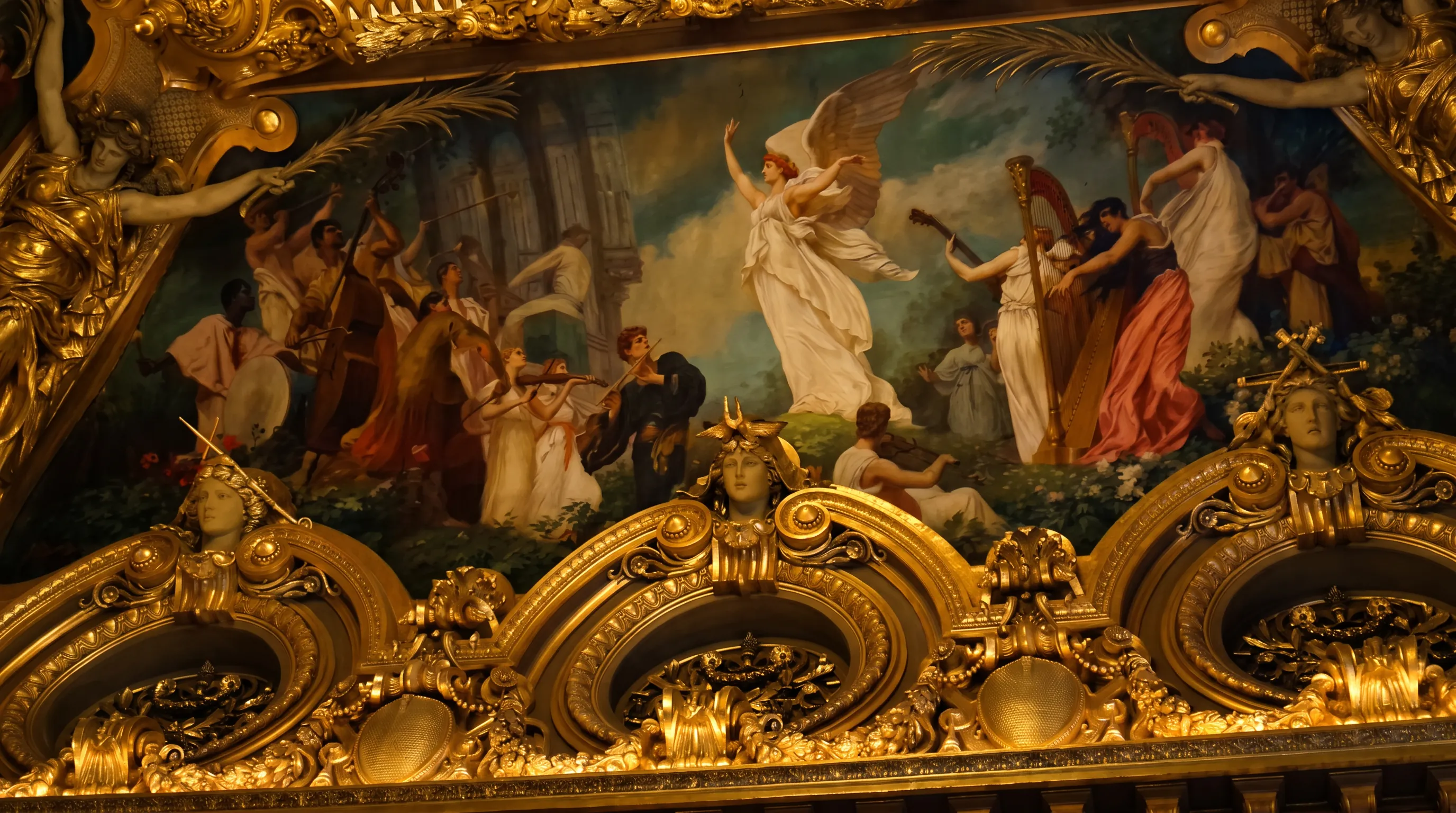
Look up, above the stage. A large allegorical painting of music — classical figures with a harp, a lyre and a violin gathered in a glade, a winged figure at the centre — set in a heavy gilded frame. It is by Gustave Boulanger.
How to see it. It is not automatically part of a casino visit. Check the Opéra de Monte-Carlo's own programme and ticketing; the house takes a summer break through much of August.
Time required. An evening.
6. The seaward terraces and gardens
What it is. The back of the casino faces the Mediterranean, and the terraces and gardens on that side are free and open.
Why it belongs in the highlights. It is the quiet half of a very busy building. The square at the front is crowded most of the day; the sea side is not, and it has the view.
Time required. Twenty minutes, free.
7. The rule nobody expects
What it is. Not an object — a regulation, and the most striking thing about the institution.
Citizens of Monaco are forbidden to enter the gaming rooms. The prohibition was imposed on moral grounds by Princess Caroline — the person whose idea the casino was in the first place.
She proposed a gambling house to save the state from bankruptcy after Menton and Roquebrune broke away in 1848, and then barred the state's own citizens from using it. It has never been lifted.
Why it belongs here. Because it reframes the whole building. This was never built for Monaco. It was built at Monaco, for everyone else, to pay for Monaco.
Time required. A moment, and it changes the visit.
Details worth slowing down for.
The woman who invented it also banned her own people from it
Princess Caroline proposed the casino as the answer to Monaco's bankruptcy after Menton and Roquebrune broke away in 1848. She pursued François Blanc to run it. And she imposed, on moral grounds, the rule that citizens of Monaco may not enter the gaming rooms.
She built the thing that saved the state and made it off-limits to the people of the state. Both decisions were hers, and the second one still stands.
It was built because olives stopped paying
The standard telling makes this a monument to nineteenth-century decadence. It was a fiscal instrument.
Menton and Roquebrune — most of the principality's territory and nearly all of its productive land — broke away in 1848, refusing to pay Grimaldi taxes on olive oil and fruit. A sovereign state suddenly had almost nothing to tax.
Everything that follows, including the tax status that defines modern Monaco, starts from a revenue hole where the olive groves used to be.
Garnier did the opera house, not the gaming rooms
Everyone credits Charles Garnier with the casino. He designed the concert hall.
The gaming rooms in the same 1878–79 campaign were redesigned by Jules Dutrou (1819–1885), and it is Dutrou's plan you walk through — a suite of named salons rather than a single floor. If the interior feels like a sequence of drawing rooms rather than a casino, that is the reason, and it is not Garnier's doing.
And neither of them built the original
Gobineau de la Bretonnerie designed the first casino. Construction began on 13 May 1858 and finished in 1863.
Garnier and Dutrou arrived fifteen years later to transform a building that already existed. The façade everyone photographs is a rebuild of somebody else's casino.
Nine months for an opera house
The Salle Garnier was begun in May 1878 and completed in under nine months, opening on 25 January 1879.
For comparison, Garnier's Paris opera house took fourteen years. The Monaco hall was wanted urgently because there was nothing to do in the principality except gamble, and the Société des Bains de Mer had worked out that a destination needs more than one reason to visit.
Sarah Bernhardt opened it dressed as a nymph
The inauguration on 25 January 1879 was a recitation by Sarah Bernhardt, in costume as a nymph — not an opera at all.
The first actual opera came a fortnight later: Robert Planquette's Le Chevalier Gaston, on 8 February 1879.
The casino invented the quarter, not the other way round
Monte-Carlo is named after Charles III, and it did not exist as a place before the casino gave people a reason to go there.
François Blanc's insight was that a casino is a destination business — it needs access, hotels and a reason to stay. The Hôtel de Paris, the Café de Paris, the square and the gardens are the physical form of that argument. The building came first and the quarter grew around it.
The back is free and nobody is there
The Place du Casino at the front is one of the most crowded spaces in Monaco for most of the day.
The casino's other side faces the Mediterranean, and the terraces and gardens there are free, open and comparatively empty. Same building, same afternoon, a fraction of the people.
The morning building and the afternoon building are different places
Between 10:00 and 13:00 this is a cultural visit: anyone can go in, the dress code relaxes, and the historic salons are shown in daylight.
From 14:00 it is a casino: over-18s only, valid passport or national photo ID, elegant dress, and admission to the gaming rooms.
Most visitors arrive in the afternoon by accident and experience the second version without ever knowing the first existed.
"Not barred from playing" is a real condition
The operator lists three requirements for the gaming rooms: valid photo ID, over 18, and not barred from playing.
That third one is doing quiet work. Casinos maintain exclusion lists, including self-exclusions, and it is stated as a condition of entry rather than something checked discreetly at a table.
The concession ran for fifty years
François Blanc's agreement was not a licence renewed annually. It was a fifty-year concession, 1863 to 1913, and he took majority ownership of the Société des Bains de Mer.
A bankrupt state handed half a century of its principal revenue stream to one man from Bad Homburg, because he was the only person who could make it work. It did work, and the company he took over still runs the building.
Be sceptical of the stories
This building has an unusually rich anecdotal literature — systems that broke the bank, suicides in the gardens, fortunes on a final spin.
Almost none of it is sourced, and this guide carries none of it. If you read a casino story with no date and no name attached, assume it is a story.
04 / Before you go
Plan your visit
Prices & admission
The Place du Casino, the façade, the gardens and the seaward terraces are free. Interior admission is reported at ≈ EUR 15 for the morning cultural visit and ≈ EUR 19 for the gaming rooms — these figures are NOT verified against the operator, which publishes conditions of admission but no clear public tariff. Check on the day.
Opening hours
Two different regimes. The historic salons open as a cultural visit from 10:00 to 13:00 daily — no ID check, relaxed dress code. The gaming rooms open from 14:00 to over-18s with a valid passport or national photo identity card who are not barred from playing, in elegant dress, with a jacket expected in the evening. The Place du Casino, the façade, the gardens and the seaward terraces are free and open at all times.
Plan your experience
No booking needed. Two different visits: the historic salons open as a cultural visit 10:00–13:00 daily, with no ID check and a relaxed dress code; the gaming rooms open from 14:00 to over-18s with a valid passport or national photo identity card, who are not barred from playing, in elegant dress. Citizens of Monaco are forbidden to enter the gaming rooms.
Accessibility
The operator publishes no accessibility information that this guide could find, which is a poor showing for a major paid attraction. What is established is mostly outdoors.
Dress code
Elegant dress for the gaming rooms. Sportswear, flip-flops and shorts are not permitted, and a jacket is expected in the evening.
Participation requirements
18+ for the gaming rooms
Checked on 4 August 2026. Admission prices for this building are poorly published and the figures below come from secondary sources — see the note. Hours and conditions are from the operator.
The single most useful thing to know
There are two entirely different visits, and the one you want is probably the morning one.
| Morning | Afternoon and evening | |
|---|---|---|
| Hours | 10:00–13:00 | Gaming rooms from 14:00 |
| What it is | A cultural visit of the historic salons | A working casino |
| Who can go | Anyone | Over-18s with photo ID, not barred from playing |
| Dress | Normal | Elegant; no sportswear, shorts or flip-flops |
If you have come to see a Charles Garnier interior, come before 13:00. You will avoid the ID check, the dress code and the gaming-room admission, and you will see the rooms in daylight and near-empty.
Admission
Morning cultural visit: reported at between €10 and €19 depending on the formula chosen.
Gaming rooms: reported at between €17 and €20.
Estimated prices; check the current tariff for your chosen visit before buying.
Conditions of admission — gaming rooms
The operator states three requirements:
- A valid passport or national photo identity card. Not a driving licence, not a photocopy.
- Over 18.
- Not barred from playing.
And one that is not about you at all:
Citizens of Monaco are forbidden to enter the gaming rooms. This is longstanding and absolute.
Dress code
Elegant dress. Sportswear, flip-flops and shorts are not permitted. A jacket is expected in the evening — reported as after 20:00.
This is enforced, and it catches visitors arriving from the beach at Larvotto or walking over from the Rock in summer clothes. If you are combining the casino with a beach day, bring a change.
The morning cultural visit is more relaxed, but arriving in beachwear is still a poor idea.
What is inside
The Atrium is the entrance hall you pass through first.
Beyond it, a sequence of named salons rather than a single gaming floor — the operator names the Salle Renaissance and the Salon Touzet among them. That arrangement is Jules Dutrou's 1878–79 redesign, and it is why the interior reads as a series of rooms.
Games offered include French roulette, baccarat, blackjack, craps, Poker Texas Hold'em Ultimate and slot machines.
Restaurants and lounge bars operate within the complex.
The Salle Garnier
The opera house is part of the same building, inaugurated on 25 January 1879, and it runs its own programme as the Opéra de Monte-Carlo.
It is not automatically included in a casino visit. If you want to see the hall, check the opera's own schedule and ticketing.
The Opéra de Monte-Carlo has its own guide, and one thing from it is worth knowing before you plan a trip around the hall: the season runs November to April. It is not a summer break — it is most of the year. The hall is not open for general viewing at any time, and the opera's box office, which sits in this building's own Atrium, closes for its annual holidays from 1 to 8 June and from 7 to 31 August.
How long to allow
An hour for the morning cultural visit. Twenty minutes if you only want the square, the façade and the seaward terraces, which are free.
An evening in the gaming rooms is as long as you choose to make it, which is a good reason to decide the length — and the budget — before you go in.
Getting there
The casino is on the Place du Casino in Monte-Carlo. It is not on the Rock.
From Monaco-Ville: about twenty-five minutes on foot around Port Hercule and up, or a short bus ride. Treat it as a separate outing rather than an extension of a morning on the Rock.
By train: Monaco-Monte-Carlo station, then about ten minutes on foot or by lift and escalator — Monaco's public lift network covers much of the climb.
By bus: lines serving Monte-Carlo stop close to the square.
By car: there is public parking beneath the casino and around Monte-Carlo. Unlike Monaco-Ville, this quarter is not a restricted traffic zone — but it is dense, expensive and busy.
The free half
Worth stating plainly, because a lot of visitors do not realise it.
The Place du Casino is public. So is the façade, the fountain, the gardens and the terraces on the seaward side. You can photograph the building, sit in the gardens and look out over the Mediterranean without paying anything or meeting any dress code.
For many visitors that, plus the morning interior visit, is the whole of what they want.
Photography
Ask staff about photography before taking pictures inside. Respect guests’ privacy and never photograph anyone at a gaming table.
The exterior, the square and the gardens are unrestricted.
Families
The gaming rooms are over-18s only, which is absolute. The morning cultural visit, the square, the gardens and the terraces suit any age.
This is not a children's destination, and the family chapter says so.
Accessibility
The Place du Casino and the surrounding terraces are broadly level and paved.
This guide has not verified step-free access into the building, lift provision between floors, accessible toilets, or whether the morning cultural route differs from the gaming-room route in accessibility terms. Contact the Société des Bains de Mer before travelling if any of it is decisive.
A note on gambling
If you do play: set a limit before you go in, and treat the money as the price of the evening rather than an investment. The house edge is how this building exists — that is not a criticism of the casino, it is arithmetic, and it is the entire reason Monaco is solvent.
Support in the UK is available from GamCare on 0808 8020 133.
What needs rechecking
| Fact | Cadence | Why |
|---|---|---|
| Admission prices | Before any recommendation | Currently secondary-sourced and unverified |
| Opening hours for visits and gaming | Quarterly | Operator-set and seasonal in practice |
| Dress code details | Annually | The evening jacket rule is secondary-sourced |
| Salle Garnier programme | Quarterly | Event-led; summer break through much of August |
| Accessibility | Once, with the operator | Wholly unverified |
| Photography policy | Once, with the operator | Not published |
Visit your way
Access and family planning.
The honest position
The Société des Bains de Mer publishes no accessibility information for this building that this guide has been able to find. Not a limited amount — none.
That is a poor showing for a major paid attraction, and this chapter says so rather than filling the gap with reassurance. What follows separates the few things that can be established from the many that cannot.
If step-free access is decisive, contact the Société des Bains de Mer before travelling. A wrong assumption here means arriving at a nineteenth-century building in a quarter built on a hillside.
What can be established
The Place du Casino is broadly level and paved, as are the gardens and the seaward terraces. The free half of this visit — the façade, the square, the fountain, the gardens and the sea view — is the accessible half, and for many visitors it is most of what they came for.
Monte-Carlo is not a restricted traffic zone, unlike Monaco-Ville. You can be driven to the square and set down, and there is public parking beneath the casino and around the quarter. That is a genuine advantage over the Rock, where road access is barred to most vehicles.
Monaco's public lift and escalator network covers much of the climb between the station, the harbour and Monte-Carlo. It is not published in a machine-readable form and this guide does not map it, but it materially reduces the walking involved in reaching the square.
What is not established — and it is most of it
Not confirmed, and therefore not claimed:
- Step-free entry into the building, at any door
- Whether the morning cultural route and the gaming-room route differ in accessibility
- Lift provision between floors inside
- Accessible toilets
- Seating within the salons
- Hearing loops
- Braille, large-print or tactile provision
- Whether a companion or carer is admitted free
- Blue-badge arrangements in Monte-Carlo
- Whether the Salle Garnier has separate or better provision
The Salle Garnier gap is worth naming separately: opera houses frequently have better-documented access than the buildings they sit in, and the Opéra de Monte-Carlo may publish its own information. Check with the opera rather than the casino if a performance is the reason for the visit.
The two visits, from an access point of view
The morning cultural visit, 10:00–13:00, is the calmer of the two: daylight, fewer people, no ID check, a relaxed dress code and no gaming floor. If you are weighing which to attempt, this is the one.
The gaming rooms from 14:00 add a dress code, an ID check, crowding in the evening, low light and noise. None of that is an accessibility provision either way, but it is a harder environment.
Sensory environment
The gaming rooms are the difficult part: low lighting, sustained noise from machines and tables, dense crowding in the evening, and a formal dress code that makes leaving and returning awkward.
The morning visit is quiet. The square outside is busy and loud in the middle of the day. The seaward terraces and gardens are consistently the calmest part of the site, and they are free.
For a visitor who needs a low-stimulation plan: the square early, the gardens, and the morning interior visit — and skip the afternoon entirely.
Conditions of admission that are not about access
Worth restating here because they are absolute and they will stop a visit regardless of anything above:
- Over 18, for the gaming rooms
- A valid passport or national photo identity card — not a driving licence
- Not barred from playing
- Citizens of Monaco are forbidden to enter the gaming rooms
The short answer
The gaming rooms are over-18s only and that is absolute. The square, the gardens and the seaward terraces are free and fine for any age. There is a real visit here for a family, but it is a twenty-minute architectural stop, not a destination.
Do not build a day around this with children. Build it around the Oceanographic Museum on the Rock and let the casino be the walk.
What children can and cannot do
| Gaming rooms | No. Over-18s only, photo ID required. No exceptions |
| Morning cultural visit, 10:00–13:00 | Not confirmed for under-18s — ask before paying |
| Place du Casino, fountain, gardens | Yes, free |
| Seaward terraces | Yes, free |
Under-18s cannot enter the gaming rooms. Ask whether children can join the morning cultural tour before buying tickets for a family visit.
Age by age
Under 8. The square and the fountain, and the supercars that park outside, which are reliably the most interesting thing here to a small child. Fifteen minutes.
8–12. The story works at this age, and it is a good one: a country ran out of money when its towns broke away, so the prince's mother suggested building a casino to pay for everything — and then banned everyone from Monaco from going in.
Teenagers. The architecture and the cars, and the same story with more of the economics in it. They cannot go into the gaming rooms and there is no point pretending otherwise.
The story to tell
Worth a minute on the walk over, because it turns a building they cannot enter into something they can think about.
In 1848 the towns of Menton and Roquebrune left Monaco, and they took nearly all the farmland with them — which meant nearly all the tax. The princess's answer was to build a casino so that visitors would pay for the country instead. It worked so well that Monaco has been rich ever since.
And the twist: she also made a rule that people from Monaco are not allowed in the gaming rooms. That rule is still in force today.
The supercars
Not something this guide can promise, but reliably present: the square outside is where expensive cars are parked and photographed, and for a lot of children it is the actual highlight of Monte-Carlo.
It is free, it is outdoors, and it needs no ticket.
Practical points
Dress. The gaming rooms enforce elegant dress. The square does not. If you are coming from a beach, that is fine for the outside.
Facilities. Restaurants and lounge bars operate within the casino complex and are not aimed at families. The Café de Paris across the square is the more practical option.
Getting there. The casino is in Monte-Carlo, not on the Rock — about twenty-five minutes' walk from Monaco-Ville around the harbour, or a short bus ride. With children, take the bus or use the public lifts rather than walking it in August.
A note for parents
If you are visiting the gaming rooms yourself while someone else has the children, set a limit before you go in. The house edge is the reason this building exists — that is arithmetic, not a warning about your self-control.
Support in the UK is available from GamCare on 0808 8020 133.
Self-guided walk
Explore beyond the venue.
A practical, step-by-step route connecting this experience with more of Monaco Grand Prix.Stop 1 — Arrive early, at the square
09:30. Allow 20.
Come into the Place du Casino before the crowds and before the cars.
Take the whole square rather than only the building: the casino on one side, the Hôtel de Paris and the Café de Paris facing it, the gardens and the fountain in the middle. This is a designed set piece, and the design is the point — François Blanc understood that a casino needs a destination around it, not just tables.
Photograph the façade now. By midday there is a line of parked supercars between you and it, and the light is flat.
Stop 2 — Read the façade as three buildings
09:50. Allow 10.
What you are looking at is not one architect's work.
Gobineau de la Bretonnerie built the first casino: begun 13 May 1858, completed
- Charles Garnier — the architect of the Paris Opéra — and Jules Dutrou transformed it in 1878–79. Henri Schmit altered the opera hall again in 1898–99.
Fifteen years separate the first casino from the front everyone photographs. It is a rebuild of somebody else's building, done once the money had started working.
Stop 3 — Round to the sea side
10:00. Allow 20.
Walk round the building to the terraces and gardens facing the Mediterranean.
This is the half nobody photographs. Same building, a fraction of the people, and a sea horizon instead of a car park. It is free and open, and there is somewhere to sit — which in Monte-Carlo is worth knowing.
Go now rather than later: you want the interior while the morning visit is still running.
Stop 4 — Inside, on the morning visit
10:20. Allow 60.
Between 10:00 and 13:00 the historic salons open as a cultural visit rather than as a casino. No ID check, no gaming-room admission, a relaxed dress code, and daylight.
Estimated admission: €10–€19, depending on the visit. Check the current tariff at the door.
The Atrium comes first. Stop in it rather than crossing it. A casino built to rescue a bankrupt state could have been a shed with tables in; the Société des Bains de Mer hired the architect of the Paris Opéra instead, and this room is where that decision announces itself.
Then the salons. Notice that they are rooms — a sequence of named spaces, the Salle Renaissance and the Salon Touzet among them, rather than one floor. That is Jules Dutrou's 1878–79 plan, not Garnier's, and it is why the interior reads like a suite of drawing rooms.
Ask about photography at the door. Assume it is restricted until told otherwise, and never photograph anyone at a table.
Stop 5 — The rule, standing in the room
11:20. Allow 5.
Somewhere in the salons, stop and consider that citizens of Monaco are forbidden to enter the gaming rooms.
The prohibition was imposed on moral grounds by Princess Caroline — whose idea the casino was in the first place. Menton and Roquebrune had broken away in 1848, taking most of the principality's taxable land with them; her answer was a gambling house that foreigners would pay for. Then she barred her own people from it.
This building was never for Monaco. It was built at Monaco, for everyone else, to pay for Monaco. That is the whole institution in one sentence, and you are standing in it.
Stop 6 — The Salle Garnier, from outside
11:25. Allow 15.
Find the opera house within the complex.
Charles Garnier designed it. Construction began in May 1878 and finished in under nine months — his Paris opera house took fourteen years. It was inaugurated on 25 January 1879 with Sarah Bernhardt reciting, dressed as a nymph; the first opera came a fortnight later, Robert Planquette's Le Chevalier Gaston, on 8 February.
It was built because there was nothing to do in Monaco in the 1870s except gamble. The Société des Bains de Mer solved that by commissioning an opera house in nine months.
To see inside, check the Opéra de Monte-Carlo's own programme — it is not part of a casino visit, and the house takes a summer break through much of August.
Stop 7 — Coffee, and the rest of Blanc's idea
11:40. Allow 30.
Cross to the Café de Paris or look at the Hôtel de Paris.
Neither is an incidental neighbour. They are the rest of the argument: access, somewhere to sleep, somewhere to eat, a reason to stay longer than one evening. The quarter is named after Charles III and did not exist as a place before the casino gave people a reason to come.
Stop 8 — The gardens, and a decision
12:10. Allow 20.
Back to the gardens with the view.
Here is the choice worth making deliberately rather than by drift. From 14:00 this becomes a different building: over-18s only, valid passport or national photo ID, elegant dress, gaming-room admission, and a jacket expected in the evening.
If that is what you came for, you now have two hours to eat and change. If it is not — and for most visitors it is not — you have already had the better visit, and the walk down to Port Hercule takes fifteen minutes.
If you do go back in: set a limit first, and treat it as the price of the evening. The house edge is the reason this building exists.
Make a record
Photograph it thoughtfully.
Inside: assume no
Assume photography is restricted or prohibited in the gaming rooms, and do not photograph other people at the tables under any circumstances.
Ask staff before taking photographs inside. Respect the privacy of other guests and avoid photographing gaming tables.
If the morning cultural visit permits photography, that is where to ask. Ask at the door, not once you are inside with a camera up.
The exterior, the square, the gardens and the terraces are unrestricted.
The façade, which is the shot
The composition. The Belle Époque front across the Place du Casino, with the fountain and the formal gardens in front and the ornamental lamp standards for foreground. Straight on and symmetrical works; so does a three-quarter angle that shows the depth of the wings.
When. Early morning for an empty square, or evening for the building lit. The middle of the day is the worst of both — flat light and the largest crowds of anywhere in Monaco.
The problem is cars. The forecourt is where expensive cars park and are photographed, and there is almost always a line of them between you and the building. Two options: go early, or accept them and make them the subject, since they are as much part of the scene now as the architecture.
The seaward side, which nobody shoots
The casino's other face looks over the Mediterranean, and the terraces and gardens there are free, open and comparatively empty.
Why bother. Same building, a fraction of the people, and a sea horizon instead of a car park. Late afternoon into golden hour, looking out rather than at the façade.
This is the single most under-photographed thing in Monte-Carlo, and it costs nothing.
The square as a subject in itself
The Place du Casino is a designed set piece — casino on one side, Hôtel de Paris and Café de Paris facing, gardens in the middle. Photographing the square rather than the building gives you the thing François Blanc actually built: a destination, not a gambling house.
Shoot it from the garden side, low, with the casino at the top of the frame.
The Salle Garnier
Not automatically part of a casino visit — it runs its own programme as the Opéra de Monte-Carlo.
If you attend a performance, ask the Opéra about photography in the foyer and during the interval. Put your camera away during the performance unless staff explicitly permit it.
Light through the day
| Hour | Where |
|---|---|
| Early morning | The façade, empty square, soft light |
| 10:00–13:00 | Inside on the cultural visit (policy unverified — ask) |
| Midday | Avoid — flat light, maximum crowd |
| Late afternoon | The seaward terraces and gardens, golden hour |
| Evening | The façade lit; the square at its most theatrical |
People
The square is full of people photographing cars, each other and the building. That is fine and it is part of the scene.
Inside is different. Do not photograph anyone at a gaming table, in any circumstances, whatever the house policy turns out to be. People at a casino table have a straightforward expectation of privacy and a camera breaks it.
Drones
Choose ground-level photography. Arrange the necessary written authorisation with the Monaco authorities before any professional drone work.
Commercial photography and filming
Not confirmed: the permit regime for commercial shoots, filming, tripods or lighting, either inside or on the square.
The Place du Casino is heavily managed ground. Assume anything beyond a handheld camera needs prior permission from the Société des Bains de Mer.
Around here
Make more of the area.
Good to know
Questions, answered.
01Can I go inside without gambling?
Yes, and this is the answer most visitors want. Between 10:00 and 13:00 daily the historic salons open as a cultural visit — no ID check, no gaming-room admission and a relaxed dress code. The gaming rooms open at 14:00.
02What are the opening hours?
Visits run 10:00 to 13:00 daily. The gaming rooms open from 14:00.
03How much does it cost?
The morning cultural visit is reported at between €10 and €19 depending on the formula, and gaming-room entry at between €17 and €20. These figures are not verified against the operator — its own pages set out conditions of admission but not a clear public tariff. Check on the day.
04What do I need to get into the gaming rooms?
Three things: a valid passport or national photo identity card, being over 18, and not being barred from playing. A driving licence is not enough.
05Is there a dress code?
Yes. Elegant dress; sportswear, flip-flops and shorts are not permitted, and a jacket is expected in the evening. It is enforced, and it catches people arriving from the beach.
06Can Monégasques gamble at the casino?
No. Citizens of Monaco are forbidden to enter the gaming rooms. The prohibition was imposed on moral grounds by Princess Caroline — whose idea the casino was in the first place — and it has never been lifted.
07Why was the casino built?
To rescue Monaco's finances. In 1848 Menton and Roquebrune broke away, refusing to pay Grimaldi taxes on olive oil and fruit, and took most of the principality's taxable land with them. Princess Caroline proposed a casino to replace the lost revenue.
08Who designed it?
Three architects across three campaigns. Gobineau de la Bretonnerie built the first casino, begun 13 May 1858 and completed in 1863. Charles Garnier and Jules Dutrou transformed it in 1878–79. Henri Schmit altered the opera hall in 1898–99.
09Did Charles Garnier design the casino?
He designed the concert hall — the Salle Garnier — and worked on the 1878–79 transformation. The gaming rooms in that same campaign were redesigned by Jules Dutrou, and the original building was somebody else's entirely.
10Who was François Blanc?
The operator who made it work. He had run the casino at Bad Homburg, and after persistent recruitment by Princess Caroline he became majority stockholder of the Société des Bains de Mer with a fifty-year concession from 1863 to 1913.
11What is the Salle Garnier?
The opera house inside the casino, designed by Charles Garnier. It was built between May 1878 and January 1879 — under nine months — and inaugurated on 25 January 1879 with Sarah Bernhardt reciting, dressed as a nymph. It is still the home of the Opéra de Monte-Carlo.
12Can I see the opera house?
Not as part of a casino visit. It runs its own programme and ticketing as the Opéra de Monte-Carlo, and takes a summer break through much of August.
13What games are played there?
French roulette, baccarat, blackjack, craps, Poker Texas Hold'em Ultimate and slot machines.
14Is the casino on the Rock?
No, and this is the most common mistake in planning a Monaco day. The casino is in Monte-Carlo. The Prince's Palace, the cathedral and the Oceanographic Museum are in Monaco-Ville, about twenty-five minutes' walk away around the harbour.
15Is Monte Carlo the same as Monaco?
No. Monte-Carlo is one quarter of Monaco, named after Prince Charles III. It did not exist as a place before the casino gave people a reason to go there.
16Can children go in?
Not into the gaming rooms — over-18s only, absolutely. Whether the morning cultural visit admits under-18s is not confirmed by the operator's published material, so ask before paying. The square, the gardens and the terraces are free and fine for any age.
17Can I take photographs inside?
Ask staff about interior photography before taking pictures, and never photograph people at gaming tables. The exterior, square and gardens offer alternatives.
18Is it wheelchair accessible?
Unknown. The operator publishes no accessibility information that this guide could find, which is a poor showing for a major paid attraction. The square, the gardens and the seaward terraces are broadly level and free. Contact the Société des Bains de Mer before travelling if step-free entry to the building is decisive.
19Is there anything free to see?
Yes, and quite a lot of it: the Place du Casino, the façade, the fountain, the gardens and the seaward terraces. The terraces are the quietest and least photographed part of the site and they have the sea view.
20When is the best time to visit?
Early morning for the façade without crowds or parked cars, then the 10:00 cultural visit. Late afternoon for the seaward terraces. Avoid the middle of the day, which has flat light and the largest crowds in Monaco.
21Does it close for the Grand Prix?
Check casino admission and access arrangements before visiting during the Grand Prix. The circuit runs through Place du Casino, and access to the square is controlled during the event.
22How do I get there?
Monaco-Monte-Carlo station is about ten minutes away on foot, and Monaco's public lift and escalator network covers much of the climb. Buses serve the quarter. Unlike Monaco-Ville, Monte-Carlo is not a restricted traffic zone, so you can arrive by car, with public parking beneath the casino.
Before you visit
Useful links.
Venue and visitor information
Method
The Société des Bains de Mer, which has operated this building since the 1860s, is the authority for hours, conditions of admission and what is played. It was used for all of those.
It does not publish a clear public tariff, and it publishes nothing on accessibility or photography that this research could find. Those gaps are recorded rather than filled: the admission prices carried here come from secondary tourism sources and are labelled unverified everywhere they appear.
For the history, general reference was used for the architects, the concession and the founding, and specialist opera sources for the Salle Garnier.
Two categories of material were deliberately excluded. An AI-generated encyclopaedia surfaced in searches for the opera house and was not used. And the anecdotal literature attached to this casino — systems that broke the bank, suicides, last-spin fortunes — was excluded wholesale: it is voluminous, it is almost never dated or named, and none of it survives the standard applied to everything else in this guide.
Sources
| ID | Source | Used for | Retrieved |
|---|---|---|---|
| S01 | Monte-Carlo Société des Bains de Mer — Casino de Monte-Carlo | Visit hours of 10:00–13:00 and gaming rooms from 14:00; the three conditions of admission (valid passport or national photo ID, over 18, not barred from playing); the games offered; the Salle Renaissance and Salon Touzet; the presence of restaurants and lounge bars | 2026-08-04 |
| S02 | Wikipedia — Monte Carlo Casino | The 1848 breakaway of Menton and Roquebrune over taxes on olive oil and fruit; Princess Caroline's origination of the casino; Charles III's recruitment of Albert Aubert and Napoleon Langlois in 1854; the Société des Bains de Mer et du Cercle des Étrangers and its 15 million francs of capital; François Blanc, Bad Homburg, and the fifty-year concession 1863–1913; Gobineau de la Bretonnerie and the 13 May 1858 start and 1863 completion; the 1878–79 transformation by Charles Garnier and Jules Dutrou (1819–1885) with Garnier on the concert hall and Dutrou on the gaming rooms; Henri Schmit's 1898–99 modifications; and the prohibition on Monégasque citizens entering the gaming rooms, imposed on moral grounds by Princess Caroline | 2026-08-04 |
| S03 | Opera reference sources for the Salle Garnier, including Opéra de Monte-Carlo — history | The construction start in May 1878 and completion in under nine months; the inauguration on 25 January 1879 with Sarah Bernhardt dressed as a nymph; the first opera, Robert Planquette's Le Chevalier Gaston, on 8 February 1879; and the reason the hall was built — the lack of cultural diversions in 1870s Monaco | 2026-08-04 |
| S04 | Secondary French-language tourism sources | The reported admission ranges of €10–€19 for the morning cultural visit and €17–€20 for the gaming rooms; and the dress code — elegant dress, no sportswear, flip-flops or shorts, jacket expected after 20:00. All recorded as unverified. | 2026-08-04 |
| S05 | Arrêté Municipal n° 2025-2085, Journal de Monaco n° 8743, published 14 April 2025 | That the Place du Casino was closed to vehicles and pedestrians across the 2025 Grand Prix weekend, the square being a corner of the circuit | 2026-08-04 |
| S06 | Above Guide's own Monaco off-track dataset | Verified venue coordinates | 2026-08-04 |
Conflict ledger
What does it cost to go in?
The most consequential gap in this bundle, and it is an absence rather than a disagreement.
The operator (S01) sets out who may enter the gaming rooms and when the building opens, but publishes no clear public tariff. Secondary tourism sources (S04) give €10–€19 for the morning cultural visit, varying by formula, and €17–€20 for the gaming rooms.
Used: the secondary ranges, labelled unverified in every file that carries them.
Consequence: no price data is emitted in structured data, and the visitor guide tells the reader plainly that these are indicative and to check on the day. Publishing a precise-looking figure this guide cannot stand behind would be worse than publishing a range with a caveat.
Outstanding: one call to the Société des Bains de Mer would settle it.
Who built the casino?
Not a conflict between sources so much as a near-universal error in popular writing.
Charles Garnier is routinely credited with "the casino". S02 is clear that the work divides three ways: Gobineau de la Bretonnerie built the original (1858–1863); Garnier designed the concert hall in the 1878–79 transformation; Jules Dutrou redesigned the gaming rooms in the same campaign; and Henri Schmit altered the opera hall in 1898–99.
Used: all four, attributed individually. The history chapter and the FAQ both correct the Garnier attribution explicitly.
1848 or 1861?
Menton and Roquebrune broke away in 1848, refusing to pay the Grimaldi taxes (S02). Monaco formally ceded them to France in 1861.
Used: 1848, as the moment the revenue was lost and therefore the cause of the casino. The 1861 cession is a later legal settlement and must not be written as the reason.
The room list
The operator (S01) names the Atrium, the Salle Renaissance and the Salon Touzet. Other names circulate widely in secondary material — Salle Europe, Salle Blanche, Salle Médecin, Salle des Amériques.
Used: only the operator's three. The others are recorded in the operational data as unverified and are not published as a room list.
Does the casino open during the Grand Prix?
Unresolved, and deliberately so.
The Place du Casino is a corner of the Formula 1 circuit, and in the 2025 edition it was closed to vehicles and pedestrians under the municipal ordinance (S05). What the casino itself does across that weekend — open, close, or restrict entry — is not documented in anything this research reached.
Used: nothing. The bundle states the square's closure as a 2025 fact and says the building's own status is unverified. This is the one place where the Rock bundles have better information than this one: their attraction closures are on record.
Facts deliberately not asserted
| Fact | Where this guide says so |
|---|---|
| A precise admission price, for either visit | Plan your visit, the FAQ, and the highlights |
| Step-free entry at any door | Accessibility |
| Internal lifts, accessible toilets, seating in the salons | Accessibility |
| Hearing loops, braille or tactile provision | Accessibility |
| Carer-goes-free policy | Accessibility |
| Blue-badge arrangements in Monte-Carlo | Accessibility |
| Whether the Salle Garnier publishes separate access provision | Accessibility |
| Any interior photography policy | Photography |
| Commercial filming permits | Photography |
| The drone regime | Photography |
| Whether the morning cultural visit admits under-18s | Family guide |
| A complete list of gaming rooms | Conflict ledger, above |
| Whether the casino opens during the Grand Prix | Nearby, and the FAQ |
The accessibility list is long because the operator publishes nothing on the subject that this research could find. That is stated plainly in the accessibility chapter rather than smoothed over, because for a nineteenth-century building on a hillside it is exactly the information a visitor needs before travelling.
Opening hours, prices, programmes and access arrangements can change. Confirm critical details with the venue.
Continue exploring / Monaco
More things to do
in Monaco
Explore Monaco activities, sights and places to eat. Compare the time to allow, costs and booking details, then save your favourites to your itinerary.
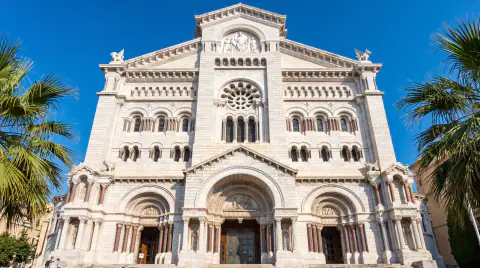 01Monaco Grand Prix experienceCathedral of Notre-Dame-ImmaculéeExplore experience →
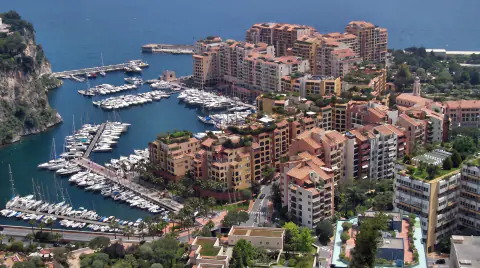 02Monaco Grand Prix experienceFontvieilleExplore experience →
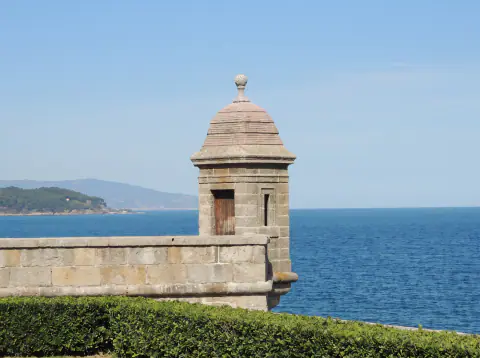 03Monaco Grand Prix experienceFort AntoineExplore experience →
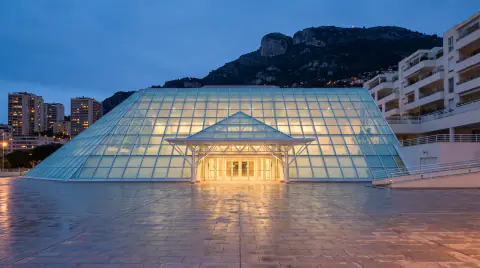 04Monaco Grand Prix experienceGrimaldi ForumExplore experience →
 05Monaco Grand Prix experienceJardin Exotique de MonacoExplore experience →
 06Monaco Grand Prix experienceJardin Japonais de MonacoExplore experience →
 07Monaco Grand Prix experienceLa CondamineExplore experience →
 08Monaco Grand Prix experienceLarvottoExplore experience →
 09Monaco Grand Prix experienceLe Rocher / Monaco-VilleExplore experience →
 10Monaco Grand Prix experienceLes Ballets de Monte-CarloExplore experience →
 11Monaco Grand Prix experienceMareterraExplore experience →
 12Monaco Grand Prix experienceMonte-CarloExplore experience →
 13Monaco Grand Prix experienceNouveau Musée National de MonacoExplore experience →
 14Monaco Grand Prix experienceOceanographic Museum of MonacoExplore experience →
 15Monaco Grand Prix experienceOpéra de Monte-CarloExplore experience →
 16Monaco Grand Prix experiencePrince's Palace of MonacoExplore experience →
 17Monaco Grand Prix experienceThe Museum of Old MonacoExplore experience →
 18Monaco Grand Prix experienceThe Museum of Stamps and CoinsExplore experience →
 19Monaco Grand Prix experienceThe Prince's Car CollectionExplore experience →
 Plan / Itinerary builderBuild your Monaco Grand Prix dayStart planning →