Monaco’s lap runs through public streets between the harbour and casino. Compare the viewing areas, then check your ticket’s entry and access instructions.
3.337km lap
3sectors
Street circuit
01
Choose the racing action
Compare corners, straights and the view from each area.
02
Check the ticket
Reserved seat or general admission? Check membership and access restrictions.
03
Match the entrance
Find the recommended gate, then follow your ticket’s entry instructions.
Choose the seat category and dates that suit your weekend.
Admission is for the selected area and dates.
Grandstand L GoldPiscine Rainier IIIMid-range$$Sunday €1,050+
Adult · single days
Thursday
€40
Friday
€300
Saturday
€800
Sunday
€1,050
Adult · weekend packages
Saturday–Sunday
€1,665
Friday–Sunday
€1,935
Children aged 6–15
Thursday
Free
Choose the seat category and dates that suit your weekend.
Admission is for the selected area and dates.
Gold is a seating category; hospitality is not included.
Grandstand NPiscine · north pontoonMid-range$$Sunday €800+
Adult · single days
Thursday
€40
Friday
€250
Saturday
€550
Sunday
€800
Adult · weekend packages
Saturday–Sunday
€1,215
Friday–Sunday
€1,440
Children aged 6–15
Thursday
Free
Friday
€125
Saturday
€275
Sunday
€400
Choose the seat category and dates that suit your weekend.
Admission is for the selected area and dates.
Grandstand O · upperPiscine · diving platformMid-range$$Sunday €900+
Adult · single days
Thursday
€40
Friday
€250
Saturday
€650
Sunday
€900
Adult · weekend packages
Saturday–Sunday
€1,395
Friday–Sunday
€1,620
Children aged 6–15
Thursday
Free
Friday
€125
Saturday
€325
Sunday
€450
Choose the seat category and dates that suit your weekend.
Admission is for the selected area and dates.
Grandstand O · lowerPiscine · diving platformMid-range$$Sunday €800+
Adult · single days
Thursday
€40
Friday
€250
Saturday
€550
Sunday
€800
Adult · weekend packages
Saturday–Sunday
€1,215
Friday–Sunday
€1,440
Children aged 6–15
Thursday
Free
Friday
€125
Saturday
€275
Sunday
€400
Choose the seat category and dates that suit your weekend.
Admission is for the selected area and dates.
Grandstand PPiscine · south pontoonMid-range$$Sunday €800+
Adult · single days
Thursday
€40
Friday
€250
Saturday
€550
Sunday
€800
Adult · weekend packages
Saturday–Sunday
€1,215
Friday–Sunday
€1,440
Children aged 6–15
Thursday
Free
Friday
€125
Saturday
€275
Sunday
€400
Choose the seat category and dates that suit your weekend.
Admission is for the selected area and dates.
Grandstand T · coveredCale de HalageMid-range$$Sunday €1,050+
Adult · single days
Thursday
€40
Friday
€300
Saturday
€800
Sunday
€1,050
Adult · weekend packages
Saturday–Sunday
€1,665
Friday–Sunday
€1,935
Children aged 6–15
Thursday
Free
Friday
€150
Saturday
€400
Sunday
€525
Choose the seat category and dates that suit your weekend.
Admission is for the selected area and dates.
Grandstand T · upperCale de HalageMid-range$$Sunday €950+
Adult · single days
Thursday
€40
Friday
€250
Saturday
€700
Sunday
€950
Adult · weekend packages
Saturday–Sunday
€1,485
Friday–Sunday
€1,710
Children aged 6–15
Thursday
Free
Friday
€125
Saturday
€350
Sunday
€475
Choose the seat category and dates that suit your weekend.
Admission is for the selected area and dates.
Grandstand T · lowerCale de HalageMid-range$$Sunday €850+
Adult · single days
Thursday
€40
Friday
€250
Saturday
€600
Sunday
€850
Adult · weekend packages
Saturday–Sunday
€1,305
Friday–Sunday
€1,530
Children aged 6–15
Thursday
Free
Friday
€125
Saturday
€300
Sunday
€425
Choose the seat category and dates that suit your weekend.
Admission is for the selected area and dates.
Grandstand VAntony NoghèsMid-range$$Sunday €950+
Adult · single days
Thursday
€40
Friday
€250
Saturday
€700
Sunday
€950
Adult · weekend packages
Saturday–Sunday
€1,485
Friday–Sunday
€1,710
Children aged 6–15
Thursday
Free
Friday
€125
Saturday
€350
Sunday
€475
Choose the seat category and dates that suit your weekend.
Admission is for the selected area and dates.
Grandstand V GoldAntony NoghèsMid-range$$Sunday €1,050+
Adult · single days
Thursday
€40
Friday
€300
Saturday
€800
Sunday
€1,050
Adult · weekend packages
Saturday–Sunday
€1,665
Friday–Sunday
€1,935
Children aged 6–15
Thursday
Free
Choose the seat category and dates that suit your weekend.
Admission is for the selected area and dates.
Gold is a seating category; hospitality is not included.
Zone ZAvenue J-F KennedyBudget$Sunday €300+
Adult · single days
Friday
€75
Saturday
€150
Sunday
€300
Unnumbered standing admission. No Thursday or weekend-package price is listed for this area.
Admission is for the selected area and dates.
RocherStanding areaBudget$Sunday €200+
Adult · single days
Friday
€50
Saturday
€100
Sunday
€200
Unnumbered standing admission. No Thursday or weekend-package price is listed for this area.
Admission is for the selected area and dates.
Ages 6–15: Thursday grandstand admission is free. Friday–Sunday child fares are half the adult rate in eligible grandstands. Gold seats and standing zones have no published Friday–Sunday child fare; child package fares are not listed.
Drones, model aircraft, and remotely piloted aerial systems
Glass bottles, glass food jars, and hard metal thermoses/flasks
Laser pointers, high-powered optical strobes, and megaphones/air horns
Bicycles, electric scooters, hoverboards, skateboards, and rollerblades
Commercial broadcasting video cameras and audio recording equipment
Ambush marketing materials, political banners, and unauthorized commercial flyers
A lap in context
Monaco corner guide.
The map labels 18 named corners. FIA circuit numbering runs to 19.
T1
Sainte Dévote
The first corner after the start, at the foot of the climb out of the harbour.
Monaco’s patron saint, a fourth-century martyr.
T2
Beau Rivage
The climb away from Sainte Dévote towards Casino.
“Beautiful coastline” — the stretch runs along the Mediterranean.
T3
Massenet
The left-hand sweep at the top of the hill, beside the casino gardens.
Jules Massenet, the French opera composer, memorialised by a statue nearby.
T4
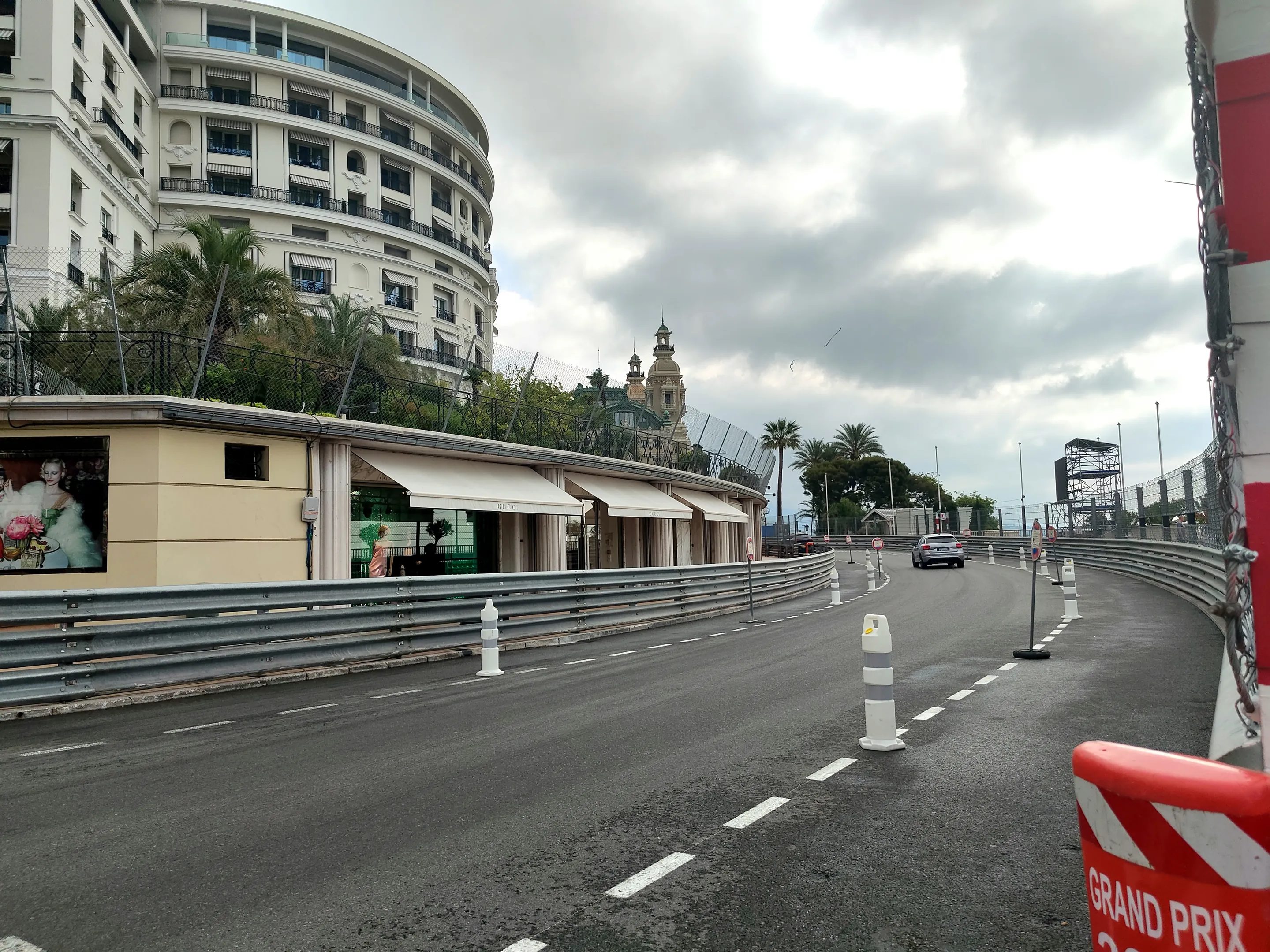
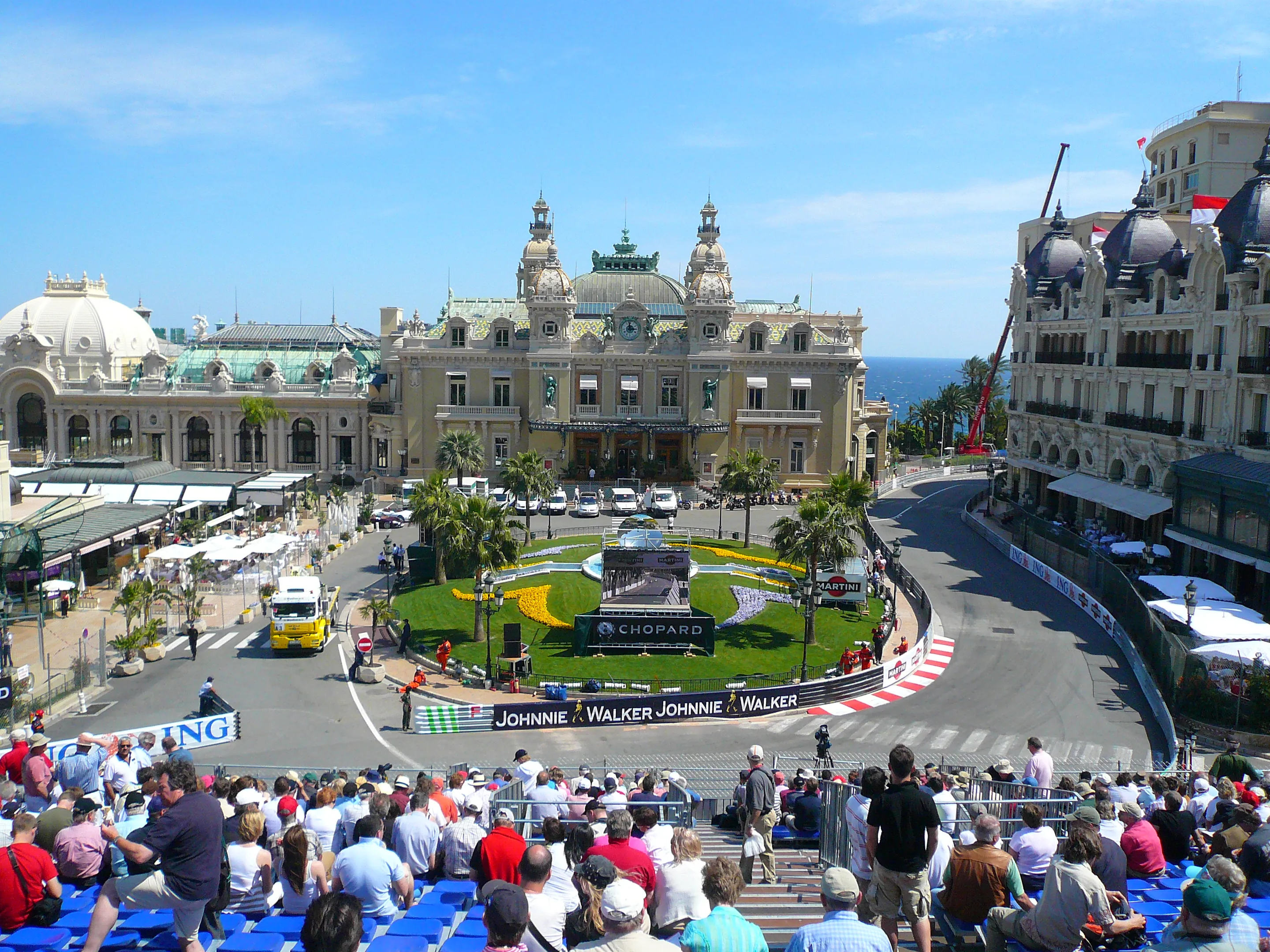
Casino Square
The highest, most photographed part of the lap, in front of the casino.
The Casino de Monte-Carlo, opened in 1865.
T5
Mirabeau Supérieure
The first of two corners named for the same hotel, on the descent.
The Mirabeau Hotel that formerly stood beside Turn 7.
T6
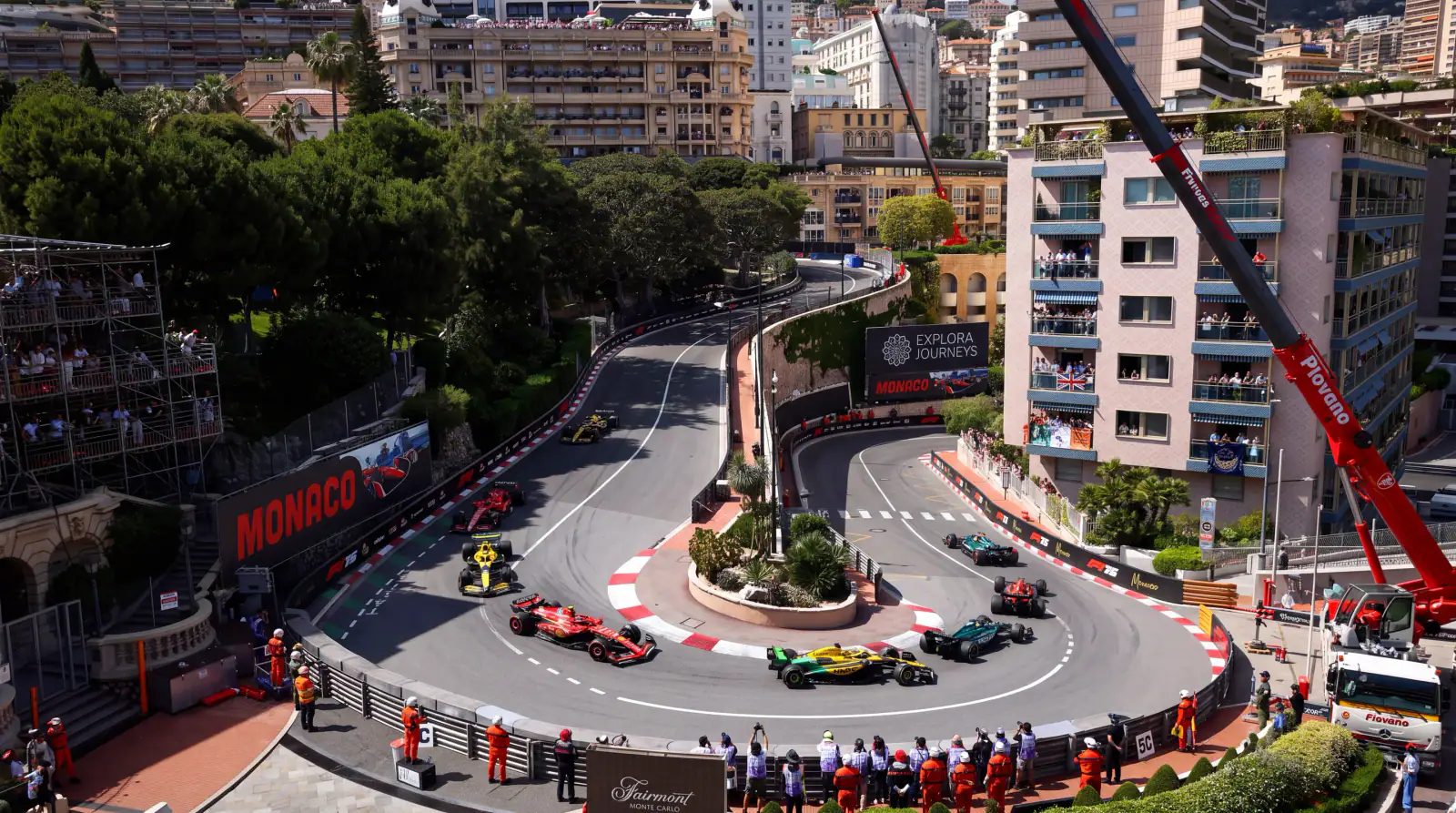
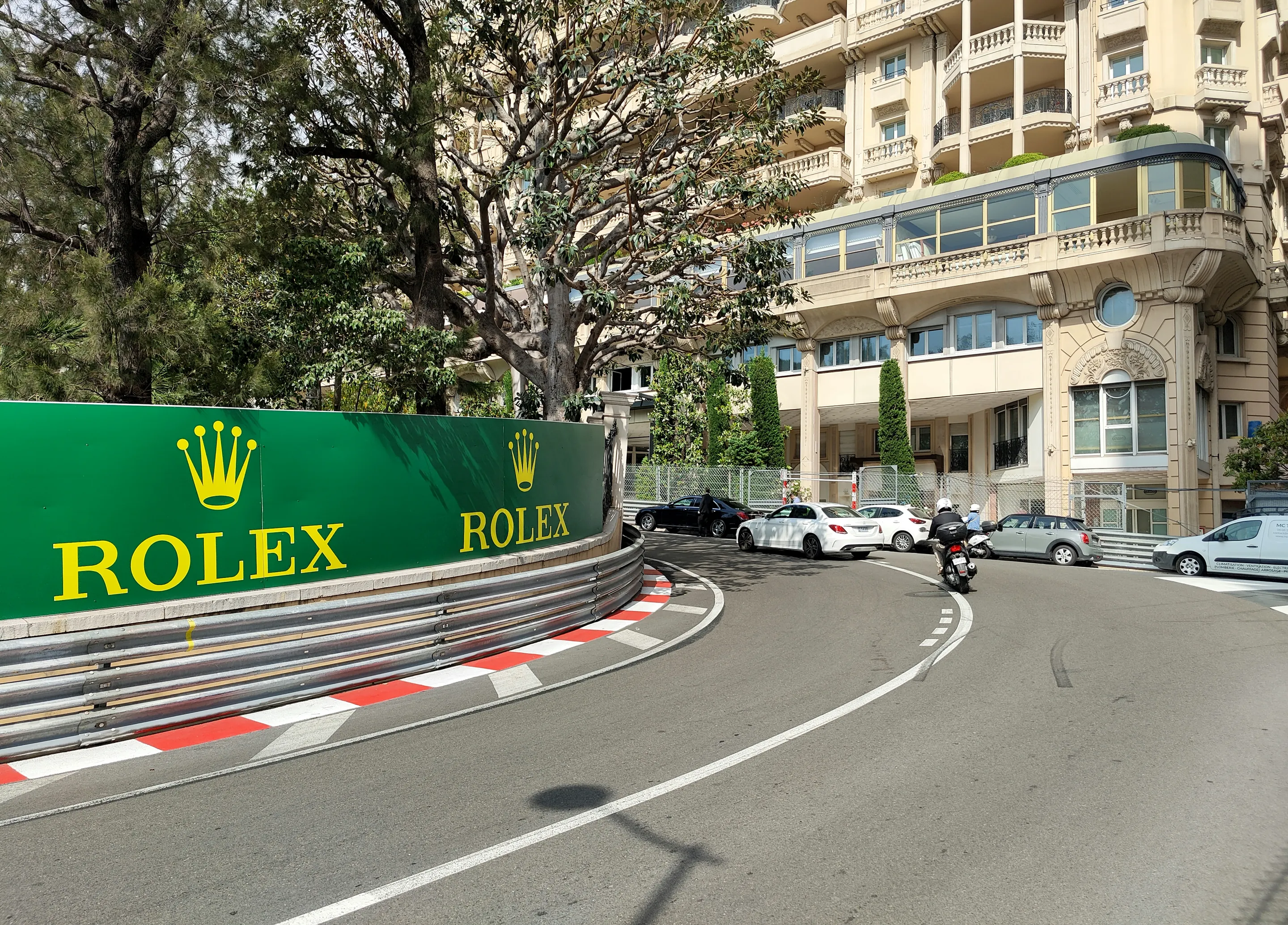
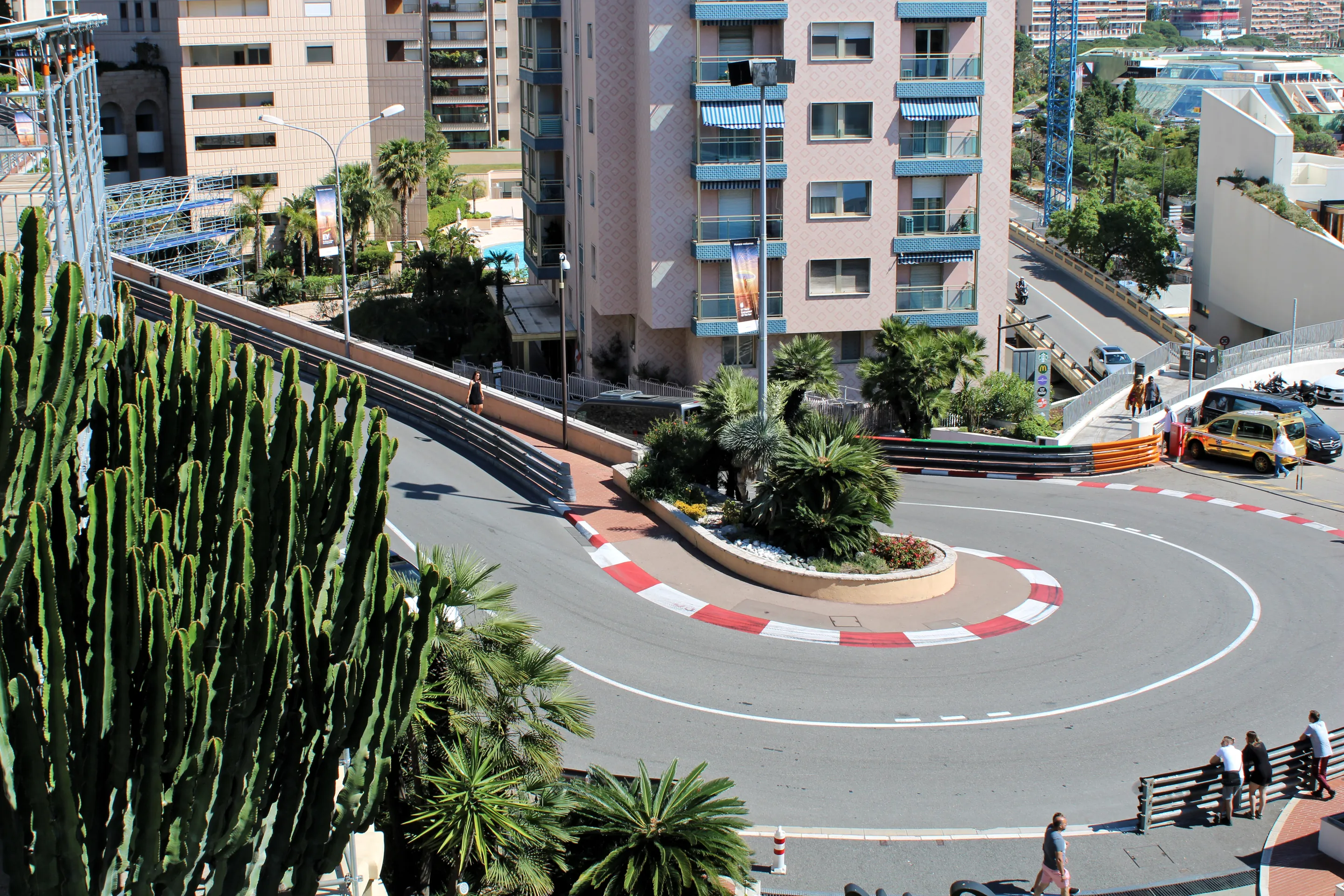
Hairpin
The slowest corner on the Formula 1 calendar’s most familiar street lap.
Its U-shape. Formerly Station Hairpin, after a railway station that no longer stands there.
T7
Mirabeau Inférieure
The lower of the two Mirabeau corners, continuing the descent to the sea.
The same hotel; “inférieure” for its lower elevation.
T8
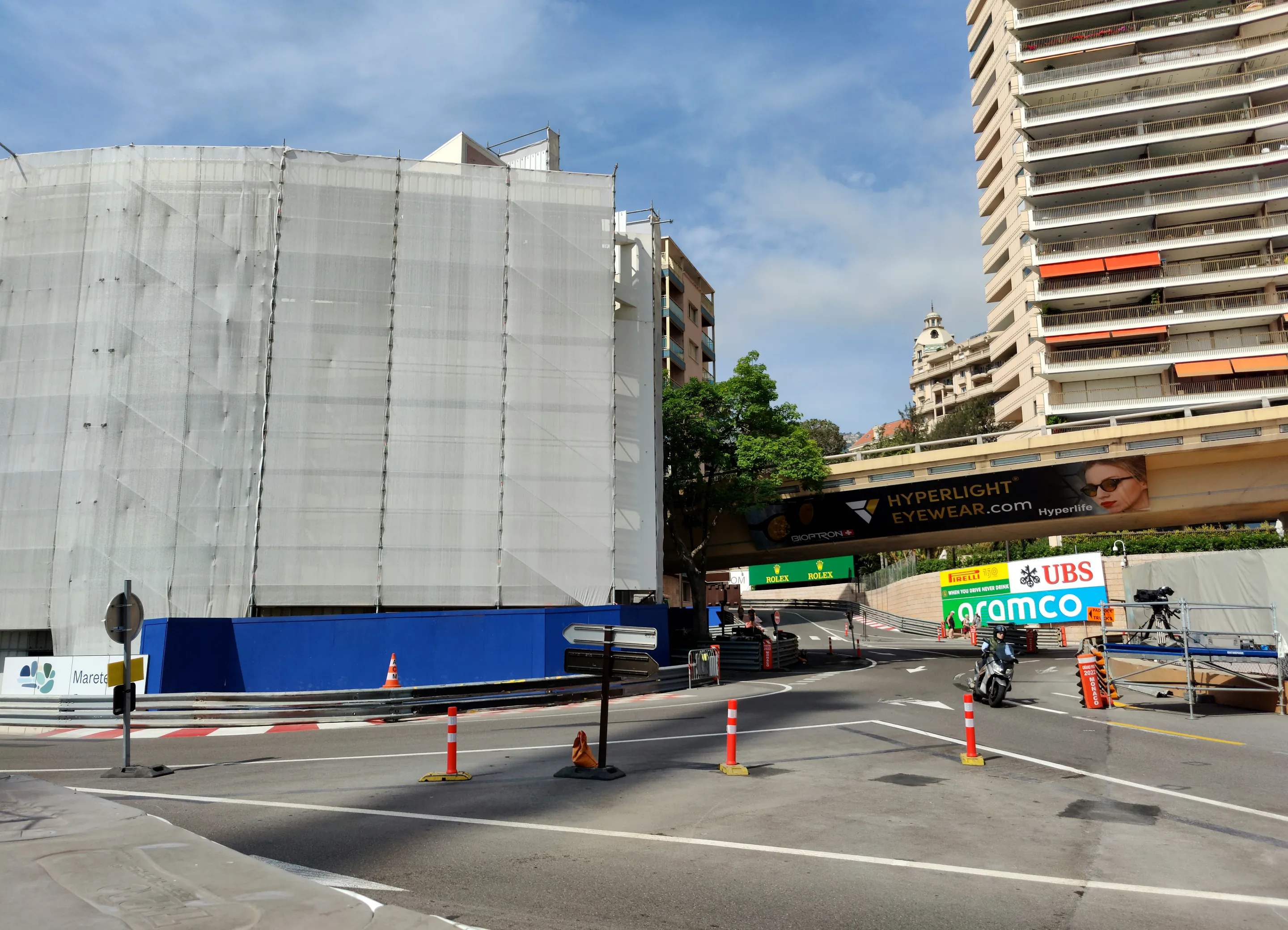
Portier
The last corner before the circuit drops into the tunnel.
Le Portier, a residential quarter of Monaco.
T9
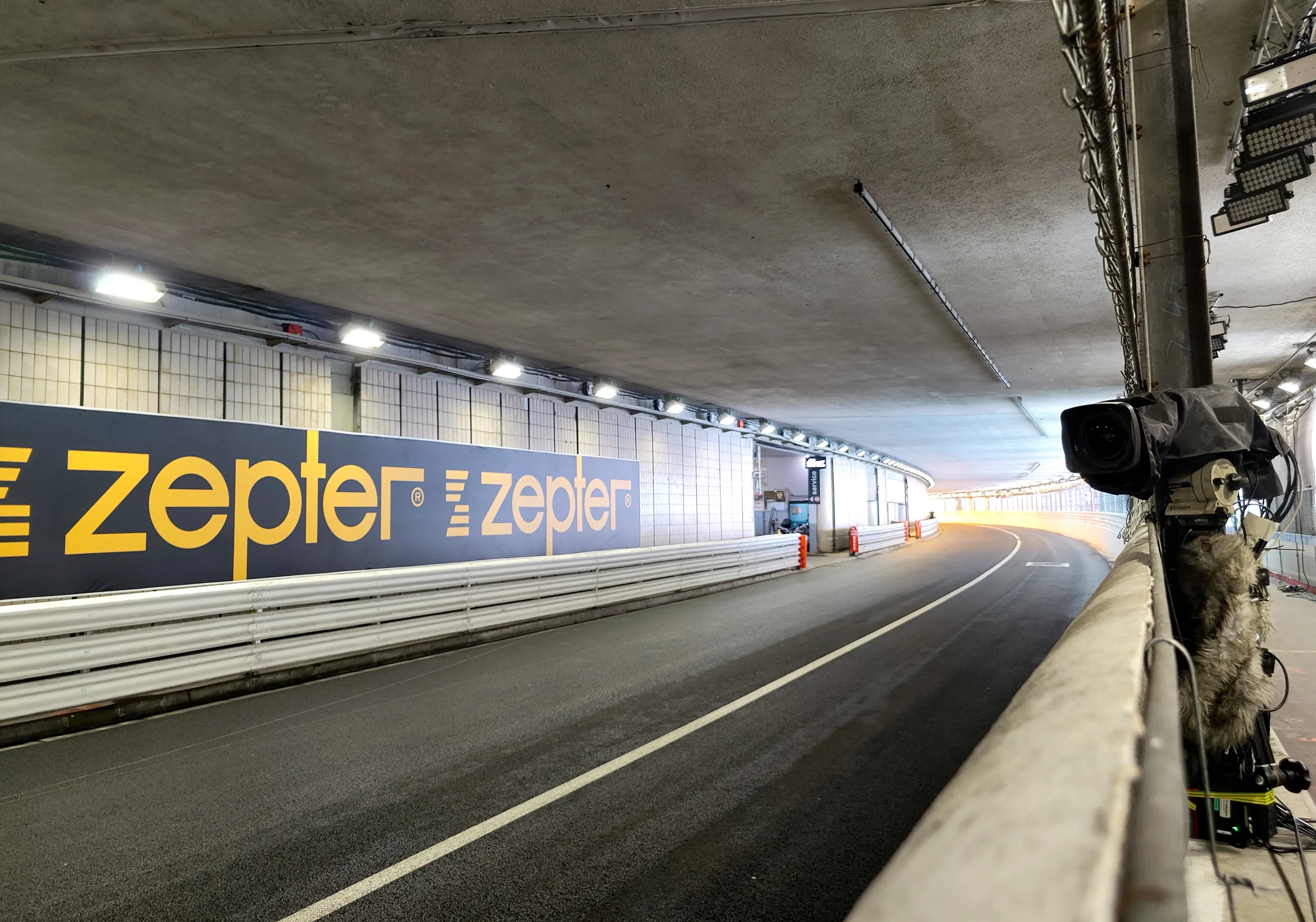
The Tunnel
The enclosed section beneath the hotel terraces, and the only covered part of the lap.
The enclosed passage itself.
T10–11
Nouvelle Chicane
The chicane at the exit of the tunnel, back down at harbour level.
Formerly the Chicane du Port; renamed “nouvelle” — new — in 1986.
T12
Tabac
The left-hander along the harbour front.
A tobacconist set into the corner.
T13–16
Swimming Pool
The fast sequence of chicanes around the nautical stadium, beside the harbour.
The Rainier III Nautical Stadium and its swimming pool.
T17
Turn 17
Numbered on the FIA circuit map; not named in Formula 1’s corner guide.
T18
La Rascasse
The tight right-hander at the far end of the harbour.
A bar just over the barriers, itself named for a Mediterranean fish.
T19
Antony Noghès
The final corner, returning the lap to the start line.
The founder of the Monaco Grand Prix, who organised the first race in 1929.
Corner photography
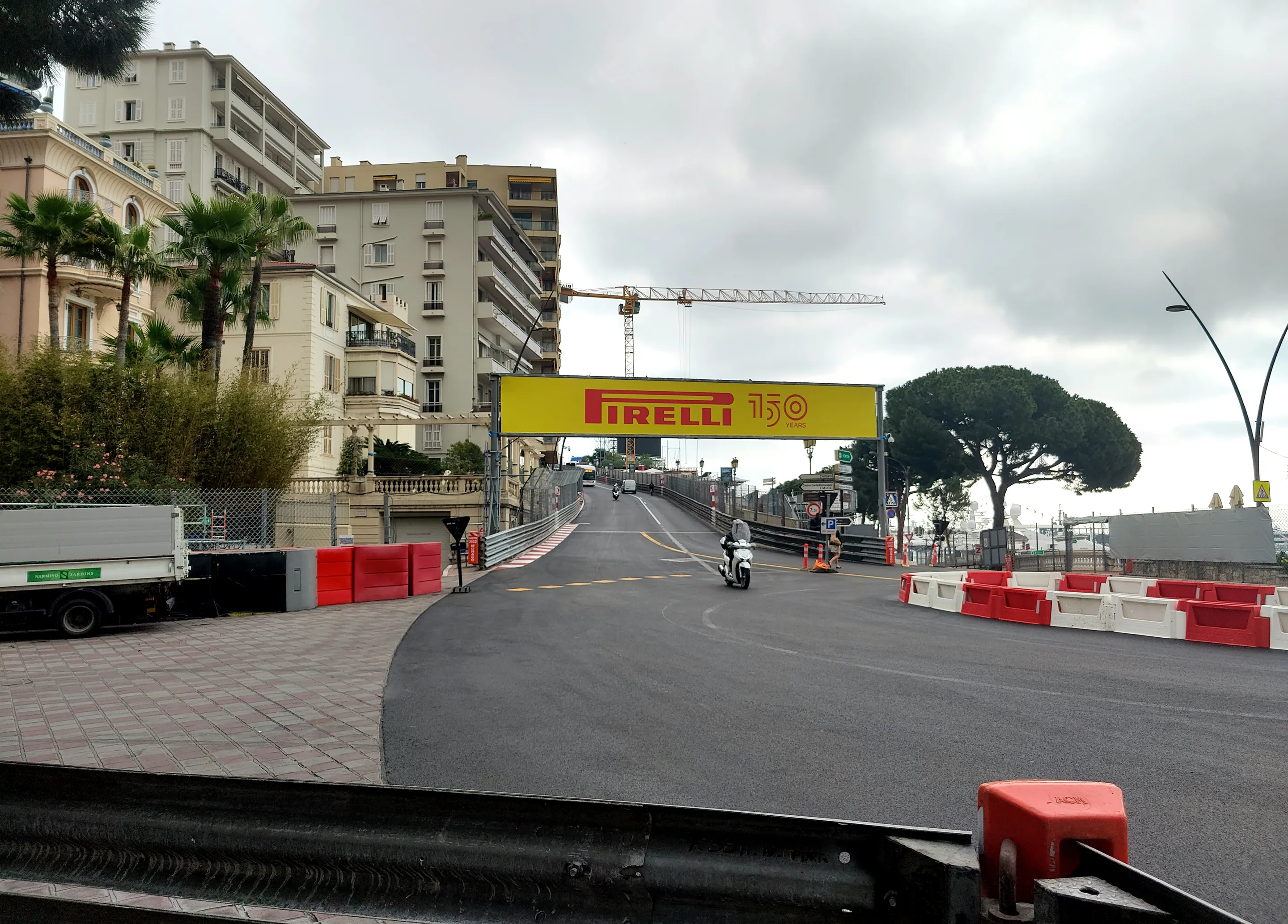
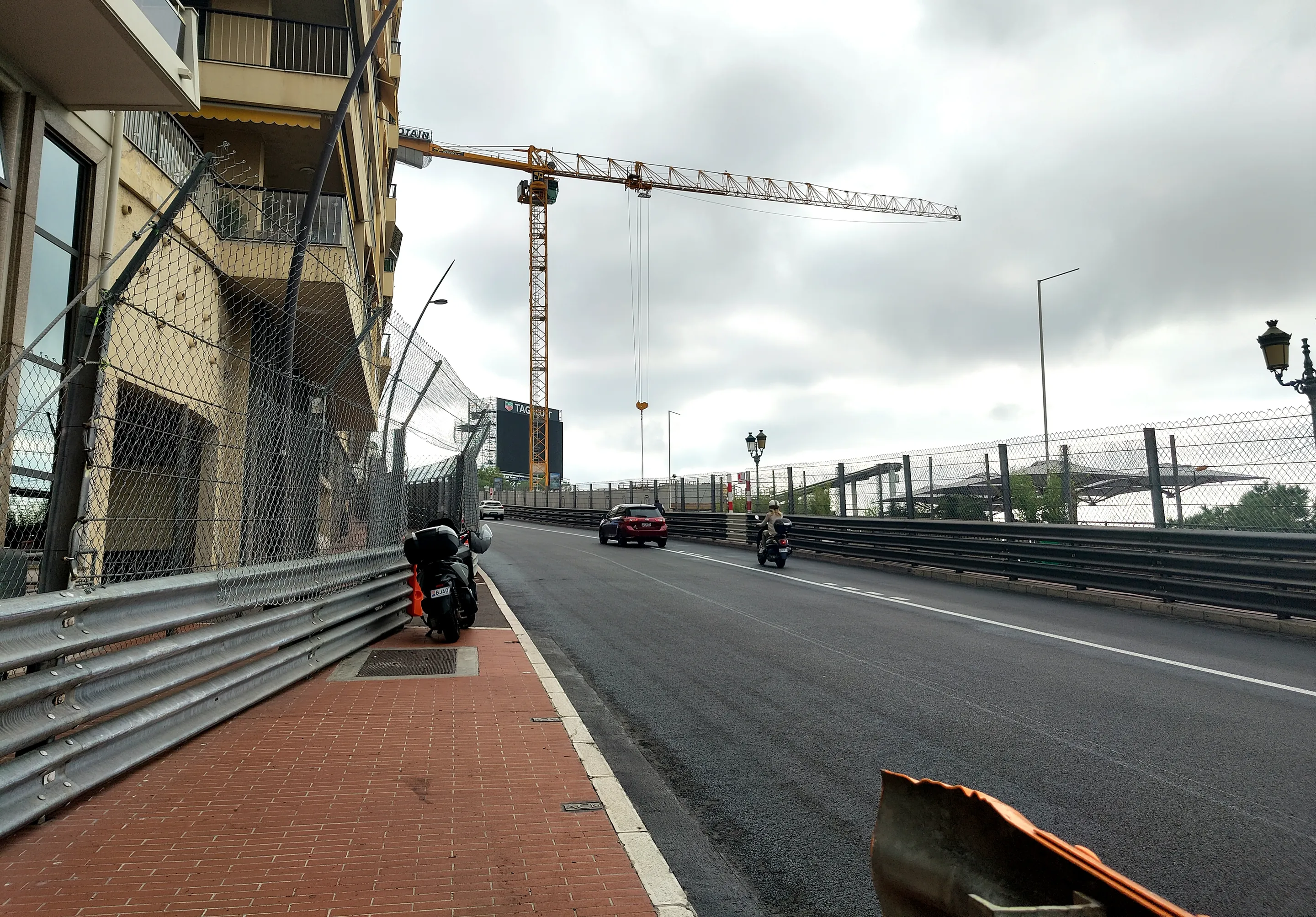
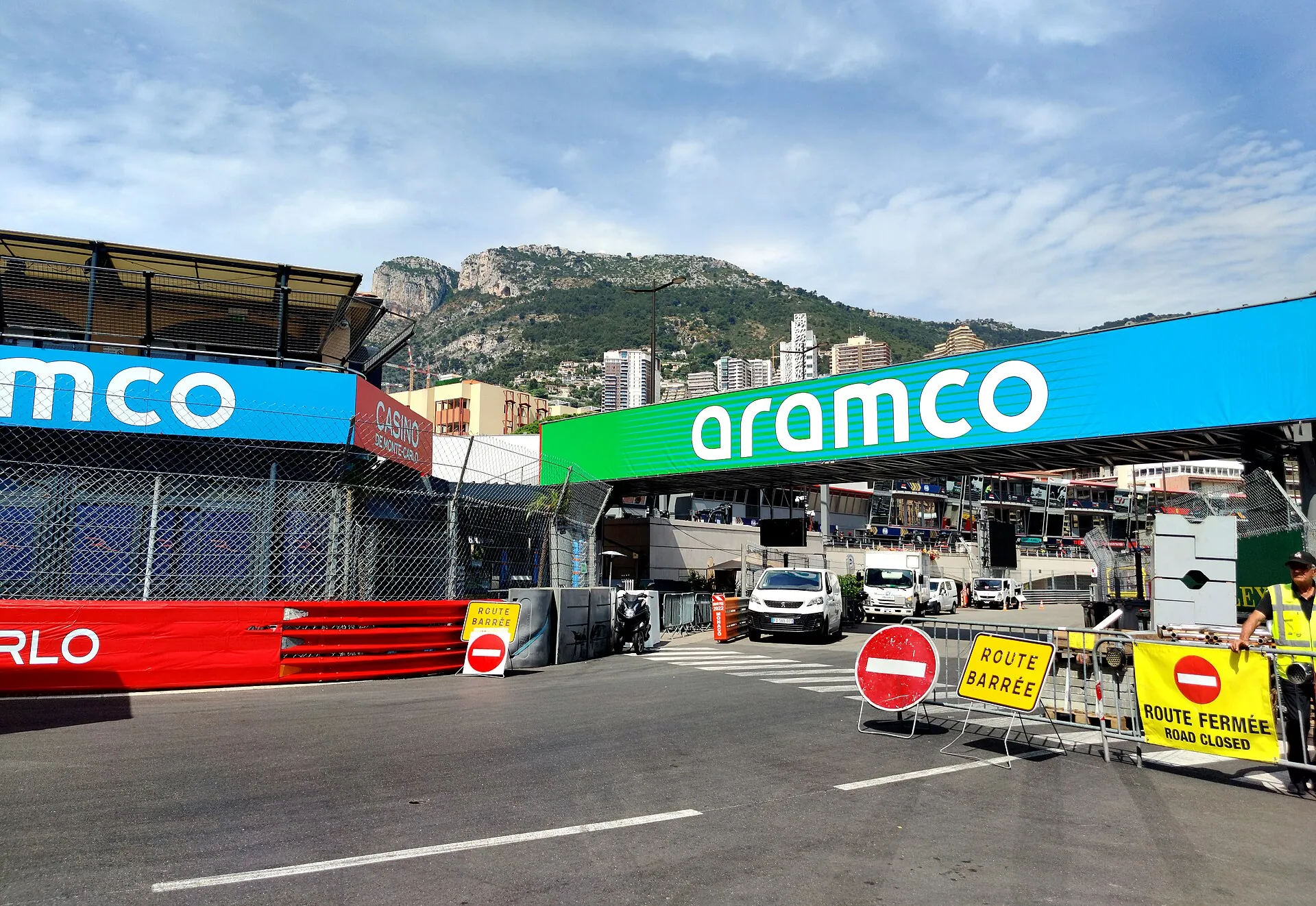
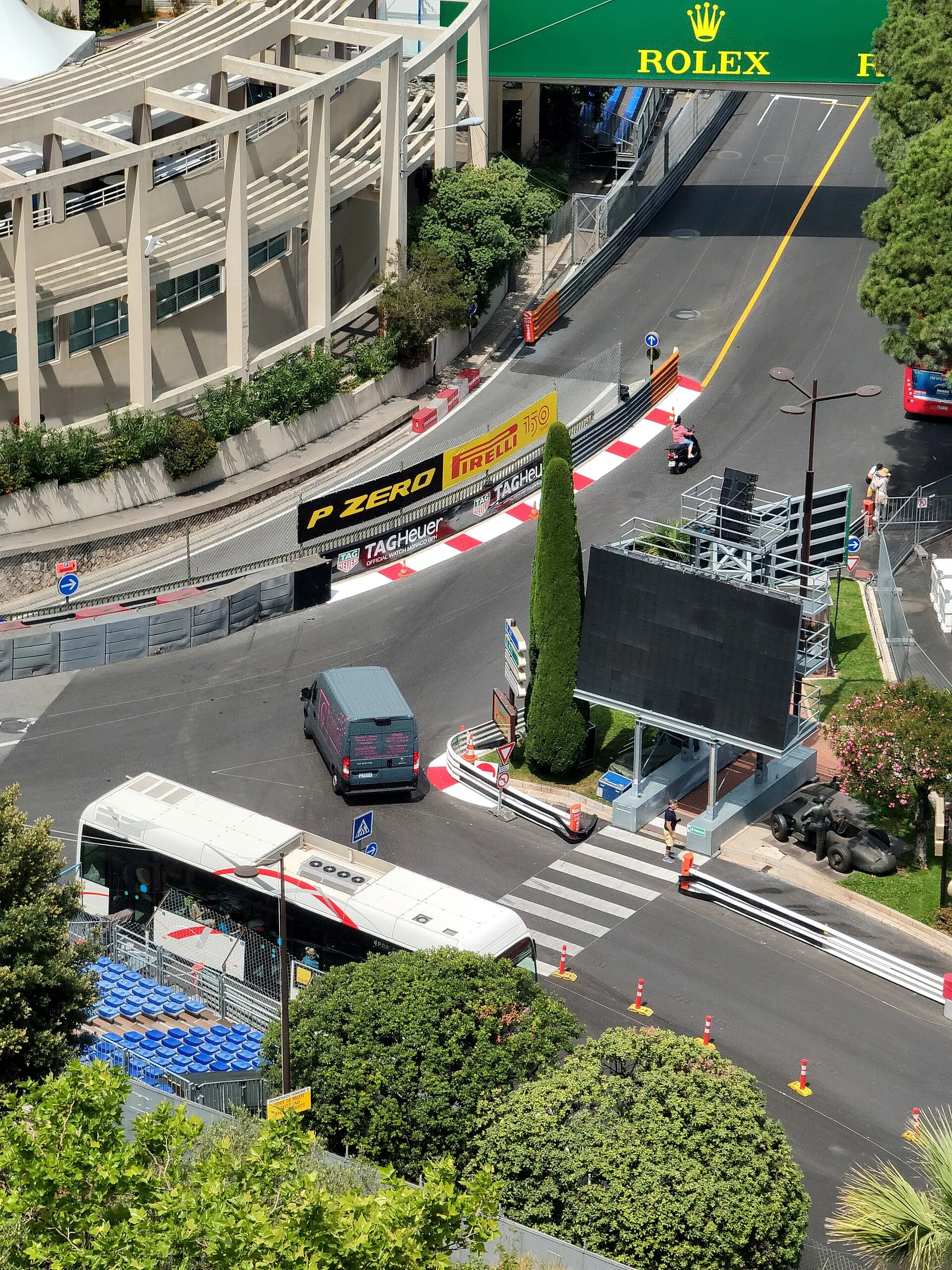
The roads between race weekends.
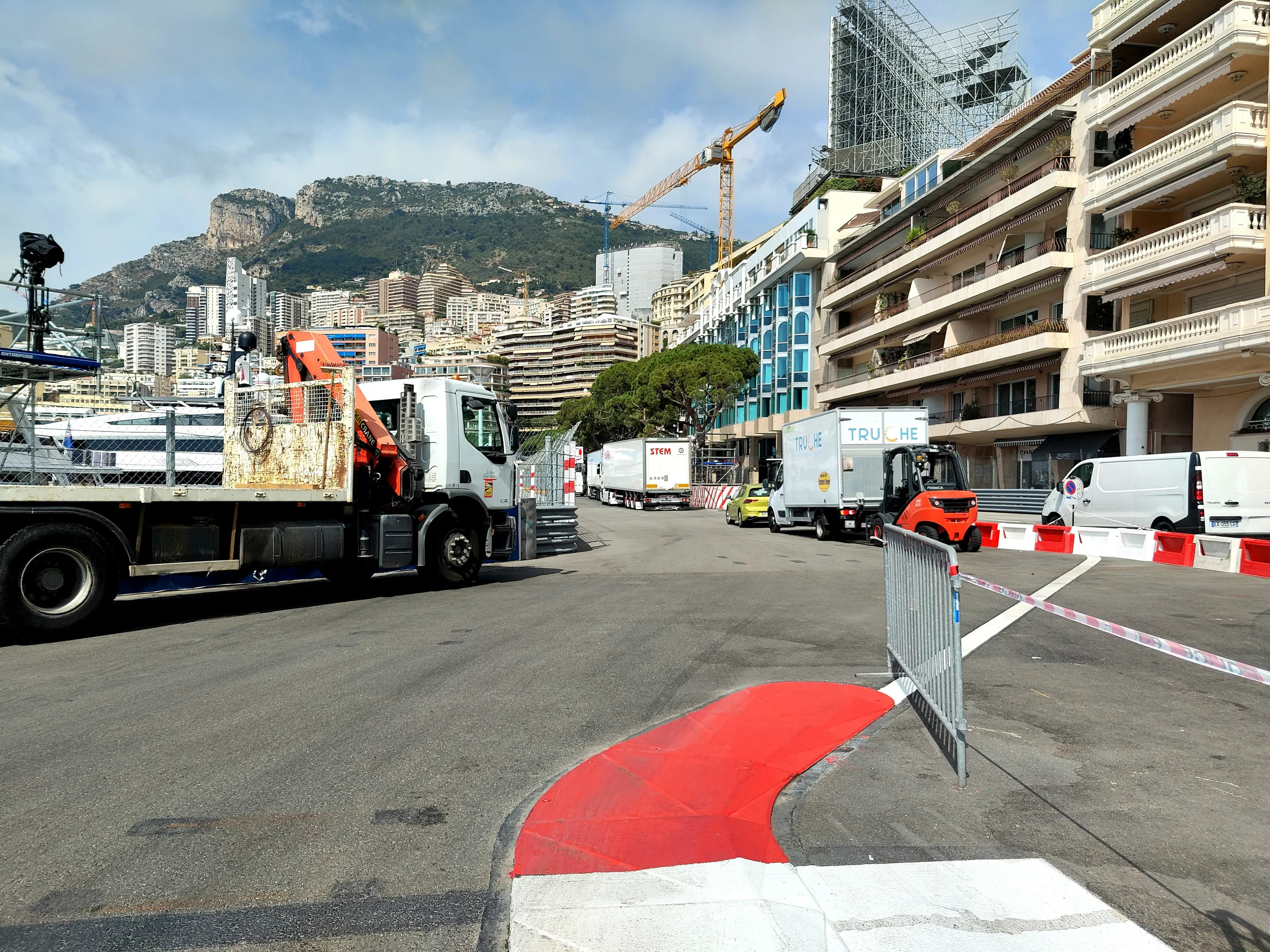
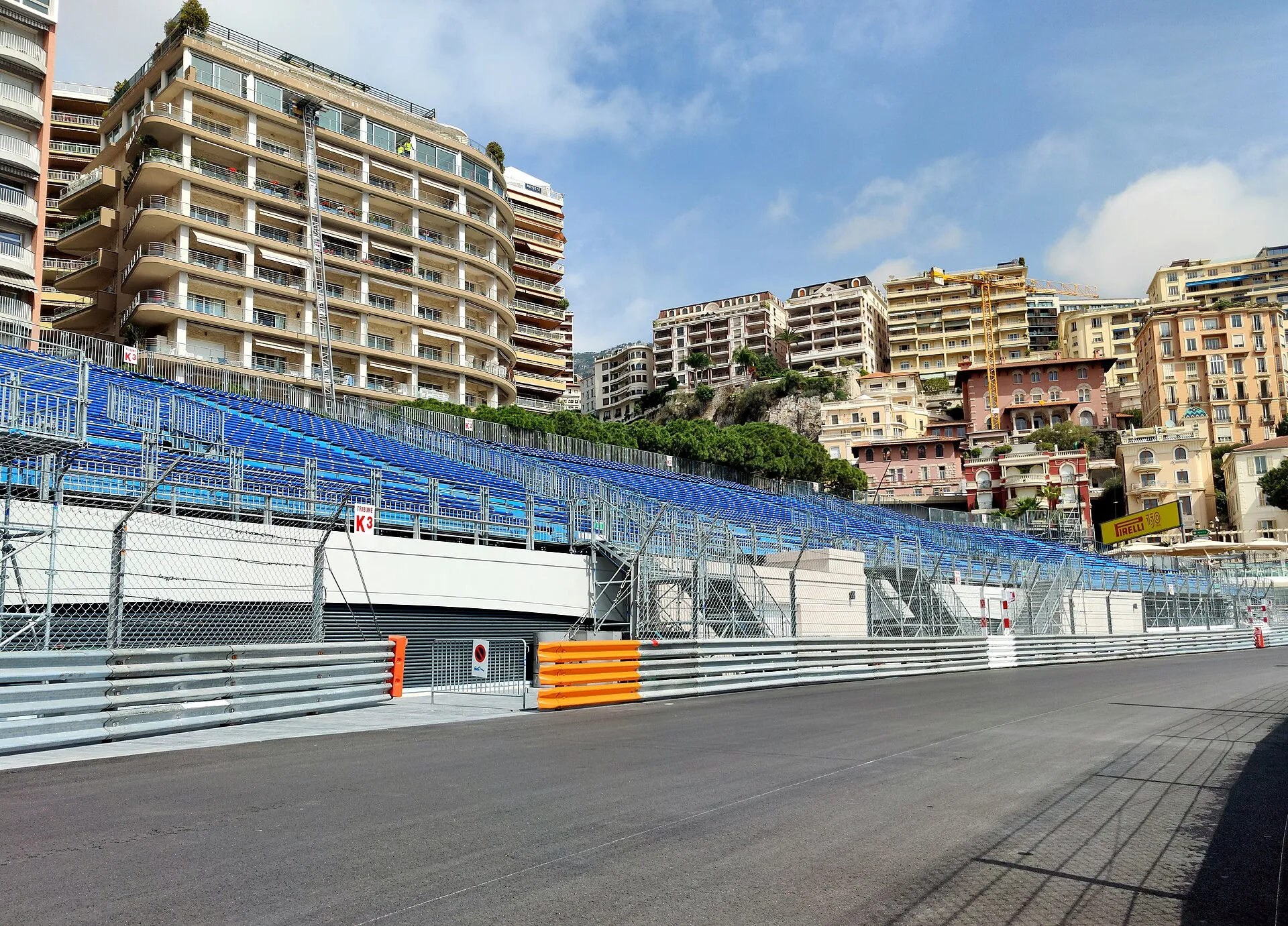
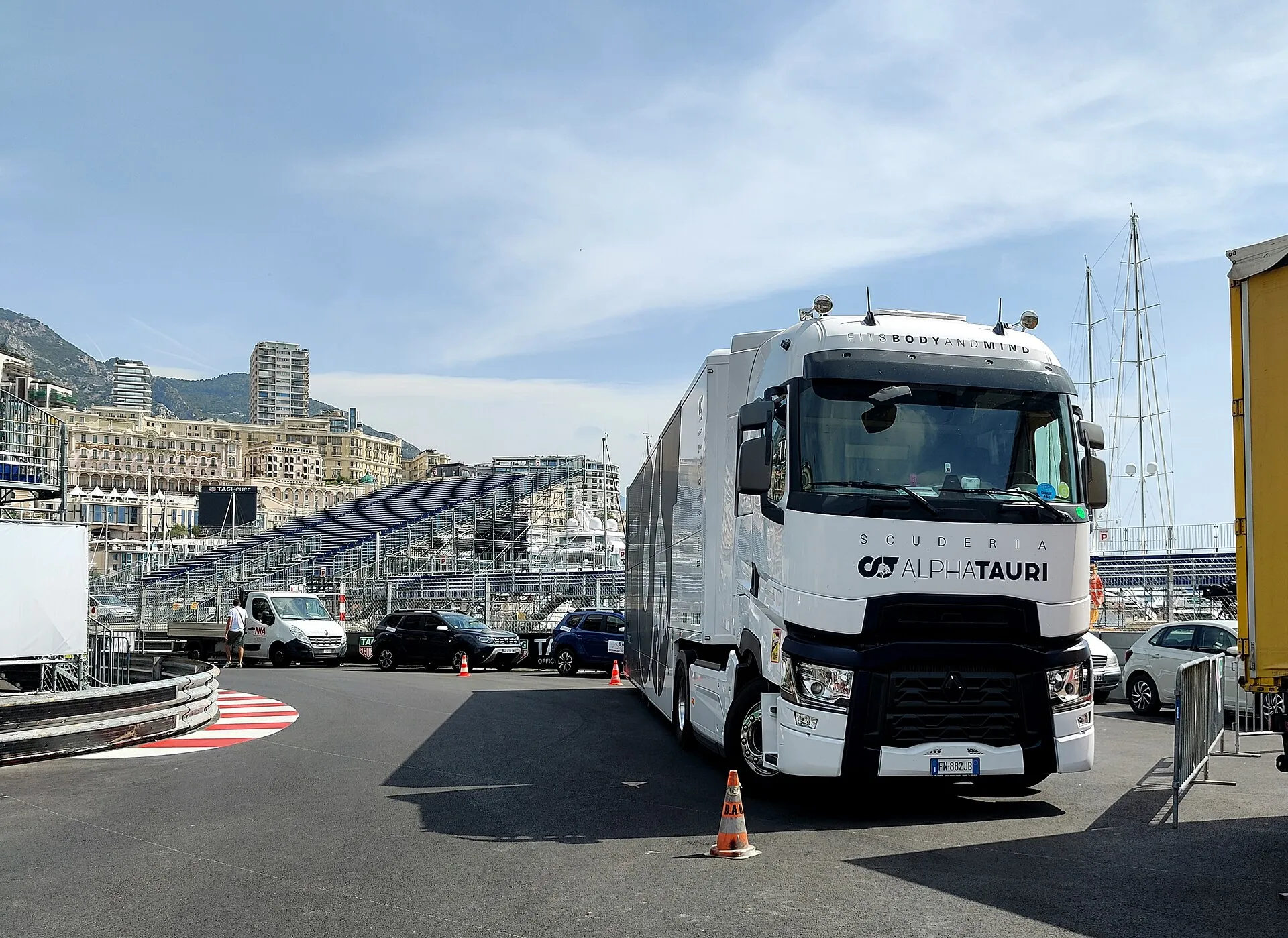
Authentic photographs of the named sections, selected only where the source identifies the precise corner or a clearly stated complex. They show the circuit as streets rather than promising a race-week viewing position or access route.