In depth
Larvotto
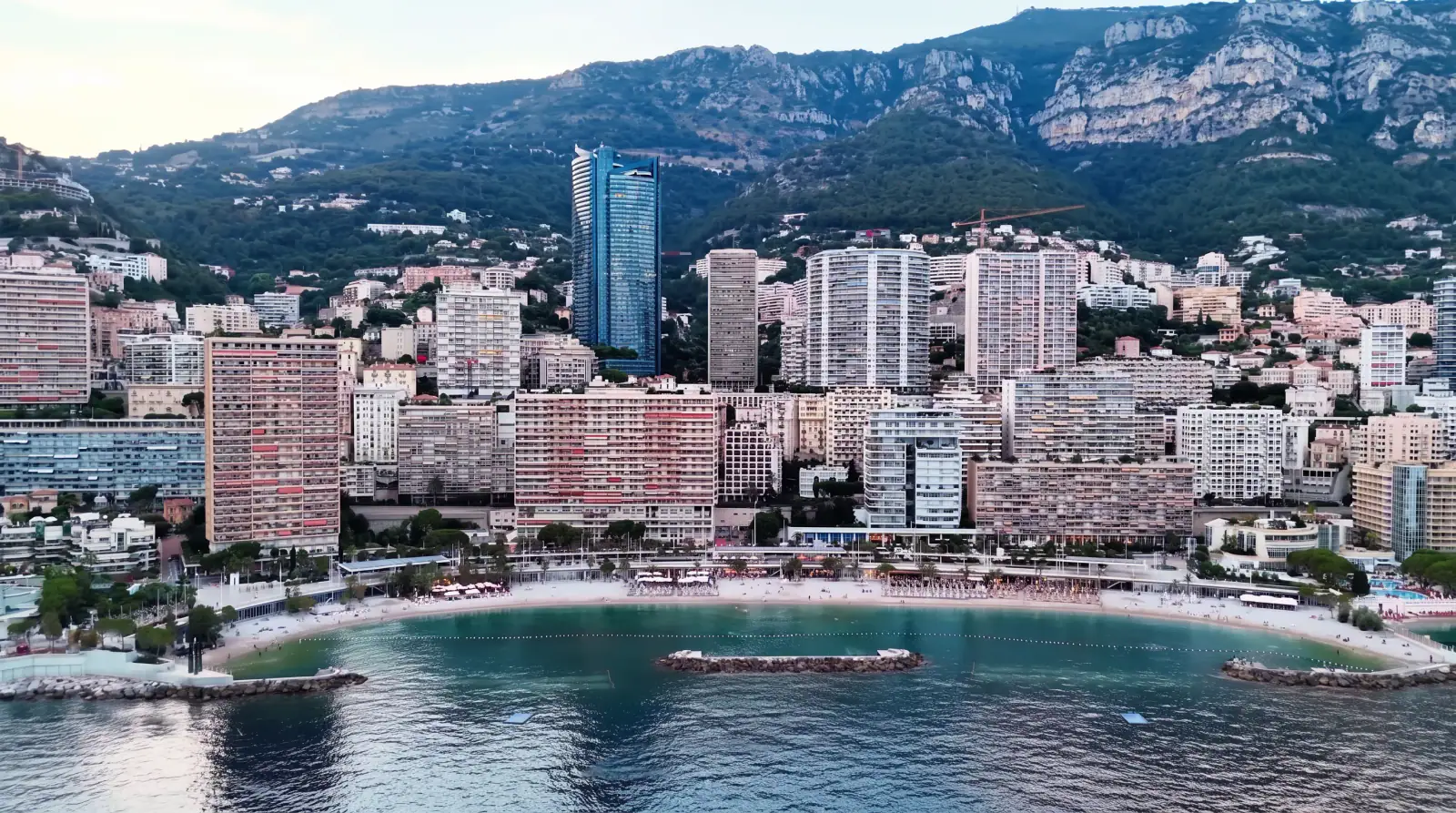
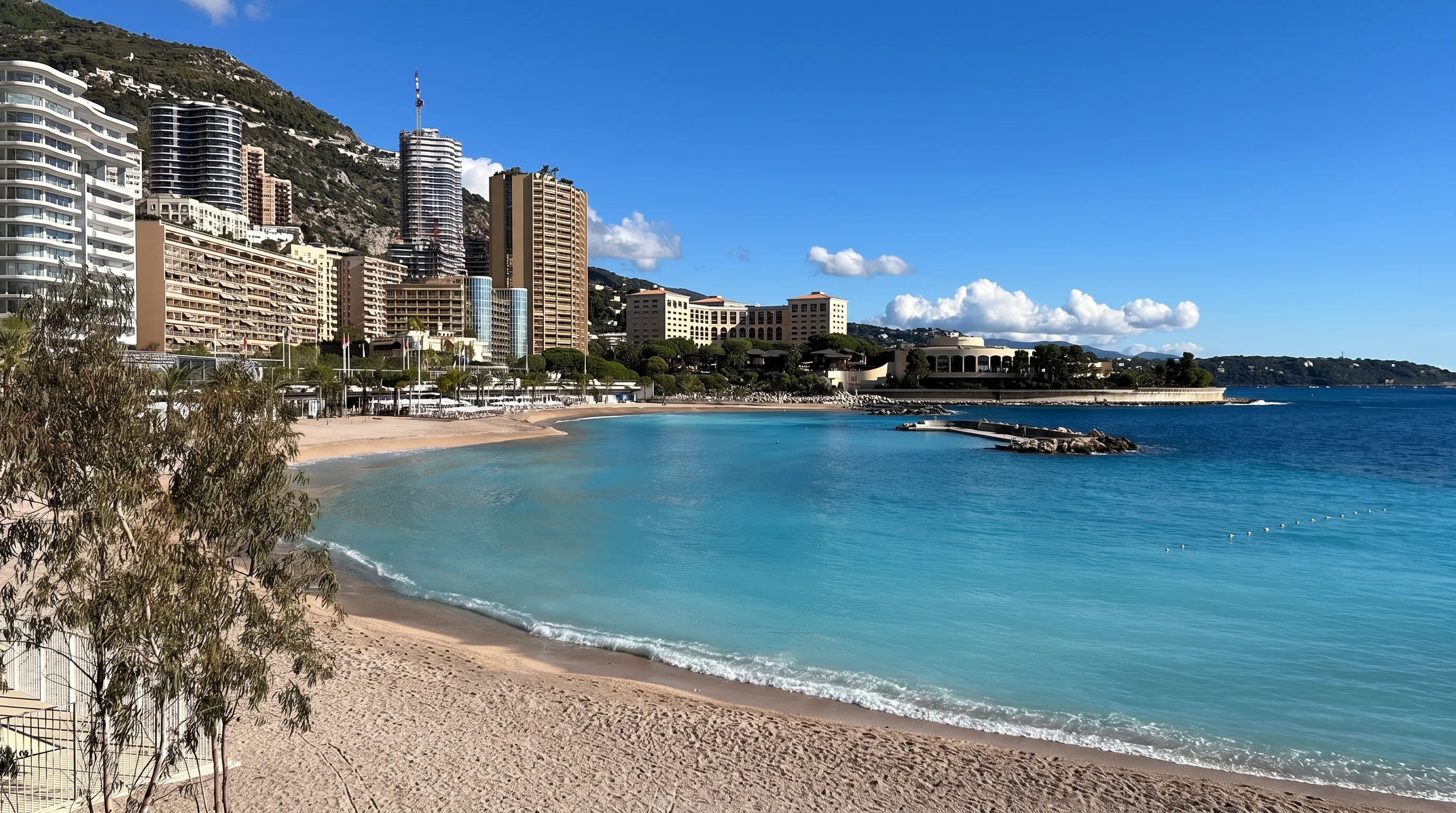
Monaco's free public beach, rebuilt by Renzo Piano and opened in 2021 — plus a 500-metre promenade following the bay and a free Japanese garden built on the roof of the bus station.
Story · Visit · Route · Links
Choose your depth
Essentials or more detail?
See visiting essentials, or read more about the history and places nearby.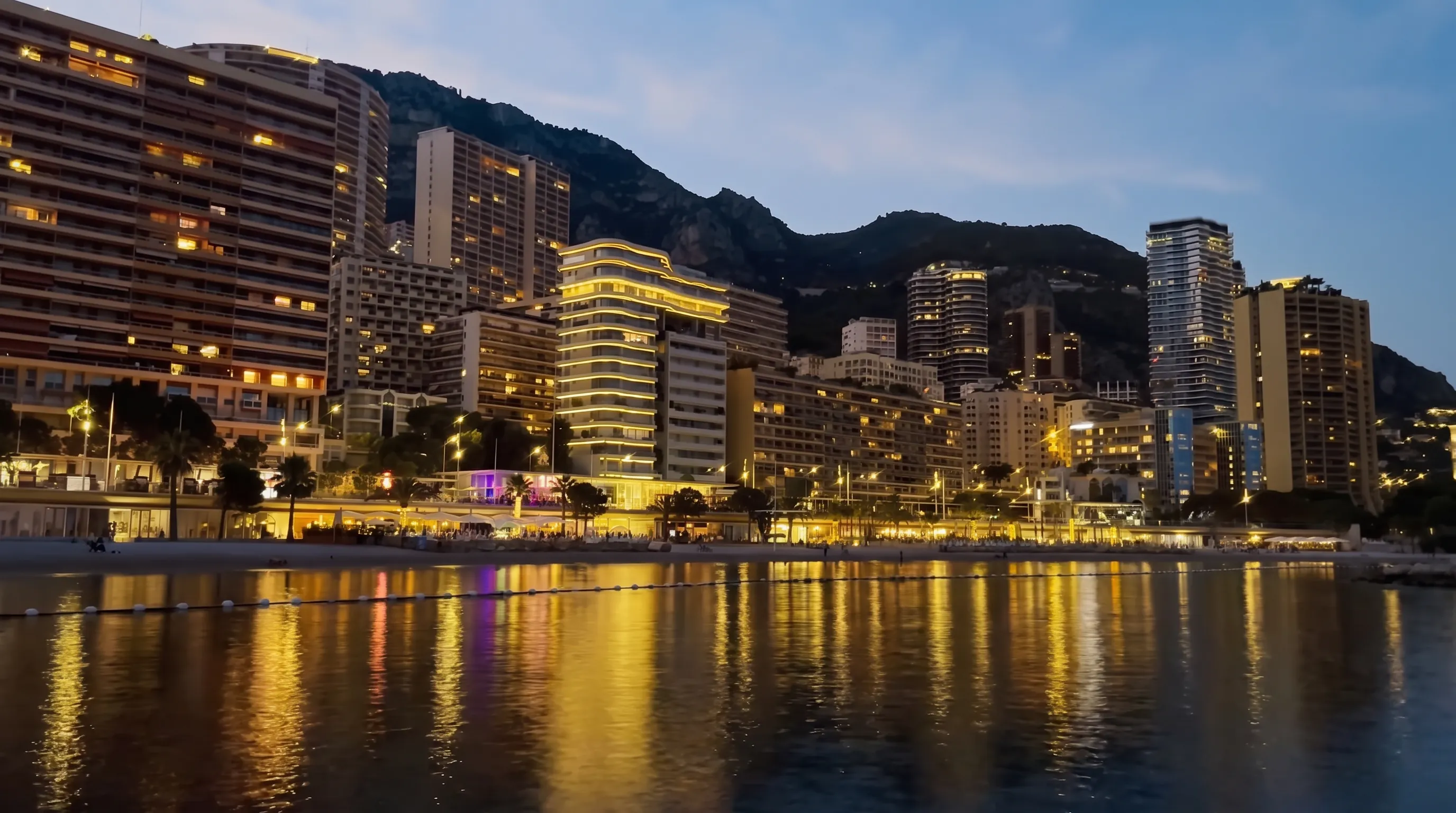
01 The experience
What to expect.
Why it matters
It is the free half of Monaco. A visitor who cannot spend money can have a genuinely good day here — swim, walk the promenade, sit in the Japanese garden — and that is not true anywhere else in the principality.
It is a serious piece of contemporary design. Renzo Piano and Michel Desvigne are not names you expect on a municipal beach. The scheme unified a waterfront that had grown up piecemeal, added wave breakers between the existing dikes so the beach survives winter storms, and put contemporary commercial pavilions under a single promenade structure.
And it is where families should be. The Rock has one great museum and a lot of stairs; Monte-Carlo has a casino and luxury retail. Larvotto has sand, shallow water, shade and space, all free.
What visitors should notice
The promenade as a single continuous gesture. It follows the curve of the bay rather than cutting across it, and everything — the beach access, the restaurants, the planting — hangs off that one line. Walk its full 500 metres rather than dropping onto the sand at the first opportunity.
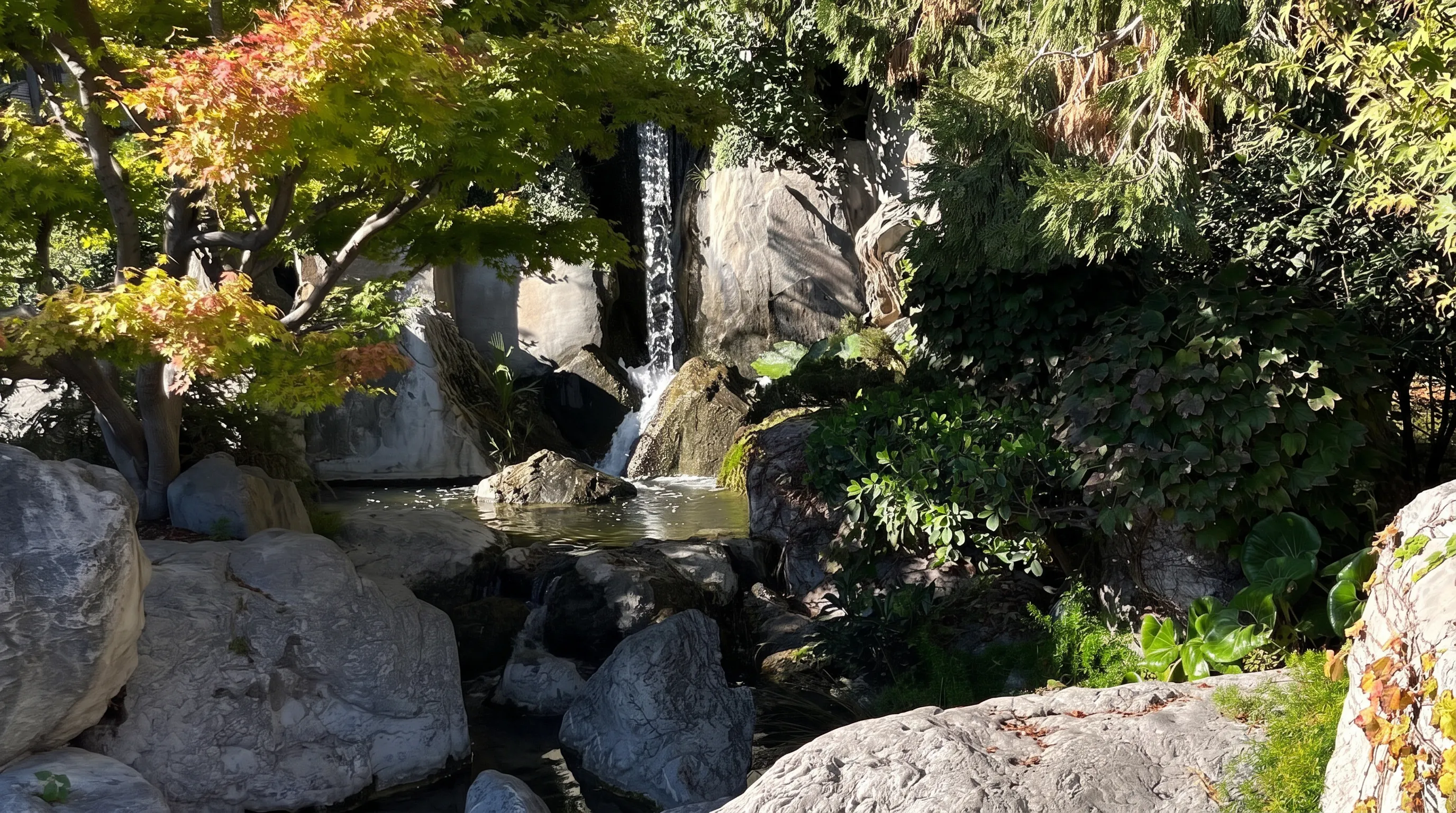
In the Japanese Garden, the fact that you are standing on a roof. Seven thousand square metres of ponds, rocks, raked gravel and pines, on a concrete slab built over the bus station. It took more than seventeen months to prepare before it opened.
And Mareterra, alongside — the land-extension district completed in the 2020s, by the same designers. Larvotto is where you can see Monaco still making itself.
Who will enjoy it
Families, unreservedly — this is the answer to the question every other Monaco quarter dodges. Swimmers. Anyone who wants a free day. People interested in contemporary architecture and landscape, who will get more from the promenade than they expect. And anyone visiting an exhibition at the Grimaldi Forum.
It also suits an evening: the promenade is pleasant after the heat, and it is the one part of Monaco where the sea is the point rather than the view.
Who may find it difficult
The spring closure. Swimming is prohibited for around three weeks while the beach is re-profiled, usually in April. It is announced by the government each year but it catches people.
Larvotto is a Mediterranean beach, which means it is shingle and coarse sand rather than soft sand, and it gets very busy in July and August. It is also small — 14,000 square metres is not a lot of beach for a principality that receives millions of visitors.
Anyone looking for old Monaco is in the wrong quarter, and by some distance. Everything here is modern, and the oldest thing of consequence is a garden from 1994.
And the Nouveau Musée National's Villa Sauber, in this quarter, has been closed for renovation — do not plan around it without checking.
Visitor verdict
The best free half-day in Monaco, and the right place to take children. Walk the whole promenade, swim if the season allows, and give the Japanese Garden half an hour — it is a serious garden, not an ornament. Pair it with Monte-Carlo, fifteen minutes west, rather than with the Rock, which is a different day.
The story
History & character.
A quarter Monaco largely made
Larvotto's history is short and almost entirely twentieth- and twenty-first-century, and a good deal of the ground it stands on did not exist before Monaco built it.
The principality has been extending itself into the sea for decades — Fontvieille to the west, and more recently Mareterra alongside Larvotto itself. The eastern seafront was reclaimed, engineered and re-engineered, and the beach you swim from is a public work rather than a natural feature.
That is not a criticism. It is the interesting thing about the quarter: Larvotto is where you can watch a country deciding what it wants its coastline to be.
1994: a Japanese garden on a bus station
The first thing here of real consequence is the Japanese Garden, created in 1994 at the request of Prince Rainier III.
It was designed by Yasuo Beppu, a Japanese landscape architect who had won the Grand Prix at the Osaka Flower Show in 1990. It covers about 7,000 square metres and took more than seventeen months to prepare before it opened.
And it is built on a concrete slab covering the bus station. Ponds, rocks, raked gravel, pines and a tea house, laid over municipal transport infrastructure on the edge of the sea.
It is free, and it is a real garden rather than a decorative gesture — which is why it repays half an hour rather than the five minutes most visitors give it.
20 July 2000: the Grimaldi Forum
Prince Rainier III's ambition was to position Monaco as a centre of European business tourism, and the Grimaldi Forum was the instrument.
It was inaugurated on 20 July 2000 by Rainier III and Prince Albert II, on the seafront at the eastern end of the principality. Congress halls, auditoria and exhibition space — and, in practice, the venue for the most substantial temporary exhibitions Monaco stages.
A 6,000 square metre extension, including 2,000 square metres of outdoor space, was inaugurated in January 2025 by Prince Albert II and Princess Charlene.
The old seafront, and why it was replaced
Before the 2010s the Larvotto waterfront had grown up piecemeal: a beach, a set of commercial units, a road, and no particular relationship between them. It worked, and it looked like something that had happened rather than something that had been designed.
Two further problems were structural. The beach lost material to winter storms, and the shore had no coherent protection between the existing dikes.
3 July 2021: Renzo Piano's beach
Monaco commissioned Renzo Piano Building Workshop, with the landscape architect Michel Desvigne, to rebuild the whole thing. Both had worked on the Mareterra extension alongside.
Prince Albert II inaugurated the result on 3 July 2021.
What they built:
- A 500-metre promenade that follows the natural shape of the bay rather than cutting across it, with the commercial spaces beneath it.
- 14,000 square metres of non-smoking beach.
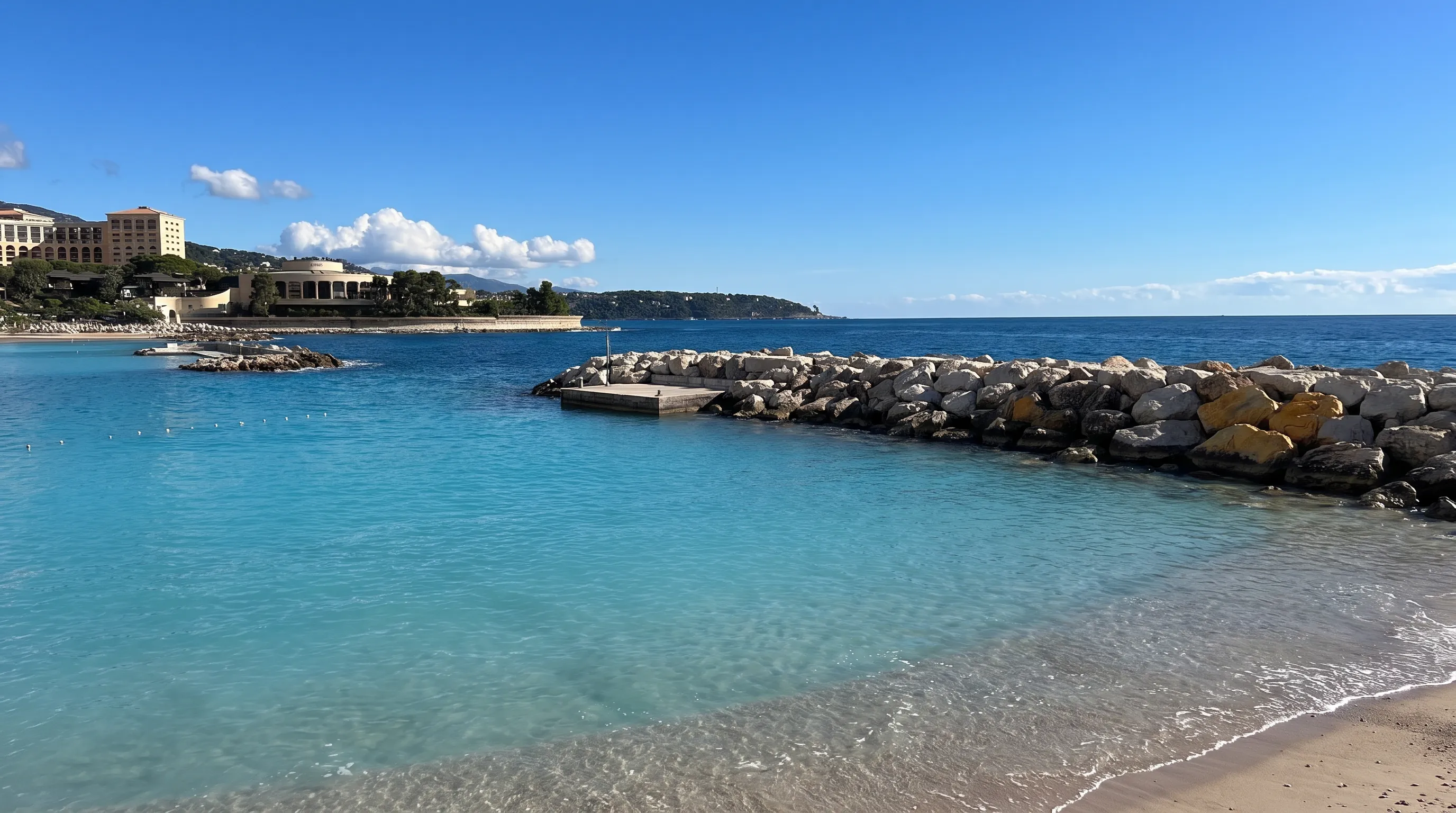
- Wave breakers placed between the existing dikes, so the beach is protected from rough seas.
- A single unified public space, where beach, promenade and avenue had previously been three separate things.
That last point is the design argument and it is the one worth carrying: the scheme's purpose was not a nicer beach but a coherent piece of city.
Every spring: the beach is rebuilt
One consequence of a Mediterranean beach on an engineered shore is that it needs maintaining, and Monaco does this annually and publicly.
Each spring the government carries out re-profiling works: winter steepens the slope, and the sand is pushed back to restore the beach's shape, its capacity, and safe access to the bathing area. In 2024 the work ran 15 April to 3 May; in another year 11 to 28 April.
Swimming is prohibited while it happens — roughly three weeks. The beach stays partly accessible by section as the work progresses, and the restaurants and shops remain open.
Mareterra, alongside
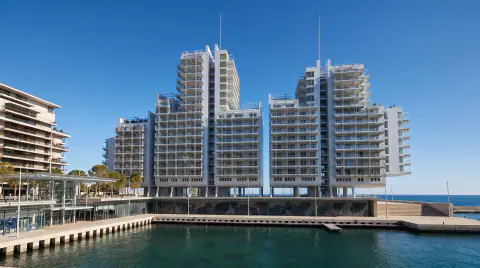
The most recent chapter is next door rather than inside the quarter. Mareterra, Monaco's land-extension district, was designed by the same team that rebuilt Larvotto's seafront and completes the eastern end of the principality.
Larvotto and Mareterra should be understood together: they are one continuous project of deciding what Monaco's coast is for.
Look closer
Highlights and hidden details.
The objects, spaces and small observations that turn a visit into a memorable one.1. The beach
What it is. Monaco's main public beach: 14,000 square metres, non-smoking, and free.
Why it is not what you expect. It is not a leftover strip of shore. The whole waterfront was rebuilt by Renzo Piano Building Workshop with the landscape architect Michel Desvigne, and Prince Albert II inaugurated it on 3 July 2021. Wave breakers were placed between the existing dikes so the beach survives winter storms and the water stays calm.
What to know before you go. Mediterranean shingle and coarse sand rather than soft sand. Small, and full in July and August — early morning and evening are the civilised hours.
And the annual trap. Swimming is prohibited for roughly three weeks every spring, usually in April, while the beach is re-profiled. The restaurants stay open and the beach remains partly accessible, but check before booking an April swim.
Time required. As long as you like. It is free.
2. The promenade
The part most visitors walk without noticing it is the point.
What it is. A 500-metre promenade running the natural curve of the bay, with the commercial pavilions built beneath it.
Why it matters. Before this scheme, the Larvotto seafront was three separate things — a beach, a row of units and a road — that had grown up piecemeal. Piano and Desvigne's brief was to make them one continuous public space, and the promenade is the device that does it.
How to see it. Walk the whole 500 metres rather than dropping onto the sand at the first access point. The line follows the bay rather than cutting across it, and that is only legible end to end.
Time required. Twenty minutes. Free.
3. The Japanese Garden
The best free thing in the quarter after the beach, between the Grimaldi Forum and the sea — about 7,000 square metres of ponds, waterfall, bridges and pines, created in 1994 at Prince Rainier III's request.
Free, daily, all year — and it does not close for the Grand Prix. Half an hour, and most visitors give it five minutes on the way to the beach.
Two things worth knowing before you walk through it: it is built on a concrete slab over the bus station, and the site was blessed by a Shinto high priest from Fukuoka in 1992, two years before it opened. It has also been extended since Mareterra, gaining a new pagoda.
No picnics and no dogs — it is a contemplative garden rather than a park.
→ The Japanese Garden has its own Above Guide entry, covering the designer, the imported Corsican and Auvergne stone, the tea house named for Princess Grace, and the fact that its closing time is disputed between three current sources.
4. The Grimaldi Forum
Monaco's exhibition and congress centre, on the seafront — inaugurated on 20 July 2000 and extended by 6,000 square metres in January 2025.
Its summer exhibitions are the most substantial temporary shows the principality stages, and often the strongest cultural reason to be in Monaco in a given month.
The catch, and it is the important part. Hours are set per exhibition rather than by the building, so there is no such thing as "the Grimaldi Forum's opening times", and between events much of it is closed to the public. Check the programme before you go.
Time required. Two hours for a major exhibition; nothing at all otherwise.
→ The Grimaldi Forum has its own Above Guide entry, covering the fact that three-quarters of the building sits below sea level, the 2025 extension built out into Mareterra, the named halls, and what is on this summer.
5. The engineering, if you look for it
What it is. Not a sight so much as a way of reading the quarter.
Larvotto stands on ground Monaco decided to have. The shore is reclaimed and re-engineered; the wave breakers between the dikes are there because the beach otherwise loses material to winter storms; and the whole thing is maintained by an annual re-profiling operation that the government publishes each spring.
Why bother noticing. Every other quarter of Monaco presents itself as finished. This one is visibly a work in progress, and the machinery is not hidden.
Time required. No time at all — it changes what you are looking at.
6. Mareterra, alongside
What it is. Monaco's land-extension district, adjoining Larvotto, designed by the same team that rebuilt this seafront.
Why it belongs in a Larvotto guide. The two should be read together: one continuous project about what the principality's coast is for. Larvotto is where you can stand on the result of the last round and look at the next one.
Time required. Twenty minutes to walk to and look at.
7. The quarter with no dress code
What it is. An observation rather than a place, and the reason Larvotto earns a guide of its own.
The Rock has a cathedral with a dress code and a palace that is stairs-only. Monte-Carlo has a casino that requires a passport and elegant dress, and the most expensive shopping in Europe.
Larvotto asks nothing. Free beach, free promenade, free garden, no ticket, no code, no minimum age. In a principality that is otherwise relentlessly gated, this quarter is where anyone can simply turn up — and that is worth saying out loud.
Time required. A day, if you want one.
Details worth slowing down for.
The Zen garden is on a bus station
The Japanese Garden covers about seven thousand square metres — ponds, rocks, raked gravel, pines, a tea house — and every bit of it sits on a concrete slab built over the bus station.
It took more than seventeen months to prepare before it opened in 1994. A garden whose whole aesthetic is patience and permanence, engineered onto the roof of a transport interchange in under two years.
Renzo Piano designed the beach
Not the buildings behind it. The beach.
Renzo Piano Building Workshop, with the landscape architect Michel Desvigne, rebuilt the entire Larvotto seafront, and Prince Albert II inaugurated it on 3 July 2021.
Very few people lying on this sand know they are on a Pritzker laureate's project, and the design intent is legible once you know: the 500-metre promenade follows the natural shape of the bay rather than cutting a straight line across it, and the commercial pavilions were tucked beneath it so the shore reads as one thing.
The point was to stop it being three things
Before the rebuild, the Larvotto waterfront was a beach, a row of commercial units and a road, which had accumulated separately over decades.
The brief was not "a nicer beach". It was to make the beach, the promenade and the avenue compose a single public space. That is why the promenade is continuous and why the shops are underneath it rather than facing it.
The beach is rebuilt every spring
Winter steepens the slope and the beach loses its shape, so every spring the Monaco government carries out re-profiling works: the sand is pushed back to restore the beach's morphology, its capacity and safe access to the bathing area.
Swimming is prohibited for about three weeks while it happens — 15 April to 3 May in 2024, 11 to 28 April in another year. The beach stays partly open by section, the restaurants keep trading, and the works run roughly 07:30–12:00 and 14:00–18:30.
A Mediterranean beach on an engineered shore is not a natural object. It is a piece of infrastructure with an annual service interval, and Monaco publishes the dates.
There are wave breakers you cannot see
Part of the 2021 scheme was placing wave breakers between the existing dikes, specifically so the beach is protected from rough seas.
That is why the water at Larvotto is usually calm when the coast either side is not, and it is the reason the beach survives at all.
The garden was a prize-winner's commission
Prince Rainier III did not hire a contractor. He commissioned Yasuo Beppu, who had won the Grand Prix at the Osaka Flower Show in 1990 — four years before the garden opened.
For a 7,000 square metre public garden in a country of two square kilometres, that is a serious appointment, and it shows.
The Forum was industrial policy
The Grimaldi Forum reads as a cultural venue and was conceived as an economic one. Prince Rainier III's stated goal was to position Monaco as a centre of European business tourism, and the building — inaugurated 20 July 2000, extended by 6,000 square metres in January 2025 — is that policy in concrete.
Its summer art exhibitions, which are the reason most visitors go in, are downstream of a decision about congress revenue.
The one quarter that asks nothing of you
Worth noticing because Monaco otherwise gates almost everything.
The cathedral enforces a dress code. The Prince's Palace is stairs-only and shuts for half the year. The casino wants a passport, an age check and elegant dress, and bars Monégasques from its gaming rooms entirely.
Larvotto has no ticket, no dress code, no minimum age and no season. Free beach, free promenade, free garden. It is the only quarter where a visitor with no money and no plan can have a genuinely good day.
The Grand Prix does not come here
The circuit runs through Monte-Carlo and past the Rock. It does not run through Larvotto.
The Japanese Garden is recorded as not closing for the race weekend — unlike the Prince's Palace, the Oceanographic Museum and the Prince's Car Collection, which all shut.
So during the one week when the rest of the principality becomes a controlled environment, this quarter stays roughly itself. That makes it the obvious escape, and almost nobody plans it that way.
You are standing on a decision
Larvotto sits on ground Monaco chose to have. The shore is reclaimed, the beach is engineered, the protection is added, and Mareterra — the land-extension district next door, by the same designers — is the next round of the same argument.
Every other quarter presents itself as finished. This one is visibly still being made, and the machinery is not hidden.
04 / Before you go
Plan your visit
Prices & admission
Free. The beach, the 500-metre promenade and the Japanese Garden all cost nothing. Private beach concessions charge for loungers and service; the Grimaldi Forum charges per exhibition.
Opening hours
The beach and promenade are open ground with no gate, no ticket and no hours. The Japanese Garden opens 09:00–19:00 from April to October and 09:00–18:00 from November to March, daily and free, and does not close for the Grand Prix. The Grimaldi Forum's hours are set per exhibition. Note that swimming is prohibited for roughly three weeks each spring, usually April, during the annual beach re-profiling.
Plan your experience
Nothing here requires booking and nothing charges admission. IMPORTANT: swimming is prohibited for roughly three weeks every spring — usually April — while the beach is re-profiled. The beach stays partly accessible by section and the restaurants stay open. The Monaco government announces the dates each year.
Accessibility
On the evidence available, the most accessible quarter in Monaco — and the evidence available is thinner than it should be.
Checked on 4 August 2026. The quarter is free and has no opening hours. The volatile facts are the annual beach works and the Grimaldi Forum's programme, and both are flagged.
Read this first: the spring closure
Swimming at Larvotto is prohibited for roughly three weeks every spring while the beach is re-profiled. Winter steepens the slope and the sand has to be pushed back to restore the beach's shape and safe access to the bathing area.
Recent years give a sense of the window: 15 April – 3 May in 2024, and 11–28 April in another year. The dates are announced by the Monaco government each spring.
During the works the beach stays partly accessible by section, and the restaurants and shops remain open. Work runs roughly 07:30–12:00 and 14:00–18:30.
If you are coming to Monaco to swim in April, check the government portal before you book.
What it costs
Nothing. The beach, the promenade and the Japanese Garden are all free.
The Grimaldi Forum charges per exhibition. Beach restaurants and the private concessions charge what they charge.
The beach
14,000 m², non-smoking, beneath a 500-metre promenade that follows the shape of the bay. Rebuilt by Renzo Piano Building Workshop with Michel Desvigne and inaugurated by Prince Albert II on 3 July 2021.
It is a Mediterranean beach: shingle and coarse sand rather than soft sand. Wave breakers between the existing dikes protect it from rough seas, so the water is usually calm.
Busy in July and August, and small — 14,000 square metres does not go far in high season. Early morning and evening are the civilised hours.
The Japanese Garden
Free. About 7,000 m², created in 1994 at Prince Rainier III's request to a design by Yasuo Beppu.
| Months | Hours |
|---|---|
| April–October | 09:00–19:00 |
| November–March | 09:00–18:00 |
Open daily, all year. It does not close for the Grand Prix.
Allow half an hour. It is a serious garden rather than an ornament, and it is built on a concrete slab over the bus station — which is worth knowing before you walk in.
The Grimaldi Forum
Monaco's exhibition and congress centre, inaugurated on 20 July 2000 and extended by 6,000 m² in January 2025.
Hours are set per exhibition, not by the building. Its summer shows are the most substantial temporary exhibitions in Monaco and are usually the reason to plan a visit here. Check the Forum's own programme for what is on and when.
The Nouveau Musée National — Villa Sauber
In this quarter, and closed for renovation at the last check. The NMNM opens daily during exhibition periods only, so an open day is not guaranteed even normally.
Do not plan around it without checking nmnm.mc first.
Getting there
By bus. Several lines serve Larvotto, and the bus station sits directly beneath the Japanese Garden.
On foot from Monte-Carlo. About fifteen to eighteen minutes east along the seafront — a pleasant walk and mostly level, which is unusual in Monaco.
By car. Larvotto is not a restricted traffic zone. There is public parking in the quarter.
From the Rock. Roughly forty minutes on foot, or a bus. Treat Larvotto and Monaco-Ville as opposite ends of the principality, because they are.
Facilities
Restaurants, beach concessions and shops sit beneath the promenade. Public beach access is free; the private concessions charge for loungers and service.
This guide has not verified toilet provision, changing facilities, shower locations, lifeguard cover or the swimming season's official dates. Check locally.
Best time to visit
Early morning or evening in summer. The beach is small and July and August fill it. Evening on the promenade is the best of the quarter.
May, June and September are the sweet spot — warm water, open beach, and past the spring works.
Winter is quiet and the promenade is still a good walk, though the beach is a beach in winter.
With children
This is the best quarter in Monaco for a family, and the family chapter says so plainly. Free, sand and shallow water, space to move, and the Japanese Garden ten minutes away for when the sun gets too much.
Accessibility in brief
The promenade is the strongest accessibility proposition in Monaco: purpose-built, continuous, level along its 500 metres, and following the bay rather than climbing. Larvotto is also not a restricted traffic zone, so a visitor can be driven here.
This guide has not confirmed beach-access matting, accessible changing or toilet facilities, or step-free routes within the Japanese Garden. Fuller detail — and a long list of what could not be verified — is in the accessibility chapter.
Race week
The Formula 1 circuit does not run through Larvotto, which makes this the part of Monaco least disrupted by the Grand Prix and a reasonable base or escape during race week.
The Japanese Garden is recorded as not closing for the race weekend, unlike the Palace, the Oceanographic Museum and the Prince's Car Collection.
That said, the principality as a whole is under heavy access control that week. Check the year's ordinance in the Journal de Monaco.
What needs rechecking
| Fact | Cadence | Why |
|---|---|---|
| Spring beach works and swimming ban | Annually, each March | Dates announced per year by the government |
| Grimaldi Forum programme | Quarterly | Event-led; hours set per exhibition |
| Villa Sauber status | Before recommending | Closed for renovation at last check |
| Japanese Garden hours | Annually | Two seasonal bands |
| Beach facilities, lifeguards, swimming season | Once, locally | Wholly unverified |
Visit your way
Access and family planning.
Larvotto is, on the evidence available, the most accessible quarter in Monaco — and the evidence available is thinner than it should be for a public beach rebuilt this recently. Both halves of that matter.
Why it starts well
It is flat. Almost uniquely in Monaco. The Rock is a sixty-two-metre climb; Monte-Carlo is a hillside dependent on public lifts. Larvotto runs along the shore.
The promenade is purpose-built and continuous. Five hundred metres, following the curve of the bay, designed as a single public space by Renzo Piano Building Workshop with Michel Desvigne and opened in 2021. It is the newest major piece of public realm in the principality.
It is not a restricted traffic zone. Unlike Monaco-Ville, you can be driven here and there is public parking in the quarter.
And it is free. No ticket, no dress code, no age limit — so none of the barriers that complicate the Palace, the cathedral or the casino apply.
What has not been verified — and it is the important part
For a beach rebuilt in 2021 by a major practice, this guide expected to find published accessibility provision. It did not.
Not confirmed, and therefore not claimed:
- Beach-access matting or ramps onto the sand — the single most important item
- Accessible changing facilities
- Accessible toilets
- Shower locations and their accessibility
- Amphibious or beach wheelchairs for loan
- Lifeguard cover and its hours
- Step-free routes within the Japanese Garden
- Accessible parking provision and blue-badge arrangements
- Whether the promenade's level continuity extends to every beach access point
A rebuilt public beach of this ambition very probably has some of these. But "probably" is not a source, and a wrong assumption about beach access costs a journey. Contact the Monaco government's tourism or urban services before travelling if any of it is decisive.
The promenade
The strongest accessibility proposition in Monaco: level, continuous, wide, and designed as one piece rather than accumulated.
Even without confirmed beach access, the promenade alone gives a visitor with mobility needs 500 metres of seafront, the bay, the light and somewhere to be — which is more than the Rock or Monte-Carlo offer without a lift.
The Japanese Garden
Free, about 7,000 m², open 09:00–19:00 April to October and 09:00–18:00 November to March.
Japanese gardens characteristically use level changes, stepping stones, gravel and narrow paths, and this guide has not verified whether a step-free route runs through it or how much of it is reachable. If the garden is the reason for the journey, ask first.
It is built on a concrete slab over the bus station, which at least means the site itself is flat and served by public transport at the door.
The Grimaldi Forum
A modern congress and exhibition centre, extended in January 2025. Venues of that type are normally well provided, but this guide has verified nothing specific and does not claim it.
Check with the Forum directly, and note that hours are set per exhibition rather than by the building.
Sensory environment
Calmer than the rest of Monaco by a wide margin. The quarter has no casino, no crowds funnelled through medieval lanes, and no daily ceremony.
The beach is busy and loud in July and August in the middle of the day. The promenade early or late, and the Japanese Garden at almost any hour, are among the quietest public spaces in the principality.
The spring closure
Swimming is prohibited for roughly three weeks each spring while the beach is re-profiled, usually in April, and the beach is accessible only by section while works progress.
For a visitor with mobility needs that is a bigger disruption than it sounds: sectional access means the route to the water changes as the work moves, and any matting or access arrangement that normally exists may not be in place.
If a spring visit is planned, this is the thing to ask about specifically.
Race week
The circuit does not run through Larvotto, and the Japanese Garden does not close for the race weekend.
For a visitor with mobility needs, that makes this the sensible place to be during the Grand Prix, when the Rock and Monte-Carlo become controlled environments with barriers and diverted pedestrian routes.
The short answer
This is where a family day in Monaco should happen. Free beach, calm shallow water, space to move, and a free garden ten minutes away for when the sun gets too much.
Every other Monaco quarter has to be worked around with children. This one does not.
Why it works when the others don't
| Larvotto | Free. No ticket, no dress code, no age limit, no season. Sand, water, space |
| The Rock | One superb museum, and a lot of stairs, heat and crowds |
| Monte-Carlo | A casino children cannot enter, and luxury shopping |
The honest Monaco family plan is: Oceanographic Museum in the morning, Larvotto in the afternoon. That is the whole itinerary, and it works at almost any age.
The one thing to check before you go
Swimming is prohibited for around three weeks every spring — usually April — while the beach is re-profiled. Winter steepens the slope and the sand has to be pushed back.
The beach stays partly accessible and the restaurants stay open, but a family that has travelled to swim will be disappointed. The Monaco government publishes the dates each spring; check before booking.
The beach, honestly
Free, 14,000 m², non-smoking. The water is usually calm because wave breakers sit between the dikes.
Two things to set expectations on:
It is shingle and coarse sand, not soft sand. Beach shoes are worth packing for smaller feet.
It is small and it fills up. Fourteen thousand square metres is not much beach for a principality that receives millions of visitors. In July and August, go early or go in the evening — the middle of the day is crowded and hot.
Age by age
Under 5. The beach, the shallow water and the promenade with a pushchair — which actually works here, because the 500-metre promenade is continuous and level. That is unusual in Monaco.
5–10. The best age for this quarter. Swimming, the promenade, and the Japanese Garden as a complete change of pace — ponds, stepping stones, carp, raked gravel.
11–14. The beach, plus the Grimaldi Forum if its summer exhibition suits, plus the fact that they are standing on ground the country decided to build. Monaco making new land is a genuinely interesting idea at this age.
Teenagers. The beach and the promenade in the evening. This is the part of Monaco that is not asking them to look at something.
The Japanese Garden with children
Free, about 7,000 m², open 09:00–19:00 April to October and 09:00–18:00 November to March.
Half an hour, and it works better with children than parents expect — water, fish, bridges, stepping stones and gravel to be told not to walk on.
The fact to tell them: the whole garden is built on the roof of the bus station. It is true, it is surprising, and it makes them look at the ground.
Practicalities
Getting there. Buses serve the quarter and the bus station is directly beneath the Japanese Garden. About fifteen to eighteen minutes on foot east from Monte-Carlo, mostly level. Larvotto is not a restricted traffic zone, so you can drive and park.
Pushchairs. The promenade is the most pushchair-friendly stretch in Monaco.
Food. Restaurants and beach concessions sit beneath the promenade — a wider range of prices than anywhere in Monte-Carlo, though this is still Monaco.
Facilities. This guide has not verified toilets, changing facilities, showers or lifeguard cover. Check locally before relying on any of them — that is a real gap for a family visit and it would be wrong to reassure you about it.
Shade and heat
Limited natural shade on the beach itself. The Japanese Garden has pines and is the cooler option; the promenade has some cover beneath its structure.
In July and August, plan around the middle of the day rather than through it.
Race week
The circuit does not run through Larvotto, and the Japanese Garden is recorded as not closing for the race weekend.
If you are in Monaco with children during the Grand Prix and the rest of the principality has become a controlled environment, this is where to come.
Self-guided walk
Explore beyond the venue.
A practical, step-by-step route connecting this experience with more of Monaco Grand Prix.Stop 1 — Start at the eastern end of the promenade
0 minutes. Allow 10.
Begin at one end of the promenade rather than dropping straight onto the sand, and look along it.
That 500-metre line follows the natural shape of the bay rather than cutting across it, and the commercial pavilions sit beneath it rather than facing it. Both decisions are deliberate.
Before this, the Larvotto seafront was three separate things — a beach, a row of units and a road — accumulated over decades. Renzo Piano Building Workshop, with the landscape architect Michel Desvigne, was commissioned to make them one public space. Prince Albert II inaugurated the result on 3 July 2021.
This is the shot, too: from one end, low and long, with the curve running away.
Stop 2 — Walk the full 500 metres
10 minutes. Allow 20.
Do not cut onto the beach yet. Walk the whole promenade first.
Notice what is underneath you as you go — the restaurants and shops are built into the structure, so the seaward side stays open the entire way. That is why the waterfront reads as one thing rather than a parade of frontages.
Look out to the water as well. Wave breakers were placed between the existing dikes as part of the scheme, which is why the bay is usually calm when the coast either side is not, and why the beach survives winter at all.
Stop 3 — Down onto the beach
30 minutes. Allow as long as you like.
Free, 14,000 square metres, non-smoking.
Set expectations honestly: this is a Mediterranean beach, so shingle and coarse sand rather than soft sand, and it is small. In July and August it fills. At sunrise, or after about 18:00, it is a different place.
A note on photographs. Do not shoot along the sand at people. A public beach is not a public event. If you want the beach as a subject, take it empty at sunrise.
Stop 4 — Look back at what you are standing on
Allow 5.
Worth one deliberate pause.
Larvotto is on ground Monaco decided to have. The shore is reclaimed, the beach is engineered, the protection was added, and the whole thing is maintained by an annual re-profiling operation that the government announces every spring.
Every other quarter of Monaco presents itself as finished. This one is visibly still being made — and Mareterra, the land-extension district alongside by the same designers, is the next round of the same argument.
Stop 5 — West along the seafront to the Japanese Garden
Allow 10 to walk, 30 there.
Ten minutes west, between the Grimaldi Forum and the sea.
Free. Open 09:00–19:00 April to October, 09:00–18:00 November to March, daily, all year — and it does not close for the Grand Prix.
About 7,000 square metres, created in 1994 at Prince Rainier III's request, designed by Yasuo Beppu, who had won the Grand Prix at the Osaka Flower Show in 1990. It took more than seventeen months to prepare before it opened.
And the thing to know as you walk in: the entire garden is built on a concrete slab over the bus station. Ponds, rocks, raked gravel, pines and a tea house, on the roof of a transport interchange.
Give it half an hour. It is a serious garden and most people give it five minutes.
Stay on the paths, and do not walk on the raked gravel.
Stop 6 — The Grimaldi Forum
Allow 10, or 2 hours for an exhibition.
Beside the garden, on the seafront.
Inaugurated on 20 July 2000 by Prince Rainier III and Prince Albert II, and extended by 6,000 square metres in January 2025.
Rainier III's stated aim was to position Monaco as a centre of European business tourism — so the building is industrial policy as much as a cultural venue. Its summer exhibitions, which are the reason most visitors go in, are downstream of a decision about congress revenue.
Hours are set per exhibition, not by the building. Check the programme before counting on it.
Stop 7 — Finish on the promenade, or walk west
Allow 20, or 18 to walk.
If it is evening, walk back along the promenade with the town lit behind you. It is the best free hour in this quarter and there is somewhere to sit.
If you have the afternoon left, Monte-Carlo is fifteen to eighteen minutes west along the seafront, mostly level — and it is the exact opposite quarter. Free, flat and open here; a hillside of luxury retail around a casino there. Seeing both in one day is the honest way to understand the principality.
Make a record
Photograph it thoughtfully.
The geography that decides your day
Larvotto faces roughly south-east across a shallow bay at the eastern end of the principality. Two consequences:
Sunrise is the good light here, which is not true anywhere else in Monaco. The bay faces the morning sun, the beach is empty at that hour, and the promenade curve reads cleanly.
Evening gives you the town rather than the sea — the light comes off the buildings behind you and the bay goes flat. Still worth walking; just a different picture.
The four compositions worth planning
1. The promenade curve. Stand at one end and shoot along it. The 500-metre line follows the shape of the bay rather than cutting across it, and that curve is the whole design argument — it is only legible from a low, long viewpoint at one end.
2. The bay at sunrise. The beach empty, the water calm because of the wave breakers, the town rising behind. This is the best photograph in the quarter and almost nobody is there to take it.
3. Inside the Japanese Garden. Water, rock, raked gravel, pines and bridges, with the sea visible past the planting. Overcast light suits it better than sun — a Japanese garden in hard midday shadow photographs badly.
4. The engineering. The wave breakers, the dikes, the retaining structures and the pavilions built beneath the promenade. Larvotto is a made landscape and it does not hide it, which makes it a more interesting architectural subject than a natural beach would be.
Light through the day
| Hour | Where |
|---|---|
| Sunrise | The bay, the empty beach, the promenade curve — the best hour |
| Morning | The promenade, the sea side |
| Midday | The Japanese Garden if overcast; otherwise avoid |
| Afternoon | The garden, the Grimaldi Forum exterior |
| Evening | The promenade with the town lit behind |
People on a beach
This needs saying plainly because it is the one real ethical issue in the quarter.
Do not photograph people on the beach. Not sunbathers, not swimmers, not children, not "just the crowd". A public beach is not a public event, people are undressed, and a camera pointed along the sand is intrusive regardless of intent.
If you want a beach with people in it, shoot from behind and far enough away that nobody is identifiable, or shoot the promenade instead. If you want the beach as a subject, shoot it empty at sunrise.
This applies with particular force to children, and no framing makes it acceptable.
The Japanese Garden
Free, open 09:00–19:00 April to October and 09:00–18:00 November to March.
Standard garden manners: stay on the paths, do not walk on the raked gravel, and do not move anything for a composition.
This guide has not verified the garden's photography policy, or whether tripods or commercial work are permitted. Assume a tripod needs asking about.
The Grimaldi Forum
Assume exhibition interiors are restricted — most touring shows carry contractual photography limits set by the lenders, not by the venue. Check per exhibition.
The building exterior and the seafront around it are unrestricted.
Drones
Do not fly. Monaco is a small sovereign state with a heliport and active airspace control, and Larvotto sits directly under the approach to it.
This guide has not obtained a specific published rule and states the conservative position: assume prohibition without written authorisation from the Monaco government.
The aerial-looking shot people want a drone for — the whole bay and its curve — is available from the higher ground behind the quarter for nothing.
Commercial photography
Not confirmed: the permit regime for commercial shoots, filming, tripods or lighting on the beach, the promenade or in the Japanese Garden.
Assume anything beyond a handheld camera needs prior permission from the Monaco government, and note that a beach shoot involving models or crew will almost certainly require it.
Around here
Make more of the area.
Good to know
Questions, answered.
01Is Larvotto beach free?
Yes. The beach, the promenade and the Japanese Garden are all free. The private concessions charge for loungers and service, but public access costs nothing.
02Can you swim at Larvotto?
Yes, and the water is usually calm because wave breakers sit between the existing dikes. But swimming is prohibited for roughly three weeks every spring while the beach is re-profiled — usually in April. Check the Monaco government portal before booking an April trip.
03Why does the beach close in spring?
Winter steepens the slope and the beach loses its shape, so the sand is pushed back to restore its morphology, its capacity and safe access to the bathing area. In 2024 the work ran 15 April to 3 May. The beach stays partly accessible by section and the restaurants stay open.
04Is it a sandy beach?
It is a Mediterranean beach — shingle and coarse sand rather than soft sand. Beach shoes are worth packing for children.
05How big is the beach?
14,000 square metres, and it is non-smoking. That is not a lot of beach for a principality receiving millions of visitors, so it fills in July and August. Early morning and evening are the civilised hours.
06Who designed Larvotto beach?
Renzo Piano Building Workshop, with the landscape architect Michel Desvigne. Prince Albert II inaugurated the rebuilt seafront on 3 July 2021. Both designers also worked on the Mareterra extension alongside.
07Why was it rebuilt?
The waterfront had grown up piecemeal — a beach, a row of commercial units and a road, with no relationship between them — and the beach lost material to winter storms. The scheme unified them into a single public space and added wave protection.
08How long is the promenade?
500 metres, following the natural shape of the bay rather than cutting across it, with the commercial spaces built beneath it.
09Is the Japanese Garden free?
Yes. It opens 09:00–19:00 from April to October and 09:00–18:00 from November to March, daily, all year — and it does not close for the Grand Prix.
10Who made the Japanese Garden?
It was created in 1994 at Prince Rainier III's request, to a design by Yasuo Beppu, who had won the Grand Prix at the Osaka Flower Show in 1990. It covers about 7,000 square metres and took more than seventeen months to prepare.
11Is it true the garden is on a bus station?
Yes. It is built on a concrete slab covering the bus station — which is also why the site is flat and served by public transport at the door.
12What is the Grimaldi Forum?
Monaco's exhibition and congress centre, inaugurated on 20 July 2000 by Prince Rainier III and Prince Albert II, and extended by 6,000 square metres in January
- Its summer exhibitions are the most substantial temporary shows in Monaco.
13What are the Grimaldi Forum's opening hours?
There is no single answer — hours are set per exhibition rather than by the building. Check the current programme.
14Is Larvotto part of Monte-Carlo?
Not exactly. Larvotto is its own ward — Larvotto/Bas Moulins. The name "Monte-Carlo" is used loosely for a wider quarter that includes it, but they are different places, and the tourist board's Monte-Carlo pages do not cover Larvotto.
15How far is Larvotto from the old town?
About forty minutes on foot, or a bus. They are opposite ends of the principality with Monte-Carlo in between. Do not plan them as one outing.
16How far is Larvotto from Monte-Carlo?
Fifteen to eighteen minutes on foot along the seafront, and mostly level — unusual in Monaco.
17Is Larvotto good for children?
It is the best quarter in Monaco for a family: free, flat, with sand, calm shallow water, space to move and a free garden ten minutes away. The honest Monaco family plan is the Oceanographic Museum in the morning and Larvotto in the afternoon.
18Is it accessible?
It is the flattest quarter in Monaco, the promenade is purpose-built and continuous, and it is not a restricted traffic zone so you can be driven here. However, this guide has not been able to verify beach-access matting, accessible changing or toilets, or beach wheelchairs — which for a beach rebuilt in 2021 is a real gap. Contact the Monaco authorities before travelling if beach access is decisive.
19Does the Grand Prix affect Larvotto?
Less than anywhere else. The circuit does not run through the quarter, and the Japanese Garden is recorded as not closing for the race weekend — unlike the Prince's Palace, the Oceanographic Museum and the Prince's Car Collection. During race week this is the sensible place to be.
20Can I get there by car?
Yes. Larvotto is not a restricted traffic zone and there is public parking in the quarter — unlike Monaco-Ville, where road access is barred to most vehicles.
21Is the Villa Sauber museum open?
It has been closed for renovation, and the Nouveau Musée National opens daily only during exhibition periods even normally. Check nmnm.mc before planning around it.
22What is Mareterra?
Monaco's land-extension district, adjoining Larvotto and designed by the same team. Larvotto and Mareterra are best understood together — one continuous project about what the principality's coastline is for.
Before you visit
Useful links.
Venue and visitor information
Method
Monaco's government portal is the authority for the beach works and was used for them — it publishes the re-profiling programme each spring, and press summaries vary on the dates.
For the 2021 seafront, the design team's own material and Monégasque press coverage of the inauguration were used. For the Japanese Garden and the Grimaldi Forum, the tourist board and general reference.
Two things were deliberately not attempted. Beach facilities — toilets, changing, showers, lifeguard cover, the official swimming season — could not be verified from any published source and are recorded as unknown rather than assumed. And accessibility provision on the beach was searched for specifically, expected, and not found; that gap is stated plainly rather than filled by inference.
Sources
| ID | Source | Used for | Retrieved |
|---|---|---|---|
| S01 | Gouvernement de Monaco — La plage du Larvotto se prépare pour l'ouverture de la saison estivale | The annual re-profiling works: their purpose (reducing the slope steepened over winter, restoring the beach's morphology, capacity and safe bathing access), the 15 April – 3 May 2024 window, the prohibition on swimming, sectional beach access, works hours of roughly 07:30–12:00 and 14:00–18:30, and that restaurants and shops remain open | 2026-08-04 |
| S02 | Monégasque press coverage of the seafront inauguration, including Monaco Tribune and reports of the 2021 opening | That Prince Albert II inaugurated the new beach complex on 3 July 2021; the 500-metre promenade following the shape of the bay; 14,000 m² of non-smoking beach; the wave breakers placed between the existing dikes; and that the requalification unified a fragmented waterfront so that beach, promenade and avenue compose a single public space | 2026-08-04 |
| S03 | Michel Desvigne Paysagiste — Monaco, Larvotto Regeneration and associated design coverage | That Renzo Piano Building Workshop and Michel Desvigne were the project designers, and that both had worked on the Mareterra extension | 2026-08-04 |
| S04 | VisitMonaco — The Japanese Garden and Monégasque garden references | The garden's creation in 1994 at Prince Rainier III's request; Yasuo Beppu as designer and his Grand Prix at the Osaka Flower Show in 1990; the area of about 7,000 m²; the construction on a concrete slab covering the bus station; more than 17 months of preparation; the position between the Grimaldi Forum and the seafront; and the opening hours of 09:00–19:00 April–October and 09:00–18:00 November–March | 2026-08-04 |
| S05 | Wikipedia — Grimaldi Forum | The inauguration on 20 July 2000 by Prince Rainier III and Prince Albert II; Rainier III's goal of positioning Monaco as a centre of European business tourism; and the 6,000 m² extension including 2,000 m² of outdoor space inaugurated in January 2025 by Prince Albert II and Princess Charlene | 2026-08-04 |
| S06 | Above Guide's own Monaco off-track dataset, checked against the venues on 1 and 3 August 2026 | Verified venue coordinates for the Japanese Garden, the Grimaldi Forum and the beach; the Japanese Garden's hours and the record that it does not close for the Grand Prix weekend; and the note that Villa Sauber is closed for renovation and that the NMNM opens only during exhibition periods | 2026-08-04 |
Conflict ledger
The dates of the spring works move every year
Not a conflict between sources so much as a fact that is annual by nature.
The government (S01) published 15 April – 3 May for 2024. Another year's notice gives 11–28 April. The works are announced each spring and the window shifts.
Used: both, as examples, with the period described as "roughly three weeks, usually in April" and an instruction never to encode it as a fixed date range. The operational data carries the same warning, and the SEO file excludes it from structured data for the same reason.
Why it matters. This is the most useful practical fact in the bundle. Publishing a specific date range as though it were permanent would make it wrong within a year and would mislead exactly the reader it is meant to help.
2021, or one of the annual reopenings?
Easy to conflate and worth separating.
The seafront was rebuilt and inaugurated on 3 July 2021 (S02). The beach also "reopens" every spring after the re-profiling works, and press coverage of those annual reopenings uses similar language (S01, S02).
Used: 3 July 2021 as the inauguration of the rebuilt complex, and the spring reopenings as routine maintenance. The history chapter states the distinction explicitly, because collapsing the two produces a confusing timeline.
Larvotto and Mareterra
The two adjoin, and were designed by the same team — Renzo Piano Building Workshop with Michel Desvigne (S03). Secondary sources blur them constantly, and some describe the Japanese Garden as being "on the edge of Larvotto and Mareterra" (S04).
Used: treated as distinct. Larvotto is the quarter with the public beach; Mareterra is the adjoining land-extension district. The relationship is stated and the guardrails forbid conflating them.
Which quarter is Larvotto in?
Larvotto is its own ward, Larvotto/Bas Moulins. The name "Monte-Carlo" is used loosely for a wider informal quarter that includes it — but the tourist board's own Monte-Carlo pages do not cover Larvotto, the Japanese Garden or the Grimaldi Forum.
Used: Larvotto as a quarter in its own right, with the ambiguity explained rather than silently resolved. The Monte-Carlo bundle scopes itself the same way from the other side.
Facts deliberately not asserted
| Fact | Where this guide says so |
|---|---|
| Beach-access matting, ramps or beach wheelchairs | Accessibility — the critical gap |
| Accessible changing, toilets or showers | Accessibility, and the family guide |
| Lifeguard cover and hours | Plan your visit, and the family guide |
| The official swimming season dates | Plan your visit |
| Toilet and changing provision generally | Family guide |
| Step-free routes within the Japanese Garden | Accessibility |
| Accessible parking and blue-badge arrangements | Accessibility |
| Grimaldi Forum accessibility provision | Accessibility |
| The Japanese Garden's photography and tripod policy | Photography |
| Commercial photography permits | Photography |
| The drone regime | Photography |
| Whether Villa Sauber has reopened | Plan your visit, and Nearby |
The beach-facilities list is long, and the reason is worth stating: for a public beach rebuilt in 2021 by a major architectural practice, published information about toilets, changing, lifeguards and disabled access was expected and was not found. That is a gap in what Monaco publishes, not a gap in what was looked for, and the accessibility chapter names it as the bundle's most valuable outstanding question.
A note on what was not used
No AI-generated encyclopaedia was cited.
Beach-review and travel-aggregator content was avoided: it is heavily promotional about this quarter, it does not carry the spring closure, and it consistently describes Larvotto as a natural beach rather than an engineered public work with named designers — which is the single most interesting thing about it.
Opening hours, prices, programmes and access arrangements can change. Confirm critical details with the venue.
Continue exploring / Monaco
More things to do
in Monaco
Explore Monaco activities, sights and places to eat. Compare the time to allow, costs and booking details, then save your favourites to your itinerary.
 01Monaco Grand Prix experienceCasino de Monte-CarloExplore experience →
 02Monaco Grand Prix experienceCathedral of Notre-Dame-ImmaculéeExplore experience →
 03Monaco Grand Prix experienceFontvieilleExplore experience →
 04Monaco Grand Prix experienceFort AntoineExplore experience →
 05Monaco Grand Prix experienceGrimaldi ForumExplore experience →
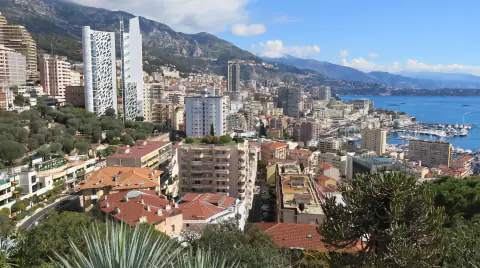 06Monaco Grand Prix experienceJardin Exotique de MonacoExplore experience →
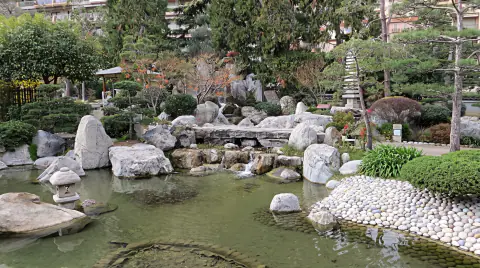 07Monaco Grand Prix experienceJardin Japonais de MonacoExplore experience →
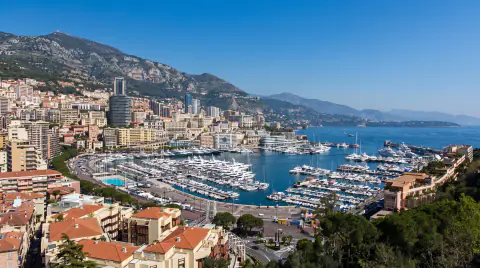 08Monaco Grand Prix experienceLa CondamineExplore experience →
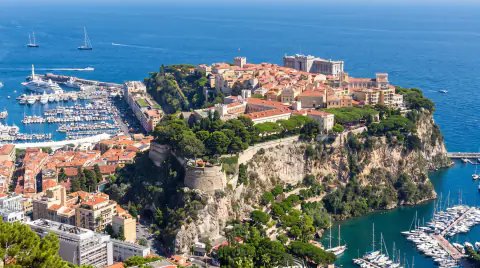 09Monaco Grand Prix experienceLe Rocher / Monaco-VilleExplore experience →
 10Monaco Grand Prix experienceLes Ballets de Monte-CarloExplore experience →
 11Monaco Grand Prix experienceMareterraExplore experience →
 12Monaco Grand Prix experienceMonte-CarloExplore experience →
 13Monaco Grand Prix experienceNouveau Musée National de MonacoExplore experience →
 14Monaco Grand Prix experienceOceanographic Museum of MonacoExplore experience →
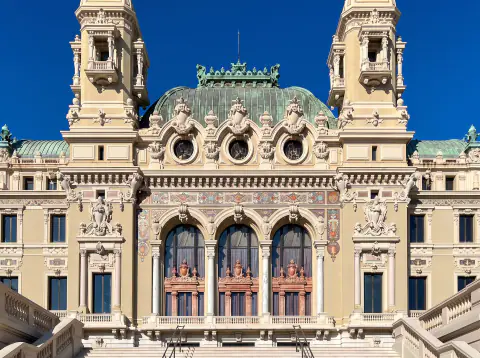
 15Monaco Grand Prix experienceOpéra de Monte-CarloExplore experience →
 16Monaco Grand Prix experiencePrince's Palace of MonacoExplore experience →
 17Monaco Grand Prix experienceThe Museum of Old MonacoExplore experience →
 18Monaco Grand Prix experienceThe Museum of Stamps and CoinsExplore experience →
 19Monaco Grand Prix experienceThe Prince's Car CollectionExplore experience →
 Plan / Itinerary builderBuild your Monaco Grand Prix dayStart planning →