In depth
Les Ballets de Monte-Carlo
Monaco's national ballet company — fifty dancers under Jean-Christophe Maillot, playing late October to July, with tickets from about €25 and a flat €15 for anyone under 25.
Story · Visit · Route · Links
Choose your depth
Essentials or more detail?
See visiting essentials, or read more about the history and places nearby.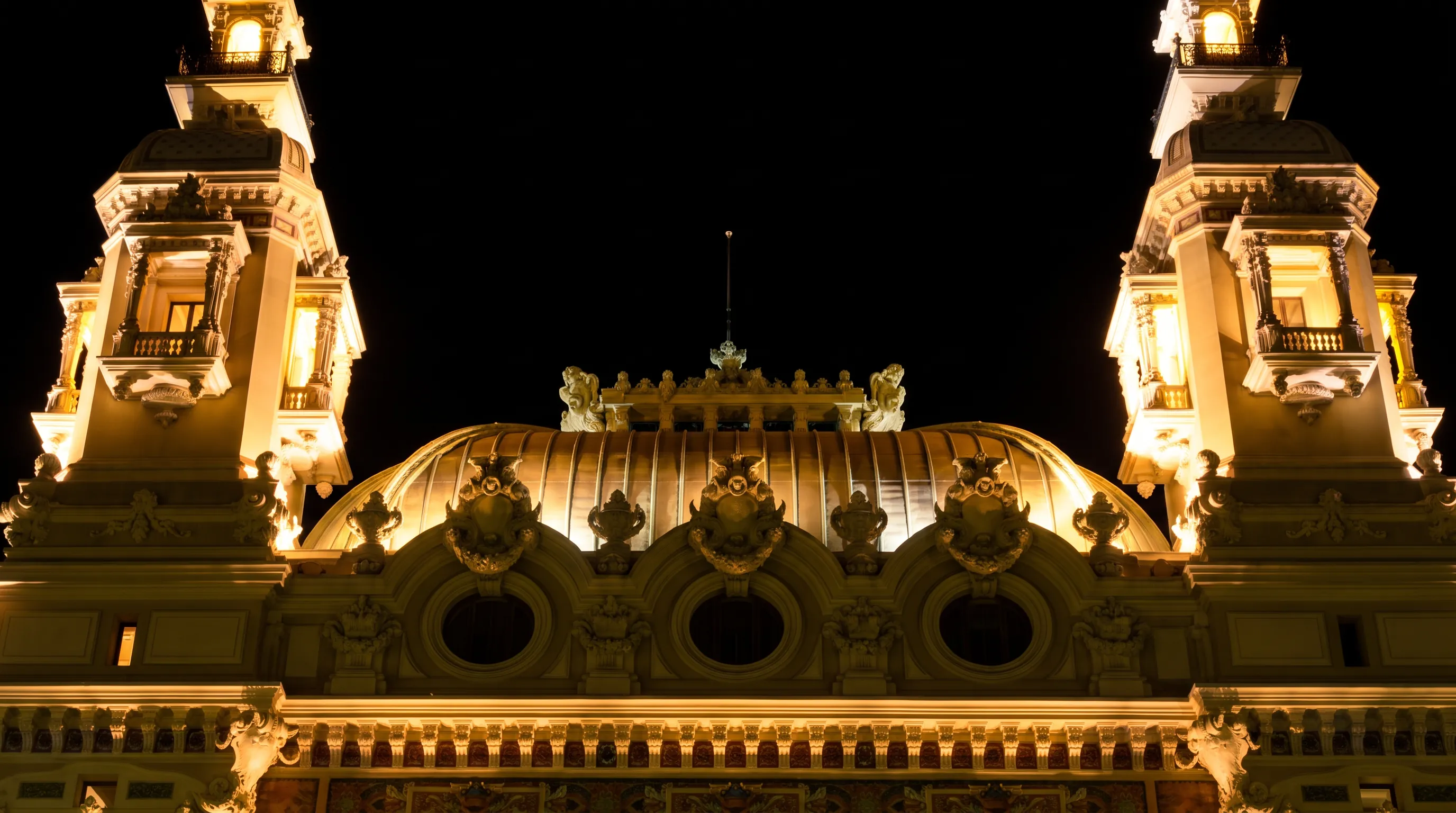
01 The experience
What to expect.
Why it matters
It is three institutions, not one. Since 2011 the Ballets de Monte-Carlo has been a single organisation with three arms, all directed by Jean-Christophe Maillot:
| Arm | Founded | What it is |
|---|---|---|
| The Company | 1985 | Fifty dancers, the national ballet |
| Monaco Dance Forum | 2000 | An international dance festival, held annually |
| Académie Princesse Grace | 1975 | A dance school for 13–18s, feeding companies worldwide |
So "the ballet season" here also includes a festival each spring and an academy gala each June. Three different reasons to look at the calendar.
Monaco has been a dance capital for over a century, and this is the current chapter. Diaghilev's Ballets Russes were based in the principality from 1911; René Blum's Ballets Russes de Monte-Carlo was founded here in 1932. The present company was created in 1985 because the Princess of Hanover wanted that tradition continued.
It is a continuation, not a descent — see the history file. The 1985 company is not institutionally the same body as either earlier one, and anyone telling you otherwise is compressing three organisations into one.
The company is away a lot. It tours for over 200 days a year as one of Monaco's principal cultural exports. That is the reason to check the calendar before building a trip around it rather than assuming a company is at home.
Who it is for
Anyone who wants one properly excellent evening in Monaco without the casino's gatekeeping or the opera's prices. Anyone under 25, for whom €15 makes this the best value in the principality by a distance. Anyone interested in dance, for whom Maillot's thirty-year body of work is the draw. And anyone in Monaco in June or July, when it is the only serious stage in town.
It is not a building you can look round, an afternoon activity, or something you can do on impulse in a month when the company is on tour.
Not to be confused with
Les Ballets Trockadero de Monte Carlo is a different company entirely — an American all-male comic ballet troupe, founded in New York, which tours internationally. It is not based in Monaco, it has no connection to this organisation, and it turns up constantly in searches. If you are booking, check which company you are buying.
The essentials
Season. Late October to July.
Where. Two main houses — the Salle Garnier inside the casino, and the Salle des Princes at the Grimaldi Forum in Larvotto. They are at opposite ends of the principality, so check your ticket.
Prices. About €25–€39 for a single ticket; a flat €15 for under-25s; 20% off for visitors with reduced mobility; subscriptions from €99 for three shows.
Booking. Online at balletsdemontecarlo.com or montecarloticket.com; in person at the Grimaldi Forum box office (Tuesday–Saturday, 12:00–19:00) or the Atrium of the Casino de Monte-Carlo (Tuesday–Saturday, 10:00–17:30). The box office for a new season has opened in September.
Getting there. For the Salle Garnier, Monaco–Monte-Carlo station's upper exit; for the Grimaldi Forum, the lower exit at Sainte-Dévote. Or take the Ballet Bus from Nice.
What this guide does not claim
There is no published dress code, as with the opera. Nothing found suggests one, and none is invented here.
The Atelier's public access and street address are not established. One official directory lists it at the Place du Casino, which cannot be right for a converted sawmill, and no source states whether visitors can enter. Both are recorded as unknown.
The story
History & character.
Three companies, not one
Start here, because almost every short account gets it wrong.
Monaco has had three significant ballet companies bearing some version of this name, and they are separate organisations:
| Company | Relationship | |
|---|---|---|
| 1 | Diaghilev's Ballets Russes | Founded in Paris. Based at Monte-Carlo from 1911. Dissolved after Diaghilev's death in 1929. |
| 2 | Ballets Russes de Monte-Carlo | Founded here in 1932 by René Blum with Colonel de Basil, after the first company broke up. |
| 3 | Les Ballets de Monte-Carlo | The present company, created in 1985. |
The 1985 company was founded to continue a tradition, not to inherit an institution. The company's own account is careful about this: the Princess of Hanover wanted to continue "the long tradition of dance in Monaco and its famous Ballets Russes". General reference is blunter still — there is no documented institutional descent, only a repertoire that later took in Ballets Russes works.
Use "continues the tradition of". Never "descended from" or "successor to".
Why Monaco, in the first place
The principality's claim on dance is real and it is a century old.
Raoul Gunsbourg, who ran the Opéra de Monte-Carlo from 1892, brought Serge Diaghilev to Monaco. The Ballets Russes gave their first performance at Monte-Carlo on 19 April 1911 — Nijinsky and Karsavina in Fokine's Le Spectre de la rose — and from that year the company was permanently based here. For nearly two decades a great deal of twentieth-century ballet was assembled in the Salle Garnier.
After Diaghilev died in August 1929 the company dispersed. The Société des Bains de Mer appointed René Blum, who with Colonel Vassily de Basil founded the Ballets Russes de Monte-Carlo, first performance 17 January 1932. That company carried the town's name around the world for twenty years. Blum, brother of the French prime minister Léon Blum, was deported to Auschwitz in September 1942 and died there.
Then, for decades, Monaco had the reputation without the company.
1985: the Princess of Hanover
Les Ballets de Monte-Carlo was created in 1985, as the national ballet of Monaco, through the commitment of H.R.H. the Princess of Hanover — who remains its president.
The first performance was on 21 December 1985, with several guest stars of the Paris Opera among the cast. Ghislaine Thesmar and Pierre Lacotte directed the new ensemble. They rehearsed in the Diaghilev studio and performed at the Salle Garnier — the same room, seventy-four years on.
Jean-Yves Esquerre became artistic director in 1989, after Thesmar and Lacotte left.
1993: Maillot
Jean-Christophe Maillot joined in 1992 as artistic consultant and became director-choreographer in September 1993. He is still in post — the 2026/27 season is his — which makes this one of the longest artistic directorships in European dance, running past thirty years.
What changed under him is straightforward to state and hard to overstate. He built the company's international standing on choreographies he made for it, and he opened the repertoire by inviting established and emerging choreographers to work with what the company calls the exceptional tool of its fifty dancers.
The company now tours more than 200 days a year, which makes it one of the principality's principal cultural exports — and is the reason a visitor has to check the calendar rather than assume it is at home.
The Atelier
In the late 1990s the company got its own building, which is rarer for a ballet company than it sounds.
The Atelier is a former sawmill of over 4,000 m², rehabilitated by the architects Daniel Raymond and Sophie Nivaggioni working with Maillot, and it brought the dancers together with the artistic, technical and administrative teams under one roof. It was inaugurated in the presence of Prince Rainier III and the Princess of Hanover.
It is where Maillot makes new work and where the dancers train. It is a workplace, and there is no published public access.
The date is not perfectly settled — see the source register — but the inauguration, with Maillot's own speech, is documented as 10 December 1998.
2000: the Grimaldi Forum, and a festival
Two things happened as the century turned.
The company premiered at the Grimaldi Forum's Salle des Princes in December 2000, which gave it a large modern stage alongside the 517-seat Salle Garnier — and it still splits its season between the two.
And Maillot created the Monaco Dance Forum, an international, multi-form dance festival that brings choreographers and companies to the principality. It has run annually since.
2009 and 2011: the group takes shape
The Académie Princesse Grace had been founded in 1975, at the wish of Princess Grace and Prince Rainier III, to give the principality a high-level dance school. The government bought the villa Casa Mia specifically to house it. It was directed for many years by Marika Besobrasova and built an international reputation.
In 2009 the Academy redefined its objectives around professionalising every student, and the Princess of Hanover — at Maillot's suggestion — appointed Luca Masala as its artistic director.
Then in 2011, under the Princess of Hanover's presidency, the three bodies — the Company, the Monaco Dance Forum and the Académie Princesse Grace — were incorporated into a single organisation, the Ballets de Monte-Carlo, directed by Maillot.
That is the structure today: create, share, train, in the organisation's own words.
Forty years
The company marked its fortieth anniversary with a gala at the Grimaldi Forum on 4 July 2026, in tribute to the Princess of Hanover, with former dancers of the company invited back.
From a first night in December 1985 with borrowed Paris Opera stars, to fifty dancers, a festival, a school and two hundred touring days a year.
Look closer
Highlights and hidden details.
The objects, spaces and small observations that turn a visit into a memorable one.Maillot's own repertoire
Jean-Christophe Maillot has been making work for this company since 1993, which means a visitor is not watching a touring production dropped into a foreign house. You are watching a body of work made on these dancers, in these theatres, over thirty years.
His full-length narrative ballets are the company's core and recur across seasons — Roméo et Juliette, La Mégère Apprivoisée, Cendrillon, Ma Bayadère, La Dame aux Camélias. A recent season opened with Roméo et Juliette marking thirty years since its creation.
If you have one night, a Maillot full-length in the Salle Garnier is the thing this company exists to do.
The Salle Garnier, as a room to watch dance in
517 seats.
Charles Garnier's 1879 hall is small — about a quarter of the size of his Paris opera house — and that changes what ballet feels like. You are close enough to hear the dancers land.
It is also the room where Diaghilev's Ballets Russes first performed on 19 April 1911, with Nijinsky and Karsavina in Le Spectre de la rose. The company that dances there now was created in 1985 to continue that tradition, and it rehearsed in the Diaghilev studio when it started.
The Salle Garnier has its own guide as part of the Opéra de Monte-Carlo.
The Salle des Princes, for the opposite reason
The Grimaldi Forum's main hall is modern, large and technically capable in ways an 1879 theatre is not. The company premiered there in December 2000 and has split its season between the two houses ever since.
Bigger, newer work goes here — and so, usually, does the New Year's Eve gala.
Worth knowing which you have a ticket for, and not only because they are at opposite ends of Monaco: they are genuinely different experiences of the same company.
The Monaco Dance Forum
Created by Maillot in 2000, and held annually — usually in April.
An international, multi-form dance festival that brings choreographers and companies to the principality for roughly a week. A recent edition programmed artists including Aakash Odedra and Israel Galván alongside the home company.
If you care about dance rather than about ballet specifically, this is the week to come. It is the only time Monaco has a concentration of international choreographic work rather than a single company's season.
The Académie Princesse Grace gala
Every June, at the Salle Garnier.
The Academy was founded in 1975 at the wish of Princess Grace and Prince Rainier III, and the government bought the villa Casa Mia to house it. It trains dancers aged 13 to 18 over four or five years, in classical and contemporary technique, composition, Pilates and dance history alongside their schooling, and it sends them into international companies.
The annual gala is the one time you can watch them, and it is a genuinely different proposition from a company performance — you are watching people about to become professionals, in the hall they have grown up next to.
Fifty dancers, and where they come from
The company carries about fifty dancers, which is a substantial ensemble for a country of two square kilometres.
Maillot's practice has been to open the repertoire to guest choreographers, established and emerging, rather than programme only his own work — so a season typically mixes his full-lengths with new pieces by other makers. A recent season included work by Kor'sia and a Bartók double bill.
The touring record
Over 200 days a year on the road.
It is worth registering what that means: the company you are watching in a 517-seat hall in Monaco spends most of its year representing the principality abroad. Catching them at home is the less common event, not the default.
Les Imprévus
Literally, "the unforeseen".
Surprise performances, given to five-show subscribers as part of the package. You are not told what they will be. It is an unusual thing for a company to programme and it says something about how this one thinks about its audience.
BMC Stream
The company runs its own streaming platform.
Not a substitute for the room — but if the calendar and your trip do not line up, or the company is on tour, it is the honest answer to "can I see them anyway".
Details worth slowing down for.
There is a €6 coach from Nice
The company runs a shuttle — the Ballet Bus — for selected performances. It picks up at 18:00 at the Lycée Masséna stop on avenue Félix Faure in Nice, and it costs €6 return.
You book it through the Grimaldi Forum or Atrium du Casino box offices, not online, and it runs only on named dates.
The coach makes an evening at the ballet possible without driving from Nice. Reserve your transport alongside your performance tickets.
The cheapest good seat in Monaco is €15
Anyone under 25 pays a flat €15, whatever the production.
Set that against the rest of the principality: the casino wants a passport and a dress code, the opera publishes no prices at all, and the restaurants around the Place du Casino are what they are.
The best-value cultural evening in Monaco is a world-class ballet company, and the people it is cheapest for are the ones least likely to know.
It plays in summer, when the opera does not
The Opéra de Monte-Carlo runs November to April and its box office shuts for holidays in June and August.
The ballet season runs late October to July, and programmes right through June and July.
So for a substantial part of the year — precisely the months when most visitors come — the ballet is the only serious performance in the principality. Almost nothing published says so.
The company is away more than it is home
Over 200 days a year on tour.
The national ballet of a country you can walk across in an hour spends most of its year somewhere else. It is one of Monaco's principal cultural exports, and the practical consequence is that catching them at home takes checking rather than luck.
Three companies wear this name, and only one of them is this one
Diaghilev's Ballets Russes — founded in Paris, based at Monte-Carlo from 1911, dissolved 1929.
The Ballets Russes de Monte-Carlo — founded here in 1932 by René Blum and Colonel de Basil, after the first company broke up.
Les Ballets de Monte-Carlo — created in 1985.
The 1985 company was founded to continue the tradition. It is not the same institution as either earlier one, and the distinction gets flattened constantly.
There is a fourth trap: Les Ballets Trockadero de Monte Carlo, an American all-male comic company founded in New York, with no connection to Monaco at all.
It started in Diaghilev's own studio
When the company was created in 1985 under Ghislaine Thesmar and Pierre Lacotte, it rehearsed in the Diaghilev studio and performed at the Salle Garnier.
The same room where the Ballets Russes had first danced in April 1911 — seventy-four years between the two first nights.
The first night borrowed its stars
The company's first performance, on 21 December 1985, cast guest stars of the Paris Opera among others.
A national ballet company that had to borrow its principals for its own opening night, and which forty years later tours the world with fifty dancers of its own.
The home is a sawmill
The Atelier is a converted sawmill of over 4,000 m², rehabilitated by the architects Daniel Raymond and Sophie Nivaggioni working with Maillot, and inaugurated in the presence of Prince Rainier III and the Princess of Hanover.
It put dancers, artistic staff, technical crew and administrators under one roof — which is rarer for a ballet company than it sounds, and was the point.
You cannot go in. It is a workplace, not a venue.
And the school is a villa the government bought for it
The Académie Princesse Grace was founded in 1975 at the wish of Princess Grace and Prince Rainier III, and the government bought the villa Casa Mia specifically to house it.
Fifty years later it trains 13- to 18-year-olds for four or five years and sends them into companies worldwide. Its artistic director since 2009 is Luca Masala, appointed by the Princess of Hanover at Maillot's suggestion.
One artistic director for over thirty years
Jean-Christophe Maillot arrived in 1992 as artistic consultant and became director-choreographer in September 1993. He is still in post.
Thirty-plus years is extraordinary in European dance — and it is the reason the repertoire here is a coherent body of work rather than a sequence of imported productions. It also puts him in a specifically Monégasque tradition: Raoul Gunsbourg ran the opera next door for close to sixty years.
Subscribers get performances nobody describes to them
Les Imprévus — "the unforeseen" — are surprise performances included with a five-show subscription.
You are not told in advance what they are.
04 / Before you go
Plan your visit
Prices & admission
About ≈ EUR 32 for an individual ticket, depending on seating category. A flat €15 for anyone under 25. 20% off individual tickets for visitors with reduced mobility, and reduced group rates. A New Year's Eve gala runs higher, around ≈ EUR 52. Subscriptions from €99 for three shows and €170 for five. Prices are set per season — treat these as indicative.
Opening hours
There are no public opening hours: this is a company, not a place, and there is no building to visit. The season runs late October to July, with performances in the evening and occasional matinées. Box offices: Grimaldi Forum, Tuesday to Saturday 12:00–19:00; Atrium du Casino de Monte-Carlo, Tuesday to Saturday 10:00–17:30. Booking for a new season has opened in mid-September.
Plan your experience
IMPORTANT: the season runs late October to July, and there is no building to visit at any time — the only way to see the company is a ticket. Book online at balletsdemontecarlo.com or montecarloticket.com, or by phone at the Grimaldi Forum box office (+377 99 99 30 00, Tuesday–Saturday 12:00–19:00) or the Atrium du Casino de Monte-Carlo (+377 92 00 13 70, Tuesday–Saturday 10:00–17:30). The Atrium counter also sells opera tickets. Booking for a new season has opened in mid-September. Check which of the two venues your ticket is for — they are at opposite ends of the principality. And check the company is in Monaco at all: it tours more than 200 days a year.
Accessibility
The company publishes a concrete concession, which is more than most of the Monaco set manages — but the venue detail is missing.
Dress code
No dress code is published, for this company or for the opera. If it matters to you, ring the box office.
The headline: it is affordable, and it plays in summer
Two facts do most of the work here.
Tickets run from about €25 to €39, with a flat €15 for anyone under 25. In a principality where the casino wants a passport and the opera does not publish prices at all, this is the accessible seat in Monaco.
The season runs late October to July. The Opéra de Monte-Carlo is dark from about May to October; the ballet plays through June and July. For a large stretch of the year this is the only serious performance you can attend in the principality — and it is the part no summer visitor is told.
Prices
| Individual tickets | About €25–€39, by seating category |
| Under 25 | Flat €15 |
| Reduced mobility | 20% off individual tickets |
| Groups | Reduced rates |
| New Year's Eve gala | About €45–€59 |
| Subscription, 3 shows | From €99 (category 1); €84 (category 2) |
| Subscription, 5 shows | From €170 (category 1); €145 (category 2) — and includes an invitation to an Imprévus |
Subscriptions have exclusions. In the previous season they did not cover the 31 December gala or any performance of the summer's big production. Check what a subscription actually admits you to before buying one.
Booking
| Channel | Detail |
|---|---|
| Online | balletsdemontecarlo.com and montecarloticket.com |
| Grimaldi Forum box office | +377 99 99 30 00, Tuesday–Saturday 12:00–19:00 |
| Atrium du Casino de Monte-Carlo | +377 92 00 13 70, Tuesday–Saturday 10:00–17:30 |
The Atrium box office is the same counter that sells opera tickets, inside the casino building. If you are buying for both, you can do it in one stop.
When the box office opens. The company announces a season in the summer and opens booking in the autumn — the 2025/26 box office opened on 17 September 2025. Treat mid-September as the pattern, not a promise, and check the site.
The Ballet Bus — the best-kept practical secret here
The company runs a shuttle coach from Nice for selected performances.
| Fare | €6 return |
| Pick-up | 18:00, bus stop Lycée Masséna, avenue Félix Faure, Nice |
| Booking | Grimaldi Forum and Atrium du Casino box offices |
| Which nights | Only specific, published dates — three in the previous season |
Six euros, return, from Nice, to see an international ballet company. No English-language guide carries this, it only runs on named dates, and you have to book it through a box office rather than online.
If you are staying in Nice rather than Monaco — which many people are, for obvious reasons — this changes the arithmetic of an evening in the principality completely.
(The company's own site calls it the "Ballet Bus"; press coverage has also called it "La Voiture Ballet". Same thing.)
Where the performances are
The season splits across two main houses at opposite ends of the principality. Check your ticket.
| Venue | Where | Station exit |
|---|---|---|
| Salle Garnier | Inside the Casino de Monte-Carlo, Place du Casino | Upper exit |
| Salle des Princes | Grimaldi Forum, Larvotto | Lower exit, Sainte-Dévote |
Monaco–Monte-Carlo station runs through the mountain and its two exits are at very different levels. Coming out of the wrong one is a real mistake, not a minor one.
Buses: routes 1, 5 and 6 stop at Casino for the Salle Garnier; routes 5 or 6 for the Grimaldi Forum.
The company occasionally performs elsewhere — a recent season included the Place du Palais for a state occasion and Pas Croisés events at the Musée National Marc Chagall in Nice.
The shape of a season
A recent full season ran like this, which is a fair guide to the rhythm:
- Late October / early November — the season opens, at the Salle Garnier
- December — a programme at the Salle des Princes, and a New Year's Eve gala
- April — the Monaco Dance Forum festival, roughly a week of international companies and choreographers
- Late April / May — a main-stage double bill
- June — the Académie Princesse Grace gala, and a full-length work
- July — two more programmes, running to the end of the month
The festival and the academy gala are separate propositions from the company's own performances, and both are worth looking at when you check the calendar.
Check the company is at home
This is the trap specific to a touring company. Les Ballets de Monte-Carlo tours more than 200 days a year. A gap in the Monaco calendar does not mean the season has ended; it means they are somewhere else.
Look at the published season before you build a trip around it.
Extras worth knowing
Les Imprévus — surprise performances, included with a five-show subscription.
BMC Stream — the company runs its own streaming platform, so some work can be watched without being in Monaco at all.
Free and family events — a recent season included a free film screening and a family dance workshop. They are announced with the season rather than running continuously.
How long to allow
A full-length ballet is an evening — assume around two to three hours with an interval, and check the running time when you book.
There is nothing to visit in the daytime. The company's building is a workplace and is not open.
What is not confirmed
- Any dress code. None is published, for this or for the opera.
- Performance start times as a general rule — they vary by date and are on the ticket.
- Whether the Ballet Bus runs every season, and on which dates.
- Latecomer admission, age limits and interval arrangements.
- The Atelier's address and whether it can be visited.
- Cloakroom, bar and facilities — these belong to the host venues rather than the company, and are not published as a company matter.
Facts with a shelf life
| Fact | Recheck | Why |
|---|---|---|
| Season programme and dates | Annually, each August | Announced mid-summer |
| Box office opening date | Annually, each September | Opened 17 September in 2025 |
| Prices and subscription tiers | Annually | Set per season |
| Ballet Bus dates and fare | Annually | Only specific nights, booked by phone |
| Monaco Dance Forum dates | Annually | Part of the season announcement |
| Académie Princesse Grace gala | Annually | June, at the Salle Garnier |
| Artistic leadership | Every two years | Maillot in post since 1993 |
Visit your way
Access and family planning.
The headline
The company publishes a concrete concession, which is more than most of the Monaco set manages: a 20% reduction on individual tickets for visitors with reduced mobility.
That is a real, stated, financial commitment rather than a vague assurance, and it is worth leading with. It also tells you the company expects the request — so ask.
Book by phone
The reduction, and any seating arrangement, needs a conversation. Online booking will not give you one.
| Channel | Detail |
|---|---|
| Grimaldi Forum box office | +377 99 99 30 00, Tuesday–Saturday 12:00–19:00 |
| Atrium du Casino de Monte-Carlo | +377 92 00 13 70, Tuesday–Saturday 10:00–17:30 |
The Atrium counter is the same one that sells opera tickets.
Which building you are going to matters enormously
This is the crucial point, and it is easy to miss because the ticket is from the same company either way. The season splits between two venues of completely different ages.
| Venue | Built | What that implies |
|---|---|---|
| Salle Garnier | 1879 | A Victorian theatre inside a casino. The Opéra de Monte-Carlo states that its venues have access and reserved seats for reduced mobility, but no detail of the route to them is published anywhere. |
| Salle des Princes, Grimaldi Forum | 2000 | A modern purpose-built congress and performance centre. |
If access is a significant consideration and you have a choice of performance, the Grimaldi Forum is the safer building. A 2000 congress centre and an 1879 auditorium are not equivalent propositions, whatever the ticketing says.
Getting there
By train. Monaco–Monte-Carlo station is built inside the mountain with two exits at very different levels.
- Salle Garnier — the upper exit, about ten minutes on foot
- Grimaldi Forum — the lower exit at Sainte-Dévote
Leaving by the wrong one is a serious problem with limited mobility, not an inconvenience.
By bus. Routes 1, 5 and 6 stop at Casino for the Salle Garnier; routes 5 or 6 for the Grimaldi Forum.
By car. Car parks at Casino, Louis II and Grimaldi Forum. Accessible bay provision and blue-badge arrangements are not published and are not claimed here.
The Ballet Bus. The €6 shuttle from Nice picks up at a street bus stop on avenue Félix Faure. No information exists on whether the coach is accessible, and a kerbside pick-up should not be assumed to be. Ask when booking.
What has not been verified
Named rather than inferred, because inference is how access guidance becomes wrong:
- Step-free routes at either venue, including whether the Salle Garnier's reserved places are reached without steps
- Lift provision inside the 1879 building
- Accessible toilets at either venue
- How many reduced-mobility places exist, and whether they sell out
- Whether a companion or carer ticket is available, free or reduced — the 20% applies to individual tickets, and what that means for a companion is not stated
- Hearing loops, infrared systems or captioning
- Provision for blind and partially sighted visitors, including whether audio description is ever offered for dance
- Assistance-dog policy
- Accessible parking bays and blue-badge arrangements
- Whether the Ballet Bus coach is wheelchair accessible
- Whether the 20% reduction applies to subscriptions or only to individual tickets
The question worth asking
If you ring the box office, the two answers that would most improve this guide are: whether a companion ticket is available alongside the 20% reduction, and how a wheelchair user reaches the reserved places in the Salle Garnier.
The second is the same outstanding question the Opéra de Monte-Carlo bundle carries. It is the same room, and nobody has published it.
The short answer
Of everything ticketed in Monaco, this is the one most likely to work for a family — on price alone.
Anyone under 25 pays a flat €15. A parent and a teenager can see an international ballet company for less than lunch on the Place du Casino. The casino bars under-18s outright, the opera publishes no prices, and the museums are museums.
It is still an evening at a full-length ballet, so the usual caution applies. But the economics are unusually forgiving, and that is worth knowing before you rule it out.
What helps
The €15 under-25 rate. It applies whatever the production, so the expensive seats are not the barrier they would be elsewhere.
Reduced group rates, if you are more than a family.
The story ballets. The company's core repertoire is full-length narrative work — Cendrillon, Roméo et Juliette, La Mégère Apprivoisée, Ma Bayadère. A child who knows the story has a way in, which is not true of an abstract programme.
*Cendrillon* is the obvious one to look for. If it is in the season, it is the easiest first ballet a child here could have.
The Salle Garnier is small. At 517 seats nobody is far from the stage, which matters more for a restless child than any amount of programme notes.
Occasional family events. A recent season included a family dance workshop and a free film screening. They are announced with the season rather than running continuously, so check the calendar rather than counting on them.
The Académie Princesse Grace gala
Worth flagging separately, in June, at the Salle Garnier.
The Academy trains dancers aged 13 to 18. For a child who dances — or who is wondering whether to take it seriously — watching people barely older than them perform at that level is a different and probably more useful experience than watching a professional company.
What to be realistic about
It is an evening performance. A full-length ballet is roughly two to three hours with an interval. That is the actual constraint, and no ticket price changes it.
There is nothing to do in the daytime. The company's building is a workplace and is not open to visitors. This is a performance to attend, not a place to go.
Check the company is even at home. They tour more than 200 days a year.
Two venues, opposite ends of Monaco. The Salle Garnier is in the casino building (station upper exit); the Salle des Princes is at the Grimaldi Forum in Larvotto (lower exit, Sainte-Dévote). Getting this wrong with tired children is a bad start to an evening.
What is not confirmed
Stated plainly, because a family plan should not rest on guesswork:
- Any minimum age, or policy on admitting children to particular performances
- Whether a child needs their own seat, and whether the €15 rate has a lower age bound
- Latecomer admission terms — in most theatres this means waiting for a suitable break
- Any dress code — none is published for this or for the opera
- Cloakroom, bar, toilets and baby-changing — these belong to the Salle Garnier and the Grimaldi Forum rather than to the company, and are not published as a company matter
- Running times for individual productions
The box offices can settle all of these: Grimaldi Forum +377 99 99 30 00 (Tuesday– Saturday 12:00–19:00) or the Atrium du Casino +377 92 00 13 70 (Tuesday–Saturday 10:00–17:30).
If you are staying in Nice
The Ballet Bus costs €6 return and picks up at 18:00 on avenue Félix Faure. With under-25 tickets at €15, an evening at the Monte-Carlo ballet for a teenager comes to about €21 all in, from another country.
It only runs on specific published dates and must be booked through a box office.
Self-guided walk
Explore beyond the venue.
A practical, step-by-step route connecting this experience with more of Monaco Grand Prix.What this is
There is no walking tour here, and pretending otherwise would waste your time.
Les Ballets de Monte-Carlo is a company, not a site. Its home is a working building with no public access. What it has instead is a season, two theatres, and a ticket — so this is how to build the evening around it.
Two versions follow, because the two venues are at opposite ends of the principality and the day looks completely different depending on which one your ticket names.
Check your ticket first. Everything below depends on it.
Version A — your ticket is for the Salle Garnier
Inside the casino, on the Place du Casino. Station: upper exit.
Morning — the casino's cultural visit
The Casino de Monte-Carlo runs a morning visit, roughly 10:00 to 13:00, which is how to see Garnier's and Dutrou's interiors without gambling.
It does not reliably include the Salle Garnier — which is the point of tonight's ticket. Seeing the building by day and the hall by night is the best possible use of a single Monaco day.
The casino has its own guide.
Midday — the seaward façade
Walk round the eastern side of the building to the terraces.
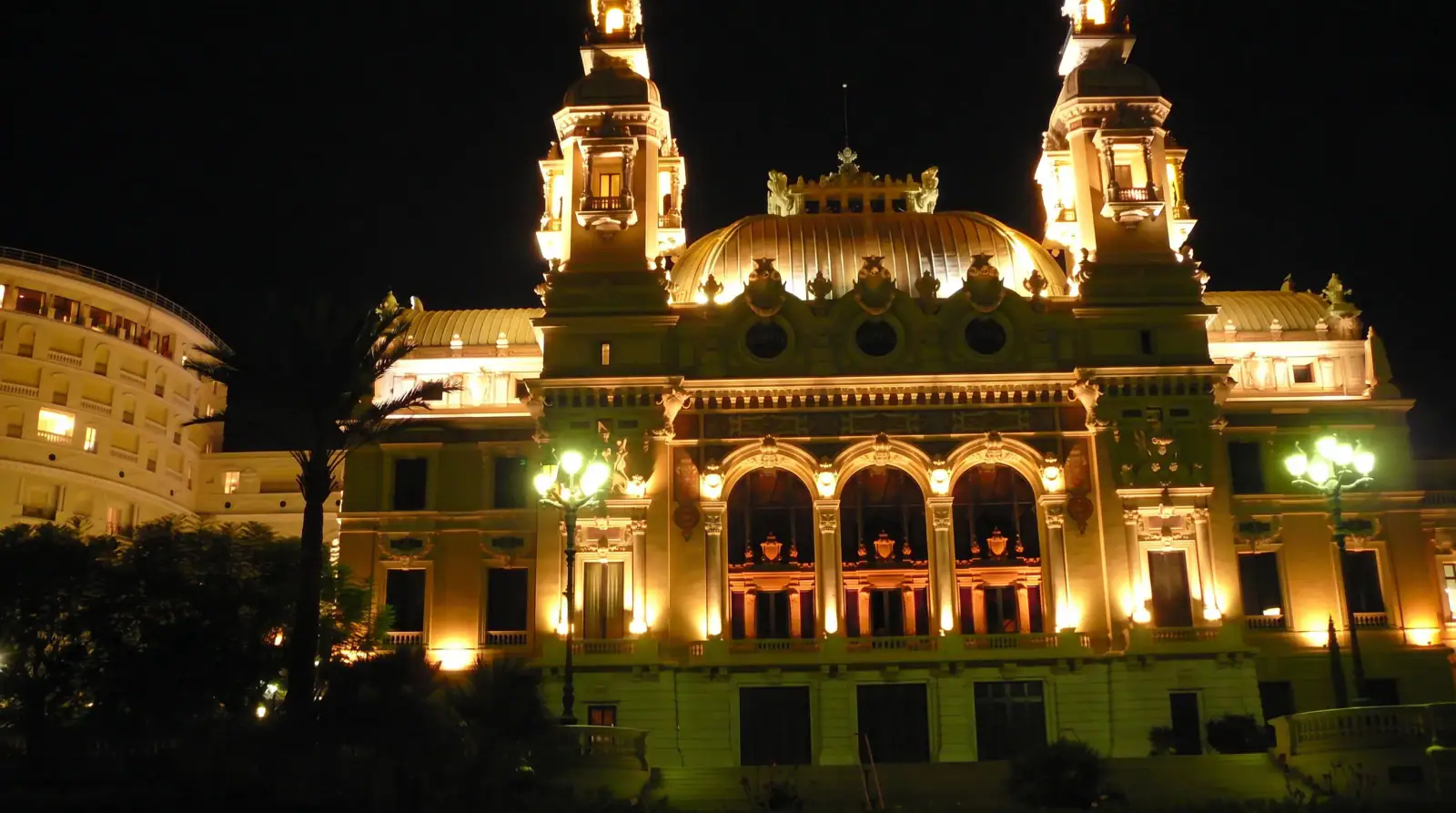
That side is the opera house, and it is the front. Three great arcades, a copper dome 35 metres up on a steel frame designed by Gustave Eiffel, two lantern towers, mosaics by Facchina of Venice, and grilles worked as lyres.
It is free, it is permanently open, and the entire crowd on the square is looking at the back of it.
Afternoon — down to the port
Port Hercule and the Condamine market, about fifteen minutes downhill, is where to eat without Place du Casino prices. Flat, unhurried, and back up in time to change.
Evening — the performance
517 seats. You will be close enough to hear the dancers land.
Before it starts, register where you are: this is the room where Diaghilev's Ballets Russes first performed on 19 April 1911 — Nijinsky and Karsavina in Le Spectre de la rose. The company dancing tonight was created in 1985 to continue that tradition, and rehearsed in the Diaghilev studio when it began.
Version B — your ticket is for the Salle des Princes
Grimaldi Forum, Larvotto, the eastern end. Station: lower exit, Sainte-Dévote.
Morning — Larvotto
The free public beach, and the free Japanese Garden ten minutes along the seafront — 7,000 m², created in 1994, built on a concrete slab over the bus station.
Larvotto has its own guide, with one warning: swimming is prohibited for roughly three weeks each spring, usually April, while the beach is re-profiled.
Afternoon — Mareterra
A few minutes further, and free.
Six hectares of ground that did not exist in 2013, opened December 2024, about half of it public: a 500-metre coastal promenade, a hectare of pine wood, and La Grotte Bleue, a viewing point built so the public can see the eighteen concrete caissons the district stands on.
Mareterra has its own guide. Everything in this version of the day, except the ticket, is free.
Evening — the performance
The Salle des Princes is modern, large and technically capable in ways an 1879 theatre is not. The company premiered here in December 2000 and splits its season between the two houses.
You are a few minutes' walk from where you spent the day.
Either way: before you book
Check the company is at home. They tour more than 200 days a year. A gap in the Monaco calendar means they are elsewhere, not that the season has ended.
Check the price you should be paying. Individual tickets run about €25–€39; anyone under 25 pays a flat €15; visitors with reduced mobility get 20% off individual tickets; and a three-show subscription starts at €99.
Check whether it is a Ballet Bus night. If you are staying in Nice, the company runs a shuttle for selected performances — €6 return, picking up at 18:00 at the Lycée Masséna stop on avenue Félix Faure. Booked through the box offices, not online.
Box offices. Grimaldi Forum, +377 99 99 30 00, Tuesday–Saturday 12:00–19:00. Atrium du Casino, +377 92 00 13 70, Tuesday–Saturday 10:00–17:30 — the same counter that sells opera tickets.
And if the dates do not work
Three fallbacks, in order of how good they are.
The Monaco Dance Forum, usually in April — a week of international choreographers and companies, and the best time to come if it is dance rather than this company specifically that interests you.
The Académie Princesse Grace gala, in June at the Salle Garnier — dancers aged 13 to 18, from the school Princess Grace and Rainier III founded in 1975.
BMC Stream, the company's own streaming platform. Not the room, but honest.
Make a record
Photograph it thoughtfully.
The short version
Assume you cannot photograph anything, and photograph the buildings instead.
This is a performing company, not a place. There is no site to visit, the home building is a workplace, and the two theatres it plays are covered by their own guides. What is left that you can legitimately photograph is architecture, and it is very good architecture.
Never during a performance
No published policy was found, and it does not matter: do not photograph during a performance.
It is true of every theatre, and it is doubly true here. Dance is lit precisely, a phone screen in a 517-seat room is visible from the stage, and choreography is a copyright-protected work. A recording of a performance is not a holiday snap; it is a copy of somebody's work.
Assume the same for curtain calls unless you are told otherwise.
The buildings, which you can photograph
The Salle Garnier
Charles Garnier's 1879 hall, inside the casino. Its seaward façade is the best exterior shot in Monte-Carlo and almost nobody takes it — everyone on the Place du Casino is photographing the back of the building.
Walk round to the terraces: three great arcades, a copper dome 35 metres up on a steel frame designed by Gustave Eiffel, two lantern towers, mosaics by Facchina of Venice, and metal grilles worked as lyres.
Free, public and permanently accessible. The Opéra de Monte-Carlo has its own guide with the full brief.
The Grimaldi Forum
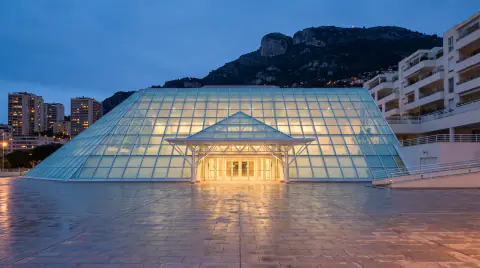
Modern, large and glassy, on the Larvotto seafront. Best in the evening when it is lit and the sea is behind it. Larvotto's guide covers the setting.
What you cannot photograph
The Atelier. The company's home is a converted sawmill and a working building. There is no published public access, no confirmed street address, and no reason to go and stand outside somebody's workplace with a camera.
The Académie Princesse Grace. A school, for students aged 13 to 18. This should not need saying: do not photograph the building, and never the students. If you attend the June gala, the no-photography rule applies with more force than usual, not less — these are children.
Publicity images
The company's own production photography is professionally made, rights-managed, and credited. It is not available for reuse simply because it is on a public website.
If you need an image of the company for any published purpose, ask the company rather than lifting one. The same applies to anything from BMC Stream.
What is not confirmed
- Any published photography policy for the company or its performances
- Whether photography is permitted before curtain or at the interval at either venue
- Whether the Salle Garnier and Grimaldi Forum apply separate policies for ballet
- Commercial and press accreditation, and who issues it
- Tripod policy anywhere
Around here
Make more of the area.
Good to know
Questions, answered.
01How much are tickets?
About €25 to €39 for an individual ticket, depending on the seating category. Anyone under 25 pays a flat €15. Visitors with reduced mobility get 20% off individual tickets, and group rates are available. A New Year's Eve gala runs higher, around €45–€59.
02Is there a cheap way in for young people?
Yes — the flat €15 under-25 rate, whatever the production. It is the best-value cultural evening in Monaco and it is barely advertised.
03When is the season?
Late October to July. This matters: the Opéra de Monte-Carlo runs only November to April, so for a large part of the year — including June and July — the ballet is the only serious performance in the principality.
04Where do they perform?
Two main houses at opposite ends of Monaco: the Salle Garnier inside the Casino de Monte-Carlo, and the Salle des Princes at the Grimaldi Forum in Larvotto. Check the venue on your ticket. For the Salle Garnier use the station's upper exit; for the Grimaldi Forum the lower exit at Sainte-Dévote.
05Where do I buy tickets?
Online at balletsdemontecarlo.com or montecarloticket.com; by phone or in person at the Grimaldi Forum box office (+377 99 99 30 00, Tuesday–Saturday 12:00–19:00) or the Atrium du Casino de Monte-Carlo (+377 92 00 13 70, Tuesday–Saturday 10:00–17:30). The Atrium counter also sells opera tickets.
06When does booking open?
The company announces a season in mid-summer and opens booking in the autumn — the 2025/26 box office opened on 17 September 2025. Treat mid-September as the pattern rather than a promise.
07Is there really a bus from Nice?
Yes. The company runs a shuttle — the Ballet Bus — for selected performances, at €6 return, picking up at 18:00 at the Lycée Masséna stop on avenue Félix Faure, Nice. It runs only on specific published dates and is booked through the box offices, not online.
08Can I visit the company's building?
No. Its home, the Atelier, is a converted 4,000 m² sawmill where the dancers train and Jean-Christophe Maillot makes work. It is a workplace and no public access is published. The way to see the company is a ticket.
09Who runs it?
Jean-Christophe Maillot, director-choreographer since 1993 — one of the longest artistic directorships in European dance. H.R.H. the Princess of Hanover is president and created the company in 1985.
10Is this Diaghilev's Ballets Russes?
No. Three separate companies are involved and they get merged constantly. Diaghilev's Ballets Russes was founded in Paris and based at Monte-Carlo from 1911, dissolving in
- The Ballets Russes de Monte-Carlo was founded here in 1932 by René Blum. Les Ballets de Monte-Carlo was created in 1985 to continue that tradition — it is not descended from either.
11Is it the same as the Trockadero?
No. Les Ballets Trockadero de Monte Carlo is an unrelated American all-male comic ballet company founded in New York. Check which company you are buying tickets for.
12Did Princess Grace found it?
No. Princess Grace and Prince Rainier III founded the Académie Princesse Grace, the dance school, in 1975. The company was created in 1985 by the Princess of Hanover.
13What is the Monaco Dance Forum?
An international dance festival created by Maillot in 2000 and held annually, usually in April — roughly a week of visiting choreographers and companies. If dance in general rather than this company specifically is the draw, that is the week to come.
14Can I watch the students?
Yes, once a year. The Académie Princesse Grace gala is held in June at the Salle Garnier. The Academy trains dancers aged 13 to 18 over four or five years.
15Is there a dress code?
None is published, for this company or for the opera. If it matters to you, ring the box office — that is the only reliable answer.
16Is it good for children?
On price, it is the most family-forgiving ticketed thing in Monaco — a flat €15 for under-25s, and the core repertoire is full-length story ballets like Cendrillon and Roméo et Juliette. It is still a two-to-three-hour evening performance, and no minimum age is published. Ring the box office.
17How do I know they will be in Monaco?
Check the published season. The company tours more than 200 days a year, so a gap in the calendar means they are away rather than that the season has ended.
18Can I watch without going to Monaco?
Yes — the company runs its own streaming platform, BMC Stream.
19Is it accessible?
The company publishes a 20% reduction on individual tickets for visitors with reduced mobility, which is more concrete than most Monaco venues offer. Book by telephone so you can discuss seating. The venue matters: the Salle des Princes is a modern building from 2000, the Salle Garnier is an 1879 theatre, and step-free routes, lifts and accessible toilets are not published for either.
Before you visit
Useful links.
Venue and visitor information
Method
The company's own website carried most of this bundle, and it is unusually forthcoming about the things that matter to a visitor — prices, subscription tiers, box office hours and telephone numbers, and the Ballet Bus, none of which is reproduced anywhere in English.
Institutional history came from the company's own About us, which is precise about dates and careful about the Ballets Russes relationship. Where it and general reference differ on detail, both are recorded below.
Season detail came from Monégasque press coverage of the season announcement, because the company's own season page had not yet been updated from the previous season when this bundle was written.
Three things were deliberately not attempted. Any dress code — none is published, as with the opera. The Atelier's address and public access — searched for specifically, and the one official directory answer is not credible. And any claim of institutional descent from either Ballets Russes company, which the sources do not support.
Estate-agency, ticket-resale and tour-aggregator content was avoided. It is the origin of the confusion with the Trockadero and of unsourced price claims.
Sources
| ID | Source | Used for | Retrieved |
|---|---|---|---|
| S01 | Les Ballets de Monte-Carlo — Prices, subscriptions, ballet bus | The subscription tiers (3 shows at €99 category 1 / €84 category 2; 5 shows at €170 / €145 including an Imprévus invitation) and their exclusions; the box offices — Grimaldi Forum +377 99 99 30 00, Tuesday–Saturday 12:00–19:00, and Atrium du Casino de Monte-Carlo +377 92 00 13 70, Tuesday–Saturday 10:00–17:30; online sales via montecarloticket.com; the box office opening on 17 September 2025; and the Ballet Bus — a shuttle from Nice at €6 return, pick-up 18:00 at the Lycée Masséna stop, avenue Félix Faure, booked through the box offices, running on three named dates that season | 2026-08-05 |
| S02 | Les Ballets de Monte-Carlo — About us | The company's creation in 1985 through the commitment of H.R.H. the Princess of Hanover, to continue Monaco's tradition of dance and its "famous Ballets Russes"; Maillot's arrival in 1993 and the company's international growth through his choreographies; the 50 dancers; touring over 200 days a year; the creation of the Monaco Dance Forum in 2000; the Académie Princesse Grace, founded 1975 and redefined in 2009; and the 2011 incorporation of the three bodies into one organisation under Maillot. Also the four spaces the organisation names: the Atelier, the Académie Princesse Grace, the Salle Garnier and the Salle des Princes | 2026-08-05 |
| S03 | Les Ballets de Monte-Carlo — 40 years | The 40th anniversary gala on 4 July 2026 at 19:30 at the Grimaldi Forum, in tribute to the Princess of Hanover, with former company dancers invited | 2026-08-05 |
| S04 | NEWS.MC — Les Ballets de Monte-Carlo unveil 2026-2027 season programme | The full 2026/27 season and therefore the shape of a season: opening at the Salle Garnier in late October; a December programme and a New Year's Eve run at the Salle des Princes; the Monaco Dance Forum in April; a late-April/May double bill; the Académie Princesse Grace gala and a full-length work in June; two July programmes. Also individual tickets at about €25–€39, the under-25 rate, group rates, the 20% reduction on individual tickets for reduced mobility, the New Year gala at about €45–€59, the shuttle from Nice at €6 return, and the extras — Les Imprévus, a free film screening, a family dance workshop, and Pas Croisés at the Musée National Marc Chagall | 2026-08-05 |
| S05 | Monaco Life — Les Ballets de Monte-Carlo maps out a season of signatures and guest stars | Corroboration of the season structure and pricing, and that the season runs under the presidency of the Princess of Hanover and the artistic direction of Jean-Christophe Maillot — confirming both were in post as of the 2026/27 announcement | 2026-08-05 |
| S06 | Wikipedia — Les Ballets de Monte-Carlo | The founding in 1985 by Caroline, Princess of Hanover, as the national ballet of Monaco; the first performance on 21 December 1985 casting guest stars of the Paris Opera; Ghislaine Thesmar and Pierre Lacotte as first directors, rehearsing in the Diaghilev studio and performing at the Salle Garnier; Jean-Yves Esquerre as artistic director from 1989; Maillot joining in 1992 as artistic consultant and becoming director-choreographer in September 1993; the move to the company's own dance centre; and the Grimaldi Forum Salle des Princes premiere in December 2000. Also used, importantly, for what it does not assert — see the lineage note below | 2026-08-05 |
| S07 | VisitMonaco — Atelier des Ballets de Monte-Carlo | The Atelier as the company's workplace, housing dancers with the administrative, artistic and technical teams in a former sawmill of 4,000 m², inaugurated in the presence of Prince Rainier III and the Princess of Hanover, designed by two architects working with Maillot; and the telephone number +377 97 70 65 20. Notably, no street address and no statement of public access | 2026-08-05 |
| S08 | Coverage of the Atelier's architecture and inauguration, including Dance Magazine and Monégasque reference | The architects Daniel Raymond and Sophie Nivaggioni; the building's location given as Beausoleil, adjacent to Monte-Carlo; the inauguration on 10 December 1998 with Maillot's inaugural speech; and the Atelier as the place where Maillot choreographs and the dancers train | 2026-08-05 |
| S09 | Coverage of the Académie Princesse Grace, including Monaco Life and the Prix de Lausanne profile | The Academy's founding in 1975 at the wish of Princess Grace and Prince Rainier III; the government's purchase of the villa Casa Mia to house it; Marika Besobrasova's long directorship; the appointment of Luca Masala as artistic director in 2009 by the Princess of Hanover at Maillot's suggestion; students aged 13 to 18 training for four to five years in classical and contemporary dance, composition, Pilates and dance history alongside a traditional school education; and the annual gala | 2026-08-05 |
| S10 | Above Guide's own Monaco dataset and the opera-de-monte-carlo, casino-de-monte-carlo and larvotto bundles | The Salle Garnier's 517 seats and 1879 date; the verified coordinates for the casino building and the Grimaldi Forum; the Grimaldi Forum's opening on 20 July 2000; the Opéra de Monte-Carlo's November–April season and its June and August box office closures, which establish the contrast; the station upper/lower exit distinction; and the documented Diaghilev and René Blum history used in the lineage section | 2026-08-05 |
Conflict ledger
The lineage: continuation, not descent
The most important accuracy decision in the bundle.
The company's own account (S02) says the Princess of Hanover "wanted to continue the long tradition of dance in Monaco and its famous Ballets Russes". General reference (S06) is more explicit: it establishes no direct relationship to Diaghilev's company or to René Blum's, only that the repertoire later included Ballets Russes works.
Used: "continues the tradition of", never "descended from" or "successor to".
This is written into the history file's error list, the FAQ, the relationship guardrails and the SEO file's GEO notes, because four separate bodies get merged constantly:
- Diaghilev's Ballets Russes — Paris-founded, based at Monte-Carlo 1911–29
- Ballets Russes de Monte-Carlo — founded here 1932 by René Blum with Colonel de Basil
- Les Ballets de Monte-Carlo — 1985, this entity
- Les Ballets Trockadero de Monte Carlo — American, unrelated, and it appears in almost every search for this company
When did the company move into the Atelier?
1997 (S06, describing a move to "their own dance center") against a documented inauguration on 10 December 1998 (S08), with Maillot's own inaugural speech and, per S07, Prince Rainier III and the Princess of Hanover present.
Used: 10 December 1998, as the specific documented event, with the history file noting that the date "is not perfectly settled". The two are reconcilable — a company can occupy a building before it is formally inaugurated — but neither source says so, and the bundle does not invent the bridge.
Where is the Atelier?
Unresolved, and deliberately not asserted anywhere in the bundle.
- S08 places the building in Beausoleil, the French commune adjoining Monaco.
- S07, Monaco's own tourist board, lists it as a Monaco place with a Monaco telephone number (+377) and no street address.
- Monaco's culture portal gives the address as "Pl. du Casino, 98000 Monaco" — which cannot be right. A converted 4,000 m² sawmill is not on the Place du Casino, and that address is almost certainly a directory fallback.
Used: nothing. The operational data records address: null with the conflict spelled out, the overview and history say the location is not established, and the SEO file forbids emitting an address in structured data.
If the national ballet company of Monaco is in fact headquartered in France, that is a genuinely interesting fact and it deserves a real source before publication.
Maillot: 1992 or 1993?
S06 has him joining in 1992 as artistic consultant and becoming director-choreographer in September 1993. S02, the company's own account, says simply "the arrival of Jean-Christophe Maillot in 1993".
Used: both, stated as a sequence — 1992 as consultant, September 1993 as director-choreographer. Not a conflict so much as two levels of detail.
The Ballet Bus, or La Voiture Ballet?
The company's own page (S01) calls it the Ballet Bus. Press coverage of the following season (S04) calls it La Voiture Ballet.
Used: Ballet Bus, as the company's own term, with the alternative noted in the visitor guide and the operational data so a reader who has seen the other name is not confused.
Which season's prices?
S01 gives the 2025/26 subscription tiers in full. S04 gives the 2026/27 individual prices, under-25 rate and reduced-mobility discount.
Used: both, described as approximate and explicitly seasonal. Every price in the bundle is prefixed "about", the operational data carries a volatility note, and the SEO file forbids emitting fixed-price structured data without validThrough.
Facts deliberately not asserted
| Fact | Where this guide says so |
|---|---|
| Any dress code | Overview, Plan your visit, FAQ, family guide |
| The Atelier's street address or country | Overview, history, operational data, SEO |
| Whether the Atelier can be visited | Overview, Plan your visit, highlights |
| Any minimum age, or policy on children at performances | Family guide |
| Whether the €15 under-25 rate has a lower age bound | Family guide |
| Latecomer admission terms | Plan your visit, family guide |
| Running times for individual productions | Plan your visit, family guide |
| Step-free routes, lifts, accessible toilets at either venue | Accessibility |
| Whether a companion or carer ticket accompanies the 20% reduction | Accessibility |
| Whether the 20% applies to subscriptions | Accessibility |
| Hearing loops, captioning, audio description | Accessibility |
| Whether the Ballet Bus coach is wheelchair accessible | Accessibility, Plan your visit |
| Any photography policy | Photography |
| Cloakroom, bar and facilities | Plan your visit, family guide — these belong to the host venues |
| Institutional descent from either Ballets Russes company | History, FAQ, guardrails |
The venue-facilities exclusions deserve a note. Cloakrooms, bars, toilets and access routes at the Salle Garnier and the Salle des Princes belong to the Opéra de Monte-Carlo and the Grimaldi Forum respectively, not to the ballet company. They are not published as a company matter and this bundle does not borrow them from the sibling bundles, because a company's arrangements in a hall it does not own cannot be assumed to match the owner's.
A note on what was not used
No AI-generated encyclopaedia was cited.
Ticket-resale and tour-aggregator sites were avoided, though they dominate the search results. They are the main vector for the Trockadero confusion — several list the two companies under overlapping headings — and they quote prices that trace to nothing.
The company's own production photography was not used, and must not be, either for publication or as a grounding reference for generated images. It is rights-managed and credited, and the image brief prohibits generating dancers on independent grounds.
Opening hours, prices, programmes and access arrangements can change. Confirm critical details with the venue.
Continue exploring / Monaco
More things to do
in Monaco
Explore Monaco activities, sights and places to eat. Compare the time to allow, costs and booking details, then save your favourites to your itinerary.
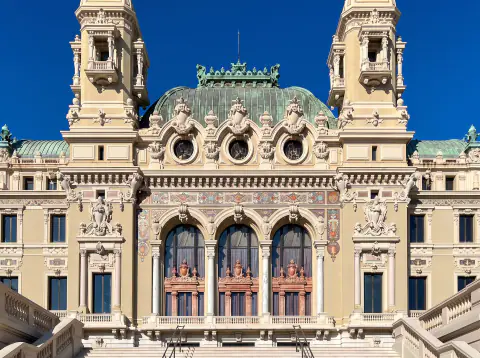 01Monaco Grand Prix experienceCasino de Monte-CarloExplore experience →
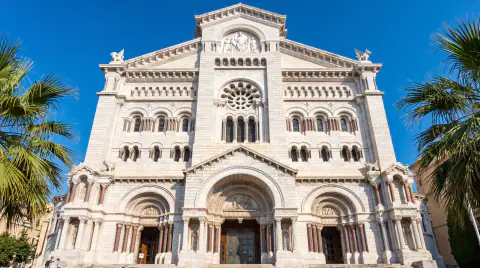 02Monaco Grand Prix experienceCathedral of Notre-Dame-ImmaculéeExplore experience →
 03Monaco Grand Prix experienceFontvieilleExplore experience →
 04Monaco Grand Prix experienceFort AntoineExplore experience →
 05Monaco Grand Prix experienceGrimaldi ForumExplore experience →
 06Monaco Grand Prix experienceJardin Exotique de MonacoExplore experience →
 07Monaco Grand Prix experienceJardin Japonais de MonacoExplore experience →
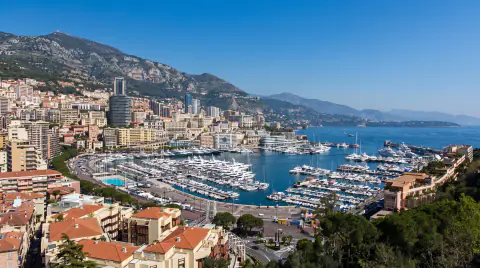 08Monaco Grand Prix experienceLa CondamineExplore experience →
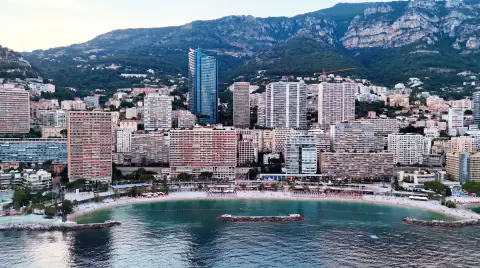 09Monaco Grand Prix experienceLarvottoExplore experience →
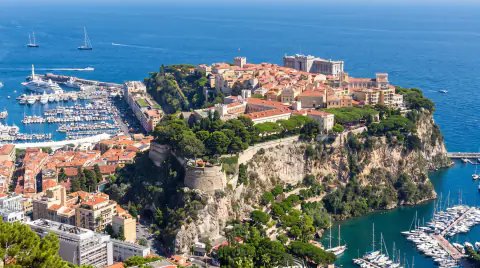 10Monaco Grand Prix experienceLe Rocher / Monaco-VilleExplore experience →
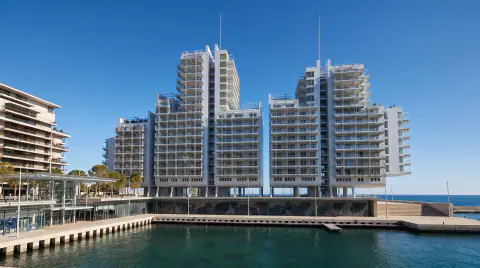 11Monaco Grand Prix experienceMareterraExplore experience →
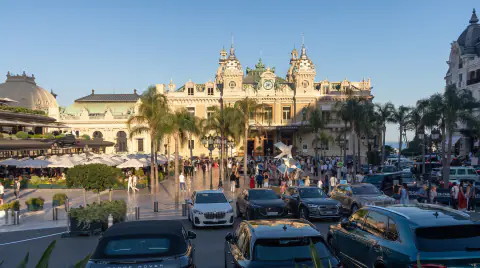 12Monaco Grand Prix experienceMonte-CarloExplore experience →
 13Monaco Grand Prix experienceNouveau Musée National de MonacoExplore experience →
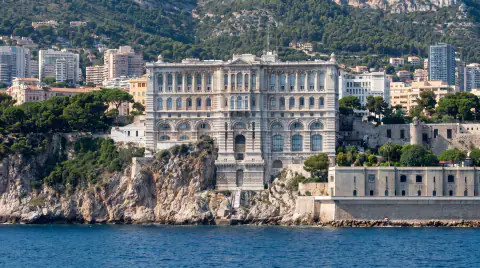 14Monaco Grand Prix experienceOceanographic Museum of MonacoExplore experience →
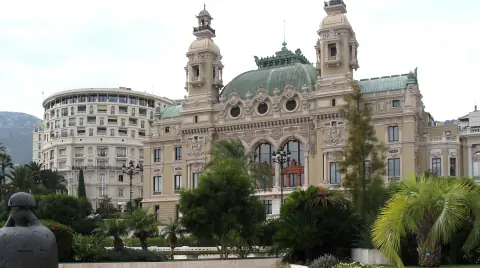 15Monaco Grand Prix experienceOpéra de Monte-CarloExplore experience →
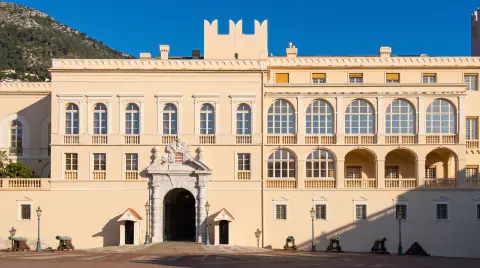 16Monaco Grand Prix experiencePrince's Palace of MonacoExplore experience →
 17Monaco Grand Prix experienceThe Museum of Old MonacoExplore experience →
 18Monaco Grand Prix experienceThe Museum of Stamps and CoinsExplore experience →
 19Monaco Grand Prix experienceThe Prince's Car CollectionExplore experience →
 Plan / Itinerary builderBuild your Monaco Grand Prix dayStart planning →