In depth
Le Rocher / Monaco-Ville
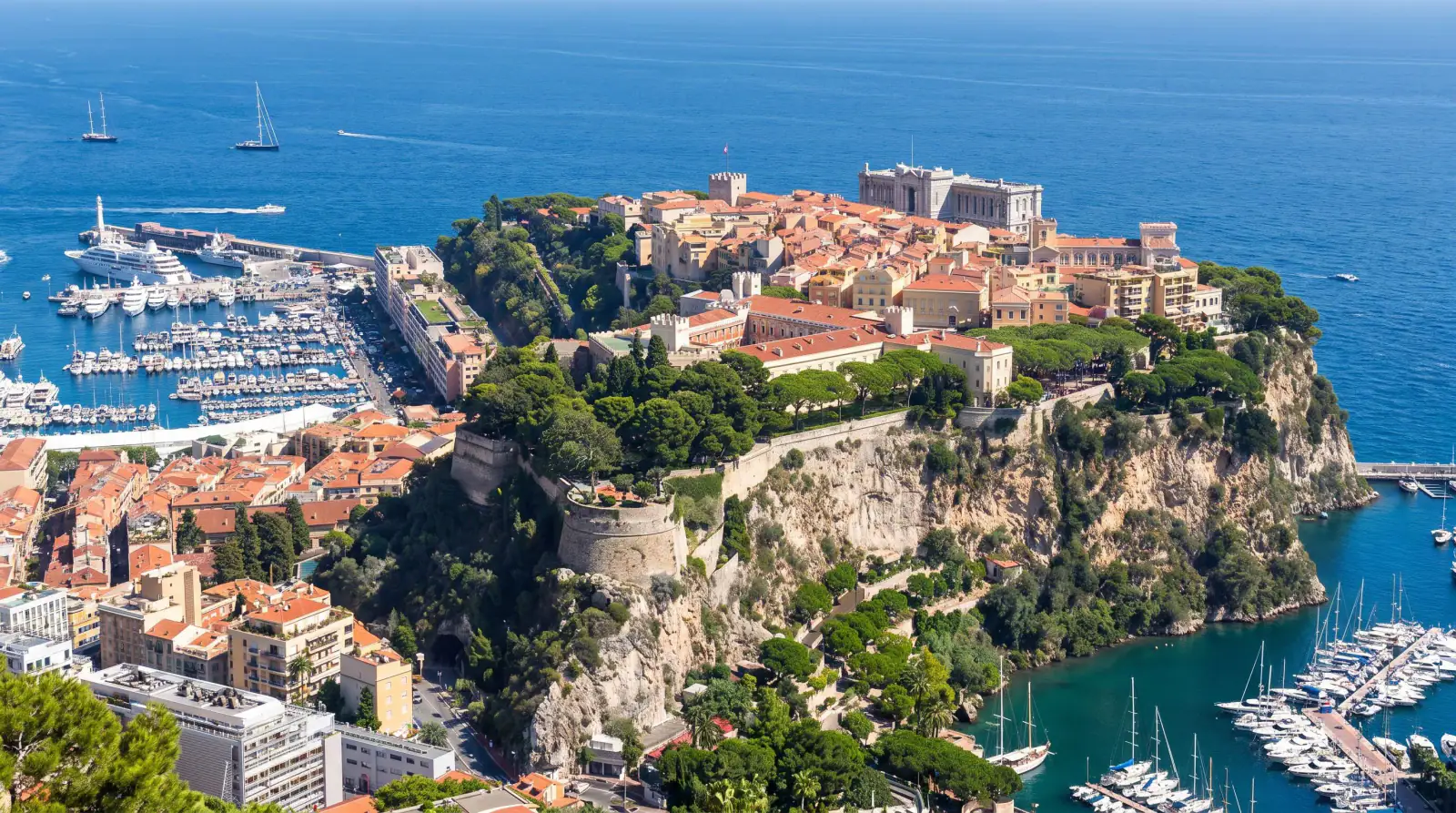
Monaco's old town on a 62-metre rock: the Prince's Palace, the cathedral where the Grimaldis are buried, and an oceanographic museum cut into an 85-metre cliff — all within four hundred metres.
Story · Visit · Route · Links
Choose your depth
Essentials or more detail?
See visiting essentials, or read more about the history and places nearby.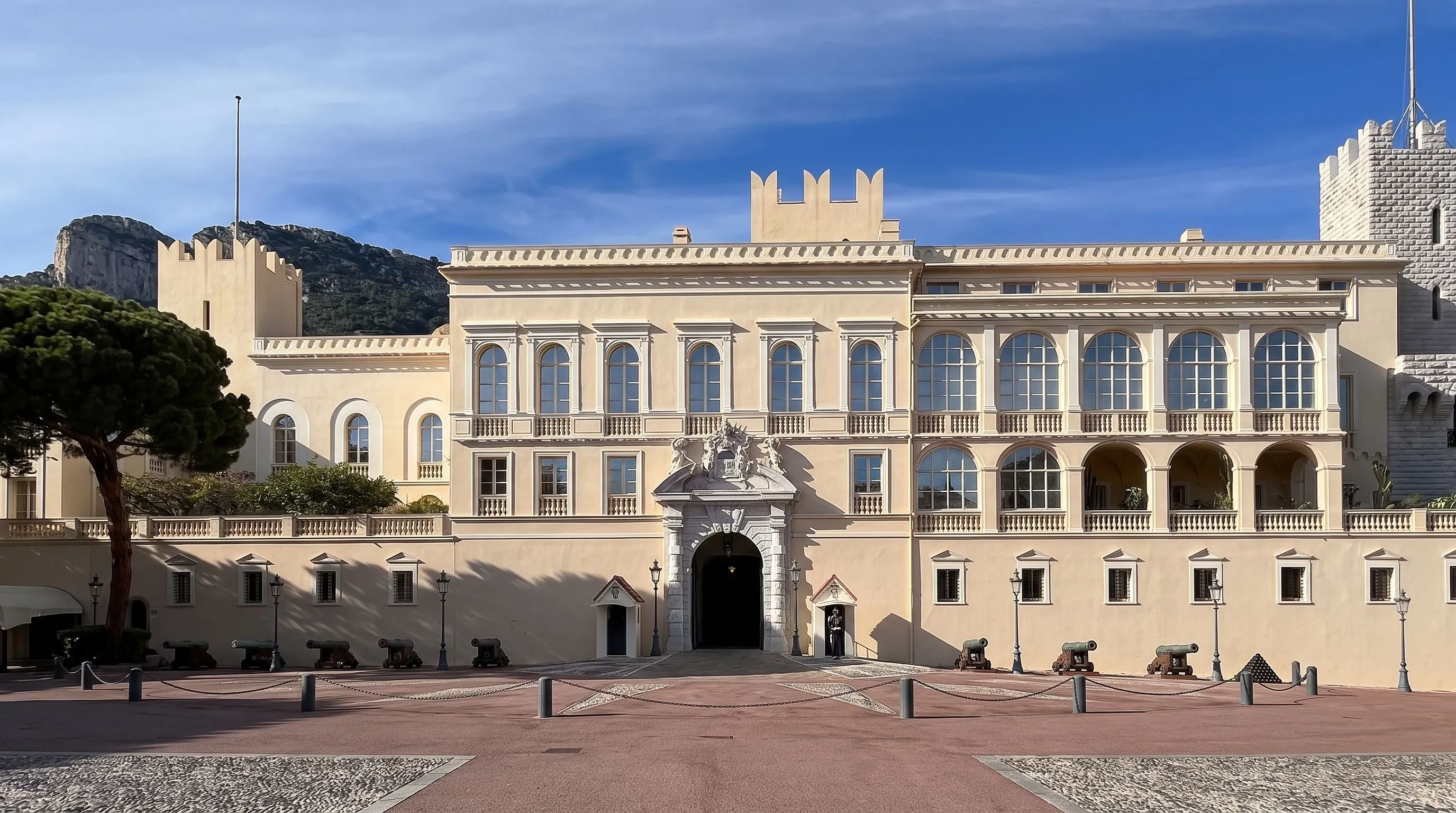
01 The experience
What to expect.
Why it matters
Monaco is usually pictured as Monte-Carlo: the casino, the marina, the towers. The Rock is the older thing underneath that image, and it is where the state actually functions. The Palace is a working sovereign residence rather than a museum with a family attached. The National Council sits here. So does the Mairie, the Palais de Justice and the Ministry of State. A visitor walking from the Place du Palais to the Oceanographic Museum passes the government of a country in under ten minutes.
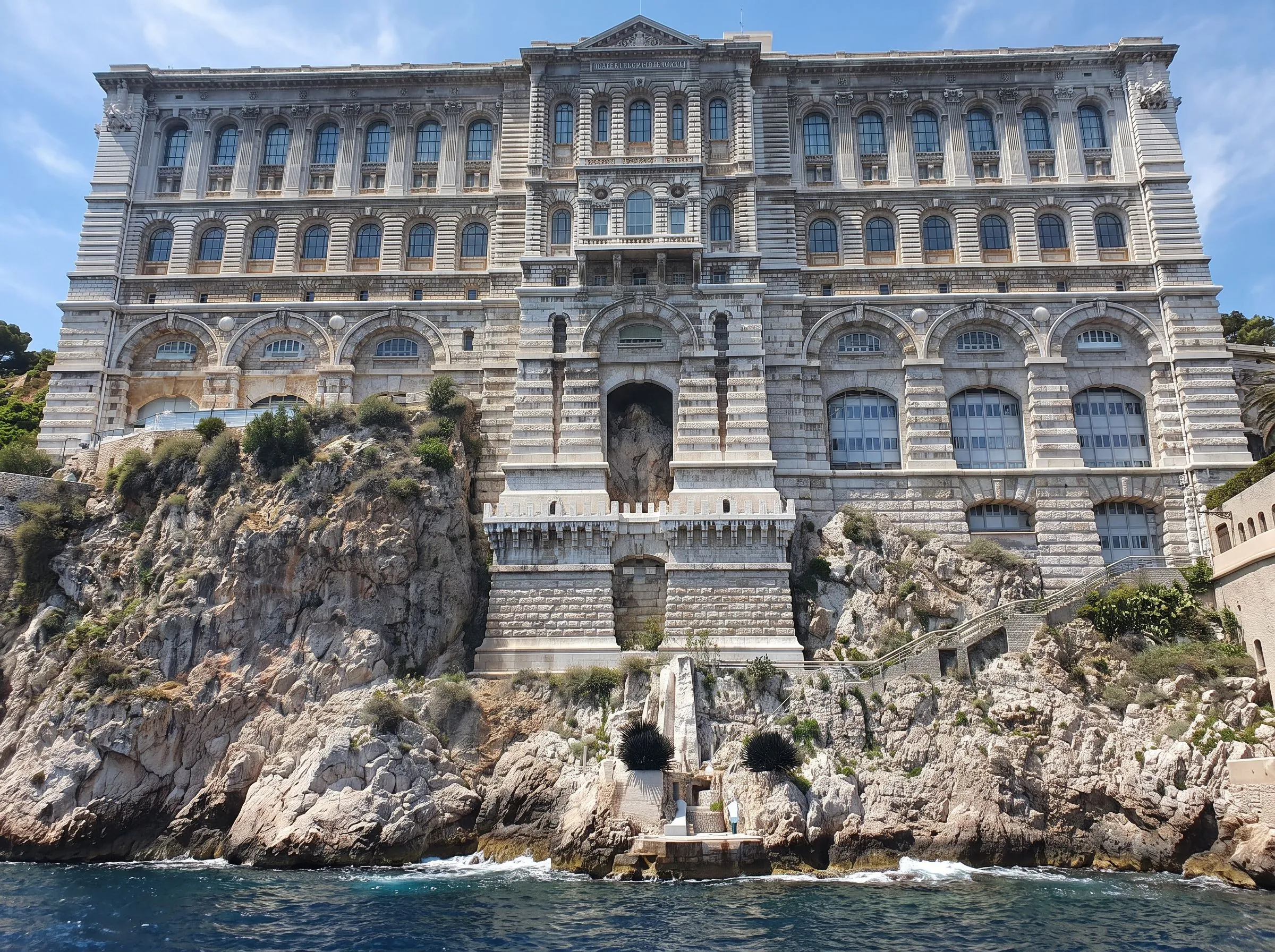
The second reason is the Oceanographic Museum, which is not a municipal aquarium that happens to have a good view. Prince Albert I founded the institute in 1889, began building in 1899 and opened it in 1910, cutting the building into a sheer cliff 85 metres above the sea. Jacques-Yves Cousteau directed it from 1957 to
- It is one of the founding institutions of the discipline, and it is on this headland because Albert I put it here.
What visitors should notice
The Rock is a fortress before it is a town, and the shape of it still shows that. The lanes are narrow because they were built inside walls; the streets run along the contour rather than up it; and the edges — Jardins Saint-Martin on the south flank, Fort Antoine at the north-east tip — are defensive ground turned into public space.
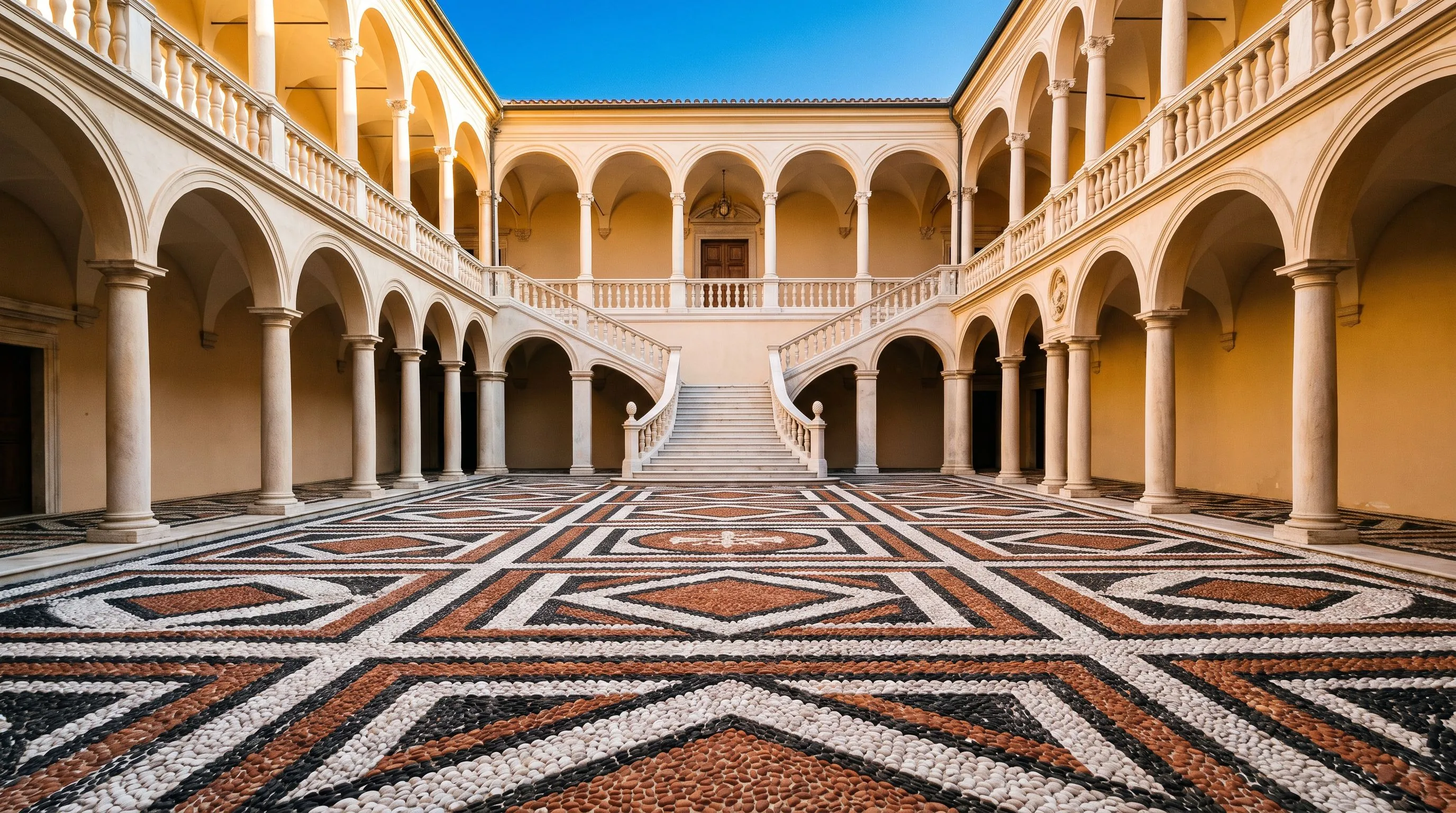
Notice the Cour d'Honneur of the Palace if you take the tour: it is paved with around three million white and coloured pebbles laid in pattern, and the frescoes overhead are the ones restorers uncovered by accident from 2015 onwards, having started routine repairs in 2013.
Notice, too, how quickly the crowd thins. The Place du Palais at 11:55 for the changing of the guard is the busiest square in the country. Two streets back, at the same minute, the lanes are close to empty.
Who will enjoy it
Anyone interested in how a very small state presents itself. Visitors who like compact historic quarters that can be walked without a plan. People coming for the Oceanographic Museum, which justifies a half-day on its own and is the strongest family attraction in Monaco. Anyone who wants a view: the Jardins Saint-Martin and the museum terrace give the two best free outlooks on the principality.
It also suits a short visit unusually well. The Rock is the one part of Monaco where a cruise passenger or a day-tripper from Nice can see something coherent in three hours.
Who may find it difficult
The Palace State Apartments are reached by stairs and the Palace states plainly that they are not accessible to wheelchair users. That is a hard limit, not a difficult-but-possible one, and it is the single most common wasted journey here.
Getting onto the Rock is itself a climb. The Rampe Major from Place d'Armes is about ten minutes uphill; the alternatives are the lift and escalator from the Parking des Pêcheurs, or bus lines 1 and 2 to the Place de la Visitation terminus. The Jardins Saint-Martin have step-free entrances near the cathedral and the museum, but the garden paths themselves run down a cliff and some slopes are steep.
Visitors arriving on Grand Prix weekend should read the race-week section before committing to the day. The Palace, the Oceanographic Museum and the Prince's Car Collection all close for it, and in 2025 several streets on the Rock were accessible on foot only with a race ticket.
Anyone hoping for a car-free medieval village will find something quieter than Monte-Carlo but not silent, and anyone expecting the Palace to be open in winter will find it shut — the State Apartments run from late March to mid-October.
Visitor verdict
The best three hours in Monaco, and the only part of the principality that reads as a place rather than a development. Come up early, be in the Place du Palais before 11:45 if you want to see the guard change, and give the Oceanographic Museum the two hours it asks for rather than the forty minutes most people give it. Skip the Palace if the season or the stairs rule it out — the cathedral, the gardens and the museum are the stronger part of the day and two of the three are free.
The story
History & character.
The headland before the fortress
The Rock is a limestone monolith rising 62 metres out of the Mediterranean at the eastern end of a natural harbour. It is the reason Monaco exists. A promontory with deep water on one side, a defensible neck on the other and a spring within the walls is the classic site for a stronghold, and the shape of the modern ward is still the shape of the fortified ground.
Antiquity left a name rather than ruins. The Greek and Roman world knew a harbour here associated with a cult of Hercules — Portus Herculis Monoeci — and the harbour below the Rock still carries the name Port Hercule. What did not survive is any structure a visitor can point at. Nothing standing on the Rock today is ancient; the oldest fabric is medieval.
1215: the Genoese build a fortress
The Rock's documented history as a fortified place begins in 1215, when the Genoese consul Fulco de Castello began building a fortress on the headland. The Palace's own account describes it as a rampart of thirty-seven sections and four buttressed towers, enclosing a roughly triangular site. Genoa was securing the coastal route, and Monaco was one link in it.
That triangle is still legible. The Palace occupies the western apex, the town grew in the middle, and the seaward flanks — where the Jardins Saint-Martin now run — were the parts nobody needed to wall because the cliff did the work.
8 January 1297: François Grimaldi takes the fortress
On the evening of 8 January 1297, François Grimaldi — remembered as Malizia, the Cunning — presented himself at the gate dressed as a Franciscan monk, with weapons concealed, and took the fortress from the Ghibelline garrison holding it for Genoa. The Grimaldi coat of arms carries two sword-bearing monks as supporters, which is the family's own commemoration of the episode.
This is the founding story of the principality and it is repeated everywhere, so it is worth being precise about what it does and does not establish.
What the sources agree on. The Monaco government and the Prince's Palace both give the date as 8 January 1297 and both describe the monk's habit. The event is attested in chronicle rather than in a charter, and the disguise detail comes from a chronicler rather than from a contemporary administrative record.
What is regularly overstated. The 1297 seizure did not begin an unbroken Grimaldi possession of the Rock. François held the fortress for a few years before Genoese pressure forced the Grimaldis out again, and the family's hold on Monaco over the following century was intermittent rather than settled. The dynasty dates itself from 1297 and is entitled to; the phrase "held since 1297", used without qualification, describes a lineage rather than a tenancy.
The Grimaldis date their rule from 1297, though their hold on the Rock was not uninterrupted. It became the enduring seat of the family’s rule.
Fortress into palace: the sixteenth and seventeenth centuries
The change from stronghold to residence happened under Honoré I (1522–1581). The architect Dominique Gallo built a portico into the courtyard with two double-decked galleries of twelve arches each — the Galerie d'Hercule — and the Genoese painter Luca Cambiaso worked on the wall decoration. This is the moment the Rock acquired a Renaissance face without giving up its walls.
Honoré II continued it. His architect Jacques Catone added a wing that masked the original Genoese towers and created the grand entrance leading into the courtyard, the ceremonial approach still used today. The Cour d'Honneur was paved with around three million white and coloured pebbles, and the double-revolution staircase in Carrara marble — two flights curving away from each other and meeting again — was built as the set piece of the arrival sequence.
1709–1713: Fort Antoine
At the far, north-eastern tip of the Rock, Prince Antoine I built a fort between 1709 and 1713, during the War of the Spanish Succession. It is the last major piece of military building on the headland and the clearest surviving evidence that the Rock was still understood as a defensive position in the eighteenth century.
1793: the Revolution
The French Revolution did more damage to the Palace than any siege. In 1793 it was occupied and looted, then converted into a military hospital; the throne room was used as a kitchen. Furniture and collections were dispersed. Almost everything a visitor now sees in the State Apartments postdates that emptying, either because it was recovered later or because it was brought in afterwards.
The nineteenth century: a diocese and a cathedral
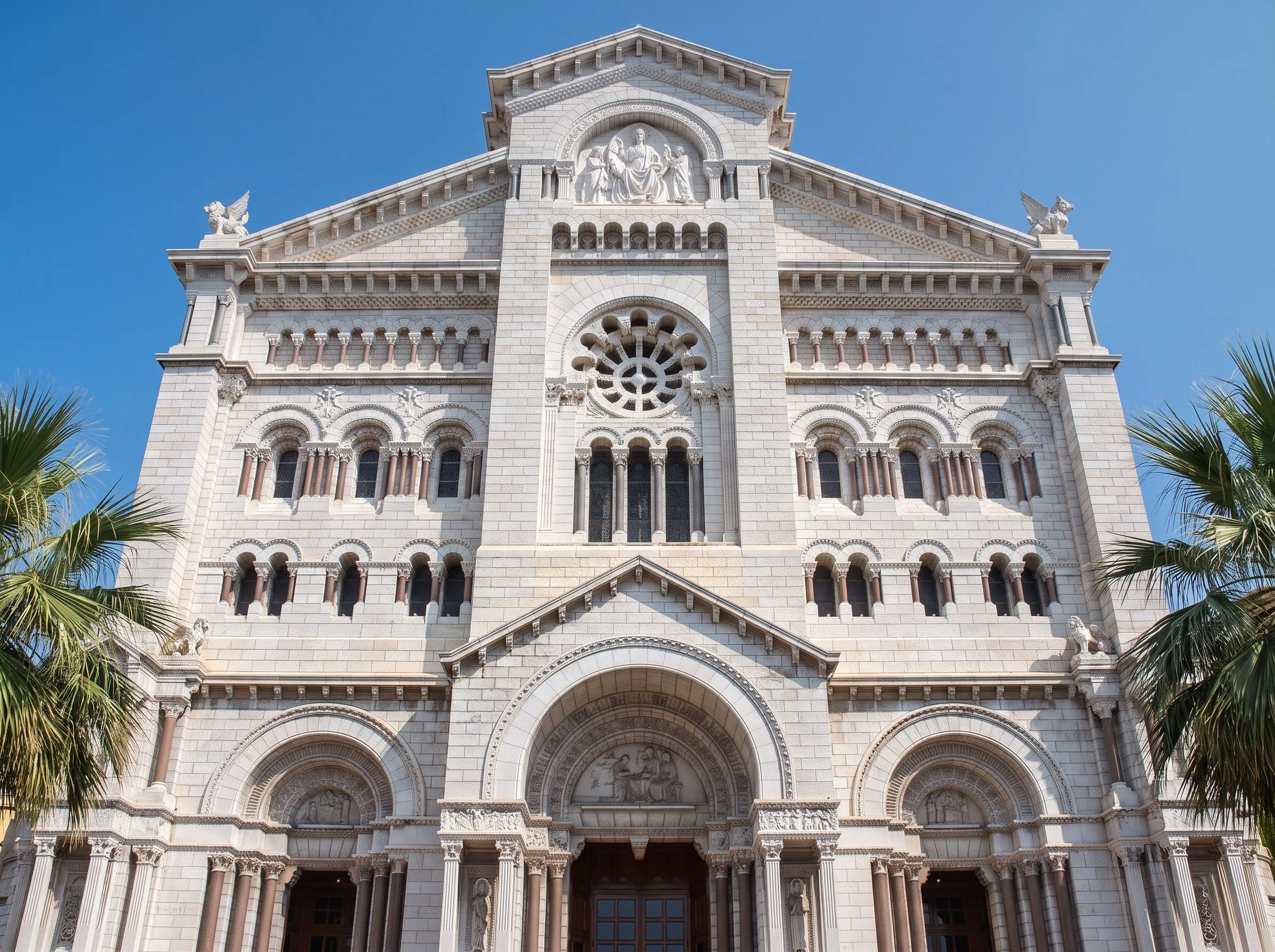
Monaco separated from the diocese of Nice in 1868. That administrative change is the reason the cathedral exists in its present form: the principality needed a cathedral church, and the medieval parish church of Saint-Nicolas standing on the site was not it.
Prince Charles III laid the foundation stone on 6 January 1875. The old church — Monaco's first parish church, built on the same ground in 1252 — was demolished in 1874 to clear the site. The new building went up in white stone from La Turbie, in a Romanesque-Byzantine revival manner to Charles Lenormand's design, was completed on 12 November 1903 and was consecrated on 11 June 1911.
Several things were carried across from the demolished church, which is why a building finished in the twentieth century holds a sixteenth-century altarpiece: the retable of Saint Nicholas, attributed to the Nice painter Louis Bréa and dated August 1500, now stands in the right transept.
1899–1910: Albert I builds the Oceanographic Museum
Prince Albert I is the figure who changed what the Rock was for. A working oceanographer who ran his own research campaigns, he founded the Institut océanographique in 1889, began construction of a museum on the Rock's southern cliff in 1899, and inaugurated it on 29 March 1910 after eleven years of building.
The engineering is the point. Paul Delefortrie's neo-Baroque building is cut into a sheer cliff and presents an 85-metre façade to the sea, using around 100,000 tons of stone from La Turbie. The names of twenty oceanographic research vessels, chosen by Albert I, are carved into the façade. From the water it reads as a ship stopped on the face of the rock, which was the intention.
Jacques-Yves Cousteau directed the museum from 1957 to 1988, which is the second reason the institution matters internationally rather than locally.
1944–1954: Fort Antoine destroyed and rebuilt
Fort Antoine was used to store ammunition during the Second World War and was almost entirely destroyed on 3 September 1944, blown up by the retreating German troops as United States forces liberated Monaco. It was restored across 1953–54 at Prince Rainier III's initiative and converted into an open-air theatre, which opened in 1954. It seats around 350 in a semicircle facing the sea and runs a free summer programme for about a month from late June.
(A third date circulates: one reference dates the start of open-air theatre use to 1970. The 1953–54 reconstruction is the well-attested part.)
The Rainier III era
Rainier III, who reigned from 1949 to 2005, is credited with the restoration of the Palace to its present condition, along with the reconstruction of Fort Antoine and much of the modern presentation of the Rock as a place the public visits. His marriage to Grace Kelly in 1956 took place in the cathedral, and both are buried there — she after her death in 1982, he in 2005 — in the ambulatory where the sovereign princes and their wives are laid.
2013–2015: the frescoes come back
The most significant recent event on the Rock was an accident. Restorers began routine repair work on the Palace in 2013. In 2015, examining the lunettes and vaulted ceiling of a loggia in the courtyard, they found painted decoration beneath later surfaces.
What emerged over the following years was a sixteenth-century cycle of the labours of Hercules, together with his birth and death, in the Galerie d'Hercule — some 600 square metres of scenes, allegorical figures and decorative work. Attribution rests on style and on the lime-based plaster identified by multispectral analysis, both pointing to Genoese painters of the sixteenth century. The frescoes are now part of the State Apartments visit, and they are the strongest single reason to take the Palace tour rather than only stand in the square outside.
Look closer
Highlights and hidden details.
The objects, spaces and small observations that turn a visit into a memorable one.1. The Place du Palais and the Prince's Palace
The great open forecourt at the western apex of the Rock, with the Palace on one side and a parapet over the harbour on the other. It is the ceremonial front door of the principality, it is free, and it is the only place in Monaco where the state performs itself daily.
Why it matters. Under the façade is a Genoese fortress begun in June 1215. Honoré II's architect Jacques Catone spent thirty years building a residence over it, concealing the Serravalle Tower entirely — so what you photograph across the square is a deliberate disguise.
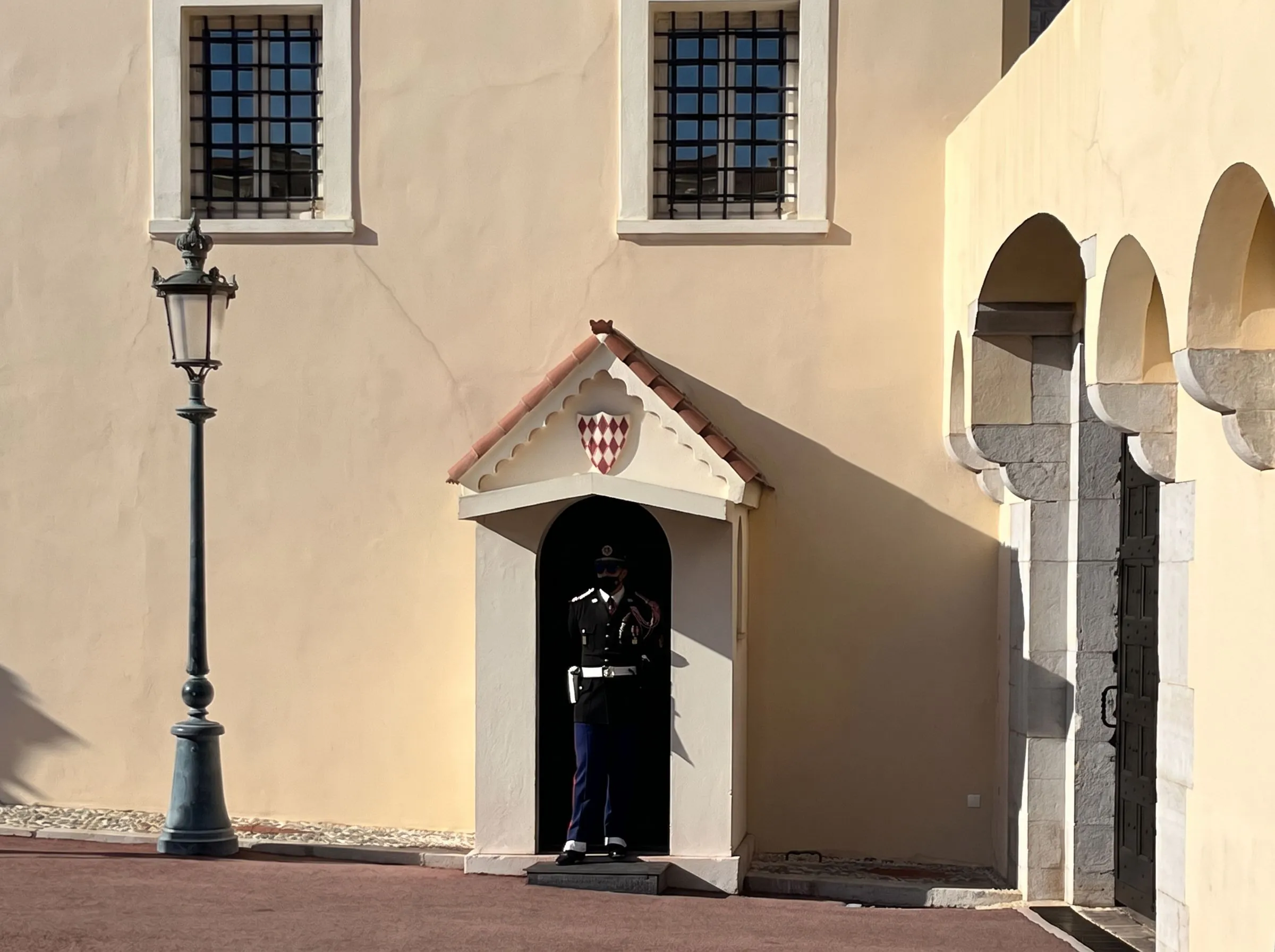
The guard change. At 11:55 the Compagnie des Carabiniers du Prince, created on 8 December 1817, changes the guard in front of the palace entrance. Brief, precise and heavily attended: the square fills from about 11:30 and empties within ten minutes of the end. Free, no ticket.
Going inside. The State Apartments open from late March to mid-October, €13. Stairs only — the Palace states they are not accessible to wheelchair users.
Photography. The parapet for the harbour, best in the morning. The façade before 10:00, or in the ten minutes after the guard change when the square clears.
Time required. Twenty minutes for the square and the ceremony; an hour more inside.
→ The Palace has its own Above Guide entry, covering the fortress beneath it, the Cour d'Honneur, the Hercules frescoes uncovered in 2015, the season and the access limits in full.
2. The Cathedral of Notre-Dame-Immaculée
A white La Turbie stone cathedral in Romanesque-Byzantine revival style, begun in 1875 and consecrated in 1911, on the site of Monaco's first parish church.
Why it matters. It is where the dynasty ends up. Twenty-four Grimaldis lie in the ambulatory behind the high altar, back to Jean II who died in 1505 — including Prince Rainier III and Princess Grace, who were married in this building in 1956.
Beyond the tombs. The retable of Saint Nicholas by Louis Bréa, dated August 1500 and carried across from the demolished church — the oldest important object on the Rock. And an organ of four manuals, seventy-nine stops and close to seven thousand pipes.
Rules. Free entry, open daily. Shoulders covered; mini-skirts and short shorts not permitted, Bermuda shorts accepted. Closed to visitors during services.
Time required. Twenty to thirty minutes.
→ The cathedral has its own Above Guide entry, covering all five retables, the burial row and its conventions, Sainte Dévote and the national day, the music and the organ, and a room-by-room route. Use it if the cathedral is why you are here.
3. The Oceanographic Museum
The single strongest attraction on the Rock, and the one thing here that needs half a day rather than an hour. Prince Albert I founded the Institut océanographique in 1889, laid the first stone in 1899 and inaugurated the museum on 29 March 1910.
Why it matters. It is a founding institution of oceanography rather than a municipal aquarium. Albert I ran twenty-eight scientific campaigns himself, and the instruments upstairs are the prototypes his crews used. Jacques-Yves Cousteau directed it from 1957 to 1988.
The building. Paul Delefortrie's neo-Baroque design is cut into a sheer cliff and presents an 85-metre face to the open sea. From a boat it reads as a ship halted against the rock.
What is inside. The aquarium and its six-metre shark lagoon on the lower levels; the sea turtle rescue centre beyond it; and above, the historic collections, the Whale Room and the Oceanomania cabinet of curiosities. The roof terrace is one of the two best free outlooks in Monaco.
Time required. Two hours, which is the museum's own figure; three with children.
→ This museum has its own Above Guide entry, covering the collections, the turtle centre, ticketing, accessibility and a room-by-room route in full. Use it rather than this card if the museum is the reason you are coming to the Rock.
4. The Jardins Saint-Martin and Sainte-Barbe
Monaco's oldest public gardens, running along the seaward flank of the Rock between the cathedral and the Oceanographic Museum. Free, ungated and almost always quiet.
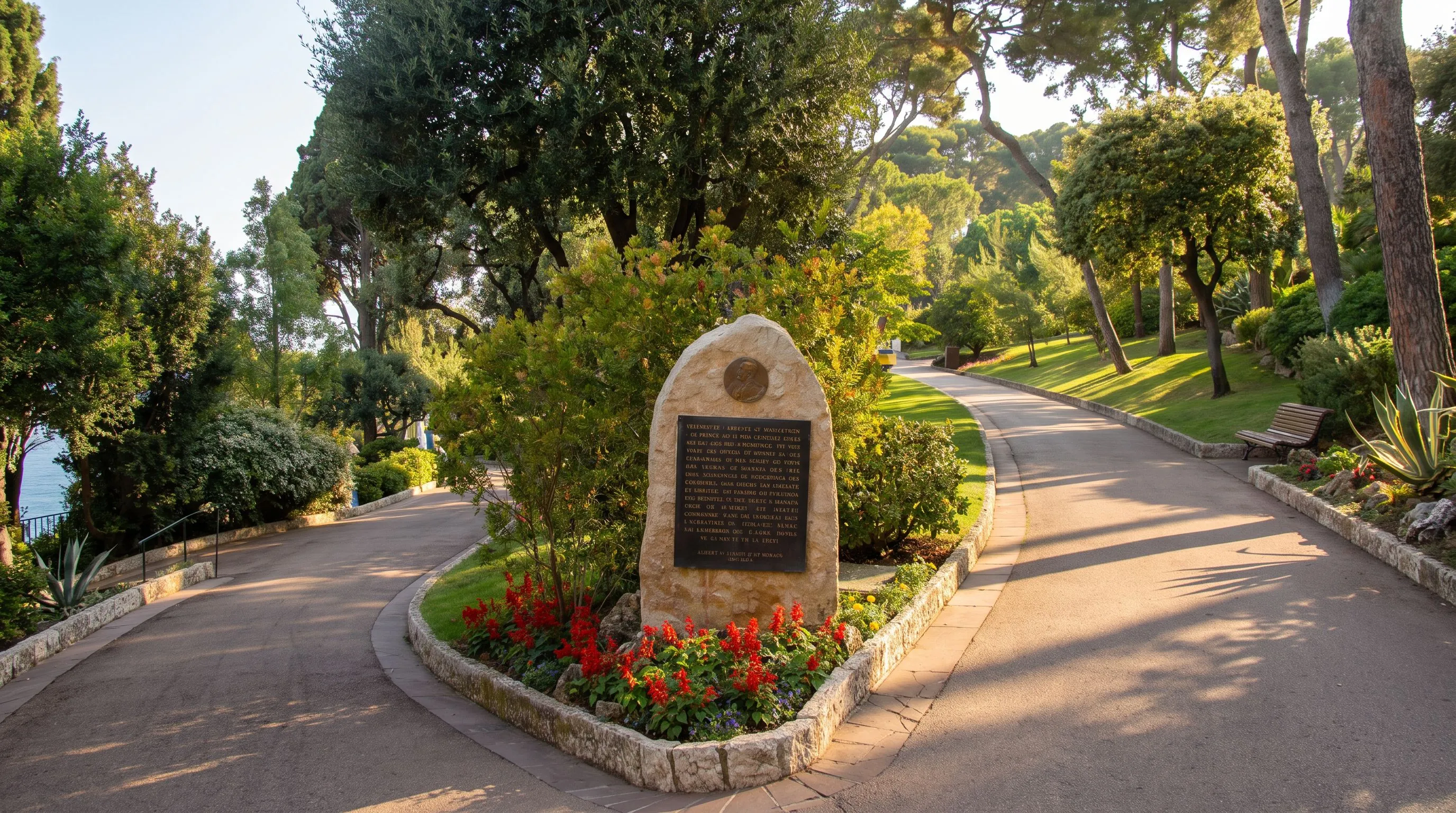
Why it matters. They were created in 1816 at Prince Honoré V's initiative and laid out to give work to Monégasques during a famine — a public works scheme that became a public park. The planting began as Mediterranean natives: Aleppo pines, holm oaks, myrtle, pistachio. Exotics were introduced later.
The set piece. François Cogné's bronze of Prince Albert I, unveiled in 1951, stands on a promontory dressed as a sailor and facing the sea rather than the town. It is the correct monument for the man who built the museum a hundred metres away.
The experience. Winding paths across a steep slope, benches, sudden openings onto the sea and down over Fontvieille. Ten minutes' walk end to end, or an hour if you sit.
Access. Step-free entrances near the cathedral and near the Oceanographic Museum. The internal paths include some steep slopes.
Time required. Twenty minutes to cross; longer if you stop.
5. The lanes of the old town
Between the four set pieces is the thing most visitors walk through without registering: the medieval street plan itself. Rue Basse, Rue Comte Félix Gastaldi and Rue Émile de Loth run the length of the Rock, narrow, shaded and following the contour rather than the slope.
Why it matters. This is the only surviving pre-modern urban fabric in Monaco. Everywhere else in the principality has been rebuilt upward. Here the scale is still the scale of a walled town of a few hundred people, and about 975 still live on the ward.
What to look for. Painted house numbers and old shop signs, the abrupt height change where the lanes meet the ramparts, and the moment — usually two streets back from the Place du Palais — when the crowd stops and the quarter goes quiet.
Check opening before visiting: telephone +377 93 50 07 00 before making a special journey to the chapel.
Time required. Twenty minutes to cross the Rock; longer if you wander.
6. Fort Antoine
At the north-eastern tip of the Rock, on Avenue de la Quarantaine, a small eighteenth-century fort built between 1709 and 1713 under Prince Antoine I during the War of the Spanish Succession.
Why it matters. It is the last piece of serious military building on the headland, and it has had an unusually eventful modern life: an ammunition store in the Second World War, almost entirely destroyed by a German dynamite explosion in 1944, restored in the early 1950s, and converted at Prince Rainier III's initiative into an open-air theatre that opened in 1954.
The experience. Around 350 seats in a semicircle facing the sea. The summer programme runs in July and August. Out of season it is a quiet vantage point at the far end of the Rock that almost nobody walks to.
Time required. Fifteen minutes to look; an evening for a performance.
7. The Musée de la Chapelle de la Visitation
A seventeenth-century baroque chapel on Place de la Visitation, beside the bus terminus — built 1665–1675 for the convent of the Visitandines, at the initiative of Charlotte de Gramont, wife of Prince Louis I.
A correction, because almost every guide gets this wrong. From 1995 the chapel displayed the Barbara Piasecka Johnson collection — Zurbarán, Rubens, Ribera and Italian baroque masters. That collection was removed in May 2014 and sold at Christie's that July. Tourism listings, including some published this year, still describe it as though it were hanging there.
What is in the chapel now, and whether the museum still operates, could not be established from any source. Treat it as an unknown rather than a destination: telephone +377 93 50 07 00 before making a journey for it.
Check opening before visiting: telephone +377 93 50 07 00 before making a special journey to the chapel.
Time required. Thirty minutes.
8. The Museum of Old Monaco
At 2 rue Émile de Loth, in the lanes described above, two minutes from the cathedral. Open daily except Monday, 10:30–17:00.
Why it matters, and it is not a small point. Every other thing on this list is about the Grimaldis or about the sea. This is the only museum in Monaco about Monégasques — the roughly nine thousand people who hold the nationality. It is run by the Comité National des Traditions Monégasques, founded in 1924 by representatives of old Monégasque families, and it sits in the old town rather than above it. The museum itself was opened in 1974 by Prince Rainier III and Princess Grace.
What is in it. Three floors of ceramics, paintings, furniture and costume, with recreated scenes of daily life on the Rock, including an eighteenth-century nursery. Two objects are better than a free local museum has any right to hold: a portrait of the Monégasque composer Honoré Langlé by Élisabeth Vigée Le Brun, Marie Antoinette's painter, and a childhood statue of Henri IV by Baron François Bosio — born in Monaco in 1768, and the sculptor whose quadriga crowns the Arc de Triomphe du Carrousel in Paris.
The correction, and it is this entry's reason for existing. The museum reopened in March 2026, with Prince Albert II present, after several years of renovation, and its hours changed completely. Nearly every listing still gives the old pattern — Wednesdays and Fridays, 11:00–16:00, June to September. Follow that and you arrive on the wrong days for most of the year, or do not go at all between October and May.
Do not assume it is free. It is widely reported as free with guided commentary, but every source saying so predates the reopening, and a museum fresh out of a multi-year renovation is exactly the kind that introduces a charge. Whether the daily pattern holds through winter is also unresolved. One call to +377 93 50 57 28 settles both.
→ This museum has its own Above Guide entry.
Time required. Forty minutes.
Details worth slowing down for.
The two monks on the coat of arms
The Grimaldi arms are supported by two monks carrying swords. They are not generic ecclesiastical figures. They commemorate 8 January 1297, when François Grimaldi took the fortress dressed in a Franciscan habit with weapons hidden under it. A dynasty that has held its position for seven centuries chose, as its permanent heraldic statement, a picture of the trick that started it.
Once you know it, you see it everywhere on the Rock — over doorways, on officials' buttons, on the manhole covers.
Both landmark buildings came out of the same quarry
The cathedral, begun in 1875, is built of white stone from La Turbie, the hill village above Monaco. So is the Oceanographic Museum, built from the same quarry between 1899 and 1910.
The two buildings look nothing alike — one Romanesque-Byzantine revival, the other neo-Baroque — but stand between them on Avenue Saint-Martin on a bright morning and the stone reads as one material. The Rock's nineteenth-century face was quarried out of the hill you can see from it.
Twenty ships carved into the museum façade
The names cut into the Oceanographic Museum's seaward front are not decorative. They are twenty oceanographic research vessels, chosen by Prince Albert I during construction — the working fleet of a discipline he was helping to invent. He was not commissioning a building about the sea; he was signing the credits.
Inside, the same instinct: his own ship's logs from 1873 to 1922 are in the collection. Forty-nine years of a reigning prince's field notes.
Why the museum is taller than the Rock
Two heights circulate and both are correct. The Rock of Monaco is a 62-metre monolith. The Oceanographic Museum's façade rises 85 metres above the sea.
The difference is what is being measured. The 62 metres is the height of the headland. The 85 metres is measured from the waterline up a sheer cliff face on the seaward side, where the building's foundations start well below the level of the town it stands in. The museum is not perched on the Rock. It is built into the side of it, and most of what you see from a boat is below your feet when you are standing at the entrance.
The paving of the Cour d'Honneur
The Palace's courtyard is paved with around three million white and coloured pebbles, set in pattern. This is risseu, the Ligurian pebble-mosaic technique, executed at a scale that is rare anywhere. Most visitors cross it looking up at the double staircase.
Look down instead, at least once. Then look up: the frescoes in the loggia above were invisible until 2015.
The throne room was a kitchen
In 1793 the Palace was occupied and looted, then turned into a military hospital. The throne room was used as a kitchen. It is worth carrying that fact through the State Apartments, because it explains what you are actually looking at: not a continuously furnished residence, but a set of rooms emptied inside a single generation and reassembled afterwards.
The gardens were famine relief
The Jardins Saint-Martin were laid out in 1816 to give paid work to Monégasques during a famine. Monaco's oldest public gardens exist because there was nothing to eat.
Albert I is facing the wrong way
François Cogné's 1951 bronze of Prince Albert I stands on a promontory in the Jardins Saint-Martin. He is dressed as a sailor, not as a sovereign, and he is turned away from the town, facing out to sea.
Every other Grimaldi monument in Monaco faces the principality. This one faces the thing the man actually cared about.
The grave that does not say "princess"
Princess Grace's slab in the cathedral ambulatory reads Gratia Patricia, and names her in Latin as the wife of Prince Rainier III. It does not style her princess in her own right. That is the House of Grimaldi's convention for consorts rather than a slight, and it is applied consistently along the row: the sovereign princes are named as princes, their wives as wives.
Read the whole ambulatory rather than stopping at the two famous slabs. The convention is only visible in the sequence.
The oldest object on the Rock is in the newest building
The cathedral was consecrated in 1911. The retable of Saint Nicholas in its right transept dates from August 1500 and was carried in from the medieval parish church that stood on the same ground and was demolished in 1874.
Nothing else on public view in Monaco-Ville is as old. It is in the right transept and it is easy to walk past on the way to the tombs.
The organ was rebuilt twice within living memory
The cathedral's instrument has four manuals, seventy-nine stops and close to seven thousand pipes, in a rebuild by a Belgian firm completed in December 2011. An earlier four-manual organ was inaugurated in 1976. The building you are standing in is a century old; its voice is fifteen years old.
If you can only be on the Rock once, and it is a Sunday between September and June, the 10:00 mass sung by Les Petits Chanteurs de Monaco is the way to hear both.
Fort Antoine was blown up by the people holding it
The fort at the north-eastern tip was built between 1709 and 1713 under Antoine I, served as an ammunition store in the Second World War, and was almost completely destroyed in 1944 by a German dynamite explosion. Restored in the early 1950s, it reopened in 1954 as an open-air theatre at Rainier III's initiative.
The semicircle of 350 seats you sit in for a July performance is a rebuild of a gun position that its own garrison detonated.
The motorcycle curfew
Petrol motorcycles are barred from Monaco-Ville after 22:00. It is a small regulation and it tells you the real character of the ward: about 975 people live here, they live directly above three of the busiest visitor attractions in the principality, and the state legislates for their sleep.
The quiet line
There is a reliable boundary on the Rock and it is worth finding deliberately. Stand in the Place du Palais at 11:55 with several hundred other people. Then walk two streets north-east into Rue Basse or Rue Émile de Loth.
The crowd does not thin gradually. It stops. Almost every visitor on the Rock is inside a corridor perhaps eighty metres wide running between the Place du Palais, the main lane and the museum entrance. Everything on either side of that corridor is empty.
The best view is the one you walk past
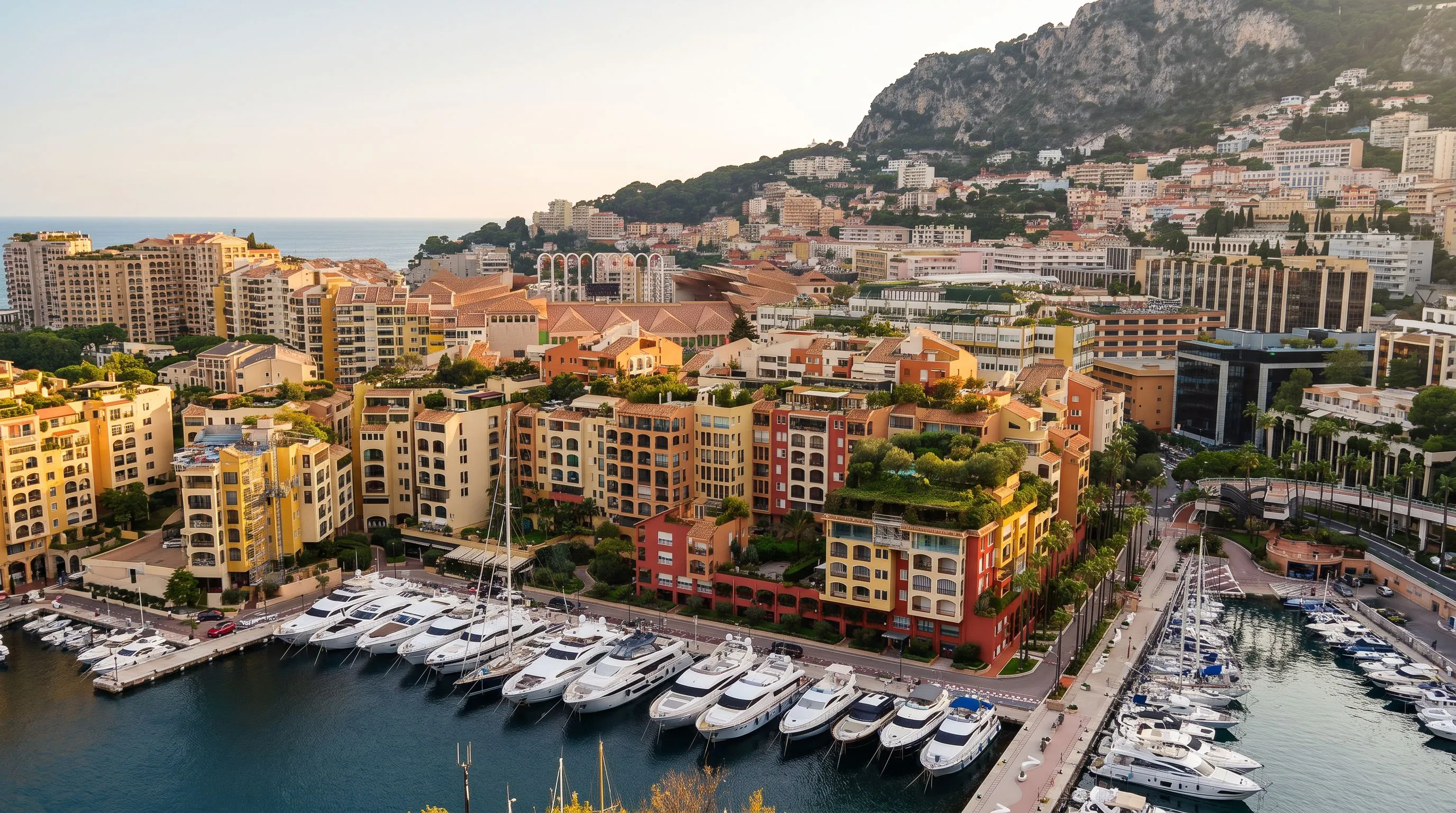
The parapet on the harbour side of the Place du Palais gets the photographs. The better outlook is from the Jardins Saint-Martin on the opposite flank, looking south and west over Fontvieille and the open sea, with no buildings in the frame and no crowd behind you.
It is free, it has benches, and in high season it is the only place on the Rock where you can sit down without buying something.
What is under your feet during race week
The Rock overlooks the Formula 1 circuit. The tunnel runs beneath the headland, and Turn 17/18 — Antony Noghès — sits at its foot. The reason parts of the Rock go ticket-only in race week is not crowd control on the Rock itself. It is that the headland is a grandstand.
04 / Before you go
Plan your visit
Prices & admission
Free to walk. The cathedral and the Jardins Saint-Martin are free. The Prince's Palace State Apartments are €13 adult (seasonal, late March to mid-October) and the Oceanographic Museum is €22.50 adult.
Opening hours
The quarter itself is open ground with no gate and no hours. The cathedral opens daily 08:15–18:00, free, and closes to visitors during services. The Oceanographic Museum opens daily except 25 December and the Grand Prix weekend: 10:00–18:00 from January to March and October to December, 10:00–19:00 from April to June and in September, and 09:30–20:00 in July and August, with last entry 30 minutes before closing. The Prince's Palace State Apartments open 30 March to 15 October 2026 only, 10:00–18:00 with last admission 17:15 (March–June, September–October) and 10:00–19:00 with last admission 18:15 (July–August). The changing of the guard is daily at 11:55 in the Place du Palais.
Plan your experience
Nothing on the Rock requires advance booking for an individual visitor. The Palace and the Oceanographic Museum sell at the door and online. The museum's rooftop restaurant, La Terrasse, should be reserved. Note that the Palace, the Oceanographic Museum and the Prince's Car Collection all close for the Formula 1 Grand Prix weekend.
Accessibility
Step-free arrival by lift and escalator from the Parking des Pêcheurs, which puts you out at the cathedral and Oceanographic Museum end. The quarter itself is broadly level once you are up, on stone setts and worn paving, in narrow lanes shared with vehicles.
Dress code
The cathedral enforces a dress code at the door: shoulders covered, no mini-skirts or short shorts. Bermuda shorts are accepted.
Participation requirements
Every arrival involves a 62-metre climb or a lift. The Rampe Major from Place d'Armes is about ten minutes of continuous gradient with little shade.
All operational facts below were checked on 4 August 2026. Hours, prices and closures on the Rock change with the season and with the Grand Prix calendar, and the Palace publishes each year's dates only shortly before the season opens. Recheck the three ticketed sites before travelling.
Getting onto the Rock
The old town sits 62 metres above the harbour, so every arrival involves a climb or a lift.
On foot — the Rampe Major. The main pedestrian approach starts at Place d'Armes, at the head of Port Hercule, and climbs to the Place du Palais in about ten minutes. It is a paved ramp rather than steps for most of its length, it is the historic entrance route, and it has the best sequence of views on the way up. It is also a continuous gradient with little shade, which matters in July.
By lift and escalator — Parking des Pêcheurs. The car park below the Oceanographic Museum has a lift and escalator running up into Monaco-Ville. This is the step-free arrival, and it delivers you at the museum and cathedral end of the Rock rather than the Palace end.
By bus — lines 1 and 2. Both terminate at Place de la Visitation, signed Terminus Monaco-Ville, beside the Chapelle de la Visitation. From there it is about five minutes on the level to the Place du Palais through the lanes.
By car. Do not plan to drive up. Monaco-Ville is a restricted traffic zone: access is forbidden to all vehicles except those registered in the Principality or in the Alpes-Maritimes, unless the Mairie grants a specific exemption. Eligible French-registered vehicles need an access sticker (macaron), valid one year. Park at the Parking des Pêcheurs — over 500 spaces, directly below the museum — and take the lift.
Note on "no traffic". The Rock is quiet, not car-free. Residents, deliveries, buses, official and emergency vehicles all use the same lanes. Petrol motorcycles are barred after 22:00. Expect to step aside for a van in Rue Comte Félix Gastaldi.
What it costs
Walking the Rock, the squares, the lanes, the gardens and the cathedral is free. Two things are reliably ticketed, and two more need a note.
| Site | Adult | Child | Notes |
|---|---|---|---|
| Prince's Palace — State Apartments | €13 | €8 (6–17) | Student €11; under 6 free. Seasonal opening only |
| Oceanographic Museum | €22.50 (18+) | €14 (4–17) | Student €14; under 4 free; €11 for visitors with disabilities |
| Musée de la Chapelle de la Visitation | status uncertain | — | Its collection was sold in 2014; current contents and opening unverified. See note. |
| Museum of Old Monaco | price unconfirmed | — | Reported free, but all such sourcing predates its March 2026 reopening. Daily except Monday, 10:30–17:00. See note. |
Combined tickets exist and are worth knowing about, but they are sold by different institutions. Palace + Prince's Car Collection is €25 adult, from the Palace's platform. Oceanographic Museum + Palace is €31 adult, and Museum + Car Collection is €33 adult — both from the museum. All require the two visits on the same day, and anything involving the Palace runs only in its season, 30 March to 15 October. There is no Palace + Jardin Exotique ticket; the garden's twin ticket pairs it with the Oceanographic Museum. The Oceanographic Museum also sells an annual pass at €46 adult, €29 child.
Use the Palace’s ticket-booking site for the current season’s prices and admission categories.
Opening hours
Prince's Palace — State Apartments. Open 30 March to 15 October 2026. March–June and September–October, 10:00–18:00, last admission 17:15. July and August, 10:00–19:00, last admission 18:15. The ticket office closes an hour before last entry. In 2026 the Palace additionally closes on 25 September from 15:00, on 1–4 October and on 7 October. It closes for the Formula 1 Grand Prix weekend. It is a sovereign residence and states that it may close to the public without notice.
Cathedral of Notre-Dame-Immaculée. Open daily 08:15–18:00, free. Closed to visitors during services. The sung mass at 10:00 on Sundays from September to June is the busiest of these.
Oceanographic Museum. Open daily except 25 December and the Formula 1 Grand Prix weekend.
| Months | Hours |
|---|---|
| January–March, October–December | 10:00–18:00 |
| April–June, September | 10:00–19:00 |
| July–August | 09:30–20:00 |
Last entry is 30 minutes before closing.
Jardins Saint-Martin. Open ground with no gate, no ticket and no published hours.
Musée de la Chapelle de la Visitation. Status genuinely uncertain — do not plan around it. The Barbara Piasecka Johnson collection that made this a museum was removed in May 2014 and sold at Christie's, and no source establishes what the chapel holds now or whether it still opens as a museum. Hours of 10:00–16:00 daily except Monday circulate widely, but they come from listings that also still describe the departed collection. Telephone +377 93 50 07 00 before making a journey.
Museum of Old Monaco. 2 rue Émile de Loth, open daily except Monday, 10:30–17:00. It reopened in March 2026 after several years of renovation and its hours changed completely — almost every listing still gives the pre-renovation pattern of Wednesdays and Fridays, 11:00–16:00, June to September, which would send you on the wrong days for most of the year. Do not assume it is free: it is widely reported as free, but every source saying so predates the reopening, and whether the daily pattern holds through winter is unresolved. Telephone +377 93 50 57 28 to settle both. Note also that the operator's own visits page gives the address as "Place des Carmes"; the entrance is on rue Émile de Loth.
Fort Antoine. The fort itself IS a daily attraction — free, open every day from sunrise to sunset. It is the open-air theatre that is seasonal: about a month from late June (30 June–28 July in 2026), also free, at 21:30. The dates move each year.
The changing of the guard
Daily at 11:55 in the Place du Palais, in front of the palace entrance. The Compagnie des Carabiniers du Prince, created on 8 December 1817, mounts a twenty-four-hour watch that begins with the ceremony.
It is short and it is crowded. To see anything, be in the square by 11:40 and take a position on the palace side of the railings rather than at the back of the square. If you are only on the Rock for the ceremony, plan the rest of your visit around it rather than the other way round — the square empties within ten minutes and everything else is quieter immediately afterwards.
How long to allow
| Plan | Time |
|---|---|
| The lanes, the squares and the guard change | 1 hour |
| Above plus the cathedral and the gardens | 2 hours |
| Above plus the Oceanographic Museum | 4 hours |
| Everything, including the Palace | 5–6 hours |
The Oceanographic Museum states that a visit takes about two hours, and that is an honest figure rather than a conservative one. The Palace tour is the shorter of the two ticketed visits.
Best time to visit
Time of day. Early. The Rock takes coach parties and cruise groups from mid-morning, and the Place du Palais peaks at the guard change. Arriving at 09:00 gives you an hour of near-empty lanes; the light on the harbour side is also better early. Late afternoon works too, once the day groups have gone, though the Palace stops admitting in the early evening.
Season. April to June and September are the best combination of open sites and tolerable heat. July and August bring the longest hours — the museum opens at 09:30 and closes at 20:00 — and the largest crowds. Winter is quiet, free and pleasant to walk, but the Palace is shut from mid-October to late March, which removes one of the three ticketed sites entirely.
Sundays bring the sung mass at 10:00 from September to June, which closes the cathedral to sightseeing but is worth attending if you want to hear the building.
Race week
The Formula 1 Grand Prix changes this quarter more than any other event, and it is worth saying plainly once.
The Rock overlooks the circuit. The tunnel runs beneath it, and Turn 17/18, Antony Noghès, sits at its foot. That makes the headland attractive during race week and it is exactly why access is restricted.
The Palace, the Oceanographic Museum and the Prince's Car Collection all close for the Grand Prix weekend. That is the opposite of what most visitors planning a race-week day assume.
In the 2025 edition, under Arrêté Municipal n° 2025-2085 (Journal de Monaco n° 8743, published 14 April 2025), Avenue de la Porte Neuve, Avenue de la Quarantaine, Rue des Remparts and the Terrasse du Ministère d'État — all on or at the approach to the Rock — were open on foot only to holders of an ACM ticket or pass, on 22–25 May 2025. Parking was suspended on Rue des Remparts and Rue du Rocher from midday on 21 May until 22:00 on 25 May.
Those are 2025 facts. The ordinance for each year is published roughly five weeks before the race, so the current year's regime does not exist for most of the year. The 2025 pattern is a strong guide to what will happen — same circuit, same barriers — and it is not a statement about any future edition. Check the Journal de Monaco for the year you are travelling.
Facilities
Toilets. Public toilets are available on the Rock, including at the Oceanographic Museum for ticket-holders. There is no large visitor centre; plan around the museum and the cafés.
Food and drink. The lanes hold cafés, gelaterie and tourist restaurants, concentrated on Rue Comte Félix Gastaldi and around the Place du Palais. The Oceanographic Museum's rooftop restaurant, La Terrasse, sits 85 metres above the sea and takes reservations on +377 93 15 36 16 — it is the one meal on the Rock worth planning rather than stumbling into. Prices across the quarter are Monaco prices.
Shops. Souvenir shops dominate the central lanes. The Oceanographic Museum's shop is the better one, weighted towards books and sustainably made goods.
Shade and water. Limited on the open squares, better in the lanes and in the Jardins Saint-Martin. Carry water in summer.
Weather and rainy days
The Rock is largely an outdoor experience, and in rain the lanes are slippery underfoot and the views — the main reward of the gardens — are gone. The wet-weather plan is the Oceanographic Museum, which is entirely indoors apart from the terrace and absorbs two hours comfortably, followed by the cathedral. The Palace tour is also indoors once you are past the courtyard.
Summer heat is the more common problem. The climb is exposed, the squares are unshaded, and midday in July and August on the Place du Palais is genuinely hard going.
Crowds
Two peaks: the guard change at 11:55, and the middle of the day when cruise and coach groups are on the Rock, roughly 10:30 to 15:00 in season. The Place du Palais, Rue Comte Félix Gastaldi and the museum entrance take almost all of it. The Jardins Saint-Martin, the northern lanes and Fort Antoine stay quiet throughout.
Dress and conduct
The cathedral enforces a dress code: shoulders must be covered, and mini-skirts and short shorts are not permitted, though Bermuda shorts are accepted. This is applied at the door and it catches beach-dressed visitors arriving from Larvotto.
The Place du Palais is the forecourt of a working residence with an armed guard on duty. Stay outside the marked lines, do not obstruct the guard, and do not photograph in ways that interfere with the ceremony.
Families, dogs and cycling
Families are well served — see the family chapter. The short version: the Oceanographic Museum is the anchor, the lanes are safe but not buggy-friendly, and the Palace suits older children only.
Dogs are not admitted to the Oceanographic Museum or the Palace State Apartments. Assistance dogs are accepted at the museum. The lanes and gardens are fine for a dog on a lead.
Cycling is not a sensible way to arrive. The Rampe Major is a steep pedestrian approach, the lanes are narrow and busy on foot, and the restricted-access regime is designed to keep wheeled traffic down.
Booking
Nothing on the Rock requires advance booking for an individual visitor. The Palace and the Oceanographic Museum both sell at the door as well as online; buying the museum ticket online mainly saves queueing in peak season. La Terrasse restaurant should be reserved.
What needs rechecking
| Fact | Cadence | Why |
|---|---|---|
| Palace season dates and hours | Annually, each February–March | Published shortly before the season opens |
| Palace prices | Annually, and to resolve the palais.mc / visitepalaisdemonaco.com conflict | Two official channels currently disagree |
| Palace ad-hoc closures | Monthly in season | A sovereign residence; closures are announced late |
| Oceanographic Museum hours and prices | Quarterly | Seasonal bands and annual price setting |
| Race-week street restrictions | Annually, from about five weeks before the race | The ordinance is published per edition |
| Chapelle de la Visitation status | Before ANY recommendation | Collection sold 2014; whether it still opens as a museum is unestablished |
| Cathedral service times | Six-monthly | The sung-mass season runs September–June |
Visit your way
Access and family planning.
Written for someone deciding whether a visit is feasible. Where a fact has not been verified against an official source, it says so rather than reassuring you.
The decision in one paragraph
Getting onto the Rock step-free is solved: there is a lift and escalator from the Parking des Pêcheurs. The Oceanographic Museum is properly accessible and lends wheelchairs. The cathedral and the Jardins Saint-Martin can be reached and used. The Prince's Palace State Apartments cannot — the Palace states they are not accessible to wheelchair users and that access is by stairs only. If the Palace is the reason for the journey, that is a hard stop, and it is better to know now.
Getting up
Step-free: the Parking des Pêcheurs lift and escalator. The car park sits directly below the Oceanographic Museum, has over 500 spaces, and connects up into Monaco-Ville by lift with an escalator on the same route. This is the recommended arrival for anyone with reduced mobility and it puts you out at the museum and cathedral end of the Rock — which is the end with the accessible attractions.
Not step-free: the Rampe Major. The historic pedestrian approach from Place d'Armes climbs about ten minutes on a continuous gradient. It is a ramp rather than a stair for most of its length, which makes it manageable for some visitors with limited stamina, but it is a sustained uphill with little shade and no seating.
Bus lines 1 and 2 terminate at Place de la Visitation. The buses are low-floor; check boarding arrangements at this stop with CAM if you need wheelchair access.
Driving up is not an option to plan around. Monaco-Ville is a restricted traffic zone — access is limited to vehicles registered in Monaco or the Alpes-Maritimes unless the Mairie grants an exemption. Do not assume a foreign Blue Badge grants vehicle access. If you need to be set down on the Rock itself, contact the Mairie de Monaco in advance rather than assuming.
Moving around on the Rock
The old town is broadly level once you are up — the lanes follow the contour rather than climbing — which is the single most helpful fact about the quarter. The Place du Palais, Rue Comte Félix Gastaldi, Rue Basse and Rue Émile de Loth run without significant gradient.
The surfaces are hard: stone setts, worn paving and some cobbling. The lanes are narrow, in places without a separated pavement, and vehicles use them. In peak season, roughly 10:30 to 15:00, the main lane and the Place du Palais are crowded enough to make wheelchair movement slow.
Distances are short. The Place du Palais to the Oceanographic Museum is about four hundred metres.
The Prince's Palace — State Apartments
Not accessible. The Palace states that the State Apartments are not accessible to those in wheelchairs and that access is by stairs only.
There is no lift, no alternative route and no partial circuit offered. The Cour d'Honneur is reached from the Place du Palais and the visit route rises from there by the double-revolution staircase.
Visitors with limited stamina who can manage stairs should know that the circuit is about an hour, largely standing and walking, with limited seating.
The Cathedral of Notre-Dame-Immaculée
Free entry, open daily 08:15–18:00, closed to visitors during services.
The cathedral is on Avenue Saint-Martin, at town level. Step-free entry, an accessible toilet and a hearing loop are not confirmed. Contact the cathedral before travelling if you need any of these facilities.
If step-free entry is decisive, telephone the cathedral on +377 99 99 14 00 before travelling.
The interior is a single large volume with a wide ambulatory, so once inside, circulation is good and the tombs are reachable on the level.
The Oceanographic Museum
The strongest accessibility offer on the Rock, and the reason a visit remains worthwhile even if the Palace is ruled out.
The museum states that it has lifts, adapted pathways, wheelchairs available to borrow, and priority checkout for visitors with disabilities. Admission for visitors with disabilities is €11 against €22.50 standard.
The building is on multiple levels — the aquarium below, the collections above, the terrace on the roof — and the lifts connect them. The stated visit time is about two hours.
Email resa@oceano.org before travelling to confirm carer admission and whether the accessible toilet meets your requirements.
The Jardins Saint-Martin and Sainte-Barbe
Free, ungated, no published hours.
The tourist board states that the gardens are available to people with reduced mobility, with access points near the cathedral and near the Oceanographic Museum, and adds that some slopes are steep. That is an accurate description: the entrances are on the level with the town, and the paths then descend across the seaward face of the Rock in a series of switchbacks.
In practice: the upper sections near both entrances are usable and give the sea view, and there are rest areas and benches. Going the full length of the gardens independently in a manual wheelchair is a serious undertaking.
Visual impairment
The Palace visit is audio-guided in eleven languages, which is useful, but the route is stairs-based and unlit in places.
The Rock's lanes are uneven, with kerb changes, bollards, café furniture and vehicles sharing the space. A sighted guide is advisable in peak hours.
No information has been verified about tactile materials, braille or touch tours at any site on the Rock. The Oceanographic Museum's touch pool is a sensory experience but is not an access provision.
Assistance dogs are accepted at the Oceanographic Museum.
Hearing impairment
Check hearing-loop availability directly with the cathedral, Palace or museum. If you use hearing aids, ask about compatibility with the Palace’s handset audio guide.
The changing of the guard is a visual ceremony and loses little without sound.
Noise and sensory load
Two loud, dense environments: the Place du Palais from about 11:30 to 12:05, and the Oceanographic Museum entrance and aquarium in peak season. The museum's lower levels are dim, echoing and busy.
Quiet is easy to find. The Jardins Saint-Martin, the northern lanes and the walk out to Fort Antoine are calm at any hour. The cathedral outside service times is the quietest interior on the Rock.
For a visitor who needs a low-stimulation plan: arrive at 09:00 by the lift, do the cathedral and gardens, and avoid the Place du Palais entirely between 11:30 and 12:15.
Seating and rest
Poor in the built quarter, good in the gardens. The squares have parapets and low walls rather than benches; the lanes offer paid café seating. The Jardins Saint-Martin have rest areas along the paths and are the reliable place to sit without buying something.
Toilets
Available at the Oceanographic Museum for ticket-holders, plus public facilities on the Rock. The specification of accessible toilets has not been verified at any site. Plan around the museum.
Race week
During the Grand Prix weekend the Palace, the Oceanographic Museum and the Prince's Car Collection all close, and in the 2025 edition several streets on and approaching the Rock — Avenue de la Porte Neuve, Avenue de la Quarantaine, Rue des Remparts and the Terrasse du Ministère d'État — were passable on foot only with a race ticket.
For a visitor with mobility needs this is the worst weekend of the year to attempt the Rock: the accessible attractions are shut and the step-free routes may be inside a controlled perimeter. Those are 2025 facts and the arrangements are set afresh each year, roughly five weeks before the race.
The short answer
One outstanding children's attraction, one ceremony that holds almost any age for five minutes, and a lot of walking on hard surfaces in between. Build the day around the Oceanographic Museum and treat everything else as the walk to and from it.
Age by age
Under 3. The museum works — tanks at eye level, nothing to read, movement everywhere. The rest of the Rock is a pushchair problem rather than an interest problem. The lanes are narrow with limited pavement, the Rampe Major is a sustained climb, and the Jardins Saint-Martin paths run down a cliff.
3–7. The best age for this quarter. The shark lagoon and the touch pool at the museum, the guard change at 11:55, the cannons and cannonballs at the Place du Palais, and a fort at the end of the Rock they can be walked to. The cathedral is twenty minutes and they will manage it.
8–12. Add the Palace. The Hercules frescoes are a good story — repairmen found them by accident in 2015 under a ceiling nobody had looked behind — and the labours of Hercules give a child something to identify room by room. The museum's historical galleries start to land at this age rather than being scenery on the way to the fish.
Teenagers. Honest assessment: the museum holds them, the Palace probably does not unless they have an interest, and the Rock as a whole is a ninety-minute visit rather than a day. The Formula 1 connection is the hook — the tunnel runs under the headland and Turn 17/18 is at its foot.
The Oceanographic Museum with children
This is the anchor and it deserves the planning.
Allow the full two hours the museum states, and more if the children are under ten. The aquarium is on the lower levels and holds roughly 6,000 fish across some 350 species, plus around 300 families of invertebrates; the shark lagoon is the set piece. The upper floors are historical collections, which are a harder sell for young children — go down first, come up second, and treat the roof terrace as the reward.
Practical points: there are lifts and adapted routes throughout, wheelchairs can be borrowed, and the terrace has the restaurant La Terrasse if you want the meal to be part of the visit rather than a search afterwards. Under-4s are free; children 4–17 are €14 against €22.50 for an adult, so a family of four is a real cost — check the annual pass at €29 per child if you are in the region more than once.
The changing of the guard with children
Daily at 11:55 in the Place du Palais. It is short — a genuine advantage with young children — and visually clear: uniforms, formation, a routine that repeats.
Two pieces of advice. Be in the square by 11:40, because from 11:45 a small child at the back sees nothing but adults. And decide in advance whether you are lifting a toddler onto your shoulders, because you will not be able to move once the square fills.
Pushchairs and carriers
Bring a carrier if you can. The Rock is not hostile to pushchairs but it is persistently awkward: the Rampe Major is a ten-minute climb, the lanes are narrow with vehicles using them, the gardens are steep, and the Palace State Apartments are stairs-only and therefore closed to a pushchair entirely.
The step-free arrival is the lift and escalator from the Parking des Pêcheurs, which puts you out at the museum and cathedral end. Use it in both directions with a pushchair rather than walking the ramp.
Where children get bored
The Palace State Apartments. A guided audio route through furnished state rooms, with no interactive element. Under-8s find it long.
The cathedral. Fine for twenty minutes. The tombs interest children more than adults expect — a real grave of a real film star is a concept that lands — but there is nothing to do.
The lanes. Souvenir shops, which will cost you money and time in roughly that order.
Where to sit down
This is a genuine constraint in high season. The squares have low walls rather than benches, the lanes have café seating you must buy into, and the museum's seating is inside the ticket.
The Jardins Saint-Martin are the answer: free, ungated, benches along the paths, rest areas, shade and a sea view. Plan a stop there rather than hoping for one.
Food
Cafés, gelaterie and tourist restaurants concentrate on Rue Comte Félix Gastaldi and around the Place du Palais, at Monaco prices. There is no picnic ground as such, but the Jardins Saint-Martin are the obvious place to eat something carried up.
If you want one planned meal, La Terrasse on the museum roof is the one worth reserving (+377 93 15 36 16). It solves lunch, the view and the sitting-down problem at once.
Toilets
At the Oceanographic Museum for ticket-holders, and public facilities on the Rock. There is no dedicated visitor centre. Use the museum's before you leave it.
Noise, crowds and heat
The Rock is loud in exactly two places — the Place du Palais at the guard change, and the museum entrance queue — and quiet everywhere else. Children who find crowds difficult can see the guard change from the edge of the square and still get the sense of it.
Heat is the more serious issue. The climb is exposed, the squares are unshaded, and July and August at midday on the Place du Palais is hard on small children. Do the Rock early, be inside the museum by 11:00 in summer, and carry water.
A workable family day
| Time | |
|---|---|
| 09:00 | Lift up from Parking des Pêcheurs; cathedral while it is empty |
| 09:40 | Jardins Saint-Martin — run about, sea view, sit down |
| 10:15 | Walk the lanes to the Place du Palais |
| 11:40 | Position for the changing of the guard |
| 12:05 | Lunch on the Rock, or walk back to the museum end |
| 13:00 | Oceanographic Museum — aquarium first, then terrace |
| 15:30 | Down by lift |
Add the Palace between the guard change and lunch if your children are eight or over and the season is open.
Self-guided walk
Explore beyond the venue.
A practical, step-by-step route connecting this experience with more of Monaco Grand Prix.Stop 1 — Place d'Armes and the foot of the Rampe Major
0 minutes. Allow 10.
Begin at Place d'Armes, where the Condamine market sits at the head of the harbour. Buy water here; it is cheaper than anything on the Rock and you will want it on the climb.
Look up at the headland before you start. What you are about to walk onto is a 62-metre limestone monolith with a fortress on its western apex — the reason Monaco exists, and the reason the state is where it is rather than on the flat ground you are standing on.
The Rampe Major starts from the south-west corner of the square, signed for Monaco-Ville.
If you cannot manage the climb: walk east around the harbour to the Parking des Pêcheurs and take the lift and escalator up. You will arrive at Stop 6 — pick up the route there and do stops 2 to 5 in reverse at the end.
Stop 2 — The Rampe Major
10 minutes. Allow 12 for the climb.
A paved ramp rather than a staircase for most of its length, climbing steadily to the Place du Palais. This is the historic approach and it was designed to be defensible: notice how it turns, and how little of the top is visible from the bottom.
Stop at the turns and look back. The harbour opens up behind you in stages, and the best photograph on the way up is at about two-thirds height, with the yachts below and Monte-Carlo rising behind them.
There is little shade. In July and August, do this before 10:00.
Stop 3 — Place du Palais
22 minutes. Allow 20.
You come out onto the great forecourt of the principality. The Palace is on your right; the parapet over Port Hercule is on your left.
Look at the façade first. Honoré II's architect, Jacques Catone, built the grand entrance you are facing and added a wing that deliberately masked the original Genoese towers — the fortress is still behind it, hidden by a residence.
Then look for the Grimaldi arms, which you will now see all over the Rock: two monks carrying swords. They commemorate 8 January 1297, when François Grimaldi took this fortress dressed as a Franciscan with his weapons under the habit.
Now cross to the parapet. The harbour side is lit from behind you until about 10:30, so this is the moment for that photograph.
Note the time. If it is after 11:20, stay here for the guard change and do this walk in the order 3 → 9 → 4. Otherwise carry on and come back.
Stop 4 — Into the lanes: Rue Comte Félix Gastaldi
42 minutes. Allow 15.
Leave the square on its eastern side and walk into Rue Comte Félix Gastaldi, the main lane of the old town. It runs the length of the Rock more or less on the level — the streets here follow the contour rather than climbing, which is why the headland is easy walking once you are up.
This is the souvenir corridor and it is the busiest hundred metres on the Rock after the square. Walk it, then deliberately turn off it: take any of the side lanes north into Rue Basse or Rue Émile de Loth.
The change is abrupt. Almost every visitor on the headland is inside a strip about eighty metres wide. Two streets off it, you are in a residential ward of about 975 people with their front doors on the street.
Stop 5 — Place de la Visitation and the baroque chapel
57 minutes. Allow 20, or 5 if the museum is shut.
Continue north-east to Place de la Visitation, where the buses terminate. The Chapelle de la Visitation stands here — built 1665–1675 for the convent of the Visitandines, at the initiative of Charlotte de Gramont, wife of Prince Louis I.
Treat the interior as closed unless you have checked. From 1995 the chapel displayed the Barbara Piasecka Johnson collection of Old Masters, but those paintings were removed in May 2014 and sold at Christie's that July. What is inside now — and whether it opens at all — is not established by any source. Guides still describing Zurbarán and Rubens here are twelve years out of date.
The exterior and the square are worth the two minutes regardless, and the buses back down leave from this point.
Stop 6 — The Cathedral of Notre-Dame-Immaculée
77 minutes. Allow 30.
Walk south to Avenue Saint-Martin and the cathedral, in white La Turbie stone, begun in 1875 and consecrated in 1911 on the site of Monaco's medieval parish church.
Shoulders covered. No mini-skirts or short shorts — the code is enforced at the door.
Inside, do three things in this order. Go to the right transept first, for the retable of Saint Nicholas by Louis Bréa, August 1500, carried in from the demolished church — the oldest important object on the headland, and the one everyone walks past.
Then walk the ambulatory behind the high altar, where the sovereign princes and their wives are buried. Read the whole row rather than stopping at the two famous slabs: Princess Grace's reads Gratia Patricia and names her in Latin as the wife of Prince Rainier III, who lies beside her. The convention runs the length of the row.
Then stand still and look up. The organ has four manuals, seventy-nine stops and nearly seven thousand pipes.
If it is Sunday between September and June, the 10:00 mass is sung by Les Petits Chanteurs de Monaco and the cathedral choir, and the building is closed to sightseeing during it. Attending is the better option.
Stop 7 — Jardins Saint-Martin
107 minutes. Allow 25.
Directly below the cathedral, on the seaward flank. Free, ungated, and the first place on this walk where you can sit down without paying.
Take the path down and west. The gardens were laid out in 1816 at Honoré V's initiative to give paid work to Monégasques during a famine — Monaco's oldest public gardens, created as relief work.
Find François Cogné's bronze of Prince Albert I, unveiled in 1951, standing on a promontory. He is dressed as a sailor and he is facing out to sea, away from the town. Every other Grimaldi monument in Monaco faces the principality.
The view south and west over Fontvieille and the open water is the best free outlook in the country, and it is almost empty at any hour.
Coffee stop: there is nothing in the gardens. If you need one, it is back up in the lanes, or ahead at the museum.
Stop 8 — The Oceanographic Museum
132 minutes. Allow 2 hours, or 15 minutes to look at the building.
Continue along Avenue Saint-Martin to the museum. Before going in, walk to the parapet and look at what it is: Paul Delefortrie's neo-Baroque building, cut into a sheer cliff, presenting an 85-metre face to the open sea, built over eleven years in white La Turbie stone — the same quarry as the cathedral you have just left.
Read the façade. The names carved into it are oceanographic research vessels, chosen by Prince Albert I, who founded the institute in 1889 and inaugurated this in
- Jacques-Yves Cousteau directed it from 1957 to 1988.
Inside, go down before you go up: the aquarium is on the lower levels, with the six-metre shark lagoon and the sea turtle rescue centre beyond it. The historical collections, the Whale Room and the Oceanomania cabinet of curiosities are above. Finish on the roof terrace.
The museum states about two hours. It is right — and it has its own Above Guide entry, which covers the interior properly.
Stop 9 — Back to Place du Palais for the guard
11:40, wherever you have got to. Allow 25.
This is the one fixed appointment. Break the route at whatever stop you are on and be in the Place du Palais by 11:40.
At 11:55 the Compagnie des Carabiniers du Prince — created on 8 December 1817 — changes the guard in front of the palace entrance. Each watch runs twenty-four hours. It is short and it is precise.
Position matters more than timing: get to the railings on the palace side. From the back of the square you will see phones.
Stay out of the marked areas. This is an armed guard on a working residence.
Stop 10 — The State Apartments
After the guard change. Allow 1 hour. Seasonal.
Open 30 March to 15 October 2026 only, €13 adult. Stairs only — not accessible to wheelchair users.
Three things to look for. The Cour d'Honneur underfoot: around three million white and coloured pebbles laid in pattern. The double-revolution staircase in Carrara marble. And above you in the Galerie d'Hercule, the frescoes — a sixteenth-century cycle of the labours of Hercules with his birth and death, some 600 square metres, attributed to Genoese painters, and entirely unknown until restorers working on routine repairs found them in 2015.
Remember what happened in this building in 1793: occupied, looted, made a military hospital, the throne room used as a kitchen. Almost nothing you see survived that in place.
Stop 11 — Fort Antoine, if you have an hour left
Allow 25 minutes there and back.
Walk north-east along Avenue de la Quarantaine to the far tip of the headland. The fort was built between 1709 and 1713 under Antoine I during the War of the Spanish Succession, used to store ammunition in the Second World War, almost entirely destroyed by a German dynamite explosion in 1944, restored in the early 1950s and opened as an open-air theatre in 1954 at Rainier III's initiative.
Around 350 seats in a semicircle facing the sea, with a July–August programme. Out of season, it is the quietest place on the Rock and hardly anybody walks out to it.
Stop 12 — Down by the lift
Allow 10.
Return to the Oceanographic Museum end and take the lift and escalator down to the Parking des Pêcheurs and the waterfront.
Do not walk back down the Rampe Major at the end of a five-hour day unless you want to. The lift is free, it is faster, and it delivers you at sea level beside the port.
Finish: Port Hercule. Turn and look back at the headland you have just spent the day on — the Palace on the apex, the museum cut into the flank, and the tunnel that carries the Grand Prix beneath the whole of it.
Make a record
Photograph it thoughtfully.
The geography that governs everything
The Rock is a headland running roughly north-east to south-west, with the harbour on its north flank and open sea on its south. That single fact decides your day: the harbour side is a morning subject, the sea side is an afternoon and evening subject, and trying to do both at the same hour will cost you one of them.
The Rock is 62 metres high and the Oceanographic Museum's façade rises 85 metres above the water, so you are always shooting either steeply down or steeply up. There is very little of the quarter that photographs well at eye level.
The five compositions worth planning for
1. Port Hercule from the Place du Palais parapet. The classic. Yachts, the Condamine, the tiers of Monte-Carlo behind. Best between about 08:00 and 10:30, when the sun is behind you and the harbour is lit. By midday it is flat and by afternoon you are shooting into it.
2. The Palace façade across the square. Wide, symmetrical, with the guard box and the cannons in the foreground. It needs an empty square, so it needs to be before 10:00. After 11:15 there is no version of this shot without a crowd.
3. Fontvieille and the open sea from the Jardins Saint-Martin. The strongest free view in Monaco and the least photographed. Late afternoon into golden hour, looking south-west, with the port of Fontvieille below and nothing but water beyond. Benches, so you can wait for the light.
4. The Oceanographic Museum from below. From the coastal path or from a boat, the building reads as a ship stopped against the cliff. This is the shot the architecture was designed for and it cannot be taken from the Rock. Morning light on the seaward façade.
5. A lane with no one in it. Rue Basse or Rue Émile de Loth, shot along their length, with the narrowing walls and the light dropping in from above. Available almost any time if you go two streets off the main tourist line — this is the easiest good photograph on the Rock and the one visitors most often fail to take.
Light through the day
| Hour | Where to be |
|---|---|
| Sunrise–08:00 | Empty lanes; the Place du Palais with nobody in it |
| 08:00–10:30 | Harbour side: the parapet, the Palace façade |
| 10:30–12:00 | Interiors — cathedral, Palace, museum. The exteriors are flat and busy |
| 12:00–15:00 | Museum interior and aquarium; the lanes for shade |
| 15:00–sunset | Jardins Saint-Martin, the sea side, Fort Antoine |
| Blue hour | The Rock from the far side of Port Hercule, lit, as a silhouette on the water |
The single best hour is the one before the Rock wakes up. The lanes are narrow enough that once the day groups arrive, most compositions are gone until evening.
The changing of the guard
11:55 daily, Place du Palais. Difficult to shoot well and easy to shoot badly.
The problem is position. The crowd forms a ring and you are behind it from about 11:45. Arrive by 11:35, take a place at the railings on the palace side, and accept that you are committed to one angle for twenty minutes.
A longer lens serves better than a wide one: the detail — the uniforms, the drill, the handover — carries the picture, and the wide shot is mostly the backs of other visitors' phones. The Carabiniers wear white in summer and dark uniforms in winter, giving the ceremony a different look in each season.
Do not obstruct the ceremony, do not cross marked lines, and remember this is an armed guard on a working residence rather than a costumed display.
Inside the cathedral
Free entry, and the interior is a serious subject: white La Turbie stone, a wide ambulatory, the Carrara marble high altar and episcopal throne.
Three practical points. The Bréa retable of August 1500 is in the right transept and needs a steady hand in low light. The tombs in the ambulatory are the reason most people are there, and photographing them respectfully means no flash, no posing and no standing on the slabs. And the cathedral is closed to visitors during services — if you arrive at 10:00 on a Sunday between September and June, you have arrived for the sung mass, not for photography.
The dress code applies to photographers as much as to anyone: shoulders covered, no mini-skirts or short shorts.
Inside the Palace
Ask about photography at the ticket office before entering the State Apartments. For professional work or specific equipment, contact visites@palais.mc in advance.
If photography is permitted, the subjects are the Cour d'Honneur pebble paving from above, the double-revolution staircase, and the Hercules frescoes in the loggia — sixteenth-century work uncovered from 2015 and the most photogenic thing inside.
Inside the Oceanographic Museum
Aquarium photography without flash, always — flash is harmful to the animals and useless through glass. Push the sensitivity, brace against the tank rim, and shoot the shark lagoon from the side rather than head-on to avoid your own reflection.
The rooftop terrace is the payoff: 85 metres above the sea, with the whole southern horizon. Late afternoon.
Drones
Choose ground-level photography. Arrange the necessary written authorisation with the Monaco authorities before any professional drone work.
The aerial-looking views everyone wants are available on foot from the Jardins Saint-Martin and the museum roof.
Commercial and professional work
Not confirmed: the permit regime for commercial photography and filming on Monaco-Ville, at the Palace, the cathedral or the museum. Each institution should be approached directly, and the Place du Palais is government ground rather than public highway in the ordinary sense.
Assume that tripods, lighting and any crew of more than one person require prior permission at all three ticketed sites.
Etiquette
The Rock is a residential ward of about 975 people whose front doors open directly onto the lanes visitors photograph. Do not shoot into windows and doorways.
The Carabiniers are on duty, not on display. The cathedral holds working services and family graves. In both cases, photograph the building and the ceremony rather than individuals, and stop if asked.
Around here
Make more of the area.
Good to know
Questions, answered.
01What is Le Rocher?
Le Rocher — "the Rock" — is the local name for Monaco-Ville, the old town of Monaco. It is a ward of 19.64 hectares on a 62-metre limestone headland above Port Hercule, holding the Prince's Palace, the cathedral, the Oceanographic Museum and most of the country's government buildings. About 975 people live on it.
02Is Le Rocher the same thing as Monaco-Ville?
Yes. Monaco-Ville is the official ward name and Le Rocher is what people call it. Both refer to the same headland.
03Is it free to visit?
Walking the Rock is free, and so are the cathedral and the Jardins Saint-Martin. Three things are ticketed: the Prince's Palace State Apartments (€13 adult), the Oceanographic Museum (€22.50 adult) and the small Musée de la Chapelle de la Visitation.
04How long do I need?
An hour for the lanes and the guard change. Two hours if you add the cathedral and the gardens. Four hours with the Oceanographic Museum, and five to six for everything including the Palace.
05How do I get up there?
Three ways. On foot up the Rampe Major from Place d'Armes, about ten minutes. By lift and escalator from the Parking des Pêcheurs, which is the step-free route. Or by bus lines 1 or 2, both of which terminate at Place de la Visitation, signed Terminus Monaco-Ville.
06Can I drive up to Monaco-Ville?
Almost certainly not. Access is forbidden to all vehicles except those registered in Monaco or in the Alpes-Maritimes, unless the Mairie grants a specific exemption. Eligible French-registered vehicles need an annual access sticker. Park at the Parking des Pêcheurs, which has over 500 spaces directly below the museum, and take the lift.
07Is Monaco-Ville pedestrianised?
No, and this is worth being clear about. It is a restricted traffic zone, not a car-free one. Residents, deliveries, buses, official and emergency vehicles all use the lanes. It is quiet rather than closed. Petrol motorcycles are barred after 22:00.
08What time is the changing of the guard?
Daily at 11:55 in the Place du Palais, in front of the palace entrance. Be there by 11:40 if you want to see it properly — the square fills from about 11:30.
09How long does the changing of the guard last?
It is short — a matter of minutes. The Compagnie des Carabiniers du Prince mounts a twenty-four-hour watch that begins with the ceremony. The square empties within ten minutes of the end.
10Is the changing of the guard worth seeing?
If you are on the Rock anyway, yes — it is the only daily state ceremony in Monaco and it costs nothing. It is not worth building a trip around, and it is not worth standing in the square for forty minutes in August heat.
11When is the Prince's Palace open?
The State Apartments open from 30 March to 15 October 2026. March to June and September to October, 10:00 to 18:00 with last admission at 17:15. July and August, 10:00 to 19:00 with last admission at 18:15. It is closed for the rest of the year.
12How much does the Prince's Palace cost?
€13 for an adult, €11 for a student, €8 for a child aged 6 to 17, free under 6, on the official visit site for the 2026 season. Note that the Palace's institutional site still lists an older €10/€5 tariff — check at the ticket office.
13Is the Prince's Palace wheelchair accessible?
No. The Palace states that the State Apartments are not accessible to wheelchair users and that access is by stairs only. There is no lift and no alternative route.
14Can I see the Prince inside the Palace?
No. Only the State Apartments are shown, and only in season. It is a working sovereign residence and the Palace states it may close to the public without notice.
15What are the frescoes at the Palace?
A sixteenth-century cycle showing the labours of Hercules, with his birth and death, in the Galerie d'Hercule. They were covered over and unknown until restorers doing routine repairs found them in 2015. Around 600 square metres have been revealed, and they are attributed to Genoese painters on the evidence of style and the lime-based plaster.
16Is the cathedral free?
Yes, free and open daily from 08:15 to 18:00. It closes to visitors during religious services.
17Is there a dress code for the cathedral?
Yes, and it is enforced at the door. Shoulders must be covered. Mini-skirts and short shorts are not permitted, though Bermuda shorts are accepted.
18Where is Grace Kelly buried?
In the ambulatory of the Cathedral of Notre-Dame-Immaculée, behind the high altar, among the tombs of the sovereign princes and their wives. Her slab is inscribed Gratia Patricia and names her in Latin as the wife of Prince Rainier III, who is buried beside her.
19Is Prince Rainier III buried there too?
Yes, in the same ambulatory, next to Princess Grace. He died in 2005; she died in
- They were married in this cathedral in 1956.
20Why is the cathedral sometimes called Saint-Nicolas?
Because the medieval parish church that stood on the same ground was dedicated to Saint Nicholas. It was demolished in 1874 to clear the site. The present building is dedicated to Notre-Dame-Immaculée, but Saint Nicholas survives in the Bréa altarpiece that was carried across, and the old name still circulates.
21What is the oldest thing on the Rock?
The retable of Saint Nicholas in the cathedral's right transept, attributed to the Nice painter Louis Bréa and dated August 1500. It came from the demolished parish church.
22How long does the Oceanographic Museum take?
The museum states about two hours, and that is accurate. Allow three if you have children or a real interest.
23How much is the Oceanographic Museum?
€22.50 for adults aged 18 and over, €14 for students and for children aged 4 to 17, free under 4, and €11 for visitors with disabilities. An annual pass is €46 adult and €29 child.
24Is the Oceanographic Museum accessible?
Yes. The museum has lifts, adapted pathways, wheelchairs available to borrow and priority checkout for visitors with disabilities. It is the accessible attraction on the Rock.
25Are the Jardins Saint-Martin worth visiting?
Yes, and they are free. They are Monaco's oldest public gardens, laid out in 1816 as famine-relief work, and they give the best free view in the principality — south and west over Fontvieille and the open sea. They also have the only free seating on the Rock.
26What happens on the Rock during the Grand Prix?
Everything changes. The Prince's Palace, the Oceanographic Museum and the Prince's Car Collection all close for the Grand Prix weekend. In the 2025 edition, Avenue de la Porte Neuve, Avenue de la Quarantaine, Rue des Remparts and the Terrasse du Ministère d'État were passable on foot only with a race ticket. Each year's arrangements are published about five weeks before the race.
27Can I watch the Formula 1 from Le Rocher?
Not casually. The Rock overlooks the circuit — the tunnel runs beneath it and Turn 17/18, Antony Noghès, is at its foot — which is exactly why access to the approach streets was ticket-controlled in 2025. Treat the headland as inside the event, not as a free grandstand.
28Is Le Rocher good for children?
Yes, if you build the day around the Oceanographic Museum. The aquarium is the best children's attraction in Monaco, the guard change is short enough for any age, and the lanes are safe. Bring a carrier rather than a pushchair, and be aware the Palace is stairs-only.
29What is the best time of day to go?
09:00. The lanes are near-empty, the harbour side is well lit until about 10:30, and you avoid the coach and cruise groups that arrive from mid-morning. In July and August the early start also avoids the worst of the heat on an unshaded climb.
30What is the best time of year?
April to June and September. Everything is open, the hours are long and the heat is manageable. July and August have the longest museum hours but the largest crowds. Winter is quiet and pleasant to walk, but the Palace is shut from mid-October to late March.
31Can I fly a drone over Le Rocher?
Assume not. Monaco is a small sovereign state with a working palace, a heliport and active airspace controls. This guide has not obtained a specific published rule, so it states the conservative position: do not fly without written authorisation from the Monaco government. The views people want a drone for are available on foot from the Jardins Saint-Martin and the museum roof.
Before you visit
Useful links.
Venue and visitor information
Method
Priority ran official website → government → tourism board → reference. For the three ticketed sites the institution itself is the authority for its own hours, prices and access, and each was consulted directly. Monaco's government portals were used for the vehicle-access regime and for the Carabiniers, both of which are regulatory rather than promotional facts.
Two things were deliberately not done. No academic source was consulted on the 1297 seizure — the bundle rests on Monaco's own institutions plus general reference, and says so. And an AI-generated encyclopaedia that surfaced during search was not used at any point.
Where a fact could not be traced to a source of adequate authority, this guide says it is unverified rather than asserting it. Those gaps are listed at the end of this register.
Sources
| ID | Source | Used for | Retrieved |
|---|---|---|---|
| S01 | Prince's Palace — visit site | 2026 season dates, hours by month, last admission, ticket prices, 2026 ad-hoc closures, audio-guide languages, address | 2026-08-04 |
| S02 | Prince's Palace — the institution | 1215 fortress and Fulco de Castello, 8 January 1297, Honoré I and Dominique Gallo, the Galerie d'Hercule, Luca Cambiaso, Honoré II and Jacques Catone, the Cour d'Honneur pebble paving, the double-revolution staircase, 1793 looting and the throne room as a kitchen, Rainier III's restoration | 2026-08-04 |
| S03 | Prince's Palace — the State Apartments | Rooms shown, the stairs-only access statement, and the €10/€5 tariff recorded in the conflict ledger | 2026-08-04 |
| S04 | Musée Océanographique — practical information | Seasonal hours, last entry, Christmas and Grand Prix closures, all ticket prices, annual passes, stated two-hour visit, address, transport, accessibility provision, La Terrasse, shop | 2026-08-04 |
| S05 | Compagnie des Carabiniers du Prince — guarding the Palace | The 11:55 daily changing of the guard, the 24-hour watch, the Palace Square posting | 2026-08-04 |
| S06 | VisitMonaco — changing of the guard | 11:55 in the Place du Palais, the Carabiniers' creation on 8 December 1817, the seasonal uniforms | 2026-08-04 |
| S07 | Cathedral parish — Diocese of Monaco | Daily opening 08:15–18:00, address at 8 rue Émile de Loth, telephone, dedication to Notre-Dame-Immaculée, Charles III, the Romanesque-Byzantine forms, works carried from the earlier church | 2026-08-04 |
| S08 | VisitMonaco — Cathédrale Notre-Dame-Immaculée | Separation from the diocese of Nice in 1868, foundation stone 6 January 1875, consecration 11 June 1911, white La Turbie stone, the Carrara marble high altar, the Bréa retable of 1500, the 2011 organ rebuild with four manuals and 79 stops, the Sunday 10:00 sung mass September–June, free access except during services, the dress code | 2026-08-04 |
| S09 | VisitMonaco — Jardins Saint-Martin & Sainte-Barbe | Creation in 1816 at Honoré V's initiative as famine-relief work, the original Mediterranean planting, François Cogné's 1951 Albert I bronze, free access, reduced-mobility access points and steep slopes, position below avenue Saint-Martin | 2026-08-04 |
| S10 | Monaco Service Public — access sticker for Monaco-Ville | The vehicle-access regime: Monaco or Alpes-Maritimes registration only, exemption by the Mairie, the annual macaron | 2026-08-04 |
| S11 | Monaco Government — François Grimaldi, known as Malizia | The government's own account of 8 January 1297 and the Franciscan disguise. Page timed out on direct fetch; the government's framing was taken from search-surfaced text and is corroborated by S02. Re-fetch and confirm. | 2026-08-04 |
| S12 | Wikipedia — Monaco-Ville | Ward area of 19.64 hectares, estimated population of 975 (2008), the institutions on the Rock, the 22:00 petrol-motorcycle restriction | 2026-08-04 |
| S13 | Wikipedia — Rock of Monaco | The 62-metre height of the monolith | 2026-08-04 |
| S14 | Wikipedia — Cathedral of Our Lady Immaculate | Construction 1875–1903, the 1252 predecessor church demolished in 1874, Romanesque Revival style, the Bréa retable in the right transept, the Carrara marble episcopal throne, the 1976 organ, Grimaldi burials including Rainier III and Princess Grace | 2026-08-04 |
| S15 | Wikipedia — Oceanographic Museum of Monaco | 1910 inauguration by Albert I, the 85 m cliff façade, eleven years of construction, the research-vessel names on the façade, Cousteau's directorship 1957–1988, the Institut océanographique. Two figures from this source were subsequently withdrawn — see the correction below. | 2026-08-04 |
| S16 | Wikipedia — Fort Antoine Theatre | Construction 1709–1713 under Antoine I, position on Avenue de la Quarantaine, the 1944 destruction, the 1953–54 restoration and conversion at Rainier III's initiative, around 350 seats, the July–August season | 2026-08-04 |
| S17 | Wikipedia — Chapelle de la Visitation, Monaco-Ville | The seventeenth-century baroque chapel and the Barbara Piasecka Johnson collection of Zurbarán, Rubens, Ribera and Italian baroque works | 2026-08-04 |
| S18 | Monaco Tribune — Palace restoration uncovers 500-year-old frescoes | The 2013 start of repairs, the 2015 discovery in the lunettes and loggia vault of the Galerie d'Hercule, the labours of Hercules with his birth and death, the sixteenth-century Genoese attribution on style and lime-based plaster identified by multispectral analysis, approximately 600 m² | 2026-08-04 |
| S19 | Artnet News — Renaissance frescoes uncovered at the Prince's Palace | Corroboration of the discovery, attribution method and the scale of the restored surface | 2026-08-04 |
| S20 | Arrêté Municipal n° 2025-2085, Journal de Monaco n° 8743, published 14 April 2025 | The 2025 race-week regime on the Rock: Avenue de la Porte Neuve, Avenue de la Quarantaine, Rue des Remparts and the Terrasse du Ministère d'État ticket-only on foot (Art. 6 §6); parking suspended on Rue des Remparts and Rue du Rocher | via src/data/raceTravel/monacoClosures.js |
| S21 | Above Guide's own Monaco off-track dataset, checked against the venues on 1 and 3 August 2026 | Seasonal hours and Grand Prix closures for the Palace, the Oceanographic Museum and the Prince's Car Collection; the ungated status of the Jardin Saint-Martin; venue coordinates | 2026-08-04 |
| S22 | Above Guide's own Monaco circuit geometry | Turn 17/18, Antony Noghès, at the foot of the Rock | 2026-08-04 |
Correction, 4 August 2026
Two figures about the Oceanographic Museum were published in the first version of this guide and have been withdrawn.
"Around 4,000 species of fish." Taken from English-language reference and repeated widely across the web. It does not survive contact with the museum's own numbers: French-language reference gives roughly 6,000 fish specimens across about 350 species, and the museum's own material says "several thousand specimens". Four thousand fish species would be a large fraction of every marine fish species described. The likeliest explanation is a specimen count reported as a species count. Corrected throughout.
"Around 100,000 tons of La Turbie stone." Could not be traced to the museum or to a primary source. Removed rather than repeated; the material itself — white stone from La Turbie, the same quarry as the cathedral — is well attested and is retained.
Both errors reached this guide because a single English-language reference was used for a subject its French-language equivalent covers far better. The Oceanographic Museum now has its own Above Guide entry, sourced from the museum directly, and it is the authority for anything numerical about the museum.
Conflict ledger
The Prince's Palace tariff
Two official channels disagree. palais.mc (S03) publishes €10 adult and €5 child and student for the State Apartments. visitepalaisdemonaco.com (S01) publishes €13 adult, €11 student and €8 child aged 6–17 for the 2026 season.
Used: the visitepalaisdemonaco.com figures, because that is the ticketing channel and it carries the 2026 season dates and this year's specific closure list. The palais.mc page appears not to have been updated.
Consequence: no price schema is emitted for the Palace until the conflict is resolved. Recheck at the opening of the next season.
Cathedral opening hours
The cathedral's own site (S07) states 08:15–18:00 daily. Secondary tourism listings state 08:30–18:00 in winter and 08:30–19:00 in summer.
Used: 08:15–18:00, from the cathedral. The tourist board (S08) does not give a clock time at all, saying only "free access every day, except during religious services", which is consistent with either.
The 1297 seizure, and what it establishes
The Monaco government (S11) and the Prince's Palace (S02) agree on 8 January 1297 and on the Franciscan habit. The disguise is attested in chronicle rather than in a contemporary administrative record, and the Grimaldi arms — two monks bearing swords — are the family's own commemoration rather than independent evidence.
The conflict is not about the date. It is about what follows from it. Popular sources, including Monaco's own promotional material, use "held since 1297" in a way that implies unbroken possession. General reference indicates the Grimaldis held the fortress only a few years before being forced out, with an intermittent hold over the following century.
Used: the dynasty dates itself from 1297, stated as a lineage claim rather than a tenancy claim, with the interruption named explicitly in the history chapter.
Outstanding: no academic source on medieval Liguria has been consulted. This is the highest-value remaining research task on this guide.
The date of the Jardins Saint-Martin
The tourist board (S09) states the gardens were created in 1816 at the initiative of Prince Honoré V. Honoré V acceded in 1819, so the date and the attribution cannot both be right as stated. Some listings give 1830 instead.
Used: the tourist board's wording, 1816 and Honoré V, reproduced without resolution. Neither alternative has better authority than the tourist office, and inventing a reconciliation would be worse than recording the problem.
Two heights for the same rock
The Rock is described as a 62-metre monolith (S13). The Oceanographic Museum's façade is described as 85 metres above the sea (S15).
Resolved, not a conflict. They measure different things — the height of the headland against the height of a cliff face from the waterline, where the building's foundations begin well below town level. Both figures are used, and the difference is explained in the hidden-details chapter so that a reader who notices it is not left assuming an error.
The cathedral organ
General reference (S14) records a four-manual organ inaugurated in 1976. The tourist board (S08) describes an instrument of four manuals, 79 stops and close to 7,000 pipes, rebuilt by a Belgian firm and completed in December 2011.
Reconciled, both retained: an instrument of 1976 substantially rebuilt in 2011. The bundle states the 2011 specification and mentions the earlier date.
Is Monaco-Ville pedestrianised?
General reference (S12) describes the ward as "largely pedestrianized" and made up "almost entirely of quiet pedestrian streets", while also noting that only local vehicles reach the Rock.
The government's own regulatory page (S10) is unambiguous: access is forbidden to all vehicles except those registered in Monaco or the Alpes-Maritimes, unless the Mairie grants an exemption.
Used: the government. The quarter is a restricted traffic zone, not a pedestrianised one, and this guide corrects the common description explicitly in the overview, in "Plan your visit" and in the FAQ.
Facts deliberately not asserted
Each of these is named as unverified wherever this guide would otherwise assert it, rather than being quietly omitted or quietly guessed.
| Fact | Where this guide says so |
|---|---|
| Cathedral door threshold, accessible toilet, hearing loop | Accessibility |
| Hearing loops, braille or tactile provision at any site | Accessibility |
| Carer-goes-free policies | Accessibility |
| Blue-badge equivalence for foreign vehicles | Accessibility |
| Bus boarding for wheelchair users at Place de la Visitation | Accessibility |
| The Prince's Palace photography policy | Photography |
| Drone rules over Monaco-Ville | Photography, and the FAQ |
| Commercial photography and filming permits | Photography |
| Carabiniers' uniform changeover dates and weather cancellation | Photography |
| What the Chapelle de la Visitation now contains, and whether it still opens as a museum | Plan your visit, highlights, nearby and the tour — all four now state the collection was sold in 2014 and the current status is unknown |
| Museum of Stamps & Coins opening hours | Nearby |
| Fort Antoine daily visiting hours | Not published; it runs a summer programme, not daily opening |
| Status of the Musée des Souvenirs Napoléoniens | Left out of this guide entirely, pending confirmation |
Provenance note on the population figure
The 19.64-hectare area and the 975-resident population come from general reference (S12) and the population is a 2008 estimate. Neither has been confirmed against Monaco's statistics office (IMSEE). They are used because they are the best available, and they are carried as approximate rather than exact. A government figure should replace them.
Opening hours, prices, programmes and access arrangements can change. Confirm critical details with the venue.
Continue exploring / Monaco
More things to do
in Monaco
Explore Monaco activities, sights and places to eat. Compare the time to allow, costs and booking details, then save your favourites to your itinerary.
 01Monaco Grand Prix experienceCasino de Monte-CarloExplore experience →
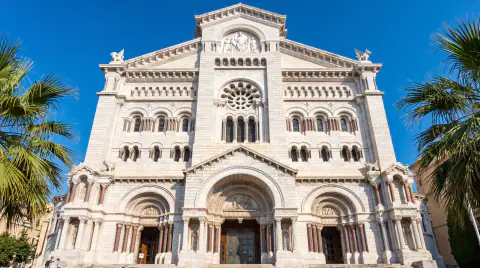 02Monaco Grand Prix experienceCathedral of Notre-Dame-ImmaculéeExplore experience →
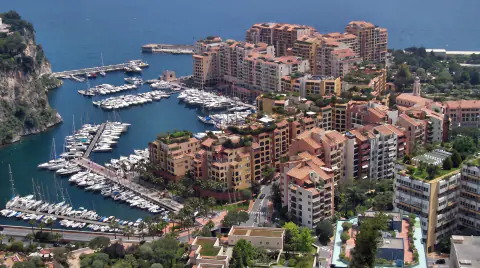 03Monaco Grand Prix experienceFontvieilleExplore experience →
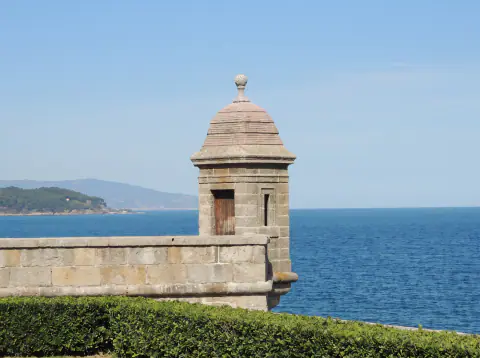 04Monaco Grand Prix experienceFort AntoineExplore experience →
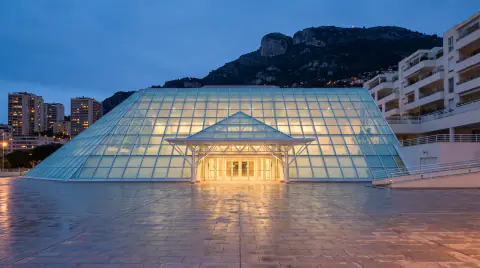 05Monaco Grand Prix experienceGrimaldi ForumExplore experience →
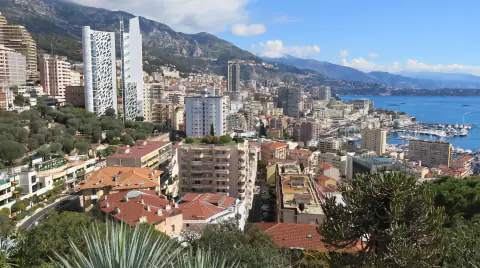 06Monaco Grand Prix experienceJardin Exotique de MonacoExplore experience →
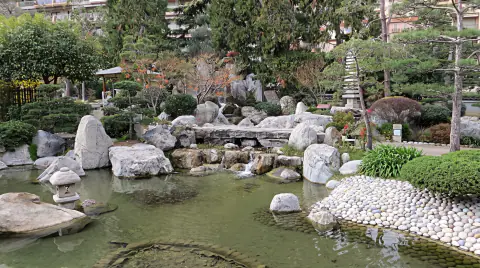 07Monaco Grand Prix experienceJardin Japonais de MonacoExplore experience →
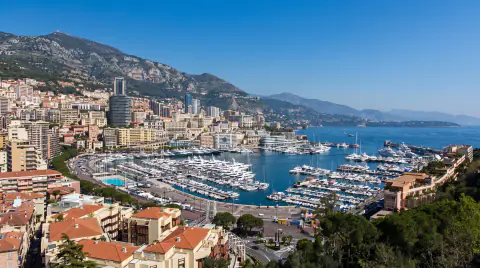 08Monaco Grand Prix experienceLa CondamineExplore experience →
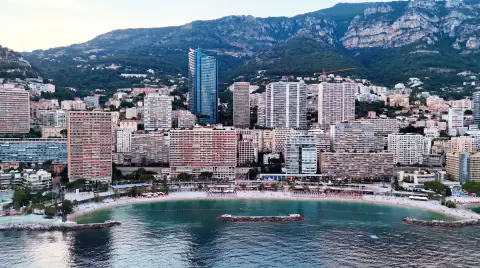 09Monaco Grand Prix experienceLarvottoExplore experience →
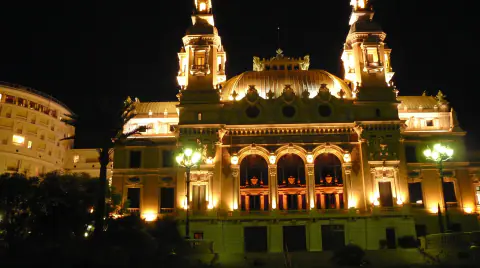 10Monaco Grand Prix experienceLes Ballets de Monte-CarloExplore experience →
 11Monaco Grand Prix experienceMareterraExplore experience →
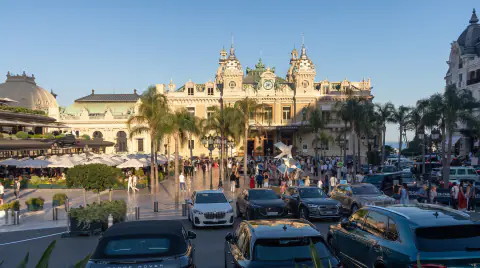 12Monaco Grand Prix experienceMonte-CarloExplore experience →
 13Monaco Grand Prix experienceNouveau Musée National de MonacoExplore experience →
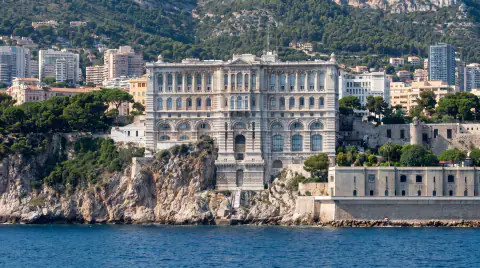 14Monaco Grand Prix experienceOceanographic Museum of MonacoExplore experience →
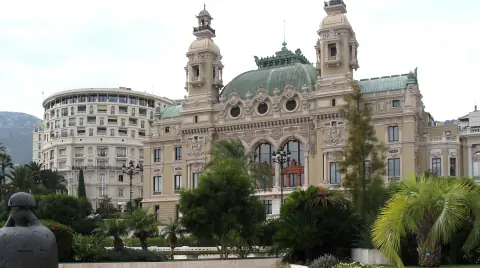 15Monaco Grand Prix experienceOpéra de Monte-CarloExplore experience →
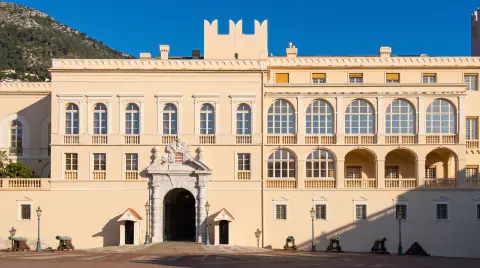 16Monaco Grand Prix experiencePrince's Palace of MonacoExplore experience →
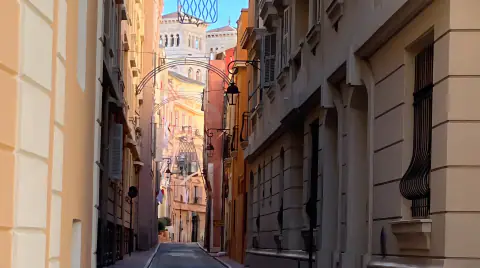 17Monaco Grand Prix experienceThe Museum of Old MonacoExplore experience →
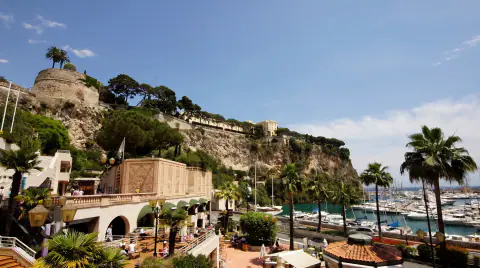 18Monaco Grand Prix experienceThe Museum of Stamps and CoinsExplore experience →
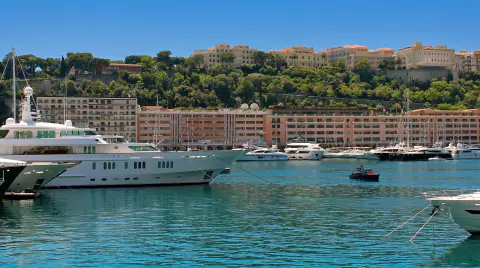 19Monaco Grand Prix experienceThe Prince's Car CollectionExplore experience →
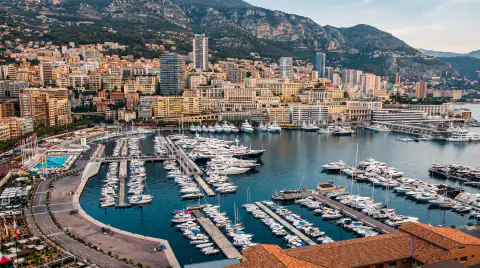 Plan / Itinerary builderBuild your Monaco Grand Prix dayStart planning →