In depth
Punting the Backs
Choose, time and enjoy a Cambridge punt through the famous college landscape of the Backs.
Story · Visit · Route · Links
Explore the river
Choose your punting route
The college river and upper river use separate launch areas. Choose a route before booking; do not treat the Mill Pond weir as a through-route. Map points are river views, not landing permissions.
Punting, gardens & riverside guides →Choose your depth
Essentials or more detail?
See visiting essentials, or read more about the history and places nearby.
01 The experience
What to expect.
Why it matters
Punting is not an ancient university ritual. Flat-bottomed punts had long served as regional workboats for shallow Fenland water, but pleasure punting arrived in Cambridge at the beginning of the twentieth century. Scudamore’s traces its company to 1910, with stations at both ends of the Backs; by the early 1920s the activity had overtaken other recreational boating in the city.
That relatively modern history is useful. It explains why the experience feels traditional without needing a medieval origin story. The boat form belongs to shallow water; the visitor industry belongs to Edwardian Cambridge and the growth of leisure.
What visitors should notice
Notice the route, not just the landmarks. The Cam bends and narrows, so buildings appear as reveals rather than a skyline. College gardens run down to the water in ways their street fronts do not suggest.
Look at the bridges as a sequence: the Mathematical Bridge’s timber geometry, Clare Bridge’s classical stone, Garret Hostel Bridge’s modern curve and the Bridge of Sighs’ enclosed Gothic form. A guide may tell memorable legends; treat unsupported claims as entertainment and use the architecture itself as the reliable story.
Chauffeured or self-hire?
Choose chauffeured for a first visit, mixed-age group, photography, limited time or cold weather. Choose self-hire if handling the boat is the point and everyone accepts the possibility of getting wet, turning slowly and sharing the river with novices.
Do not learn on the central Backs at the busiest summer time if a quieter upper river option is available. The cost saving is not worth turning the city’s best view into a stressful traffic exercise.
Who will enjoy it
First-time visitors, photographers, families who can board safely, and anyone interested in college architecture. It is particularly useful when colleges are closed because the river still provides exterior views of otherwise inaccessible sites.
Who may find it difficult
Boarding requires a change of level onto a low moving boat. Accessibility varies by station, operator, water level and staff provision; never describe “punting” as generically wheelchair accessible. Cold, rain and wind are amplified on the water. Motion-sensitive visitors may dislike the initial wobble even though the route is usually calm.
Young children require close supervision and appropriate buoyancy equipment. Self-hire is a poor choice for anyone uncomfortable standing, balancing or using the pole.
Visitor verdict
For a first Cambridge visit, take a licensed chauffeured tour and listen critically. The river view is the value; the commentary is variable. In good light, a 45-minute trip explains the spatial city better than an hour of walking around locked college edges.
The story
History & character.
Before pleasure punting
A punt is a flat-bottomed boat propelled by pushing a pole against the river bed. That form makes sense in shallow water. Long before tourists sat under blankets on the Cam, related craft worked Fenland waterways in eel fishing, reed cutting and wildfowling. The boat belongs to the geography before it belongs to the visitor economy.
The river and the colleges
The central Cam became a designed edge to a series of colleges. Gardens, walls, bridges and libraries accumulated over centuries, creating the Backs landscape now seen from the water. The buildings are much older than the leisure practice that connects them.
Clare Bridge dates from the seventeenth century and is the oldest surviving bridge on the river in Cambridge. The Mathematical Bridge at Queens’ belongs to the eighteenth century. St John’s enclosed Bridge of Sighs arrived in 1831. Later bridges added modern forms. The route is therefore a compressed history of how colleges chose to cross, frame and control the Cam.
1910 and the visitor industry
Scudamore’s account credits Jack Scudamore with adapting the regional workboat into a pleasure craft and founding the company in 1910. Its two stations sat at Mill Lane and Quayside, effectively bracketing the College Backs.
Quayside had been connected to Cambridge’s earlier life as an inland port. Railway development reduced that commercial function, and leisure use supplied a new relationship with the water. By the early 1920s, the company states, punting had overtaken other boating activities in Cambridge.
From student pastime to mass tourism
Punting became entwined with the visual identity of Cambridge: straw boaters, summer lawns and colleges reflected in the Cam. Commercial growth brought larger fleets, multiple operators and street selling. It also created tension between visitor demand, pedestrian space, river congestion and the working life of the city.
Cambridge City Council now directs visitors to licensed operators and describes six authorised stations. The Conservators of the River Cam are the navigation authority and license commercial craft, while landings and river edges involve several owners and public bodies. The apparently simple act of boarding a punt therefore sits within a real regulatory system.
The touting problem
Ticket sellers historically spread into King’s Parade and Market Square, sometimes far from authorised stations. The Council warns that unlicensed operators sell in the city centre and tells visitors to purchase near one of the licensed stations. Its code of practice limits where and how participating operators approach customers.
This is more than a consumer tip. It explains the geography of legitimate sales: La Mimosa, Quayside, Trinity College, Mill Pond, Mill Lane and Granta Mill Pond. If a deal is offered aggressively away from the river, walk on.
Punting today
The modern market includes shared chauffeured seats, private boats, self-hire, walking-and-river packages and seasonal products. Amenities may include cushions, blankets or covers, but these are operator features, not inherent properties of a punt tour.
The experience remains weather-dependent. Operators can suspend trips in unsafe wind, ice, flood or other adverse conditions. Hot, dry periods also remind visitors that the Cam is an ecological and managed water system, not merely a scenic channel.
The route as interpretation
At its best, the tour explains how Cambridge’s colleges meet the river. At its worst, it becomes a chain of myths delivered as fact. Newton did not design the Mathematical Bridge; every bridge is not an ancient student prank; colourful college anecdotes need sourcing.
The most durable historical reading is architectural: which college owns each bank, why bridges differ, and how private institutions collectively produced a landscape seen by the public from water.
Look closer
Highlights and hidden details.
The objects, spaces and small observations that turn a visit into a memorable one.1. King’s College Chapel from the river
The route’s defining reveal. From water level the Chapel sits behind lawn and meadow, free of the hard street frontage on King’s Parade.
2. Clare Bridge
The oldest surviving bridge on the Cam in Cambridge, classical and low over the water. Look for how its stone arches frame the next reach.
3. The Wren Library
Trinity’s library closes Nevile’s Court against the river. The long classical elevation is easier to understand from a punt than from most public land.
4. The Bridge of Sighs
St John’s enclosed nineteenth-century bridge gives the journey its most theatrical passage. The best view is on approach, before the boat reaches the arch.
5. The Mathematical Bridge
Queens’ timber footbridge demonstrates an engineered geometry frequently buried under the false Newton story. Look at the tangent and radial members.
6. The college gardens
The Backs are not a continuous public park. Each river edge belongs to an institution with its own planting, lawns and boundaries. The variation is the landscape’s character.
7. The act of punting
On a self-hire trip, the technique is itself a highlight. A clean push, recovery and steering correction feel satisfying precisely because the first attempts do not.
8. The change at either end
At Quayside the river becomes a busy urban basin; south of Silver Street it opens toward the upper river. The Backs are a distinct middle reach, not the whole Cam.
Details worth slowing down for.
The view is controlled by bends
The Chapel and bridges do not form a skyline. Each appears because the river changes angle; watch the view ahead rather than only the object beside you.
Water level changes the architecture
From a punt, bridge soffits and retaining walls become primary surfaces. Details invisible from street height shape the journey.
The pole tells you the river bed
A firm, quick contact feels different from soft mud. The technique is a physical reading of depth and substrate.
College boundaries remain visible
Changes in wall, planting, lawn treatment and gates often mark a new ownership before a guide names it.
Quayside remembers another river economy
The northern station occupies a place associated with Cambridge’s earlier inland port. Leisure replaced part of the commercial relationship with the river.
Not every punt is on the same trip
Some boats are shared tours, some private, some self-hire and some college craft. Their speed and manoeuvrability differ; congestion is not simply bad steering.
Silence improves the middle reach
The strongest few minutes often come when commentary pauses. Water, pole and reverberation beneath bridges provide their own account of the route.
Make it work
Plan the visit properly.
Current practical detail, kept separate from the story so it is easy to scan when you need it.At a glance
| Best first-time option | Licensed chauffeured Backs tour |
| Typical duration | 45–50 minutes |
| Booking | Advisable for summer weekends |
| Price | Varies by operator, boat type and demand |
| Weather | Services may be suspended |
| Toilets | Near stations, not on boats |
| Accessibility | Confirm directly with the chosen operator |
Choose the product before the company
First decide shared or private, chauffeured or self-hire, Backs or upper river. Only then compare licensed operators. A low headline price may mean one shared seat, a restricted departure or a different route.
Use a licensed station
The Council lists La Mimosa, Quayside, Trinity College, Mill Pond, Mill Lane and Granta Mill Pond. Licensed sellers work near their stations. Avoid aggressive street offers around Market Square and King’s Parade.
When to go
Go early for quieter water and cleaner photographs. Late afternoon can be beautiful but busy. Weekday mornings outside school holidays offer the best balance. Winter trips can be calm and atmospheric, but cold on the water; operators may suspend service in poor conditions.
What to wear
Dress one layer warmer than for walking. Bring a waterproof rather than relying on an umbrella, which is awkward on a narrow boat. Secure hats and loose items. Wear shoes that tolerate wet landing stages.
Boarding
Listen to staff, keep hands clear between boat and landing, and step into the centre rather than onto an edge. Distribute weight only when directed. Ask for help rather than attempting a fast or dramatic boarding.
Children
Confirm minimum ages, buoyancy aids and seating with the operator. Keep children seated and within reach. A chauffeured boat is usually better than self-hire for families.
Self-hire
Ask for instruction before leaving. Keep the pole on the same side of the boat until stable, let go if it becomes dangerously stuck, and do not wrap hands or clothing around it. Oncoming boats, bridges and tight corners require early, calm decisions.
Commentary
Guides vary. Enjoy stories, but be cautious with absolute claims and famous-name legends. The reliable core is what you can see: college ownership, bridge dates, architectural changes and the river’s route.
Photography
Use a wrist strap and a fast shutter. Sit rather than leaning over the side. Respect people in college gardens, residents on boats and other passengers. Commercial filming requires separate permissions from relevant river and land authorities.
Recheck before travel
- Operator licence and departure station
- Exact route and duration
- Shared versus private capacity
- Cancellation and weather policy
- Boarding/access arrangements
- Child and buoyancy-aid policy
- Whether blankets or covers are supplied
Visit your way
Access and family planning.
Summary
Accessibility is station- and operator-specific. A punt sits below the landing and moves while boarding; some visitors can transfer with assistance, while others cannot do so safely. Contact the chosen operator before paying.
Questions to ask
- Is there step-free access to the landing?
- What is the vertical transfer into the punt?
- Can staff provide physical assistance?
- Can a wheelchair be stored, and what dimensions are accepted?
- Can the passenger remain in their wheelchair?
- Is a private boat required?
- Where is the nearest accessible toilet?
- Can a companion travel free or at a concession?
Mobility
Shared boats can make transfers harder because seating is fixed around other passengers. A private boat may provide time and space but does not remove the change in level. Self-hire requires standing and balance and is not a reasonable default for mobility-limited visitors.
Sensory conditions
The trip includes unstable movement, water reflections, close passing boats, guide commentary and occasional shouting in congestion. Quieter weekday morning departures reduce sensory load.
Hearing and vision
Ask whether the guide can seat a lip-reader facing them or provide a written route summary. For blind or partially sighted visitors, a descriptive private tour can work well if boarding is feasible.
Toilets
The City and operator information describes toilets near stations, not on the boats. Confirm the exact accessible facility and opening hours.
Weather
Cold affects dexterity and transfers. Wet landings and boat surfaces increase risk. Rebook rather than treating poor conditions as part of the adventure.
Family verdict
A strong 45-minute family activity when chauffeured, with constant movement and clear landmarks. Self-hire adds unnecessary risk and stress for many families.
Why it works
- Children can spot bridges and count colleges.
- The boat keeps moving without a long walk.
- A private punt allows flexible conversation and seating.
- Blankets and covers may be available from some operators.
- The route works even when colleges are closed.
Friction points
- Boarding is the hardest moment.
- There are no toilets once underway.
- Children must remain seated and supervised.
- Cold or rain feels stronger on the river.
- Guide humour and historical accuracy vary.
Before booking
Ask about minimum ages, life jackets or buoyancy aids, buggy storage, private boat capacity and access to the landing. Do not assume every station offers the same facilities.
Make it a game
Give children five targets: King’s Chapel, a covered bridge, a wooden bridge, a punt pole getting stuck and a bird on the river. The journey is short enough for this to hold attention without turning it into a lesson.
Self-guided walk
Explore beyond the venue.
A practical, step-by-step route connecting this experience with more of Cambridge.Tour summary
This is a commentary framework for a normal chauffeured Backs trip. The exact order reverses with departure point; let the river, not this page, set the route.
Stop 1 — Read the station
Identify whether you are at an authorised landing and which direction the boat will travel. Notice how Quayside’s urban basin or Mill Pond’s open water changes the start.
Stop 2 — The first college boundary
Watch for a change in wall, gate or planting. The Backs are a chain of separately owned landscapes, not one park.
Stop 3 — The Mathematical Bridge
Ignore the Newton myth. Look at the radial and tangent timbers and how the bridge lands inside Queens’ College.
Stop 4 — King’s reveal
Let the Chapel enter the frame through the bend. Compare its west elevation with the King’s Parade facade remembered from the street.
Stop 5 — Clare Bridge
Look through the stone arches before passing beneath them. The bridge works as a frame within the landscape.
Stop 6 — Trinity and the Wren Library
The classical library presents a long horizontal front to the river, the visual opposite of King’s vertical Chapel.
Stop 7 — The Bridge of Sighs
Photograph on approach, then put the camera down while passing beneath. Listen to the change in sound.
Stop 8 — Turn and read the route backwards
Most commercial tours return along the same reach. Use the second pass for details missed first time rather than repeating the same photographs.
Stop 9 — Leave the boat carefully
Wait for staff to secure it, take belongings, and step from the centre. Only then decide the next stop; crowded landings are poor places to block a route.
Make a record
Photograph it thoughtfully.
Best approach
Sit at the front or outer edge only if the operator assigns that seat. Keep the camera secured. A 35–50mm equivalent lens captures buildings without exaggerating perspective; a wider phone lens helps under bridges.
Key frames
- King’s Chapel across lawn and water
- Clare Bridge on approach
- Wren Library reflected in the Cam
- Bridge of Sighs framed by trees
- Mathematical Bridge structure
- Pole, wake and bow as foreground
- College gardens with human scale
Light
Morning gives calmer water and fewer boats. Late light warms west-facing stone but can produce deep contrast. Overcast weather is excellent for masonry and reflections.
Technique
Use a shutter speed around 1/500 for architecture from a moving boat and faster for other punts. Keep horizons level by using the building, not the boat edge. Do not change lenses over water.
Ethics and permissions
Avoid close identifiable images of people in private college gardens. Ask before photographing guides or fellow passengers. Commercial filming on the river requires relevant permission; college buildings and land may involve separate owners.
Around here
Make more of the area.
Good to know
Questions, answered.
01Is punting in Cambridge worth it?
Yes for a first visit: the Backs are most coherent from the river.
02How long is a Cambridge punt tour?
Most central chauffeured tours take about 45–50 minutes.
03What are the Backs?
The riverside grounds and gardens behind Cambridge’s central colleges.
04Should I choose chauffeured or self-hire?
Choose chauffeured for sightseeing; self-hire if learning to handle the boat is the main activity.
05Is self-hire difficult?
Yes on a crowded Backs route. The pole can stick and steering reacts slowly.
06Where can I board?
The Council lists six licensed stations: La Mimosa, Quayside, Trinity College, Mill Pond, Mill Lane and Granta Mill Pond.
07How do I recognise a licensed seller?
Licensed operators sell near their authorised stations, not around King’s Parade or Market Square.
08Should I book ahead?
Yes for summer weekends, private boats and fixed itinerary times.
09How much does punting cost?
Prices vary by operator, time, shared or private boat and booking channel.
10Can I punt in winter?
Often yes, but services can be suspended for unsafe weather.
11Does it run in rain?
Light rain may not stop trips; heavy rain, wind, flood or ice can.
12Will I get wet?
Possibly, especially on self-hire. Chauffeured passengers usually stay drier.
13Are blankets provided?
Some operators provide blankets or covers. Confirm before booking.
14Is punting safe for children?
It can be with close supervision and operator-approved buoyancy arrangements.
15Can babies go on punts?
Policies vary. Ask the operator about age, seating and equipment.
16Is punting wheelchair accessible?
Not as a general category. Boarding and storage vary by station and boat.
17Are there toilets?
There are facilities near some stations, not on the punts.
18Can I bring a dog?
Operator policies vary; confirm before booking.
19Can I take food and drink?
Often on private tours, subject to operator rules. Avoid glass and litter.
20What landmarks will I see?
Usually King’s Chapel, Clare Bridge, the Wren Library, Bridge of Sighs and Mathematical Bridge.
21Can I see inside colleges from the river?
You see riverside grounds and exteriors, not private interiors.
22Does the tour pass the Bridge of Sighs?
The standard central Backs route normally passes beneath it.
23Did Newton design the Mathematical Bridge?
No. Newton died before it was built.
24Is punting an ancient Cambridge tradition?
Pleasure punting began in the early twentieth century.
25When was Scudamore’s founded?
1910, according to the company’s history.
26Which end should I start from?
Choose for convenience; the central route is commonly out-and-back.
27Is the upper river the same as the Backs?
No. The upper Cam toward Grantchester is greener and usually quieter.
28Can I photograph from the punt?
Yes, but secure the camera, stay seated and respect people on private land.
29Are guide stories accurate?
Quality varies. Treat unsourced legends as entertainment.
30What should I do afterwards?
Visit one college seen from the river or pair Quayside with Kettle’s Yard.
Before you visit
Useful links.
Venue and visitor information
Method
Government and official destination sources establish licensing and visitor advice. Scudamore’s is used for its own history, not as proof that it is the best operator. Prices are deliberately omitted because comparable products and capacity vary.
Sources
| ID | Source | Used for | Retrieved |
|---|---|---|---|
| S01 | Cambridge City Council — Punting | Six licensed stations, sales geography and touting warning | 2026-07-28 |
| S02 | Visit Cambridge — Punting | Core route, landmarks, boat dimensions and early-20th-century introduction | 2026-07-28 |
| S03 | Scudamore’s — History of Punting | Working-boat context, 1910 founding, Mill Lane and Quayside stations | 2026-07-28 |
| S04 | Scudamore’s — Access Statement | Need for station-specific access planning | 2026-07-28 |
| S05 | Cambridge City Council — Filming | River and land filming permissions | 2026-07-28 |
Conflict ledger
Number of landmarks and colleges
Operator marketing uses different counts because routes, naming and what constitutes a passed college vary. The bundle names the stable principal sights and does not publish a definitive numerical promise.
Prices
Not a source conflict but a comparability problem: shared seat, private boat, self-hire and promotional fares are different products. No single “Cambridge punting price” is published.
Historic origin
The regional working-punt history predates Cambridge pleasure punting. The bundle distinguishes boat type from tourist practice and dates the latter to the early twentieth century.
Opening hours, prices, programmes and access arrangements can change. Confirm critical details with the venue.
River map notes & sources
River geometry © OpenStreetMap contributors, ODbL; retrieved 2026-09-10. Viewpoints are snapped to the mapped river and are not public landing permissions.
OpenStreetMap river data · Scudamore’s routes and boat hire · Upper-river hire and return planning
Continue exploring / Cambridge
More things to do
in Cambridge
Explore Cambridge activities, sights and places to eat. Compare the time to allow, costs and booking details, then save your favourites to your itinerary.
 01Culture & historyFitzwilliam MuseumExplore experience →
 02Culture & historyKettle's YardExplore experience →
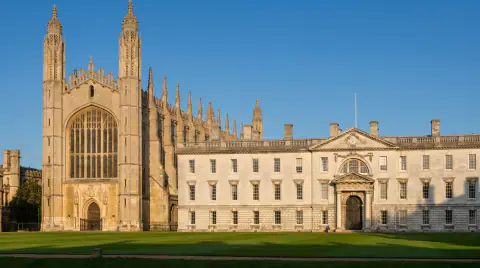 03Culture & historyKing's CollegeExplore experience →
 04Food & drinkFort St GeorgeExplore experience →
 05Food & drinkThe Blue Ball, GrantchesterExplore experience →
 06Food & drinkThe Cambridge BlueExplore experience →
 07Food & drinkThe Castle InnExplore experience →
 08Food & drinkThe Devonshire ArmsExplore experience →
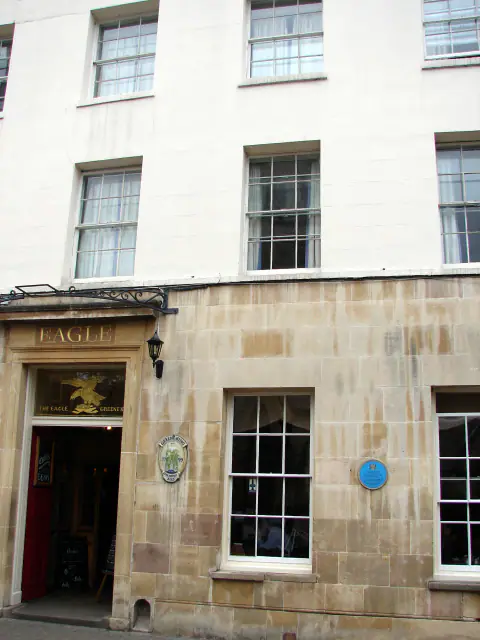 09Food & drinkThe EagleExplore experience →
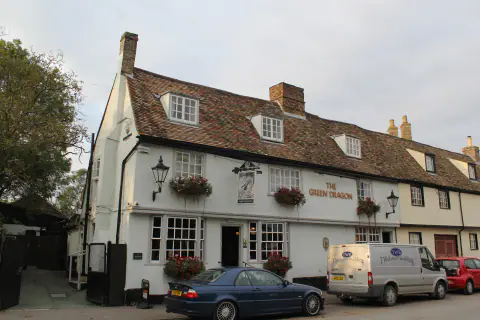 10Food & drinkThe Green DragonExplore experience →
 11Food & drinkThe HaymakersExplore experience →
 12Food & drinkThe Kingston ArmsExplore experience →
 13Food & drinkThe Live & Let LiveExplore experience →
 14Food & drinkThe MaypoleExplore experience →
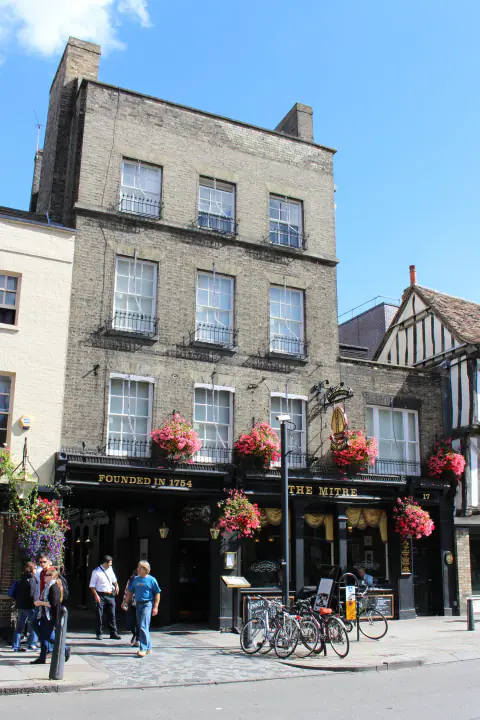 15Food & drinkThe MitreExplore experience →
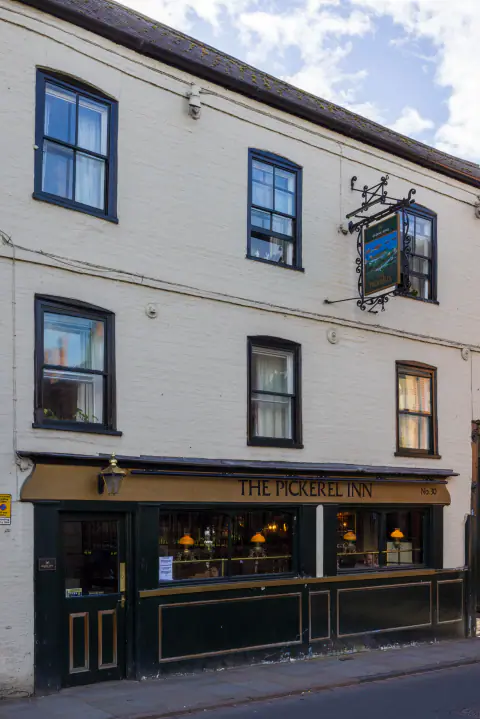 16Food & drinkThe Pickerel InnExplore experience →
 17Food & drinkThe Queen’s Head, NewtonExplore experience →
 18Food & drinkThe Royal StandardExplore experience →
 19Food & drinkThe St RadegundExplore experience →
 20OutdoorsCambridge University Botanic GardenExplore experience →
 35CollegesAll the collegesEvery Cambridge collegeOpen the college guide →Food & drink / a storyThe six oldest pubsWalk the timeline →Plan / Itinerary builderBuild your Cambridge dayStart planning →