In depth
Kettle's Yard
Visit one of Cambridge's most distinctive art experiences: a domestic collection arranged across an intimate house.
Story · Visit · Route · Links
Choose your depth
Essentials or more detail?
See visiting essentials, or read more about the history and places nearby.
01 The experience
What to expect.
Why it matters
Jim Ede wanted a place where art could be encountered without what he saw as the austerity of a museum. Students once visited during his open afternoons and were guided personally through the house. The arrangement proposes that art belongs among ordinary materials and daily routines, not isolated from them.
This is also why small details matter. A spiral of stones, a lemon on a pewter dish, light on glass or the distance between two pictures can carry as much interpretive weight as an artist’s biography.
What visitors should notice
Look for relationships: curve beside curve, pale surface against dark wood, natural object beneath abstract painting, and views that align across rooms. The house contains no standard labels, so use the digital guide before or after if you need names without interrupting the experience.
Notice the building’s transformation. Four modest cottages became one sequence, then Leslie Martin’s 1970 extension introduced larger, brighter volumes without abandoning the domestic scale.
Who will enjoy it
Visitors interested in modern British art, interiors, architecture, collecting, ceramics and the choreography of domestic space. It often converts people who find white-cube galleries intimidating because the encounter is intimate and specific.
Who may find it difficult
The historic house is physically restrictive. Around three-quarters is not wheelchair accessible, there is no lift, several stairs include a spiral flight, and buggies are unsuitable. No bags, including handbags, enter the house; storage is limited and there are no lockers.
The lack of labels can frustrate visitors who want immediate identification. Use the free digital guide or speak with Visitor Assistants rather than assuming the display is undocumented.
Visitor verdict
One of Cambridge’s most distinctive cultural experiences and worth the house ticket if you enjoy looking slowly. Book a morning slot, carry nothing, give the house at least an hour and leave time for the free galleries. Visitors needing a fully step-free experience should use the galleries and accessible extension while reviewing the online collection.
The story
History & character.
Jim and Helen Ede
Harold Stanley “Jim” Ede was born in 1895 and Helen Schlapp in 1894. Both had artistic training; Helen’s contribution through music, hospitality and domestic life is essential to a history too often told only through Jim.
Jim’s First World War service interrupted his painting. He later worked at the National Gallery and became an assistant at the Tate, where friendships with contemporary artists shaped his collecting. Ben and Winifred Nicholson, David Jones, Christopher Wood and others were not distant names in a market catalogue but people within an artistic network.
Gaudier-Brzeska and the collection
In 1927 Ede acquired a substantial body of work by Henri Gaudier-Brzeska, the French sculptor killed in the First World War. Ben Nicholson and Christopher Wood introduced him to Alfred Wallis’s paintings. The collection grew through friendship, advocacy, purchase and exchange rather than through a single encyclopaedic plan.
Before Cambridge
The Edes lived in Britain, Morocco and France. Their houses developed the habits later concentrated at Kettle’s Yard: art placed in conversation with simple furniture, natural materials, music and changing light.
Finding the cottages
In 1956 Jim and Helen returned to Cambridge looking for a “stately home”. They found four run-down cottages below St Peter’s Church instead. With architect Rowland de Winton Aldridge they restored and joined them.
The modest origin matters. Kettle’s Yard is powerful because it does not turn modern art into aristocratic display. Tight stairs, low rooms and ordinary materials remain part of the encounter.
Open house from 1957
The Edes moved in during 1957. Jim opened the house to students during term and guided visitors himself. His stated ambition was a living place where art could be enjoyed without the formality of a museum.
The absence of labels was not an absence of interpretation. Conversation, placement and repeated looking supplied it. The current Visitor Assistants and digital resources continue that approach in a different institutional setting.
Gift to the University
The Edes gave the house and its contents to the University of Cambridge in 1966 but continued living there. This ensured continuity while turning a private experiment into a public and educational institution.
The 1970 extension
Leslie Martin designed the larger extension that opened in 1970. Its upper room uses height and light for sculpture and painting while maintaining visual continuity with the cottages. An exhibition gallery was also added, allowing temporary programming alongside the permanent house.
Departure and preservation
Jim and Helen left for Edinburgh in 1973. The house has been preserved broadly as they left it, with no conventional labels. Preservation here means maintaining relationships among art, object and space rather than freezing every domestic detail against conservation needs.
Helen died in 1977 and Jim in 1990. Kettle’s Yard continued to develop as the University’s modern and contemporary art gallery, archive, research centre and community resource.
Later gallery development
The exhibition programme expanded beyond Ede’s collection. Contemporary art, learning and community work now occupy purpose-designed spaces distinct from the historic house. Recent architectural work improved the entrance, education and gallery complex, creating a clearer accessible route even though the cottages remain constrained.
Art for students
The student relationship survives in an unusual lending scheme through which eligible Cambridge and Anglia Ruskin students can borrow works from the collection. This continues Ede’s belief that art should enter daily life rather than remain permanently behind institutional barriers.
Look closer
Highlights and hidden details.
The objects, spaces and small observations that turn a visit into a memorable one.1. The spiral of stones
One of the clearest demonstrations of Ede’s method: ordinary found material ordered so precisely that attention changes. Look at spacing, scale and light.
2. Alfred Wallis
Wallis’s maritime paintings reject conventional perspective while preserving a powerful spatial memory of boats and coast. Their domestic setting suits their intimacy.
3. Gaudier-Brzeska
Sculpture carrying the force of a short life and Ede’s long advocacy. Walk around each work where the room permits; silhouette changes meaning.
4. Ben and Winifred Nicholson
Paintings and reliefs that make relationships among colour, object and room especially clear. Notice how white, window light and neighbouring ceramics work together.
5. The cottages
Low ceilings, stairs, fireplaces and small openings are not a neutral container. They make modern art domestic and close.
6. Leslie Martin’s extension
A larger volume opened in 1970, preserving the house’s careful light while giving sculpture room to breathe.
7. Ceramics, glass and furniture
Do not separate “art” from “decorative object”. Lucie Rie ceramics, glass, textiles and furniture are part of the same visual argument.
8. Natural objects and changing light
Pebbles, feathers, plants and fruit make the installation responsive to day and season. The collection is not only what carries an artist’s name.
9. The temporary galleries
Free modern and contemporary exhibitions extend the institution beyond Ede’s historic selection. Check the current programme.
Details worth slowing down for.
There are no neutral surfaces
Wall colour, table height, textile, window and empty space all participate in the display. Ask why an object sits exactly where it does.
Labels would change the pace
Their absence forces looking before identification. Use the digital guide after a first circuit and see how names alter your attention.
The house is four houses
Watch levels, wall thickness and circulation. The sequence hides its cottage origins until a stair or doorway suddenly reveals them.
Music belongs to the interior
Helen Ede’s piano and listening shaped domestic life. The visual calm should not be mistaken for a silent history.
Light is a collection material
Return to a room after twenty minutes. A sculpture or glass object can appear recomposed because daylight has moved.
The extension is not a break
Leslie Martin’s space enlarges scale while retaining pale surfaces, wood, careful placement and controlled light.
Students were the original audience
The open-house tradition and current art-loan scheme explain why the place feels educational without behaving like a textbook.
Make it work
Plan the visit properly.
Current practical detail, kept separate from the story so it is easy to scan when you need it.At a glance
| Opening | Tuesday–Sunday, 11:00–17:00 |
| House | Timed ticket required |
| Temporary galleries | Free |
| Adult house ticket | £11.50 standard / £13 donation-inclusive during summer offer |
| Age 25 and under | Free |
| Typical visit | 90–150 minutes |
| Address | Castle Street, Cambridge, CB3 0AQ |
The listed house prices include a temporary 10% saving from 25 June to 1 September 2026. Recheck after the offer ends.
Book the house
House entry is timed. Arrive 10–15 minutes early; late entry is not guaranteed. The galleries do not require the same paid house ticket, so choose the correct product.
Bring almost nothing
No bags, including handbags, are allowed inside the house. Limited temporary bag space exists only while visiting the house, and there are no lockers. Leave luggage elsewhere.
Route and duration
Allow 60–75 minutes in the house and at least 30 minutes for the galleries. Move slowly and avoid using a checklist of artists. Visitor Assistants can identify works and explain alternative routes.
Photography
Personal photography is encouraged without flash. Commercial photography and filming need advance permission. The rooms are narrow, so never block stairs or doorways for a composition.
Families
Children aged twelve and under need an adult. The house is not suitable for buggies. Children who are carried do not need a ticket. The institution offers family resources and disability-friendly sessions through its programme.
Café
The Garden Kitchen has limited physical access. The lower entrance-level and outdoor seating are accessible; the upper level and counter involve steps. Staff can take orders from wheelchair users in the lower area.
Getting there
Kettle’s Yard sits on Castle Street, around twelve minutes north-west of Market Square. There is no parking on site. Castle Hill pay-and-display is about five minutes away. Buses and taxis serve the area; the last approach is short but sloping in places.
Best time
Weekday mornings are generally quieter. Timed house capacity protects the rooms, but the galleries and café vary with exhibitions and events.
Recheck
House closure dates, temporary exhibition programme, ticket price after 1 September 2026, café service, timed-slot availability and access arrangements.
Visit your way
Access and family planning.
Summary
The galleries, entrance, education wing, Ede Room and Clore Learning Studio are wheelchair accessible. Around three-quarters of the historic house is not. The accessible house portion is the ground-floor extension, reached by ramp; there is no lift within the house.
Historic house
Several staircases include a spiral stair. Visitor Assistants can provide an alternative to the spiral, but that does not create access to all levels. Most works can be explored through the online collection when rooms are inaccessible.
Galleries and learning spaces
A lift serves gallery and learning-space floors. Wheelchair-accessible toilets are on lower-ground, ground and first floors. Folding seats can be borrowed.
Hearing and vision
Hearing loops are fitted at the welcome desk and in event spaces. Large-print texts, magnifying glasses and visual-description tours are available for many exhibitions; request current provision.
Quiet space
The Reflect & Respond space outside the Ede Room and the cottage garden are recommended quiet locations. Weekday mornings are generally calmer.
Café
Lower and outdoor seating is accessible. The upper area and counter involve steps. Wheelchair users can reserve lower seating, and staff can take orders there via an assistance bell.
Assistance animals
Trained assistance animals are welcome throughout. In the house they should remain controlled and must not touch furniture or artworks.
Contact
Call 01223 748100 or email mail@kettlesyard.cam.ac.uk before a visit dependent on specific arrangements.
Family verdict
Better for observant school-age children than toddlers. Free entry for everyone aged 25 and under is generous, but the fragile, narrow house requires close supervision and cannot take buggies.
What works
- Pebbles, spirals, boats, sculpture and unusual object pairings invite looking.
- A timed house slot keeps the visit bounded.
- Free galleries allow a shorter fallback.
- Family activity resources are available online.
- Disability-friendly family sessions are part of the programme.
Friction
No buggies, no bags, no food or drink, several stairs and many objects displayed at domestic height. This is not a touch collection.
A looking game
Find five circles, three stones, two boats, one object without an artist and one place where the light changes another object. Ask Visitor Assistants for names only after the child has described what they see.
Suggested age
Seven and over for the full house. Younger children may do better in the free galleries and family programme.
Self-guided walk
Explore beyond the venue.
A practical, step-by-step route connecting this experience with more of Cambridge.Tour summary
A 90-minute method for the house and galleries. Follow the directed visitor route where it differs and ask for the non-spiral alternative if needed.
Stop 1 — Arrive empty-handed
Store only what staff can accept and enter without a bag. Notice the shift from public gallery threshold to domestic scale.
Stop 2 — Look before naming
Spend five minutes in the first room without the guide. Identify relationships among shape, colour, furniture and natural object.
Stop 3 — Follow the cottages
Use changes in level and wall thickness to read four buildings becoming one.
Stop 4 — Choose one Wallis
Describe the sea, boat and spatial logic before reading the artist information.
Stop 5 — Circle a sculpture
Walk around a Gaudier-Brzeska work where permitted. Watch mass become line.
Stop 6 — Find the spiral of stones
Study interval and scale. The material is ordinary; the attention is constructed.
Stop 7 — Enter Leslie Martin’s extension
Notice what becomes possible with height and continuous light, and what remains domestic in material and arrangement.
Stop 8 — Revisit one room
Return after daylight has shifted. Check whether the arrangement now leads the eye differently.
Stop 9 — Use the digital guide
Identify the works that stayed with you. Information now answers a question rather than replacing looking.
Stop 10 — Temporary gallery
Finish with the current free exhibition. It establishes that Kettle’s Yard is a living contemporary institution, not only Ede’s preserved house.
Make a record
Photograph it thoughtfully.
Visual proposition
Photograph relationships, not inventory. A good Kettle’s Yard image joins art, furniture, natural object and daylight in one clear composition.
Best subjects
The spiral of stones, Alfred Wallis paintings within room context, Gaudier-Brzeska silhouettes, Lucie Rie ceramics, windows, the transition into Leslie Martin’s extension and views across cottage thresholds.
Rules
Personal photography is encouraged without flash. Commercial photography and filming require advance permission.
Technique
Rooms are narrow and contrasty. Use a normal or modest wide lens, avoid correcting every vertical into sterility, and never move an object. Keep out of circulation paths and stair landings.
Captioning
Record the room and object identification through the digital guide. Do not attribute natural arrangements to a named artist unless the institution does.
People
Capacity is limited and privacy matters. Wait for a clear room rather than using visitors as scale without consent.
Around here
Make more of the area.
Good to know
Questions, answered.
01Is Kettle’s Yard worth visiting?
Yes if you enjoy modern art, interiors or careful looking. It is one of Cambridge’s most distinctive cultural visits.
02What is Kettle’s Yard?
A historic art-filled house and the University of Cambridge’s modern and contemporary exhibition gallery.
03Is it free?
Temporary galleries are free. Timed house entry is charged for most adults.
04Who enters the house free?
In July 2026, visitors aged 25 and under, University students and several other listed groups entered free.
05How much is the house?
During the 2026 summer saving, adult entry is £11.50 without donation or £13 with donation. Confirm prices after 1 September.
06Do I need to book?
Yes for the house. Entry uses timed tickets.
07What are the opening hours?
Tuesday–Sunday, 11:00–17:00.
08Is it open on Monday?
No, including bank-holiday Mondays.
09How long should I allow?
About 60–75 minutes for the house and another 30–60 for galleries and café.
10Who created it?
Jim and Helen Ede.
11When did they live there?
1957–1973.
12When was it given to the University?
1966.
13Is the house unchanged?
It is preserved broadly as the Edes left it, with careful ongoing conservation and interpretation.
14Why are there no labels?
The arrangement prioritises direct looking; Visitor Assistants and a digital guide supply identification.
15Which artists are represented?
Ben and Winifred Nicholson, Alfred Wallis, Christopher Wood, David Jones, Henri Gaudier-Brzeska, Barbara Hepworth, Lucie Rie and others.
16Is it wheelchair accessible?
The galleries are; around three-quarters of the historic house is not.
17Is there a lift?
The gallery and learning spaces have a lift. The historic house has no lift.
18Can I avoid the spiral staircase?
Yes, ask a Visitor Assistant for an alternative house route.
19Are there accessible toilets?
Yes, on several gallery-building levels.
20Are hearing loops available?
Yes, at the welcome desk and in event spaces.
21Can I borrow a seat?
Yes, folding seats are available.
22Can I bring a buggy?
No, the house is not suitable for buggies.
23Can I bring a bag?
No bags, including handbags, enter the house.
24Are there lockers?
No. Limited temporary bag space is available only during a house visit.
25Can children visit?
Yes; children twelve and under need an adult.
26Is there a café?
Yes, but access to its upper level and counter is limited.
27Can I take photographs?
Personal no-flash photography is encouraged.
28Are assistance dogs welcome?
Yes throughout, with collection-protection rules in the house.
29Is there parking?
No on-site parking; Castle Hill car park is about five minutes away.
30What should I combine it with?
Castle Mound, the Round Church, Quayside punting or King’s College.
Before you visit
Useful links.
Venue and visitor information
Method
Kettle’s Yard’s own history, visit, access, collection and research pages were used. The institution is the authority for the precise distinction between historic-house and gallery access.
Sources
| ID | Source | Used for | Retrieved |
|---|---|---|---|
| S01 | Kettle’s Yard — Plan your visit | Hours, prices, timed entry, bags, buggies, photography and address | 2026-07-28 |
| S02 | Kettle’s Yard — Access | House and gallery access, lift, toilets, hearing loops, quiet spaces and café | 2026-07-28 |
| S03 | Kettle’s Yard — History | Ede biographies, cottages, 1957–73 residence, 1966 gift and collection philosophy | 2026-07-28 |
| S04 | Kettle’s Yard — Explore the house and collection | Collection scope, artists, digital guide, archive and student lending | 2026-07-28 |
| S05 | Kettle’s Yard — Research | University role, archive and preservation | 2026-07-28 |
| S06 | Kettle’s Yard — A Handful of Objects | Five collection anchors | 2026-07-28 |
| S07 | Kettle’s Yard — Press downloads | Leslie Martin extension date and visual reference | 2026-07-28 |
Conflict ledger
Is Kettle’s Yard free?
Both statements circulate because they refer to different products. The temporary galleries are free; the house is timed and charged for most adults.
Is the house wheelchair accessible?
The accessible ground-floor extension does not make the historic house generally accessible. The institution states that around three-quarters is inaccessible.
Preserved unchanged
Official copy uses “virtually unchanged” and “by and large as Jim and Helen left it”. The bundle preserves that qualification and does not claim absolute immobility.
Opening hours, prices, programmes and access arrangements can change. Confirm critical details with the venue.
Continue exploring / Cambridge
More things to do
in Cambridge
Explore Cambridge activities, sights and places to eat. Compare the time to allow, costs and booking details, then save your favourites to your itinerary.
 01Culture & historyFitzwilliam MuseumExplore experience →
 02Culture & historyKing's CollegeExplore experience →
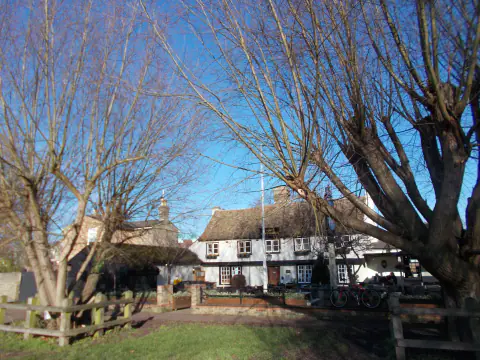 03Food & drinkFort St GeorgeExplore experience →
 04Food & drinkThe Blue Ball, GrantchesterExplore experience →
 05Food & drinkThe Cambridge BlueExplore experience →
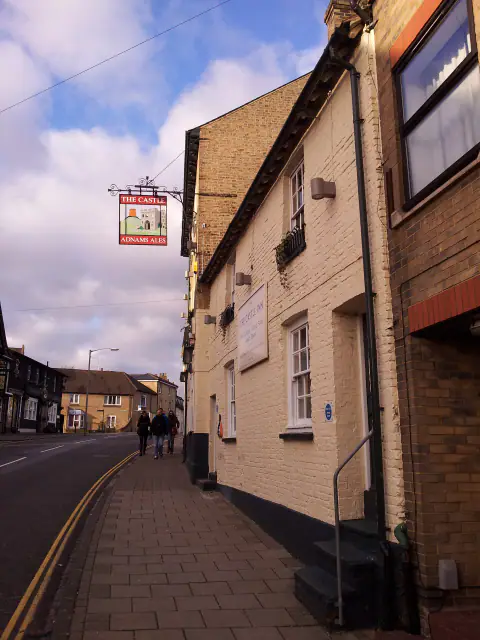 06Food & drinkThe Castle InnExplore experience →
 07Food & drinkThe Devonshire ArmsExplore experience →
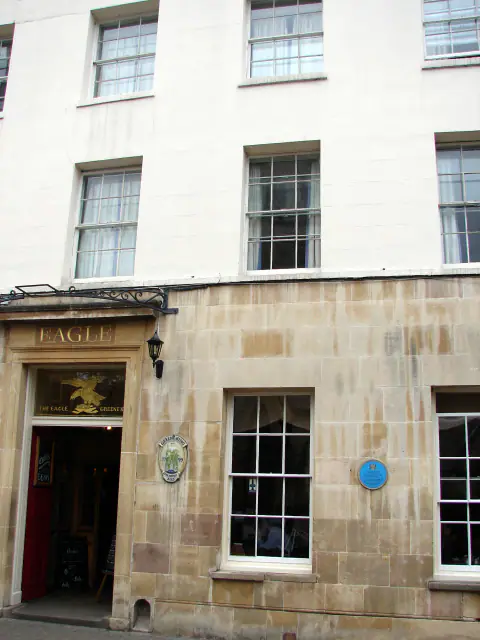 08Food & drinkThe EagleExplore experience →
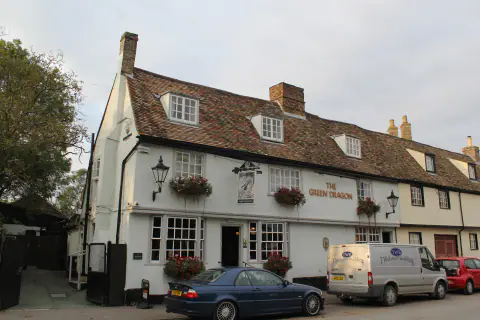 09Food & drinkThe Green DragonExplore experience →
 10Food & drinkThe HaymakersExplore experience →
 11Food & drinkThe Kingston ArmsExplore experience →
 12Food & drinkThe Live & Let LiveExplore experience →
 13Food & drinkThe MaypoleExplore experience →
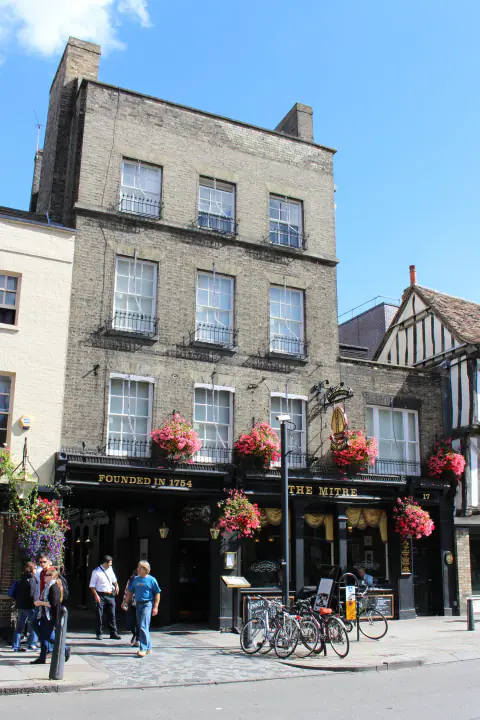 14Food & drinkThe MitreExplore experience →
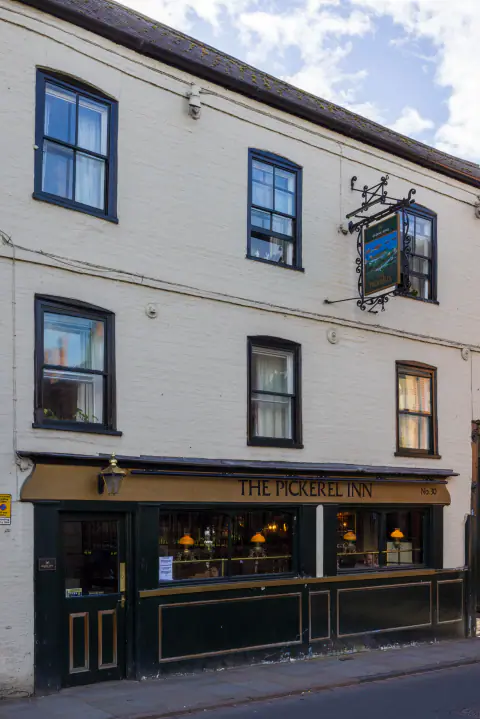 15Food & drinkThe Pickerel InnExplore experience →
 16Food & drinkThe Queen’s Head, NewtonExplore experience →
 17Food & drinkThe Royal StandardExplore experience →
 18Food & drinkThe St RadegundExplore experience →
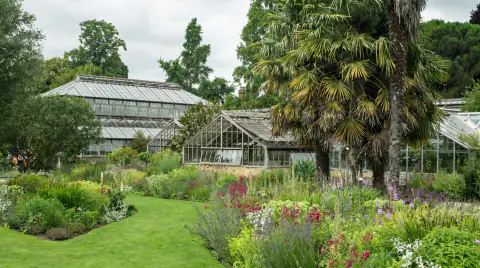 19OutdoorsCambridge University Botanic GardenExplore experience →
 20Water activitiesPunting the BacksExplore experience →
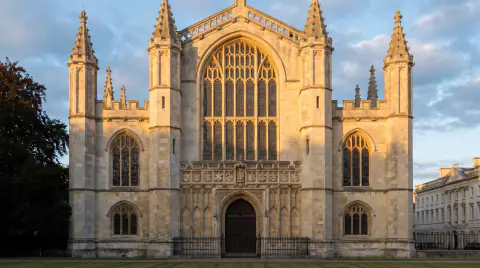 35CollegesAll the collegesEvery Cambridge collegeOpen the college guide →Food & drink / a storyThe six oldest pubsWalk the timeline →Plan / Itinerary builderBuild your Cambridge dayStart planning →