The one rule that explains the rest
A college is a private, working institution — somewhere people live, study and are examined — that admits visitors as a courtesy. It is not an attraction that happens to be closed sometimes. That single fact explains the porters, the rope barriers, the closed staircases and the signs asking for quiet.
It also explains why no guide, including this one, can promise you access on a given day. What we can do is tell you the shape of it, so you plan a route that survives a closed gate.
The four kinds of access
- Ticketed, and worth it
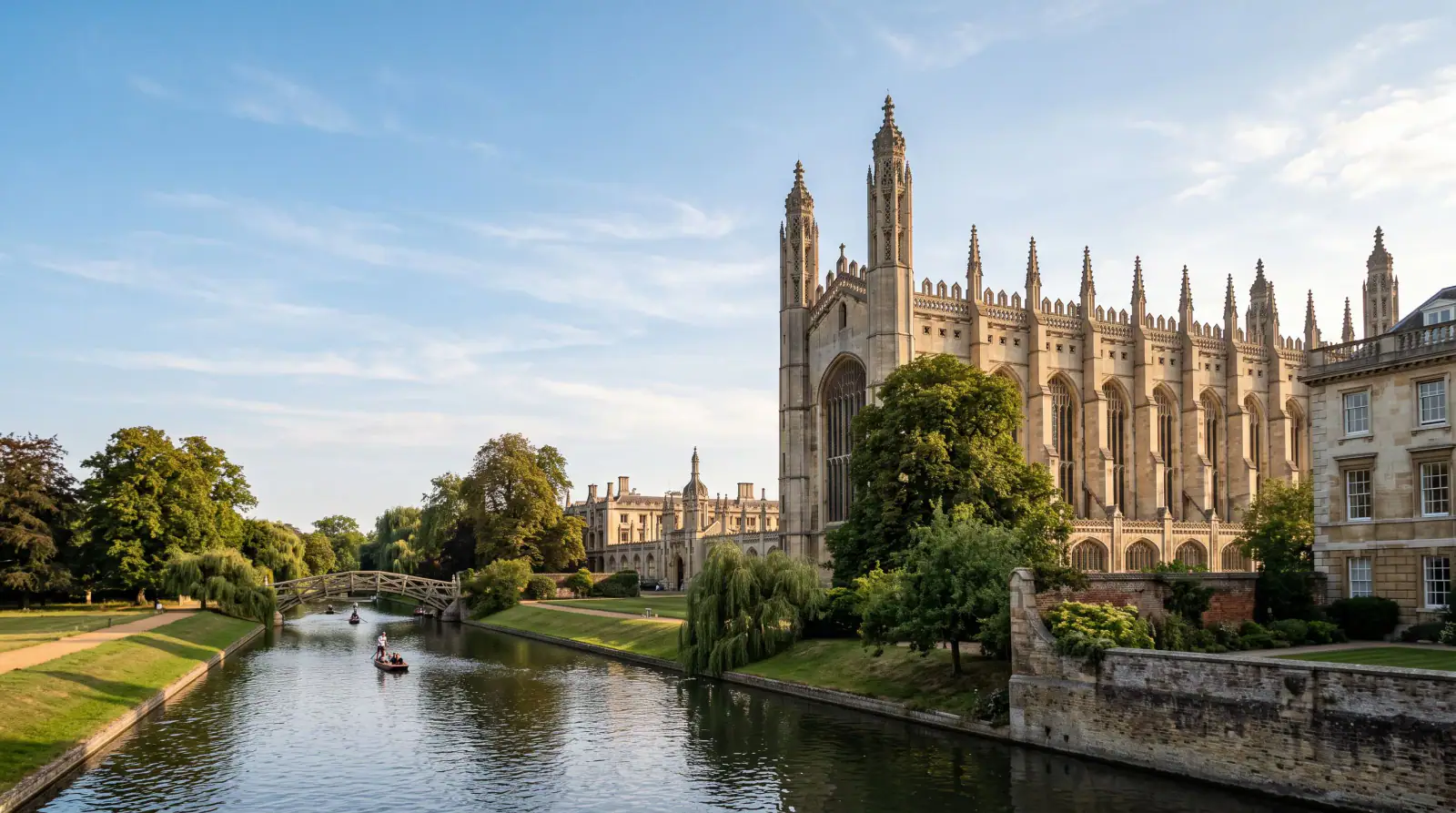
- King’s is the anchor visit and sells admission to the Chapel and grounds, with tickets available in advance. This is the most reliable major interior in the city — and the one thing most visitors have actually come to see.
- Ticketed, or by tour only
- Several of the largest colleges charge in the visitor season. Trinity is the one to know about: its courts, including Great Court, are not open to casual visitors, and entry is by guided tour at set times. St John’s charges during the summer visitor season. Queens’ admits visitors through its own Visitors’ Gate on Queens’ Lane — which is also how you reach the Mathematical Bridge.
- Free, but report to the lodge first
- A large group of colleges — Pembroke, Peterhouse, Magdalene, Churchill and others — admit visitors without a charge, on the understanding that you check in at the Porters’ Lodge on arrival and keep to the grounds. Nineteen of the thirty-five entries in our college index ask for exactly this.
- Not a visitor attraction at all
- The graduate colleges are working institutions with no visitor offer. Clare Hall opens its public art programme to everyone but cannot assume general access; Darwin opens its gardens but takes no commercial tours. Treat these as places to walk past, not into.
Exam term is the thing that catches people out
Cambridge closes down harder for examinations than most visitors expect, and it does it in late spring — which is precisely when the city looks its best and the day-trip traffic peaks.
Magdalene, for one, welcomes visitors year-round except from mid-April to mid-June. It is not alone, and the colleges that do stay open often narrow what is accessible rather than closing outright.
If you are visiting in May or early June, assume fewer interiors and plan the day around the Backs, the river and the museums — none of which sit examinations.
The reverse is also true: the quietest, most generous access is usually outside full term, in the winter months, when almost nobody plans a Cambridge day trip.
How to plan a day that survives a closed gate
Build the day around the things that do not depend on a porter’s discretion — the Backs, the river, the Fitzwilliam, Kettle’s Yard, the Botanic Garden — and treat colleges as the part that might go well.
Book King’s in advance if it matters to you. Everything else is better approached as opportunity than as itinerary.
Common questions
- Which Cambridge colleges can you visit for free?
- A large group of them — Pembroke, Peterhouse, Magdalene, Churchill and others admit visitors without a charge, on the understanding that you check in at the Porters’ Lodge on arrival and keep to the grounds. Nineteen of the thirty-five entries in our college index ask for exactly that.
- Can you walk into Trinity College Great Court?
- No. Trinity’s courts, including Great Court, are not open to casual visitors, and entry is by guided tour at set times. It surprises people who have walked straight into an Oxford quad — it is the largest enclosed court in either city and you cannot simply wander in.
- When is the worst time to visit Cambridge colleges?
- Mid-April to mid-June. Cambridge closes down harder for examinations than most visitors expect, and it does it in late spring — precisely when the city looks its best and day-trip traffic peaks. Magdalene, for one, welcomes visitors year-round except in that window, and it is not alone.
The verdict
Plan a route past six colleges and expect to get into three — fewer in May and early June. Book King’s, know that Trinity’s Great Court needs a tour, and treat every other gate as a bonus rather than a fixture.