In depth
King's College
A practical, detail-rich guide to visiting King's College and its world-famous Chapel.
Story · Visit · Route · Links
Choose your depth
Essentials or more detail?
See visiting essentials, or read more about the history and places nearby.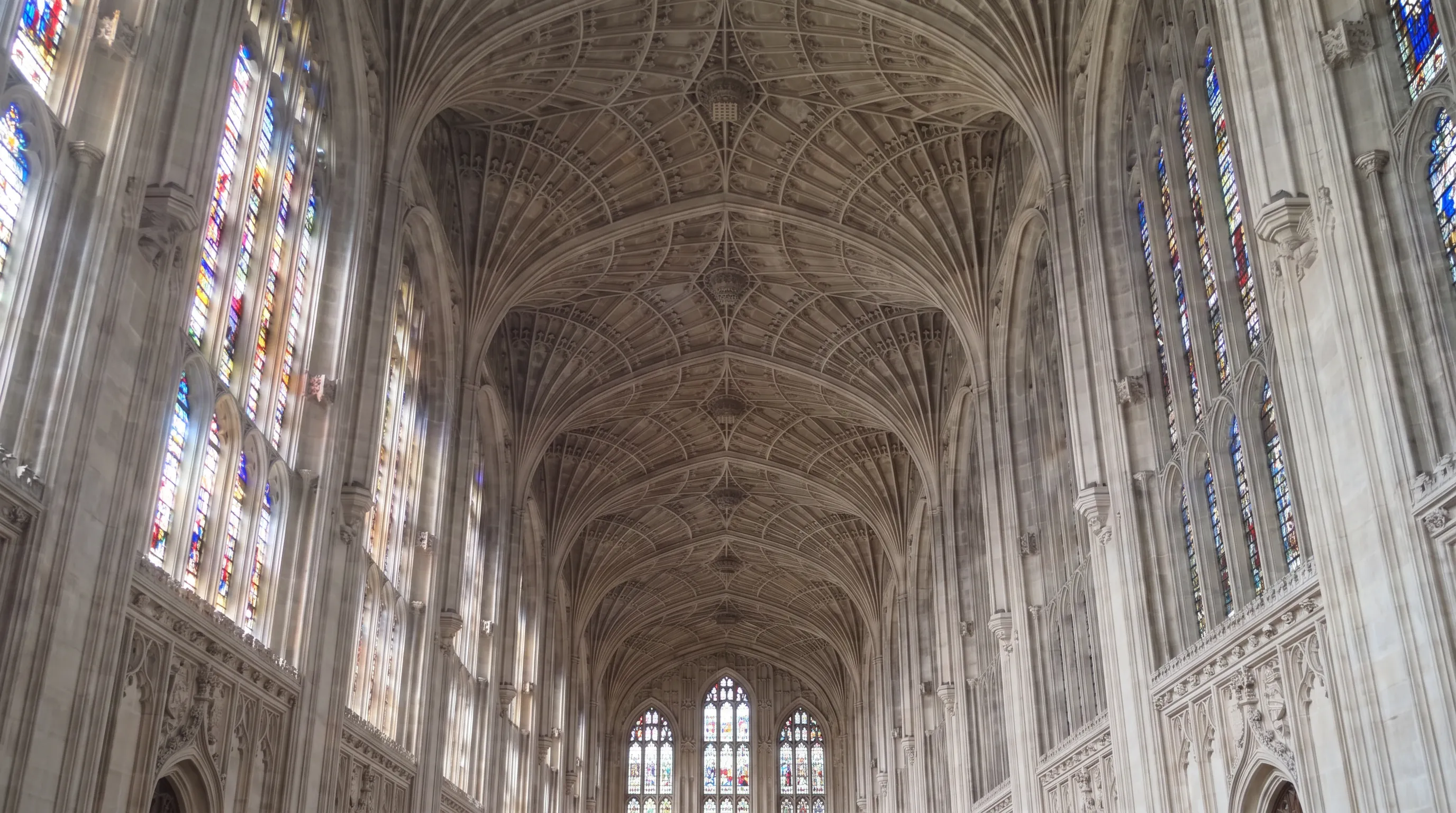
01 The experience
What to expect.
Why it matters
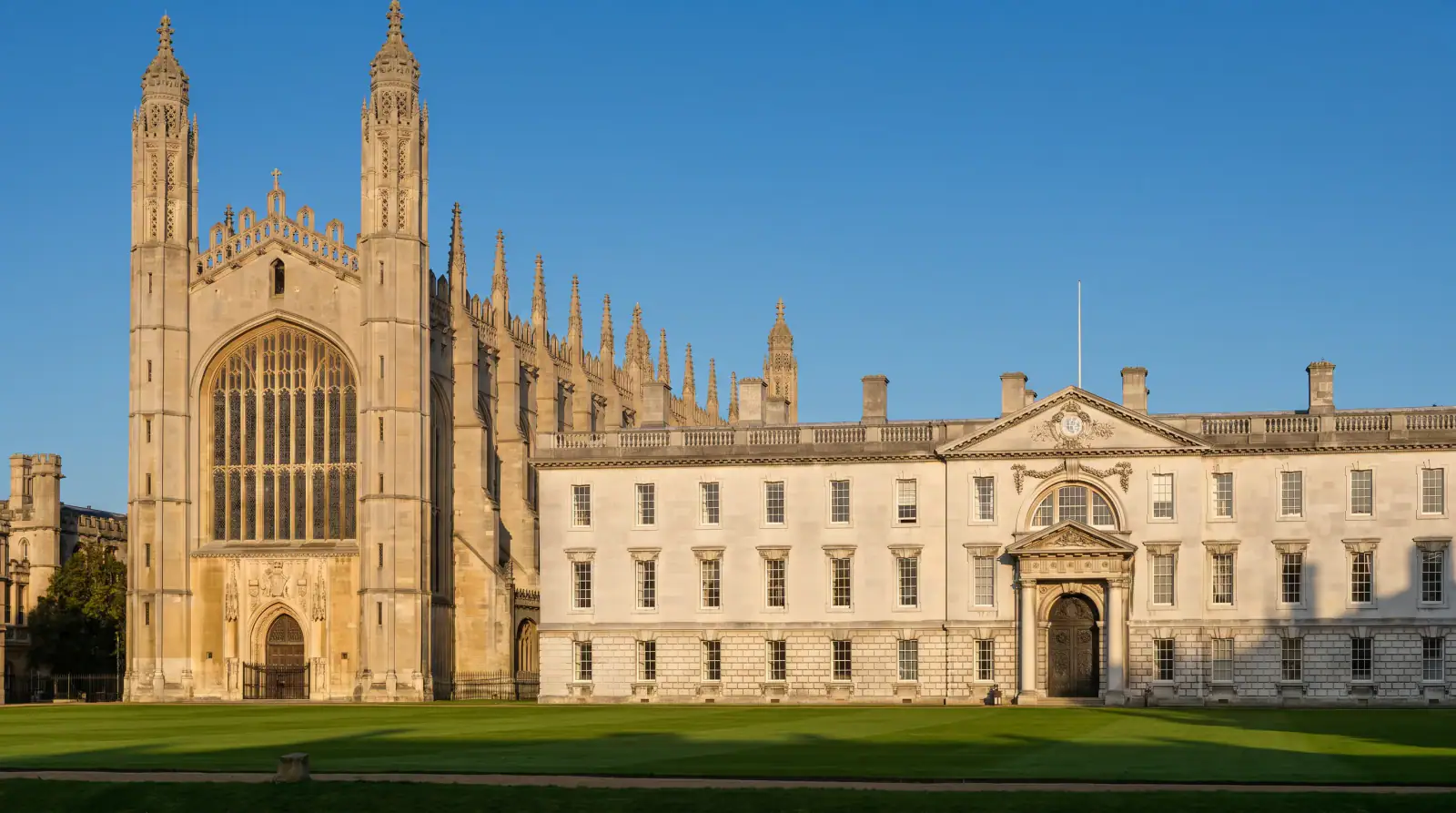
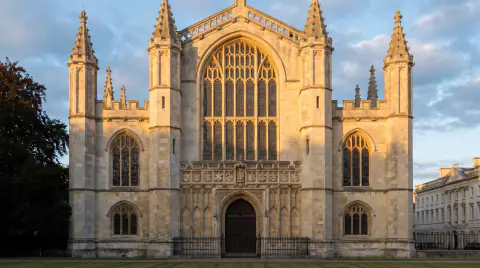
King’s Chapel is the architectural shorthand for Cambridge, but it is not simply a beautiful shell. It records a century of English politics. Henry VI intended a royal college paired with Eton; later kings inherited an expensive unfinished church; Henry VII’s money restarted work; Henry VIII’s reign supplied the screen, woodwork and much of the glazing. The fabric therefore joins Lancastrian ambition to Tudor completion without becoming a tidy story of uninterrupted progress.
The Chapel also remains a musical institution. Its choir and services make sound part of the building’s meaning. A sightseeing visit reveals the architecture and collections; a service reveals how the room is used. They are different experiences and should not be confused: services are worship, not free guided tours, and photography and recording are prohibited during them.
What visitors should notice
Begin with scale. The fan vault is not a repeated series of small compartments: its conoids spread from the walls and meet across the full width, producing a continuous pattern that pulls the eye down the length of the Chapel.
Then look lower. The carved screen divides ante-chapel from choir and carries the organ. Tudor heraldry in stone and wood marks the change of dynasty that completed the building. The stained glass should be read as a sequence rather than as isolated colour. At the east end, Rubens’s Adoration of the Magi is a later, Baroque intervention in a late-medieval interior.
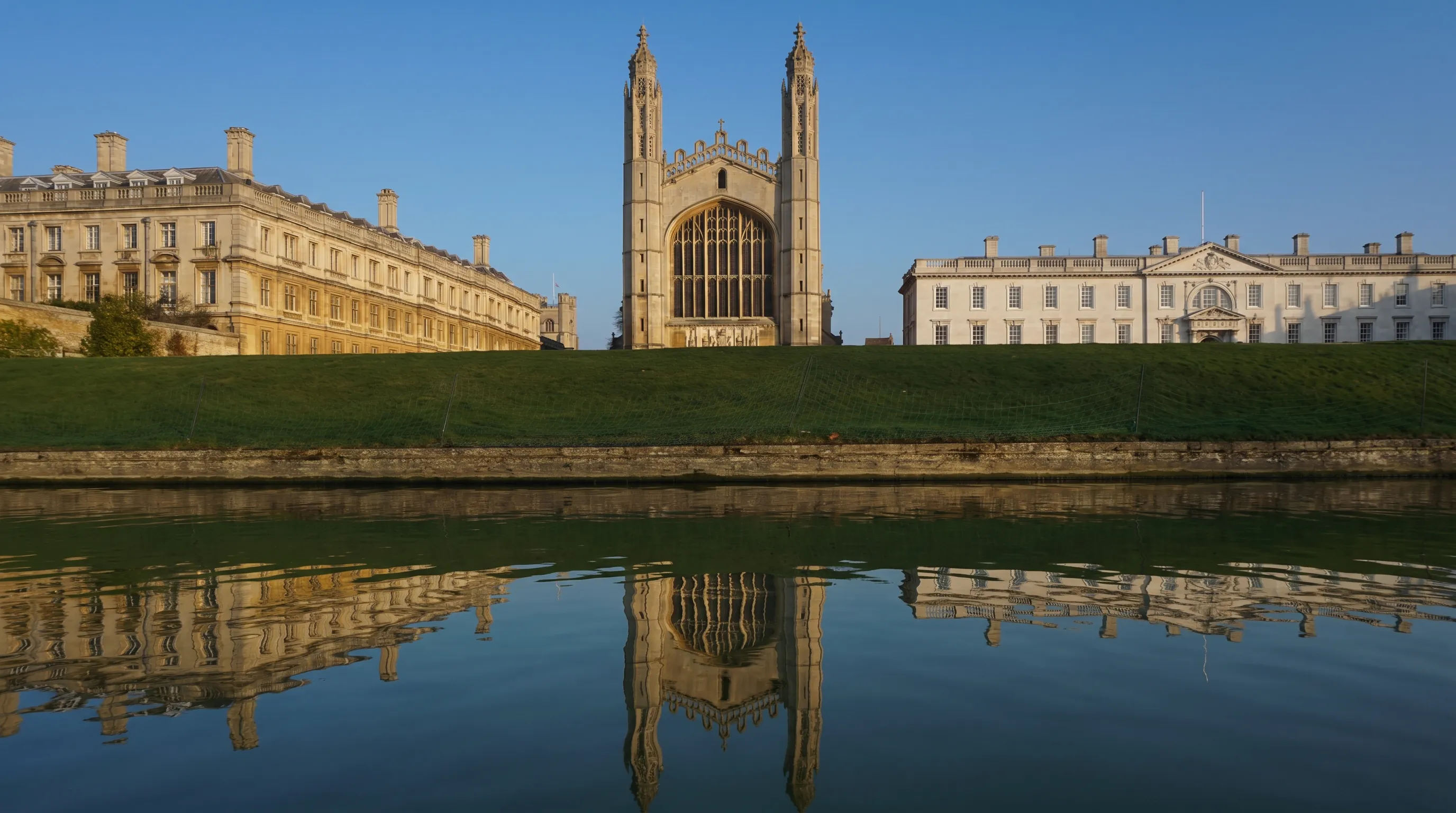
Outside, walk away from King’s Parade. The river view explains why the Chapel dominates every image of the Backs, while the wildflower meadow and lawns show that this is a large college landscape rather than a single building behind a street facade.
Who will enjoy it
Architecture, stained-glass and choral-music enthusiasts should treat it as essential. First-time visitors gain the clearest single introduction to the city’s royal and collegiate identity. It also works for visitors with limited time because the Chapel has a strong payoff within an hour and sits at the centre of the historic core.
Who may find it difficult
The admission price is high compared with Cambridge’s free museums. Families paying for several older children should compare the family tickets before buying. The Chapel can also feel crowded in summer, and the one-way rhythm of groups makes quiet looking harder around midday.
The main Chapel and grounds are step-free, but parts of the exhibition and side chapels have steps, narrow openings or low light. There are no public toilets in the College. Visitors who need a toilet, a quiet space or a fully step-free interpretive route should plan around those limitations rather than discover them after entry.
Visitor verdict
King’s earns its place in a first Cambridge day, provided the official calendar confirms the Chapel is open. Allow at least an hour, include the grounds, and do not treat a service as a substitute for sightseeing. The building is famous enough to attract rushed visitors; it rewards the opposite.
The story
History & character.
A royal college
Henry VI founded the College of Our Lady and Saint Nicholas in 1441, when he was nineteen. It was paired with his foundation at Eton: for centuries the two formed a direct educational route, and King’s initially admitted Eton scholars. The scale of the plan was royal rather than collegiate. Henry intended a great court and a chapel capable of expressing dynasty, worship and learning in one building.
Creating the site altered medieval Cambridge. The College’s own history records the purchase and clearance of houses, shops, lanes, wharves and a church between the high street and river. The process took three years. The result is still visible in the unusually large enclosure between King’s Parade and the Cam.
1446: the Chapel begins
The Chapel’s foundation stone was laid in 1446. Its plan was extraordinarily ambitious: a single, tall vessel with side chapels contained between powerful buttresses. The Wars of the Roses interrupted progress and Henry VI’s deposition removed the project’s patron. For long periods the building stood incomplete.
That interruption matters. The Chapel is often read as a single medieval masterpiece, but its century-long construction crossed dynasties and changing architectural practice. The building remained faithful to a late-Gothic concept while the political world around it changed completely.
Tudor completion
Work resumed on a large scale in 1508. Henry VII died the following year, but his will provided funds to continue. By 1512 the shell was finished and roofed in timber and lead. Further money from his executors paid for the vault, and the main structure was complete by 1515.
The fan vault is the decisive intervention. Its stone conoids spread in repeated fans across the width of the Chapel and join into a continuous ceiling. The effect is both structural and visual: the wall, vault and long axis read as one ordered system.
Henry VIII’s reign brought the screen, much of the woodwork and most of the glazing. Heraldic emblems throughout the Chapel record royal patronage. The building that began as Henry VI’s Lancastrian project was completed as a Tudor monument.
The stained glass
The great windows contain an unusually complete scheme of early-sixteenth-century glass. Their survival is central to the Chapel’s importance. The images combine biblical narratives with typological pairings and royal imagery; they were designed to be read across the building, not simply admired as coloured surfaces.
Survival did not mean immunity. Religious change, civil conflict, repair and environmental damage all affected the Chapel. Conservation is therefore a continuing responsibility rather than a completed historic episode.
The College after the Chapel
Henry VI’s proposed great court was never realised. For generations, the College’s daily life remained concentrated in Old Court. The contrast between the completed Chapel and the incomplete wider plan is one of the site’s most revealing facts: the building succeeded even when its intended urban composition did not.
In the eighteenth century James Gibbs designed the Fellows’ Building, completed as the surviving part of another unrealised court scheme. Its measured classical front is the architectural opposite of the Chapel, and the two now define the college lawn together.
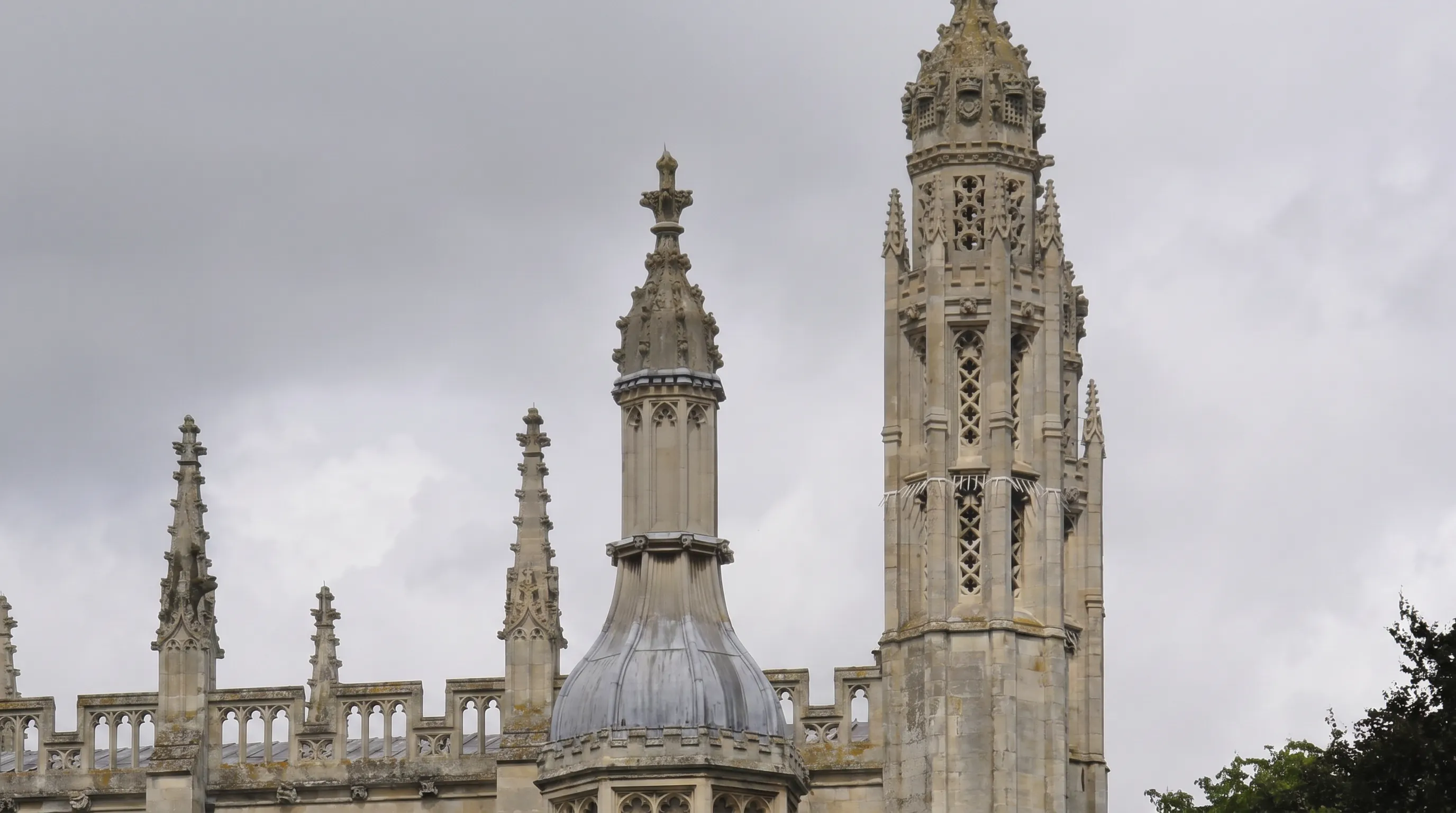
The nineteenth century reshaped the King’s Parade frontage. William Wilkins’s Gothic screen and gatehouse gave the College a formal public face, helping create the street scene visitors recognise today. These later works should not be treated as background: they explain how a medieval royal foundation became the composed college landscape now seen from the city.
Music and worship
Choral worship is not an attraction added to the Chapel; it is part of the reason the building exists. The choir’s modern international profile, particularly through the Festival of Nine Lessons and Carols, has made the sound of King’s as recognisable as its exterior.
The Festival began in 1918, in the aftermath of the First World War, and the Christmas Eve broadcast created a global audience. The service remains worship within a working chapel. That distinction governs visitor behaviour and access: tourist photography stops, the congregation remains for the service, and entry closes once worship begins.
King’s in modern intellectual life
The College’s later history includes figures whose work reaches far beyond Cambridge. John Maynard Keynes, Alan Turing, E. M. Forster, Rupert Brooke and others connect King’s with economics, computing, literature and the political history of the twentieth century. Their presence belongs to the College’s story, but the visitor route is not an alumni museum. Avoid turning every doorway into a celebrity anecdote.
A landscape still in use
The lawns, river, bridge and meadow remain a working college environment. Seasonal management, College events, examinations and services determine what visitors can enter. The tension between public icon and private institution is not a modern inconvenience; it is the condition under which the site continues to be a college rather than a preserved monument.
Look closer
Highlights and hidden details.
The objects, spaces and small observations that turn a visit into a memorable one.1. The fan vault
The largest fan-vaulted ceiling in the world and the visual argument for buying the ticket. Stand in the ante-chapel first and follow the repeated fans down the full length before looking at individual carving. Allow: 10 minutes.
2. The stained glass
An exceptionally complete early-sixteenth-century glazing scheme. Read it as a sequence, moving bay by bay, rather than searching only for famous details. Cloudy daylight often produces more even colour than bright sun. Allow: 15 minutes.
3. The screen and choir
The carved screen, organ and stalls mark the transition from public ante-chapel to the liturgical heart of the building. Tudor emblems make royal patronage visible at human height after the vastness of the vault. Allow: 10 minutes.
4. Rubens’s Adoration of the Magi
A large Baroque altarpiece introduced into a late-Gothic building. The contrast is the point: scale, colour and movement at the east end against the ordered stone and glass around it. Allow: 5 minutes.
5. The Chapel exhibition
Interpretation on the building, its glass and its history. Parts have steps and narrow doorways, so it is not a fully accessible route. Use it to resolve questions raised by the Chapel rather than as the first thing you see. Allow: 10–15 minutes.
6. Gibbs’ Building
James Gibbs’s eighteenth-century classical range faces the Chapel across the lawn. Stand between them and compare two different languages of institutional authority: vertical late Gothic and measured classicism. Allow: 5 minutes.
7. The river and the Backs
The west side turns the Chapel from street monument into landscape architecture. Look back from the river path and bridge; this is the composition punts reveal from the water. Allow: 10 minutes.
8. The Xu Zhimo memorial
A stone inscribed with lines by the Chinese poet Xu Zhimo sits in the garden beyond the river. Access involves a steep bridge, so it is not step-free. Its importance lies in the international cultural afterlife of Cambridge, not in architectural spectacle. Allow: 5 minutes.
Details worth slowing down for.
The building is a century-long project
Look for changes in heraldry and finish rather than assuming one medieval moment. The Chapel carries Lancastrian foundation and Tudor completion in the same room.
The vault changes with your position
From directly beneath a fan, the ribs radiate like a palm. From the centre line, they lock into a continuous net. Walk both views before photographing it.
The screen is political architecture
The screen is not only liturgical furniture. Its Tudor carving announces the dynasty that completed a Lancastrian project.
The windows are paired arguments
The glazing was designed around correspondences between scriptural scenes. Reading only the brightest panel loses the intellectual structure of the scheme.
The Chapel was meant to belong to a larger court
The royal great court was never built. The vast lawn around the Chapel is not evidence that the original plan was spacious and complete; it is partly evidence of what was not realised.
Gibbs stands in deliberate contrast
The Fellows’ Building is often treated as background. Frame it with the Chapel and the contrast becomes one of the strongest lessons on the site.
The best exterior is behind you
Visitors enter from the iconic street front and keep looking forward. The strongest explanation of the Chapel’s scale comes after crossing the lawn and looking back from the river.
Sound reveals the room
Even outside services, listen to footsteps and speech. The long reverberation explains why choral music behaves here as architecture rather than decoration.
Make it work
Plan the visit properly.
Current practical detail, kept separate from the story so it is easy to scan when you need it.At a glance
| Address | King’s Parade, Cambridge, CB2 1ST |
| Entry | Timed self-guided visit to Chapel and grounds |
| Weekday adult | £16 advance / £17 standard |
| Weekend adult | £18 |
| Typical visit | 60–90 minutes |
| Booking | Strongly recommended |
| Toilets | No public toilets in College |
| Dogs | Assistance dogs only |
Prices verified 28 July 2026. The College uses a dated opening calendar because services, concerts and College events regularly change access. Check it on the day of travel.
Booking and arrival
Advance booking is the safe choice. Visitor numbers are limited and walk-up tickets are not guaranteed. The Visitor Centre stands opposite the main gate on King’s Parade, but the historic shop building itself has one step; a portable ramp and staff assistance are available.
Arrive ten minutes before the booked slot. King’s Parade is busy with pedestrians and cycles, and luggage slows entry. The College asks groups to respect its role as a place of education and worship.
What the ticket covers
The normal self-guided visit includes the Chapel and the publicly open grounds. The route and available spaces can change. Treat the Chapel, Gibbs’ Building exterior, lawn, river and Backs view as the core visit; anything beyond them is a bonus rather than a promise.
Services
Public Chapel services are free. Evensong lasts up to an hour and Holy Communion about an hour and a quarter. Arrive early because no one is admitted after a service begins. Photography and recording are prohibited, phones should be off, and visitors should be prepared to remain for the act of worship.
Best time to visit
The first sightseeing slots are usually calmest. Late afternoon can give better light across the west-facing landscape, but it is more vulnerable to service closures. Summer weekends are busiest. Exam periods and term events can restrict College access, while December brings exceptional demand around carol services.
How long to allow
Allow 60 minutes for the Chapel and a deliberate walk through the grounds. Use 90 minutes if you want to read the exhibition and sit with the stained glass. A rushed 30-minute visit is possible but poor value.
Facilities and practicalities
There are no public toilets in the College. Use city-centre facilities before entry. Food and drink are not permitted in the grounds except water. There is no visitor café inside the route; Market Square and Bene’t Street are close.
Photography is allowed during sightseeing without flash, tripods or disruption. It is not allowed during services. Stay off lawns unless signs explicitly permit access and do not enter private areas.
Getting there
The College is in the pedestrian-heavy historic centre. It is about a 20–25-minute walk from Cambridge railway station. Local buses stop around Emmanuel Street and Drummer Street; the final approach is on foot. There is no visitor parking. Park & Ride is more practical than central driving.
Weather
The Chapel is an excellent wet-weather visit, but the grounds are part of the ticket’s value. In heavy rain, allow time for the interior and accept that the river landscape will be secondary. The compressed-gravel path by the river can be less comfortable for wheeled mobility aids after bad weather.
Recheck before travelling
- Dated opening calendar and last entry
- Current self-guided prices
- Chapel or grounds closures
- Service times
- Exhibition access
- Any restrictions during exams or College events
Visit your way
Access and family planning.
Summary
There is level access from King’s Parade to the College and step-free access to the main Chapel and grounds. The principal visit is feasible for many wheelchair users, but the complete interpretive route is not: side chapels and parts of the exhibition have steps, narrow openings and low light.
Arrival
The narrowest point on the main College path is published as 1600mm. The main Chapel entrance has a permanent ramp with handrail; the south door is 1000mm wide and staff can open it fully.
Inside the Chapel
Main aisles are wide and seating is available. A ramp links the ante-chapel and choir area. Side chapels include steep or uneven steps. The Memorial Chapel has four uneven steps.
The exhibition is constrained: rooms involve two or three steps and openings published at 610–670mm. Visitors unable to use these spaces can still experience the main Chapel, but should not be told the whole attraction is step-free.
Grounds
Wide, fairly even paved paths serve the main grounds. The riverside route is largely compressed gravel. The bridge toward the Xu Zhimo garden is steep.
Sensory conditions
Some Chapel and exhibition areas have low lighting. Services, concerts and crowded summer periods can produce sustained sound and limited opportunity to leave. A quiet sightseeing slot near opening is the safer choice for visitors who need lower sensory load.
Assistance and contact
Staff are available during visitor hours and the College publishes emergency evacuation procedures for disabled visitors. Contact Visitor Services in advance for specific access needs: +44 (0)1223 331212.
Toilets and carers
There are no public toilets in College. Confirm the current concession and carer arrangements when booking, because prices and eligibility can change.
Not independently verified
Hearing-loop provision, seating dimensions, current accessible toilet options nearest the gate, and arrangements for mobility scooters were not captured from the published guide. Contact the College before a journey that depends on them.
Family verdict
Best for children who can engage with one spectacular room and a riverside walk; less successful for toddlers who need free movement. The family tickets soften the cost, but this remains a premium visit beside Cambridge’s free museums.
What works
- The fan vault has immediate scale and pattern.
- The grounds break up the interior visit.
- The river, punts and meadow provide movement and recognisable views.
- A 60-minute route is realistic for school-age children.
- The story of several kings finishing one building is easy to follow.
Friction points
- No public toilets in College.
- Food is not permitted in the grounds apart from water.
- Children need to stay off lawns and respect quiet areas.
- Parts of the exhibition are narrow and stepped.
- A service requires stillness and is not a casual family drop-in.
A child-friendly route
Start by counting the fans in the vault, find Tudor badges around the screen, choose one stained-glass scene, then cross the grounds to watch punts. Keep the historical explanation to three ideas: a king founded it, wars delayed it, and later kings finished it.
Suggested ages
Six and over for a conventional visit. Younger children can enjoy the grounds, but the Chapel offers little hands-on interpretation and behaviour expectations are appropriately high in a working place of worship.
Self-guided walk
Explore beyond the venue.
A practical, step-by-step route connecting this experience with more of Cambridge.Tour summary
A 75-minute route from King’s Parade through the Chapel and grounds to the river, returning to the city through the main gate. The exact visitor path may change; follow College signs where they differ.
Stop 1 — Read the street front
Stand opposite the gate on King’s Parade. Separate the nineteenth-century screen and gatehouse from the older Chapel behind. Time: 5 minutes.
Stop 2 — Enter the ante-chapel
Pause immediately inside. Look the full length before approaching any object. The first impression should be volume, vault and glass. Time: 5 minutes.
Stop 3 — Walk beneath the fan vault
Move along the centre and then close to one wall. Compare the continuous pattern with the individual fans rising from their supports. Time: 10 minutes.
Stop 4 — Read one bay of glass
Choose one group of windows and follow its narrative rather than scanning every panel. Use the Chapel interpretation to identify the sequence. Time: 10 minutes.
Stop 5 — The screen and choir
Look for Tudor emblems and consider how the screen controls both sight and sound. Do not enter any area marked private. Time: 10 minutes.
Stop 6 — The east end
Stand far enough back to see Rubens’s altarpiece within the Gothic architecture. The contrast is more informative than a close view alone. Time: 5 minutes.
Stop 7 — Use the exhibition selectively
Answer two questions: who paid for the completion, and how did the glazing survive? Skip inaccessible rooms rather than treating them as essential. Time: 10 minutes.
Stop 8 — Cross the lawn
Outside, face Gibbs’ Building, then turn back to the Chapel. The space between them is the best architecture lesson on the site. Time: 5 minutes.
Stop 9 — The river view
Walk to the Cam and look back. Watch punts pass through the landscape you have just crossed. This is the point at which the Chapel becomes part of the Backs. Time: 10 minutes. Photo stop.
Stop 10 — Return via the main gate
On the way back, compare the open west landscape with the hard street edge on King’s Parade. Continue to Market Square for toilets, food and the tower view from Great St Mary’s. Time: 5 minutes.
Make a record
Photograph it thoughtfully.
Visual proposition
The task is to show the Chapel as both building and landscape. A frontal King’s Parade photograph records the icon; the better story combines stone, lawn, river and the contrasting Gibbs’ Building.
Best exterior angles
King’s Parade: strongest for the public facade and scale against street life. Early morning reduces crowds.
The lawn: place Gibbs’ Building and the Chapel in one frame to show the site’s architectural range.
The river: photograph back toward the Chapel with bridge, meadow or water as foreground. Late light is strongest.
From a punt: use a faster shutter than expected; the boat and water both move.
Inside the Chapel
Centre-line symmetry is tempting but overused. Shoot the fan vault obliquely to show how ribs rise from the wall. Use window reveals as frames and expose for the glass rather than lifting every shadow.
No flash, tripods or disruptive equipment. Photography and recording are prohibited during services. Respect worshippers and avoid identifiable close-ups without consent.
Difficult conditions
The Chapel has extreme contrast between windows and stone. Phones handle this better than a single unbracketed camera exposure. Low light around the exhibition requires steady technique, but do not block narrow passages.
Commercial work
Commercial photography and filming require advance permission. Drone use should not be assumed anywhere over the College or central Cambridge.
Around here
Make more of the area.
Good to know
Questions, answered.
01Is King’s College Cambridge worth visiting?
Yes for the Chapel, stained glass and Backs setting. It is expensive compared with Cambridge’s free museums, so check that the Chapel is open before paying.
02Is King’s College Chapel a cathedral?
No. It is the chapel of King’s College and a functioning place of worship.
03Who founded King’s College?
Henry VI in 1441.
04When was the Chapel begun?
Work began in 1446, five years after the College’s foundation.
05When was the Chapel completed?
The shell was roofed by 1512 and the main structure was complete by 1515; glazing and fittings continued under Henry VIII.
06What is special about the ceiling?
It is the world’s largest fan-vaulted ceiling.
07Can I visit without booking?
Walk-up tickets may be available, but advance booking is recommended because capacity is limited.
08How much is admission?
In July 2026, weekday adult tickets were £16 in advance or £17 standard, with different weekend and concession prices. Confirm current prices before travel.
09How long should I allow?
Allow 60–90 minutes for the Chapel and grounds.
10Are Chapel services free?
Yes. Public services are free and open to visitors, subject to capacity and the published calendar.
11Can I attend Evensong as a tourist?
Yes, if you attend respectfully as part of the congregation and arrive before the service begins.
12Can I take photographs during a service?
No. Photography and recording are prohibited during services.
13Can I photograph during a sightseeing visit?
Generally yes, without flash or tripods and subject to current signs.
14Is King’s wheelchair accessible?
The main Chapel and grounds have step-free access, but parts of the exhibition and some side chapels do not.
15Are there public toilets?
No public toilets are available in College.
16Is there a café?
Not on the standard visitor route. Market Square and Bene’t Street are close.
17Can I bring food?
Food is not permitted in the grounds; water is allowed.
18Can children visit?
Yes. Children aged five and over require tickets; family tickets are available.
19Can I bring a buggy?
The main route is step-free, but confirm current visitor guidance for large buggies and avoid the narrow exhibition rooms.
20Are dogs allowed?
Only assistance dogs.
21When is it quietest?
Usually near the first sightseeing slot on a weekday outside peak summer and College event periods.
22Does the College close during exams?
Access can be restricted for examinations and College business. Use the dated opening calendar.
23What can I see besides the Chapel?
Publicly open grounds, Gibbs’ Building exterior, the lawn, river and Backs view.
24Is Rubens’s painting still there?
Yes, The Adoration of the Magi hangs at the east end.
25What is the Xu Zhimo stone?
A memorial inscribed with lines by the Chinese poet Xu Zhimo in the garden beyond the river.
26Is the Xu Zhimo garden step-free?
The published access guide describes the connecting bridge as steep.
27How far is King’s from Cambridge station?
Roughly a 20–25-minute walk through the city centre.
28Is there parking?
There is no visitor car park. Use Park & Ride or public transport.
29Can I see the Chapel from a punt?
Yes. It is the dominant landmark on the central Backs route.
30What should I combine it with?
Great St Mary’s tower, Cambridge Market, the Fitzwilliam Museum or a punt along the Backs all make coherent pairings.
Before you visit
Useful links.
Venue and visitor information
Method
Research was completed 28 July 2026 using King’s College’s own visitor, history, access and worship pages. The official Visit Cambridge site was used only for city context. No third-party ticket reseller or AI-generated source was used.
Sources
| ID | Source | Used for | Retrieved |
|---|---|---|---|
| S01 | King’s — Visiting King’s | Address, visitor structure and contact | 2026-07-28 |
| S02 | King’s — Opening Times and Tickets | Prices, advance booking and dated calendar | 2026-07-28 |
| S03 | King’s — History of the Chapel | Foundation, site clearance, construction and Tudor completion | 2026-07-28 |
| S04 | King’s — Accessibility Guide | Step-free route, widths, steps, surfaces, seating and contact | 2026-07-28 |
| S05 | King’s — Attend Chapel Services | Free worship, duration, arrival and photography rules | 2026-07-28 |
| S06 | King’s — Group Information | Behaviour, food, lawns, flash and tripods | 2026-07-28 |
| S07 | Visit Cambridge — Things to See and Do | City-level significance and nearby context | 2026-07-28 |
Conflict ledger
Ticket presentation
The official ticket page and official shop present weekday and weekend prices in slightly different layouts. The bundle records the weekday advance and standard figures from the College page and tells readers to confirm the dated booking screen rather than pretending one price applies every day.
Opening pattern
No conflict: the College intentionally publishes a dated calendar. Any secondary source that supplies generic daily hours is less reliable and has not been used.
Superlatives
The bundle repeats only the College’s documented “world’s largest fan vaulted ceiling” claim. Broader claims such as “greatest chapel in Europe” are editorial judgements and are not stated as facts.
Opening hours, prices, programmes and access arrangements can change. Confirm critical details with the venue.
Continue exploring / Cambridge
More things to do
in Cambridge
Explore Cambridge activities, sights and places to eat. Compare the time to allow, costs and booking details, then save your favourites to your itinerary.
 01Culture & historyFitzwilliam MuseumExplore experience →
 02Culture & historyKettle's YardExplore experience →
 03Food & drinkFort St GeorgeExplore experience →
 04Food & drinkThe Blue Ball, GrantchesterExplore experience →
 05Food & drinkThe Cambridge BlueExplore experience →
 06Food & drinkThe Castle InnExplore experience →
 07Food & drinkThe Devonshire ArmsExplore experience →
 08Food & drinkThe EagleExplore experience →
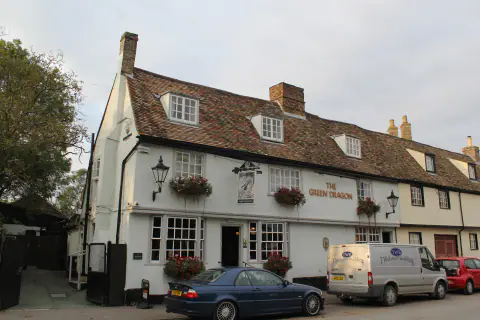 09Food & drinkThe Green DragonExplore experience →
 10Food & drinkThe HaymakersExplore experience →
 11Food & drinkThe Kingston ArmsExplore experience →
 12Food & drinkThe Live & Let LiveExplore experience →
 13Food & drinkThe MaypoleExplore experience →
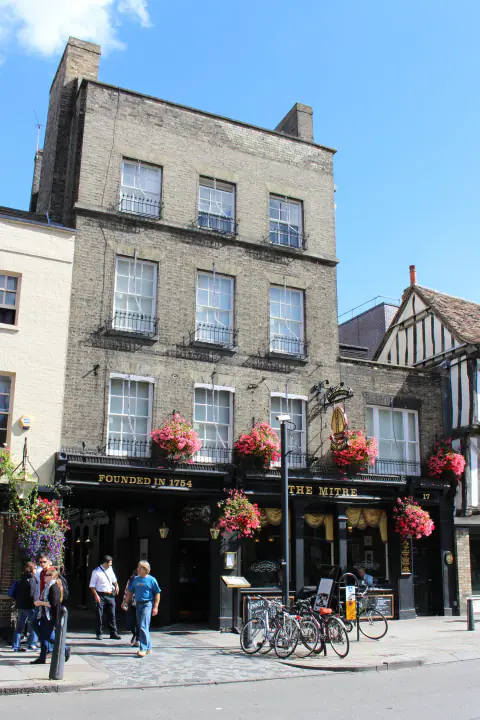 14Food & drinkThe MitreExplore experience →
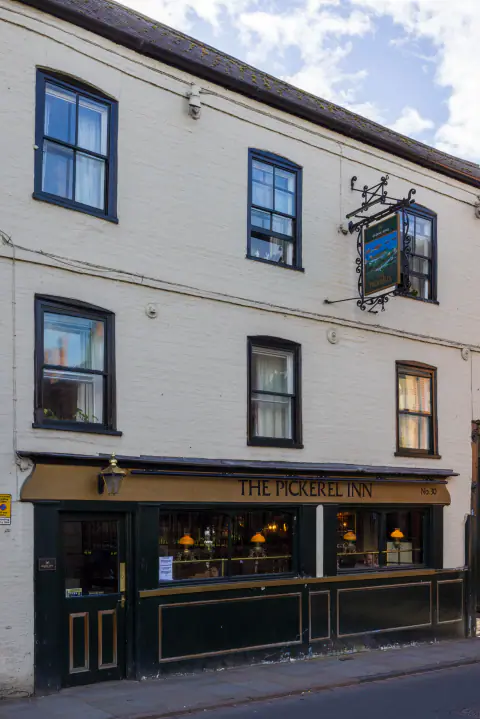 15Food & drinkThe Pickerel InnExplore experience →
 16Food & drinkThe Queen’s Head, NewtonExplore experience →
 17Food & drinkThe Royal StandardExplore experience →
 18Food & drinkThe St RadegundExplore experience →
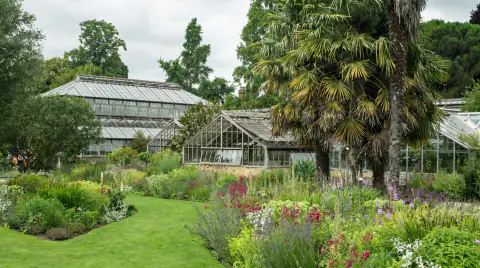 19OutdoorsCambridge University Botanic GardenExplore experience →
 20Water activitiesPunting the BacksExplore experience →
 35CollegesAll the collegesEvery Cambridge collegeOpen the college guide →Food & drink / a storyThe six oldest pubsWalk the timeline →Plan / Itinerary builderBuild your Cambridge dayStart planning →