In depth
The Green Dragon
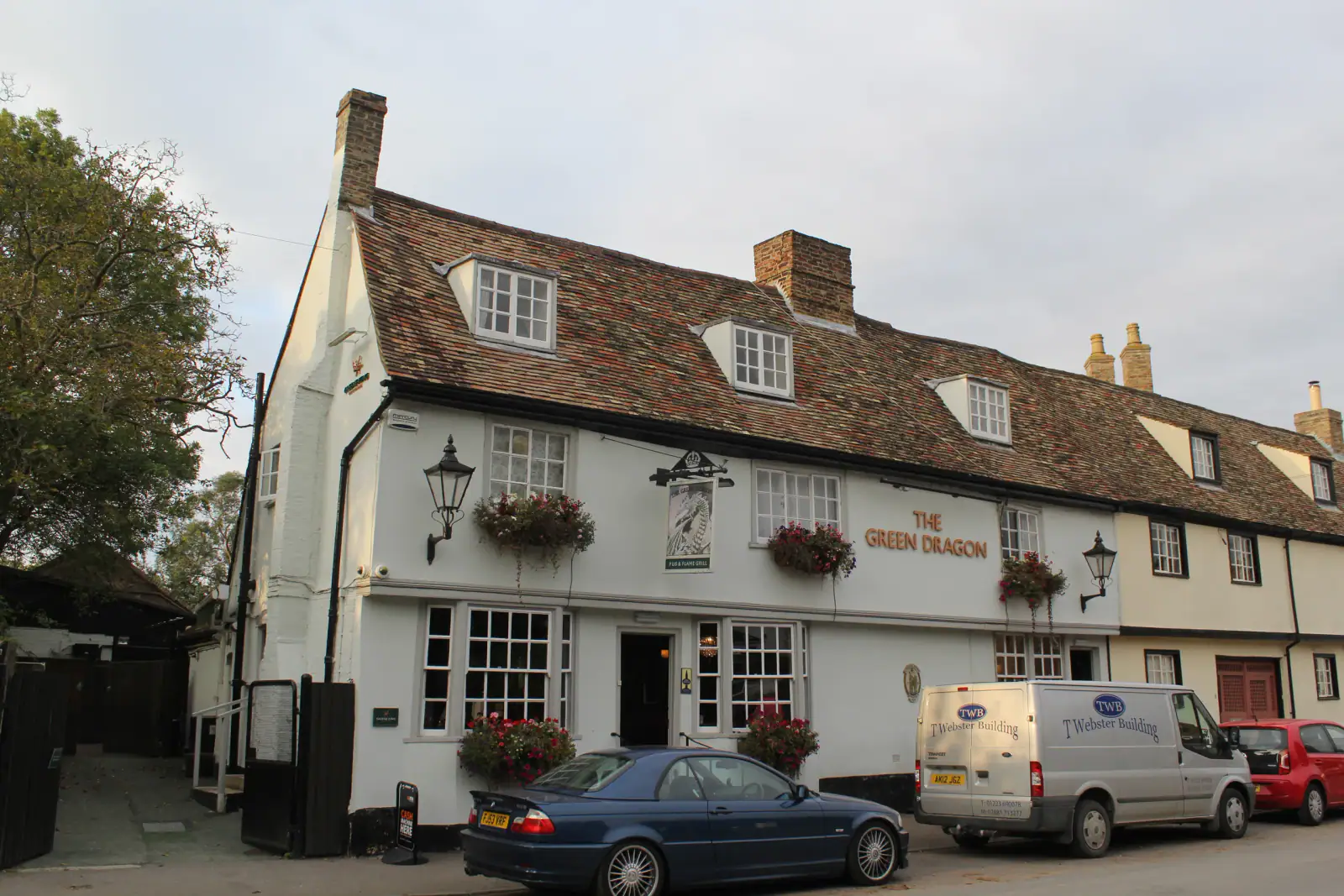
A 16th-century timber-framed riverside inn at Chesterton — the oldest surviving pub building in Cambridge, built to serve traders bound for Stourbridge Fair.
Story · Visit · Route · Links
Choose your depth
Essentials or more detail?
See visiting essentials, or read more about the history and places nearby.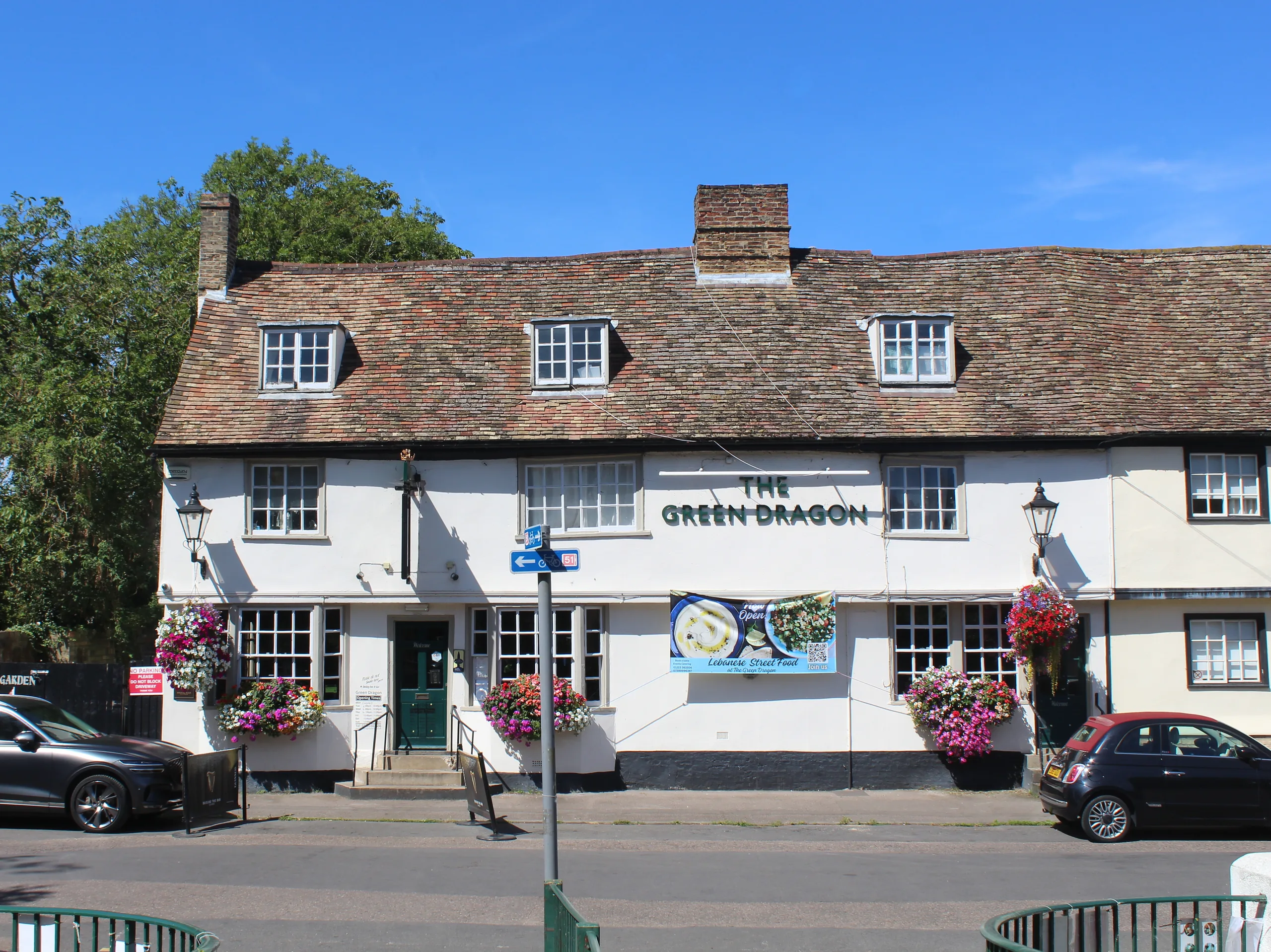
01 The experience
What to expect.
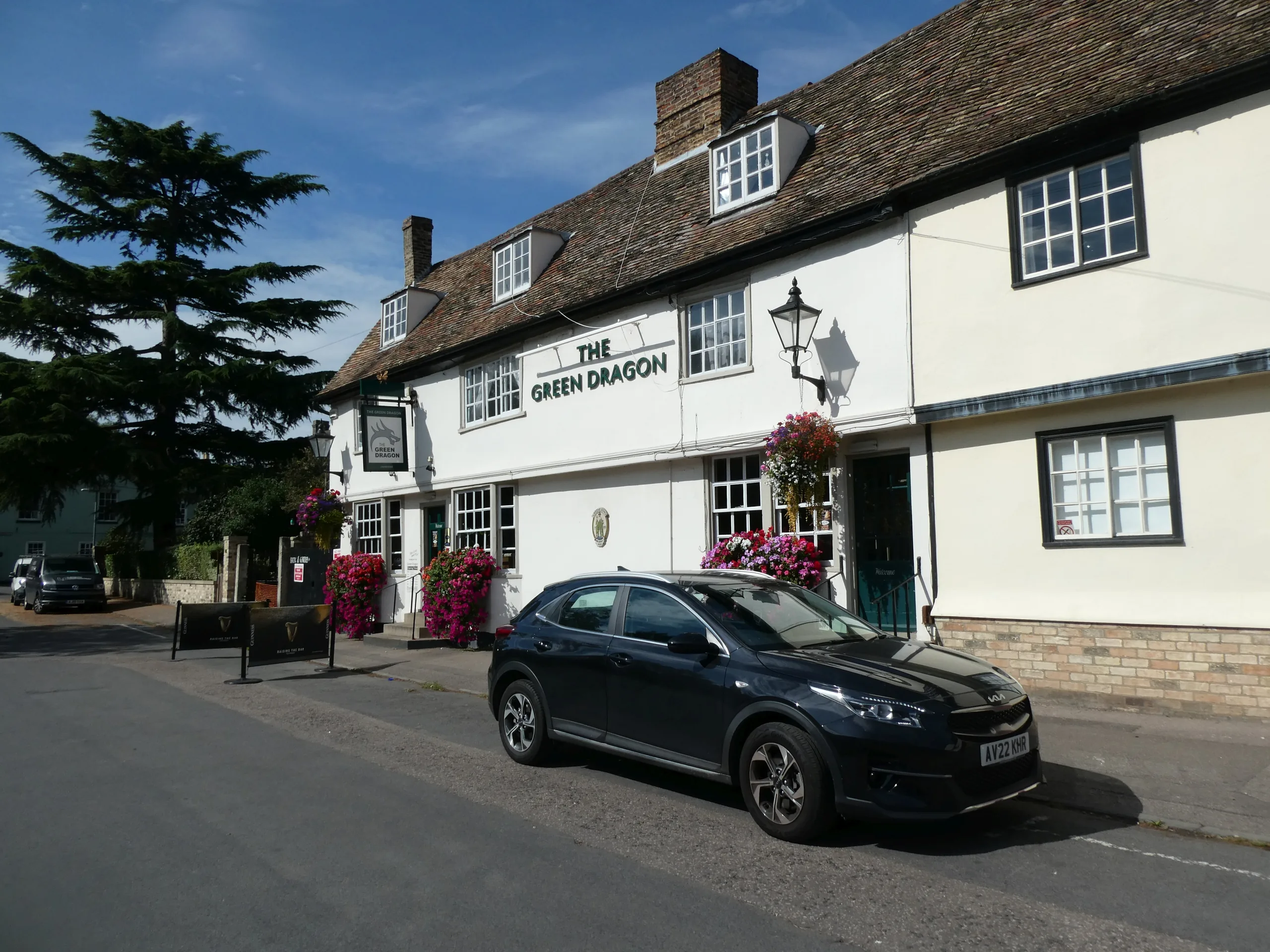
The Green Dragon is a timber-framed 16th-century inn on Water Street in Chesterton, on the north bank of the Cam about a mile downstream of central Cambridge. It is, by the fabric of the building, the oldest surviving pub in Cambridge — a range of four tenements described by the Royal Commission on Historical Monuments in 1959 as "built in the 16th century", with plastered timber-framed walls and tiled roofs. It is Grade II listed and run by Greene King.
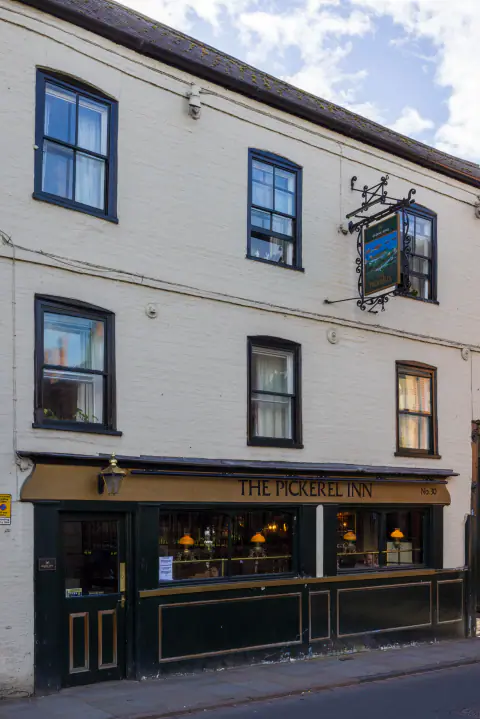
Almost nobody calls it Cambridge's oldest pub. That title usually goes to the Pickerel on Magdalene Street, which has the longer continuous licence. The distinction matters and is worth stating plainly: the Pickerel is generally the oldest licensed house, the Green Dragon is the oldest pub building. Both claims are defensible; they are answering different questions.
Why it matters
This is the pub that shows you what Cambridge looked like before the colleges dominated it. Chesterton was a separate riverside village, and the Green Dragon stood here serving traders travelling to Stourbridge Fair — for centuries one of the largest fairs in Europe, held on the fields just downstream — probably long before the present building went up. It is a low, white, crooked survivor from a world of river trade and ferry crossings, and it has never been smartened into something else. Where the Eagle trades on famous stories, the Green Dragon simply is what it always was.
What visitors should notice
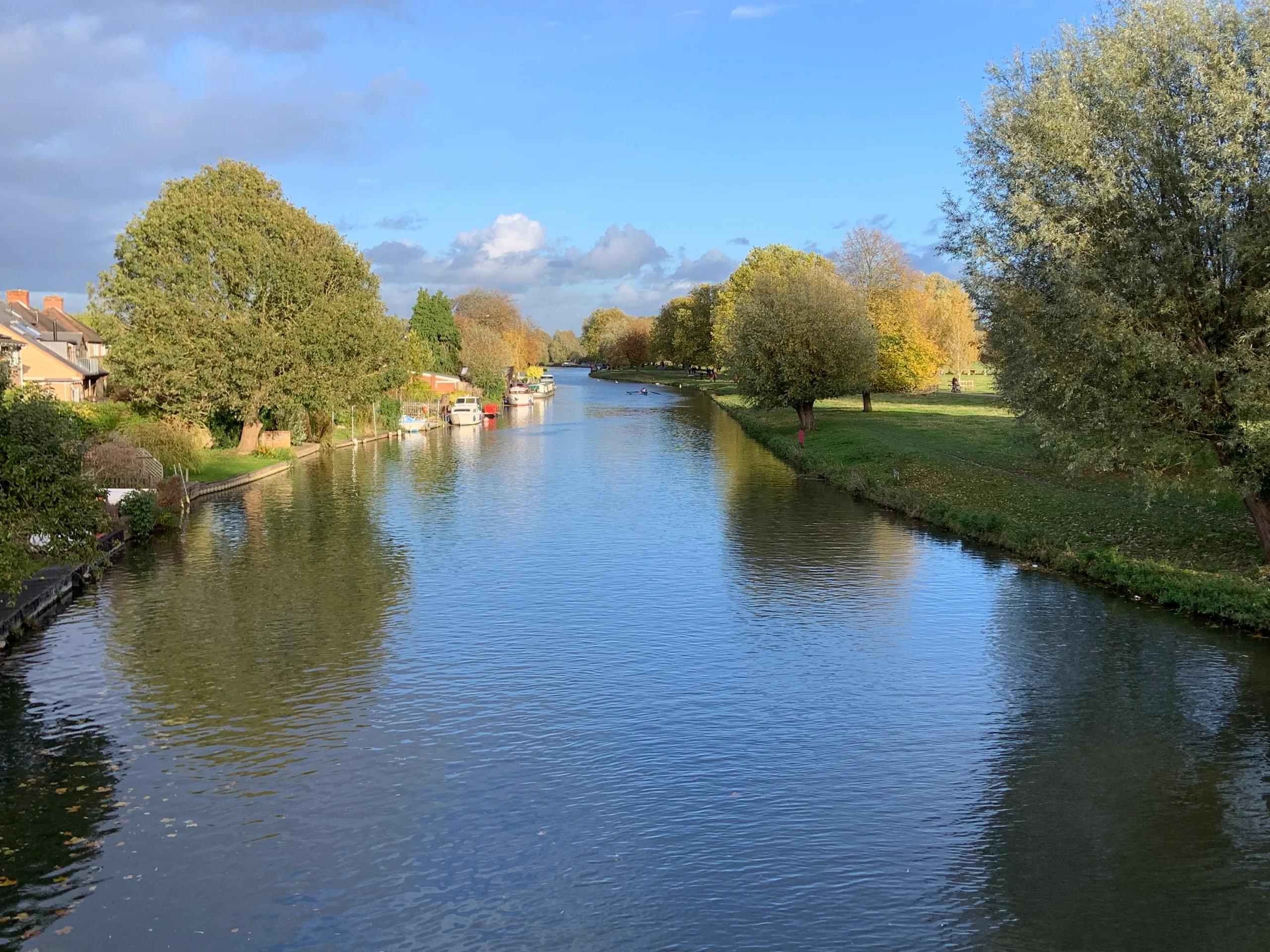
The building is the exhibit. It is long and low, timber-framed and plastered, with tiled roofs and two wings running back from the road, and inside it keeps the small rooms, low ceilings and heavy beams that a 16th-century range implies — you duck. Outside, the riverside setting is the other half of the appeal: the Cam runs immediately behind, and the pub has a garden and moorings on the water. The Green Dragon Bridge, a footbridge across the river beside the pub, replaced the ferry that ran here for centuries and is the obvious way to arrive on foot from the Cambridge side.
Who will enjoy it
Anyone who wants the genuinely old Cambridge rather than the famous one. It rewards visitors interested in vernacular timber-framed building, in river and village history, and anyone happy to walk twenty-five minutes along the towpath for a pint at the end. It is also a good family and warm-weather pub, because the riverside garden gives children and dogs somewhere to be.
Who may find it difficult
It is not in the centre — expect a 25–30 minute walk from the city, or a bus. The interior is a genuine 16th-century one: low beams, uneven floors, small rooms and tight doorways, which makes it awkward for wheelchair users and anyone tall (see the accessibility file). It is a food-led Greene King pub rather than a real-ale destination, so drinkers hunting an unusual beer list should moderate expectations. And because it is a riverside pub with a garden, it is very busy on warm weekends and correspondingly quiet and dark in midwinter.
Visitor verdict
Worth the walk, and the walk is part of it. Follow the towpath out along the Cam past the college boathouses, cross at the Green Dragon Bridge, and you arrive at the oldest pub building in Cambridge having seen the river city on the way. Half an hour inside, or an afternoon in the garden. It will not tell you its own story — there is no plaque and little interpretation — so bring the history with you and the low crooked rooms suddenly read as what they are: the last village inn of a place the city eventually swallowed.
The story
History & character.
The village before the city
Chesterton was not part of Cambridge. It was a riverside village downstream of the town, with its own church, its own fields and — crucially — its own relationship with the River Cam, which was the main artery for goods moving between Cambridge and King's Lynn and the sea. The Green Dragon belongs to that village world rather than to the university city, and it is the oldest surviving building on Water Street.
The building: a 16th-century timber range
The most authoritative description is the Royal Commission on Historical Monuments survey of Cambridge, published in 1959, which records the Green Dragon as a "range of four tenements … Nos. 7, 9, 11 Water Street", with "plastered timber-framed walls and tile-covered roofs". It was "built in the 16th century, with two wings on the back", with later additions beside and at the ends of the wings. The Commission noted the building specifically as "of note as a timber-framed range of the 16th century" — that is, it was worth recording for its fabric, not merely for its use.
That gives the Green Dragon the strongest claim of any Cambridge pub to be the oldest surviving pub building. It is Grade II listed. What it does not automatically give it is the title of oldest pub, because a building can be older than its licence: the four tenements were not necessarily an inn from the day they were built, and the Pickerel on Magdalene Street is generally credited with the longer unbroken record as a licensed house.
Stourbridge Fair and the river trade
The reason a substantial inn stood in a village downstream of Cambridge is Stourbridge Fair. Held annually on the fields by the Cam just beyond Chesterton, it was for centuries among the largest fairs in Europe, drawing merchants, chapmen and goods from across England and the Continent; it is generally taken as one of the models for the Vanity Fair of Bunyan's Pilgrim's Progress. Traders travelling to and from the fair needed lodging, stabling and drink, and the riverside inns of Chesterton supplied them.
Edward Ward's pamphlet on Stourbridge Fair, published in 1700, gives a flavour of that trade — writing of "the Black Bull, where the Country Chapmen generally lodge that come to the Fair, for the sake of rare strong humming Ale, for which 'tis famous; over which they get Drunk, Quarrel, and make Bargains." Ward is describing a neighbouring house rather than the Green Dragon itself, but the world he describes is exactly the one the Green Dragon was built to serve.
The ferry and the bridge
For most of its life the Green Dragon sat beside a ferry. Several ferries crossed the Cam between Cambridge and Chesterton, and they were the only practical way across for villagers, drinkers and traders alike. The Green Dragon ferry appears in 19th-century photographs of the pub, and the crossing here was busy enough to sustain a regular service. The present Green Dragon Bridge, the footbridge beside the pub, eventually replaced it — part of the same wave of bridge-building that ended Cambridge's river ferries in the early 20th century. The pub's setting today, with a footbridge landing beside it, is a direct inheritance of the crossing that made its trade.
Publicans and the Victorian pub
Trade directories and census records give a run of named publicans through the 19th century — among them Alfred Carter (Post Office Directory, 1869), Jacob Holmes (Kelly's, 1879 and 1883) and George Hall (Kelly's, 1892) — with the pub appearing consistently as an established Chesterton house. By this period Chesterton was being drawn into Cambridge: the city expanded north and east across the river through the 19th century, and the village lost its separateness. The Green Dragon survived the transition, as the surrounding streets filled in around it.
Into the modern era
The pub is now operated by Greene King, the brewery that dominates the Cambridge pub trade, and trades as a riverside food-led house with a garden and moorings on the Cam. Its interior retains the small rooms and low beams of the 16th-century range; its exterior, long, low and white, is much as the Royal Commission described it. Its position, once the reason for its existence — beside a ferry, on the road to the fair — is now its principal charm, the end point of one of the best short walks out of Cambridge.
Look closer
Highlights and hidden details.
The objects, spaces and small observations that turn a visit into a memorable one.1. The 16th-century timber range itself
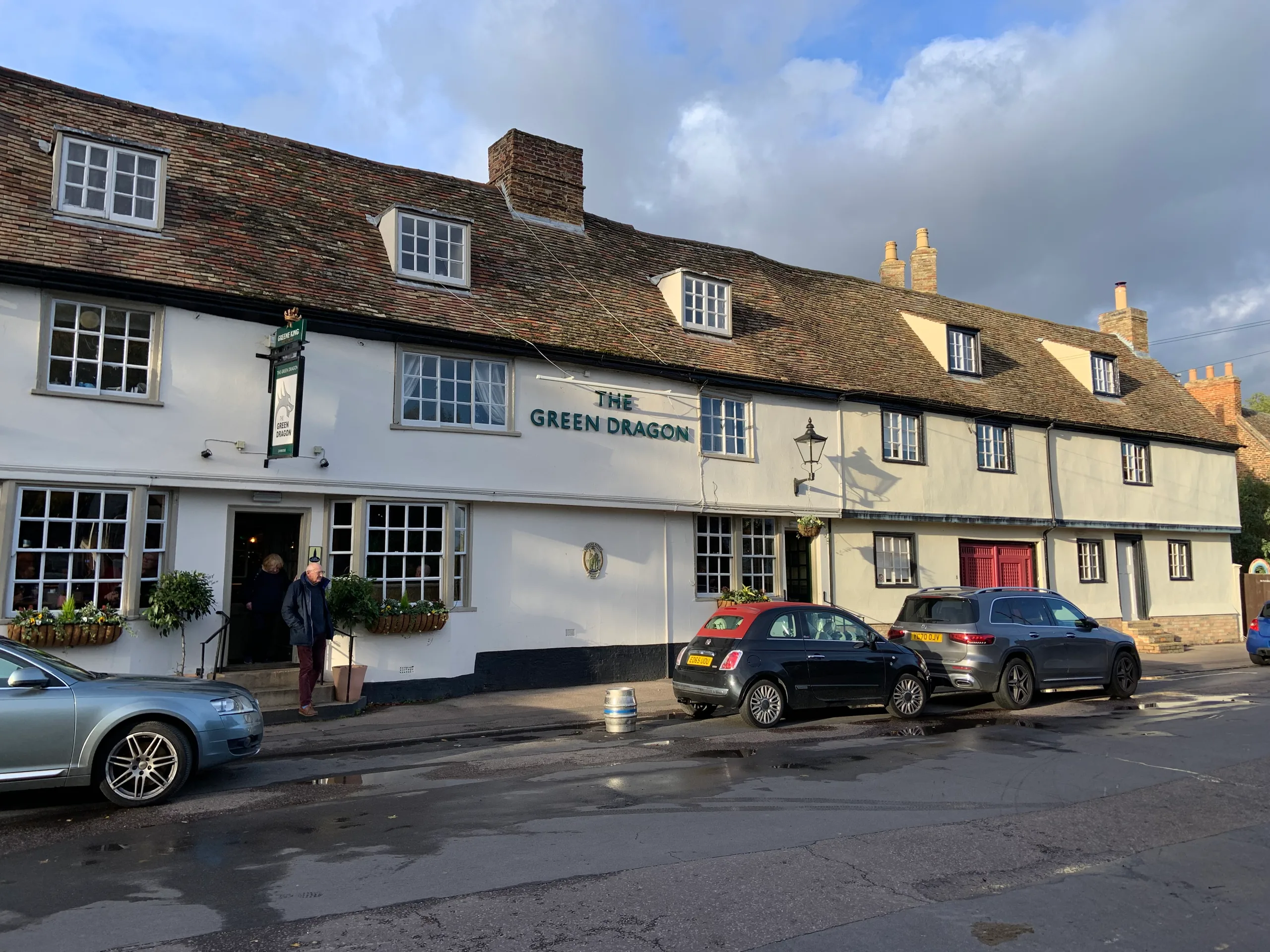
The building is the reason to come. The Royal Commission's 1959 survey recorded it as a range of four tenements with plastered timber-framed walls and tiled roofs, built in the 16th century with two wings running back — and noted it specifically as "of note as a timber-framed range of the 16th century". Stand across Water Street and read it as a whole: long, low, white, visibly crooked, with the roofline dipping where the range has settled over four centuries. It is the oldest surviving pub building in Cambridge, and it looks it. Historical importance: very high. Visitor experience: best appreciated from the street before you go in. Photography: strong from the opposite pavement. Time required: 5 minutes.
2. The low rooms and beams inside
Inside, the 16th-century range shows in the plan rather than in any single feature: small interlocking rooms, low ceilings, heavy timbers and doorways that make tall visitors duck. This is what a pre-industrial village inn actually felt like — not a grand coaching courtyard but a series of domestic-scale rooms warmed by fires. Go on a quiet afternoon and you can read the structure; on a busy Saturday you will only see people. Historical importance: high. Visitor experience: much better when quiet. Photography: dim; see the photography file. Time required: 10–15 minutes.
3. The riverside garden and moorings
The Cam runs immediately behind the pub, and the garden and moorings on the water are the modern reason most people come. In warm weather it is one of the best riverside pub gardens near Cambridge, with boats tying up alongside. It also explains the pub's whole existence: this was a river-trade house long before it was a place to sit in the sun. Historical importance: medium (the setting is the history). Visitor experience: excellent in warm weather, the main draw. Time required: as long as you like.
4. The Green Dragon Bridge and the lost ferry
The footbridge beside the pub replaced a ferry that crossed here for centuries — one of several linking Cambridge and Chesterton, and busy enough to sustain a regular service. Walk out onto the bridge and look back at the pub: you are standing on the line of the crossing that gave the Green Dragon its trade. It is a small thing, and it is the single detail that makes the pub's position make sense. Historical importance: high. Visitor experience: a two-minute detour that adds the context. Photography: the classic view of the pub is from the bridge. Time required: 5 minutes.
5. The towpath walk from Cambridge
The approach is part of the visit, and arguably the best part. The route out along the Cam from Jesus Green and Midsummer Common passes the college boathouses and the stretch of river where Cambridge rowing happens, then leaves the city behind. Arriving at a 16th-century inn on foot along the water is how its customers arrived for four hundred years. Historical importance: medium. Visitor experience: the reason to choose this pub over a central one. Time required: 25–35 minutes each way.
6. Chesterton as a former village
Look at the street rather than just the pub. Water Street and the lanes around it still read as a riverside village — the church, the older cottages, the scale of the buildings — swallowed by Cambridge as the city spread north and east in the 19th century. The Green Dragon is the oldest thing in it, and the best surviving evidence of what the village was. Historical importance: medium. Visitor experience: a short wander before or after your drink. Time required: 10 minutes.
Details worth slowing down for.
It is the oldest pub building, not the oldest pub
Almost every "oldest pub in Cambridge" conversation names the Pickerel. The Green Dragon rarely comes up, and yet by fabric it is older: the Royal Commission dated the range to the 16th century, while the Pickerel's frontage is early 19th century with a C16–C17 rear wing. The Pickerel's claim rests on the continuity of its licence, the Green Dragon's on its timbers. Knowing which question is being answered is the whole trick, and it is why two pubs can both be honestly called "the oldest".
Four cottages, one pub
The Royal Commission recorded the Green Dragon not as a single inn but as a "range of four tenements … Nos. 7, 9, 11 Water Street", with two wings at the back and later additions. What feels inside like a warren of small rooms is exactly that: several separate dwellings that were eventually knocked into one house. The awkward plan is not quaintness, it is the original property boundaries still asserting themselves.
It was built for a fair, not for a village
A village of Chesterton's size would not, on its own, have supported a substantial inn. Stourbridge Fair would. Held on the fields by the Cam just downstream, it was for centuries one of the largest fairs in Europe — big enough to be taken as a model for the Vanity Fair of Bunyan's Pilgrim's Progress — and it brought merchants and chapmen past this door every year. The Green Dragon was built to take their money.
The Black Bull is not this pub
Edward Ward's 1700 pamphlet on Stourbridge Fair gives the best surviving description of the trade — chapmen who "lodge that come to the Fair, for the sake of rare strong humming Ale … over which they get Drunk, Quarrel, and make Bargains." It is frequently quoted around Chesterton's pubs, but Ward is writing about the Black Bull, a different house. The line describes the Green Dragon's world, not the Green Dragon.
The bridge is a replacement for a boat
The footbridge beside the pub looks like ordinary infrastructure. It is the successor to a ferry that ran here for generations — Chesterton had several river crossings, and photographs survive of the Green Dragon ferry working in the 19th century. The pub did not choose a spot near a bridge; the bridge was eventually built where the pub's customers had always crossed.
A named succession of Victorian landlords
The trade directories give a run of publicans that shows an established, ordinary working house through the 19th century — Alfred Carter (1869), Jacob Holmes (1879 and 1883), George Hall (1892) among them. It is unglamorous detail, and that is the point: while central Cambridge pubs were hosting elections and scientists, the Green Dragon was simply a village local, which is why so little was written about it and why so much of it survives.
No plaque, no interpretation
Unlike the Eagle, the Green Dragon does not tell you what it is. There is no blue plaque, no framed history, nothing to read. A visitor who arrives without the context sees a pleasant old riverside pub and leaves not knowing they have been inside the oldest pub building in Cambridge. Bring the story with you — this bundle exists partly because the building will not supply it.
Make it work
Plan the visit properly.
Current practical detail, kept separate from the story so it is easy to scan when you need it.Break your riverside walk with a drink or a meal. Check current pub and kitchen hours before setting out, particularly in winter and on weekday afternoons.
How to use it
The Green Dragon is a working pub, not a paid attraction. No admission, no ticket, no booking needed to look around — walk in. Tables for food can be booked through Greene King. Most visitors come as the end point of a riverside walk, so treat it as a destination pub rather than a museum stop.
Opening hours
Check the pub’s Greene King listing or telephone for current opening and kitchen hours, particularly in winter and on weekday afternoons.
Address and contact
- Address: 5 Water Street, Chesterton, Cambridge, CB4 1NZ
- Operator: Greene King
- Listing: Grade II (Historic England)
Admission and booking
Free to enter. Book a table for meals at busy times, especially warm weekends when the riverside garden fills. Walk-in is normal otherwise.
Best time to visit
Warm weather, late morning or early afternoon, when the garden and the moorings are the point and the walk out is pleasant. For the building rather than the garden, a quiet weekday afternoon in the shoulder seasons lets you actually see the low rooms and beams. Midwinter is atmospheric but the riverside setting loses much of its appeal in the dark and wet.
How long to allow
Half an hour inside for the building; an afternoon if you are eating in the garden. Allow 25–35 minutes each way for the towpath walk from central Cambridge, which is genuinely part of the experience.
Getting there
- On foot (recommended): roughly 25–35 minutes from the city centre. Follow the Cam north-east past Jesus Green and Midsummer Common and the college boathouses, continue along the towpath, and cross the river at the Green Dragon Bridge — the footbridge lands beside the pub.
- By bicycle: easy and quick along the same riverside route; cycle parking nearby.
- By bus: services run to Chesterton from the city centre; alight on Chesterton High Street and walk down to Water Street.
- By car: possible but unnecessary and awkward — Chesterton's streets are residential and narrow, with limited parking. Use the river.
- By boat: there are moorings on the Cam at the pub.
Facilities
- Food menu (Greene King pub fare) and a standard Greene King beer range
- Riverside garden and terrace
- Moorings on the Cam
- Toilets on site
- Card payment accepted
Families, dogs, weather
Good for families in warm weather because the garden gives children room; the interior is small, low and tight, so indoors with a pushchair is awkward. Well-behaved dogs are generally welcome in bar areas and the garden — confirm on arrival. The pub works in the rain (small warm rooms, open fire in season) but the walk out does not, so in bad weather either take the bus or choose a different pub.
Crowd levels
Busy on warm weekends and summer evenings, when the garden is the draw. Quiet on weekday afternoons and through the winter — which is when the 16th-century interior is best appreciated.
Visit your way
Access and family planning.
The pub is about a mile from the city centre. Contact the pub before travelling to confirm the entrance, seating and toilet arrangements you need.
The honest summary
This is a 16th-century timber-framed building with small rooms, low beams, narrow doorways and uneven floors. It is the least accessible of the six pubs in the collection, and anyone with significant mobility needs should plan around the garden rather than the interior.
Step-free access
Step-free entry is not confirmed. The historic interior has small rooms and potentially raised thresholds. Telephone before travelling to discuss doorway widths, level changes and a suitable table.
Wheelchairs and mobility
Small rooms, closely spaced furniture and tight doorways can make the interior difficult to navigate. Ask whether a suitable route and table are available in the riverside garden or terrace; a level approach is not confirmed.
Toilets
There are toilets on site. Provision, location and dimensions of any accessible WC are not confirmed. Confirm by telephone if this matters.
Getting there — the real access question
For many visitors the journey is a bigger barrier than the building. The riverside towpath route is 25–35 minutes from the centre, unlit in places and unsurfaced in parts; it is pleasant on foot or by bicycle but not a guaranteed smooth surface for a wheelchair. Buses run to Chesterton High Street, from which Water Street is a short walk downhill — generally the easier approach for anyone who cannot manage the towpath. Parking in Chesterton is limited and the streets are narrow.
Sensory considerations
- Noise: Loud in the garden on warm weekends; the small indoor rooms concentrate sound when full. Weekday afternoons are calm.
- Lighting: The interior is genuinely dark — small windows, low ceilings, dark timber. Difficult for anyone with low vision; the garden is much brighter.
- Interpretation: There is none — no plaques, no large print, no tactile material. The history is not available on site in any form.
The practical recommendation
Come in good weather and take the bus if the towpath would be difficult. Phone ahead to confirm step-free access and toilet facilities, and ask for a suitable table.
The honest picture
Of the six pubs in Above Guide's Cambridge historic-pub collection, the Green Dragon is the most family-workable — not because it does anything for children, but because it has a riverside garden, and a garden solves most of the problems a pub creates for a family. Children are welcome when eating, under the usual licensing rules for under-18s in bars. There is no play area, trail or activity.
Ages and what they'll get from it
- Under 5s: Fine in the garden in good weather, with boats and water to watch. Indoors is cramped and the low beams and small rooms make a pushchair a nuisance. Keep them away from the unfenced river edge.
- 5–10s: The walk is the win. Boats, the footbridge, ducks and the rowing on the way out give the outing shape, and the pub is the reward at the end. The building's age means little at this stage unless you make a game of spotting how crooked it is.
- 11–16s: Old enough for the actual story — a village inn built to serve one of the biggest fairs in medieval Europe, on a river that was the motorway of its day. Pair it with the ferry-and-bridge history and it becomes a real local-history outing rather than a pub lunch.
Educational value
Moderate but genuine, and different from the city-centre pubs. This is vernacular building, river trade and the story of a village absorbed by a growing city — useful for local-history and geography topics, and easy to see with your own eyes because the evidence is the street itself.
Practical friction points
- The river is open. There are moorings and an unfenced bank. Small children need watching, which is the main caveat for this pub.
- The walk: 25–35 minutes each way from the centre. Fine for most school-age children, too far for a tired toddler — take the bus one way if needed.
- Indoors is tight. Low beams, small rooms, narrow doorways; awkward with a pushchair, especially when busy.
- Warm weekends are packed. The garden that makes it family-friendly is also what fills it; arrive early or book.
The efficient family version
Walk out along the towpath from Jesus Green, spotting boathouses and rowers, cross at the Green Dragon Bridge, look back at the pub from the bridge and explain that a ferry used to run where you are standing. Eat in the garden. Walk back, or catch a bus from Chesterton if legs have given out. Two hours, one good walk, one genuinely old building.
Self-guided walk
Explore beyond the venue.
A practical, step-by-step route connecting this experience with more of Cambridge.Stop 1 — Jesus Green (start)
Begin at the northern edge of the city on Jesus Green, the long tree-lined green between the centre and the river. Pick up the riverside path with the Cam on your right and walk downstream (north-east). You are leaving the collegiate city almost immediately — which is the point of this walk. 10 minutes to the next stop.
Stop 2 — Midsummer Common and Fort St George
Continue onto Midsummer Common, open grazed common land where Midsummer Fair and Strawberry Fair are still held. Standing on it is the Fort St George, a 16th-century riverside inn that until the 1830s sat on an island in the river. Stop for a look, or a drink if you are making a day of the historic pubs. This is common-and-fair Cambridge, older than the university's dominance of the place. Photo stop: the pub with the common behind. 10–15 minutes.
Stop 3 — The college boathouses
Carry on along the towpath past the line of college boathouses. This stretch is where Cambridge rowing happens; on a training morning, or during the bumps races, it is one of the liveliest scenes in the city. The boathouses also mark the point where the river stops being ornamental and starts being working water — which is what it was for the Green Dragon's entire trading life. Photo stop: crews and boathouses across the water. 10 minutes.
Stop 4 — The Green Dragon Bridge
Continue downstream until the footbridge at Chesterton. Cross it, then stop in the middle and look back. From here you see the Green Dragon as its customers approached it for four centuries — long, low and white on the bank, with the water in front. You are standing on the line of the ferry that the bridge replaced. Photo stop: the definitive view of the pub. 5 minutes.
Stop 5 — The Green Dragon, Water Street
Come off the bridge to the pub. Look at the elevation from the opposite pavement first: the dipping roofline and visible settling are four hundred years of subsidence in a timber frame, and the junctions where the four original tenements meet are still readable. Then go in. Inside, notice the plan — small interlocking rooms rather than one bar, because this was four cottages before it was a pub. Sit in the garden if the weather allows. This is the destination. 45–60 minutes with a drink or a meal.
Stop 6 — Old Chesterton, then back
Before leaving, walk two minutes up the lanes behind the pub. Water Street and its neighbours still read as a riverside village that Cambridge grew around rather than built — modest cottages, a village scale, the medieval parish church of St Andrew's a little further on. Then return by the towpath the way you came, or catch a bus from Chesterton High Street if you have had enough walking. 15 minutes, plus 25–35 minutes back.
Notes
Flat throughout and free apart from food and drink. Do it in daylight — the towpath is unlit in stretches. In poor weather, take a bus out to Chesterton and save the walk for a better day; the pub is worth it either way, but the towpath is half the experience.
Make a record
Photograph it thoughtfully.
The strongest compositions
- The pub from the Green Dragon Bridge. The definitive shot. From the footbridge you get the long low white range, the river in the foreground and the moorings alongside — the building and the reason it exists in one frame. Best in late-afternoon light.
- The full range from across Water Street. Stand on the opposite pavement and shoot the elevation straight on to show the dipping roofline and the crooked settling of a 400-year-old timber frame. This is the architectural record shot.
- The riverside garden with boats. In summer, with craft tied up and the garden in use, this is the pub as most visitors experience it.
- The towpath approach. The pub appearing ahead across the water as you walk out from Cambridge — a scene-setting frame that gives the place its context.
Light and timing
The pub faces the water, so the river side takes the better light through the afternoon and into the evening; the Water Street elevation is better in the morning. Summer evenings are the strongest all-round conditions, with low light on the white plaster and activity on the river. Winter gives you an empty garden and a bare, honest view of the building — good for architecture, poor for atmosphere.
Shooting the interior
Hard. The rooms are small and genuinely dark, with low ceilings and dark timber absorbing what light there is. Use the windows: shoot towards or across them rather than away, brace against a wall or table for a slow hand-held exposure, and accept warm ambient colour rather than fighting it. Avoid flash — it flattens the beams and annoys drinkers in a room where you are close to everyone. A quiet weekday afternoon is the only realistic time to photograph inside.
Details worth a frame
The dipping roofline; the junctions where the four original tenements meet; exposed beams and door heads; the pub sign; the moorings and mooring rings; the bridge itself, which is the successor to the ferry.
Etiquette and permissions
A working village pub with a strong local trade — keep other customers out of frame or ask first, and be particularly considerate in the small indoor rooms where there is no distance to work with. Personal photography of the building and garden is unrestricted; commercial shoots and any drone work would need Greene King's permission, arranged in advance. Note that the surrounding buildings are private homes: photograph the pub, not the neighbours' windows.
Around here
Make more of the area.
Good to know
Questions, answered.
01Where is the Green Dragon?
On Water Street in Chesterton, on the north bank of the River Cam, about a mile downstream of central Cambridge (CB4 1NZ).
02Is the Green Dragon the oldest pub in Cambridge?
It has the oldest surviving pub building — a timber-framed range dated to the 16th century by the Royal Commission on Historical Monuments. The title of oldest pub is usually given to the Pickerel Inn, which has the longer record as a continuously licensed house. Both claims are honest; they answer different questions.
03How old is the building?
16th century. The Royal Commission's 1959 survey of Cambridge recorded it as a range of four tenements with plastered timber-framed walls and tiled roofs, built in the 16th century with two wings at the back.
04Why is it called a range of four tenements?
Because it was originally four separate dwellings, later knocked together into one pub. That is why the interior is a series of small interlocking rooms rather than one open bar.
05Why was such an old inn built out in a village?
Stourbridge Fair. Held on the fields by the Cam just downstream, it was for centuries one of the largest fairs in Europe, and traders travelling to it needed lodging, stabling and drink. Chesterton's riverside inns served that trade.
06Was the Green Dragon mentioned in Edward Ward's 1700 pamphlet?
No — Ward's much-quoted description of chapmen and "rare strong humming Ale" refers to the Black Bull, a different house. It describes the Green Dragon's world but not the Green Dragon itself.
07Is the pub listed?
Yes, Grade II.
08Who runs it?
Greene King.
09Is there a ferry?
Not any more. A ferry crossed here for centuries and was busy enough to run a regular service; the Green Dragon Bridge, the footbridge beside the pub, eventually replaced it.
10How do I get there from Cambridge?
The best way is on foot or by bicycle along the riverside towpath — 25–35 minutes from the centre, past Midsummer Common and the college boathouses, crossing at the Green Dragon Bridge. Buses also run to Chesterton.
11Can I get there by boat?
Yes — there are moorings on the Cam at the pub.
12Is the walk worth it?
It is arguably the best part of the visit: common land, the boathouses and the working river, ending at a 16th-century inn. Do it in daylight and reasonable weather.
13What are the opening hours?
Check the pub’s Greene King listing or telephone for current opening and kitchen hours before travelling.
14Does it serve food?
Yes — a standard Greene King pub menu. Kitchen hours are shorter than bar hours; confirm on the day.
15Is there a garden?
Yes, a riverside garden and terrace with moorings alongside. It is the main attraction in warm weather.
16Is it good for families?
The garden makes it the most family-workable of Cambridge's historic pubs, but the river is unfenced and needs watching with small children, and the interior is cramped for pushchairs.
17Are dogs allowed?
Well-behaved dogs are generally welcome in the bar areas and garden. Confirm on arrival.
18Is it wheelchair accessible?
Step-free entry, internal routes and an accessible toilet are not confirmed. Telephone before travelling to ask about the entrance, seating and access to the riverside garden.
19Is there anything to read about the history on site?
No. There is no plaque and no interpretation — one reason to arrive already knowing what the building is.
20When is it quietest?
Weekday afternoons and the winter months. Warm weekends are very busy because of the garden.
21When is the building best appreciated?
A quiet weekday afternoon, when you can actually see the low rooms and beams rather than a crowd.
22What is the best view of the pub?
From the Green Dragon Bridge, looking back — the long white range with the river in front.
23Is Chesterton part of Cambridge?
It is now, but it was a separate riverside village, absorbed as the city expanded north and east during the 19th century. The Green Dragon is the oldest survivor of that village.
24Can I combine it with another historic pub?
Yes — Fort St George on Midsummer Common is on the same towpath and is the other 16th-century riverside inn in the collection. The Pickerel, on Magdalene Street, is the pub the Green Dragon's "oldest" claim is measured against.
25Is there parking?
Limited. Chesterton's streets are narrow and residential; the river or the bus is the better approach.
26Does it have real ale?
It carries the standard Greene King range. Drinkers looking for an extensive independent beer list should set expectations accordingly — this is a historic building first.
27Is it haunted / does it have famous stories?
Come for the timber-framed building, riverside garden and Chesterton setting rather than famous ghost stories.
28Who were its landlords?
Trade directories record a succession of ordinary Victorian publicans — Alfred Carter (1869), Jacob Holmes (1879, 1883) and George Hall (1892) among them.
29How long should I spend there?
Half an hour for the building; an afternoon if you are eating in the garden, plus the walk each way.
30Is it near Stourbridge Fair's site?
Yes, broadly — the fair was held on fields by the Cam just downstream of Chesterton, which is why an inn of this size stood here at all.
31What should I look for that most people miss?
The dipping roofline and the junctions where the four original cottages meet, and the fact that the footbridge you crossed replaced a ferry. Both explain the building better than anything inside it.
Before you visit
Useful links.
Venue and visitor information
Every substantive factual claim in this bundle traces to a source below. Prioritised: the Royal Commission on Historical Monuments survey (via the Museum of Cambridge's Capturing Cambridge project), Historic England, and local history. Verified 29 July 2026.
Primary sources
- *Royal Commission on Historical Monuments (England), Survey of Cambridge (1959)*, quoted in full by Capturing Cambridge. The core architectural evidence: "range of four tenements, the 'Green Dragon' inn, Nos. 7, 9, 11 Water Street ….. has plastered timber-framed walls and tile-covered roofs. It was built in the 16th century, with two wings on the back; additions have since been made beside and on the ends of the wings. The building is of note as a timber-framed range of the 16th century." Used for: the 16th-century date; the four-tenement plan; wall and roof construction; the two rear wings and later additions.
- Capturing Cambridge (Museum of Cambridge) — 5–11 Water Street, Chesterton: Green Dragon. Used for: the RCHM quotation above; the statement that the Green Dragon is the earliest building in the Water Street area and was "probably serving traders at the fair from much earlier"; the Edward Ward 1700 Stourbridge Fair pamphlet quotation (which describes the Black Bull); the 19th-century publican succession (Alfred Carter, Post Office Directory 1869; Jacob Holmes, Kelly's 1879 and 1883; George Hall, Kelly's 1892); the "Green Dragon pub and ferry, 1879" photograph. https://capturingcambridge.org/chesterton-2/water-street/5-11-water-street-chesterton-green-dragon/
- Historic England, National Heritage List for England. Used for: Grade II listed status. List entry number not captured at time of writing — see editor notes.
Contextual sources
- Edward Ward, pamphlet on Stourbridge Fair (1700), quoted via Capturing Cambridge. Used only to characterise the fair trade the Chesterton inns served. Explicitly not used as a description of the Green Dragon, because Ward is writing about the Black Bull.
- General Cambridge local history for: Stourbridge Fair's scale and its association with the Vanity Fair of Bunyan's Pilgrim's Progress; the absorption of Chesterton into Cambridge during 19th-century expansion; the replacement of Cambridge–Chesterton ferries by bridges.
Conflict ledger
- "Oldest pub in Cambridge." Popular usage gives this title to the Pickerel Inn on Magdalene Street; the RCHM evidence gives the Green Dragon the older surviving building (the Pickerel's street front is early 19th century, with a C16–C17 rear wing). Resolution: the bundle states that the Green Dragon has the oldest surviving pub building and the Pickerel the longer continuous licence, explains the distinction wherever the claim appears, and does not declare an outright winner.
- How far back the inn trade goes. Capturing Cambridge notes the pub was "probably serving traders at the fair from much earlier" than the surviving fabric. Resolution: treated as informed inference and flagged as such; the bundle dates the building to the 16th century per the RCHM and does not assert an earlier founding date.
- The Edward Ward quotation. Frequently attached to the Green Dragon in casual retellings; Ward names the Black Bull. Resolution: attributed correctly and flagged in both the hidden-details file and the editor notes as a misattribution to avoid.
- Opening hours. Could not be verified from the operator's listing at the time of writing. Resolution: left explicitly unstated and marked
"status": "unverified"in the operational data, with the visitor guide telling readers to confirm before travelling, rather than printing an estimate.
Opening hours, prices, programmes and access arrangements can change. Confirm critical details with the venue.
Continue exploring / Cambridge
More things to do
in Cambridge
Explore Cambridge activities, sights and places to eat. Compare the time to allow, costs and booking details, then save your favourites to your itinerary.
 01Culture & historyFitzwilliam MuseumExplore experience →
 02Culture & historyKettle's YardExplore experience →
 03Culture & historyKing's CollegeExplore experience →
 04Food & drinkFort St GeorgeExplore experience →
 05Food & drinkThe Blue Ball, GrantchesterExplore experience →
 06Food & drinkThe Cambridge BlueExplore experience →
 07Food & drinkThe Castle InnExplore experience →
 08Food & drinkThe Devonshire ArmsExplore experience →
 09Food & drinkThe EagleExplore experience →
 10Food & drinkThe HaymakersExplore experience →
 11Food & drinkThe Kingston ArmsExplore experience →
 12Food & drinkThe Live & Let LiveExplore experience →
 13Food & drinkThe MaypoleExplore experience →
 14Food & drinkThe MitreExplore experience →
 15Food & drinkThe Pickerel InnExplore experience →
 16Food & drinkThe Queen’s Head, NewtonExplore experience →
 17Food & drinkThe Royal StandardExplore experience →
 18Food & drinkThe St RadegundExplore experience →
 19OutdoorsCambridge University Botanic GardenExplore experience →
 20Water activitiesPunting the BacksExplore experience →
 35CollegesAll the collegesEvery Cambridge collegeOpen the college guide →Food & drink / a storyThe six oldest pubsWalk the timeline →Plan / Itinerary builderBuild your Cambridge dayStart planning →