In depth
The Castle Inn
A Georgian pub on Castle Hill, the high ground where Roman and Norman Cambridge began — and, until 2024, the city’s only Adnams house.
Story · Visit · Route · Links
Choose your depth
Essentials or more detail?
See visiting essentials, or read more about the history and places nearby.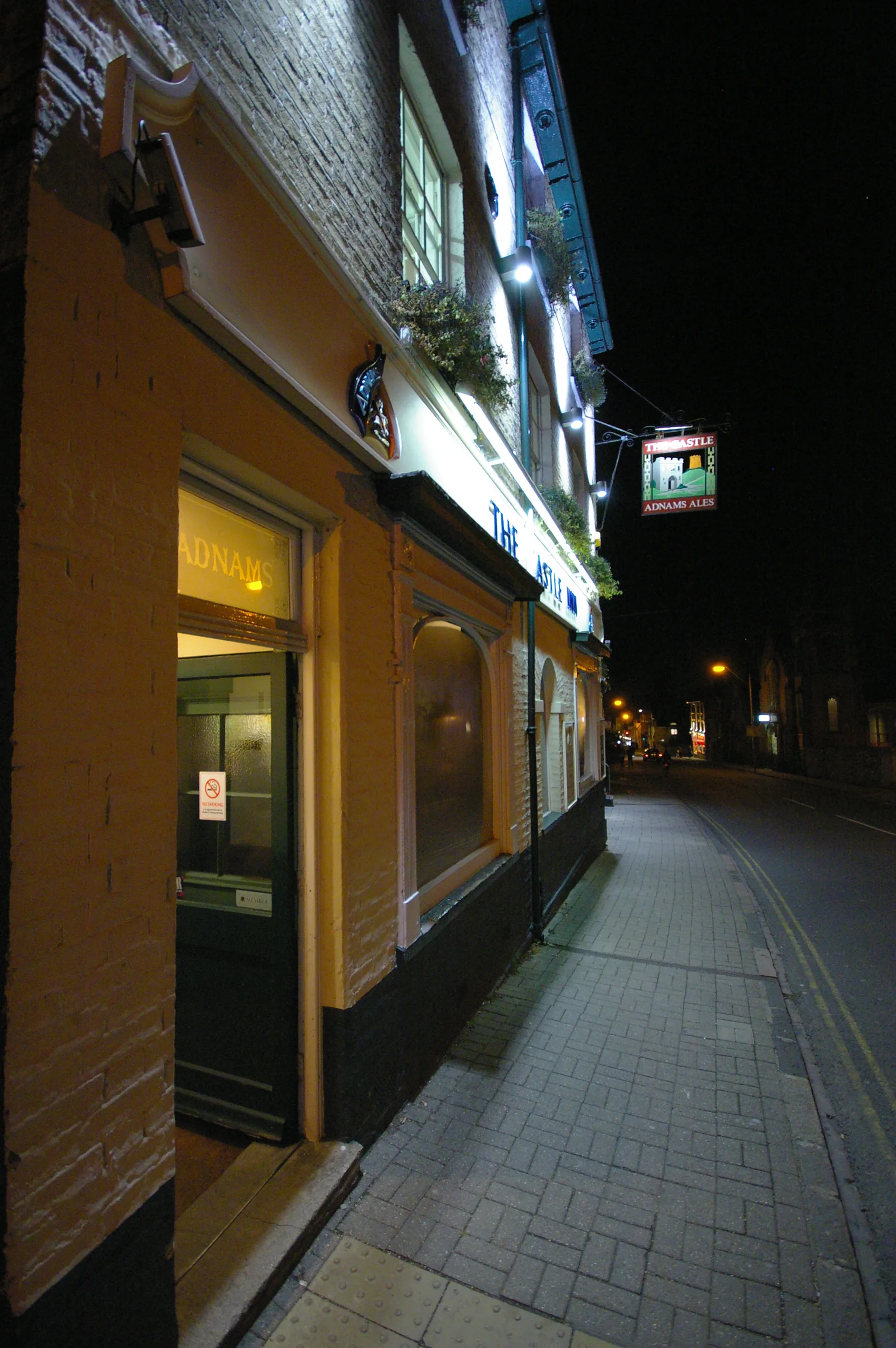
01 The experience
What to expect.
The Castle Inn stands at 36–38 Castle Street, on the crown of Castle Hill, about ten minutes' walk north-west of the centre of Cambridge and a few paces from the Norman motte known as Castle Mound. It has been a public house since the 1740s, when it traded under a different name, and the building is listed at Grade II. For thirty years, from 1994 until 2024, it was the only pub in Cambridge owned by Adnams, the Southwold brewery — a genuine anomaly in a city whose historic pubs are overwhelmingly Greene King. That distinction ended in 2024, when Adnams sold the freehold to Wells & Co, though Adnams beer remains on the bar. It is the fifth-oldest of the six pubs in Above Guide's Cambridge historic-pub collection.
Why it matters
Two things make the Castle Inn worth a deliberate visit, and neither is age for its own sake — it is an 18th-century pub in a city with 16th-century ones, and it does not pretend otherwise.
The first is position. Castle Hill is where Cambridge began: a late Iron Age settlement, then the Roman town of Duroliponte, then the castle William the Conqueror raised in 1068. The river crossing that gave the city its name is at the bottom of the slope. Almost every visitor to Cambridge spends their time in the colleges south of the river, which are three or four centuries younger than this ground. The Castle Inn sits in the older half of the story, and its rear patio is cut into the Castle Bank itself — you are drinking against the earthwork.
The second is beer, and what it says about the city's pub trade. Cambridge's historic pubs are, with few exceptions, tied to Greene King of Bury St Edmunds. From 1994 the Castle Inn was the exception: Adnams bought it from Allied Breweries and, until they took on the Bridge House in London around the turn of the century, it was the westernmost pub in the Adnams estate — a Suffolk coastal brewery's outpost eighty miles inland. That thirty-year run ended with the 2024 sale, but the bar still pours Southwold Bitter and Ghost Ship alongside changing guest beers, and the pub is now independently run rather than brewery-managed.
What visitors should notice
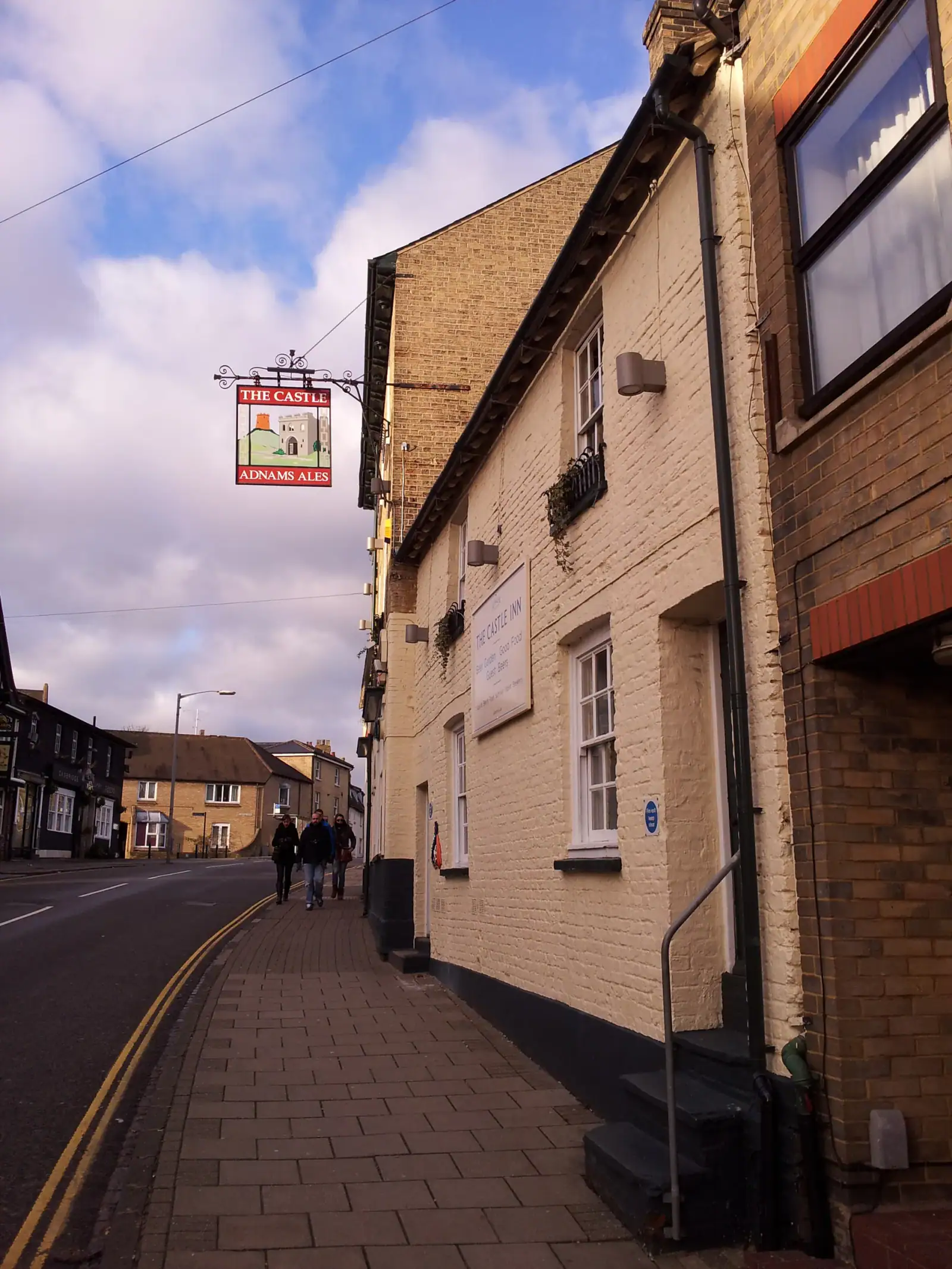
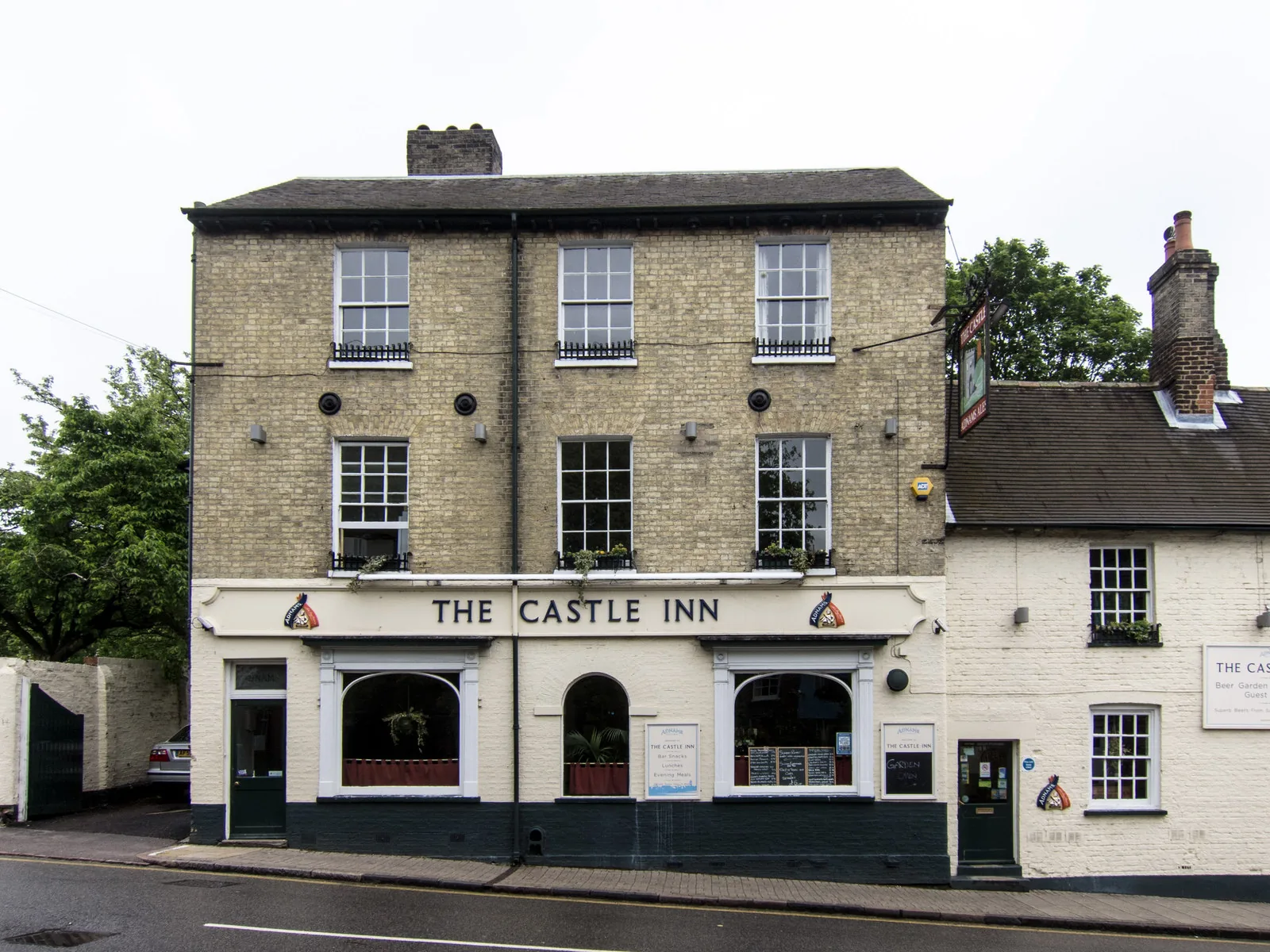
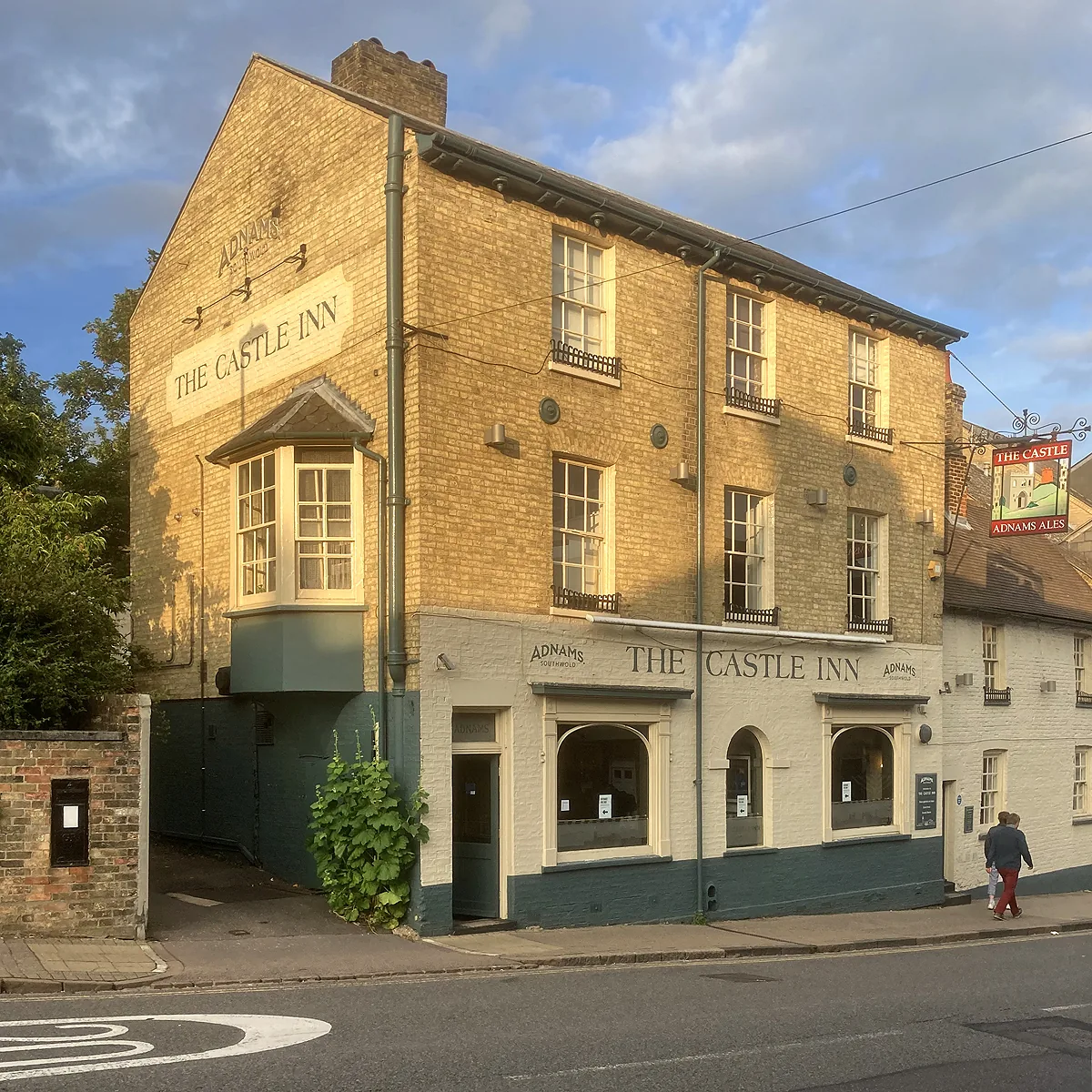
The frontage is modest and easy to walk past: painted gault brick, three storeys, sash windows with glazing bars above a 19th-century pub front. That fabric is early 19th century, which is worth registering, because the licence is older than the building you are looking at — a common and under-explained situation in English pubs.
Inside, the plan is the interesting thing. This was two separate houses. Adnams knocked them together in 1994, opened up the upper storey and turned what a 1970s guide had described as a two-room pub into something with roughly five drinking areas downstairs and three more above. The result is a warren: snugs, half-levels, corners, a real fire, and beamed ceilings upstairs. It is a pub you can get lost in at a scale the frontage does not suggest.
Then go out to the back. The patio is built on two levels against the Castle Bank, and it faces the right way for afternoon and evening sun. It is one of the better pub gardens in Cambridge and it exists because of the topography — the hill gave the pub somewhere to climb.
Who will enjoy it
Beer drinkers, first: this is a proper cask pub with a settled range and rotating guests, and it takes the beer seriously without being solemn about it. Walkers doing Castle Hill — the Mound, Kettle's Yard, the Museum of Cambridge, St Giles' — will find it the obvious and almost only good stop on that stretch. Anyone interested in how a city's pub trade is actually structured will find the ownership story more interesting than another set of low beams. And because it has a garden, multiple rooms and a real kitchen, it works for groups and families in a way that the cramped central pubs do not.
Who may find it difficult
Castle Street climbs steadily from Magdalene Bridge. Inside, steps connect the drinking areas, stairs lead to the upper floor and the patio spans two levels. Step-free entry and an accessible toilet are not confirmed. Telephone before travelling if you need either.
There is also an expectation to manage. This is not a museum-piece pub with a famous ceiling or a plaque outside. The 1994 refurbishment was sympathetic but it was a refurbishment; the antiquated copper and pewter of the 1970s description is long gone. Visitors hunting for untouched antiquity will be happier at the Green Dragon in Chesterton. And the name causes trouble: there is a separate, unrelated pub called the Castle on St Andrew's Street in the city centre. Confirm which one your party is heading for.
Visitor verdict
The Castle Inn is the best pub on Castle Hill and the right lunch or evening stop for anyone exploring the oldest ground in Cambridge. Come for the setting and the beer rather than for spectacle: climb the Mound first for the free view over the city, then come down thirty seconds to the pub, take a table on the patio if the weather allows, and have a pint of something Suffolk. Allow an hour, or two if you eat. Its real interest is a quiet one — it is the pub that proves the rule about who owns Cambridge's pubs, standing on the hill where the city started.
The story
History & character.
The ground: why there is a pub here at all
The Castle Inn owes its existence to the hill it stands on. Castle Hill is the low rise on the north-west bank of the Cam, and it is the oldest inhabited ground in Cambridge. Excavation has found a late Iron Age settlement of hut enclosures here from the late first century BC. The Romans followed, establishing the town recorded as Duroliponte — a roughly four-sided enclosure of some twenty-five acres, initially perhaps a small military station of about AD 70 and civilian in character within a couple of generations. It sat where two Roman roads, Akeman Street and the Via Devana, met a convenient crossing of the river.
In 1068, on his way north to take York, William the Conqueror raised a motte-and-bailey castle on the hill. The stone castle that grew from it has gone almost entirely; what survives is the motte, about ten metres high, now called Castle Mound and protected as a scheduled monument. In 1092 Hugolina, wife of Picot the Norman sheriff, founded the church of St Giles beside her husband's castle in thanks for recovering from illness.
The point of this preamble is simple: Castle Street was a road up to a castle, a county gaol, and later a Shire Hall, on the main route out of Cambridge towards Huntingdon. Roads like that generate inns. By the 18th century the street carried several — the Three Tuns, the White Horse (now the Museum of Cambridge) and others — and the Castle Inn is the survivor of that trade.
The 1740s and the original name
The pub is generally dated to the 1740s. According to the pub-history account that is the origin of this date, it opened under the sign of the (Three) Horseshoes, later became the Old Castle, and eventually settled as the Castle Inn. That sequence — the change from a trade sign to a name borrowed from the neighbouring castle site — is entirely plausible and is repeated by CAMRA and by the pub's own history page.
It should be attributed honestly. The 1740s date and the Horseshoes name come from a well-informed local pub-history blog (Pints and Pubs, February 2017), not from a primary archive, and they have since been copied into CAMRA's national and branch entries and the pub's own website — which means the wide agreement is partly circular rather than independently corroborated. Notably, the Museum of Cambridge's Capturing Cambridge entry for 38 Castle Street does not record the Horseshoes or Old Castle names. A licensing record, a rate book or a directory entry from the Cambridgeshire Archives would settle it. Until one is found, the correct formulation is "a pub since the 1740s, reportedly first known as the (Three) Horseshoes" — not a flat assertion.
The building: an early 19th-century front on an 18th-century licence
Historic England listed the Castle Inn at Grade II on 2 November 1972 (list entry 1111867). The list description is brief and is worth quoting in full, because it does most of the architectural work: "Early C19. Gault brick, painted. 3 storeys, C19 public house frontage with 2 windows; 3 windows above, sashes with glazing bars," under a slate roof.
That creates a distinction visitors should understand. The trade dates from the 1740s; the fabric you see from the street is early 19th century. Gault brick — the pale, yellowish-white clay brick of the Cambridge region — came into widespread use locally in exactly that period. So the Castle Inn is an 18th-century licence in a 19th-century body, and probably a rebuilding or refronting of an earlier house. This is the same kind of ambiguity that makes ranking Cambridge's oldest pubs so contentious: the Pickerel Inn is usually called the oldest continuously licensed house, while the Green Dragon has the oldest surviving pub building. The Castle Inn is not a contender for either title and should never be presented as one.
The 19th and early 20th centuries
Documentation for the pub's middle centuries is thin in published sources. The Capturing Cambridge entry records Horace English as licensee in 1913. The Museum of Cambridge holds photographs of the pub from 1936 (accession MoC 189/54) and from 1970, captioned "The Castle" (MoC21/71) — the 1970 caption being a small piece of evidence that the name was not always given in full.
Through the 20th century the pub passed through the brewery consolidations that reshaped the whole English trade, ending up in the estate of Allied Breweries, one of the "Big Six" combines that dominated British brewing from the 1960s.
The 1970s pub: two rooms and hanging copper
A pub guide of the 1970s gives the clearest surviving picture of the interior before its modern remodelling. It describes a two-room pub, "the blackened beams festooned with antiquated copper, brass and pewter utensils" — the standard decorative idiom of the mid-century English pub, and a long way from what a visitor finds today. Nothing of that scheme survives. Anyone who remembers it will find the present pub unrecognisable in decoration, though the bones of the older building remain upstairs in the beamed ceilings.
1994: Adnams, and the westernmost pub
In 1994 the Castle Inn was bought from Allied Breweries by Adnams, the independent brewery at Southwold on the Suffolk coast. The purchase mattered on two counts.
First, the renovation. Adnams extended the pub into the neighbouring building, opened up the upper storey to enlarge the drinking and dining space, and cut a patio into the ground at the rear, against the Castle Bank. The two-room pub of the 1970s became a house with roughly five drinking areas downstairs, three more upstairs and a two-level garden. The work is generally regarded as sympathetic — CAMRA's own description calls it "respectfully renovated" — and it explains the pub's characteristic rambling plan. It also explains the address: the Food Standards Agency registers the business as 36–38 Castle Street, while the listed building is No. 38 alone.
Second, the ownership. Cambridge's pub estate is dominated by Greene King of Bury St Edmunds, and the Castle Inn became — and for thirty years remained — the only Adnams-owned pub in the city. For a period it was also the westernmost pub in the entire Adnams estate, a distinction it held until the brewery took on the Bridge House near Tower Bridge in London around the turn of the century. For a coastal Suffolk brewery, a pub eighty miles inland on a Cambridge hill was an outlier in every sense.
John Halsey, landlord — and Barry Wom
From 1996 the landlord was John Halsey (b. 1945), and his other career is the most unexpected fact attached to the building. Halsey was a professional rock drummer: he played in Timebox and its successor Patto, and worked as a session musician, including on Lou Reed's 1972 album Transformer. He is best known, however, as Barrington Womble — "Barry Wom" — the drummer of the Rutles, the Beatles parody band created for the 1978 television film All You Need Is Cash, a role he reprised at the band's reunions. After a serious accident in 1983 he moved into the pub trade, and took the Castle Inn in 1996, running it for roughly two decades before retiring. The exact date of his retirement is not confirmed in the sources consulted; a beer-writing account from January 2025 places it "about a decade" earlier, which would put it around 2015.
The Xen claim
One further story attaches to the pub and needs careful handling. The Inns of Cambridge project states that "Silicon Fen" grew partly out of the work of the Xen project, "born in the Castle Inn (Castle St)". Xen is the virtualisation hypervisor developed at the University of Cambridge Computer Laboratory by Ian Pratt and his doctoral student Keir Fraser, out of the earlier XenoServers work, and commercialised through XenSource — genuinely one of the most consequential pieces of software to come out of Cambridge, and a foundation of modern cloud computing.
The Computer Laboratory moved to the West Cambridge site in 2001, and the Castle Inn is a plausible pub for the group, but the published histories of Xen — the University's own accounts, XenSource's and Citrix's — credit the Computer Laboratory and do not mention the pub. We have found no independent corroboration for the Castle Inn detail. It should therefore be reported as a local claim, attributed to Inns of Cambridge, and never stated as established fact. If it can be confirmed from one of the principals, it would be a strong counterpart to the Eagle's DNA announcement: two Cambridge pubs, two eras, two technologies. Until then it is a lead, not a headline.
2023–2024: independence, and the end of the Adnams era
In December 2023 the pub was taken on by Hayley and Steve Pellegrini, who run it independently. The couple have run the Portland Arms in Cambridge since 2004 and also operate the Alex and Hudson's Ale House, giving the Castle Inn a local rather than a corporate management.
In 2024 Adnams sold the freehold to Wells & Co, the Bedford-based family brewing and pub company. The Cambridge & District CAMRA branch reported the sale, noting that it would inevitably affect the beer range but that the pub would retain two Adnams beers and at least one handpump free of tie. That is broadly what happened: Adnams Southwold Bitter and Ghost Ship remain the regulars, alongside four changing beers.
The Castle Inn is no longer an Adnams pub. Its connection with the brewery ran for thirty years, from 1994 to 2024.
Look closer
Highlights and hidden details.
The objects, spaces and small observations that turn a visit into a memorable one.1. The two-level garden against the Castle Bank
The best single feature of the pub, and the one created by its geography. When Adnams remodelled the building in 1994 they cut a patio into the ground at the rear, against the Castle Bank — the earthwork skirt of the Norman castle site. The result is a terraced garden on two levels, sheltered, south-facing enough to hold the sun through the afternoon, and considerably larger than anything the frontage implies. On a warm day this is the reason to come, and it is one of the better pub gardens in Cambridge. Historical importance: medium — the bank is genuine castle topography. Visitor experience: excellent in good weather; fills fast. Photography: strong in late afternoon light. Time required: as long as you like.
2. Castle Mound, thirty seconds away
Not the pub, but inseparable from it, and the thing to do immediately before or after. Castle Mound is the surviving motte of the castle William the Conqueror raised in 1068, about ten metres high and protected as a scheduled monument. It is free, open, and the climb takes a couple of minutes. From the top you get the best free view over Cambridge — the college roofs, King's Chapel, the Backs, laid out below. Do the Mound first and the pub second: the pint is better earned, and the view explains why anyone built here in the first place. Historical importance: very high. Visitor experience: a short steep climb for a genuinely fine panorama. Photography: the best viewpoint in the bundle. Time required: 15–20 minutes.
3. The warren of rooms
The interior is the product of 1994, when Adnams knocked the pub through into the neighbouring house and opened up the upper storey. Where a 1970s guide had found two rooms, there are now about five drinking areas downstairs and three more upstairs, on shifting levels and around corners. It is worth walking the whole thing before you choose where to sit — most visitors take the first table they see and never discover the snug or the upper rooms. The upstairs retains original beamed ceilings. Historical importance: medium — it documents a specific and well-regarded 1990s remodelling. Visitor experience: genuinely fun to explore; a pub with rooms to find. Photography: awkward, dim, and worth attempting only in the upper rooms. Time required: 10 minutes to walk it.
4. Adnams beer, and the story behind it
Southwold Bitter and Ghost Ship are the two regular cask ales, and they are not here by accident. Adnams, the independent brewery on the Suffolk coast, bought this pub in 1994 and held it for thirty years, during which it was the only Adnams pub in Cambridge — and for a time the westernmost pub in the whole Adnams estate. Adnams sold to Wells & Co in 2024, so the ownership link is now historical, but the beer stayed. Order a Southwold Bitter and you are drinking the last working trace of a thirty-year Suffolk outpost in a Greene King city. Historical importance: high, in trade-history terms. Visitor experience: a good pint with an unusually specific backstory. Time required: as long as a pint.
5. The gault brick frontage
Modest, and easy to walk past, which is why it is worth stopping for. Historic England's Grade II listing (entry 1111867, listed 2 November 1972) describes it precisely: early 19th century, gault brick, painted, three storeys, a 19th-century public house frontage of two windows with three sash windows above, under slate. Gault is the pale yellowish-white brick of the Cambridge clays, and this is a good plain example of it. Note the mismatch worth carrying inside with you: the licence dates from the 1740s, the building you are looking at does not. Historical importance: medium. Visitor experience: a two-minute pavement pause that reframes the pub's age. Photography: good, straight on, from the opposite pavement. Time required: 5 minutes.
6. The real fire, in winter
Worth planning around. The pub keeps a real fire, and a building of small interlocking rooms is a different and much better place in January than in July. If you are visiting Cambridge out of season, the Castle Inn is one of the more comfortable places in the city to spend a dark afternoon, and the garden's absence is no loss. Historical importance: low. Visitor experience: high in the right season. Time required: an afternoon, ideally.
7. The Castle Hill cluster
The pub sits in the middle of a group of sights that most Cambridge visitors never reach, because they never cross Magdalene Bridge. Within a few minutes are Kettle's Yard, the Museum of Cambridge in the 16th-century White Horse Inn, St Giles' Church — founded in 1092 beside the castle — and the Mound itself. The Castle Inn is the natural pause in that circuit, and treating it as part of a Castle Hill half-day rather than a standalone pub makes a rewarding half-day out. Historical importance: high, collectively. Visitor experience: the quiet half of Cambridge. Time required: half a day for the group.
Details worth slowing down for.
The landlord was the drummer in the Rutles
From 1996, and for roughly two decades, the licensee of the Castle Inn was John Halsey — a professional rock drummer who played in Timebox and Patto and appeared as a session musician on Lou Reed's Transformer (1972). He is far better known, however, as Barrington Womble, "Barry Wom", the drummer of the Rutles, the Beatles parody band created for the 1978 film All You Need Is Cash, a part he played again at the band's reunions. A serious accident in 1983 pushed him out of music and into the trade, and he took this pub in 1996. Nothing in the building announces it. For twenty years, the pint on Castle Hill was pulled by a man who had parodied Ringo Starr on television and drummed on one of the great records of the 1970s.
It was the westernmost pub in the Adnams estate
Adnams brews at Southwold, on the Suffolk coast, and its pubs cluster in East Anglia. When it bought the Castle Inn in 1994 it acquired an outlier: for several years this was the furthest-west pub the brewery owned anywhere, a title it lost only when Adnams took on the Bridge House near Tower Bridge in London around the turn of the century. A pub eighty miles inland was, in the brewery's own geography, the edge of the map.
The pub is two houses, and its address proves it
The 1994 refurbishment extended the pub into the building next door, and the paperwork never fully caught up. Historic England lists the Grade II building as 38 Castle Street. The Food Standards Agency registers the business as 36–38 Castle Street. The pub's own website gives 36. Three different numbers for one address is not an error to correct but a fossil of the knock-through — you can read the building's history off its own paperwork.
The licence is older than the building
Historic England's list description dates the fabric to the early 19th century — gault brick, three storeys, sashes with glazing bars — while the pub trade on the site goes back to the 1740s. Roughly seventy or eighty years separate the two. What you are looking at from the pavement is a Georgian-to-Victorian rebuilding or refronting wrapped around a much older licence. This gap is normal in English pubs and almost never explained, and it is exactly why arguments about "the oldest pub" never resolve: the Green Dragon has the oldest surviving building, the Pickerel the longest licence, and the Castle Inn neatly demonstrates why the two questions are different.
The garden is dug into a Norman earthwork
The two-level patio was created in 1994 by cutting back into the Castle Bank at the rear — the earthwork associated with the castle site. Very few pub gardens anywhere sit against a scheduled Norman monument. The terracing that makes the garden pleasant is not landscaping for its own sake; it is the pub negotiating with a nine-hundred-year-old bank of earth it is not allowed to move.
There was another Castle Inn, also at number 38
The pub on Castle Street is routinely confused with the Castle on St Andrew's Street in the city centre. The confusion has deep roots: historic records for 38 St Andrew's Street show the premises trading as the Castel, Ye Olde Castle Hotel, Rudd's Hostel and — inevitably — the Castle Inn. Two Cambridge pubs of the same name, at the same street number, on opposite sides of the city. If you are meeting someone, name the street.
It began life under a different sign
The pub is reported to have opened in the 1740s as the (Three) Horseshoes, becoming the Old Castle and only later the Castle Inn — a shift from a farrier's trade sign to a name borrowed from the castle up the road. The evidence is a local pub-history account rather than an archive document, and the Museum of Cambridge's own Capturing Cambridge entry does not carry the earlier names, so treat it as reported rather than proven. Even so, the drift is telling: the pub stopped naming itself after the work being done on the street and started naming itself after the ruin on the hill.
The 1970s interior has vanished completely
A pub guide of the 1970s recorded a two-room house with "the blackened beams festooned with antiquated copper, brass and pewter utensils." Not one element of that description survives the 1994 remodelling. It is worth knowing before you go in, because the Castle Inn is often described in older writing as a copper-and-brass traditional pub, and a visitor arriving on that basis will be looking for something that no longer exists.
A portrait nobody can identify
The Museum of Cambridge's Capturing Cambridge record notes that, as of 2021, a portrait hanging in the inn had not been identified, and that even its history in the building was uncertain. It is a small, honest loose end in the archive of a pub that has otherwise been fairly thoroughly documented — and a reminder that the record of an ordinary building is always incomplete.
Cambridge's tech industry may have started here
The Inns of Cambridge project states that "Silicon Fen" grew partly out of the Xen project, "born in the Castle Inn." Xen is the virtualisation hypervisor developed at the University's Computer Laboratory by Ian Pratt and Keir Fraser and commercialised as XenSource — a foundation of modern cloud computing. It is a tempting parallel to the Eagle's DNA announcement, and it should be resisted until it is proved: the published histories of Xen credit the Computer Laboratory and do not mention the pub, and we found no independent corroboration. Recorded here as a local claim worth chasing, not as a fact.
Make it work
Plan the visit properly.
Current practical detail, kept separate from the story so it is easy to scan when you need it.This is the most time-sensitive file in the bundle. Hours, food service, beer range and ownership all change; the details below were verified on 29 July 2026 against the pub's own website and CAMRA's entries, and should be rechecked monthly. Ownership in particular has changed recently — see the note below.
How to use it
The Castle Inn is a working pub, not a paid attraction. There is no admission charge and no ticket. You walk in, order, and sit where you like. Tables can be booked through the pub's website, and booking is worth doing for Sunday lunch, for groups, and for warm evenings when the garden fills. Private hire is offered, from a single snug to the whole upper floor.
Because the pub sits on Castle Hill rather than in the college centre, it is best treated as the anchor of a Castle Hill visit — Castle Mound, Kettle's Yard, the Museum of Cambridge and St Giles' are all within a few minutes — rather than as a detour from King's Parade.
Opening hours
Verified 29 July 2026 from the pub's own website and corroborated by CAMRA's national and Cambridge & District branch entries, which agree. Recheck monthly.
- Monday to Saturday: 12:00 – 23:00
- Sunday: 12:00 – 18:00
Kitchen / food service:
- Monday to Friday: 12:00 – 14:30 and 17:00 – 21:00
- Saturday: 12:00 – 21:00
- Sunday: 12:00 – 15:00
Two points to note. The Sunday close of 18:00 is early for a Cambridge pub and catches people out — do not plan a Sunday evening here. And the weekday kitchen shuts between 14:30 and 17:00, so a mid-afternoon arrival will get a drink but not a meal.
Address and contact
- Address: 36–38 Castle Street, Cambridge, CB3 0AJ
- Telephone: 01223 353194
- Website: thecastleinn.pub
- Freehold owner: Wells & Co (from 2024; previously Adnams, 1994–2024)
- Run by: Hayley and Steve Pellegrini, independently, since December 2023
The pub's own website gives the address as 36 Castle Street; Historic England lists the building as 38 Castle Street; the Food Standards Agency registers the business as 36–38. All three are describing the same premises, which occupy two formerly separate houses. Use 36–38 Castle Street, CB3 0AJ.
Admission, booking and cost
Free to enter. Costs are food and drink only. Tables can be reserved online; walk-in is normally fine on weekday lunchtimes and early evenings. CAMRA members have been offered 20p off a pint of cask ale — confirm at the bar, as discount schemes lapse.
Beer and food
The bar keeps two regular cask ales — Adnams Southwold Bitter (3.4%) and Adnams Ghost Ship (4.1%) — plus up to four changing beers, often from local breweries. The Adnams presence is a survival of the brewery's thirty-year ownership; since the 2024 sale to Wells & Co the guest range has broadened, and at least one handpump is free of tie. Keg options have historically included Adnams Blackshore, Ease Up IPA and Mosaic, though keg lines change more often than cask.
Food is served at both lunchtime and in the evening, with a Sunday roast and carvery. It is pub cooking rather than a restaurant menu.
Best time to visit
- For the garden: a warm afternoon or early evening, Monday to Saturday. The two-level patio cut against the Castle Bank is a genuine sun trap and is the best thing about the pub in good weather. It fills fast on the first warm day of the year.
- For the interior: a weekday lunchtime or a winter evening, when the real fire is lit and the warren of small rooms works as intended.
- For a quiet pint: weekday mid-afternoon, between the kitchen sittings.
- Avoid: Sunday after about 16:00 (the kitchen has closed and the pub shuts at 18:00), and Friday and Saturday evenings if you want a table without booking.
How long to allow
Forty-five minutes to an hour for a drink and a look round the rooms and garden. Ninety minutes to two hours with a meal. If you are combining it with Castle Mound, Kettle's Yard and the Museum of Cambridge, allow half a day for the whole Castle Hill group, with the pub as the middle or the end of it.
Facilities
- Cask and keg beer, wines and spirits
- Lunchtime and evening meals; Sunday roast and carvery
- Two-level rear garden / patio against the Castle Bank
- Real fire
- Free Wi-Fi
- Dog-friendly
- Family-friendly
- Toilets on site
- Private hire, from a snug to the entire upper floor
- Card payment accepted
Accessibility (summary)
The pub has steps between drinking areas, an upper floor reached by stairs and a garden on two levels. Castle Street is on a gradient. Step-free entry and an accessible toilet are not confirmed. Telephone 01223 353194 to discuss your needs before travelling.
Families, dogs, weather
Children are welcome — CAMRA records the pub as family-friendly, and the garden and multiple rooms give families far more room than the cramped city-centre pubs. Normal licensing rules for under-18s apply. Dogs are welcome. In wet weather the interior is a good place to sit out a shower, with a fire and enough rooms to find a corner; in fine weather the garden is the reason to come. There is no shelter to speak of on the patio, so a bright but showery day is an indoor visit.
Getting there
- On foot from the city centre: about 10 minutes. Head north up Bridge Street, cross Magdalene Bridge past Magdalene College, continue up Magdalene Street into Castle Street. The pub is on the left as the hill levels out, past Kettle's Yard. The climb is steady but not steep.
- From Cambridge railway station: roughly 35–40 minutes on foot, or a bus into the centre and a short walk. A taxi is sensible if time matters.
- By bus: stops are close — CAMRA records bus routes within about 30 metres, and the Busway is nearby.
- By bike: cycle bays are near the pub, with an e-bike station adjacent.
- By car: Castle Street Pay and Display parking is adjacent to the pub, which is unusually convenient for Cambridge. Even so, the city is difficult to drive in and Park & Ride is the better option for a longer visit.
Crowd levels
Busier than its side-street position suggests, but rarely crushed in the way central Cambridge pubs are. The peaks are warm afternoons and evenings, when the garden is the draw, Sunday lunch, and Friday and Saturday evenings. Weekday lunchtimes and mid-afternoons are consistently quiet.
Visit your way
Access and family planning.
The Castle Inn is a split-level pub on a sloping street. Step-free entry and an accessible toilet are not confirmed. Telephone 01223 353194 before travelling to discuss your requirements.
Before you book
Ask staff about:
- A step-free entrance from Castle Street, including any threshold.
- An accessible toilet and its location.
- Which drinking areas you can reach without steps.
- Access to the two-level garden.
- Nearby Blue Badge parking or a suitable drop-off point.
The upper floor is reached by stairs. Arrange a table in a suitable ground-floor area before your visit.
Getting there
Castle Street climbs from Magdalene Bridge towards Castle Hill. The sustained gradient can be tiring if you have limited mobility or stamina.
- By bus: stops are close to the pub, avoiding the climb from the river.
- By car: Castle Street Pay and Display parking is adjacent. Check current parking arrangements before travelling.
- By taxi: ask about a drop-off near the entrance. Approaching from the Huntingdon Road end avoids the uphill walk from Magdalene Bridge.
Inside the pub
Separate drinking areas are arranged over changing levels. Ask staff for the easiest route to your table and toilets; do not assume all ground-floor rooms connect without steps. The upper rooms, including private-hire space, are reached by stairs.
Comfort and sensory needs
Smaller rooms can offer a quieter place to sit, although weekend evenings and warm days in the garden are busier. Ask for a table away from the bar if noise is a concern.
Interior rooms can be dim, especially in winter. Front rooms and the garden have more daylight. Mention any sensitivity to smoke or heat when choosing a seat near a real fire.
Watch for steps between rooms. Dogs are welcome, which may matter if you have an allergy or prefer more space around animals.
Seating
Book a table and explain which entrance and seating area you need. Confirm that staff can hold a suitable table so you do not have to wait standing when the pub is busy.
The honest picture
The Castle Inn is a pub, but it is one of the better Cambridge pubs for a family meal, and that is a genuine distinction in a city where the historic pubs are mostly small, central and packed. CAMRA records it as family-friendly. It has a large two-level garden, a kitchen serving proper lunches and a Sunday roast, and roughly eight separate drinking areas, which means there is usually somewhere to sit that is not in the middle of the bar. Normal licensing rules for under-18s apply, and there is no children's trail, play area or anything staged for young visitors.
The thing that makes it work for families is not inside the pub at all. It is Castle Mound, thirty seconds away — free, climbable, and a far better proposition for children than another college chapel.
Ages and what they'll get from it
- Under 5s: Fine for a meal, and the garden is the deciding factor — space to be a toddler outdoors, which the central pubs cannot offer. Nothing here will register historically. Come in good weather or not at all with this age group.
- 5–10s: The best combination in the bundle is the Mound then the pub. A real Norman castle mound you are allowed to run up, with a view over the whole city from the top, is a story a child of this age can hold on to — William the Conqueror built it in 1068 and the pub at the bottom has been there since your great-great-great-grandparents' time. The pub itself is a warren, which children quite like exploring.
- 11–16s: Works well as the pause in a Castle Hill half-day. The interesting material for this age is the layered history of the hill — Iron Age settlement, Roman town, Norman castle, and a Georgian pub still trading on top of it all. Kettle's Yard next door is a genuinely good gallery for teenagers, being a house rather than a museum.
Educational value
Moderate for the pub, high for its setting. Castle Hill is the clearest place in Cambridge to explain why a city ends up where it does: a river crossing, two Roman roads, high ground, a castle to control it, and a town that then grew away downhill to the south. Standing on the Mound with the colleges below makes that argument better than any classroom. Pair the pub with the Museum of Cambridge — a social-history collection in the 16th-century White Horse Inn, a two-minute walk — for the everyday-life half of the story.
Practical friction points
- The hill. Castle Street climbs from Magdalene Bridge. It is a steady rather than steep gradient, but it is a push with a buggy and a complaint from tired legs at the end of a long day. Do this stretch early.
- Split levels. The pub's charm is its steps and half-levels, and they are awkward with a pushchair. Ask for a ground-floor area near the entrance, or use the garden, which is also terraced but more open.
- Kitchen closes in the afternoon. Monday to Friday the kitchen shuts at 14:30 and does not reopen until 17:00. A late-lunch family arrival will find no food. This catches people out constantly.
- Sunday closing at 18:00. Earlier than most Cambridge pubs, and the Sunday kitchen stops at 15:00. Sunday lunch, yes; Sunday supper, no.
- It is a bar in the evening. The atmosphere is adult after dark. Lunchtime and early evening are the family windows.
- Dogs are welcome, which most families like and a few will want to know in advance.
The efficient family version
Walk up from Magdalene Bridge in the late morning. Climb Castle Mound first — fifteen minutes, free, best view in Cambridge — and let everyone get the running about out of the way at the top. Come down to the Castle Inn for lunch before 14:30, and take the garden if the weather is good. Afterwards, either Kettle's Yard or the Museum of Cambridge depending on the age of the children, then walk back downhill into the centre. Roughly three hours, one meal, one castle, and the half of Cambridge that most visiting families never see.
Self-guided walk
Explore beyond the venue.
A practical, step-by-step route connecting this experience with more of Cambridge.Stop 1 — The Castle Inn frontage, Castle Street (start)
Begin on the pavement outside 36–38 Castle Street, on the opposite side of the road if traffic allows, so you can see the whole front. Painted gault brick, three storeys, a 19th-century pub front with sash windows above: this is the early 19th-century fabric Historic England listed at Grade II in 1972, wrapped around a licence that goes back to the 1740s. Do not go in yet — the pint is better after the hill. Photo stop: the frontage square on, sign legible. 5 minutes.
Stop 2 — Castle Mound (2 minutes)
Turn right out of the pub and take the path up to Castle Mound, immediately behind and above the pub within the Shire Hall grounds. Climb it — it is about ten metres high and takes two or three minutes. This is the motte of the castle William the Conqueror raised in 1068, all that substantially survives of Cambridge Castle, and it is a scheduled monument. From the top you have the best free view in Cambridge: the colleges, King's Chapel and the Backs spread out to the south, and the ground falling away to the river. Look at how far below you the famous city is. This is the older Cambridge, and the reason the Romans put Duroliponte here — high ground above a river crossing where two roads met. Photo stop: the panorama south over the colleges. 15–20 minutes.
Stop 3 — St Giles' Church (3 minutes)
Come down from the Mound and walk north-west along Castle Street to the corner with Chesterton Road. St Giles' was founded in 1092 by Hugolina, wife of Picot the Norman sheriff, in thanks for recovering from illness — a church built for the castle community you have just been standing on. What you see is an 1875 rebuilding, consecrated on 5 June that year, but go in if it is open and find the two survivals from the original: an 11th-century arch, now the entrance to the Lady Chapel, and a 12th-century doorway. They are the oldest worked stone on Castle Hill. 10 minutes.
Stop 4 — Kettle's Yard (2 minutes)
Back along Castle Street. Kettle's Yard is the University's modern and contemporary art gallery, made by Jim Ede out of four knocked-together cottages and left arranged as a lived-in house rather than a gallery — pebbles, light, Gaudier-Brzeska and Alfred Wallis in domestic rooms. Free, open Tuesday to Sunday 11:00–17:00, with a café. Allow longer than you think. Note the parallel with your starting point: two buildings on this street made by knocking neighbouring houses into one. 30–45 minutes if you go in; 5 if you only look.
Stop 5 — The Museum of Cambridge (2 minutes)
Continue down Castle Street to the corner of Northampton Street. The Museum of Cambridge — the old Cambridge & County Folk Museum, opened 1936 — occupies the White Horse Inn, a 16th-century timber-framed former pub, Grade II listed. It holds the city's social history: the ordinary domestic and working life that the college guidebooks leave out. Paid admission and variable opening days, so check ahead. Whether or not you go in, stand outside and register the pairing: a 16th-century Cambridge inn that became a museum, three minutes from an 18th-century Cambridge inn that is still pulling pints. 10 minutes outside; an hour inside.
Stop 6 — Magdalene Bridge and the Pickerel Inn (4 minutes, downhill)
Carry on downhill as Castle Street becomes Magdalene Street. On your left is Magdalene College — founded 1428, refounded 1542, home of the Pepys Library and Samuel Pepys's own bookcases. Opposite stands the Pickerel Inn, dating from 1608 and usually called Cambridge's oldest continuously licensed house. Stop here for two minutes even if you do not go in: this is the pub the Castle Inn is measured against, and the hundred and thirty years between them is the whole argument about which Cambridge pub is oldest. Walk on to Magdalene Bridge and look at the Cam — the crossing that put the town here in the first place. Photo stop: the Pickerel frontage, and the river from the bridge. 15 minutes.
Stop 7 — Back up the hill to the Castle Inn (8 minutes)
Retrace your route up Magdalene Street and Castle Street. It is a steady climb and it is the moment the geography makes its final point: you are walking from the famous Cambridge up to the old one, and the pub is at the top. Go in. Walk the whole building before you sit — roughly five drinking areas downstairs, three upstairs with the original beamed ceilings, snugs and half-levels throughout, all the product of the 1994 knock-through. Then take the garden if the weather allows; it is terraced into the Castle Bank, which is the same earthwork you climbed at Stop 2. Order an Adnams Southwold Bitter or Ghost Ship — the last working trace of the thirty years, from 1994 to 2024, when this was the only Adnams pub in Cambridge. End where you started. 45 minutes to two hours.
Notes
The whole loop is under two miles and the only real climb is the Mound itself, plus the gentle return up Castle Street. In wet weather, compress it: Kettle's Yard, the Museum of Cambridge and the pub are all indoors and within four minutes of each other, and the Mound will keep. If you are continuing into the centre afterwards rather than looping back, carry on over Magdalene Bridge — King's Parade is about fifteen minutes on, and the Eagle on Bene't Street is the obvious next pub.
Make a record
Photograph it thoughtfully.
The strongest compositions
- The view from Castle Mound. The single best photograph associated with this entry is not of the pub. Thirty seconds away, the Norman motte gives the best free elevated view in Cambridge — King's College Chapel, the college roofs and the Backs laid out to the south. Shoot it, then shoot the pub. It is the image that explains why the Castle Inn is where it is.
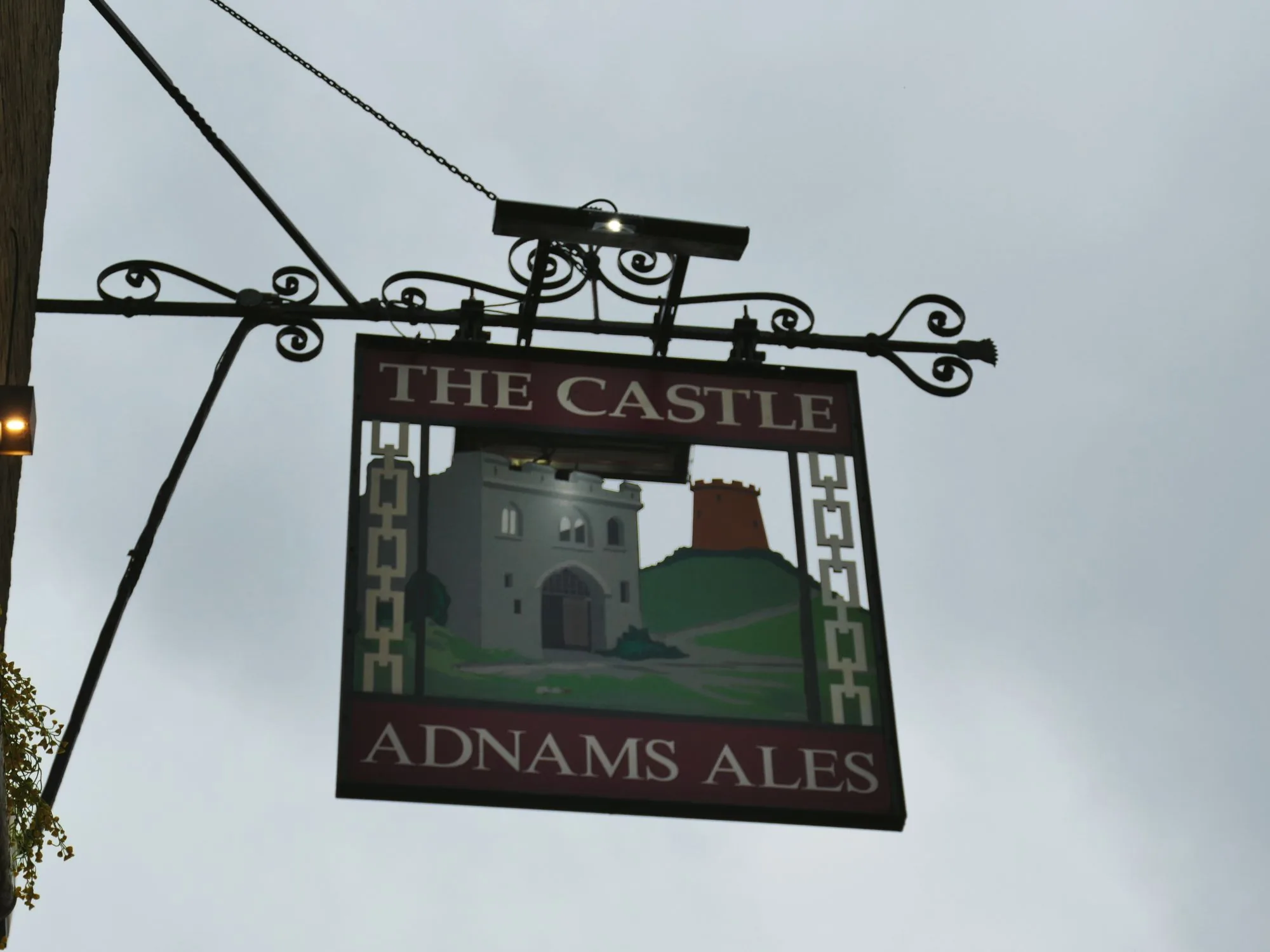
- The gault brick frontage, straight on. From the opposite pavement of Castle Street. Three storeys of painted pale brick, a 19th-century pub front, sashes with glazing bars above. It is a plain, honest façade and it photographs best plainly — square on, no wide-angle distortion, ideally with the hanging sign legible.
- The garden, late afternoon. The two-level patio cut against the Castle Bank is the pub's best interior-exterior space, and late afternoon and early evening light is when it works. Shoot from the lower level looking up across the terracing to catch the sense of the ground rising behind.
- The street, looking up the hill. Castle Street climbing away with the pub on the left. It places the building in its context — the old road out of Cambridge towards Huntingdon — better than any frame of the building alone.
- The upper rooms. The beamed ceilings upstairs are the oldest visible fabric inside, and the upper floor is generally emptier and better lit than the ground floor. This is the interior shot worth working for.
Light and timing
Castle Street runs roughly north-west to south-east, so the frontage takes direct light for only part of the day; overcast conditions actually suit painted brick well and avoid the blown highlights that pale gault gives in full sun. The garden is an afternoon and evening space. Interiors are dim throughout, as in any pub of small rooms, and are best attempted upstairs or in the front rooms near windows.
For the building without people, arrive on a weekday shortly after opening at 12:00, or mid-afternoon between the kitchen sittings. Note that the pub closes at 18:00 on Sundays, which removes the Sunday-evening window entirely.
Winter is not a write-off. The real fire and the interlocking rooms give a warmer, more characterful interior than summer does, and an early winter dusk means lit windows from the street by mid-afternoon.
Shooting the interior
The rooms are small, dim and low. Practical advice: brace against a wall or a table rather than pushing ISO until the frame falls apart; avoid direct on-camera flash, which flattens the space and is unwelcome among other drinkers; use the upper floor where the ceilings are more interesting and the light is generally better. Wide-angle lenses distort small pub rooms badly — a moderate focal length and a step back into a doorway usually reads better than trying to include the whole room.
Tripods are impractical and unwelcome inside a working pub. If you need one for the exterior, the pavement is public but narrow, so be quick and do not obstruct it.
Drone
Do not fly here. The pub is immediately adjacent to Castle Mound, a scheduled monument, and sits in a dense residential and institutional area on Castle Hill with the Shire Hall complex nearby. Cambridge airport and its airspace are a further consideration for any flight over the city. Any drone work would need permission from the pub, the landowner of the Mound, and compliance with UK Civil Aviation Authority rules on flying over people and congested areas. Assume the answer is no, and use the Mound itself for elevation instead — it gives most of the height a drone would.
Permissions and etiquette
Personal photography of the building and its public rooms is unrestricted in practice, as at any pub. Three points of courtesy:
- Other customers. This is a local pub with regulars, not a tourist attraction. Keep other drinkers out of frame or ask first, and do not photograph people at neighbouring tables. The garden on a busy afternoon is full of people who did not come to be in your picture.
- Staff. Ask before photographing anyone working behind the bar. Most will agree; nobody should be surprised by a lens.
- Commercial work. Any commercial or published shoot needs the permission of the operators — the pub is independently run by Hayley and Steve Pellegrini — and, for anything involving the building itself, potentially the freeholder, Wells & Co. Arrange it in advance rather than turning up with equipment.
Castle Mound is publicly accessible open ground and photography there is unrestricted, but it is a scheduled ancient monument: keep to the paths, do not set anything into the turf, and do not use it as a platform for equipment that could damage the earthwork.
Around here
Make more of the area.
Good to know
Questions, answered.
01Where is the Castle Inn in Cambridge?
At 36–38 Castle Street (CB3 0AJ), on Castle Hill, about ten minutes' walk north-west of the city centre — up Bridge Street, over Magdalene Bridge and up the hill past Kettle's Yard.
02Is this the same as "the Castle" on St Andrew's Street?
No. They are different, unrelated pubs on opposite sides of the city. This one is on Castle Street, on Castle Hill. Confusingly, historic records show a "Castle Inn" at 38 St Andrew's Street too, so always specify the street.
03How old is the Castle Inn?
It has been a pub since the 1740s. The building itself is later: Historic England describes the listed fabric as early 19th century, so the licence is older than the frontage you see.
04What was it called originally?
It is reported to have opened as the (Three) Horseshoes, then become the Old Castle, before settling as the Castle Inn. That sequence comes from a local pub-history account rather than an archive document, so treat it as reported rather than proven.
05Is it one of the oldest pubs in Cambridge?
It is one of six historic pubs in our Cambridge collection, but it is the second-youngest of them. The Green Dragon, Fort St George, the Pickerel and the Eagle are all older. Its distinction is its setting on Castle Hill and its brewery history, not its age.
06Is the Castle Inn a listed building?
Yes — Grade II, listed on 2 November 1972, Historic England list entry 1111867. The description records early 19th-century painted gault brick, three storeys, a 19th-century pub frontage and sash windows with glazing bars under a slate roof.
07Is it still an Adnams pub?
No, and this is the most common out-of-date fact online. Adnams owned it from 1994 until 2024, when the freehold was sold to Wells & Co. Adnams beers are still on the bar, but Cambridge no longer has an Adnams-owned pub.
08Who owns and runs it now?
Wells & Co own the freehold, from 2024. The pub is run independently by Hayley and Steve Pellegrini, who took it on in December 2023 and also run the Portland Arms, the Alex and Hudson's Ale House in Cambridge.
09Why did being an Adnams pub matter?
Because Cambridge's historic pubs are overwhelmingly Greene King. From 1994 to 2024 the Castle Inn was the only pub in the city owned by Adnams, the independent Southwold brewery — and for a period it was the westernmost pub in the entire Adnams estate, until they took on the Bridge House in London around the turn of the century.
10What beers are on?
Two regular cask ales — Adnams Southwold Bitter (3.4%) and Adnams Ghost Ship (4.1%) — plus up to four changing beers, often local. Keg lines have included Adnams Blackshore, Ease Up IPA and Mosaic, though these change more often.
11What are the opening hours?
Monday to Saturday 12:00–23:00, and Sunday 12:00–18:00 (verified July 2026). The early Sunday close catches people out. Confirm before travelling, as pub hours change.
12Does it serve food?
Yes, at lunchtime and in the evening, including a Sunday roast and carvery. Kitchen hours are Monday to Friday 12:00–14:30 and 17:00–21:00, Saturday 12:00–21:00, and Sunday 12:00–15:00 — so there is no food on weekday mid-afternoons.
13Do I need to book?
Not for a drink. Booking a table is worth it for Sunday lunch, for groups and on warm evenings when the garden fills. Tables can be reserved through the pub's website.
14Does it have a garden?
Yes, and it is the best thing about the pub in good weather — a two-level patio created in 1994, cut into the Castle Bank behind the building. It is a sun trap and fills quickly on the first warm day.
15Why is the garden on two levels?
Because it is dug against the Castle Bank, the earthwork associated with the Norman castle site. The terracing is the pub negotiating with ground it cannot move.
16What is Castle Mound and how far is it?
The surviving motte of the castle William the Conqueror built in 1068, about ten metres high and a scheduled monument. It is immediately behind the pub — thirty seconds' walk — free, always open, and gives the best free view over Cambridge. Climb it before your pint, not after.
17Is the Castle Inn wheelchair accessible?
Step-free entry and an accessible toilet are not confirmed. The pub has steps between areas, an upper floor reached by stairs and a terraced garden. Telephone 01223 353194 before travelling to discuss your requirements.
18Is there parking?
Yes — Castle Street Pay and Display parking is adjacent, which is unusually convenient for a Cambridge pub. Cycle bays and an e-bike station are nearby, and bus stops are within about 30 metres.
19Is it far to walk from the city centre?
About ten minutes, uphill. From King's Parade, head north along Trinity Street and St John's Street into Bridge Street, cross Magdalene Bridge and continue up Castle Street. The climb is steady rather than steep.
20Are children welcome?
Yes — it is recorded as family-friendly, and the garden and multiple rooms make it easier with children than most central Cambridge pubs. Normal licensing rules for under-18s apply. Come at lunchtime rather than in the evening.
21Are dogs allowed?
Yes, it is a dog-friendly pub.
22Is there a real fire?
Yes, which makes it a notably good winter pub — a building of small interlocking rooms is at its best on a dark afternoon.
23How many rooms does it have?
Roughly five drinking areas downstairs and three more upstairs, plus the two-level garden. It is worth walking the whole building before choosing a table; most visitors never find the snug or the upper rooms.
24Why is it so rambling inside?
Because it is two houses. Adnams extended the pub into the neighbouring building in 1994 and opened up the upper storey. Before that, a 1970s pub guide described it as a simple two-room pub.
25Did it always look like this inside?
No. A 1970s guide recorded blackened beams "festooned with antiquated copper, brass and pewter utensils." None of that survives the 1994 remodelling, so do not arrive expecting it.
26Was the pub's landlord really in a famous band?
Yes. From 1996, for roughly two decades, the landlord was John Halsey — a professional drummer who played on Lou Reed's Transformer and appeared as Barrington "Barry Wom" Womble, the drummer of the Rutles, in the 1978 Beatles parody All You Need Is Cash.
27Did the Xen software project start in this pub?
Local stories connect the pub with the beginnings of Silicon Fen, but the documented development of Xen belongs to the University’s Computer Laboratory.
28What else is there to see on Castle Hill?
Castle Mound, Kettle's Yard (free, Tuesday to Sunday 11:00–17:00), the Museum of Cambridge in the 16th-century White Horse Inn, and St Giles' Church, founded in 1092 and still containing an 11th-century arch and a 12th-century doorway. All are within five minutes.
29Is it worth the walk up the hill?
If you want the quiet half of Cambridge, yes. Castle Hill is where the city actually began — Iron Age settlement, Roman town, Norman castle — and it is the part most visitors never reach. Treat the pub as the anchor of a Castle Hill half-day rather than a destination on its own.
30Which other historic Cambridge pubs should I combine it with?
The Pickerel Inn (1608) is ten minutes downhill on Magdalene Street and is the direct comparison — the two together demonstrate exactly what "oldest pub" arguments turn on. The Eagle on Bene't Street is about fifteen minutes into the centre.
Before you visit
Useful links.
Venue and visitor information
Every substantive factual claim in this bundle traces to a source below. Prioritised: Historic England, the Museum of Cambridge's Capturing Cambridge project, CAMRA (national and Cambridge & District branch), the Food Standards Agency, and the pub's own website. Verified 29 July 2026.
A note on the evidence base. This pub is less well documented than the Eagle. The foundational date — the 1740s — rests on a single well-informed local blog rather than an archive, and has since been copied widely, which creates an appearance of consensus that is partly circular. That is stated openly here and in the history file, and the gap is logged in the editor notes as the priority research task.
Primary sources
- Historic England, National Heritage List for England — The Castle Inn, Cambridge. List entry 1111867, Grade II, listed 2 November 1972. Used for: listed status and grade; the early 19th-century date of the fabric; the architectural description ("Early C19. Gault brick, painted. 3 storeys, C19 public house frontage with 2 windows; 3 windows above, sashes with glazing bars"); slate roof; the address as 38 Castle Street. https://historicengland.org.uk/listing/the-list/list-entry/1111867
- Capturing Cambridge (Museum of Cambridge) — "38 Castle Street, Castle Inn". Used for: the Historic England description as reproduced locally; Horace English as licensee in 1913; the Museum of Cambridge photographs of 1936 (MoC 189/54) and 1970 (MoC21/71, captioned "The Castle"); the unidentified portrait noted as of 2021; the reference to an Oxford Archaeology report (4320). Also used negatively — it does not record the Three Horseshoes or Old Castle names, which is why those are treated as reported rather than proven. https://capturingcambridge.org/castle/castle-street/38-castle-street-castle-inn/
- The Castle Inn — official website (thecastleinn.pub), including "Our History". Used for: current opening hours (Mon–Sat 12:00–23:00, Sun 12:00–18:00) and kitchen hours (Mon–Fri 12:00–14:30 and 17:00–21:00, Sat 12:00–21:00, Sun 12:00–15:00), read 2026-07-29; telephone 01223 353194; "Owned by Well's & Co but independently run by Hayley & Steve"; the pub as two buildings combined, with a downstairs snug and an upper floor with original beamed ceilings; the rear garden; booking and private hire from a single snug to the entire upper floor; adjacent Castle Street Pay and Display parking, cycle bays and e-bike station; the Pellegrinis' other pubs (the Portland Arms, the Alex, Hudson's Ale House) and their tenure from December 2023. https://thecastleinn.pub/our-history/
- CAMRA — national pub database entry, Castle Inn, Cambridge. Used for: address 38 Castle Street, CB3 0AJ; telephone; opening and food hours (corroborating the pub's own site exactly); "Dating from 1740s the pub was acquired by Adnams in 1994 and respectfully renovated by them. In 2024 it was purchased by Wells & Co"; two regular cask beers (Adnams Southwold Bitter 3.4%, Adnams Ghost Ship 4.1%) plus four changing beers; garden, real fire, family-friendly, dog-friendly, Wi-Fi, quiet atmosphere, CAMRA discount of 20p a pint; bus routes within about 30 metres and the Busway nearby; the garden described as a sun trap beside the castle mound. https://camra.org.uk/pubs/castle-inn-cambridge-131448
- Cambridge & District CAMRA — branch pub entry and "Pub and industry news" round-up, December 2024. Used for: independent corroboration of the sale from Adnams to Wells & Co in 2024; the branch's note that the sale would affect the beer range but that two Adnams beers would remain with at least one handpump free of tie; the pub as originally two buildings combined over two floors; Sunday roast and carvery. https://pubs.cambridge-camra.org.uk/viewnode.php?id=1713 https://www.cambridge-camra.org.uk/2024/11/pub-and-industry-december-2024/
- Food Standards Agency, food hygiene rating register — The Castle Inn, Cambridge. Used for: the registered trading address, "Castle Inn 36 – 38 Castle Street, Cambridge, Cambridgeshire CB3 0AJ", which resolves the address discrepancy; inspection dated 16 December 2024. https://ratings.food.gov.uk/business/1596367/the-castle-inn-cambridge
Secondary / corroborating sources
- Pints and Pubs — "Cambridge Pubs – Castle Inn" (16 February 2017). The origin of the foundational history in this bundle and, so far as we can establish, the ultimate source for the dating repeated by CAMRA and the pub itself. Used for: the 1740s date; the original name (Three) Horseshoes, becoming the Old Castle and then the Castle Inn; the 1970s pub-guide description of a two-room pub with "the blackened beams festooned with antiquated copper, brass and pewter utensils"; the 1994 purchase from Allied Breweries; the renovation, extension into the neighbouring building, opening of the upper storey and creation of the rear patio against the Castle Bank; approximately five drinking areas downstairs and three upstairs plus a two-level patio; the pub as Adnams' only Cambridge house and its westernmost pub until the Bridge House, London; the beer range including Ghost Ship, Southwold Bitter, Lighthouse and keg Blackshore and Mosaic. Status: a well-informed enthusiast blog, not a primary archive. Attributed as such throughout. https://pintsandpubs.wordpress.com/2017/02/16/cambridge-pubs-castle-inn/
- Wikipedia — "John Halsey (musician)". Used for: Halsey's birth year (1945); "From 1996, he has been the landlord of the Castle Inn public house in Castle Street, Cambridge"; Timebox and Patto; session work including Lou Reed's Transformer (1972); his role as Barrington "Barry Wom" Womble in the Rutles and All You Need Is Cash (1978); the 1983 accident that ended his full-time music career; the 2008 reunion. https://en.wikipedia.org/wiki/John_Halsey_(musician)
- Retired Martin — "Barry Wom and the Castle Inn" (10 January 2025). Used for: a first-hand description of the pub after the ownership change; the transition from Adnams to Charles Wells / Wells & Co; the observation that the pub left the Good Beer Guide when Halsey retired "about a decade" earlier, which is the basis for the approximate 2015 retirement date flagged as unconfirmed. https://retiredmartin.com/2025/01/10/barry-wom-and-the-castle-inn/
- Inns of Cambridge — "It all started in a pub" and associated pages. Used for: the claim that "Silicon Fen" grew partly out of the Xen project, "born in the Castle Inn (Castle St)". Status: an unverified local claim, reported as such and never stated as fact. See the conflict ledger. https://innsofcambridge.com/it-all-started-in-a-pub/
- Capturing Cambridge — "38 St Andrew's Street, Castel, Ye Olde Castle Hotel, The Castle Inn, Rudd's Hostel". Used for the disambiguation note: a separate Cambridge premises historically also known as the Castle Inn, and also at number 38. https://capturingcambridge.org/museum-of-cambridge/museum-exhibit-stories/38-st-andrews-street-ye-olde-castle-hotel/
Sources for the setting and nearby attractions
- Wikipedia — "Castle Hill, Cambridge", "Duroliponte", "Cambridge Castle" and "Castle Street, Cambridge", with Capturing Cambridge's Cambridge Castle entry. Used for: the late 1st-century BC Belgic settlement; the Roman town of Duroliponte, a four-sided enclosure of some 25 acres, possibly a military station of about AD 70; Akeman Street and the Via Devana; the castle raised by William the Conqueror in 1068; the surviving motte, about ten metres high, as Castle Mound, protected as a scheduled monument and freely open with views over the city; Shire Hall on the castle site; the churches and museums of Castle Street.
- St Giles' Church, Cambridge — parish history and guide (churchatcastle.org), with Wikipedia. Used for: the foundation in 1092 by Hugolina, wife of Picot the Norman sheriff, in thanks for her recovery from illness; the 1875 rebuilding, consecrated 5 June 1875; the surviving 11th-century arch (now the Lady Chapel entrance) and 12th-century doorway; Grade II* listing; Magdalene College's responsibility for the church from 1800.
- Kettle's Yard (University of Cambridge) and Museum of Cambridge. Used for: Kettle's Yard on Castle Street (CB3 0AQ), free admission, open Tuesday to Sunday 11:00–17:00, with café and shop; the Museum of Cambridge, formerly the Cambridge & County Folk Museum, opened 1936 in the 16th-century Grade II listed White Horse Inn at the corner of Castle Street and Northampton Street, paid admission. https://www.kettlesyard.cam.ac.uk/plan-your-visit/
- University of Cambridge, XenSource/Citrix and Xen project histories. Used negatively, to establish that the published record credits the Computer Laboratory (Ian Pratt and Keir Fraser, out of the XenoServers work) and does not mention the Castle Inn.
Conflict ledger
- Ownership: Adnams or Wells & Co? The research brief for this bundle, and the large majority of sources findable online, describe the Castle Inn as Cambridge's only Adnams pub. CAMRA's national entry, the Cambridge & District branch entry and the pub's own website all state that Adnams sold to Wells & Co in 2024, and the pub's site describes itself as "Owned by Well's & Co but independently run by Hayley & Steve". Resolution: the 2024 sale is treated as fact, the Adnams connection is written throughout in the past tense (1994–2024), and the bundle states explicitly that Cambridge no longer has an Adnams pub. This is flagged as the highest-risk fact in the bundle and set for annual review. Adnams beers remaining on the bar is the reason the error persists.
- The street number: 36, 38 or 36–38? Historic England lists the building as 38 Castle Street; the pub's own website gives 36; the Food Standards Agency registers the business as 36–38. Resolution: all three describe the same premises, which occupy two formerly separate houses knocked together in
- The bundle uses 36–38 Castle Street, CB3 0AJ for the address, cites 38 when referring to the listed building, and explains the discrepancy rather than hiding it — it is evidence of the knock-through.
- The founding date and original name. The 1740s date and the "(Three) Horseshoes → Old Castle → Castle Inn" sequence originate with a single local blog and are repeated by CAMRA and the pub. Capturing Cambridge, the best local archive resource, records neither earlier name. Resolution: stated as reported and attributed to its source, with the circularity of the apparent consensus made explicit, and a primary source (Cambridgeshire Archives licensing records, rate books or trade directories) named as the outstanding task.
- Licence date versus building date. The pub is described everywhere as "dating from the 1740s", while Historic England dates the listed fabric to the early 19th century. Resolution: both are stated with their meanings — a pub since the 1740s, in an early 19th-century building — and the bundle never describes the building itself as 18th-century.
- The Xen claim. Inns of Cambridge states the Xen project was "born in the Castle Inn"; the University's own accounts and the XenSource/Citrix histories credit the Computer Laboratory and make no mention of a pub. Resolution: recorded as an unverified local claim, attributed, explicitly flagged as uncorroborated, and confined to the hidden-details file. Not used in the overview, highlights or SEO copy.
- When Adnams took the Bridge House. The research brief and Pints and Pubs give "around 2002" for the acquisition that ended the Castle Inn's status as Adnams' westernmost pub; a secondary beer-guide source gives Adnams' ownership of the Bridge House as 1998–2018. Resolution: the bundle says "around the turn of the century" rather than committing to a year, and the discrepancy is logged for resolution from Adnams' own records.
- John Halsey's retirement. Wikipedia states he has been landlord "from 1996" without an end date; a January 2025 beer-writing account implies he retired around 2015. Resolution: "from 1996 for roughly two decades", with the end date flagged as unconfirmed.
- Museum of Cambridge opening days. Aggregator sources disagree — one gives Tuesday to Saturday plus Sunday afternoons, another gives Monday and Wednesday to Sunday with Tuesday closed. Resolution: the bundle does not state the museum's hours, and tells readers to check before setting out.
- Accessibility. No source consulted — the pub's website, CAMRA's national and branch entries — states whether there is step-free entry or an accessible WC. Resolution: recorded as "not verified" in both the accessibility file and the operational JSON, with a clear instruction to telephone the pub. Absence of evidence is not presented as absence of provision, but nor is it presented as reassurance.
Opening hours, prices, programmes and access arrangements can change. Confirm critical details with the venue.
Continue exploring / Cambridge
More things to do
in Cambridge
Explore Cambridge activities, sights and places to eat. Compare the time to allow, costs and booking details, then save your favourites to your itinerary.
 01Culture & historyFitzwilliam MuseumExplore experience →
 02Culture & historyKettle's YardExplore experience →
 03Culture & historyKing's CollegeExplore experience →
 04Food & drinkFort St GeorgeExplore experience →
 05Food & drinkThe Blue Ball, GrantchesterExplore experience →
 06Food & drinkThe Cambridge BlueExplore experience →
 07Food & drinkThe Devonshire ArmsExplore experience →
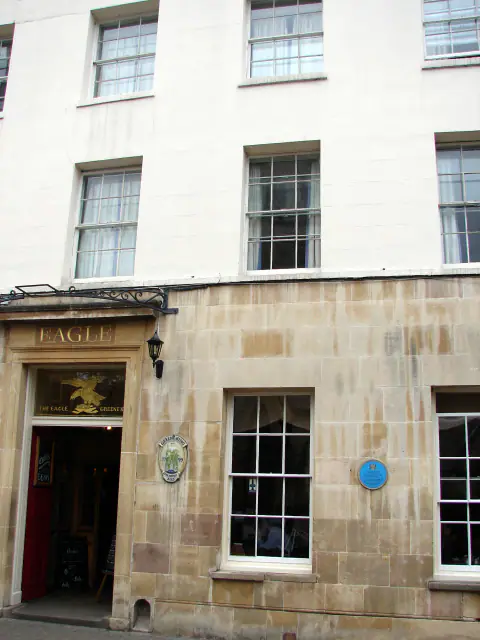 08Food & drinkThe EagleExplore experience →
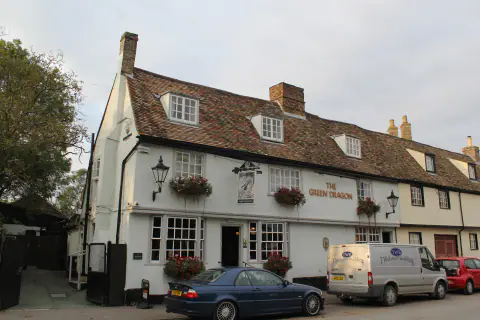 09Food & drinkThe Green DragonExplore experience →
 10Food & drinkThe HaymakersExplore experience →
 11Food & drinkThe Kingston ArmsExplore experience →
 12Food & drinkThe Live & Let LiveExplore experience →
 13Food & drinkThe MaypoleExplore experience →
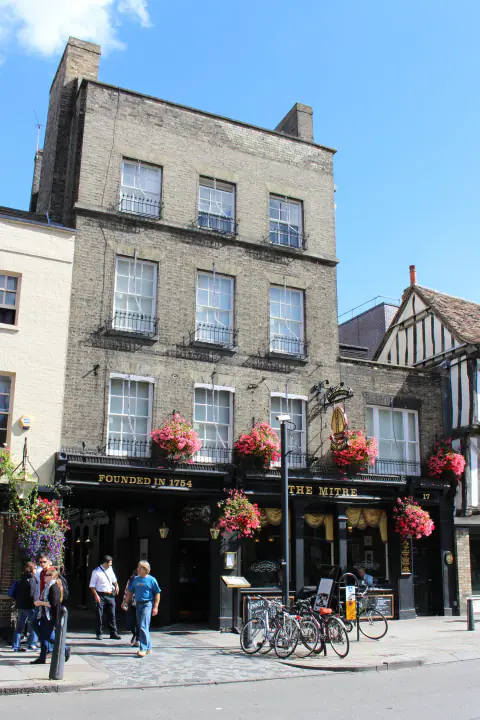 14Food & drinkThe MitreExplore experience →
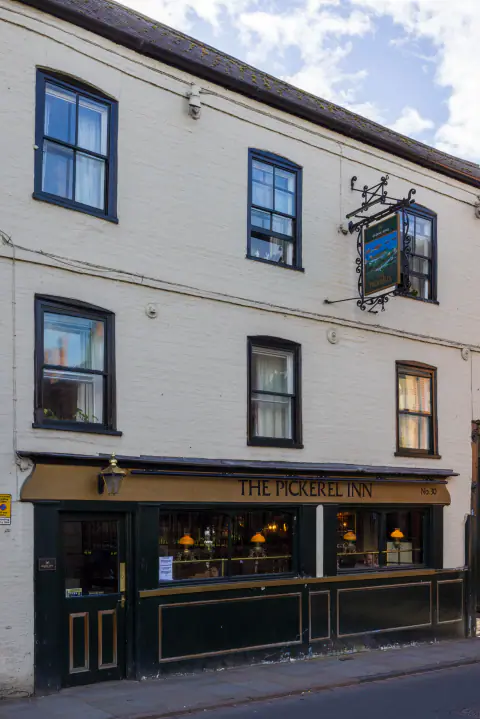 15Food & drinkThe Pickerel InnExplore experience →
 16Food & drinkThe Queen’s Head, NewtonExplore experience →
 17Food & drinkThe Royal StandardExplore experience →
 18Food & drinkThe St RadegundExplore experience →
 19OutdoorsCambridge University Botanic GardenExplore experience →
 20Water activitiesPunting the BacksExplore experience →
 35CollegesAll the collegesEvery Cambridge collegeOpen the college guide →Food & drink / a storyThe six oldest pubsWalk the timeline →Plan / Itinerary builderBuild your Cambridge dayStart planning →