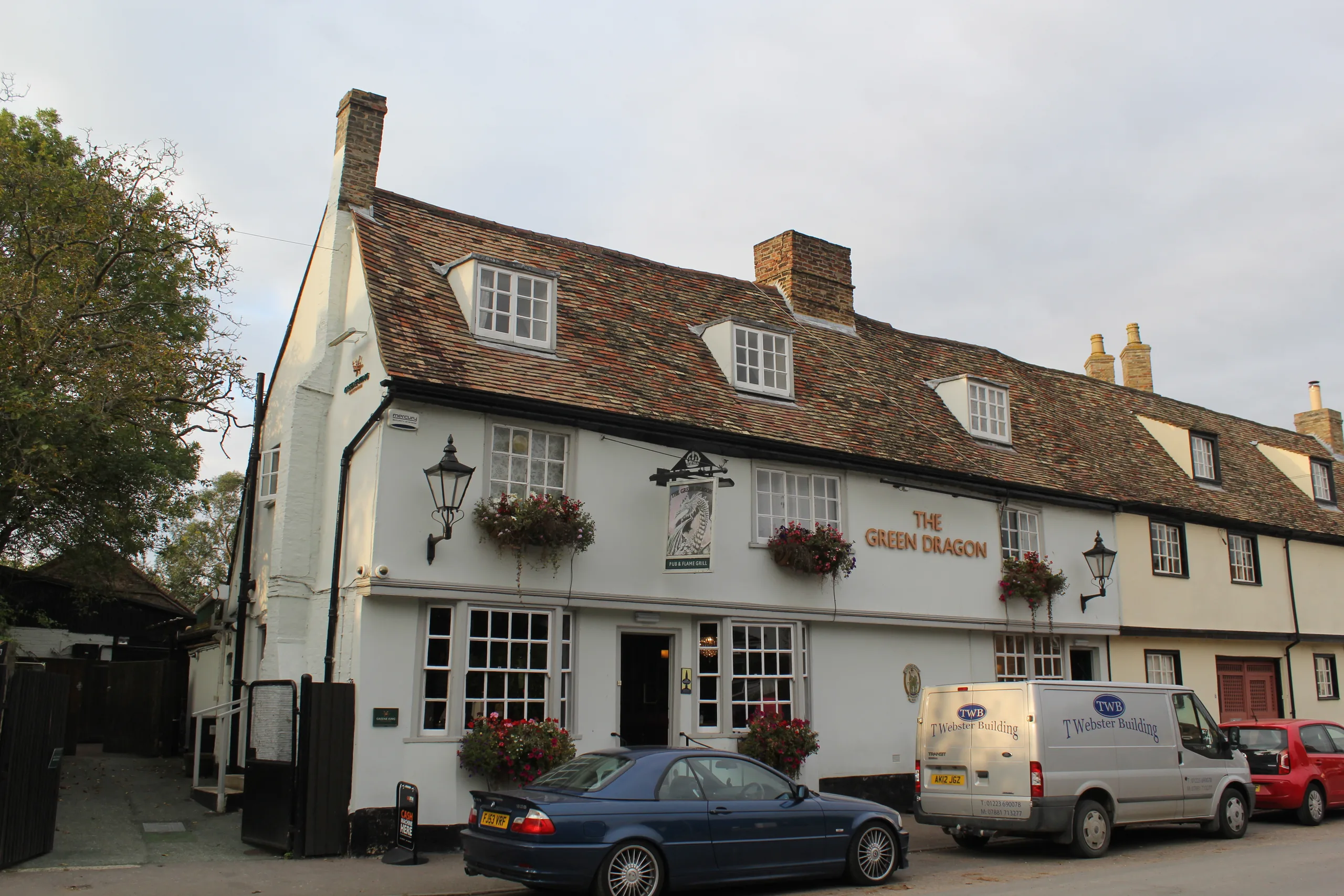
1550The Green Dragonbuilding dated / The oldest surviving pub building in Cambridge, in a riverside village
Cambridge / Food & drink
Dated from the archives rather than from the sign above the door — which is not always the same number.
Walk the timeline01 / Read the small print
Pub ages conflate two different things: how long there has been a licensed house on a plot, and how long the building in front of you has actually been a pub. In Cambridge that produces a genuine tie. The Pickerel has the longer continuous licence, conventionally dated to 1608 — but its Magdalene Street frontage is early 19th century. The Green Dragon at Chesterton has the older building, a timber-framed range the Royal Commission dated to the 16th century. Each is honestly the oldest; they are answering different questions.
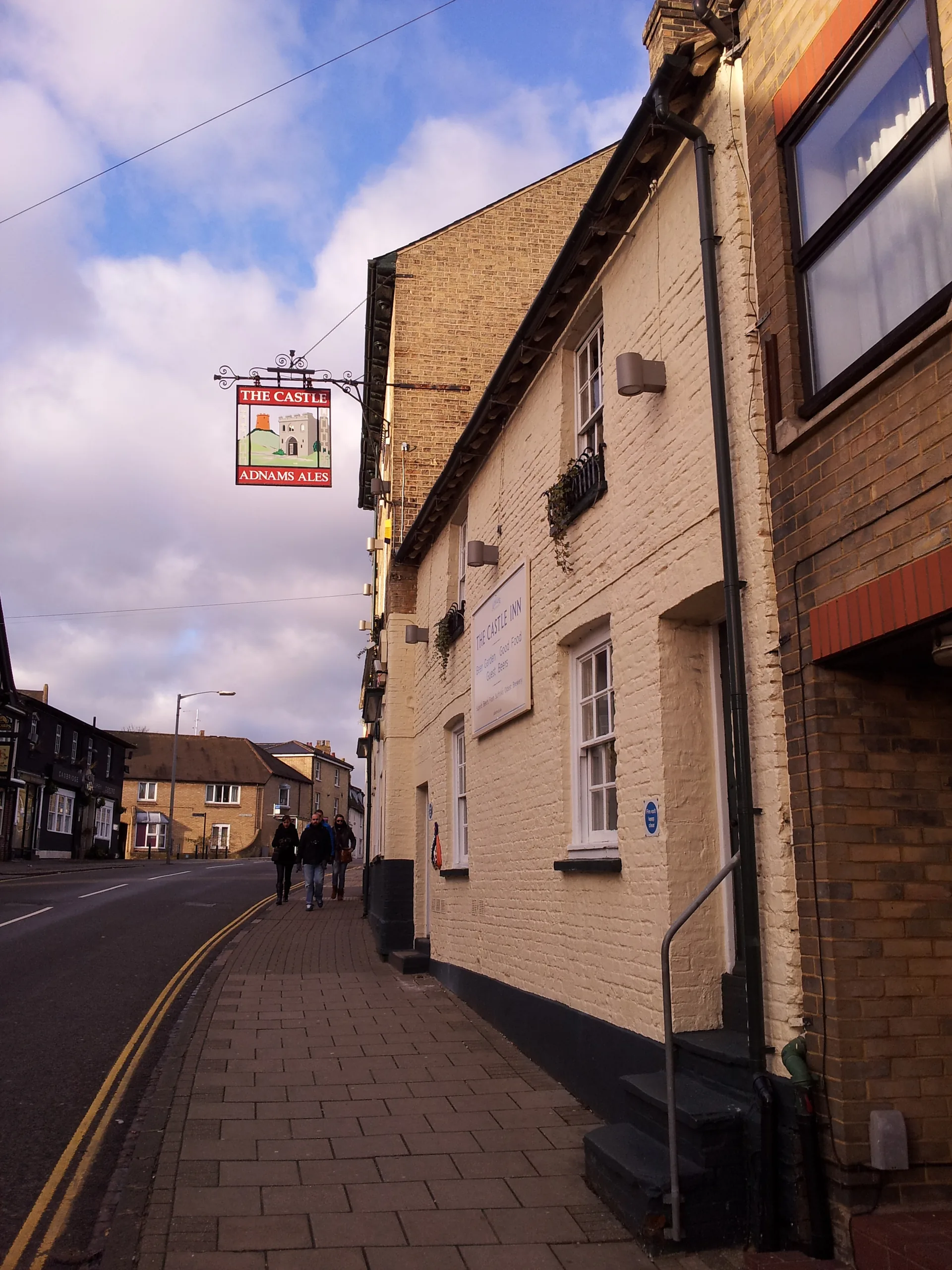
The six run from Tudor river inns built to serve Stourbridge Fair to Georgian houses on Castle Hill and Bridge Street. Four of the six are Greene King houses and the Eagle sits on a Corpus Christi freehold — because Cambridge is a brewery town, and filtering for independence would filter the history out. It also means the ownership on the sign is worth checking: Adnams sold the Castle Inn in 2024, so the city no longer has an Adnams pub, whatever the beer on the bar suggests.
02 / Where they are
Cambridge / Poured over time
From a Tudor inn on the Cam built for the fair trade to a Georgian house on the road north — Cambridge’s drinking history, in the order it actually happened.
Drag or swipe through the timeline →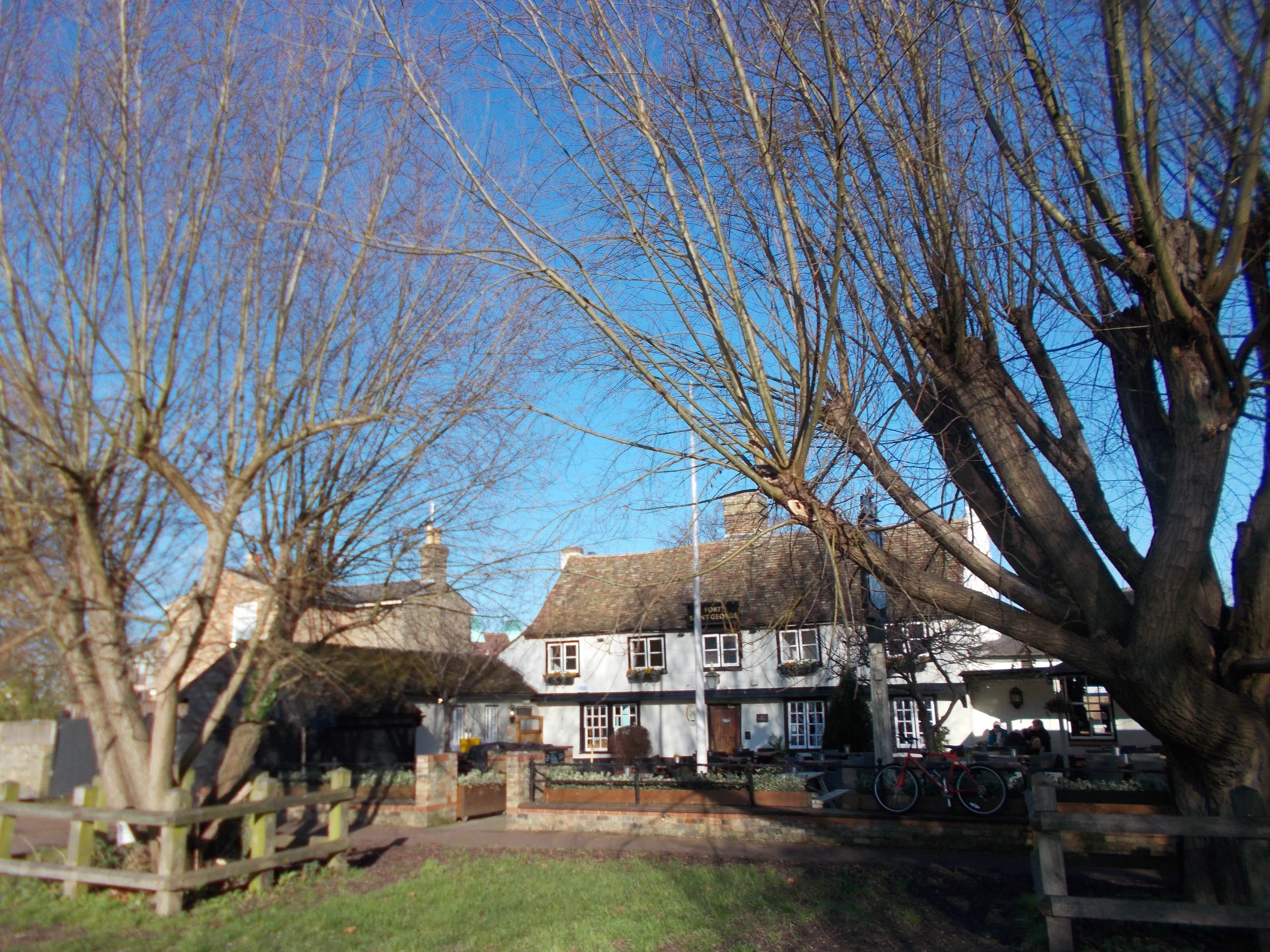
Dates are the earliest a source supports — a licence, a lease or the fabric of the building — not the date on the sign.
174403 / The full record
The Royal Commission on Historical Monuments recorded the Green Dragon as a range of four tenements with plastered timber-framed walls and tiled roofs, "built in the 16th century, with two wings on the back" — the oldest surviving pub building in the city. It stood in Chesterton, then a separate riverside village, and served merchants travelling to Stourbridge Fair, for centuries among the largest fairs in Europe. A ferry crossed here until the footbridge beside the pub replaced it. The title of "oldest pub" usually goes to the Pickerel, which has the longer continuous licence; this one has the older building.
The Royal Commission dated Fort St George to the 16th century — plastered timber-framing, part refaced in brick, on a T-shaped plan. Until the 1830s it stood on an island between the river and a cut to a lock, and it served one of the busiest of the Cambridge–Chesterton ferries, which ran from eight in the morning until ten at night and was replaced by a bridge in 1927. Its full name was Fort St George In England, after the East India Company fort at Madras it was said to resemble. It now looks out over the college boathouses on one side and Midsummer Common on the other.
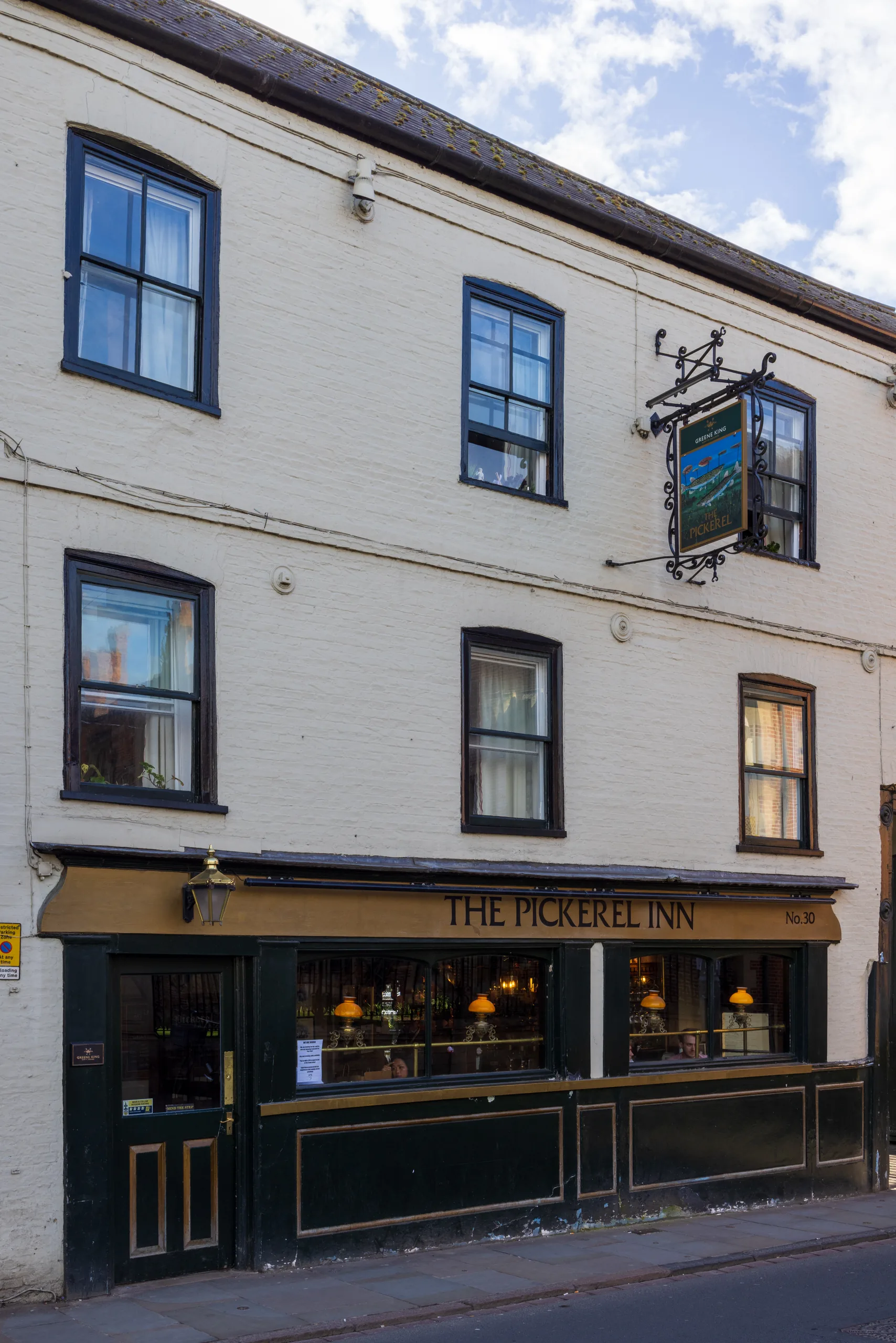
The Pickerel is generally reckoned the oldest continuously licensed site in Cambridge, conventionally dated to 1608. The building tells a more complicated story: Historic England records the Magdalene Street front as early 19th century, gault brick and slate, with a tall carriageway — but notes that "the rear wing is much older, being of the C16 and C17, timber-framed and plastered", with 17th-century panelling and 18th-century interior features. So the frontage is Georgian-era and the pub behind it is Tudor. It has collected a reputation as a former gin palace, opium den and brothel, which is colourful local tradition rather than documented record.
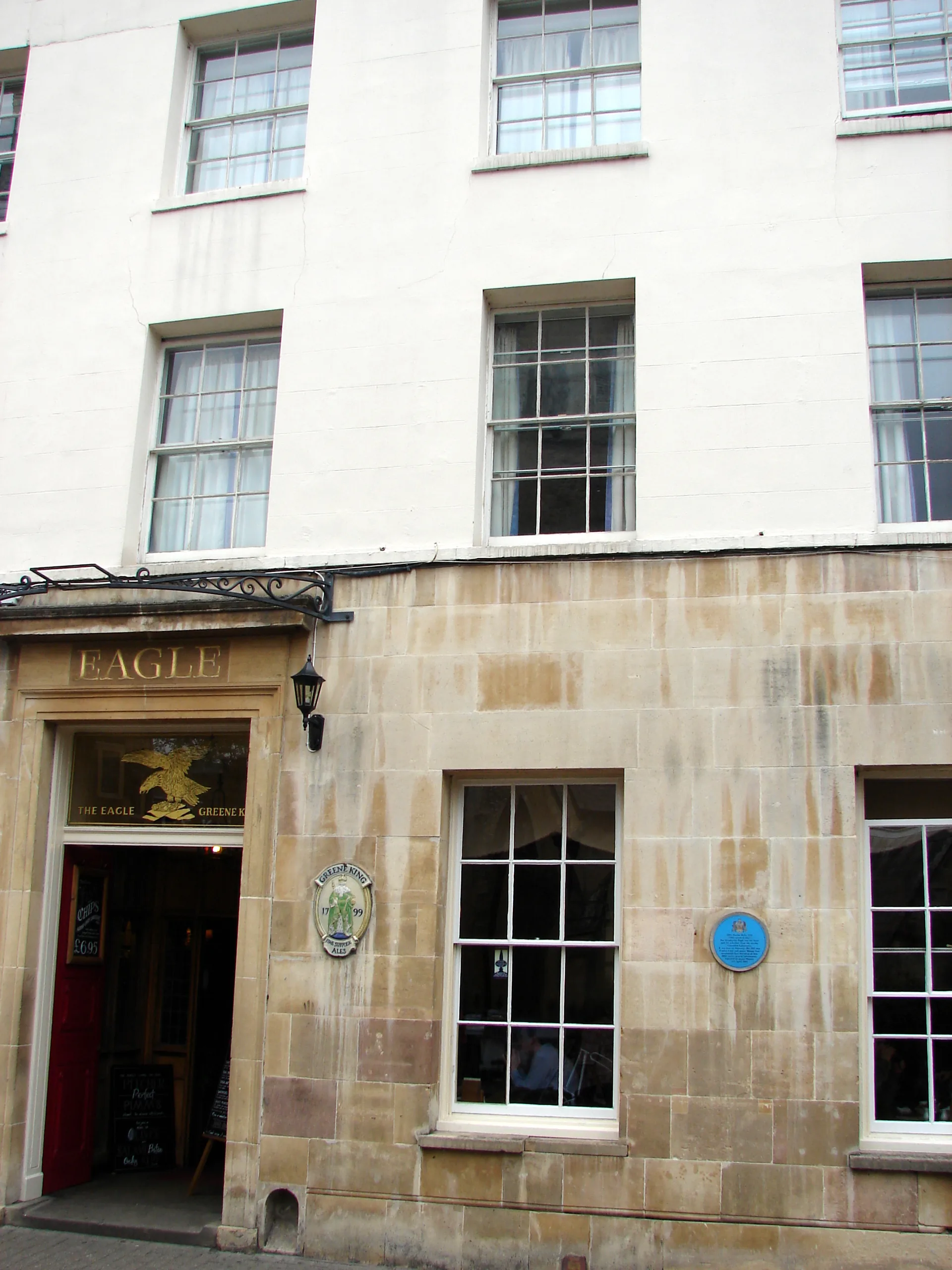
A lease of 1566 in the Corpus Christi archive already describes an inn here called the Eagle and Child; the front range dates from about 1600, and in 1667 it opened as a coaching house. Loggan’s 1688 map calls it the Post House, the innkeeper having won the contract for post horses. Its back bar carries graffiti burned and written into the ceiling by RAF and American aircrew during the Second World War, and on 28 February 1953 Francis Crick announced here that he and James Watson had worked out the structure of DNA. The freehold has belonged to Corpus Christi College for 500 years; Greene King runs it.
The trade here dates from the 1740s, when the house was the Three Horseshoes; it became the Old Castle and eventually the Castle Inn, though the building Historic England lists is early 19th century — painted gault brick with a C19 pub frontage. A 1970s guide described two rooms with "blackened beams festooned with antiquated copper, brass and pewter utensils". Adnams bought it from Allied Breweries in 1994, knocked it through into the neighbouring building and terraced the patio against the Castle Bank; the brewery sold the freehold to Wells & Co in 2024, and it has been independently run since. Adnams beers are still on the bar, which is why most sources online will tell you it is an Adnams pub. It is not, and Cambridge no longer has one.
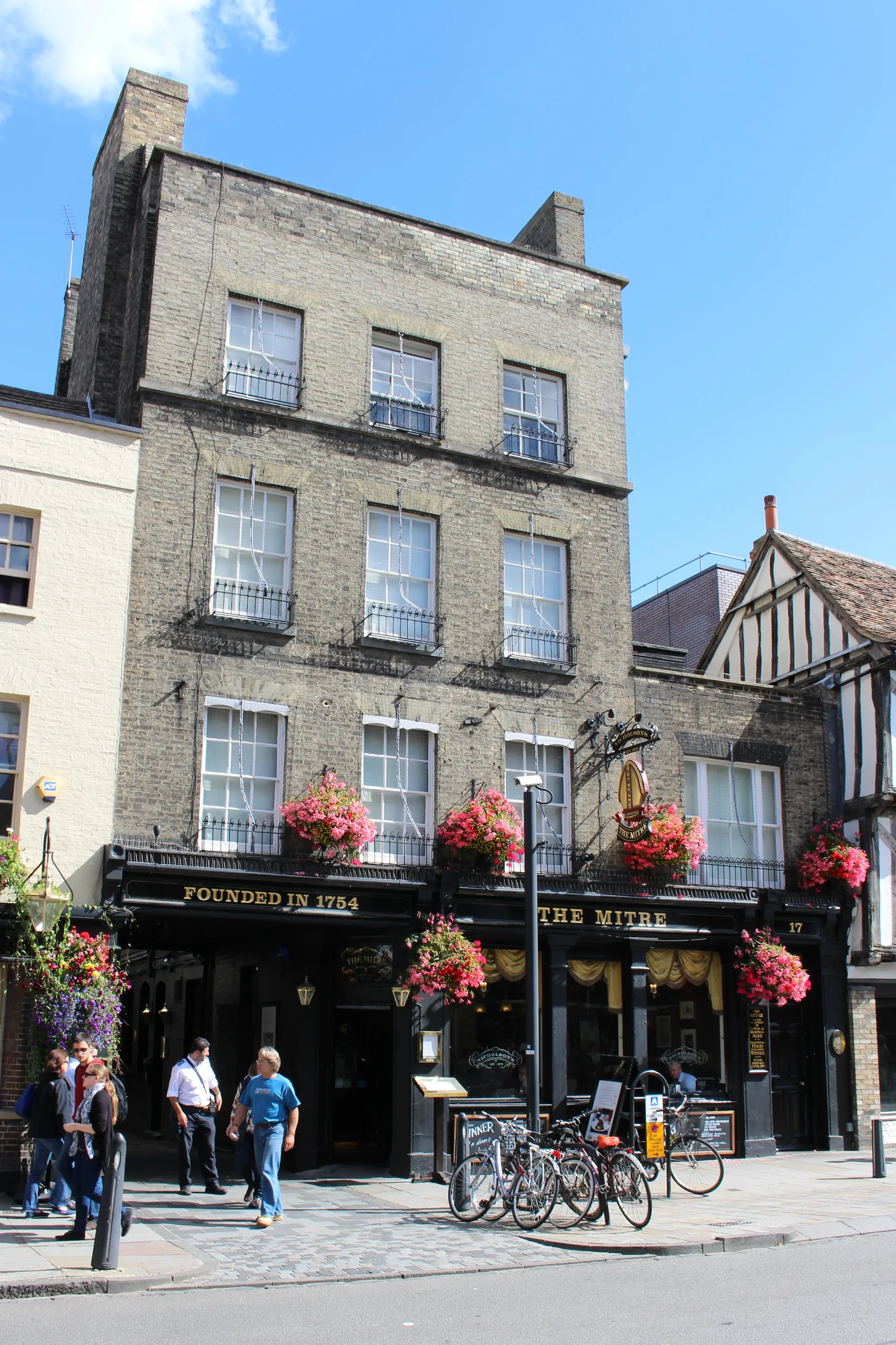
The Mitre stands on the site of two mid-18th-century inns, the Blackmoor’s Head and the Cock and Magpie — the latter run by Ann Lawrence, a widowed wine merchant, with her eight daughters. It advertises three dates that do not agree. The carriage arch carries 1754; the plaque outside records the earliest known licensee, Robert Clarke, in 1752; and the licensee sequence compiled from T. E. Faber’s parish history puts Clarke in the house from 1744, with the site’s licensed history running back to an alehouse licence of 1615/16. Historic England dates the arch itself to the 19th century, so the carved date is about a century younger than the year it announces. The railway then destroyed Bridge Street’s river trade: by 1856 the parish’s fifteen pubs were down to four. The house was trading as the Mitre Billiard Rooms by 1878 and only took the name Mitre in 1881, from the nearby Mitre Brewery.
Advertises 1754. Earliest supported date: 1744 (licensee recorded).
Dates checked against the Royal Commission’s Survey of Cambridge (1959) via Capturing Cambridge, Historic England listings, Corpus Christi College’s archive for the Eagle, and local pub history. Verified 29 July 2026 — opening hours and ownership change; the dates do not.