In depth
Fitzwilliam Museum
An edited route through Cambridge's major art and antiquities museum, from the grand entrance to collection highlights.
Story · Visit · Route · Links
Choose your depth
Essentials or more detail?
See visiting essentials, or read more about the history and places nearby.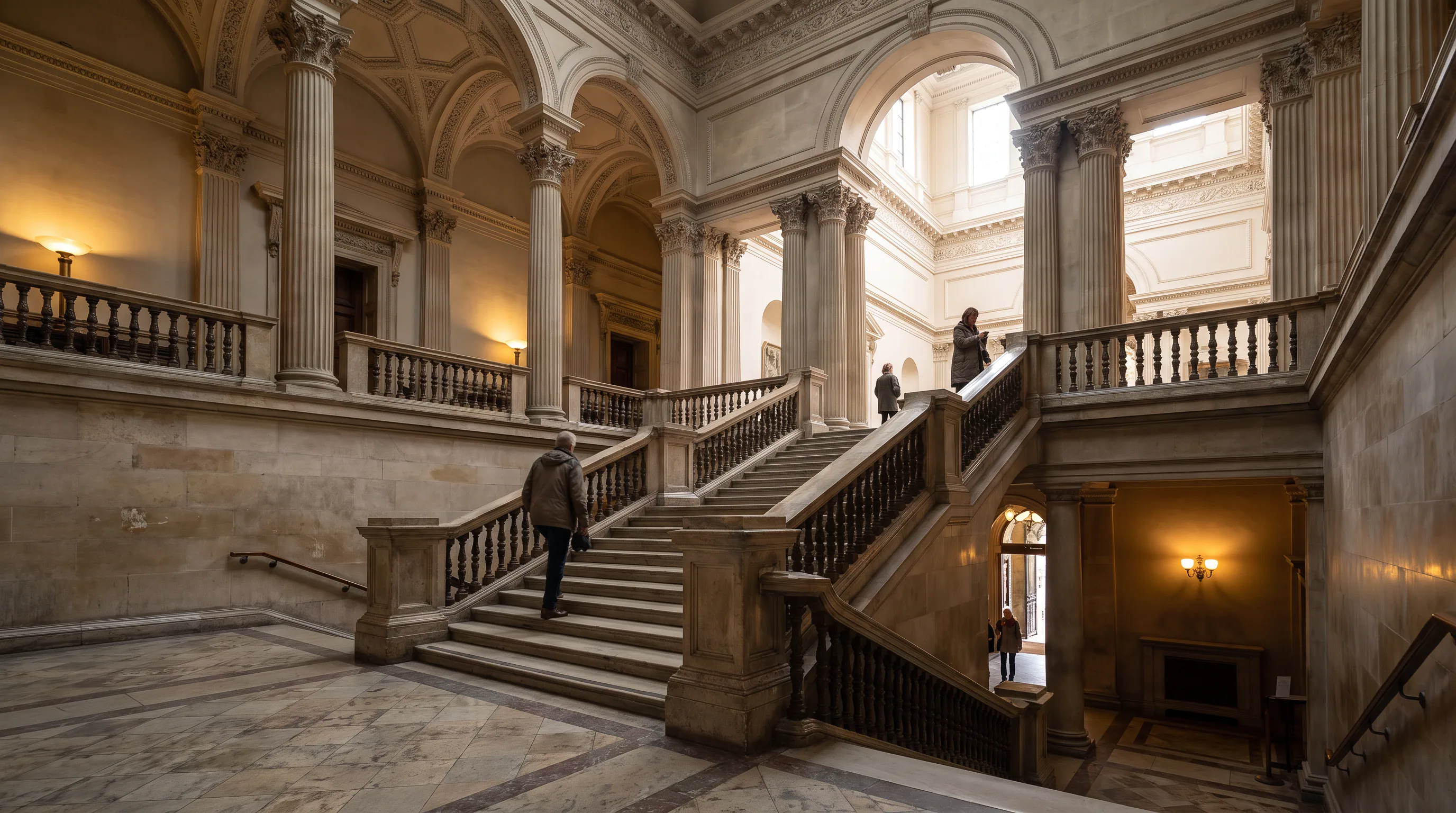
01 The experience
What to expect.
Why it matters
The collection joins university research to public access. Permanent galleries are free, and members of the public can request appointment-based study-room access to objects not currently displayed. That makes the institution more than a city attraction: it is both a public museum and a research collection.
Its history also requires scrutiny. The museum now discusses the founding collector’s wealth and family connections to the transatlantic slave trade. A responsible guide should not reduce the story to generous bequest and splendid building while ignoring how collections and wealth were formed.
What visitors should notice
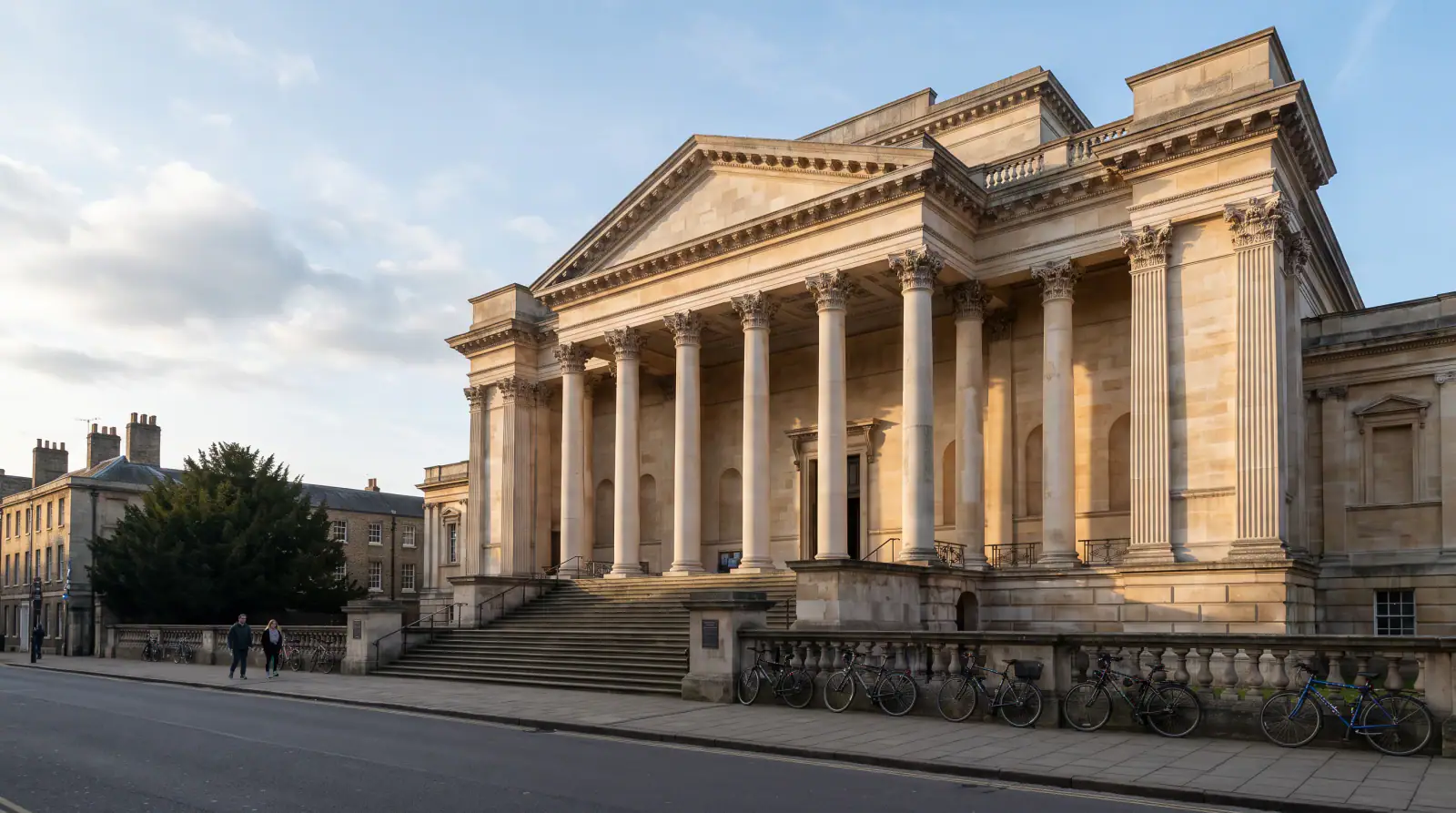
Notice the building before choosing objects. The portico, entrance hall and staircase turn arrival into ceremony. Then resist trying to “do the museum”. Choose two or three collection areas and give them time.
The renewed painting galleries mix historic, modern and contemporary works by theme rather than enforcing a simple chronology. Elsewhere, manuscript, ceramic, coin and antiquities displays reward close looking at smaller objects.
Who will enjoy it
Art lovers, history enthusiasts, families seeking a free indoor visit, and anyone who wants cultural depth without college admission. It is especially strong for mixed-interest groups because one person can focus on paintings while another uses antiquities, armour or decorative arts.
Who may find it difficult
The collection’s range can overwhelm a first visit. The grand architecture also creates visual and acoustic intensity. Use the map, identify quieter seated galleries, and treat one hour as a selection rather than a failed attempt at completion.
The Founder’s Entrance has steps; the Courtyard Entrance provides street-level step-free access. Large bags and backpack carriers are restricted. Object locations can change, and the museum warns that its online collection records may not show current display information while systems are being upgraded.
Visitor verdict
The best free cultural visit in central Cambridge and the safest bad-weather anchor for a day. Go with a shortlist: one architectural space, one major collection and one unfamiliar gallery. Return visits make more sense than a three-hour forced march.
The story
History & character.
The 1816 bequest
Richard, 7th Viscount Fitzwilliam, left the University of Cambridge his collection and funds for a museum in 1816. His books, manuscripts, music and art formed the institution’s nucleus. The museum bears his name, but its present scale is the result of two centuries of additions, gifts, purchases and research.
The museum now places the bequest within a fuller account of Fitzwilliam’s wealth, including family links to the transatlantic slave trade. This is not an optional modern footnote. It changes how a visitor should understand collecting, cultural authority and the financial conditions behind a public gift.
Temporary accommodation
The collection first occupied temporary University space in central Cambridge, in a building later associated with the Whipple Museum of the History of Science. The delay between bequest and permanent museum was substantial: the present building opened thirty-two years after the bequest.
Basevi and Cockerell
George Basevi designed the monumental neoclassical museum on Trumpington Street. He died before it was complete, and Charles Robert Cockerell finished the work. The museum opened to University members and the public in 1848.
The architecture expresses the nineteenth-century idea of the museum as a temple of art: a powerful portico, ceremonial staircase and richly ordered interiors. That grandeur is part of the experience, but it also frames the collection through a particular European institutional tradition.
Expansion
The building has been repeatedly extended and is now about twice its original footprint. Galleries developed around changing collections, scholarship and visitor needs. This is why circulation can feel less obvious than the symmetrical front suggests.
The Marlay bequest
Charles Brinsley Marlay’s early-twentieth-century bequest brought paintings, prints, drawings, books, manuscripts, pottery, silver, jewellery, furniture and tapestries. Its range demonstrates how major private collections transformed the museum beyond Fitzwilliam’s original holdings.
A collection of collections
Today’s departments encompass the Ancient Near East, Egypt, Greece and Rome, Asian and Islamic art, ceramics, glass, coins, manuscripts, paintings, prints, sculpture, textiles, furniture, arms and armour and more. The institution is not a chronological story in one voice. Each collection arrived through different people, markets, excavations, gifts and systems of knowledge.
Public museum and research institution
The museum’s role within the University shapes conservation, cataloguing and teaching. The Study Room makes works available by appointment to members of the public as well as researchers. Online records extend access but are themselves under revision; the museum warns that locations and information may not be current during its database upgrade.
Interpretation changes
Museum displays are not permanent truth. Galleries are rehung, terminology is reviewed and provenance research changes labels. The Fitzwilliam explicitly notes that historic collection records may contain offensive or outdated language and interpretations.
Recent gallery arrangements place historic and contemporary works into thematic conversation. That breaks the old assumption that a universal museum should move neatly from ancient to modern or arrange every school by nation.
The building as an object
The portico and entrance hall are often photographed more than individual works. This can obscure the museum’s quieter strengths: small manuscripts, coins, ceramics and works on paper. A good visit moves between architectural spectacle and close study.
Look closer
Highlights and hidden details.
The objects, spaces and small observations that turn a visit into a memorable one.1. The Founder’s Entrance and portico
Read the building from across Trumpington Street before climbing the steps. The neoclassical front presents the museum as a public monument.
2. The entrance hall and staircase
The museum’s most theatrical interior. Pause before choosing a gallery; the architecture is one of the collection’s principal objects.
3. Paintings galleries 1–5
The renewed rooms arrange works around themes including interiors, identity, movement and nature, putting historic and contemporary artists into conversation.
4. Egypt, Kemet and Kush
Material culture across death, worship, writing and daily life. Avoid reducing the galleries to mummies; the strength is range and historical context.
5. Illuminated manuscripts
Small-scale objects that repay slow looking. Colour, gold, script and binding bring together painting, literature and material craft.
6. Ceramics, glass and enamels
One of the best areas for visitors who think they are not interested in “fine art”. Shape, surface and technical invention make a strong visual sequence.
7. Arms and armour
Objects built for use, display and status. Look at construction and decoration together rather than treating the gallery as military spectacle.
8. Coins and medals
Dense, easily missed evidence of political image-making and exchange. Choose one case rather than scanning every object.
9. Temporary exhibitions
These can reshape the museum visit and may be free or ticketed. Check the current programme rather than treating an old exhibition listing as permanent.
Details worth slowing down for.
The building is twice its original footprint
The symmetrical portico conceals a museum assembled through repeated extensions. Changes in circulation and room character reveal where institutional growth complicated the original plan.
The first museum was elsewhere
The collection waited decades in temporary accommodation before the 1848 building opened. The bequest date and building date are not interchangeable.
Object labels are provisional scholarship
Look for language indicating uncertainty, attribution or provenance research. Museums revise knowledge; a cautious label is evidence of work, not weakness.
The quiet galleries are often the richest
Works on paper, coins, manuscripts and decorative arts can sit beyond the headline paintings. One small case studied closely may yield more than an entire floor crossed quickly.
The entrance stages authority
The portico, hall and stair deliberately elevate the visitor into a world of cultural value. Notice who and what that architecture was designed to impress.
Contemporary works interrupt chronology
The thematic painting galleries break a conventional old-master sequence. Unexpected pairings are curatorial arguments rather than random rehanging.
Display is a tiny fraction of holdings
More than half a million objects cannot fit in public galleries. The museum’s research and study-room functions matter because storage is part of the institution, not unused surplus.
Make it work
Plan the visit properly.
Current practical detail, kept separate from the story so it is easy to scan when you need it.At a glance
| Tuesday–Saturday | 10:00–17:00 |
| Sunday / bank holiday | 12:00–17:00 |
| Last entry | 16:40 |
| General admission | Free |
| Typical visit | 90–150 minutes |
| Step-free entrance | Courtyard Entrance |
| Address | Trumpington Street, CB2 1RB |
Hours verified 28 July 2026. Temporary exhibitions can have separate tickets and opening arrangements.
Plan a route
Start with the entrance hall, then choose no more than three interests. A useful first visit might combine paintings, Egypt and one decorative-arts collection. Use the museum map because room numbering and circulation are not intuitive.
Entry and bags
The Founder’s Entrance is the grand stepped approach. The Courtyard Entrance is street-level and step-free. Lockers are available near both entrances. Large bags, backpack-style child carriers and bulky items are restricted.
Families
Children are welcome. The Family Trolley offers drawing materials, picture books and sensory resources. Buggies and slings are allowed, while backpack carriers are not. Baby changing is provided in accessible gender-neutral toilets.
Families may bring food to the Schools Lunchroom on weekends and during school holidays; food and drink are not permitted in galleries. The Courtyard Kitchen has highchairs and child-friendly options.
Accessibility
Use the Courtyard Entrance for step-free access. The museum links to a detailed AccessAble guide with doorway and step dimensions. Contact fitzmuseum-access@cam.ac.uk or 01223 332900 for a visit dependent on specific arrangements.
Quieter seated spaces include Gallery 28 on the ground floor and Gallery 7 on the first floor. Companion tickets are available for charged exhibitions and events.
Food, shop and toilets
The Courtyard Kitchen serves meals and snacks. The shop closes at 16:50 and toilets also close at 16:50 to allow safe building closure. Do not plan a last minute arrival around those facilities.
Getting there
The museum is on Trumpington Street, roughly 15–20 minutes on foot from Cambridge station and ten minutes south of Market Square. Buses serve the street. Central parking is limited; Park & Ride or rail is preferable.
Best time
Tuesday morning and weekday late afternoon are often calmer than weekend midday. Sunday opening starts at noon. Rain pushes more visitors indoors, especially during school holidays.
Collection availability
Do not travel for one object without confirming it is on display. The collection search contains historic records and, during the 2026 upgrade, locations may be out of date.
Study Room
Members of the public can request research access by prior appointment, normally Tuesday–Friday 10:00–16:00 with a midday closure. Submit requests at least two weeks ahead and wait for confirmation before making travel commitments.
Visit your way
Access and family planning.
Entry
Use the Courtyard Entrance for street-level step-free access. The Founder’s Entrance is stepped. Step-free access is available to all public floors.
Planning
The museum provides an AccessAble guide with visual information and measurements. For specific needs contact fitzmuseum-access@cam.ac.uk or 01223 332900.
Toilets and companions
Accessible gender-neutral toilets are located near both entrances and include baby-changing. Free companion tickets are available for charged exhibitions and events.
Rest and sensory conditions
Seating is distributed through galleries. Gallery 28 on the ground floor and Gallery 7 on the first floor are identified as quieter spaces. The entrance hall can be visually and acoustically busy; begin at the Courtyard Entrance and move directly to a quieter room if needed.
Families and mobility
Buggies are permitted. Lockers at both entrances reduce the need to carry bags. Lifts and step-free routes may require a different sequence from the ceremonial staircase route.
Hearing and vision
Ask ahead about large-print guides, hearing support, tours and handling or sensory resources for the current programme. Exhibition-specific resources can differ.
Service animals
Confirm current assistance-dog arrangements through the access contact if the visit depends on them.
Accuracy note
The museum website’s WCAG statement concerns its digital service, not physical access. This guide uses the physical visitor information and AccessAble route.
Family verdict
One of Cambridge’s best family fallbacks: free, indoors, buggy-friendly and varied enough to build a 60-minute visit around a child’s interest.
What the museum provides
- Family Trolley with drawing materials, books and sensory resources
- Buggies and slings permitted
- Baby-changing in accessible gender-neutral toilets
- Highchairs and child options in the café
- Family events throughout the year
- Free permanent displays and free exhibition admission for under-18s
Restrictions
Backpack-style carriers and large bags are not allowed in galleries. Children under twelve need an adult. Food and drink stay outside galleries.
A one-hour family route
Start with the staircase, choose Egypt or armour, add one painting challenge and finish with ceramics or a drawing activity. Do not attempt every floor.
Quiet and feeding spaces
Gallery 28 and Gallery 7 are identified as quieter seated areas. Bottle or breastfeeding is welcome throughout the museum.
Honest friction
The building is large, labels can be adult-focused and the most famous works may not interest children. The answer is a short, chosen route, not a longer lecture.
Self-guided walk
Explore beyond the venue.
A practical, step-by-step route connecting this experience with more of Cambridge.Tour summary
A 90-minute first visit. Gallery availability changes, so use the sequence as a method rather than a promise of exact rooms.
Stop 1 — Read the portico
Stand opposite on Trumpington Street. The building announces a nineteenth-century theory of public culture before you see any object.
Stop 2 — Enter by the route you need
Use the Founder’s steps for ceremony or the Courtyard Entrance for step-free access. Both are legitimate beginnings.
Stop 3 — The entrance hall
Take five minutes without consulting the map. Read materials, scale and stair as part of the collection.
Stop 4 — One painting theme
Choose one renewed gallery theme and compare three works across periods. Do not attempt the entire painting collection.
Stop 5 — One ancient collection
Use Egypt, Greece and Rome, or the Ancient Near East. Follow one material—stone, ceramic, metal or writing—across several cases.
Stop 6 — One small-object gallery
Choose manuscripts, coins, jewellery or ceramics. Slow down until a single case becomes legible.
Stop 7 — One unfamiliar room
Enter the gallery you would normally skip. Ten minutes of genuine discovery is the point of a universal collection.
Stop 8 — Return through the hall
Notice whether the building feels different after seeing its collections. Finish at the café, shop or a seated quiet gallery rather than forcing one more floor.
Make a record
Photograph it thoughtfully.
Best subjects
The portico from across Trumpington Street, entrance-hall geometry, staircase details, long gallery views and small-object studies where photography is permitted.
Light
Exterior morning light can separate the portico from the facade. Interiors mix daylight and artificial light; expose for highlights and accept shadow rather than flattening the architecture.
Object photography
Check gallery signs. Avoid flash, supports and any movement that blocks cases. Reflections in glass often improve at an oblique angle. Record the object label for accurate captioning.
People
The staircase works with human scale, but do not make identifiable visitors the subject without consent. Families and school groups deserve particular care.
Rights
Permission to photograph an object does not remove copyright in the artwork. Commercial publication and filming require museum approval.
Around here
Make more of the area.
Good to know
Questions, answered.
01Is the Fitzwilliam Museum free?
Permanent collections and displays are free. Some temporary exhibitions are ticketed.
02When is it open?
Tuesday–Saturday 10:00–17:00; Sunday and bank holidays 12:00–17:00.
03Is it closed on Mondays?
Normally yes.
04What time is last entry?
16:40.
05How long should I allow?
Allow 90 minutes for a selection or two to three hours for a broad visit.
06What is in the collection?
Art and objects across antiquities, paintings, manuscripts, ceramics, coins, armour, sculpture, textiles and decorative arts.
07How large is the collection?
More than half a million artworks and objects.
08When was the museum founded?
Through Viscount Fitzwilliam’s bequest in 1816.
09When did the building open?
1848.
10Who designed it?
George Basevi designed it and Charles Robert Cockerell completed it.
11Is the museum wheelchair accessible?
The Courtyard Entrance is step-free and public floors have step-free access.
12Which entrance should wheelchair users take?
The street-level Courtyard Entrance.
13Are there accessible toilets?
Yes, near both entrances.
14Can I borrow a wheelchair?
Confirm availability with the access team before travel.
15Are companion tickets free?
Yes for a companion supporting a disabled visitor to a charged exhibition or event.
16Is it good for children?
Yes: it is free, buggy-friendly and supplies family resources.
17Are buggies allowed?
Yes.
18Are backpack child carriers allowed?
No.
19Is there baby changing?
Yes, in accessible gender-neutral toilets.
20Can I breastfeed?
Yes, throughout the museum.
21Is there a café?
Yes, the Courtyard Kitchen.
22Can I bring food?
Not into galleries. A schools lunchroom is available to families at specified weekend and holiday times.
23Are there lockers?
Yes, at both entrances.
24Can I take photographs?
Check gallery signs; flash and disruptive equipment are not appropriate.
25Is every famous object always displayed?
No. Displays rotate and online location records may lag during the database upgrade.
26Can the public use the Study Room?
Yes, by prior confirmed appointment.
27How far is it from Cambridge station?
Roughly 15–20 minutes on foot.
28What is the quietest area?
The museum identifies Gallery 28 and Gallery 7 as quieter seated spaces.
29What should I see first?
The entrance hall, one painting theme and one collection outside your usual interest.
30What pairs well nearby?
King’s College, the Polar Museum, Museum of Zoology or the Botanic Garden.
Before you visit
Useful links.
Venue and visitor information
Method
The museum’s own visitor, history and collection pages are the primary sources. The bundle separates physical access information from the website’s digital accessibility statement and avoids third-party “top works” lists.
Sources
| ID | Source | Used for | Retrieved |
|---|---|---|---|
| S01 | Fitzwilliam — Plan your visit | Hours, free entry, last entry, access, family facilities and rules | 2026-07-28 |
| S02 | Fitzwilliam — Our history | Bequest, temporary site, Basevi, Cockerell, 1848 opening, expansion and Marlay | 2026-07-28 |
| S03 | Fitzwilliam — Explore our collection | Collection size and database-upgrade warning | 2026-07-28 |
| S04 | Fitzwilliam — Collections overview | Department and collection scope | 2026-07-28 |
| S05 | Fitzwilliam — Galleries 1–5 | Thematic painting-gallery arrangement | 2026-07-28 |
| S06 | Fitzwilliam — Study Room | Public research access and appointment pattern | 2026-07-28 |
| S07 | Fitzwilliam — FAQ | Entrances and companion tickets | 2026-07-28 |
Conflict ledger
Free museum versus paid exhibitions
No conflict once products are separated. Permanent galleries are free; selected temporary exhibitions may be ticketed. Copy that says simply “everything is free” is wrong.
Current object locations
The museum explicitly warns that online records may be inaccurate during its collection-system upgrade. No individual object is promised in this bundle.
Opening date
1816 is the founding bequest; 1848 is the opening of the present building. Both dates are retained with distinct meanings.
Opening hours, prices, programmes and access arrangements can change. Confirm critical details with the venue.
Continue exploring / Cambridge
More things to do
in Cambridge
Explore Cambridge activities, sights and places to eat. Compare the time to allow, costs and booking details, then save your favourites to your itinerary.
 01Culture & historyKettle's YardExplore experience →
 02Culture & historyKing's CollegeExplore experience →
 03Food & drinkFort St GeorgeExplore experience →
 04Food & drinkThe Blue Ball, GrantchesterExplore experience →
 05Food & drinkThe Cambridge BlueExplore experience →
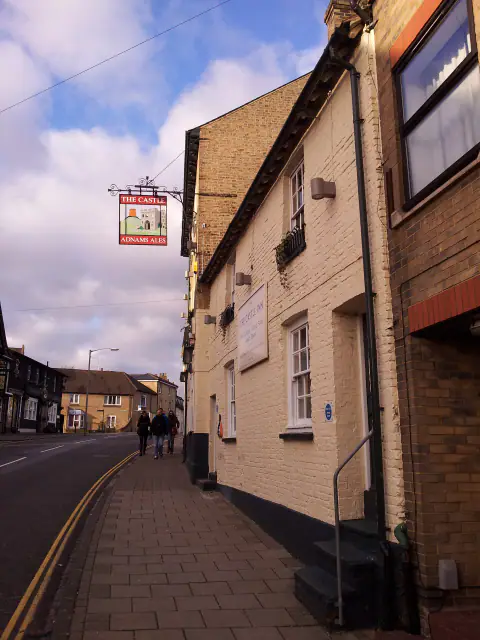 06Food & drinkThe Castle InnExplore experience →
 07Food & drinkThe Devonshire ArmsExplore experience →
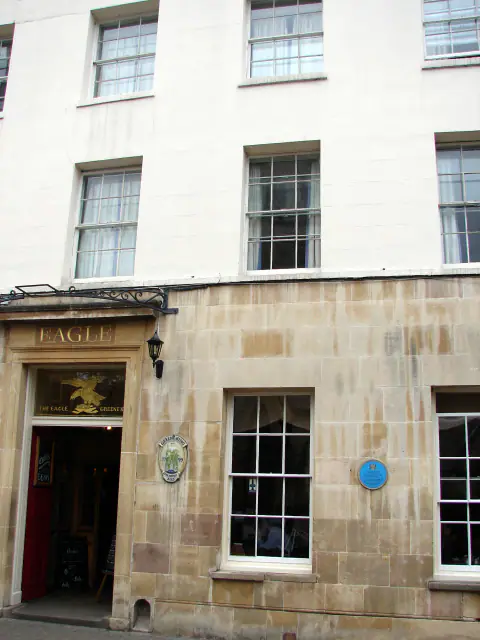 08Food & drinkThe EagleExplore experience →
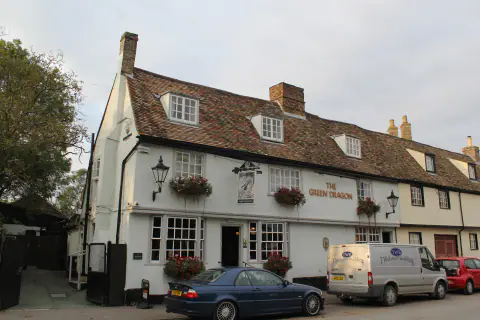 09Food & drinkThe Green DragonExplore experience →
 10Food & drinkThe HaymakersExplore experience →
 11Food & drinkThe Kingston ArmsExplore experience →
 12Food & drinkThe Live & Let LiveExplore experience →
 13Food & drinkThe MaypoleExplore experience →
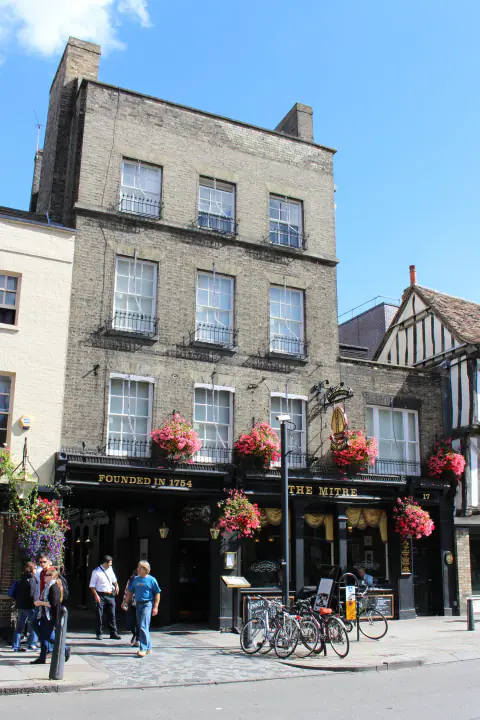 14Food & drinkThe MitreExplore experience →
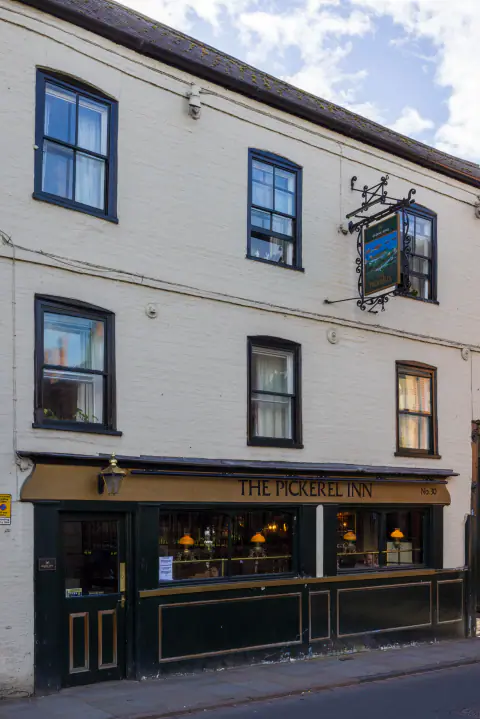 15Food & drinkThe Pickerel InnExplore experience →
 16Food & drinkThe Queen’s Head, NewtonExplore experience →
 17Food & drinkThe Royal StandardExplore experience →
 18Food & drinkThe St RadegundExplore experience →
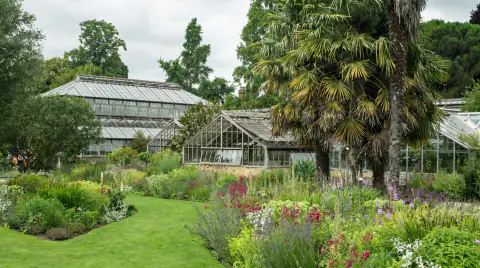 19OutdoorsCambridge University Botanic GardenExplore experience →
 20Water activitiesPunting the BacksExplore experience →
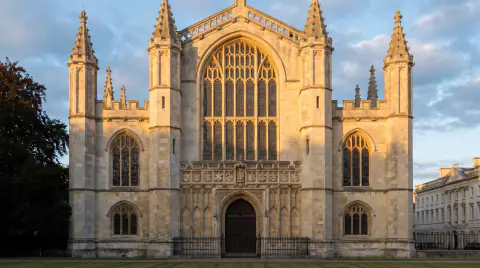 35CollegesAll the collegesEvery Cambridge collegeOpen the college guide →Food & drink / a storyThe six oldest pubsWalk the timeline →Plan / Itinerary builderBuild your Cambridge dayStart planning →