Central · Founded 1555
Trinity College
A richly decorated chapel, generous gardens and a striking modern door just off Broad Street.
- Founded
- 1555
- Location
- Broad Street
- Visiting
- Public visiting hours
- Institution
- College
01 The experience
What to expect.
Behind its Broad Street entrance, Trinity opens into gardens, quads and a richly decorated chapel. Sir Thomas Pope founded the college in 1555 on the site of an older Benedictine college from Durham. The chapel, hall and gardens are normally part of a public visit.
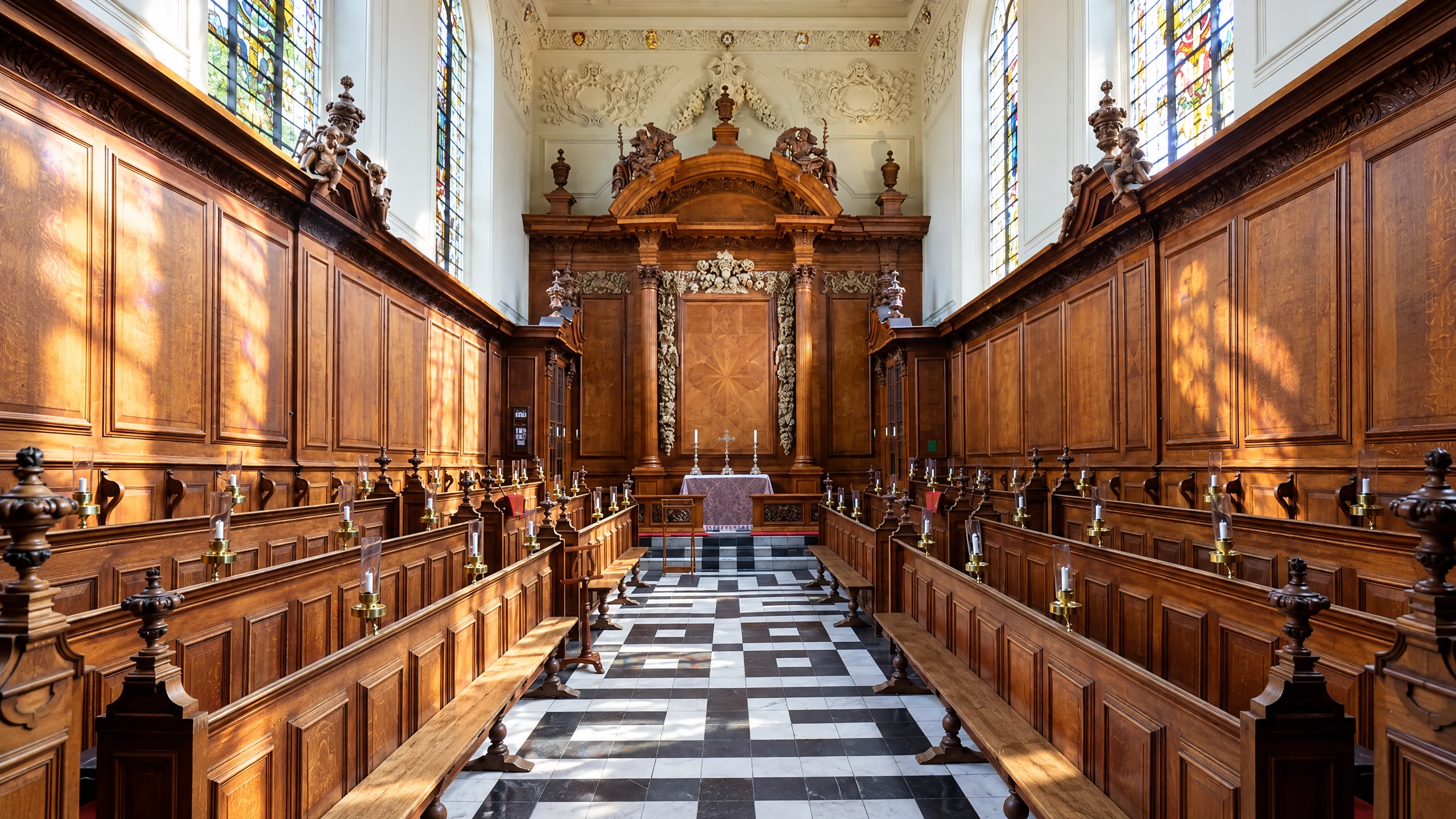
The chapel was rebuilt in the 1690s under President Ralph Bathurst. Christopher Wren contributed to its design, Grinling Gibbons carved the woodwork and Pierre Berchet painted the ceiling. Sir Thomas and Elizabeth Pope’s tomb remains inside.
The gardens include mature trees, meadows and the Back Lawns, where archaeologists found traces of an eighteenth-century formal garden. On Parks Road, Antony Gormley’s cast-iron door frames a walking figure and carries Simon Armitage’s poem Hinge.
Former students include explorer and translator Richard Francis Burton, theologian John Henry Newman, physicist Henry Moseley and writer and Battle of Britain pilot Richard Hillary. Trinity’s archive and special collections hold further stories, though research visits are arranged separately.
People and ideas
Famous former students

Sir Richard Francis Burton
Entered 1840
Explorer, linguist, diplomat and translator of the Arabian Nights.
College connection
Entered Trinity in October 1840; left without graduating.

John Henry Newman
1816
Theologian who studied at Trinity before becoming its first Honorary Fellow.
College connection
Student; later Trinity’s first Honorary Fellow. Came up in 1816; elected Honorary Fellow in 1878.
Henry Gwyn Jeffreys Moseley
1906–1910
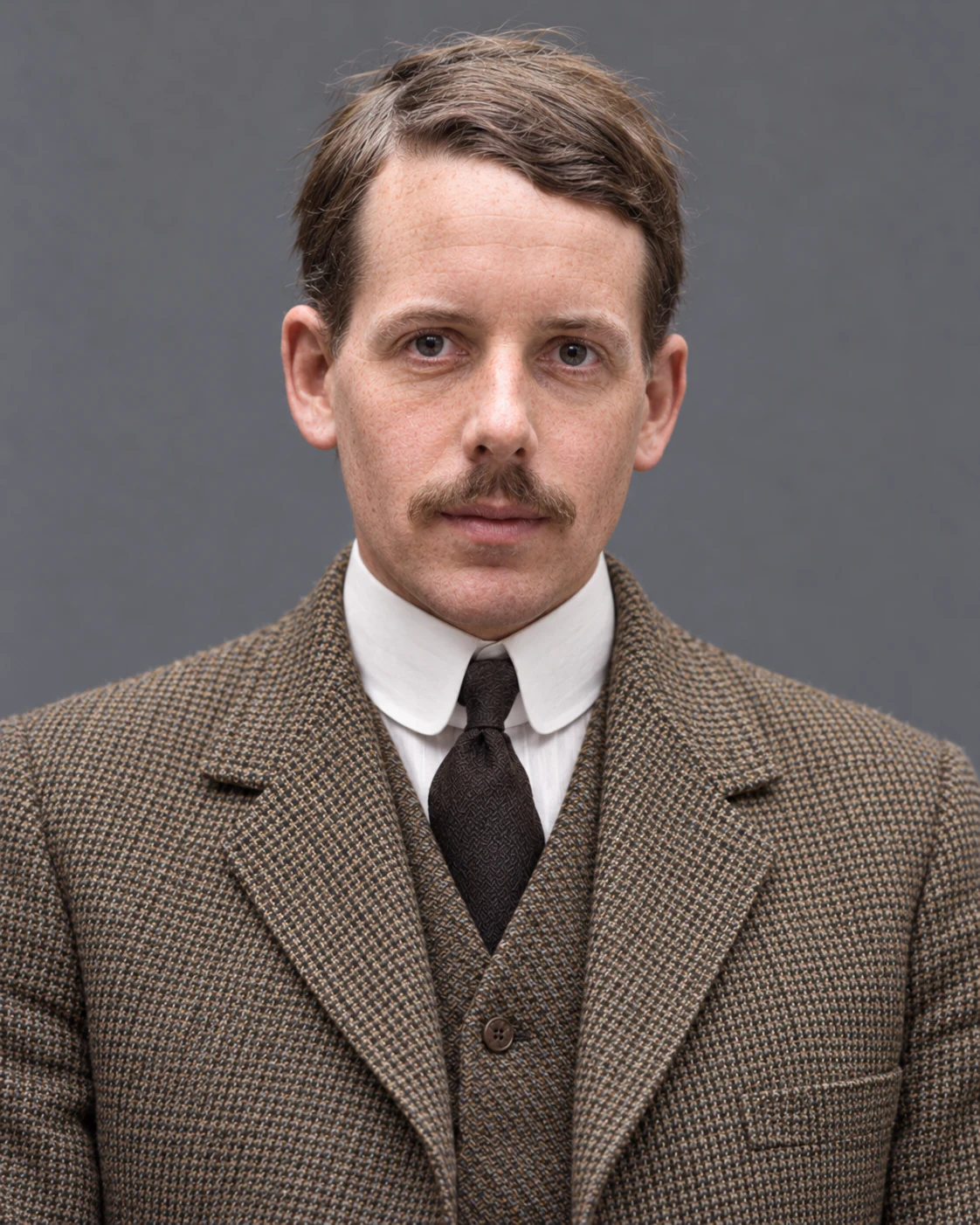
Physicist whose work with X-rays helped establish the significance of atomic number.
College connection
Natural Sciences/Physics student; Millard Scholar. 1906–1910.

Richard Hillary
Entered 1937
Battle of Britain pilot and author of The Last Enemy, remembered in Trinity’s creative writing prize.
College connection
Entered Trinity in 1937.
William Pitt the Elder
Entered 1727
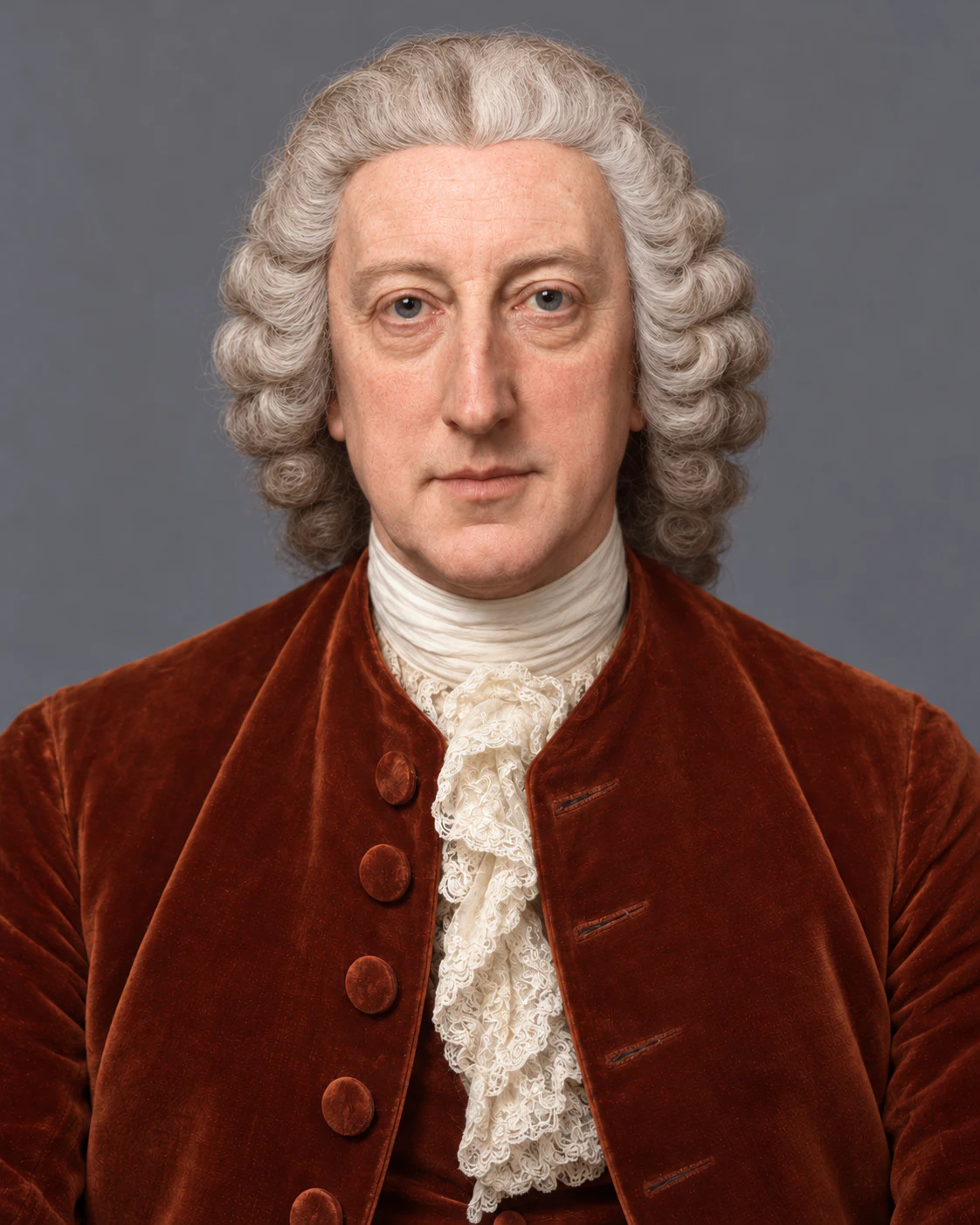
British Prime Minister who entered Trinity in 1727.
College connection
Student; subsequent study in Utrecht. Entered Trinity 1727.

James Holladay
1949–1982
Trinity scholar and later Fellow in Ancient History whose D-Day diary is held in the college archive.
College connection
Trinity scholar; later Fellow in Ancient History. Scholar 1939; First in Mods 1941; Fellow in Ancient History 1949–1982.

Ralph Kettell
Long-serving President whose name lives on in Kettell Hall.
College connection
Student; later President of Trinity.

Ralph Bathurst
1642–48
President who led the creation of Trinity’s richly decorated chapel in the 1690s.
College connection
Scholar; later President of Trinity. Entered as a scholar before the English Civil Wars of 1642–48.
The story
History & character.
Trinity stands on the site of Durham College, a Benedictine house for monks from Durham Cathedral Priory. Sir Thomas Pope bought its buildings and founded Trinity in 1555, intending it as a place of Catholic education. The first President, Fellows and scholars arrived the following year.
Religious change soon reshaped the college. After Mary Tudor’s death, Trinity adopted the Protestant rites of Elizabeth I. The old buildings also needed considerable care. President Ralph Kettell, who lived at Trinity from the age of fifteen until his death at eighty, helped guide the college for 44 years.
Kettell tried to improve student beer by brewing it in college. The excavation of a cellar caused part of the older buildings to collapse, leading to new building work. Kettell Hall still bears his name.
Ralph Bathurst became President in 1664 and led a long period of rebuilding. Christopher Wren designed accommodation now part of Garden Quad and contributed to the new chapel. Completed in 1694, the chapel brought together Gibbons’s carving and Berchet’s painting. A conservation project in 2015–16 cleaned the woodwork and restored the organ and paintings.
The garden has changed too. An eighteenth-century formal layout included sculpted yews, a maze and a fountain. An excavation in 2023–24 uncovered paths thought to belong to the old Dutch-style garden. Today meadow planting supports wildlife alongside mature trees and lawns.
John Henry Newman came to Trinity in 1816 and later became a Catholic theologian. He returned in 1878 as the college’s first Honorary Fellow. Trinity opened admission to men of all faiths or none in 1882, and its first 23 women students arrived in 1979.
The War Memorial Library opened in 1928 in memory of members who died in the First World War. Scholar James Holladay’s diary records his experience of D-Day and later wartime service; after the war he returned as a Fellow in Ancient History. Richard Hillary, a student and Battle of Britain pilot, wrote The Last Enemy and is remembered in a college writing prize.
Recent additions include the Levine Building and the Gormley–Armitage door on Parks Road, unveiled in 2025. The door is dedicated to physicist and former student Henry Moseley.
Look closer
What to see.
The chapel
Gibbons’s carved woodwork, Berchet’s painted ceiling and the Popes’ tomb fill the chapel completed in 1694.
The gardens
Mature trees, meadow planting and the Back Lawns give Trinity an unusually green setting just off Broad Street.
The dining hall
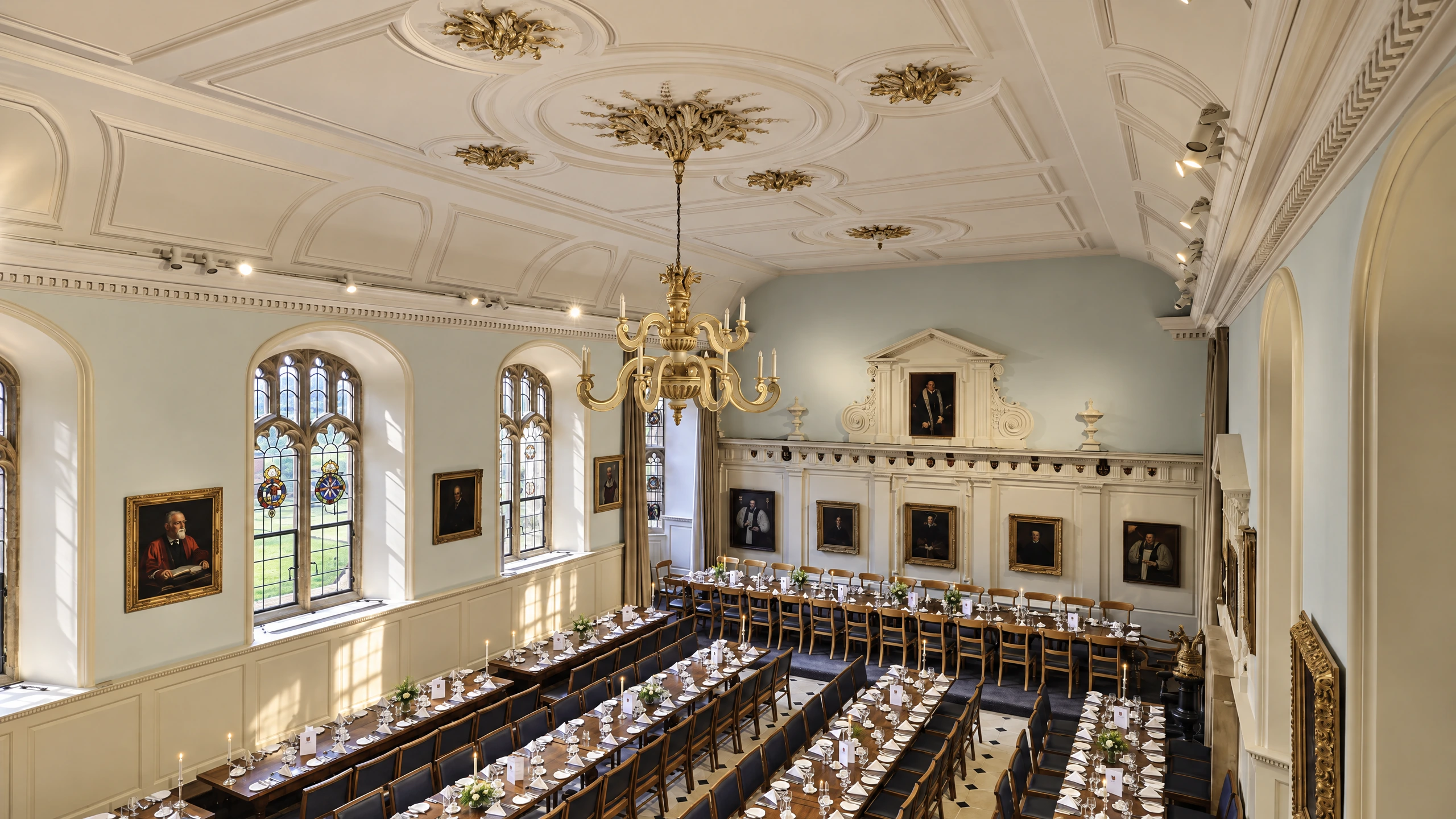
The hall is normally included in a visit, alongside the chapel and gardens.
The Gormley–Armitage door
On Parks Road, a walking figure opens through Antony Gormley’s cast-iron door, which carries Simon Armitage’s poem Hinge.
Make it work
Plan your visit.
Trinity normally opens from 10am to noon and 2pm to 5pm in term, and from 10am to noon and 1pm to 5pm in vacations. Admission is £7 for adults, £5 for concessions and students, and £5 per person for groups. Children under 12 enter free. Private events can change opening; the lodge can be reached on 01865 279900.
The Broad Street entrance leads to the chapel, dining hall and gardens. A walking leaflet is available. College rooms, staircases and marked private areas are closed to visitors. The visitor shop sells college publications, choir recordings and souvenirs.
Children are welcome with an adult. Dogs are not admitted except guide dogs, and Front Quad grass is closed to visitors. The usual route is largely flat, though some surfaces are uneven.
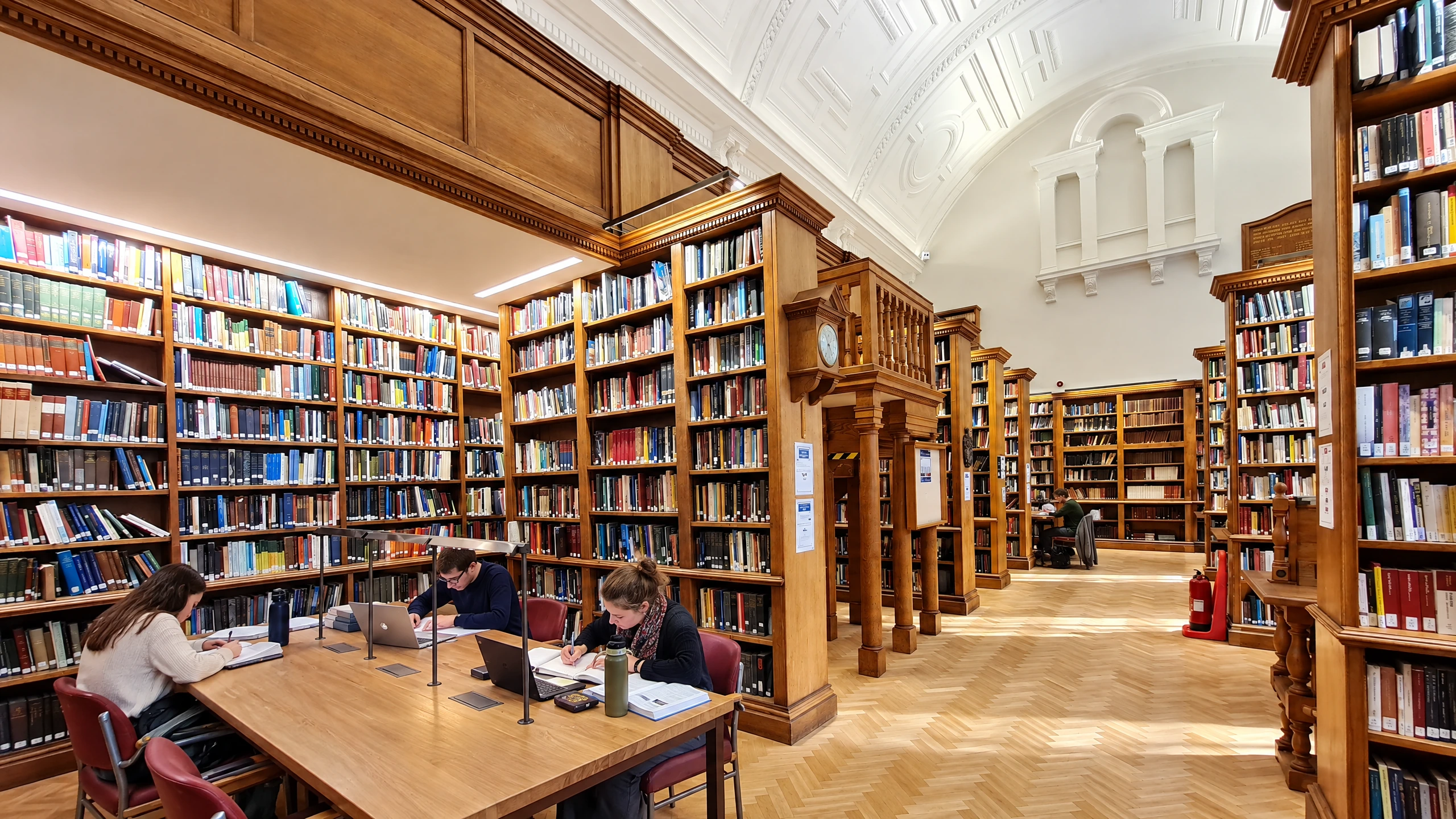
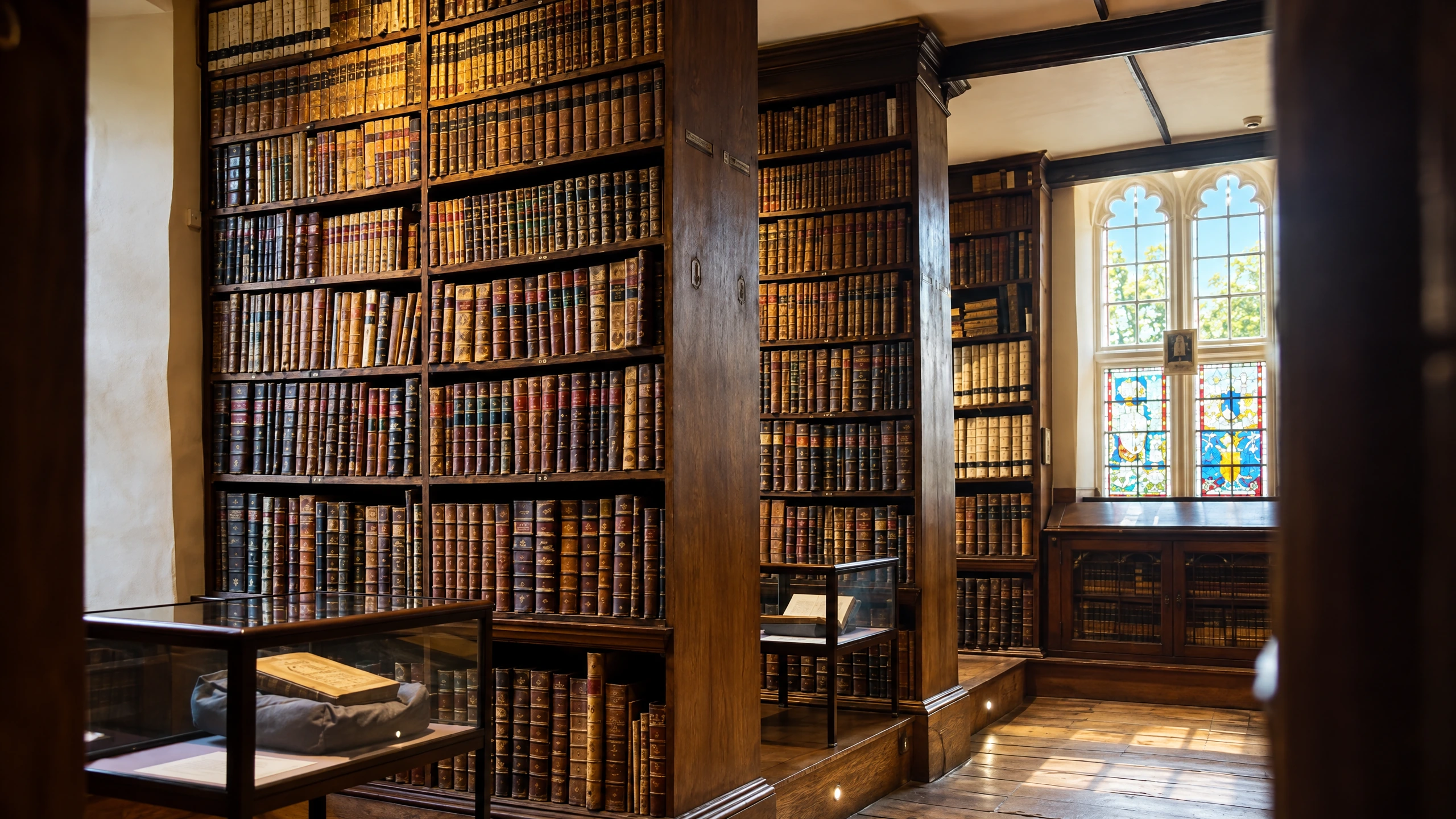
The archive is open to researchers by appointment, normally on Thursdays and Fridays; contact archive@trinity.ox.ac.uk. The War Memorial Library is for college members.
Visit your way
Access and family planning.
The Broad Street entrance is level; other pedestrian gates have steps or raised thresholds. The usual chapel, hall and garden route is largely flat, with some uneven surfaces. Accessible toilets and a Changing Places room are available. Lifts serve several buildings, although some historic areas have steps. There is no designated on-site Blue Badge bay; public bays are on Broad Street.
The gardens and chapel offer a mix of outdoor space and colourful details. Children under 12 enter free and need to be accompanied by an adult. The walking figure in the Parks Road door is another memorable sight nearby.
Self-guided walk
A walk around Trinity
Trinity’s Broad Street entrance opens onto its historic chapel, dining hall and gardens.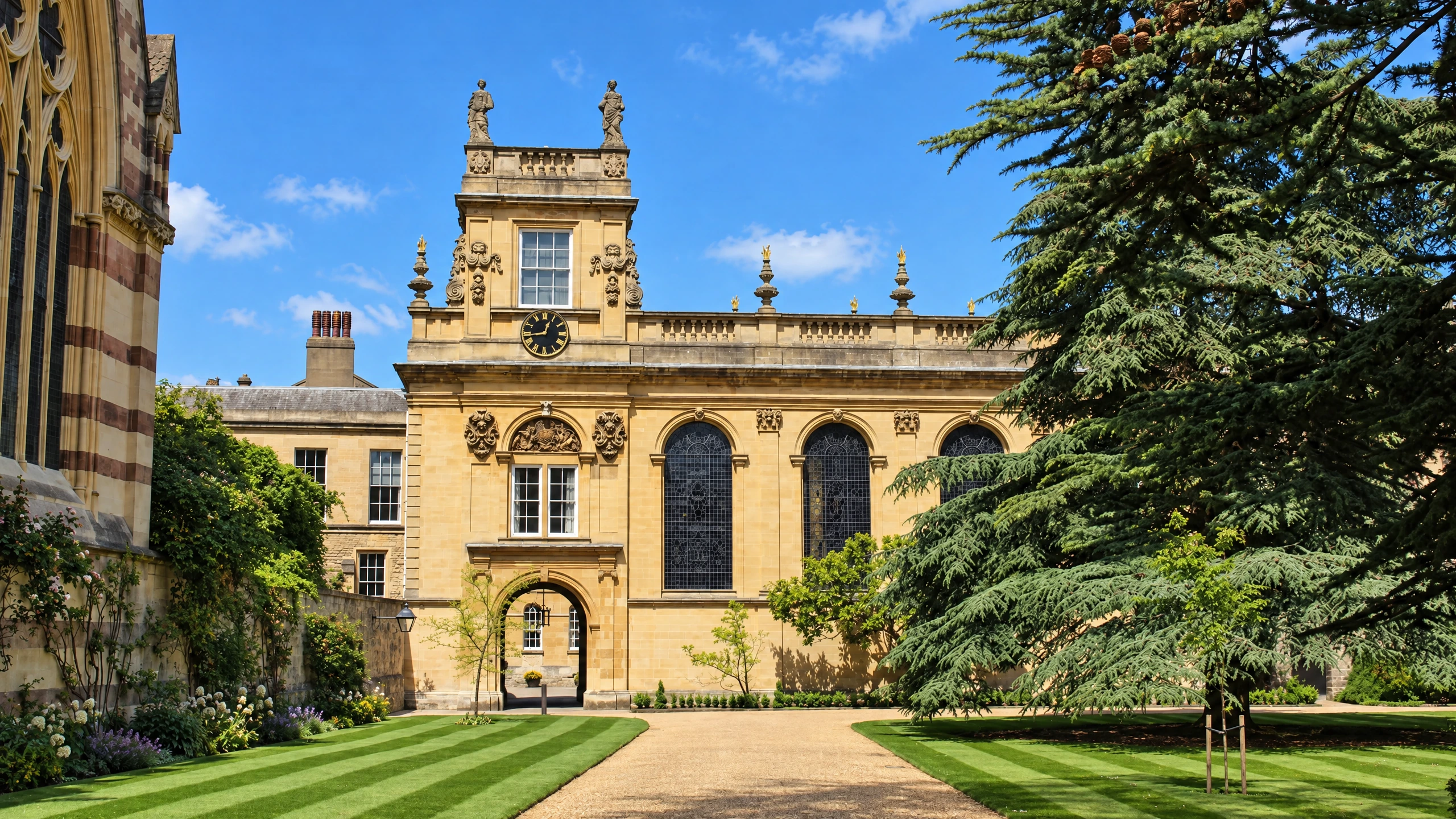
Chapel, hall and gardens
From the Broad Street lodge, the usual visit takes in the chapel, dining hall and gardens. The Back Lawns and meadow planting reveal a greener side of central Oxford.
The archive and Parks Road
Trinity’s archives and special collections offer research visits by arrangement. The Gormley–Armitage door can be seen on Parks Road outside the college.
See it
In pictures.
10 views, full screen. Tap any one to open the viewer.Around here
Make more of the area.
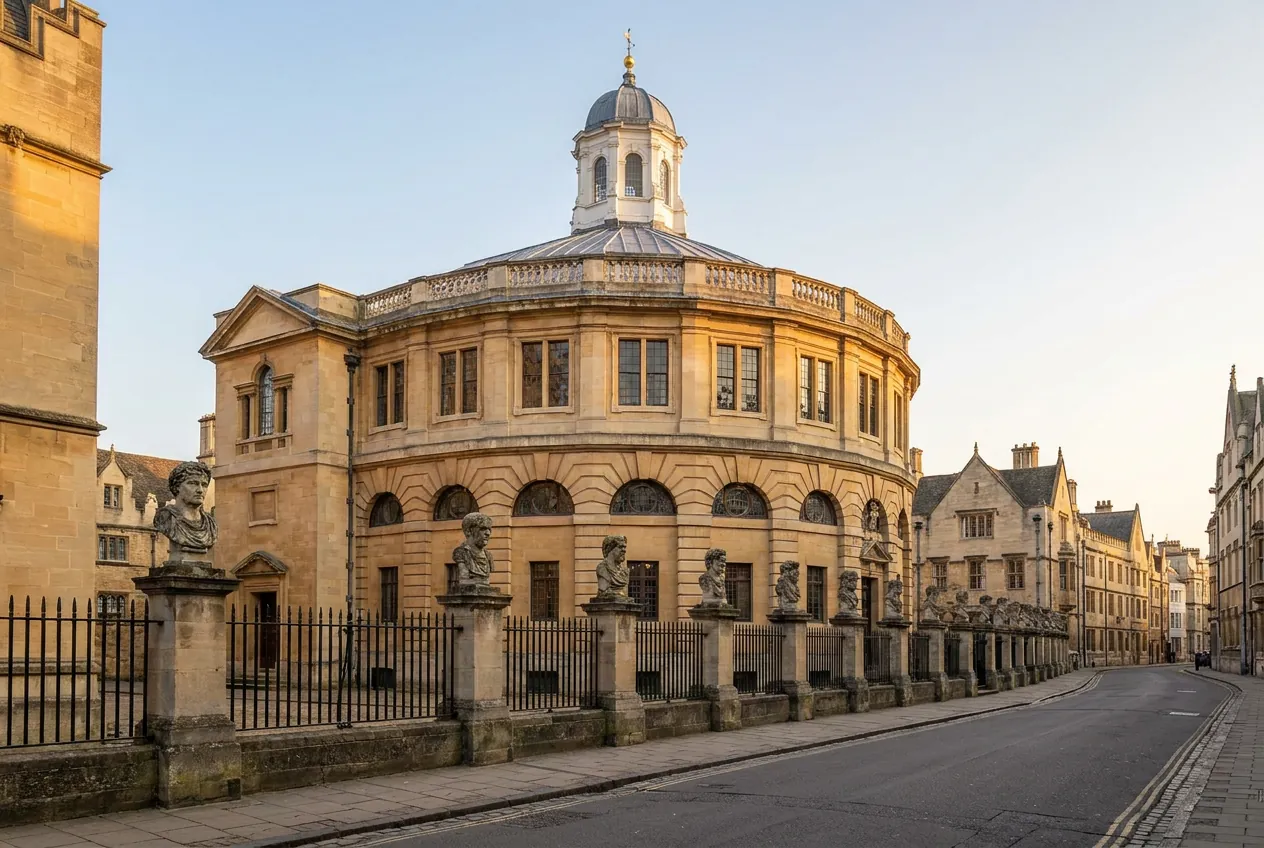
Christopher Wren’s theatre stands just across Broad Street.
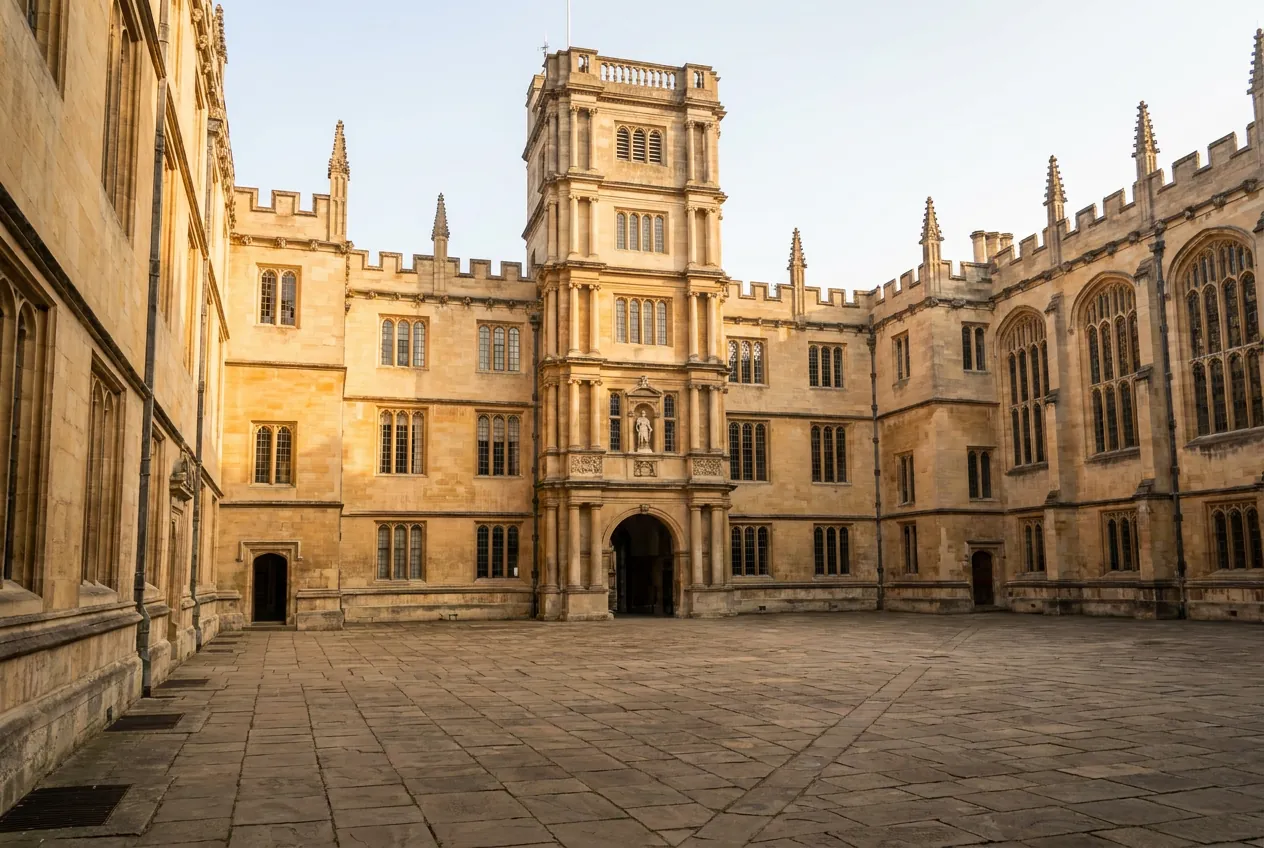
The library buildings and Radcliffe Camera form one of Oxford’s most recognisable historic settings.
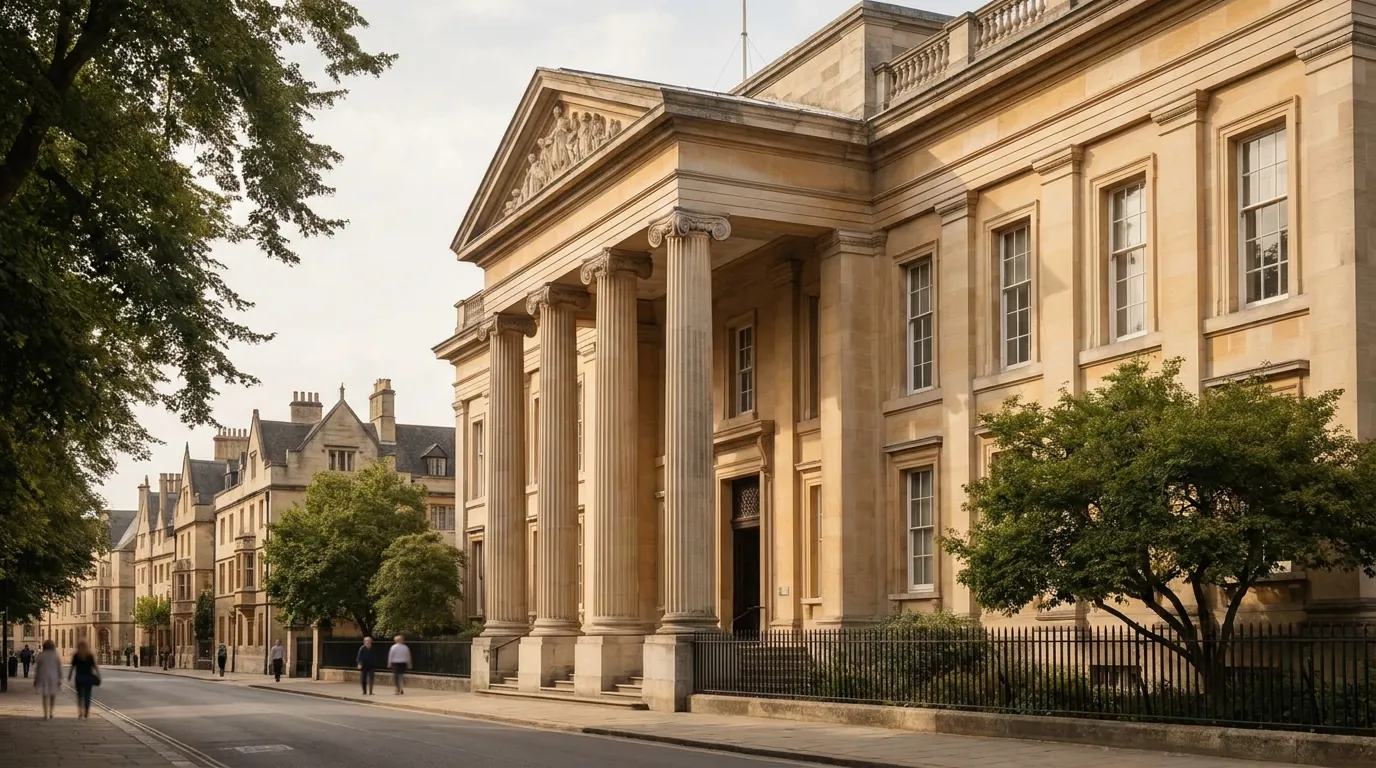
The Ashmolean’s collections span art and archaeology from around the world.
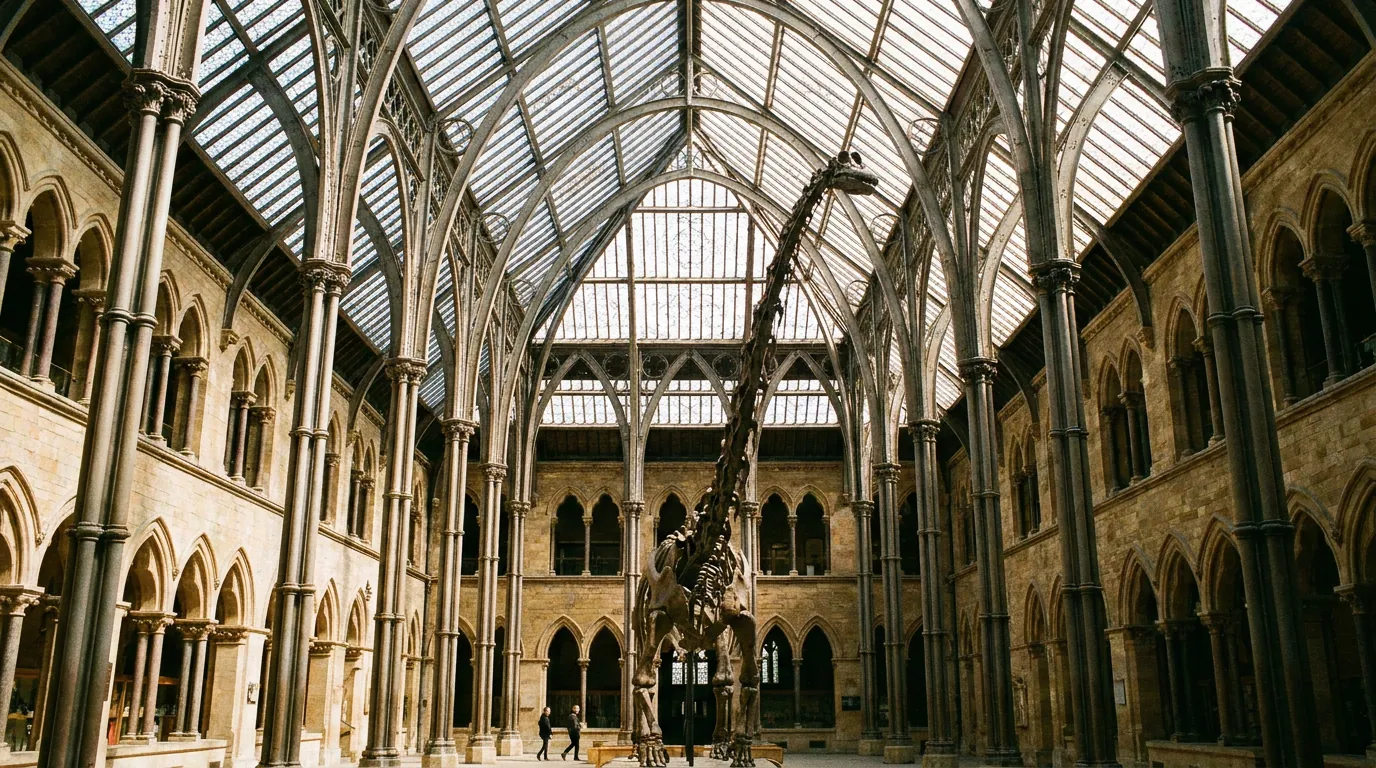
Two neighbouring museums bring together natural history and objects from cultures around the world.
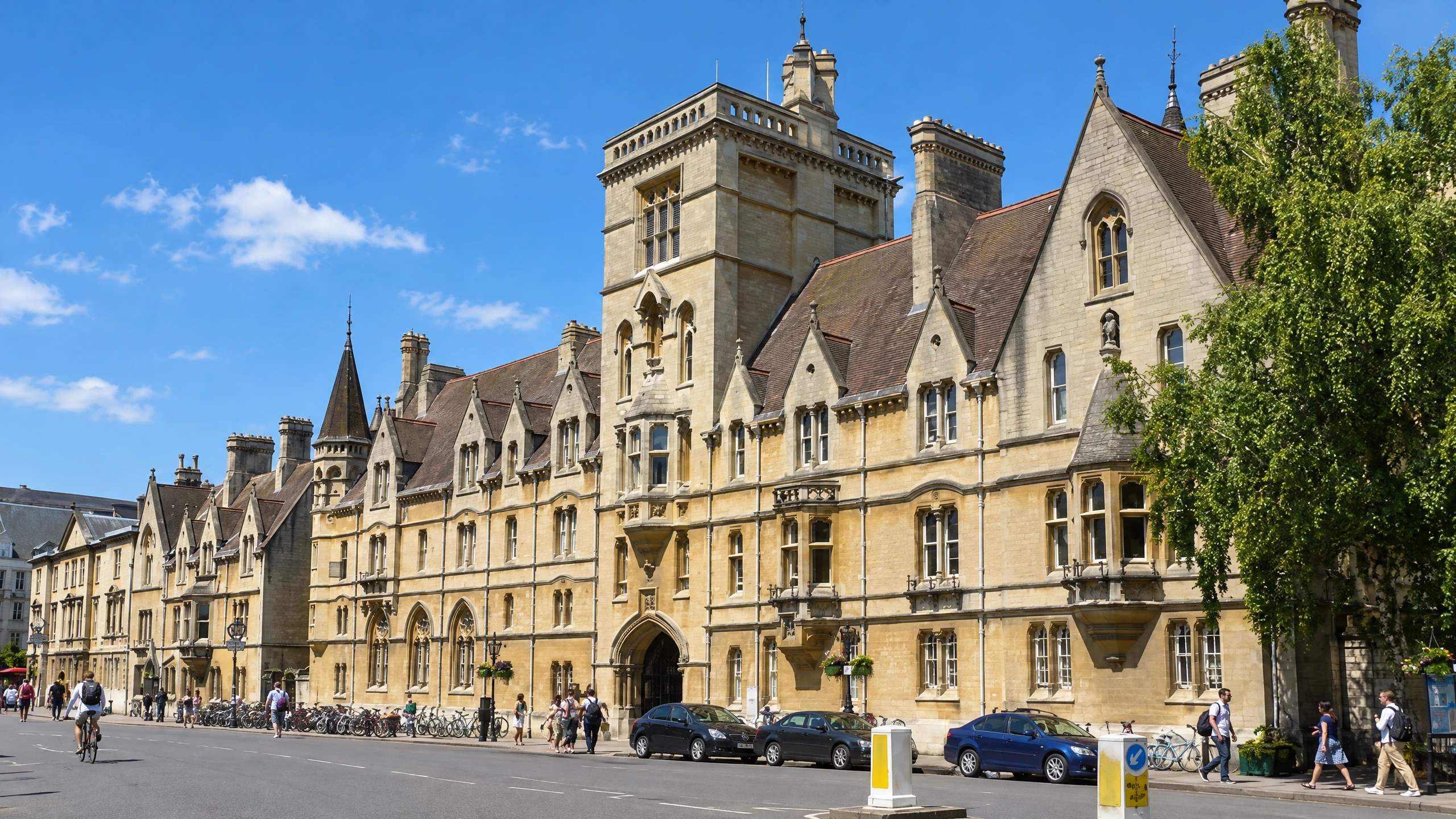
Trinity’s Broad Street neighbour has its own quads, chapel and long history.

The Stuart Gates and Gormley–Armitage door mark Trinity’s edge along Parks Road.
Good to know
Questions, answered.
Did explorer Richard Francis Burton study at Trinity College Oxford?
Burton entered Trinity in 1840 and left without graduating. He later became an explorer, diplomat, linguist and translator of the Arabian Nights.
Was Trinity College Oxford originally Durham College?
Trinity occupies the site of Durham College, a Benedictine house linked to Durham Cathedral Priory. Sir Thomas Pope founded a new college there in 1555.
Why did Sir Thomas Pope establish Trinity College in 1555?
Pope founded Trinity during Mary Tudor’s reign as a place to educate Catholic priests. The college later adopted Anglican rites after Elizabeth I came to the throne.
Why is the founder’s tomb in Trinity College Chapel unusual?
The tomb of Sir Thomas and Elizabeth Pope is in the chapel. Trinity describes it as the only Oxford college containing its founder’s tomb.
Who designed and decorated Trinity College Oxford’s Baroque chapel?
The 1691–94 chapel was built under President Ralph Bathurst, with design input from Christopher Wren, carving by Grinling Gibbons and painting by Pierre Berchet.
Did Christopher Wren design Trinity College’s Garden Quad?
Wren designed an accommodation block during Ralph Bathurst’s presidency; it now forms part of Garden Quad. He also contributed to the chapel’s design.
What is the human-shaped door at Trinity College Oxford?
The human-shaped door at Trinity College in Oxford is Antony Gormley’s cast-iron door, unveiled in 2025. A walking figure forms its opening, while Simon Armitage’s poem Hinge appears in relief.
How does Trinity’s Gormley door commemorate physicist Henry Moseley?
The door is dedicated to Henry Moseley, a Trinity student from 1906 to 1910 whose X-ray work helped establish the significance of atomic number.
Was John Henry Newman a student at Trinity College Oxford?
Yes. Newman arrived as a student in 1816 and became Trinity’s first Honorary Fellow in 1878, after his later work as a Catholic theologian.
Did Prime Minister William Pitt the Elder attend Trinity College Oxford?
Yes. William Pitt the Elder entered Trinity in 1727 and later continued his studies in Utrecht before becoming British Prime Minister.
What did archaeologists find under Trinity College’s Back Lawns?
An archaeological evaluation in winter 2023–24 uncovered paths from earlier garden layouts, including a feature that may relate to an early-eighteenth-century Dutch-style garden.
Which sculptures can be found in Trinity College’s gardens?
The garden collection includes John Buckley’s Cambodian Guardian Lion and a statue of Saint John Henry Newman. Access depends on the areas open during a visit.
What is the Danson collection at Trinity College Oxford?
The Danson bequest includes illuminated manuscripts, illustrated and early printed books, and around 450 volumes of erotica. Special-collections access is arranged separately.
Can visitors hear Trinity College Oxford’s Chapel Choir?
The choir sings at chapel services and events; public attendance depends on the particular occasion. Its repertoire includes music by women composers.
When did Trinity College Oxford first admit women?
Trinity admitted its first 23 women students in 1979. Biochemist Sue Kingsman became its first woman Governing Body Fellow in 1984.
What is the Levine Building at Trinity College Oxford?
The Levine Building is a modern addition completed during Dame Hilary Boulding’s presidency, part of Trinity’s development alongside its older buildings and gardens.
Can tourists enter Trinity College’s libraries with a visitor ticket?
The War Memorial Library is for college members. Special-collections and archive visits are arranged separately, so they are not included in the ordinary visitor ticket.
How much does it cost to visit Trinity College Oxford?
Admission is £7 for adults and £5 for concessions and students; children under 12 enter free. Groups pay £5 per person.
What can visitors see at Trinity College Oxford?
The Chapel, Dining Hall and gardens are normally open to visitors, and the college provides a leaflet with a suggested walking route. Some areas may close for college events.
Editorial notes
Sources and further reading.
Sources for this guide
All substantive sources below are official Trinity pages on trinity.ox.ac.uk; citations in the prose point to these direct pages. “Read” means the page body was read during this research run (including agent-assisted reads). “Partial/not read” is not used as evidence.
| ID | Direct link | Title | Status | Main claim mapping |
|---|---|---|---|---|
| S-HOME | https://www.trinity.ox.ac.uk/ | Trinity College Oxford | read | official identity/site navigation; no independent corroboration |
| S-VISIT | https://www.trinity.ox.ac.uk/visiting | Visiting | read | normal public areas, hours, prices effective 1 Aug 2025, conduct, access, address, phone, shop |
| S-HIST | https://www.trinity.ox.ac.uk/history-trinity | History of Trinity | read | foundation, Kettell, Bathurst, Newman, reforms, wars, women, Norrington, 2020 research project |
| S-CHAP | https://www.trinity.ox.ac.uk/chapel-history | Chapel History | read | Durham chapel, Pope tomb, Bathurst/Wren/Gibbons/Berchet, dates, conservation |
| S-GARD | https://www.trinity.ox.ac.uk/gardens-grounds | Gardens & Grounds | read | listed gardens, ecology, named plants, archaeology, borders, private gardens, sculptures |
| S-SPEC | https://www.trinity.ox.ac.uk/special-collections | Special collections | read | Old/Danson libraries, early printed books, manuscripts, scientific analysis |
| S-ARCH | https://www.trinity.ox.ac.uk/college-archive | College archive | read | archive scope/access, exhibitions, Gatsby, Holladay diary |
| S-WAR | https://www.trinity.ox.ac.uk/war-memorial-library | War Memorial Library | read | memorial origin, 50,000 volumes, 24/7 term hours, 100 seats, member-only/access support |
| S-CHOIR | https://www.trinity.ox.ac.uk/chapel-choir | Chapel Choir | read | non-auditioning choir, weekly Evensong, women composers, recordings |
| S-ROOMS | https://www.trinity.ox.ac.uk/meeting-rooms | Meeting Rooms | read | Levine facilities, capacities, accessibility, Steinway/streaming |
| S-GORM | https://www.trinity.ox.ac.uk/news/college-unveils-public-art-collaboration-between-antony-gormley-and-simon-armitage | College Unveils Public Art Collaboration Between Antony Gormley and Simon Armitage | read | dated door, poem, material/design, March 2025 unveiling |
| S-COVID | https://www.trinity.ox.ac.uk/news/celebrating-collaboration-and-resilience-principle-panoramic-art-exhibition | Celebrating Collaboration and Resilience: The PRINCIPLE PANORAMIC Art Exhibition | read | Tanya Poole portraits, science/art and community trial collaboration |
| S-CONTACTS | https://www.trinity.ox.ac.uk/college-contacts | College contacts | read | general telephone, address, current named officers, archive contact context |
| S-PEOPLE | https://www.trinity.ox.ac.uk/trinity-people | Trinity People | read | role taxonomy/pagination reviewed; not used to fabricate alumni |
| S-OLD | https://www.trinity.ox.ac.uk/old-members | Old Members & Friends | read | password-protected alumni area and old-member framing; not used as attendance proof |
| S-MUSIC | https://www.trinity.ox.ac.uk/subject/music | Music | read by research agent / not relied on for core claims | Levine practice rooms, concert hall and student music provision |
| S-TRAVEL | https://www.trinity.ox.ac.uk/travel-information | Travel information | identified but not read | excluded from evidence; exact routes remain open |
Conflict ledger
- Kettell Hall 1615 versus 1618 Durham Hall collapse account: unresolved chronology, held for specialist checking. 2. Catalpa age: reputation only. 3. Visitor accessibility: broad positive statement but no granular route audit. 4. Atlantic-slave-trade project: launch documented, outcome not read. 5. Visitor booking/photography: no official contract endpoint or policy read; operational JSON leaves booking null.
OX-PHYSICAL — University physical-access guide
University physical-access guide. Physical route and facilities reviewed 1 November 2026; admission remains governed by the college.
Supplementary biographical sources
SUP-MOSELEY — Trinity: Henry Moseley commemoration,12 May 2025
Trinity: Henry Moseley commemoration,12 May 2025. Read 1 November 2026. College article establishes Millard Scholarship 1906, four-year student period and rowing; connects 2025 Gormley-door dedication with his former laboratory route.
SUP-MOSELEY-MUSEUM — Trinity archivist: In the footsteps of Harry — History of Science Museum
Trinity archivist: In the footsteps of Harry — History of Science Museum. Read 1 November 2026. Archivist dates entry11October 1906 using mother’s diary, describes former lab later carpenter’s workshop, and WWI memorial. The article’s 2015 visitor hours/prices are obsolete.
SUP-PITT — History of Government: William Pitt the Elder
History of Government: William Pitt the Elder. Read 1 November 2026. Government historian establishes Trinity entry 1727 followed by study in Utrecht; no Oxford degree completion is asserted.
GEO-FRESH — numeric college location
Wikipedia coordinate, read1November 2026: 51.755343, -1.256958 WGS84. This college-site pin supersedes the carried-forward draft value. It does not identify an accessible entrance. No published source data was changed.
AUD-BURTON — Sir Richard Francis Burton at Trinity
Sir Richard Francis Burton at Trinity
Reviewed 1 November 2026. College President identifies the explorer, translator and diplomat as an alumnus, entering October 1840; departure anecdotes explicitly uncorroborated in archives are not repeated.
AUD-HILLARY — Richard Hillary and the college writing prize
Richard Hillary and the college writing prize
Reviewed 1 November 2026. College identifies Richard Hillary (1937), author of The Last Enemy, and the creative-writing prize established in his memory.
Access and family information
Further reading and sources
Opening hours, prices, programmes and access arrangements can change. Confirm critical details with the venue.
Keep exploring