Central · Founded 1249
University College
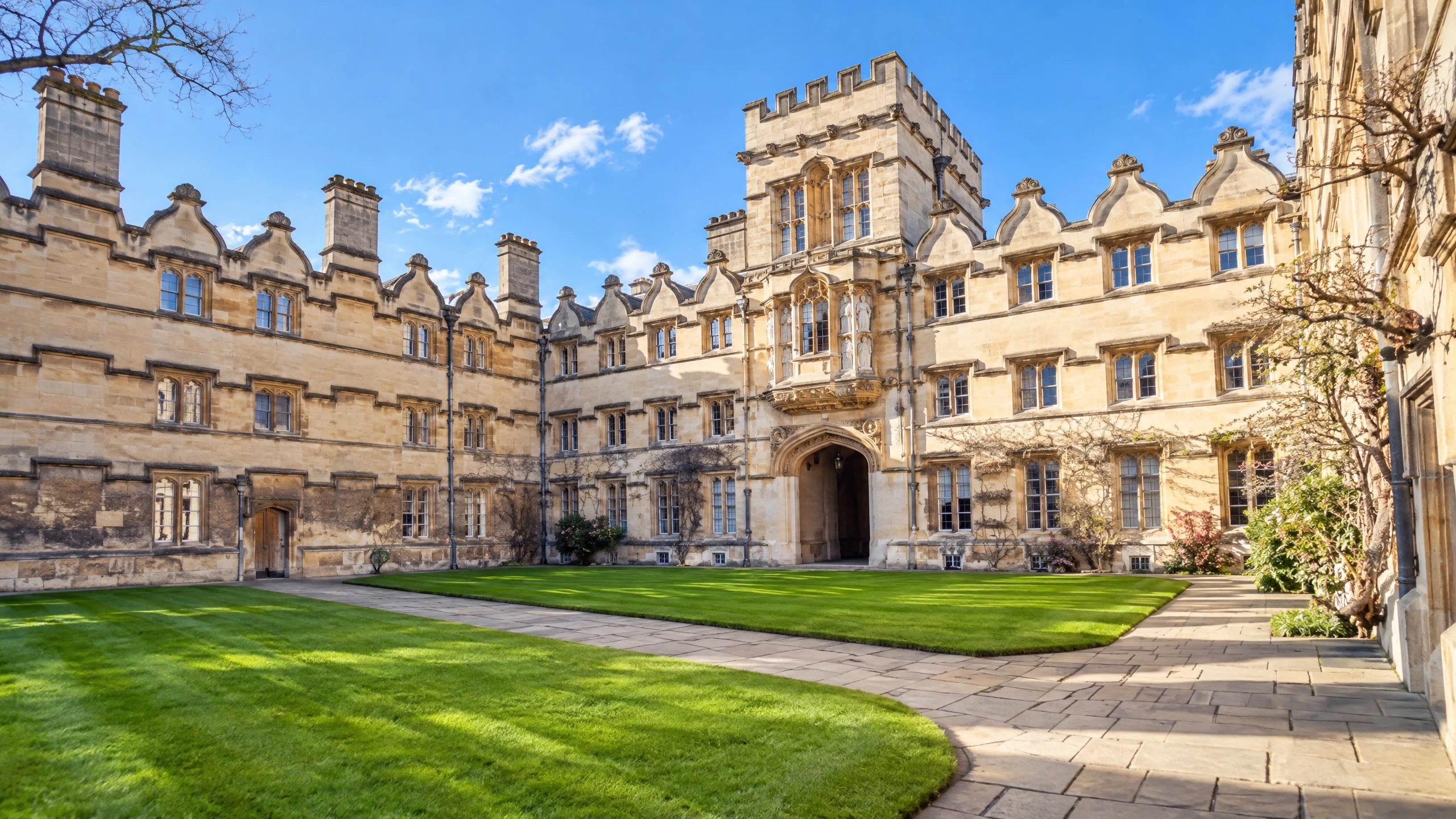
Behind its High Street entrance, Univ brings together two historic quads, colourful chapel windows and a striking memorial to the poet Shelley.
- Founded
- 1249
- Location
- High Street
- Visiting
- Public visiting hours
- Institution
- College
01 The experience
What to expect.
A college of stories
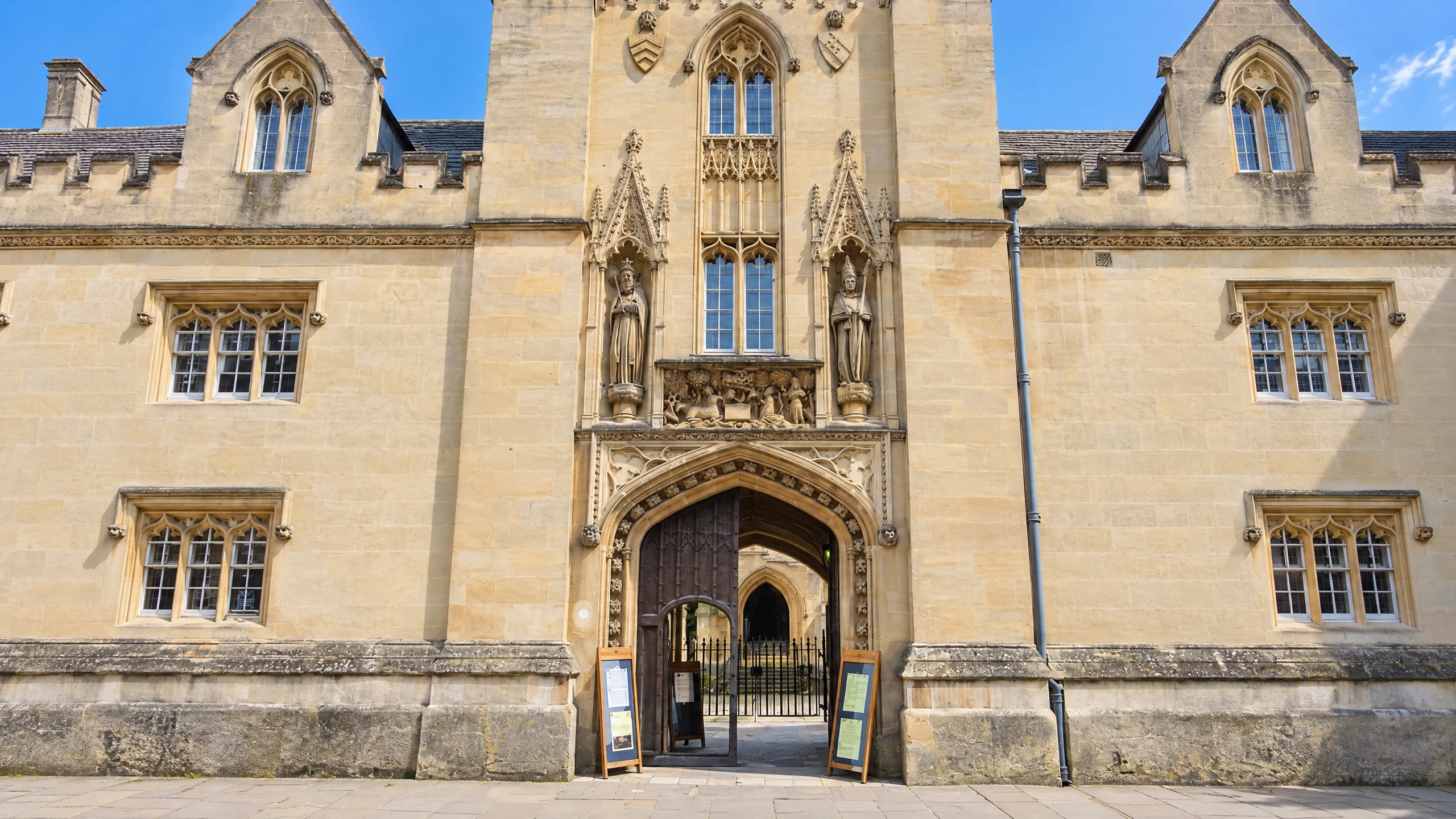
University College sits on Oxford’s High Street, behind a stone entrance that opens onto a quiet courtyard. Known as Univ, it is one of Oxford’s oldest colleges. Its buildings bring together centuries of stories, from a medieval bequest to the students, writers and scientists who later came through its doors.
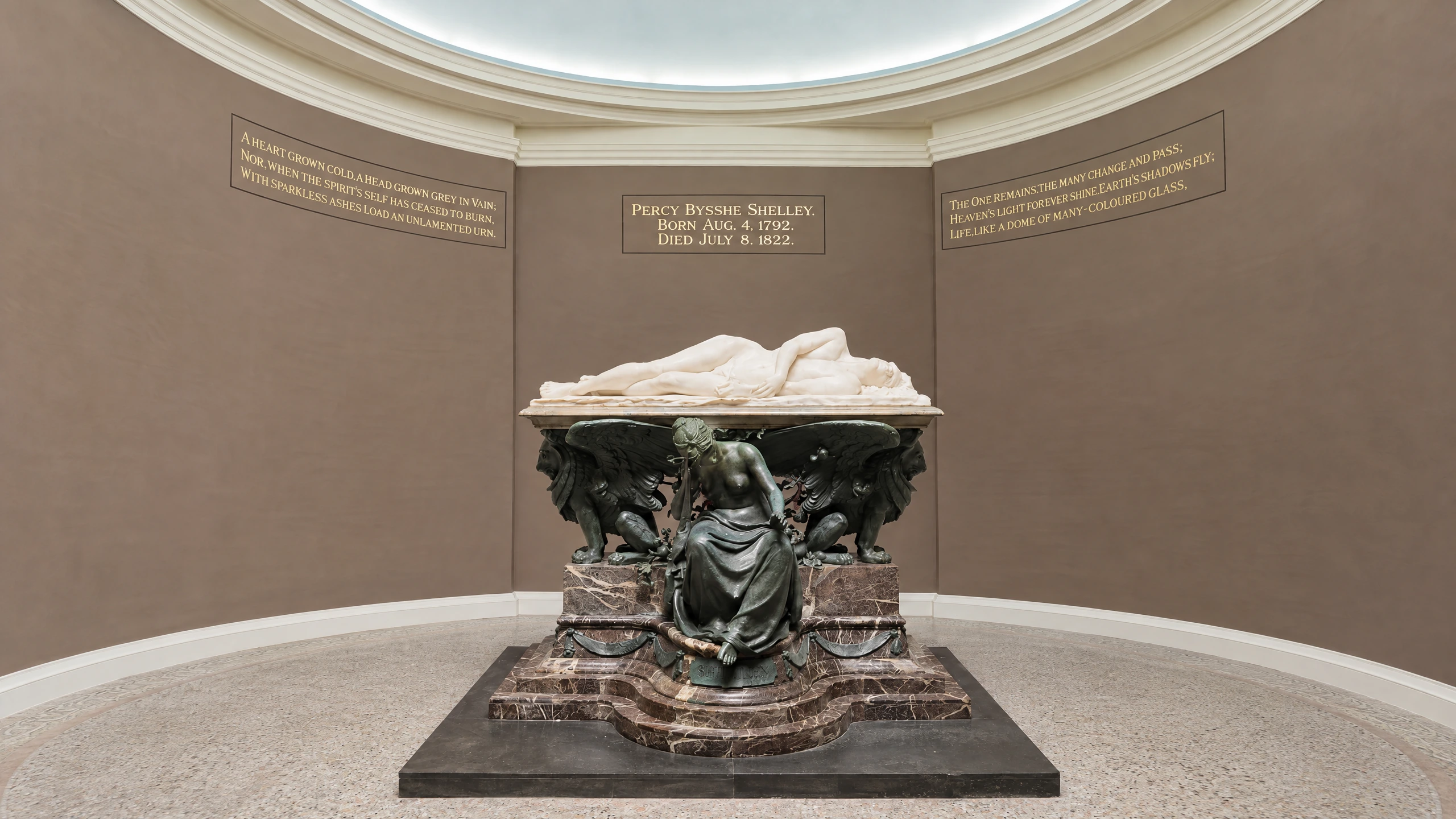
One of the most memorable sights is the Shelley Memorial. The poet Percy Bysshe Shelley was expelled from Univ in 1811 after a dispute over his writing. Decades later, the college became home to a marble memorial showing him after his death at sea.
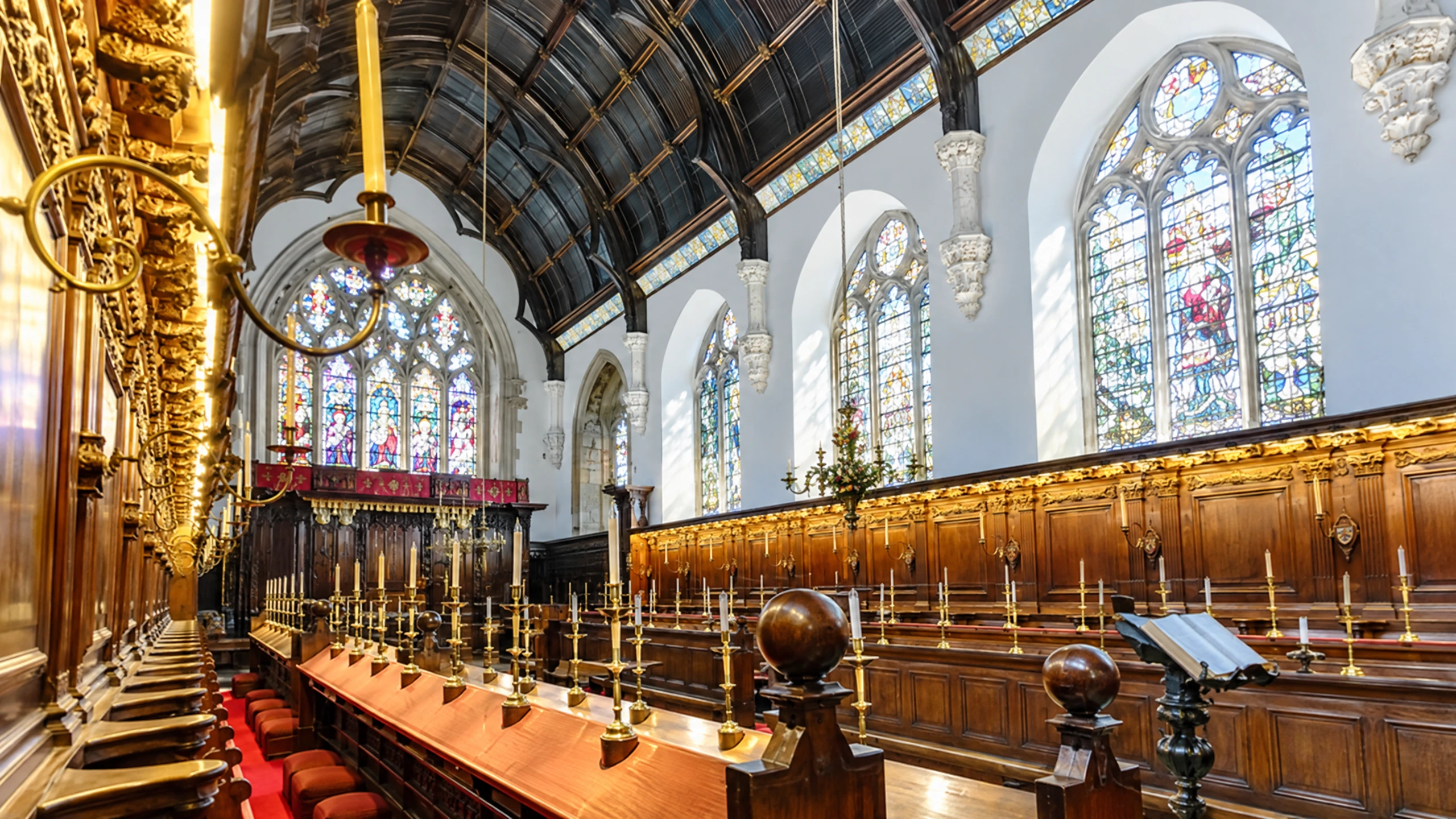
The visit also takes in Main Quad and Radcliffe Quad, two enclosed courtyards, as well as the chapel and hall. In the chapel, painted windows tell stories including Jonah and the whale. The glass survived a long interruption: it was made before the Civil War and stored while work on the chapel came to a halt.
Univ traces its beginnings to money left by William of Durham in 1249. The buildings you see today came later: Main Quad was started in the 1630s, and Radcliffe Quad followed in the eighteenth century.
Among the people connected with the college are the physicist Stephen Hawking, the Narnia author C. S. Lewis and Christian Cole, Oxford’s first Black African graduate. Cole joined Univ after completing his degree; a plaque in nearby Logic Lane commemorates his life.
People and ideas
Famous former students

Clement Attlee
Entered 1901
Clement Attlee became British prime minister in 1945 and led the postwar government.
College connection
Entered University College in 1901.
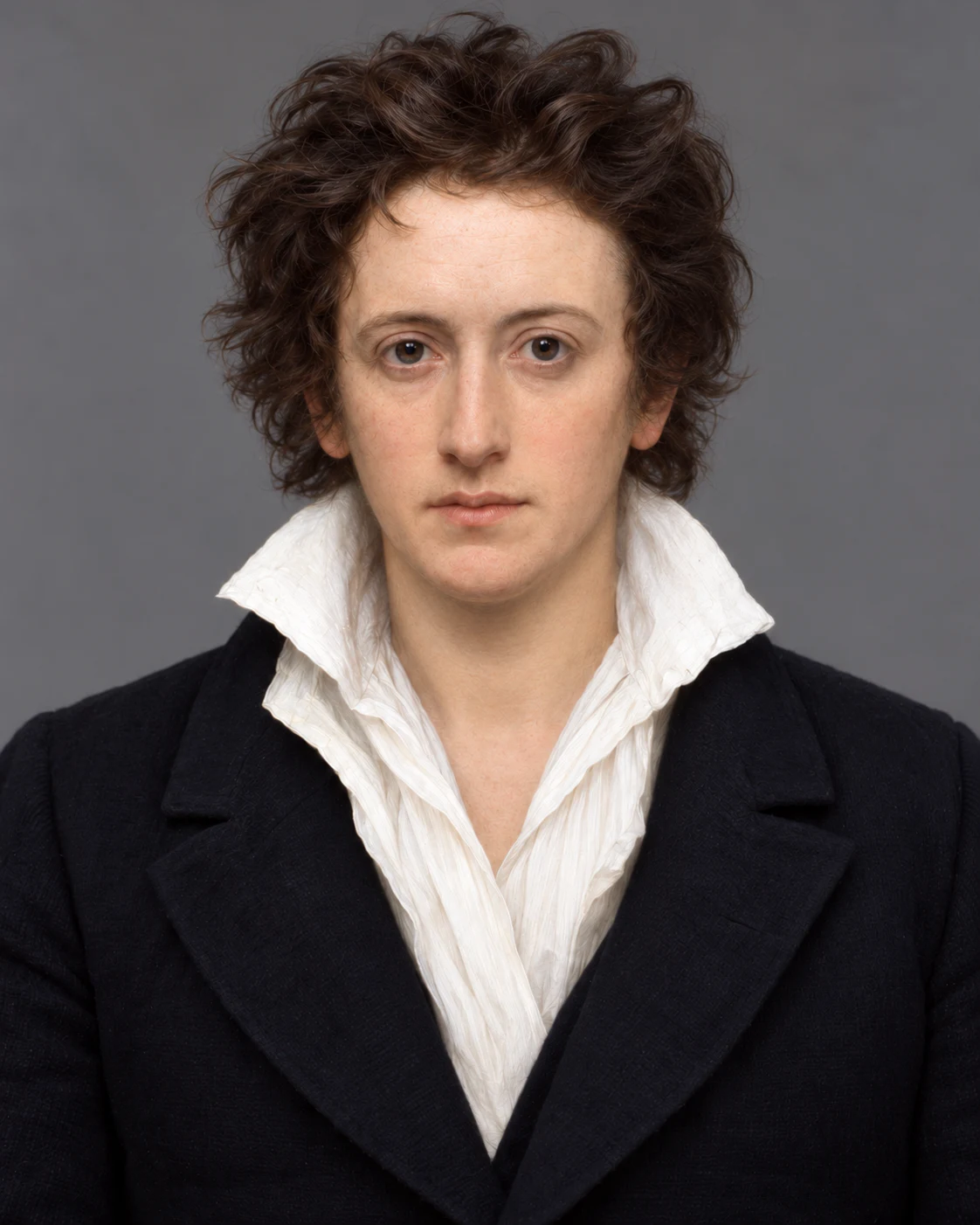
Percy Bysshe Shelley
Entered 1810
Shelley wrote poems including Ozymandias and Prometheus Unbound. His memorial stands in the college.
College connection
Entered University College in 1810 and was expelled in 1811.
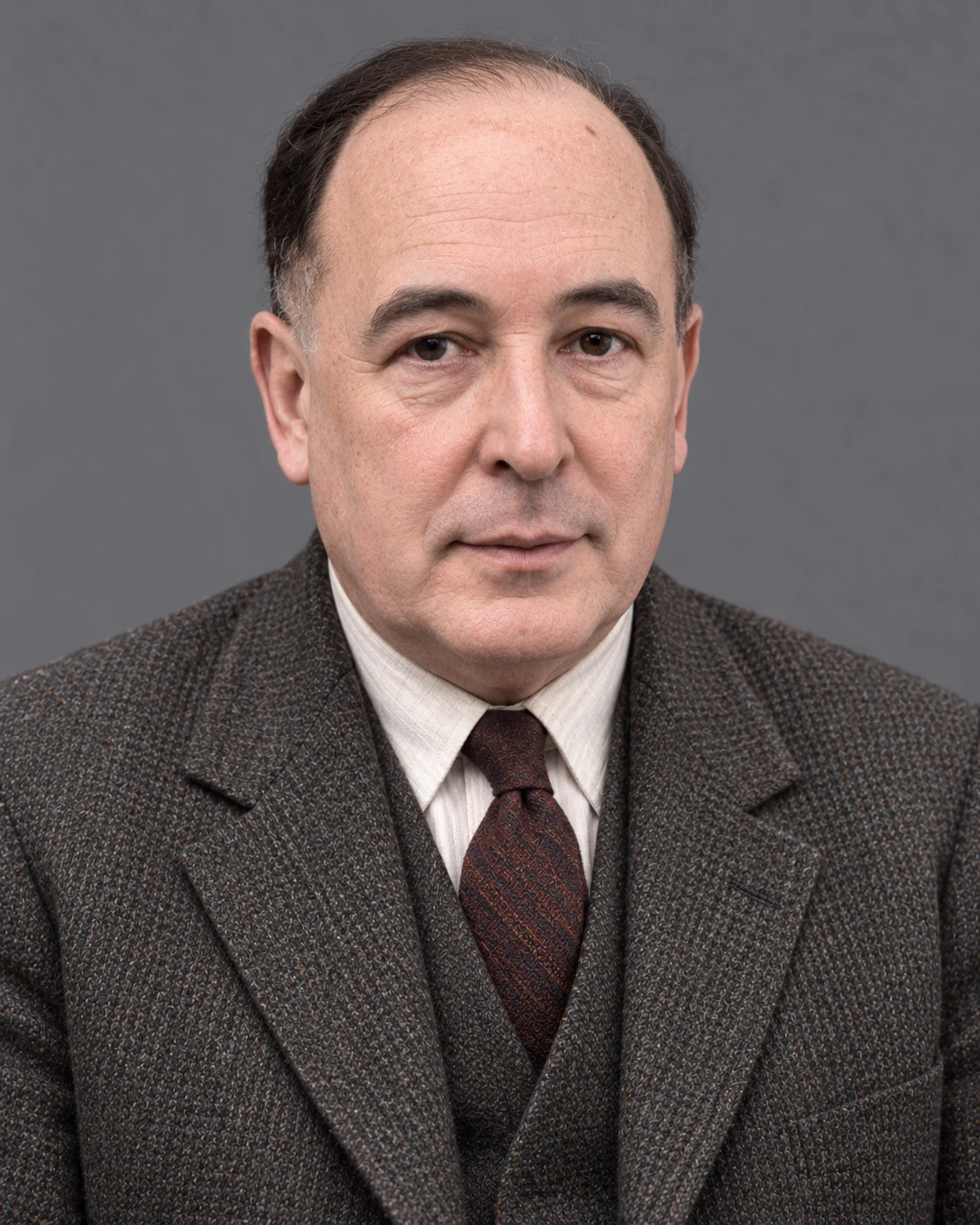
C. S. Lewis
Entered 1917
C. S. Lewis wrote the Narnia books and became a scholar of literature.
College connection
Entered University College in 1917, before his later academic career at Magdalen.
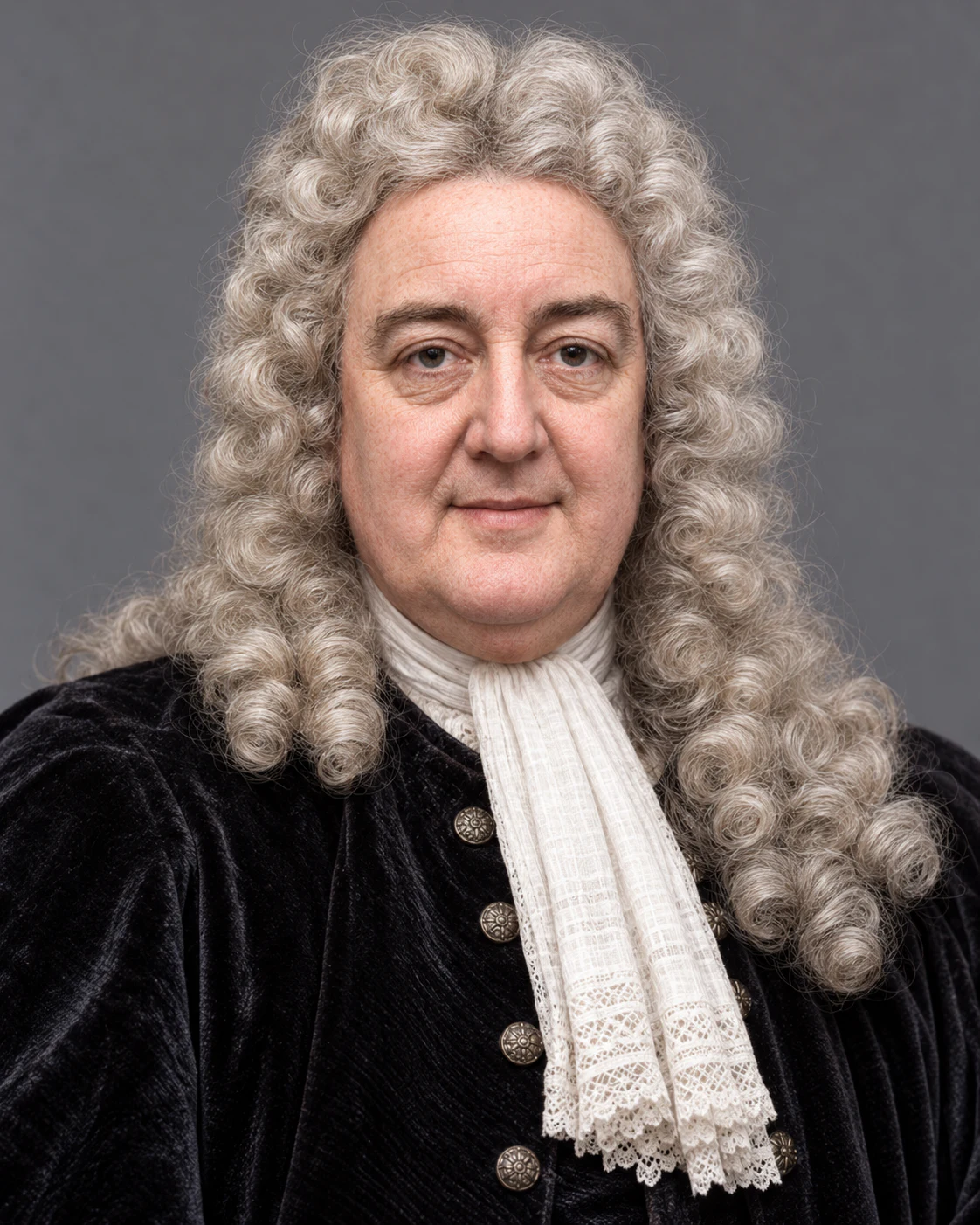
John Radcliffe
Entered 1666
Physician John Radcliffe left the gift that built the college’s second quad.
College connection
Entered University College in 1666 and later funded Radcliffe Quad and two medical fellowships.
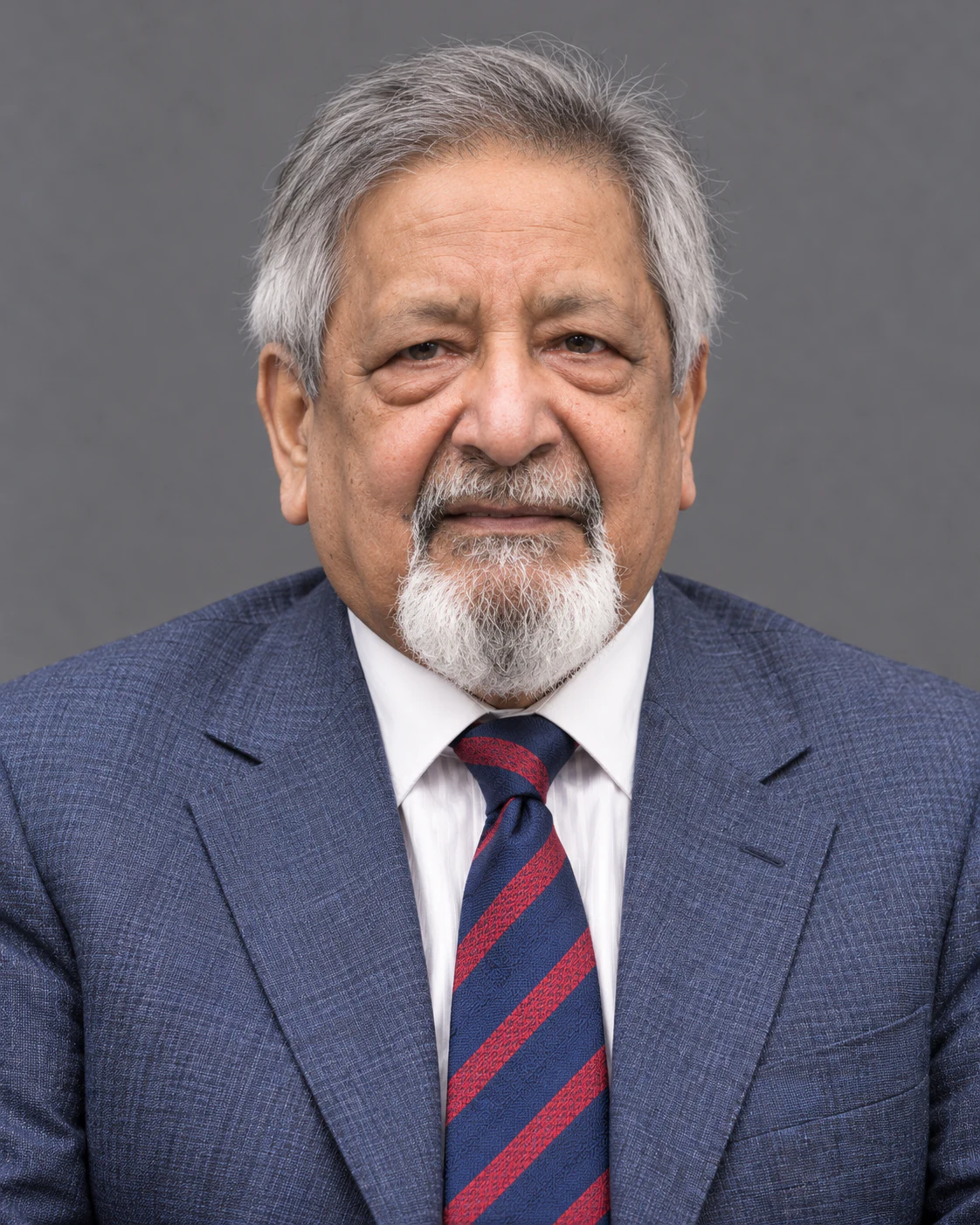
V. S. Naipaul
Entered 1950
Novelist V. S. Naipaul won the Nobel Prize in Literature in 2001.
College connection
Entered University College in 1950.

Stephen Hawking
Entered 1959
Physicist Stephen Hawking went on to hold Cambridge’s Lucasian Professorship of Mathematics.
College connection
Entered University College in 1959.
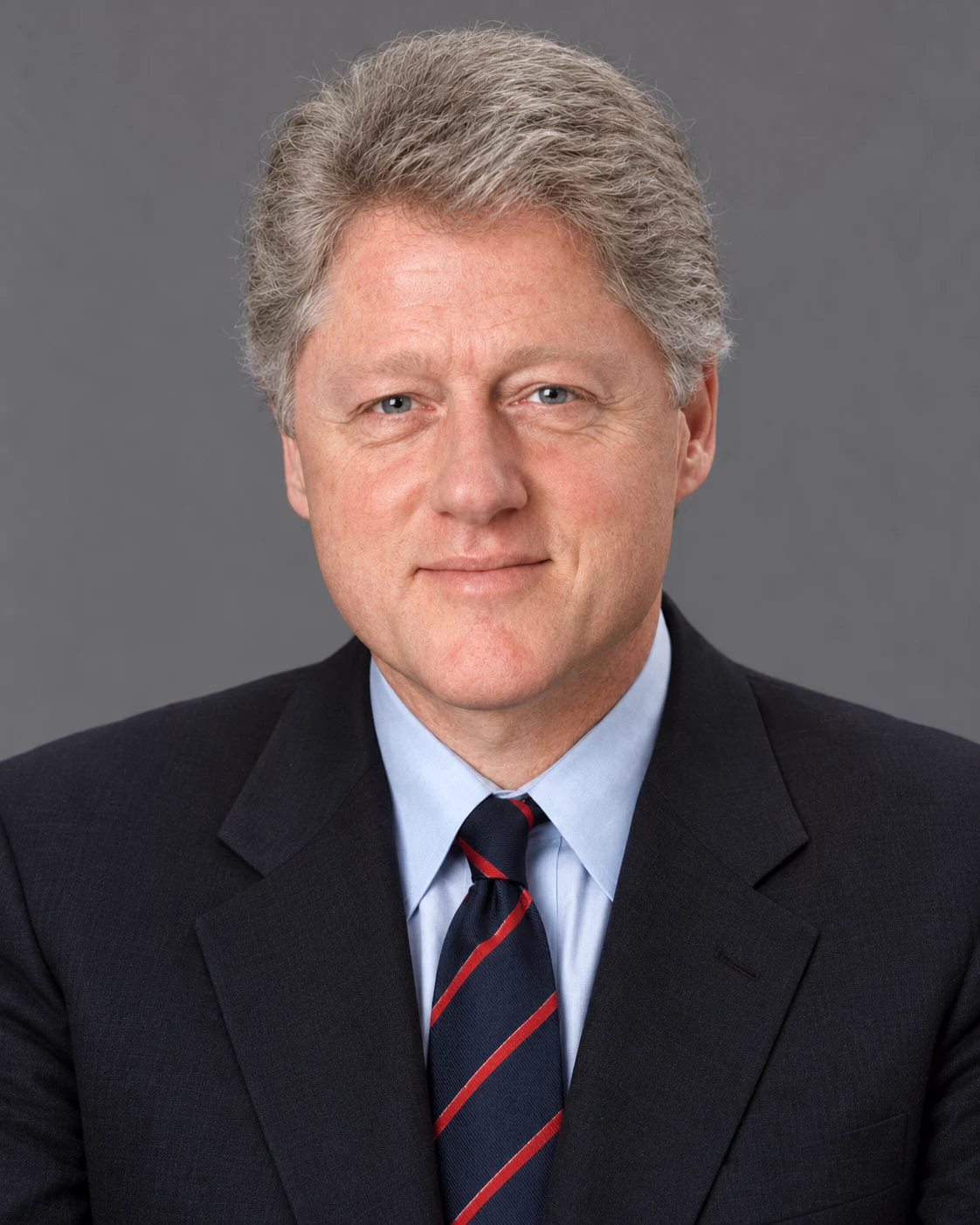
Bill Clinton
Entered 1968
Bill Clinton studied at Oxford as a Rhodes Scholar before becoming US president.
College connection
Entered University College in 1968.

Roz Savage
Entered 1986
Roz Savage became the first woman to row solo across all three oceans.
College connection
Entered University College in 1986.
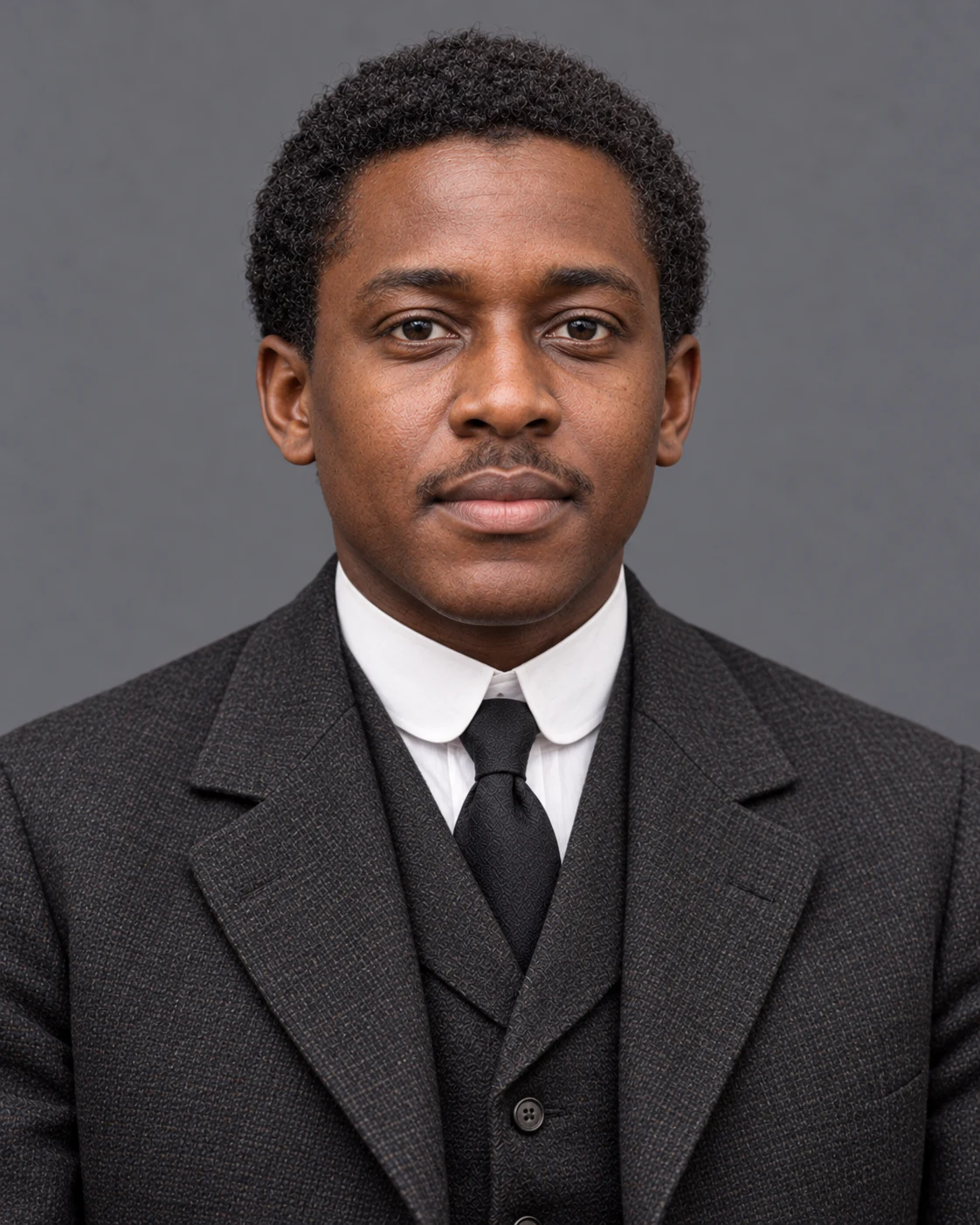
Christian Cole
Entered 1877
Christian Cole was Oxford’s first Black African graduate and the first Black African to practise law in English courts.
College connection
Entered University College in 1877, after beginning his Oxford studies in 1873 and completing his degree in 1876.

Christina Lamb
Entered 1983
Christina Lamb is a foreign correspondent and author.
College connection
Entered University College in 1983.
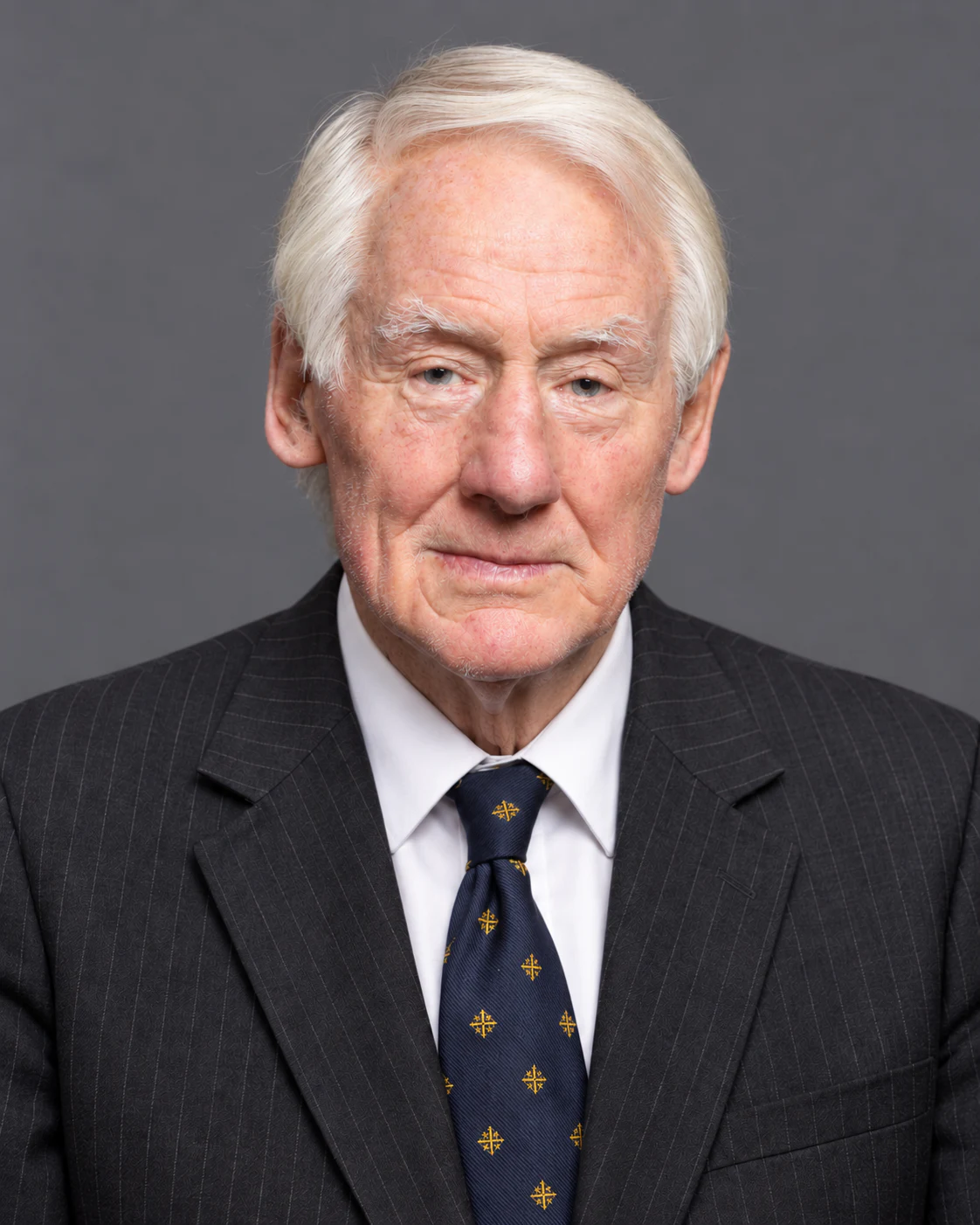
Robin Butler
Entered 1957
Robin Butler returned to Univ as its Master, leading the college from 1998 to 2008.
College connection
Entered University College in 1957.
Fellows, founders and other connections
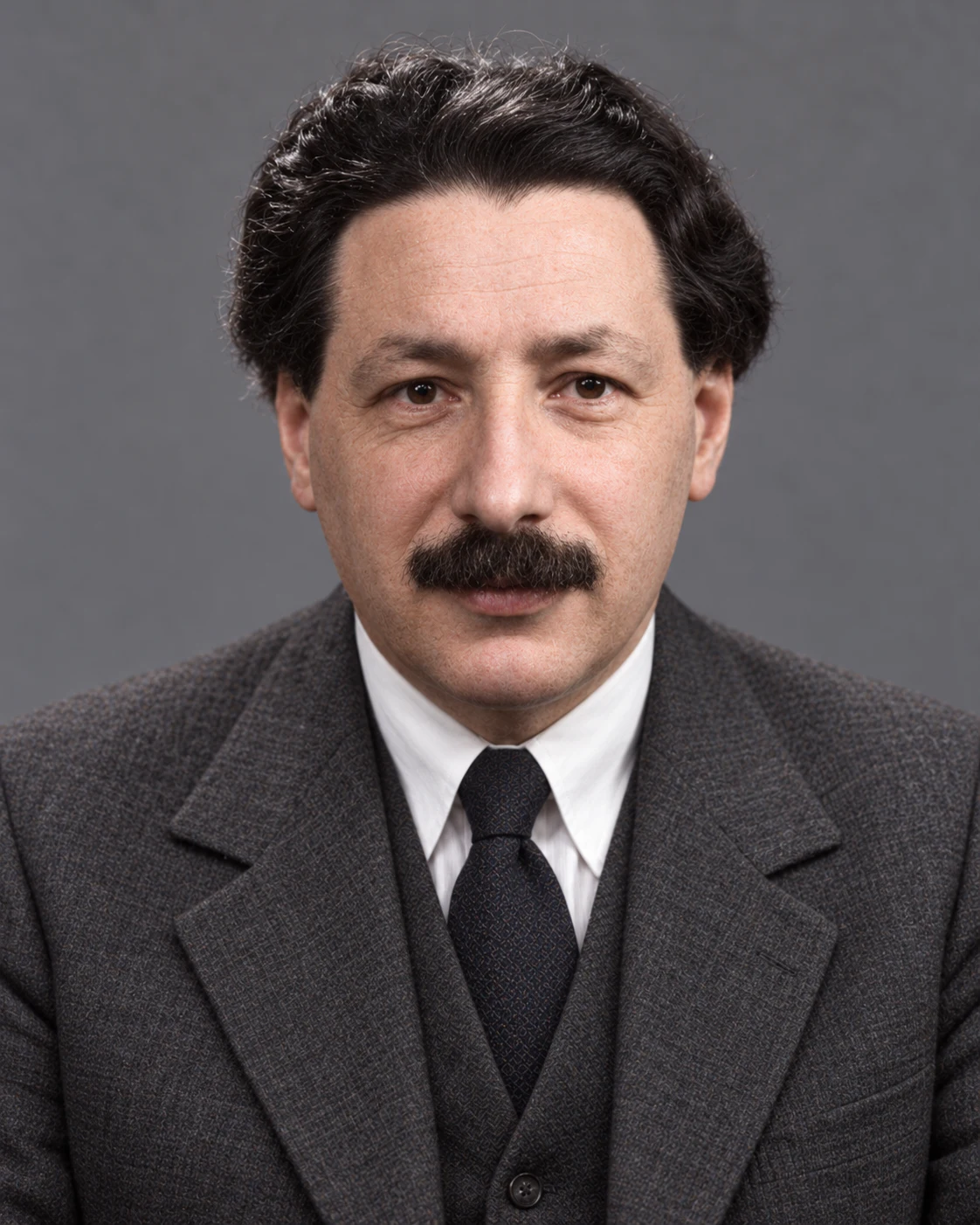
Ernst Chain
1943
Ernst Chain shared the 1945 Nobel Prize in Medicine.
College connection
Became a member of University College in 1943.
The story
History & character.
A medieval beginning
Univ’s story starts with William of Durham, who left money in 1249 to support scholars studying theology at Oxford. The college grew from that gift, beginning with enough money for four fellows, or senior college members. For a long time it had few undergraduate students. Scholarships funded by later benefactors gradually opened up places to boys from families of more modest means.
For centuries, another story claimed that King Alfred had founded Univ in 872. It became popular in the late fourteenth century, but the college’s account now names William as its founder. The competing stories are part of a wider conversation about which Oxford college can claim to be the oldest.
Univ bought its first High Street property in 1332. A chapel, hall and entrance tower eventually surrounded a medieval courtyard, though none of those buildings survives above ground. The college remained on the site as its buildings changed around it.
A courtyard interrupted by war
Main Quad began with a gift from former student Sir Simon Bennet. Its foundation stone was laid in 1634, and work progressed around the courtyard until the English Civil War stopped construction in 1642. For almost twenty years, unfinished new buildings stood beside parts of the old college. Work resumed in the 1660s, and the final side was completed in 1676.
The chapel carries its own trace of that interruption. Dutch artist Abraham van Linge completed eight painted side windows in 1641, but the planned east window was never made. The finished glass was stored until building work could continue. Today the windows show scenes including Adam and Eve, Jacob’s dream, Elijah and Jonah and the whale.
The hall changed again in the eighteenth century. In 1766, architect Henry Keene worked on new panelling and a Gothic Revival treatment for its roof. The room now brings that later taste into the older quad.
Radcliffe’s gift
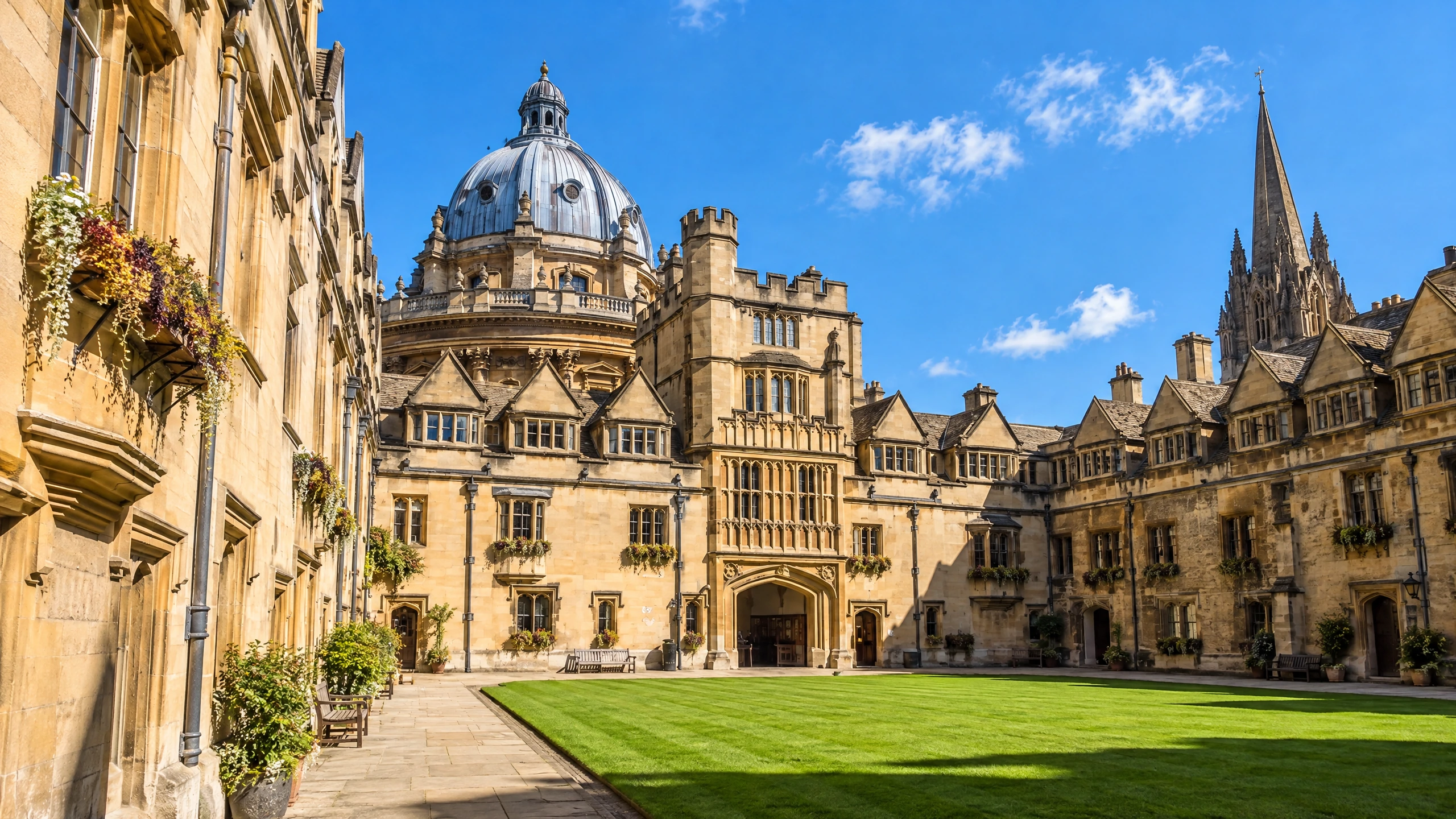
Physician John Radcliffe studied at Univ and later left money for a second courtyard. Built between 1716 and 1719, Radcliffe Quad was designed to match the older Main Quad. Its orderly appearance hides an awkward site: the High Street and Logic Lane curve around it, leaving many of the rooms an unusual shape.
Radcliffe’s name appears elsewhere in Oxford, too. His legacy helped fund the Radcliffe Camera, the Observatory and the Infirmary, as well as medical fellowships at Univ. His statue faces into the quad; a statue of Queen Mary II faces the High Street.
Shelley and his memorial
Percy Bysshe Shelley arrived at Univ in 1810. The following year he was expelled after the controversy around his pamphlet The Necessity of Atheism. He went on to become one of the best-known English Romantic poets and died at sea in 1822.
The Shelley Memorial, unveiled in 1893, gives his story a striking place in the college he left so abruptly. Shelley’s daughter-in-law Jane had commissioned the sculpture for his burial place in Rome, but it was too large for the plot. She offered it to Univ, with money for a building to house it. Sculptor Edward Onslow Ford made the figure, and architect Basil Champneys designed its enclosure. Its white marble sculpture lies beneath a dome, with the poet shown after his body was washed ashore. The memorial is part of the general visit, alongside the quads, chapel and hall.
Science beside the college
Robert Boyle lived and worked at Deep Hall, beside the college, during the 1650s and 1660s. There he developed Boyle’s Law and experimented with an air pump designed by Robert Hooke. Boyle also gave £10 towards the roof of Univ’s hall. The college acquired the Deep Hall site more than a century later, and the building was demolished in 1809. A plaque recalls Boyle near the Shelley Memorial.
People and a changing college
Christian Cole came to Oxford in 1873 as a student outside the college system and completed his degree in 1876. He joined University College the following year, after receiving support from its members. Called to the Bar in 1883, he became the first Black African to practise law in the English courts. His plaque on Logic Lane connects that achievement with the place where he studied.
Univ admitted its first women students in 1979. Across the centuries its members have included the writer C. S. Lewis, physicist Stephen Hawking, novelist V. S. Naipaul and politicians Clement Attlee and Bill Clinton. Their paths through Oxford were different, but each adds another chapter to the college’s long life.
Univ’s life has also been shaped by music and sport. A college rowing team appeared in 1827, and its Music Society was founded in 1930. Its first Oxford performance was Fauré’s Requiem.
The college’s 100 Treasures project opens a window onto objects from different moments in its history: a medieval Book of Hours, a model for a proposed quad and an album of student photographs. The working library also holds the Robert Ross Memorial Collection of Oscar Wilde material.
The college is still a place to live and study. Its working libraries and student rooms sit alongside the historic spaces open to visitors.
Look closer
What to see.
Main Quad
The stone buildings around Main Quad took more than forty years to finish. Work began in 1634 and stopped during the Civil War, leaving the courtyard unfinished until 1676. Wisteria and seasonal planting bring colour to the old stone.
The chapel
Abraham van Linge’s painted windows fill the chapel with stories, from Jacob’s dream to Jonah and the whale. Made in 1641, the glass was stored during the Civil War and installed when the building was finished.
The Shelley Memorial
A white marble Shelley lies beneath the memorial’s dome. The poet was expelled from Univ in 1811, long before this memorial was unveiled in 1893. It is a poignant encounter with a writer whose connection to the college ended abruptly.
Radcliffe Quad
John Radcliffe’s gift paid for the second quad, built to echo the older one. The curved streets around it mean that many rooms behind the regular stone façades are unusually shaped. Radcliffe’s statue faces the courtyard.
The hall
Univ’s dining hall has panelling and a Gothic Revival roof treatment from its eighteenth-century redecoration. The room is part of the general visit, although college events can affect access.
The antechapel
The entrance space to the chapel holds monuments by sculptor John Flaxman, including one to scholar Sir William Jones. Memorials also record members of the college who died in the First and Second World Wars.
Make it work
Plan your visit.
Opening and admission
Univ is open daily from 10 am to noon and 2 pm to 4 pm. Admission is £5 for adults and £3 for concessions. College events can cause temporary closures, including closures of individual rooms. Large groups need to book ahead.
The college and university give different age limits for free children’s admission. The Lodge can advise on the price for your family: 01865 276602 or lodge@univ.ox.ac.uk.
Admission includes Main Quad, Radcliffe Quad, the chapel, hall and Shelley Memorial. A visit takes around 45 minutes. The working libraries, Master’s Lodgings and student accommodation are outside the general visitor route.
The Lodge can also advise on photography during your visit.
Prospective students
Prospective applicants can visit independently between 9 am and 5 pm and introduce themselves to the porters. Open Days have their own tours and programme.
Visit your way
Access and family planning.
The main High Street entrance has steps. Alternative approaches include a platform lift at 83 High Street and daytime entry from Logic Lane, which is cobbled and cambered. The lift may need advance notice.
Some step-free routes are long, and access varies between rooms. Staff operate the hall’s platform lift; the chapel has heavy doors and uneven flooring. Accessible toilets and hearing loops are available. Kybald Street entry and college parking require prior arrangement.
The Lodge can help with the route and rooms you would like to visit: 01865 276602 or lodge@univ.ox.ac.uk.
The quads give children room to take in the college, while the chapel windows are filled with characters and stories. The Shelley Memorial offers a very different kind of sculpture to explore together. Access to individual rooms can change during college events.
The main entrance has steps; alternative routes are available for pushchairs. The Lodge can advise on the free-entry age for children; the college and university currently list different limits.
Self-guided walk
A walk through Univ
A walk through the quads, chapel, hall and Shelley Memorial takes around 45 minutes.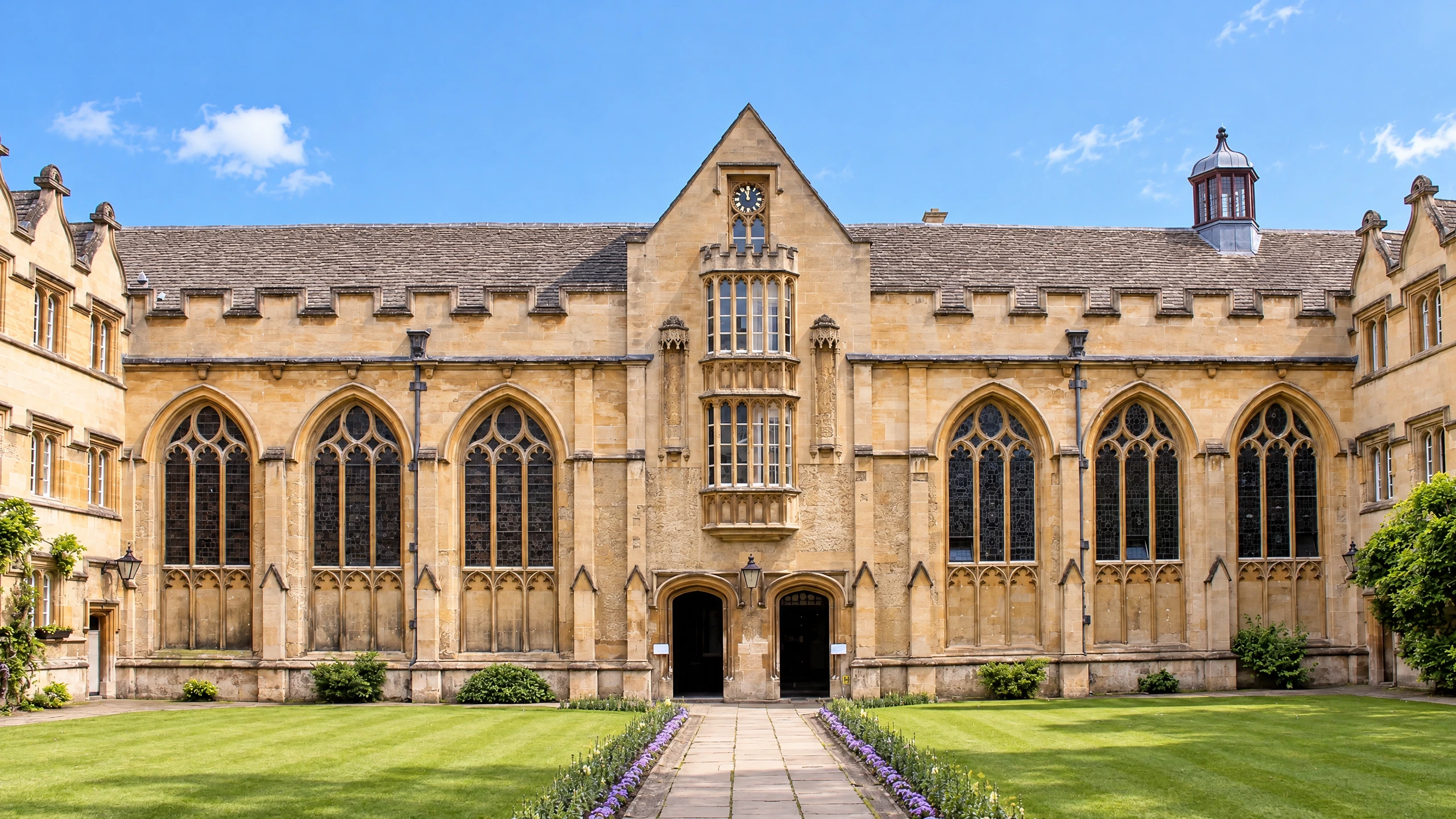
Main Quad to the Shelley Memorial
The college’s two quads, chapel, hall and Shelley Memorial bring together the main chapters of Univ’s story. Rooms can close during college events.
- Main Quad. The seventeenth-century courtyard took more than forty years to complete after the Civil War interrupted building work.
- Royal statues. James II’s statue has a missing hand; Queen Anne faces the High Street.
- Hall. Eighteenth-century panelling and a Gothic Revival roof treatment give the dining hall its character.
- Chapel. Painted windows by Abraham van Linge sit alongside memorials to members of the college.
- Shelley Memorial. The poet’s marble memorial stands beneath a dome, close to a plaque recalling scientist Robert Boyle.
- Radcliffe Quad. The later courtyard echoes Main Quad, with irregular rooms shaped by the streets around it.
A step-free variant
The main gate has steps. An alternative route is available via the lift at 83 High Street or entrances including Logic Lane. The Lodge can advise on the route to the rooms you want to see: 01865 276602.
Applicant and library visits
Prospective applicants have separate visiting hours. The college’s working libraries are outside the general visitor route; library consultation requires an academic arrangement.
See it
In pictures.
10 views, full screen. Tap any one to open the viewer.Around here
Make more of the area.

≈5–10 min walk east
Magdalen Bridge
The High Street leads east to Magdalen Bridge and the River Cherwell, with Magdalen College and the Botanic Garden close by.
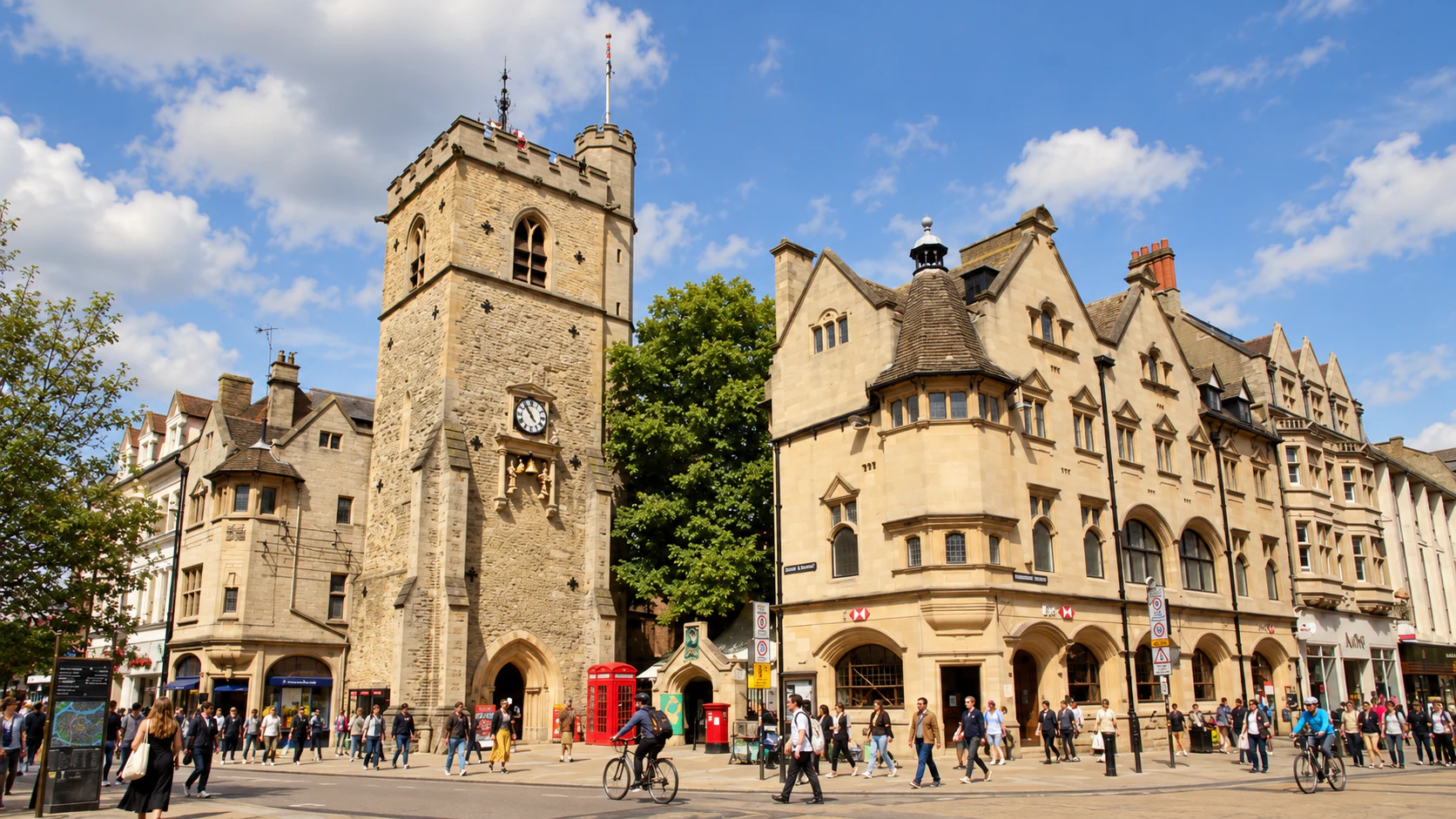
Follow the High Street west to Carfax, the central crossroads marked by its old church tower.
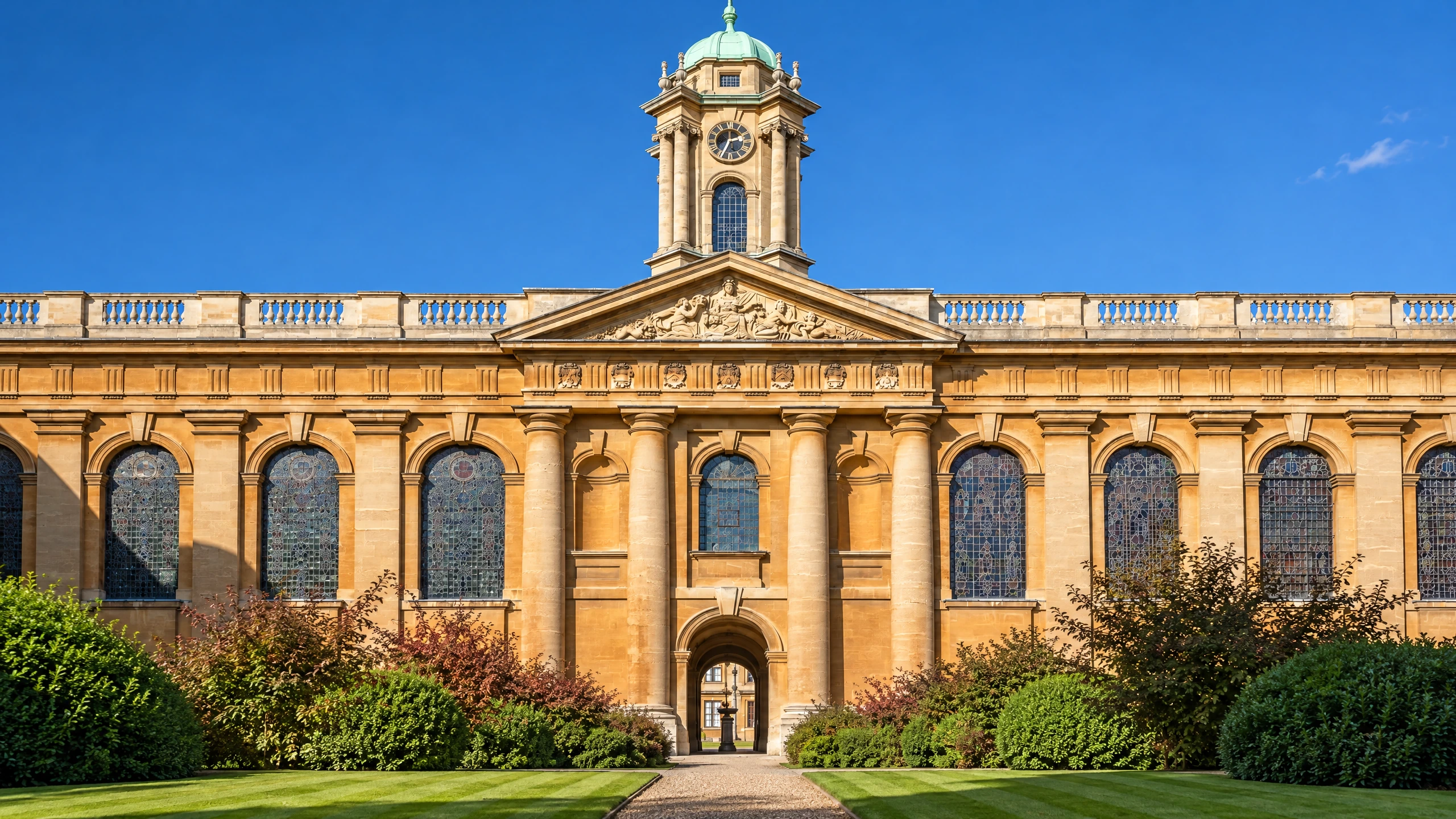
Across the High Street, Queen’s classical buildings make a contrast with the older style of Univ’s Radcliffe Quad. Public visits to Queen’s are by arranged Blue Badge tour.
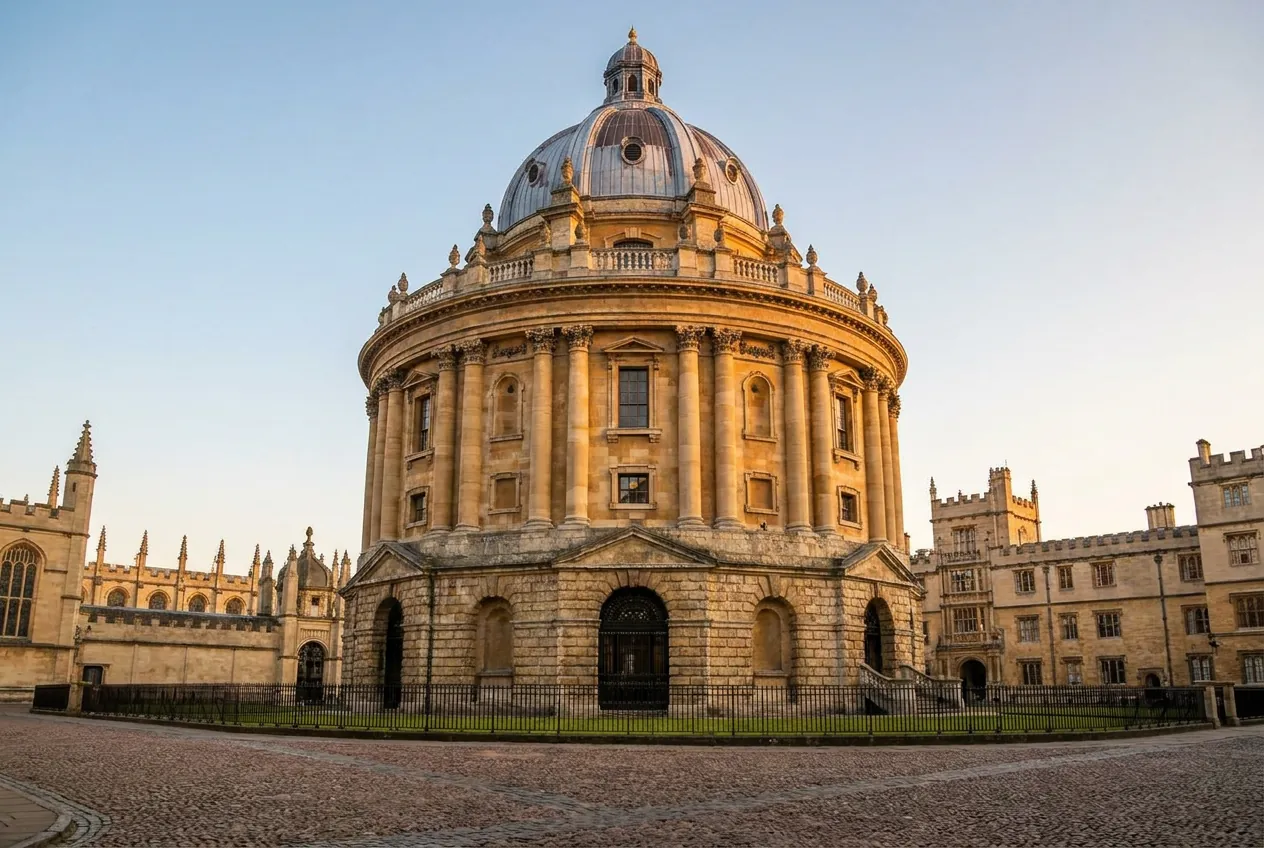
The domed Radcliffe Camera shares a benefactor with Univ’s Radcliffe Quad. Both were funded by the physician John Radcliffe’s legacy.
Logic Lane runs through the college estate towards Merton Street. Its cobbles and camber can make the route difficult for some visitors; it also contains an alternative level entrance to the college.
Before moving to the High Street in 1332, Univ appears to have occupied land that is now part of Brasenose College, near Radcliffe Square.
Good to know
Questions, answered.
Is University College Oxford really older than Balliol and Merton?
University College traces its foundation to William of Durham’s bequest in 1249, which underlies its claim to be Oxford’s oldest college. Comparisons depend on what counts as a foundation: an endowment, an organised community or continuous occupation. Univ’s date does not mean its present quadrangles are thirteenth-century buildings.
When did Clement Attlee study at University College?
Clement Attlee entered University College in 1901. He was British prime minister from 1945 to 1951, leading the government that established much of the postwar welfare state.
Why was Percy Bysshe Shelley expelled from University College?
Percy Bysshe Shelley was expelled from University College in 1811 after the controversy surrounding his pamphlet The Necessity of Atheism. He had arrived at the college in 1810. His memorial is now among the places visitors can see at Univ.
Can visitors see the Shelley Memorial at University College?
The Shelley Memorial is included in University College’s general visitor route, alongside Main Quad, Radcliffe Quad, Chapel and Hall. It gives the poet a permanent presence in the college that expelled him. The memorial is visited during college opening hours, subject to temporary closures.
Why does University College hold a major Oscar Wilde collection?
University College accepted the Robert Ross Memorial Collection of Oscar Wilde material in 1932 after Magdalen declined it. The collection was assembled by Walter Ledger.
Was C. S. Lewis a student at University College or Magdalen?
C. S. Lewis arrived at University College in 1917. He later taught at Magdalen College, before becoming a professor at Cambridge.
When did Stephen Hawking attend University College Oxford?
Stephen Hawking matriculated at University College in 1959. The physicist later held Cambridge’s Lucasian Professorship of Mathematics from 1979 to 2009.
What is Bill Clinton’s connection with University College Oxford?
Bill Clinton matriculated at University College in 1968, before becoming President of the United States from 1993 to 2001. He returned in 1994 to receive a doctorate by diploma, an honour reserved for heads of state and royalty.
Which University College alumnus won the 2001 Nobel Prize in Literature?
V. S. Naipaul, who matriculated at University College in 1950, won the Nobel Prize in Literature in 2001. His fellow Univ writers include Percy Bysshe Shelley, C. S. Lewis and foreign correspondent Christina Lamb.
How was Christian Cole connected to University College?
Christian Cole came to Oxford in 1873 to study Classics outside the college system and completed his degree in 1876. He joined University College in 1877, having received support from members including Herbert Gladstone and the Master. He later entered the Inner Temple and was called to the Bar in 1883, becoming the first Black African to practise law in English courts.
Did Robert Boyle study at University College Oxford?
Robert Boyle lived and worked beside University College rather than studying there. He rented Deep Hall from 1655 to 1668, when it belonged to Christ Church. University College did not acquire that site until 1773, after Boyle’s Oxford experiments.
Are any medieval University College buildings still visible?
None of University College’s medieval buildings survives above ground. The older complex once included a chapel dating from 1398, a hall of about 1450 and an entrance tower of about 1460. The Main Quad that visitors see today was begun in the seventeenth century.
Who designed University College’s Main Quad?
Richard Maude designed University College’s Main Quad, whose foundation stone was laid on 17 April 1634. A bequest from former member Sir Simon Bennet made the rebuilding possible after earlier plans had stalled for lack of money. Later alterations mean the visible frontage is not entirely Maude’s original work.
Why is the James II statue at University College missing a hand?
Nobody knows how the statue of James II lost its right hand. The statue was given in 1687, but the college has no image showing the hand intact and no established account of its loss. The statue stands in Main Quad.
Whose statue faces the High Street at University College?
Queen Anne’s statue, dating from 1709, faces the High Street at University College. The James II statue is inside Main Quad and was given earlier, in 1687. Both statues are part of the college’s historic stonework.
What unusual objects appear in University College’s 100 Treasures project?
University College’s 100 Treasures project includes a model for a rejected Main Quad design, a medieval Book of Hours, a Mercator atlas, a Civil War pamphlet and a student-life photograph album. The project can be explored online; the working college collections are outside the ordinary visitor route.
When did University College Oxford first admit women students?
University College admitted its first women students in 1979. Helen Cooper became the college’s first woman fellow the year before, in 1978.
How much does it cost to visit University College Oxford, and what can I see?
University College’s general visit includes Main Quad, Radcliffe Quad, Chapel, Hall and the Shelley Memorial. Admission is £5 for adults and £3 for concessions; visiting hours are 10 am–noon and 2–4 pm. The Lodge can advise on children’s admission, as the college and university give different free-entry age limits. College events can close areas, and the working libraries are outside this route.
Can wheelchair users enter University College through the High Street gate?
University College’s main High Street entrance is stepped, so wheelchair users need an alternative arranged route. The college identifies other level-access options, including a lift route through 83/85 High Street that may require advance notice.
Editorial notes
Sources and further reading.
Sources for this guide
S01 — Directions
- URL: https://www.univ.ox.ac.uk/about/directions/
- Status: read
- Read evidence / claim mapping: Official geography, address, postcode and map link with coordinates.
S02 — Organisation & Contacts
- URL: https://www.univ.ox.ac.uk/about/organisation-and-contacts/
- Status: read
- Read evidence / claim mapping: Official address, telephone, Lodge, admissions and access-project contact details.
S03 — Our History
- URL: https://www.univ.ox.ac.uk/about/history/
- Status: read
- Read evidence / claim mapping: Founder distinction, early funding, quads, Shelley, 19th/20th-century changes, music and women students.
S04 — Radcliffe Quad
- URL: https://www.univ.ox.ac.uk/college_building/radcliffe-quad/
- Status: read
- Read evidence / claim mapping: John Radcliffe relationship, 1716–19 construction, geometry, statues and conversion to rooms.
S05 — Main Quad
- URL: https://www.univ.ox.ac.uk/college_building/main-quad/
- Status: read
- Read evidence / claim mapping: Richard Maude, foundation-stone date, Civil War interruption, completion, statues and façade changes.
S06 — Notable Univites
- URL: https://www.univ.ox.ac.uk/about/notable-univites/
- Status: read
- Read evidence / claim mapping: Individual attendance/relationship labels, dates and significance across fields.
S07 — Robert Boyle and Univ
- URL: https://www.univ.ox.ac.uk/news/robert-boyle-and-univ/
- Status: read
- Read evidence / claim mapping: Deep Hall chronology, Boyle relationship, plaque and Shelley Memorial clarification, donation.
S08 — Chapel
- URL: https://www.univ.ox.ac.uk/college_building/chapel/
- Status: read
- Read evidence / claim mapping: Van Linge windows, dates, organ, memorials, war lists and Jonas Radcliffe.
S09 — College Buildings
- URL: https://www.univ.ox.ac.uk/about/college-buildings/
- Status: read
- Read evidence / claim mapping: Official building index and scope of histories.
S10 — Libraries
- URL: https://www.univ.ox.ac.uk/learn-at-univ/libraries-2/
- Status: read
- Read evidence / claim mapping: Library locations, collection size, subjects, working hours, rules and access.
S11 — Lodge & Porters
- URL: https://www.univ.ox.ac.uk/live-at-univ/lodge-and-porters/
- Status: read
- Read evidence / claim mapping: Public hours, prices, included areas, contact and 24-hour Lodge.
S12 — Open Days
- URL: https://www.univ.ox.ac.uk/applying-to-univ/open-days/
- Status: read
- Read evidence / claim mapping: 2026 Open Days, applicant drop-in hours, registration and programme.
S13 — Accessibility at Univ
- URL: https://www.univ.ox.ac.uk/live-at-univ/accessibility-at-univ/
- Status: read
- Read evidence / claim mapping: Access summary, routes, lift, parking, facilities, restrictions and toilet discrepancy.
S14 — Gardens
- URL: https://www.univ.ox.ac.uk/live-at-univ/gardens/
- Status: read
- Read evidence / claim mapping: Named quads/gardens, planting, private Master’s Garden, herb and bee-friendly areas.
S15 — Original Buildings
- URL: https://www.univ.ox.ac.uk/college_building/original-buildings/
- Status: read
- Read evidence / claim mapping: High Street move, medieval Chapel/Hall/tower and absence of above-ground medieval fabric.
S16 — Post-1900 Buildings
- URL: https://www.univ.ox.ac.uk/college_building/post-1900-buildings/
- Status: read
- Read evidence / claim mapping: Alington, Goodhart, Helen’s Court, Mitchell and Butler Room histories.
S17 — Master’s Lodgings
- URL: https://www.univ.ox.ac.uk/college_building/masters-lodgings/
- Status: read
- Read evidence / claim mapping: 1531 move, Radcliffe Lodgings, 1877–79 building, Bodley/Garner and Browne Library.
S18 — The 100 treasures of Univ
- URL: https://www.univ.ox.ac.uk/news/the-100-treasures-of-univ/
- Status: read
- Read evidence / claim mapping: Project scope and named objects/contexts.
S19 — Portraits in Hall
- URL: https://www.univ.ox.ac.uk/college_building/portraits-in-hall/
- Status: read
- Read evidence / claim mapping: Hall portrait programme and wall-by-wall interpretive scope.
S20 — Portraits in College
- URL: https://www.univ.ox.ac.uk/college_building/portraits-in-college/
- Status: read
- Read evidence / claim mapping: College portrait holdings, including Sadler and Fellows.
S21 — Hall
- URL: https://www.univ.ox.ac.uk/college_building/hall/
- Status: read
- Read evidence / claim mapping: 1766 Newdigate/Keene Gothic Revival intervention.
S22 — Accommodation
- URL: https://www.univ.ox.ac.uk/live-at-univ/accommodation/
- Status: read
- Read evidence / claim mapping: Named accommodation areas and modernised historic rooms.
Conflict ledger
- Founder story: S03 distinguishes William of Durham from the King Alfred legend; copy preserves both with different evidential status.
- Accessible toilets: S13 says four in its summary and five in detailed prose; unresolved and carried into operational data.
- Visitor windows versus Lodge operation: S11 says tourist windows are 10:00–12:00 and 14:00–16:00 while the Lodge is open 24 hours; these are not treated as one opening schedule.
- General visitors versus prospective applicants: S11 and S12 are separate products/arrangements.
- Boyle relationship: S07 supports neighbour/benefactor, not Univ student.
- Shelley relationship: S03 and S06 support matriculation in 1810 and expulsion in 1811; no completed degree claim.
Research limitations
All substantive sources in this register are official University College pages read during this run. Search-result snippets were not used as evidence. No external institution was substituted for Univ. The register reports pages actually read and labels unknowns rather than filling them with assumptions.
OX-PHYSICAL — University physical-access guide
University physical-access guide. Physical route and facilities reviewed 1 November 2026; admission remains governed by the college.
GEO-FRESH — numeric college location
Wikipedia coordinate, read1November 2026: 51.7525, -1.252 WGS84. This college-site pin supersedes the carried-forward draft value. It does not identify an accessible entrance. No published source data was changed.
AUD-COLE — Christian Cole: degree and Univ membership
Christian Cole: degree and Univ membership
Reviewed 1 November 2026. Enrolled non-collegiately in 1873, BA 1876, admitted to University College 1877, Inner Temple 1879 and called to the Bar 1883. Collegiate membership follows the earlier degree; no Univ undergraduate degree claimed.
Further reading and sources
Opening hours, prices, programmes and access arrangements can change. Confirm critical details with the venue.
Keep exploring