Central · Founded 1458
Magdalen College
Wander from medieval Cloisters to a deer park and riverside walk at the college of Oscar Wilde and C. S. Lewis.
- Founded
- 1458
- Location
- High Street
- Visiting
- Public visiting hours
- Institution
- College
01 The experience
What to expect.
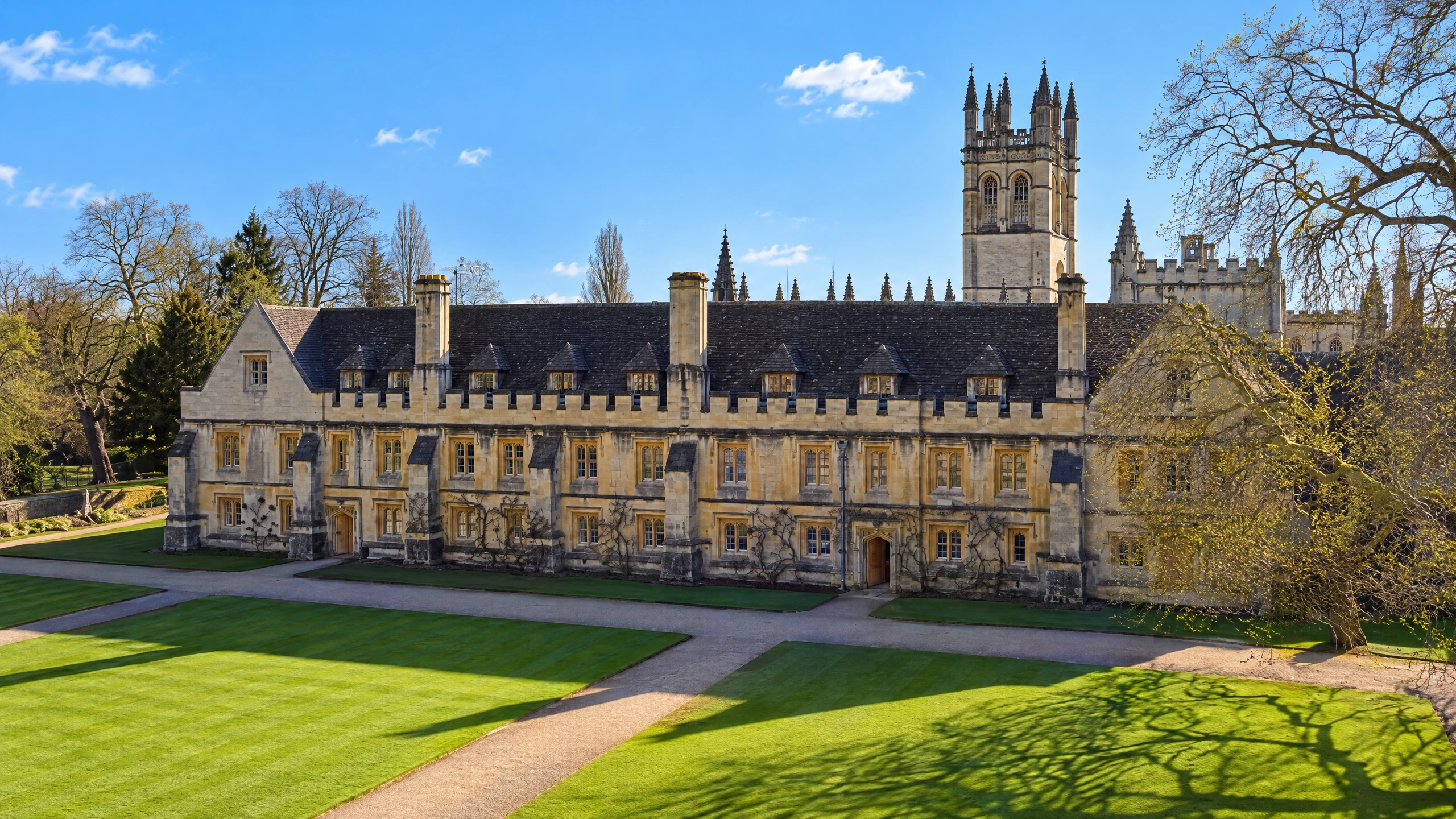
Magdalen begins beside the High Street and stretches out along the Cherwell, from its medieval Cloisters to a deer park, water meadow and Addison’s Walk. Its Great Tower rises above Magdalen Bridge; each May Morning, the choir sings from the tower.
William Waynflete founded the college in 1458. The Cloisters followed in the 1470s, bringing the chapel, hall and library around a shared court. Unusual carved figures, known as the hieroglyphics, were added in 1508–09.
The college’s literary history includes Oscar Wilde, who studied here from 1874 to 1878, and C. S. Lewis, an English fellow from 1925 to 1954. Lewis wrote several of his best-known works during his Magdalen years. Actor and musician Dudley Moore was an organ scholar, while novelist Julian Barnes and Alan Hollinghurst also studied here.
Magdalen has a scientific history too. Charles Daubeny built a laboratory across the road in 1847; later students Howard Florey and Peter Medawar both received Nobel Prizes for medical research. Its historic library includes a richly illustrated 1661 celestial atlas by Andreas Cellarius.
A visit can take in the Cloisters and chapel, then continue towards the deer park and riverside. The hall may close for college use, and the ground on Addison’s Walk is uneven. The Old Kitchen Bar and Riverside Terrace offer refreshments when open.
People and ideas
Famous former students

Oscar Wilde
1874–1878
The playwright, novelist and poet studied at Magdalen from 1874 to 1878.
College connection
Undergraduate student. 1874–1878.
Thomas Wolsey
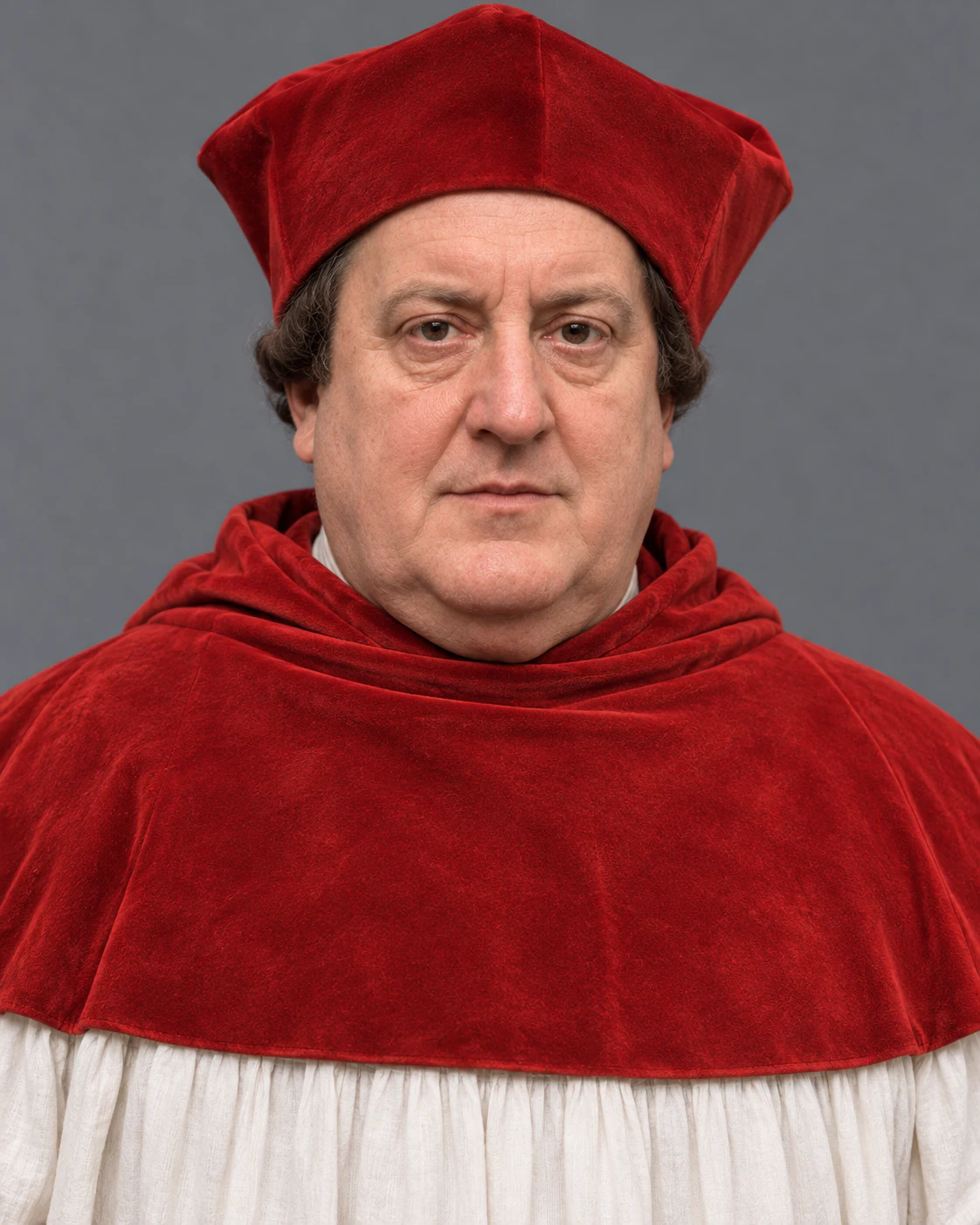
The future Tudor churchman and chief minister studied at Magdalen and became a fellow in the 1490s.
College connection
Student and subsequently Fellow in the 1490s; exact attendance years omitted.

Howard Florey
1924
The penicillin researcher and 1945 Nobel Prize recipient came to Magdalen as a Rhodes Scholar.
College connection
Rhodes Scholar and student; later Honorary Fellow. Oxford BSc and MA awarded in 1924; Magdalen Honorary Fellow from 1952.

Peter Medawar
Entered 1932
The immunologist studied zoology at Magdalen before sharing the 1960 Nobel Prize for work on immune tolerance.
College connection
Zoology student; later scholar, demonstrator and Fellow. Entered Magdalen in 1932; Christopher Welch Scholar and Senior Demonstrator in 1935; examination Fellow in 1938.

Dudley Moore
1954
The actor, comedian and musician became an organ scholar at Magdalen in 1954.
College connection
Former student. Organ Scholar from 1954.

Alan Hollinghurst
1972–79
The novelist studied English at Magdalen and later won the Booker Prize for The Line of Beauty.
College connection
Student/alumnus; later Honorary Fellow. English 1972–79; BA 1975; MLitt 1979.

Julian Barnes
1964
The novelist studied Modern Languages at Magdalen and later won the Booker Prize for The Sense of an Ending.
College connection
Student/alumnus; later Honorary Fellow. College cohort 1964; Modern Languages degree 1968.
Fellows, founders and other connections

C. S. Lewis
1925–1954
The author of the Narnia books taught English at Magdalen as a fellow from 1925 to 1954.
College connection
Tutorial Fellow in English; later Honorary Fellow. 1925–1954; Honorary Fellow from 1955.
The story
History & character.
William Waynflete, Bishop of Winchester and Lord Chancellor, founded Magdalen in 1458 for forty fellows, thirty scholars called Demies and a choir. The word Demy comes from a scholar’s entitlement to half a fellow’s allowance. The new foundation incorporated the Hospital of St John; parts of its High Street range and former hall, later used as a kitchen, survive.
Mason William Orchard began the Cloisters in 1474. The principal ranges, including the chapel, hall and library, were largely complete by 1480. Work on the 144-foot bell tower began in 1492 and it was ready by 1505. The large allegorical carvings around the Cloisters, known as hieroglyphics, followed in 1508–09.
Thomas Wolsey studied at Magdalen and became a fellow in the 1490s. He later served as Henry VIII’s chief minister and founded Cardinal College, the predecessor of Christ Church.
Magdalen supported the Royalist cause during the Civil War. After Parliament’s victory its President and many fellows were removed. Another confrontation followed under James II: in 1687 fellows resisted the king’s intervention in the election of their President. Twenty-five fellows and seventeen Demies were expelled and returned on 25 October 1688. A surviving buttery book records names crossed out during the crisis; the return is remembered at the Restoration Dinner.
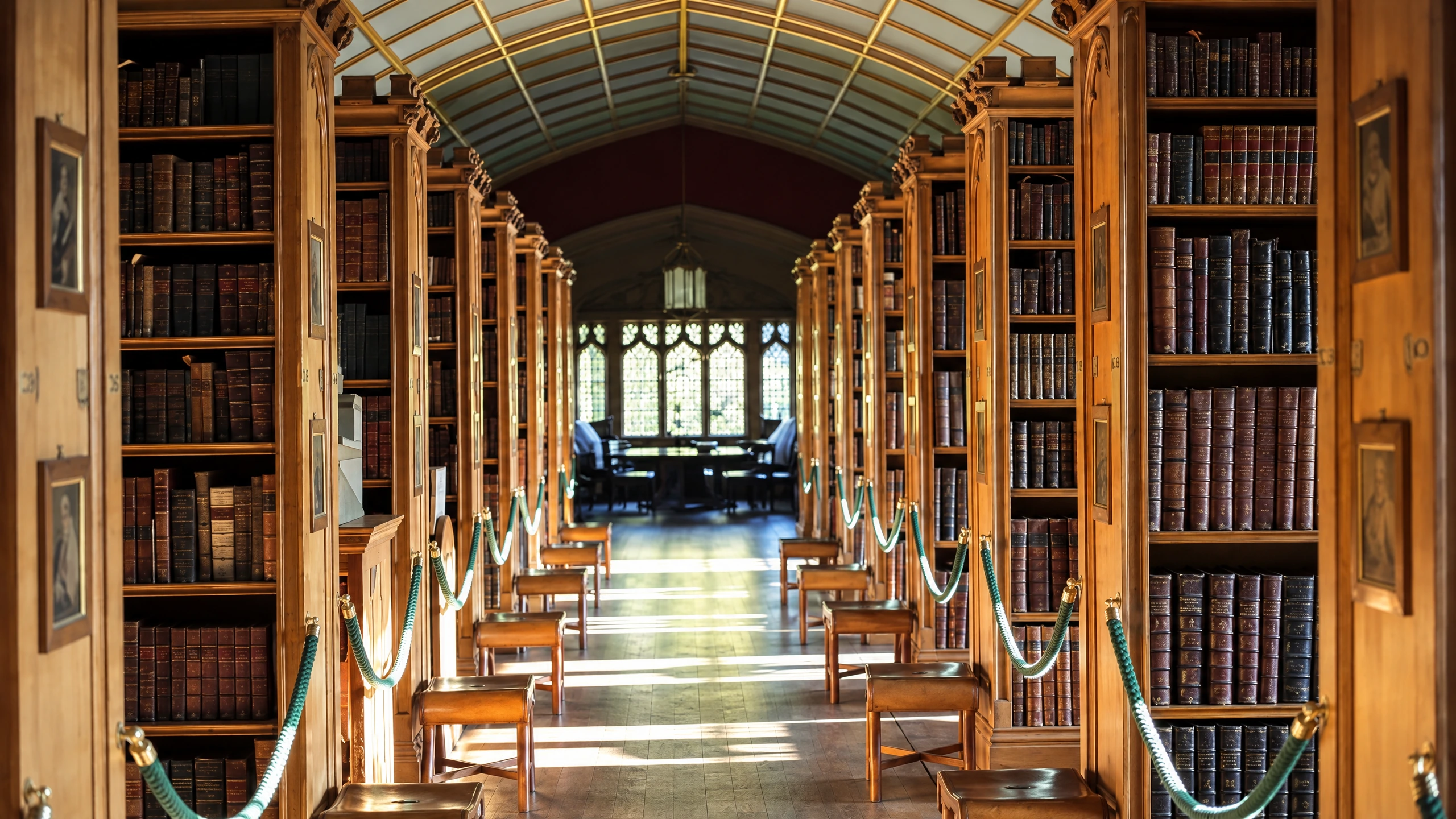
Waynflete’s library began with hundreds of books. Chained lecterns later gave way to shelves and desks, and gifts broadened the collection. Among its treasures is Andreas Cellarius’s Harmonia Macrocosmica, a 1661 atlas with elaborate celestial maps. An eighteenth-century undergraduate collection included cookery and etiquette alongside classical works; much of it was later sent to Halifax, becoming part of the University of King’s College collection.
Charles Daubeny built a laboratory across the road in 1847 and helped establish Oxford’s Natural Science honours school in 1850. Howard Florey and Peter Medawar later studied at Magdalen and received Nobel Prizes for medical research.
Oscar Wilde studied here from 1874 to 1878. C. S. Lewis was a Tutorial Fellow in English from 1925 to 1954, teaching while writing works including the Narnia books. Organ scholar Dudley Moore’s college years combined music, composition and theatre before his later screen career.
The choir’s singing from the Great Tower is now a familiar part of Oxford’s May Morning. Nineteenth-century fellow and historian John Rouse Bloxam helped shape the modern form of the tradition and the college’s historical collections.
Look closer
What to see.
Great Tower
The 144-foot tower was built between 1492 and 1505. The choir sings from it on May Morning.
The Cloisters
The medieval court brings the chapel, hall and library together, with unusual carved figures around the ranges.
The chapel
The chapel remains a place of worship and music. Services and college activities can affect visiting access.
The hall
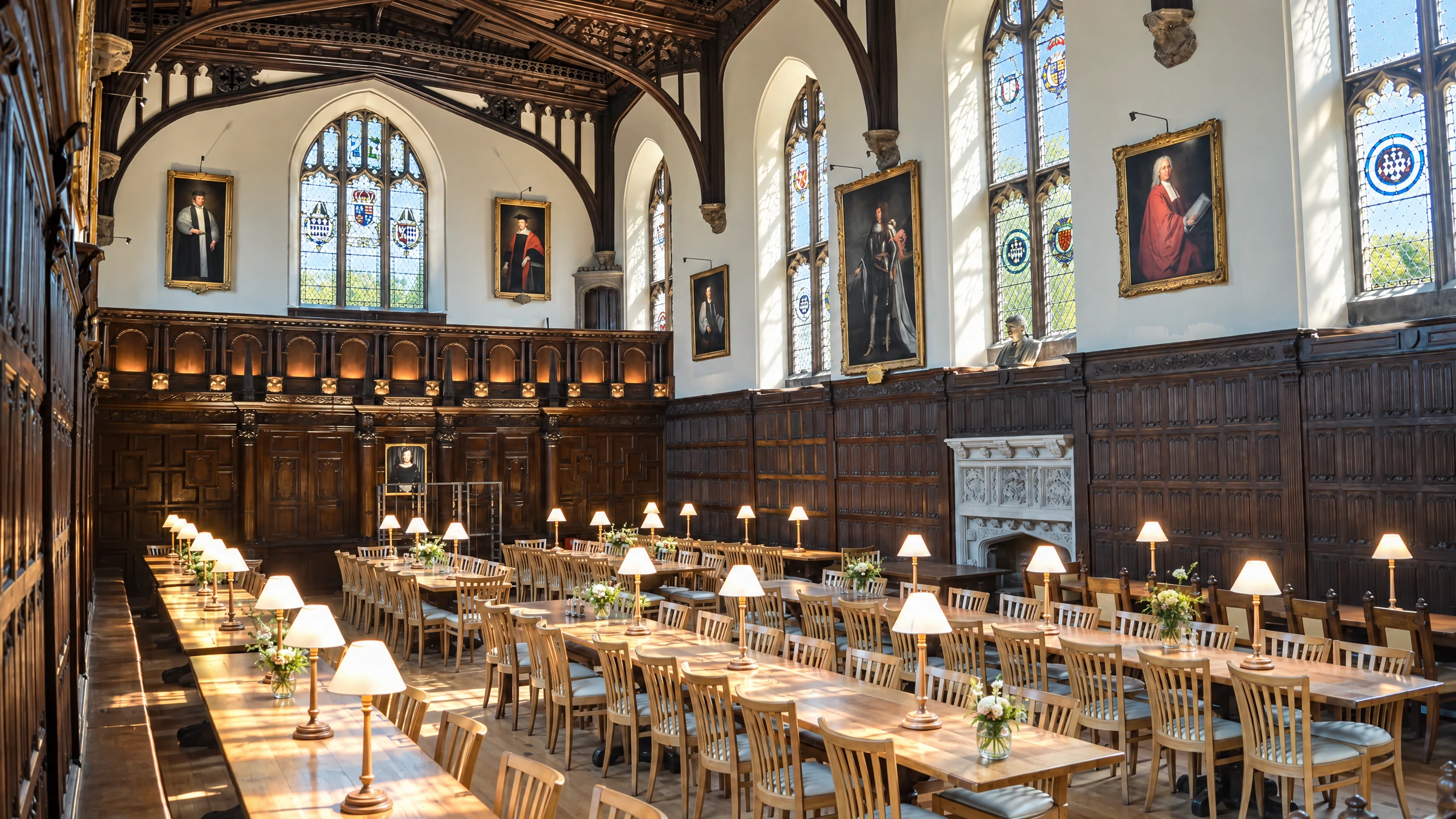
The historic hall is part of the college’s shared life and may close around lunchtime.
The deer park and Addison’s Walk
The Grove’s deer and the Cherwell-side path offer a change of scene from the stone courts. Addison’s Walk has uneven ground and roots.
Old Kitchen Bar and Riverside Terrace
The bar and terrace offer refreshments when open, with a riverside setting close to the college grounds.
Make it work
Plan your visit.
For 2026, the college lists visiting from 5 January to 21 December, normally from 10am until dusk or 5pm, whichever is earlier. In July, August and September closing is 6.30pm. Last admission is 30 minutes before closing. The college is closed from 22 to 31 December 2026; dates and access can change for college events. On 1 January, the listed opening is 10am–3.30pm with free admission.
The 2026 adult ticket is £10 and the concession ticket £9. A family ticket is £28 for two adults and up to three children aged seven or over; under-sevens enter free. Tickets are available online or on the day, with card payment only. Free admission is listed for alumni; local residents and one guest; Oxford University, Oxford University Press or alumni cardholders and one guest; prospective students and their families; and Pathway to Success alumni.
Eligible carers of disabled visitors enter free with specified proof; there is no online carer ticket, and the concession does not apply to carers of children under seven. A joint ticket with the Oxford Botanic Garden costs £17 adult or £15 concession, for one entry at each venue within twelve months; family and group joint tickets are unavailable.
Selected summer guided tours are £15 including admission, with four to twenty people. They may include Longwall Library Quad, which is not generally open. The tours are listed on selected days at 11am and 3pm. Other groups are limited to twenty, with larger parties split into consecutive visits; under-21 groups need a responsible person for every twenty visitors. UK schools have separate outreach arrangements, while fee-paying programmes are charged.
The Old Kitchen Bar and Riverside Terrace normally open Monday to Saturday, 10am–5.30pm, and close Sundays. The hall may close over lunch. Picnics and walking on grass are not permitted. Guide, assistance and support dogs are welcome; ordinary pet dogs are not. Map leaflets at the Lodge cost 50p, and an illustrated short history is £5. There is no visitor parking.
The Lodge entrance is not suitable for wheelchairs, but a porter can open an adjacent gate. The chapel is accessible; many other rooms are not, and the hall lift is unavailable to afternoon tourists. Addison’s Walk has uneven ground and tree roots, with no access on the eastern side of Bat Willow Bridge. Two wheelchairs can be arranged in advance; the accessibility team can be reached on 01865 276052.
Visit your way
Access and family planning.
The Lodge entrance is not suitable for wheelchairs, but a porter can open an adjacent gate. The chapel is wheelchair accessible; many other rooms are not, and the hall lift is unavailable to afternoon tourists.
Some quads are cobbled. Addison’s Walk has uneven ground and tree roots, with no access on the eastern side of Bat Willow Bridge. Adapted toilets and two loan wheelchairs are available, subject to location or advance arrangement. There is a drop-off point but no visitor parking. The college’s access number is 01865 276052.
The tower, Cloisters and deer park offer plenty for a family visit, with the riverside walk adding more space outdoors. Children under seven enter free; the family ticket covers two adults and up to three children aged seven or over.
Children need supervision near the water and deer fence. The ground on Addison’s Walk can be uneven, and picnics and walking on the grass are not permitted.
Self-guided walk
Exploring Magdalen
A visit of around 45–75 minutes can take in the historic courts, deer park and riverside grounds.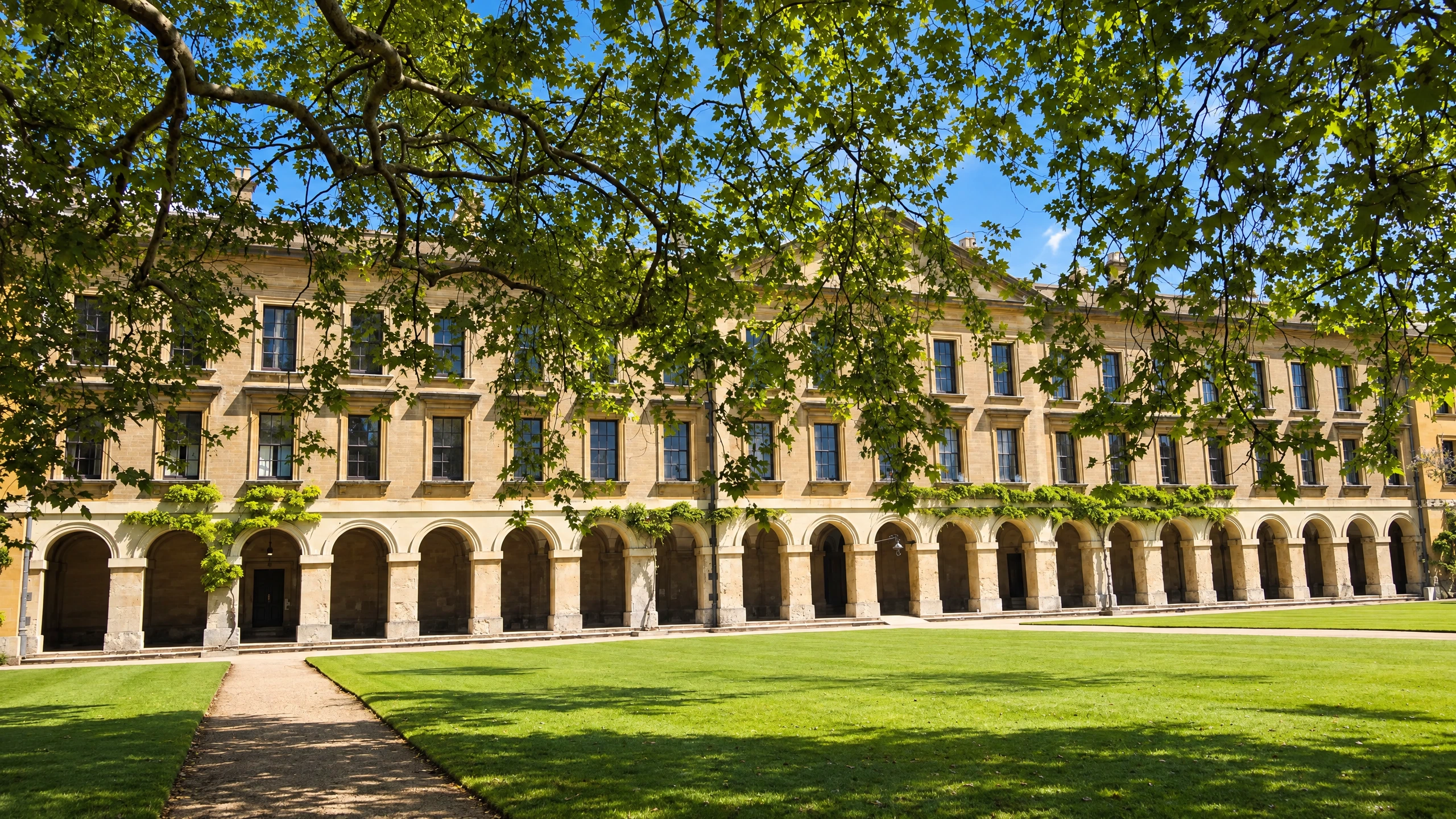
The Great Tower
The college’s 144-foot tower marks the High Street entrance and is the setting for May Morning singing.
Cloisters, chapel and hall
The medieval Cloisters bring the college’s shared buildings around a court. The chapel is accessible, while the hall may close around lunch.
A guided summer visit
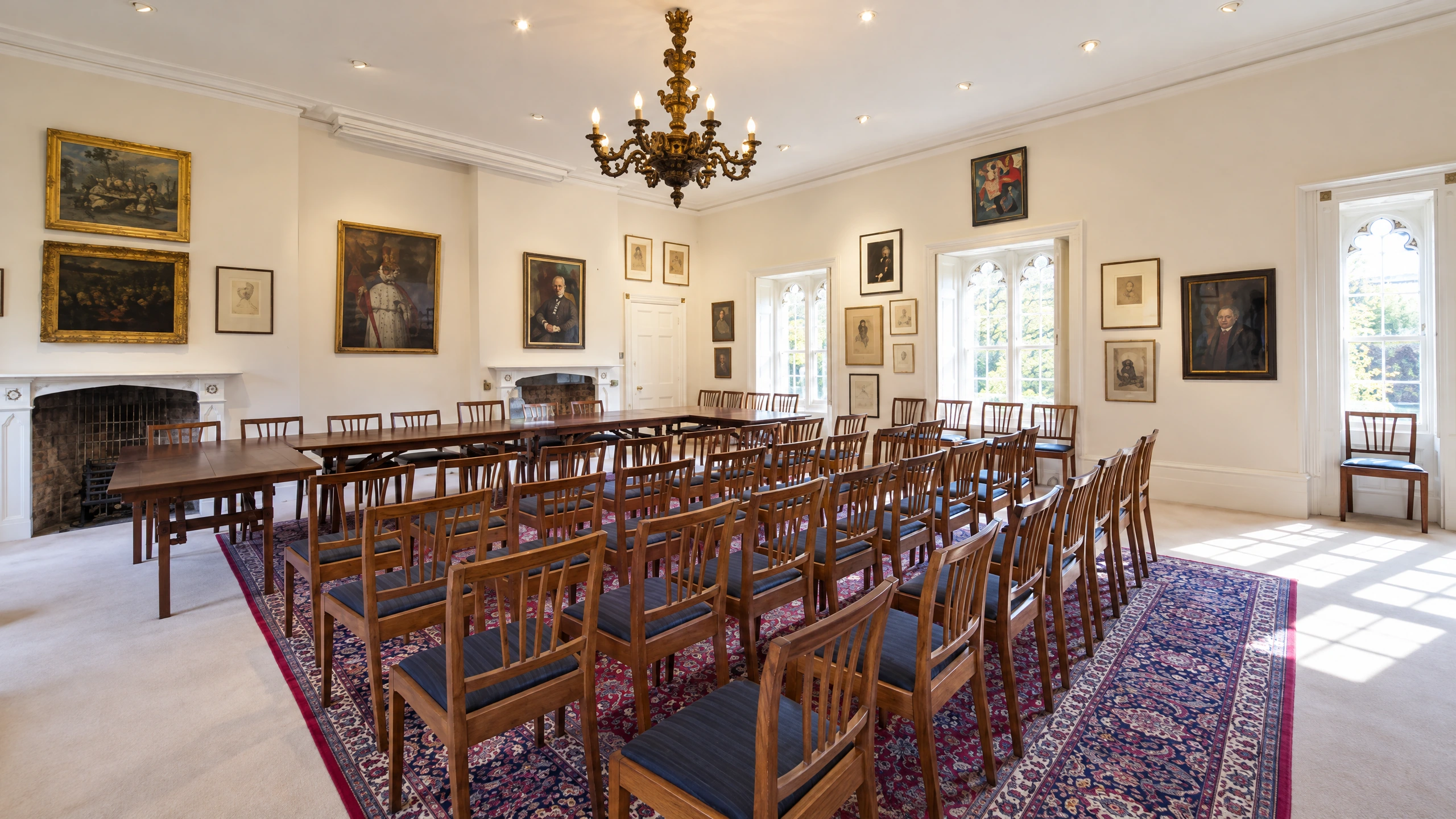
On selected days, guided tours may include Longwall Library Quad. The £15 tour includes admission and has separate availability.
The deer park and Addison’s Walk
The Grove and riverside path reveal the college’s green setting. The walk has tree roots and uneven ground, and wheelchair access does not continue on the eastern side of Bat Willow Bridge.
Riverside refreshments
The Old Kitchen Bar and Riverside Terrace normally open Monday to Saturday, with Sunday closure. Picnics are not permitted in the grounds.
See it
In pictures.
10 views, full screen. Tap any one to open the viewer.Around here
Make more of the area.

Across the High Street, the Botanic Garden makes a natural companion to Magdalen’s grounds. A joint ticket covers one entry at each venue within twelve months.

≈ 2–10 min walk
High Street and Magdalen Bridge
Magdalen Bridge crosses the Cherwell beside the college and the Botanic Garden.
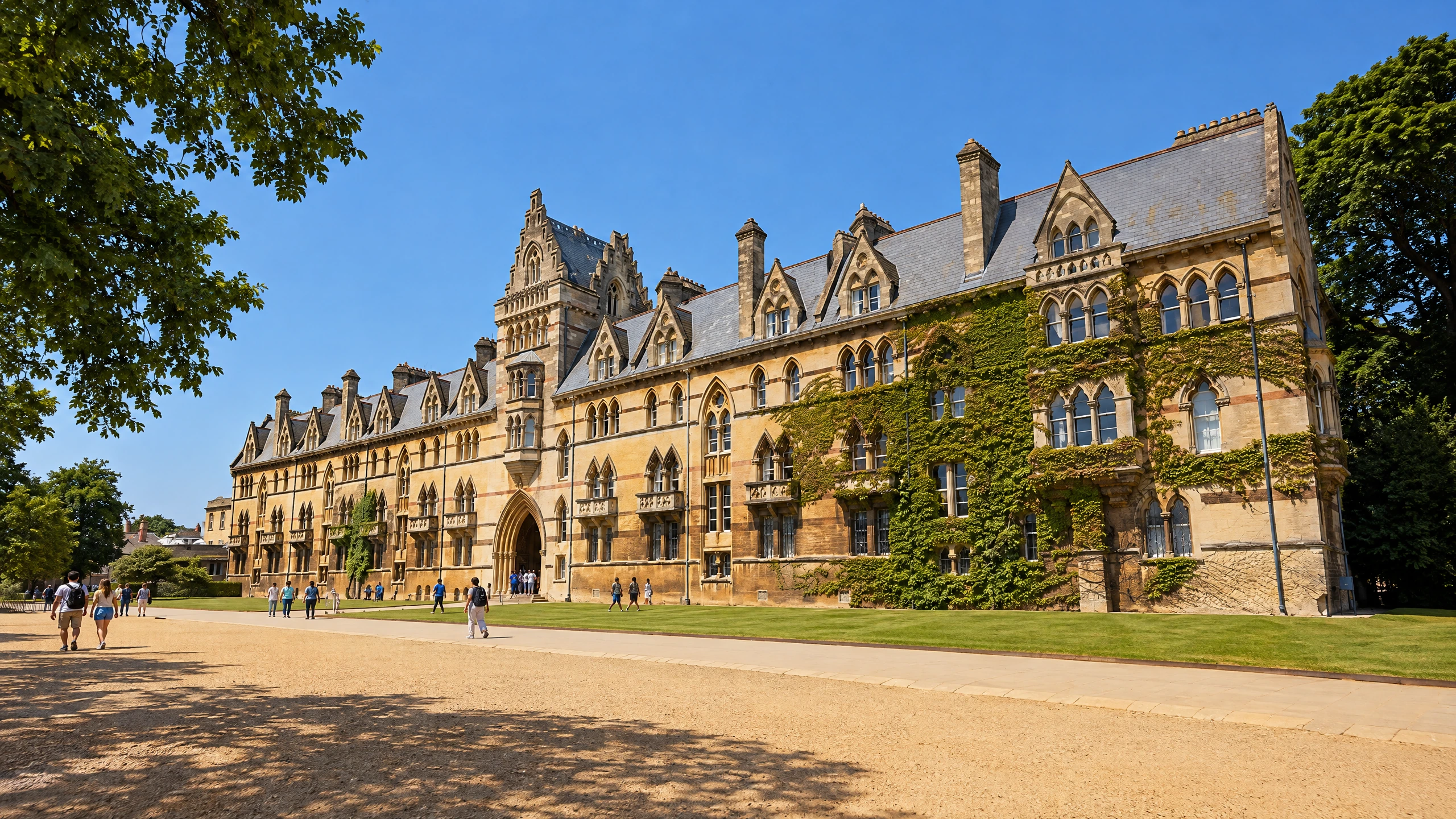
Christ Church has its own historic buildings and meadow. Admission is separate.
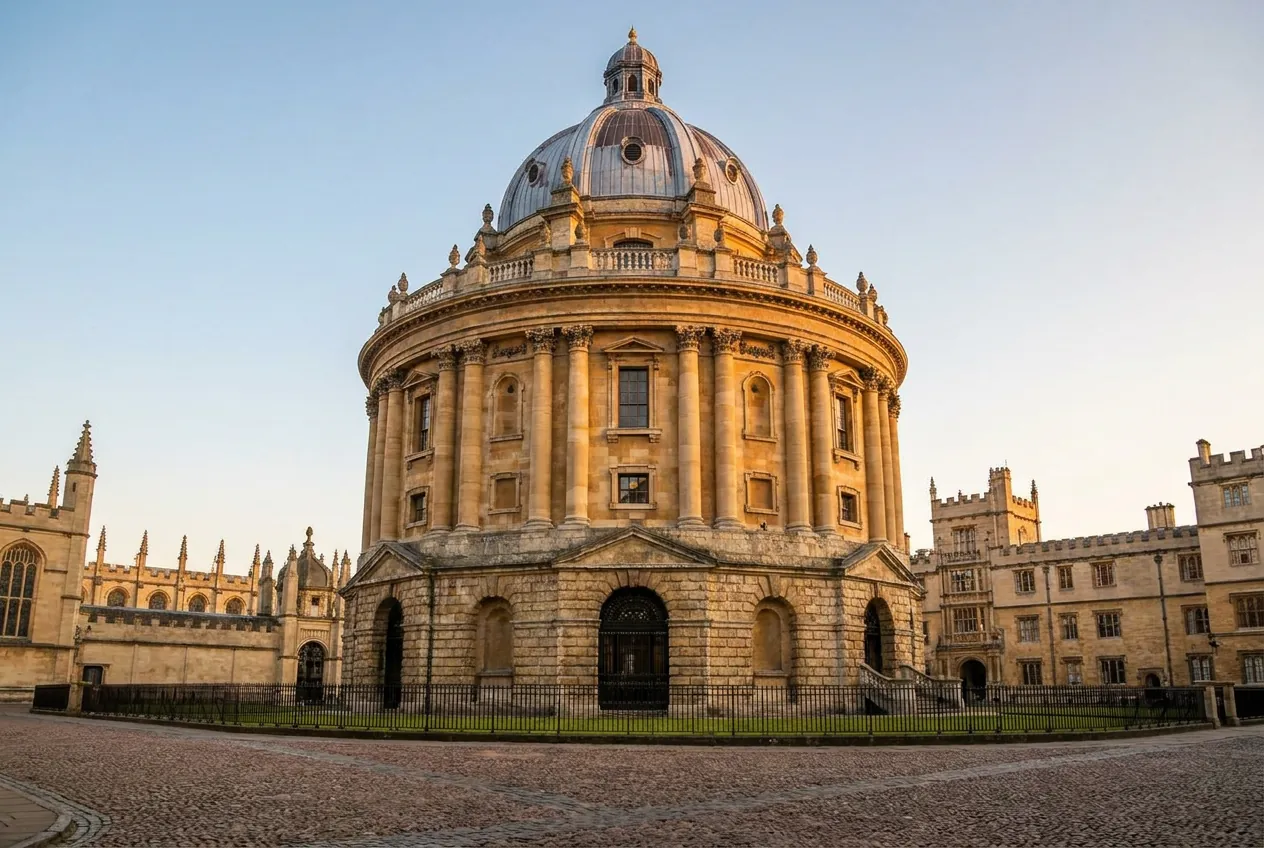
West along High Street, the University Church stands beside Radcliffe Square and its circular Camera.
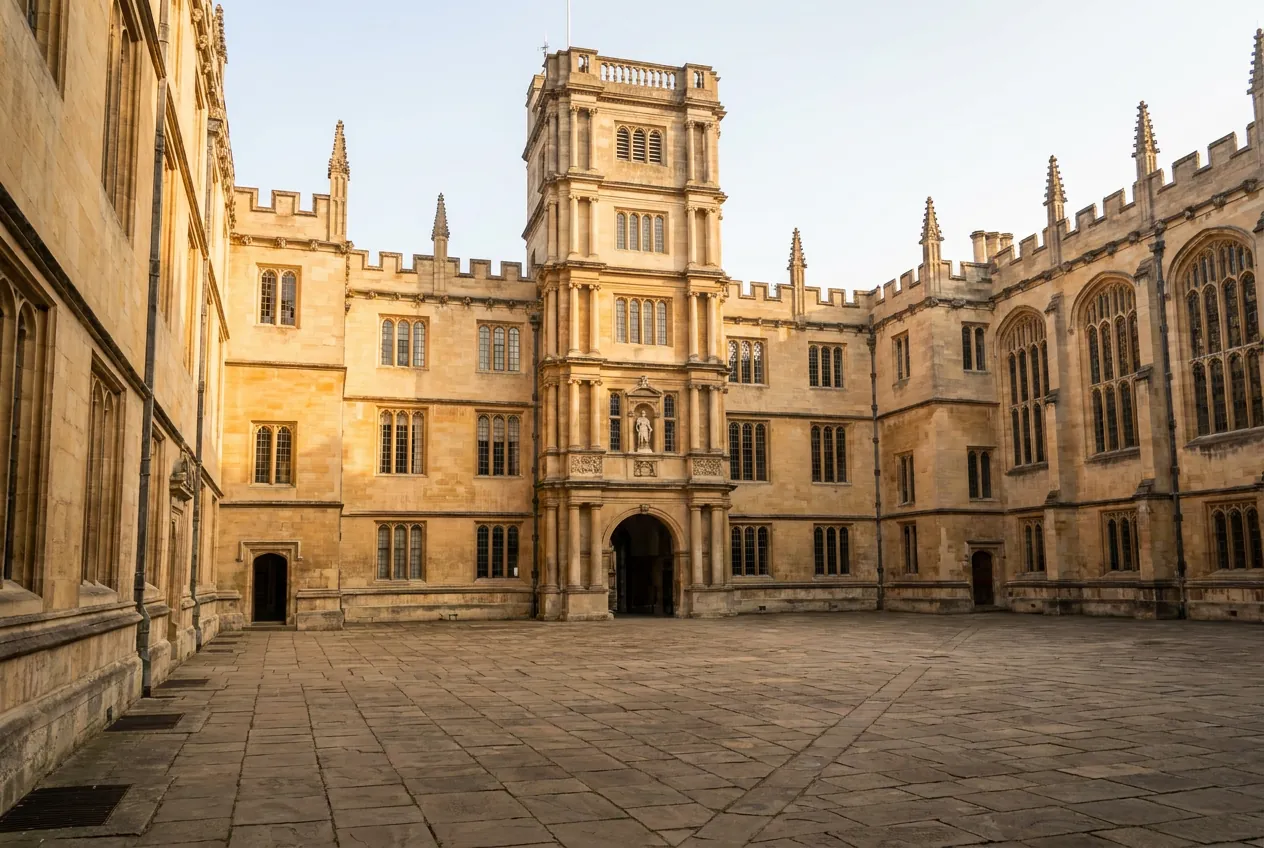
The Bodleian’s historic rooms can be visited on a separate tour.
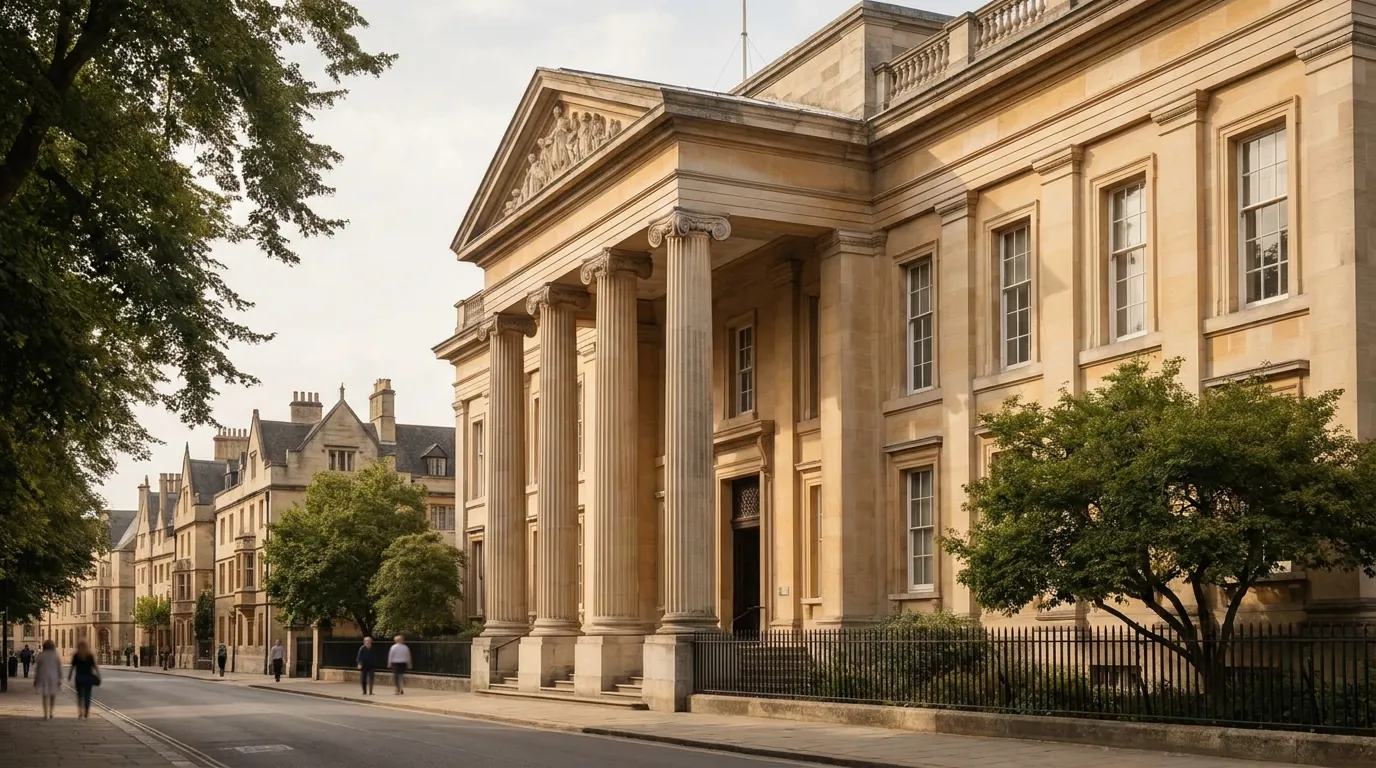
The Ashmolean on Beaumont Street brings together art and archaeology from around the world.

The parks offer more paths, open lawns and riverside scenery north of the city centre.
Good to know
Questions, answered.
How do you pronounce Magdalen College Oxford?
Magdalen is pronounced “MAWD-lin”. The college retains an older English pronunciation of the name of St Mary Magdalene, after whom it was named.
How much does it cost to visit Magdalen College Oxford?
In 2026, admission is £10 for adults and £9 for over-65s, children and students. A family ticket is £28 for two adults and up to three children aged seven or older; under-sevens enter free.
When is Magdalen College Oxford open to visitors?
In 2026, the college normally opens daily from 10am to 5pm or dusk, whichever is earlier, from 5 January to 21 December. July–September closing is 6.30pm; special closures apply.
Can visitors see the deer at Magdalen College?
Yes. Magdalen’s grounds include a deer park beside Addison’s Walk. Visitors can follow the path past the park fence; dogs other than guide dogs are not admitted.
What is Addison’s Walk at Magdalen College?
Addison’s Walk is a path through Magdalen’s grounds, beside its deer park and water meadow. Its uneven surface and tree roots can make some sections difficult for wheelchair users.
What happens at Magdalen College on May Morning?
On 1 May, the college choir sings from the Great Tower at 6am to welcome the spring. Crowds gather around Magdalen Bridge to hear the tradition.
Who founded Magdalen, and why was the foundation unusually large?
William Waynflete, Bishop of Winchester and Lord Chancellor, founded Magdalen in 1458 for forty fellows, thirty scholars called Demies and a choir.
Who are the Demies at Magdalen?
Demies are Magdalen’s scholars. The name comes from their original entitlement to half a fellow’s allowance; Waynflete’s foundation provided for thirty of them.
What survives of St John’s Hospital at Magdalen?
Part of the Hospital of St John’s High Street range survives. Its former hall was adapted as a college kitchen after Magdalen took over the site.
When were Magdalen’s Cloisters built?
William Orchard began the Cloisters in 1474, and the principal ranges were largely finished by 1480. They brought the chapel, hall and library around a court.
How old is Magdalen’s Great Tower?
The 144-foot bell tower was begun in 1492 and ready for use by 1505. It rises above the High Street and Magdalen Bridge.
What are Magdalen’s Cloister hieroglyphics?
They are large allegorical carvings added around the Cloisters in 1508–09, after the main medieval ranges had been completed.
Why did James II expel Magdalen’s fellows?
The fellows resisted James II’s intervention in their presidential election in 1687. Twenty-five fellows and seventeen Demies were expelled; the fellows were restored in 1688.
Was Cardinal Thomas Wolsey a Magdalen student?
Yes. Wolsey studied at Magdalen and became a fellow in the 1490s. He later served Henry VIII and founded the predecessor of Christ Church.
How did Magdalen’s Old Library begin?
Waynflete’s foundation collection included around 800 volumes in the 1470s. Reference books were chained to lecterns; other books circulated among the fellows. Shelves and desks replaced the lecterns in the early seventeenth century.
When was Oscar Wilde a Magdalen student?
Oscar Wilde studied at Magdalen from 1874 to 1878, before becoming known as a playwright, novelist and poet. He is one of its notable former students.
Was C. S. Lewis a Magdalen undergraduate?
No. Lewis studied as an undergraduate at University College and was a Magdalen Tutorial Fellow in English from 1925 to 1954.
How did Howard Florey’s Magdalen studies differ from his later Oxford roles?
Florey came to Magdalen as a Rhodes Scholar and received Oxford degrees in 1924. He later held roles at Lincoln and Queen’s as well.
Can I buy a joint ticket for Magdalen and Oxford Botanic Garden?
The 2026 joint ticket is £17 adult or £15 concession, with one entry at each venue within twelve months. Family and group joint tickets are unavailable.
Does Magdalen’s standard ticket include Longwall Library Quad?
No. Longwall Library Quad is not generally open, but may be included in selected summer guided tours. The 2026 tour price is £15 including admission.
Is Magdalen’s Addison’s Walk a continuous step-free route?
No. Addison’s Walk has uneven ground and tree roots, and wheelchair access does not continue on the eastern side of Bat Willow Bridge.
Can a wheelchair user visit Magdalen’s Chapel and Hall?
The chapel is wheelchair accessible. The hall lift is unavailable to tourists in the afternoon, and an adjacent gate provides access beside the stepped Lodge.
Can Magdalen’s landscape visit include lunch by the river?
The Old Kitchen Bar and Riverside Terrace normally open Monday to Saturday, 10am–5.30pm, and close Sundays. Picnics and walking on grass are not permitted.
Editorial notes
Sources and further reading.
Sources for this guide
Statuses mean: read = a research agent reports the full page was read; partial = only an indexed extract or incomplete retrieval was available; blocked = page located but not read sufficiently for substantive claims. Partial and blocked records are retained so editors can see the evidence gap; they are not silently treated as full readings.
| ID | Direct source | Title | Status | Claim mapping |
|---|---|---|---|---|
| S1 | https://www.magd.ox.ac.uk/visiting-magdalen-college/ | Visiting Magdalen College | read | 2026 hours, closures, prices, concessions, groups, summer guided tour, facilities, private areas, dogs, picnics, CCTV/searches, drones, photography, parking |
| S2 | https://www.magd.ox.ac.uk/visiting-magdalen-college/accessibility-information/ | Accessibility Information | read | Contact number, entrances, quads/cobbles, Chapel, Hall lift, Addison’s Walk, Bat Willow Bridge, wheelchairs, toilets, loops, dogs and drop-off |
| S3 | https://www.magd.ox.ac.uk/about-magdalen-college/the-history-of-magdalen-college/ | The history of Magdalen College | read | Foundation, 40 Fellows/30 Demies/choir, St John’s Hospital, construction dates, royal visitors, Civil War, James II, Daubeny, Wolsey |
| S4 | https://www.magd.ox.ac.uk/blog/c-s-lewis-at-magdalen-college/ | C. S. Lewis at Magdalen College | read | Lewis’s 1925–54 Tutorial Fellowship, 1955 Honorary Fellowship, works and 1938 Underhill letter; limited papers |
| S5 | https://www.magd.ox.ac.uk/about-magdalen-college/ | About Magdalen College | partial | Deer park, Water Meadow, Addison’s Walk and general institutional overview |
| S6 | https://www.british-history.ac.uk/rchme/oxon/pp60-70 | Magdalen College, RCHME inventory | partial | High Street/Cherwell setting; enclosing walls, occupation, Muniment Tower and south cloister chronology |
| S7 | https://www.british-history.ac.uk/vch/oxon/vol3/pp193-207 | Magdalen College, VCH volume 3 | partial | 1457 incorporation-charter research lead |
| S8 | https://historicengland.org.uk/listing/the-list/list-entry/1000435 | Magdalen College, Non Civil Parish, Historic England 1000435 | blocked | Heritage-designation lead only; not used for detailed grade claims |
| S9 | https://historicengland.org.uk/listing/heritage-gateway/results/record/bcd06aaf-17ff-4ae7-9d5c-8997a7f4334f/MOX15418 | UAD - Magdalen College, The New Buildings | partial | 1733–34 New Buildings and Townsend description |
| S10 | https://historicengland.org.uk/listing/heritage-gateway/results/record/bcd06aaf-17ff-4ae7-9d5c-8997a7f4334f/MOX15705 | Magdalen College, Gateway west of range on High Street | partial | West gateway, stone arch, stepped gable, Bodley and Garner lead |
| S11 | https://historicengland.org.uk/listing/heritage-gateway/results/record/bcd06aaf-17ff-4ae7-9d5c-8997a7f4334f/MOX26198 | Magdalen College, Park and Gardens | partial | Registered-park-and-garden lead |
| S12 | https://www.magd.ox.ac.uk/library-and-archives/libraries/history-of-magdalens-libraries/ | History of Magdalen’s libraries | partial | 1480s library and Old Library author-collection claims |
| S13 | https://www.magd.ox.ac.uk/library-and-archives/archive/about-the-archives/ | About the Archives | partial | Building records and architectural drawings |
| S14 | https://archive-cat.magd.ox.ac.uk/guides/gardens | Gardens and grounds | partial | Extensive private grounds, Grove/deer park and water |
| S15 | https://www.magd.ox.ac.uk/chapel-and-choir/ | Chapel and Choir | partial | About fourteen Full Term services each week, open to all |
| S16 | https://www.magd.ox.ac.uk/blog/a-magdalen-college-buttery-book-and-the-restoration-of-the-fellows-of-magdalen/ | A Magdalen College Buttery Book and the Restoration of the Fellows of Magdalen | partial | Peter Mews portrait by Michael Dahl and Hall expulsion scene |
| S17 | https://www.magd.ox.ac.uk/blog/magdalens-celestial-atlas-from-the-dutch-golden-age-the-harmonia-macrocosmica/ | Magdalen’s Celestial Atlas from the Dutch Golden Age – The Harmonia Macrocosmica | partial | Celestial atlas and art/science/religion interpretation |
| S18 | https://www.magd.ox.ac.uk/considering-magdalen/undergraduate-study/courses/english/ | English - Magdalen College | partial | Names former students and Fellows without dates/status for every person; not used to infer alumni records |
| S19 | https://www.magd.ox.ac.uk/news/the-importance-of-being-earnest/ | The Importance of Being Earnest | partial | Oscar Wilde arrived as undergraduate in 1874; college material gives 1874–78 period |
| S20 | https://www.magd.ox.ac.uk/wp-content/uploads/2022/10/Magdalen_Archives_Guide_2022.pdf | Archives Guide 2022 | partial | Limited Lewis papers and Bodleian location lead |
| S21 | https://en.wikipedia.org/wiki/Magdalen_College,_Oxford | Magdalen College, Oxford, Wikipedia | partial | Retained coordinate provenance supplied in project brief only; no substantive claims used |
Conflict and provenance ledger
- The operational page is a 2026 record. It must not be presented as a live 2027 calendar. The research date is 1 November 2026, and the next-review date is 15 January 2027.
- It is carried forward because no new source-backed entrance coordinate was read.
- The official history and the RCHME chronology use different levels of granularity for medieval construction. They are complementary, not silently merged into one exact building schedule; the RCHME details remain partial until the full page is checked.
- Historic England records are included as partial/blocked leads. Do not upgrade the New Buildings, gateway or registered-garden descriptions to final list-entry language without rereading the full records.
- The official English page groups “former students and Fellows”. It is not evidence for an individual’s attendance dates. The machine list therefore contains Wilde, Wolsey and Lewis with distinct relationships only where the named source supports them.
- Collection articles identify objects and interpretations but do not establish ordinary public display or photography permission. The visitor guide keeps those questions open.
Reading and booking caveat
Search or indexed extracts were not treated as equivalent to a full page. A current booking, access or photography decision requires a fresh read of the official visitor and accessibility pages and, where relevant, direct confirmation from the College. No checkout, payment, message or database mutation was performed.
Supplementary biographical sources
SUP-FLOREY — Sir Howard Florey — Biographical, Nobel Prize
Sir Howard Florey — Biographical, Nobel Prize. Read 1 November 2026. The Nobel biography records a Rhodes Scholarship to Magdalen and Oxford BSc and MA degrees in 1924. It distinguishes his later Lincoln Fellowship, 1952 Magdalen honorary Fellowship and 1962 appointment as Provost of Queen's.
SUP-MEDAWAR — Sir Peter Medawar — Biographical, Nobel Prize
Sir Peter Medawar — Biographical, Nobel Prize. Read 1 November 2026. The Nobel biography records arrival at Magdalen in 1932 to study zoology under J. Z. Young, a subsequent bachelor's degree, and later scholar, demonstrator and Fellowship appointments. It also distinguishes a 1944 St John's research Fellowship.
Further primary alumni profiles
- SUP-MOORE Magdalen, Moore, and Music, read 1 November 2026. Organ Scholar from 1954; student; later graduate.
- SUP-HOLLINGHURST Alan Hollinghurst elected Honorary Fellow, read 1 November 2026. English1972–79; BA 1975; MLitt 1979; later Honorary Fellow.
- SUP-BARNES Julian Barnes — college and author biographies, read 1 November 2026. College cohort 1964; Modern Languages degree1968.
- SUP-BARNES-AUTHOR Author biography, indexed primary text read 1 November 2026. Graduation1968 and subsequent work.
GEO-FRESH — numeric college location
Wikipedia coordinate, read1November2026: 51.752374, -1.247077 WGS84. This college-site pin supersedes the carried-forward draft value. It does not identify an accessible entrance. No published source data was changed.
B audit — Christ Church: The Cardinal’s College anniversary exhibition
Christ Church: The Cardinal’s College anniversary exhibition
Supports: Thomas Wolsey was educated at Magdalen before founding Cardinal College in 1525; do not copy the contradictory death-year typo in the separate 2023 hat story.
Status: read-primary; reviewed 1 November 2026.
Further reading and sources
Opening hours, prices, programmes and access arrangements can change. Confirm critical details with the venue.
Keep exploring