Above Guide / The essential Oxford guide
Plan your Oxford.
Keep the surprise.
Understand the city before you arrive — how the collegiate city fits together, when to come, how to get here and around, and what you can actually get into.
Build your visit01 / Start with the time you have
Give the day
a shape.
Oxford is compact, but trying to collect everything ruins it. Choose a realistic rhythm first; swap individual stops once the structure feels right.
8–10 hours / a balanced Oxford
Landmark, museum, water, pub.
The best single day changes pace. Pair the famous core with one free museum and time outside.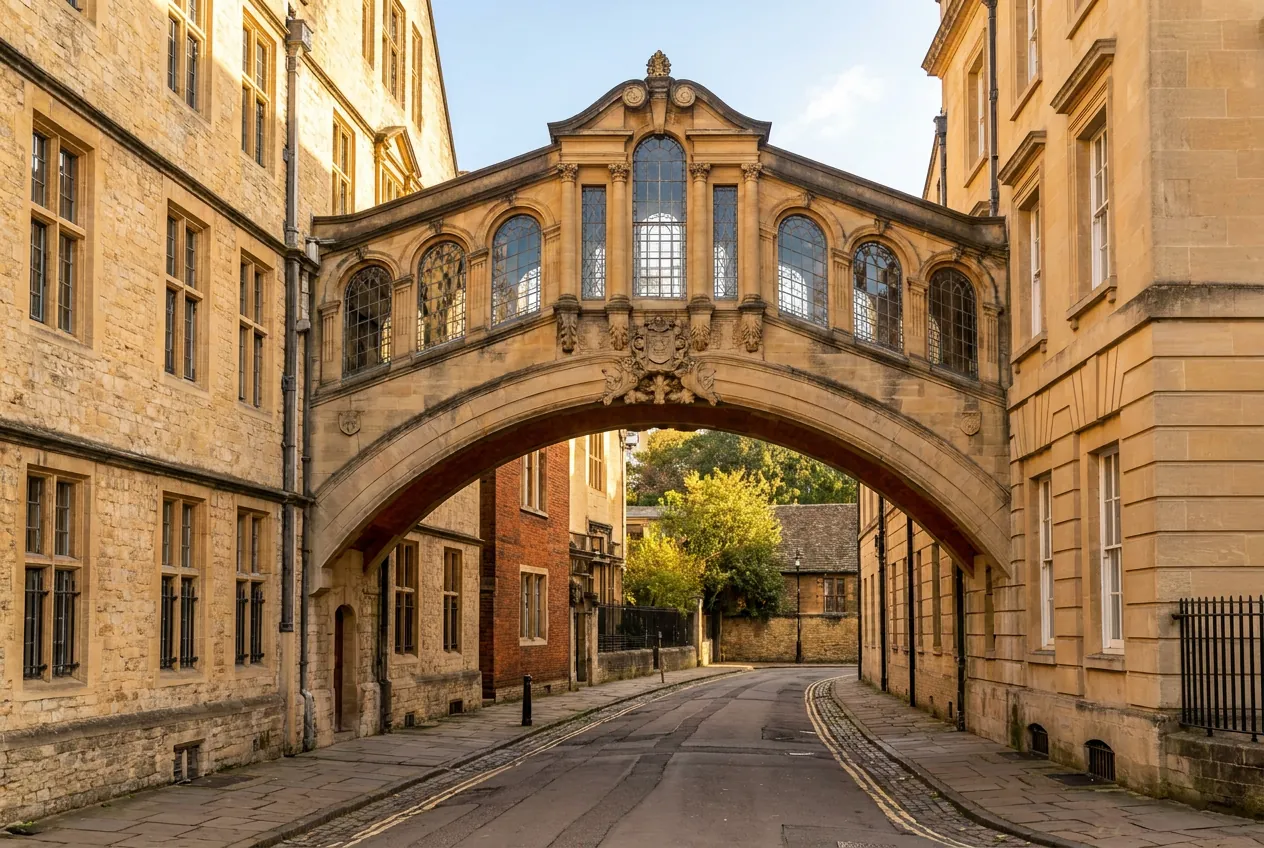 Step 0109:00Historic core firstRadcliffe Square, the Bodleian quarter and one college while the city is still calm.
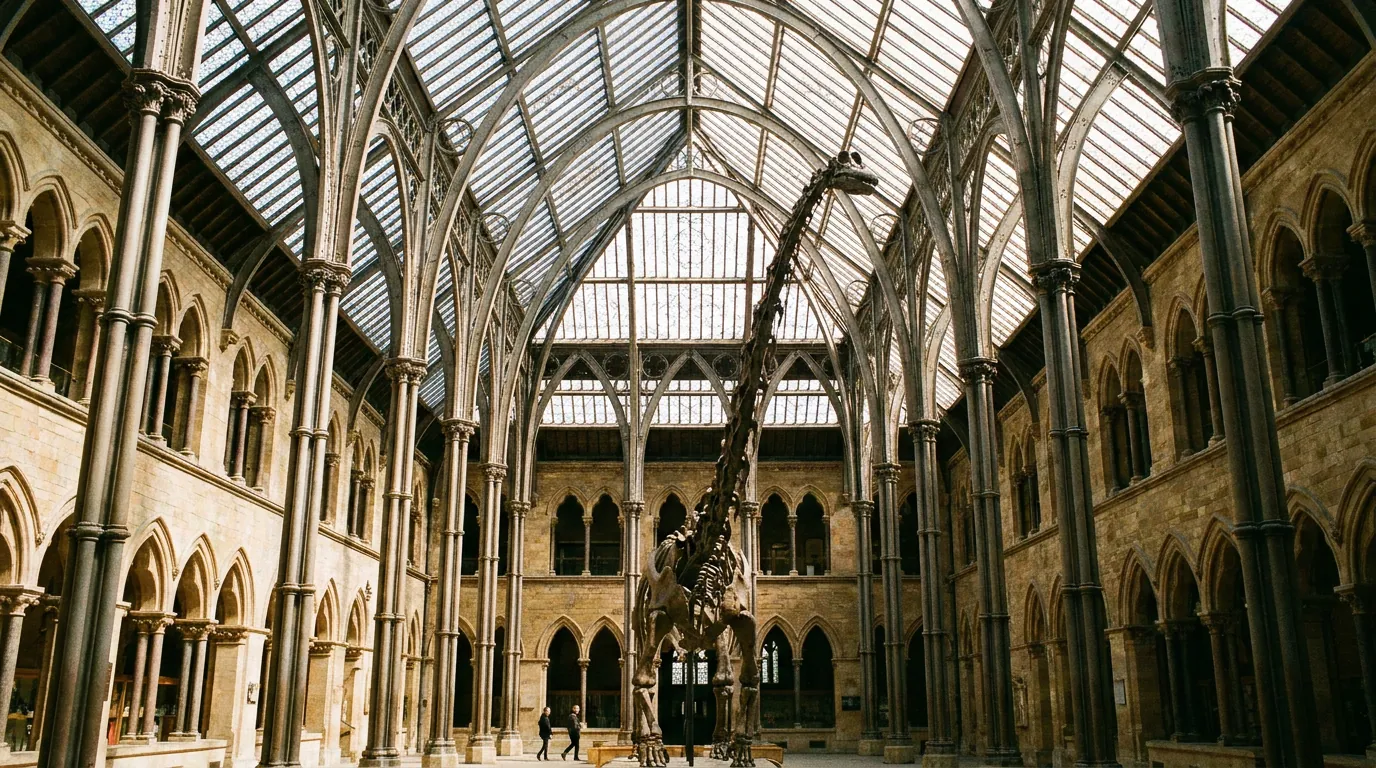 Step 0211:30Choose one great museumNatural History and Pitt Rivers work together; the Ashmolean rewards a slower visit.
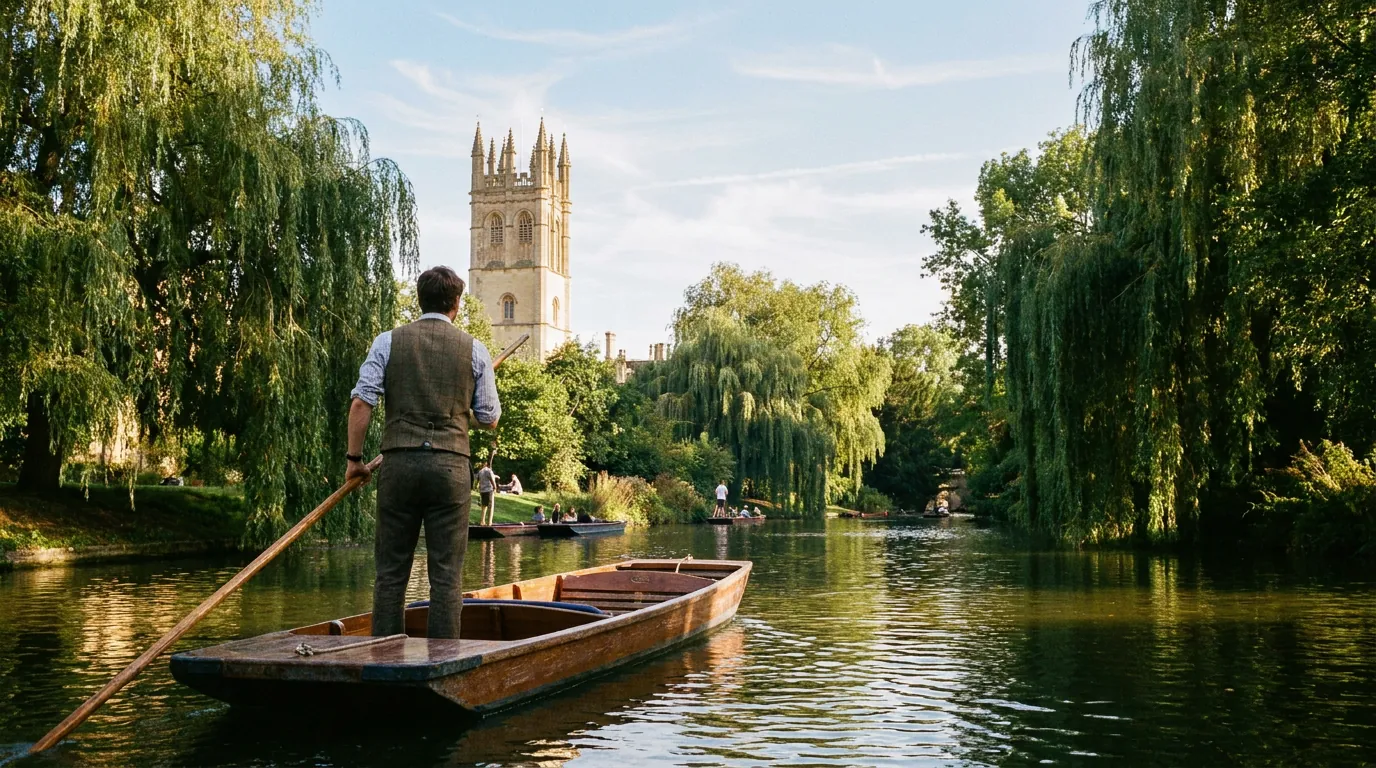 Step 0315:00Get onto the river or meadowPunt the Cherwell in good weather, or walk Christ Church Meadow and the Isis towpath.
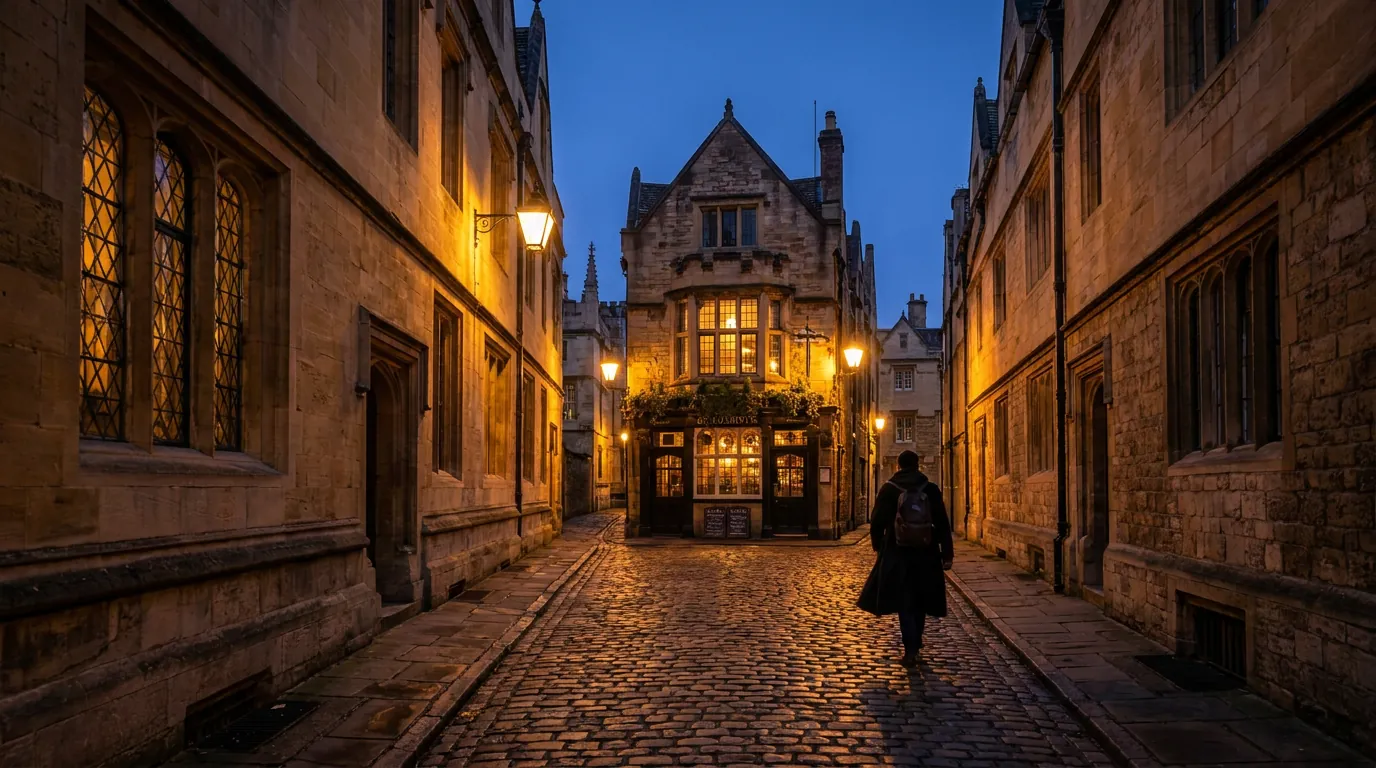 Step 0418:00End somewhere with characterChoose a historic pub, a riverside table or an event already happening in the city.
The complete itinerary builder
Ready-made routes. Made flexible.
Choose the time you have and the mood you want. Compare complete Oxford itineraries, see every stop and adapt the route to your day.
Build my Oxford itinerary→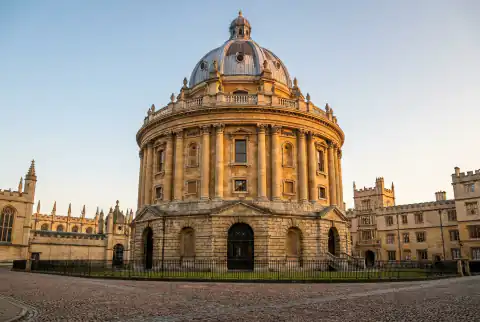 A first lookThe landmarks, lanes and views that give Oxford its shape.Open in route planner →
 The Oxford classicColleges, covered lanes and an unhurried afternoon on the river.Open in route planner →
 Centre and beyondThe historic heart first, then waterside Oxford and its neighbourhoods.Open in route planner →
02 / Choose the Oxford you want
8 ways
into the city.
Build around one or two interests instead of chasing a generic checklist. Every route connects to the same compact city, so different kinds of day can still fit together.
 01
01culture history
Culture & history
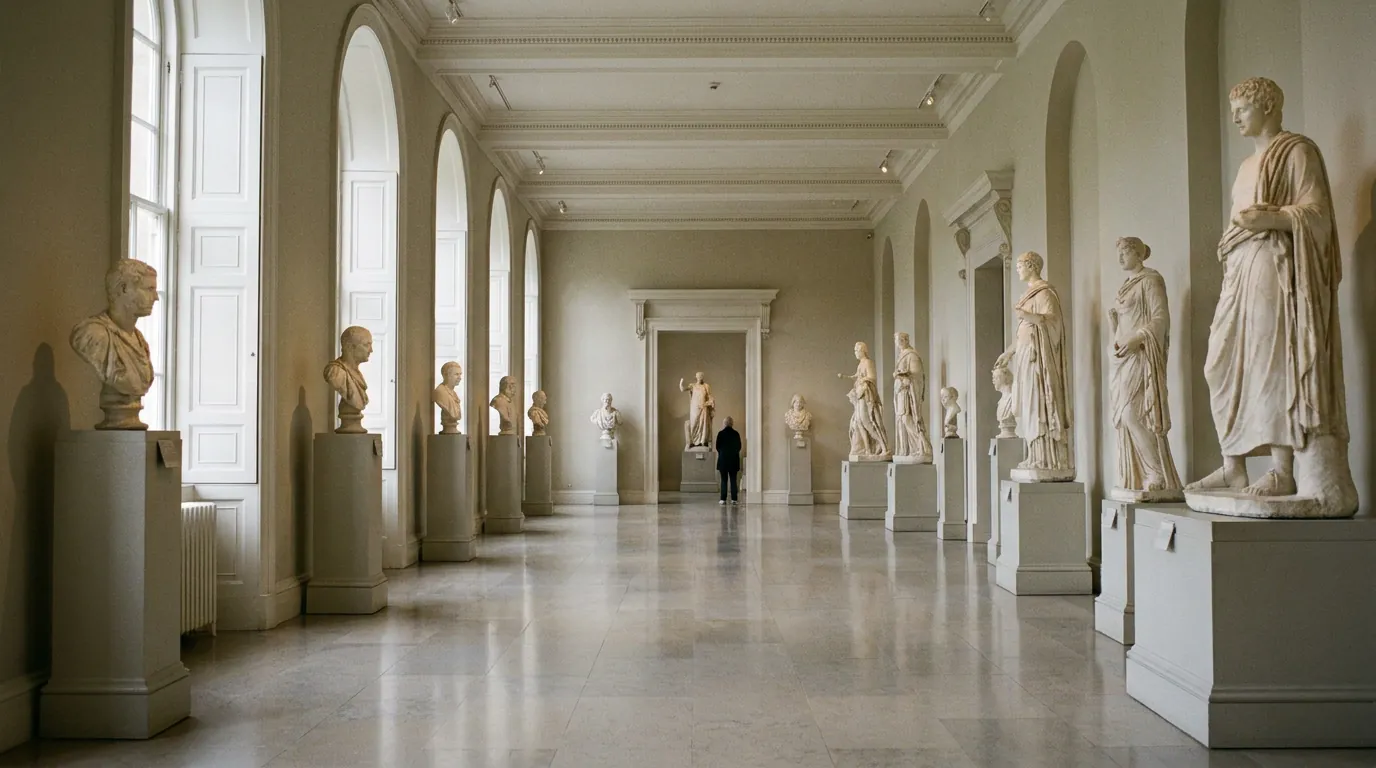
The colleges, the Bodleian, and world-class free museums — the Ashmolean, Pitt Rivers and Natural History.- Allow
- Half day+
- Best moment
- Start here
- Bodleian Library
- One college
- One free museum
 02
02food drink
Food & drink
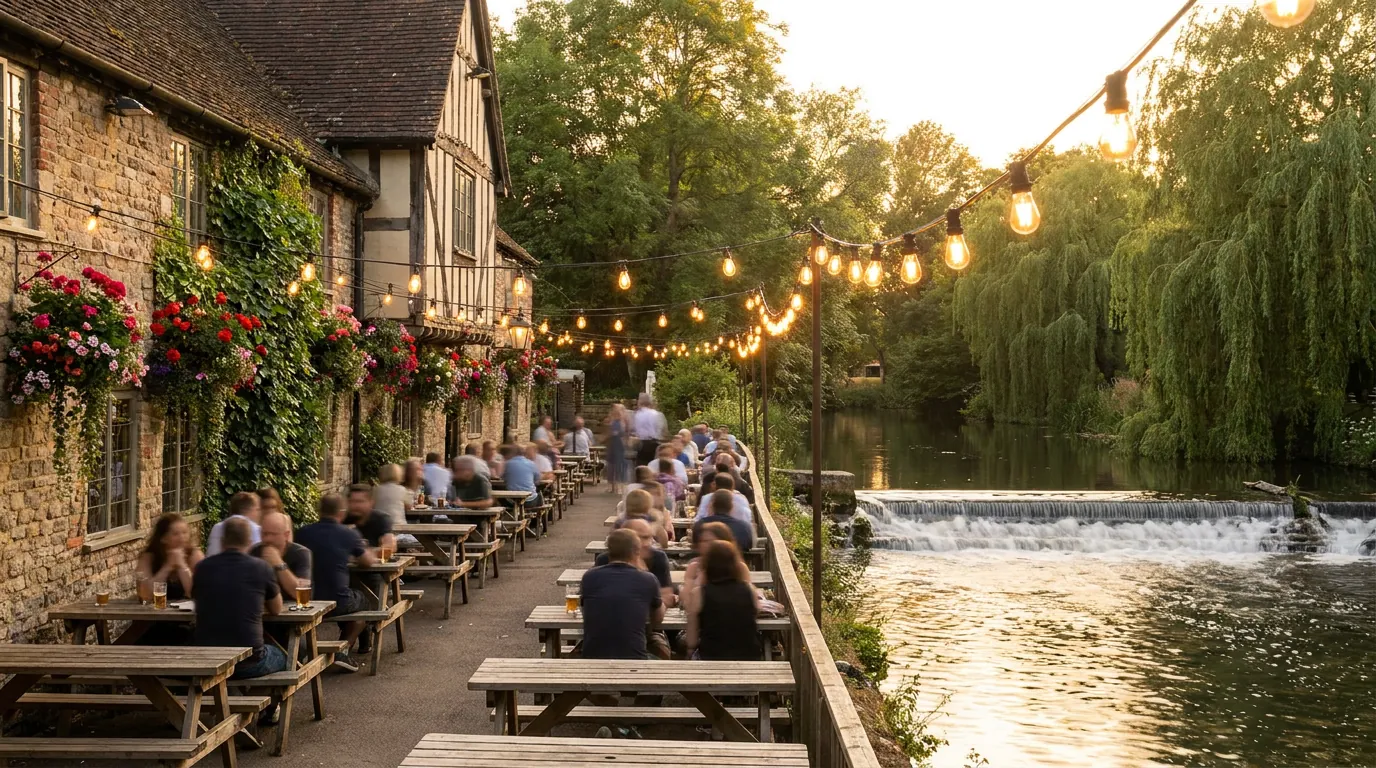
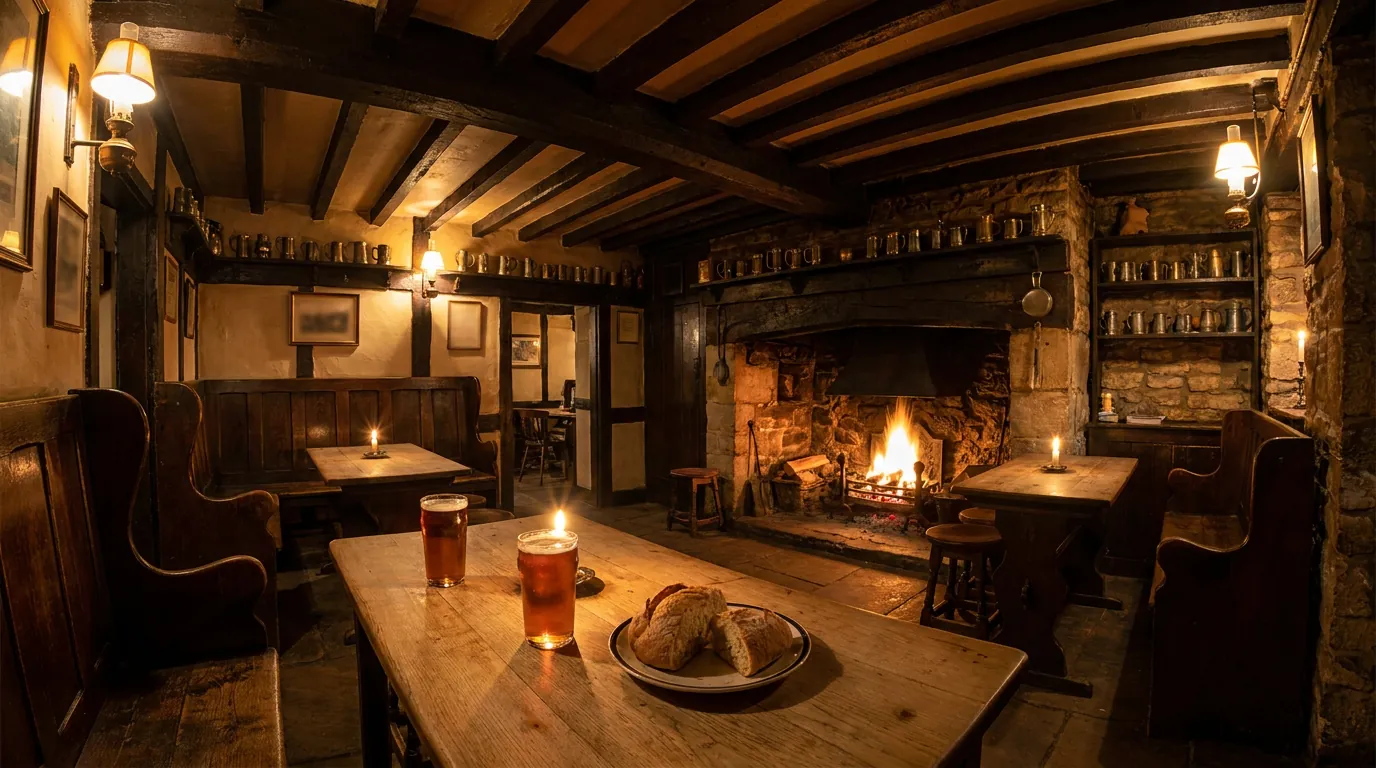
Historic low-beamed pubs, the 250-year-old Covered Market, and riverside tables along the Cherwell.- Allow
- 1–3 hours
- Best moment
- Lunch or evening
- Covered Market
- Historic pubs
- Riverside tables
 03
03hotels stays
Hotels & stays
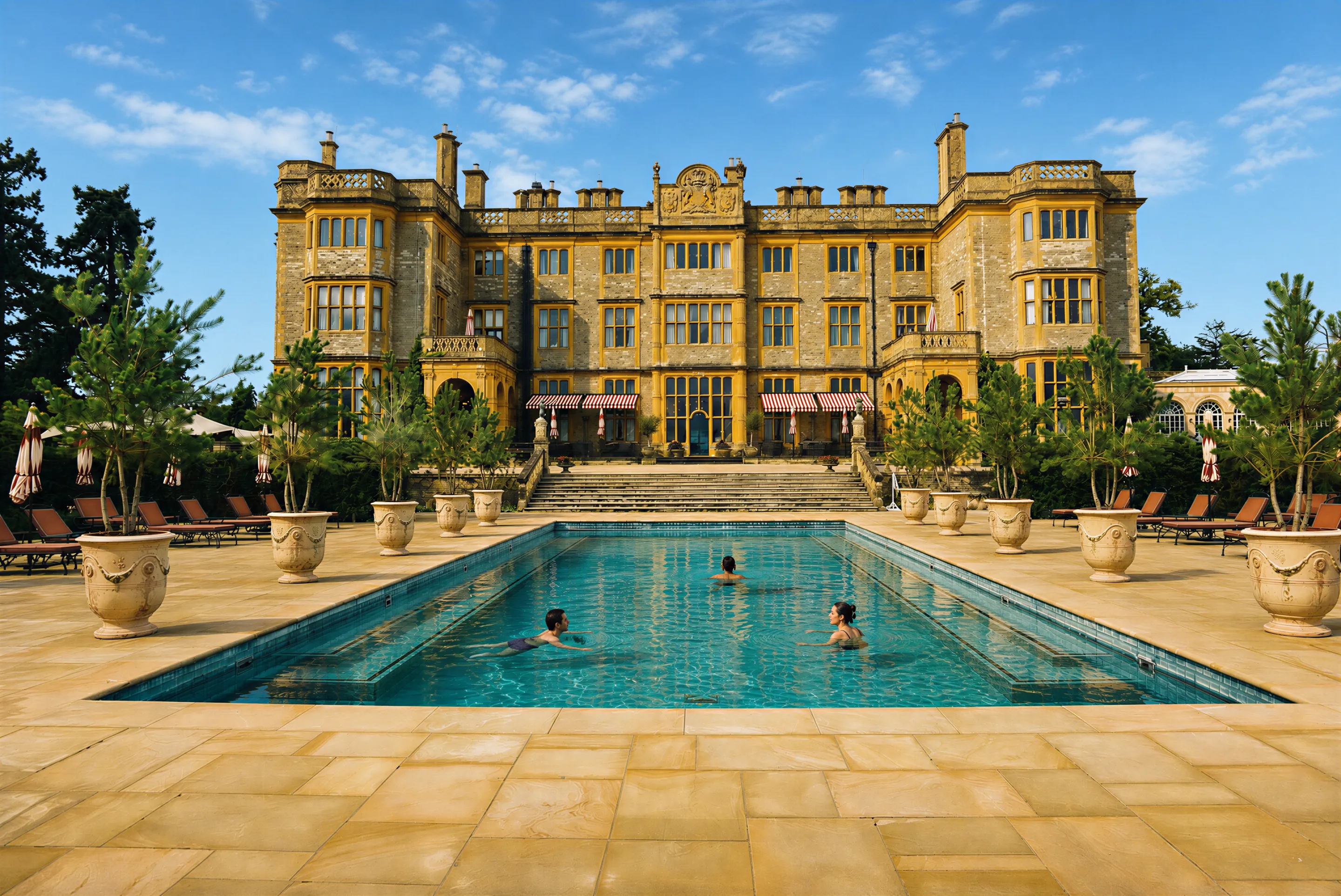
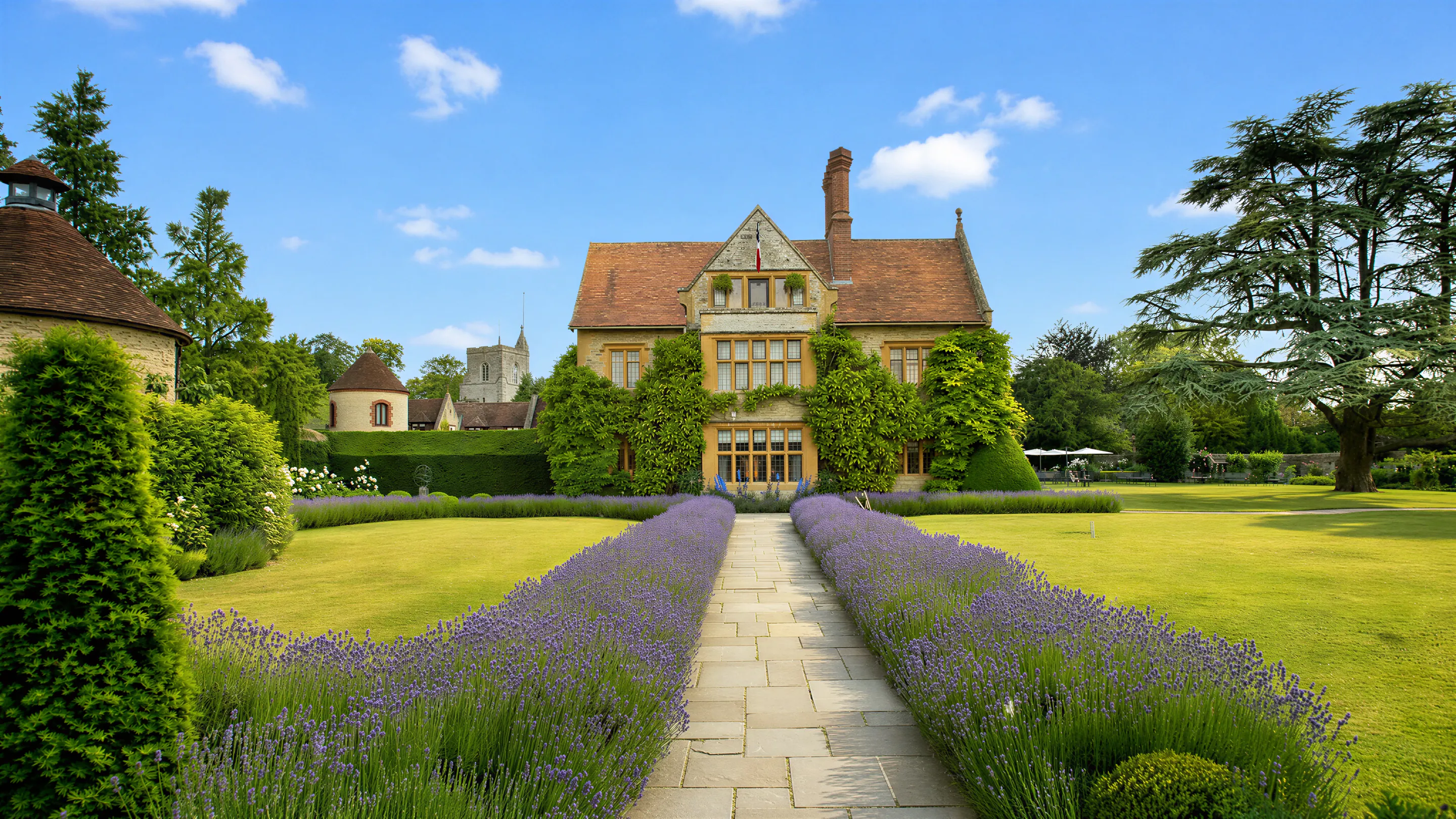
Exceptional city hotels, country-house retreats and destination stays across Oxford and Oxfordshire.- Allow
- One night+
- Best moment
- A weekend escape
- Old Bank Hotel
- The Store
- The Randolph
 04
04city exploration
Walks & views
Cobbled lanes, the Bridge of Sighs, and rooftop climbs for the classic view of the dreaming spires.- Allow
- 2–4 hours
- Best moment
- Early morning
- Radcliffe Square
- College lanes
- A rooftop view
 05
05outdoors
Parks & meadows
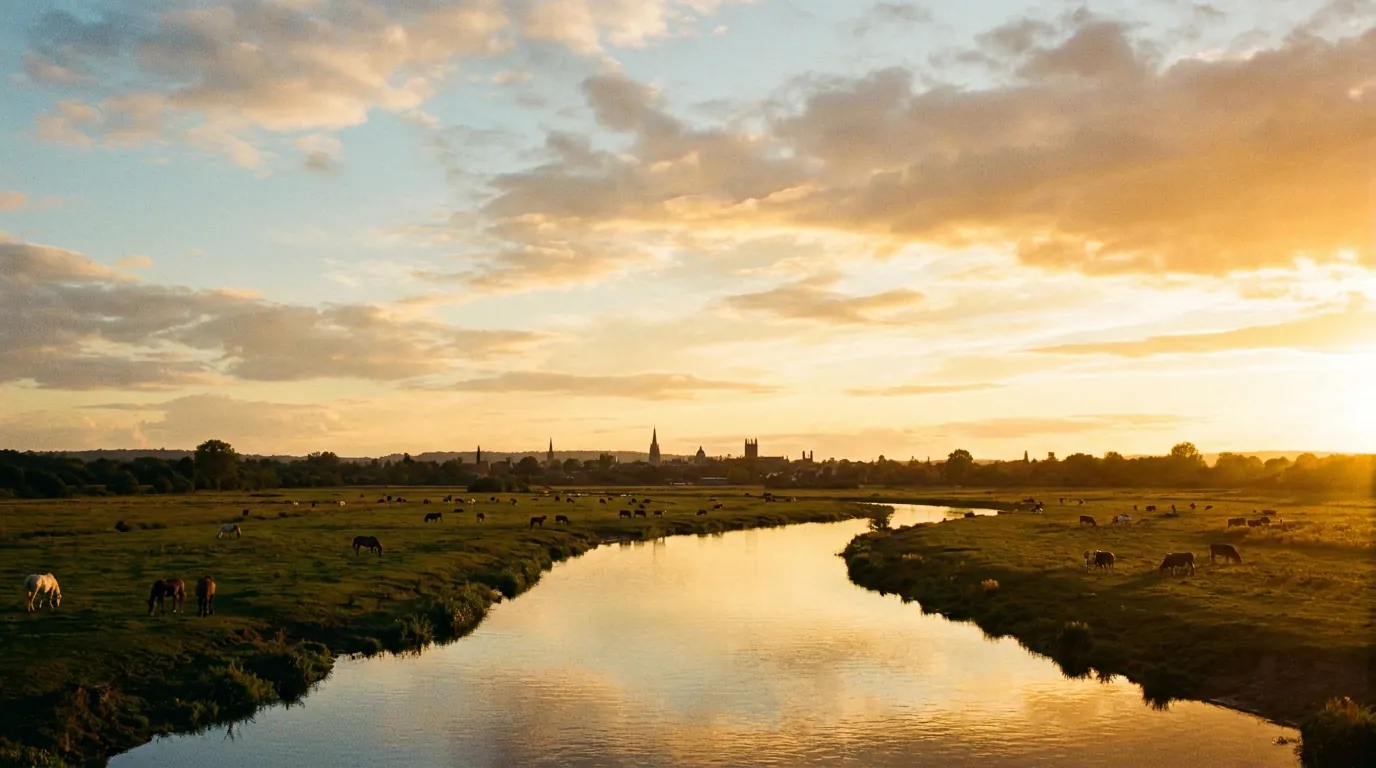
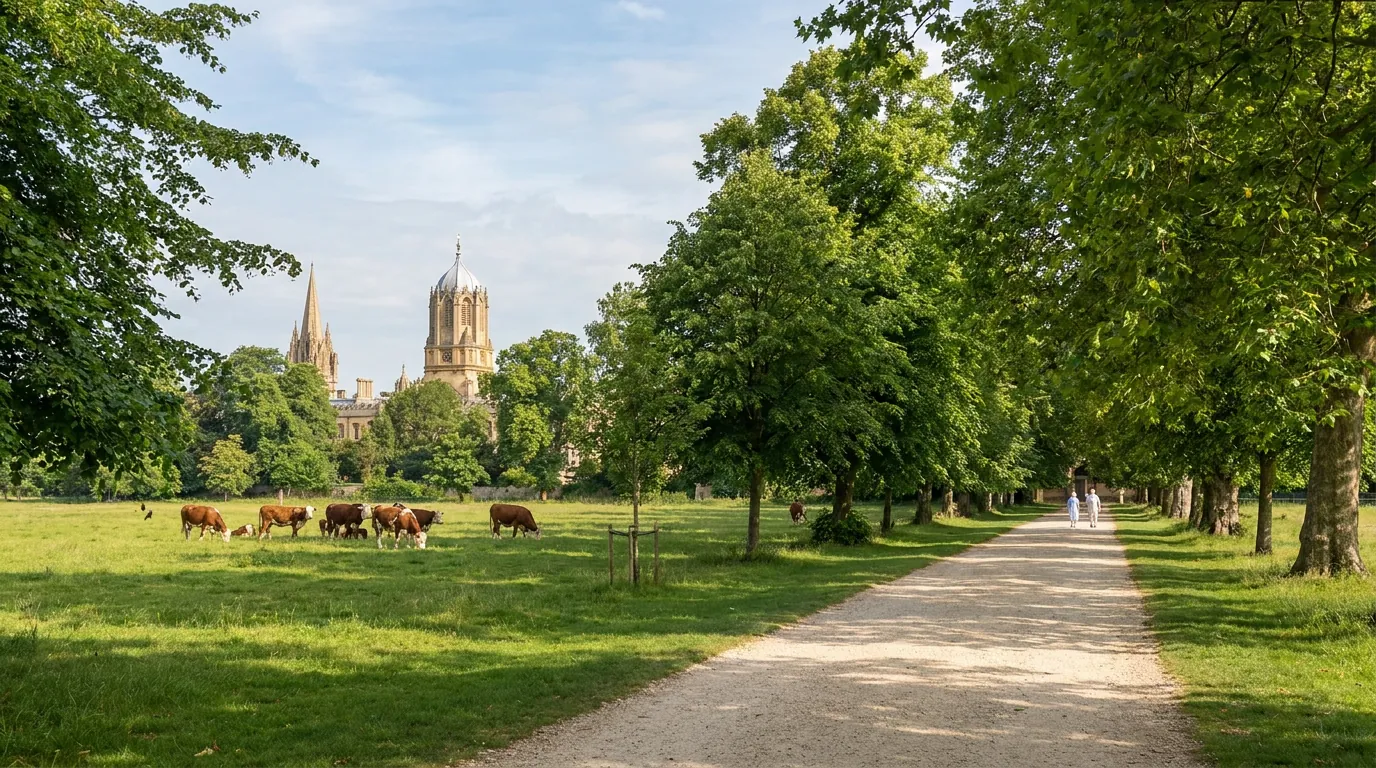
Roam Port Meadow with its grazing horses, wander Christ Church Meadow and the University Parks, and follow the towpaths out of the city.- Allow
- 2–4 hours
- Best moment
- Dry afternoon
- Port Meadow
- University Parks
- Christ Church Meadow
 06
06water activities
On the water
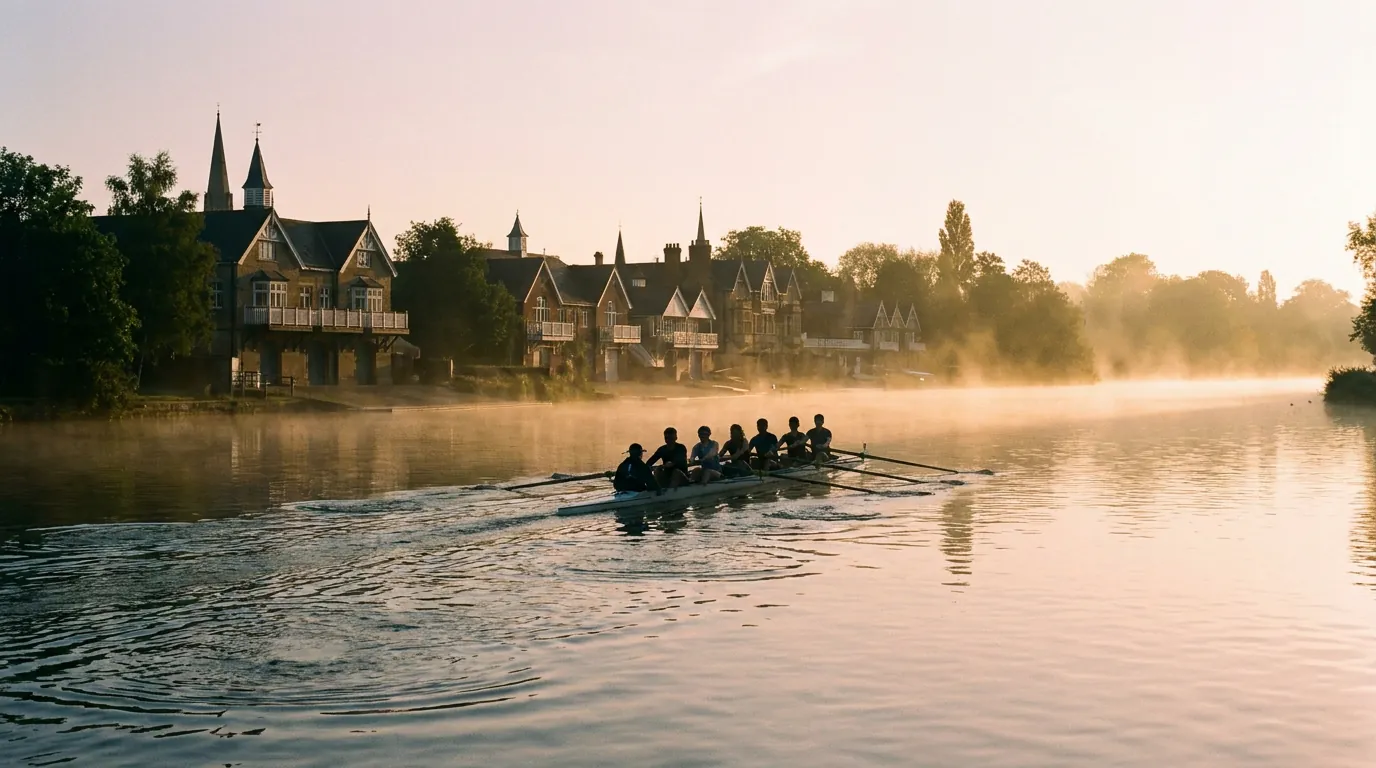
Punt the Cherwell past the college backs, take a chauffeured punt or hire a rowing boat, and cruise the Thames from Folly Bridge.- Allow
- 1–3 hours
- Best moment
- Calm weather
- Punt the Cherwell
- Walk the Isis
- Cruise from Folly Bridge
 07
07family fun
With the family
Dinosaurs and a dodo, the castle mound, and open green space when small legs need running room.- Allow
- Half day
- Best moment
- Any weather
- Dinosaurs and dodo
- Pitt Rivers
- Room to run outside
 08
08entertainment
After dark
Candlelit pubs, live music and choral evensong, and a lively year of festivals and events.- Allow
- An evening
- Best moment
- After dark
- Live events
- Choral music
- Candlelit pubs
03 / Live across Oxford
Plan around
what’s on.
One live view of events from the Oxford experiences already connected to official venue calendars. Filter the city by when, where and what interests you.
Checking official calendars04 / The useful reality
Know it
before you go.
Open only the details you need. The important thing is to understand access, movement and the rhythm of the working university before fixing your route.
01Start with how Oxford is put together+
Oxford isn’t a single campus. The University and its 39 colleges and 4 permanent private halls — 43 self-governing bodies in all — form one institution but operate as complementary parts. The colleges are independent: they admit and house students, run their own libraries and chapels, and deliver the small-group tutorial teaching Oxford is known for. The central University provides the lectures, laboratories and examinations, and confers every degree. A student belongs to both at once.
The consequence for a visitor is the thing to grasp first: most of what you’ll walk past is a private, working institution, not an attraction. That shapes what you can see and when — but it’s also what makes Oxford feel the way it does: honey-stone quadrangles and chapels tucked behind gates, threaded through an ordinary city of shops, pubs and rivers.
02How the centre is laid out+
The historic core is small and radiates from one crossroads — Carfax, where the four principal streets meet. Cornmarket runs north, St Aldate’s south toward the river and Christ Church, Queen Street west toward the Westgate, and the High Street curves east and downhill to Magdalen Bridge. The colleges, the Bodleian complex and the main shopping streets all sit within a few hundred metres of each other, so you can cross the whole core on foot in 15–20 minutes.
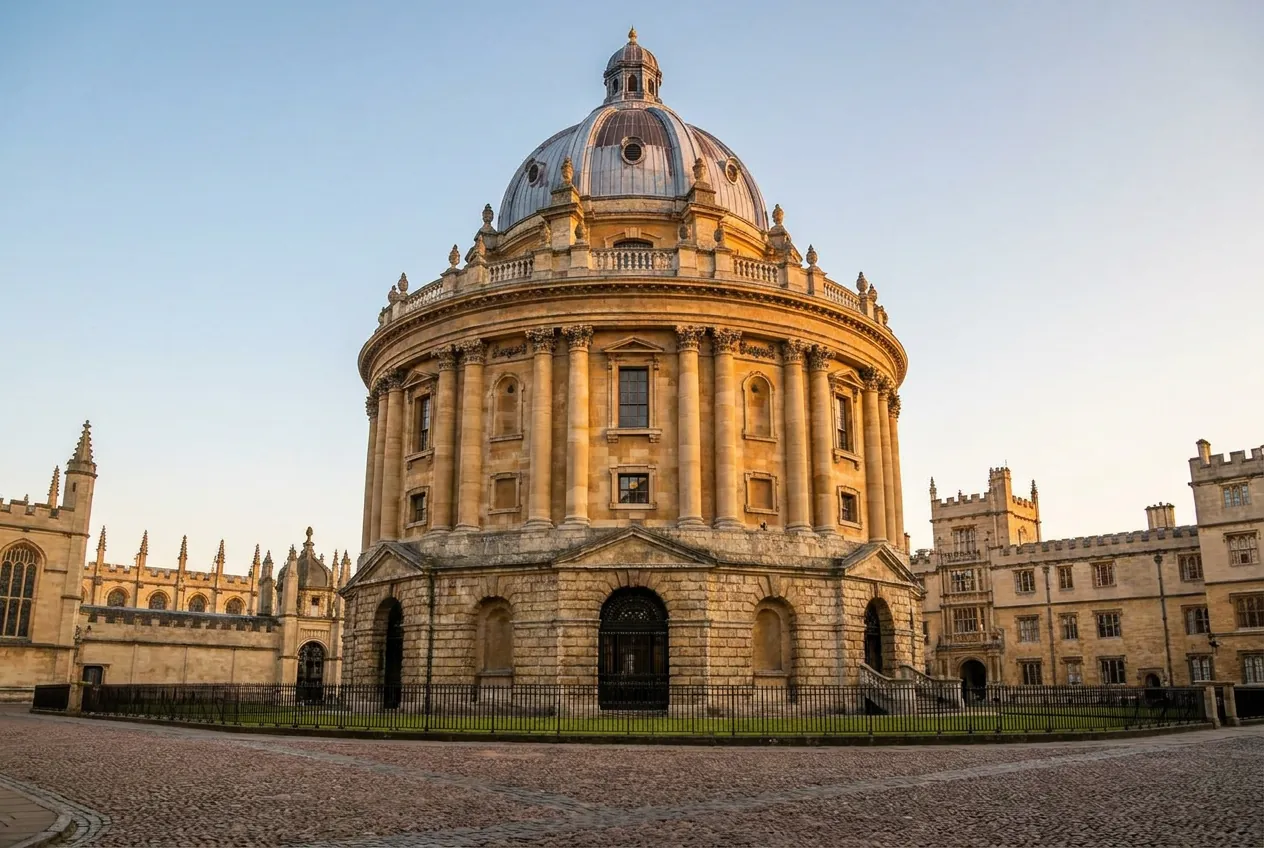
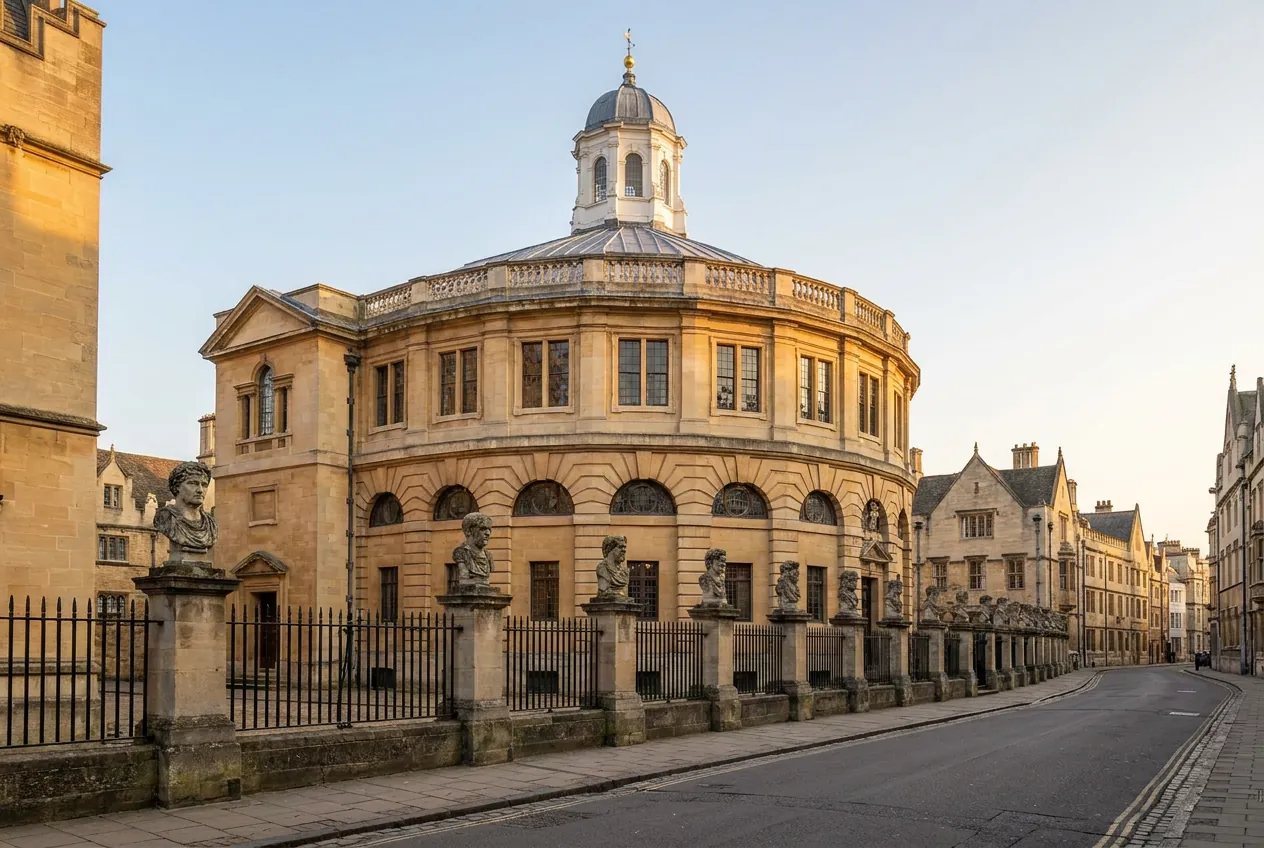
The showpiece is the cluster around Radcliffe Square — the domed Radcliffe Camera ringed by the Bodleian, All Souls, Brasenose and the University Church of St Mary the Virgin. Around it, narrow lanes reward wandering: Catte Street past the Sheldonian, cobbled Turl Street, and New College Lane winding under the ‘Bridge of Sighs’. Broad Street gathers the Sheldonian, the old Bodleian and Weston Library, and Blackwell’s flagship bookshop.
03When to go+
Oxford’s rhythm follows the University’s three eight-week terms: Michaelmas (October–December), Hilary (January–March) and Trinity (April–June). In term time the city has its full student buzz; in the vacations it’s quieter. One detail worth planning around: Trinity term hosts most final examinations, and colleges often restrict or close public access during exam periods — so a spring visit can mean more locked gates. Spring and autumn give the low, golden light the honey-coloured stone is made for; summer is busiest. Exact term dates shift each year, so check the University calendar.
04How long you need+
Half a day is enough to walk the historic core and take in the streetscape around Radcliffe Square and the High. Give it a full day to add a museum or two, go inside one college, and get onto the river. A weekend lets you add the neighbourhoods beyond the centre and, if you want, a signposted day-trip out of the city.
05Getting here+
There are two rail stations. Oxford station, the main one, sits just west of the centre within walking distance of the core. Oxford Parkway is a newer station on the northern edge near Kidlington, built beside a park-and-ride for drivers arriving from the north.
If you’re driving, the recommended approach is park-and-ride: a ring of five sites around the edge of the city — Peartree, Water Eaton, Thornhill, Seacourt and Redbridge — lets you leave the car on the outskirts and take a bus into the centre. Central driving and parking are deliberately difficult and limited, with bus gates and restrictions. Confirm train and park-and-ride times and fares with the operators before you travel.
06Getting around+
Once you’re in, the centre is a walking city — everything of interest sits within that 15–20-minute core. Oxford also has a strong cycling culture on flat, compact terrain, and cycling is one of the quickest ways to reach the inner suburbs. Local buses cover the wider city. Don’t plan around a car in the core.
07Visiting the colleges — the reality+
This is the part first-time visitors most often get wrong. Most colleges are private, working institutions with limited public access. Some admit visitors only at set hours, some charge admission, and many close during examination periods. You can’t assume any given college is open when you arrive — access is set college by college, so check each one’s official site before you go.
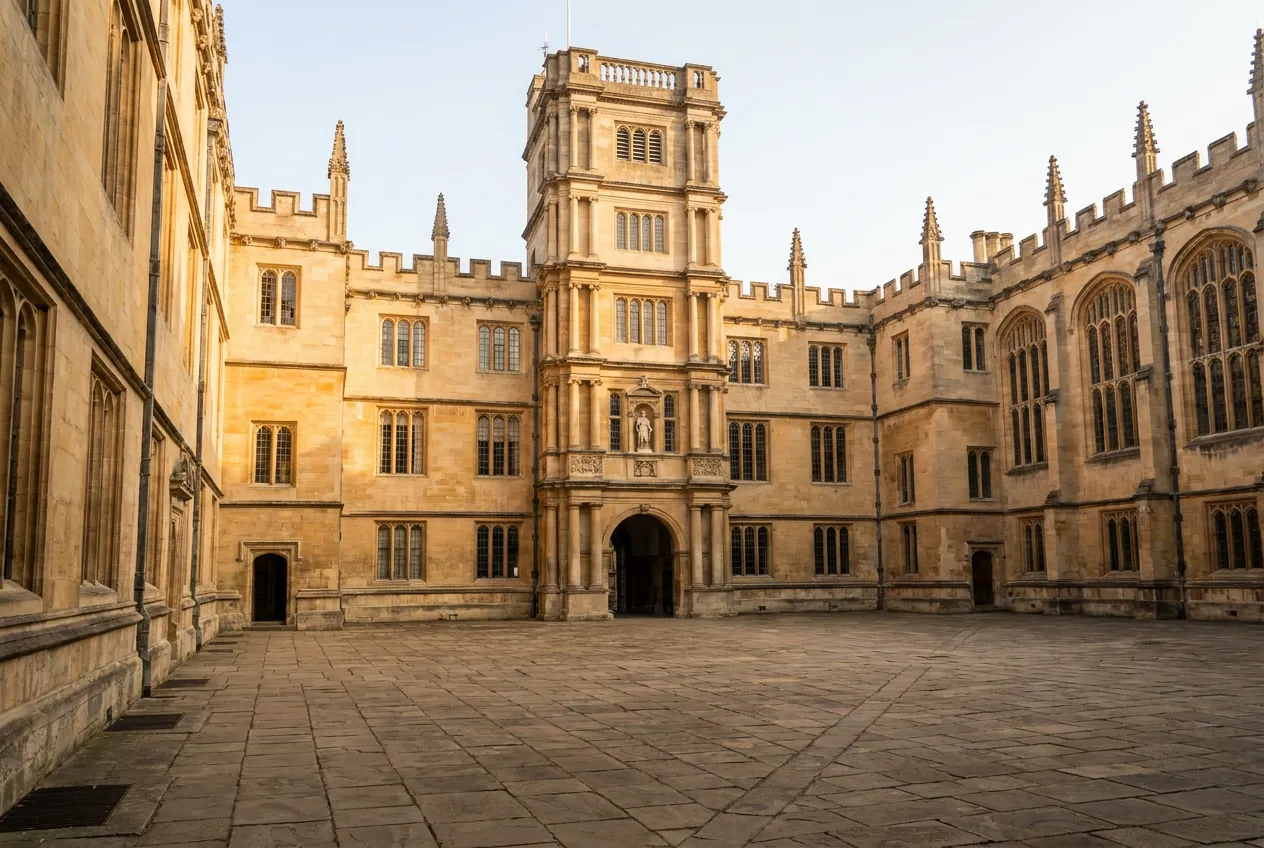
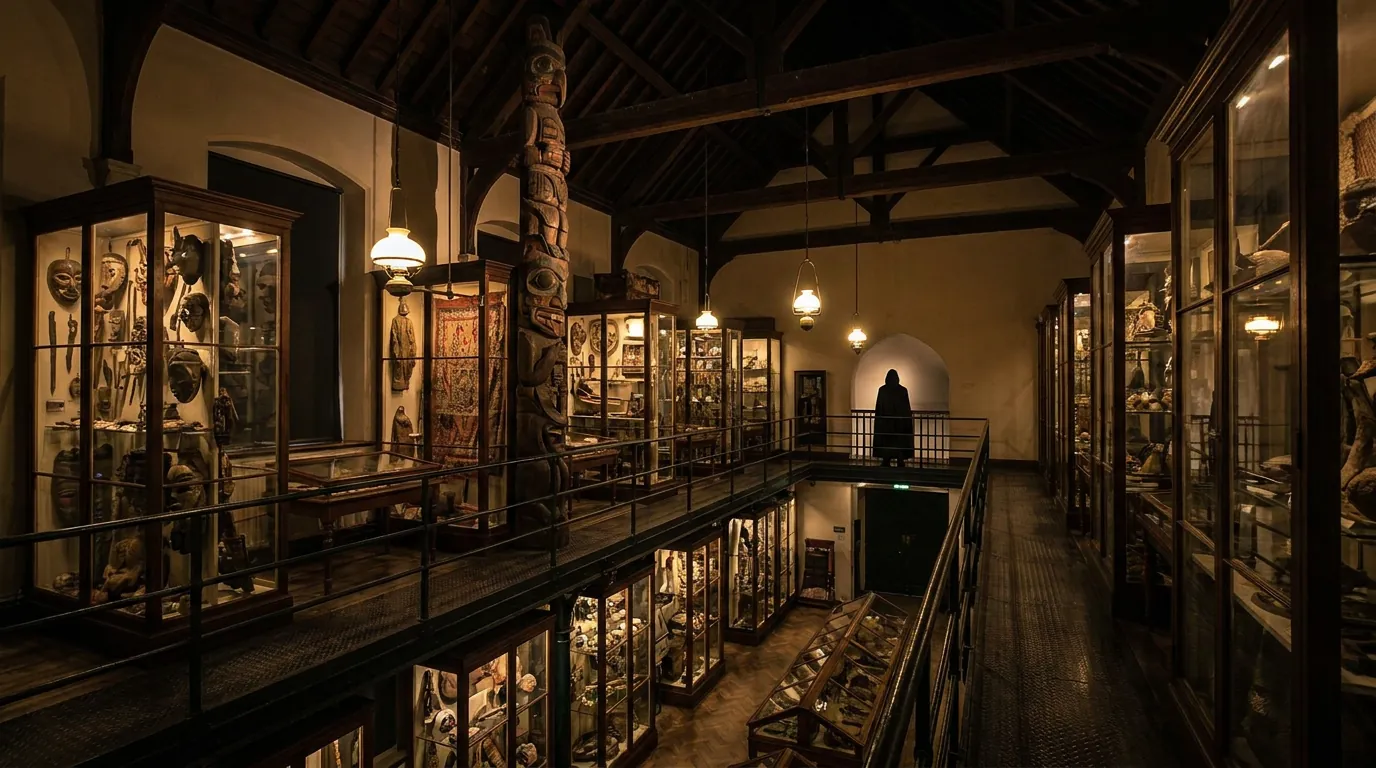
What is more reliably open is the University’s own landmarks. The Bodleian Library runs guided tours taking in the Divinity School, Duke Humfrey’s Library and the Old Schools Quadrangle; the Divinity School and Christopher Wren’s Sheldonian Theatre can be visited; and the tower of the University Church of St Mary the Virgin gives the best central view over the spires. The great museums — the Ashmolean, the Museum of Natural History and the Pitt Rivers — are free to enter.
08The two rivers+
Oxford sits on two rivers that do different jobs. The Cherwell is the smaller, willow-lined, more intimate one — the classic punting river, with self-drive punts hired at Magdalen Bridge Boathouse on the High and at the Cherwell Boathouse further north. The Thames, known within Oxford as the Isis, sweeps around the west and south past the common of Port Meadow and under Folly Bridge, where Salter’s Steamers run river cruises; this is the rowing river, lined with college boathouses. The two meet just south of the centre, on the far side of Christ Church Meadow — a walk around the meadow takes you along one river and back beside the other.
09Best views of the spires+
For the classic ‘dreaming spires’ skyline, the reliable vantage points are the tower of St Mary’s on the High (the best central view over Radcliffe Square), Carfax Tower at the crossroads (a 360° view of the core), the cupola of the Sheldonian Theatre, South Park in Headington for the wide panorama from the east, and Boars Hill, southwest of the city, for the distant meadow-framed vista that inspired the phrase.
10Green space+
Oxford is unusually green for its size. Port Meadow is a vast, never-ploughed common beside the Thames, still grazed by free-roaming horses and cattle. The University Parks are a manicured green lung a short walk from the Bodleian. Christ Church Meadow, in the wedge between the two rivers, gives some of the best framed views back at the spires. And the Oxford Botanic Garden — the oldest in Britain, founded in 1621 — sits right in the centre beside Magdalen Bridge.
11Beyond the centre+
Each inner district has its own character if you have time to venture out: Jericho (bohemian Victorian terraces by the canal), Cowley Road / East Oxford (the city’s most diverse, youthful quarter), Summertown (leafy and affluent), Headington (up the hill, home to the hospitals and Oxford Brookes), Osney Island (a tranquil little island of cottages), and the preserved village of Iffley with its famous Norman church.
12Day-trips are not Oxford+
One point that saves confusion: several famous names near Oxford are not part of the city. Blenheim Palace and Woodstock (a UNESCO palace ~8 miles northwest), the Cotswolds (the honey-stone villages to the west), Bicester Village (a designer-outlet ~13 miles north, with its own station) and Stratford-upon-Avon / Warwick Castle (further north in Warwickshire) are separate destinations. They’re worth doing — but plan them as day-trips out, not as part of an Oxford day.