landmark / Oxford
In depth
The Bridge of Sighs
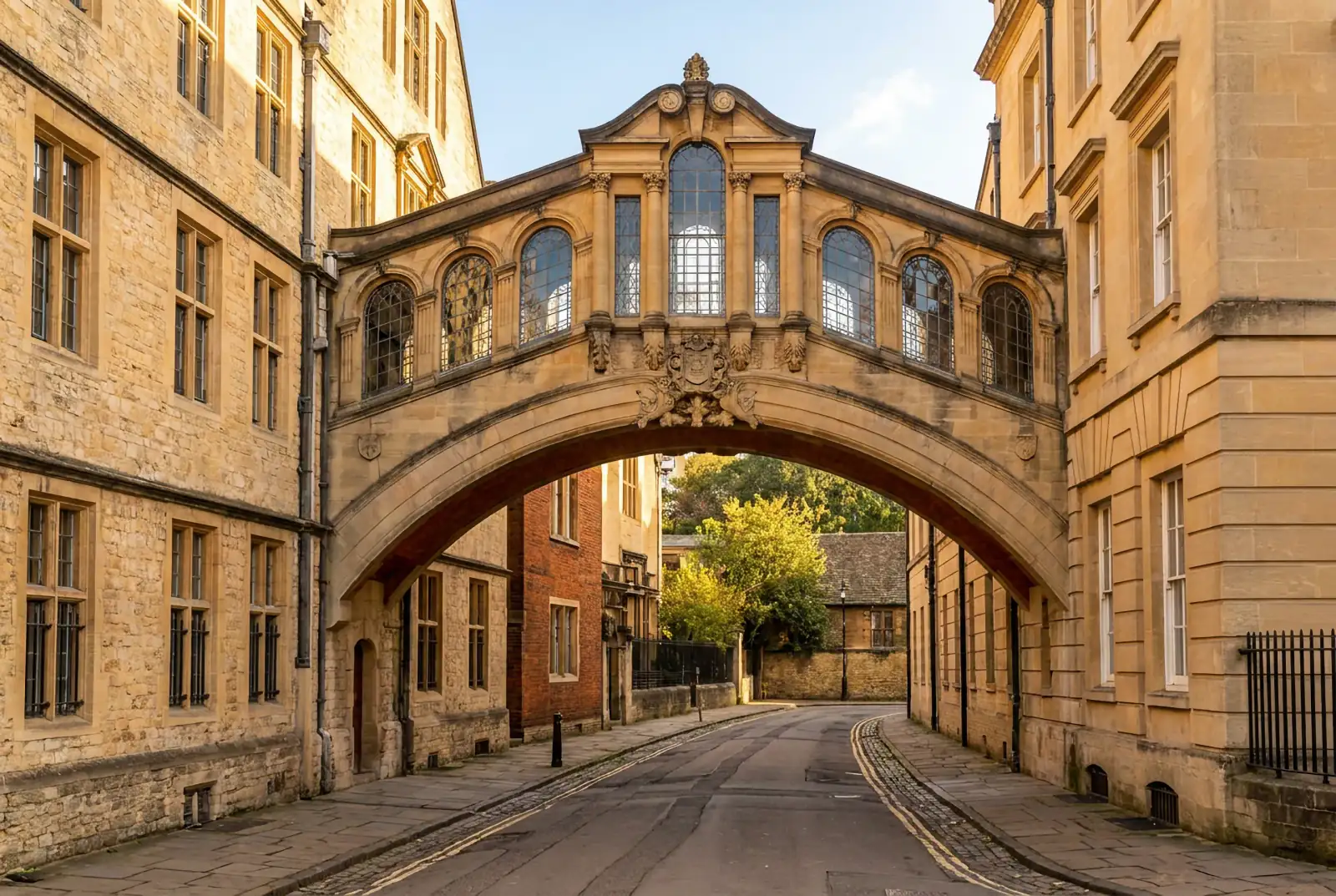
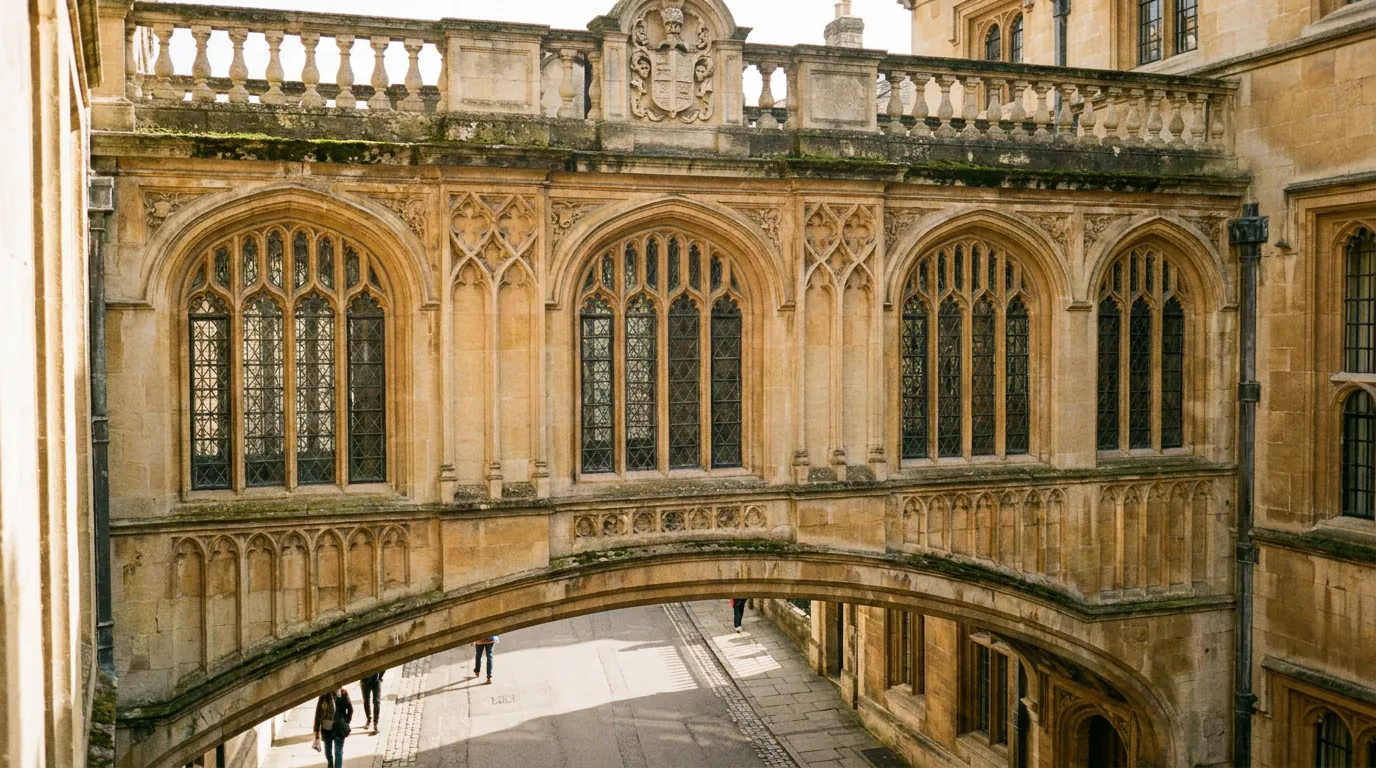
A covered stone skyway over New College Lane linking Hertford College's quads — one of Oxford's signature photo stops.
Story · Visit · Route · Links
Visitor Essentials & Quick Answers
Why is Oxford’s bridge called the Bridge of Sighs?
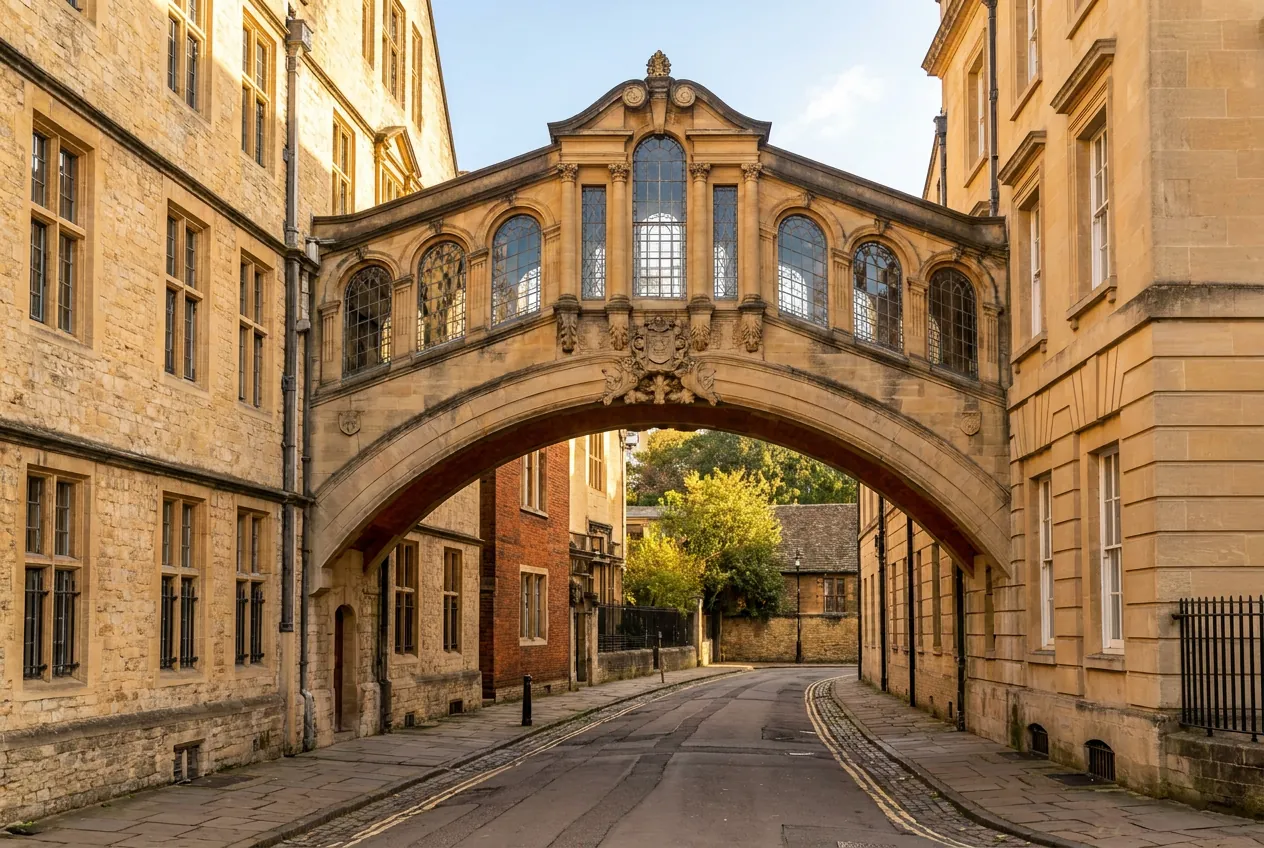
Its nickname refers to the famous covered bridge in Venice, but this is Hertford Bridge, built to connect parts of Hertford College. It has no Venetian prison story. Hertford’s own history points out that its arched appearance has more in common with Venice’s Rialto Bridge than a literal copy of the Bridge of Sighs.
Is the Bridge of Sighs really as old as it looks?
No: Hertford records its unveiling in 1913. Sir Thomas Graham Jackson designed it to fit the historic college surroundings, which makes it easy to mistake for a much older structure. Look at how it joins the buildings on either side: its picturesque shape also solves the practical problem of crossing the lane.
Is it worth seeing if you cannot walk across it?
Yes as part of a walk through the Bodleian quarter. Its charm is the street view: the enclosed bridge frames New College Lane and makes Oxford’s overlapping lanes and college buildings easy to appreciate. It is a brief architectural encounter rather than a destination with rooms to explore.
Where should I stand for the classic photograph?
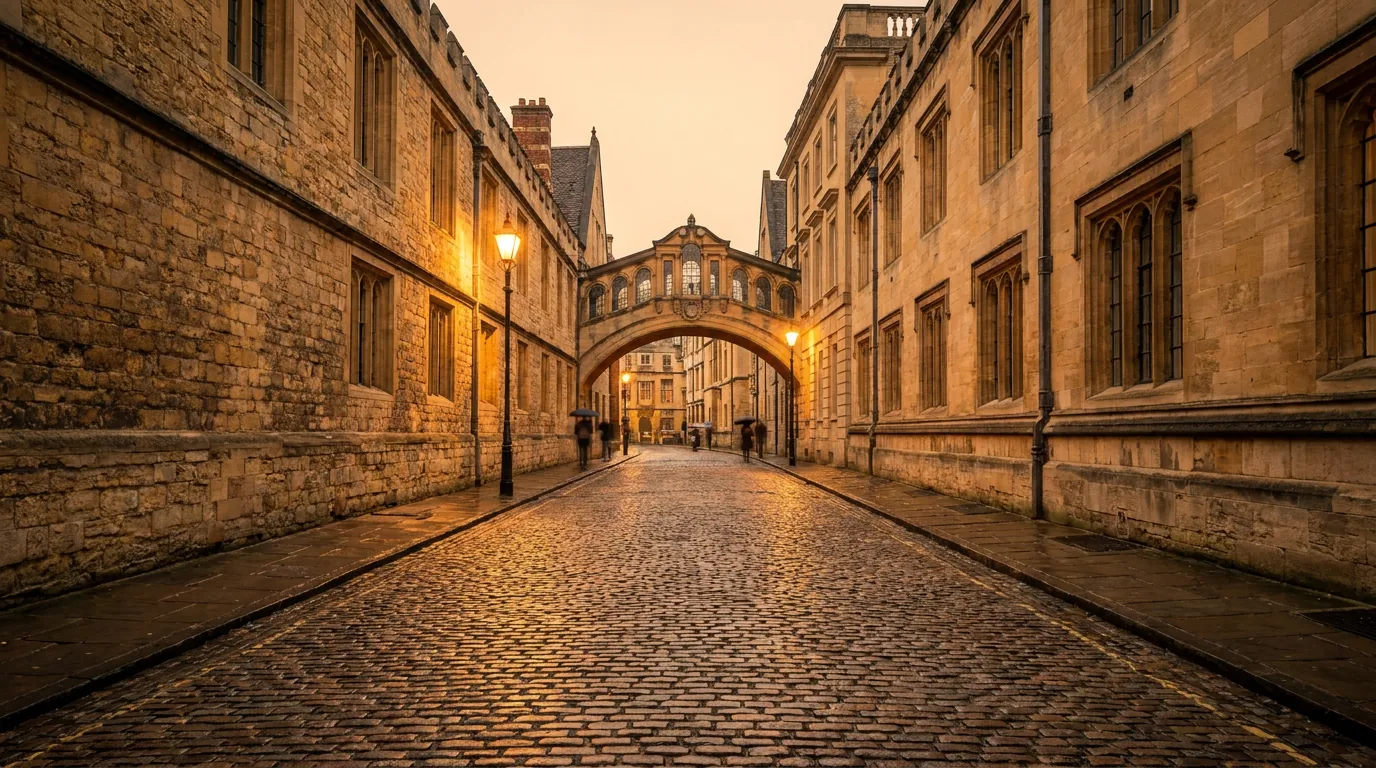
Start on Catte Street looking into New College Lane so the bridge sits within its streetscape. Then move closer to study the carved arms and underside. Include the lane and adjoining buildings rather than isolating the bridge completely: they explain why it is here. Keep entrances and the narrow street clear.
Choose your depth
Essentials or more detail?
See visiting essentials, or read more about the history and places nearby.Start here
Understand the place.
The context, character and reasons this experience earns time in your Oxford plans.Why it matters
This is not a long attraction. It is a short, exact Oxford moment: stone, shadow, narrow lane, college walls and the sense that the university has grown over streets rather than around them. The bridge works because it is public-facing but not public-accessible. Anyone can stand in New College Lane and see it; almost nobody visiting Oxford casually can walk through it. [S02][S05]
The official name is Hertford Bridge, but the nickname has become stronger than the title. It is commonly compared with Venice’s Bridge of Sighs, although Hertford College’s own history points out that its theatrical arched profile is closer in spirit to the Rialto than to the Venetian prison bridge. The comparison is useful for orientation, not for literal history. [S01]
Its city value is also geographic. The bridge sits in the tightest cluster of Oxford sights: Radcliffe Square, the Bodleian Library, Sheldonian Theatre, All Souls, New College Lane and the Turf Tavern passages are all within a few minutes. That makes it a superb connector in a walking route, especially for visitors who only have half a day. [S02][S04]
What visitors should notice
Stand on New College Lane first. The road is narrow, so the bridge feels lower and more dramatic than it looks in isolated photographs. Notice how the enclosed bridge is not a freestanding monument: it physically solves a college problem, linking Hertford’s older buildings with the early-twentieth-century block across the lane. [S01][S04]
Look for the relationship between the bridge, the lane and the larger city image. From Catte Street, Radcliffe Square pulls attention west and south; from New College Lane, the bridge turns the street into a framed architectural tunnel. This is why it photographs well even when viewed for only a few minutes.
If you are interested in evidence, the key date issue matters. Hertford’s own history says Jackson’s bridge was unveiled in 1913, and Oxford History records the inscription with AD 1913. Historic England’s older list text gives 1903. Use 1913 for the visitor narrative, keep Historic England for Grade II and list-entry data, and record the conflict rather than smoothing it away. [S01][S03][S04]
Who will enjoy it
The bridge suits first-time visitors, photographers, families, architecture readers and anyone building a free Oxford walk. It is especially strong as a dawn, evening or shoulder-season stop, when New College Lane is calmer and the stone reads better in low light.
It is also useful for visitors who do not want another ticketed interior. You can combine it with exterior-only views of the Bodleian, Sheldonian and Radcliffe Camera, then decide separately whether to book a library tour, climb St Mary’s tower or visit a college.
Who may find it disappointing
Visitors expecting a museum, interior tour or long interpretive stop may find it too brief. The bridge itself takes five to ten minutes. The interior is private college space and Hertford says the college is generally closed to tourists, so do not present it as a general-access attraction. [S02]
The lane can also be busy. Large groups, delivery vehicles, cycles and narrow pavements make it a poor place to stand around for long. The best experience is to arrive, look carefully, photograph quickly if wanted, and move on.
Visitor verdict
Treat the Bridge of Sighs as a compact Oxford essential, not a destination that needs scheduling on its own. It is free, central, visually memorable and historically specific. The strongest route is to fold it into a Radcliffe Square and Bodleian walk, using New College Lane as the transition between the postcard city and Oxford’s smaller back-lane texture. [S01][S04]
The full story
How it came to matter.
From Hart Hall to Hertford College
Hertford’s site has deeper roots than the bridge suggests. The college traces Hart Hall to the 1280s, when Elias de Hertford established it on part of the current site. Exeter College used or controlled Hart Hall in the fourteenth century, and New College briefly occupied parts of the site while its own buildings were incomplete. [S01]
The modern institution is also a revival story. Hertford College was resurrected in 1874 by an Act of Parliament after the earlier college had failed in the nineteenth century. Principal Henry Boyd and architect Sir Thomas Graham Jackson then reshaped the college fabric, giving Hertford much of the architectural identity visitors recognise today. [S01]
Jackson’s college-building phase
Jackson was not simply asked to design an isolated bridge. Hertford’s late-Victorian and Edwardian rebuilding created a practical problem: college accommodation existed on both sides of New College Lane. In 1901, Jackson designed the south and east blocks of the New Buildings Quad, using the site of older houses on Broad Street and New College Lane. The bridge then completed the link across the lane. [S01][S04]
This is the important interpretive point: the Bridge of Sighs is picturesque because it is functional. It joins old and new Hertford, turns a public lane into a college threshold, and makes the fragmented city fabric legible in one view.
The 1913 date
Hertford College says the division between the old and new sites was remedied in 1913 with the unveiling of Jackson’s bridge. Oxford History records that the bridge was built in 1913 under Principal Henry Boyd and notes an inscription including AD 1913. [S01][S04]
Hertford College’s chronology and the inscription on the bridge date it to 1913.
- Use 1913 as the main visitor-facing date.
- Mention 1913–1914 where a broader completion period is useful.
- Keep Historic England as the statutory source for Grade II and NHLE 1046725.
- Record the 1903 conflict in editorial notes and the source register. [S01][S03][S04]
Name and myth
The official name is Hertford Bridge. “Bridge of Sighs” is the popular nickname, borrowed from Venice’s Ponte dei Sospiri. That nickname can mislead if treated literally. The Venetian bridge was attached to prison movement; Oxford’s bridge is an academic circulation route linking college buildings. [S01][S04]
Hertford’s own account adds a useful correction: the Oxford bridge is often said to resemble the Venetian Bridge of Sighs, but the college says it more closely resembles the Rialto Bridge. This is exactly the kind of detail that lifts the page above generic tourist copy. [S01]
Heritage status
Historic England lists Hertford Bridge at Grade II, list entry 1046725. The list entry identifies it as a famous landmark and gives the National Grid Reference SP 51609 06462. The statutory listing confirms the bridge’s protected architectural status even where its descriptive date conflicts with college-side evidence. [S03]
Editorial interpretation
For visitors, the Bridge of Sighs is best understood as Edwardian Oxford performing medieval Oxford. It is not ancient, but it borrows the language of age so effectively that it has become one of the city’s default images. That tension is the point: Oxford’s historic atmosphere is not only medieval survival; it is also later architecture carefully staging continuity.
Look closer
Highlights and hidden details.
The objects, spaces and small observations that turn a visit into a memorable one.1. The classic New College Lane view
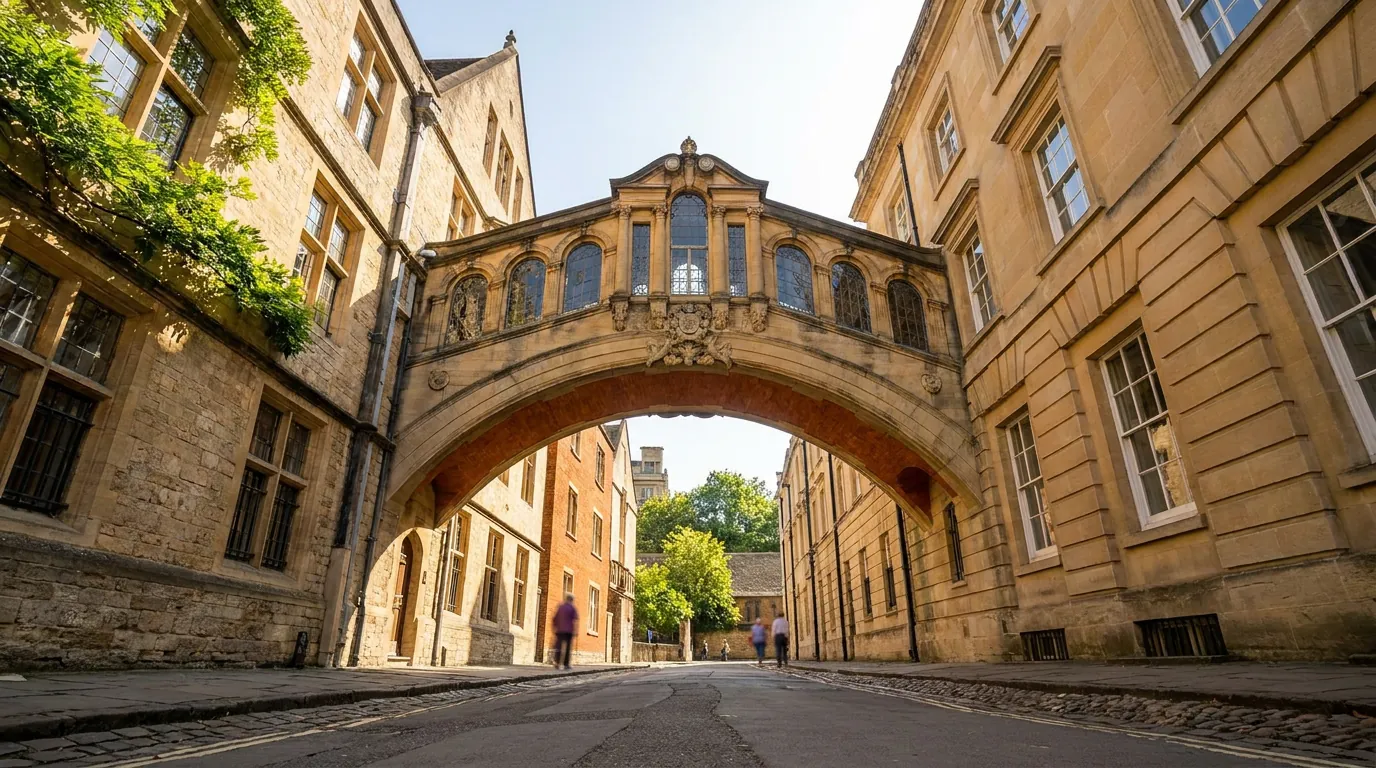
The best first view is from New College Lane itself. The bridge compresses the lane into a recognisable Oxford frame: enclosed stonework overhead, college walls on both sides and a strong sense of the university crossing the ordinary street.
2. The Hertford College connection
The bridge links Hertford’s older Catte Street buildings with the New Buildings Quad across the lane. That makes it more than a postcard landmark: it is the visible solution to a college layout problem created by development on both sides of New College Lane. [S01][S04]
3. Jackson’s theatrical historicism
Sir Thomas Graham Jackson understood how to make new Oxford feel inevitable. The bridge is Edwardian rather than medieval, but its material, silhouette and setting make it feel embedded in the older city. That is why it succeeds as architecture and as image. [S01][S04]
4. The nickname
“Bridge of Sighs” is memorable and useful, but it should be handled carefully. The official name is Hertford Bridge, and the Venetian comparison is nickname rather than function. Hertford itself says the form is closer to Rialto than to the Venetian Bridge of Sighs. [S01]
5. The free-access value
Many Oxford interiors need tickets, opening windows or college permissions. This view does not. The exterior can be added to almost any walk through central Oxford without cost or booking. [S02]
6. The surrounding cluster
The bridge is seconds from Catte Street and minutes from Radcliffe Square, the Bodleian Library, Sheldonian Theatre, All Souls and New College. Its practical value is as a connector between big-ticket Oxford and smaller-lane Oxford.
7. The date conflict
The 1913/1903 conflict is an editorial strength if explained clearly. Hertford and Oxford History support 1913; Historic England’s listing supplies Grade II status but gives 1903 in its older descriptive text. [S01][S03][S04]
Details worth slowing down for.
The bridge is younger than it feels
Many visitors instinctively read the bridge as ancient. It is not. The main date is 1913, which makes it Edwardian Oxford rather than medieval Oxford. Its power comes from how convincingly it borrows older architectural language. [S01][S04]
The name is unofficial
The official name is Hertford Bridge. “Bridge of Sighs” is a visitor nickname that has effectively become the public brand. Use both names early in copy so search behaviour and factual accuracy both work.
The Venice comparison is imperfect
The Venetian Bridge of Sighs connects the Doge’s Palace with prison buildings. Oxford’s bridge links college buildings over a public lane. Hertford says the resemblance is closer to the Rialto Bridge, which is a useful correction for guides and captions. [S01]
It is a piece of college logistics
The bridge’s photogenic quality can obscure its purpose. It connects old and new Hertford, letting college members move between buildings without descending to the street. The private interior is the reason the exterior remains the visitor experience.
The inscription matters
Oxford History records the bridge inscription, including Henry Boyd as Principal and AD 1913. That makes the inscription a key reason to use 1913 over Historic England’s conflicting 1903 description. [S04]
New College Lane is part of the experience
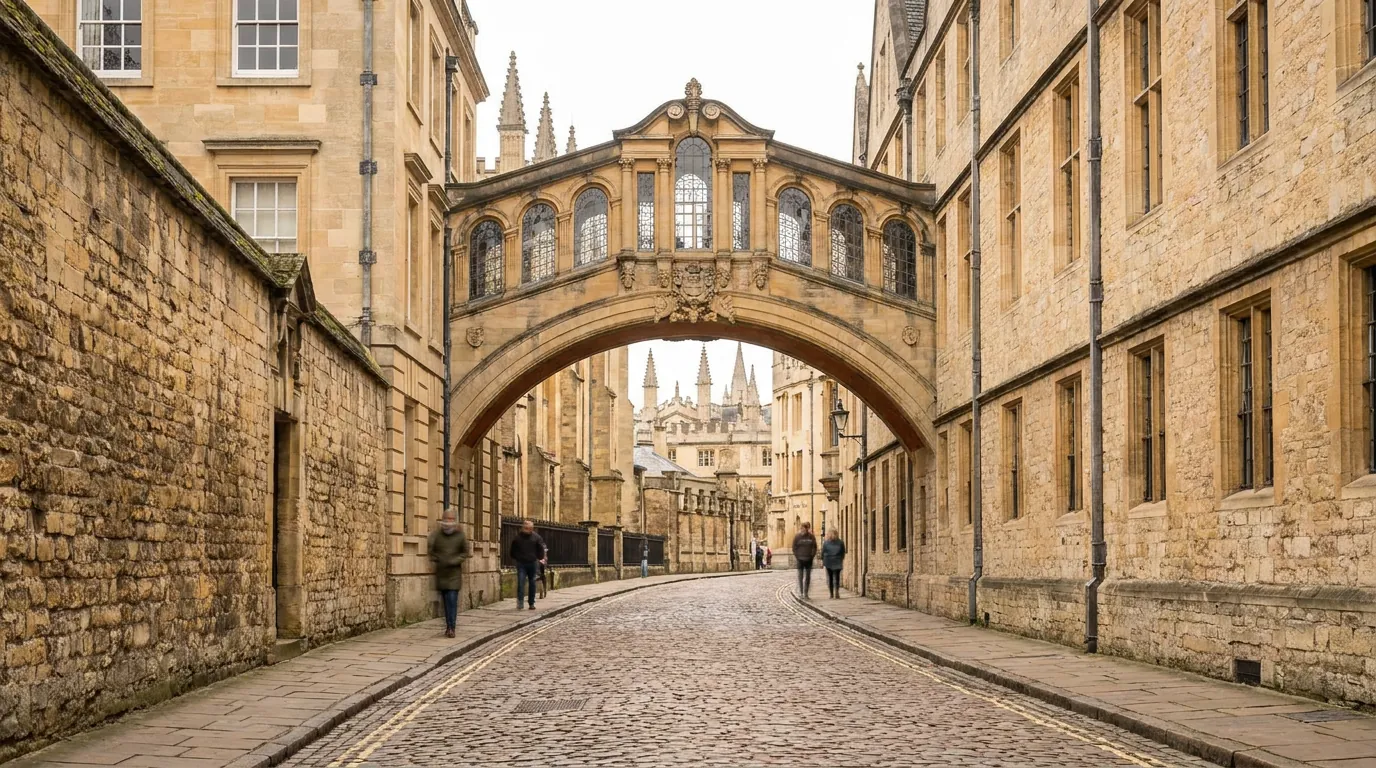
The lane beneath the bridge matters as much as the bridge itself. Its narrowness, curves and stone boundaries create the compression that makes the view feel distinctly Oxford. A wide modern street would make the same structure much less powerful.
It is easy to confuse with Cambridge
Cambridge also has a Bridge of Sighs, at St John’s College over the River Cam. Oxford’s version is Hertford Bridge over New College Lane. Pages, captions and structured metadata should keep the two separate.
Make it work
Plan the visit properly.
Current practical detail, kept separate from the story so it is easy to scan when you need it.The practical version
The Bridge of Sighs is a free exterior sight. You view it from New College Lane, just off Catte Street, in the historic centre of Oxford. You do not need a ticket and you do not need to book. Five to ten minutes is enough if you are only stopping for a look or a photograph. [S02]
The bridge interior is private to Hertford College. Hertford also states that, as a small college, it is generally closed to tourists. Do not plan this as a college interior visit unless Hertford publishes a specific visitor arrangement that applies to your date. [S02]
Best time to go
Early morning is best for a clear view and clean photographs. Late afternoon and evening can also work well, especially when the lane is less crowded and the stone catches lower light. Midday is the weakest time: more people, harsher light and more pressure in the narrow lane.
Rain is not a reason to skip it. Wet stone and darker lane surfaces can make the bridge feel more atmospheric, and the stop is short enough to add between indoor bookings.
How to include it in a route
The bridge works best as part of the Bodleian-Radcliffe-Sheldonian cluster:
- Start at the Sheldonian Theatre or Broad Street.
- Walk along Catte Street.
- Turn into New College Lane for the Bridge of Sighs.
- Continue to Radcliffe Square.
- Add the Bodleian exterior, All Souls gate, St Mary’s tower or a booked library tour.
For a slightly more atmospheric route, continue east along New College Lane towards the Turf Tavern passages, then loop back towards Holywell Street or New College.
Tickets and opening
There are no Bridge of Sighs tickets for casual visitors because the attraction is the public exterior view. The exterior is visible from the street at any time. College access is separate and restricted. [S02]
How long to allow
Allow:
- 5 minutes for a quick look.
- 10 minutes for a photograph and short explanation.
- 20–30 minutes when combining it with Catte Street, Radcliffe Square and the Bodleian exterior.
- 60–90 minutes if pairing it with a booked Bodleian tour or St Mary’s tower climb.
Behaviour and crowding
New College Lane is narrow and still functions as a city street. Take photographs quickly, avoid blocking the lane, and step aside for cyclists, delivery vehicles, residents and college staff. The bridge is also attached to a working college, so avoid treating doorways and windows as a photo set.
What not to promise
Do not promise:
- Interior access to the bridge.
- General tourist opening at Hertford College.
- A long attraction experience.
- A literal Venetian prison-bridge story.
- A guaranteed crowd-free photograph.
Visit your way
Access and family planning.
Exterior viewing
The public visitor experience is the exterior view from New College Lane and Catte Street. This is not a managed attraction with a visitor desk, lift or controlled route. The practical barriers are the ordinary city-street barriers of central Oxford: narrow pavements, uneven historic surfaces, crowds, cyclists and occasional service vehicles.
Interior access
The bridge interior is private to Hertford College and should not be described as visitor-accessible. Oxford’s access material for Hertford identifies multiple stepped routes within the college and records stairs associated with the bridge area. [S05]
Hertford College access context
Hertford’s own visit page says the college is generally closed to tourists. Its access information states that the main entrance on Catte Street can be step-free but uses a short steep portable ramp, while other entrances and parts of the site involve steps. This matters only for college visits, not for the street-view landmark. [S02][S05]
Wheelchair users
A wheelchair user can generally include the exterior view in a central Oxford route, but should expect crowd pressure and limited pavement width. The safest interpretation is “viewable from public street” rather than “fully accessible attraction”.
Neurodivergent visitors and crowd sensitivity
Avoid peak walking-tour times if crowds are stressful. Early morning, later evening and poor-weather windows are usually calmer. Because the stop is short, it can also be used as a quick pass-through rather than a lingered visit.
Editorial wording
Use:
- “Exterior visible from public street.”
- “Public-street viewpoint with narrow and sometimes uneven approaches.”
- “Interior private to Hertford College.”
Do not use:
- “Wheelchair-accessible bridge.”
- “Walk across the bridge.”
- “Open to visitors.”
- “Step-free attraction” without qualification.
Is it good with children?
Yes, but keep it short. The Bridge of Sighs is better as a quick landmark on a walking route than as a destination to sell to children as an attraction. It works well between the Bodleian quarter, Radcliffe Square, New College Lane and a snack stop.
What to say
Use a simple framing:
- It is really called Hertford Bridge.
- It joins two parts of Hertford College.
- Students and staff can cross inside, but visitors normally see it from the street.
- It is nicknamed after a bridge in Venice, though the story is not the same.
Safety
New College Lane is narrow. Keep children close, especially when groups stop suddenly for photographs or cycles pass through. Avoid standing in the road to frame a shot.
Timing
Five minutes is enough for most families. If you need a reset, combine it with a short wander through Radcliffe Square or a route towards the Turf Tavern passages, then move to a wider space.
Nearby family pairings
- Weston Library café and exhibitions.
- Museum of the History of Science.
- Covered Market for food.
- University Church tower for older children comfortable with stairs.
- Bodleian tour for children old enough to enjoy guided interiors.
Pushchairs
The exterior route is possible with a pushchair, but expect narrow pavements, uneven surfaces and crowds. Do not count on Hertford College access or the bridge interior.
Self-guided walk
Explore beyond the venue.
A practical, step-by-step route connecting this experience with more of Oxford.Route length
Allow 25–35 minutes for a compact historic-core loop, excluding paid interiors.
Stop 1 — Broad Street
Begin outside the Sheldonian Theatre. Use Broad Street to orient yourself: Weston Library, the old Bodleian quarter and the ceremonial university architecture sit around you.
Stop 2 — Catte Street
Walk east and then south onto Catte Street. This is the transition from Broad Street’s openness into the narrow lanes that make the bridge effective.
Stop 3 — The Bridge of Sighs
Turn into New College Lane. Stand clear of the carriageway and look west/east to understand how Hertford Bridge joins college buildings over a public street. Explain the basics: official name Hertford Bridge, architect Sir Thomas Graham Jackson, unveiled 1913, interior private. [S01][S04]
Stop 4 — New College Lane
Continue a short distance east. Notice how the lane bends and narrows. This is why the bridge is more than a single-object photo stop: the setting creates the image.
Stop 5 — Turf Tavern passages
If time allows, follow the passage route towards the Turf Tavern. Even if you do not stop for food or drink, the approach shows Oxford’s hidden-route texture.
Stop 6 — Radcliffe Square
Return towards Catte Street and enter Radcliffe Square. The change in scale is immediate: from lane and bridge to dome, library ranges and college fronts.
Stop 7 — St Mary’s or Bodleian choice
End with one optional paid/managed addition: St Mary’s tower for the view, or a Bodleian Library tour for interiors. Both turn the bridge stop into a more complete half-day plan.
Tour script
“This is Hertford Bridge, usually called the Bridge of Sighs. It looks older than it is: Sir Thomas Graham Jackson designed it for Hertford College, and Hertford dates its unveiling to 1913. It links two parts of the college over New College Lane. The public sees the outside; the inside is private college circulation. The Venetian nickname is famous, but the Oxford story is really about college geography and Edwardian architecture staging the older city.”
Make a record
Photograph it thoughtfully.
Best shot
The strongest shot is from New College Lane, looking towards the covered bridge with the lane compressed underneath it. Use the lane as the frame rather than trying to isolate the bridge from its setting.
Best light
Early morning is the cleanest option: fewer people, softer stone and less pressure to move immediately. Late afternoon and blue-hour light can be atmospheric, especially if the street is damp. Midday is usually harsh and crowded.
Composition notes
- Keep verticals straight; the narrow lane can make distortion obvious.
- Include enough road and wall to show the bridge’s height and compression.
- Try a second frame from Catte Street looking into New College Lane.
- If using a phone, step back rather than defaulting to an ultra-wide lens that bends the architecture.
Courtesy
Do not block New College Lane. Take the shot, step aside, and let residents, students, staff, cyclists and delivery traffic pass. Avoid leaning into college entrances or photographing people at close range without consent.
Image metadata
Suggested alt text:
“The Bridge of Sighs, officially Hertford Bridge, crossing New College Lane in Oxford.”
Suggested caption:
“Hertford Bridge, better known as Oxford’s Bridge of Sighs, links two parts of Hertford College above New College Lane.”
See it
In pictures.
All 5 photographs from this page, full screen. Tap any one to open the viewer.Around here
Make more of the area.
Radcliffe Square
The obvious pairing. Walk south-west from Catte Street into Radcliffe Square for the Radcliffe Camera, Bodleian Library ranges, All Souls and the University Church. This is Oxford’s densest architectural set-piece.
Bodleian Library
The Bodleian is minutes away. Exterior viewing is free; interiors require ticketed tours or specific public access. Pairing a booked Bodleian tour with the bridge creates a more substantial visit.
Sheldonian Theatre
The Sheldonian sits just off Broad Street, a short walk from the bridge. Its exterior, carved heads and possible interior/roofline views give visitors another Wren-era layer after Jackson’s Edwardian bridge.
Museum of the History of Science
A compact, free museum on Broad Street, useful in poor weather and strong for visitors interested in instruments, timekeeping and Oxford science.
New College Lane and Turf Tavern passages
Continue east under or past the bridge and the lane leads into one of Oxford’s most atmospheric back-route sequences. The Turf Tavern is reached through narrow passages rather than a normal street frontage.
New College
New College is close by and can be a major paid college visit when open. Do not confuse New College access with Hertford Bridge access; they are separate institutions and arrangements.
Covered Market
Around ten minutes away on foot, useful after a short landmark stop when visitors need food, coffee or a reset.
Good to know
Questions, answered.
01Is the Bridge of Sighs free to visit?
Yes. The exterior is free to view from New College Lane and Catte Street. The bridge interior is private to Hertford College. [S02]
02What is the Oxford Bridge of Sighs actually called?
Its official name is Hertford Bridge. “Bridge of Sighs” is the common nickname.
03Where is it?
It crosses New College Lane beside Hertford College, close to Catte Street, Radcliffe Square, the Bodleian Library and the Sheldonian Theatre.
04When was it built?
Use 1913 as the main date. Hertford College says Jackson’s bridge was unveiled in 1913, and Oxford History records an AD 1913 inscription. Historic England’s legacy list text says 1903, so the date conflict should remain in editorial notes. [S01][S03][S04]
05Who designed it?
Sir Thomas Graham Jackson, one of the key architects of late-Victorian and Edwardian Oxford. [S01][S03][S04]
06Is it part of Hertford College?
Yes. It links Hertford’s older buildings with the New Buildings Quad across New College Lane. [S01][S04]
07Can I walk across it?
No, not as a casual visitor. The bridge is private college circulation, not a public walkway. [S02]
08Is Hertford College open to tourists?
Hertford says that, as a small college, it is generally closed to tourists. Check the college’s own site for any specific event or access exception. [S02]
09Is it a copy of Venice’s Bridge of Sighs?
No. The nickname refers to Venice, but the function and setting are different. Hertford notes that its bridge more closely resembles the Rialto Bridge. [S01]
10Is this the same as Cambridge’s Bridge of Sighs?
No. Oxford’s is Hertford Bridge over New College Lane. Cambridge’s Bridge of Sighs is at St John’s College over the River Cam.
11Is it accessible?
The exterior view is from public streets, but the lane is narrow, uneven in places and often crowded. The bridge interior is private and involves stairs. [S05]
12How long should I allow?
Five to ten minutes for the bridge itself. Allow twenty to thirty minutes if adding Catte Street, New College Lane and Radcliffe Square.
13When is the best time for photos?
Early morning is usually best for fewer people and softer light. Late afternoon or evening can also work well, especially after rain.
14What else should I see nearby?
Radcliffe Square, the Bodleian Library, Sheldonian Theatre, Museum of the History of Science, New College Lane and the Turf Tavern passages are all nearby.
Before you visit
Useful links.
Venue and visitor information
Method
Research was completed on 28 August 2026. Hertford College was used for official college history and current visitor-access context. Historic England was used for statutory listing data. Oxford History was used for bridge-specific chronology, inscription detail and site context. Oxford Access Guide was used for access cautions around Hertford’s site and bridge-related stairs.
No user reviews were used as factual evidence.
Sources
| ID | Source | Used for | Retrieved |
|---|---|---|---|
| S01 | Hertford College — College history, https://www.hertford.ox.ac.uk/and-more/college-history/ | Hart Hall background, 1874 refoundation, Jackson’s Hertford work, 1913 unveiling, Rialto comparison | 2026-08-28 |
| S02 | Hertford College — Visit us, https://www.hertford.ox.ac.uk/and-more/visit-us/ | Current tourist closure wording, Catte Street location, main lodge and access caveats | 2026-08-28 |
| S03 | Historic England — Hertford Bridge, https://historicengland.org.uk/listing/the-list/list-entry/1046725 | Grade II status, NHLE 1046725, first listed date, grid reference, legacy 1903 conflict | 2026-08-28 |
| S04 | Oxford History — Hertford Bridge / Bridge of Sighs, https://oxfordhistory.org.uk/broad/buildings/east/hertford/bridge.html | Bridge-specific history, New Buildings Quad context, 1913 construction/unveiling evidence, inscription, private stair context | 2026-08-28 |
| S05 | Oxford Access Guide — Hertford College, https://www.accessguide.ox.ac.uk/hertford-college | Main entrance, portable ramp, stepped site routes, bridge/stair caution, accessible toilet context | 2026-08-28 |
| S06 | Wikidata — Hertford Bridge Q3407626, https://www.wikidata.org/wiki/Q3407626 | Identifier cross-check only | 2026-08-28 |
| S07 | University of Oxford — Hertford College listing, https://www.ox.ac.uk/admissions/undergraduate/college-life/college-listing/hertford-college | General central-location and “world-famous Bridge of Sighs” context; not used over Hertford for operational facts | 2026-08-28 |
Conflict ledger
1. Bridge date
- Hertford College: bridge unveiled in 1913.
- Oxford History: bridge built in 1913 and inscription includes AD 1913.
- Historic England legacy text: 1903.
Used: 1913 as the narrative date; Historic England retained for Grade II/list-entry data.
2. Venice comparison
- Common visitor shorthand: “Bridge of Sighs” after Venice.
- Hertford College: the bridge resembles the Rialto Bridge more than the Venetian Bridge of Sighs.
Used: “nicknamed after Venice, but the comparison is imperfect”; do not claim a functional replica.
3. Public access
- Public can view the bridge from the street at any time.
- Hertford College says it is generally closed to tourists.
- The bridge interior is college circulation.
Used: free exterior view only; no casual interior access.
4. Accessibility
- Exterior viewpoint is public street.
- Hertford site access includes ramps, level changes and stairs; bridge interior is not public.
Used: public-street viewpoint with narrow/uneven/crowded-route cautions; not a fully managed accessible attraction.
Reverification schedule
| Content | Cadence |
|---|---|
| Hertford visitor access | Quarterly |
| Public-realm access/crowding advice | Quarterly |
| Heritage and identifiers | Annually |
| Date conflict and source ledger | Annually |
Last full research pass: 28 August 2026. Next operational review: 28 November 2026.
Opening hours, prices, programmes and access arrangements can change. Confirm critical details with the venue.
Continue exploring / Oxford
What will you
do next?
Compare the practical essentials first, then open the experiences that earn a place in your plans.
 01Culture & historyBate Collection of Musical InstrumentsExplore experience →
 02Culture & historyBodleian Library guided tourExplore experience →
 03Culture & historyChrist ChurchExplore experience →
 04Culture & historyChrist Church CathedralExplore experience →
 05Culture & historyHistory of Science MuseumExplore experience →
 06Culture & historyOxford CastleExplore experience →
 07Culture & historyOxford University Museum of Natural HistoryExplore experience →
 08Culture & historyPitt Rivers MuseumExplore experience →
 09Culture & historySheldonian TheatreExplore experience →
 10Culture & historyStephen A. Schwarzman Centre for the HumanitiesExplore experience →
 11Culture & historyThe Ashmolean MuseumExplore experience →
 12Culture & historyThe Radcliffe CameraExplore experience →
 13Culture & historyThe Weston LibraryExplore experience →
 14Culture & historyUniversity Church of St Mary the VirginExplore experience →
 15Food & drinkHead of the RiverExplore experience →
 16Food & drinkLe Manoir aux Quat’SaisonsExplore experience →
 17Food & drinkOxford Covered MarketExplore experience →
 18Food & drinkThe Bear InnExplore experience →
 19Food & drinkThe ChequersExplore experience →
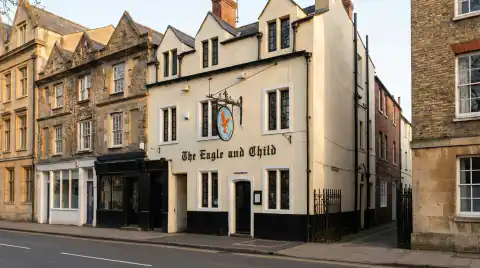 20Food & drinkThe Eagle and ChildExplore experience →
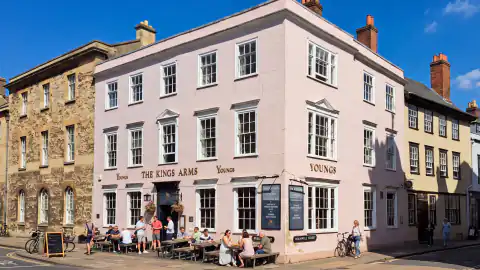 21Food & drinkThe King’s ArmsExplore experience →
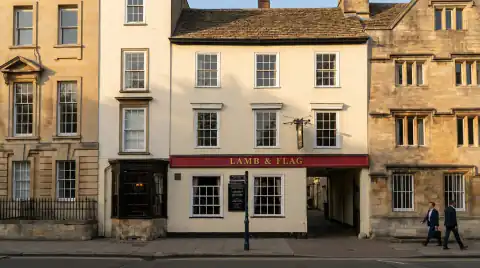 22Food & drinkThe Lamb & FlagExplore experience →
 23Food & drinkThe PerchExplore experience →
 24Food & drinkThe Trout InnExplore experience →
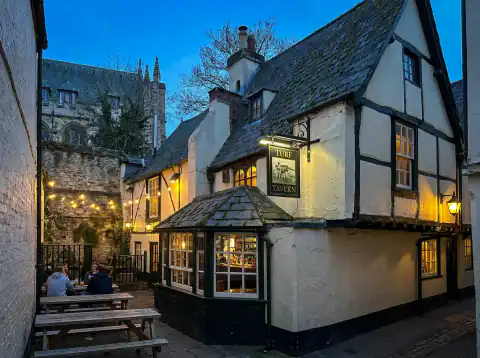 25Food & drinkThe Turf TavernExplore experience →
 26Food & drinkThe White HorseExplore experience →
 27Food & drinkWestgate OxfordExplore experience →
 28Parks & meadowsChrist Church MeadowExplore experience →
 29Parks & meadowsOxford Botanic GardenExplore experience →
 30Parks & meadowsPort MeadowExplore experience →
 31Parks & meadowsUniversity ParksExplore experience →
 32On the waterPunt the CherwellExplore experience →
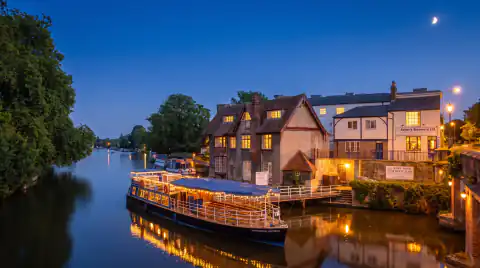 33On the waterSalter's SteamersExplore experience →
 43CollegesAll the collegesEvery Oxford collegeOpen the college guide →Food & drink / a storyThe nine oldest pubsWalk the timeline →
 Plan / Itinerary builderBuild your Oxford dayStart planning →