landmark / Oxford
In depth
Sheldonian Theatre
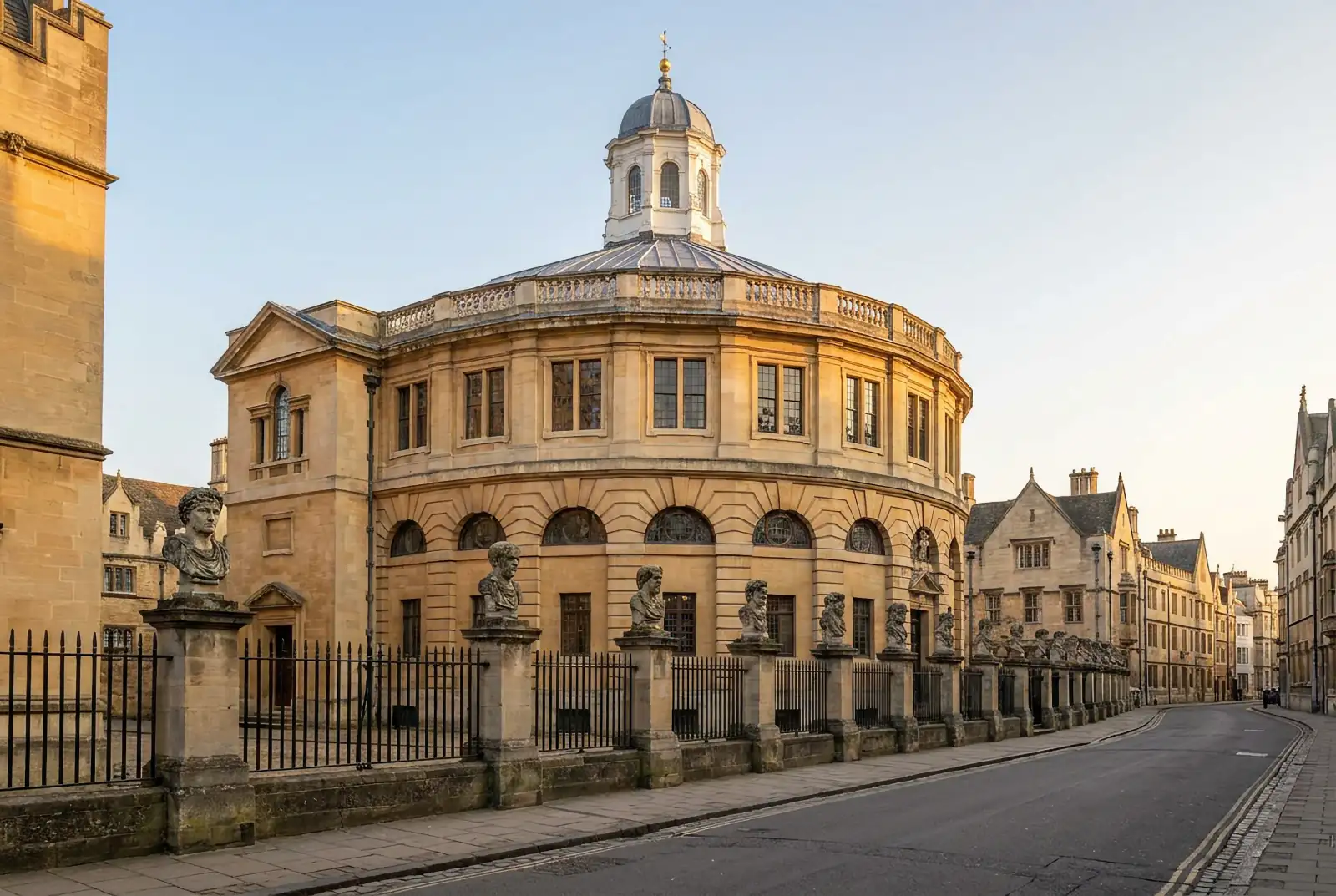
Wren's first major building: a Roman theatre with a painted ceiling instead of a sky, and 114 steps to the best 360° view in central Oxford. Unlike the Radcliffe Camera, it lets you in.
Story · Visit · Route · Links
Visitor Essentials & Quick Answers
Is the Sheldonian worth going inside?
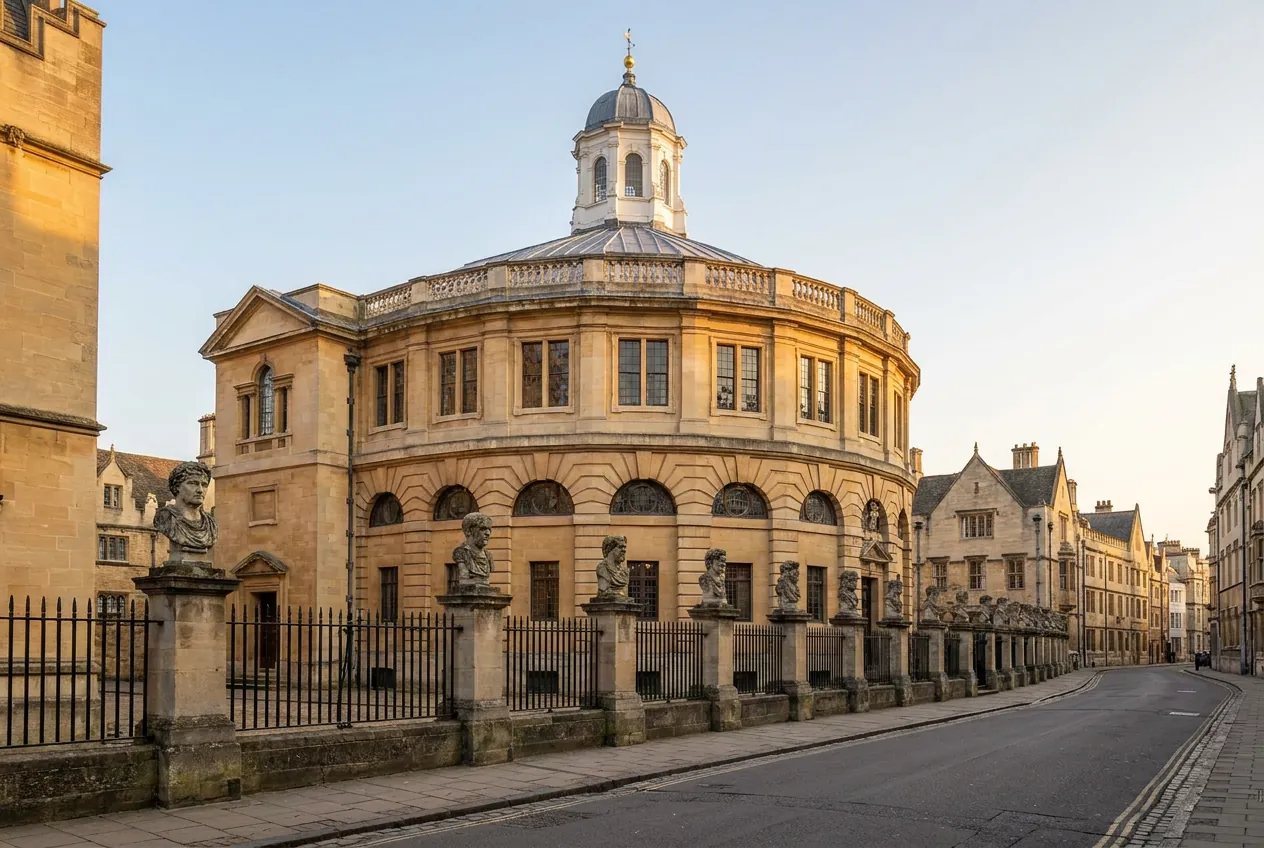
Yes if you enjoy architecture and want to understand Oxford’s ceremonial life. Christopher Wren’s auditorium, Robert Streater’s painted ceiling and the view from the cupola offer three distinct experiences. The outside gives little indication of the roof engineering or the dramatic illusion of open sky above the seats.
What am I looking at on the painted ceiling?
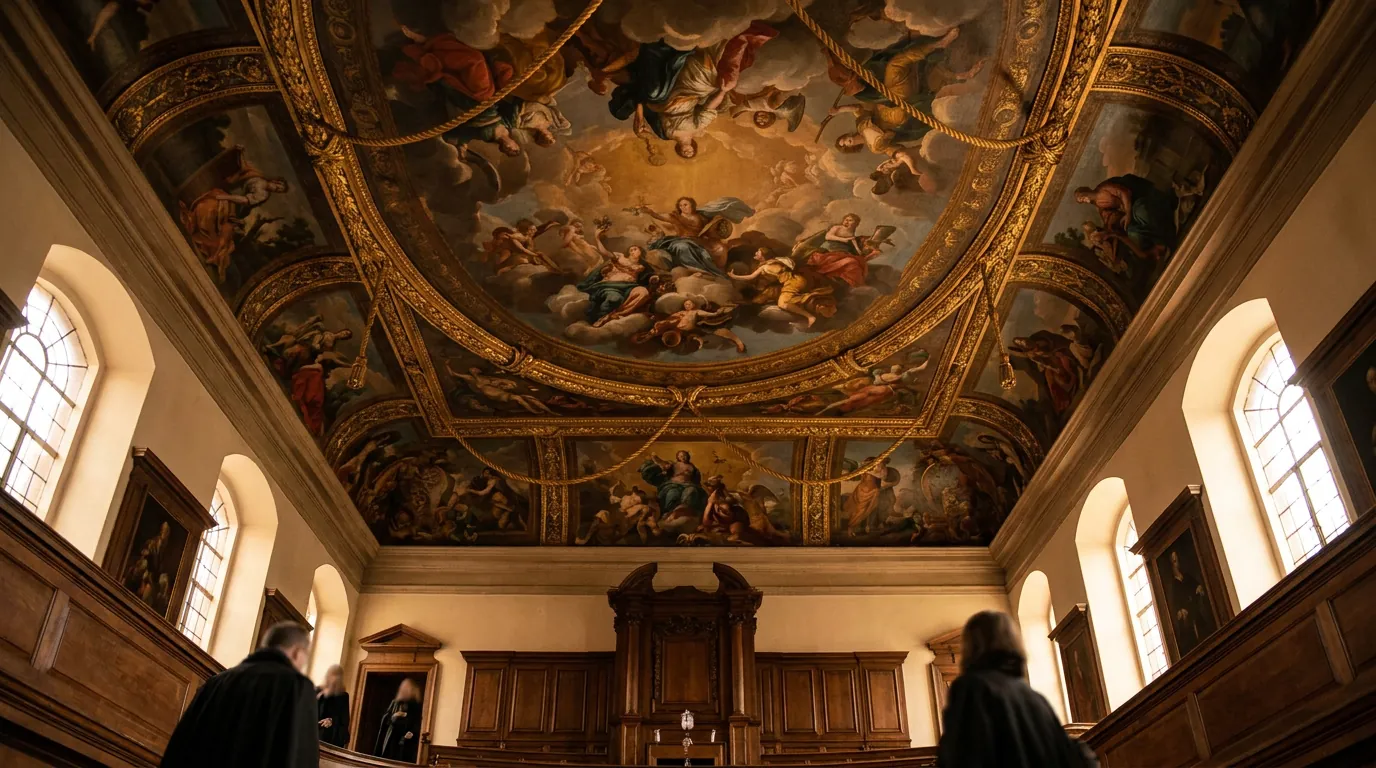
Streater painted an allegory of Truth overcoming Ignorance, but the visual trick is easier to appreciate than the symbolism: figures pull back an enormous painted awning to reveal the sky. It complements Wren’s idea of a Roman theatre. Give it a few minutes rather than treating it as decoration overhead.
Why is the roof so important?
Wren created a broad auditorium without columns obstructing the central space. The timber roof structure made that possible and was one of the building’s great achievements. Looking up from the floor, then at the structure from the old printing loft when accessible, connects the elegant room with the engineering above it.
Who are the stone heads outside the Sheldonian?
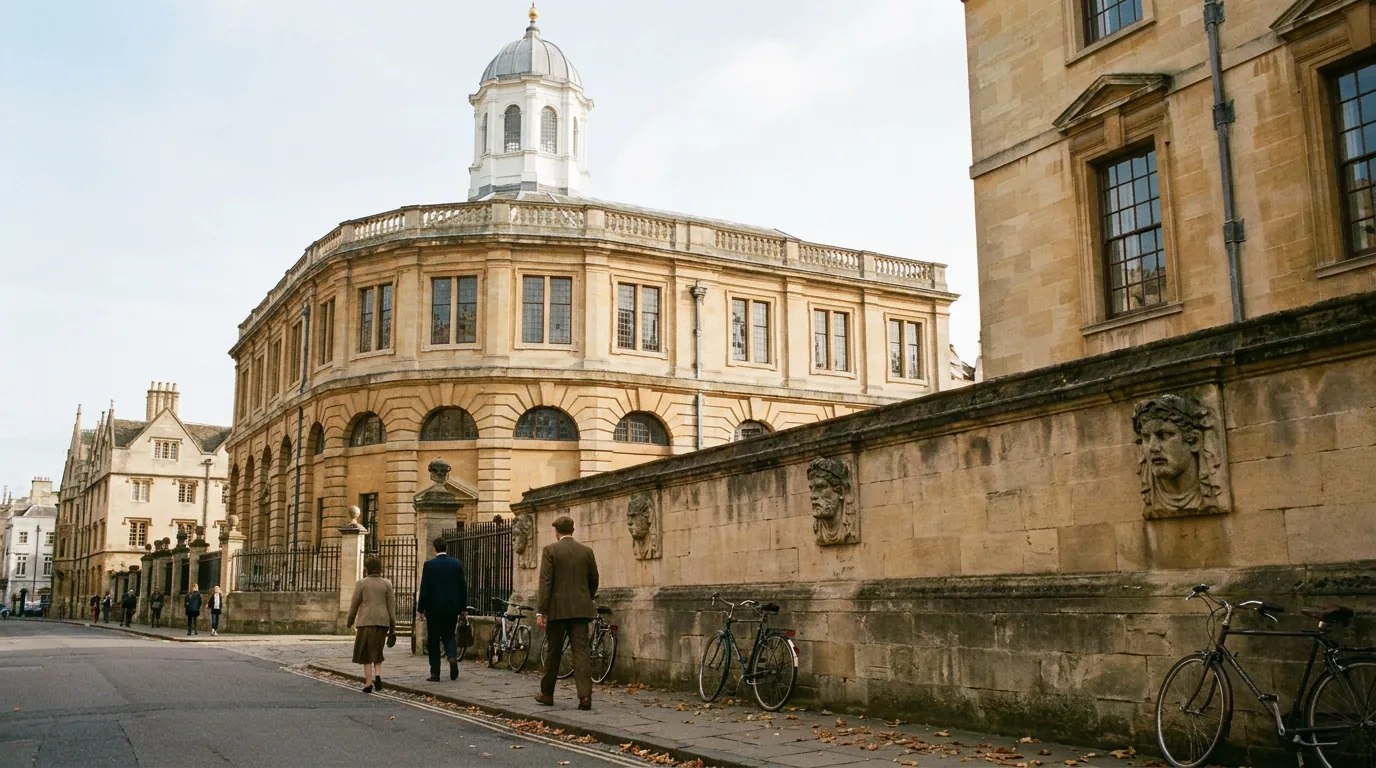
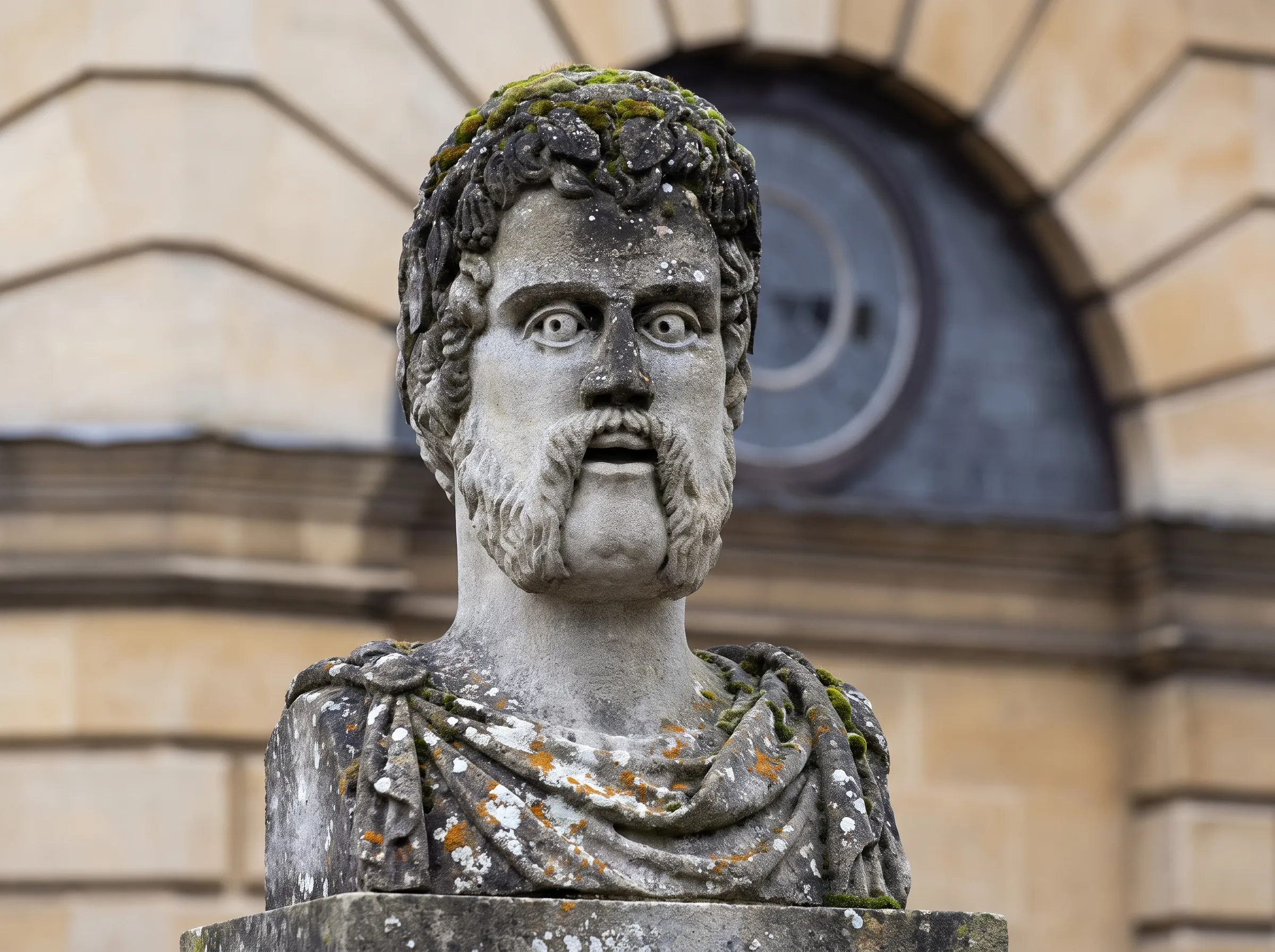
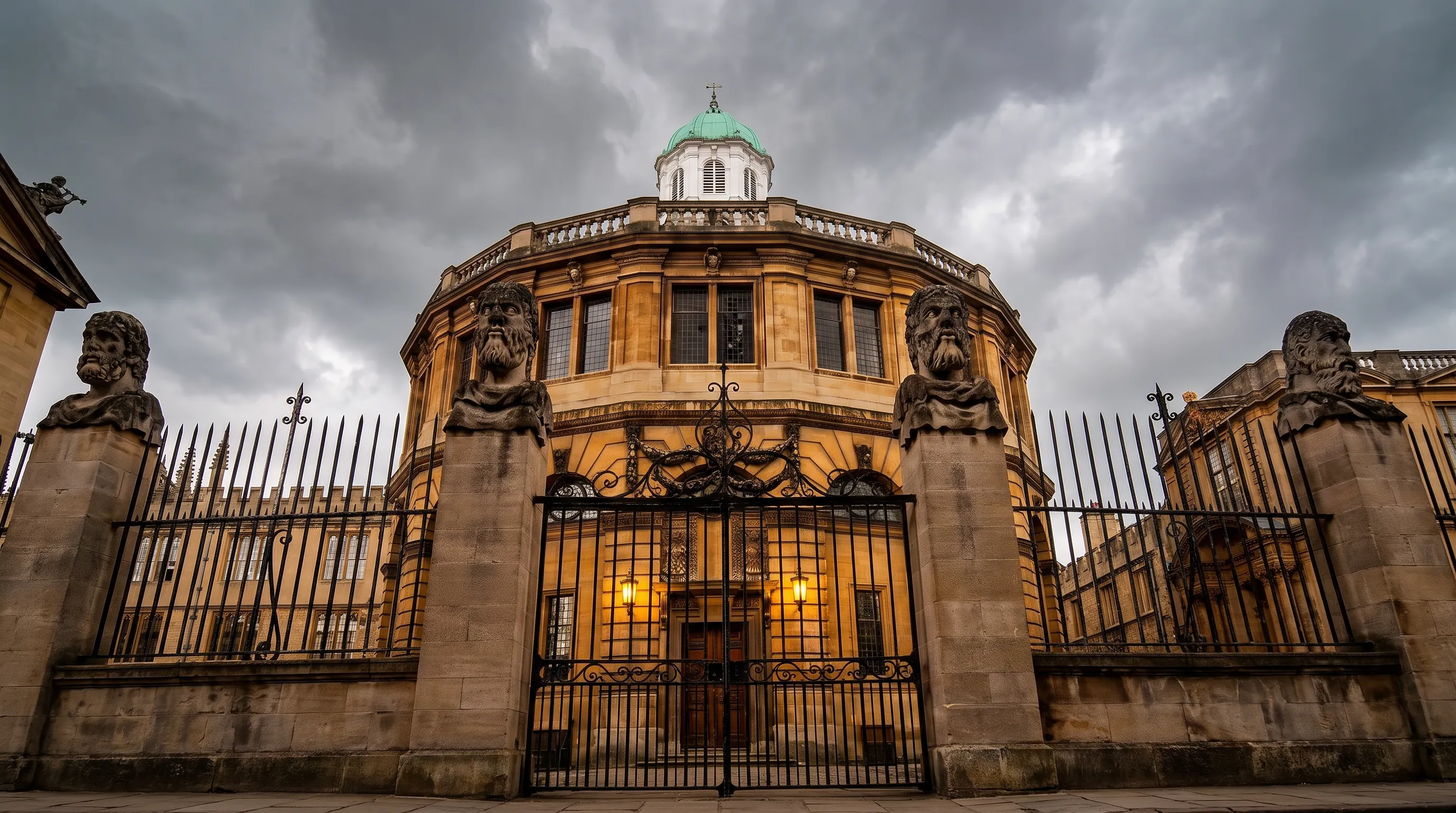
They are commonly called the Emperors’ Heads, but they are not portraits of identifiable emperors. They form an architectural boundary along Broad Street. The present set was made by Michael Black and installed in 1972, replacing earlier weathered versions: a familiar-looking Oxford feature with a surprisingly recent chapter.
Choose your depth
Essentials or more detail?
See visiting essentials, or read more about the history and places nearby.Start here
Understand the place.
The context, character and reasons this experience earns time in your Oxford plans.Why it matters
It is Wren's first proper building. The astronomer's mathematics is visible in it — the roof is a structural argument, not a decorative one — and the leap from this to St Paul's is the story of English architecture in one lifetime.
It exists because of a quarrel about propriety. Oxford's degree ceremonies and the university's more boisterous public occasions had been held in the University Church of St Mary the Virgin, and the mixing of the secular and the sacred had become an embarrassment. Sheldon paid to move them out. The building is the physical result of an argument about where a university should behave badly.
It is still doing that job. The Sheldonian is the principal assembly room of the University and the regular meeting place of Congregation. Every public ceremony of the University happens here, including Encaenia each summer. Matriculation and graduation take place under Streater's ceiling. This is why opening hours are "arranged around what is taking place in the building" — the ceremonies are not a heritage re-enactment, they are the reason it is there.
The heads on the railings are famous and nobody knows who they are. The carved stone heads facing Broad Street are called the Emperors, and they are not emperors. They are not portraits of anyone. They have also been carved three times over.
What visitors should notice
The ceiling is not a fresco. It is oil on thirty-two canvas panels, painted by Streater in Whitehall in 1668–9 and shipped up to Oxford by barge. Look for the gilded cords and the crimson awning being pulled back by putti — the building is pretending to be roofless.
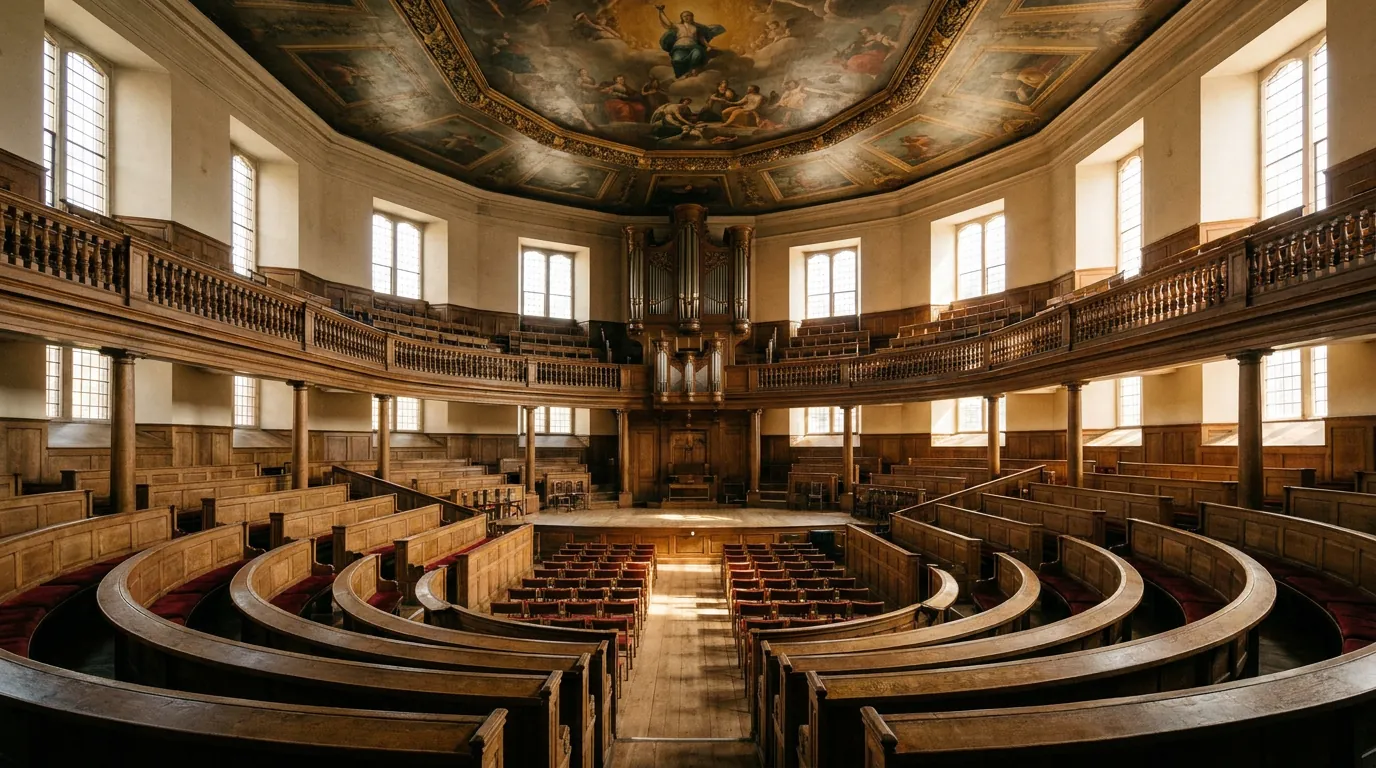
There are no columns in the room. Stand in the middle of the floor and look for a support. There isn't one, and in 1669 that was the point people talked about.
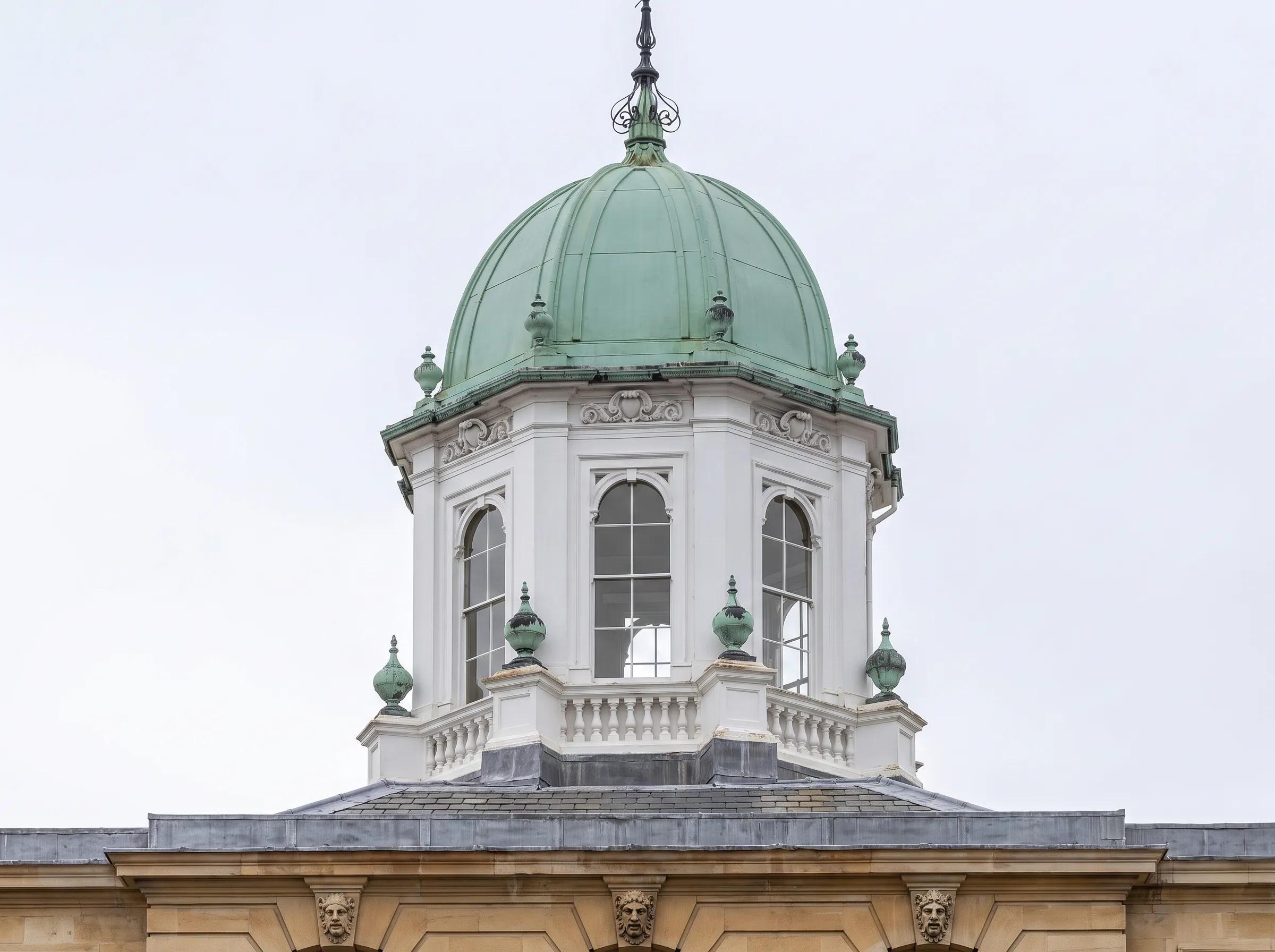
The cupola is not Wren's. The octagonal cupola you climb was designed in 1838, and the roof itself was replaced in 1801, altering Wren's original. The silhouette on the postcard is substantially nineteenth-century.
The Old Printing Loft. The space above the ceiling once housed the University Press, which printed here until it moved next door to the Clarendon Building in 1713. You pass through it on the way to the cupola.
Who will enjoy it
- Anyone who has just discovered they cannot get into the Radcliffe Camera. This is three minutes away and it lets you in.
- People interested in Wren, in structural engineering, or in how a young astronomer solved a seventy-foot span in timber.
- Anyone who wants a 360-degree view over central Oxford and does not mind 114 steps.
- Visitors with limited time: the auditorium and cupola are a genuine hour.
Who may find it difficult
- The cupola is 114 steps of a steep, worn seventeenth-century staircase. The building itself warns against the climb for anyone with heart or other pre-existing medical conditions, or with mobility difficulties.
- The cupola and the Old Printing Loft are not wheelchair accessible.
- Hours move. Ceremonies close the building at short notice, and the auditorium is often shut when the cupola is not. Check on the day.
- What you can see depends on what is happening. There are separate, cheaper tickets for days when the auditorium is unavailable, which is honest but means the visit you get is not always the visit you booked.
- Much of what is published about prices and hours is out of date. Listings still quote a £3.50 self-guided ticket and a Mon–Sat closing at 16:30. Both are superseded — see Plan your visit.
Visitor verdict
An hour, and one of the few interiors in central Oxford that reliably admits visitors without a booked tour. Go for the ceiling and the roof structure, stay for the cupola view, and treat the published hours as provisional — this is a ceremonial building that lets people look round between engagements, not an attraction that occasionally holds a ceremony.
The full story
How it came to matter.
The problem: ceremonies in a church
Before the Sheldonian, the University of Oxford held its degree ceremonies and public acts in the University Church of St Mary the Virgin. These occasions were not solemn. The Act — the summer ceremony that became Encaenia — included satirical speeches and a licensed rudeness that sat badly in a consecrated building, and the objection to holding them there had been growing for years.
Gilbert Sheldon, Warden of All Souls and later Archbishop of Canterbury, resolved it by paying for a purpose-built ceremonial hall. He met the entire cost of the building. It carries his name because he wrote the cheque.
The architect: an astronomer with no track record
Christopher Wren was Professor of Astronomy at Oxford when he took the commission, in his early thirties, and had built almost nothing. The Sheldonian is his first significant building.
His model was the Roman open-air theatre — a D-shaped auditorium with tiered seating, the form used for public assembly in antiquity, and exactly right for a university watching its own ceremonies. Wren is thought to have worked from published engravings of the Theatre of Marcellus in Rome.
Roman theatres had no roof. Oxford needed one.
The roof: the reason it made his name
A conventional roof over that span would have needed columns in the middle of the floor, which would have destroyed both the sightlines and the Roman conceit.
Wren designed a timber truss spanning seventy feet with no internal support. It was an engineering solution rather than an architectural one, and it earned him, in the university's own phrasing, great credit in scientific and architectural circles. The mathematician is doing the work.
Construction ran from 1664 to 1669. The building has been in continuous use for over 350 years.
The ceiling: painted in London, floated up the Thames
Robert Streater, Serjeant Painter to King Charles II, painted the ceiling in thirty-two canvas panels in 1668–9, working in Whitehall. The finished panels were shipped to Oxford by barge.
The subject is the triumph of Truth and the Arts and Sciences over Envy, Rapine and Ignorance — Truth descending to expel Ignorance from the University. Streater built the composition around Wren's fiction: gilded cords in high relief, and putti rolling back a vast crimson awning to reveal the sky beyond. The room is presented as an open-air theatre whose sunshade has just been drawn aside.
It was a sensation immediately. The Oxford poet Robert Whitehall published verses in 1669 explaining the iconography to visitors, which is a fair indication of how much people wanted to look at it.
The printing press upstairs
The building was also, at first, the home of the University Press, which printed in the loft above the ceiling. The Press moved next door to the purpose-built Clarendon Building in 1713.
The space it left is the Old Printing Loft, and visitors pass through it on the way up to the cupola.
What is not original
Two things on every photograph of the building postdate Wren:
- The roof was replaced in 1801, altering his original design.
- The octagonal cupola was designed in 1838. The lantern you climb is Victorian, not seventeenth-century.
Other works: a restoration between 1720 and 1727, which included a new organ by Renatus Harris; conservation of the thirty-two ceiling panels between 2004 and 2008, with the first panel returned in July 2008; and in 2010 the reintroduction of Wren's original colour scheme to the interior.
The Emperors' Heads
The carved stone heads on the railings facing Broad Street have been carved three times.
The original set was carved by William Byrd in the 1660s, commissioned by Wren. Four more were added in front of the old Ashmolean, now the History of Science Museum, between 1679 and 1683. They eroded, were restored in 1868, and that second generation decayed quickly too.
The set standing today was carved by the sculptor Michael Black, who spent two years on them; they were installed in 1972. He used Clipsham stone and worked from David Loggan's seventeenth-century engravings to recover what the originals had looked like.
They do not depict emperors, and they are not portraits of anyone. They have been called the Sages of Antiquity and the Twelve Caesars, but the name that stuck came from Max Beerbohm, who called them "Emperors" in his 1911 novel Zuleika Dobson. The correct architectural term is herms; the original building accounts call them termains.
Today
The Sheldonian is the University's principal assembly room and the regular meeting place of Congregation, its governing body. All public ceremonies of the University take place here, including Encaenia, matriculation and graduation. It is also a concert venue.
Its opening hours are arranged around whatever the University is doing in it — which is the correct order of priority, and the reason to check before you go.
Look closer
Highlights and hidden details.
The objects, spaces and small observations that turn a visit into a memorable one.Streater's ceiling
Thirty-two oil-on-canvas panels, painted by Robert Streater, Serjeant Painter to Charles II, in Whitehall in 1668–9 and brought up the Thames by barge.
The subject is Truth descending on the Arts and Sciences to expel Ignorance — Truth triumphing over Envy, Rapine and, in the period's own phrase, brutish scoffing Ignorance. But the composition's real trick is architectural: gilded cords in high relief, and putti drawing back a huge crimson awning to reveal open sky. Wren wanted a Roman theatre; Streater painted the awning being opened.
Lie back in a seat and give it ten minutes. It rewards the neck-ache.
The room with no columns
Stand in the middle of the floor of the D-shaped auditorium and look for a support holding the roof up. There is none.
Wren's timber truss spans seventy feet unaided, and in 1669 that was the thing people came to see. The building's fame among his contemporaries was structural before it was aesthetic.
The cupola view
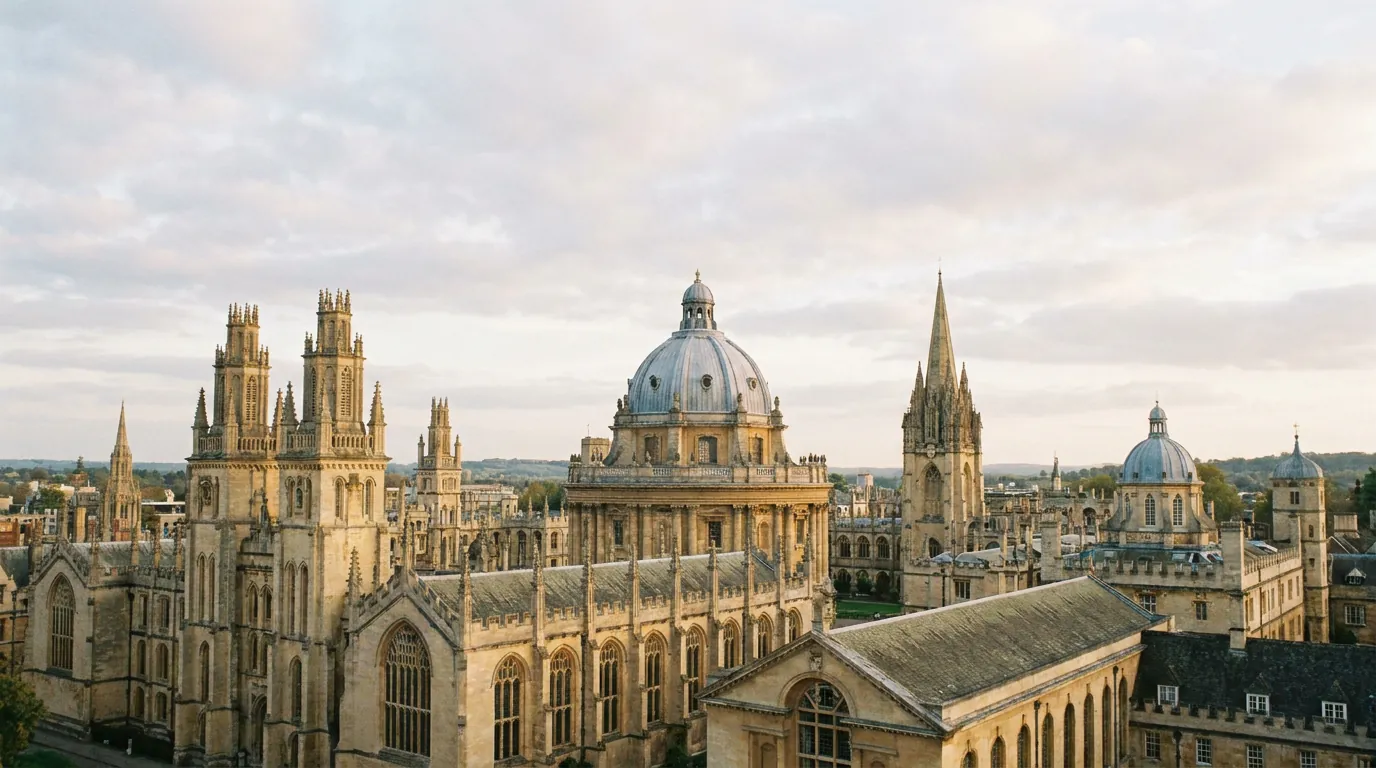
114 steps to a 360-degree gallery over the centre of Oxford. Below and around you: the Divinity School's roof, the Old Bodleian and the Schools Quadrangle, the Clarendon Building next door, Broad Street running west, and the dome of the Radcliffe Camera to the south.
It is the best view in central Oxford reachable without a church tower, and the only one from which the university quarter reads as a single plan.
The Emperors' Heads
Thirteen carved stone heads on the railings facing Broad Street, and the most photographed sculpture in Oxford.
They are not emperors. They are not portraits of anybody. Max Beerbohm called them Emperors in Zuleika Dobson in 1911 and the name stuck; the correct term is herms, and the original building accounts call them termains.
The set standing now is the third. William Byrd carved the originals for Wren in the 1660s; they eroded; replacements went up in 1868 and decayed too. Michael Black spent two years carving the present heads from Clipsham stone, working from David Loggan's seventeenth-century engravings, and they were installed in 1972.
The Old Printing Loft
The space above the ceiling, where the University Press printed until it moved to the Clarendon Building next door in 1713. You walk through it on the way to the cupola, and it is the part of the building most visitors do not expect — raw roof structure, and Wren's trusses visible from above.
This is where you actually see the engineering that the auditorium only implies.
The organ case
The organ at the north end dominates the room. An instrument by Renatus Harris was installed during the restoration of 1720–27; the case is part of the ceremonial staging of the building rather than a later addition to it.
The ceremonial furniture
The Vice-Chancellor's chair, the tiered seating, the arrangement of the floor: this is a room laid out for a specific set of rituals that still happen in it. Congregation meets here, and matriculation, graduation and Encaenia take place under the ceiling. Very few historic interiors in Oxford are still used for the exact purpose they were built for.
Wren's colour scheme
The interior was returned to Wren's original colour scheme in 2010. What you see is not a Victorian or Georgian repaint but a considered reconstruction of the seventeenth-century decorative intent — which makes the room read cooler and plainer than most visitors expect.
Details worth slowing down for.
It is a theatre with no plays
The name confuses everybody. It refers to the Roman theatre form — the D-shaped auditorium Wren copied — not to drama. Nothing is staged here in the theatrical sense. The building's business is ceremonies, degrees and concerts.
An astronomer designed it
Wren was Professor of Astronomy when he took the job, not an architect. He had built almost nothing. What he had was mathematics, and the seventy-foot unsupported truss is a mathematician's answer to an architect's problem.
The ceiling was painted 60 miles away
Streater worked in Whitehall, not in Oxford, and the thirty-two finished canvases came up by barge. The most admired ceiling in Oxford was manufactured in London and delivered by river.
The awning is the joke
Wren built a Roman open-air theatre and then had to roof it. Streater painted the roof as a crimson awning being pulled back by putti, with gilded cords rendered in high relief.
So the ceiling is not a picture hung on a roof — it is an apology for the roof existing. Once you see it, the whole room reorganises itself.
Half the silhouette is Victorian
The roof was replaced in 1801 and the octagonal cupola was designed in 1838. The profile of the Sheldonian that appears on every postcard and tea towel is substantially nineteenth-century. Wren's building is underneath it.
The Emperors have been carved three times
Byrd's originals in the 1660s. Replacements in 1868, which decayed fast. Michael Black's set, two years in the carving, installed in 1972.
Black used David Loggan's engravings from the seventeenth century as his template — so the current heads are a reconstruction of what an engraver recorded, three centuries after the fact.
Nobody knows who they are meant to be
They have been called the Sages of Antiquity, the Twelve Caesars, philosophers. The building's own history is blunt that they do not represent anyone in particular.
"Emperors" comes from Max Beerbohm's 1911 novel Zuleika Dobson, in which the heads sweat with foreboding before a disaster. A novelist's joke became the official-sounding name of a piece of university sculpture.
The railings are listed separately
The walling, railings and ornamental piers fronting Broad Street carry their own Historic England listing, distinct from the theatre's. The heads and their enclosure are legally a separate heritage asset from the building they stand in front of.
A printing works upstairs
For its first forty-four years the building had the University Press working in the loft above the ceiling. Printing presses are heavy and they vibrate. They were sitting directly over Streater's canvases until the Press moved out in 1713.
The hours are the tell
Most historic buildings publish opening hours and close for events. The Sheldonian's hours are arranged around what the University is doing in it. That single fact is the most accurate description of the building's status: it is a working ceremonial hall that admits visitors between engagements, not an attraction that occasionally hosts a ceremony.
Make it work
Plan the visit properly.
Current practical detail, kept separate from the story so it is easy to scan when you need it.The short answer
You can go in, most days, without booking. Broad Street, OX1 3AZ.
Hours are generally 10:00–17:00, daily — but they are arranged around ceremonies and private events, and both the closures and the guided tour times change. Check the day you go.
Tickets
Four products, and which one you can buy depends on what is happening in the building that day.
| Ticket | Price | Concession | What it covers |
|---|---|---|---|
| The Sheldonian Experience | £8.25 | £7.00 | Auditorium, Old Printing Loft and Cupola — the full visit, when no event is on |
| Cupola Views Visit | £5.25 | £4.45 | Old Printing Loft and Cupola only, sold when the auditorium is closed |
| Sheldonian Guided Tour (30 min) | £14.50 | £12.50 | Guided, generally at 11:15 and 14:30 |
| Ceremonial Oxford Tour (60 min) | £17.50 | — | The longer guided tour |
Concessions apply to over-60s, children aged 9–16, Blue Badge holders, alumni guests, NUS cardholders, and groups of 15 or more.
Free entry for current University students and staff, alumni with a valid card, children under 8, and essential companions.
The thing to understand before you buy
The auditorium is not always available, because the University uses it. On those days the Sheldonian sells the cheaper Cupola Views Visit instead, which gets you the Old Printing Loft and the climb but not the room with the ceiling in it.
That is an honest arrangement rather than a bait-and-switch, but it means the ceiling — the single best thing in the building — is the part most likely to be unavailable. If Streater's ceiling is why you are going, check on the day before travelling across town.
Ignore the stale figures still circulating
A good deal of published information about this building is out of date. Two claims in particular are superseded:
- "£3.50 self-guided admission." No longer the price.
- "Monday to Saturday 10:00–16:30, closed Sundays." The Sheldonian's own current information is daily, 10:00–17:00.
Where a listing disagrees with the theatre's own site, the theatre's own site wins.
The cupola climb
114 steps up a seventeenth-century staircase that the building itself describes as steep and worn, to a viewing gallery with a 360-degree view over central Oxford.
The Sheldonian warns explicitly that anyone with heart conditions or other pre-existing medical conditions, or with mobility difficulties — or for whom climbing effort would be hazardous — should think carefully before going up.
There is no lift. The climb is the only way.
It is worth it. This is the most centrally placed high viewpoint in Oxford that does not require a church tower, and it looks straight down on the Divinity School, the Old Bodleian, the Clarendon Building and, beyond them, the dome of the Radcliffe Camera.
When to go
- First thing, 10:00. Quietest, and the cupola gallery is small enough that a coach party fills it.
- Avoid graduation days and Encaenia, when the building is closed to visitors entirely. Encaenia is in summer.
- Weekdays out of term are the most reliable for the full Experience ticket, because Congregation is not meeting.
How long to allow
- Cupola only: 30 minutes.
- The full Experience — auditorium, loft, cupola: an hour.
- Guided tour: 30 or 60 minutes, plus time afterwards.
Getting there
Broad Street, OX1 3AZ, next to the Clarendon Building and opposite the Weston Library. Pedestrian access; no parking.
Five minutes' walk from Carfax. Three minutes from Radcliffe Square via Catte Street. About twenty minutes from the railway station.
Concerts
The Sheldonian is a working concert venue with a serious programme, including the Oxford Philharmonic. Hearing music under Streater's ceiling is a better experience than seeing it on a daytime ticket, and the acoustics of a seventeenth-century timber-roofed room are part of the appeal. Programmes are published separately from visitor admission.
Visit your way
Access and family planning.
The clear facts
The Cupola and the Old Printing Loft are not wheelchair accessible. The Sheldonian states this plainly. The only route to either is the seventeenth-century staircase.
The staircase is 114 steps, steep and worn. The building's own guidance is that anyone with heart conditions or other pre-existing medical conditions, or with mobility difficulties, or for whom climbing effort would be hazardous, should consider carefully before attempting it. There is no lift and no alternative route.
Essential companions are admitted free. So are Blue Badge holders at the concession rate.
What this means in practice
The visit divides in two, and the halves have completely different access profiles:
- The auditorium — the ground-floor ceremonial room with Streater's ceiling. This is the part worth coming for, and it is at entrance level.
- The loft and cupola — reachable only by the stair.
A visitor who cannot manage stairs can still see the best thing in the building. That is worth saying plainly, because the cupola dominates the marketing and could easily give the opposite impression.
The ticketing trap for wheelchair users
On days when the auditorium is closed for a ceremony, the Sheldonian sells the Cupola Views Visit — Old Printing Loft and cupola only.
On those days there is nothing accessible to a wheelchair user, because both components of that ticket are up the stair. Anyone who cannot use stairs should confirm the auditorium is open before travelling, not merely that the building is.
Facts we do not have
The Sheldonian's published visitor information does not settle:
- Whether step-free entry from Broad Street is level or ramped, and which entrance to use.
- Accessible toilet provision within the building.
- Seating availability in the auditorium for visitors, as distinct from ceremonial seating.
- Hearing loop provision.
- Large-print or audio interpretation.
- The policy on assistance dogs.
These are unpublished rather than confirmed absent. Contact the Sheldonian before travelling if any of them is decisive — a ceremonial building with frequent event closures is exactly the kind of venue where a call in advance saves a wasted journey.
Sensory notes
The auditorium is a large, hard-surfaced room with a substantial acoustic — it is a concert venue, and sound carries. It is quiet outside tour times but can fill quickly when a guided tour arrives at 11:15 or 14:30.
The cupola gallery is small and enclosed, reached by a confined stair with two-way traffic. Anyone who finds tight spaces or being crowded on a staircase difficult should expect both.
Lighting is natural and even. There is no darkness, no amplified soundtrack and no interactive noise.
Nearby, if the building does not work
The Weston Library, directly opposite on Broad Street, is modern, free, step-free, has accessible toilets and a café, and shows Bodleian treasures. It is the best fallback in the immediate area and it is thirty seconds away.
The short version
Children under 8 go free. Children aged 9–16 pay the concession rate. There is no minimum age, which makes this one of the few significant Oxford interiors a family with young children can simply walk into — in sharp contrast to the Bodleian tours and the Radcliffe Camera, which are 11 and over.
The cupola climb is 114 steep, worn steps with no lift. That is the decision to make before you buy.
What works with children
The Emperors' Heads, before you go in. Thirteen huge stone heads on the railings along Broad Street. The good facts: nobody knows who they are supposed to be, they are not emperors, and a novelist made the name up in 1911. In Zuleika Dobson they sweat with dread before a catastrophe — which is a genuinely excellent thing to tell a nine-year-old standing under them.
Lying back and looking at the ceiling. Find the putti pulling the red awning open. Ask why a painter would put a curtain on a ceiling — the answer, that the room is pretending to have no roof, is a good puzzle and children usually get there.
Looking for the columns that aren't there. Send them to find what holds the roof up. There is nothing. This is the building's best trick and it works at any age.
The climb, if they are up to it. 114 steps is a real number and children tend to count them. The 360-degree view at the top, with the Radcliffe Camera's dome and the whole university quarter laid out, is the payoff.
The Old Printing Loft on the way up — bare roof timbers, and the fact that a printing press used to sit directly over that beautiful ceiling.
Ages
- Under 5: free, and the auditorium is fine — an open floor and a spectacular ceiling. Skip the cupola.
- 5–8: free entry, and the best age for the heads and the ceiling puzzle. Judge the climb individually.
- 9–12: concession rate, and the ideal age for the whole visit including the cupola.
- Teenagers: the Wren-and-engineering angle lands, and the view is the draw.
The climb, honestly
The Sheldonian's own warning covers heart conditions, other pre-existing medical conditions and mobility difficulties. It is a seventeenth-century staircase, steep and worn, and it is two-way traffic on a narrow stair.
Small children will need a hand. A pushchair cannot go up and there is nowhere obvious to leave one. If part of the group cannot climb, the auditorium is a good place to wait.
Practical
- An hour is the whole visit, which suits short attention spans.
- Entirely indoors — a reliable wet-weather option, and it is not one of the city's default rainy-day destinations, so it stays quieter than the museums.
- Check on the day: the auditorium is sometimes closed for ceremonies, and on those days only the cupola ticket is sold, which loses the ceiling.
- The Weston Library across Broad Street has free entry, toilets, a café and step-free access — the natural regroup point.
Combining it
Broad Street is the best short family route in Oxford. The Sheldonian, the History of Science Museum next door but one (free, and it has Einstein's blackboard), and the Weston Library opposite (free, changing exhibitions) are within ninety seconds of each other, and together they make a morning without a single long walk.
Self-guided walk
Explore beyond the venue.
A practical, step-by-step route connecting this experience with more of Oxford.1. Broad Street, at the railings — before you buy a ticket
Start outside, with the Emperors' Heads.
Thirteen carved stone heads on the railings. Walk the line and look at the faces. They are all different, all weathered differently, and none of them is anybody: not emperors, not portraits, not identified.
The set in front of you was carved by Michael Black and installed in 1972 — two years' work in Clipsham stone, reconstructed from seventeenth-century engravings because the first two sets had eroded away. Byrd carved the originals for Wren in the 1660s; the 1868 replacements decayed within a century.
The name came from a novel. Max Beerbohm called them Emperors in Zuleika Dobson in 1911 and it stuck.
2. Step back to the far pavement
Look at the whole building. Then discount half of it: the roof was replaced in 1801 and the octagonal cupola dates from 1838. The outline you are looking at is substantially Victorian. Wren's building is the mass underneath.
Note how tightly it is hemmed in. Wren had a difficult site and the D-plan is partly his answer to it.
3. Inside — stand in the middle of the floor
Do not look up yet.
Look for a column. The room is a D — a Roman theatre plan — with tiered seating around a floor, and there is nothing holding the roof up in the middle of it. Wren's timber truss spans seventy feet unsupported.
He was Professor of Astronomy, in his early thirties, and had built almost nothing. This span is why people started taking him seriously.
4. Now sit down and look up
Take a seat and lean back. Do not photograph it yet — look first.
Thirty-two oil-on-canvas panels by Robert Streater, painted in Whitehall in 1668–9 and shipped up by barge. Truth descending on the Arts and Sciences, expelling Ignorance.
Find the cords and the crimson awning. Putti are hauling a vast red canopy back to reveal open sky.
That is the whole idea of the building in one image. Wren wanted a Roman theatre open to the air and had to roof it against English weather; Streater painted the roof as an awning in the act of being drawn aside. The ceiling is an apology for the roof.
5. The organ and the ceremonial end
Turn to the north end. The organ case dominates — an instrument by Renatus Harris came in with the restoration of 1720–27.
This end is the ceremonial focus. Congregation meets in this room, matriculation and graduation happen here, and Encaenia every summer. The seating you are sitting in is working furniture.
The colour around you was returned to Wren's own scheme in 2010 — cooler and plainer than most people expect.
6. Up to the Old Printing Loft
Take the stair. This is the part nobody expects.
The University Press printed here until it moved next door to the Clarendon Building in 1713 — presses running directly above Streater's canvases for forty-four years.
Look at the roof structure. From below, in the auditorium, the span is an absence — nothing in the way. Up here you can see the timber doing the work. This is where Wren's engineering stops being a claim and becomes visible.
7. The cupola — 114 steps
Steep, worn, seventeenth-century, two-way traffic. Take it slowly.
At the top, a 360-degree gallery. Work round in order:
- South — the Divinity School roof, the Old Bodleian and the Schools Quadrangle, and beyond them the dome of the Radcliffe Camera.
- West — Broad Street running away, with Balliol and Trinity along it.
- North and east — the colleges and the spires, and the green beyond.
Stay for the south view. The university quarter only reads as a single plan from here.
8. Down and out, and where to go next
Turn left out of the railings for the History of Science Museum, one minute west — free, and holding the instruments that belonged to the intellectual world Wren came out of. Four more Emperors' Heads stand in front of it.
Or south through the Bodleian quadrangle to Radcliffe Square, three minutes, to stand under the dome you have just been looking down on — and which, unlike this building, you cannot go into.
Timing
An hour for the building. Ninety minutes if you sit properly under the ceiling, which you should.
Arrive at 10:00. The cupola gallery is small and a single tour group fills it, and the guided tours run at 11:15 and 14:30.
Make a record
Photograph it thoughtfully.
The two subjects
The Sheldonian gives you two completely different photographs: the ceiling, and the view from the cupola. Plan for both, because they need different settings and you will not want to change lenses on a 114-step staircase.
The ceiling
The hardest shot in the building and the one worth getting right.
- Shoot from a seat, leaning back, not standing in the middle. Standing puts you too close to the centre and the panels distort at the edges.
- Wide lens, and accept that you will not get all thirty-two panels square-on — the room is D-shaped, so there is no symmetrical position.
- Light is natural and uneven. The panels nearest the windows are much brighter. Expose for the mid-tones and lift the corners, or bracket.
- The gilded cords catch light in high relief — shooting slightly off-axis picks them out better than a flat overhead frame.
- Handheld will be slow. A fast lens or high ISO beats a shaky long exposure; tripods are unlikely to be welcome in a room full of visitors.
The cupola view
- 360 degrees, and a small gallery. Work round methodically; at busy times you will not get a second circuit.
- South is the money shot: the Divinity School roof, the Old Bodleian and, beyond, the dome of the Radcliffe Camera. This is the frame that puts the whole university quarter in one image.
- West down Broad Street in the late afternoon, with the light along the street.
- A moderate telephoto compresses the roofscape better than a wide lens, which flattens everything into an indistinguishable jumble of stone.
- Overcast is fine here. Bright midday sun on pale stone from above is the worst condition for a rooftop view.
The Emperors' Heads
- Shoot from the pavement looking up, close, one or two heads filling the frame. A row of thirteen at a distance is a much duller picture than a single weathered face.
- Side light in the morning or late afternoon brings out the carving. Flat midday light kills them.
- Broad Street behind them is busy; a longer lens and a shallow depth of field removes the buses.
The exterior
- From Broad Street the building is hemmed in and hard to shoot whole. Back to the far pavement and go wide, or take it in parts.
- The cupola against sky from the Clarendon Building side is the cleanest exterior frame.
- From the Old Bodleian quadrangle to the south you get the Sheldonian's curved rear elevation, which almost nobody photographs and which shows the D-plan clearly.
Rules and courtesy
- Check the current photography policy on arrival. It is a ceremonial building and conditions differ between a quiet Tuesday and a day with a ceremony.
- No photography during ceremonies or concerts, and on those days you will not be in the building anyway.
- Tripods are impractical in the auditorium and unsafe on the cupola stair.
- The cupola gallery is narrow; do not set up and hold a position while people are trying to pass.
Drones
No. Central Oxford, dense occupied buildings, and the university does not permit it.
See it
In pictures.
All 11 photographs from this page, full screen. Tap any one to open the viewer.Around here
Make more of the area.
Clarendon Building
Immediately next door.
The building the University Press moved into when it left the Sheldonian's loft in 1713 — so the two are directly connected in the story. Hawksmoor's, and usually seen from outside only.
Weston Library
Thirty seconds, directly opposite on Broad Street.
Free, modern, step-free, with changing exhibitions of Bodleian treasures, a good café and public toilets. Also where Bodleian tours meet and where same-day tour tickets are sold. The best fallback in the area if the Sheldonian is closed for a ceremony.
History of Science Museum
One minute west on Broad Street.
Free. Einstein's blackboard, and the world's finest collection of early scientific instruments, in the original Ashmolean building of 1683. Four of the Emperors' Heads stand in front of it — the set added between 1679 and 1683. Given that Wren was Professor of Astronomy when he designed the Sheldonian, this is the most intellectually coherent pairing in Oxford.
Bodleian Library — Old Library and Divinity School
One minute south, through the quadrangle.
The Divinity School's fifteenth-century lierne vault is the finest room in Oxford, and you can see its roof from the Sheldonian's cupola. Duke Humfrey's Library above it is reached only on a paid library tour, of 30 minutes (£12.50) or 60 minutes (£17.50).
The Radcliffe Camera
Three minutes south via Catte Street.
The pairing that matters. Oxford's most photographed building, and one you cannot go into — a working Bodleian reading room closed to the public except on one specific £30 walking tour. The Sheldonian is the answer to that disappointment: three minutes away, and it lets you in, sit down and climb.
You will already have seen its dome from the cupola.
University Church of St Mary the Virgin
Four minutes south.
The building the Sheldonian exists to replace. University ceremonies were held here until Gilbert Sheldon paid to move them out. Free to enter, and its tower is the paid climb that looks down on the Radcliffe Camera — the counterpart view to the Sheldonian's cupola.
Bridge of Sighs and New College Lane
Two minutes east on Catte Street.
The Hertford Bridge, and the alley beneath it leading to the Turf Tavern, a pub reachable only through passages.
Trinity and Balliol Colleges
On Broad Street, one minute west.
Both front the street a few doors from the Sheldonian. Visitor hours vary in term and should be checked at the lodge.
Blackwell's Bookshop
One minute west, opposite Trinity.
The Norrington Room beneath it holds several miles of shelving in one underground chamber — worth going in for the room even if you buy nothing.
Covered Market
Six minutes south-west.
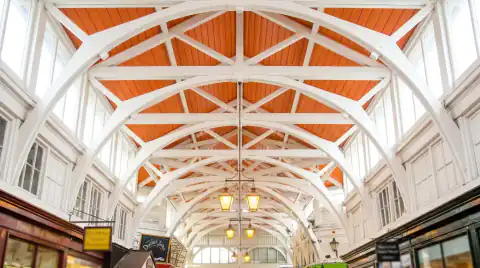
Roofed market with food stalls and cafés. The best cheap lunch in range.
A half-day that works
Emperors' Heads → Sheldonian, including the cupola → History of Science Museum → Weston Library → south through the Bodleian quadrangle and Divinity School → Radcliffe Square → St Mary's tower for the view back.
Good to know
Questions, answered.
01Can you go inside the Sheldonian Theatre?
Yes. Unlike the Radcliffe Camera three minutes away, the Sheldonian admits visitors most days without a booking. It is generally open 10:00–17:00, daily, but hours are arranged around ceremonies and private events — check on the day.
02How much does it cost?
| Ticket | Price | Concession |
|---|---|---|
| The Sheldonian Experience — auditorium, Old Printing Loft, Cupola | £8.25 | £7.00 |
| Cupola Views Visit — loft and cupola only, when the auditorium is closed | £5.25 | £4.45 |
| Sheldonian Guided Tour, 30 minutes | £14.50 | £12.50 |
| Ceremonial Oxford Tour, 60 minutes | £17.50 | — |
Concessions: over-60s, children 9–16, Blue Badge holders, alumni guests, NUS cardholders and groups of 15+.
Free: current University students and staff, alumni with a valid card, children under 8, and essential companions.
03I've seen £3.50 quoted. Is that right?
No. That figure and the "Monday to Saturday, 10:00–16:30, closed Sundays" pattern still circulate widely and are both superseded. The theatre's own current information is daily, 10:00–17:00, with the prices above.
04How many steps is the cupola?
114, up a seventeenth-century staircase that the Sheldonian describes as steep and worn. There is no lift.
The building warns explicitly that anyone with heart conditions or other pre-existing medical conditions, or with mobility difficulties, should consider carefully before climbing.
05Is it wheelchair accessible?
The auditorium is at entrance level. The Cupola and the Old Printing Loft are not wheelchair accessible — the stair is the only route.
Note the trap: on days when the auditorium is closed for a ceremony, only the Cupola Views Visit is sold, and both parts of that ticket are up the stair. Confirm the auditorium is open before travelling, not just the building.
06Why might the auditorium be closed?
Because the University is using it. The Sheldonian is the principal assembly room of the University and the meeting place of Congregation; matriculation, graduation and Encaenia all happen here. Its hours are arranged around what is taking place in the building.
07Who designed it, and when?
Christopher Wren, between 1664 and 1669. It was his first major building — he was Professor of Astronomy at Oxford at the time, in his early thirties, with almost no building experience.
08Who paid for it?
Gilbert Sheldon, Archbishop of Canterbury and former Warden of All Souls, who met the entire cost. It carries his name for that reason.
09Why was it built?
To move the University's ceremonies out of the University Church of St Mary the Virgin. The degree ceremonies and public acts were boisterous, and holding them in a consecrated building had become an embarrassment.
10Are there plays at the Sheldonian?
No. The name refers to the Roman theatre form Wren copied, not to drama. It is a ceremonial hall and a concert venue — the Oxford Philharmonic and others perform here.
11What is the ceiling?
Thirty-two oil-on-canvas panels by Robert Streater, Serjeant Painter to Charles II, painted in Whitehall in 1668–9 and shipped to Oxford by barge. The subject is Truth descending on the Arts and Sciences to expel Ignorance.
It is not a fresco. That is the most common error about the building.
12Why is there a painted curtain on the ceiling?
Because Wren was imitating a Roman open-air theatre and had to put a roof on it. Streater painted the roof as a crimson awning being drawn back by putti, with gilded cords in high relief — so the room appears to be open to the sky.
13Is the cupola original?
No. The octagonal cupola was designed in 1838, and the roof was replaced in 1801. The building's familiar silhouette is substantially nineteenth-century.
14Who are the Emperors' Heads?
Nobody. They do not represent emperors or any identified individuals. They have been called the Sages of Antiquity and the Twelve Caesars, but the name that stuck came from Max Beerbohm's 1911 novel Zuleika Dobson. The proper term is herms.
The current set was carved by Michael Black from Clipsham stone over two years and installed in 1972, reconstructed from David Loggan's seventeenth-century engravings. They are the third set: William Byrd carved the originals in the 1660s, and 1868 replacements decayed too.
15How long do I need?
An hour for the full visit. Thirty minutes for the cupola alone. Ninety minutes if you sit properly under the ceiling, which is the right thing to do.
16When is it quietest?
10:00, at opening. Guided tours run at 11:15 and 14:30 and fill the cupola gallery, which is small. Avoid graduation days and Encaenia, when the building closes to visitors.
17Where is it?
Broad Street, Oxford OX1 3AZ, next to the Clarendon Building and opposite the Weston Library. Five minutes from Carfax, three from Radcliffe Square.
Before you visit
Useful links.
Venue and visitor information
Sources used
| ID | Source | Used for | Retrieved |
|---|---|---|---|
| S01 | Sheldonian Theatre — Visit | The current visitor position, and the correction this upgrade exists to make. Opening 10:00–17:00, Monday to Sunday; guided tours at 11:15 and 14:30; and that hours vary because of ceremonial events. The four tickets: The Sheldonian Experience £8.25 / £7.00, Cupola Views Visit £5.25 / £4.45, Sheldonian Guided Tour 30 min £14.50 / £12.50, Ceremonial Oxford Tour 60 min £17.50. Concessions for over-60s, children 9–16, Blue Badge holders, alumni guests, NUS cardholders and groups of 15+. Free for current students, staff, alumni with valid cards, children under 8 and essential companions. The 114-step climb, the staircase described as steep and worn, the health warning, and that the Cupola and Old Printing Loft are not wheelchair accessible | 2026-08-06 |
| S02 | Sheldonian Theatre — History of the building | Gilbert Sheldon, Archbishop of Canterbury and former Warden of All Souls, met the entire cost; Wren was Professor of Astronomy when commissioned, young and with minimal building experience, working from Roman theatre designs; construction 1664–1669; the roof truss spanning 70 feet without central columns and the credit it won in scientific and architectural circles; Robert Streater's ceiling and its subject, the triumph of the Arts and Sciences over Envy, Rapine and "brutish scoffing Ignorance"; the gilded cords as the awnings of a Roman theatre; and the building's role as principal assembly room, meeting place of Congregation and host of all public ceremonies including Encaenia | 2026-08-06 |
| S03 | Sheldonian Theatre — Timeline | The Emperors' Heads sequence: originals carved by William Byrd in the 1660s; restored 1868, with that generation eroding quickly; Michael Black spending two years carving replacements, installed 1972. Also that the University Press occupied the building and moved to the Clarendon Building in 1713; the 1720–27 restoration with a new Renatus Harris organ; the roof replaced in 1801; the octagonal cupola designed in 1838; ceiling conservation 2004–2008 with the first panel returned July 2008; Wren's original colour scheme reintroduced in 2010; Oxford Preservation Trust recognition 2011–2013; and Upper Gallery seating improved 2018 | 2026-08-06 |
| S04 | Scholarly and reference coverage of the ceiling, including OUPblog — Picturing Printing: The Sheldonian Theatre Painted Ceiling, Art UK and Wikipedia — Robert Streater | That it is oil on THIRTY-TWO CANVAS PANELS, not a fresco; that Streater was Serjeant Painter to King Charles II; that the panels were completed in Whitehall in 1668–9 and shipped to Oxford by barge; the title Truth Descending on the Arts and Sciences to Expel Ignorance from the University; the composition of putti rolling back a crimson awning on lavishly gilded cords in high relief; the fit with a university reasserting itself after the Civil Wars and Interregnum; and that Robert Whitehall published explanatory verses in 1669 | 2026-08-06 |
| S05 | Coverage of the Emperors' Heads, including Oxford University Heritage Network, Wikipedia — Michael Black (sculptor)) and Art UK | That the heads do not represent ancient emperors "nor, indeed, anyone in particular"; that Max Beerbohm named them Emperors in *Zuleika Dobson and the name stuck; that the correct term is herms and the original accounts call them "termains"; that four more were added in front of the old Ashmolean between 1679 and 1683; and that Black used Clipsham stone and David Loggan's engravings* as his template | 2026-08-06 |
| S06 | Historic England list entry 1047350 and list entry 1369353 | Grade I listing of the theatre, and the separate listing of the walling, railings at Sheldonian Theatre and ornamental piers fronting Broad Street — the enclosure carrying the Emperors' Heads. Also the address Broad Street, OX1 3AZ | 2026-08-06 |
| S07 | Above Guide's own repo data | The coordinates carried forward from src/data/oxfordPlaces.js, and the walking relationships to the Radcliffe Camera, Weston Library, History of Science Museum, Divinity School, Clarendon Building and St Mary the Virgin | 2026-08-06 |
Where sources disagree
The prices and hours — RESOLVED, and it is the upgrade's purpose
Two patterns circulate and they are not variants of each other:
- Aggregators and older listings: £3.50 self-guided admission; Monday to Saturday 10:00–16:30, closed Sundays.
- S01, the venue's own current information: daily 10:00–17:00, with four tickets from £5.25 to £17.50.
Used: S01 throughout. The stale figures are named explicitly in the visitor guide and the FAQ so that a reader who meets them elsewhere knows why this guide differs.
Why it matters. The gap is not a small drift. A visitor budgeting £3.50 will be asked for £8.25, and a visitor planning a Sunday on the old information will not come at all.
This is the same failure mode as the Museum of Old Monaco's pre-renovation opening hours: aggregator listings preserved unchanged over an operator's own update, several of them under a current-year copyright notice.
The cupola tour times and what a ticket covers — RECORDED AS CONDITIONAL
S01 gives guided tours at 11:15 and 14:30 and describes the Sheldonian Experience as granting access to auditorium, Old Printing Loft and cupola when no events are scheduled.
Used: stated as conditional, never as fixed. The bundle repeats throughout that the auditorium may be closed and that only the cheaper cupola ticket is sold on those days. Structured data carries the hours with a check-before-travelling caveat rather than as a guarantee.
Who the Emperors are — NOT A CONFLICT, A MYTH
Sources variously call them the Twelve Caesars, the Sages of Antiquity, philosophers and emperors.
S05 is explicit that they represent nobody in particular, and that the "Emperors" name is a novelist's invention that stuck. The bundle states this as the finding rather than picking one of the folk identifications.
A conclusion drawn rather than sourced
That on auditorium-closed days there is nothing step-free to see.
No source states this. It follows from combining two facts that S01 gives separately: that when the auditorium is closed the venue sells only the Cupola Views Visit, and that both components of that ticket — the Old Printing Loft and the Cupola — are up the 114-step stair and are stated to be not wheelchair accessible.
Recorded as a conclusion, and flagged as such, because it is the most consequential thing in the bundle for the readers it affects and it should not be mistaken for a published statement.
Facts deliberately not asserted
| Fact | Where this guide says so |
|---|---|
| Accessible toilet provision | Accessibility, facilities |
| Whether entry from Broad Street is level or ramped, and which door | Accessibility |
| Hearing loop provision | Accessibility |
| The assistance dog policy | Accessibility |
| Large-print or audio interpretation | Accessibility |
| Visitor seating arrangements as distinct from ceremonial seating | Accessibility, facilities |
| Whether a shop or lockers exist | Facilities |
| The current photography policy in detail | Photography |
All are unpublished rather than confirmed absent. A ceremonial venue with frequent short-notice closures is exactly the kind of place where one call in advance saves a wasted journey, and the accessibility chapter says so rather than filling the gaps with assumptions.
Opening hours, prices, programmes and access arrangements can change. Confirm critical details with the venue.
Continue exploring / Oxford
What will you
do next?
Compare the practical essentials first, then open the experiences that earn a place in your plans.
 01Culture & historyBate Collection of Musical InstrumentsExplore experience →
 02Culture & historyBodleian Library guided tourExplore experience →
 03Culture & historyChrist ChurchExplore experience →
 04Culture & historyChrist Church CathedralExplore experience →
 05Culture & historyHistory of Science MuseumExplore experience →
 06Culture & historyOxford CastleExplore experience →
 07Culture & historyOxford University Museum of Natural HistoryExplore experience →
 08Culture & historyPitt Rivers MuseumExplore experience →
 09Culture & historyStephen A. Schwarzman Centre for the HumanitiesExplore experience →
 10Culture & historyThe Ashmolean MuseumExplore experience →
 11Culture & historyThe Radcliffe CameraExplore experience →
 12Culture & historyThe Weston LibraryExplore experience →
 13Culture & historyUniversity Church of St Mary the VirginExplore experience →
 14Food & drinkHead of the RiverExplore experience →
 15Food & drinkLe Manoir aux Quat’SaisonsExplore experience →
 16Food & drinkOxford Covered MarketExplore experience →
 17Food & drinkThe Bear InnExplore experience →
 18Food & drinkThe ChequersExplore experience →
 19Food & drinkThe Eagle and ChildExplore experience →
 20Food & drinkThe King’s ArmsExplore experience →
 21Food & drinkThe Lamb & FlagExplore experience →
 22Food & drinkThe PerchExplore experience →
 23Food & drinkThe Trout InnExplore experience →
 24Food & drinkThe Turf TavernExplore experience →
 25Food & drinkThe White HorseExplore experience →
 26Food & drinkWestgate OxfordExplore experience →
 27Walks & viewsThe Bridge of SighsExplore experience →
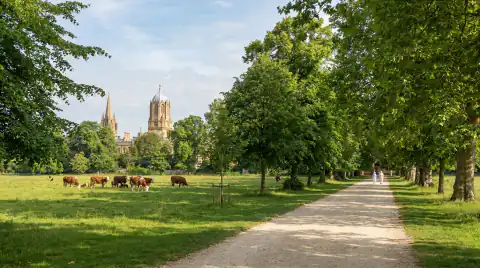 28Parks & meadowsChrist Church MeadowExplore experience →
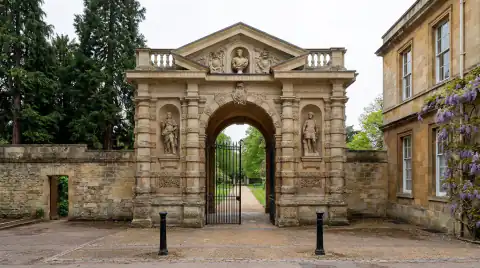 29Parks & meadowsOxford Botanic GardenExplore experience →
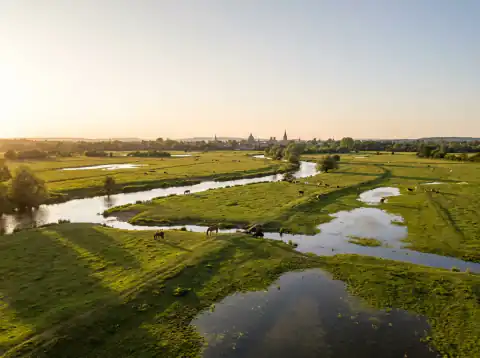 30Parks & meadowsPort MeadowExplore experience →
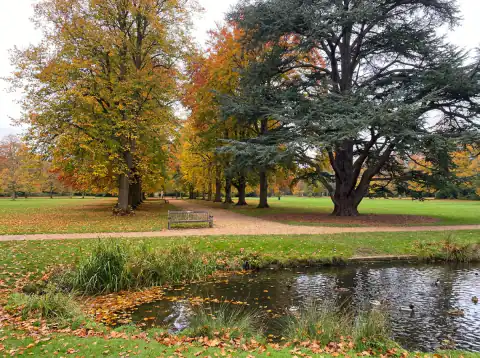 31Parks & meadowsUniversity ParksExplore experience →
 32On the waterPunt the CherwellExplore experience →
 33On the waterSalter's SteamersExplore experience →
 43CollegesAll the collegesEvery Oxford collegeOpen the college guide →Food & drink / a storyThe nine oldest pubsWalk the timeline →
 Plan / Itinerary builderBuild your Oxford dayStart planning →