college / Oxford
In depth
Christ Church
The only foundation in England that is both an Oxford college and a cathedral — a Tudor hall, a Norman priory church and a Wren tower inside one set of walls, with a free working meadow attached.
Story · Visit · Route · Links
Visitor Essentials & Quick Answers
What makes Christ Church different from other Oxford colleges?
Its chapel is also Oxford’s cathedral, so one visit brings together a college hall, a cathedral and a great quadrangle. The meadow adds a different riverside landscape outside. Choose it if you want several sides of Oxford in one place, rather than a smaller, quieter college encounter.
What should I look for beyond the famous dining hall?
Study the unfinished cloister details around Tom Quad, then compare the cathedral’s older stonework with the college buildings. These are clues to a project interrupted by Cardinal Wolsey’s fall and reshaped by Henry VIII. Read it as an unfinished ambition rather than a perfectly planned whole.
Why is there a cathedral inside a college?
The church began as the church of St Frideswide’s priory. When Henry VIII refounded Christ Church in 1546, it became both the college chapel and the cathedral of the Oxford diocese. That double purpose explains why worship and university life still shape a visitor’s route through the site.
Is Christ Church Meadow part of the same experience?
It is a worthwhile companion with a different mood: open meadow, riverside paths and views back towards the college. Make the interior visit your history and architecture stop, then use the meadow to slow down. Walking outside does not substitute for seeing the hall or cathedral; interior admission is a separate arrangement.
Choose your depth
Essentials or more detail?
See visiting essentials, or read more about the history and places nearby.Start here
Understand the place.
The context, character and reasons this experience earns time in your Oxford plans.Why it matters
It is two institutions in one building
Not a college with a grand chapel, and not a cathedral that happens to own a college. The same church is the seat of a bishop and the place undergraduates are matriculated. Everything else on this page follows from that.
The architecture records a failure
Most great buildings show you what someone achieved. Tom Quad shows you what Wolsey did not manage: the cloister that was designed, begun and abandoned, its springing arches left in the wall. Few buildings are this legible about their own interruption.
The cathedral is older than the college by three and a half centuries
The priory church of St Frideswide's dates mostly from the end of the twelfth century. Its spire has stood since about 1230 and is the oldest surviving stone spire in England. The college was built around a building that was already ancient.
It holds art of international rank
The Picture Gallery's Old Master drawings — Leonardo, Michelangelo, Dürer, Raphael, Rubens — are among the most important such holdings in private hands in the country. They are currently not on view. The gallery is closed for renovation with no published reopening date, and any advice that sends a visitor there is out of date.
What visitors should notice
The unfinished cloister in Tom Quad. Look at the base of the walls facing the quad: pillars and arch springings that carry nothing. The terrace was lowered in the 1870s specifically to reveal them.
The vaulting over the Hall stairs. Fan vaulting that looks medieval and is not — it was built in 1638, in a deliberately archaic style, three hundred years after the technique's own period. The staircase beneath it dates from 1805.
The chancel ceiling in the cathedral. A stone vault of about 1400, and the single most rewarding thing to stand still under on the whole site.
The Becket window. In the Lucy Chapel, dating from 1320 — a surviving image of Thomas Becket, which is rarer than it sounds given how thoroughly such images were destroyed after 1538.
Nine o'clock at five past nine. Great Tom strikes 101 times at 21:05, which is 21:00 Oxford time. Christ Church went on keeping local time — five minutes behind Greenwich — after the country standardised on GMT in 1852, and has never stopped.
The cattle. A herd of pedigree Old English Longhorns grazes the meadow's floodplain fields under a low-intensity regime with no chemicals or fertiliser. Five minutes from the busiest street in Oxford.
Who will enjoy it
Anyone who wants a single site that covers eight hundred years without repeating itself. Anyone interested in the Reformation as something that happened to real buildings rather than in the abstract. Cathedral and choral music enthusiasts — this is a functioning foundation with a daily sung tradition, not a museum. Gardeners and walkers, for whom the meadow is free and open every day of the year but one. And people arriving with children, provided they treat the meadow as the main event and the college as the short part.
Who may find it difficult
Anyone on a tight budget. This is the most expensive college visit in Oxford by a clear margin — £22.95 to £26.95 for an adult on the day, depending on season and day of the week. Booking ahead saves £2 a ticket. Several other colleges charge nothing.
Anyone arriving at midday. The Great Hall closes from 12:00 to 14:00 Monday to Friday for student lunch, and does not open at all until 14:00 on Sundays. In Michaelmas Term it also shuts on Saturday mornings. The Cathedral closes at 16:45 on Saturdays for choir practice. It is entirely possible to buy a full-price ticket and see neither.
Anyone with a mobility need who follows the signs. The tourist entrance at Meadow Gate has two sets of steps and then seven more into the college, unramped. Tom Gate is the accessible entrance — level, with a ramp, next to the Blue Badge bays on St Aldate's. There is lift access to the Hall and a ramped door into the Cathedral once you are inside.
Anyone expecting to wander. The route is fixed, the multimedia guide is compulsory rather than optional, the centre of Tom Quad is off limits, and the Deanery and Canons' Gardens are private.
Anyone coming for the Picture Gallery. Closed, no reopening date.
Visitor verdict
Worth it, on two conditions: come outside the Hall's lunchtime closure, and give the meadow as much time as the college. Judged purely as a college visit at the price, it is a hard sell against Magdalen or New College. Judged as a cathedral, a Tudor hall, a Wren tower and 400 metres of walk down to the Isis, it is the fullest single site in Oxford.
The full story
How it came to matter.
Before the college: St Frideswide's
The oldest thing at Christ Church is not the college. It is the church at its centre, built at the end of the twelfth century as the priory church of the Augustinian canons of St Frideswide's — a house dedicated to Oxford's own saint, already ancient when Wolsey arrived.
Parts of it are older still. The Chapter House interior was built between about 1220 and 1240, over an earlier building of which the doorway survives and is the most obvious thing to look for. The spire went up around 1230 and is the oldest surviving stone spire in England. The cloister was rebuilt around 1500, a quarter of a century before anyone thought of a college here.
This matters because it inverts the usual order. At most Oxford colleges the chapel was built for the college. Here the college was built around a church that had stood for three hundred years, and the church has outlasted two foundations since.
Wolsey's college, 1524–1530
Cardinal Thomas Wolsey obtained papal authority to dissolve the priory in April 1524 and royal approval the following month. The house was suppressed that year. On 15 July 1525, Bishop John Longland laid the foundation stone of Cardinal College.
The scale was deliberate. Wolsey funded it by appropriating the revenues of around twenty monasteries, and the plan was for the largest and richest college in Oxford, straddling the line of the old south city wall and taking in the priory site. The master masons John Lubbins and Henry Redman directed the work from 1525, with Humphrey Coke as chief carpenter.
Building accelerated sharply in 1529 — the Victoria County History describes Wolsey sparing no effort, foreseeing his doom. He was right. By the time he fell, the Hall and kitchens were complete, along with the south side of the great quadrangle and parts of the west and east ranges. The cloister that was to run round the quad was begun and never finished.
On the date of the fall, the sources disagree and this guide does not resolve it. Historic England gives 1529. Christ Church's own account gives 1530. The Victoria County History places it in November 1530. The safe form is "around 1529–30".
What followed was, in the VCH's phrase, the darkest period of the college's history. Henry VIII initially considered pulling the unfinished structure down.
Two refoundations, 1532 and 1546
He did not. On 18 July 1532 Henry refounded the place as King Henry VIII's College — a cathedral chapter, with no explicit provision for education at all. John Oliver served as Dean until surrendering the college in 1545.
The arrangement that survives came the following year. Henry had already made the church of Osney Abbey the cathedral of his new Oxford diocese. Osney was dissolved. Rather than fund a cathedral and a college separately, he united the two: on 4 November 1546 the dissolved Osney cathedral was joined to King Henry VIII's College to create Ecclesia Christi Cathedralis Oxon — Christ Church.
The college's own account is blunt about the motive. Henry, releasing funds in 1546, "decided to save expense by turning its chapel to a new purpose – as a cathedral."
An accounting decision made in 1546 is the reason that, uniquely in England, the same building is a college chapel and the seat of a bishop, and the reason a visitor's route today has to be planned around choir practice.
Finishing what Wolsey started, 1638–1682
For over a century the great quadrangle stood incomplete. The work of finishing it belongs mostly to two deans.
Under Samuel Fell, Dean from 1638 to 1648, the fan vaulting over the Hall stairway was installed in 1638 by "Smith, an artificer of London". It is a deliberate anachronism — medieval in style, executed with seventeenth-century technique, three centuries after the manner it imitates. The staircase beneath it is later still, rebuilt by James Wyatt in 1805.
Then the Civil War. Oxford became the royalist capital, and earthworks were thrown up in the 1640s along the line of what is now the Broad Walk.
Under John Fell, Dean from 1660 to 1686, the quadrangle was finally completed. The north range went up, and in 1670 the mason William Bird built the central pond and its fountain — originally a globe and serpent, and in practical terms a reservoir of water in case of fire.
In 1681 Fell commissioned Christopher Wren to crown the St Aldate's gatehouse. Plans were approved in late spring, Christopher Kempster was appointed builder with the Robinson brothers as masons, and the work was complete by Michaelmas 1682. Great Tom rang from the new tower for the first time on 29 May 1684.
Georgian expansion, 1705–1809
The eighteenth century gave Christ Church its classical face. Dean Henry Aldrich built Peckwater Quadrangle between 1705 and 1714, with William Townesend as mason. The library filling its south side went up over a much longer period, from 1716 to 1761, to designs by Dr George Clarke. James Wyatt added Canterbury Quad in 1773, rebuilt the Hall staircase in 1805, and carried out repairs after a fire in 1809.
The Victorian century
Two names dominate. Sir George Gilbert Scott remodelled the cathedral interior, which is why a twelfth-century building reads as it does today.
And Henry Liddell, Dean from 1855, reshaped the grounds and — inadvertently — the college's global reputation. He laid out the New Walk through the meadow in 1863; it was opened in 1872 by Princess Louise. In the 1870s he had the terrace in Tom Quad lowered, which is the reason Wolsey's abandoned cloister shafts are visible at all. T. N. Deane built the Venetian Gothic Meadow Buildings between 1862 and 1866.
Charles Dodgson came to Christ Church in 1851 and stayed forty-seven years, lecturing in mathematics. In the 1860s and 1870s, writing as Lewis Carroll, he produced the Alice books, with the Dean's daughter Alice Liddell as their inspiration. A window in the Great Hall commemorates them.
The twentieth century onward
The War Memorial Garden was laid out in the 1920s. In 1926 the Masters' Garden became the first corporate college garden in Oxford. The Mercury figure in the Tom Quad pond — a lead copy of Giovanni da Bologna's statue — was given in 1928 and set on a pedestal by Sir Edwin Lutyens in 1935.
In 1968 Powell and Moya's Picture Gallery opened, reached through Canterbury Quad, to house the college's Old Master collection. It is currently closed for renovation and extension.
The cathedral is still acquiring glass: a St Francis window by Patrick Reyntiens in 2024, and Thomas Denny's Return of the Prodigal Son in 2025. Nine hundred years after the priory church went up, the building is not finished.
Look closer
Highlights and hidden details.
The objects, spaces and small observations that turn a visit into a memorable one.Tom Quad
The largest quadrangle in Oxford, 264 feet by 261, and the clearest surviving record of an unfinished ambition. Wolsey meant it to be cloistered on all sides; the pillars and arch springings that would have carried that cloister are still there in the wall, holding up nothing. Dean Liddell had the terrace lowered in the 1870s precisely so they could be seen.
At the centre is a pond built in 1670 by the mason William Bird — practically, a reservoir against fire. The figure of Mercury standing in it is a lead copy of Giovanni da Bologna's statue, given in 1928, on a pedestal designed by Sir Edwin Lutyens in 1935.
Visitors see the quad from the upper walkway. The centre is not open.
Tom Tower
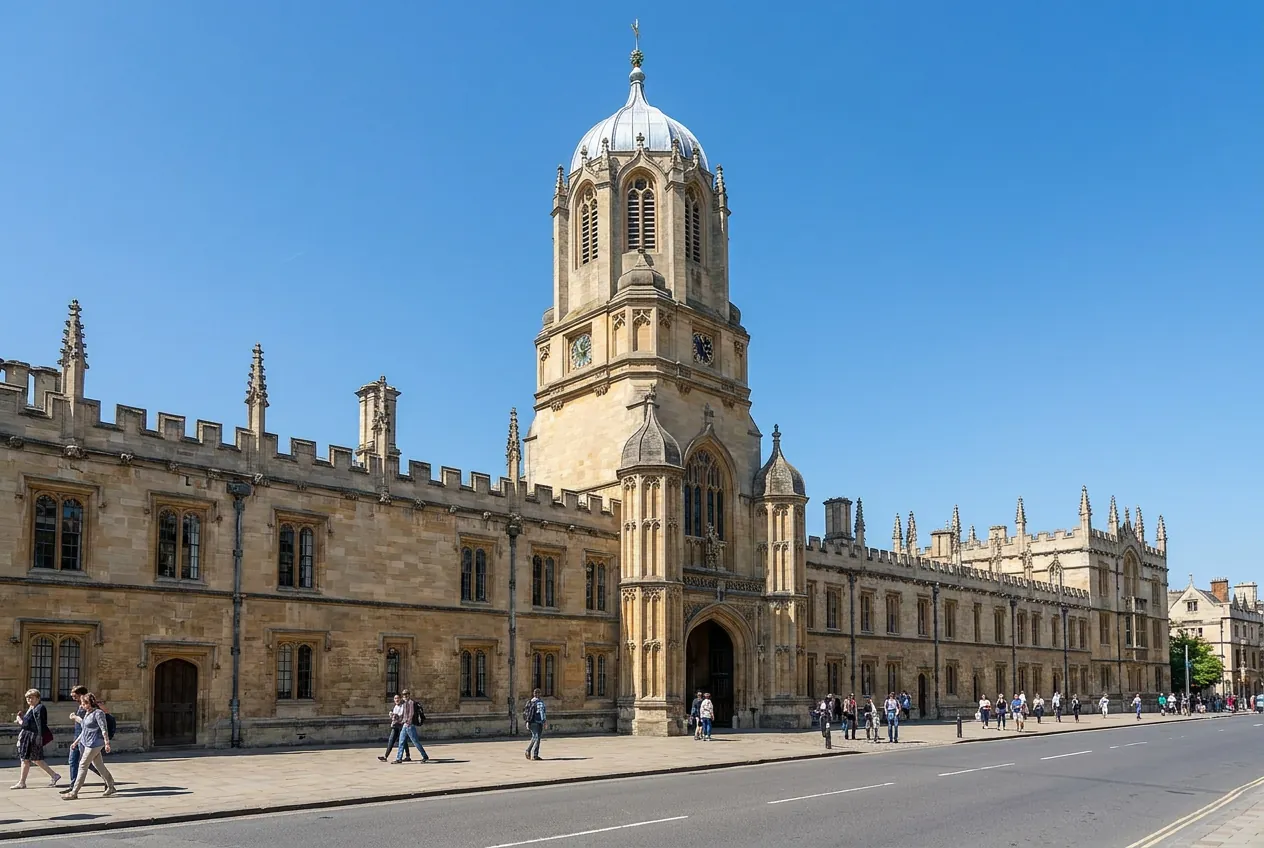
Christopher Wren's tower over the St Aldate's gatehouse, and the building most people picture when they picture Christ Church. Plans were approved in late spring 1681, Christopher Kempster was appointed builder, and the work was finished by Michaelmas 1682. Great Tom rang from it for the first time on 29 May 1684.
The bell sounds 101 strokes at 21:05 — which is 21:00 Oxford time. When Britain standardised on Greenwich Mean Time in 1852, Christ Church carried on keeping local time, five minutes behind, and has never stopped. If you are anywhere near St Aldate's at five past nine, stand still and count.
The Cathedral
The oldest building on the site and one of the smallest cathedrals in England. It was built at the end of the twelfth century as the priory church of St Frideswide's and became a cathedral by an accounting decision in 1546 — it remains the seat of the Diocese of Oxford and the college chapel simultaneously, which no other building in England manages.
Look up first: the stone vaulted chancel ceiling of about 1400 is the finest thing in the building and one of the finest of its type in any English cathedral.
Then the glass, which spans seven centuries. The Becket window in the Lucy Chapel dates from 1320 and is a rare surviving image of Thomas Becket — rare because such images were systematically destroyed after 1538. Abraham van Linge's painted glass of the 1630s includes the Jonah window and the Bishop King window. Burne-Jones designed five windows here, of which the St Frideswide window in the Latin Chapel is the one to find. And the building is still commissioning: Patrick Reyntiens's St Francis window arrived in 2024, Thomas Denny's Return of the Prodigal Son in 2025.
The interior was remodelled in the nineteenth century by Sir George Gilbert Scott.
The Great Hall
Completed with the kitchens in the 1520s and in near-continuous use since — until the 1870s it was the largest hall in Oxford, and it is the clearest indication of the scale Cardinal College was aiming at before Wolsey fell.
Portraits run the length of the walls, from W. H. Auden to Professor Judith Pallot, with Henry VIII at the far end above High Table. In the glass, look for the window commemorating Charles Dodgson and Alice Liddell, the Dean's daughter.
It closes 12:00–14:00 on weekdays, and all morning on Saturdays in Michaelmas Term, and does not open until 14:00 on Sundays. Plan around it.
The Hall Staircase
The most photographed staircase in Oxford, and two things at once. The fan vaulting overhead was installed in 1638 under Dean Samuel Fell by "Smith, an artificer of London" — medieval in style, seventeenth-century in technique, and three hundred years later than it looks. The staircase itself is later again, rebuilt by James Wyatt in 1805.
It stands in Bodley Tower, named for the architect G. F. Bodley — not Thomas Bodley of the Bodleian, who has nothing to do with it.
Christ Church says the staircase "may be familiar, having been used in a number of film and television projects including Lewis and Harry Potter." That claim covers the staircase. The college makes no equivalent claim for the Great Hall.
The Cloister
The monastic cloister of the old priory, rebuilt around 1500 — a generation before the college existed. From the cloister garden you get the best view on the site of the cathedral spire, which has stood since about 1230 and is the oldest surviving stone spire in England.
Off the cloister is the Chapter House, among the oldest parts of the whole foundation. The interior was built between 1220 and 1240 over an older structure, of which the doorway is the obvious survival — worth finding, because it is probably the oldest thing you will touch here.
Christ Church Meadow
Free, open in daylight hours every day of the year except 25 December, and the part of Christ Church most visitors skip.
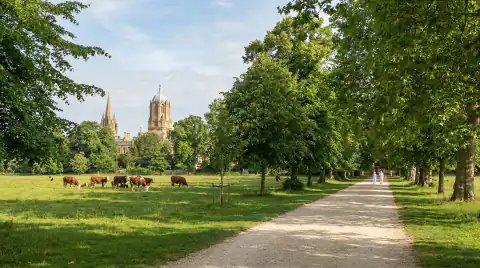
The Broad Walk runs 400 metres east to west, lined with plane trees planted in 1975 — alternating oriental and London planes, replacing elms lost to disease. The New Walk, laid out by Dean Liddell in 1863 and opened by Princess Louise in 1872, runs 400 metres south to the Thames. The circuit comes back along the Cherwell and returns under the city wall by Deadman's Walk.
A herd of pedigree Old English Longhorn cattle grazes two floodplain fields, managed by low-intensity grazing with no chemicals or fertiliser. Five minutes from the busiest street in the city.
The Picture Gallery — currently closed
Powell and Moya's 1968 building, reached through Canterbury Quad, holds one of the most important collections of Old Master drawings in private hands anywhere in Britain: Leonardo, Michelangelo, Dürer, Raphael, Rubens. The paintings include Filippino Lippi, Tintoretto, Veronese, Annibale Carracci, Salvator Rosa, van Dyck, Frans Hals and Hugo van der Goes.
It is closed for renovation and extension of the Grade II listed building, with no reopening date published. It is listed here because it is one of the strongest reasons to come to Christ Church and because visitors should know what they are currently not able to see — not as a recommendation.
Details worth slowing down for.
The cloister that was never built
Stand in Tom Quad and look at the bottom of the walls rather than the top. The pillars and arch springings set into them were meant to carry a cloister running the whole way round. Wolsey fell before it was built, and they have supported nothing for five hundred years.
You can only see them because Dean Liddell had the terrace lowered in the 1870s. Before that they were buried.
Nine o'clock, five minutes late
Great Tom strikes 101 times at 21:05. It is not a fault and it is not eccentricity for its own sake: 21:05 GMT is 21:00 Oxford time, and Christ Church never adopted Greenwich when the country did in 1852. The college has been running five minutes behind Britain for over 170 years.
The vaulting that lies about its age
The fan vault over the Hall staircase is the most convincingly medieval thing at Christ Church and it was built in 1638 — a Caroline architect deliberately working in a style three centuries out of date, under Dean Samuel Fell. The staircase underneath it is younger still, rebuilt in 1805.
Two objects, two hundred years apart, in one photograph.
A surviving Becket
The Becket window in the Lucy Chapel dates from 1320. Images of Thomas Becket were targeted for destruction after 1538 — Henry VIII had a specific interest in erasing a saint famous for defying a king — which is why so few medieval ones survive anywhere in England. This one did.
The pond is a fire precaution
The ornamental pond at the centre of Tom Quad, built by William Bird in 1670, was a reservoir of water in case of fire. Mercury only arrived in 1928, and Lutyens designed the pedestal in 1935. The decorative part is the most recent part.
The wrong Bodley
The Hall staircase stands in Bodley Tower, named after G. F. Bodley, the Victorian architect. Not Sir Thomas Bodley, who founded the Bodleian Library and has no connection to it. The names sit three hundred yards apart in the same city and are routinely confused.
Cattle, five minutes from Carfax
A herd of pedigree Old English Longhorns grazes two floodplain fields in the meadow, under a low-intensity regime with no chemicals and no fertiliser. It is a working agricultural landscape inside a city centre, kept that way deliberately, and it is free to walk through.
Planted in 1975, not 1775
The plane trees along the Broad Walk look like a piece of eighteenth-century landscaping and are nothing of the kind. They were planted in 1975 — alternating oriental and London planes — to replace the elms that Dutch elm disease killed. The avenue is younger than most of the people walking down it.
Deadman's Walk
The meadow circuit returns beneath the old city wall along Deadman's Walk. Worth knowing the name before you get there, and worth noticing that the wall on your left is the same defensive line Wolsey's college was built across.
A church that is still being finished
The cathedral acquired a Patrick Reyntiens window in 2024 and a Thomas Denny in
- Nine hundred years after the priory church went up and nearly five hundred after it became a cathedral by administrative convenience, the building is still commissioning glass.
Make it work
Plan the visit properly.
Current practical detail, kept separate from the story so it is easy to scan when you need it.The one thing to get right
Christ Church is a working college and a working cathedral, and both of its headline rooms close during visiting hours as a matter of routine. Getting the timing wrong is the difference between a good visit and paying £25 to see a courtyard.
The Great Hall closes 12:00–14:00, Monday to Friday, for student lunch. In Michaelmas Term it also closes on Saturday mornings, 10:30–14:00. On Sundays it does not open until 14:00.
The Cathedral closes at 16:45 on Saturdays for choir practice, with last entry at 16:15 in the summer and Christmas vacations and 16:30 in Michaelmas.
Arrive between 10:00 and 11:30, or after 14:00. That is the whole trick.
To the college's credit, time slots affected by a full closure of the Hall or Cathedral are labelled as such on the booking system and priced lower — so if a cheap slot appears, read what it says before taking it.
Opening hours
Hours are published by academic season rather than by month, and every season gives an opening time and an exit time. You must be out by 17:00; you are not admitted until then.
| Season 2026 | Mon–Sat | Sunday |
|---|---|---|
| Summer Vacation (28 Jun – 3 Oct) | from 10:00, exit by 17:00 | from 13:30, exit by 17:00 |
| Michaelmas Term (4 Oct – 12 Dec) | from 10:00, exit by 17:00 | from 14:00, exit by 17:00 |
| Christmas Vacation (13 – 31 Dec) | from 10:00, exit by 17:00 | from 14:00, exit by 17:00 |
Closed all day 25 December, and from midday on 24 December. Individual dated closures are published on the college's known-closures page and are worth checking in the week of your visit — they are frequent and they are not seasonal.
Tickets
Admission includes a multimedia guide, which is required rather than offered — you cannot visit without one.
Prices vary by season and by whether you come on a weekday or at the weekend. Booking in advance saves £2 per ticket. These are the on-the-day prices:
| Season 2026 | Adult, weekday / weekend | Senior 65+ & student | Child 5–17 |
|---|---|---|---|
| 20 Apr – 24 Jun | £22.95 / £24.95 | £20.50 / £22.50 | £17.50 / £19.50 |
| 25 Jun – 1 Sep | £21.83 / £23.58 | £19.69 / £21.44 | £17.06 / £18.81 |
| 2 Sep – 3 Oct | £24.95 / £26.95 | £22.50 / £24.50 | £19.50 / £21.50 |
| 4 Oct – 12 Dec | £22.95 / £24.95 | £20.50 / £22.50 | £17.50 / £19.50 |
| 13 – 31 Dec | £24.95 / £26.95 | £22.50 / £24.50 | £19.50 / £21.50 |
Under-5s go free with a paying adult, collected on the day at the Visitor Centre; the multimedia guide is not included for them.
Carers: one free carer ticket per disabled visitor, requested at the till. Proof of entitlement is required — a DLA or PIP letter, a doctor's letter, a Blue Badge, a Freedom Pass, a DID card or an Access card. A discounted multimedia guide is available to carers.
Free entry applies to Oxford University cardholders (and one personal guest per day, entering via Meadow Gate), University alumni cardholders, Oxford University Press cardholders, and Trinity College Cambridge cardholders. There is an Oxford Residents' Card for OX1–OX4 postcodes, and a Parishioner Pass for Church of England members in the Diocese of Oxford entering at Tom Gate for private worship.
Groups of 12 or more must book through the Groups Co-ordinator.
Booking
Tickets are released weekly, each Friday at about 10:00, for the following week. That release pattern is worth knowing — it is not a rolling window, and popular slots in high season go within it.
Booking is advised rather than mandatory, and walk-up tickets are available at the Visitor Centre. Tickets are non-refundable; account holders can reschedule free online up to two hours before, and everyone else pays £2 per ticket to change.
Which gate
If you have any mobility need, enter at Tom Gate. It has level access and a ramp to the paved paths around Tom Quad, and it sits beside the Blue Badge bays on St Aldate's.
The main tourist entrance is Meadow Gate, and it is the harder route: a level paved path through the War Memorial Garden, then two sets of steps — one with an adjacent stone ramp — up to the Broad Walk, and then seven more steps into the college itself, which are not ramped.
Signage points visitors to Meadow Gate. For a wheelchair user or anyone with difficulty on steps, that is the wrong way in.
What you see, and what you don't
The standard route runs: Meadow Building and Meadow Quad → the Hall Staircase → the Great Hall → Tom Quad → the Cloister → the Cathedral.
Not included: the centre of Tom Quad, which is viewed from the upper walkway only; the Deanery and Canons' Gardens, which are private; and the Picture Gallery, which is reached separately through Canterbury Quad and is closed for renovation with no published reopening date.
Allow an hour to ninety minutes for the college. Allow at least as long again if you intend to walk the meadow, which most people should.
The meadow is a separate visit
Christ Church Meadow is free, and open during daylight hours every day of the year except 25 December. It is not on the college's hours and does not need a ticket.
This is the single most cost-effective thing at Christ Church and the part most often skipped. If the ticket price is a barrier, the meadow costs nothing, takes an hour, and includes the best view of the cathedral spire.
House rules
- Bags: nothing larger than 40 × 30 × 20 cm. No luggage, and there is no left-luggage facility — a genuine problem if you have come from the station.
- Not permitted: bicycles, scooters, skateboards, picnics indoors, and dogs other than assistance dogs.
- Photography: fine for personal, non-commercial use, without tripods. Wedding, engagement, portrait and commercial photography are prohibited.
Visit your way
Access and family planning.
Enter at Tom Gate, not Meadow Gate
This is the most useful sentence on the page, and it runs against the signage.
Tom Gate — the St Aldate's gatehouse under Tom Tower — has level access and a ramp onto the paved paths around Tom Quad. It is immediately beside the Blue Badge bays on St Aldate's.
Meadow Gate is the main tourist entrance and the harder route. A level paved path runs through the War Memorial Garden, then there are two sets of steps — one with an adjacent stone ramp — up to the Broad Walk, and then seven more steps into the college itself, which are not ramped.
Visitors are directed to Meadow Gate by default. If you use a wheelchair, or find steps difficult, go to Tom Gate instead and say so on arrival.
Inside the college
Great Hall — lift access, suitable for most unmotorised wheelchairs.
Cathedral — wheelchair access through the ramped door from Tom Quad.
Surfaces vary considerably: flat paving in places, then fine gravel, cobbles and worn stone. The cobbles are the main difficulty for wheelchairs and for anyone unsteady.
Seating is available in the Cathedral, the Cloisters and the Ante-Hall. There is no seating on some stretches between them.
Toilets — accessible toilets on the main site and at the Visitor Centre.
Blue Badge parking
| Location | Spaces | Note |
|---|---|---|
| St Aldate's | 3 | Adjacent to Tom Gate, the accessible entrance |
| Pembroke Square | 2 | |
| Oriel Square | 4 | Cobbles beyond this point |
Three spaces on St Aldate's is not many for the most-visited college in the city. Arrive early or plan an alternative.
Deaf and hard of hearing
The multimedia guide — which is required in order to visit, not optional — includes a British Sign Language version with English captions. This is better provision than most Oxford colleges make and is worth knowing before you arrive.
Carers
One free carer ticket per disabled visitor, requested at the till rather than booked online. Proof of entitlement is required, and the college accepts a DLA or PIP letter, a doctor's letter, a Blue Badge, a Freedom Pass, a DID card or an Access card. A discounted multimedia guide is available to carers.
Christ Church Meadow
The meadow is free and open in daylight hours all year except 25 December. Surfaces are gravel and grass paths across a working floodplain, so conditions vary with the weather far more than inside the college — the Broad Walk and New Walk are the firmest routes.
For anyone who finds the college route difficult or expensive, the meadow gives you the cathedral spire, the longhorn herd and 400 metres of level walk for nothing.
What is not accessible
The centre of Tom Quad is not open to any visitor — it is viewed from the upper walkway.
The Deanery and Canons' Gardens are private.
The Picture Gallery is closed entirely for renovation, with no reopening date.
The honest shape of a family visit
Christ Church is a fixed route through historic rooms with a compulsory audio guide, which is not a natural fit for young children. The meadow, thirty seconds away, is free, open, unfenced from the route and full of cattle.
Treat the meadow as the main event and the college as the short part. A family that does the college first, quickly, and then spends an hour outside will have a better day than one that tries to make the interiors last.
Ages and what works
Under 5s go free with a paying adult, collected on the day at the Visitor Centre. The multimedia guide is not included for them. Realistically the college interiors hold this age for about twenty minutes; the meadow holds them indefinitely.
5 to 11 is the age the Great Hall lands best — it is genuinely enormous, the portraits are strange, and Henry VIII glowering over High Table needs no explanation. The Alice connection is the hook: Charles Dodgson lectured here for forty-seven years and wrote the Alice books with the Dean's daughter as their inspiration, and there is a window in the Hall commemorating them. Find it before you go in so you can send them looking.
12 and over get the most out of it, particularly if someone has explained beforehand that Wolsey never finished the place. The unbuilt cloister in Tom Quad is a good puzzle to set: why do those pillars hold nothing up?
Things to send children looking for
- The pillars in Tom Quad that support nothing — the cloister that was never built
- The Alice window in the Great Hall
- The cattle in the meadow, which are a rare breed and genuinely working animals
- The fan vaulting over the Hall stairs, which pretends to be three hundred years older than it is
- The cathedral spire from the cloister garden — the oldest stone spire in England
If you are anywhere near St Aldate's at 21:05, Great Tom strikes 101 times. It is worth staying up for once, and the reason it is five minutes late is a good story.
Practicalities that catch families out
The Great Hall closes 12:00–14:00 on weekdays. With children this matters more than it does for adults, because the Hall is the room they will actually remember. Come in the morning or after two.
No picnics indoors. The meadow is the place for that, and there is plenty of it.
Bags are limited to 40 × 30 × 20 cm and there is no left-luggage. A large changing bag may be a problem. Plan for it before you arrive rather than at the gate.
Prams and pushchairs — the route includes steps if you enter at Meadow Gate. Enter at Tom Gate instead, which is level with a ramp. See 07-accessibility.md.
No dogs other than assistance dogs inside the college. The meadow is a different matter and is a popular dog walk.
Photography is fine for personal use without a tripod.
Cost, honestly
At £17.06–£21.50 per child aged 5–17 on top of adult tickets, a family of four is looking at £70–£95. That is the most expensive college visit in Oxford by a considerable margin.
If the cost is a barrier, the meadow is free, open every day of the year except 25 December, and includes the best view of the spire. There is no ticket, no gate and no time limit. A family can have a genuinely good hour at Christ Church for nothing, and it is worth saying so plainly rather than steering everyone through the till.
Where to eat
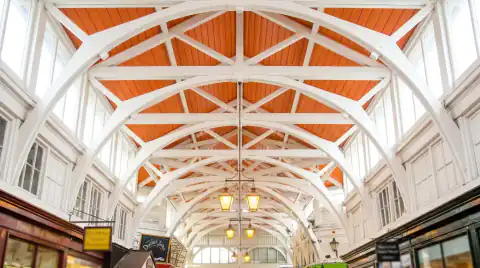
Not inside — picnics are not permitted in the college. The meadow is the obvious spot in good weather. Otherwise the Covered Market is six minutes north and is the independent alternative to the chains at Westgate.
Self-guided walk
Explore beyond the venue.
A practical, step-by-step route connecting this experience with more of Oxford.Before you start
Enter at Tom Gate if steps are a problem — see 07-accessibility.md. Otherwise you will be sent to Meadow Gate.
Do not start between 12:00 and 14:00 on a weekday: the Great Hall is closed for student lunch and it is the second stop.
1 — Meadow Building and Meadow Quad
Venetian Gothic by T. N. Deane, 1862–66. Worth two minutes rather than ten. Note it as the Victorian layer before you meet the Tudor and the Norman ones — Christ Church is easiest to read if you notice you are going backwards in time as you walk.
2 — The Hall Staircase
Look up before you climb. The fan vaulting was installed in 1638, deliberately medieval in style and three centuries later than it appears; the staircase under your feet was rebuilt by James Wyatt in 1805.
You are in Bodley Tower, named for the Victorian architect G. F. Bodley — not Thomas Bodley of the Bodleian.
This is the staircase Christ Church says has been filmed, including for Lewis and Harry Potter.
3 — The Great Hall
Completed with the kitchens in the 1520s and the largest hall in Oxford until the 1870s. Henry VIII hangs at the far end above High Table; the portraits run from W. H. Auden to Professor Judith Pallot.
Find the Alice window — Charles Dodgson lectured here for forty-seven years from 1851, and Alice Liddell was the Dean's daughter.
What you are standing in is Wolsey's, not Henry's. It was finished before the fall.
4 — Tom Quad
The largest quadrangle in Oxford, 264 by 261 feet.
Look at the base of the walls, not the buildings. The pillars and arch springings set into them were built to carry a cloister all the way round and have held up nothing since Wolsey fell. They are only visible because Dean Liddell had the terrace lowered in the 1870s.
The pond at the centre is William Bird's, 1670, built as a fire-water reservoir. Mercury is a 1928 copy after Giovanni da Bologna, on a 1935 Lutyens pedestal. You are seeing all of it from the upper walkway — the centre is not open.
Above the gatehouse to your right is Wren's Tom Tower, approved 1681 and finished by Michaelmas 1682.
5 — The Cloister
Rebuilt around 1500, a generation before the college existed — you have now walked back past the Tudor foundation into the priory.
Stand in the cloister garden and look up at the spire. It has been there since about 1230 and is the oldest surviving stone spire in England. This is the best composition on the site.
Off the cloister, the Chapter House: interior of 1220–40, built over something older, of which the doorway survives. Probably the oldest thing you will touch here.
6 — The Cathedral
The end of the route and the beginning of the site. Built at the end of the twelfth century as the priory church of St Frideswide's; a cathedral since 1546 because Henry VIII did not want to pay for two buildings.
In order:
- The chancel ceiling, about 1400 — stand under it before looking at anything else
- The Becket window, Lucy Chapel, 1320 — a rare survival, since images of Becket were destroyed after 1538
- Van Linge's painted glass, 1630s — the Jonah window and the Bishop King window
- The St Frideswide window by Burne-Jones, Latin Chapel, one of five he designed here
- The new glass — Patrick Reyntiens, 2024; Thomas Denny, 2025
The nineteenth-century interior is Sir George Gilbert Scott's.
7 — The meadow circuit, free
Out of the college and into the meadow, which needs no ticket and closes only at dusk.
Broad Walk — 400 metres east to west, planes planted in 1975 replacing elms. New Walk — 400 metres south to the Thames, laid out by Dean Liddell in 1863 and opened by Princess Louise in 1872. Return along the Cherwell, then under the old city wall by Deadman's Walk.
The longhorn herd grazes the two floodplain fields. The wall on your left as you come back is the line Wolsey's college was built across.
If you only have thirty minutes
The Hall staircase, the Great Hall, Tom Quad, the Cathedral. Skip Meadow Building and do not attempt the meadow — better to leave it out than to rush it.
Make a record
Photograph it thoughtfully.
The rules first
Photography is permitted for personal, non-commercial use, without tripods.
Prohibited: wedding, engagement, portrait and commercial photography. This is enforced, and it catches people out — a posed portrait session in Tom Quad is not allowed even if you are only using a phone.
No tripods means no long exposures inside the cathedral, which is the single biggest constraint on the day. Plan for high ISO and a fast lens rather than a support.
Where the light is
Tom Quad, morning. East light rakes across the south range — the Wolsey range — and picks out the unbuilt cloister arches at the base of the walls, which are flat and invisible in overhead light. Mid-morning is the window.
Tom Tower, late afternoon from St Aldate's. The tower faces west onto the street, so it takes low afternoon sun on its full height. This is the classic exterior and it does not require a ticket.
The cathedral chancel, any time. The vaulted ceiling of about 1400 is the subject. It is dim and you cannot use a tripod, so brace against a pew end and shoot wide.
The stained glass, mid-morning to early afternoon. The Becket window in the Lucy Chapel (1320), van Linge's 1630s glass, and the Burne-Jones St Frideswide window all need direct light behind them. Overcast days flatten them badly.
The Hall staircase, whenever it is quiet. The fan vault is the shot. It is also the busiest bottleneck on the route, so early entry at 10:00 is worth more here than anywhere else.
The meadow, first and last hour of daylight. The Broad Walk runs east–west, which means it aligns with both sunrise and sunset. The New Walk runs south to the Thames and gives you the spire over open ground.
The shot most people miss
From the cloister garden, the cathedral spire — the oldest surviving stone spire in England, standing since about 1230 — rises directly above the cloister roofline. It is the best composition on the site and most visitors pass through the cloister looking at the doorways instead.
Practical constraints
The Great Hall closes 12:00–14:00 on weekdays. If the Hall is on your list, the morning session is effectively 10:00–12:00.
The Cathedral closes at 16:45 on Saturdays for choir practice, with last entry 16:15 or 16:30 depending on season.
The centre of Tom Quad is off limits. Mercury and the 1670 pond can only be shot from the upper walkway, which fixes your angle. There is no way to get low on the fountain.
Bags are limited to 40 × 30 × 20 cm. A full camera backpack will not pass. Bring a single body and one or two lenses in something small.
The Picture Gallery is closed, so the Old Master collection is not photographable at present under any conditions.
Season
Spring and early summer give you the meadow at its best and long light on both ends of the day. Autumn puts colour along the Broad Walk. Winter gives the lowest, most raking light on Tom Tower and the emptiest quads, at the cost of a 17:00 exit that falls after dark — which, if you want the tower lit against a dusk sky from St Aldate's, is an advantage rather than a problem, since that shot is from the street and needs no ticket.
Around here
Make more of the area.
Christ Church Meadow — 1 minute, free
Not really "nearby" — it is Christ Church, on a separate ticket of none. Free, open daylight hours every day of the year bar 25 December. The Broad Walk runs 400 metres east to west under planes planted in 1975; the New Walk, laid out by Dean Liddell in 1863, runs 400 metres south to the Thames. Longhorn cattle graze the floodplain fields.
Different hours from the college. Check both if you are planning around them.
Christ Church Cathedral — inside the college
The college chapel and the seat of the Diocese of Oxford, in one twelfth-century building. Included in a college visit, but with its own service and choir-practice times that close it to visitors — most reliably Saturdays from 16:45.
Worth treating as a destination in its own right rather than the last stop on a route: the chancel vault of about 1400, the 1320 Becket window, van Linge's 1630s glass and a Burne-Jones would each carry a visit alone.
Merton College — 5 minutes
Along Merton Street, or across the meadow. The oldest-continuous claimant, with a medieval library and Mob Quad, and the natural pairing for anyone who wants to see what Oxford looked like before Wolsey arrived with a cardinal's budget. Founded 1264 against Christ Church's 1546 — three centuries apart, five minutes apart.
The Bear — 2 minutes
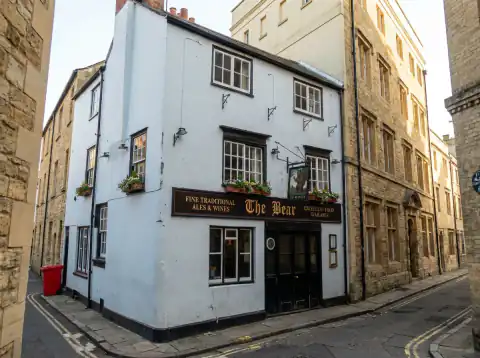
Up Blue Boar Street. The oldest pub name in Oxford, with a site record going back to 1241, though the room you drink in is a seventeenth-century ostler's house rather than the medieval inn. Over 4,500 club tie-ends collected since 1952. The closest thing Christ Church has to a local.
Oxford Covered Market — 6 minutes
North through the centre. Two hundred and fifty years of independent traders, and the obvious lunch stop between Christ Church and the Bodleian quarter. If you want Oxford rather than the same chains as everywhere else, this is where to eat.
Oxford Botanic Garden — 12 minutes
At the far end of the meadow walk. The natural continuation if you leave Christ Church by the Broad Walk rather than doubling back onto St Aldate's — the oldest botanic garden in Britain, reached along the Cherwell.
Oxford Castle — 10 minutes
West across the centre, on the far side of Carfax.
- Why pair it: the sharpest contrast Oxford offers. Christ Church is the university at its wealthiest and most ceremonial; Oxford Castle is the county's site — a Norman motte, a tower that may pre-date the Conquest, and a prison that only closed in 1996. Visiting both in a day is the clearest way to understand that Oxford is two cities sharing a postcode.
- Time: two hours, or one for the guided tour alone.
- Route: St Aldate's north to Carfax, then west along Queen Street.
Suggested combinations
Half a day, historic core. Christ Church, then Merton along Merton Street, then the Covered Market for lunch. Three foundations spanning 1264 to 1546 within 400 metres, and a market older than most of the United States.
Half a day, outdoors. Christ Church quickly, then the meadow circuit — Broad Walk, New Walk to the Thames, back along the Cherwell and under the city wall by Deadman's Walk — finishing at the Botanic Garden. Most of it free.
Late afternoon. Christ Church at 15:00 after the Hall reopens, out through the meadow at golden hour, then the Bear. Be on St Aldate's at 21:05 if you want to hear Great Tom strike 101.
Good to know
Questions, answered.
01How much does it cost to visit Christ Church?
Adult admission is £22.95 to £26.95 on the day, depending on the season and whether you visit on a weekday or at the weekend. Booking in advance saves £2 per ticket. Seniors over 65 and students pay £19.69 to £24.50, children aged 5–17 pay £17.06 to £21.50, and under-5s go free with a paying adult. Admission includes a multimedia guide, which is required in order to visit. Prices verified 26 July 2026.
02Do I need to book?
Booking is advised but not required — you can buy at the Visitor Centre on the day. Tickets are released weekly, each Friday at about 10:00, for the following week, so it is not a rolling window. Booking ahead is cheaper by £2 a ticket and guarantees entry.
03When is the Great Hall closed?
Monday to Friday from 12:00 to 14:00, for student lunch. In Michaelmas Term it also closes on Saturdays from 10:30 to 14:00, and on Sundays it does not open until 14:00. Individual dated closures happen through the year as well. Arriving between 10:00 and 11:30, or after 14:00, avoids the routine closure.
04Is Christ Church wheelchair accessible?
Largely, but you must use the right entrance. Enter at Tom Gate, which has level access and a ramp to the paths around Tom Quad and sits beside the Blue Badge bays on St Aldate's. The main tourist entrance at Meadow Gate has two sets of steps and then seven more into the college, which are not ramped.
Inside, there is lift access to the Great Hall suitable for most unmotorised wheelchairs, and a ramped door into the Cathedral from Tom Quad. Surfaces are a mix of paving, fine gravel, cobbles and stone. Seating is available in the Cathedral, the Cloisters and the Ante-Hall. Accessible toilets are on the main site and at the Visitor Centre. The multimedia guide includes a British Sign Language version with English captions. One free carer ticket is available per disabled visitor on production of proof of entitlement.
05Is Christ Church Meadow free?
Yes. The meadow is free and open during daylight hours every day of the year except 25 December. It is separate from the college visit, needs no ticket, and is on different hours — do not assume the college's closing time applies to it.
06Was Harry Potter filmed at Christ Church?
The college states that the Hall staircase "may be familiar, having been used in a number of film and television projects including Lewis and Harry Potter." That claim covers the staircase.
Christ Church makes no equivalent claim about the Great Hall, and this guide does not repeat one. What you can say with confidence is that the staircase you climb to reach the Hall has been filmed, and that its 1638 fan vaulting is worth looking at on its own account.
07Why is the cathedral inside a college?
Because Henry VIII was economising. He had made the church of Osney Abbey the cathedral of his new Oxford diocese; when Osney was dissolved and he refounded Wolsey's unfinished college in 1546, he made the college chapel serve as the cathedral as well rather than pay for both. Christ Church has been a college and a cathedral in one foundation ever since, which no other institution in England is.
08How long should I allow?
An hour to ninety minutes for the college itself. Add at least another hour if you walk the meadow, which is the part most people skip and the part that costs nothing.
09Can I see the Old Master drawings?
Not at present. Christ Church Picture Gallery — which holds drawings by Leonardo, Michelangelo, Dürer, Raphael and Rubens, and paintings by van Dyck, Tintoretto and Frans Hals — is closed for renovation and extension, with no reopening date published.
10Can I visit for a service rather than as a tourist?
Yes. The cathedral is a working diocesan cathedral with a daily sung tradition. Church of England members in the Diocese of Oxford can obtain a free Parishioner Pass for private worship, entering at Tom Gate. Note that services and choir practice also close the cathedral to visitors — most reliably on Saturdays from 16:45.
11Is there anywhere to leave bags?
No. There is no left-luggage facility, and nothing larger than 40 × 30 × 20 cm is allowed in. If you are arriving from the station with luggage, deal with it before you come.
Before you visit
Useful links.
Venue and visitor information
Every factual claim in this bundle traces to one of the sources below. Research was deliberately scoped to four authorities rather than a general web sweep — see 16-editor-notes.md for why.
Sources
| ID | Source | Type | URL | Retrieved | Used for |
|---|---|---|---|---|---|
| S01 | Christ Church, Oxford — official site | Institution | https://www.chch.ox.ac.uk | 2026-07-26 | Visiting, hours, prices, closures, access, the parts, the film claim |
| S01a | — Things to see | Institution | https://www.chch.ox.ac.uk/visit/things-to-see | 2026-07-26 | Tom Quad, Tom Tower, Hall, staircase, cloister, cathedral descriptions; the 1546 expedient |
| S01b | — Known closures | Institution | https://www.chch.ox.ac.uk/visit/known-closures | 2026-07-26 | Seasonal hours, Hall and Cathedral part-closures, dated 2026 closures |
| S01c | — Daily multimedia tours | Institution | https://www.chch.ox.ac.uk/visit/daily-multimedia-tours | 2026-07-26 | All ticket prices, advance discount, weekly Friday release, change policy |
| S01d | — Concessions | Institution | https://www.chch.ox.ac.uk/visit/concessions | 2026-07-26 | Under-5s, carers, free-entry categories, Parishioner Pass |
| S01e | — Accessibility | Institution | https://www.chch.ox.ac.uk/visit/accessibility | 2026-07-26 | Tom Gate vs Meadow Gate, lift and ramp access, surfaces, Blue Badge bays, BSL guide |
| S01f | — Tickets and information | Institution | https://www.chch.ox.ac.uk/visit/tickets-and-information | 2026-07-26 | Bag limits, prohibited items, photography rules, guiding suspension |
| S01g | — Christ Church Meadow | Institution | https://www.chch.ox.ac.uk/visit/meadow | 2026-07-26 | Meadow hours and admission, Broad Walk, New Walk, longhorn herd |
| S01h | — Picture Gallery | Institution | https://www.chch.ox.ac.uk/visit/picture-gallery | 2026-07-26 | Closure for renovation; collection contents |
| S01i | — Cathedral visiting | Institution | https://www.chch.ox.ac.uk/cathedral/visiting | 2026-07-26 | Chancel ceiling, Becket window, van Linge glass, Burne-Jones, Reyntiens 2024, Denny 2025 |
| S01j | — Guided tours | Institution | https://www.chch.ox.ac.uk/visit/guided-tours | 2026-07-26 | Standard visitor route |
| S01k | — Groups | Institution | https://www.chch.ox.ac.uk/visit/groups | 2026-07-26 | Groups of 12+ must book through the Groups Co-ordinator |
| S02 | Historic England, list entry 1000441 | Statutory heritage body | https://historicengland.org.uk/listing/the-list/list-entry/1000441 | 2026-07-26 | Grade I registered park and garden; building phases and attributions; Wolsey suppression 1524, foundation 1525; Dodgson's 47 years |
| S03 | Victoria County History, Oxfordshire vol. 3 | Academic reference | https://www.british-history.ac.uk/vch/oxon/vol3/pp228-238 | 2026-07-26 | Priory dissolution 1524, foundation stone 1525, masons, Wolsey's fall, 1532 and 1546 refoundations |
Source hierarchy used
- S01 for anything operational — hours, prices, access, closures, and what the institution claims about itself. No third party is authoritative on a college's own opening times.
- S02 for fabric, dates and architectural attribution.
- S03 for institutional and constitutional history.
Where S01 and S02 or S03 disagree on a historical date, S02 and S03 are preferred and the conflict is recorded.
Recorded conflicts, not resolved
The date of Wolsey's fall.
| Value | Source |
|---|---|
| 1529 | S02 (Historic England) |
| 1530 | S01a (Christ Church) |
| November 1530 | S03 (VCH) |
Not resolved. Prose across this bundle says "around 1529–30" or attributes. See 13-operational-data.json → founding.unresolved_conflict.
Gaps — not covered by the scoped sources
These were looked for and not found within the four sources. They are gaps in this bundle, not statements that the information does not exist.
- Trinity Term 2026 visiting hours. The known-closures page carries only current and forward seasons; that term had passed. Not a source error.
- Hilary and Trinity 2027 hours and prices. Not yet published at time of research.
- Guided tour pricing. The college routes it to the DigiTickets booking system rather than publishing a figure.
- Postcode. Not captured from a scoped source. Deliberately left null in
13-operational-data.jsonrather than filled from memory. - The "Great Hall inspired the Leavesden set" claim. Widely repeated elsewhere; Christ Church states nothing either way. The guardrails forbid asserting it in either direction. See below.
- Picture Gallery reopening date. Not published.
The film claim, in full
The only filming claim on S01 sits in the Hall Staircase section of S01a:
"The elegant staircase may be familiar, having been used in a number of film and television projects including Lewis and Harry Potter."
The Great Hall section of the same page makes no reference to Harry Potter. A site-restricted search of chch.ox.ac.uk returned only this sentence and a Meadow trail PDF noting that the shop sells Harry Potter merchandise.
Therefore: the staircase as a filming location is sourced and may be stated. Any claim about the Great Hall — whether that it was filmed there, or that it was merely the inspiration for a set — is unsourced and must not be written.
Recheck cadence
Quarterly, which is shorter than the usual six months. Christ Church publishes by academic season, adds dated part-closures continuously, and currently has a major closure in progress. S01b and S01c carry almost all of the volatile data and should be re-read first.
Files affected by a Picture Gallery reopening, which must be updated together: 01-overview.md, 03-visitor-guide.md, 04-highlights.md, 13-operational-data.json.
Opening hours, prices, programmes and access arrangements can change. Confirm critical details with the venue.
Continue exploring / Oxford
What will you
do next?
Compare the practical essentials first, then open the experiences that earn a place in your plans.
 01Culture & historyBate Collection of Musical InstrumentsExplore experience →
 02Culture & historyBodleian Library guided tourExplore experience →
 03Culture & historyChrist Church CathedralExplore experience →
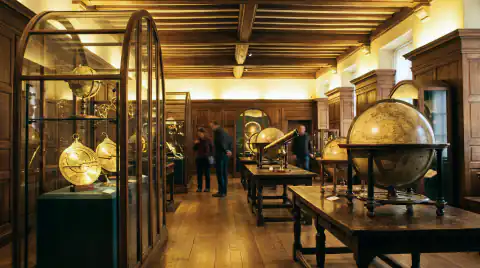 04Culture & historyHistory of Science MuseumExplore experience →
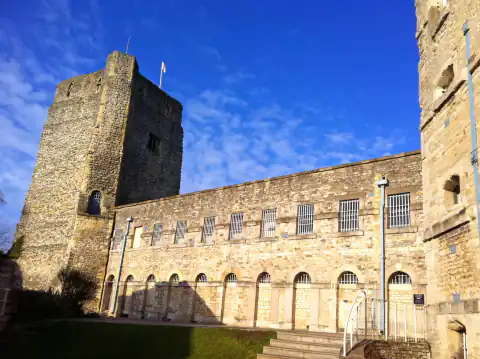 05Culture & historyOxford CastleExplore experience →
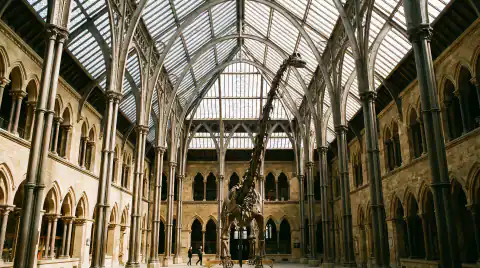 06Culture & historyOxford University Museum of Natural HistoryExplore experience →
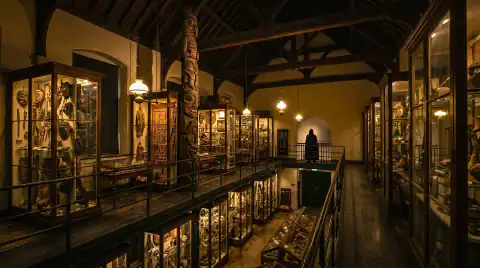 07Culture & historyPitt Rivers MuseumExplore experience →
 08Culture & historySheldonian TheatreExplore experience →
 09Culture & historyStephen A. Schwarzman Centre for the HumanitiesExplore experience →
 10Culture & historyThe Ashmolean MuseumExplore experience →
 11Culture & historyThe Radcliffe CameraExplore experience →
 12Culture & historyThe Weston LibraryExplore experience →
 13Culture & historyUniversity Church of St Mary the VirginExplore experience →
 14Food & drinkHead of the RiverExplore experience →
 15Food & drinkLe Manoir aux Quat’SaisonsExplore experience →
 16Food & drinkOxford Covered MarketExplore experience →
 17Food & drinkThe Bear InnExplore experience →
 18Food & drinkThe ChequersExplore experience →
 19Food & drinkThe Eagle and ChildExplore experience →
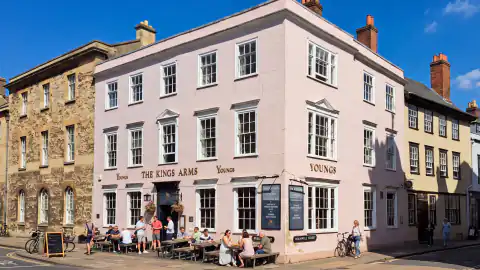 20Food & drinkThe King’s ArmsExplore experience →
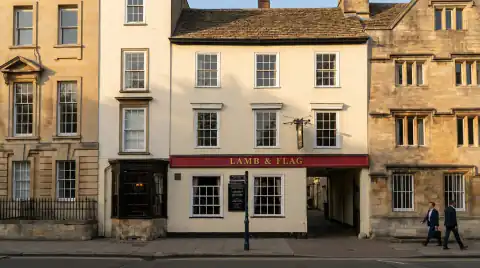 21Food & drinkThe Lamb & FlagExplore experience →
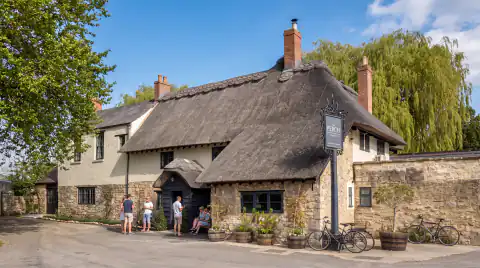 22Food & drinkThe PerchExplore experience →
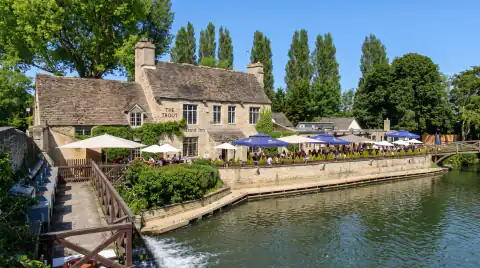 23Food & drinkThe Trout InnExplore experience →
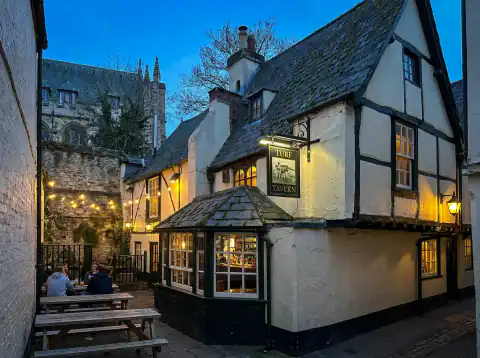 24Food & drinkThe Turf TavernExplore experience →
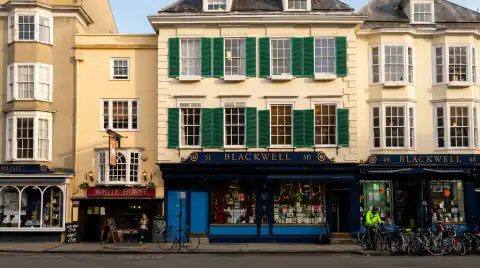 25Food & drinkThe White HorseExplore experience →
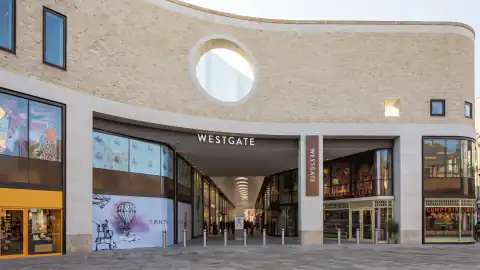 26Food & drinkWestgate OxfordExplore experience →
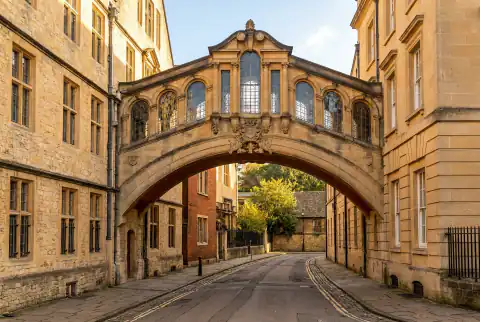 27Walks & viewsThe Bridge of SighsExplore experience →
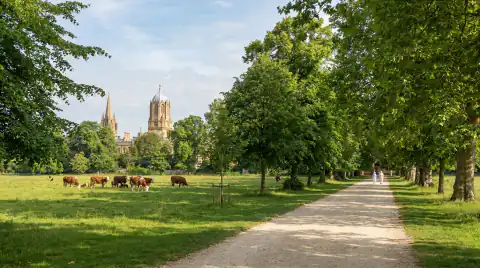 28Parks & meadowsChrist Church MeadowExplore experience →
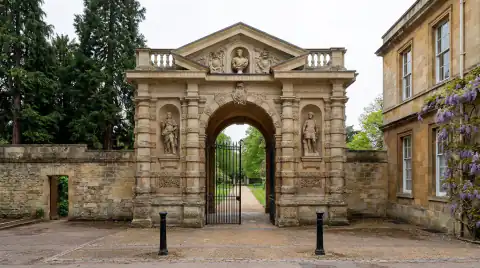 29Parks & meadowsOxford Botanic GardenExplore experience →
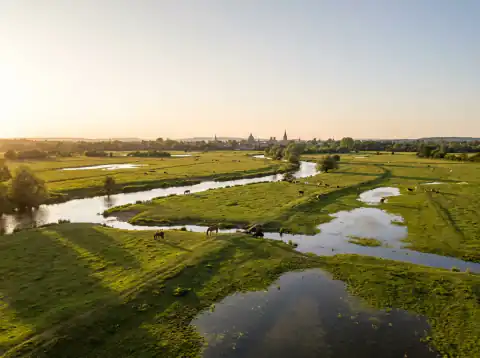 30Parks & meadowsPort MeadowExplore experience →
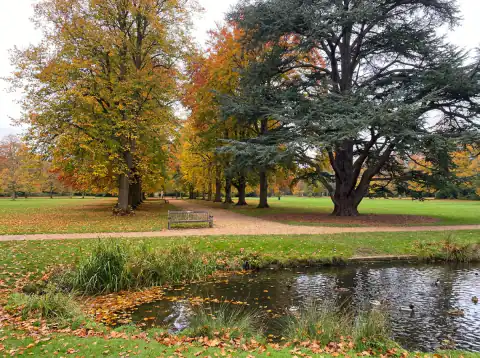 31Parks & meadowsUniversity ParksExplore experience →
 32On the waterPunt the CherwellExplore experience →
 33On the waterSalter's SteamersExplore experience →
 43CollegesAll the collegesEvery Oxford collegeOpen the college guide →Food & drink / a storyThe nine oldest pubsWalk the timeline →
 Plan / Itinerary builderBuild your Oxford dayStart planning →