In depth
Oxford Botanic Garden
Historic walls, medicinal plants, glasshouse habitats and riverside borders at Britain’s oldest botanic garden, beside Magdalen Bridge.
Story · Visit · Route · Links
Visitor Essentials & Quick Answers

Is the Botanic Garden worth visiting if I am not a gardener?
The garden combines historic walled beds, medicinal plants and glasshouse habitats beside the Cherwell. It offers a compact plant collection near Magdalen Bridge, with different displays through the seasons.
Why is Oxford’s Botanic Garden historically important?
Founded in 1621 as a physic garden, it began with the study of plants used in medicine. The surviving walls and monumental Danby Gateway make that early purpose tangible. Botanical teaching and research explain why the collections are more than decorative planting around a pleasant green space.
Where is the Philip Pullman bench in Oxford Botanic Garden?
The bench is in the Lower Garden and appears on the garden’s literary trail. In The Amber Spyglass, Lyra and Will promise to sit there at noon on Midsummer’s Day.
Should I choose the garden or a walk in the parks?
Choose the Botanic Garden for concentrated plant collections, glasshouses and the history of botanical study. Choose University Parks or a meadow walk when you mainly want open space and a longer stroll. They offer different pleasures: close observation in a designed collection versus a less structured outdoor break.
Choose your depth
Essentials or more detail?
See visiting essentials, or read more about the history and places nearby.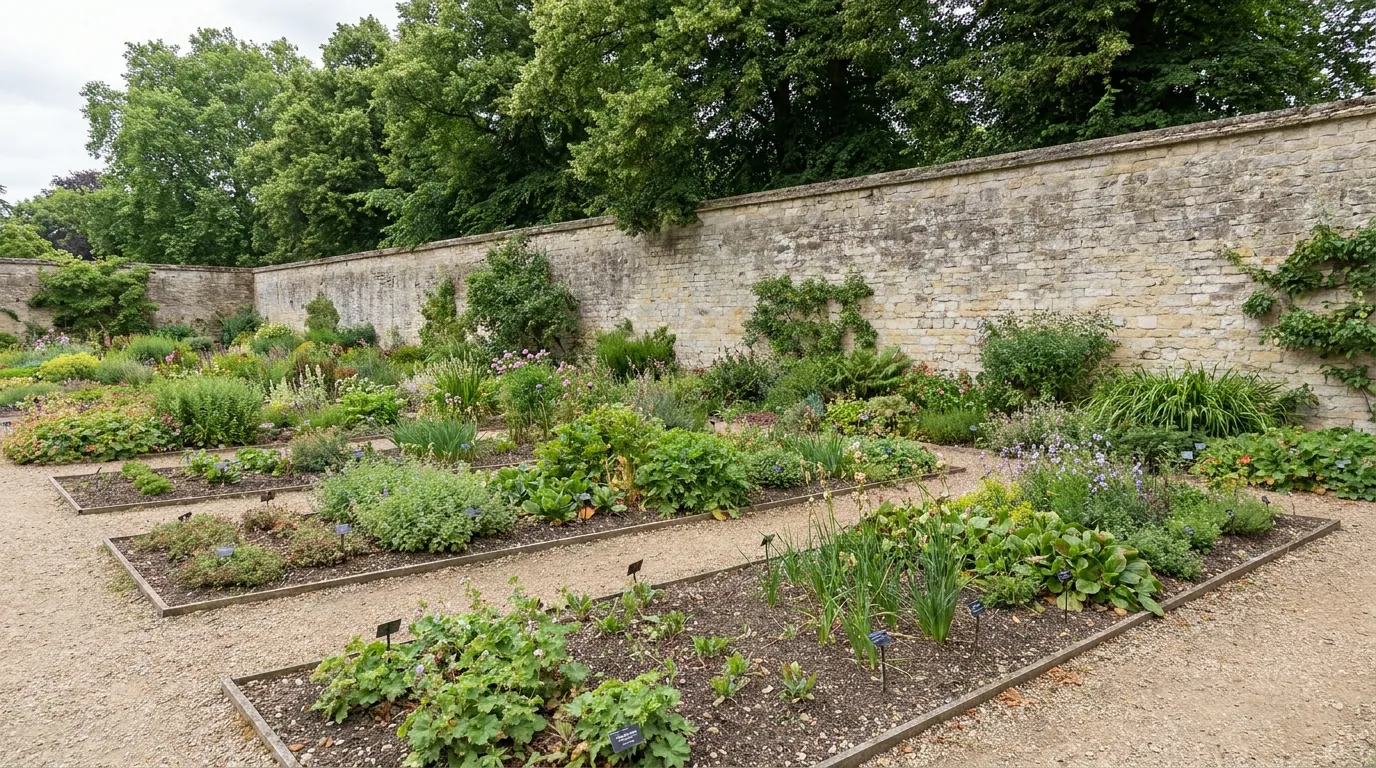
01 The experience
What to expect.
Why it matters
It is the oldest of its kind in Britain
Founded in 1621, four decades before the Royal Society and well over a century before Kew, Oxford's is the first botanic garden established in Britain and one of the oldest scientific gardens anywhere. The significance is not merely that it is old, but that it is old and still doing the job: the same institution, on the same ground, still holding a research collection for the same university.
The founding purpose is still visible
The seventeenth-century layout still frames the collection. The walls, the rectangle, the gateways and the medicinal planting are all legible, and the modern arrangement — families in evolutionary order, medicinal beds by clinical use — is a direct continuation of the founding idea that a garden should be an instrument for teaching.
The architecture is serious in its own right
The Danby Gateway is an important work of seventeenth-century architecture. Built in 1632–33 by Nicholas Stone, Inigo Jones's master mason, it is among the earliest classical — indeed early Baroque — structures in Oxford, and it is listed Grade I in its own entry. The walls that run 100m along Rose Lane are contemporary and equally listed. A visitor interested in seventeenth-century English architecture has reason to come here even with no interest in plants.
It is a literary site by accident
Four writers give the garden a second life. Charles Dodgson brought the Liddell sisters here in the 1860s and the lily house appears behind Tenniel's Alice illustration. Tolkien sat under a black pine here for years. Evelyn Waugh sent Sebastian Flyte and Charles Ryder to "see the ivy". And Philip Pullman ended His Dark Materials on a bench at the garden's southern end, which is now a place visited by readers of the novels. Those literary associations have become part of the garden’s appeal.
What visitors should notice
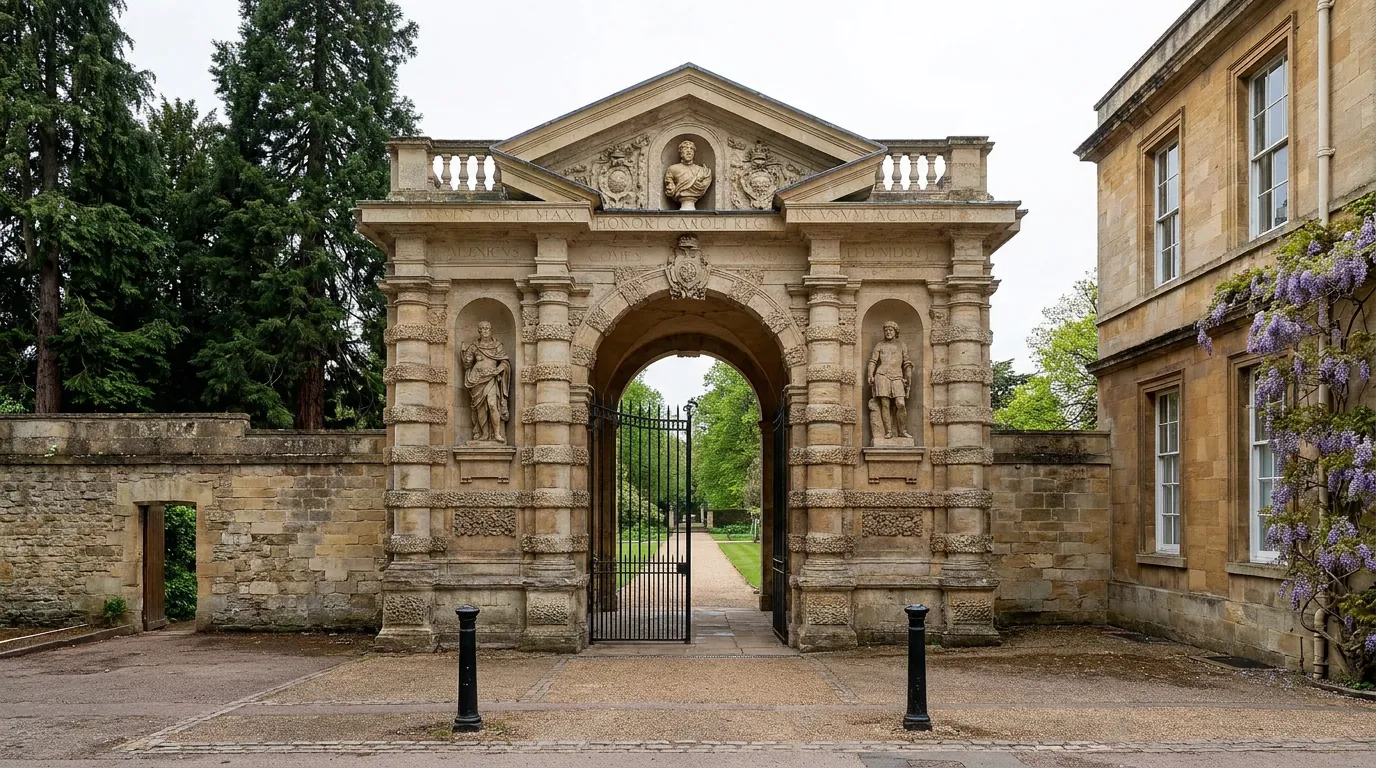
- The Danby Gateway from the outside first. Most people walk straight through it. Stand back on the High Street pavement and look at the rustication and the niches — its rusticated stonework and niches make the entrance an important piece of 1630s architecture.
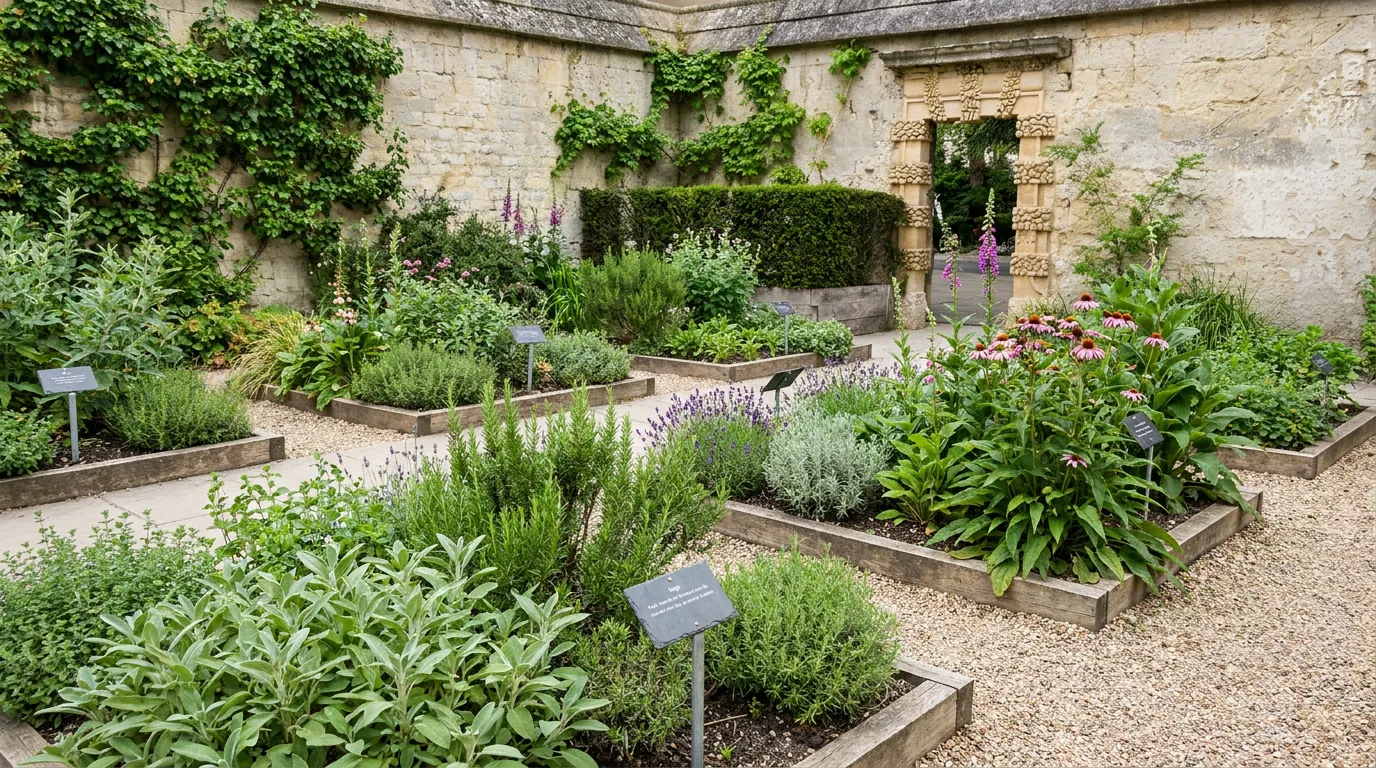
- The family beds as a system. The beds are being rearranged using the APG system, which groups flowering plants by genetic relationships.
- The medicinal beds by category. Cardiology, oncology, neurology and the rest — each bed holds the plants behind a branch of medicine. It reframes "physic garden" from quaint to consequential.
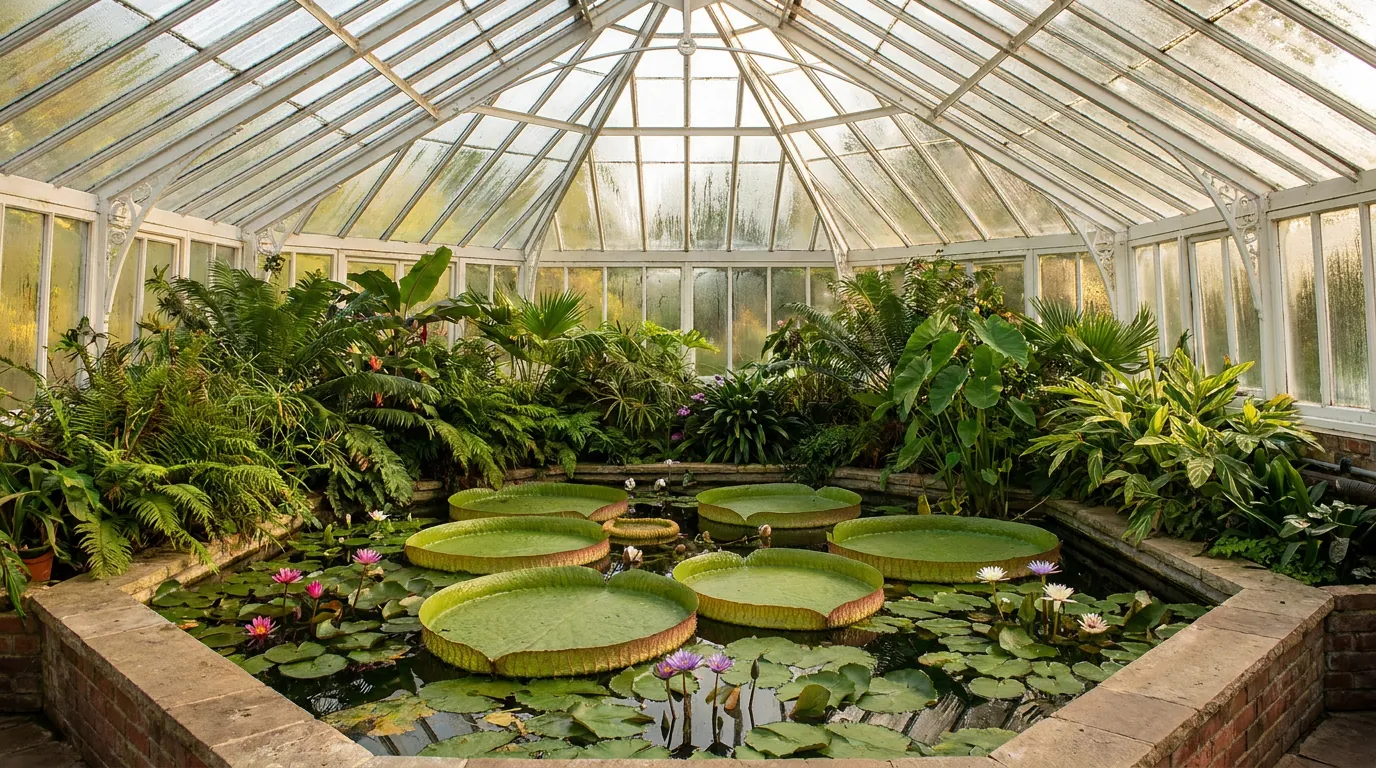
- The Lily House. The oldest surviving glasshouse fabric on the site (1851, under Professor Daubeny), and in summer the giant waterlilies are the single most photographed thing in the garden.
- The wall from the inside. Five metres of seventeenth-century ashlar, still doing its job of holding heat for the tender wall borders.
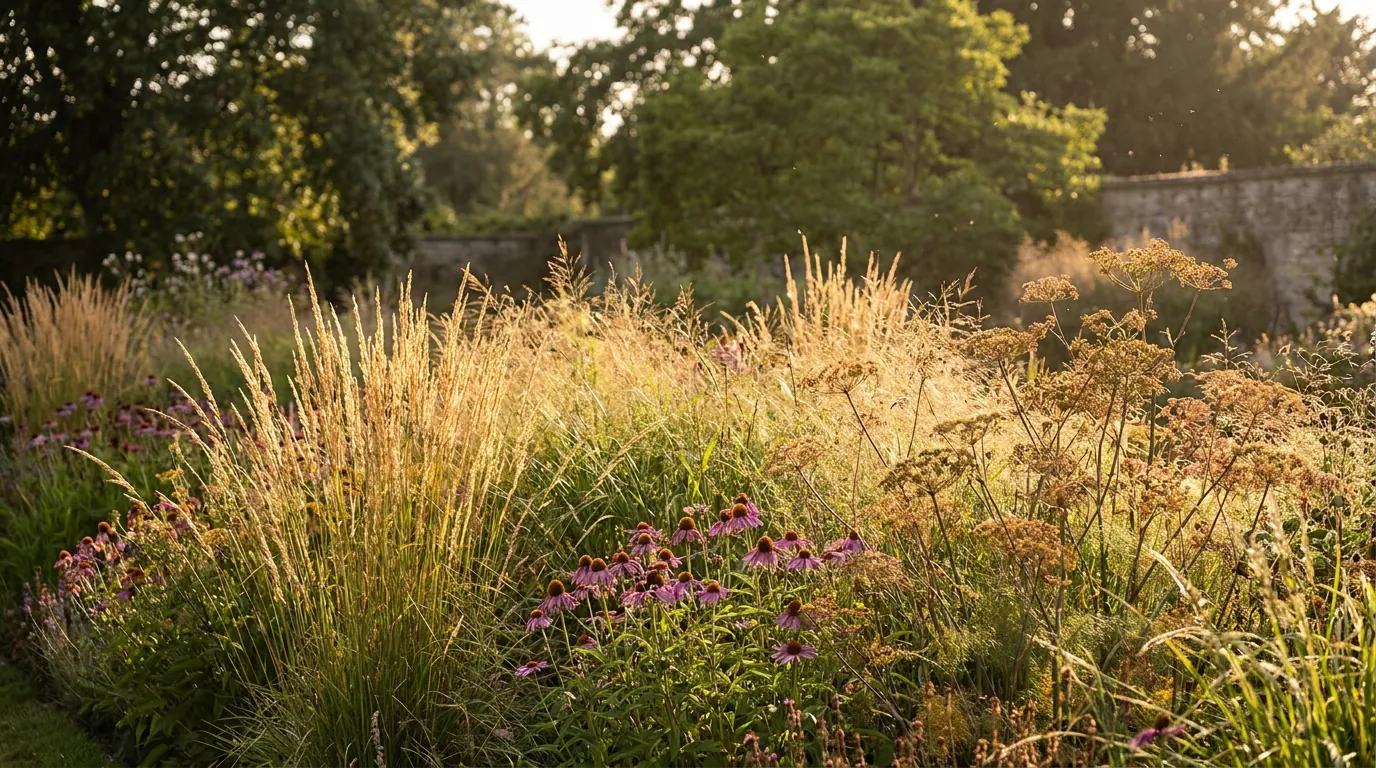
- The Merton Borders. Drought-tolerant steppe and prairie planting, designed with James Hitchmough — the most contemporary thing here, and a deliberate argument about how gardens will have to be planted in a warming climate.
Who will enjoy it
- Gardeners and botanists, for concentrated collections across four and a half acres.
- Anyone interested in the history of science, for whom the continuity from 1621 physic garden to modern research collection is the draw.
- Architecture visitors, for the Stone gateways and walls.
- Readers following Tolkien, Carroll, Waugh or Pullman.
- Anyone wanting twenty minutes of quiet in central Oxford. The walls shelter it from the nearby High Street.
- Photographers, particularly in the glasshouses and in the first hour after opening.
Who may find it difficult
- Visitors seeking a large landscape garden. The site covers four and a half acres, with concentrated collections rather than long parkland walks.
- Families with restless young children. There is a lot to look at and little to climb on. It rewards looking, not running.
- Winter visitors expecting colour outdoors. From November to February the outdoor beds are structural rather than showy, and the glasshouses carry the visit.
- Anyone arriving by car. There is no car park, and the surrounding streets are heavily restricted.
- Dog walkers. Assistance dogs only.
Visitor verdict
Allow an hour to explore the walled garden, glasshouses and lower borders. The glasshouses justify a visit in bad weather, while the lower borders and riverside paths offer more in fine weather. Best combined with Magdalen College, Christ Church Meadow or a punt from Magdalen Bridge, all within a few minutes' walk.
The story
History & character.
The short history
Founded in 1621 as a physic garden for the teaching of medicine, walled during the 1620s, gated by Inigo Jones's master mason in the early 1630s, catalogued from 1648, renamed a botanic garden in 1840, glazed through the nineteenth century, extended southward in 1945, and still owned and worked by the University of Oxford. Four hundred years on the same rectangle of raised ground.
Before the garden
The site sits at the north-east corner of Christ Church Meadow, on the west bank of the Cherwell, on land belonging to Magdalen College. It lay outside the medieval city walls, which is why it was available.
Before the garden, part of the ground was Oxford's Jewish burial ground, in use until the expulsion of the Jews from England at the end of the thirteenth century. A stone marker near the entrance acknowledges this. It is the oldest layer of the site's history and the one most visitors walk past without noticing.
The land was also low, flat and prone to flooding from the Cherwell. Making it usable required raising it — by four thousand cartloads of, in the phrase preserved in the garden's own records, "mucke and dunge". The garden you walk today stands on an artificial platform.
1621: Danby's endowment
In 1621 Henry Danvers, 1st Earl of Danby, gave £5,000 to the University to found a physic garden. The sum was enormous — a fortune in the period, and the equivalent of several million pounds today. His stated purpose was "the glorification of the works of God and for the furtherance of learning", which is worth reading carefully: the garden was conceived simultaneously as devotional and as scientific infrastructure, and in 1621 those were not competing ideas.
The practical purpose was medicine. Physicians were trained on plants, and a university teaching medicine needed a living collection of them. That founding function explains the garden's shape: a walled rectangle, laid out in beds, near enough to the schools for students to walk to.
The 1620s and 1630s: walls and gateways
The walls went up through the 1620s — ashlar, five metres high, running roughly 100m along what is now Rose Lane. They were not merely boundary. A high south- facing wall creates a microclimate, holding the day's heat and allowing tender species to be grown against it, and the wall borders still exploit this.
The gateways followed in the early 1630s, and they are the reason architectural historians visit. Nicholas Stone, master mason to Inigo Jones, built three: the main Danby Gateway (1632–33) facing the High Street, and two lesser gates in the same idiom — one west onto Rose Lane, one east toward the river.
The Danby Gateway is among the earliest classical, and arguably early Baroque, structures in Oxford: a two-storey Mannerist arch in Headington freestone, with vermiculated rustication and columned niches. It originally carried royal statuary; after Civil War damage the Oxford sculptor William Bird restored it in the 1650s with busts of Charles I and Charles II. It was listed Grade I on 12 January 1954.
1642 onward: the Bobarts
The first Superintendent — the first of fifteen — was Jacob Bobart the Elder, appointed in 1642, a German-born gardener who ran the garden through the Civil War and the Commonwealth. In 1648 he published a catalogue of the plants growing here, the first record of the collection.
Bobart died in 1679 and was succeeded by his son, Jacob Bobart the Younger, who also held the Professorship of Botany. The two Bobarts between them span most of the seventeenth century, and the garden's survival through a period when Oxford was a garrison town, a royal capital and then an occupied city owes a great deal to them.
Through the eighteenth century the garden's fortunes rose and fell with the interest of successive professors. Humphry Sibthorp held the chair for thirty-six years and is said to have lectured once. His son John Sibthorp (1758–1796) was the opposite: a serious field botanist whose Levant expeditions produced the Flora Graeca, one of the most beautiful botanical works ever published, funded by his bequest to the University.
1840: from physic garden to botanic garden
In 1840 Professor Charles Daubeny renamed the institution the Botanic Garden. The change of name marked a change of purpose: from a collection organised around medical utility to one organised around botany as a science in its own right.
Daubeny also built. The Lily House of 1851 is the oldest surviving glasshouse fabric on the site, and the tropical waterlily hybrid Nymphaea × daubenyana carries his name. The wider glasshouse range grew through the nineteenth century; the present Conservatory is an aluminium replica of an 1893 wooden original, reflecting the repeated renewal needed to maintain a working glasshouse.
1945: the Lower Garden
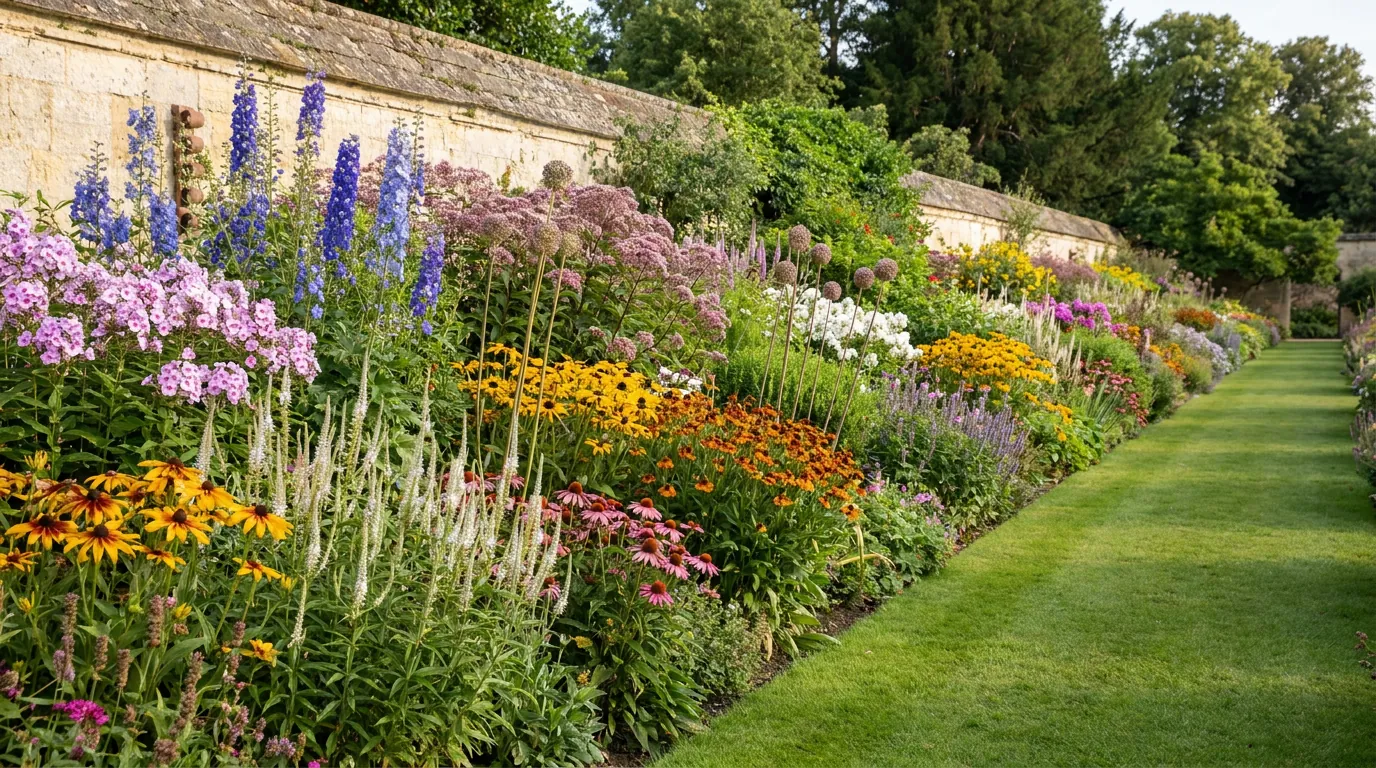
In 1945 the ground beyond the south wall was taken in from Christ Church Meadow, roughly doubling the usable area and giving the garden its present three-part shape. The Herbaceous Border was laid out in 1946, planted only with perennials and designed to hold interest from April to October — a straightforwardly traditional English border, and deliberately so.
The most recent significant addition is the Merton Borders, at 955m² the largest single cultivated area, developed with Professor James Hitchmough of Sheffield. The planting is drawn from seasonally dry grassland communities in North America, East Africa and the Eurasian Mediterranean, and is watered minimally once established. It is a working argument about how English gardens will need to be planted as the climate warms, and it sits deliberately in view of the 1946 border that represents the older answer.
The collection today
The garden holds over 5,000 plant species on 1.8 hectares, representing more than ninety per cent of the higher plant families — a density that is the direct result of having very little space and a scientific remit.
It has held the national collection of Euphorbia since 1983, including conservation work on Euphorbia stygiana, of which very few plants survive in the wild. The medicinal beds have been re-laid by clinical category — cardiology, oncology, neurology, dermatology and the rest — which returns the garden, in a modern idiom, to exactly what Danby endowed it for.
Reading the architecture
The Danby Gateway. Look for the vermiculated rustication — stonework carved to look worm-eaten — and the niches with their busts. This is 1630s architectural fashion arriving in a city still building Gothic.
The walls. Seventeenth-century ashlar, five metres, with stone coping. Note the difference in planting between the sheltered south-facing side and the rest.
The lesser gateways. Smaller versions of the Danby idiom, one to Rose Lane with wooden doors, one to the river with iron gates. Same mason, same decade, easily missed.
The glasshouse range. Read it as a sequence of rebuilds rather than a single building: 1851 fabric in the Lily House, a 1990s aluminium replica of an 1893 conservatory, and later houses behind.
Look closer
Highlights and hidden details.
The Danby Gateway
The main entrance from the High Street, built in 1632–33 by Nicholas Stone, master mason to Inigo Jones. A two-storey Mannerist arch in Headington freestone, with vermiculated rustication — stone deliberately carved to look worm-eaten — and columned niches holding busts of Charles I and Charles II, restored by the Oxford sculptor William Bird in the 1650s after Civil War damage.
Historical importance: among the earliest classical structures in Oxford, in a city then still building Gothic. Listed Grade I in its own right.
Visitor experience: stand on the High Street pavement opposite for a view of the whole gateway before entering.
Photography: best from outside, mid-morning, when light rakes across the rustication. Wide lens; the street is narrow.
Time: 5 minutes.
The seventeenth-century walls
Five metres of ashlar running roughly 100 metres along Rose Lane, with stone coping, built through the 1620s and listed Grade I.
Historical importance: these define the original 1621 physic garden and are among the oldest fabric on site — older than the gateways.
Visitor experience: look at what grows against the south-facing side. The wall stores the day's heat and creates a microclimate that supports plants Oxford's open ground would kill. It is functional infrastructure, not decoration.
Photography: the inside face with the wall borders in front, late afternoon.
Time: 5 minutes.
The family beds
The heart of the walled garden: flowering plants grouped in family beds, being rearranged to follow the DNA-based APG classification.
Historical importance: the direct descendant of the founding teaching purpose — a garden arranged so that the structure of the plant kingdom can be walked.
Visitor experience: compare neighbouring beds and their labels to see which plants are related.
Photography: less photogenic than instructive. Shoot detail rather than wide.
Time: allow twenty minutes.
The medicinal beds
In the south-west corner of the walled garden, organised by branch of medicine: cardiology, oncology, infectious diseases, gastroenterology, dermatology, haematology, neurology and pulmonology.
Historical importance: the garden was endowed in 1621 as a physic garden for training physicians. This is that function, restated in modern clinical terms.
Visitor experience: the most quietly startling part of the garden. Reading which plants underpin cancer or cardiac medicine changes "physic garden" from a historical curiosity into something consequential.
Photography: label-and-plant detail shots work better than wides.
Time: 15 minutes.
The Lily House
The tropical waterlily house, whose oldest fabric dates from 1851 under Professor Charles Daubeny — the oldest surviving glasshouse element on the site. It holds tropical waterlilies including Nymphaea × daubenyana, named for him in 1874, alongside economic plants such as banana, sugar cane and rice.
Historical importance: Victorian glasshouse engineering in the service of botany, and a direct link to the professor who renamed the garden in 1840.
Visitor experience: in summer the giant waterlily pads are the single most striking thing in the garden. Warm and humid — worth saving for a cold day.
Photography: the best subject on site. Expect condensation on the lens coming in from cold; give it a minute. Shoot down onto the pads.
Time: 15 minutes.
The glasshouse range
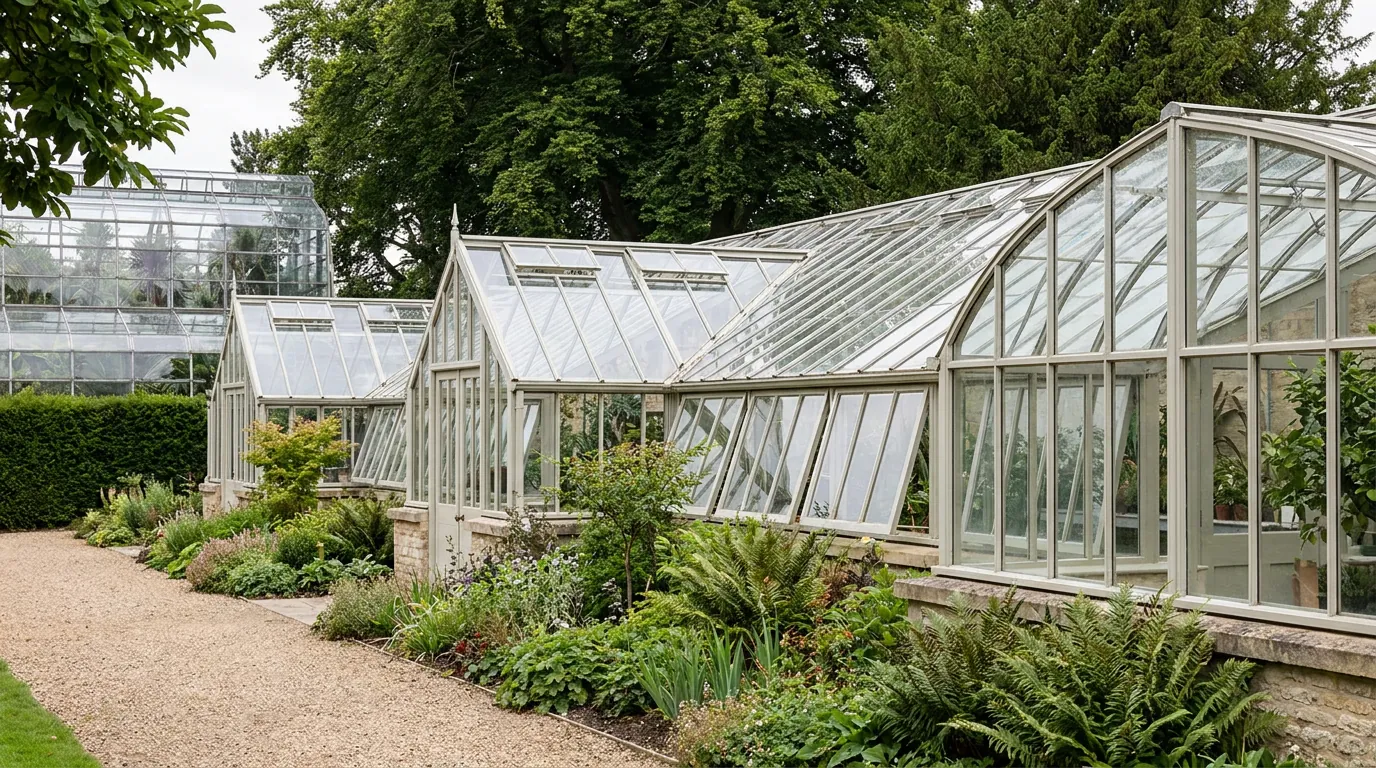
Beyond the Lily House: Palm House (the largest), Arid House with cacti and succulents, Insectivorous House with carnivorous plants, Fernery, Alpine House, and the Conservatory — an aluminium replica of an 1893 wooden original.
Historical importance: read the range as a sequence of rebuilds rather than one building. Glasshouses are consumable structures, replaced rather than preserved, and the range shows a century and a half of that cycle.
Visitor experience: what makes this garden work in winter and rain. The Insectivorous House is the reliable favourite with children.
Photography: high humidity, mixed light. The Arid House has the cleanest light of the range.
Time: 25 minutes for the range.
The herbaceous border
Laid out in 1946 in the Lower Garden, planted only with perennials and designed to hold interest from April to October.
Historical importance: a deliberately traditional English border, and the older half of a conversation the garden is having with itself about how to plant.
Visitor experience: at its best from June to August. In winter, structural at most.
Photography: shoot along its length from the low end, early or late.
Time: 10 minutes.
The Merton Borders
At 955m², the largest single cultivated area, developed with Professor James Hitchmough of Sheffield. Over a hundred species drawn from seasonally dry grassland communities in North America, East Africa and the Eurasian Mediterranean, watered minimally once established.
Historical importance: the most contemporary thing in the garden and an explicit argument about climate-adapted planting — positioned, pointedly, within sight of the 1946 border.
Visitor experience: looser and wilder than anything else here. Best late summer. Some visitors read it as unkempt; the interpretation boards explain why it is not.
Photography: low sun through grasses, late afternoon, August–September.
Time: 10 minutes.
The Pullman bench
Near the southern end of the garden, the bench where Lyra Belacqua and Will Parry agree to sit at noon each Midsummer's Day in different worlds, at the close of His Dark Materials. A sculpture by Julian Warren was installed behind it in 2019.
Literary connection: the bench has become a meeting place for readers of Pullman’s novels.
Visitor experience: understated. The scene gives the bench its significance for readers of the trilogy.
Photography: shoot it plainly. It resists being made dramatic.
Time: 5 minutes, or considerably longer.
The riverside walk and Magdalen views
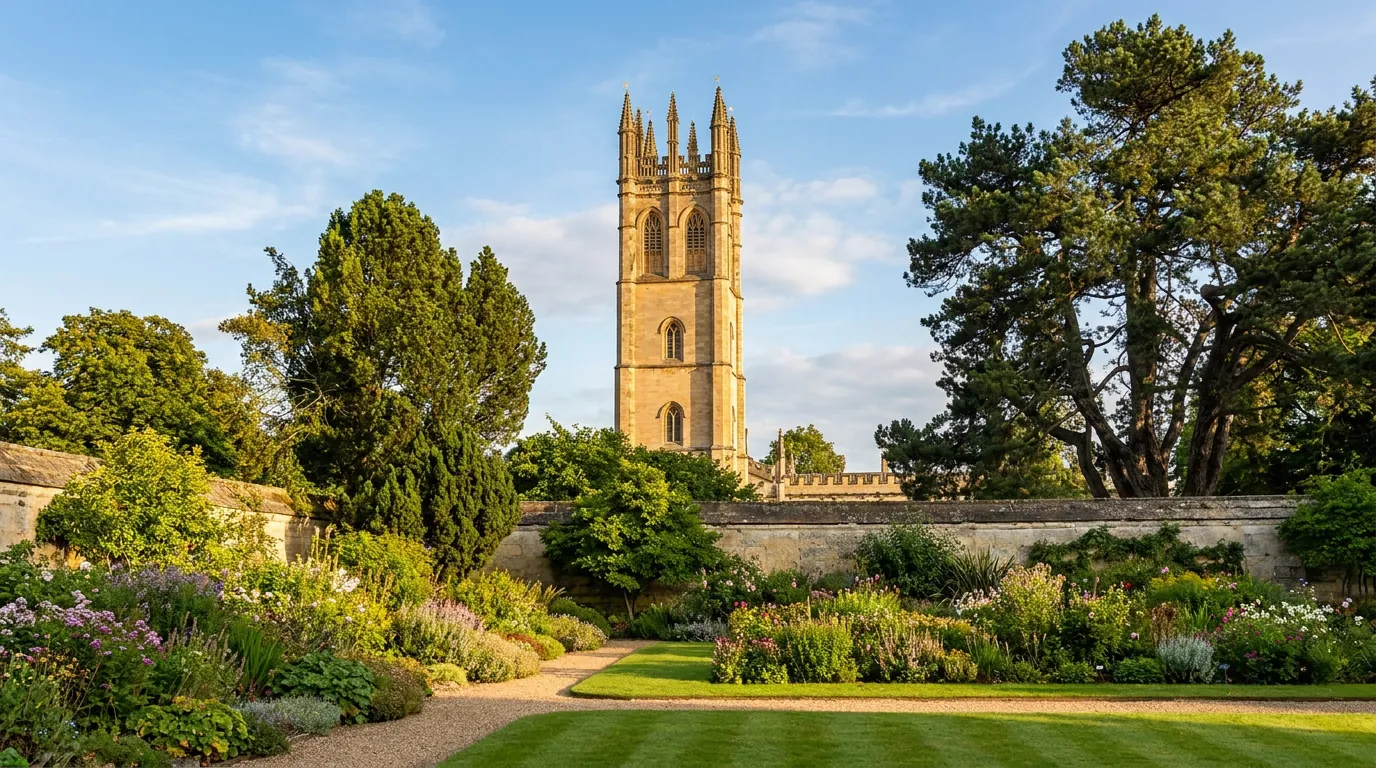
The garden's eastern edge runs along the Cherwell, with Magdalen Tower rising beyond.
Historical importance: the river is why the site flooded and had to be raised by four thousand cartloads before anything could be planted.
Visitor experience: the most relaxed part of the garden and the best place to sit. Punts pass from Magdalen Bridge in summer.
Photography: the classic Oxford composition — border foreground, Magdalen Tower behind. Late afternoon light.
Time: 10 minutes.
Details to look for.
The ground you are standing on is artificial
The site flooded. Before anything could be planted, the ground was raised with four thousand cartloads of material — recorded in the garden's own history as "mucke and dunge".
Where to notice it: stand at the Rose Lane gate and look at the level of the garden against the lane, then walk to the riverside edge and look down toward the Cherwell. The garden sits on a platform. Every plant here grows in made ground.
The Jewish burial ground
Part of the site was Oxford's Jewish cemetery until the expulsion of the Jews from England at the end of the thirteenth century. A memorial stone near the entrance records it.
Where to notice it: near the main entrance. It is small, unemphatic and routinely walked past. It is also the oldest layer of meaning on the site — the ground was a burial place for three centuries before it was a garden.
The rustication on the Danby Gateway
The stonework of the gateway is vermiculated — deliberately carved with worm-track channels to look eroded and ancient when new.
Where to notice it: the blocks flanking the arch, from the High Street pavement. It is a 1630s architectural affectation, and once seen it is hard to unsee elsewhere in Oxford.
The two lesser gateways
Beyond the main Danby Gateway are two smaller seventeenth-century entrances. Nicholas Stone built two smaller gates in the same decade and idiom: one west onto Rose Lane with wooden doors, one east toward the river with iron gates, each set within the contemporary walls.
Where to notice it: walk the inside face of the walls rather than cutting across the middle. Both are Grade I-listed.
The wall is a climate device
The walls are not just enclosure. Five metres of south-facing ashlar absorbs heat through the day and releases it overnight, creating a microclimate several degrees warmer than open ground.
Where to notice it: compare what grows in the wall borders against the south-facing wall with what grows in the open beds a few metres away. The difference in tenderness is the wall doing its work — the same reason walled kitchen gardens exist.
The family beds are a diagram
The family beds are being rearranged using the APG system, which groups flowering plants by genetic relatedness.
Where to notice it: pick two adjacent beds and read both labels. Their neighbouring position is an argument about relatedness. The garden is a three-dimensional classification system that happens to be alive.
The medicinal beds are sorted by illness, not by plant
Eight beds, each holding the plants behind a branch of medicine — cardiology, oncology, infectious diseases, gastroenterology, dermatology, haematology, neurology, pulmonology.
Where to notice it: south-west corner of the walled garden. Read the oncology bed in particular. The distance between "attractive border plant" and "chemotherapy agent" collapses.
Daubeny's waterlily carries his name
Nymphaea × daubenyana, named in 1874 for Charles Daubeny, the professor who renamed the Physic Garden a Botanic Garden in 1840 and built the Lily House in 1851.
Where to notice it: in the Lily House. A hybrid named for the man who built the room it grows in — an unusually tight loop of institutional history.
The Conservatory is a replica
The present Conservatory is an aluminium reconstruction of an 1893 wooden original.
Where to notice it: compare its frame with the older fabric in the Lily House. Glasshouses are consumable buildings: rot, condensation and heat destroy them, so they get rebuilt rather than conserved. The range is a century and a half of that cycle, standing in a row.
The garden argues with itself about planting
The 1946 herbaceous border — perennials, irrigated, traditional — sits within sight of the Merton Borders, drought-tolerant steppe planting designed with James Hitchmough and watered minimally once established.
Where to notice it: stand in the Lower Garden where both are visible. This is a deliberate juxtaposition: two answers to the question of how an English garden should be planted, seventy years apart, and the second is a response to a warming climate.
The Alice connection is in the background of a drawing
Charles Dodgson brought the Liddell sisters here in the 1860s. The waterlily house appears in the background of John Tenniel's "Queen's Croquet-Ground" illustration for Alice's Adventures in Wonderland.
Where to notice it: in the Lily House, if you know the illustration. Worth looking it up before visiting — it is the kind of detail that only lands if you have the image in your head.
The Pullman bench has graffiti, and it is tolerated
The bench near the southern end carries visitors' pencilled initials — "Lyra + Will" among them — left by readers making a pilgrimage.
Where to notice it: look at the bench itself rather than the sculpture behind it. The pencilled marks record visits by readers. Leave the bench and surrounding planting as you find them.
Where Tolkien's tree stood
Tolkien spent years sitting beneath a large Austrian black pine, Pinus nigra, often cited as an influence on the Ents. It was removed in 2014 after limbs fell and it became unsafe.
Where to notice it: the absence. Garden staff can point to where it stood. The original tree is no longer there.
Look-closer route
A fifteen-minute sequence for a second visit:
- Danby Gateway rustication, from the street
- Memorial stone near the entrance
- The level change at the Rose Lane gate
- Two adjacent family beds, labels read in full
- The oncology bed
- Wall border against the south-facing wall
- Nymphaea × daubenyana in the Lily House
- The Conservatory frame against the older glasshouse fabric
- The 1946 border and the Merton Borders in one view
- The Pullman bench
Make it work
Plan your visit.
At a glance
| Address | Rose Lane, Oxford, OX1 4AZ |
| Opening | Daily from 10:00; closes 16:00–18:00 by season, last entry one hour before closing |
| Adult | £9.00 |
| Concession (student, alumni, over 65) | £7.20 |
| Under 16 | Free with a paying adult |
| Free entry | Friends members; University of Oxford staff and students with valid ID |
| Booking | Not required — tickets available at the door |
| Typical visit | 45–90 minutes |
| Parking | None on site |
| Dogs | Assistance dogs only |
Seasonal opening hours
| Months | Opens | Closes | Last admission |
|---|---|---|---|
| March–April | 10:00 | 17:00 | 16:00 |
| May–August | 10:00 | 18:00 | 17:00 |
| September–October | 10:00 | 17:00 | 16:00 |
| November–February | 10:00 | 16:00 | 15:00 |
Glasshouse maintenance, education groups and events can temporarily restrict parts of the site. Use the official opening-hours page for exceptions.
Before you go
Buy at the door or online. Booking is not required and you can buy a ticket on arrival. The garden recommends booking ahead in busy periods, and strongly recommends pre-booking for events. Online transactions carry a £1 booking fee, so buying at the gate is marginally cheaper for a simple visit.
Tickets are non-transferable, including in bad weather. A dated ticket cannot be moved because of rain, though the glasshouses provide some shelter during a wet visit.
Check what is in flower. This is the single most seasonal attraction in central Oxford. The same ticket buys a very different visit in February and in July. Seasonal highlights vary through the year.
The Arboretum is a separate visit. Harcourt Arboretum at Nuneham Courtenay (OX44 9PX) is six miles south, requires its own ticket, and cannot be combined on one admission. Do not plan them as a single outing without a car and a half-day.
Getting there
Walking: The entrance is on Rose Lane at the eastern end of the High Street, beside Magdalen Bridge — five minutes from Carfax, two from Magdalen College.
By bus, the High Street stops are the closest, essentially at the gate.
By rail, Oxford station is about 25 minutes' walk across the city centre, or a short bus ride.
By car. There is no car park at the garden and the surrounding streets are heavily restricted. Use Park & Ride and complete the journey by bus. St Clement's car park is the nearest council option.
By bicycle, racks are available nearby, but Rose Lane and the High Street are busy — dismount rather than weaving.
Best time to visit
Time of day. The first hour after opening at 10:00 is the quietest, and the best light for photography in the glasshouses. A late-afternoon visit needs to fit the season's last-entry time: 15:00 in winter, 16:00 in spring/autumn and 17:00 in May–August.
Time of year.
- Spring (March–May) — the garden waking up; bulbs, blossom and fresh growth in the family beds. Increasingly the best all-round month is May.
- Summer (June–August) — peak. The herbaceous border and Merton Borders are at full height, and the giant waterlilies are in the Lily House. Also the busiest, particularly in school holidays.
- Autumn (September–October) — late colour in the borders, seed heads, and a quieter garden. Underrated.
- Winter (November–February) — the outdoor beds are structural rather than colourful. Come for the glasshouses, the architecture and the quiet, or consider whether the admission is worth it to you.
How long to allow
- 30 minutes — a brief walk through a few beds and glasshouses.
- 60 minutes — a selective route through the walled garden, glasshouses and lower garden.
- 90 minutes — an unhurried visit with time to read labels and sit.
- Two hours or more — for plant specialists, photographers, or a warm day with a book by the river.
A sensible first visit
- Look at the Danby Gateway from the High Street pavement before going in.
- Enter and take the walled garden first, following the family beds in sequence rather than wandering — the order is the point.
- Detour to the medicinal beds in the south-west corner.
- Cross to the glasshouses, ending in the Lily House.
- Exit south into the Lower Garden for the herbaceous border and the Merton Borders.
- Finish at the riverside walk and the Pullman bench near the southern end.
The route ends beside the river, where benches offer a place to sit.
Facilities
Toilets, including accessible toilets and changing facilities, are on site.
Refreshments come from a pop-up: Horsebox Coffee serves barista coffee plus brownies and cakes from local bakers. There is no full café or restaurant, so plan lunch elsewhere — the High Street and Covered Market are minutes away.
Shop — plants, books and gifts, with an online shop as well.
Maps — paper maps are available at the entrance, and a garden map PDF can be downloaded in advance from the official site.
Seating is plentiful in the Lower Garden and along the river, sparser in the walled garden.
Accessibility in brief
Wheelchair access is available across the site, with a wheelchair available to borrow (book ahead on 01865 610 300). Sighted-guide assistance can be arranged in advance on the same number. Accessible toilets and changing facilities are on site. Discuss any particular glasshouse entrance or path with the ticket office.
Families
Under-16s go free with a paying adult and do not need a ticket, which makes this one of the better-value family visits in central Oxford. It is a looking-and- reading garden rather than a running-and-climbing one. There is no playground, and children need to stay on the paths.
Photography
Personal photography is welcome. The glasshouses are the strongest subject, particularly the Lily House. Tripods, drones and commercial shoots have restrictions; contact the garden before bringing equipment or planning a shoot.
Weather
The glasshouses make this a genuinely viable wet-weather option, which is unusual for a garden. In heavy rain you can spend a worthwhile 30–40 minutes under glass. In hot weather the walled garden holds heat — the walls are doing their job — so the riverside and Lower Garden are more comfortable.
Crowd levels
Steadier than Oxford's free attractions because admission filters casual footfall. Busiest on summer weekends and during school holidays; quietest on weekday mornings and in winter. Even at its busiest it does not feel like the Covered Market or Broad Street — the walls absorb noise.
Practical advice
- Adult admission is £9, with concessions and free entry for accompanied under-sixteens.
- Labels explain plant families, habitats and medicinal uses.
- Do not rush the glasshouses to save time outdoors. They hold the rarest things.
- Combine deliberately: Magdalen College, Christ Church Meadow, or punting from Magdalen Bridge are all within minutes.
- Confirm hours before travelling in winter, and before event dates.
Current works and changes
Glasshouse maintenance and seasonal replanting can close individual areas. Check availability before a visit centred on a particular house or display.
Visit your way
Access and family planning.
Summary
Wheelchair access, a wheelchair to borrow, sighted-guide assistance by arrangement, accessible toilets and changing facilities are available. Assistance dogs are welcome; other dogs are not.
Two numbers are worth having before you travel:
- Ticket office / access bookings: 01865 610 300 — to reserve the wheelchair or arrange sighted-guide assistance
- General enquiries: 01865 610 305 (Monday–Friday, 09:00–17:00)
Plan a route that suits your mobility and stamina. Ask the garden about any particular paths, slopes or glasshouse entrances you would like to use.
Step-free movement
Wheelchair access is available across the site. The main garden is laid out on one broadly level platform — the ground was artificially raised in the 1620s, which has the incidental benefit of a flat site.
If surfaces, gradients or thresholds affect your visit, call 01865 610 300 before travelling. Ask about your intended route between the walled garden, Lower Garden and individual glasshouses.
Wheelchair and mobility-scooter users
- Wheelchair access is available.
- A wheelchair is available for public use, bookable in advance on 01865 610 300. Booking ahead matters — there is one, and it is first come.
- Mobility-scooter access details are unconfirmed. Call ahead if you use one, particularly regarding glasshouse access.
Blind and partially sighted visitors
- Sighted-guide assistance can be arranged in advance on 01865 610 300. Book before travelling.
- A botanic garden is a strong sensory environment — scent in the wall borders and glasshouses, and texture throughout. Ask staff about any current touch-permitted planting.
- Assistance dogs are welcome throughout.
Deaf and hard-of-hearing visitors
Hearing-loop provision at the ticket desk and on guided tours is unconfirmed. Contact the garden in advance if you need a loop or a BSL-interpreted tour. Most of the garden's interpretation is written rather than spoken, which is helpful.
Neurodivergent and sensory-sensitive visitors
Conditions vary by season and visitor numbers:
- Quietest window: the first hour after opening at 10:00, and weekday mornings generally. Summer weekends and school holidays are busiest.
- The walled garden is enclosed and calm — traffic noise from the High Street drops markedly once inside.
- The glasshouses are the sensory pressure point: hot, humid, and narrow in places, with strong plant scent. They can be skipped entirely without losing the sense of the garden.
- The Lower Garden and riverside are the most open and least crowded areas, and the best place to decompress.
- Seating is plentiful in the Lower Garden, sparser in the walled garden.
Visitors with fatigue or chronic illness
- The site is small — 1.8 hectares — so total walking distance is low, which makes it more manageable than most botanic gardens.
- Benches are available, concentrated in the Lower Garden and along the river.
- A worthwhile visit is possible in 45 minutes, and the garden can be seen in stages with rest between.
- The glasshouses are warm; visitors who struggle with heat should do them first or last rather than mid-visit.
Toilets
Toilets, accessible toilets and changing facilities are on site.
Not confirmed: whether the changing facility meets full Changing Places standard. If that matters to your visit, confirm on 01865 610 300.
Assistance dogs
Assistance dogs are welcome. Other dogs are not permitted at either the Garden or the Arboretum.
Travel access
- No car park on site. This is the single biggest access constraint. The garden directs visitors to Oxford City Council parking information and Park & Ride.
- Blue Badge provision in the immediate streets is limited and the High Street is heavily restricted; check current council rules before travelling.
- Bus stops on the High Street are effectively at the gate, which makes bus the most accessible arrival for most visitors.
- Oxford station is about 25 minutes' walk — a bus or taxi is advisable for anyone with limited mobility.
- Being dropped off on Rose Lane or the High Street is possible but the streets are busy and restricted; confirm current arrangements with the garden.
Family verdict
Carnivorous plants, giant waterlilies and the river edge provide clear subjects for a short family visit. There is no playground, and children need to stay on the paths. Under-16s go free with a paying adult, which makes it one of the better-value family visits in central Oxford — a family of four with two children under 16 pays £18. The glasshouses do the heavy lifting: the carnivorous plants and the giant waterlilies are the reliable hits.
Why families may like it
- Under-16s are free with a paying adult and do not need a ticket at all.
- It is compact and walled, with one main entrance. Supervise children around the river, planting beds and glasshouse pools.
- The Insectivorous House — carnivorous plants that catch and digest insects — is the most reliably interesting thing in the garden for children aged roughly 5–12.
- The giant waterlily pads in summer are genuinely startling at any age.
- Toilets, including changing facilities, are on site.
- The riverside and Lower Garden have space to sit, and punts pass in summer.
- It is a real scientific collection, which makes it a useful stop for children studying plants at school.
Friction points
Consider the heat, paths and facilities when planning with children.
- There is no playground and nothing to climb. This is a looking garden.
- Beds are open and plants are delicate. Children need to stay on paths, and some are precious specimens. That is a constant, low-level supervision job.
- Glasshouses are hot and humid, and narrow in places. Small children in coats overheat quickly.
- No full café. The pop-up sells drinks and cakes; plan a larger meal elsewhere.
- No dogs, assistance dogs excepted — worth knowing before you set out.
- £9 per adult; accompanied under-sixteens enter free. Winter visits focus on the glasshouses rather than colourful outdoor borders.
Best times with children
- Straight after opening at 10:00 — quietest, coolest glasshouses, and children are freshest.
- Late spring and summer for the waterlilies and full borders.
- Avoid the middle of a hot day — the walled garden holds heat and the glasshouses become uncomfortable.
- Winter visits focus on the glasshouses; the outdoor beds have less colour.
Age guidance
Under 5. Fine for a short visit. Pushchair-friendly on the main paths. The waterlilies and the fish-and-river edge hold attention; the beds will not. Expect 30–40 minutes.
5–8. The best age for the glasshouses. Carnivorous plants, the Palm House and the Arid House cacti all land well. A simple challenge — find the plant that eats insects, find the biggest leaf — turns it into a game. Expect 45–60 minutes.
9–12. Old enough for the medicinal beds to mean something. "This one is behind a cancer drug" is a genuinely arresting idea at this age. Expect 60 minutes.
Teenagers. Depends entirely on interest. The Pullman bench is the hook for readers of His Dark Materials, and the literary connections generally do more work than the botany.
Educational value
Strong, and unusually concrete:
- Classification — the family beds are a walkable diagram of how plants are grouped and why.
- Plants and medicine — the medicinal beds make the link between botany and pharmacology tangible rather than abstract.
- Adaptation — the Arid House and the Insectivorous House show two different solutions to hostile conditions, side by side.
- Climate — the Merton Borders are a live demonstration of drought-tolerant planting, and older children can be asked why the garden is experimenting.
The garden runs formal primary and secondary school programmes; details are on the official site.
Pushchairs
Main paths are firm and broadly level, with wheelchair access across the site. Glasshouse doorways and internal paths are the tight points — a large double buggy will be awkward inside the range, and leaving it outside the glasshouse door is usual practice.
Food with children
There is no restaurant. Horsebox Coffee serves drinks, brownies and cakes.
Bring a snack, or plan lunch outside the garden — the Covered Market is about eight minutes' walk and has far more choice. Picnicking rules should be checked with staff on arrival rather than assumed.
Toilets and changing
Toilets, accessible toilets and changing facilities are on site.
A 40-minute family trail
- Danby Gateway — look up at the stone faces before going in.
- Family beds — pick one bed, read the label, find its neighbour.
- Insectivorous House — find a plant that eats insects.
- Palm House — find the biggest leaf in the garden.
- Arid House — how do these plants survive without water?
- Lily House — the giant pads (summer).
- Riverside — sit, watch for punts, finish.
Rainy-day pairing
The glasshouses give 30–40 minutes under cover, which is more than most gardens offer. For a full wet day, pair with the Museum of Natural History or the Pitt Rivers, both free and both indoors — a ten-to-fifteen minute walk north.
Safety and courtesy
- Stay on the paths; many plants are specimens rather than bedding.
- Some plants are toxic — this was a physic garden, and some medicinal plants are poisonous. Do not let children pick or taste anything.
- The Cherwell runs along the eastern edge. Supervise young children near the water.
- Glasshouses are humid and floors can be slippery.
Self-guided walk
Explore beyond the venue.
A practical, step-by-step route connecting this experience with more of Oxford.Tour summary
Allow about two hours for all eleven stops, beginning at the Danby Gateway and finishing beside the Cherwell before returning to the entrance. The route takes in the gateway, family and medicinal beds, glasshouses and lower borders.
Add 30 minutes for coffee and sitting. May–August hours are 10:00–18:00, with last entry at 17:00. In November–February the garden closes at 16:00, last entry 15:00; in March–April and September–October it closes at 17:00, last entry 16:00. Allow enough time for the route before closing.
The Danby Gateway, from outside
Where: the High Street pavement, opposite the entrance. Do not go in yet.
Look at it as a building. Nicholas Stone, master mason to Inigo Jones, built it in 1632–33: a two-storey Mannerist arch in Headington freestone. Find the vermiculated rustication — stone carved to look worm-eaten when new — and the busts in the niches, restored by William Bird in the 1650s after Civil War damage. This is one of the earliest classical structures in a city that was still building Gothic.
Time: 5 minutes. Photo stop.
The wall along Rose Lane
Where: turn down Rose Lane and walk the outside of the wall before entering.
A hundred metres of ashlar, five metres high, built through the 1620s — a decade older than the gateway you have just looked at. Note the lesser gateway with wooden doors partway along: same mason, same decade, Grade I listed, and almost never photographed.
Time: 5 minutes.
The threshold and the made ground
Where: through the entrance, just inside.
Look back and notice the level. This ground was flood-prone meadow until the 1620s, when it was raised with four thousand cartloads of material. Every plant here grows on an artificial platform. Near the entrance, find the memorial stone marking the Jewish burial ground that occupied part of this site until the thirteenth century — the oldest layer of the place, and the one most visitors walk straight past.
Time: 5 minutes.
The family beds, in sequence
Where: the main body of the walled garden.
Walk these in order rather than criss-crossing. The family beds are being rearranged using the DNA-based APG classification. Pick two adjacent beds and read both labels: their neighbouring position is an argument about how those families are related. You are walking through a classification system that happens to be alive.
Time: 20 minutes.
The medicinal beds
Where: the south-west corner of the walled garden.
Eight beds arranged by branch of medicine — cardiology, oncology, infectious diseases, gastroenterology, dermatology, haematology, neurology, pulmonology. Read the oncology bed in particular. This is the garden doing, in modern terms, exactly what it was endowed for in 1621: growing the plants that train and supply physicians.
Time: 15 minutes.
The wall borders
Where: along the inside of the south-facing wall.
Compare what grows here with what grows in the open beds a few metres away. The wall absorbs heat all day and releases it overnight, creating a microclimate several degrees warmer than open ground. The wall is not decoration; it is climate engineering, and the tender planting against it is the proof.
Time: 5 minutes.
The Lily House
Where: the glasshouse range, eastern side.
The oldest surviving glasshouse fabric on site, built in 1851 under Professor Charles Daubeny — the man who renamed the Physic Garden a Botanic Garden in
- Find Nymphaea × daubenyana, the hybrid named for him in 1874, and the economic plants alongside: banana, sugar cane, rice. In summer the giant waterlily pads are the most striking thing in the garden.
Coming in from the cold, give your lens a minute to clear.
Time: 15 minutes. Photo stop.
The rest of the glasshouse range
Where: continuing through the range.
Palm House for scale, Arid House for cacti and succulents, Insectivorous House for carnivorous plants, Fernery, Alpine House, and the Conservatory — an aluminium replica of an 1893 wooden original. Read the range as a sequence of rebuilds rather than one building: glasshouses are consumable, replaced rather than conserved, and this row is a century and a half of that cycle.
Time: 20 minutes.
The two borders in one view
Where: the Lower Garden, where the herbaceous border and Merton Borders are both visible.
The 1946 herbaceous border is traditional English planting — perennials, irrigated, colour from April to October. The Merton Borders, at 955m² the largest cultivated area here, were developed with Professor James Hitchmough using species from seasonally dry grasslands in North America, East Africa and the Eurasian Mediterranean, and are watered minimally once established.
Stand where you can see both. This is the garden arguing with itself about how an English garden should be planted in a warming climate, and the two answers are seventy years apart.
Time: 10 minutes.
The Pullman bench
Where: near the southern end of the garden.
The bench where, at the close of His Dark Materials, Lyra Belacqua and Will Parry agree to sit at noon each Midsummer's Day in their separate worlds. A sculpture by Julian Warren was placed behind it in 2019. Readers leave pencilled initials on the bench, and the garden tolerates them.
The scene is the reason readers seek out this quiet part of the garden.
Time: 5 minutes.
The riverside and Magdalen Tower
Where: the eastern edge, along the Cherwell.
The classic Oxford view: planting in the foreground, the river, Magdalen Tower behind. This is the river that flooded the site and forced the ground to be raised, and in summer punts come down from Magdalen Bridge. The most relaxed place in the garden and the right place to finish.
Time: 10 minutes. Photo stop.
Optional coffee extension
Horsebox Coffee operates as a pop-up in the garden — barista coffee, brownies and cakes from local bakers. There is no full café. For lunch, leave and walk eight minutes west to the Covered Market.
Temporary-works adaptation
Individual glasshouses close for maintenance and beds are periodically re-laid, usually without notice. If the Lily House is shut, Stop 7 moves to the Palm House and the tour loses about five minutes. If the whole range is closed — uncommon but possible in deep winter — the tour is materially weaker and a visitor should consider deferring. Check the official site before travelling in January and February.
Make a record
Photograph it thoughtfully.
Visual proposition
A small, dense, walled garden with one outstanding piece of architecture, a glasshouse range that photographs better than the open ground, and a riverside edge that gives you Magdalen Tower for free. The garden's compactness is the constraint: there are few long views, so it rewards detail, structure and light rather than landscape.
Best subjects
The Danby Gateway. The strongest single subject. Photograph it from the High Street pavement, not from inside — from within the garden it reads as a doorway, from outside as a building.
The Lily House. The best interior in the garden. Giant waterlily pads in summer, strong geometry, and reflected light off the water. The most reliably striking image on the site.
The glasshouse range generally. Frames, condensation, backlit foliage. The Arid House has the cleanest light; the Palm House the best scale; the Insectivorous House the best detail.
The walls. Five metres of seventeenth-century ashlar with planting against it. Best from inside, late afternoon, with the wall borders in the foreground.
The Merton Borders. Low sun through grasses and seed heads, late summer into autumn. The most atmospheric outdoor planting here.
The riverside with Magdalen Tower. The classic Oxford composition — planting foreground, Cherwell, tower behind.
The family beds in detail. Not photogenic wide. Shoot single specimens, labels, and repeated form.
Timing
First hour after opening (10:00–11:00) is the best window: fewest people, softest light, and glasshouses not yet crowded or fogged by body heat.
Late afternoon in May–August, before the 17:00 last entry, gives raking light on the walls and the gateway, and warm light through the Merton Borders.
Avoid midday in summer — harsh overhead light, maximum visitors, and uncomfortable glasshouses.
Light
- Overcast is genuinely good here: even light on foliage, no blown highlights in the glasshouses, saturated greens. Do not cancel for grey.
- Direct summer sun is the hardest condition — high contrast under glass and bleached borders.
- Winter low sun through the glasshouse frames is excellent and very under-shot.
- Golden hour in high summer falls close to or after last entry, so plan for late afternoon rather than true golden hour. This is a real constraint: the garden closes before the best summer light.
Composition principles
- Shoot detail, not sweep. Four and a half acres does not give you grand vistas. The garden's strength is density.
- Use the walls as frame and backdrop. They give clean, uniform, period-correct backgrounds that separate a subject instantly.
- Use the glasshouse structure. Frames, ribs and glazing bars give geometry that plants alone lack.
- Include the architecture for context. A photograph of a border could be anywhere; the same border with the wall or gateway is unmistakably Oxford.
- Let condensation settle. Coming from cold into the Lily House will fog a lens for a minute or two. Wait rather than wiping.
Seasonal notes
- Spring — bulbs, blossom, fresh growth. Clean and bright.
- Summer — peak planting, giant waterlilies, and the busiest crowds.
- Autumn — the best light of the year, seed heads and grasses, quiet paths.
- Winter — structure, frost, bare stems, and the glasshouses. The most distinctive and least photographed season.
Respect and permissions
- Personal photography is welcome throughout.
- Do not step into beds. These are scientific specimens; a trampled accession may be irreplaceable. No photograph justifies it.
- Tripods — ask at the ticket desk before using one, particularly in narrow glasshouses.
- Drones — arrange any aerial work with the garden in advance; ordinary visitor photography permission does not cover a drone flight.
- Commercial and wedding photography, and filming, require prior permission. Contact the garden in advance on 01865 610 305 or admin@obg.ox.ac.uk.
- Other visitors — the Pullman bench in particular is a place people visit for personal reasons. Give them space and do not photograph strangers there.
Avoid
- Photographing the beds from above by leaning over the edging — you will damage plants and it is a weak angle anyway.
- Blocking narrow glasshouse paths with a tripod at busy times.
- Assuming golden hour is available in summer. It is not, before closing.
- Building a shoot around Tolkien's pine. It was removed in 2014.
See it
In pictures.
18 views, full screen. Tap any one to open the viewer.Around here
Make more of the area.
Good to know
Questions, answered.
How much does Oxford Botanic Garden cost?
A standard adult day ticket is £9 and student, Oxford alumni and over-65 concessions are £7.20. Children under 16 enter free with a paying adult family member. Online bookings carry a £1 fee per transaction. University ticket shop
When is Oxford Botanic Garden open?
The garden opens daily at 10am. It closes at 5pm in March–April and September–October, 6pm in May–August, and 4pm in November–February. Last admission is one hour before closing; maintenance or events may close individual areas. Opening hours
Do I need to book Oxford Botanic Garden in advance?
No. Tickets are available at the entrance, although the garden recommends booking ahead at busy times. Groups of 16 or more need to book. Garden FAQs
Can I change an Oxford Botanic Garden ticket to another day?
No. Tickets are non-transferable, including in adverse weather. Garden FAQs
Is Oxford Botanic Garden the oldest botanic garden in Britain?
Yes. Founded in 1621 as a physic garden for the study of medicinal plants, it is the UK’s oldest botanic garden. Its collections now include more than 5,000 different plant species. Visit the garden
What can I see at Oxford Botanic Garden?
The walled garden, glasshouses and lower garden bring together plants from different habitats, medicinal collections and seasonal borders. The Danby Gateway is the historic entrance beside the High Street. Garden guide Garden history
Can I visit Oxford Botanic Garden’s glasshouses?
Yes. The garden has a range of glasshouses with plants from different climates, including the Water Lily House. Individual glasshouses may close for maintenance, education or events. Garden map Opening hours
Where is the Philip Pullman bench in Oxford Botanic Garden?
The Philip Pullman bench is in the Lower Garden at Oxford Botanic Garden and features in its literary trail. In The Amber Spyglass, Lyra and Will promise to sit on the bench at noon on Midsummer’s Day. Literary trail
Is Tolkien’s tree still at Oxford Botanic Garden?
The black pine associated with J. R. R. Tolkien was felled for safety in 2014. The garden’s literary trail marks its connection to The Lord of the Rings. The Black Pine Collection Literary trail
Is Harcourt Arboretum included in an Oxford Botanic Garden ticket?
No. Harcourt Arboretum is a separate site at Nuneham Courtenay and requires its own admission. The two sites have different opening schedules. Garden FAQs Opening hours
Is Oxford Botanic Garden wheelchair accessible?
Yes. The garden describes the site as fully wheelchair accessible, with accessible toilets and changing facilities. A wheelchair can be borrowed by booking ahead on 01865 610 300. Facilities and access
Are dogs allowed in Oxford Botanic Garden?
Only assistance dogs are allowed. The same rule applies at Harcourt Arboretum. Garden FAQs
Is there a café at Oxford Botanic Garden?
Horsebox Coffee Co. serves coffee, brownies and other sweet treats. Picnics are welcome in the garden, but alcohol is not permitted. Facilities and access
Is there parking at Oxford Botanic Garden?
There is no car park at the garden. St Clement’s car park is the nearest public car park. Garden FAQs
Can children visit Oxford Botanic Garden?
Yes. Children under 16 enter free with a paying adult family member. The glasshouses, waterlily house and seasonal family activities offer things to explore. University ticket shop Activities and events
Editorial notes
Sources and further reading.
Sources for this guide
Method
Research was carried out on 24 July 2026. Priority was given to the Garden's own published information for operational facts (hours, prices, access, facilities), and to Historic England for heritage and founding history. Wikipedia was used as a cross-reference and as a pointer to primary detail, never as sole authority for a load-bearing claim.
The Garden's site renders visiting information across several pages and did not respond usefully to plain fetching, so pages were retrieved with a browser-rendering scraper. Prices were taken from the University's own ticket store rather than from third-party listings.
No AI-generated sources were used. Where a fact could not be verified, it is recorded as unverified in 16-editor-notes.md rather than estimated.
Sources
| ID | Source | Used for | Retrieved |
|---|---|---|---|
| S01 | Oxford Botanic Garden & Arboretum — Visit Garden (obga.ox.ac.uk/visit-garden) | Opening hours, last entry, free-entry categories, ticketing options | 2026-07-24 |
| S02 | OBGA — Planning your visit (obga.ox.ac.uk/planning-your-visit-oxford-botanic-garden) | Address, accessibility provision, wheelchair loan, sighted-guide assistance, toilets and changing, dog policy, Horsebox Coffee | 2026-07-24 |
| S03 | OBGA — Frequently asked questions (obga.ox.ac.uk/faqs) | Garden/Arboretum separation, parking, booking policy, ticket transferability, Friends policy, maps, contact details | 2026-07-24 |
| S04 | University of Oxford ticket store (tickets.ox.ac.uk, cg=bga&c=BOT) | Admission prices, under-16 policy, booking fee, Gift Aid | 2026-07-24 |
| S05 | Historic England, Registered Park and Garden, list entry 1000464 | Founding, Danby endowment, site history, Jewish burial ground, ground raising, wall and gateway dates, Bobart, Daubeny renaming, 1945 extension | 2026-07-24 |
| S06 | Historic England, list entry 1320345 (Danby Gateway and flanking wall) | Danby Gateway designation, Grade I, date first listed, Nicholas Stone attribution, wall dimensions | 2026-07-24 |
| S07 | Wikipedia — University of Oxford Botanic Garden | Cross-reference for collection size, glasshouse range, Merton Borders, euphorbia national collection, literary associations | 2026-07-24 |
Conflict ledger
Recorded rather than silently resolved, so a future editor can settle them.
1. End of the Jewish burial ground: 1290 or 1293
- Historic England (S05): the land "had been the Jewish burial ground until 1293".
- Wikipedia (S07): gives 1290, the date of the Edict of Expulsion.
Used: neither date specifically. The bundle says "until the expulsion of the Jews from England at the end of the thirteenth century", which is true under both readings. To resolve: the Edict of Expulsion is 1290; a later date may reflect when the land itself changed hands. Confirm against a specialist source on medieval Oxford before publishing a specific year.
2. Bobart's 1648 catalogue: 1,300 or 1,600 plants
- Historic England (S05): "a catalogue of 1300 trees and plants".
- Wikipedia (S07): "sixteen hundred plants under his care".
Used: neither figure in reader-facing text. The bundle says Bobart "published a catalogue of the plants growing here" without a count. To resolve: the difference may be trees-and-plants versus total accessions. Confirm against the 1648 catalogue itself or a history of the Garden before citing a number.
3. Seasonal opening hours
The July capture of the Visit page only showed the summer pattern. Resolved on 30 October 2026 using the dedicated official opening-hours page (S08): March–April and September–October 10:00–17:00, last entry 16:00; May–August 10:00–18:00, last entry 17:00; November–February 10:00–16:00, last entry 15:00. The Garden and Arboretum have different seasonal schedules; use the Garden table for this page.
4. Disabled visitor concession
- OBGA Visit page (S01): states a concessionary rate is offered "for disabled visitors and their accompanying carer".
- Ticket store (S04): the listing captured showed adult, student, alumni and over-65 rates only.
Used: the existence of the concession is stated; no rate is quoted. To resolve: confirm the rate and whether carer entry is free, on 01865 610300.
Sources not used as primary evidence
- Third-party tourism and listings sites (TripAdvisor, aggregators) — used neither for facts nor figures. Where they disagree with the Garden's own information, the Garden is correct.
- Google Maps embed data on the Garden's own pages — location only, not hours or ratings.
- Historic England entry 1000464 could not be retrieved by plain fetch (HTTP 403) and was read via a browser-rendering scraper; the grade field did not extract cleanly and is flagged for confirmation.
Reverification schedule
| Content | Cadence |
|---|---|
| Admission prices | Monthly, and before bank holidays |
| Opening hours | Monthly; and before each season change |
| Seasonal/winter hours | Before November each year |
| Events | Weekly, or live feed |
| Accessibility provision | Quarterly |
| Facilities (café operator, shop) | Quarterly |
| Historical and heritage facts | Annually |
| Collection and planting descriptions | Annually |
Last full research pass: 24 July 2026. Next scheduled review: 24 August 2026 (operational), July 2027 (full).
Classification update — 25 October 2026
The family beds are being reconfigured using the APG system based on DNA sequence data, replacing the older morphological classification described in the earlier visitor text. Source: https://obga.ox.ac.uk/walled-garden-remake
S08 — Seasonal hours reviewed 30 October 2026
Oxford Botanic Garden & Arboretum — Opening Hours, https://www.obga.ox.ac.uk/opening-hours. Used for the Garden's four seasonal periods, one-hour-before-closing last admission and the warning that maintenance, education groups and events can restrict parts of the site. Original admission-price research dates remain unchanged.
Opening hours, prices, programmes and access arrangements can change. Confirm critical details with the venue.
Continue exploring / Oxford
More to explore
in Oxford
Find another place for your itinerary, or explore all things to do in Oxford.
 Culture & historyUniversity Church of St Mary the VirginExplore experience →
 On the waterPunt the CherwellExplore experience →
 Food & drinkQuod Restaurant & BarEuropeanExplore experience →
 Food & drinkSandy’s Piano BarPub or barExplore experience →