Central · Founded 1264
Merton College
Step into medieval Mob Quad and the chapel at a college shaped by centuries of scholarship.
- Founded
- 1264
- Location
- Merton Street
- Visiting
- Public visiting hours
- Institution
- College
01 The experience
What to expect.
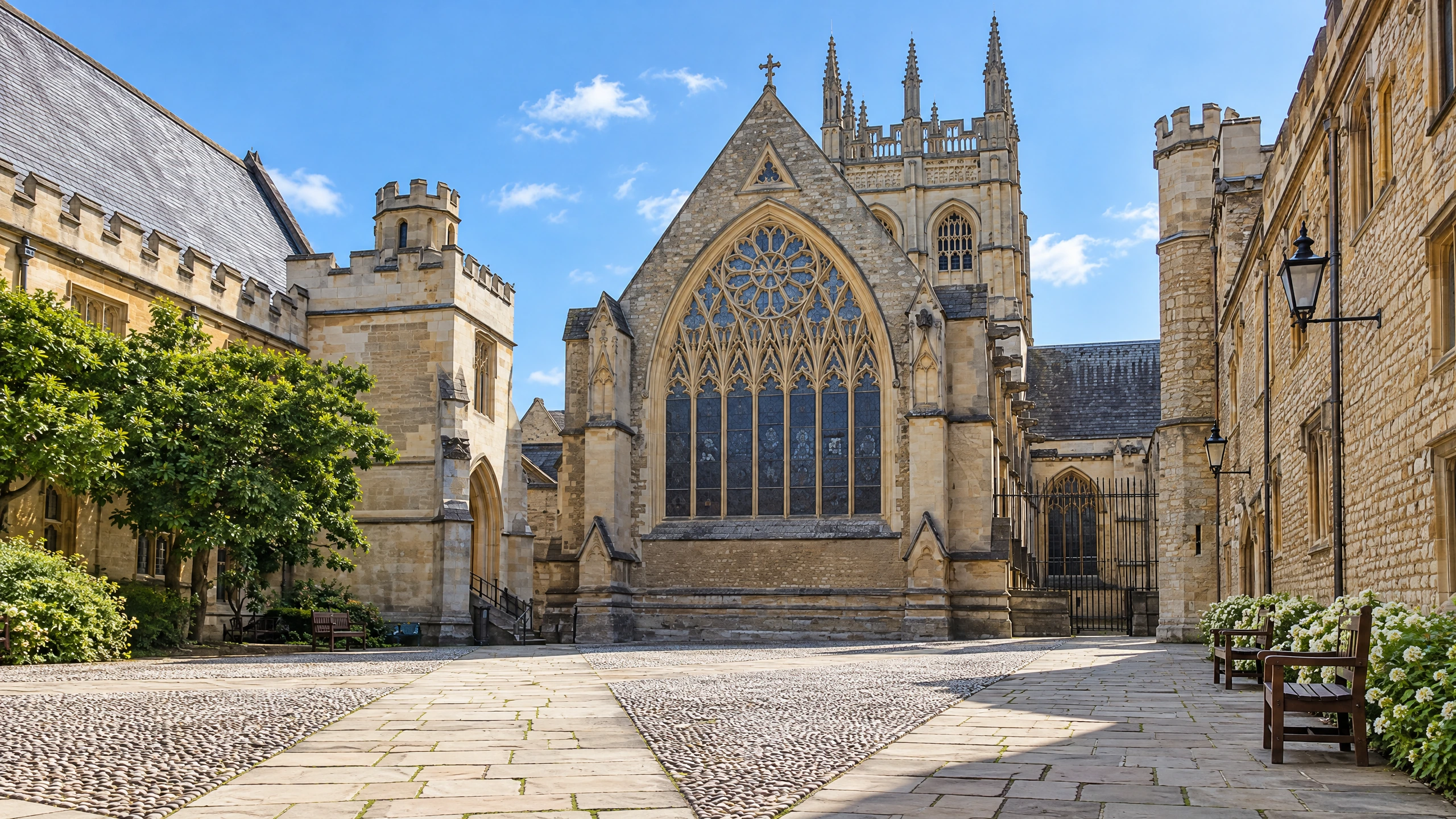
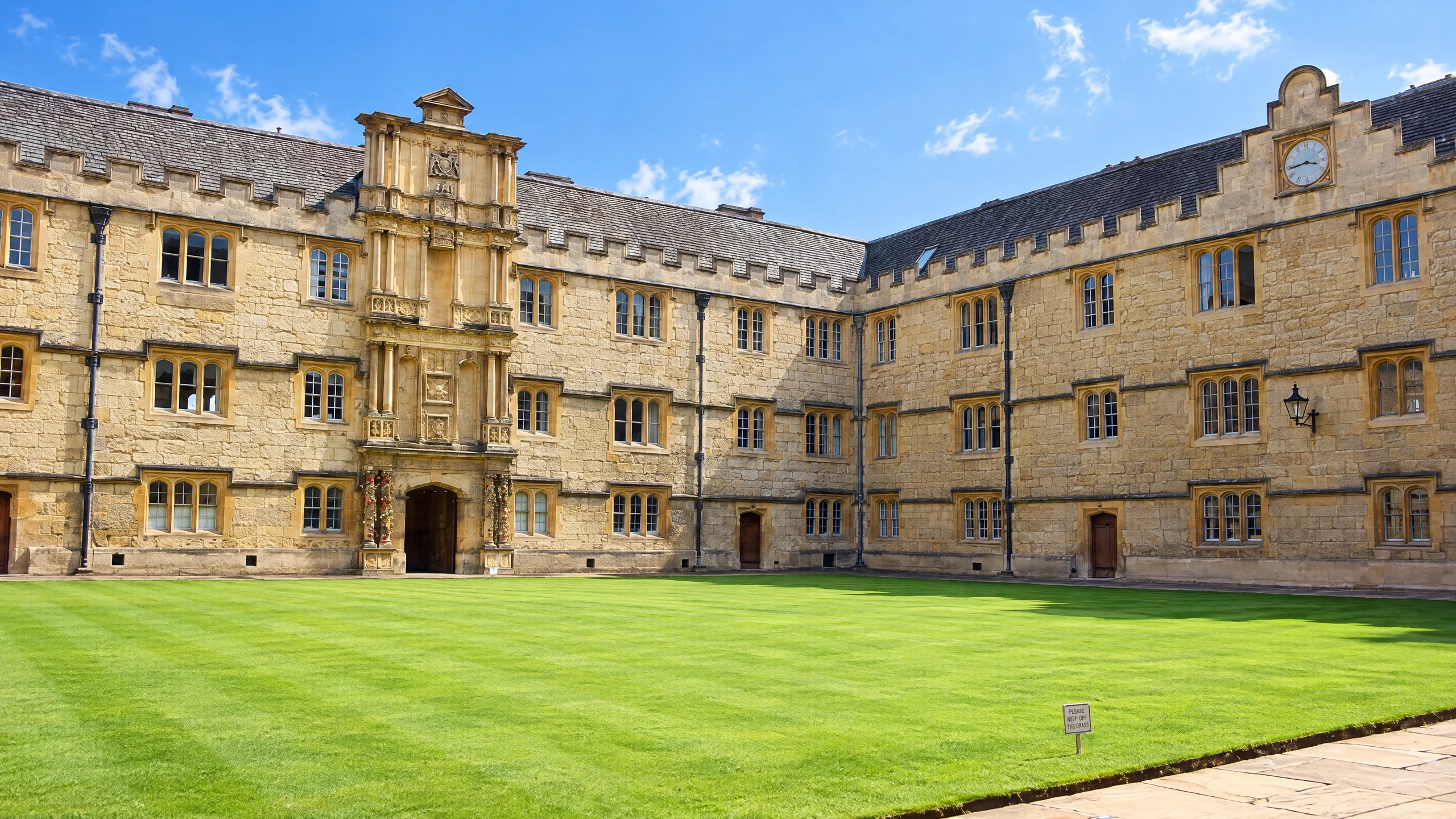
Merton’s small medieval Mob Quad brings a treasury, chapel buildings and library together around one court. Founded in 1264, Merton describes itself as Oxford’s first fully self-governing college: its Warden and fellows could manage the community supported by founder Walter de Merton’s endowments.
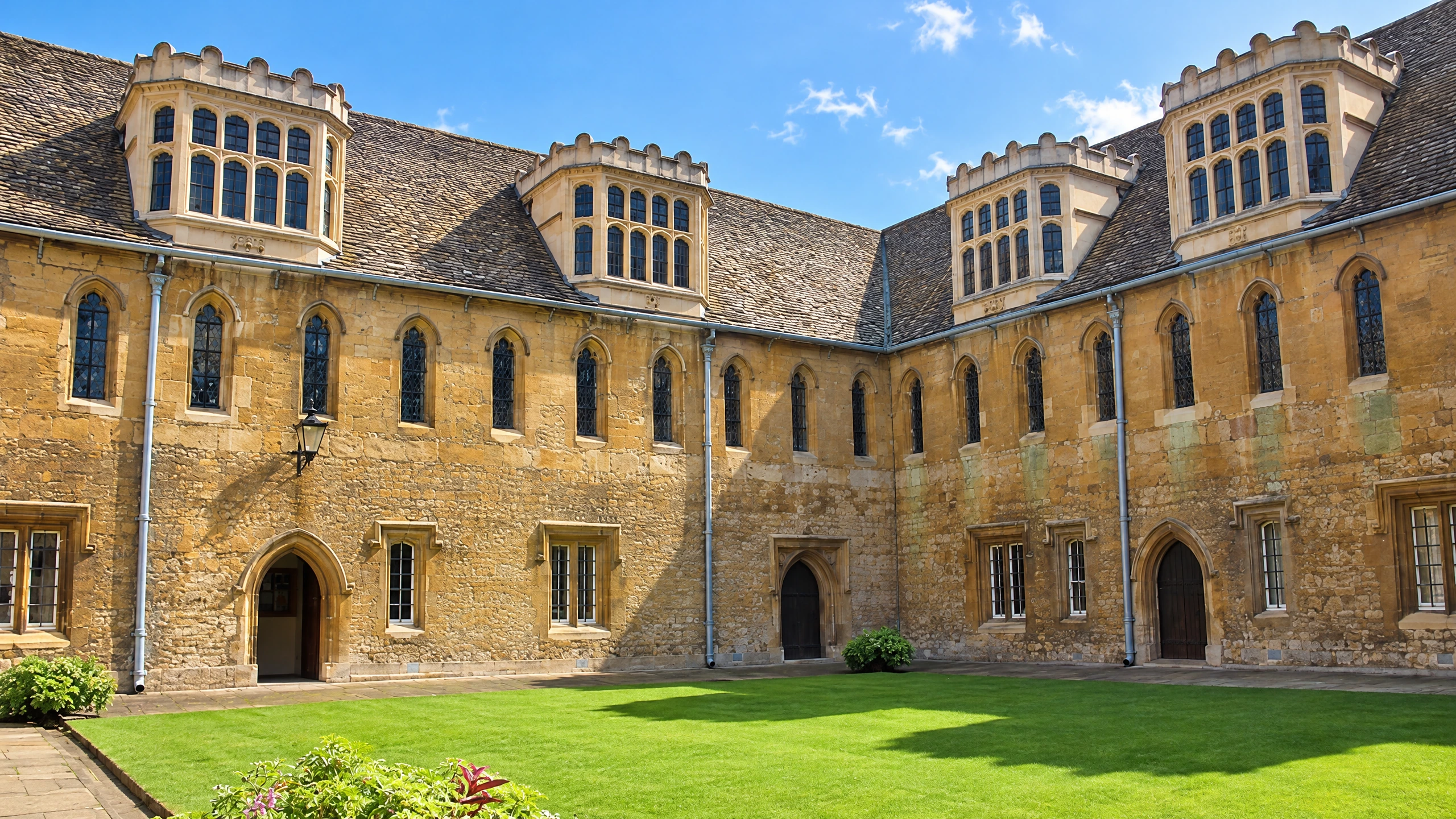
The quad took shape over generations. Its Treasury dates from around 1288–91, the north and east ranges from the early 1300s, and the library ranges from 1373–78. The medieval library remains an academic library; its interior has separate visiting arrangements.
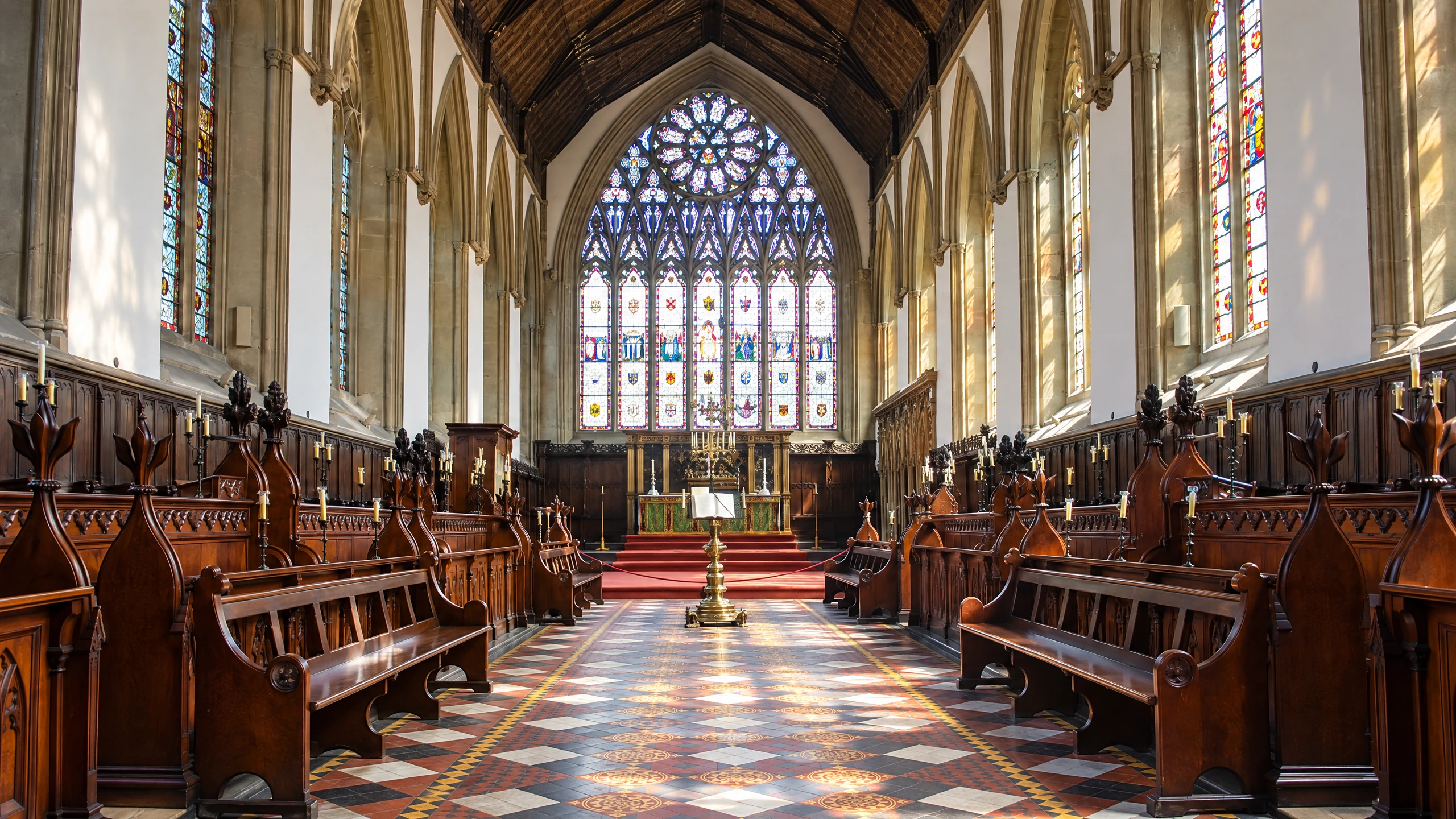
The chapel grew over several centuries too. Its earliest part began in the late 1280s, the tower was completed in 1450, and a lectern given in 1504 survives alongside a screen added by Christopher Wren in 1673.
Merton’s former members include poet T. S. Eliot, mathematician Andrew Wiles, geneticist Alec Jeffreys and Emperor Naruhito, who researched Thames transport here. J. R. R. Tolkien taught at Merton as Professor of English Language and Literature from 1945 to 1959.
The ordinary visit includes four quads and the chapel, subject to college activities. Beneath Fitzjames Arch, the war memorial remembers members lost in the World Wars; an information folder is available at the Lodge.
People and ideas
Famous former students

T. S. Eliot
1914–1915
The poet came to Merton for graduate philosophical study in 1914–15.
College connection
Graduate student; no Oxford degree completed. 1914–1915.

Naruhito
1983–1985
The future Emperor of Japan researched transport on the Thames at Merton and wrote The Thames and I about his Oxford years.
College connection
Graduate research student, studying for an MLitt in History, 1983–1985.

Andrew Wiles
The mathematician studied at Merton before his later proof of Fermat’s Last Theorem.
College connection
Undergraduate degree student.

Roger Bannister
1950
The athlete and physician came to Merton for postgraduate study in 1950 and broke the four-minute mile in 1954.
College connection
Postgraduate student and later Honorary Fellow. Came to Merton 1950; doctorate completed 1963.

Elizabeth (Liz) Truss
1993–1996
The former British prime minister studied Philosophy, Politics and Economics at Merton from 1993 to 1996.
College connection
PPE degree student. 1993–1996.

Fiona Murray
1986
The scientist and innovation researcher studied Chemistry at Merton from 1986.
College connection
Chemistry degree student. Arrived 1986.

Gunilla Karlsson Hedestam
1990
The immunologist came to Merton for doctoral research in Biomedical Sciences in 1990.
College connection
DPhil student in Biomedical Sciences. Arrived 1990.

Princess Akiko of Mikasa
2001–2002
The art historian researched Japanese art at Merton and received her DPhil in 2011.
College connection
Research student and DPhil graduate. 2001–2002; October 2004–January 2010; DPhil awarded 2011.

Alec Jeffreys
1968
The geneticist studied at Merton and later developed DNA fingerprinting and profiling.
College connection
Student, 1968 cohort; later Honorary Fellow.
Fellows, founders and other connections

J. R. R. Tolkien
1945–1959
The author and scholar was Merton Professor of English Language and Literature from 1945 to 1959.
College connection
Professor and Fellow, 1945–1959; not a Merton student.
The story
History & character.
Walter de Merton, royal administrator, Chancellor of England and later Bishop of Rochester, founded the college in 1264. Its endowments supported a community governed by its own Warden and fellows, an influential model for college life. Merton describes itself as Oxford’s first fully self-governing college.
The original foundation was for twenty fellows. Undergraduates were formally added in the early 1380s, when former fellow John Wyliot endowed scholarships known as Postmasterships.
Mob Quad grew over nearly a century. The Treasury was built around 1288–91; the north and east ranges and Sacristy followed around 1304–11; and the library ranges were added in 1373–78. The library is among Europe’s oldest continuously functioning academic libraries and remains a working resource.
The chapel’s quire began in the late 1280s as part of the Church of St Mary and St John. Transepts followed in the fourteenth and early fifteenth centuries, and the tower was complete by 1450. The chapel still has a lectern given in 1504. Christopher Wren added a screen in 1673; Edward Blore, William Butterfield and George Gilbert Scott contributed to nineteenth-century restoration.
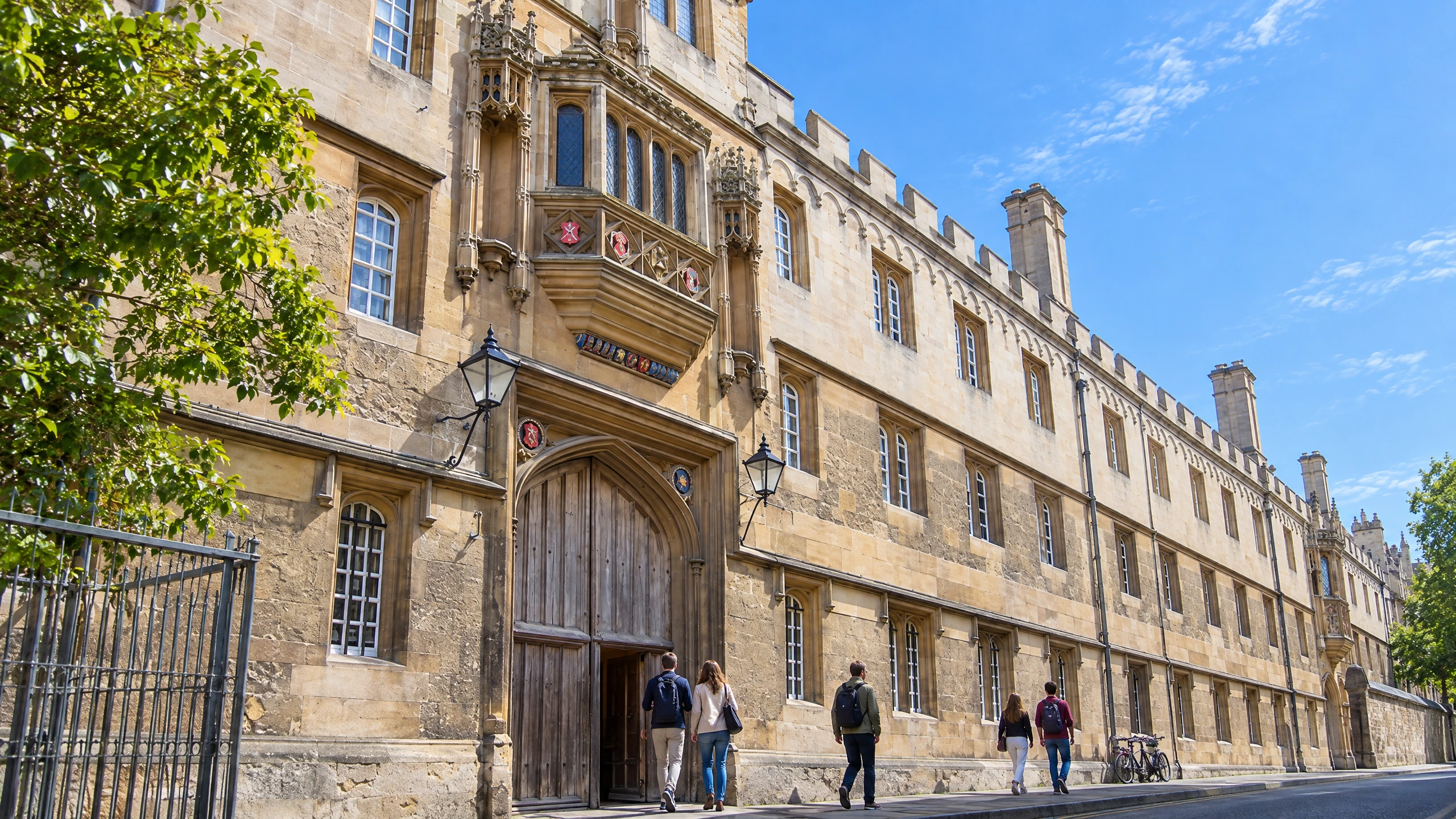
The gatehouse on Merton Street has battlements made possible by a licence from Henry V. It stands near the historic courts on the southern side of the old city.
T. S. Eliot came to Merton for philosophical study in 1914–15. J. R. R. Tolkien was Merton Professor and a fellow from 1945 to 1959, after studying at Exeter and teaching at Pembroke. Other former students include mathematician Andrew Wiles, who proved Fermat’s Last Theorem, and geneticist Alec Jeffreys, who developed DNA fingerprinting.
Emperor Naruhito spent two years at Merton from 1983 researching transport on the Thames. Athlete and physician Roger Bannister came for postgraduate study in 1950 after undergraduate years at Exeter.
The war memorial under Fitzjames Arch remembers college members lost in the World Wars. In 1994 two German Rhodes Scholars were added to the First World War memorial after a campaign by tutor Tom Braun, who had come to Britain as a refugee in 1938.
Look closer
What to see.
Mob Quad
The Treasury, early ranges and medieval library were built over almost a century around this compact court.
The chapel
A lectern given in 1504 and a screen by Christopher Wren join much older medieval fabric.
The gatehouse
The battlemented tower above the Lodge dates from the early fifteenth century, following a licence from Henry V.
Fitzjames Arch memorial
The war memorial remembers members lost in the World Wars. A folder with more about the people named is available at the Lodge.
The historic library
The medieval library is a working academic space. Tours and research visits have separate arrangements.
Make it work
Plan your visit.
Visitors can see four quads and the chapel, subject to college activities. The hall, Fellows’ Garden and residential areas are normally closed, including to alumni. The historic library has separate tour or research arrangements.
Opening is Monday to Friday 2pm–5pm, Saturday 10am–5pm and Sunday noon–5pm, with last admission at 4.30pm. Events can bring closures, including 7 November and 5–7 January 2027.
Admission is £5 for adults and £3 for visitors aged 13–17 or 65 and over. Accompanied children aged 12 and under enter free; other free categories are listed by the college. A map and brochure are included, and payment at the Merton Street Lodge is card only.
The main entrance is level and many visitor routes are step free, although historic surfaces and thresholds vary. The site has two accessible toilets and hearing loops in the Lodge, chapel and T. S. Eliot Theatre. Two disability parking spaces require advance arrangements. Assistance dogs are welcome.
Commercial visits require approval from the Web & Media Officer at least one week in advance.
Visit your way
Access and family planning.
The main entrance is level with a manual door. Many visitor routes are step free, though historic surfaces and thresholds vary.
Two accessible toilets serve the college, and hearing loops are available in the Lodge, chapel and T. S. Eliot Theatre. Two disability parking spaces require advance arrangements.
The compact quads and chapel offer a manageable visit with children. Accompanied children aged twelve and under enter free. The entrance is level, though older paving and thresholds can be uneven; the historic library has separate access arrangements.
Self-guided walk
A walk from Merton College
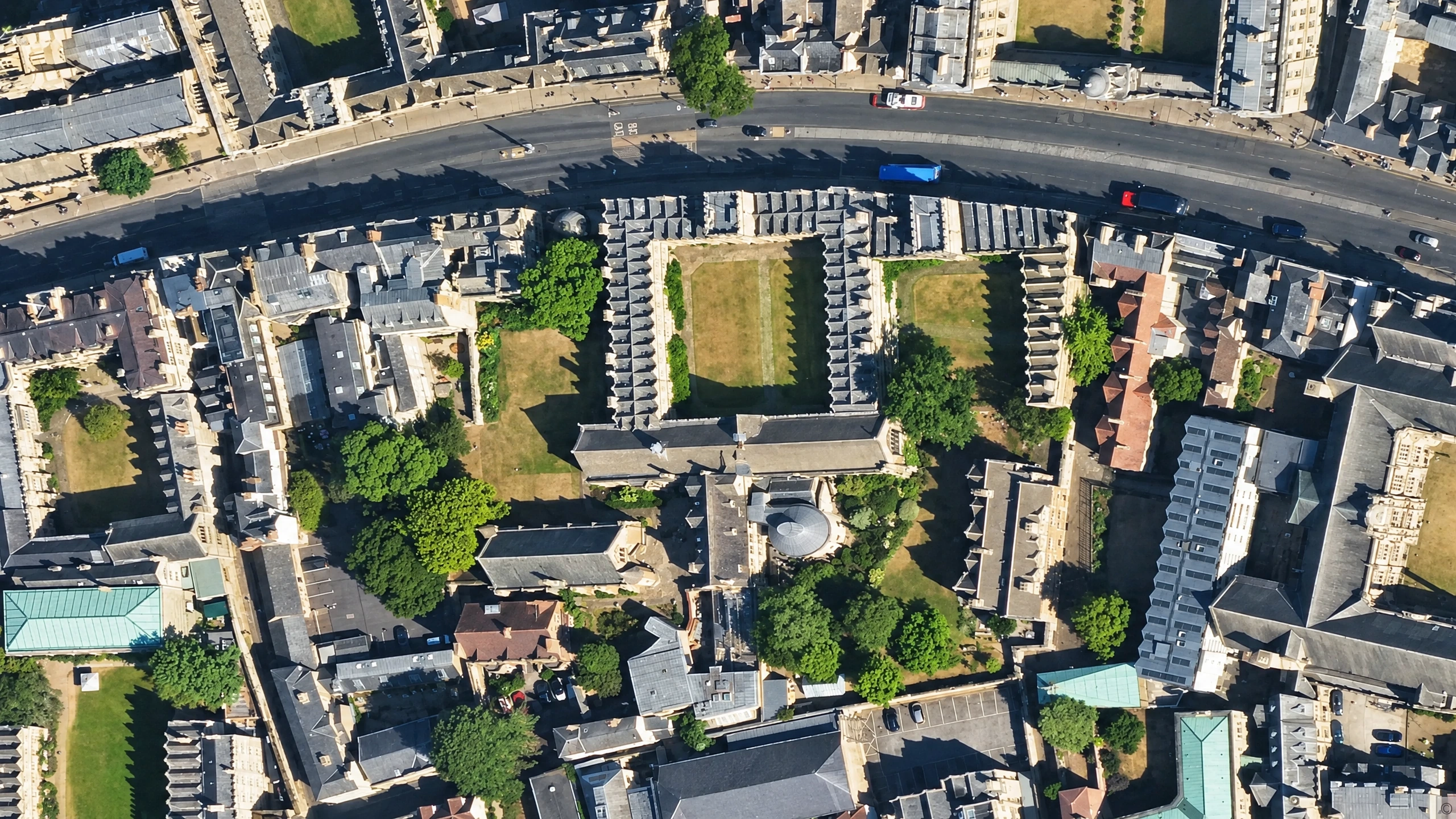
A 60–75 minute walk from Merton follows Merton Street to Oriel Square and High Street before returning to the college.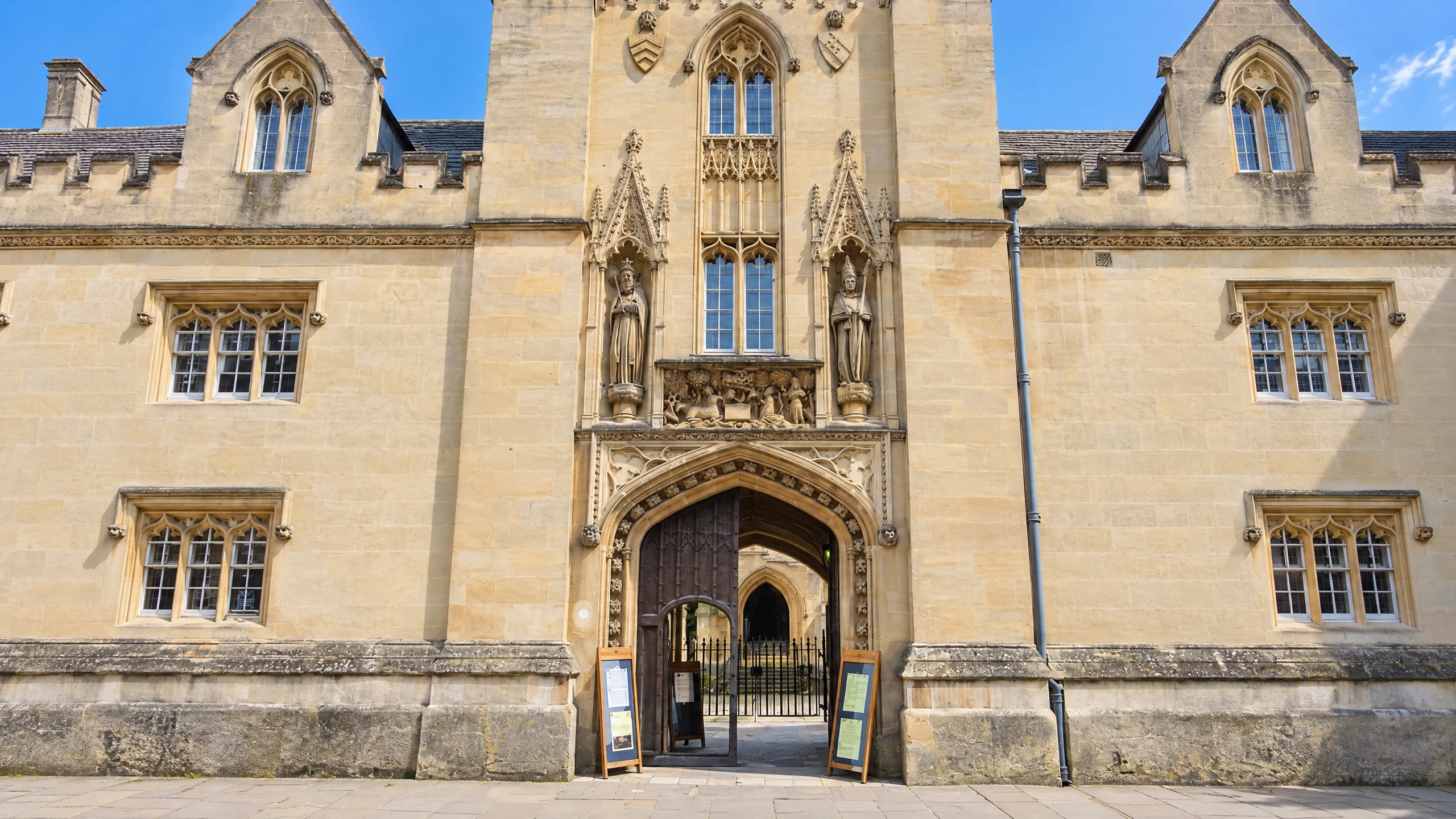
5 min
The college entrance
The battlemented gatehouse stands on Merton Street. The Lodge provides the visitor map and takes card payment.
10 min
Merton Street comparison
Corpus Christi is Merton’s neighbour on the way west towards Oriel Square.
10 min
High Street and Oriel Street
Oriel Street leads north to High Street and its colleges and shops.
10 min
Eastern Merton Street return
The eastern end of Merton Street leads back towards the college gate.
Optional refreshments
Cafés and food stalls around High Street and the Covered Market make a convenient stop.
See it
In pictures.
10 views, full screen. Tap any one to open the viewer.Around here
Make more of the area.
Corpus Christi is nearby on Merton Street, with its own opening and admission arrangements.

The meadow offers paths and open space south of the colleges.

The Botanic Garden lies beside Magdalen Bridge, east along the High Street.
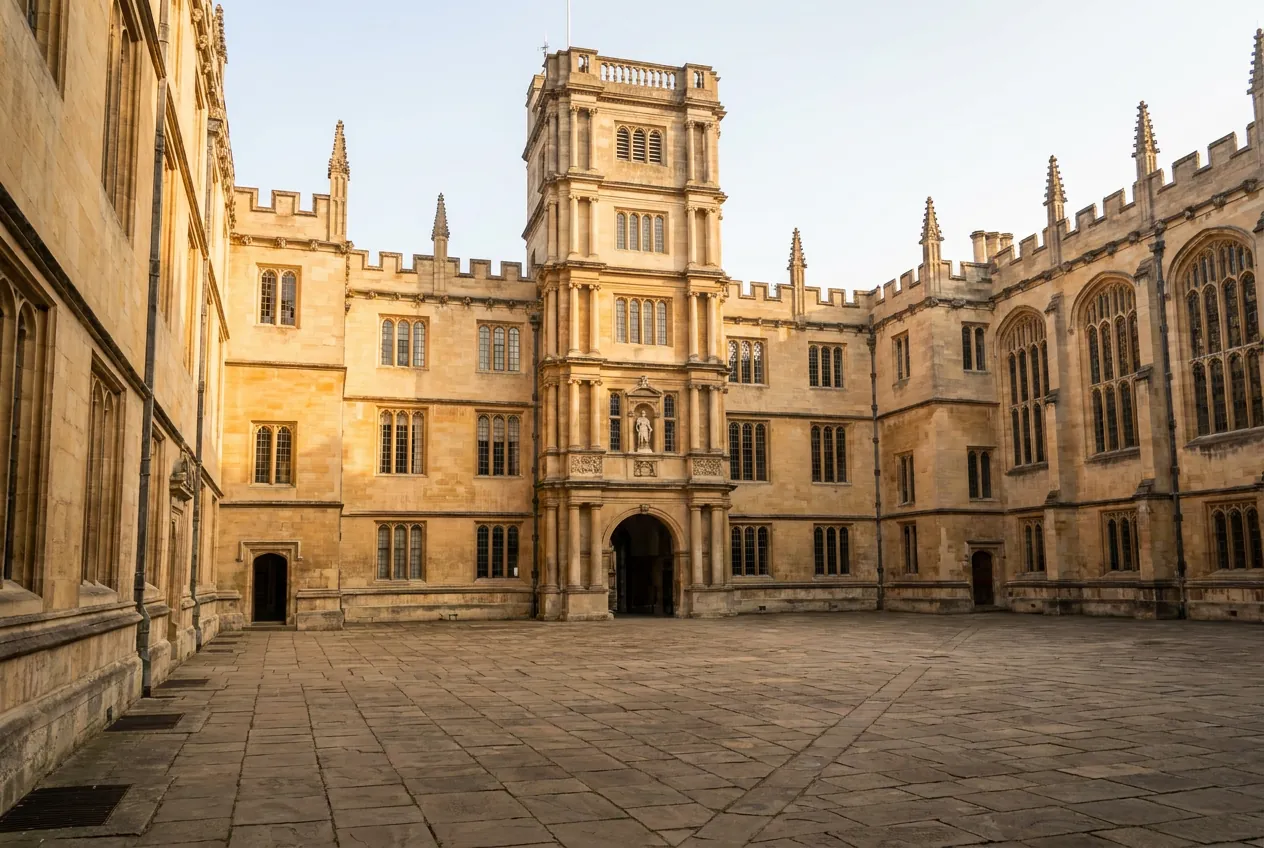
The Bodleian’s historic library buildings and exhibitions lie north of High Street.
Good to know
Questions, answered.
What is distinctive about Merton’s claim to be Oxford’s oldest college?
Merton describes itself as Oxford’s first fully self-governing college. Founded in 1264, its endowed community was governed by its own Warden and fellows.
Who was Walter de Merton?
Walter de Merton was a royal administrator, Chancellor of England and later Bishop of Rochester. He founded the college in 1264.
Why does Merton’s Mob Quad contain buildings of different dates?
The court grew over almost a century: the Treasury dates from around 1288–91, the early ranges from 1304–11 and the library from 1373–78.
How old is Merton’s medieval library?
The library ranges were built in 1373–78. It remains one of Europe’s oldest continuously functioning academic libraries, with separate arrangements for interior visits.
Why is Merton’s Chapel connected with a parish church?
The quire began in the late 1280s as part of the Church of St Mary and St John, replacing the earlier parish church of St John the Baptist.
What did Christopher Wren add to Merton’s Chapel?
Wren added the chapel screen in 1673, centuries after the medieval quire was begun and long after the tower was completed.
Why does Merton’s gatehouse have battlements?
Henry V granted a licence to crenellate, allowing the college to build the battlemented gatehouse tower above today’s Lodge.
What does Merton’s war memorial beneath Fitzjames Arch commemorate?
The memorial under Fitzjames Arch remembers Merton members lost in the World Wars. The Lodge offers a folder with information about them.
Was Tolkien a Merton student or professor?
Tolkien was Merton Professor of English Language and Literature from 1945 to 1959. He had earlier studied at Exeter and taught at Pembroke.
What brought T. S. Eliot to Merton?
Eliot came to Merton for philosophical study in 1914–15 on a Sheldon Travelling Fellowship. He had planned the Oxford stay before war cancelled a summer course in Marburg.
What did Emperor Naruhito research at Merton?
Naruhito researched transport on the Thames during two years at Merton from 1983. He later wrote about his time in The Thames and I.
What did Andrew Wiles study at Merton?
Wiles read Mathematics at Merton from 1971. His later proof of Fermat’s Last Theorem was published in 1995.
How did Roger Bannister’s Merton education differ from his Exeter years?
Bannister came to Merton for postgraduate study in 1950 after undergraduate years at Exeter. He broke the four-minute mile in 1954.
What did Liz Truss study at Merton?
Truss studied Philosophy, Politics and Economics at Merton from 1993 to 1996, before her later career in British politics.
Which Merton student developed DNA fingerprinting?
Geneticist Alec Jeffreys, who entered Merton in 1968, developed DNA fingerprinting and profiling. These techniques are used in forensic identification.
How much does it cost to visit Merton College Oxford?
Adult admission is £5; visitors aged 13–17 and 65 or over pay £3. Accompanied children aged 12 and under enter free. The visit includes the open quads and chapel.
When is Merton College open to visitors?
Opening is Monday–Friday 2pm–5pm, Saturday 10am–5pm and Sunday noon–5pm. Last admission is 4.30pm; college events can cause closures.
Can a Merton ticket be used to enter the medieval library?
The ordinary admission covers the open quads and chapel, not the library interior. In summer, a guided college and medieval library tour costs £10 per person.
How accessible is Merton’s route between Mob Quad and the Chapel?
The main entrance is level and many routes are step free, though old surfaces and thresholds vary. Accessible toilets and hearing loops are available.
Can Merton’s Fellows’ Garden be added to a normal college walk?
No. The Fellows’ Garden is normally closed to visitors, as are the hall and residential areas. Christ Church Meadow is nearby.
Editorial notes
Sources and further reading.
Sources for this guide
Research date: 1 November 2026. Inline links accompany claims. Source status distinguishes full material read from retained partial leads and carried-forward coordinate metadata.
H — Merton history
- URL: https://www.merton.ox.ac.uk/about/history-merton
- Status: read
- Supports: 1264 foundation, self-government, building phases, Chapel and postmasterships.
V — Merton visitor information
- URL: https://www.merton.ox.ac.uk/visitor-information
- Status: read
- Supports: Hours, fees, card-only payments, public areas, restrictions, commercial visits and closures.
L — Historic Library
- URL: https://www.merton.ox.ac.uk/library-and-archives/library
- Status: retained-partial
- Supports: 1373–78 library and separate visitor arrangements.
C — Chapel history
- URL: https://www.merton.ox.ac.uk/chapel-and-choir/history-of-merton-college-chapel
- Status: retained-partial
- Supports: Medieval phases, glass, lectern and restorations.
P1 — Roger Bannister
- URL: https://www.merton.ox.ac.uk/sir-roger-bannister-1929-2018
- Status: retained-partial
- Supports: Merton from 1950, later doctorate and honorary fellowship.
P2 — Fiona Murray
- URL: https://www.merton.ox.ac.uk/professor-fiona-murray-cbe-1986
- Status: retained-partial
- Supports: 1986 Chemistry entry, later MIT and science-policy career.
P3 — Gunilla Karlsson Hedestam
- URL: https://www.merton.ox.ac.uk/professor-gunilla-karlsson-hedestam-1990
- Status: retained-partial
- Supports: 1990 DPhil entry in Biomedical Sciences.
P4 — Elizabeth Truss
- URL: https://www.merton.ox.ac.uk/rt-hon-elizabeth-truss-mp-1993
- Status: retained-partial
- Supports: 1993–96 student course.
P5 — Princess Akiko
- URL: https://www.merton.ox.ac.uk/her-imperial-highness-princess-akiko-mikasa-2004
- Status: retained-partial
- Supports: 2001–02 and 2004–10 study, doctorate awarded 2011.
W — Merton institutional reference
- URL: https://en.wikipedia.org/wiki/Merton_College,_Oxford
- Status: read
- Supports: Student/fellow distinctions, Wiles, Eliot and Naruhito; broad historical context.
M — Merton war memorial
- URL: https://www.merton.ox.ac.uk/merton-college-war-memorial
- Status: retained-partial
- Supports: Memorial interpretation; counts conflict with general visitor wording.
A — University physical access guide
- URL: https://www.ox.ac.uk/about/how-we-are-run/equality-diversity/access-guide/colleges/merton
- Status: read
- Supports: Retained full physical site survey: entrances, thresholds, ramps, lifts, toilets, parking and hearing support. Not a website-accessibility statement.
U — University college visiting directory
- URL: https://www.ox.ac.uk/about/visit-us/visiting-colleges
- Status: read
- Supports: Public access summary; college pages take precedence where explicitly conflicting.
G — Fresh college coordinate reference
- URL: https://en.wikipedia.org/wiki/Merton_College,_Oxford
- Status: read
- Supports: Numeric WGS84 college coordinates read directly from Wikipedia on 1 November 2026. Campus pin, not a surveyed visitor or accessible entrance.
Conflict ledger
The general visitor page says 109 war deaths while retained detailed material separates 109 First World War and 43 Second World War names; do not repeat a combined total until reconciled. College page allows qualifying University members up to four guests, whereas the University summary says three; use the direct current college policy. Older coeducation dates conflict between sources; no exact first-women date is asserted here. Tolkien, Harvey and Bodley are not included as Merton degree students.
Editorial calculations
Walking times, recommended visit durations, comparisons and scores are editorial judgements. No pin is an accessible-entrance certification; no unlisted ticket is described as available.
College-specific FAQ source review — 1 November 2026
Primary college, university, archive or author-estate material used for the revised FAQs. Retained primary pages were reused; additional primary readings were reviewed during the FAQ pass. These links supplement the earlier register without upgrading its blocked or partial entries.
- Tolkien and Oxford: college archives — Retained read primary material or newly read primary page; see the FAQ question for claim scope.
- T. S. Eliot estate: Marburg, London, Oxford — Primary estate indexed body read; direct render returned a template. Supports Eliot’s 1914 Merton study, without an Oxford degree claim.
- Merton: Emperor Naruhito — Retained read primary material or newly read primary page; see the FAQ question for claim scope.
- Oxford Mathematics: Andrew Wiles — Retained read primary material or newly read primary page; see the FAQ question for claim scope.
B audit — Merton: Sir Alec Jeffreys
Supports: Geneticist who developed DNA fingerprinting and profiling; college records 1968 cohort and later Honorary Fellowship.
Status: read-primary; reviewed 1 November 2026.
B audit — Mertonian wins Copley Medal
Supports: Explicitly identifies Alec Jeffreys as a Mertonian, cohort1968, and Honorary Fellow; award for variation and mutation in the human genome.
Status: read-primary; reviewed 1 November 2026.
Further reading and sources
Opening hours, prices, programmes and access arrangements can change. Confirm critical details with the venue.
Keep exploring