Central · Founded 1278
St Edmund Hall
Explore Teddy Hall’s medieval roots, a church turned library and the public Chough Café.
- Founded
- 1278
- Location
- Queen's Lane
- Visiting
- Public visiting hours
- Institution
- College
01 The experience
What to expect.
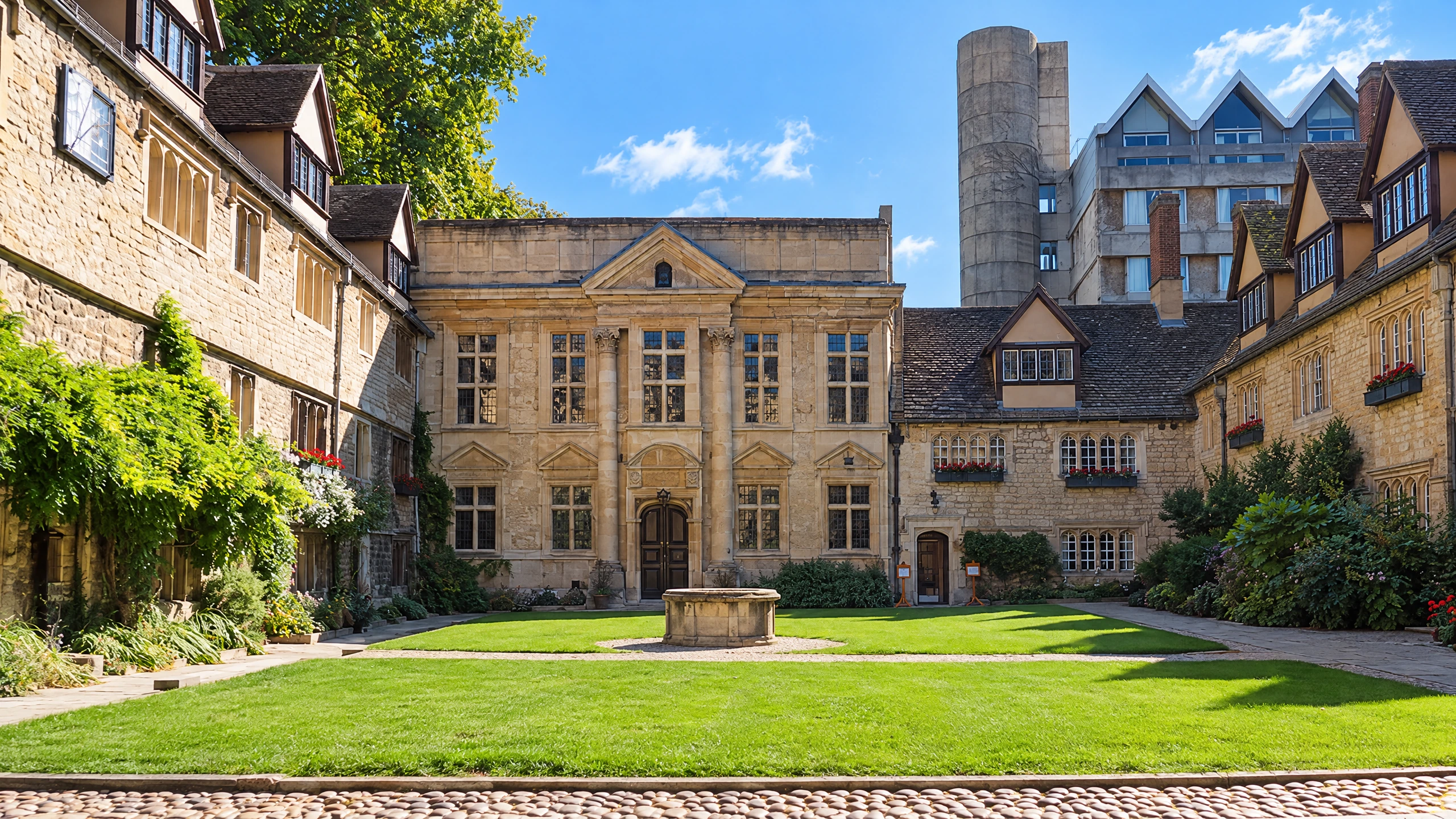
St Edmund Hall, affectionately known as Teddy Hall, grew from one of Oxford’s medieval academic halls. Its first surviving mention dates from 1317, though the hall already existed by then. It became an independent college in 1957 and kept its old name.
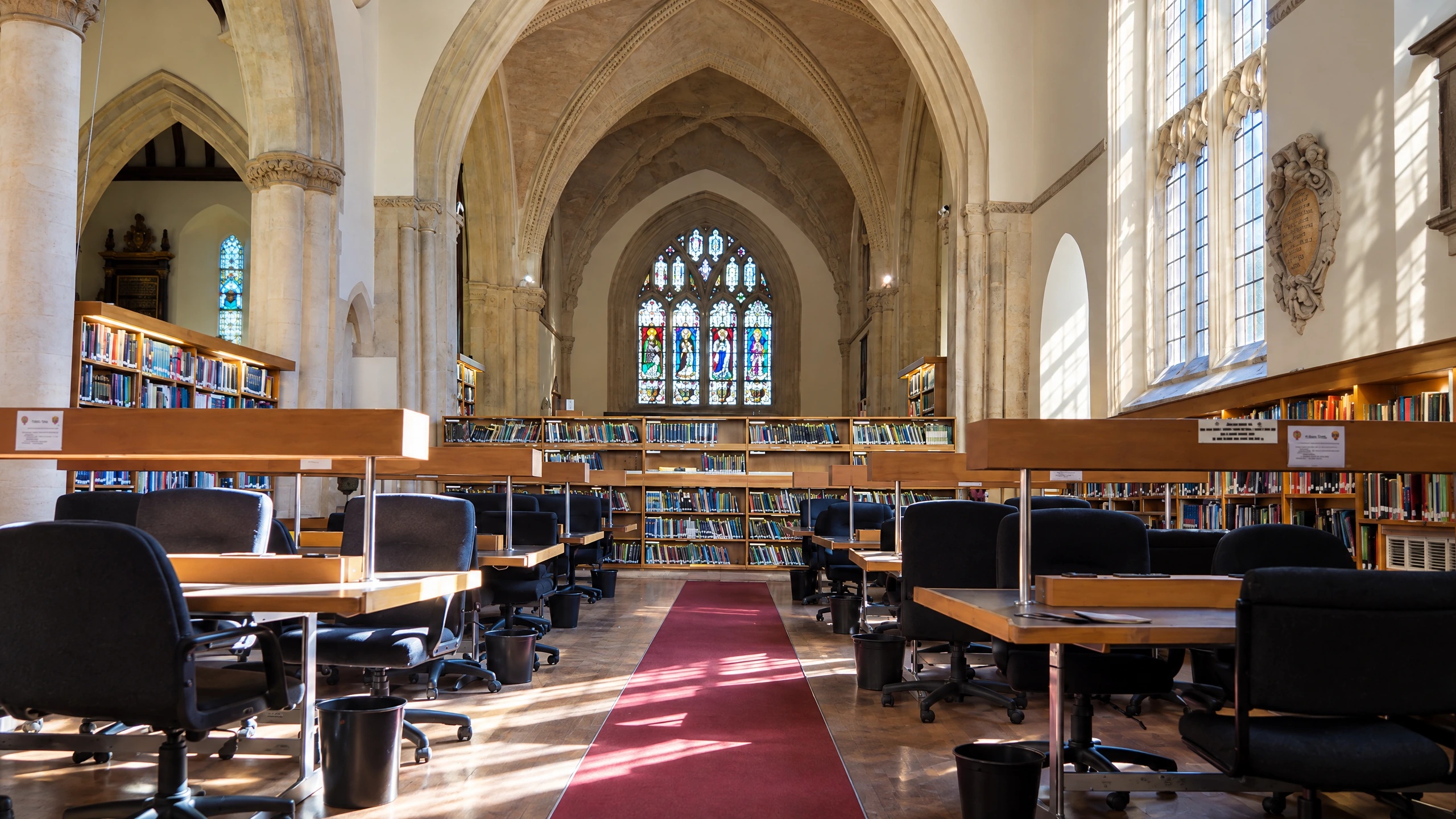
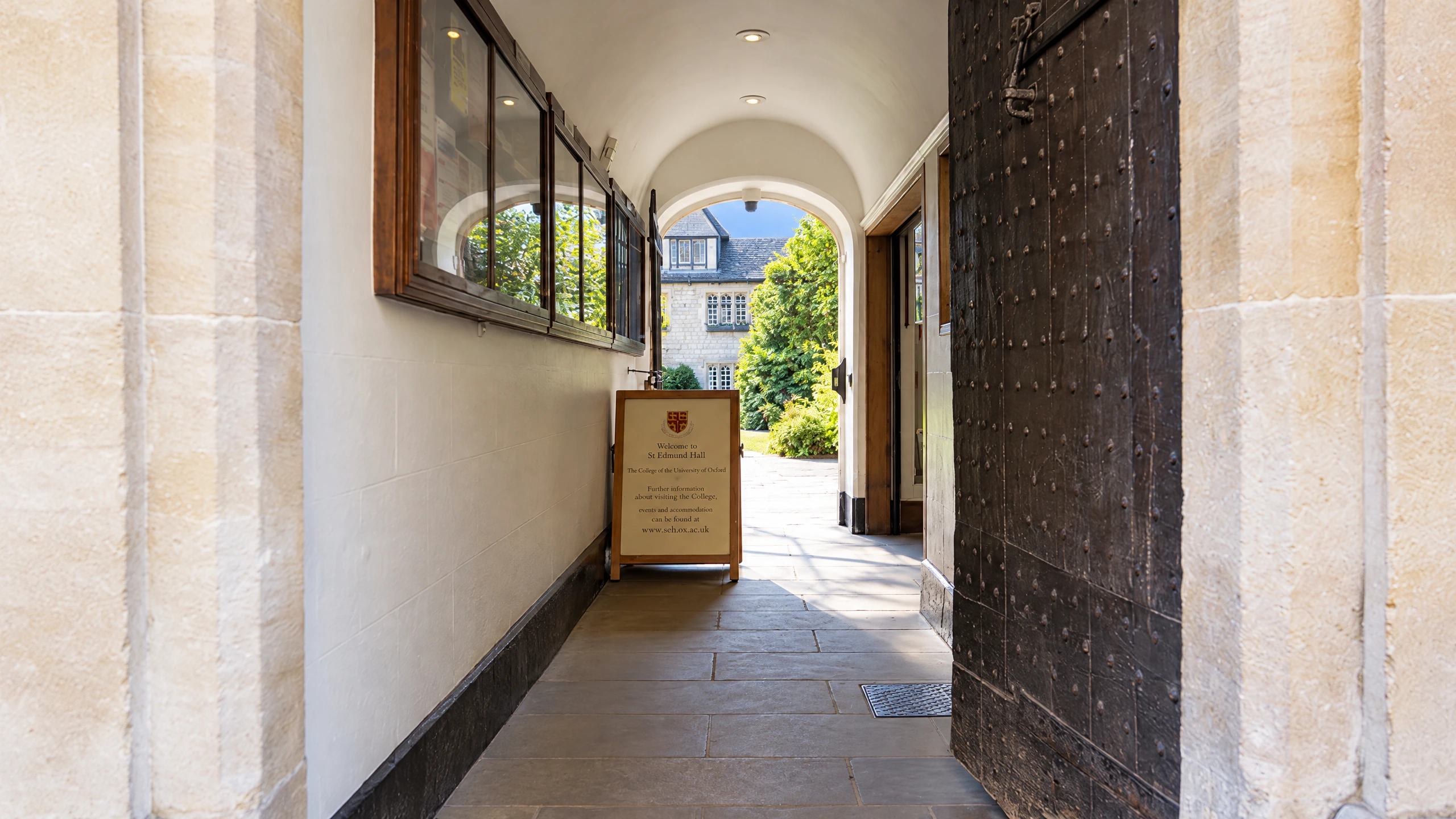
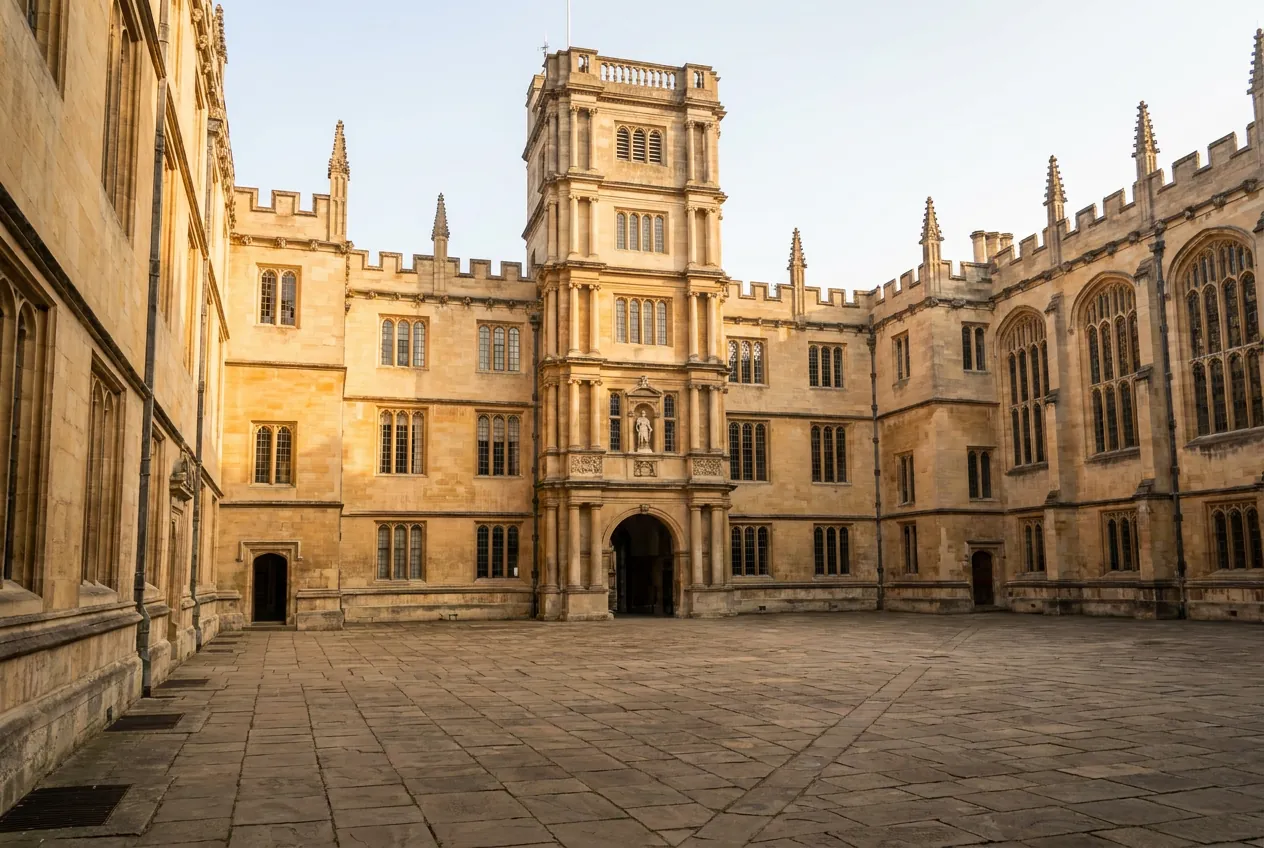
Behind the entrance on Queen’s Lane, the compact Front Quad leads to a chapel and two very different library stories. The former church of St Peter-in-the-East became the main college library in 1970. The older library, completed above the chapel in 1686, holds around 4,300 early books and is available for scholarly consultation by arrangement.
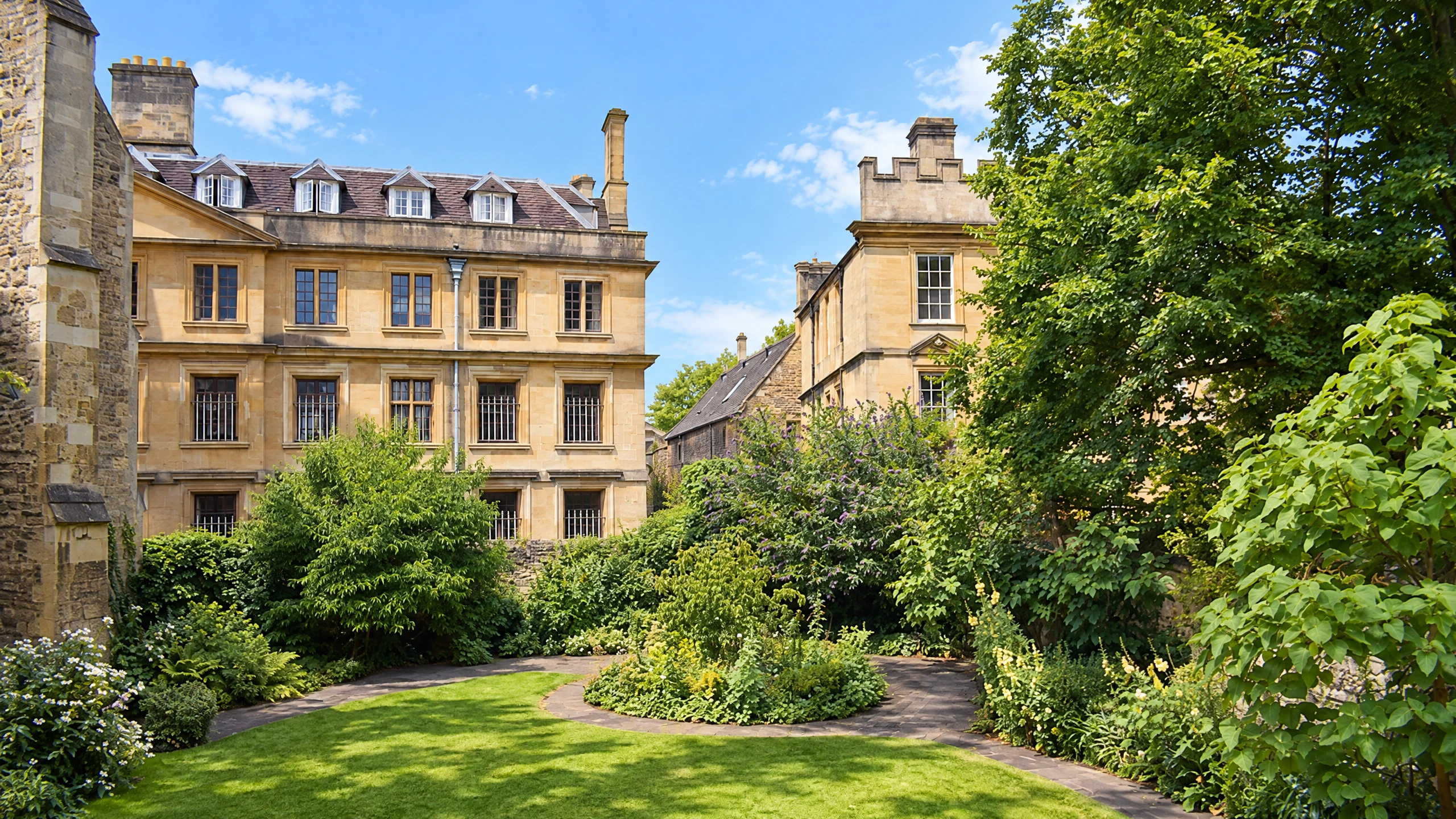
The chapel brings together an east window by William Morris and Edward Burne-Jones and Ceri Richards’s twentieth-century painting Supper at Emmaus. Behind the older buildings, a living wall of ferns, grasses and flowering plants adds another kind of colour to the site.
The public Chough Café opened beside the library in 2026 in a former gardener’s office. It serves Jericho Coffee Traders coffee and cakes made by the college’s pastry chefs.
Former students include Monty Python performer and medieval-history writer Terry Jones, broadcasters Samira Ahmed and Anna Botting, and Keir Starmer, who came for postgraduate law study in 1985.
The hall normally welcomes visitors from 10am to 4pm, subject to events and examinations. A seasonal summer charge of £2 applies, with under-14s free; groups of up to ten visit by appointment. The café has its own public hours.
People and ideas
Famous former students

Keir Starmer
Entered 1985
The lawyer and politician came to Teddy Hall for postgraduate law study in 1985.
College connection
Postgraduate BCL student; later Honorary Fellow. Matriculated 1985.

Terry Jones
The Monty Python performer and filmmaker studied at Teddy Hall and later returned to discuss his research on Chaucer.
College connection
Former student of St Edmund Hall; later Honorary Fellow.

Samira Ahmed
Entered 1986
The journalist and broadcaster studied English at Teddy Hall from 1986.
College connection
English undergraduate. Matriculated 1986.

Anna Botting
Entered 1986
The news presenter studied Geography at Teddy Hall from 1986.
College connection
Geography undergraduate. Matriculated 1986.
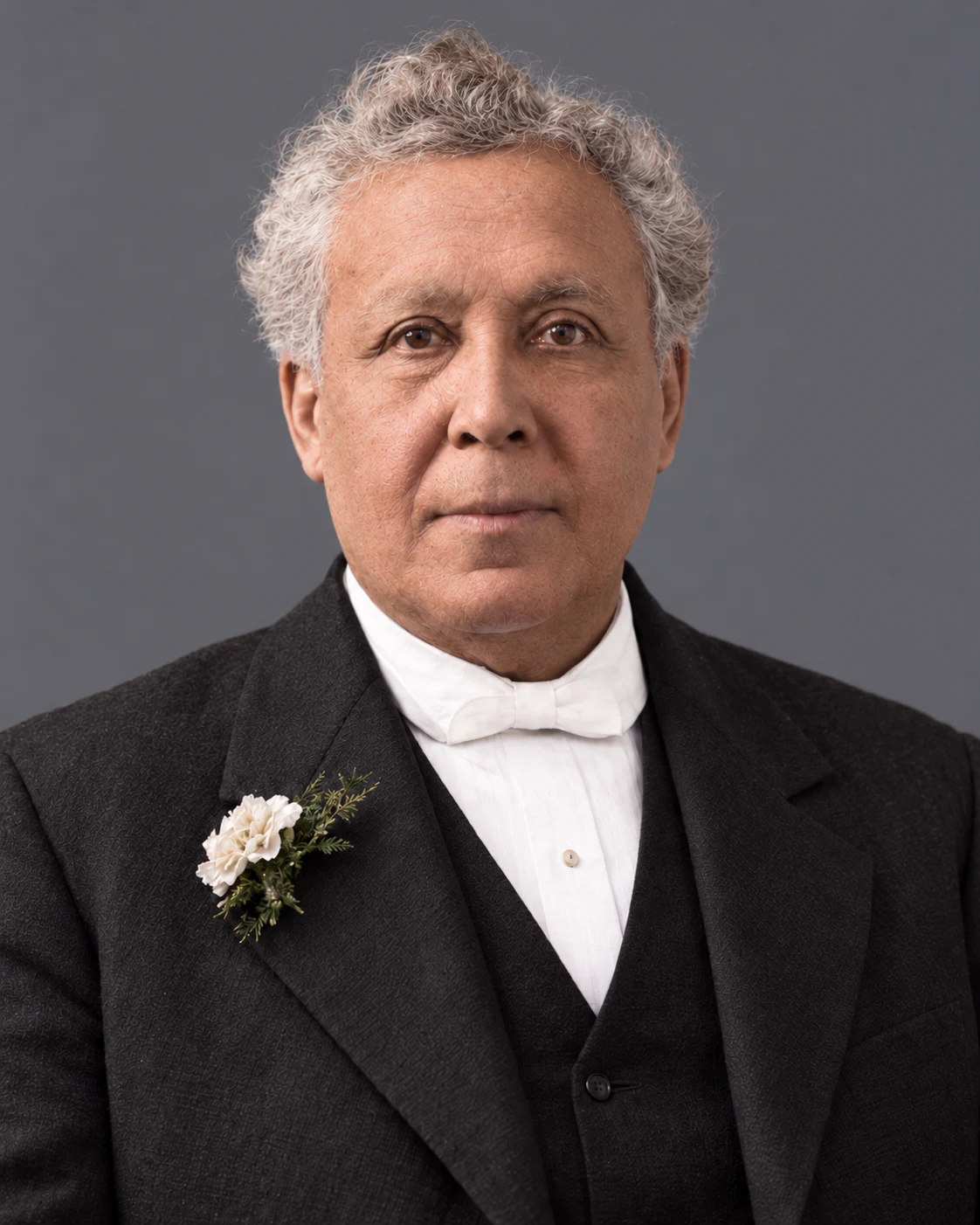
Oronhyatekha
Entered 1861
The Mohawk student entered Teddy Hall in 1861 and later became a physician and public figure.
College connection
Entered St Edmund Hall in 1861; left without completing an Oxford degree.

Mark Sedwill
Entered 1987
The diplomat and former Cabinet Secretary studied Economics at Teddy Hall.
College connection
MPhil student in Economics. Matriculated 1987.

Alyn Shipton
Entered 1972
The jazz historian and broadcaster studied English at Teddy Hall from 1972.
College connection
English undergraduate. Matriculated 1972.

Linda Davies
Entered 1982
The novelist studied Philosophy, Politics and Economics at Teddy Hall from 1982.
College connection
PPE undergraduate. Matriculated 1982.
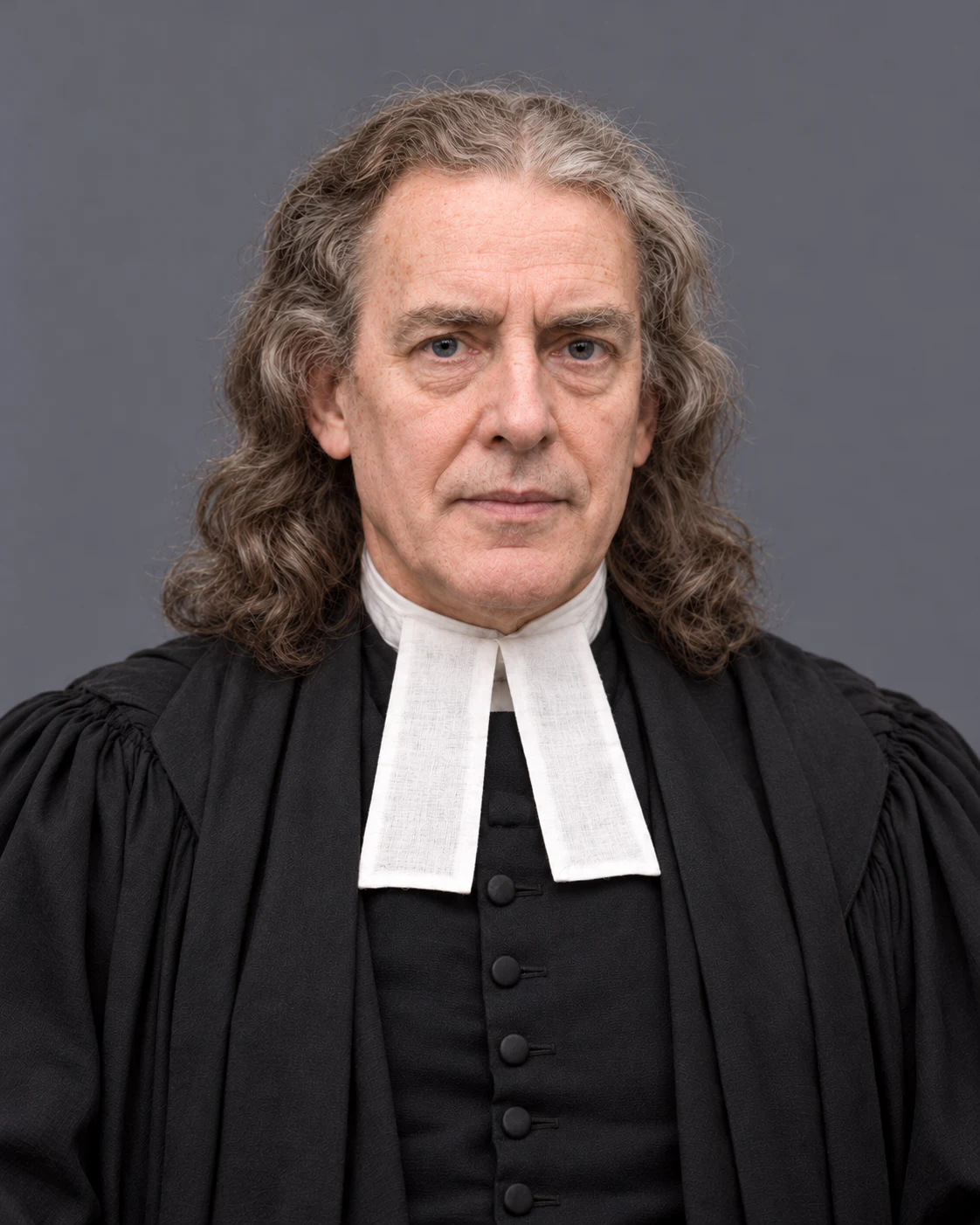
Thomas Hearne
Entered 1696
The antiquary entered the hall in 1696 and became associated with its library catalogues.
College connection
Undergraduate. Matriculated 1696.

Dan Fox
The Teddy Hall alumnus represented Great Britain in hockey at the Rio 2016 Olympics.
College connection
St Edmund Hall alumnus.
Fellows, founders and other connections
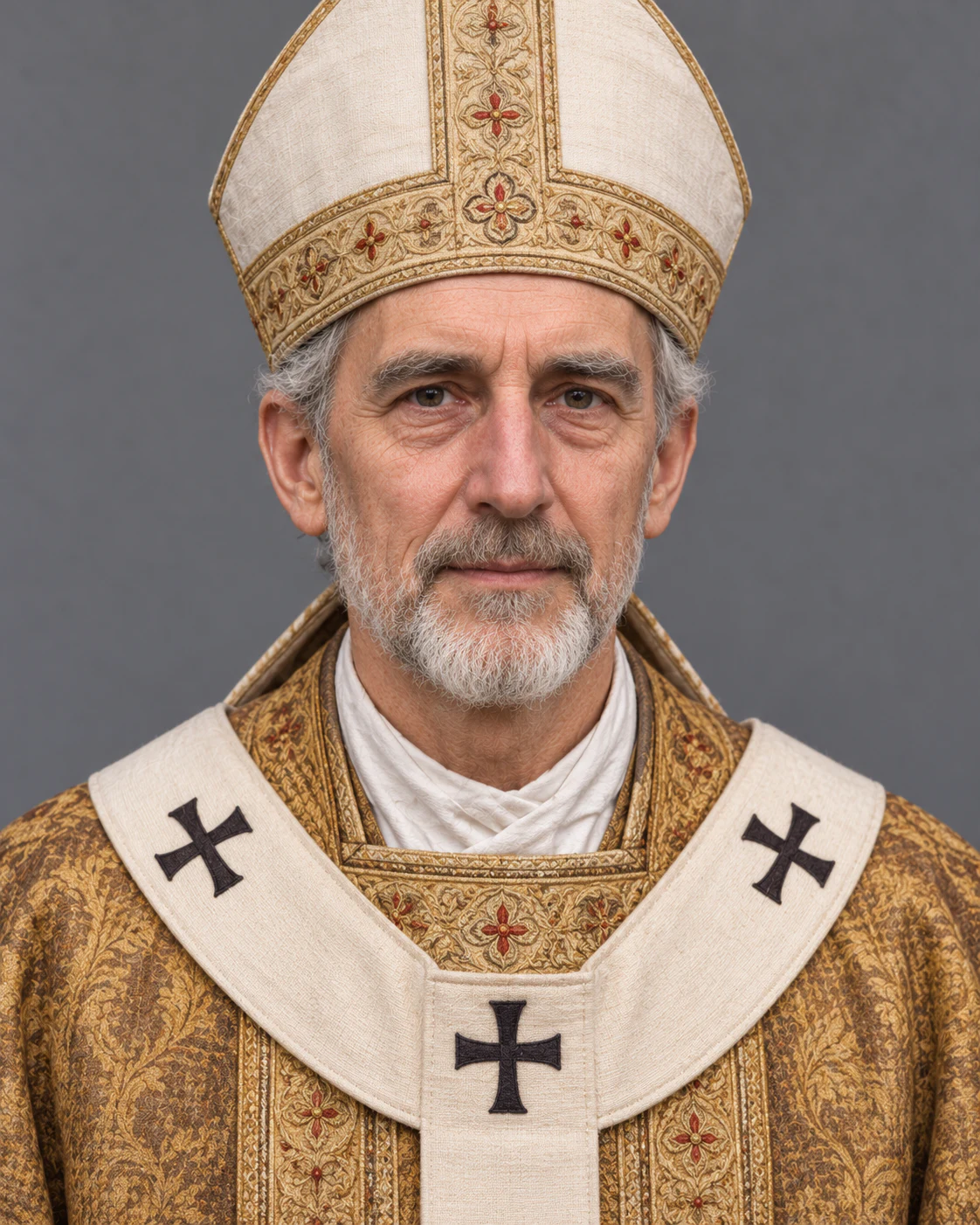
Edmund of Abingdon
The hall’s namesake, later Archbishop of Canterbury, was associated with teaching on the site in the 1190s.
College connection
Medieval teacher associated with the site in the 1190s; the Hall’s namesake.
The story
History & character.
Oxford’s medieval halls offered students accommodation and teaching before college membership became the usual arrangement. St Edmund Hall is the surviving hall that became a college while keeping its name. Its first surviving documentary mention is from 1317, although it existed earlier; its namesake Edmund of Abingdon was associated with teaching on the site in the 1190s.
The hall was connected for a time with neighbouring Queen’s College, which oversaw its affairs. Religious disputes touched its early history: principals Peter Payne and William Taylor were associated with Lollardy; Payne fled England in 1413 and Taylor was burned in 1423.
Principal Stephen Penton helped fund a chapel and library through gifts and the sale of silver plate. The chapel was consecrated in 1682, and the Old Library above it was completed in 1686. Departing students were encouraged to give books or plate. The collection now contains around 4,300 early books.
Thomas Hearne entered in 1696 and became an antiquary associated with the library’s catalogues. An 1865 east window by William Morris and Edward Burne-Jones and Ceri Richards’s Supper at Emmaus, painted in 1957–58, brought later art into the chapel.
St Edmund Hall became an independent college in 1957, retaining its historic name. The former church of St Peter-in-the-East became the main library in 1970, while postwar dining and residential buildings expanded the college behind its older frontage. Women joined the hall in 1978, with the first women undergraduates arriving in 1979.
Terry Jones studied here before his work with Monty Python and later returned to discuss Chaucer research. Broadcasters Samira Ahmed and Anna Botting entered in 1986; Keir Starmer came for postgraduate law study in 1985 after a first degree at Leeds.
A living wall was installed on the Kelly Building in 2019. In 2026 the Chough Café opened beside the library, and a separate residential development, Norham St Edmund, opened in North Oxford.
Look closer
What to see.
Front Quad
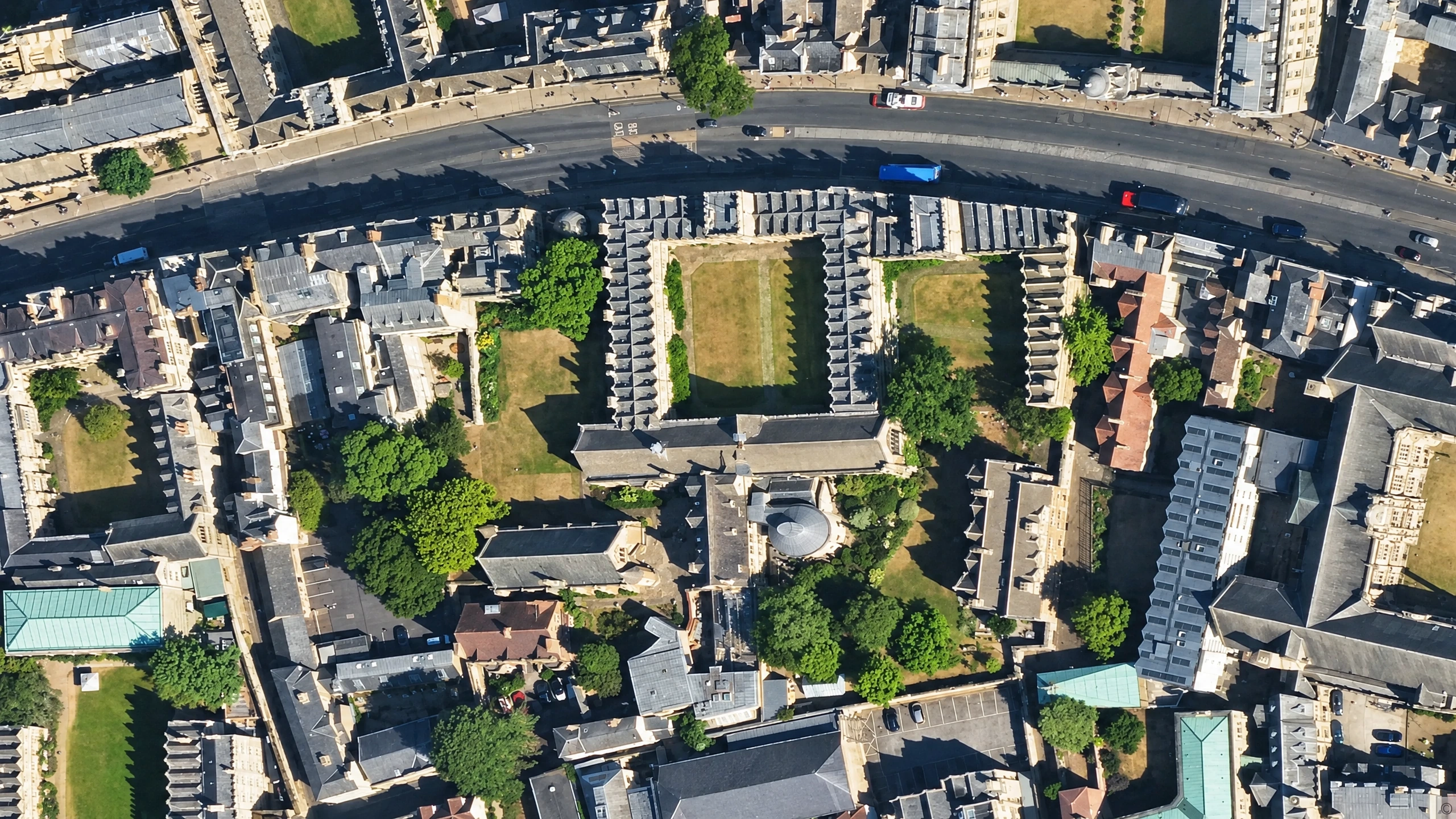
The compact court brings together buildings that grew over centuries around the old academic hall.
Chapel art
The chapel has an east window by Morris and Burne-Jones and Ceri Richards’s painting Supper at Emmaus.
St Peter-in-the-East
The former church has been the main college library since 1970, with its churchyard beside it.
The Old Library
Completed above the chapel in 1686, the library holds around 4,300 early books. Scholarly consultation is arranged separately.
Chough Café
The public café occupies a former gardener’s office and serves coffee and college-made cakes.
The living wall
Ferns, grasses and flowering plants cover a 39-square-metre wall on the Kelly Building.
Make it work
Plan your visit.
The hall normally opens daily from 10am to 4pm, subject to events and examinations. Seasonal summer admission is £2, with under-14s free. Groups of up to ten need an appointment.
The entrance is on Queen’s Lane. Chough Café has separate public hours: Monday to Friday 9am–4pm, with weekend opening in the summer vacation. It serves coffee and college-made cakes beside the library.
Queen’s Lane entry and the quad routes are step free, although the heavy manual gates may need assistance. The Lodge has steps from the entrance corridor, but porters can come out; a ramped route is available from Front Quad. The dining hall is step free, and the site has two accessible toilets and a portable hearing loop. Library and bar routes have narrower or stepped areas.
St Peter-in-the-East is a working college library. Scholarly consultation of the Old Library requires a written application to the Librarian.
Visit your way
Access and family planning.
Queen’s Lane entry and quad routes are step free, although heavy manual gates may need porter assistance. The Lodge has steps from the entrance corridor, but porters can come out; a ramped route is available from Front Quad.
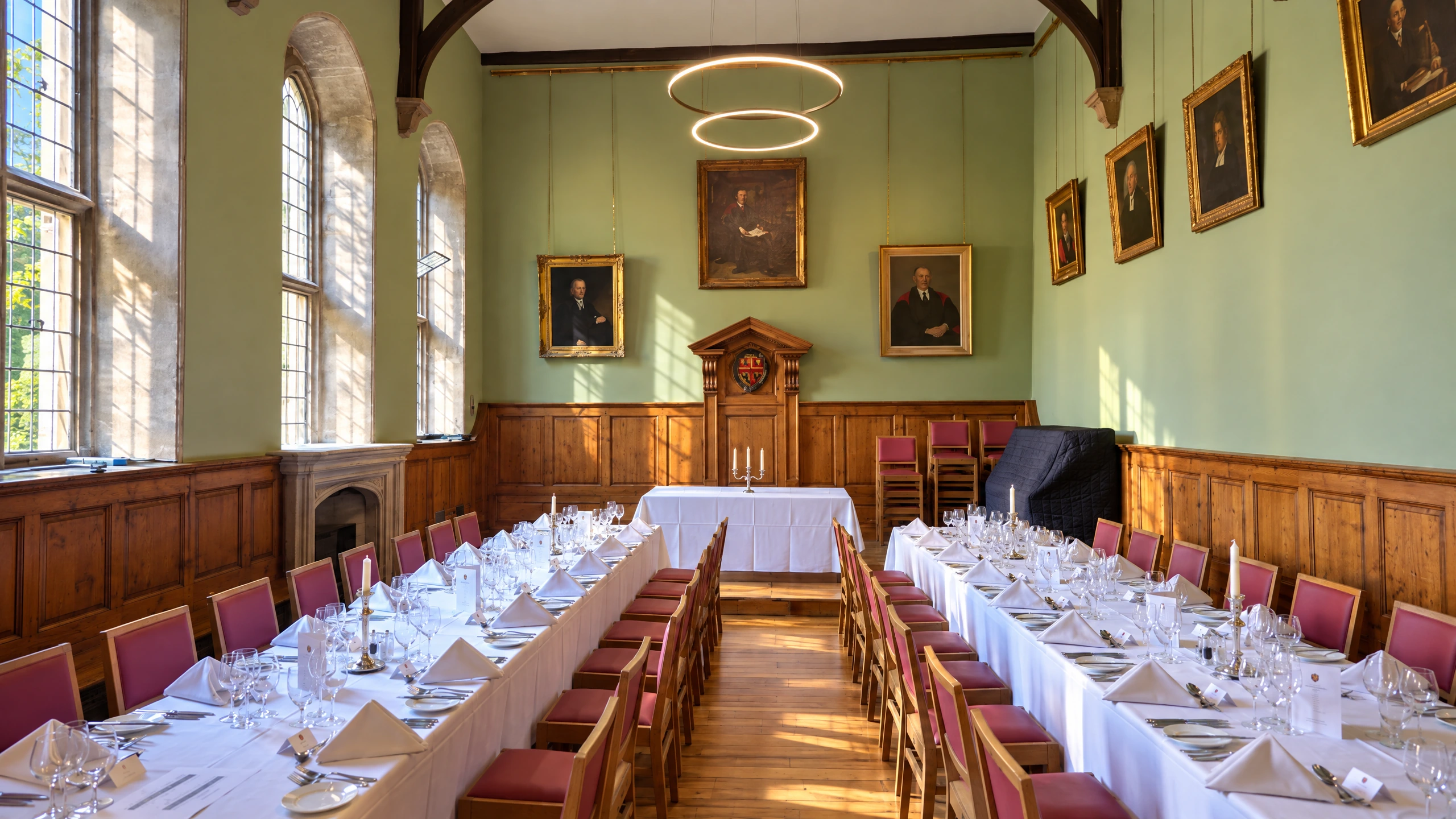
The dining hall is step free. Two accessible toilets and a portable hearing loop are available, while library and bar routes include narrower or stepped areas.
The compact quad, churchyard and café make a manageable short visit. Children may enjoy spotting how a former church became a library and seeing the living wall when the route includes it. Under-14s enter free during the summer admission period.
Self-guided walk
A walk around Teddy Hall
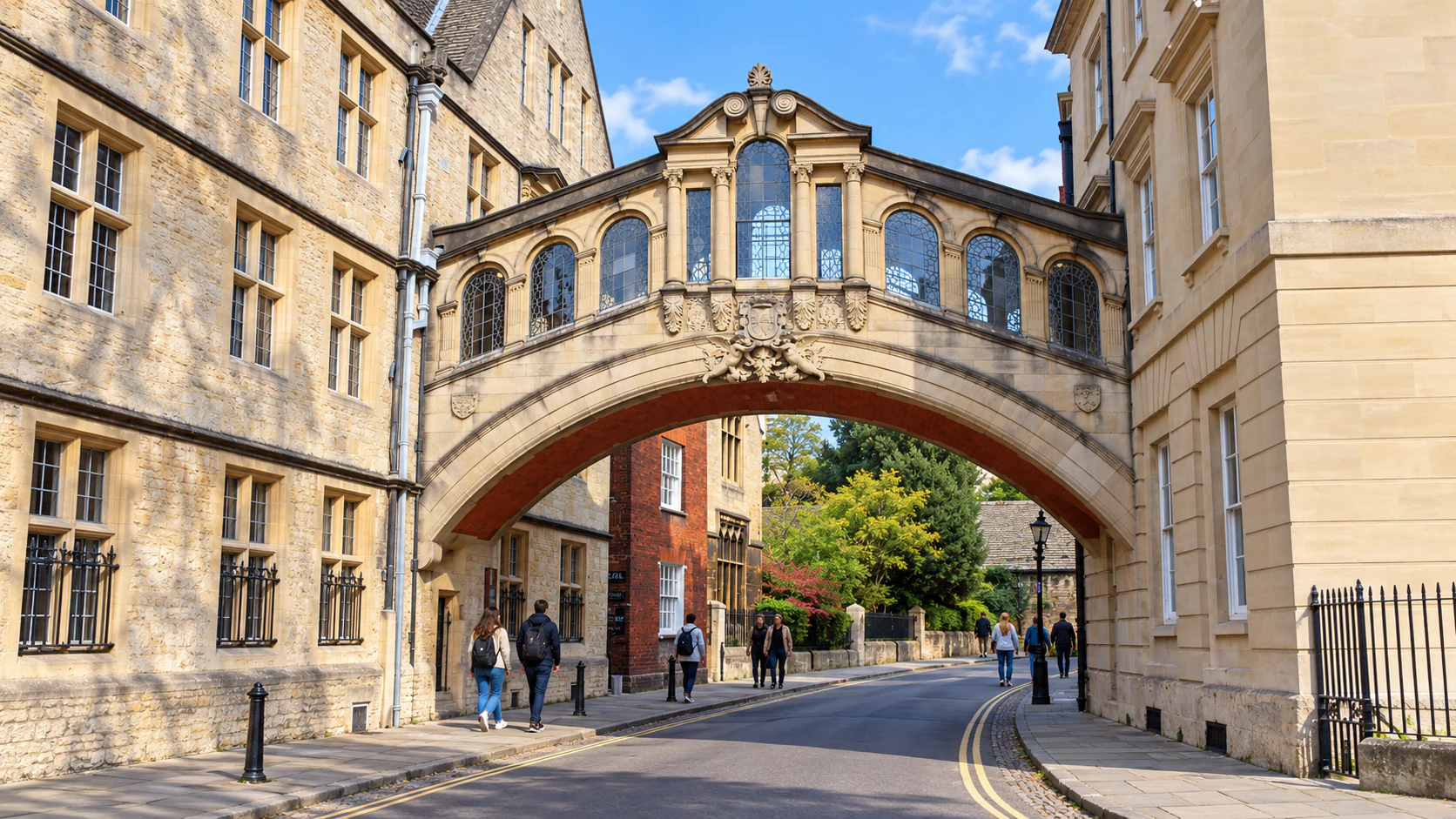
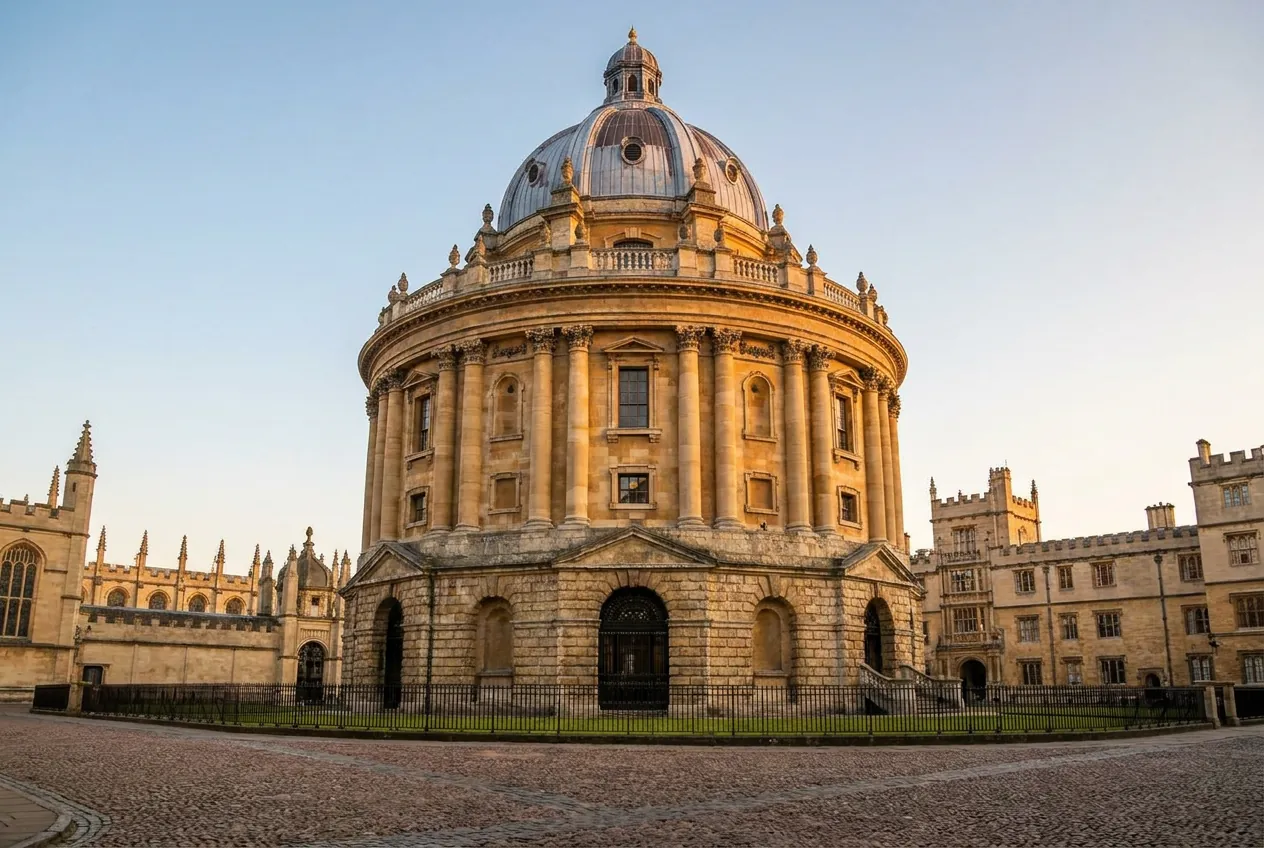
A public-street circuit links Queen’s Lane with High Street, New College Lane and Radcliffe Square.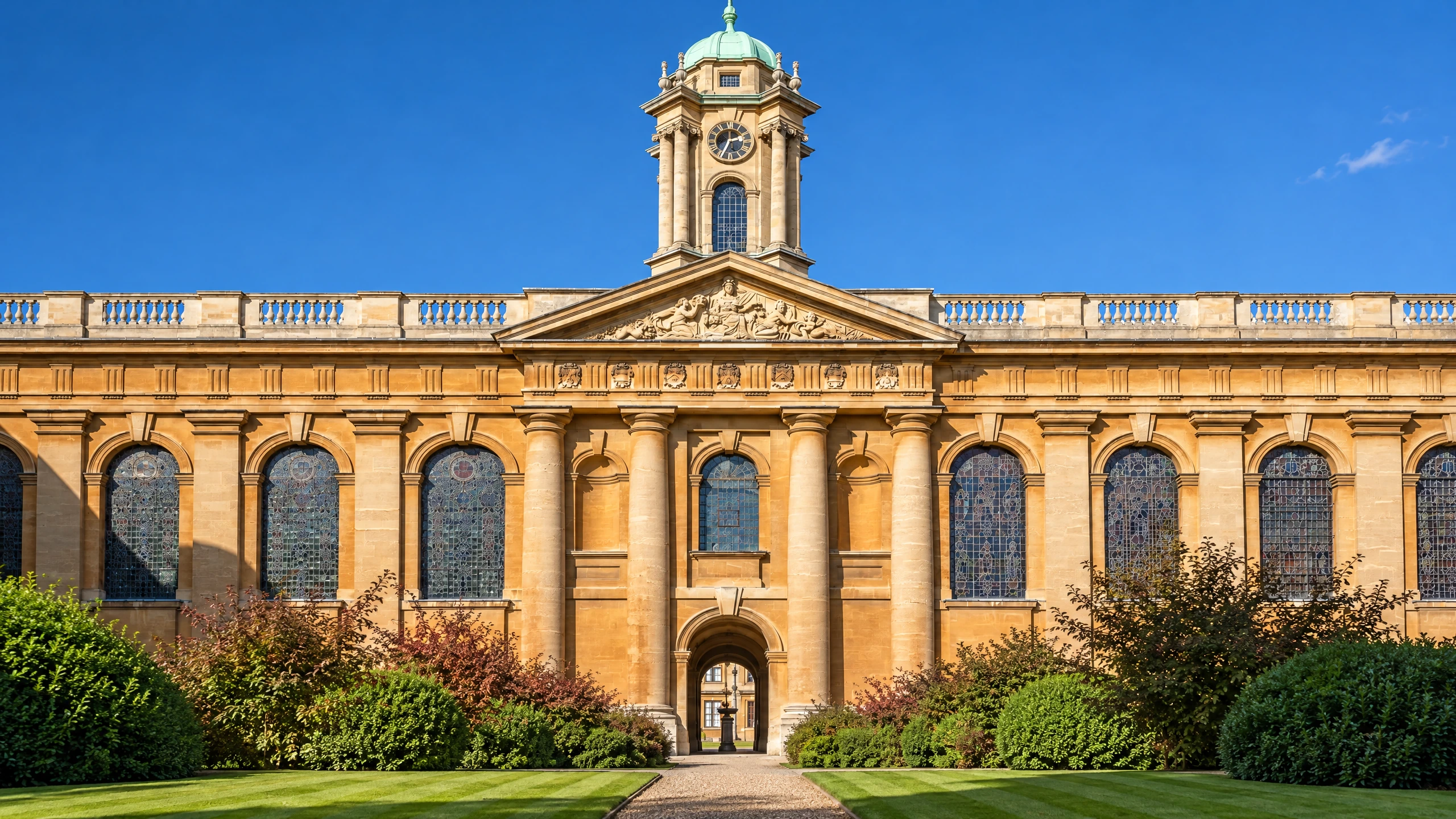
Queen’s Lane entrance
Teddy Hall’s entrance stands on the winding lane beside Queen’s College.
High Street
Queen’s Lane meets High Street near the classical frontage of Queen’s College.
Optional college extension
The hall normally opens from 10am to 4pm; Chough Café has separate public hours. Events and examinations can affect college visits.
See it
In pictures.
10 views, full screen. Tap any one to open the viewer.Around here
Make more of the area.
Queen’s is Teddy Hall’s neighbour and once oversaw its affairs. It has separate visiting arrangements.
about 2 min walk on foot
High Street
Queen’s Lane meets the High Street close to other college frontages and shops.
The library quarter and circular Radcliffe Camera are a short walk west.

The Botanic Garden lies east along High Street beside Magdalen Bridge, with separate admission.
Good to know
Questions, answered.
How old is St Edmund Hall Oxford?
The first surviving reference dates from 1317 and suggests the hall already existed. Its precise founding year is not known.
Why is St Edmund Hall named after Edmund of Abingdon?
Edmund of Abingdon, later Archbishop of Canterbury, was associated with teaching on the site in the 1190s, before the surviving 1317 reference.
Is St Edmund Hall an Oxford college?
The hall retained its historic name when it became an independent college in 1957, preserving its connection with Oxford’s medieval academic halls.
What books survive in St Edmund Hall’s Old Library?
The Old Library holds around 4,300 books, including works from the fifteenth century on theology, history, literature, science and geography.
Why are shelving and chains part of Teddy Hall’s Old Library story?
The library is traditionally identified as an early Oxford example of wall shelving and the last to retain chains on its books.
Why is Teddy Hall’s modern library inside a church?
The former church of St Peter-in-the-East has served as the main college library since 1970, providing study space beside its churchyard.
Who made the stained glass in St Edmund Hall’s chapel?
William Morris and Edward Burne-Jones supplied the stained glass for the chapel’s reconstructed east window in 1865.
What is Ceri Richards’s Supper at Emmaus doing in Teddy Hall?
Richards painted Supper at Emmaus in 1957–58 for the space behind the chapel altar, alongside its older architecture and stained glass.
When did women join St Edmund Hall?
Women joined the hall in 1978, and its first women undergraduates arrived in 1979 after the college’s postwar expansion.
What grows on St Edmund Hall’s living wall?
The 39-square-metre wall includes ferns, grasses, hostas and flowering evergreen perennials. It was installed on the Kelly Building in 2019.
What did Keir Starmer study at St Edmund Hall?
Starmer came in 1985 for the postgraduate Bachelor of Civil Law after his first degree at Leeds, before his legal career.
Who was Oronhyatekha in St Edmund Hall’s history?
Oronhyatekha was a Mohawk student who entered the hall in 1861 and later became a physician and public figure.
How much does it cost to visit St Edmund Hall?
Seasonal summer admission is £2, with under-14s free. Visiting is normally 10am–4pm, subject to events and examinations.
When can a visitor use Teddy Hall’s Chough Café?
The public café normally opens Monday to Friday 9am–4pm, with weekend opening during the summer vacation. It serves coffee and cakes.
How can St Edmund Hall’s Old Library be consulted?
Scholarly consultation requires a written application to the Librarian. The historic library holds around 4,300 early books above the chapel.
What is the step-free route into St Edmund Hall?
Queen’s Lane entry and quad routes are step free, though the heavy gates may need assistance. The dining hall is also step free.
Why is St Edmund Hall called Teddy Hall?
“Teddy Hall” is a long-established nickname for St Edmund Hall. It appears in college records from at least 1865, before the teddy bear became popular.
Did Monty Python’s Terry Jones study at St Edmund Hall?
Yes. Terry Jones arrived in 1961 to study English Language and Literature. He later became an Honorary Fellow and gave more than 700 books to the college library.
Editorial notes
Sources and further reading.
Sources for this guide
Researched 1 November 2026. Each source’s scope is specified so later updates can target the affected claim. Sources marked retained evidence come from locally saved earlier research; a failed collection job is not a completed bundle.
E1 — History of the Hall
Supports: First reference 1317, medieval hall, Edmund, Queen’s oversight, 1957 incorporation, Lollards, art and library.
Status: reviewed-public-source.
E2 — Full history of the Hall
Supports: Principalships, quad growth, 1934 range, postwar buildings, 1978/1979 women.
Status: reviewed-public-source.
E3 — Old Library
Supports: 1682 chapel, 1686 library, 4300 early books, gifts/plate funding, written research access.
Status: reviewed-public-source.
E4 — Living Wall 2019
Supports: 39 m² Kelly Building wall, plant palette and funding; not a quantified health guarantee.
Status: reviewed-public-source.
E5 — Chough Café opening 2026
Supports: Public café in converted gardener’s office; college pastries, Jericho Coffee Traders; weekday 9–4.
Status: reviewed-public-source.
E6 — Norham St Edmund opening 2026
Supports: Official opening 2 October 2026; 127 rooms, 91% ensuite, five accessible; three Passivhaus buildings and 1874 villa retrofit.
Status: reviewed-public-source.
E7 — Alumni perspectives
Supports: Actual student names, subjects and matriculation labels.
Status: reviewed-public-source.
E8 — Keir Starmer profile
Supports: 1985 BCL after Leeds, legal career, later Honorary Fellow.
Status: reviewed-public-source.
E9 — Oxford physical access survey: St Edmund Hall
Oxford physical access survey: St Edmund Hall
Supports: Queen’s Lane routes, Lodge steps/ramp, toilets, loop, library/bar constraints; main-site scope.
Status: reviewed-public-source.
E10 — Oxford college visiting directory
Oxford college visiting directory
Supports: 10–4, event/exam closures, £2 summer, under 14 free, max 10 groups appointment.
Status: reviewed-public-source.
E11 — Old Library’s Churchill books
Supports: 1686 ledger, book purchase/provenance uncertainties and calendar dating.
Status: reviewed-public-source.
E12 — Explore Teddy Hall
Supports: Church library since 1970, chapel services and public cultural activities.
Status: reviewed-public-source.
Conflict ledger
Project inventory’s 1278 founding shorthand is not a documented foundation date. College history gives first written reference 1317 and earlier teaching associated with St Edmund; use those qualified statements.
Incorporation 1957 and charter presentation 1958 are distinct. “Hall” was retained after college status.
Old Library “first wall shelves/last chains” is a traditional/reputed claim in the college description, not a universal independently demonstrated first.
Main-site access survey says no accessible bedrooms, while October 2026 Norham news records five accessible rooms offsite; scope the claims rather than overwriting one with the other.
Early Norham job adverts called all 127 rooms ensuite; final October 2026 opening says 91% ensuite. Use final opening figure.
Keir Starmer’s BCL is postgraduate after Leeds; honorary fellowship does not replace actual student attendance.
Editorial interpretation
Walking allowances, pairings, family activity suggestions and visual composition choices are editorial judgments. They do not supply evidence of admission, facilities, a person’s attendance or a booking inclusion. Current admission conditions remain visible in the practical sections.
GEO1 — College-location coordinates
Supports: sourced numeric WGS84 latitude 51.753, longitude -1.25, read 1 November 2026. This pin represents the college location rather than a surveyed visitor entrance.
Status: reviewed-public-source-2026-11-01.
MAP1 — University of Oxford Explore Map 2026
University of Oxford Explore Map 2026
Supports: Current official map places colleges, streets, museums, gardens and public approaches. Walking durations are editorial allowances; access restrictions follow current college and venue pages, not a presumed route through a private quad.
Status: reviewed-public-source-2026-11-01.
E13 — Oxford at the Olympics
Supports: University alumni roster lists Dan Fox, St Edmund Hall, Great Britain hockey at Rio 2016. No degree subject or attendance dates inferred.
Status: reviewed-public-source-2026-11-01.
NEAR1 — The Queen’s College contextual history
The Queen’s College contextual history
Supports: 1341 foundation, Philippa, Southampton 1343, northern preference, benefactors and rebuilding.
Status: reviewed-public-source-2026-11-01.
NEAR3 — Bodleian visitor information
Supports: Public visitor spaces, tours and exhibitions have separate entitlements from research-reader access.
Status: reviewed-public-source-2026-11-01.
NEAR4 — Oxford Botanic Garden visitor information
Oxford Botanic Garden visitor information
Supports: Public garden with plant collections; its own tickets, group arrangements and access information.
Status: reviewed-public-source-2026-11-01.
AUD-JONES — Terry Jones and the Ellesmere Manuscript
Terry Jones and the Ellesmere Manuscript
Reviewed 1 November 2026. College explicitly identifies Jones as alumnus and Honorary Fellow; 2015 research talk concerned Chaucer’s Ellesmere Manuscript.
Further reading and sources
Opening hours, prices, programmes and access arrangements can change. Confirm critical details with the venue.
Keep exploring