Central · Founded 1555
St John's College
Explore historic courts, carved figures and gardens at a college founded by a London merchant.
- Founded
- 1555
- Location
- St Giles'
- Visiting
- Limited afternoon opening
- Institution
- College
01 The experience
What to expect.
St John’s welcomes visitors through its gate on St Giles into a sequence of historic courts and gardens. Its story begins with a London merchant, Sir Thomas White, who founded the college in 1555 in buildings that had previously belonged to St Bernard’s College, a home for Cistercian monks studying at Oxford.
Front Quad retains traces of that earlier college, including a late-medieval gate tower, carved wooden doors and a statue of St Bernard. Canterbury Quad, built in 1631–35 through Archbishop William Laud’s gift, brings Gothic windows together with classical arcades. Carved heads represent the Seven Liberal Arts and Seven Virtues, and bronze statues of Charles I and Henrietta Maria stand above them.
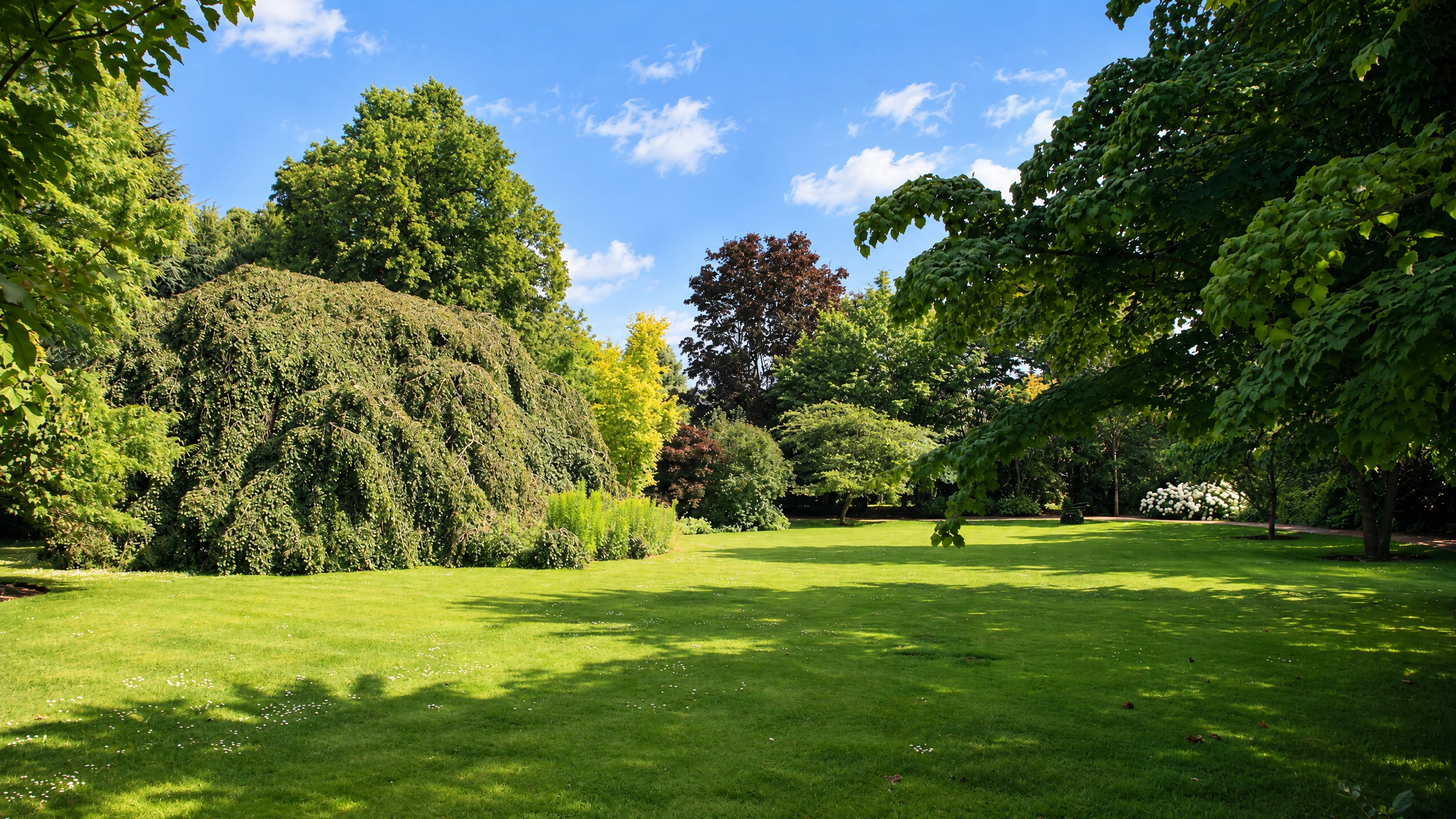
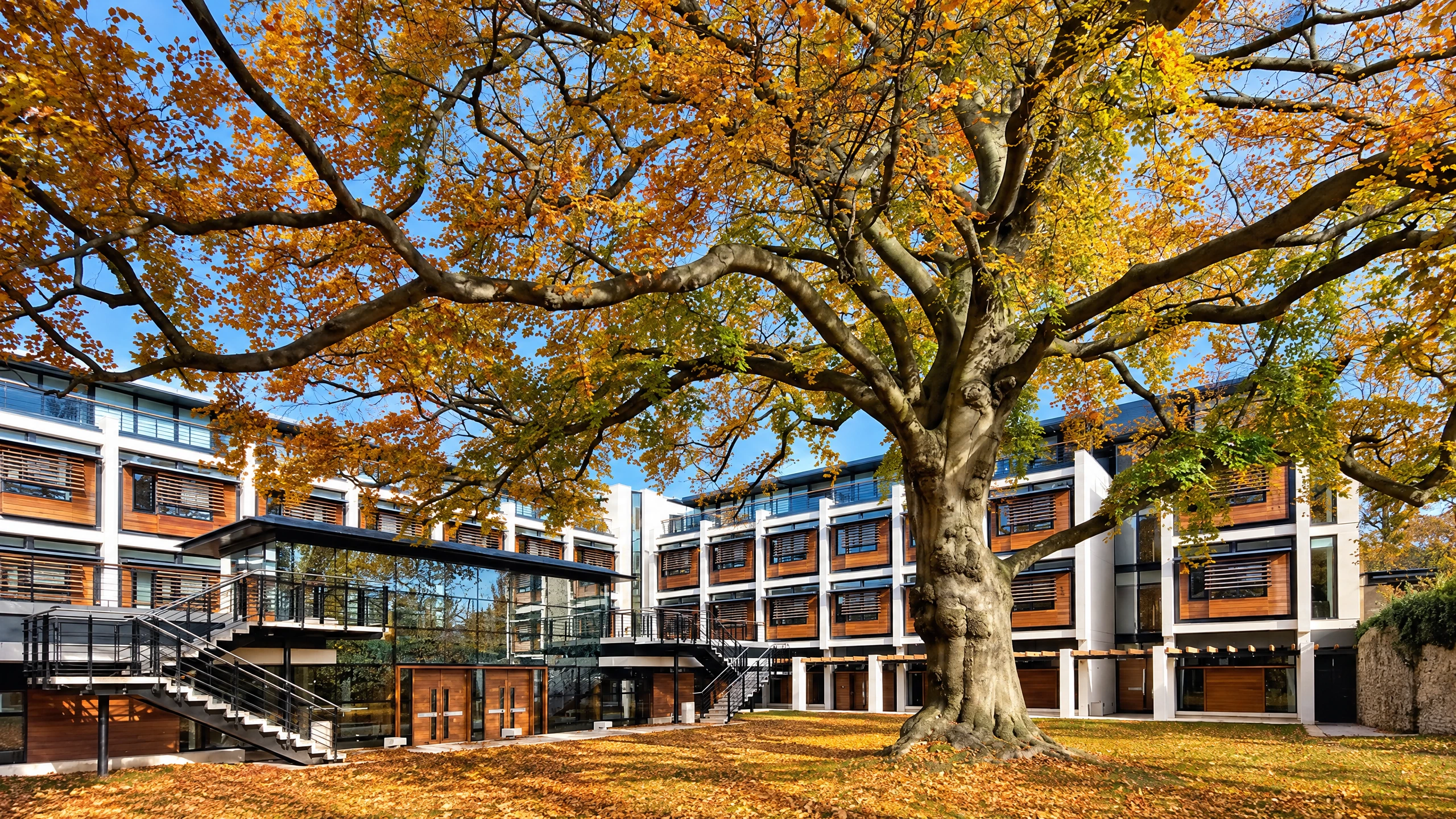
Beyond the courts are gardens that have changed over centuries, with surviving seventeenth-century Sprott’s Wall and trees including copper beeches, a cork oak and a paper-bark maple. Kendrew Quad, opened in 2010, was designed around a mature beech. The Great Lawn is currently closed for rest and maintenance, while Daisy Lawn remains open.
Former students include poets and novelists Philip Larkin, Kingsley Amis, Robert Graves, John Wain and A. E. Housman. Housman entered in 1877 before his later reputation as a classical scholar and author of A Shropshire Lad.
Entry is normally free in the afternoon: 2pm–5pm in summer and 2pm–4pm in winter. The chapel closes to visitors on Wednesdays, and other closures can affect the route.
People and ideas
Famous former students

Philip Larkin
The poet and librarian studied at St John’s.
College connection
Former student.

Kingsley Amis
The novelist and poet studied at St John’s.
College connection
Former student.

A. E. Housman
Entered 1877
The poet and classical scholar entered St John’s in 1877 before writing A Shropshire Lad.
College connection
Classics student; later Pass-degree examinations. Entered 1877; returned for Pass-degree examinations 1882.

Robert Graves
The novelist, poet and classical scholar studied at St John’s.
College connection
Former student.

Tony Blair
The former British prime minister studied at St John’s.
College connection
Former student.

Edmund Campion
The scholar studied at St John’s and became a fellow before his later life as a Jesuit priest.
College connection
Educated at St John’s in its early years; later Fellow and University Proctor.

Archbishop William Laud
The former student and fellow gave St John’s Canterbury Quad in the 1630s.
College connection
Fellow and alumnus; later Chancellor of the University; donor associated with Canterbury Quad.

John Wain
The novelist, poet and critic studied at St John’s.
College connection
Former student.

Abdul Rasul
The former student was one of the first Bengalis to gain Oxford’s Bachelor of Civil Law.
College connection
Former student.

Sidney Ball
The former student and Fabian thinker was connected with the creation of the Workers’ Educational Association.
College connection
Former student.
The story
History & character.
Sir Thomas White, a London merchant tailor and Master of the Merchant Taylors’ Company, founded St John’s in 1555. The college identifies it as Oxford’s first merchant foundation. The first members moved in during 1557.
White bought the site of St Bernard’s College, founded in 1437 for Cistercian monks studying at Oxford. After the Dissolution the buildings had passed to Christ Church. Their footprint and parts of the gate tower, including carved wooden doors and a fifteenth-century statue of St Bernard, survive in Front Quad.
Edmund Campion studied at the young college and became a fellow before his later life as a Jesuit priest. Another former student and fellow, William Laud, became Archbishop of Canterbury and gave the college Canterbury Quad, built in 1631–35.
The quad combines Gothic and classical details. Its arcades carry carvings of the Seven Liberal Arts and Seven Virtues; Hubert Le Sueur’s bronze statues of Charles I and Henrietta Maria stand above. Painted rainwater heads also bear the arms and initials of Laud and Charles I.
The gardens expanded north in 1613 with money left by fellow Edward Sprott; part of the wall survives. Formal eighteenth-century planting later gave way to a more naturalistic landscape. A rock garden was added in the early twentieth century and remodelled in 1986.
A. E. Housman entered on a scholarship in 1877 and later became a poet and classical scholar. Other literary former students include Robert Graves, Kingsley Amis, Philip Larkin and John Wain.
The college continued to build: Dolphin Quad occupies the site of a former inn, the Beehive groups hexagonal rooms around its staircases, and Kendrew Quad opened in 2010 around a mature beech.
Look closer
What to see.
Front Quad
The gate tower, carved doors and statue of St Bernard preserve parts of the college that occupied this site before St John’s.
Canterbury Quad
Arcades, royal bronzes and carved heads representing the Seven Liberal Arts and Seven Virtues fill Archbishop Laud’s seventeenth-century court.
The chapel
The chapel is normally open to visitors Thursday to Tuesday and closes on Wednesdays.
The gardens
Sprott’s Wall, a rock garden and trees including a cork oak and paper-bark maple are part of the grounds. Daisy Lawn remains open while the Great Lawn rests.
Kendrew Quad
The 2010 courtyard was built around a mature beech, with college rooms and facilities nearby.
Make it work
Plan your visit.
St John’s normally opens free from 2pm to 5pm in summer and 2pm to 4pm in winter, subject to university closure periods and college events. The visitor route includes Front Quad, Canterbury Quad, the chapel, Kendrew Quad and gardens. Entry is through the St Giles Lodge.
The chapel normally opens Thursday to Tuesday from 1.30pm to 5pm, or until dusk in winter, and closes on Wednesdays. The Great Lawn is closed for rest and maintenance; Daisy Lawn remains open.
The main entrance is step free when the gates are open. The principal quads and chapel have level thresholds, and a wheelchair can be borrowed from the Lodge. Some manual doors are heavy. Accessible toilets and hearing loops serve several locations, and one Blue Badge parking space requires advance booking.
Alumni may visit with up to three guests during daylight hours. Bagley Wood at Kennington is a separate college property with permissive public access on maintained routes.
Visit your way
Access and family planning.
The St Giles entrance is step free by day when the main gates are open. Level routes connect the principal quads and chapel; some manual doors are heavy.
A wheelchair can be borrowed from the Lodge. Accessible toilets and hearing loops serve several locations, and the Blue Badge parking space requires advance arrangement.
The carved heads in Canterbury Quad, old gate tower and gardens offer plenty for a short family visit. Daisy Lawn remains open while the Great Lawn is resting.
Self-guided walk
Exploring St John’s
A visit can bring together the historic quads, chapel and gardens, with the newer Kendrew Quad.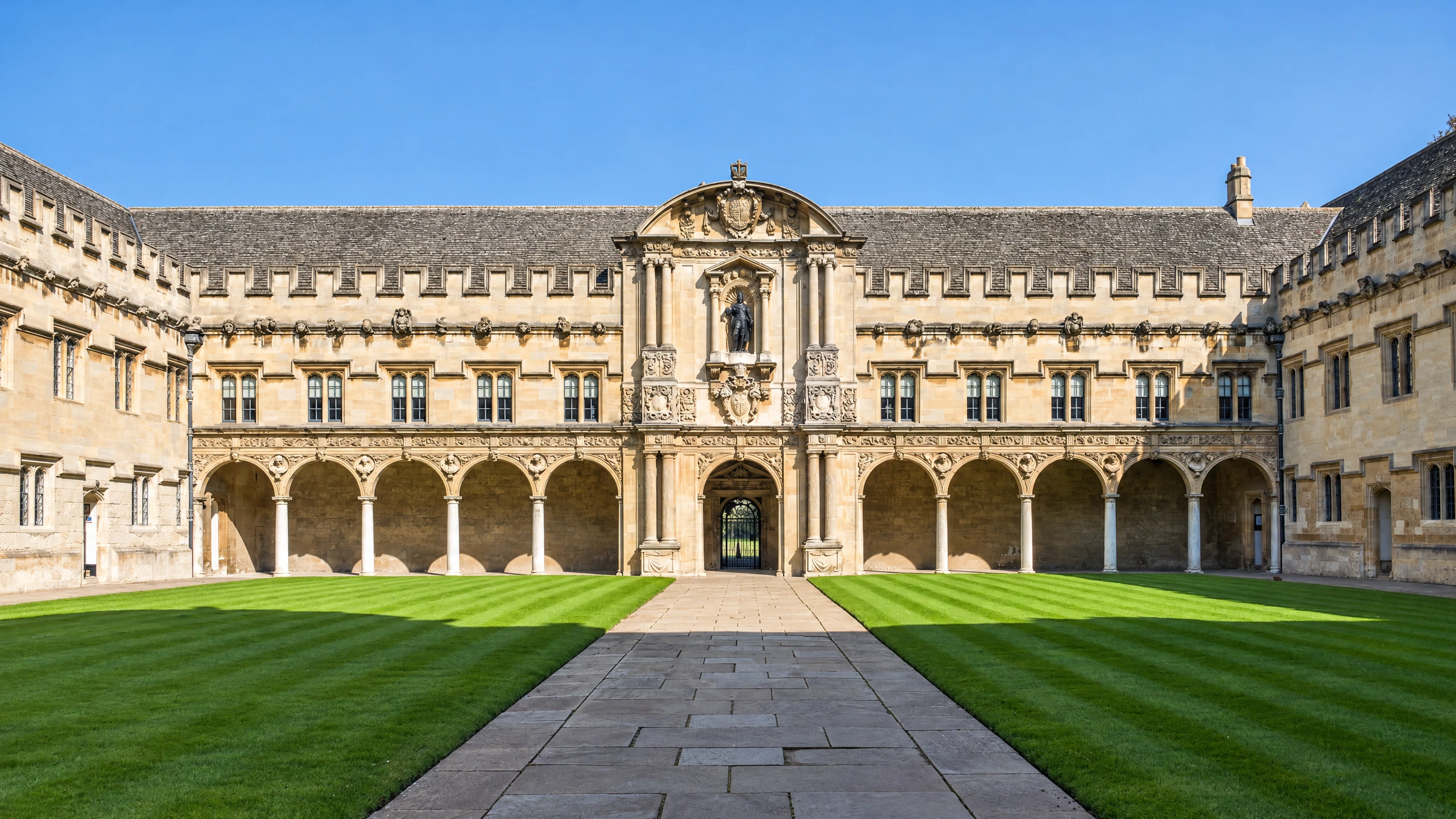
Front Quad and chapel
The gate tower and carved doors retain parts of the earlier St Bernard’s College. The chapel normally closes to visitors on Wednesdays.
Canterbury Quad
Laud’s court has classical arcades, royal bronzes and carvings of the Liberal Arts and Virtues.
Kendrew Quad and gardens
Kendrew Quad surrounds a mature beech. The gardens include Sprott’s Wall, a rock garden and a range of trees; Daisy Lawn remains open.

See it
In pictures.
10 views, full screen. Tap any one to open the viewer.Around here
Make more of the area.
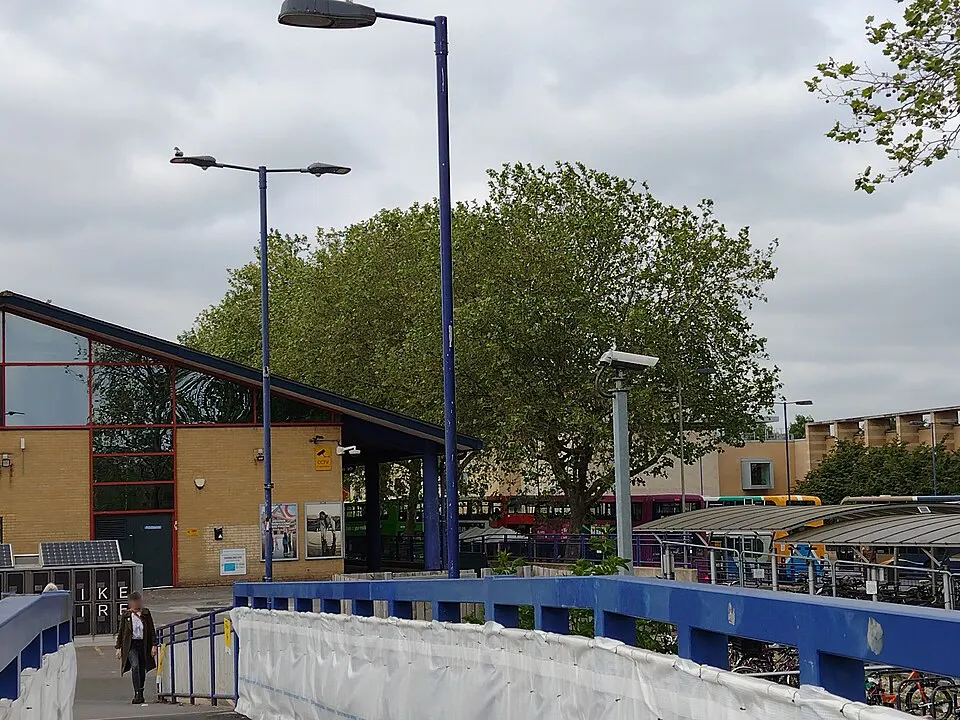
The college estimates a ten-minute walk from Oxford railway station.
Gloucester Green coach station is around five minutes on foot from the college.
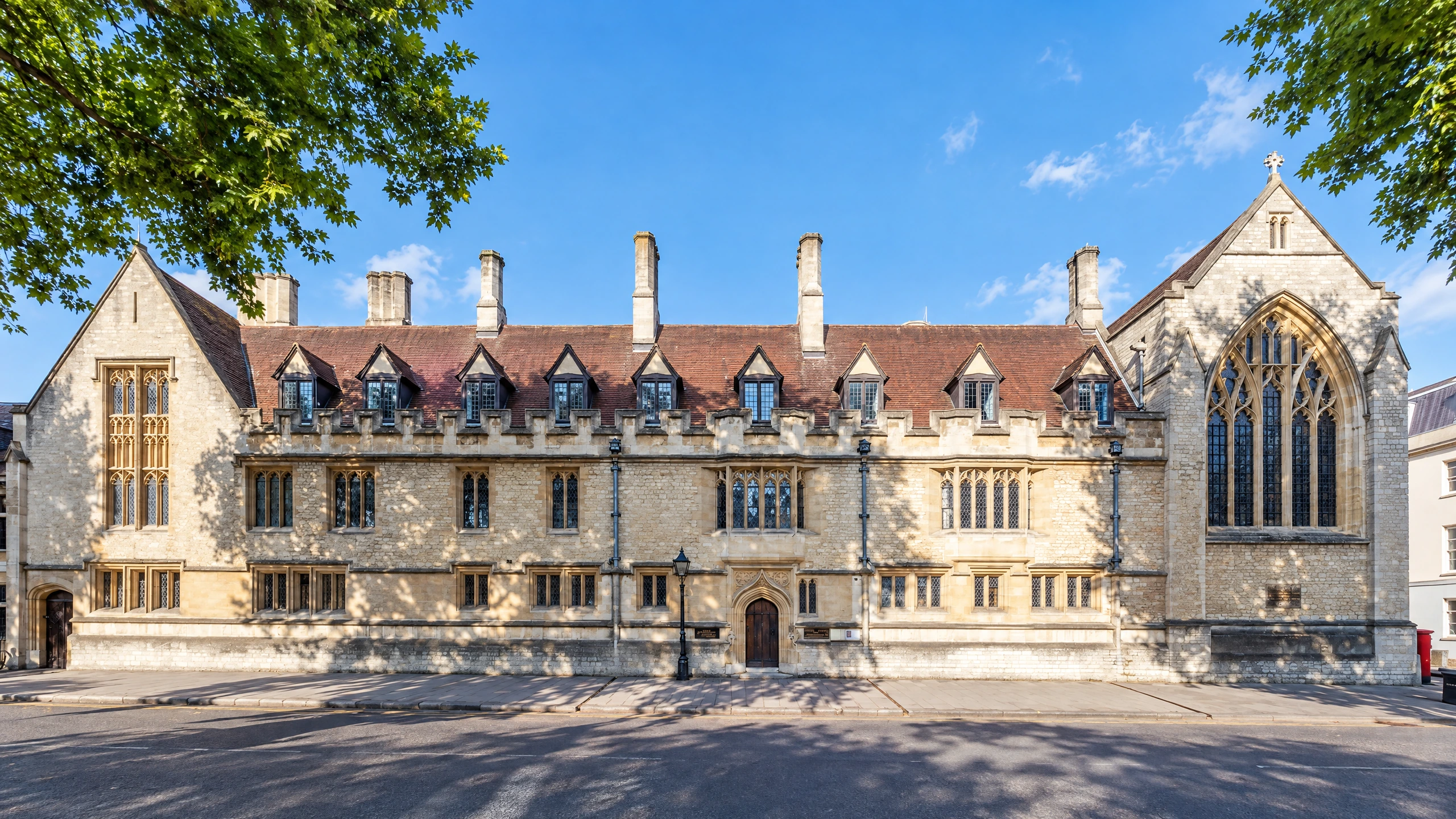
St Giles
The college entrance stands on the east side of St Giles, close to the city centre.
Good to know
Questions, answered.
Who founded St John’s College Oxford?
Sir Thomas White, a London merchant tailor, founded St John’s in 1555. The college identifies it as Oxford’s first merchant foundation.
What stood on St John’s site before 1555?
St Bernard’s College was founded here in 1437 for Cistercian monks. White bought its buildings after they had passed to Christ Church.
How did A. E. Housman’s St John’s studies unfold?
Housman entered in 1877, gained a First in Classical Moderations and later returned for Pass-degree examinations before his career as poet and scholar.
What makes Canterbury Quad at St John’s distinctive?
Laud gave the quad, built in 1631–35. Its Gothic and classical design expresses ideas about learning, religion and monarchy.
What is Sprott’s Wall in St John’s gardens?
The surviving stone wall dates from 1613, when money left by fellow Edward Sprott helped enclose the enlarged gardens.
Why is St John’s Dolphin Quad called Dolphin?
Dolphin Quad stands on the former site of the Dolphin Inn. Its postwar college building was designed by Sir Edward Maufe.
What gives St John’s Beehive its name and form?
The residence contains 31 hexagonal rooms around three top-lit staircases, giving the Beehive its distinctive cellular form.
What is unusual about Wendy Ramshaw’s St John’s gateway?
Ramshaw’s iron gateway in Garden Quad contains a non-inverting lens, adding an artwork to Richard MacCormac’s 1990s design.
Which major twentieth-century writers studied at St John’s?
Former students include Robert Graves, Kingsley Amis, Philip Larkin and John Wain, whose work spans twentieth-century poetry and fiction.
Why is Abdul Rasul notable in the student history of St John’s College in Oxford?
St John’s College in Oxford identifies Abdul Rasul as one of the first Bengalis to gain Oxford’s Bachelor of Civil Law, adding a legal and international connection.
When can I visit St John’s College and its gardens?
Entry is free. The university lists college visiting hours as 1pm–5pm or dusk, whichever is earlier; the college lists garden access separately as 2pm–5pm in summer and 2pm–4pm in winter. Closures can apply.
Is St John’s Chapel open every afternoon?
No. The chapel normally opens Thursday to Tuesday from 1.30pm to 5pm or dusk in winter and closes on Wednesdays.
Can visitors currently walk on St John’s Great Lawn?
The Great Lawn is currently closed for rest and maintenance. Daisy Lawn remains open as part of the visitor garden route.
Which St John’s visitor areas have level thresholds?
Front Quad, Canterbury Quad, the chapel and Kendrew Quad have level thresholds. A wheelchair can be borrowed from the Lodge.
Did Tony Blair study at St John’s College Oxford?
Yes. Former Prime Minister Tony Blair studied at St John’s, whose other former students include writers Robert Graves, Kingsley Amis and Philip Larkin.
Editorial notes
Sources and further reading.
Sources for this guide
sjc-home — read
- Title: St John's College Oxford homepage
- URL: https://www.sjc.ox.ac.uk/
- Evidence: Official navigation, address/footer context and current college news links; used for site identity and sitemap discovery.
sjc-about — read
- Title: About the College
- URL: https://www.sjc.ox.ac.uk/discover/about-college/
- Evidence: Official summary of historic buildings, gardens, chapel, library and colonial-past research link.
sjc-history — read
- Title: College history
- URL: https://www.sjc.ox.ac.uk/discover/about-college/history/
- Evidence: Foundation in 1555, St Bernard’s predecessor, White, institutional development and named historical people.
sjc-buildings — read
- Title: College buildings
- URL: https://www.sjc.ox.ac.uk/discover/about-college/college-buildings/
- Evidence: Official period index spanning 1555 to the present and links to building-period pages.
sjc-early — read
- Title: The 15th to the 17th centuries
- URL: https://www.sjc.ox.ac.uk/discover/about-college/college-buildings/15th-17th-centuries/
- Evidence: Front Quad, Hall, Canterbury Quad, statues, symbolic programmes and Laud.
sjc-18-19 — read
- Title: The 18th and 19th centuries
- URL: https://www.sjc.ox.ac.uk/discover/about-college/college-buildings/18th-and-19th-centuries/
- Evidence: St Giles House, 20 St Giles and North Quad/New Building/Rawlinson Building.
sjc-20 — read
- Title: The 20th century
- URL: https://www.sjc.ox.ac.uk/discover/about-college/college-buildings/20th-century/
- Evidence: Dolphin Quad, Beehive, Sir Thomas White Building and Garden Quad.
sjc-21 — read
- Title: The 21st century
- URL: https://www.sjc.ox.ac.uk/discover/about-college/college-buildings/21st-century/
- Evidence: Kendrew Quad, mature beech, uses, sustainability systems and awards.
sjc-gardens — read
- Title: The gardens
- URL: https://www.sjc.ox.ac.uk/discover/about-college/gardens/
- Evidence: Garden chronology, Sprott’s Wall, landscape phases, rock garden and named trees.
sjc-visit — read
- Title: Visit us
- URL: https://www.sjc.ox.ac.uk/discover/visit-us/
- Evidence: Public areas, seasonal hours, closures, accessibility, Chapel/garden hours, alumni access, transport and Bagley Wood.
sjc-sitemap — read
- Title: Official XML sitemap
- URL: https://www.sjc.ox.ac.uk/sitemap.xml
- Evidence: Used to locate dedicated official history, buildings, library, art and colonial-past pages; not used as substantive evidence.
sjc-chapel-unread — blocked
- Title: The Chapel and Choir
- URL: https://www.sjc.ox.ac.uk/discover/about-college/chapel-and-choir/
sjc-library-unread — blocked
- Title: Library and Study Centre: about the building
- URL: https://www.sjc.ox.ac.uk/discover/about-college/new-library-and-study-centre/about-building/
sjc-arch-unread — blocked
- Title: Library archaeology and environment
- URL: https://www.sjc.ox.ac.uk/discover/about-college/new-library-and-study-centre/archaeology-and-environment/
sjc-art-unread — blocked
- Title: College art collection
- URL: https://www.sjc.ox.ac.uk/college-life/art/colleges-art-collection/
sjc-colonial-unread — blocked
- Title: St John's and the Colonial Past
- URL: https://www.sjc.ox.ac.uk/discover/about-college/st-johns-and-colonial-past/
sjc-contact-unread — blocked
- Title: Contact us
- URL: https://www.sjc.ox.ac.uk/contact-us/
OX-PHYSICAL — University physical-access guide
University physical-access guide. Physical route and facilities reviewed 1 November 2026; admission remains governed by the college.
Supplementary biographical sources
SUP-HOUSMAN — A. E. Housman — Housman Society
A. E. Housman — Housman Society. Read 1 November 2026. Full biography retrieved: scholarship and entry 1877; First in Classical Moderations, failed Greats, then returned for Pass-degree examinations in 1882. This qualifies a simple “graduate” label.
Additional visitor and nearby sources
- SUP-ASHMOLEAN Ashmolean visitor information, read 1 November 2026. Free general admission; group booking; separate major exhibitions.
- SUP-OX-VISIT University college visitor directory, read 1 November 2026. Free general sightseeing entry to St John’s; college timetable applies.
GEO-FRESH — numeric college location
Wikipedia coordinate, read1November 2026: 51.75612, -1.258605 WGS84. This college-site pin supersedes the carried-forward draft value. It does not identify an accessible entrance. No published source data was changed.
AUD-JOHNS — St John’s history and graduates
St John’s history and graduates
Reviewed 1 November 2026. Fresh review confirms Graves, Larkin, Amis, Wain and Blair; Housman’s separate qualified examination history retained. Campion is added as a documented early Fellow, with no new student claim.
AUD-CAMPION — Edmund Campion in the early college
Edmund Campion in the early college
Reviewed 1 November 2026. Second Foundation Deed 1558 names Campion among the Fellows. St John’s scholarly education is independently described as his alma mater in Oxford-hosted research; no modern Campion Hall attendance claimed.
AUD-JOHNS-ACCESS — St John’s physical access
Reviewed 1 November 2026. Fresh full University guide read: daytime step-free St Giles gate, level court routes, compacted-gravel gardens, nearby Dolphin accessible toilet, narrow stair to Dolphin Gallery, advance booking for one BlueBadge parking space. Replaces old public statement that guide was unread.
AUD-CAMPION-STUDY — Oxford scholarship: Campion and St John’s
Oxford scholarship: Campion and St John’s
Reviewed 1 November 2026. Oxford-hosted scholarly article calls StJohns Campion’s alma mater; read with college1558SecondFoundationDeed listingCampion asFellow. Supports educatedhere classification without inventeddegree/date.
Further reading and sources
Opening hours, prices, programmes and access arrangements can change. Confirm critical details with the venue.
Keep exploring