castle / Oxford
In depth
Oxford Castle
A Norman motte, a tower that may pre-date the Conquest, a Romanesque crypt and a gaol that closed in 1996 — Oxford's town history on one site, eight minutes from the station.
Story · Visit · Route · Links
Visitor Essentials & Quick Answers
Is Oxford Castle worth visiting?
Yes if you want a side of Oxford beyond the university. The tower, crypt and prison spaces tell stories of defence, confinement and the city’s contested past. It rewards visitors who enjoy a guided narrative and exploring surviving structures rather than expecting a fully intact medieval castle.
Is Oxford Castle a castle or a prison?
Both histories belong here. The Norman castle developed around earlier defences, and the site later served as a prison. That is why the visit mixes a medieval tower and crypt with cells and prison buildings: you are walking through successive uses of the same ground, not two unrelated attractions.
Is St George’s Tower older than the Norman castle?
Possibly. Archaeological work has challenged the older assumption that it was built with the Norman castle, and a late Saxon origin has been argued. The date remains debated. What you can see is a substantial early tower whose relationship with Oxford’s town defences is part of the site’s interest.
What is the story of Matilda’s escape?
During the siege of 1142, Empress Matilda escaped from the castle and reached Abingdon across frozen ground. Medieval accounts associate the escape with snow and white clothing, though later retellings add embellishment. It connects this Oxford landmark to the struggle for the English throne, rather than just a local castle legend.
Choose your depth
Essentials or more detail?
See visiting essentials, or read more about the history and places nearby.Start here
Understand the place.
The context, character and reasons this experience earns time in your Oxford plans.Why it matters
Three things make this site significant, and only one of them is the castle.
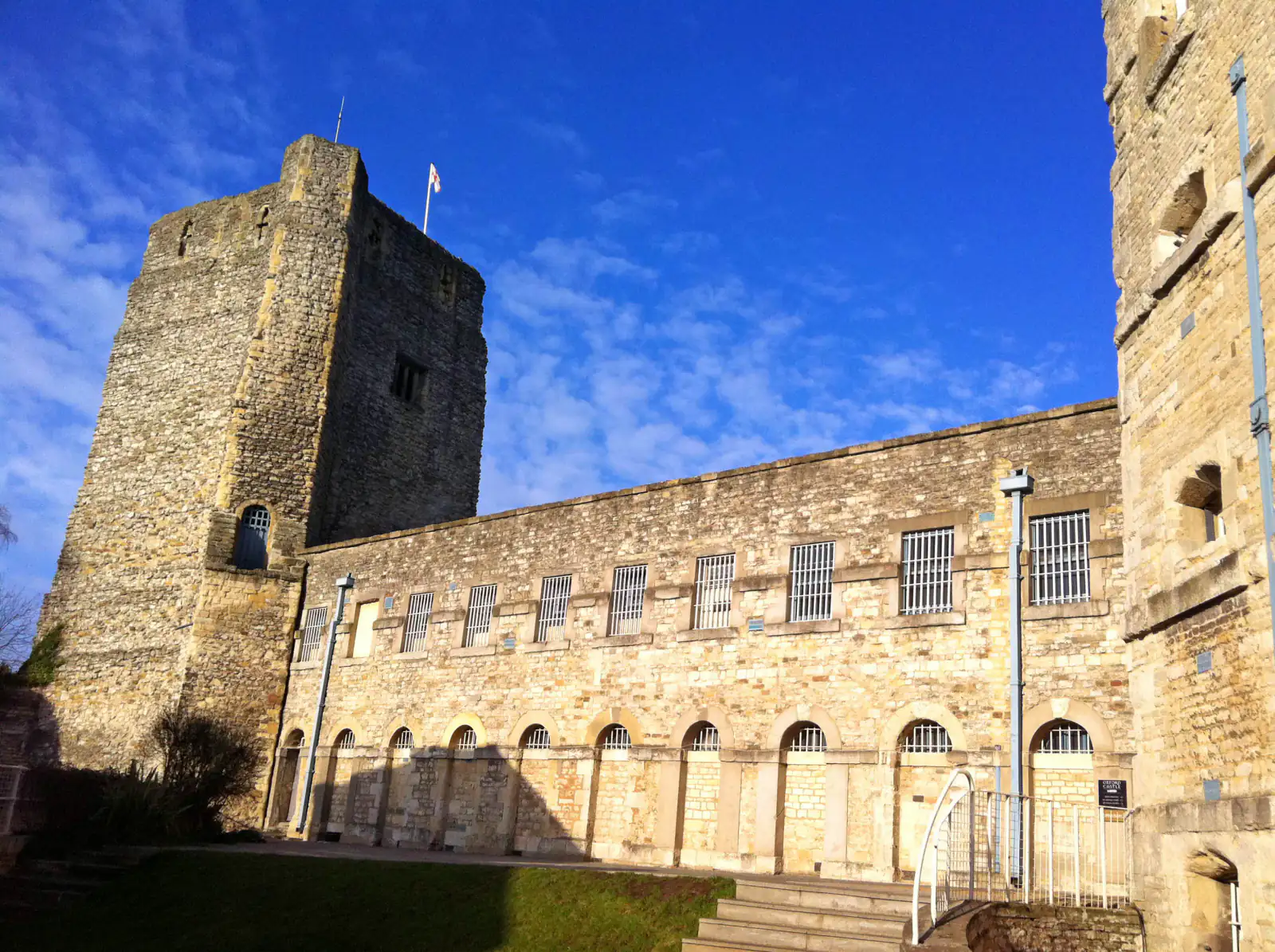
The tower is the oldest substantial building in Oxford, and nobody is certain how old. For most of the twentieth century St George's Tower was taken to be part of Robert d'Oilly's castle of 1071, built alongside the chapel he founded in 1074. Excavation and re-analysis since 1999 have shifted that. Two burials cut into the rampart on the tower's south side returned radiocarbon dates around AD 1000, and the tower's structural relationship to the late tenth-century town defences has been argued to place it with them rather than with the castle. The current view, reflected in recent scholarship and now in the attraction's own interpretation, is that it is more likely a late Saxon watchtower — perhaps around 1020 — associated with the west gate of the burh, which the Normans then absorbed. That is not a settled question, and this guide does not present it as one.
It is where a queen escaped through the snow. In December 1142, during the civil war between Stephen and Matilda, Stephen besieged the castle with Matilda inside. The chronicles record that she got out and reached Abingdon on foot across frozen ground. The detail everyone repeats — that she dressed in white to cross the snow unseen — is in the medieval accounts but has been embroidered considerably since. It is a good story that happens also to be substantially true, which is rarer than it sounds.
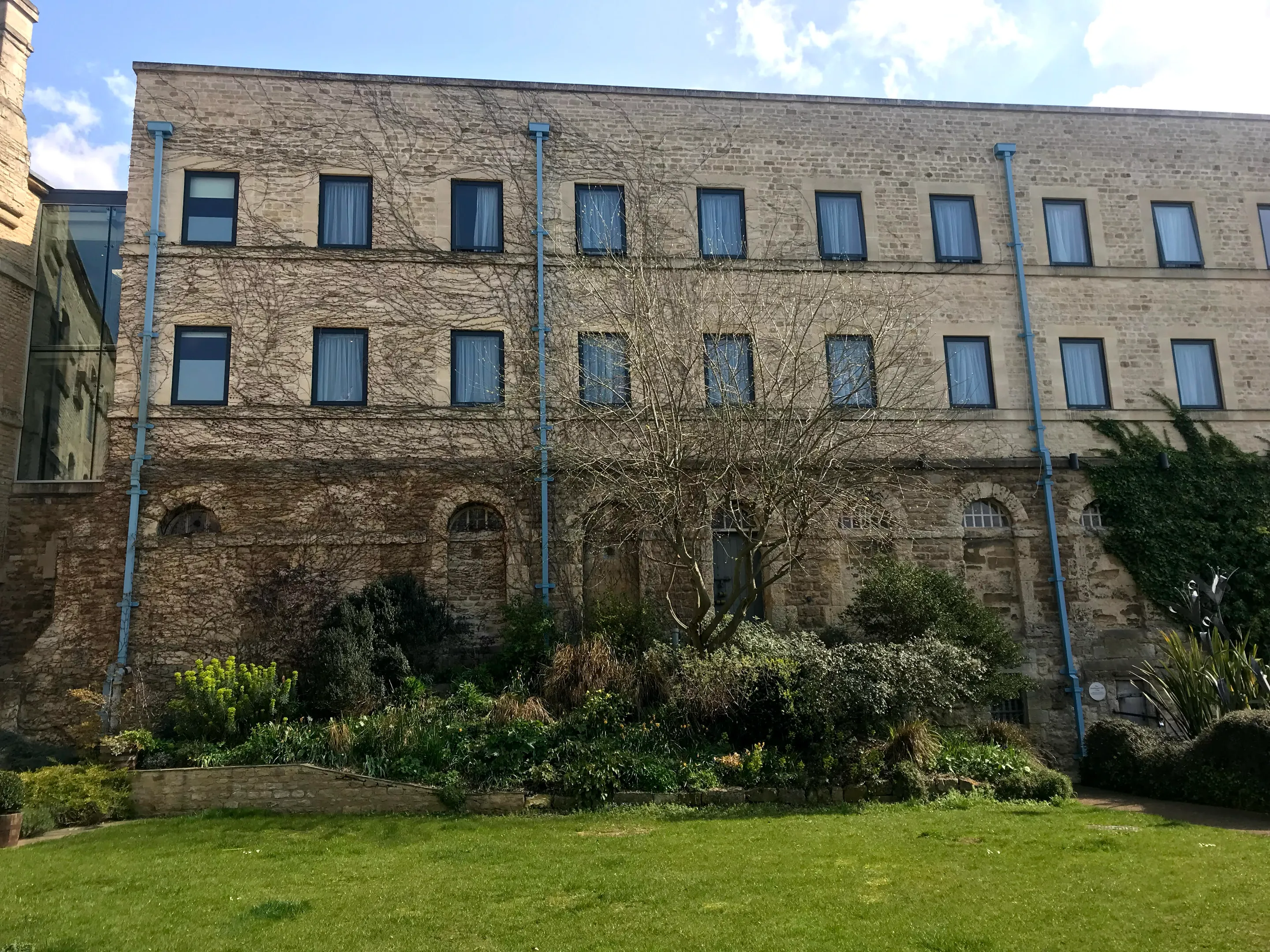
It was a working prison until 1996. The county justices bought the site in 1785 and the rebuilt gaol was completed in 1805; the buildings grew through the nineteenth century with a county hall in 1840, an armoury in 1854 and a further extension in 1876. The wings you walk through were in use as a prison more recently than most visitors expect, and one of them is now a hotel. The seventeen-year gap between closure and the site becoming a heritage attraction and hotel in 2006 is visible in the fabric if you look.
What visitors should notice
The site rewards attention to what is built on what. The motte is eleventh-century earthwork; the tower may be older than the motte it stands beside; the crypt beneath is Romanesque; the wing you walk through is Georgian with Victorian additions; and the hotel bar occupies a cell block. Very few places in England stack quite this range within one courtyard, and the guided tour is structured around exactly that stratigraphy.
Notice too that the tower is not built like the castle. Its rubble construction and proportions are what first made archaeologists doubt the Norman attribution. Whatever you conclude, you can see the argument with your own eyes from the courtyard.
Who will enjoy it
- Anyone interested in the Norman Conquest, the Anarchy of Stephen and Matilda, or Anglo-Saxon Oxford.
- Visitors who have done the colleges and want the other Oxford — the town, the county, the criminal courts.
- Families with children old enough for stairs and a costumed guide; the tour is performed rather than lectured.
- Anyone with an interest in prison history and penal reform.
Who may find it difficult
This section is not a disclaimer. These are real constraints.
- The tower is 101 steps on a narrow medieval stair, and it is the highlight of the tour. Children under five are not permitted to climb it for safety reasons. Anyone who cannot manage stairs will miss the single best part.
- The tour is guided and timed. You cannot wander the historic interiors at your own pace; you go when the tour goes.
- The crypt and cells are confined, cool and dim. Visitors who find enclosed underground spaces difficult should know this before booking rather than discover it below ground.
- The subject matter is a prison. The interpretation covers executions and incarceration. It is handled seriously rather than luridly, but it is not neutral material for every visitor.
- The wider Castle Quarter is a commercial development. Bars and restaurants surround the historic core. Visitors expecting a purely archaeological site sometimes find the setting jarring; it is honest to say so.
Visitor verdict
Worth roughly two hours: an hour on the tour, and time afterwards in the courtyard and up the mound. It is the strongest option in Oxford for anyone who wants pre-university history, and the only place in the city where you can stand inside a building that may have been watching the river before the Normans arrived. Go for the tower and the argument about its date; stay for the fact that the whole thing was a functioning gaol when Britpop was on the radio.
The full story
How it came to matter.
Before the castle: the burh and its west gate
Oxford begins as a defended Saxon town. The name first appears in the Anglo-Saxon Chronicle in 912, and the settlement was one of the fortified burhs of the West Saxon system, laid out with ramparts enclosing a grid of streets. In the late tenth century those defences were substantially rebuilt in stone.
This matters because of what stands on the western line of them. St George's Tower sits precisely where that late tenth-century circuit ran, and the argument that it belongs to the town wall rather than to the Norman castle rests on that position as much as on its masonry. Two burials cut into the rampart on the tower's southern side have been radiocarbon dated to around AD 1000 — stratigraphic evidence that activity here substantially pre-dates 1071.
1071: Robert d'Oilly's castle
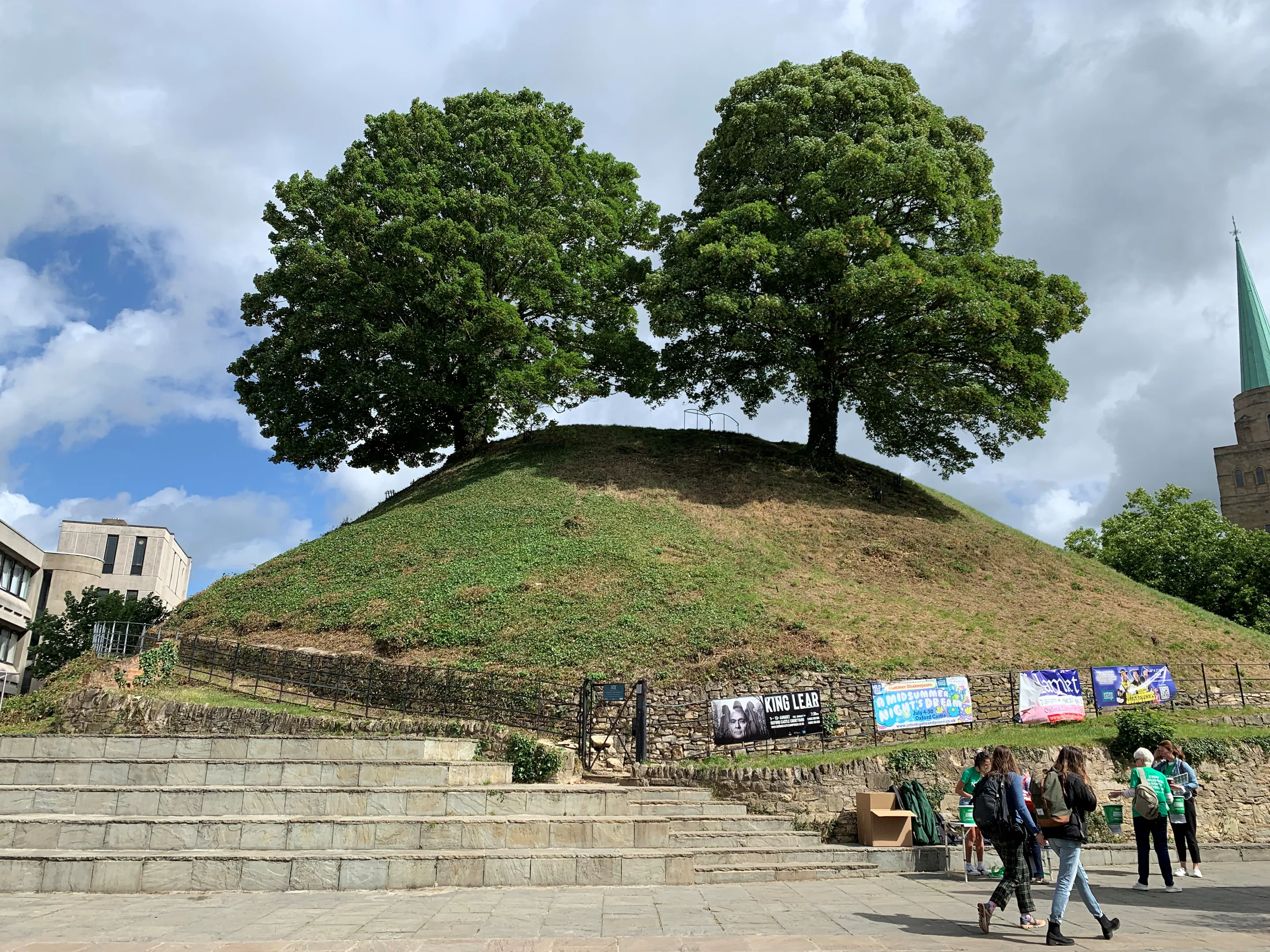
After the Conquest, William I granted Oxford to Robert d'Oilly, one of his Norman barons. The castle is conventionally dated to 1071 — some sources give 1072 — and took the standard early Norman form: a motte, a bailey, and timber defences later rebuilt in stone. The motte survives as the mound you can climb today, an artificial hill raised to carry a keep and dominate the crossing of the Thames and the western approach to the town.
The castle was an instrument of control. Oxford had resisted, and a motte planted against the western wall of an existing town is a statement about who now held it.
1074: the chapel and college of St George
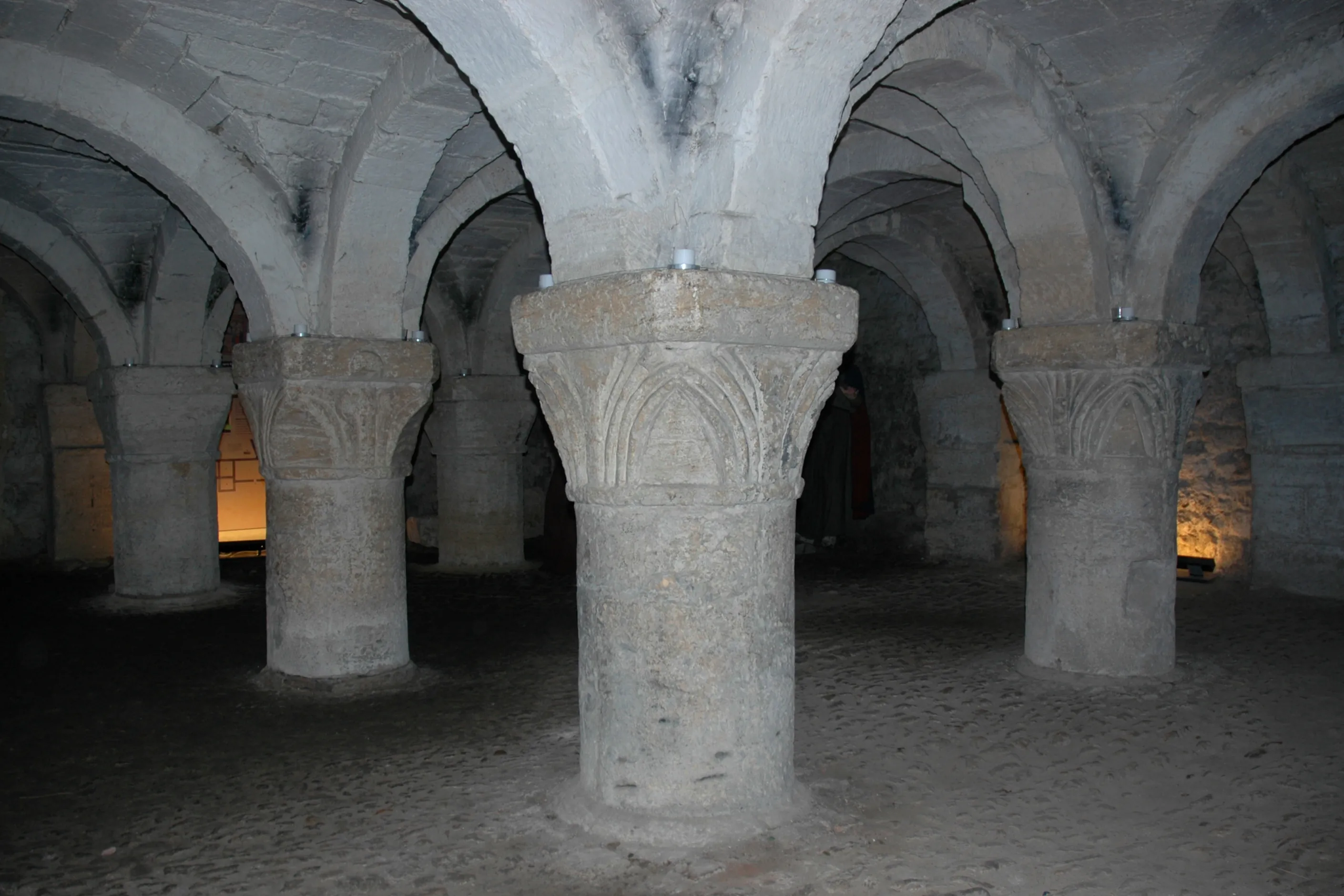
In 1074 d'Oilly and his associate Roger d'Ivry founded a college of secular canons dedicated to St George within the castle. Its chapel is the origin of the crypt that survives beneath the site and forms one of the stops on the tour — a small, low, Romanesque space with cushion capitals, and the oldest interior open to visitors in the complex.
The college has a literary footnote. Geoffrey of Monmouth, whose Historia Regum Britanniae gave medieval Europe much of its Arthurian material, is associated with the community at St George's in the 1130s. The connection is plausible and frequently repeated; it should be described as association rather than established biography.
1142: the Empress Matilda's escape
The most famous event on the site belongs to the civil war known as the Anarchy. In 1142 Stephen besieged Oxford Castle with his rival, the Empress Matilda, inside. He raised siege works and settled in to starve the garrison out.
In December, Matilda escaped. The medieval accounts agree she left the castle, crossed the frozen river and reached Abingdon on foot — roughly ten miles — before continuing to Wallingford. The celebrated detail that she and her companions dressed in white to move unseen against the snow appears in the medieval tradition, but the version most often told today is considerably more cinematic than the chronicles warrant. Treat the escape as fact and the camouflage as a tradition of long standing rather than a documented tactic.
Decline as a fortress, rise as a gaol
Oxford Castle's military career was effectively over by the later Middle Ages. The Crown's interest moved elsewhere; the buildings decayed. What kept the site in continuous use was its other function. A castle was where the county's prisoners were held and its courts sat, and that role outlasted the walls by centuries. By the early modern period the site was principally a gaol and a place of assize.
During the Civil War Oxford served as the royalist capital and the castle formed part of the city's defences, but it was slighted after the war and never recovered a military role.
1785–1805: the county rebuilds
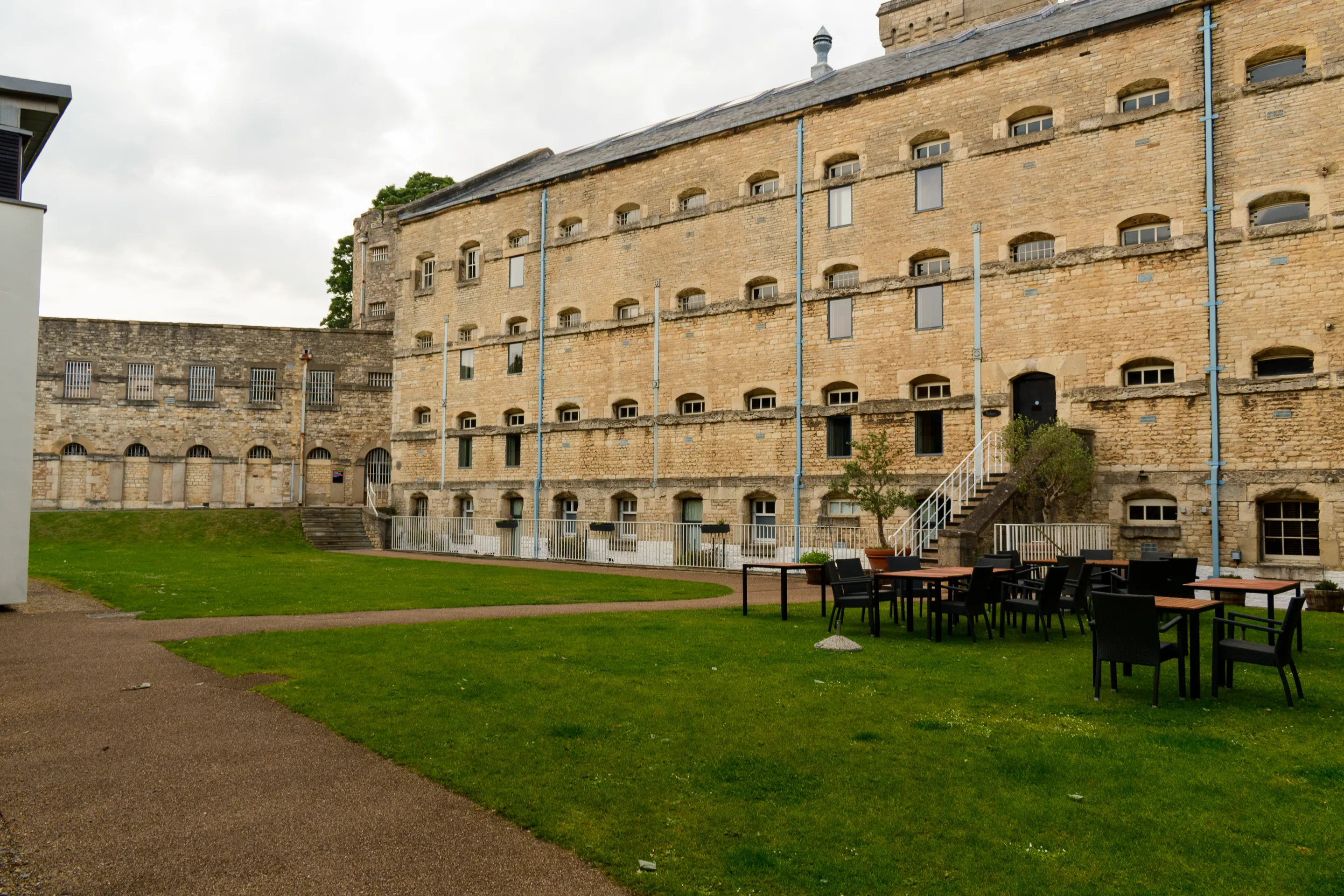
In 1785 the Oxfordshire county justices bought the site and rebuilt the prison, the work completed in 1805. This is the origin of most of what visitors walk through: the wings, the cells, the yards.
The rebuilding produced one of the site's better stories. Daniel Harris, the governor, was also a builder and surveyor, and he used prison labour on construction and on early excavation of the site under the guidance of the antiquarian Edward King. A gaoler conducting archaeology with convict labour is a very late-Georgian arrangement, and it makes Oxford one of the earlier English castles to have been dug at all.
The nineteenth century added a county hall in 1840, an Oxfordshire Militia armoury in 1854, and a further prison extension in 1876. Under the national reforms that brought local prisons under central control, the establishment became HM Prison Oxford.
1996: closure, and what came after
HM Prison Oxford closed in 1996 and the site returned to Oxfordshire County Council. It stood largely empty while its future was decided — a period during which the buildings deteriorated and the question of what to do with a scheduled monument containing a redundant Victorian gaol proved genuinely hard.
Redevelopment followed. Oxford Archaeology excavated extensively between 1999 and 2009, work published as Excavations at Oxford Castle 1999–2009 and, in summary form, in Oxoniensia. Those excavations are why the account of the tower given above differs from the one in older guidebooks: the dating evidence is recent.
The site reopened in 2006 in its present form — a heritage attraction operated by Continuum Attractions, a Malmaison hotel occupying a converted cell block, and a courtyard of restaurants and bars known as the Oxford Castle Quarter.
Designations
- Oxford Castle and earlier settlement remains — Scheduled Monument, National Heritage List for England entry 1007730, first listed 11 December 1950.
- St Georges Tower, St Georges Chapel Crypt and D Wing Including the Debtors Tower, New Road — Listed Building, Grade I, NHLE entry 1369490, first listed 12 January 1954.
Look closer
Highlights and hidden details.
The objects, spaces and small observations that turn a visit into a memorable one.1. St George's Tower
The reason to come. A tall, square, rubble-built tower on the western edge of the site, and the strongest candidate for the oldest substantial standing building in Oxford.
Why it matters: the attribution has genuinely changed. Older accounts give it to Robert d'Oilly around 1074 as part of the castle. Excavation since 1999 and re-analysis of the town defences now favour a late Saxon date — perhaps around 1020 — for a watchtower guarding the west gate of the Saxon burh, which the Norman castle then swallowed. Burials cut into the rampart alongside it have been radiocarbon dated to around AD 1000.
The visit: 101 steps on a narrow stair to a viewing platform. The view is the best free-standing panorama of central Oxford available to a general visitor — the spires east, the Thames and the meadows west.
Photography: the platform is the shot. Late afternoon, facing east, gets the sun behind you on the college towers.
Time: 15 minutes including the climb.
2. The crypt of St George's Chapel
Beneath the site, the surviving crypt of the collegiate chapel founded in 1074 by Robert d'Oilly and Roger d'Ivry — a small, low Romanesque space with cushion capitals.
Why it matters: this is the oldest interior open to visitors on the site and one of the oldest in Oxford. The college of secular canons founded here is associated with Geoffrey of Monmouth in the 1130s, whose Historia Regum Britanniae supplied medieval Europe with much of its Arthurian material.
The visit: cool, dim, confined. Guides use it for acoustics as much as architecture.
Photography: difficult — low light, no flash. Bring a fast lens or accept grain.
Time: 10 minutes on the tour.
3. The motte
The artificial mound raised for Robert d'Oilly's castle, and the clearest surviving element of the Norman fortress.
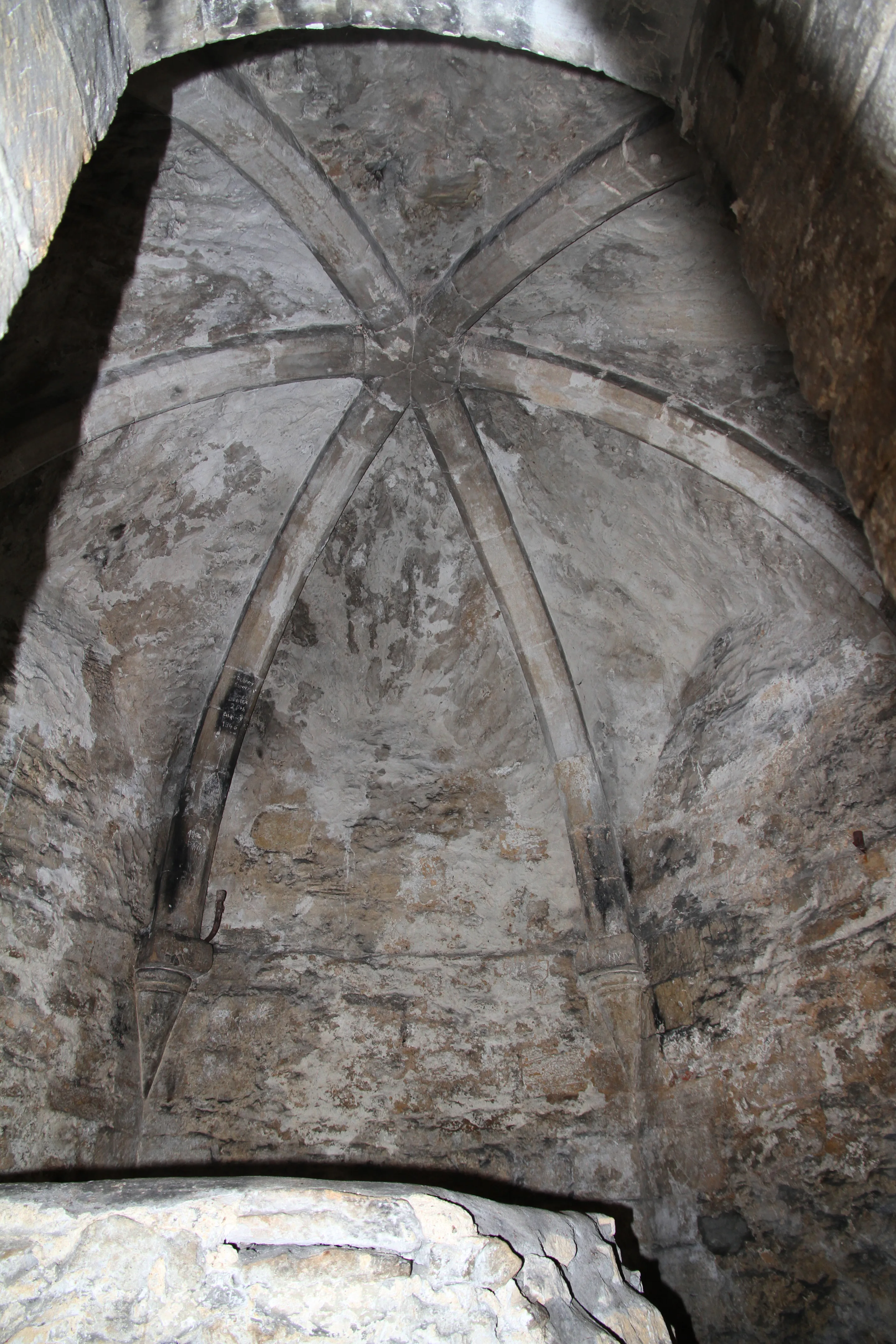
Why it matters: the stone keep is long gone, but the earthwork is the castle — an eleventh-century statement of control planted against the western wall of an existing Saxon town. A well chamber survives within it.
The visit: a climb of moderate effort with a view over the Quarter and back to the tower. Best appreciated after the tower, when you can see how the two relate — and how odd it is that the tower may be older than the mound beside it.
Time: 15 minutes.
4. The eighteenth-century prison wing
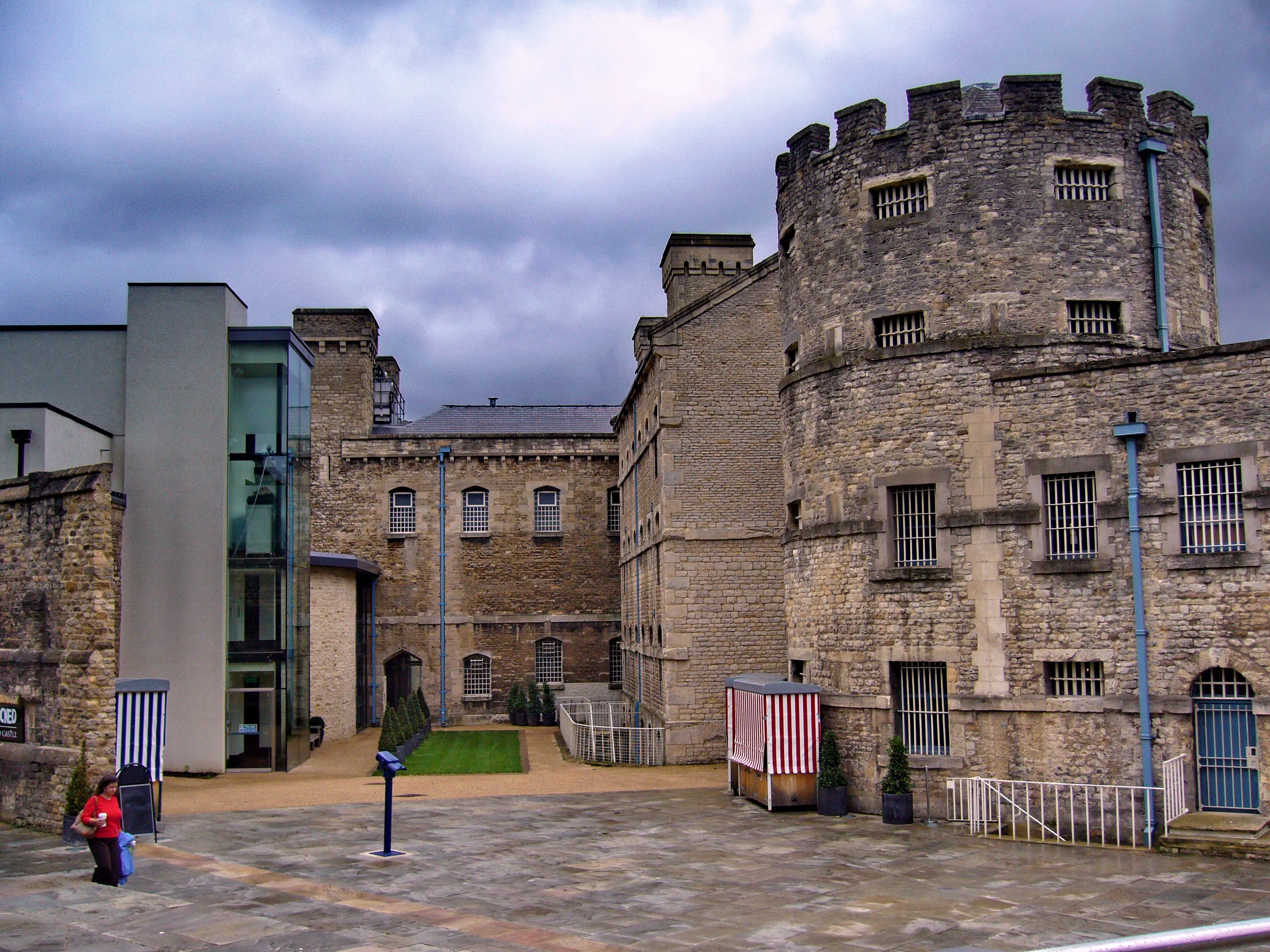
The cell blocks of the county gaol rebuilt between 1785 and 1805 and extended through the nineteenth century.
Why it matters: this was a working prison until 1996. The wing is not a reconstruction or a museum set; it is the building, recently vacated. The interpretation covers incarceration, transportation and execution, handled seriously.
The visit: you enter cells. Visitors who find confinement difficult should know this in advance.
Photography: strong, harsh material — the corridors and the light through cell windows are the compositions.
Time: 20 minutes on the tour.
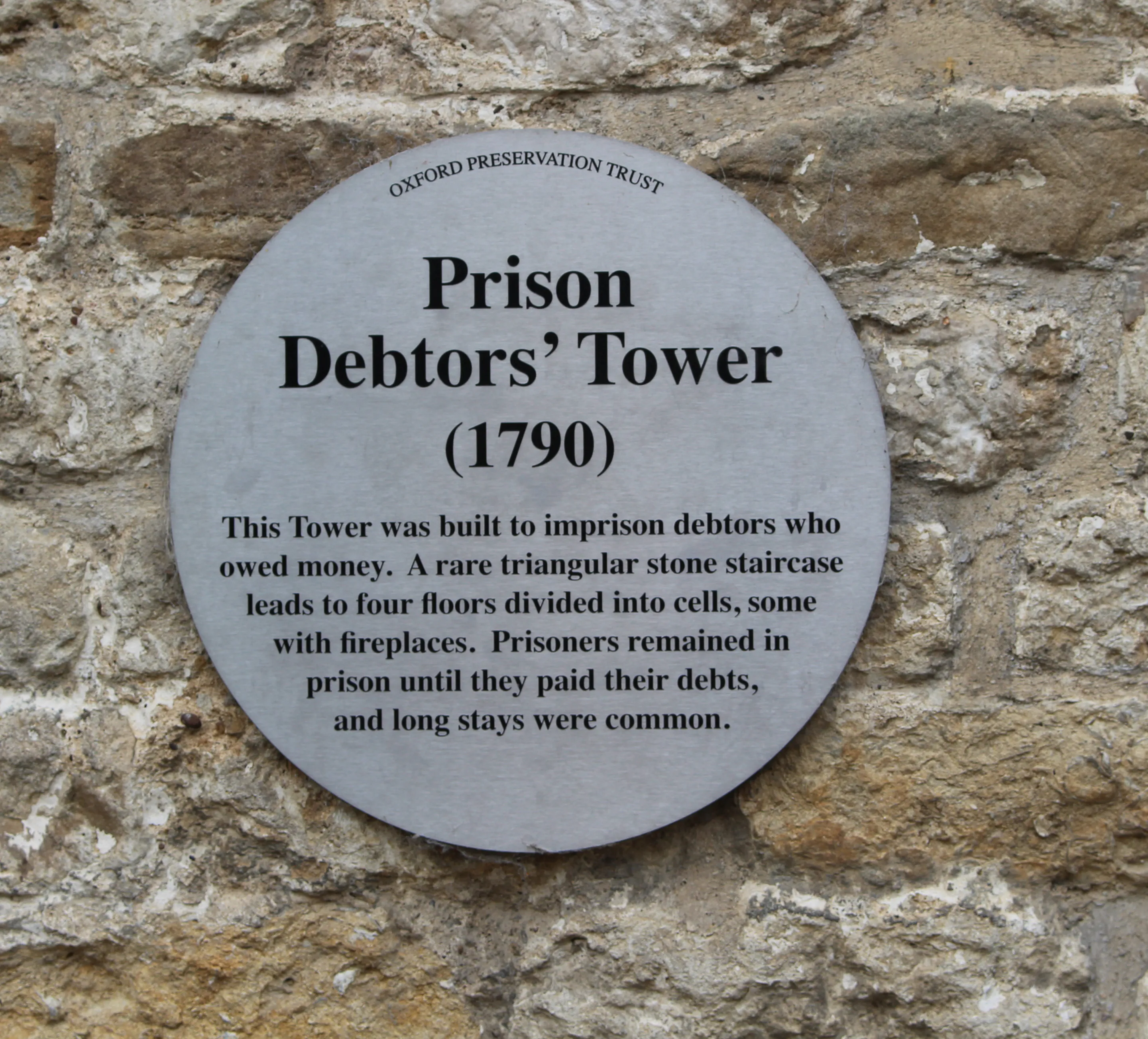
5. The Debtors' Tower and D Wing
Included with St George's Tower and the crypt in the Grade I listing (NHLE 1369490), the Debtors' Tower and D Wing carry the site's later penal history in their fabric.
Why it matters: debt imprisonment is a distinct and now-alien part of English legal history, and having the tower named for it on a site that also holds a Norman motte is the whole point of Oxford Castle in one view.
Time: seen in passing on the tour.
6. The castleyard
The open courtyard at the centre of the complex, publicly accessible without a ticket.
Why it matters: it is where the stratigraphy is legible. Standing in the yard you can see the tower, the mound and the prison ranges at once — Saxon (possibly), Norman and Georgian in a single turn of the head.
The visit: free. Used for the summer Shakespeare performances and Knight School.
Time: as long as you like.
Details worth slowing down for.
The tower is not built like the castle
The single most useful thing to look at, and almost nobody does. St George's Tower is rubble-built, tall and square, with proportions that do not match the Norman work around it. That visual mismatch is not an impression — it is part of the actual archaeological argument for a pre-Conquest date. Stand in the castleyard, look at the tower, then look at the masonry of the ranges beside it. You are looking at the evidence.
The tower may be older than the mound it stands next to
Worth pausing on, because it inverts the obvious reading. A visitor naturally assumes the mound came first and the tower was added. If the late Saxon dating is right, the opposite is true: the tower was already standing when the Normans raised the motte beside it in 1071. The castle was built around an existing structure.
The burials under the rampart
Not visible, but the reason the story changed. Two burials cut into the rampart on the tower's southern side returned radiocarbon dates around AD 1000. Human remains are what re-dated the oldest building in Oxford — worth knowing while standing on the spot.
Cushion capitals in the crypt
In the crypt, look at the tops of the columns. The blunt, rounded cushion capital is an early Romanesque form and one of the more reliable ways to place a space in the late eleventh or early twelfth century by eye. It is the same vocabulary you will see if you go on to look at the Norman work elsewhere in the county.
A governor who dug his own castle
Daniel Harris, governor from the 1780s rebuilding, was also a builder and surveyor, and he put prison labour to work both on constructing the new gaol and on excavating the castle site under the antiquarian Edward King. Oxford Castle is therefore among the earlier English castles to have been archaeologically investigated at all — by its own gaoler, using its own prisoners.
The hotel is a cell block
The Malmaison occupies a converted prison wing. You do not need a ticket to walk in and look: the bar and public areas retain the wing's structure, and the guest rooms are made from knocked-through cells. Whether that is tasteful is a matter of opinion, but it is the most direct way to understand the building's scale without booking a tour.
The gap between 1996 and 2006
Ten years in which a scheduled monument containing a redundant Victorian gaol sat largely empty while its future was argued over. The excavations that rewrote the tower's date happened in that window. The site you visit is the resolution of a genuinely difficult conservation problem, not a straightforward restoration.
The name on the Grade I listing
The listing is not "Oxford Castle". It is St Georges Tower, St Georges Chapel Crypt and D Wing Including the Debtors Tower — a Norman chapel crypt and a Georgian debtors' prison protected under one entry, because they are physically one building group. The listing title is the site's history in a single line.
The station is closer than the colleges
A practical detail with historical logic behind it. Oxford Castle sits on the western edge of the medieval town, by the river crossing it was built to control. The railway later came in on the same western side. That is why the castle is the closest major historic site to the station and the colleges are not.
Best viewpoint that costs nothing
The castleyard, standing with the mound behind you and the tower ahead. It is free, it is open, and it is the only spot where the full stratigraphy of the site composes into one view.
Make it work
Plan the visit properly.
Current practical detail, kept separate from the story so it is easy to scan when you need it.Operational facts verified 28 July 2026 against the operator's website. Prices and hours at visitor attractions change without notice — treat anything below as a guide and confirm before travelling. See the conflict note at the end; sources disagreed and this guide says which was used.
Where it is
Oxford Castle, New Road, Oxford OX1 1AY. The site sits on the western edge of the city centre, roughly a seven-minute walk from Carfax and eight minutes from Oxford railway station — closer to the station than almost any other major Oxford attraction, which makes it a good first or last stop on a day trip.
Opening hours
The attraction opens daily from 10:00, with closing time varying seasonally and around holidays. The operator's own site showed 17:30 on the dates checked; several third-party listings show 17:00. Tours run through the day rather than continuously, and the last tour departs before closing — the practical constraint is the last tour, not the closing time.
Check the operator's calendar for your date before travelling. The site programmes seasonal events (see below) that alter the tour schedule.
Admission
Admission is by guided tour. At the time of checking the operator was running a "Summer of Savings" promotion (25 June – 1 September 2026), with reduced prices reflecting a temporary VAT reduction on family attraction admissions. Prices below are as displayed during that promotion, with the standard price alongside.
| Ticket | Promotional | Standard |
|---|---|---|
| Standard guided tour — adult | £15.00 | £19.50 |
| Standard guided tour — child | £10.00 | £12.50 |
| Flexi guided tour — adult | from £21.00 | — |
| Flexi guided tour — child | from £14.00 | — |
| Spectre ghost tour — adult | £13.75 | £15.75 |
| Spectre ghost tour — child | £9.15 | £10.50 |
The flexi ticket costs more and buys free postponement for twelve months and rescheduling until 09:00 on the day. For a fixed-date visit the standard ticket is the better value; for a trip that might move, the flexi difference is roughly the price of a coffee and removes the risk.
Children under five enter free but may not climb St George's Tower.
What the ticket includes
The standard guided tour lasts 50 minutes to an hour, led by a costumed guide, and covers:
- St George's Tower — the 101-step climb and the view over Oxford.
- The crypt of the former castle chapel.
- The eighteenth-century prison wing and cells.
- The motte — the man-made mound.
Afterwards you are free to explore the exhibition spaces at your own pace. The courtyard, the Castle Quarter and the exterior of the mound are publicly accessible without a ticket.
Booking
Book ahead, particularly at weekends, in school holidays and during festival programming. Tours have a fixed capacity and the tower stair sets a hard limit on group size. Walk-ups are possible off-season midweek but are not a plan.
Best time to visit
- Quietest: weekday mornings outside school holidays, first tour of the day.
- Best light for the tower view: late afternoon, when the low sun is behind you looking east over the spires.
- Avoid the middle of Saturday in summer, when the courtyard is busiest and tours fill.
- Wet weather: a genuinely good rainy-day option, but note the tower climb and the mound are outdoors and exposed; heavy rain degrades the best part.
Duration
Allow 90 minutes to two hours: an hour for the tour, then the exhibitions, the courtyard and the mound. A visitor in a hurry can do the tour alone in an hour; anyone interested in the archaeology will want longer.
Facilities
Toilets, a shop and cafés and restaurants within the Castle Quarter courtyard. The Quarter's food offer is a commercial development rather than part of the attraction — it is convenient rather than a destination, and the Covered Market ten minutes east is a better lunch.
Seasonality and events
The site programmes seasonal events that change the offer materially:
- Ghost tours (Spectre) — outdoor guided walking tours, 1 hour 30 minutes.
- Knight School — a summer children's event, ages 5–11, with sword and shield handling and archery.
- Shakespeare festival performances in the castleyard during summer.
These are ticketed separately from the standard tour.
Getting there
- Train: Oxford station, roughly eight minutes on foot.
- Bus: the Westgate and city-centre stops are within five minutes.
- Car: do not. Oxford's centre is heavily restricted; use Park & Ride.
- Cycling: racks in the vicinity; the site is on the western edge of the centre and easily reached from the Thames path.
- Walking: from Carfax, west along Queen Street and past the Westgate — seven minutes.
Dogs
Assistance dogs are welcome. The courtyard is public and dog-friendly in practice; the guided tour, with a confined crypt and a narrow tower stair, is not suitable for other dogs.
Practical advice
- Wear shoes you can climb 101 uneven steps in.
- The crypt and tower are cooler than outside; take a layer even in summer.
- If the tower is the reason you are going, confirm it is open when you book — weather and maintenance can close it while the rest of the tour runs.
- Arrive ten minutes before your tour time; tours leave promptly.
Where our sources disagreed
This section is public on purpose. Above Guide records where sources conflicted rather than quietly picking one.
Two operator domains are in circulation: oxfordcastleandprison.co.uk and oxfordcastleprison.co.uk. The former refused automated requests (TLS failure) on the verification date; the latter served current content including live pricing and was used as the source here. Both appear to be operator-controlled. Re-verify which is canonical before this bundle is next updated.
Hours: operator site showed 10:00–17:30; aggregator listings showed 10:00–17:00. The operator's figure is used here.
Prices: a third-party summary quoted £21 adult as the standard tour price. That figure matches the operator's flexi rate, not the standard tour — so it is a conflation rather than a genuine disagreement. The operator's own table is used.
Visit your way
Access and family planning.
Written for someone deciding whether a visit is feasible. Where a detail could not be verified from the operator's published information on 28 July 2026, this guide says so rather than reassuring you. Contact the attraction directly to confirm your specific requirements before travelling — a wrong "accessible" wastes a journey.
The headline constraint
St George's Tower is 101 steps on a narrow historic stair, with no lift. It is the highlight of the tour and it is not accessible to wheelchair users or to anyone who cannot manage a long, confined flight of steps. No alternative access to the viewing platform exists — the structure does not permit one.
This is the single most important fact on this page, and it is a limitation of an eleventh-century (or earlier) tower rather than a failure of the operator.
What that means in practice
The guided tour includes the tower, the crypt, a prison wing and the motte. A visitor who cannot do stairs can still take the tour and will still see substantial parts of it, but will miss the tower and should expect to wait while the group climbs. Ask when booking how the operator handles this — whether the group is rejoined afterwards, and whether a reduced rate applies.
Element by element
| Element | Access |
|---|---|
| Castleyard / courtyard | Level, open, free, no ticket needed |
| Castle Quarter (shops, restaurants) | Modern development, step-free |
| St George's Tower | 101 steps, no lift — not accessible |
| Crypt | Below ground, reached by steps; confined, low, dim |
| Prison wing and cells | Historic building; confined spaces, thresholds |
| The motte | Outdoor climb on a mound — steep, uneven, weather-dependent |
Sensory considerations
- Lighting: the crypt and cells are deliberately dim. The tower stair is dark and confined.
- Noise: guided tours are performed, with raised voices and dramatic delivery. The crypt has strong acoustics. This may be difficult for visitors sensitive to noise or to enclosed sound.
- Confinement: the crypt, the tower stair and the cells are all enclosed. Visitors with claustrophobia should treat this as a substantial factor.
- Subject matter: incarceration and execution are covered directly.
Visual impairment
The tour is verbal and narrative-led, which suits visitors with limited vision better than a caption-based museum would. However, the floors are uneven and historic, the lighting is low, and the tower stair is hazardous. A sighted companion is strongly advisable. Whether large-print or audio materials are available was not verifiable from published information — ask.
Hearing impairment
The tour depends heavily on a guide speaking, sometimes in acoustically difficult spaces. Whether hearing loops, transcripts or BSL-interpreted tours are offered was not verifiable from published information — ask when booking, and ask about standing near the guide.
Assistance dogs
Welcome. Note that the tower stair and the crypt are genuinely difficult environments for a dog; discuss the route with staff on arrival.
Toilets
Toilets are available on site. Whether an accessible toilet is provided, and where, was not verifiable from published information — confirm directly.
Rest areas
Seating is limited on the tour route itself; the tour is continuous for 50–60 minutes with standing throughout. The castleyard and the Castle Quarter restaurants provide seating before and after.
Getting there
Oxford station is roughly eight minutes' walk on level pavements — among the easier approaches to any major Oxford attraction. Blue Badge parking in central Oxford is very limited; check Oxford City Council's current provision before driving.
Honest summary
A wheelchair user or a visitor who cannot manage stairs can visit the site, enjoy the free castleyard, and take a tour that includes several stops — but cannot climb the tower or, realistically, reach the crypt, and those are two of the four principal stops. Whether that is worth the ticket is a personal judgement, and it is better made in advance than at the foot of the stair.
Short answer
Good for children roughly 6 to 12, provided they can manage stairs. The tour is performed by costumed guides rather than delivered as a lecture, which carries younger children a long way. Under-fives cannot climb the tower, which removes the best part for the youngest visitors.
Age by age
Under 5. Free entry, but not permitted to climb St George's Tower for safety reasons. Since the tower is the highlight, a visit with a toddler is a partial experience. The courtyard, the mound and the exhibitions are still available and cost nothing.
5–7. Workable. The costumed guiding holds attention and the tower climb is an event. Prison content is handled seriously rather than graphically, but parents should expect questions about executions afterwards.
8–12. The sweet spot. Old enough for the stairs, the history and the moral weight of the prison; young enough for the theatre of it. This is also the age the summer Knight School targets (5–11) — sword and shield handling, archery and a ceremonial knighting.
Teenagers. Depends on the teenager. The prison history and the argument about the tower's date land well with anyone who likes history; those who don't will find an hour of guided tour long.
Educational value
Genuinely high, and unusually broad for one site:
- Norman Conquest — a motte-and-bailey you can climb, built to control a conquered town.
- Anglo-Saxon England — the burh, its defences, and a live dating argument.
- The Anarchy — Stephen and Matilda, and an escape story children remember.
- Crime and punishment — a standard primary and secondary topic, taught here in an actual prison rather than from a worksheet.
- Archaeology — how evidence changes conclusions, demonstrated by the tower.
Friction points — read before booking
- 101 steps on a narrow medieval stair. No lift. Tiring for small legs and impossible with a pushchair.
- Pushchairs cannot go on the tour. The tower stair and the crypt rule them out. Plan for a carrier or a second adult who stays below.
- Timed and guided. You cannot leave mid-tour easily or go at a child's pace. A child who needs to move constantly will struggle for an hour.
- Confined spaces. The crypt and cells are enclosed, cool and dim.
- Subject matter. Incarceration and capital punishment are covered. Decide in advance how you want to handle that conversation.
- Somewhere to sit is limited on the tour itself; the courtyard has seating.
Practicalities
- Toilets on site.
- Food: the Castle Quarter courtyard has restaurants and cafés, convenient rather than special. The Covered Market, ten minutes east, is better and more interesting.
- Buggy parking: ask at admissions rather than assuming.
- Run-around space: the castleyard and the mound. The mound is the best energy-burner on the site and it's free.
Making it work
Book the first tour of the day — children are freshest, the site is quietest and the tower stair is not queued. Do the tour, then let them climb the mound afterwards; ending outdoors and physical, rather than in a cell block, sends everyone home in a better mood.
Self-guided walk
Explore beyond the venue.
A practical, step-by-step route connecting this experience with more of Oxford.Stop 1 — The castleyard
Start here. Free, open, and the only place the whole site composes into one view. Stand with the mound behind you and St George's Tower ahead.
Look at the tower and then at the masonry beside it. The mismatch you can see is part of the actual argument that the tower pre-dates the Norman castle by fifty years. If you are taking the guided tour, take it now and rejoin the walk after.
10 minutes, or 1 hour with the tour.
Stop 2 — The mound
From the yard, follow the signs up the motte — a short, steep grass and path climb.
Raised for Robert d'Oilly's castle in 1071 to carry a keep and dominate the river crossing. The keep is gone; the earthwork and a well chamber remain. From the top, look back at the tower and consider that it may already have been standing when this mound was heaped up around it.
15 minutes. Skip in wet weather — the grass gets slick.
Stop 3 — New Road and Paradise Street
Leave the yard onto New Road and walk south-west, then turn into Paradise Street. Two minutes.
This is the classic external view of the tower from the south-west, photographed since the nineteenth century. You are also walking the line of the western defences — the ground drops away towards the old river channels, which is exactly why a fortification stood here.
10 minutes.
Stop 4 — Westgate roof terrace
Back onto New Road, east and south into Westgate Oxford; take the lift or escalators to the roof terrace. Five minutes.
Free, and the best wide view of the city from the south-west. The name is the point: Westgate marks the medieval west gate of the walled town — very possibly the gate St George's Tower was built to watch. You are looking at the castle from the position of the town it guarded.
Lunch here if you want it.
30 minutes with a drink.
Stop 5 — St Ebbe's and the line of the wall
Leave Westgate at the southern end and walk east through St Ebbe's towards Pembroke Street. Seven minutes.
Quiet, and useful for understanding the medieval town's southern edge. The street pattern here still follows the old burh grid in places — the reason Oxford's centre feels gridded in a way most English cities do not.
10 minutes.
Stop 6 — Carfax Tower
North up St Aldate's to Carfax, the central crossroads. Five minutes.
The tower of the demolished church of St Martin, and the geographic centre of the old town. Climb it if you have the legs left: the view from the middle of the city complements the view you had from its western edge. Together they frame the whole medieval footprint.
30 minutes including the climb.
Stop 7 — The Covered Market
East from Carfax along the High, then left into the Market. Three minutes.
Lunch or coffee, and the best surviving piece of Oxford's town commerce — the same civic thread as the castle, four centuries later. A far better stop than the Castle Quarter for food.
30 minutes.
Stop 8 — Queen Street back to the castle
West along Queen Street and New Road. Seven minutes.
You are walking the main east–west axis of the walled town, from its centre back to its western gate — the exact journey a medieval Oxonian would have made to reach the castle. It closes the loop and it explains the shape of everything you have just seen.
10 minutes.
Stop 9 — Finish: the castleyard at dusk
End where you started. The tower and the ranges light after dark and the courtyard is at its best in the evening. If you want a drink, the Quarter is here; if you want a better one, the Turf Tavern is twelve minutes east.
As long as you like.
Shorter version — 1 hour
Castleyard → mound → Paradise Street → Westgate roof → back. Covers the castle, the view and the west-gate connection without crossing the city.
Make a record
Photograph it thoughtfully.
The one shot
From the top of St George's Tower, facing east, late afternoon. The tower platform gives the best general panorama of central Oxford available to an ordinary ticket-holder: the college towers and spires massed to the east, the Thames and the water meadows behind you to the west. Late afternoon puts the sun at your back and lights the stone.
It is also the only elevated public viewpoint on this side of the city, which makes it compositionally distinct from the more familiar views from St Mary's tower or the Sheldonian cupola.
Best angles
The tower from the castleyard. The whole argument about the building's date is visible here — its rubble construction and proportions against the ranges beside it. Shoot from the yard with the mound out of frame for a clean elevation; include the mound for the stratigraphy shot.
The mound from the yard. Best in raking light early or late, when the earthwork's profile reads as a shape rather than a green lump. Flat midday light flattens it completely.
The tower from the mound. The reciprocal view, and the one that makes the relationship between the two legible. Worth doing both ways round.
Prison corridors. Hard directional light through cell windows onto a long corridor is the strongest interior composition on the site. Expose for the highlights and let the corridor go dark.
Exterior from Paradise Street and New Road. The tower reads well from the south-west with the street in the foreground — a historic view, photographed since the nineteenth century.
Light
- Golden hour, late afternoon: the tower platform, the yard, the mound.
- Early morning: quietest, and good raking light on the mound.
- Overcast: better for the crypt and the cells than for anything outdoors.
- Midday summer: the worst conditions here — flat light, busy courtyard, harsh contrast in the yard.
Interiors
The crypt is the hardest space on the site: low, confined and very dimly lit, with no flash permitted. A fast lens is the answer. Handheld at high ISO with a wide aperture will get you a usable frame; a tripod is impractical on a moving guided tour and may not be permitted.
The cells are easier — the window light does the work — but you are on a timed tour and cannot linger.
The constraint nobody plans for
You are on a guided tour. You move when the group moves. There is no opportunity to wait for light, set up, or return to a composition. Photographers who want time should shoot the free areas — the castleyard, the mound, the exterior — before or after the tour, and treat the interiors as opportunistic.
Rules and etiquette
- Personal photography is generally welcomed on the standard tour; there is no flash in the crypt.
- Commercial or professional shoots require prior permission from the operator. Approach Continuum Attractions in advance; do not turn up with lighting and a model.
- Drones: do not. This is a scheduled monument in central Oxford with a hotel, restaurants and airspace restrictions. Assume no, and seek written permission if you have a genuine commission.
- Other visitors: the tower platform is small and the stair is single-file. Take your frame and move; do not hold the platform.
- Guides and staff are performing in costume. Ask before making them the subject of a portrait.
- The hotel is a private business. Public areas are photographable with discretion; guest areas are not.
Kit
- Wide (16–35mm equivalent) for the crypt, the cells and the yard.
- Standard to short telephoto (35–85mm) for the view from the tower — a wide lens makes the distant spires disappear.
- Fast glass (f/2.8 or wider) for the crypt.
- No tripod in practice.
- Something you can carry up 101 steps one-handed.
See it
In pictures.
All 9 photographs from this page, full screen. Tap any one to open the viewer.Around here
Make more of the area.
Within 2 minutes
Oxford Castle Quarter
The courtyard development surrounding the historic core — restaurants, bars and event space, publicly accessible without a ticket. Why it complements: it is where you sit down afterwards, and the castleyard within it is the best free viewpoint of the tower and mound together. Manage expectations: it is a commercial development, not a heritage offer.
Malmaison Oxford
The hotel occupying the converted prison wing. Why it complements: you can walk into the public areas and see the cell-block structure without a tour ticket — the most direct way to grasp the building's scale. It also answers the question every visitor asks: yes, people really do sleep in there.
Within 5 minutes
Westgate Oxford
The shopping centre immediately south-east, with a roof terrace of bars and restaurants. Why it complements: the roof terrace is a genuinely good free viewpoint back over the city, and it is the nearest reliable lunch. It also makes a point about the site — Westgate is named for the medieval west gate that St George's Tower may have been built to guard.
Oxford railway station
Eight minutes west. Why it matters: the castle is the closest major historic site to the station, which is not an accident — both sit on the western approach, by the river crossing the castle was built to control.
Within 10 minutes
Covered Market
East along Queen Street. Why it complements: far better lunch than the Castle Quarter, and a genuine piece of Oxford's town — as opposed to university — history, which is the same thread the castle belongs to. See the Above Guide bundle for the market.
Carfax Tower
Seven minutes east at the central crossroads. Why it complements: the other climbable tower in central Oxford, and the obvious comparison — Carfax gives you the view from the middle, St George's the view from the edge. Doing both in a day frames the city from two sides.
Christ Church
Ten minutes south-east. Why it complements: the maximum contrast. Christ Church is the university at its grandest and wealthiest; the castle is the county gaol. Visiting both in one day is the clearest way to understand that Oxford is two cities that happen to share a postcode.
Oxford Castle Mound and Nuffield College
Nuffield stands on the site of the castle's outer defences and the former canal basin. Why it complements: it explains the shape of the streets around you.
Within 15 minutes
Ashmolean Museum
Fifteen minutes north-east. Why it complements: the archaeological material that contextualises the site — and free, which makes it the right pairing for anyone who has just paid for a tour.
Bodleian Library and the Divinity School
Fifteen minutes east. Why it complements: the medieval university built while the castle was becoming a gaol. Same centuries, opposite trajectories.
Oxford Botanic Garden
Fifteen minutes east, on the Cherwell. Why it complements: the obvious decompression after a prison wing, and the oldest botanic garden in Britain — a 1621 foundation to set against the castle's 1071.
Suggested pairings
- Half day, arriving by train: Castle → Westgate roof for lunch → Carfax Tower → Covered Market.
- Town not gown: Castle → Covered Market → the historic pubs.
- Contrast day: Castle in the morning, Christ Church in the afternoon.
- Rainy day: Castle tour → Ashmolean → Covered Market. Only the tower and mound are exposed.
Good to know
Questions, answered.
01Is Oxford Castle worth visiting?
Yes, particularly if you have already seen the colleges and want the other side of Oxford. It is the town and county's site rather than the university's, and it holds a possibly pre-Norman tower, a Romanesque crypt, a Norman motte and a prison that closed in 1996 within one courtyard. Allow two hours.
02How much does Oxford Castle cost?
Admission is by guided tour. During the promotion running 25 June – 1 September 2026, adult tickets were £15.00 and child £10.00, against standard prices of £19.50 and £12.50. A flexible ticket allowing rescheduling costs more — from £21.00 adult. Prices verified 28 July 2026; confirm before travelling.
03What are Oxford Castle's opening hours?
Open daily from 10:00. The operator's site showed closing at 17:30 on the date checked; some listings show 17:00. Tours run through the day and the last tour departs before closing, so the practical constraint is the last tour time. Check the operator's calendar for your date.
04Do I need to book Oxford Castle in advance?
Booking ahead is strongly advised at weekends, in school holidays and during festival programming. Tours have limited capacity because the tower stair caps group size. Walk-ups are sometimes possible midweek off-season.
05How long does the Oxford Castle tour take?
The standard guided tour runs 50 minutes to an hour, after which you can explore the exhibitions at your own pace. Allow 90 minutes to two hours for the whole visit.
06What is included in the Oxford Castle tour?
A costumed guide takes you up St George's Tower, down into the crypt of the former castle chapel, through an eighteenth-century prison wing and cells, and to the motte. Exhibition access follows the tour.
07How many steps is St George's Tower?
101 steps, on a narrow historic stair with no lift.
08Can children climb St George's Tower?
Children under five are not permitted to climb the tower for safety reasons. They enter free but will miss the tour's highlight.
09Is Oxford Castle wheelchair accessible?
Partly. The castleyard and the Castle Quarter are level and free. St George's Tower is 101 steps with no lift and is not accessible; the crypt is reached by steps. A wheelchair user can take the tour and see several stops but will miss the tower and realistically the crypt. Contact the attraction to discuss your requirements before booking.
10How old is Oxford Castle?
The castle was founded in 1071 by Robert d'Oilly after the Norman Conquest. St George's Tower may be older still — recent archaeology favours a late Saxon date of around 1020, which would make it the oldest substantial building in Oxford.
11Is St George's Tower Saxon or Norman?
Contested, and genuinely so. The traditional attribution is Norman, built by Robert d'Oilly around 1074. Excavation since 1999 and re-analysis of the town's late tenth-century defences now favour a late Saxon watchtower associated with the west gate — burials cut into the rampart beside it have been radiocarbon dated to around AD 1000. Recent scholarship leans Saxon; it is not settled.
12What is the oldest building in Oxford?
St George's Tower is the strongest candidate for the oldest substantial standing building in the city, on the late Saxon dating. Avoid stating it as settled fact — the date is contested and superlatives about old buildings rarely survive checking.
13Did Empress Matilda really escape from Oxford Castle?
Yes. In December 1142, besieged by Stephen, she left the castle, crossed frozen ground and reached Abingdon on foot before going on to Wallingford. The escape is well-attested in the medieval chronicles. The famous detail that she dressed in white to cross the snow unseen belongs to the tradition and has been much embellished since; treat the escape as fact and the camouflage as a long-standing story.
14When did Oxford Prison close?
HM Prison Oxford closed in 1996. The site returned to Oxfordshire County Council and reopened in 2006 as a heritage attraction, hotel and courtyard development.
15Can you stay in Oxford Prison?
Yes. The Malmaison Oxford hotel occupies a converted cell block, with guest rooms made from knocked-through cells. The public areas can be walked into without staying.
16Is Oxford Castle a real castle?
Yes, though little of the fortress survives above ground. The motte is the principal upstanding remnant of the Norman castle; the stone keep is gone. The site is a Scheduled Monument (NHLE 1007730).
17Is Oxford Castle haunted?
The site runs a ghost tour and has an extensive folklore, including a white-clad figure associated with Matilda's escape. Above Guide records these as traditions attached to the site rather than as claims about it.
18What is the Oxford Castle Quarter?
The courtyard development around the historic core — restaurants, bars and event space — publicly accessible without a ticket. It is a commercial development rather than part of the heritage attraction.
19Is Oxford Castle good for children?
Good for roughly ages 6 to 12 if they can manage stairs. The costumed guiding holds attention well. Under-fives cannot climb the tower; pushchairs cannot go on the tour.
20Is there parking at Oxford Castle?
Do not drive into central Oxford. Use Park & Ride. The station is eight minutes' walk away, which makes arriving by train much the easier option.
21How do I get to Oxford Castle from the station?
Roughly eight minutes on foot, east on level pavement. Oxford Castle is the closest major historic site to the railway station.
22Can you visit Oxford Castle for free?
Partly. The castleyard, the Castle Quarter and the exterior views are free and publicly accessible. The tower, crypt, prison wing and mound require a tour ticket.
23What is the crypt at Oxford Castle?
The surviving crypt of St George's Chapel, the collegiate chapel founded in 1074 by Robert d'Oilly and Roger d'Ivry — a small Romanesque space with cushion capitals, and the oldest interior on the tour.
24Was Geoffrey of Monmouth connected with Oxford Castle?
He is associated with the college of St George at the castle in the 1130s. The connection is plausible and widely repeated, and is best described as association rather than documented biography.
25What can you see from the top of St George's Tower?
The best general panorama of central Oxford available to an ordinary visitor: the college towers and spires to the east, the Thames and the meadows west. Late afternoon puts the sun behind you for the eastward view.
26Can you take photographs at Oxford Castle?
Personal photography is generally welcome; there is no flash in the crypt. Commercial shoots need prior permission from the operator. Assume drones are not permitted — it is a scheduled monument in central Oxford.
27Is Oxford Castle a good rainy-day option?
Reasonably. The crypt, cells and exhibitions are indoors, but the tower climb and the mound are exposed, and heavy rain degrades the best parts. Pair with the Ashmolean and the Covered Market for a fully indoor day.
28What else is near Oxford Castle?
Westgate Oxford and its roof terrace are five minutes; the Covered Market and Carfax Tower ten minutes east; Christ Church ten minutes south-east; the Ashmolean fifteen minutes north-east.
29Who runs Oxford Castle?
The visitor attraction is operated by Continuum Attractions. The site is owned by Oxfordshire County Council following the prison's closure.
30Is Oxford Castle the same as Oxford Castle & Prison?
Effectively yes — "Oxford Castle & Prison" is the operating name of the visitor attraction within the wider castle site, which also contains the hotel and the Castle Quarter.
31Are there toilets at Oxford Castle?
Yes, on site, with more in the surrounding Castle Quarter. Whether an accessible toilet is provided was not verifiable from published information — contact the attraction to confirm.
Before you visit
Useful links.
Venue and visitor information
Every factual claim in this bundle traces to a source below. Sources are prioritised: official operator → government and statutory heritage → academic and archaeological → encyclopaedic. No AI-generated source is cited.
Research and verification carried out 28 July 2026.
Sources
S01 — Oxford Castle & Prison, official website
https://www.oxfordcastleprison.co.uk/ Operator's site. Used for: opening hours, all ticket prices and categories, tour duration and contents, the 101-step tower figure, the under-5 climbing restriction, event programming (Spectre ghost tour, Knight School, Shakespeare festival), address and postcode, and the identification of Continuum Attractions as operator. Accessed 28 July 2026.
S02 — Oxford Castle & Prison, tickets and prices page
https://www.oxfordcastleprison.co.uk/tickets-prices/ Used for: the full price table including promotional and standard rates, the flexi ticket terms, and the "Summer of Savings" promotion dates. Accessed 28 July 2026.
S03 — Historic England, National Heritage List for England: entry 1007730
https://historicengland.org.uk/listing/the-list/list-entry/1007730 Oxford Castle and earlier settlement remains — Scheduled Monument, first listed 11 December 1950. Used for: the scheduling, the official monument name and the designation date. Accessed 28 July 2026. Retrieved via Firecrawl; the site returns HTTP 403 to direct automated requests.
S04 — Historic England, National Heritage List for England: entry 1369490
https://historicengland.org.uk/listing/the-list/list-entry/1369490 St Georges Tower, St Georges Chapel Crypt and D Wing Including the Debtors Tower, New Road — Listed Building, Grade I, first listed 12 January 1954. Used for: the listing grade, the official entry name (which is itself evidence of how the site's periods are grouped), and the designation date. Accessed 28 July 2026. Retrieved via Firecrawl.
S05 — Wikidata, Q2600886 (Oxford Castle)
https://www.wikidata.org/wiki/Q2600886 Used for: coordinates (P625: 51.7518, −1.26248), the NHLE cross-reference (P1216: 1007730) which independently corroborates S03, and the heritage designation statement. Coordinates in 13-operational-data.json are attributed to this source. Accessed 28 July 2026 via the Wikidata API.
S06 — Oxford Archaeology / Oxoniensia: excavations at Oxford Castle
Poore, D. et al., "Excavations at Oxford Castle: Oxford's Western Quarter", Oxoniensia (2009). https://oxoniensia.org/volumes/2009/poore.pdf Munby, J. and Norton, A. et al., Excavations at Oxford Castle 1999–2009 (Oxford Archaeology). Used for: the archaeological re-dating of St George's Tower; the radiocarbon dates of approximately AD 1000 for burials cut into the rampart on the tower's southern side; the extent and dates of the excavation programme.
S07 — Archaeological Journal: the late tenth-century defences of Oxford
"The late tenth-century defences of Oxford and the towers of St George and St Michael", Archaeological Journal vol. 178 no. 2 (2021). https://www.tandfonline.com/doi/abs/10.1080/00665983.2021.1886707 Used for: the argument that St George's Tower belongs structurally and topographically to the late tenth-century town defences rather than to the Norman castle. This is the principal academic support for the Saxon dating presented in this bundle.
S08 — Oxford City Council: Oxford Archaeological Resource Assessment
https://www.oxford.gov.uk/downloads/file/703/saxon-and-viking-oxford-410---1066 Local-authority archaeological assessment covering Saxon and Viking Oxford (410–1066). Used for: the burh context, the late tenth-century rebuilding of the town defences in stone, and the position of the western circuit.
S09 — John Blair, on the pre-Conquest dating
Cited in the Oxford Archaeology reporting (S06). Used for: the characterisation that a pre-Conquest date for St George's Tower is "increasingly possible" in the light of the excavations — the wording this bundle relies on when describing the question as open rather than settled.
S10 — Wikipedia: Oxford Castle; HM Prison Oxford
https://en.wikipedia.org/wiki/Oxford_Castle Used only for: the outline chronology of the prison era — the 1785 county purchase, the 1805 completion of the rebuilding, County Hall 1840, Militia Armoury 1854, prison extension 1876, closure 1996, reopening 2006 — and the Daniel Harris / Edward King excavation account. Tertiary source, used for uncontroversial dates only. Every claim in this bundle that carries interpretive weight is supported by S01–S09. These dates should be upgraded to a primary or county-record source at the next revision.
S11 — Wikimedia Commons: production image sources
The installed gallery uses the following reusable photographs:
https://commons.wikimedia.org/wiki/File:Oxford-castle.jpg— St George's Tower and D Wing; Tejvan Pettinger, CC BY 2.0.https://commons.wikimedia.org/wiki/File:Oxford_Castle_motte_2022.jpg— castle motte; Gabon100, CC BY-SA 4.0.https://commons.wikimedia.org/wiki/File:OxfordCastle_StGeorgesCrypt.jpg— St George's crypt; Motacilla, CC BY-SA 3.0.https://commons.wikimedia.org/wiki/File:OxfordCastle_MotteWellVault.jpg— motte well chamber; Motacilla, CC BY-SA 3.0.https://commons.wikimedia.org/wiki/File:Oxford_Castle_-_Prison_Debtors%27_Tower_(1790)_C_IMG_6845.jpg— Debtors' Tower; Anneli Salo, CC BY-SA 4.0.https://commons.wikimedia.org/wiki/File:Oxford_Castle_by_night_(geograph_8014862).jpg— castle and prison ranges at night; Chris j wood, CC BY-SA 4.0.
Downloaded and installed 30 July 2026. Visible attribution is provided by src/data/experienceImageCredits.js.
Conflict ledger
C1 — Closing time
- S01 (operator): 17:30
- Third-party aggregator listings: 17:00
Used: 17:30, the operator's own figure. Recorded in 13-operational-data.json → opening_hours.conflict_note. Note that the operative constraint for a visitor is the last tour departure, which the operator does not publish as a fixed time.
C2 — Standard adult tour price
- S02 (operator price table): £15.00 promotional, £19.50 standard
- A third-party search summary: "£21"
Used: the operator's table. The £21 figure corresponds to the operator's flexi ticket rate, not the standard tour — an apparent conflation in the third-party source rather than a genuine disagreement.
C3 — Date of St George's Tower
- Traditional account (older guidebooks, and much of the web): built by Robert d'Oilly c.1074 as part of the Norman castle.
- S06, S07, S09: late Saxon, perhaps c.1020, a watchtower associated with the west gate of the burh, subsequently absorbed by the castle. Supported by radiocarbon dates of c.AD 1000 on burials cut into the adjacent rampart and by the tower's structural relationship to the late tenth-century defences.
- S01 (operator): describes the tower as Anglo-Saxon in current marketing.
Used: neither, as settled. The bundle presents the traditional attribution, the archaeological case against it, and states that the question is open. This is deliberate and is the page's principal editorial contribution — see 16-editor-notes.md before revising.
C4 — Which operator domain is canonical
oxfordcastleprison.co.uk— served current content including live pricing.oxfordcastleandprison.co.uk— appears in search results and looks operator-controlled, but refused automated requests (TLS failure) on the verification date.
Used: oxfordcastleprison.co.uk. Flagged for resolution in 16-editor-notes.md; it affects official_website and the outbound link.
C5 — Castle foundation date
- Most sources: 1071
- Some sources: 1072
Used: 1071, with the variance recorded in 13-operational-data.json → historical_facts.castle_founded_note. The difference is immaterial to any claim made here.
Claims deliberately not made
Recorded so a future editor knows these were considered and rejected, not overlooked.
- "The oldest building in Oxford" — stated only as "the strongest candidate for the oldest substantial standing building", because the date is contested.
- Empress Matilda's white camouflage — the escape (December 1142) is treated as fact; the white-clothing detail is presented as a long-standing tradition that has been embellished, not as a documented tactic.
- Geoffrey of Monmouth as a canon of St George's — described as association with the community in the 1130s, not as established biography.
- Any telephone number or email address — none published by the operator; none invented.
- Accessible toilet, hearing loop, large-print materials — recorded as unverified rather than assumed either way. A wrong "accessible" wastes a journey.
Opening hours, prices, programmes and access arrangements can change. Confirm critical details with the venue.
Continue exploring / Oxford
What will you
do next?
Compare the practical essentials first, then open the experiences that earn a place in your plans.
 01Culture & historyBate Collection of Musical InstrumentsExplore experience →
 02Culture & historyBodleian Library guided tourExplore experience →
 03Culture & historyChrist ChurchExplore experience →
 04Culture & historyChrist Church CathedralExplore experience →
 05Culture & historyHistory of Science MuseumExplore experience →
 06Culture & historyOxford University Museum of Natural HistoryExplore experience →
 07Culture & historyPitt Rivers MuseumExplore experience →
 08Culture & historySheldonian TheatreExplore experience →
 09Culture & historyStephen A. Schwarzman Centre for the HumanitiesExplore experience →
 10Culture & historyThe Ashmolean MuseumExplore experience →
 11Culture & historyThe Radcliffe CameraExplore experience →
 12Culture & historyThe Weston LibraryExplore experience →
 13Culture & historyUniversity Church of St Mary the VirginExplore experience →
 14Food & drinkHead of the RiverExplore experience →
 15Food & drinkLe Manoir aux Quat’SaisonsExplore experience →
 16Food & drinkOxford Covered MarketExplore experience →
 17Food & drinkThe Bear InnExplore experience →
 18Food & drinkThe ChequersExplore experience →
 19Food & drinkThe Eagle and ChildExplore experience →
 20Food & drinkThe King’s ArmsExplore experience →
 21Food & drinkThe Lamb & FlagExplore experience →
 22Food & drinkThe PerchExplore experience →
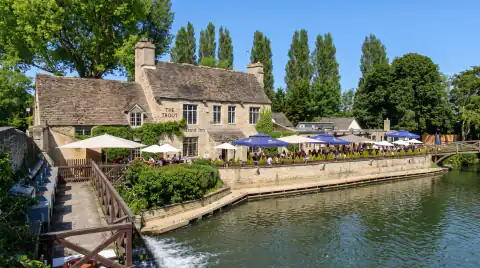 23Food & drinkThe Trout InnExplore experience →
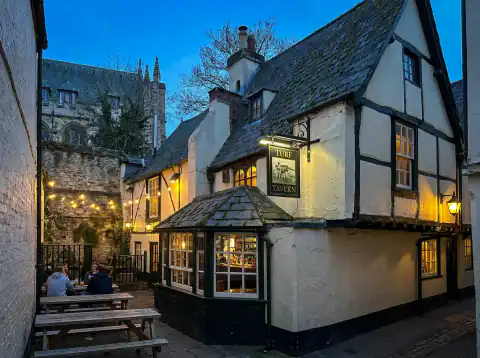 24Food & drinkThe Turf TavernExplore experience →
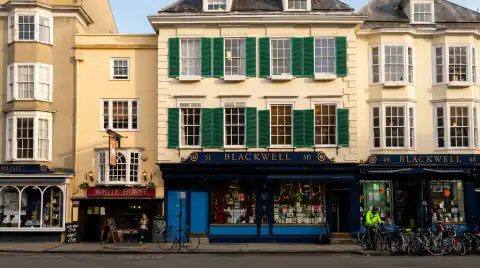 25Food & drinkThe White HorseExplore experience →
 26Food & drinkWestgate OxfordExplore experience →
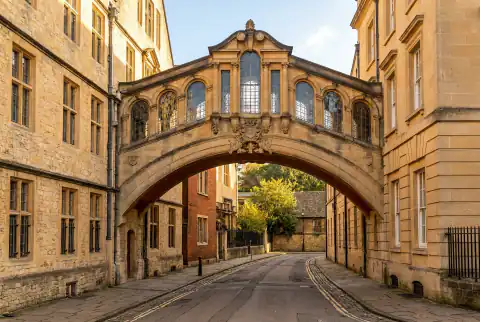 27Walks & viewsThe Bridge of SighsExplore experience →
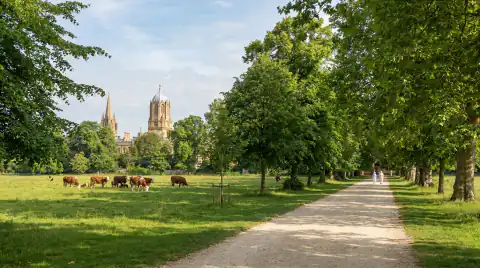 28Parks & meadowsChrist Church MeadowExplore experience →
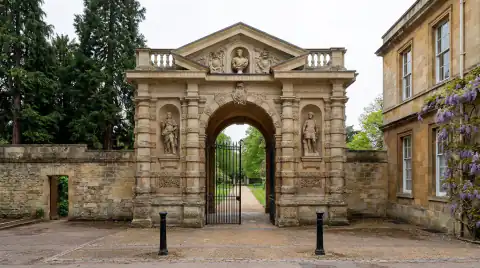 29Parks & meadowsOxford Botanic GardenExplore experience →
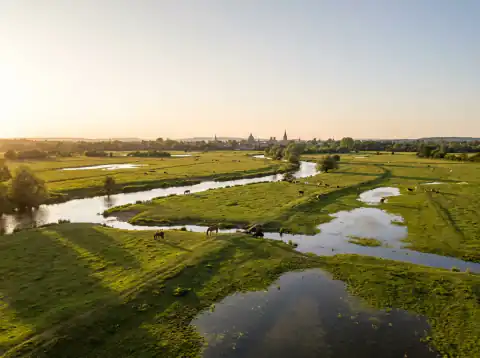 30Parks & meadowsPort MeadowExplore experience →
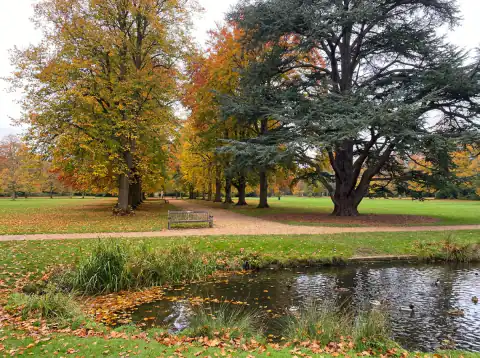 31Parks & meadowsUniversity ParksExplore experience →
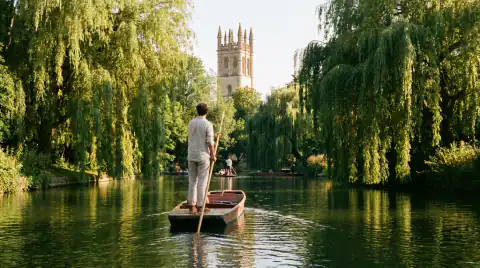 32On the waterPunt the CherwellExplore experience →
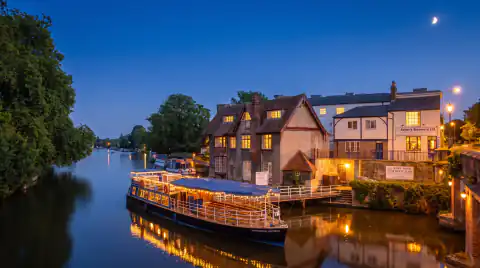 33On the waterSalter's SteamersExplore experience →
 43CollegesAll the collegesEvery Oxford collegeOpen the college guide →Food & drink / a storyThe nine oldest pubsWalk the timeline →
 Plan / Itinerary builderBuild your Oxford dayStart planning →