Central · Founded 1546
Trinity College
The largest and wealthiest Cambridge college, founded by Henry VIII, whose members range from Isaac Newton to more than thirty Nobel laureates.
- Founded
- 1546
- Location
- Trinity Street
- Visiting
- Guided tours and library visits
- Institution
- College
01 The experience
What to expect.
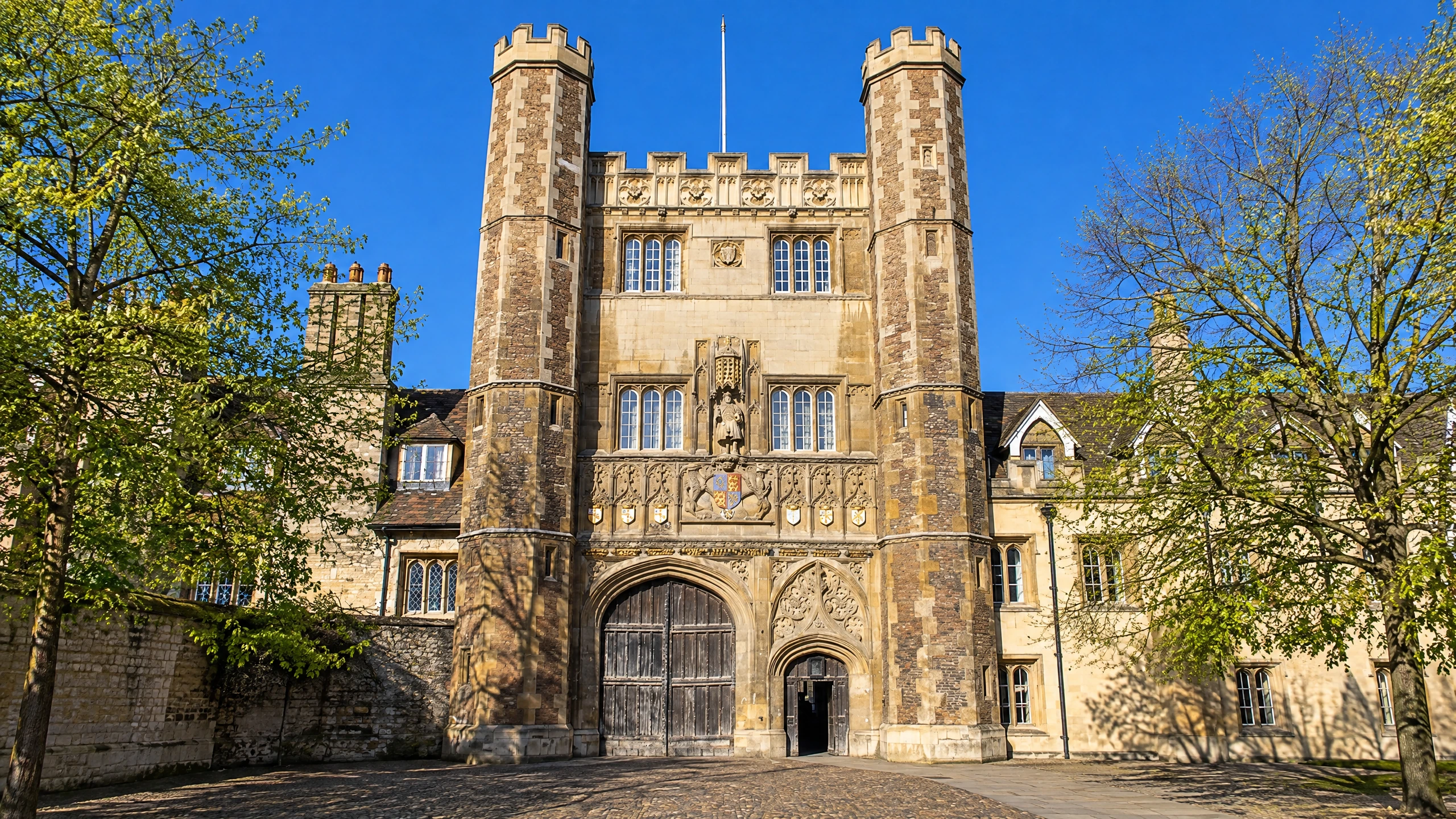
Trinity’s Great Gate stands on the busy college street, but the buildings behind it tell a longer story than Henry VIII’s foundation. King’s Hall and Michaelhouse, two earlier communities, were brought together to make the college in 1546. Parts of King’s Hall still belong to the northern edge of Great Court, including the old gate that became the clock tower.
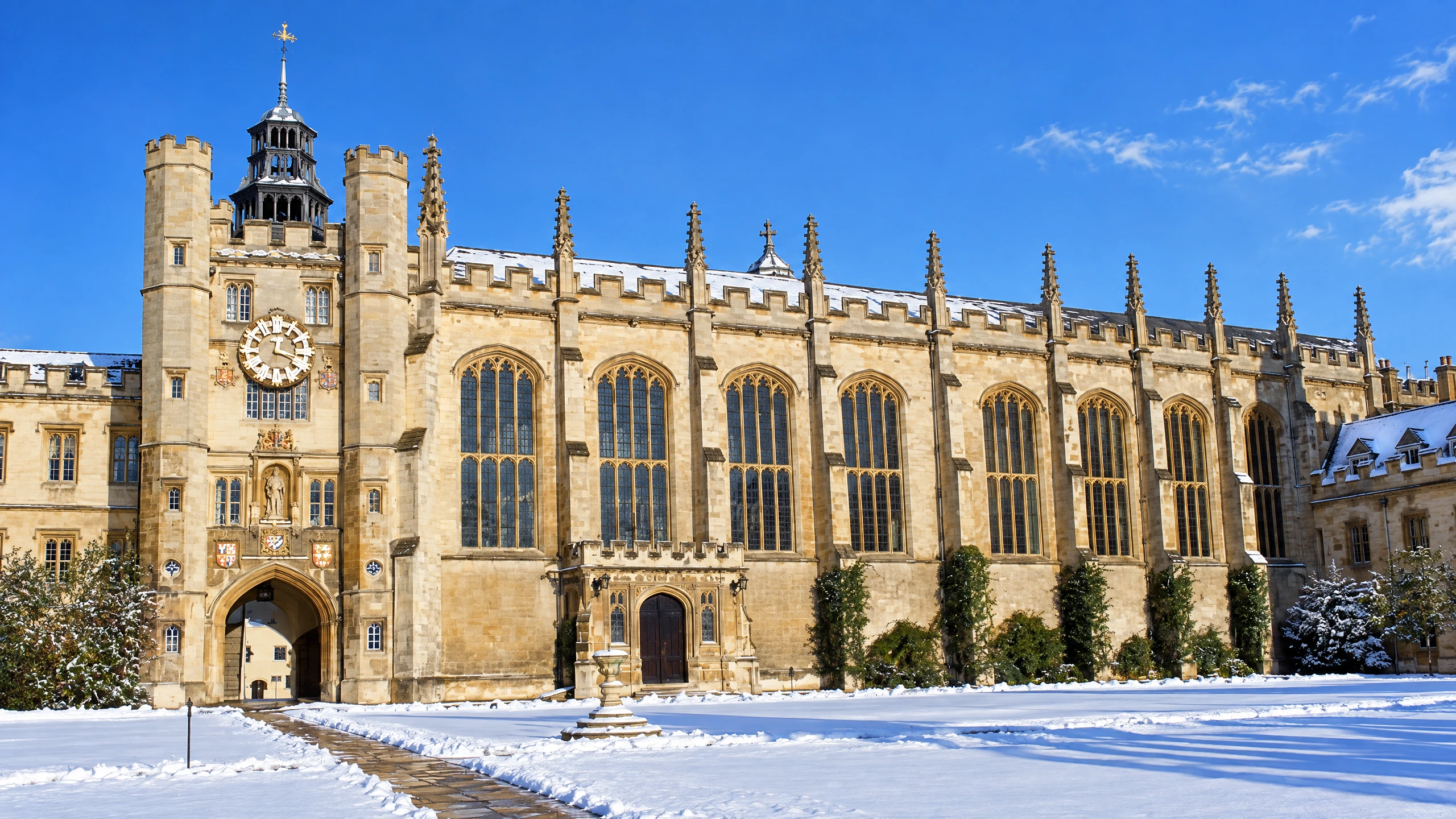
The great open court was largely the work of Thomas Nevile, Master from 1593. He brought the older buildings into a single arrangement, added a new hall and paid for the cloistered court beyond it. The generous scale makes Trinity easy to recognise, but it also shows how a college was assembled from older institutions rather than built all at once.
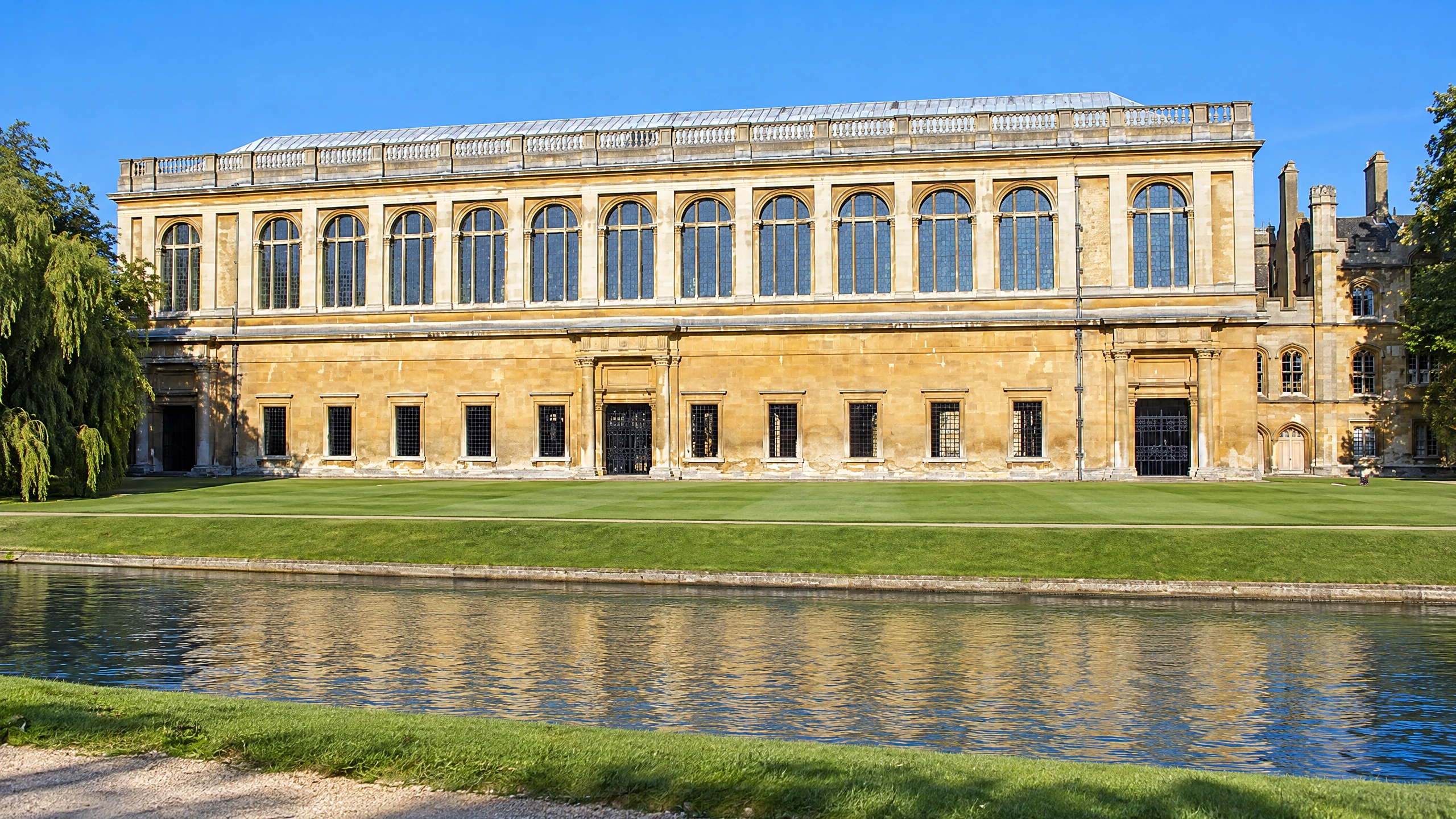
At the far end of Nevile’s Court stands the Wren Library, designed by Christopher Wren and completed in 1695. Inside, the exhibition cases introduce visitors to books and manuscripts from a working collection. Displays change, so a particular manuscript cannot be guaranteed; the library’s architecture and carved fittings are reasons to visit in their own right. The public entrance is reached from Garret Hostel Lane.
Trinity’s past reaches well beyond its buildings. Isaac Newton was a fellow here, and its undergraduates included the philosopher Francis Bacon. A tree by the Great Gate recalls Newton’s association with the college. The riverside Backs provide another view of the college and its library, with paths running beside the Cam. Access to the courts is by guided tour, while the library and Backs have separate opening arrangements.
People and ideas
Famous former students
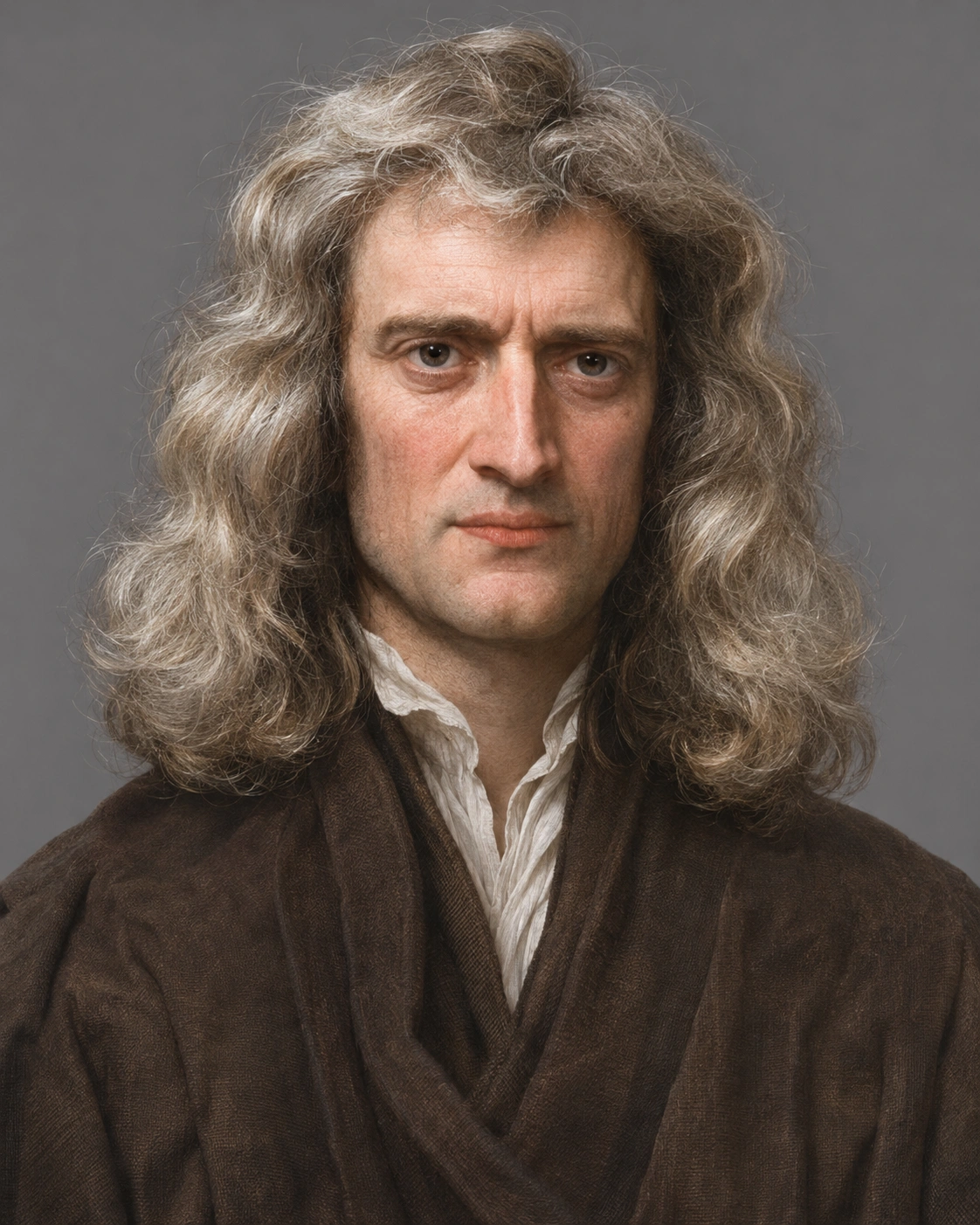
Isaac Newton
The physicist and mathematician entered Trinity in 1661 and remained until 1696.
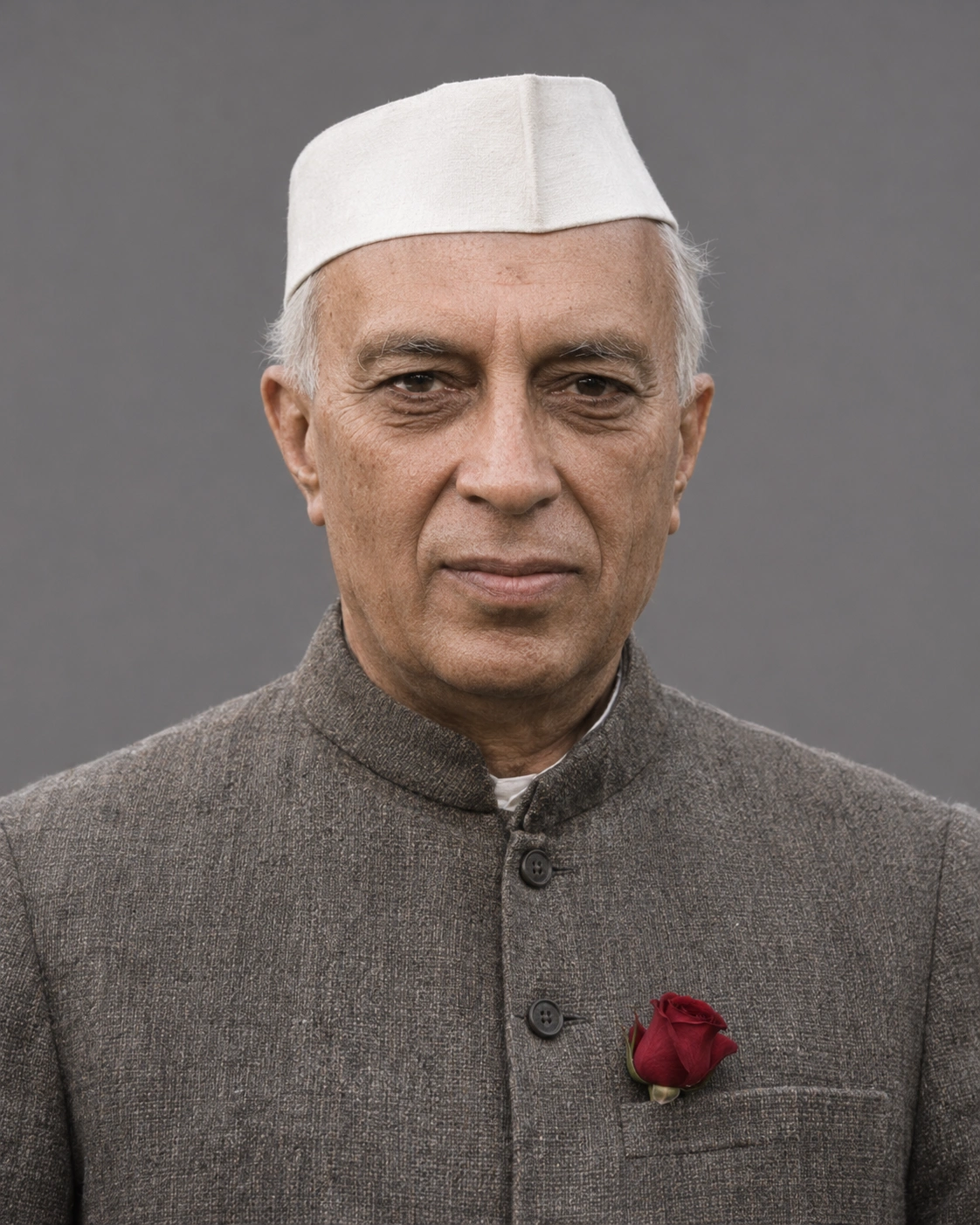
Jawaharlal Nehru
The future first prime minister of India studied at Trinity.
Fellows, founders and other connections
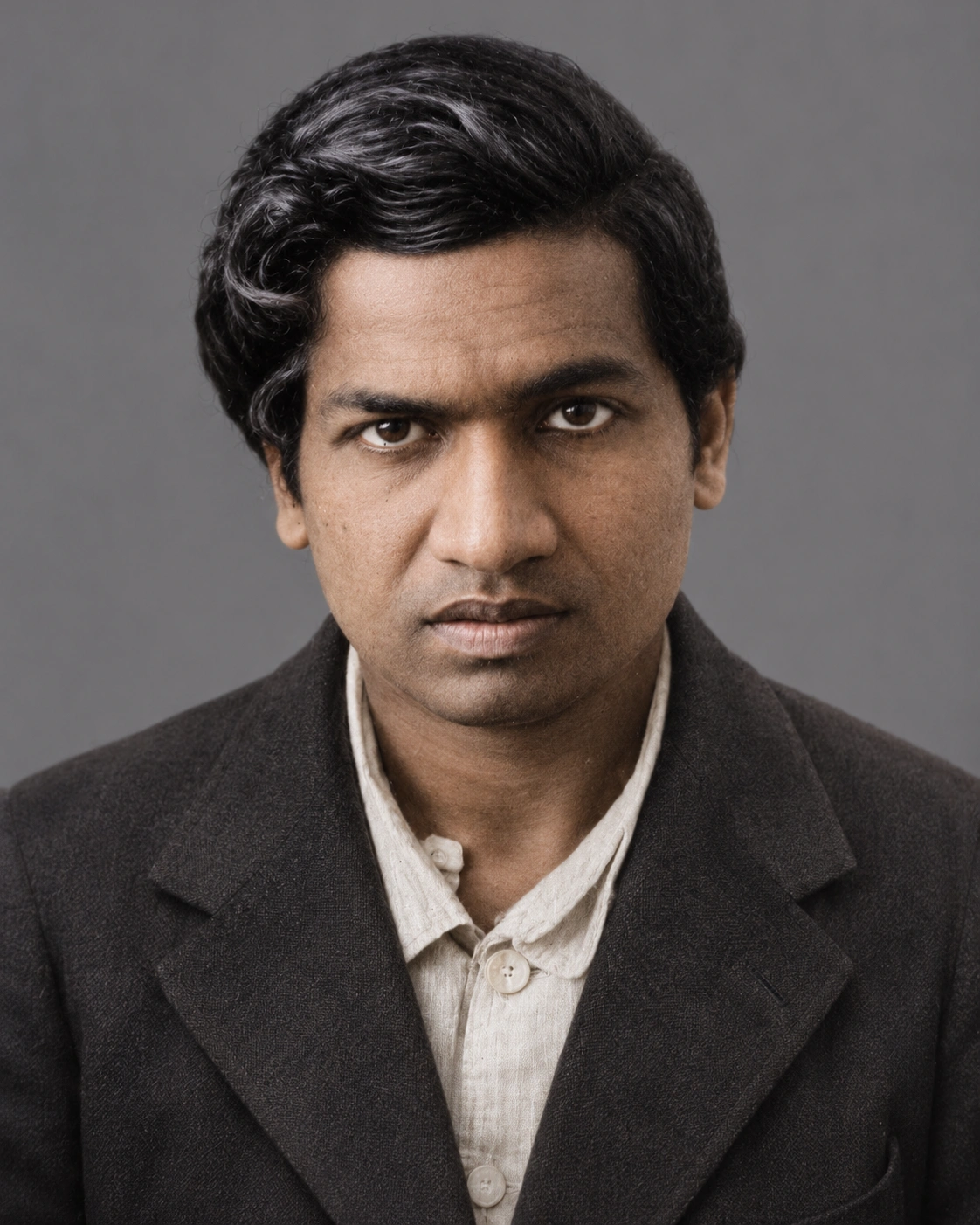
Srinivasa Ramanujan
The mathematician came to Cambridge to work with G. H. Hardy and became a Fellow of Trinity.
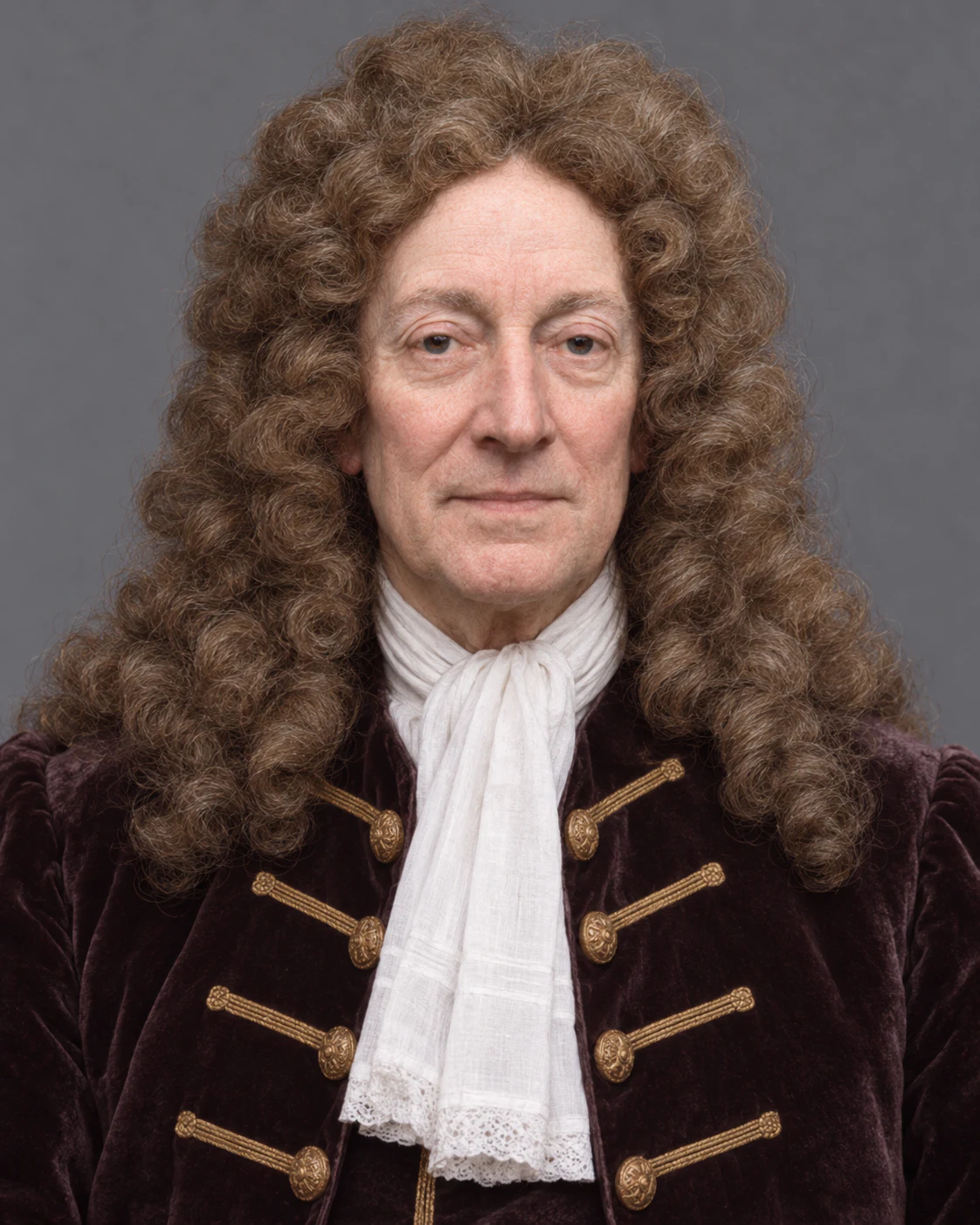
Christopher Wren
Wren designed the library that closes the west end of Nevile’s Court.
The story
History & character.
Two older colleges
Henry VIII founded Trinity in 1546 from King’s Hall and Michaelhouse. The clock tower began as a gate to King’s Hall, whose charter dates to 1337. Its survival within Great Court makes the older foundation visible in the present college.
The two predecessor communities were older still: Michaelhouse dated from 1324, while King’s Hall had been established under Edward II before its later charter. Their combination produced a college large enough to reshape this part of Cambridge over the following century. By 1564, Trinity accounted for around a quarter of the university’s resident members.
Nevile’s transformation
Thomas Nevile became Master in 1593. He gave the inherited buildings a new coherence by creating Great Court and replacing the old Michaelhouse buildings with a hall. He also funded the court that bears his name. The library Wren designed later completed its west end.
Even the clock tower changed position as the court took shape. It was moved roughly 20 yards to its present site; its clock still strikes the hour twice, first in a low note and then a higher one. The older range behind it and the early sixteenth-century Great Gate preserve parts of King’s Hall within Nevile’s much larger composition.
A home for books and readers
The Wren Library took nearly twenty years to build, from 1676 to 1695. Isaac Barrow, then Master, secured the services of his friend Christopher Wren without a fee, while an appeal helped finance the construction. Nevile’s Court was lengthened to make room: extra arches extended the cloisters on either side, and a covered passage beneath the library joined them. A tennis court by the river had to make way for the new building.
Wren considered the library’s furniture and shelving as well as its architecture. Although the room has changed since the seventeenth century, visitors still see his ideas in a library that remains in use by researchers. Its public displays change as books and manuscripts move between exhibition, study and conservation.
Mathematicians and writers
Isaac Newton entered Trinity in 1661 and remained until 1696. In the early twentieth century, the college’s mathematical connections included Srinivasa Ramanujan, whose work attracted the attention of G. H. Hardy. Hardy invited him to Cambridge; Ramanujan became a Fellow of Trinity. The college’s literary history is equally varied, with poets George Herbert, Andrew Marvell and Lord Byron among its former undergraduates.
Look closer
Highlights and hidden details.
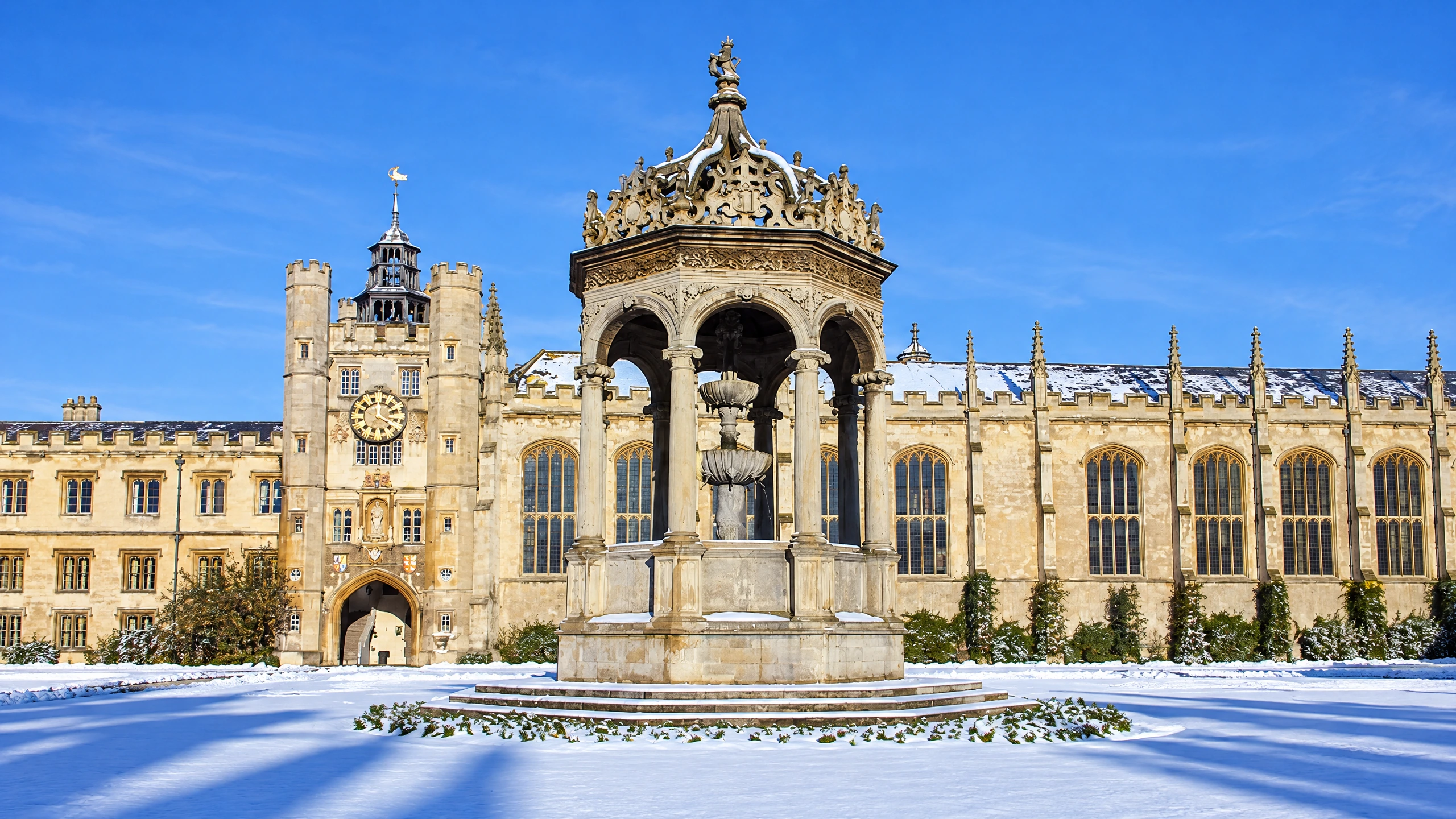
Great Court and the clock tower
The broad court brings together buildings from different periods, including the old King’s Hall gate. Access is through the college’s guided tours.
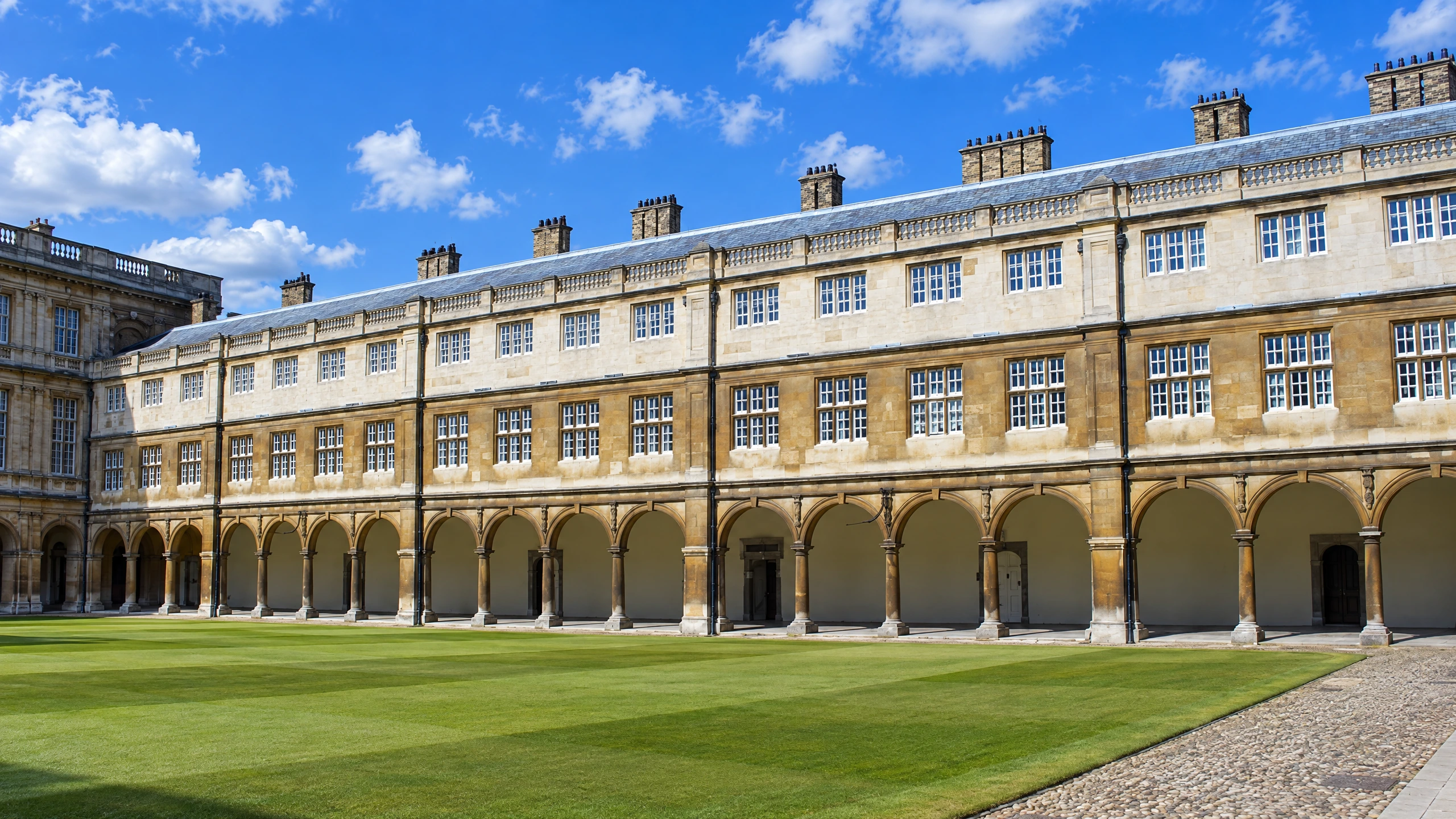
Nevile’s Court and the Wren Library
Cloisters lead towards Wren’s library. Its changing displays include rare books and manuscripts; the first-floor room is reached by stairs and has no lift.
The Backs
The riverside grounds offer a view of Trinity and the Cam. They normally open from 09:00 to 17:00, subject to events.
Details to look for.
Byron’s statue
A statue of the poet Lord Byron stands in the Wren Library. It was originally intended for Westminster Abbey, but the offer was refused. Byron had been an undergraduate at Trinity.
A gate that became a clock tower
The clock tower was once an entrance to King’s Hall, one of Trinity’s predecessor institutions.
Make it work
Plan your visit.
Guided tours depart from the Great Gate on Trinity Street at 10:00 and 14:00 daily. Places must be booked; tours cost £10 per person, payable by card on the day, and children under 12 enter free. Tours last around an hour; late arrivals cannot join after a tour has started. The dining hall is not included, and renovation may affect other areas. More than five places must be arranged with the Head Porter.
The Wren Library is free: Monday–Friday 12:00–14:00, with additional Saturday hours during specified term dates. Last entry is ten minutes before closing. Enter via Brewhouse Gate at the end of Garret Hostel Lane; occasional closures can change the route. The first-floor library has stairs and no lift, and there are no public toilets.
Visit your way
Access and family planning.
The Wren Library is on the first floor and can only be reached by stairs; there is no lift. Paths and surfaces around this historic site can be uneven, and there are no public toilets for library visitors.
Self-guided walk
Explore beyond the venue.
A practical, step-by-step route connecting this experience with more of Cambridge.Great Gate
The gate on Trinity Street is the meeting point for booked college tours. Inside Great Court, the clock tower incorporates an earlier entrance to King’s Hall.
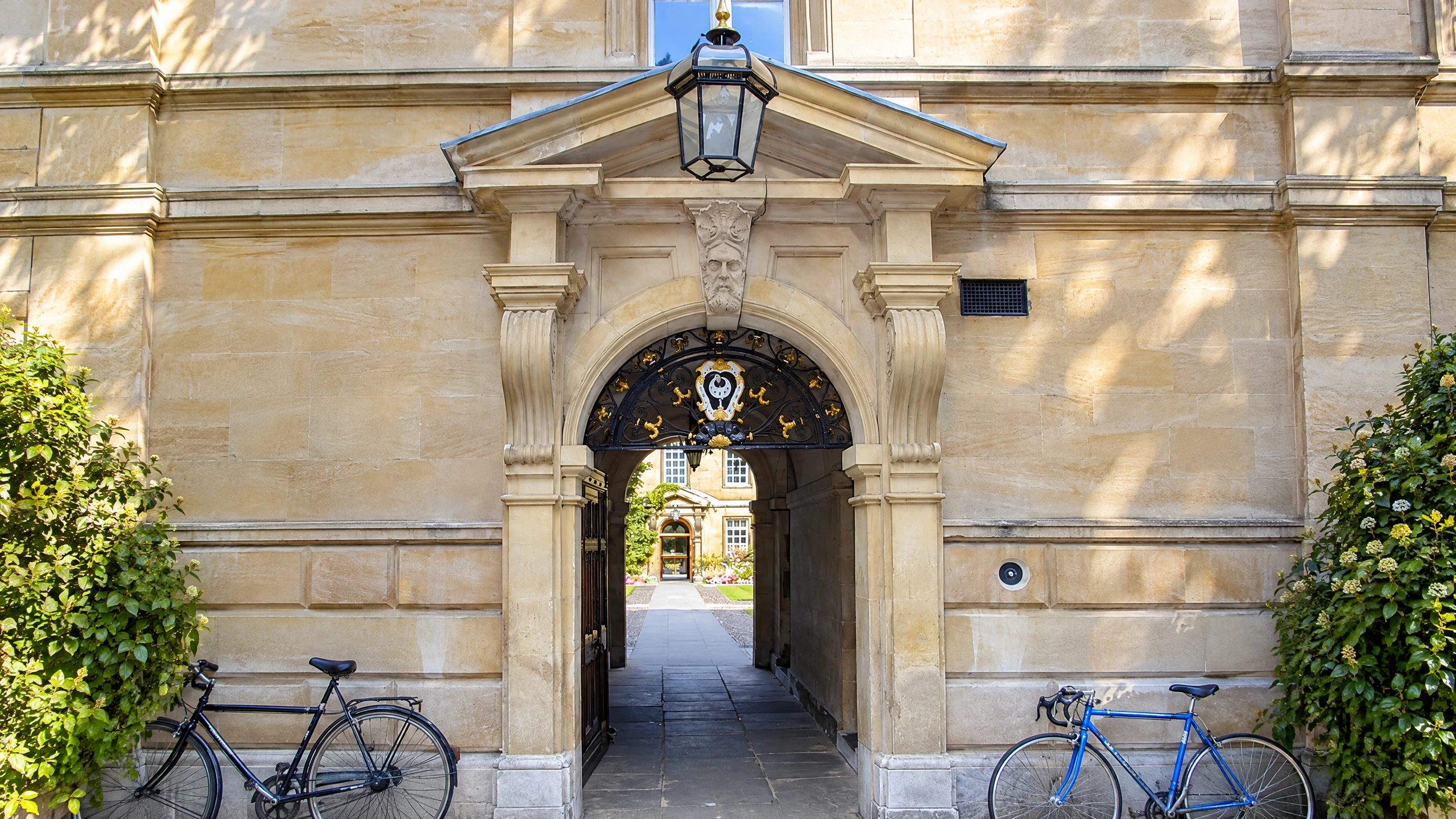
Trinity Hall
Trinity Lane leads to the neighbouring college's main site. Its entrance and opening days are separate from Trinity's.
Wren Library
The library's public entrance is through Brewhouse Gate at the end of Garret Hostel Lane, subject to occasional changes. Admission is free during its visitor hours.
See it
In pictures.
10 views, full screen. Tap any one to open the viewer.Around here
Make more of the area.
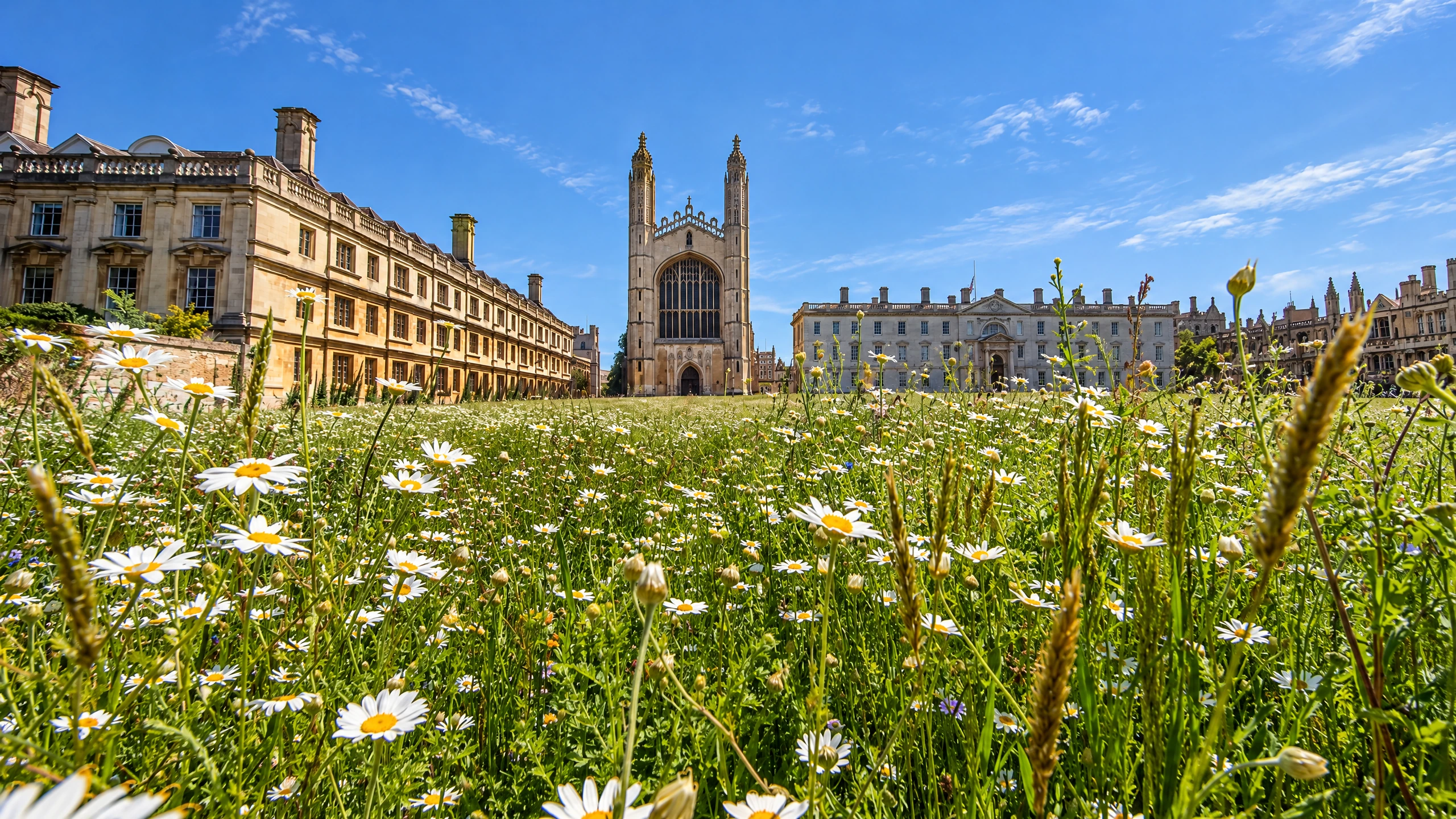
King's Chapel rises above King's Parade and the Backs. The college sells dated admission for its grounds and Chapel.
Good to know
Questions, answered.
Who founded Trinity College Cambridge?
Henry VIII founded Trinity in 1546, bringing together two older foundations, King’s Hall and Michaelhouse. Buildings from King’s Hall survive within the later college.
Did Isaac Newton study at Trinity College?
Yes. Newton entered Trinity in 1661 and remained associated with the college until 1696, during the period of his major mathematical and scientific work.
Is Newton’s apple tree at Trinity College Cambridge?
Yes. The apple tree beside Great Gate is grafted from the famous tree at Newton’s Lincolnshire home. It can be seen from Trinity Street.
Did Srinivasa Ramanujan study or work at Trinity?
Ramanujan came to Cambridge to work with mathematician G. H. Hardy and became a Fellow of Trinity. His work influenced number theory and other areas of mathematics.
Can visitors enter Trinity College Great Court?
The courts, including Great Court, are closed to casual public entry, but the college offers booked guided tours. Some areas can be unavailable during renovation.
How much is a guided tour of Trinity College Cambridge?
Tours cost £10 per person, with children under 12 free. They normally depart at 10:00 and 14:00 daily from the Great Gate and must be booked; the dining hall is not included.
Can I visit the Wren Library without a Trinity College tour?
Yes. The Wren Library has a separate free public entrance via Brewhouse Gate at the end of Garret Hostel Lane. Its visitor opening times differ from the college tours.
When is the Wren Library open to the public?
Normally Monday–Friday 12:00–14:00, with extra Saturday openings on specified term dates. Last entry is ten minutes before closing, and holiday or special closures apply.
What can visitors see in the Wren Library?
Displays draw on Trinity’s manuscripts and printed books. Exhibits change as material is used by researchers or conserved, so particular items cannot be guaranteed.
Is the Wren Library step-free?
No. The library is on the first floor and can only be reached by stairs; there is no lift. There are no public toilets for visitors.
Who designed Trinity’s Wren Library?
Sir Christopher Wren designed the library. It was built between 1676 and 1695 at the end of Nevile’s Court.
Does Trinity College’s clock strike the hour twice?
The clock strikes each hour twice, first on a lower note and then on a higher one. It sits in the old King’s Hall gatehouse, which was moved when Great Court was laid out.
Can I walk on Trinity’s Backs without a college tour?
The riverside Backs normally open to the public 09:00–17:00, subject to events and closures. They have separate access from the guided college tour.
Which famous writers studied at Trinity College Cambridge?
Trinity’s former undergraduates include the poets George Herbert, Andrew Marvell, Lord Byron and Alfred Tennyson.
Editorial notes
Sources and further reading.
Sources for this guide
Checked 4 November 2026.
- https://www.trin.cam.ac.uk/about/historical-overview/
- https://www.trin.cam.ac.uk/about/historical-overview/in-brief/
- https://www.trin.cam.ac.uk/about/visiting-trinity-college/
- https://www.trin.cam.ac.uk/library/visitors/
- https://www.trin.cam.ac.uk/library/general-admission/
- https://www.trin.cam.ac.uk/library/about-us/
- https://explore.trin.cam.ac.uk/assets/ramanujan/
- https://www.joh.cam.ac.uk/visit-us/visitor-information
- https://www.trinhall.cam.ac.uk/about/library/old-library/visiting-old-library/
- https://www.kings.cam.ac.uk/visit-kings
- https://www.trinhall.cam.ac.uk/contact-or-visit-us/
Further reading and sources
Opening hours, prices, programmes and access arrangements can change. Confirm critical details with the venue.
Keep exploring