North · Founded 1869
Fitzwilliam College
A college founded to open Cambridge to students of modest means, whose Huntingdon Road site is one of the university's best ensembles of post-war architecture.
- Founded
- 1869
- Location
- Storey's Way
- Visiting
- Enquire about visiting
- Institution
- College
01 The experience
What to expect.
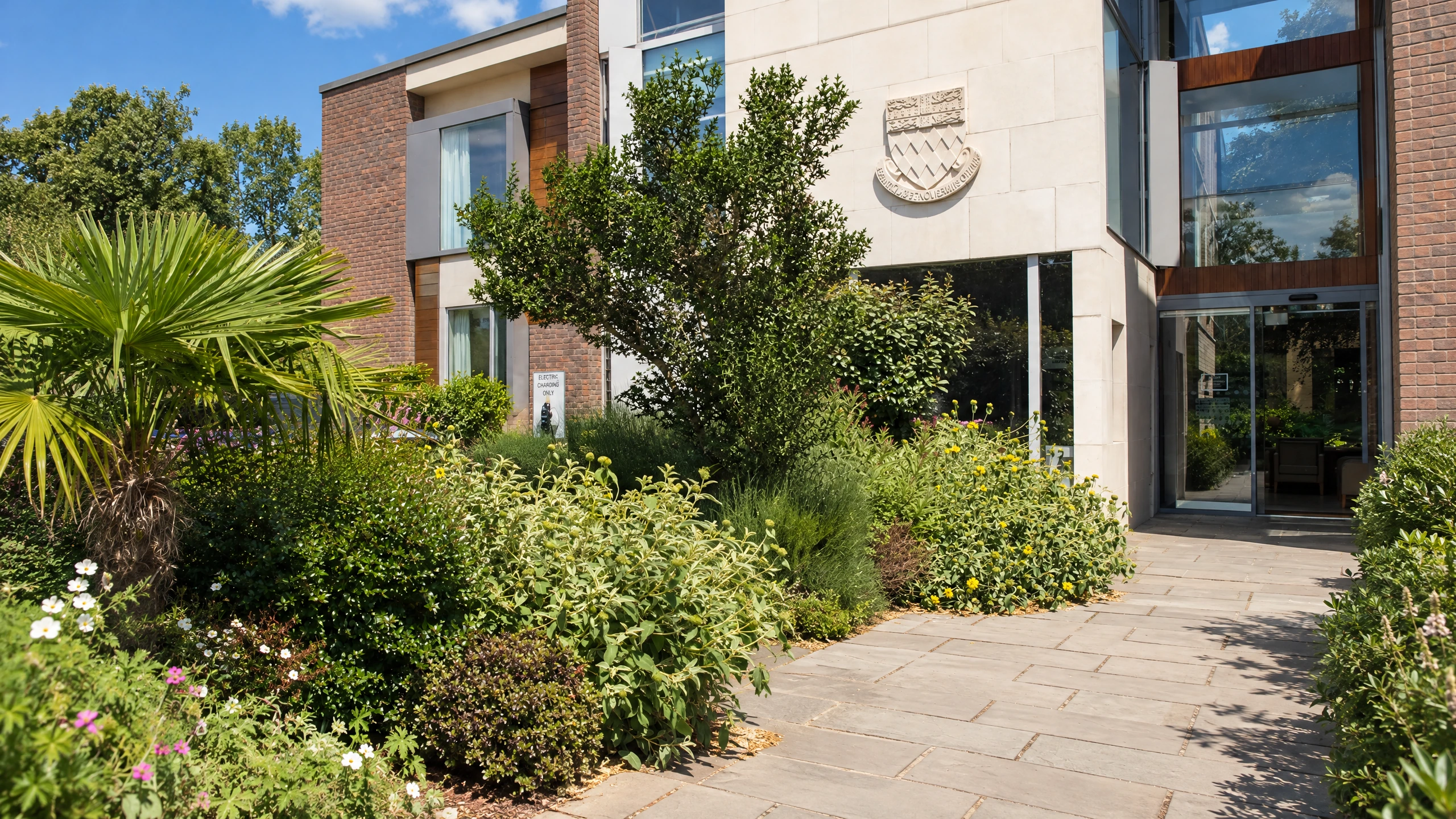
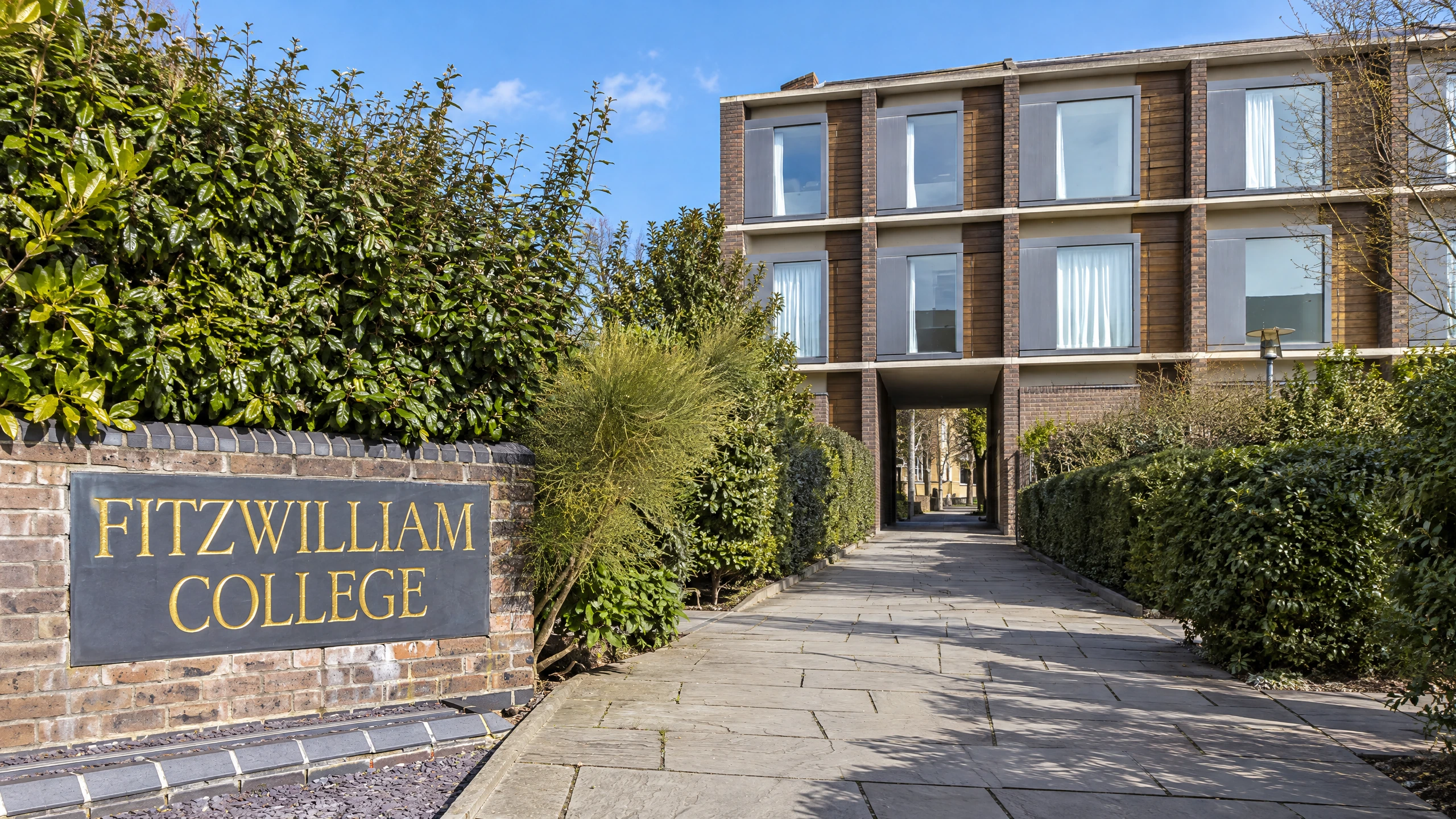
Fitzwilliam began as a way for students to study at Cambridge without the cost of membership of an established college. Its present home off Storey’s Way tells a later architectural story: Denys Lasdun’s modern buildings sit around The Grove, an older house in mature gardens.
The non-collegiate institution began in 1869 and developed through Fitzwilliam Hall and Fitzwilliam House before gaining full college status in 1966. Lasdun’s work formed the core of the new site during the 1960s. The chapel, added later, brings another modern form to the college landscape.
The Grove is older than the surrounding courts. Keeping it at the heart of the site allows the gardens and the house to sit alongside a college designed for a very different period.
People and ideas
Famous former students
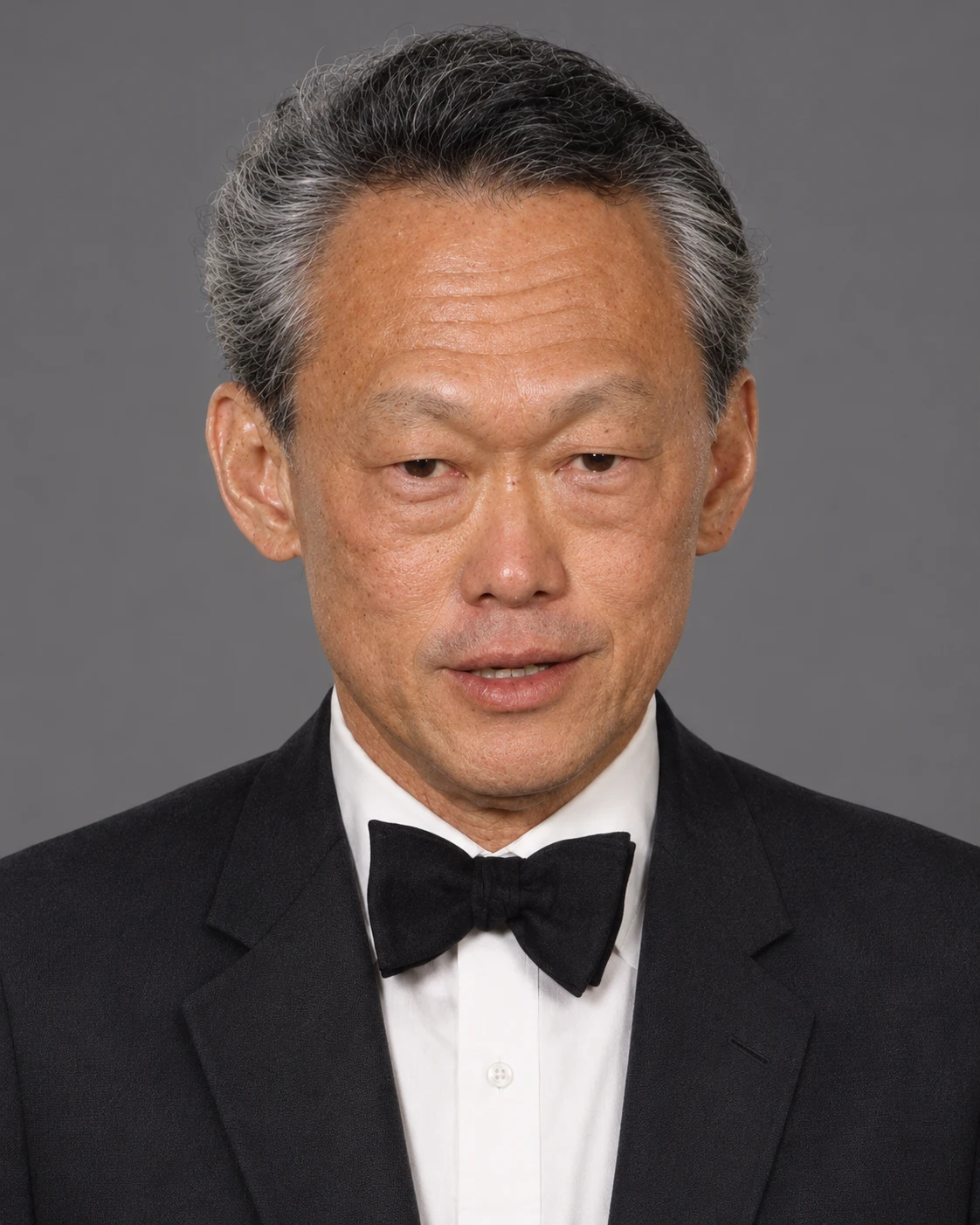
Lee Kuan Yew
Fitzwilliam alumnus Lee Kuan Yew became the first prime minister of Singapore.
Fellows, founders and other connections
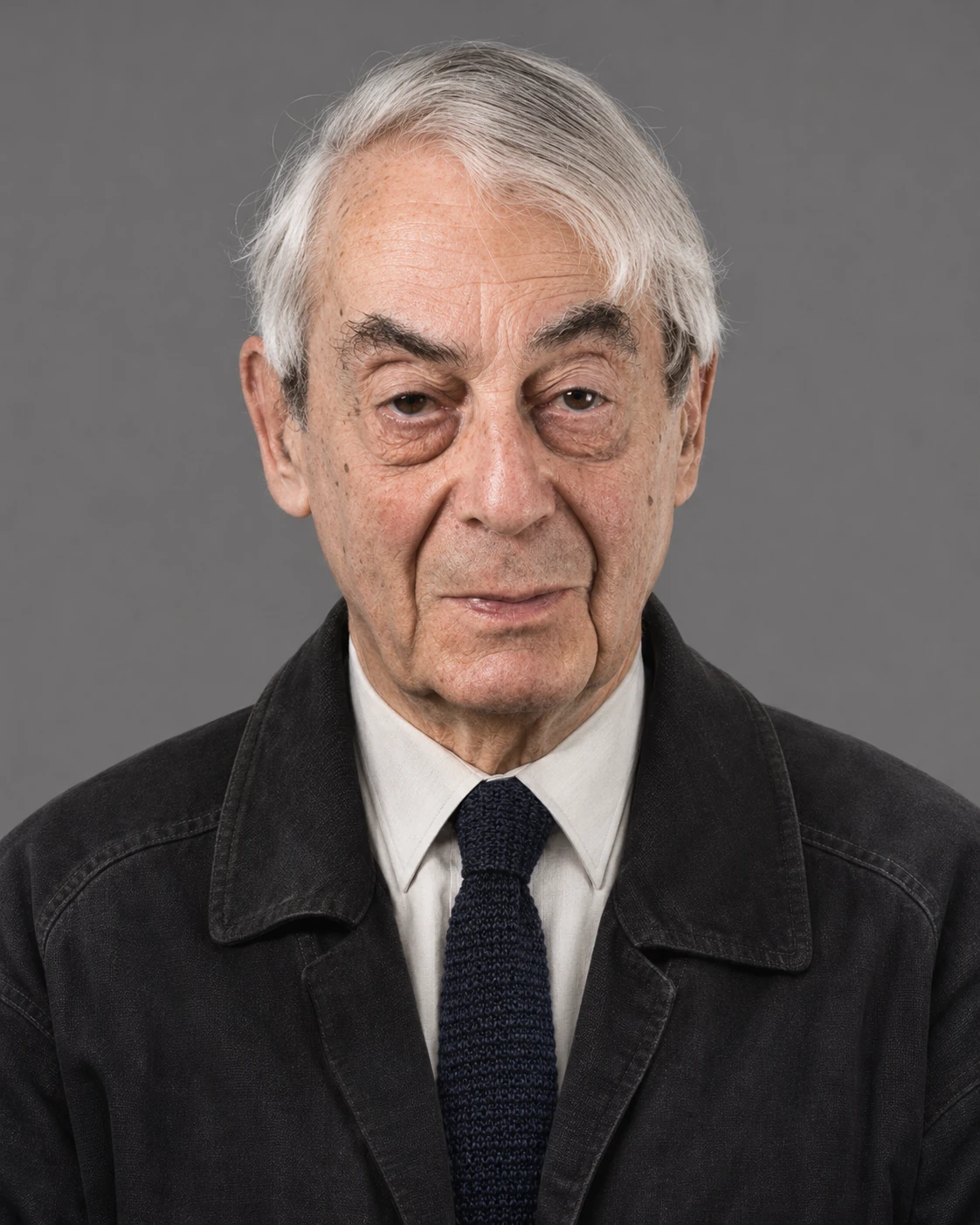
Denys Lasdun
The architect designed the core of the college’s modern site around The Grove.
The story
History & character.
An alternative route into Cambridge
The university established a non-collegiate body in 1869 for students unable to afford membership of a college. The institution became Fitzwilliam Hall, then Fitzwilliam House. After the Second World War, plans to provide residential accommodation prompted a search for a larger site. Fitzwilliam received a royal charter as a college in 1966, completing a long transition from its non-collegiate beginnings.
The Grove before Fitzwilliam
The Grove was built in 1813–14 and later enlarged; Emma Darwin, widow of Charles Darwin, once lived there. When the estate was acquired for university development in 1958, the previous owner retained a lifetime interest in the house and adjoining grounds. The wider property was divided between Fitzwilliam and New Hall, now Murray Edwards College, shaping where the new college could initially build.
A college as a spiral
Denys Lasdun’s masterplan kept The Grove and placed shared spaces together in a Central Hall Building, with residential and teaching blocks around the edge of the site. His proposed spiral, sometimes described as a snail shell, would create open courts with views towards the hall. The scheme was not completed exactly as drawn, but its ambition to make a college of connected spaces remains visible.
Above the hall’s brick walls rises a concrete lantern, its arched glass admitting daylight to the dining space. The building brought dining, social rooms, a bar, music room, library and teaching spaces together at the centre of the new college.
A student from Singapore
Lee Kuan Yew came to Fitzwilliam House in 1947 to study law and graduated in 1949. After returning to Singapore he became a founder of the People’s Action Party and, following its election victory in 1959, prime minister. His time at Fitzwilliam belongs to the college’s earlier city-centre years, before the move to The Grove.
A chapel among the trees
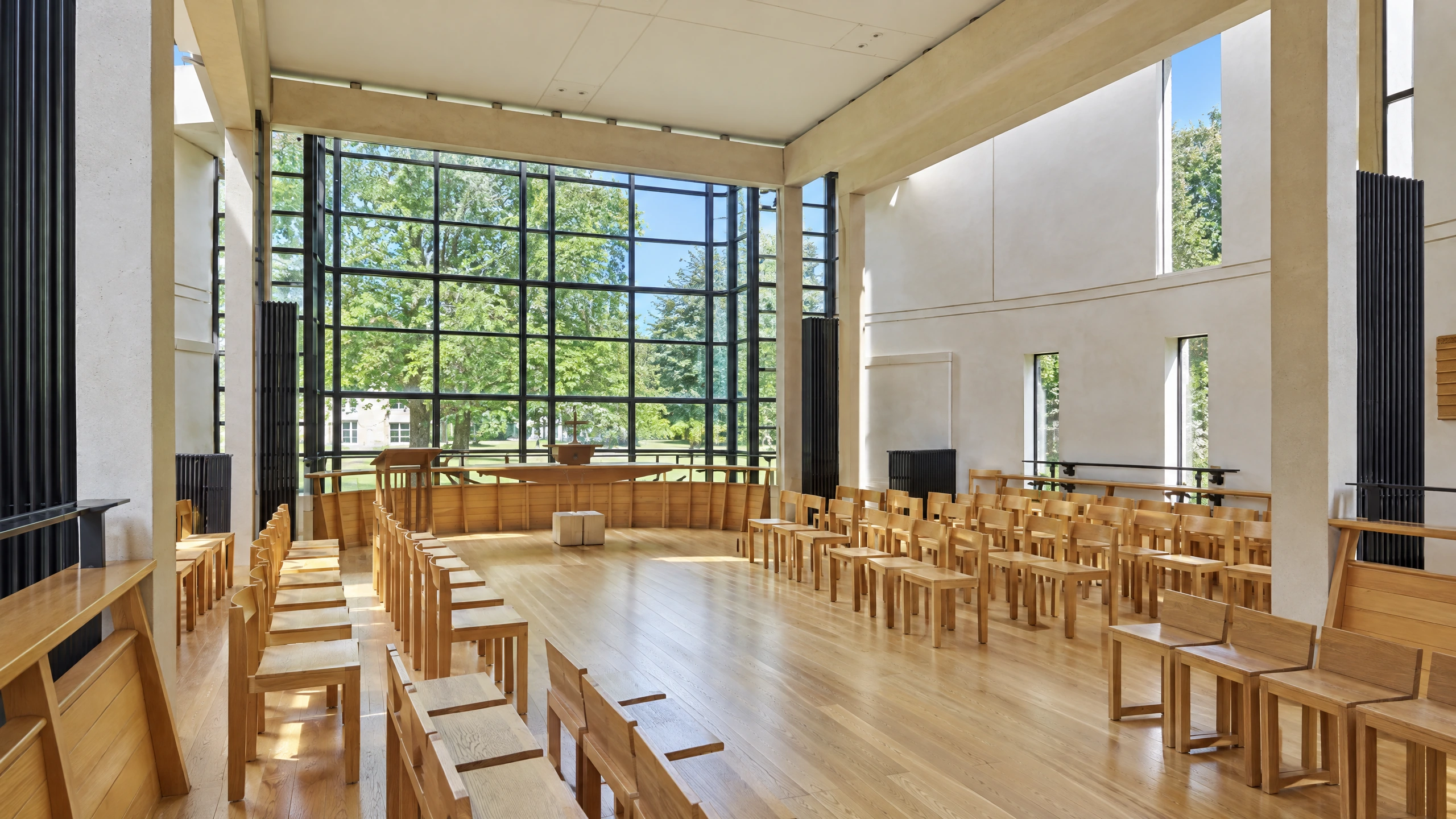
Inside the chapel, curved walls and oak joinery give the upper worship space the feel of a ship’s deck. At the eastern end, glazing looks towards a mature plane tree and The Grove. A lower chapel sits beneath the principal room. Building works have affected chapel access, so visitors should ask the Porters’ Lodge about current arrangements.
New Court and the chapel
MacCormac, Jamieson and Prichard added New Court in the 1980s and the chapel in the early 1990s. The court continued the brown brick and layered floors of Lasdun’s buildings, while the chapel’s raised worship space has the appearance of a floating ship. The Central Hall, New Court and chapel all received Grade II listing in 2024. Later additions, including the Olisa Library, brought further spaces for a growing college.
Look closer
What to see.
Lasdun’s buildings
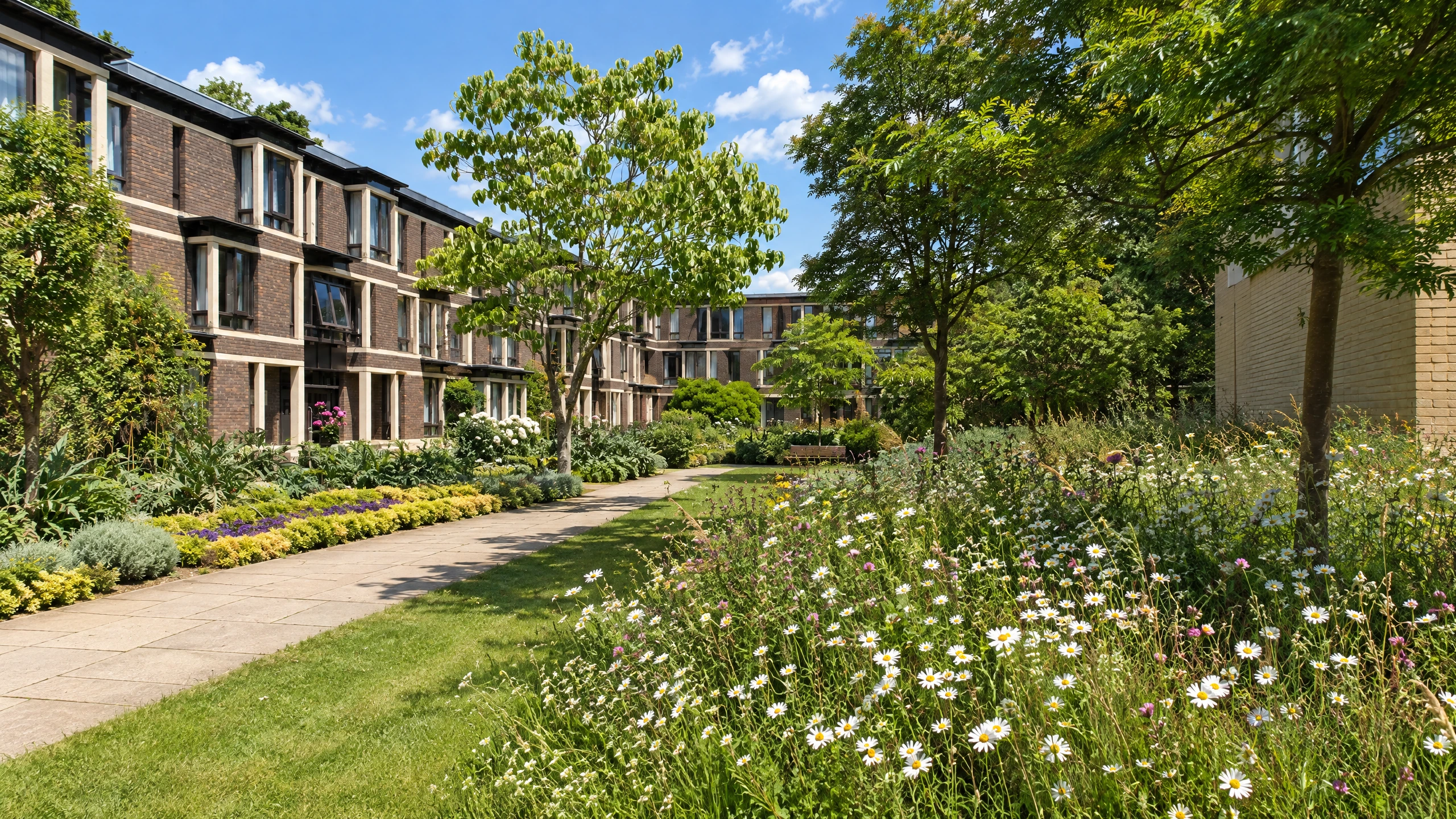
Modern brick ranges form the core of the college’s 1960s site.
The Grove
The older house and its garden were retained at the centre of the new college.
The chapel
Richard MacCormac’s later chapel brings another distinctive modern design to the site.
The grounds
Mature trees and gardens link the college buildings across the Storey’s Way site.
Make it work
Plan your visit.
Visitors enter via the Porters’ Lodge on Storey’s Way. Fitzwilliam is a working college, and access to particular rooms or during examinations may be restricted. Building work has affected routes and the chapel; ask the porters which areas are open. Ask the college about current arrangements before a group visit.
Visit your way
Access and family planning.
The Storey’s Way entrance has a slightly raised threshold and a sloping path beyond the foyer. Paths across the college are mostly flagstone and can be uneven; some slopes are steep. Access routes were altered by construction during the 2025 survey, so ask the Porters’ Lodge about the current route.
See it
In pictures.
10 views, full screen. Tap any one to open the viewer.Around here
Make more of the area.
Good to know
Questions, answered.
Is Fitzwilliam College the same as the Fitzwilliam Museum?
No. Fitzwilliam College is a Cambridge college on Storey’s Way; the Fitzwilliam Museum is a separate university museum on Trumpington Street.
Can visitors enter Fitzwilliam College Cambridge?
Ask at the Porters’ Lodge on Storey’s Way which areas are open. Fitzwilliam is a working college, and access to rooms can be restricted during building work, examinations and college activities.
Where is Fitzwilliam College Cambridge?
The main entrance and Porters’ Lodge are on Storey’s Way, west of the city centre.
Why was Fitzwilliam College founded?
Its predecessor was established in 1869 to provide a Cambridge education for students who could not afford membership of a college. It became Fitzwilliam College by royal charter in 1966.
Who designed Fitzwilliam College’s modern buildings?
Denys Lasdun designed the college’s masterplan and Central Hall Building. Later New Court and the chapel were designed by MacCormac, Jamieson and Prichard.
What is The Grove at Fitzwilliam College?
The Grove is an older house retained at the centre of the modern college site. Emma Darwin, Charles Darwin’s widow, once lived there.
Which Cambridge college did Lee Kuan Yew attend?
Singapore’s future prime minister studied law at Fitzwilliam House from 1947 to 1949, before its move to the present Storey’s Way site.
Why does Fitzwilliam College Chapel look like a ship?
Its curved walls and oak joinery give the raised worship space the character of a ship’s deck. Glazing at the eastern end looks towards a plane tree and The Grove. Ask the college about current access.
Are Fitzwilliam College’s buildings listed?
Yes. The Central Hall Building, New Court and chapel received Grade II listing in 2024.
Editorial notes
Sources and further reading.
Sources for this guide
- https://www.fitz.cam.ac.uk/sites/default/files/2024-10/Building%20Fitzwilliam%20College%201963-2013.pdf
- https://www.fitz.cam.ac.uk/
- https://internal.fitz.cam.ac.uk/sites/www.fitz.cam.ac.uk/files/mi-client/media/import/documents/WalkCambridge2012.pdf
- https://www.accessable.co.uk/fitzwilliam-college/access-guides/fitzwilliam-college
- https://www.fitz.cam.ac.uk/sites/default/files/Fitzwilliam%202015%20web%20part%20III.pdf
- https://historicengland.org.uk/listing/the-list/list-entry/1489400
- https://historicengland.org.uk/whats-new/in-your-area/east-of-england/fitzwilliam-college-cambridge-buildings-listed/
- https://www.chu.cam.ac.uk/about/visits/
- https://www.murrayedwards.cam.ac.uk/womens-art-collection/about
- https://historicengland.org.uk/listing/the-list/list-entry/1489402
Reviewed 4 November 2026.
Further reading and sources
Opening hours, prices, programmes and access arrangements can change. Confirm critical details with the venue.
Keep exploring