Museum of Cambridge
Everyday Cambridge inside the former White Horse Inn: cooking, childhood, Fen traditions and local stories, with narrow stairs and paid admission.
01 / The experience
Cambridge life inside a working inn’s old rooms
Everyday Cambridge inside the former White Horse Inn: cooking, childhood, Fen traditions and local stories, with narrow stairs and paid admission.
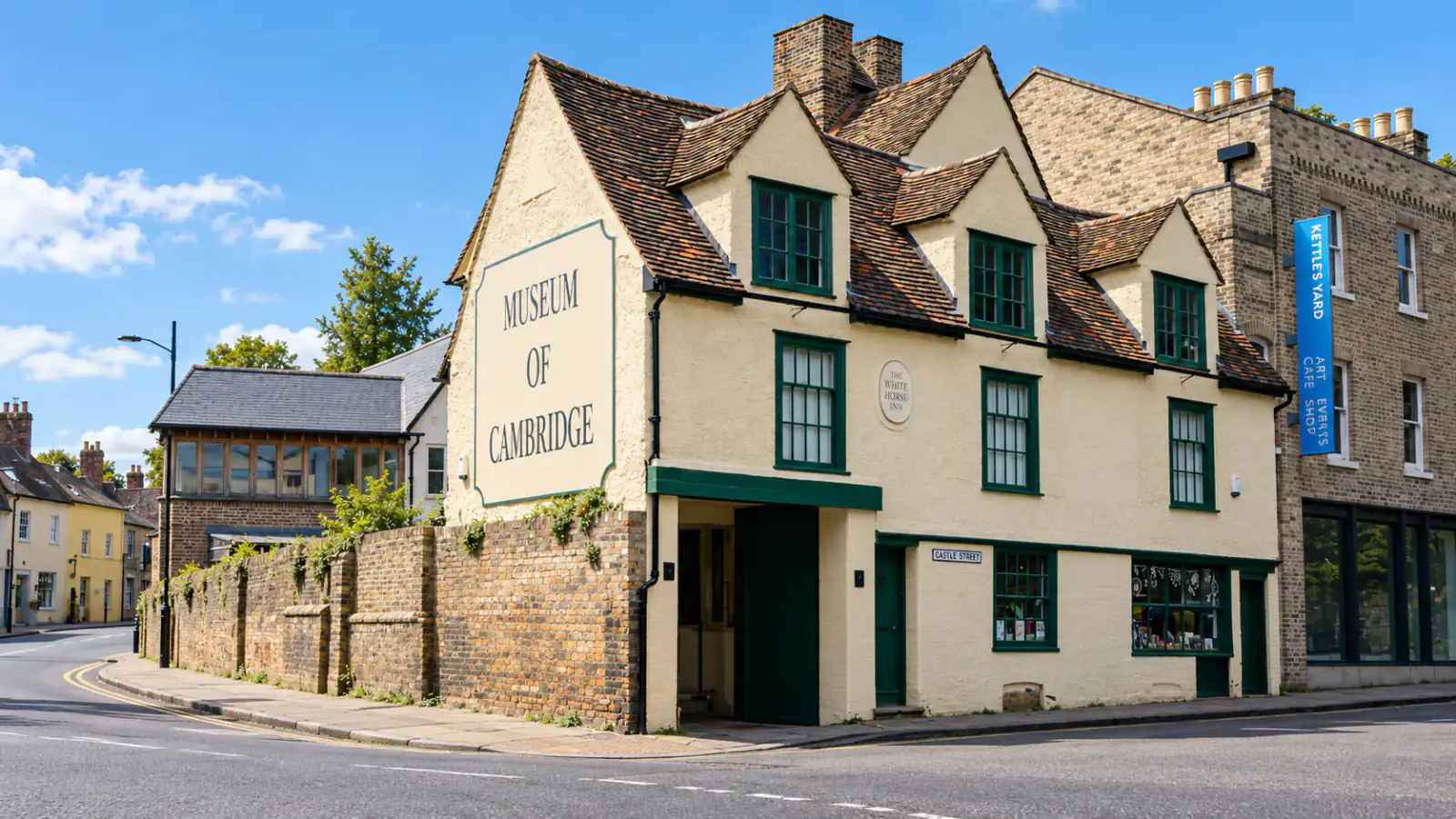
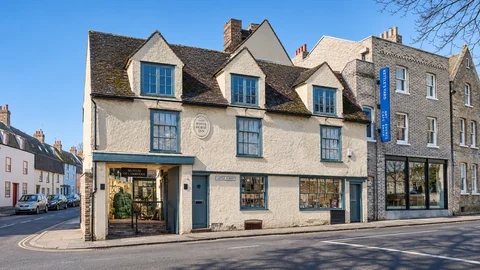
The Museum of Cambridge begins with a building that once had a different job. Behind its cream walls and green windows on Castle Street, the White Horse Inn accommodated travellers, served meals and housed the family who ran it. Today, kitchen equipment, street-trading objects, toys and local paintings occupy its rooms. The old inn gives those things a setting: domestic work and public business were already sharing this small space long before it became a museum.
The bar is the oldest part, dating from the seventeenth century. Its large inglenook once provided warmth and the cooking fire. The chimney crane, used to move pots over the heat, was the first object entered into the museum’s collection. Other equipment makes the labour of feeding an inn tangible: a metal salamander browned food from above, while a weight-driven roasting jack turned a spit. These are tools for particular tasks, and they help explain how a meal was made before a modern cooker gathered the jobs into one appliance.
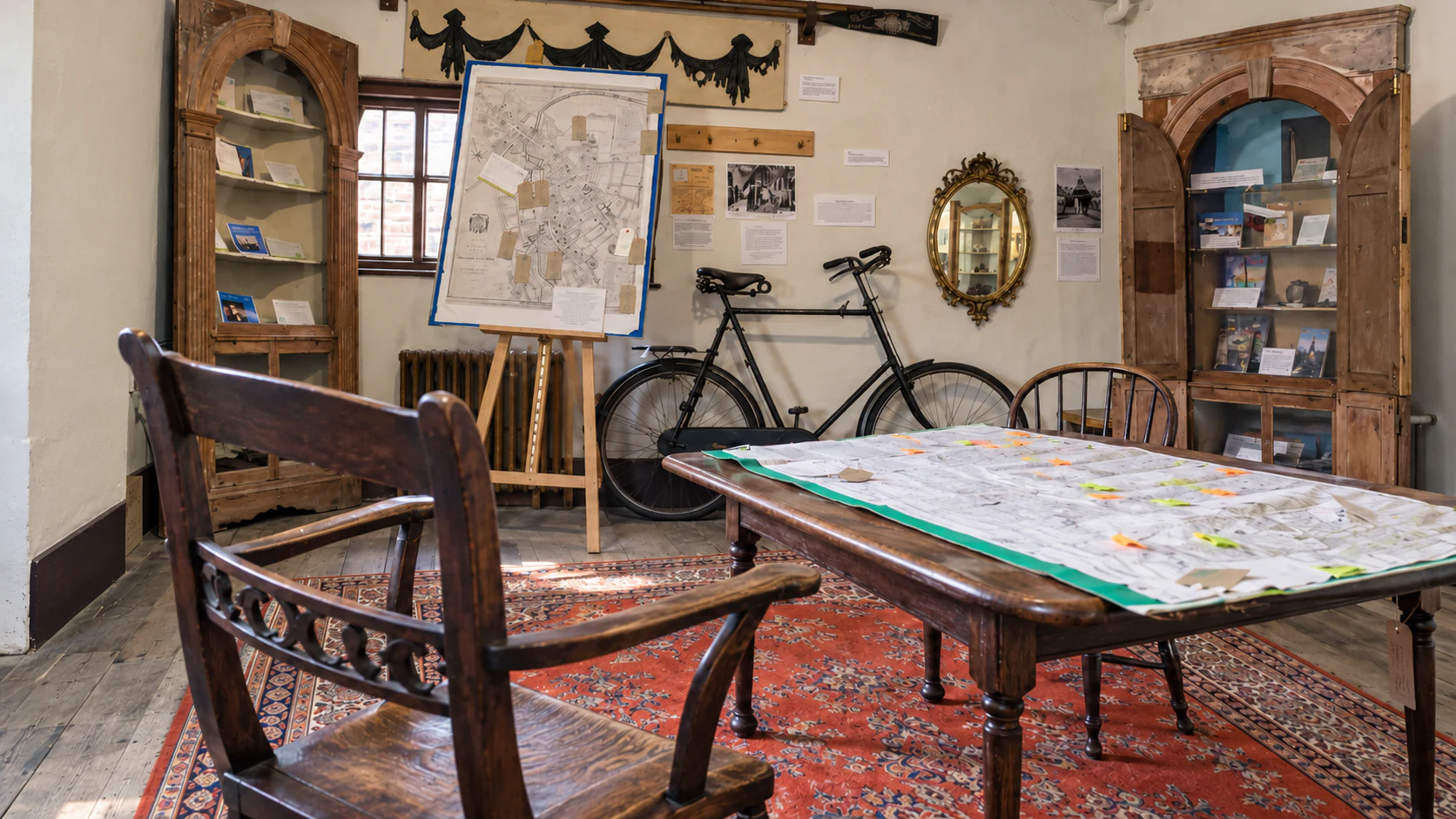
A separate kitchen arrived in the eighteenth century. It also served as a laundry, with washing, drying and ironing taking up days of the landlady’s week. The displays bring together hand-operated washing equipment, moulds for pies and puddings, early electrical appliances and measures used in food trading. An old cabinet of food packages and tins adds another connection with shopping outside the building. The interest lies in how familiar household jobs were organised, as well as in the age of the objects.
Upstairs, the former Dining Room broadens the story to the city. Mr Crask’s padded headpiece supported a muffin tray as he sold in the streets, announcing himself with a bell. The Mayor’s Chair represents civic ceremony, while local paintings record yards, alleys and buildings that redevelopment changed or removed. The room once accommodated meetings and entertainments too, including the Town and Gown Cycle Club. University life appears here alongside the trades and households around it.
Other rooms follow childhood, artisans and Fen folklore. Enid Porter, curator from 1947 to 1976, helped shape the museum by collecting memories and customs as well as objects. That approach remains central to a collection of more than 40,000 items. Its origins were similarly local: a successful Women’s Institute exhibition in 1933 prompted calls for a permanent collection, and the museum opened in 1936. It is an independent charity, separate from both the University and the council.
Choose this visit for social history at the scale of a house, rather than a large gallery of monumental objects. The timber-framed inn has uneven floors, crooked doorways and narrow winding stairs; the museum explicitly says that the building is not wheelchair accessible. Kettle’s Yard is close enough to combine with it, but the two have separate admission arrangements. The museum’s temporary exhibitions are included in general admission; separately ticketed events remain their own choice.
04 / Before you go
Plan your visit
Admission
Standard £7; optional donation-inclusive ticket £7.70. Concession £6; children aged 16 and under free. Last Call admission from 16:00 £3.50. Carers accompanying a visitor, museum Friends, Museums Association and Art Fund members enter free.
Opening hours
Monday, Friday and Saturday 10:00–17:00; Sunday 11:00–17:00. Tuesday and Wednesday closed; Thursday 10:00–17:00 in school holidays only. Volunteer availability can alter opening.
Getting there
2–3 Castle Street, Cambridge CB3 0AQ
The former White Horse Inn at 2–3 Castle Street, beside Kettle’s Yard and near Magdalene Bridge. Use the Castle Street entrance; the pin identifies the museum building, not a vehicle drop-off point.
Plan your visit
Choose a visit date and time through the museum’s official Ticket Tailor link, or buy admission on the door. The £3.50 Last Call ticket is sold from 16:00.
General admission includes temporary exhibitions. Some events and activities require separate tickets. Donation-inclusive admission is optional.
Friday–Monday is the normal term-time pattern; Thursday opens in school holidays. Volunteer availability may change advertised opening.
A ticket confirmation establishes the booked date/time; saving the museum in an Above.Guide itinerary makes no reservation.
Arrange all large/commercial groups directly before arrival. The museum offers 20% off for five or more adults; obtain the group fee and any administration charge directly.
During your visit
Street-level shop, accessible ground-floor toilet and baby changing. Free period products available.
SEND sensory totes include ear defenders, activity sheets and small handling/fidget items; request one from the front desk.
Narrow stairs and uneven timber floors are part of the historic building; allow for them when choosing the visit.
Accessibility
The museum states that its historic building is not wheelchair accessible. Narrow stairs, uneven floors and crooked doorways affect the route. The shop has street-level access and there is an accessible ground-floor toilet with a rail. A lift is mentioned by the operator but does not establish an accessible museum route; discuss your specific needs on 01223 355159. A supporter or carer accompanying a visitor enters free. SEND sensory totes are available on request.
Location & nearby places
Continue exploring / Cambridge
More to explore
in Cambridge
Find another place for your itinerary, or explore all things to do in Cambridge.
 Culture & historyKettle's YardExplore experience →
 Culture & historyCastle MoundExplore experience →
 Food & drinkThe Pickerel InnExplore experience →
 Cambridge experienceCastle HillExplore experience →
Good to know
Museum of Cambridge: frequently asked questions
What is the Museum of Cambridge about?
The Museum of Cambridge explores local life and history in the former White Horse Inn, using objects including domestic equipment, toys and local paintings.
Is the Museum of Cambridge free?
The Museum of Cambridge is an independent charity. Standard admission is £7, with free entry for children aged 16 and under and specified membership/carer categories.
Does Museum of Cambridge admission include temporary exhibitions?
Yes. General admission covers temporary exhibitions. Some events or activities have separate tickets.
Is the Museum of Cambridge wheelchair accessible?
The Museum of Cambridge’s main building is not wheelchair accessible. The shop is accessible from street level and an accessible toilet is on the ground floor. Contact the museum about specific mobility needs before travelling.