West · Founded 1977
Robinson College
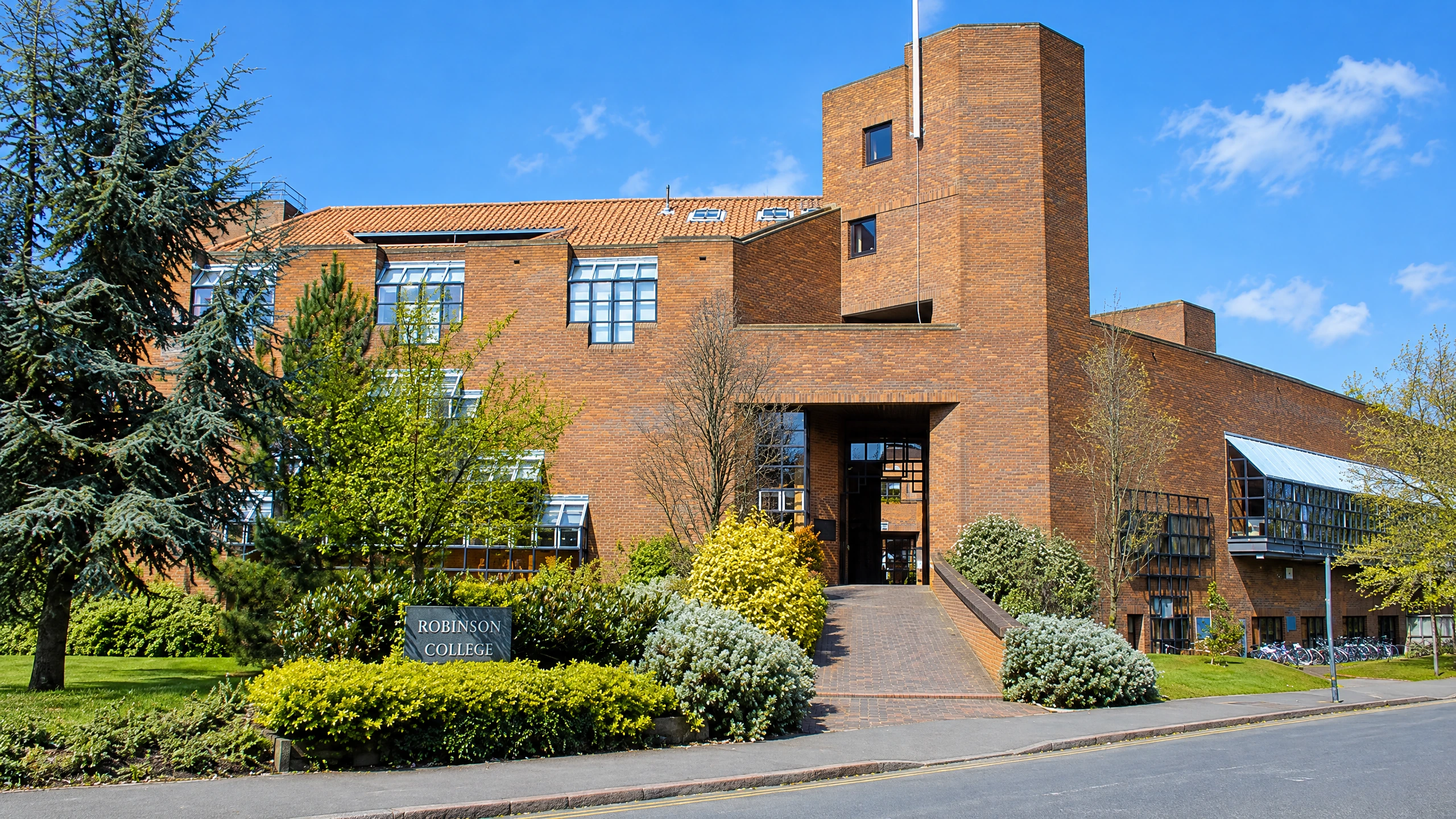
Cambridge's newest full undergraduate college and its most distinctive piece of late 20th-century architecture, funded by a single benefactor's gift.
- Founded
- 1977
- Location
- Grange Road
- Visiting
- Grounds open most days
- Institution
- College
01 The experience
What to expect.
Red brick, stained glass and older gardens
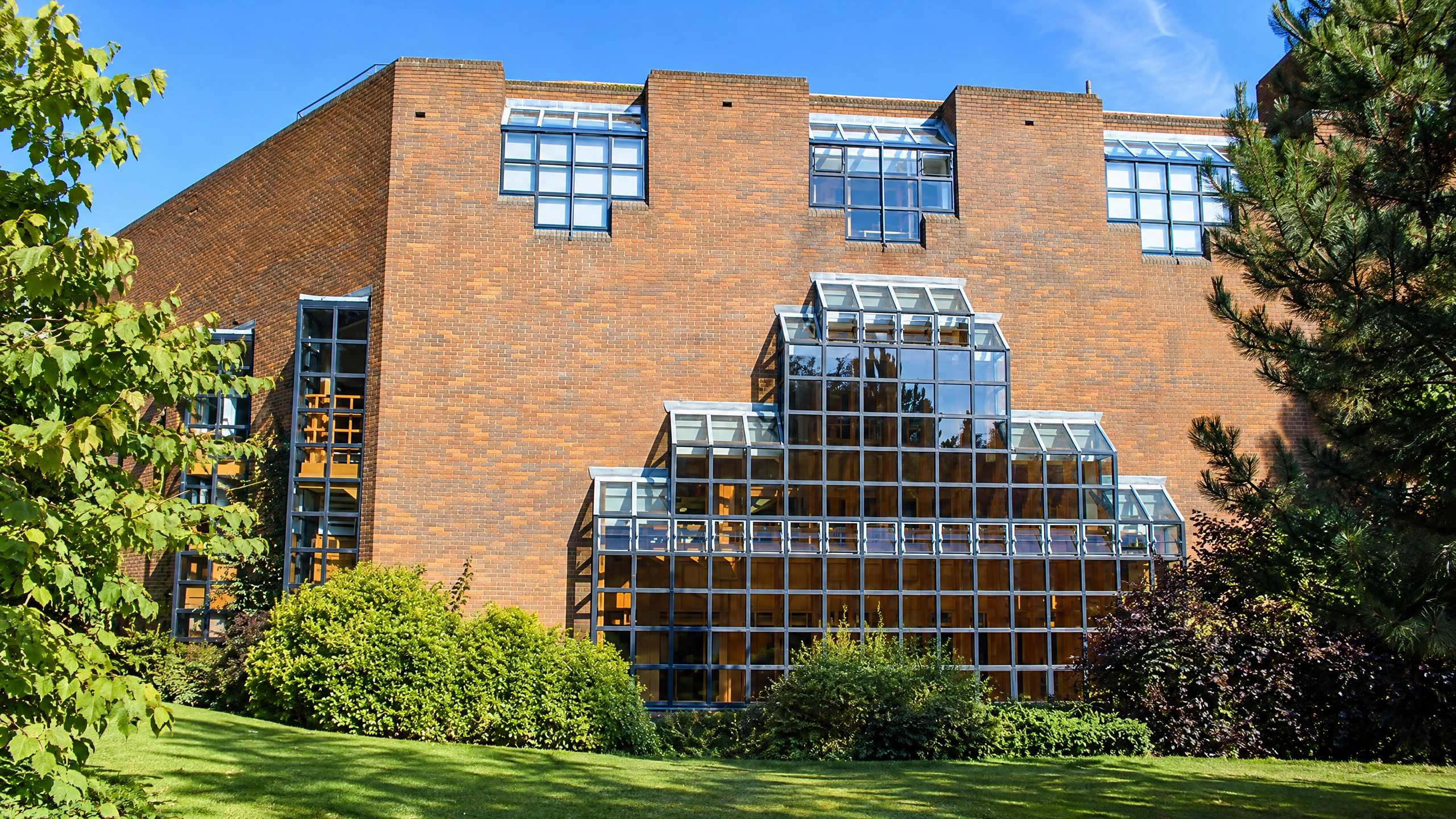
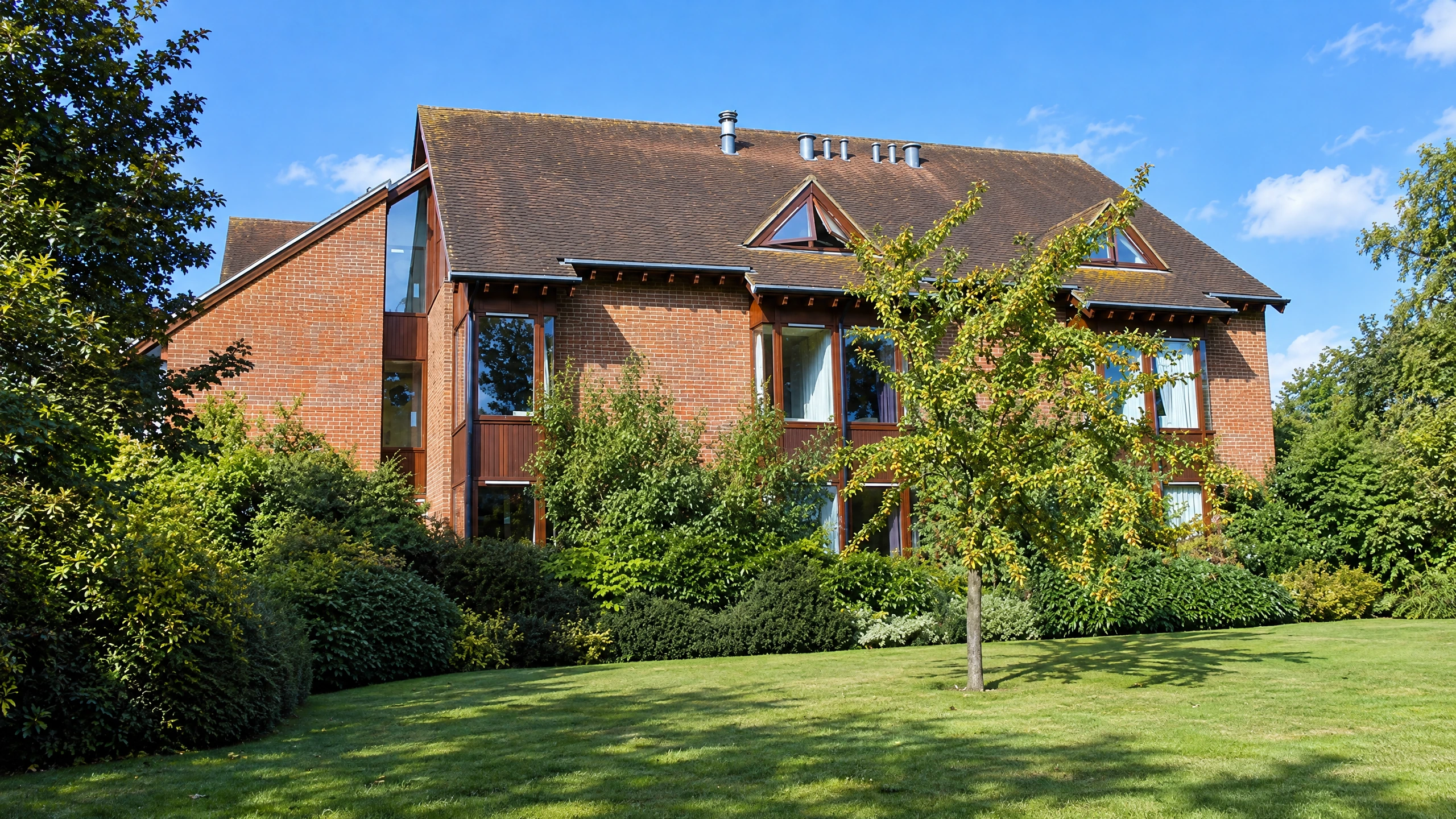
Robinson is a late twentieth-century Cambridge college with gardens much older than its buildings. Its red-brick ranges rise above Grange Road, while paths behind them lead through mature planting and across Bin Brook. Ten former house gardens were brought together to form the grounds.
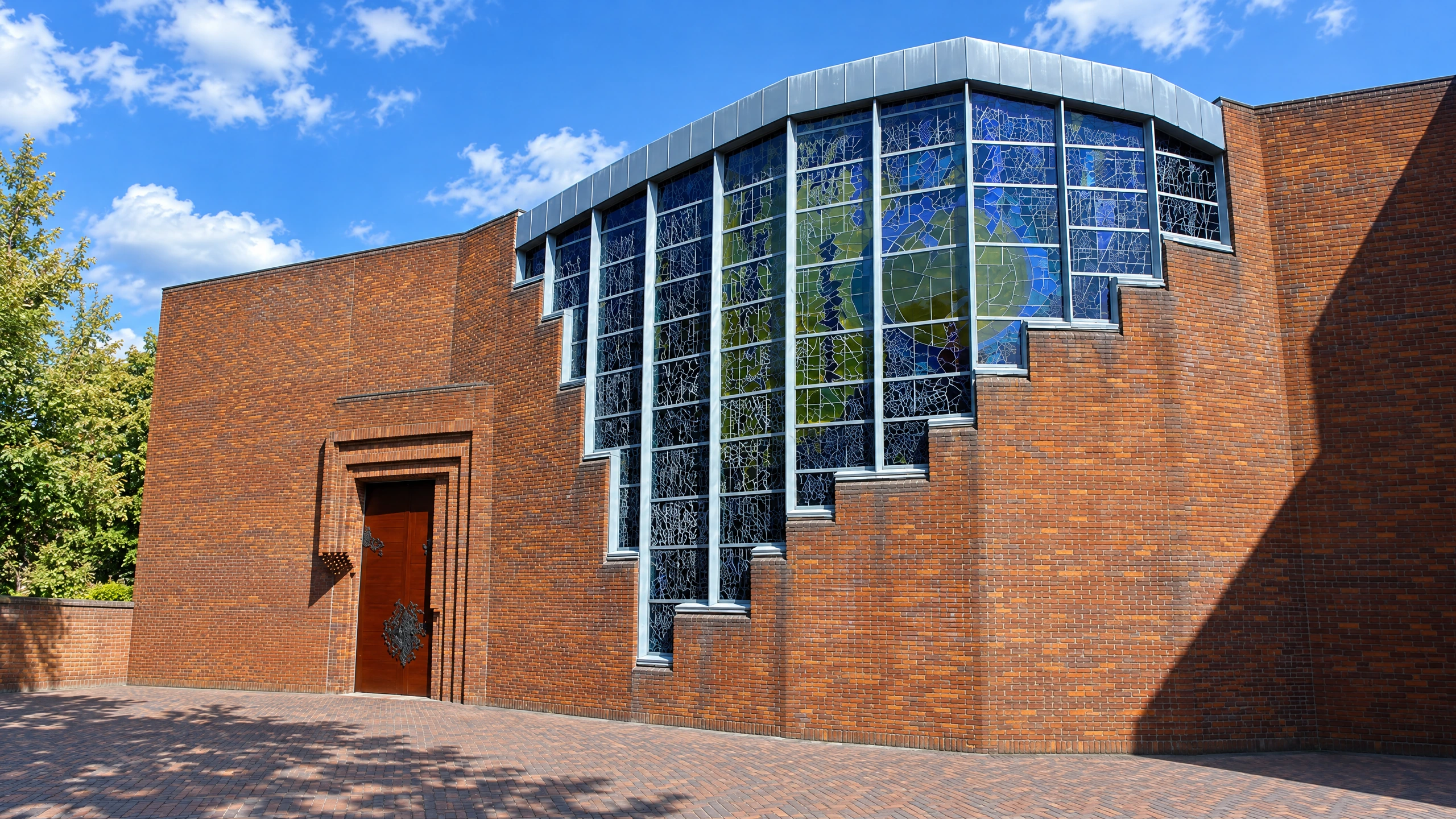
The college was founded through a gift from businessman Sir David Robinson and opened in 1981. Its chapel brings artist John Piper and stained-glass maker Patrick Reyntiens into the story: the two also collaborated on windows at Coventry and Liverpool cathedrals.
People and ideas
People connected to the college

Nick Clegg
The former UK deputy prime minister studied archaeology and anthropology at Robinson.
College connection
Clegg is a college alumnus and has supported its Pegasus Scholars Programme.
Fellows, founders and other connections

Sir David Robinson
The businessman gave the foundation gift for Robinson College and supported its chapel.
College connection
His gift made possible Cambridge's first purpose-built co-educational college for undergraduates and postgraduates.

John Piper
Piper designed the chapel windows with stained-glass maker Patrick Reyntiens.
The story
History & character.
A new kind of college
Founded in 1977 through the generosity of businessman Sir David Robinson, the college opened in 1981. It was planned from the outset for women and men studying at both undergraduate and postgraduate level. Its red-brick buildings were designed by Gillespie, Kidd & Coia; the gatehouse is a modern interpretation of a familiar Cambridge college entrance.
Planning began in 1973, and the trustees interviewed nine architectural practices after visiting the site. Building started in 1977; the college moved into its new accommodation in October 1980. Its first students and Fellows saw an institution take shape around them rather than inheriting a centuries-old court.
A chapel in colour
The college chapel was part of David Robinson's original vision. He suggested John Piper as a designer after seeing his work at Coventry Cathedral. Piper collaborated with Patrick Reyntiens on the chapel's stained glass, bringing a vivid modern artwork into the brick building.
Ten gardens and a brook
Long before the college was built, the site held houses and gardens. The largest belonged to Thorneycreek, a house built in 1895; parts of neighbouring gardens survived as the new college took shape. Landscape architect J. S. Bodfan Gruffydd brought ten of these gardens together and designed an elevated walkway across Bin Brook.
Gruffydd's plan embraced the stream and the possibility of flooding with a woodland water garden and a small lake. Mature trees and older planting give the grounds a character quite different from the college's contemporary buildings.
The garden retains traces of its former owners. Lady Thomson, widow of physicist J. J. Thomson, sold her home to the college on condition that her cyclamen would be preserved; they still flower there. Botanist Norah Barlow, Charles Darwin's granddaughter, lived at a neighbouring house that later became part of Robinson. With her sister Ruth she had given The Orchard to New Hall, now Murray Edwards.
Thorneycreek's earlier life
Before the permanent college library opened, its books had a home in a bay-windowed room at Thorneycreek House. The house and garden form part of the older landscape incorporated into the new college. One surviving walnut tree was planted in 1897 to mark Queen Victoria's Diamond Jubilee.
Look closer
Highlights and hidden details.
The gardens and Bin Brook
The grounds bring together ten older gardens. An elevated walkway crosses the brook, linking the college buildings with the former Thorneycreek garden.
The red-brick gatehouse
Gillespie, Kidd & Coia's modern design gives the college an entrance inspired by the gatehouses of older Cambridge colleges.
The chapel
John Piper and Patrick Reyntiens designed the chapel's stained glass. Members of the public are welcome at services.
Details to look for.
An artist's recommendation
John Piper recommended landscape architect J. S. Bodfan Gruffydd to David Robinson. Gruffydd went on to bring the college's inherited gardens together, and later left the college his collection of Piper's work.
Make it work
Plan your visit.
Front Court, Long Court and the gardens are open to visitors Monday to Saturday from 10am to 6pm and Sunday from 2pm to 6pm. The college closes to the public before and during the examination season and during its shutdown; dates vary. Chapel services are open to visitors.
Visit your way
Access and family planning.
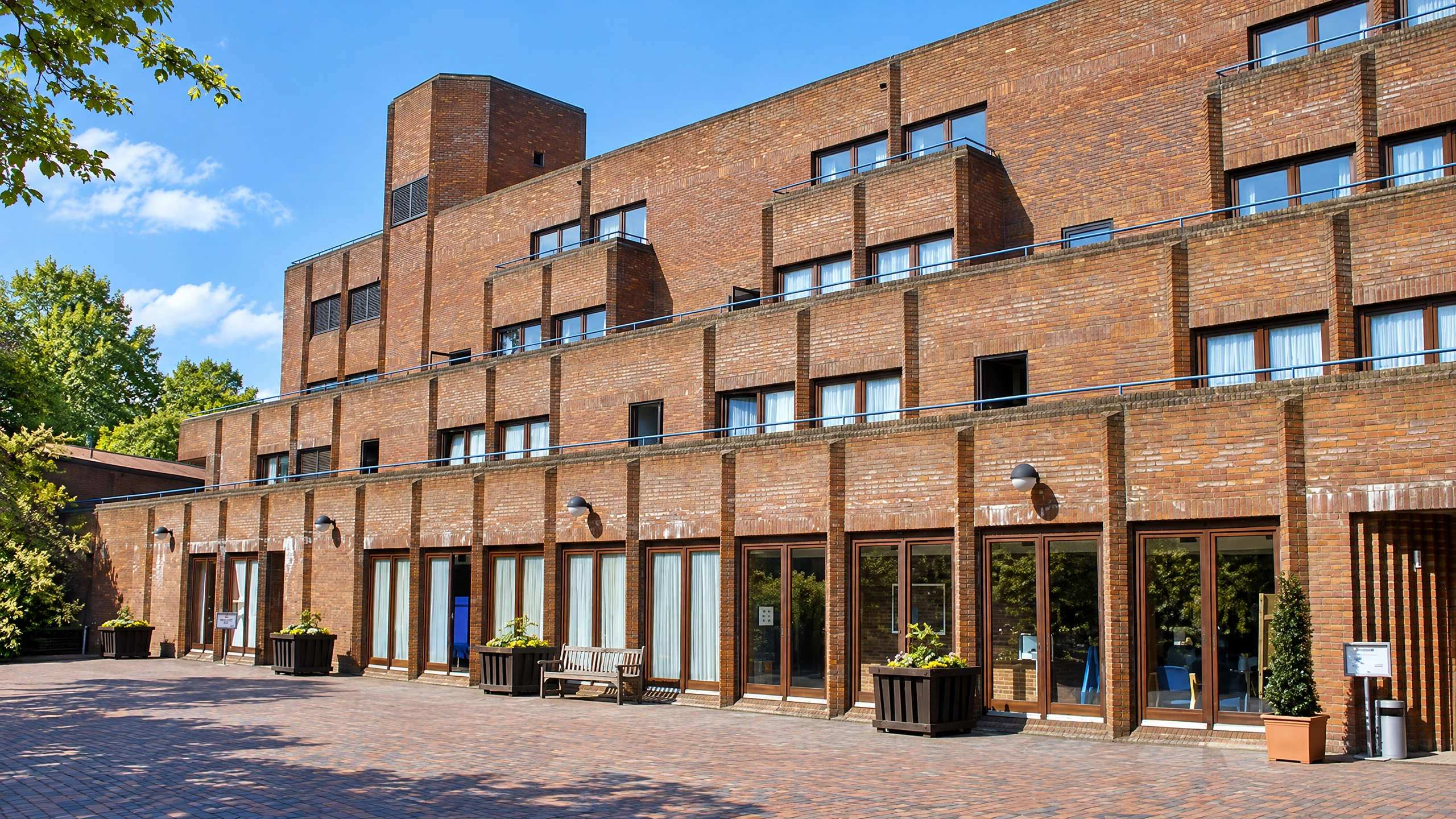
The chapel entrance from Long Court has a steep ramp and a heavy door. A separate event entrance from Front Court is step-free; ask the college about using it for a service. The accessible toilet near the chapel has no lateral transfer space.
The garden includes slopes and some uneven paving. The college's detailed access guide describes routes and entrances.
Self-guided walk
Explore beyond the venue.
A practical, step-by-step route connecting this experience with more of Cambridge.Front Court and Long Court
The college opens Front Court and Long Court to visitors during its published opening hours. The red-brick gatehouse marks the Grange Road entrance.
Bin Brook and the gardens
The gardens are also part of the public visit. Paths link the college buildings with the older gardens around Thorneycreek, crossing Bin Brook by an elevated walkway. Some paths and lawns slope, and parts of the paving are uneven.
Chapel services
The college welcomes the public to chapel services. The event entrance from Front Court is step-free; the Long Court entrance has a steep ramp.
See it
In pictures.
10 views, full screen. Tap any one to open the viewer.Around here
Make more of the area.
Good to know
Questions, answered.
Is Robinson College one of the newer Cambridge colleges?
Yes. Recognised as an Approved Foundation in 1977 through Sir David Robinson’s generosity, the college was formally opened in 1981. It was planned for women and men from the outset.
Who founded Robinson College Cambridge?
Businessman Sir David Robinson provided the major gift that made the college possible. The college bears his name.
Who designed Robinson College’s red-brick buildings?
The architects Gillespie, Kidd & Coia designed the college. Its gatehouse is a modern interpretation of the entrances of older Cambridge colleges.
Who made the stained glass in Robinson College Chapel?
Artist John Piper designed the windows with stained-glass maker Patrick Reyntiens. David Robinson suggested Piper after seeing his work at Coventry Cathedral.
Are Robinson College’s gardens older than the college?
Yes. The landscaped site brings together former house gardens, including that of Thorneycreek, a house built in 1895. Some established trees and planting were retained.
What is the stream running through Robinson College gardens?
Bin Brook runs through the grounds. An elevated walkway crosses it, while a woodland water garden and small lake form part of the landscaping.
When can visitors walk around Robinson College?
Front Court, Long Court and the gardens normally open Monday–Saturday 10:00–18:00 and Sunday 14:00–18:00. Examination periods and the college shutdown bring closures.
Can the public attend Robinson College Chapel services?
Yes. Members of the public are welcome at chapel services; the college’s visitor information explains the arrangements.
What was Thorneycreek House used for at Robinson?
Before the permanent college library opened, its books were kept in a room at Thorneycreek House, one of the older properties incorporated into the college site.
Editorial notes
Sources and further reading.
Sources for this guide
Reviewed 4 November 2026.
- Gardens: former gardens, Bin Brook and Bodfan Gruffydd's landscape design.
- Library history: co-educational origins, John Piper and garden design.
- College history: architecture, gatehouse and Piper/Reyntiens collaboration.
- Building Robinson: chapel and landscape development.
- Visiting Robinson: visitor hours, public areas and closures.
- Pegasus Scholars Programme: Nick Clegg as alumnus.
- Chapel access guide: physical access details.
- College history: planning and occupation chronology.
Further reading and sources
Opening hours, prices, programmes and access arrangements can change. Confirm critical details with the venue.
Keep exploring