Central · Founded 1448
Queens' College
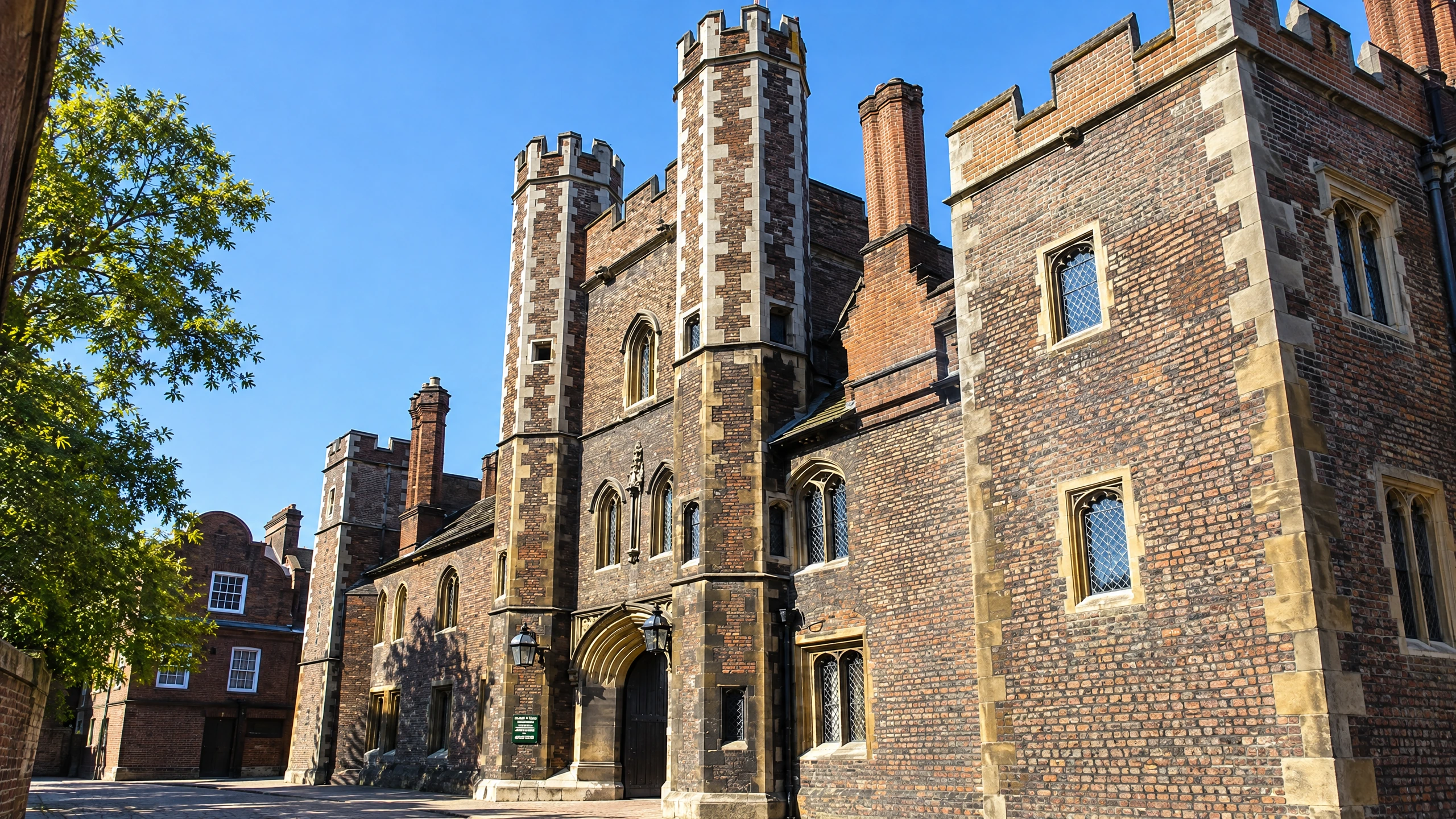
It straddles both banks of the Cam, joined by the Mathematical Bridge, and its medieval Old Court is among the most complete in Cambridge.
- Founded
- 1448
- Location
- Silver Street
- Visiting
- Open 10am–4pm
- Institution
- College
01 The experience
What to expect.
A college on both sides of the Cam
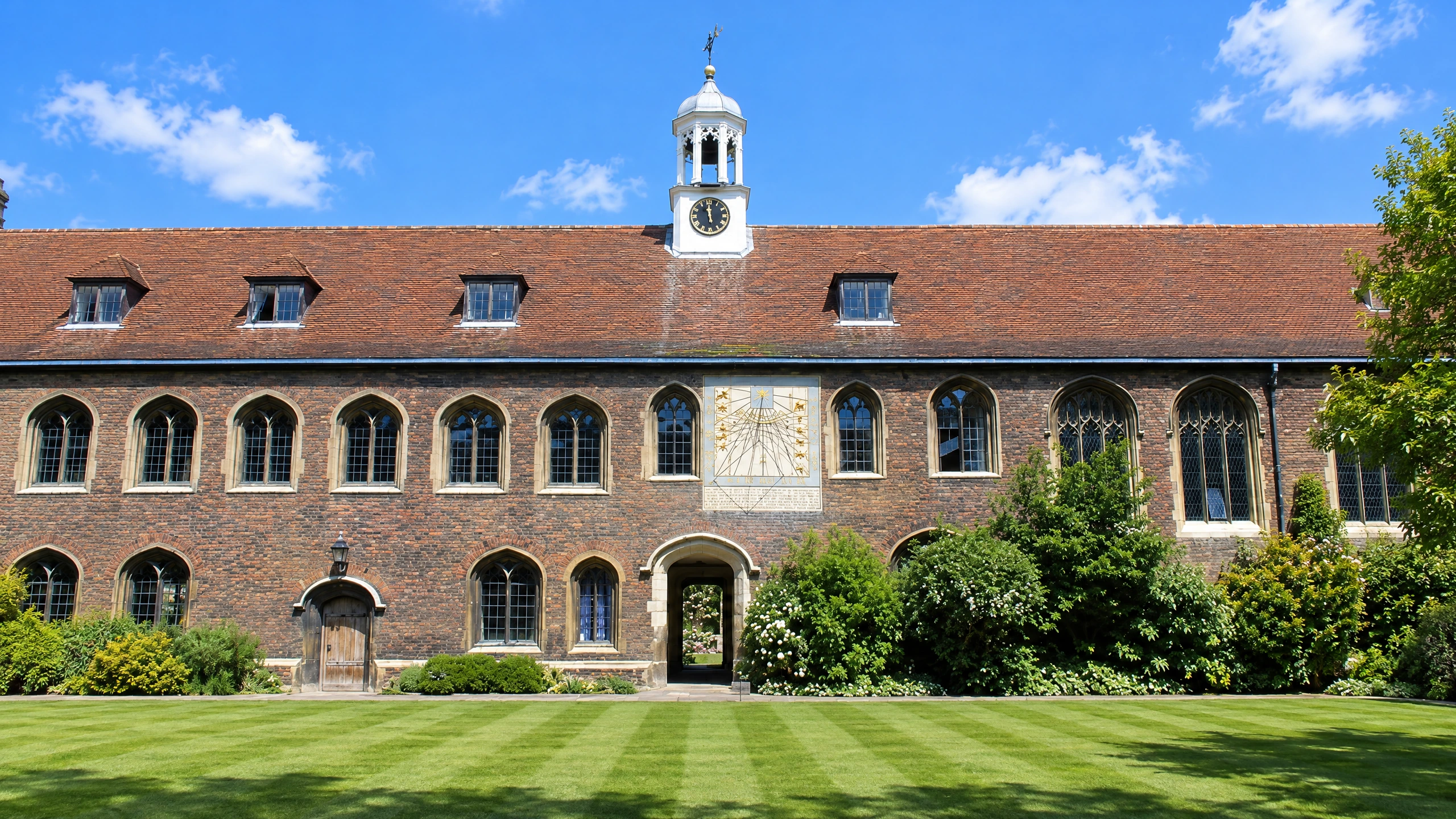
Queens' College brings together red-brick medieval courts, a timber-framed riverside lodge and one of Cambridge's most recognisable bridges. The Mathematical Bridge joins the older part of the college to buildings and gardens on the opposite bank. Its apparent curve is made from straight timbers arranged in an ingenious pattern.
The college recognises two royal foundresses: Margaret of Anjou, who gave it her patronage in 1448, and Elizabeth Woodville, who became patroness in 1465. Their story is often linked to the apostrophe in Queens', though the college's history archive explains that the plural spelling became established much later. Its Old Library holds a remarkable collection of early books.
People and ideas
People connected to the college
Stephen Fry
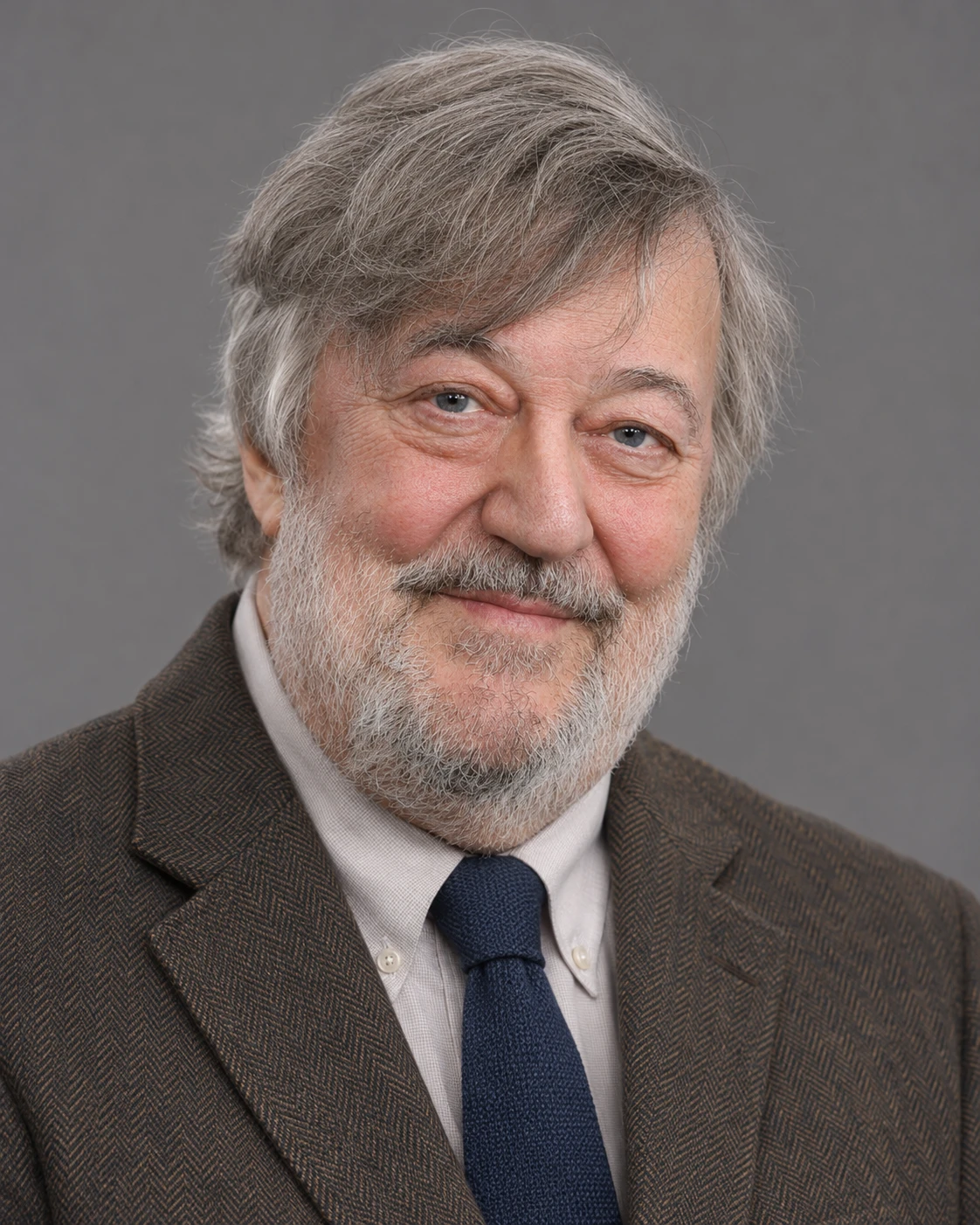
The actor, comedian and writer is among Queens' arts alumni.
College connection
Fry studied at Queens' before his career on stage and screen.

Demis Hassabis
The artificial intelligence researcher shared the 2024 Nobel Prize in Chemistry for work on predicting protein structures.
College connection
He is an alumnus and Honorary Fellow of Queens'.
Fellows, founders and other connections

William Morris
Morris tiles form part of the nineteenth-century decoration of Old Hall.
The story
History & character.
Two queens and a medieval college
Queens' was founded in 1448 under the patronage of Margaret of Anjou, wife of Henry VI. Elizabeth Woodville, wife of Edward IV, became patroness in 1465 and gave the college its first statutes in 1475. Both women are recognised as foundresses, although no record survives of an explicit act of refoundation by Elizabeth. The plural apostrophe became established centuries later.
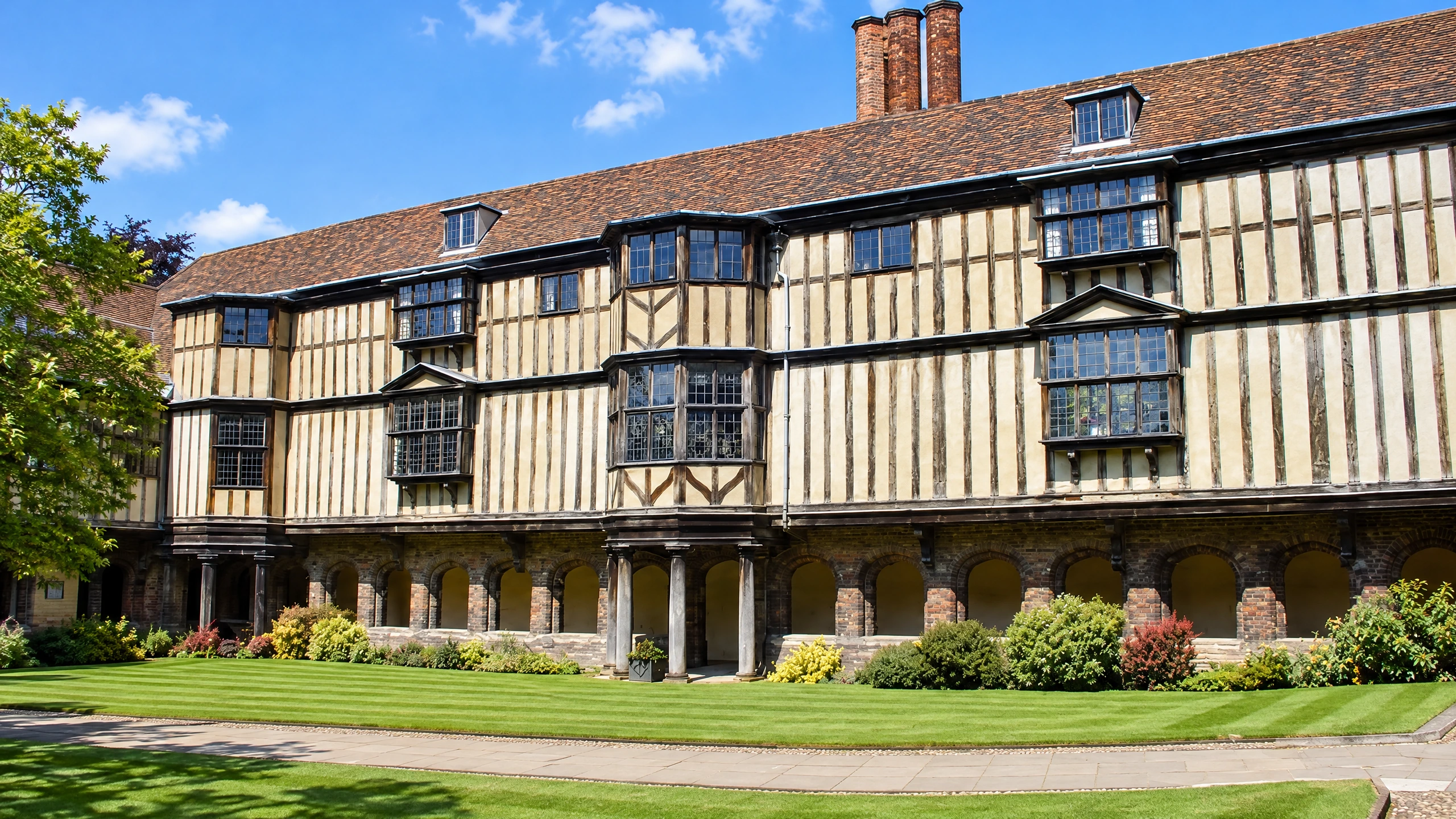
Old Court and Cloister Court remain at the historic heart of the college, with the timber-framed President's Lodge overlooking the riverside.
The foundation itself had predecessors: Andrew Dokett had already established St Bernard's College on nearby land. Margaret successfully petitioned Henry VI to grant her the foundation, and her chamberlain laid the new college's foundation stone in 1448. The first court took shape as the Wars of the Roses approached.
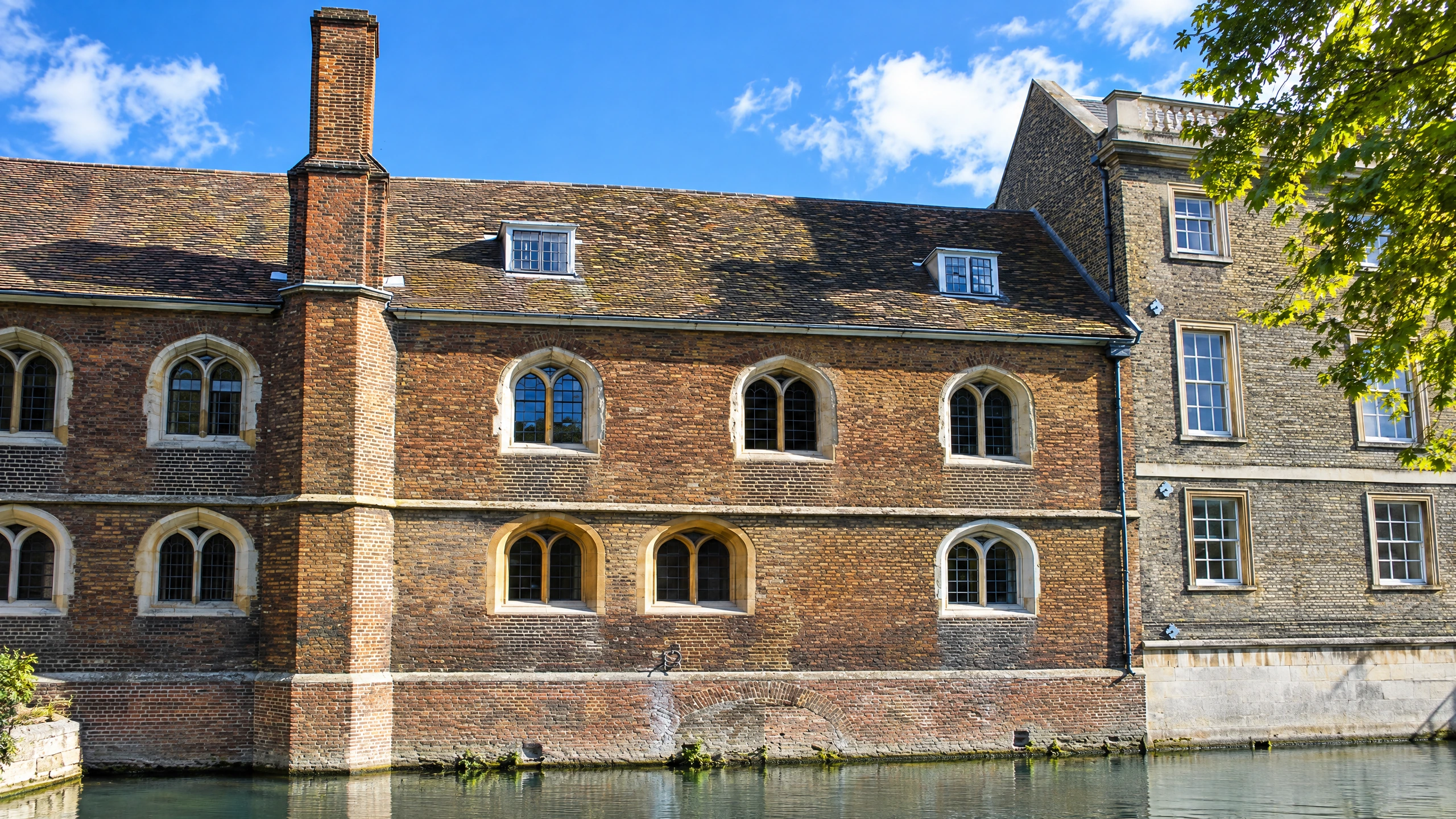
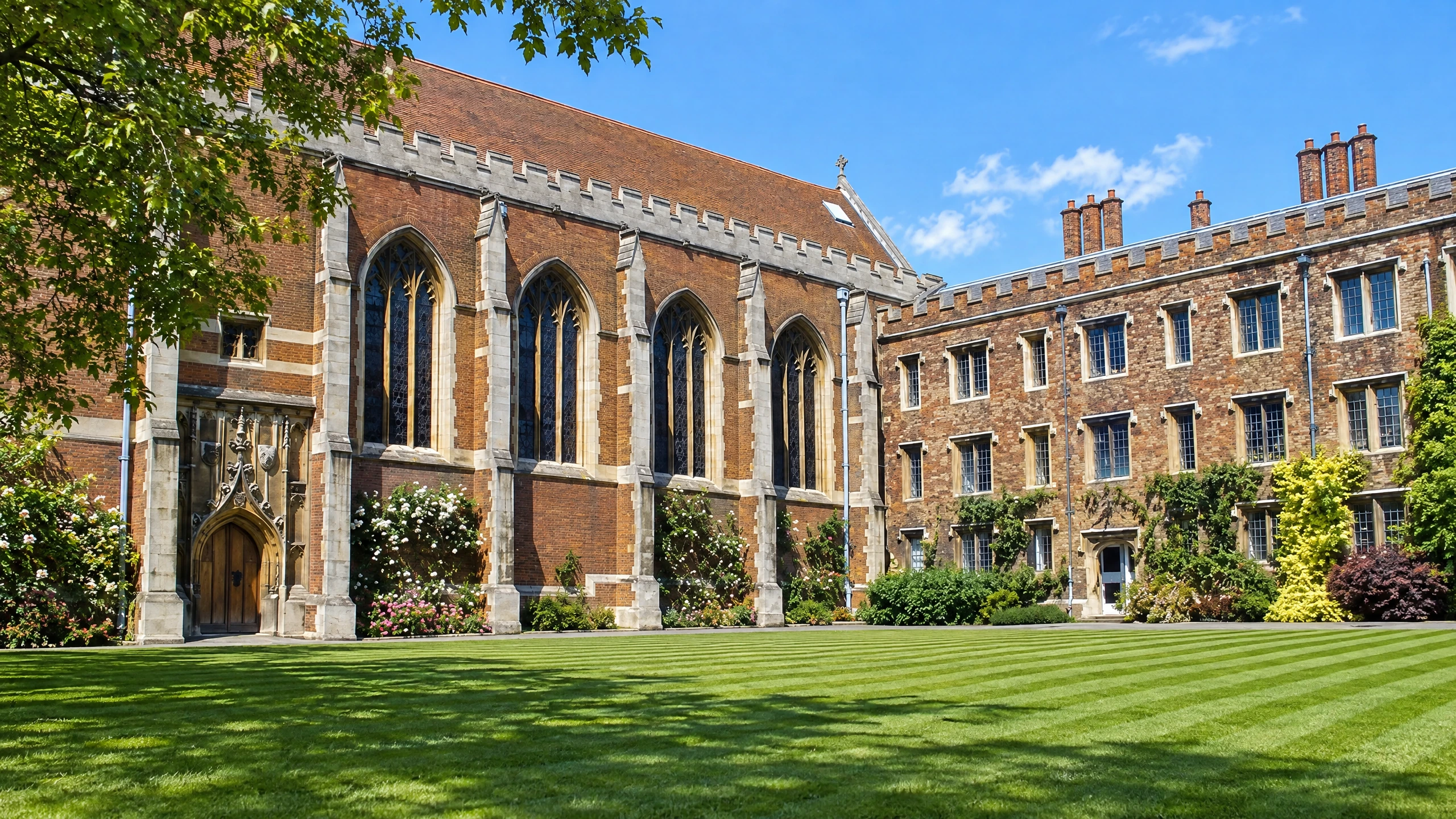
The older buildings gather around several courts rather than a single grand façade. The college's listed historic ranges include Front Court, Cloister Court, Pump Court and Walnut Tree Court. From the river, the lodge and the bridge make an especially distinctive pair: the riverside range dates from around 1460.
An arch of straight timbers
William Etheridge designed the bridge in 1748, and James Essex built it the following year. The design uses short lengths of timber arranged to form an arch. It was repaired in 1866 and rebuilt to the same design in 1905. Isaac Newton is often credited with the bridge, but he died before it was built; its documented designers and builders tell the more interesting story of eighteenth-century engineering.
Old Hall dates to the building of the original college in 1449, though its decoration tells a longer story. In the nineteenth century, William Morris tiles were added, followed by a carved wooden canopy designed by George Frederick Bodley. The hall is normally open on the visitor route, subject to college events.
Books and Erasmus
The Old Library remains in the room where it was founded in 1448. Its bookcases were made from medieval lecterns, and its collection now includes early printed books and manuscripts dating from the twelfth to nineteenth centuries. It is a working historic collection rather than part of an unrestricted visitor route.
The humanist Erasmus is traditionally associated with a study in the south-west turret of Old Court. He was in Cambridge in the early sixteenth century, but the college archive has no contemporary record establishing that particular room as his. The tradition has given the small court below it another name: Erasmus Court, also known as Pump Court.
Look closer
Highlights and hidden details.
The Mathematical Bridge
Straight timbers form the bridge's arched shape. William Etheridge designed the original in 1748; the present bridge was rebuilt to the same design in 1905.
The President's Lodge
The timber-framed riverside building stands beside the bridge. The range dates from around 1460 and contains part of the President's Lodge.
Old Court and Pump Court
The college's historic courts preserve its early collegiate plan. Pump Court is also associated by tradition with Erasmus, although the exact location of his study remains uncertain.
Details to look for.
A name from the guidebooks
The college's bridge was originally referred to by the name of its builder, James Essex. The term Mathematical Bridge appeared in Cambridge guidebooks by the early nineteenth century.
Six timbers, one span
The horizontal element of the bridge can look like one long beam, but it is made from six shorter pieces joined end to end.
Make it work
Plan your visit.
Admission is £5 per visitor; children under 12 enter free with an adult. The college normally opens from 10am to 4pm, with closures during the examination period and on specified event and holiday dates. Enter through the Visitors' Gate on Queens' Lane; if it is closed, use the Porters' Lodge on Silver Street.
Groups of up to five can visit independently. Ask the college about arrangements for a party of six; organised tour parties need a Cambridge Blue Badge Guide. Old Hall and the chapel are normally included but may close for events. The Old Library is outside the ordinary college visit; visits can be arranged in advance, and it holds selected public exhibitions. The President's Lodge is private. The Mathematical Bridge can also be seen from Silver Street Bridge.
A 20-week programme of river-wall repairs was announced in November 2026. Work takes place from a mobile pontoon; the college says the river navigation channel will remain open.
Visit your way
Access and family planning.
Wheelchair users can enter through the Porters' Lodge on Silver Street. The Mathematical Bridge has steep ramps on both sides. There are steps on the route around the college, and some surfaces are uneven and can be slippery when wet. Contact the college about the route that suits your needs.
Self-guided walk
Explore beyond the venue.
A practical, step-by-step route connecting this experience with more of Cambridge.Arrive at Queens' Lane
The Visitors' Gate on Queens' Lane is the usual entrance. The Porters' Lodge on Silver Street provides wheelchair access. Admission is £5 per visitor, with children under 12 free when accompanied by an adult.
The courts and Mathematical Bridge
Walk through the open cloisters and courts towards the river. The Mathematical Bridge joins the two sides of the college; its ramps are steep. The President's Lodge can be seen beside the river, although its interior is private.
Old Hall and the chapel
Old Hall and the chapel are normally included when open, but college events can affect access. Student rooms are private. Visits to the Old Library must be arranged separately.
See it
In pictures.
10 views, full screen. Tap any one to open the viewer.Around here
Make more of the area.
Good to know
Questions, answered.
Why does Queens’ College Cambridge have an apostrophe after the s?
The name honours two royal patrons, Margaret of Anjou and Elizabeth Woodville. The plural spelling and apostrophe became established long after the college’s foundation.
Who were the two queens connected with Queens’ College?
Margaret of Anjou supported the foundation in 1448. Elizabeth Woodville became patroness in 1465 and issued the college’s first statutes in 1475. Both are recognised as foundresses.
Did Isaac Newton design the Mathematical Bridge?
No. William Etheridge designed it and James Essex built it in 1749, more than twenty years after Newton died.
Was the Mathematical Bridge built without nails or bolts?
No. The bridge’s joints have always needed fastenings. Records of earlier versions show fixings, and the present bridge uses nuts and bolts.
Why does the Mathematical Bridge look curved when its timbers are straight?
Its straight pieces are arranged as an arch using a geometric truss. The current bridge was rebuilt to the same design in 1905.
Can I see the Mathematical Bridge without entering Queens’?
Yes. The bridge can be viewed from Silver Street Bridge or from the river. Entering Queens’ gives access to the college visitor route when it is open.
How much does it cost to visit Queens’ College?
Admission is £5 per visitor. Children under 12 enter free when accompanied by an adult; Cambridge residents with proof of address and some university members have additional exemptions.
What can I see on a visit to Queens’ College?
Old Hall and the chapel are normally open, alongside the courts and cloisters, although events can close individual rooms. The President’s Lodge is private.
Is the Old Library at Queens’ College in Cambridge open to visitors?
The Old Library at Queens’ College in Cambridge is outside the ordinary self-guided route. Visits may be arranged in advance, and the library hosts selected public exhibitions.
Did Erasmus live at Queens’ College?
Erasmus was in Cambridge in the early sixteenth century and is associated with Queens’. The college archive says there is no contemporary record establishing the particular Old Court turret traditionally called his study.
Can wheelchair users enter Queens’ and cross the Mathematical Bridge?
Step-free entry is available through the Porters’ Lodge on Silver Street. The bridge has steep ramps on both sides; some manual wheelchair users may need assistance.
When is Queens’ College in Cambridge closed to visitors?
Queens’ College in Cambridge closes during examinations, on some ceremonial and event days and over Christmas. Ordinary visiting hours are 10:00–16:00. See the visitor page for dated closures.
Editorial notes
Sources and further reading.
Sources for this guide
Reviewed 4 November 2026.
- Mathematical Bridge: designers, construction, reconstruction, timber structure and Newton attribution.
- Listed buildings: named historic courts.
- Bridges and riverside: bridge, river and Silver Street viewpoint.
- Pump Court: Erasmus connection and limits of room attribution.
- Virtual tour: Old Library and present-day college layout.
- Cambridge college libraries: pre-arranged Old Library visits and public exhibitions.
- Tourist information: opening arrangements and closures.
- Early history: royal patronage and uncertainty around an explicit 1465 refoundation.
- The apostrophe: later development of the plural spelling.
- Nobel Prize news: Demis Hassabis and the college.
- Arts and drama: Stephen Fry as an alumnus.
- Disability access guide: steep Mathematical Bridge ramps.
- River-wall works: November 2026 announcement and river access.
- Old Hall chronology: hall date, Morris tiles and Bodley canopy.
Opening hours, prices, programmes and access arrangements can change. Confirm critical details with the venue.
Keep exploring