Central · Founded 1347
Pembroke College
It holds Christopher Wren's first completed building and has educated a remarkable run of poets, from Edmund Spenser and Thomas Gray to Ted Hughes.
- Founded
- 1347
- Location
- Trumpington Street
- Visiting
- Grounds and chapel open
- Institution
- College
01 The experience
What to expect.
A foundress and a young architect
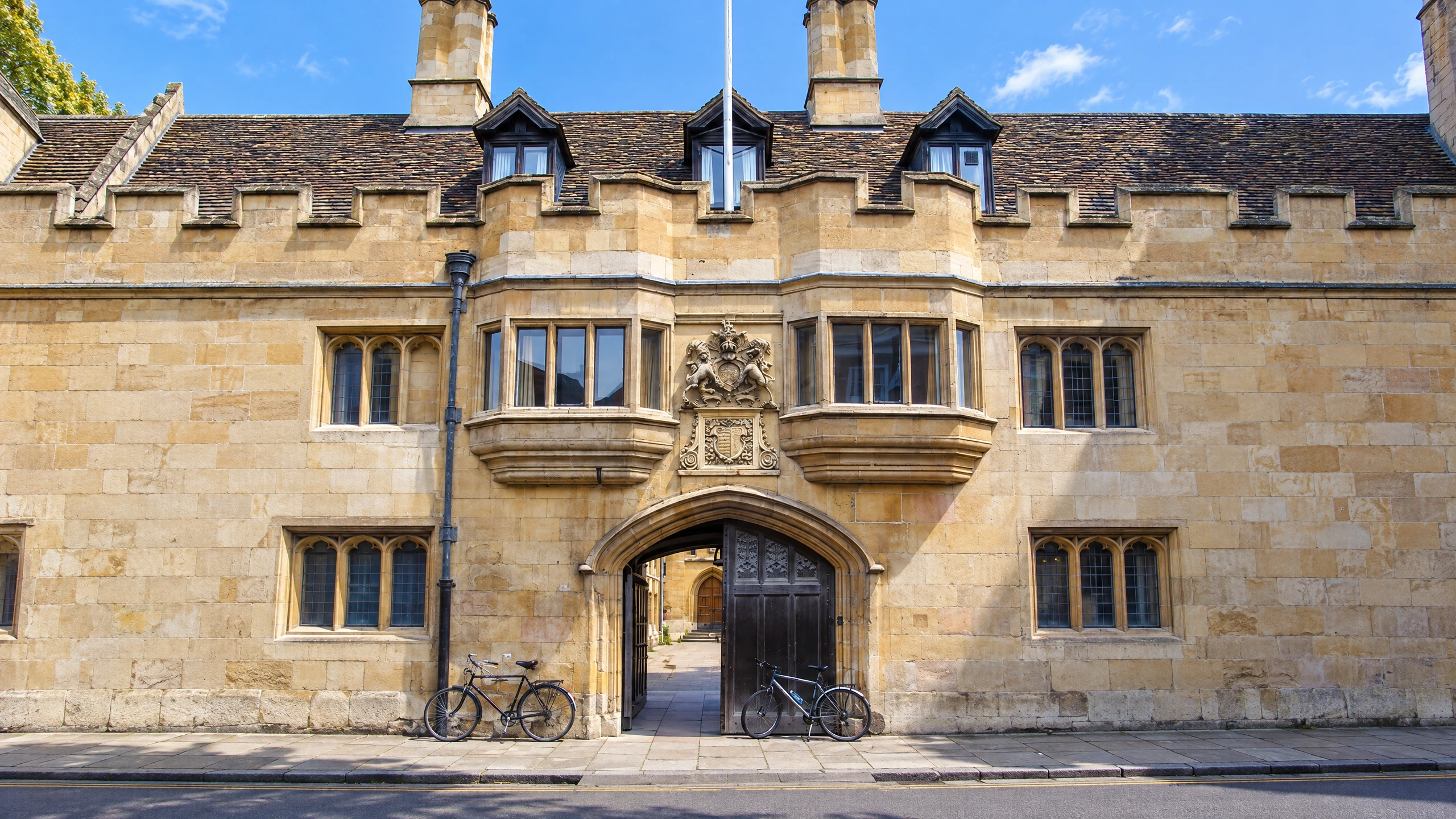
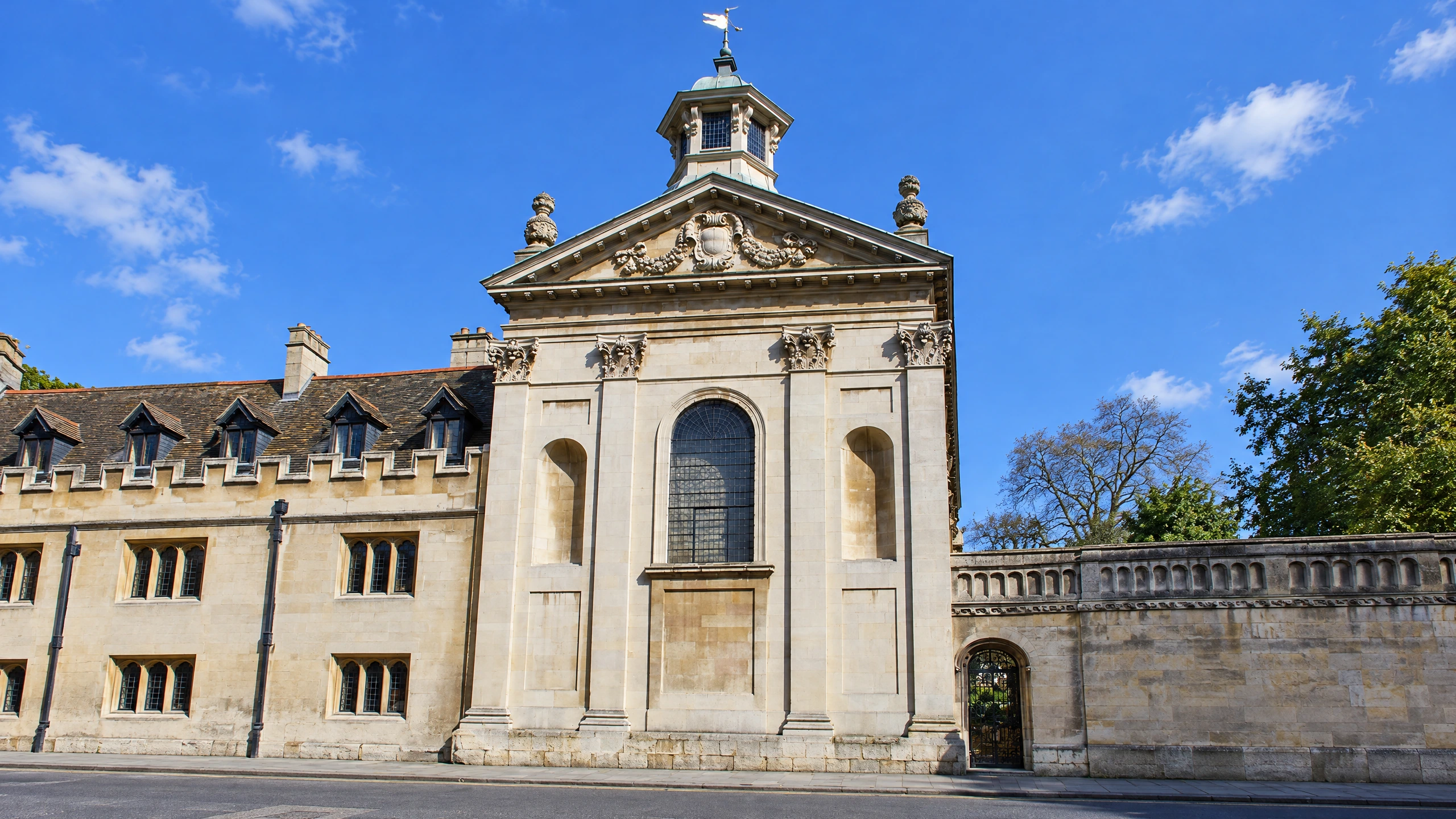
Pembroke's courts and gardens sit just off Trumpington Street, with a chapel that marks the start of a celebrated architectural career. Completed in 1665, it was Christopher Wren's first building. Its restrained classical exterior opens into a high, light-filled interior with a plaster ceiling and an organ gallery.
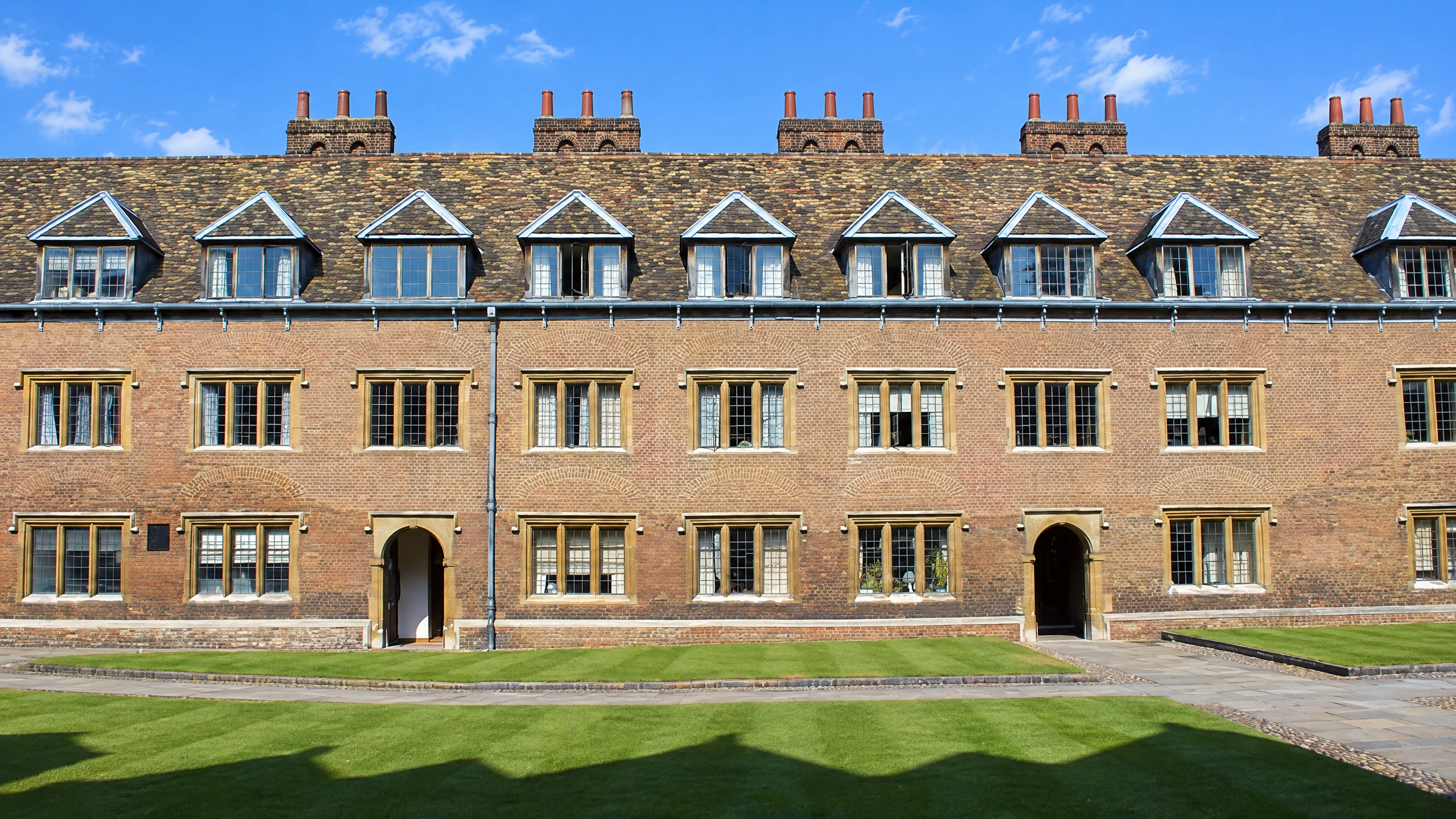
The college is much older than the chapel. Marie de St Pol, Countess of Pembroke, received permission to found it in 1347. The original community lived around a single court; centuries of later buildings and gardens have grown around that core. Visitors can walk through the grounds and enter the chapel when no service is taking place.
People and ideas
People connected to the college

Ted Hughes
1951
The poet's writing desk, manuscripts and books form part of a Pembroke collection.
College connection
Hughes was a student at Pembroke from 1951; windows in the Yamada Room honour his poems.
Fellows, founders and other connections
Marie de St Pol
Edward III granted her licence for the foundation in 1347.
The Countess of Pembroke founded the college and remained involved in its affairs.

Christopher Wren
The architect designed Pembroke’s chapel, his first completed building.
The story
History & character.
Marie de St Pol's college
On Christmas Eve 1347, Edward III granted Marie de St Pol a licence to establish a college in Cambridge. The widow of Aymer de Valence, Earl of Pembroke, remained closely involved in its affairs until her death in 1377. After Peterhouse and Clare, Pembroke is the third-oldest surviving Cambridge college.
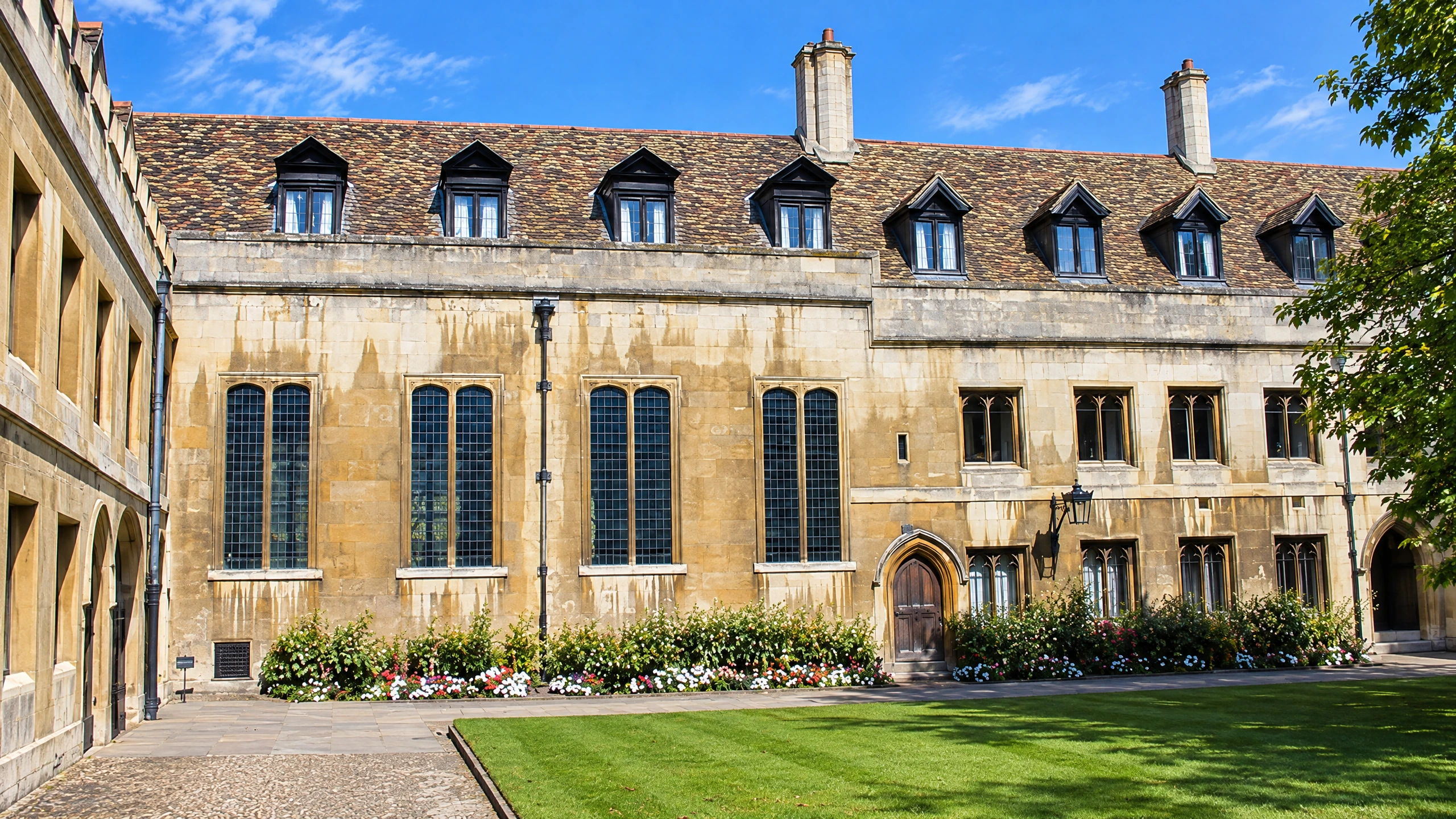
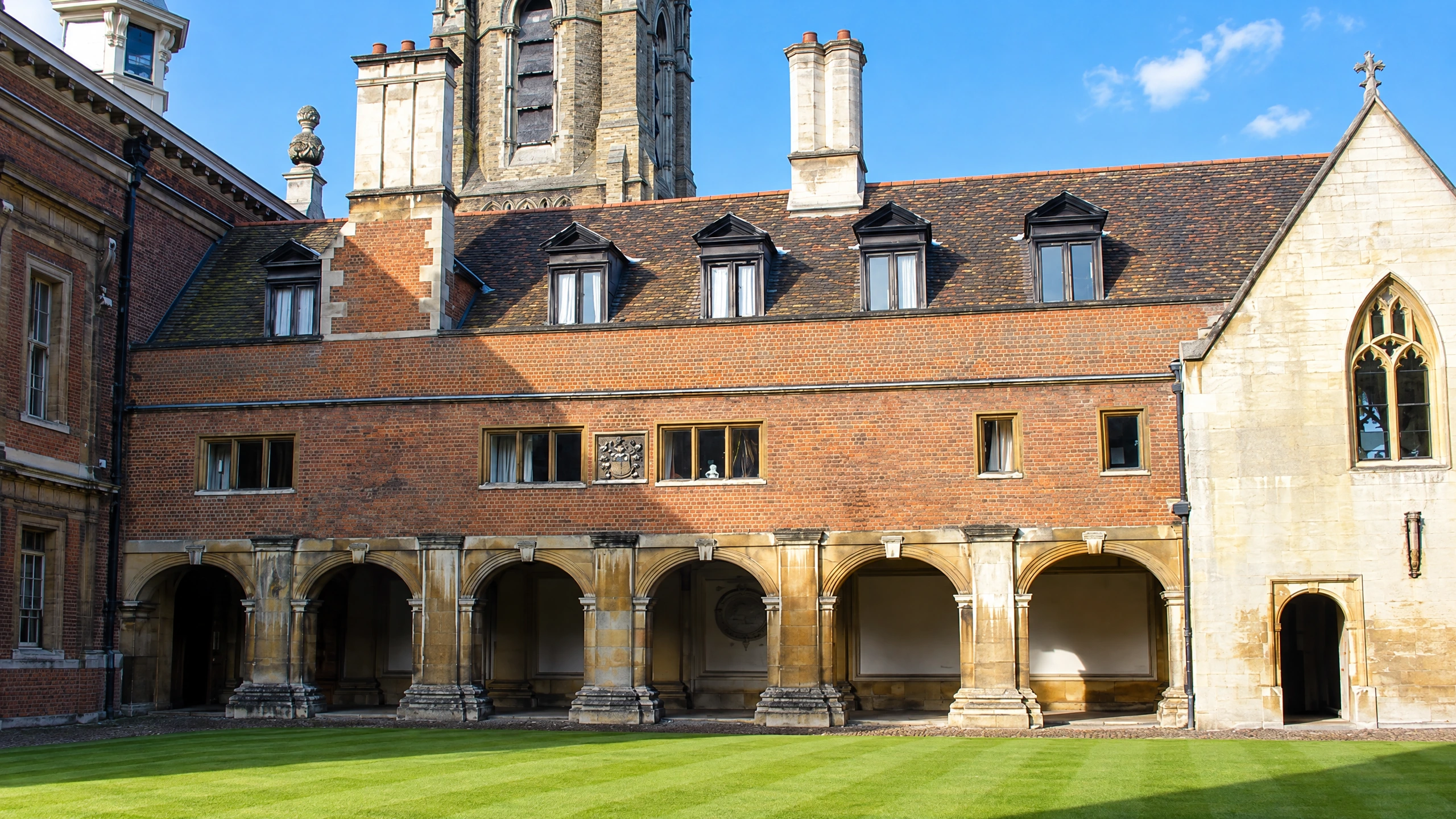
The first college was small enough to fit around what is now First Court. A hall, chapel, kitchen, buttery, the Master's accommodation and rooms for scholars formed the centre of a community that could house up to thirty scholars. Pembroke was the first Cambridge college to have its own chapel; earlier colleges used nearby parish churches.
A bequest from Sir Robert Hitcham paid for the south range of Ivy Court between 1659 and 1661. At its western end is the room later occupied by the poet Thomas Gray and, at another time, William Pitt. Its name preserves Gray's association with Pembroke; like other college rooms, it is not on the general visitor route.
Wren's first building
The present chapel arose from the generosity of Matthew Wren, Bishop of Ely, and was designed by his nephew Christopher. Consecrated in 1665, it was an early English example of a classical church or chapel. Its proportions are tall and spacious, with a plaster ceiling and large windows that bring light into the panelled interior.
Matthew Wren had been imprisoned in the Tower of London during the Civil War. He promised that, if released, he would devote money to a religious purpose; the new college chapel was his choice. Marie de St Pol's original chapel was eventually converted into the room now called the Old Library.
Several features have changed since Wren's day. The organ dates from 1708 and was later restored, while the east window's stained glass was added in 1906 to honour mathematician George Stokes. Those later additions sit within the seventeenth-century room.
A college that kept growing
In the nineteenth century, architect Alfred Waterhouse proposed an ambitious rebuilding of the college. His eventual work included the Red Buildings, whose tall tower introduced a French Renaissance style to Cambridge, and a new hall completed in 1876. Further changes later adapted the hall and added student rooms above it.
The medieval foundation has expanded over many generations. Pembroke's courts and planted spaces now sit between Trumpington Street and the neighbouring streets, while its historic buildings continue to house a college community. The grounds and chapel form the public visit; other building interiors, including the library, are private.
Look closer
Highlights and hidden details.
Wren's chapel
Christopher Wren's first completed building dates from 1665. Inside are a plaster ceiling, generous windows and an organ installed in 1708.
First Court
The original college was arranged around one court, with a hall, kitchen, chapel and rooms for its small community.
The grounds and gardens
Paths through the college lead between its courts and green spaces. Visitors may explore the grounds when the college is open.
Details to look for.
A poet in the windows
Windows in the Yamada Room are inscribed with Ted Hughes's poems and illustrations of animals. Pembroke also holds his writing desk and chair as part of a collection connected with the poet. This is a college collection rather than an ordinary visitor room.
A later east window
The chapel's stained-glass east window was added in 1906 in honour of mathematician George Stokes, more than two centuries after Wren designed the building.
Make it work
Plan your visit.
Visitors may walk around the grounds and visit the chapel when no service is taking place. Other building interiors, including the library, are private. There is no entry fee.
The college generally opens daily but closes from late April to late June and may close for special events. Group visits should be arranged with the Porters' Lodge; group visits take place between 9am and 4.30pm, with groups leaving by 5pm.
Visit your way
Access and family planning.
The college describes its gardens as wheelchair accessible. Its chapel has ramped as well as stepped access; the detailed guide describes the entrance and route.
Self-guided walk
Explore beyond the venue.
A practical, step-by-step route connecting this experience with more of Cambridge.First Court
Enter by the Porters' Lodge on Trumpington Street and begin in First Court, where the first college community gathered around its hall and rooms. The college offers a self-guided map and an audio tour from the lodge.
Wren's chapel
The chapel is open to visitors when no service is taking place. Inside, look for the plaster ceiling and organ gallery of Christopher Wren's first completed building.
Grounds and gardens
The college's grounds are part of the public visit. Other building interiors, including the library and student staircases, are private.
See it
In pictures.
10 views, full screen. Tap any one to open the viewer.Around here
Make more of the area.
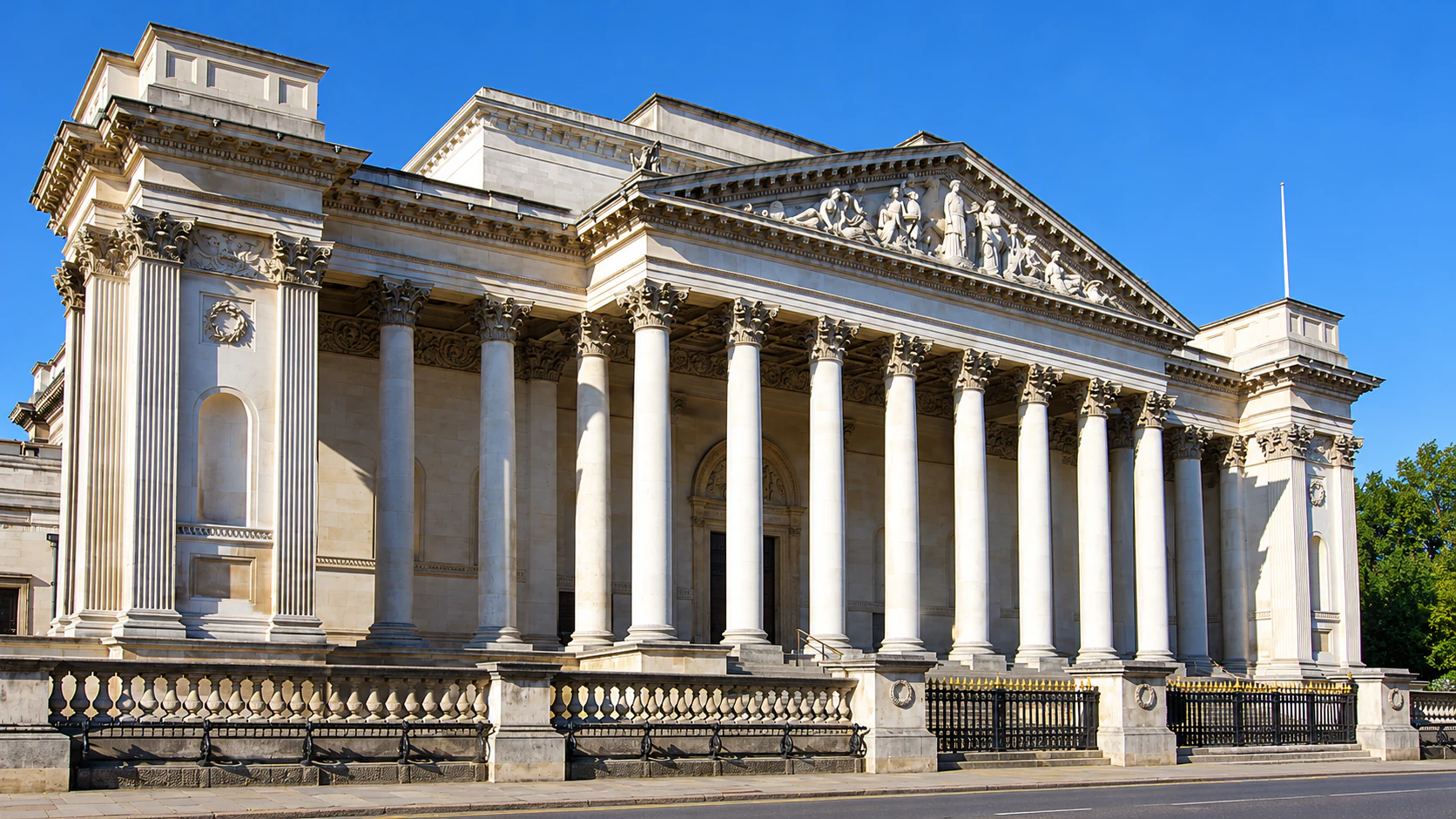
The museum is close to Pembroke on Trumpington Street. Its collections bring together art and antiquities from around the world.
Good to know
Questions, answered.
Who founded Pembroke College Cambridge?
Marie de St Pol, Countess of Pembroke, received a royal licence to found the college in 1347 and remained involved in its affairs for the rest of her life.
Is Pembroke one of Cambridge’s oldest colleges?
Yes. Founded in 1347, it is the third-oldest surviving Cambridge college, after Peterhouse and Clare.
Was Pembroke Chapel Christopher Wren’s first building?
Yes. Wren designed the chapel, which was consecrated in 1665; the college identifies it as his first completed building.
Why did Christopher Wren design Pembroke Chapel?
His uncle Matthew Wren, Bishop of Ely, funded it. After imprisonment in the Tower of London during the Civil War, Matthew chose a new chapel as the religious work he had promised to support if released.
What happened to Pembroke’s original medieval chapel?
The first chapel was converted into the Old Library after the present Wren chapel was built. Its interior is not on the general visitor route.
Did Ted Hughes study at Pembroke?
Yes. The poet became a Pembroke student in 1951. His writing desk, chair, manuscripts and books form part of a college collection, and windows in the Yamada Room honour his poems.
What is Gray’s Room at Pembroke?
The room in Ivy Court is named for the poet Thomas Gray, who occupied it; William Pitt also lived there at another time. It is a private college room, not part of the general visitor route.
Who designed Pembroke’s Red Buildings?
Alfred Waterhouse designed the nineteenth-century Red Buildings and their prominent tower. He also designed a new hall for the college, completed in 1876.
How much does it cost to visit Pembroke College?
There is no entry fee to visit the grounds and chapel when they are open. The chapel is unavailable for sightseeing during services.
When is Pembroke College in Cambridge closed to visitors?
Pembroke College in Cambridge generally closes to visitors from late April to late June for examinations. Events can lead to other closures.
Can visitors go inside Pembroke Chapel and Library?
Visitors can enter the chapel when it is open and no service is taking place. Other college interiors, including the library, are private.
Can a group visit Pembroke College?
Yes, but groups should arrange a visit with the Porters’ Lodge because the number on site at any time is limited. Group visits run from 9am to 4.30pm, with departure by 5pm.
Editorial notes
Sources and further reading.
Sources for this guide
Reviewed 4 November 2026.
- About Pembroke: Marie de St Pol and foundation.
- College history notes: foundation, early community and First Court.
- Chapel history: chapel design, architecture, glass and organ.
- Visiting Pembroke: grounds, chapel, group arrangements and closures.
- Useful information: free entry.
- Location and grounds: setting and visitor areas.
- Ted Hughes collection: poet, desk and Yamada Room windows.
- College access information: physical access details.
- Chapel access guide: physical access details.
- Pembroke location: location and nearby visitor information.
- Fitzwilliam Museum: location and nearby visitor information.
- Pembroke locations: location and nearby visitor information.
- Visit Pembroke: visitor route and access.
Opening hours, prices, programmes and access arrangements can change. Confirm critical details with the venue.
Keep exploring