North · Founded 1954
Murray Edwards College
A landmark dome, gardens and the free Women’s Art Collection bring art and modernist architecture together.
- Founded
- 1954
- Location
- Castle Hill
- Visiting
- Art open daily
- Institution
- College
01 The experience
What to expect.
Art across a modern college
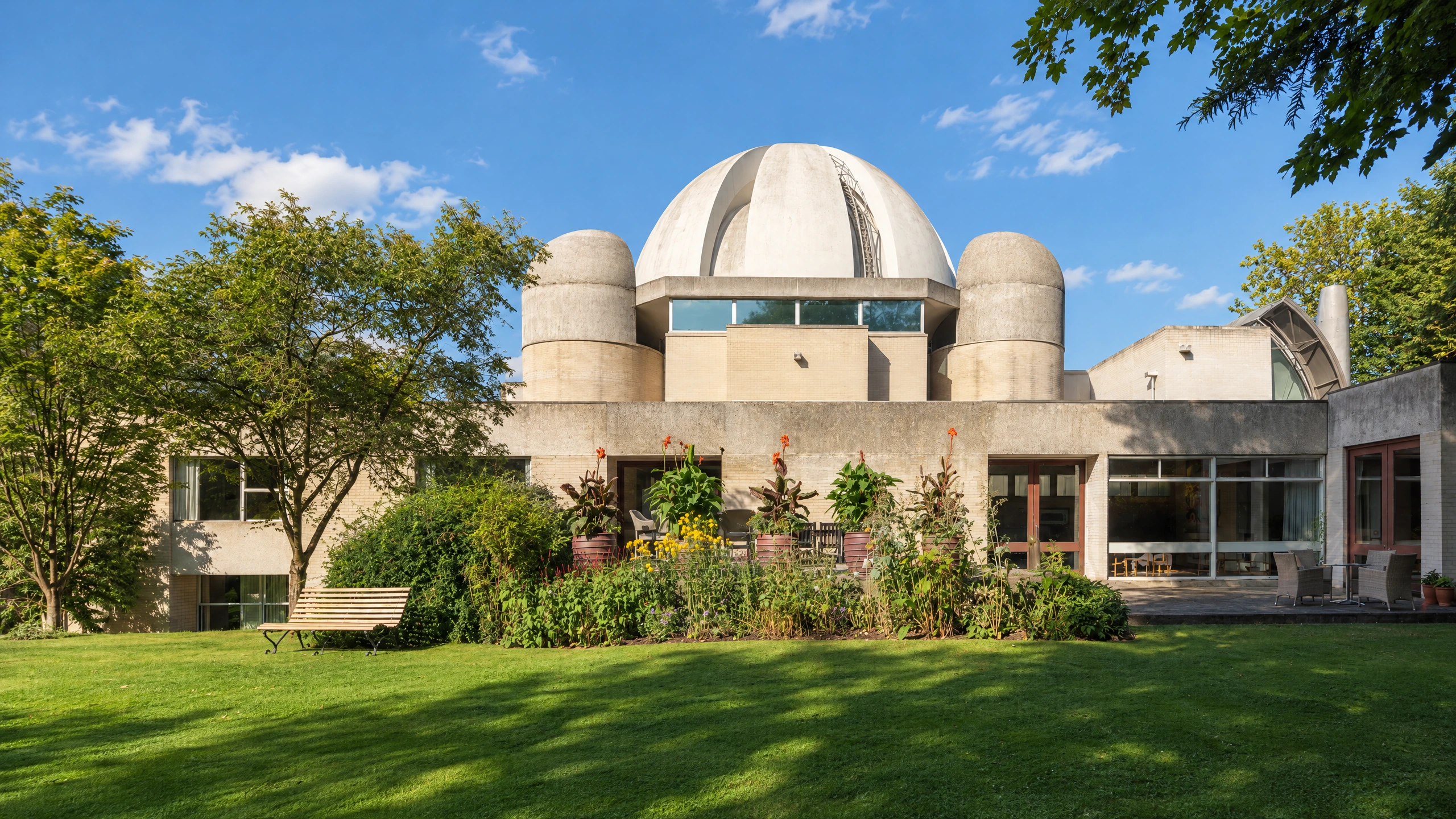
A great white dome rises above Murray Edwards College on Huntingdon Road. Beneath it is a dining hall; around it, the walkways, rooms and gardens display the Women's Art Collection. This is a college to visit for art as well as architecture, with work by women artists woven into the spaces where students and Fellows spend their days.
The college began as New Hall in 1954, at a time when Cambridge offered far fewer places for women than for men. Its permanent buildings, designed by Chamberlin, Powell and Bon, brought a striking new architectural language to the city. The informal gardens have a history of their own: the site includes The Orchard, once a home of Charles Darwin's family.
People and ideas
People connected to the college

Sue Perkins
The comedian and presenter studied at the college when it was known as New Hall.
College connection
She met actor Nicola Walker and screenwriter Sarah Phelps as an undergraduate here.
Fellows, founders and other connections
Dame Rosemary Murray
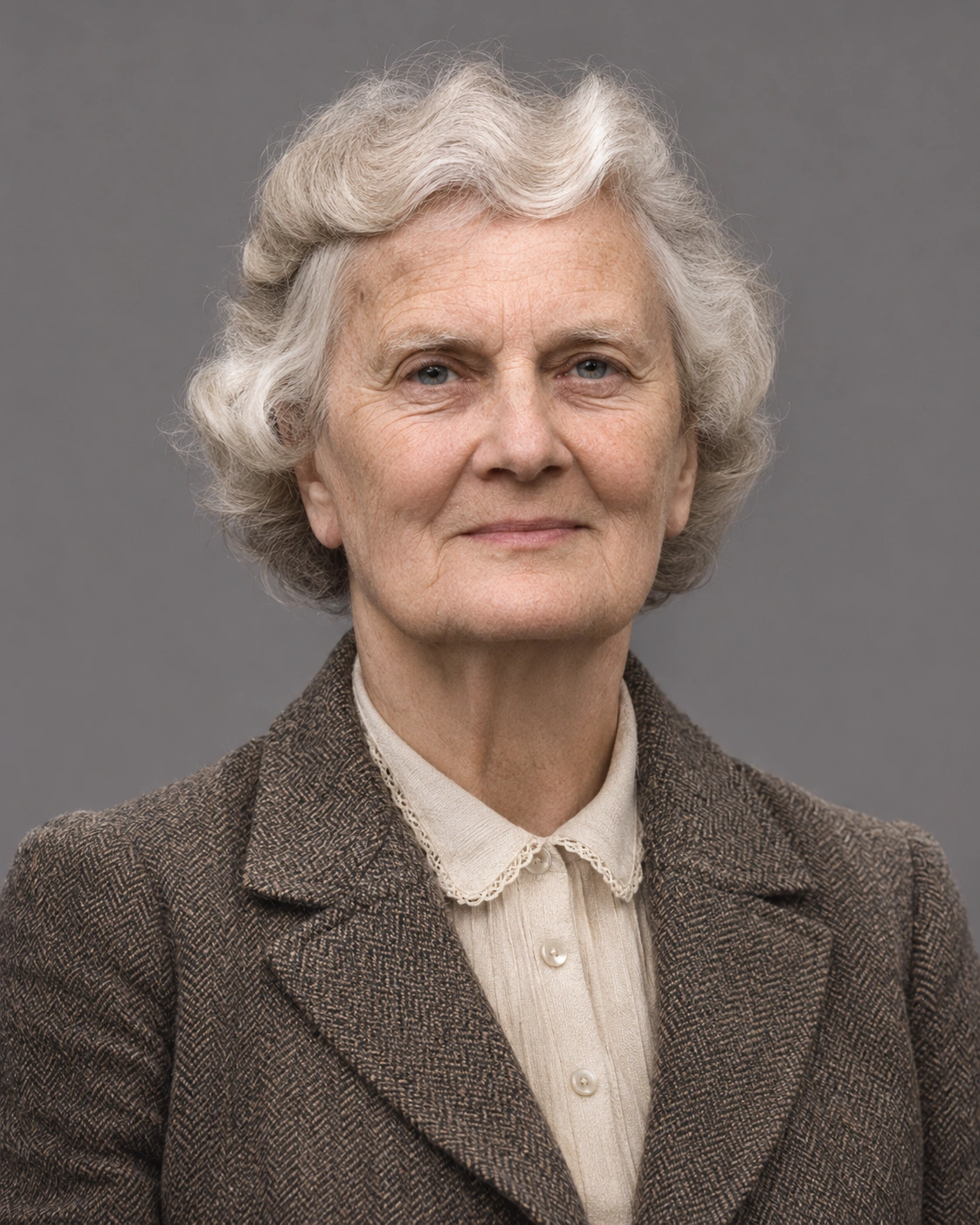
The college's founding President helped shape its buildings and informal gardens.
College connection
The college was later named in her honour and that of the Edwards family.
The story
History & character.
Sixteen students and a new college
New Hall opened in 1954 with sixteen students in a temporary home on Silver Street. It was the third Cambridge college established to educate women. A gift of the Darwin family's property, The Orchard, gave the young foundation the space to move to Castle Hill. The college later took the name Murray Edwards in recognition of its first President, Dame Rosemary Murray, and benefactors Ros and Steve Edwards.
The founding President was a chemistry lecturer as well as an organiser. In the first cramped Silver Street house, Rosemary Murray taught students and undertook practical repairs. She later became the university's first woman Vice-Chancellor. Her early college had no endowment, so fundraising was essential to its move to a permanent home.
The dome and the court
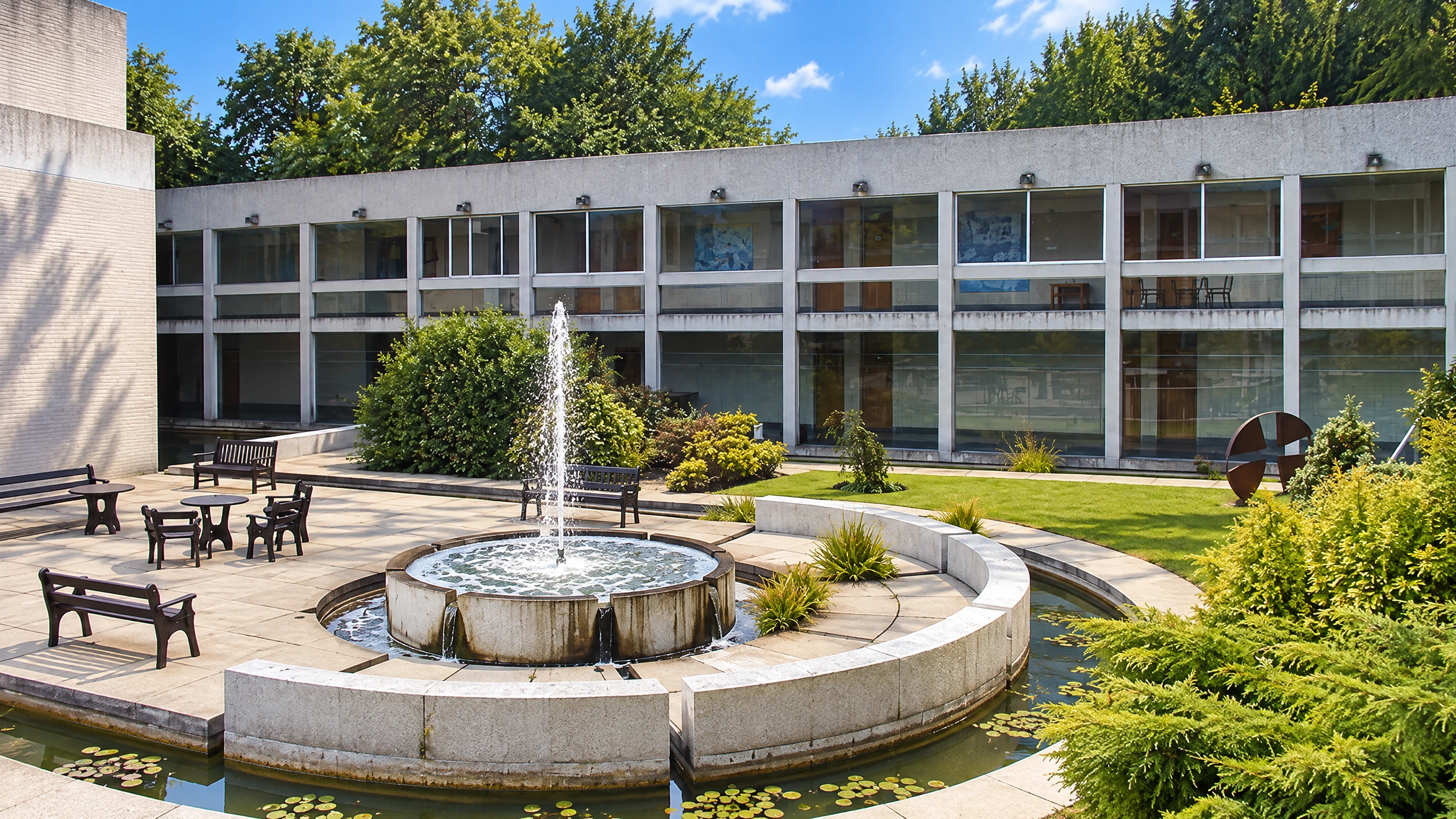
The architects Chamberlin, Powell and Bon also worked on London's Barbican and Golden Lane estates. At Murray Edwards they arranged the principal rooms around a sunken Fountain Court, with accommodation extending outwards and a long walkway joining the college together. The original buildings and court are Grade II* listed.
The dome is the most recognisable part of their design. Its roof is formed from overlapping precast concrete petals with glass between them; slender columns support the structure. Inside is the college dining hall, while the barrel-vaulted library forms another distinctive part of the original scheme. The buildings are a reminder that Cambridge's architectural history extends well beyond its medieval courts.
A collection with a purpose
The Women's Art Collection began in the late 1980s with Mary Kelly's Extase. Today it includes more than 600 works by over 300 artists, including Barbara Hepworth, Paula Rego, Lubaina Himid, Faith Ringgold, Tracey Emin and Cindy Sherman. Its founders set out to address the underrepresentation of women artists in museums and galleries. Paintings and sculptures are encountered in walkways, rooms and gardens as well as in exhibition spaces.
The collection grew through collaboration between artists, Fellows and curators. Mary Kelly had been artist in residence with New Hall and Kettle's Yard before Extase entered the collection. The works range across the twentieth century and into the present, so the college offers encounters with different generations of artists as well as changing exhibitions.
A call for donations brought the collection together through relationships among women artists. Maud Sulter encouraged Lubaina Himid to contribute, and the collection's first major exhibition opened in 1992 with 84 works by 69 artists. The collection continues to grow, with changing exhibitions alongside works displayed in everyday college spaces.
The Orchard and its gardens
The Orchard was part-owned by Norah Barlow, Charles Darwin's granddaughter and a keen plantswoman. Mature trees and shrubs survived from the old garden when the college arrived. Rosemary Murray planned an informal setting for the new buildings; the border beside the library is now the Rosemary Murray Garden.
Look closer
Highlights and hidden details.
The Women's Art Collection
Works by women artists appear throughout the college, from its walkways and public rooms to the gardens. The collection includes artists such as Paula Rego, Lubaina Himid and Barbara Hepworth.
Fountain Court and the Dome
The white concrete dome shelters the dining hall above Fountain Court. Its overlapping roof sections are separated by glass, an inventive detail of the college's 1960s design.
The Rosemary Murray Garden
The first President helped shape the college's informal gardens. The border beside the library now bears her name, while older trees and shrubs recall The Orchard.
Details to look for.
Columns that drain the roof
The dome's slender steel columns do more than support the dining hall roof: they also carry rainwater away from it.
An artist in residence
Mary Kelly spent a year as artist in residence at New Hall and Kettle's Yard in 1985–86. Her work Extase became the first acquisition of the Women's Art Collection.
Make it work
Plan your visit.
The Women's Art Collection is free and open daily from 10am to 6pm. Works are displayed throughout the college and its gardens, alongside changing exhibitions. Pick up information from the Porters' Lodge on arrival.
Visit your way
Access and family planning.
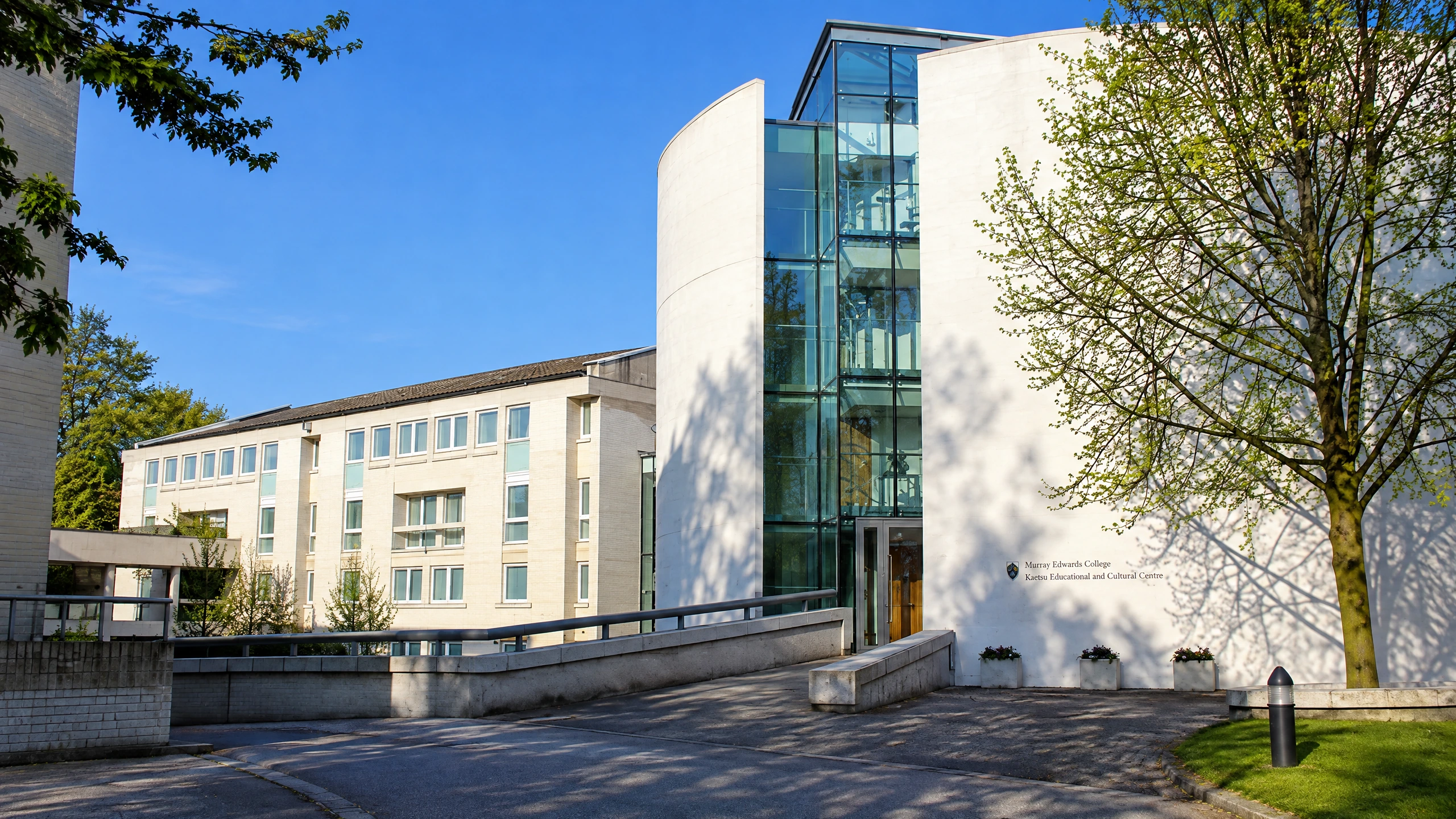
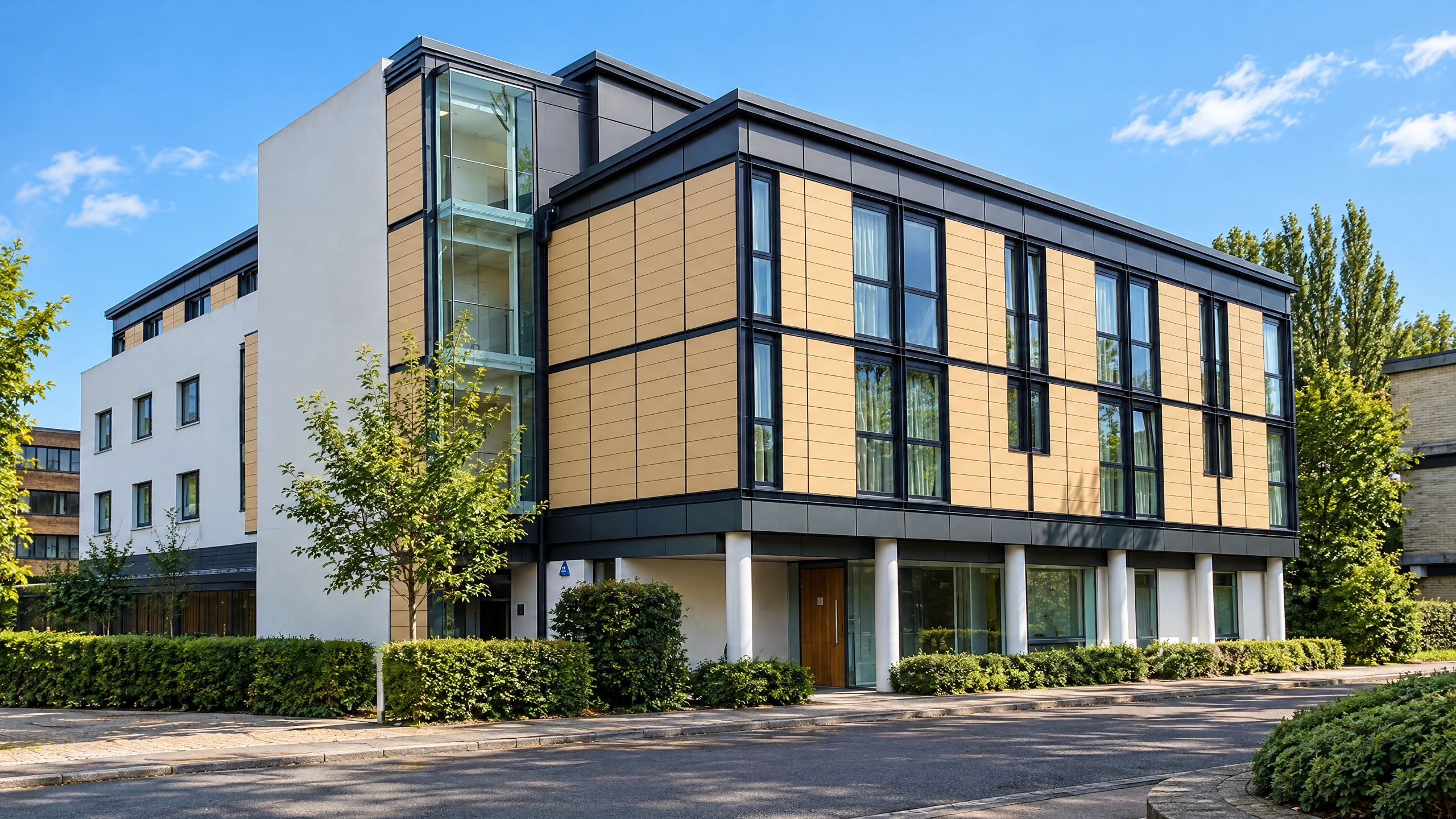
The main entrance has a ramp. The Women's Art Collection is spread across three floors, linked by lifts as well as stairs. The exhibition-space doors are manual; benches and folding stools are available in the exhibition area.
There is an accessible toilet on the ground floor. The college's access guide also describes the lift route to the lower-ground-floor Art Café and details of parking and drop-off.
Self-guided walk
Explore beyond the venue.
A practical, step-by-step route connecting this experience with more of Cambridge.Start at the Porters' Lodge
Collect the collection's guide at the lodge and follow the ramp towards the glass doors. The guide identifies the public areas and gives context for works on display.
The main walkway and Fountain Court
The walkway overlooks the sunken court and carries works from the collection. Continue to Lower Fountain Court for the exhibition area; displays can change.
The Dome
The domed dining hall displays works from the collection and forms part of the self-guided tour. Stairs and a lift connect it to the walkway.
See it
In pictures.
10 views, full screen. Tap any one to open the viewer.Around here
Make more of the area.
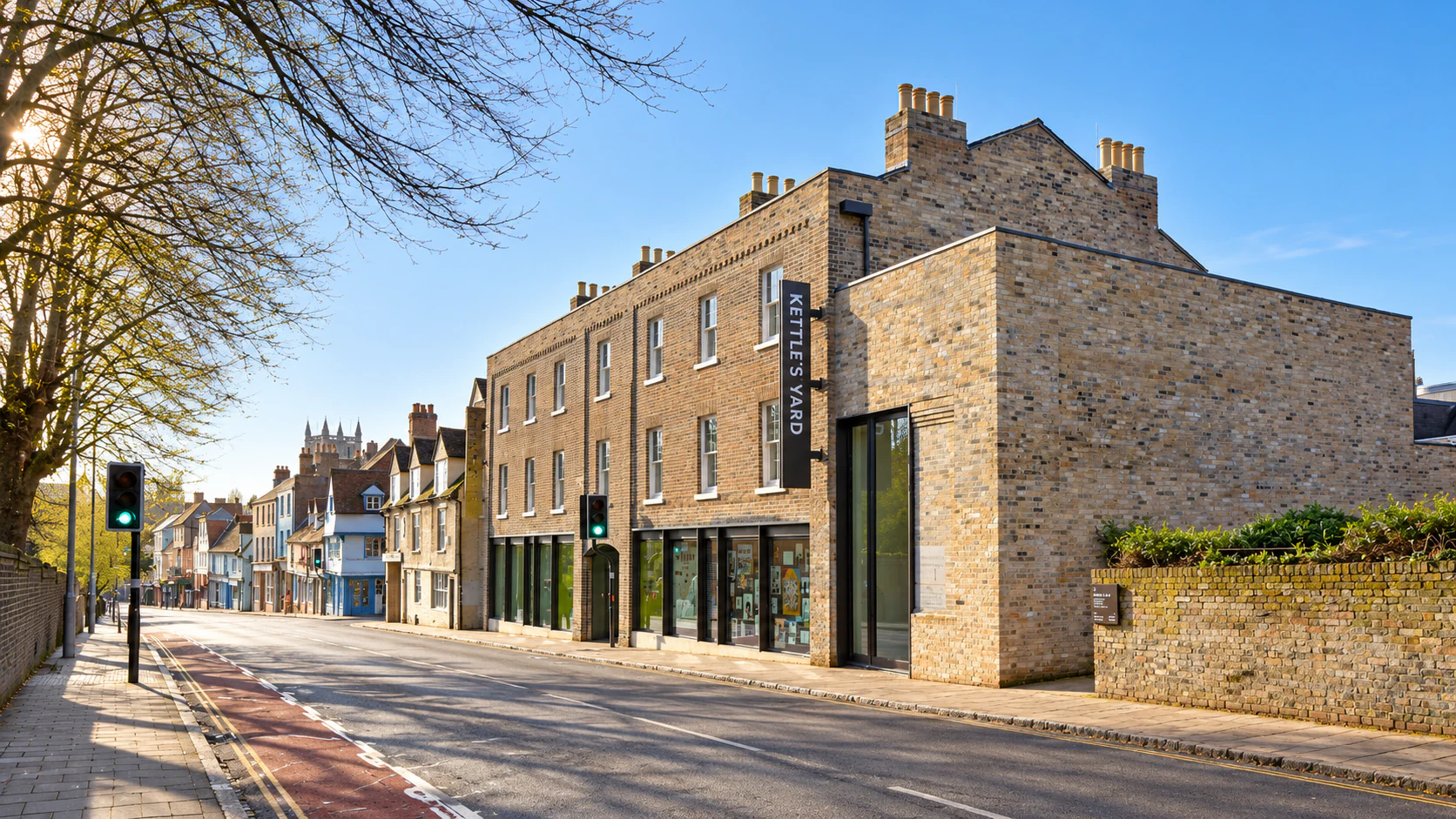
The local-area map also marks Kettle's Yard, a house of modern art and galleries near Castle Street. The historic house is not fully wheelchair accessible.
Good to know
Questions, answered.
Why was Murray Edwards College in Cambridge called New Hall?
Murray Edwards College in Cambridge opened as New Hall in 1954. Its later name honours founding President Dame Rosemary Murray and benefactors Ros and Steve Edwards.
Who was Rosemary Murray?
A chemist and the founding President of New Hall, she helped establish its permanent home. She later became the University of Cambridge’s first woman Vice-Chancellor.
What is the Women’s Art Collection at Murray Edwards College in Cambridge?
The Women’s Art Collection at Murray Edwards College in Cambridge presents work by women artists throughout the college and in exhibitions. It includes works by Barbara Hepworth, Paula Rego, Lubaina Himid and Tracey Emin.
Can anyone visit the Women’s Art Collection?
Yes. The collection is free and open daily from 10am to 6pm.
How did the Women’s Art Collection at Murray Edwards College in Cambridge begin?
The Women’s Art Collection at Murray Edwards College in Cambridge grew from the late 1980s, when Mary Kelly’s Extase entered New Hall’s collection. A call for donations and collaboration with artists helped it expand; its first major exhibition opened in 1992.
What is inside the dome at Murray Edwards College?
The distinctive concrete dome covers the college dining hall. Its roof is made from overlapping precast petals with glass between them.
Who designed Murray Edwards College?
Chamberlin, Powell and Bon designed the original buildings and Fountain Court. The architects also worked on London’s Barbican and Golden Lane estates; the college’s original buildings and court are Grade II* listed.
What is the Darwin family’s connection to Murray Edwards College in Cambridge?
The Castle Hill site of Murray Edwards College in Cambridge includes The Orchard, given by the Darwin family. Norah Barlow, Charles Darwin’s granddaughter, was a part owner. Some mature planting survives from the earlier garden.
Did Sue Perkins study at Murray Edwards?
Yes. The comedian and presenter studied there when the college was called New Hall. She met Nicola Walker and Sarah Phelps as an undergraduate.
Is there step-free access to the Women’s Art Collection?
A ramp reaches the main entrance and lifts connect the floors where the collection is displayed. Some doors, including those to the exhibition space, are manual.
Editorial notes
Sources and further reading.
Sources for this guide
Reviewed 4 November 2026.
- Architecture and gardens: founding, name, architectural design, dome and gardens.
- The Women's Art Collection: history, artists, display and free opening hours.
- Access: entrance, lifts, exhibition seating and toilets.
- Planning a visit: visitor information from the Porters' Lodge.
- Collection history: Mary Kelly's residency.
- Alumnae discussion: Sue Perkins at New Hall.
- History of collecting: donations and 1992 opening.
- Self-guided collection tour: visitor route and access.
- Murray Edwards local-area map: local area and visitor information.
- Fitzwilliam College: local area and visitor information.
- Kettle's Yard visitor information: local area and visitor information.
- College history: Rosemary Murray and the early Silver Street home.
- About Murray Edwards: original foundation and fundraising.
Opening hours, prices, programmes and access arrangements can change. Confirm critical details with the venue.
Keep exploring