West · Founded 1960
Churchill College
Britain's national memorial to Winston Churchill and Cambridge's boldest post-war college, whose Archives Centre holds the papers of both Churchill and Margaret Thatcher.
- Founded
- 1960
- Location
- Storey's Way
- Visiting
- Public opening on selected days
- Institution
- College
01 The experience
What to expect.
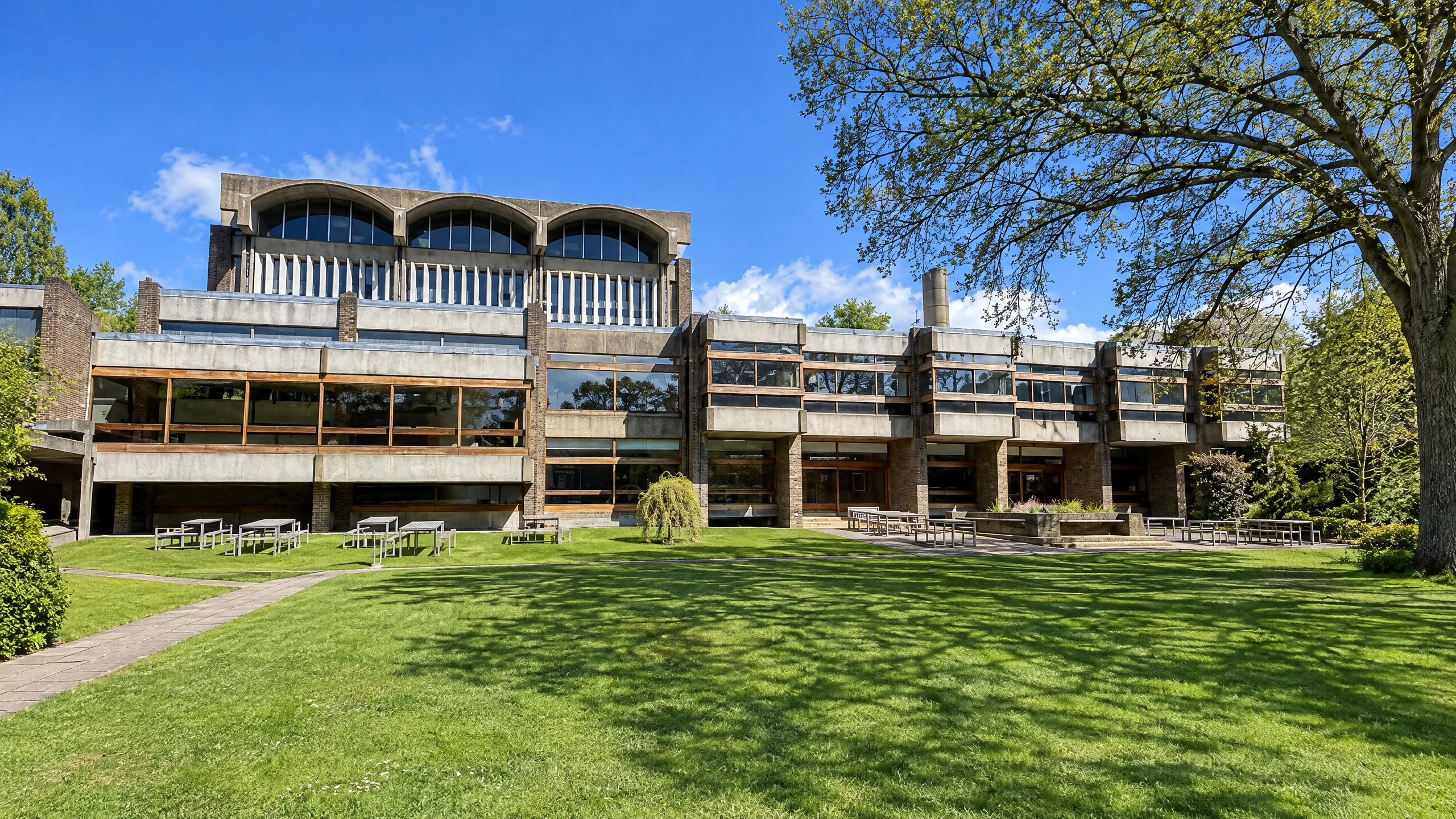
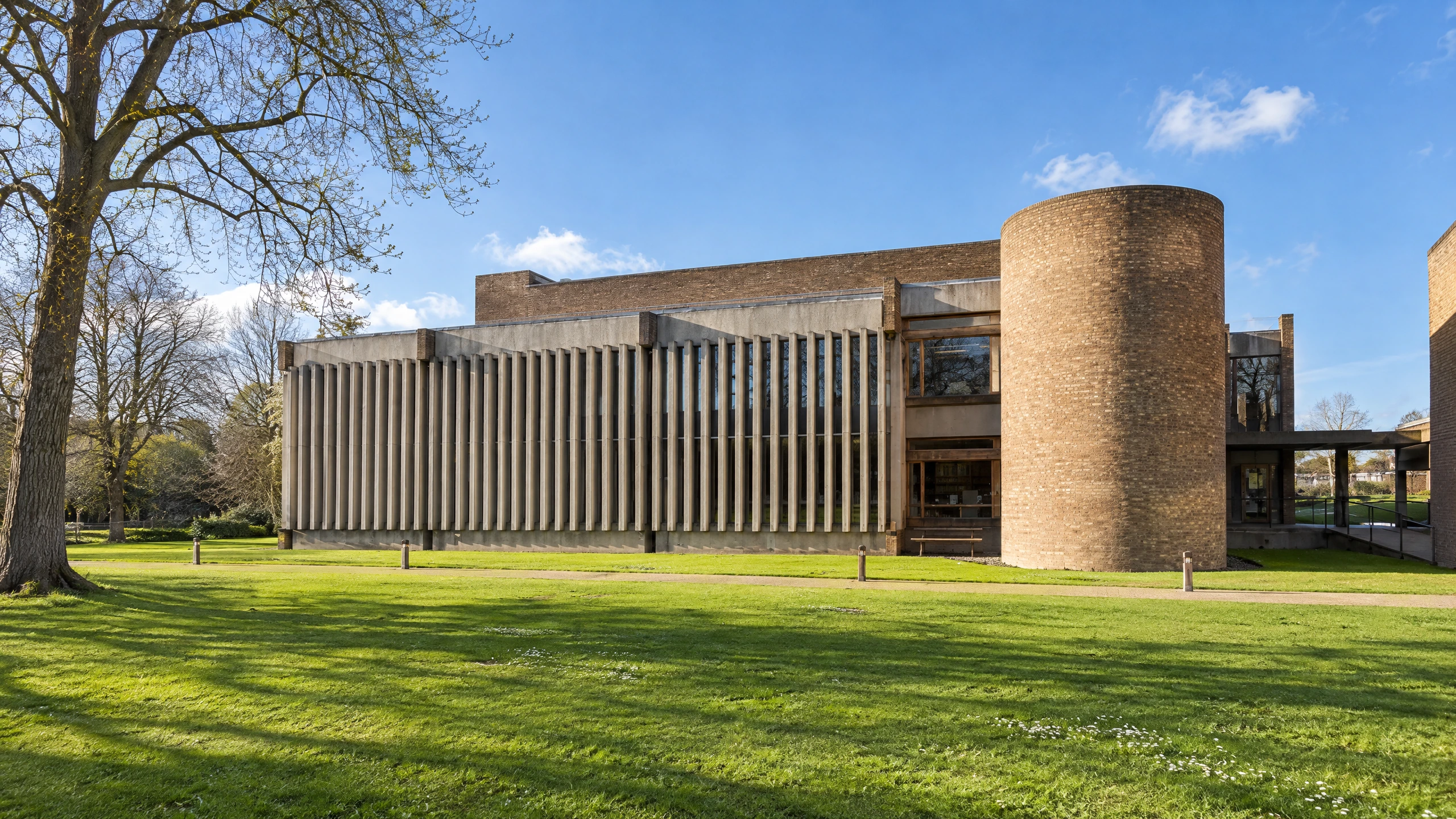
Churchill College is a post-war Cambridge college with a different architectural language from the medieval courts in the centre. Brick buildings and covered walks spread through landscaped grounds off Storey’s Way, with sculpture placed among the courts and lawns. It was founded as the national and Commonwealth memorial to Winston Churchill, with science, engineering and technology central to its early purpose.
The college’s art and architecture reward a close look. Sculptor Geoffrey Clarke designed the aluminium entrance gate, while Bernard Meadows’ Pointing Figure with Child stands in East Court. In the chapel, the stained-glass sequence The Elements was designed by John Piper and made by Patrick Reyntiens. The concrete chimney of the original boiler house is another prominent part of the site.
Churchill himself planted an oak on Jock Colville Lawn in 1959, before the college buildings were complete. The college’s Archives Centre, opened in 1973, houses Churchill’s papers and forms a separate research destination rather than an ordinary walk-in exhibition.
People and ideas
People connected to the college
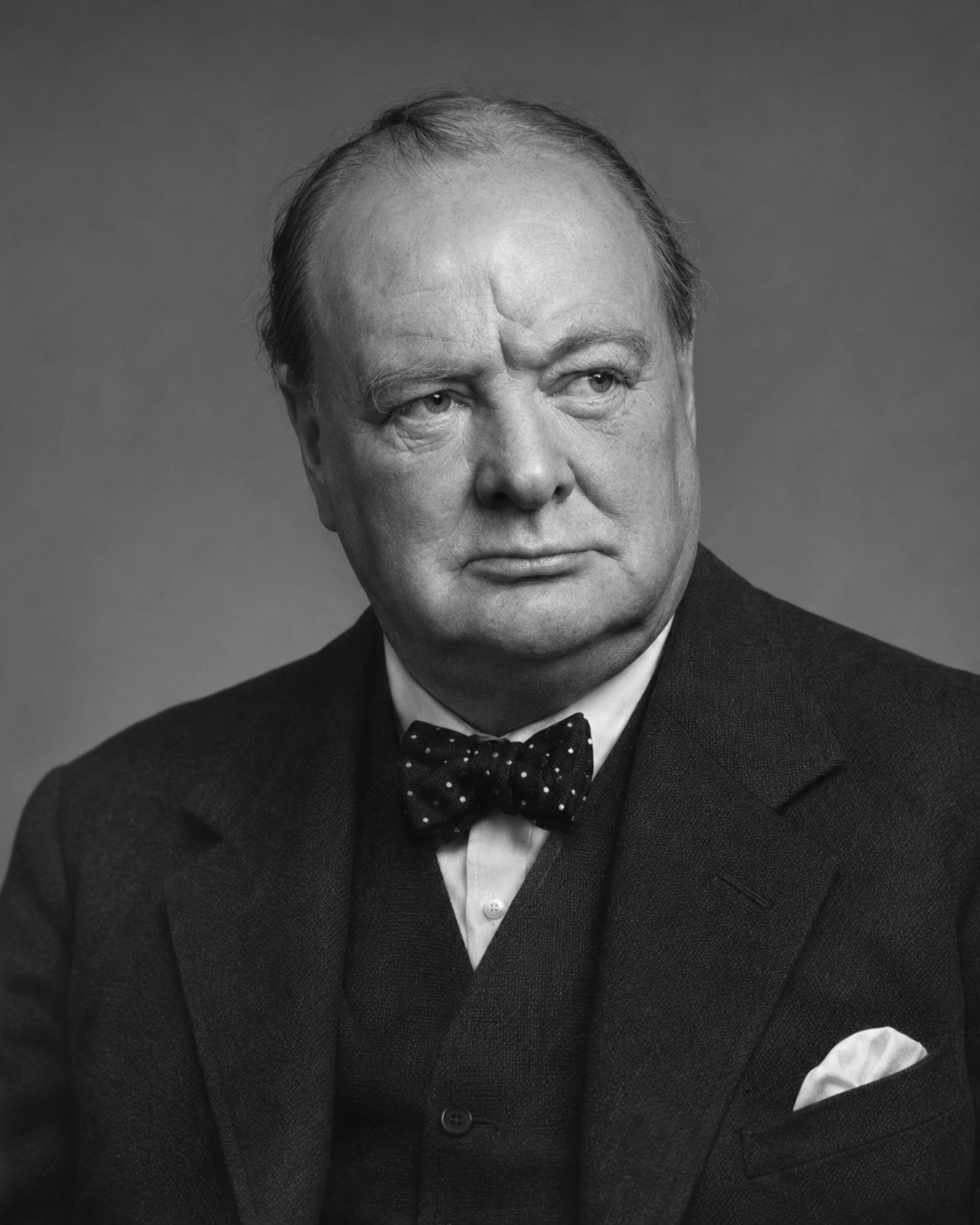
Winston Churchill
The college was founded as the national and Commonwealth memorial to Churchill.
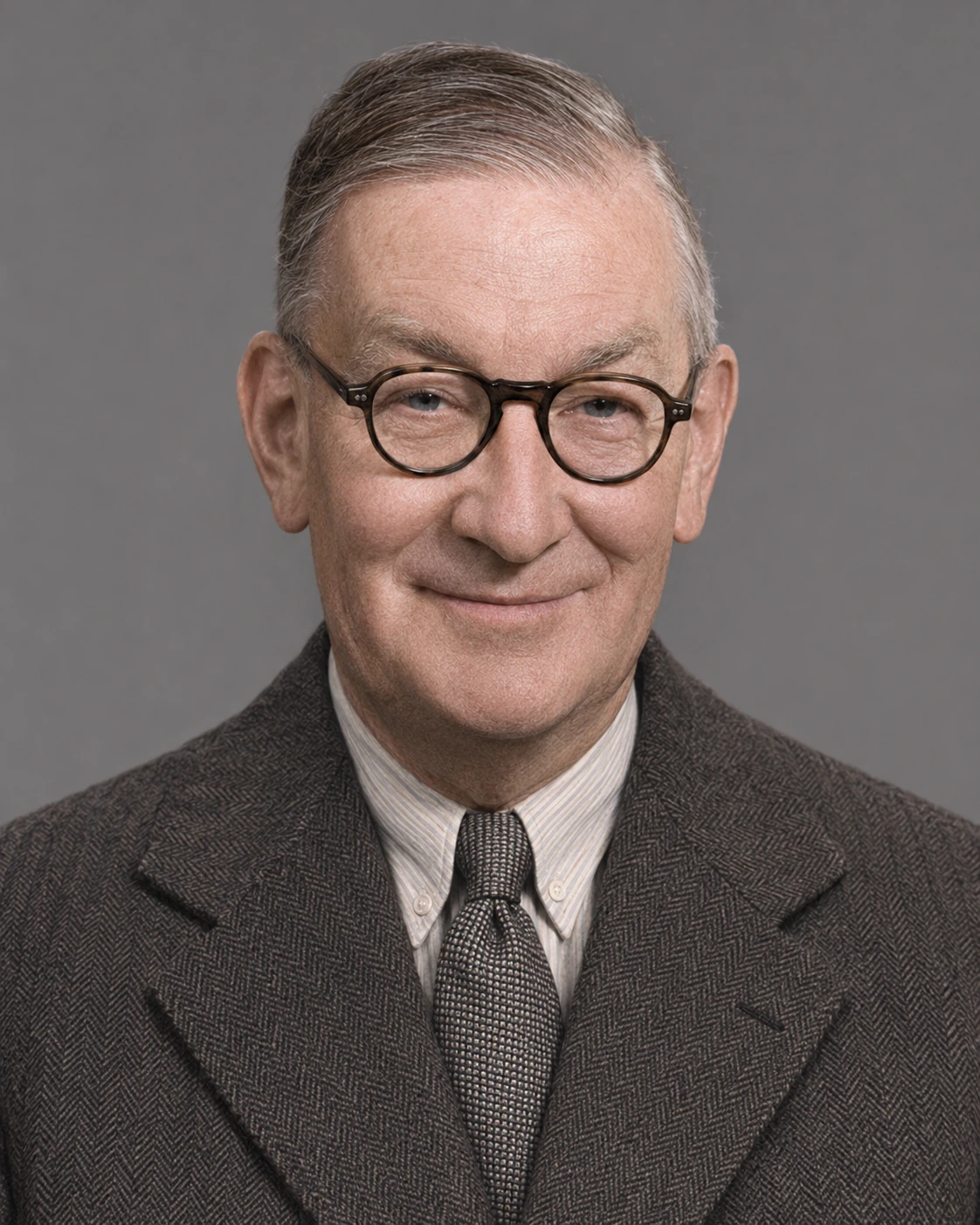
John Cockcroft
The physicist was the college’s first master.

John Piper
Piper designed the chapel’s stained-glass sequence The Elements, made by Patrick Reyntiens.
The story
History & character.
A modern memorial
The college took shape at the end of the 1950s as a memorial to Sir Winston Churchill and a centre with particular strength in science and technology. Its first master was physicist Sir John Cockcroft. College timeline The site, then agricultural land, offered room for a college spread across courts and playing fields instead of a single enclosed quadrangle.
Building and landscape
Richard Sheppard’s architectural scheme used brick, concrete and timber across the site, while landscape architect Sheila Haywood developed a plan for its grounds. Churchill planted an oak and a mulberry at a ceremony in October 1959. The oak remains on Jock Colville Lawn, beside a tulip tree planted later by his son Randolph.
The chapel has a story of debate as well as design. A more prominent chapel in the original scheme was opposed by some founding fellows, including Francis Crick. The eventual freestanding building uses concrete, brick and wood; Piper’s coloured glass brings a different texture to its interior.
The archives
The Archives Centre opened in 1973 to house Churchill’s papers. Its collections connect the college to wider twentieth-century political, scientific and social history. The centre supports research visits by arrangement.
Women at Churchill
In 1969 Churchill became the first formerly all-male Cambridge college to vote to admit women. Its first women students arrived in 1972, alongside the first women admitted to Clare and King’s.
Art in the landscape
Churchill’s interest in art contemporary with its buildings began early. Geoffrey Clarke’s aluminium gate is both sculpture and a practical entrance; its rough surface echoes the college’s concrete architecture. Bernard Meadows’ Pointing Figure with Child stands in East Court. Other major works have appeared on the grounds over time, including sculptures by Barbara Hepworth and loans by Henry Moore.
The art collection also reaches beyond the grounds. The Maisonneuve gift brought early twentieth-century French art to the college, including paintings, works on paper and a bust by sculptor Antoine Bourdelle. The collection is part of college life; public access depends on advertised events and openings.
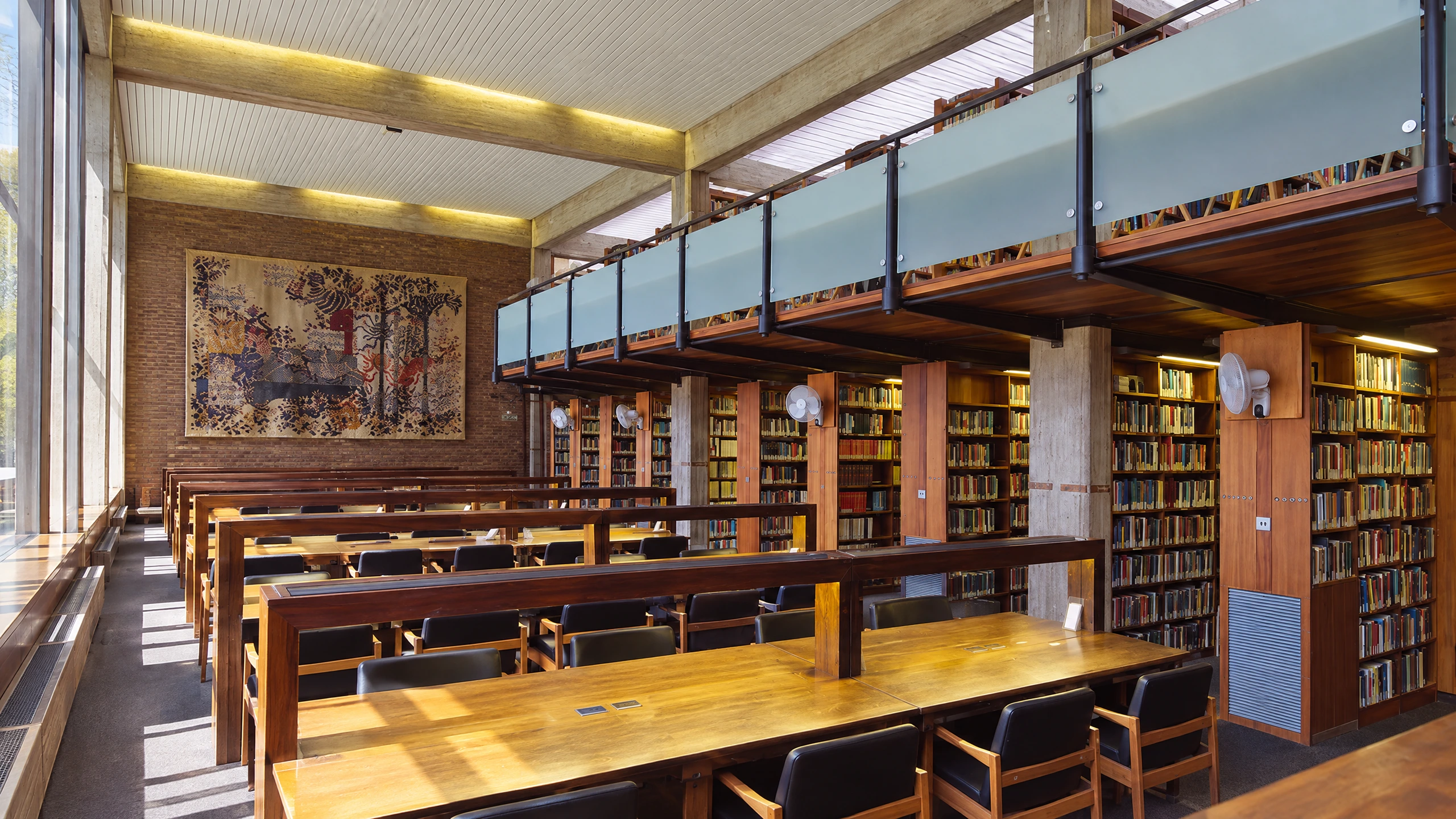
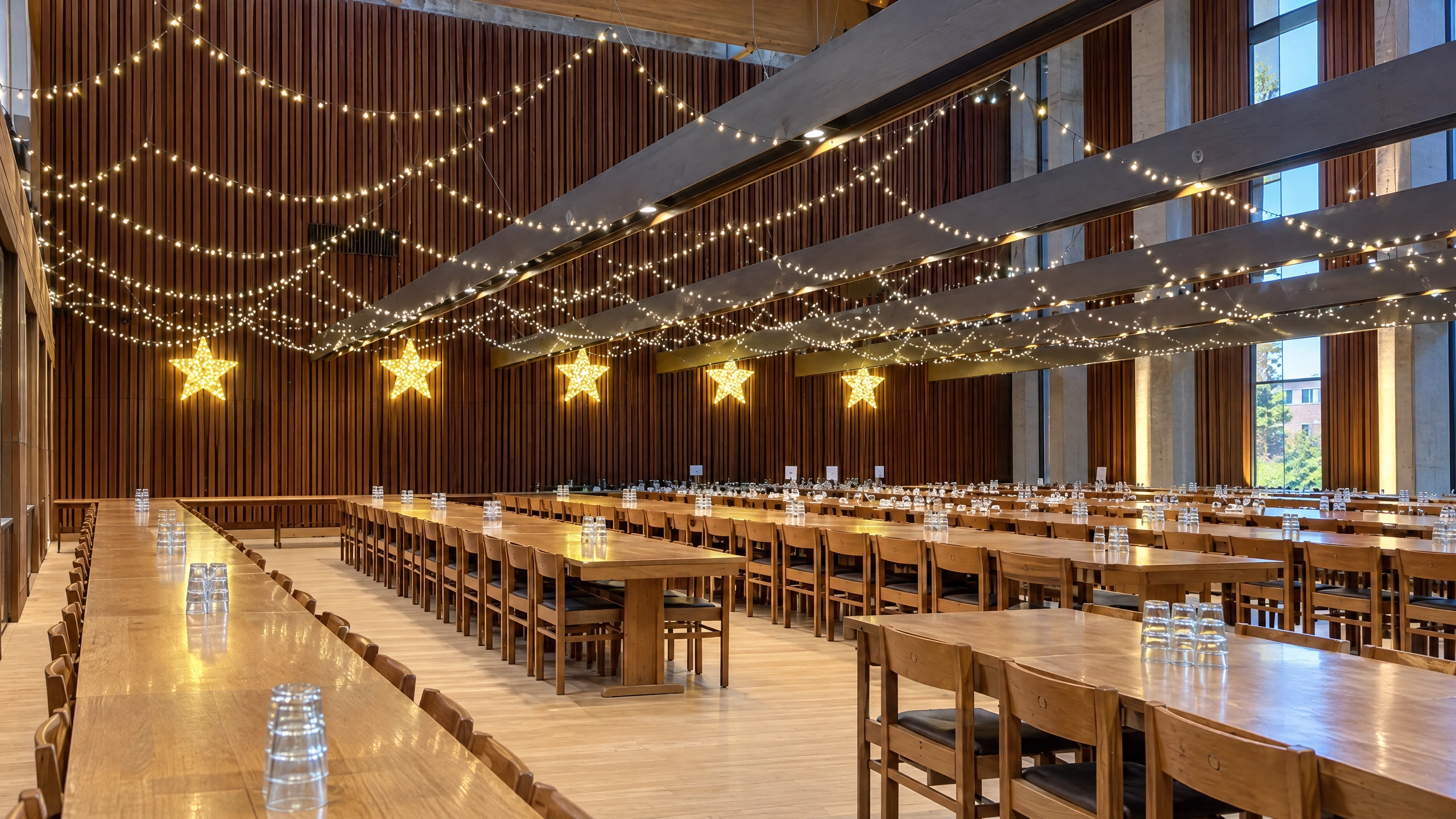
The college’s original furnishings were part of the same post-war design culture. In 1962 furniture designer Robin Day was commissioned to make chairs and sofas for the Senior Common Room, while the building itself brought together spaces for dining, study and social life. These interiors are college spaces rather than a standing public exhibition.
Look closer
What to see.
The landscaped courts
Sheppard’s brick and concrete ranges sit among open lawns and trees planned by landscape architect Sheila Haywood.
The Churchill oak
Winston Churchill planted the oak on Jock Colville Lawn in 1959, before the college opened.
Art around the college
Geoffrey Clarke’s entrance gate and Bernard Meadows’ East Court sculpture are part of the collection.
The chapel
John Piper’s stained-glass sequence, made by Patrick Reyntiens, sits within the freestanding modern chapel.
Make it work
Plan your visit.
Churchill sometimes opens its grounds and sculpture trail to the public; contact the college for dates. Prospective students can visit informally most days from 09:00 to 17:00 after calling the Porters’ Lodge. The college closes to visitors from Easter Sunday until mid-June for examinations, and other closures can occur. Private areas and the libraries are not open to drop-in visitors.
Visit your way
Access and family planning.
The site is generally level, with ramps to most areas including the main entrance. A 700-metre accessible circuit runs through the grounds and gardens; the chapel is more than 600 metres from the main entrance.
The sculpture trail gives visitors several works to look for around the college grounds. Public opening is on selected occasions; the college can advise on dates.
See it
In pictures.
10 views, full screen. Tap any one to open the viewer.Around here
Make more of the area.
Good to know
Questions, answered.
Can the public visit Churchill College, Cambridge?
Churchill College, Cambridge, opens its grounds and sculpture trail to the public on selected occasions. Contact the college about dates or group visits; its 09:00–17:00 informal visiting window applies to prospective students.
Is Churchill College, Cambridge, open during exams?
Churchill College, Cambridge, normally closes to visitors from Easter Sunday until the middle of June for the examination quiet period. Other closures can occur.
How is Churchill College, Cambridge, connected to Winston Churchill?
Churchill College, Cambridge, was founded as the national and Commonwealth memorial to Sir Winston Churchill, with an emphasis on science and technology. Churchill planted an oak in its grounds in 1959.
Can I research Winston Churchill’s papers at Churchill College?
The Churchill Archives Centre holds his papers and welcomes researchers by advance appointment. Researchers register before a first visit and bring photographic ID; the reading-room lift is currently out of action.
What sculptures can visitors see at Churchill College in Cambridge?
Churchill College in Cambridge has Geoffrey Clarke’s aluminium entrance gate and Bernard Meadows’ Pointing Figure with Child in East Court. Public access to the grounds is limited to advertised openings.
Who designed Churchill College Cambridge?
Architect Richard Sheppard designed its post-war buildings, while Sheila Haywood developed the landscape plan. Brick and concrete courts sit among open lawns, trees and playing fields.
What is special about Churchill College Chapel’s stained glass?
Its eight windows form The Elements, designed by artist John Piper and made by Patrick Reyntiens. The freestanding chapel is a college building rather than a guaranteed stop on every public opening.
When did Churchill College admit women?
Churchill voted in 1969 to admit women, becoming the first formerly all-male Cambridge college to do so. Its first women students arrived in 1972.
Who was the first Master of Churchill College Cambridge?
Sir John Cockcroft, the Nobel-winning physicist, was the college’s first Master. He helped shape a new college with a strong interest in science and technology.
Where is Churchill College in Cambridge?
Its entrance is on Storey’s Way, west of the historic centre, in a large landscaped site with playing fields.
Editorial notes
Sources and further reading.
Sources for this guide
- https://archives.chu.cam.ac.uk/online-resources/online-exhibitions/architecture-and-art-of-churchill-college/
- https://www.chu.cam.ac.uk/about/visits/
- https://www.chu.cam.ac.uk/timeline/the-mighty-oak-from-an-acorn-towers/
- https://www.chu.cam.ac.uk/about/governance/equality-diversity-and-inclusion/
- https://www.chu.cam.ac.uk/about/visits/accessibility/
- https://www.chu.cam.ac.uk/wp-content/uploads/2023/01/Churchill-Review-2022.pdf
- https://www.fitz.cam.ac.uk/sites/default/files/2024-10/Building%20Fitzwilliam%20College%201963-2013.pdf
- https://www.murrayedwards.cam.ac.uk/womens-art-collection/about
- https://www.chu.cam.ac.uk/news-and-events/the-lorna-montgomerie/
Reviewed 4 November 2026.
Further reading and sources
Opening hours, prices, programmes and access arrangements can change. Confirm critical details with the venue.
Keep exploring