West · Founded 1964
Darwin College
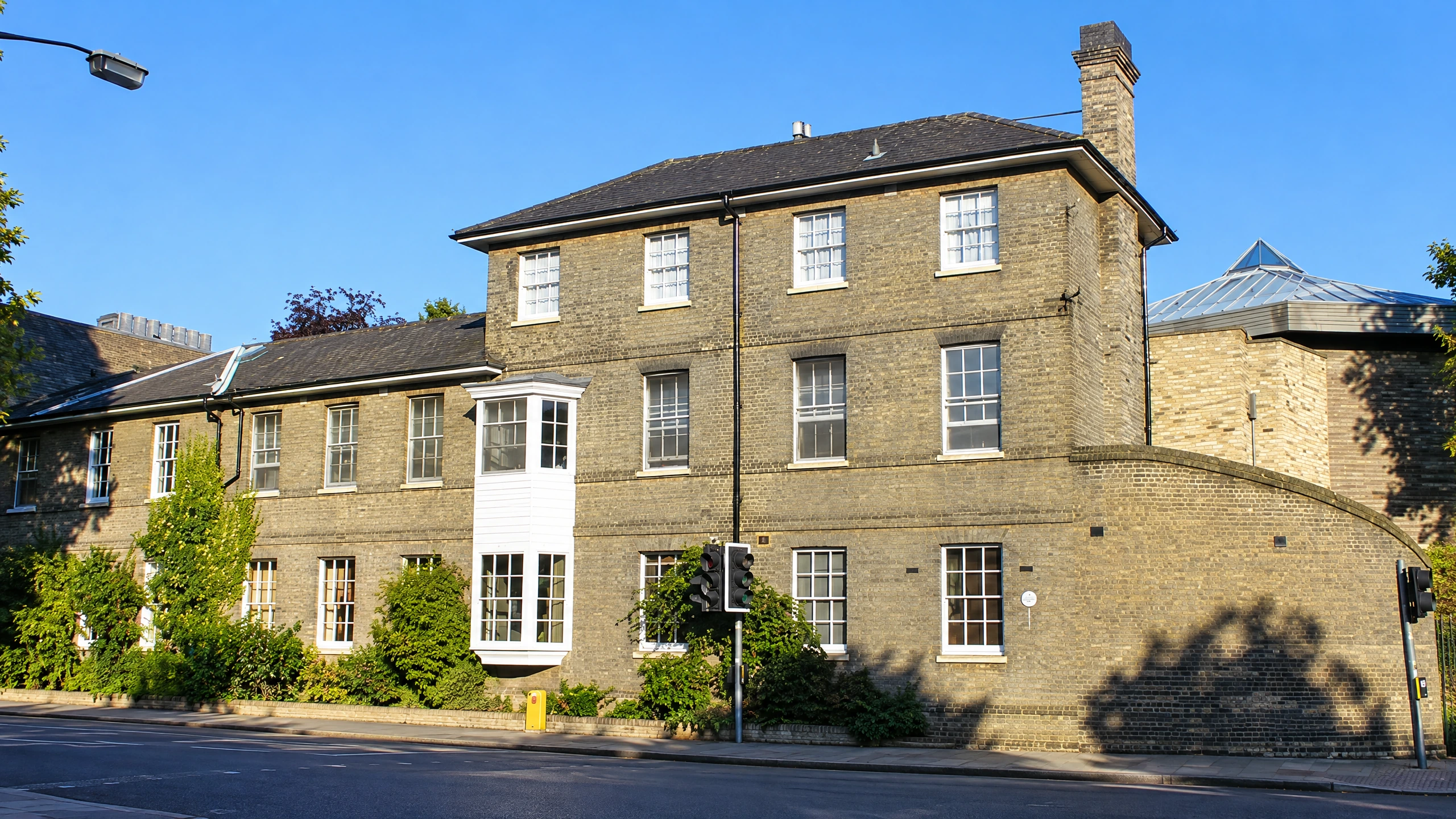
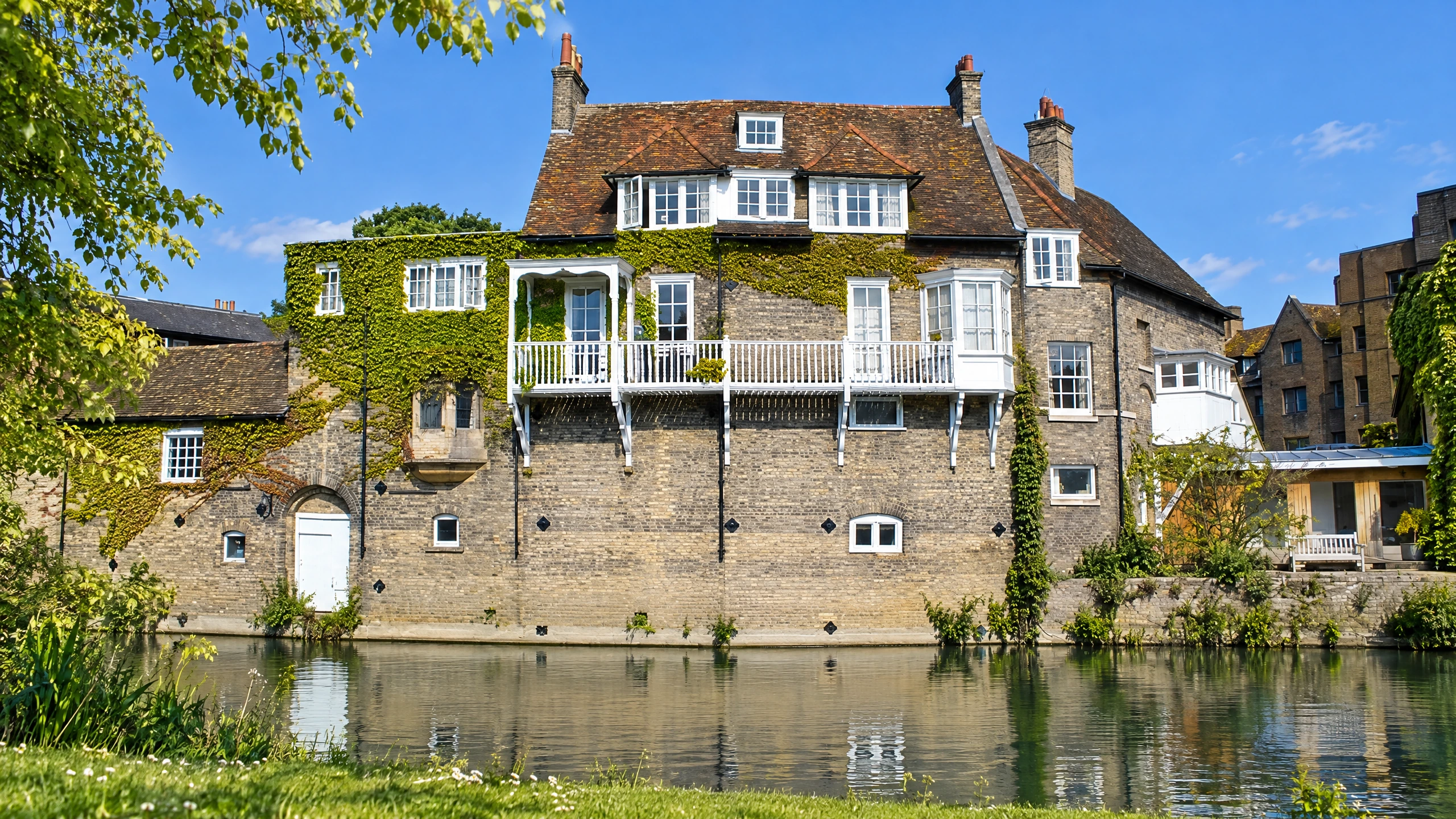
Cambridge's first graduate college occupies the Darwin family's old riverside home, its gardens spread across two islands in the river beside the Mill Pond.
- Founded
- 1964
- Location
- Silver Street
- Visiting
- Gardens generally open
- Institution
- College
01 The experience
What to expect.
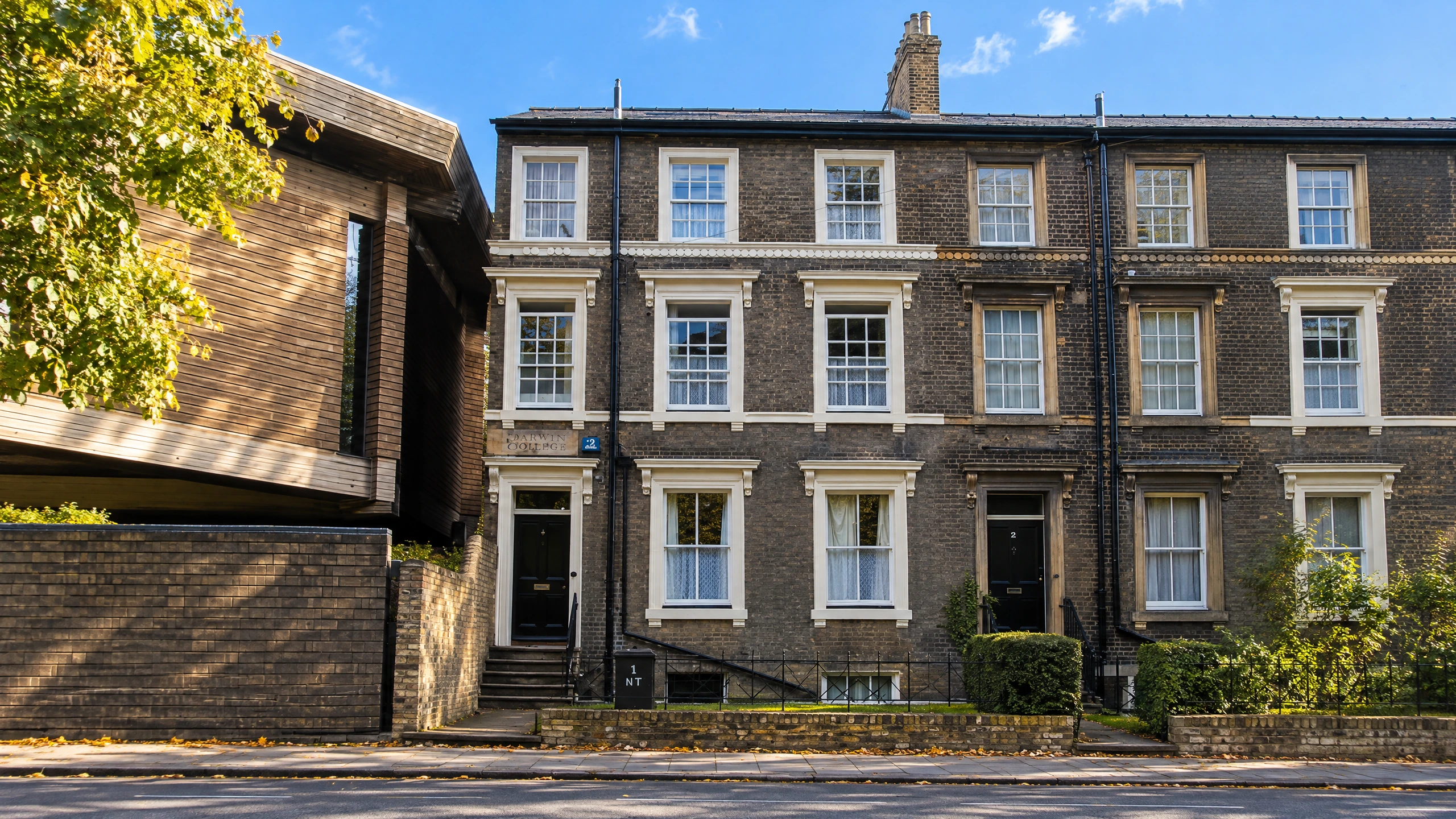
Darwin College follows the River Cam beside the Mill Pond, its buildings and gardens arranged along the water rather than around a single formal court. Two small islands, linked by bridges, are part of the setting. The historic Newnham Grange and the weatherboarded Old Granary belonged to the Darwin family before the graduate college made its home here.
The college was founded in 1964 as Cambridge’s first graduate-only college and admitted women and men from the beginning. Its riverside character comes from the combination of older domestic buildings with later college architecture. The modern dining hall and Rayne Building were designed to sit alongside the older houses.
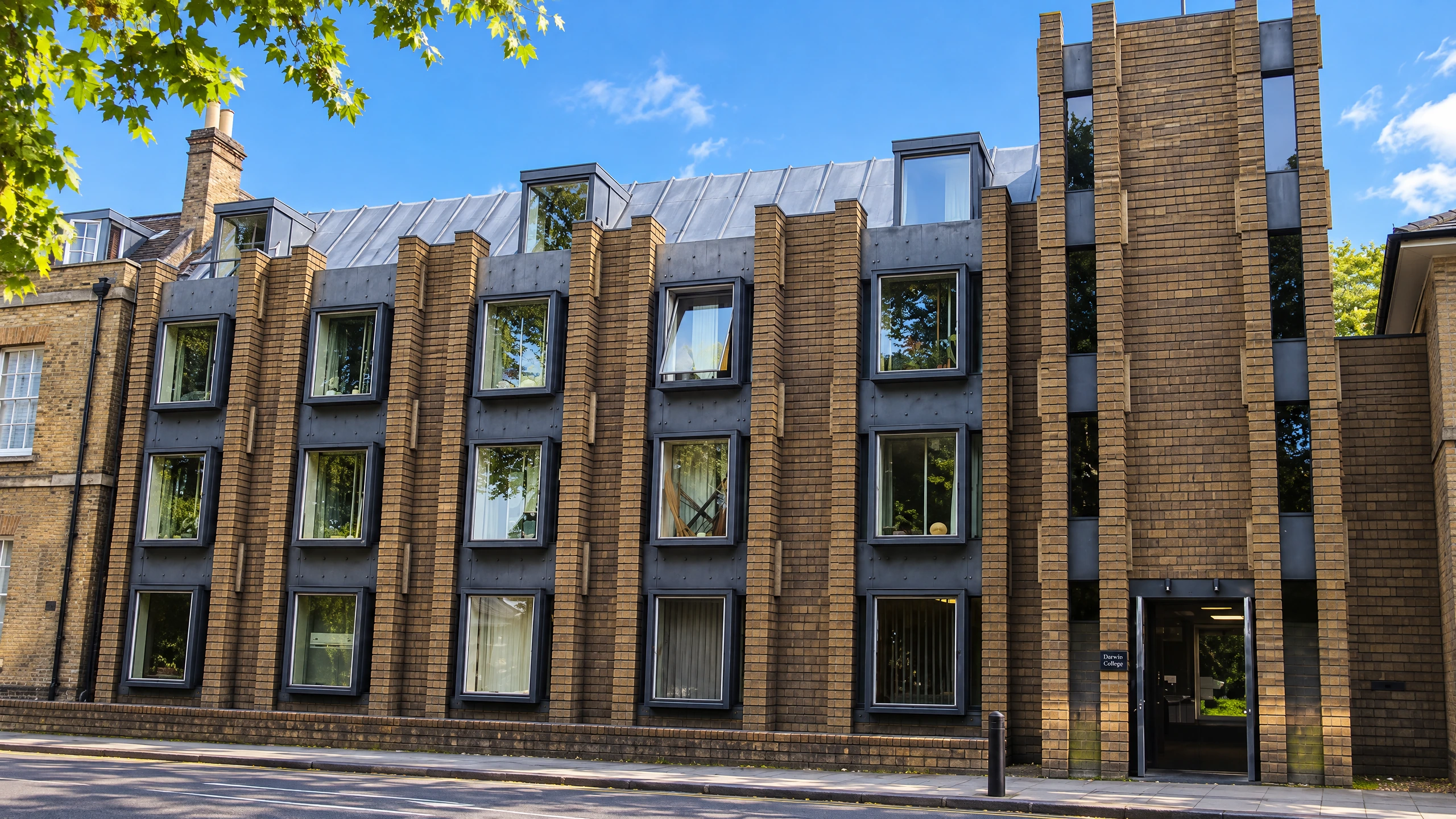
The college’s newer John Bradfield Court creates an entrance closer to the city, adding another layer to an estate shaped by houses, research spaces and the river landscape.
People and ideas
Famous former students
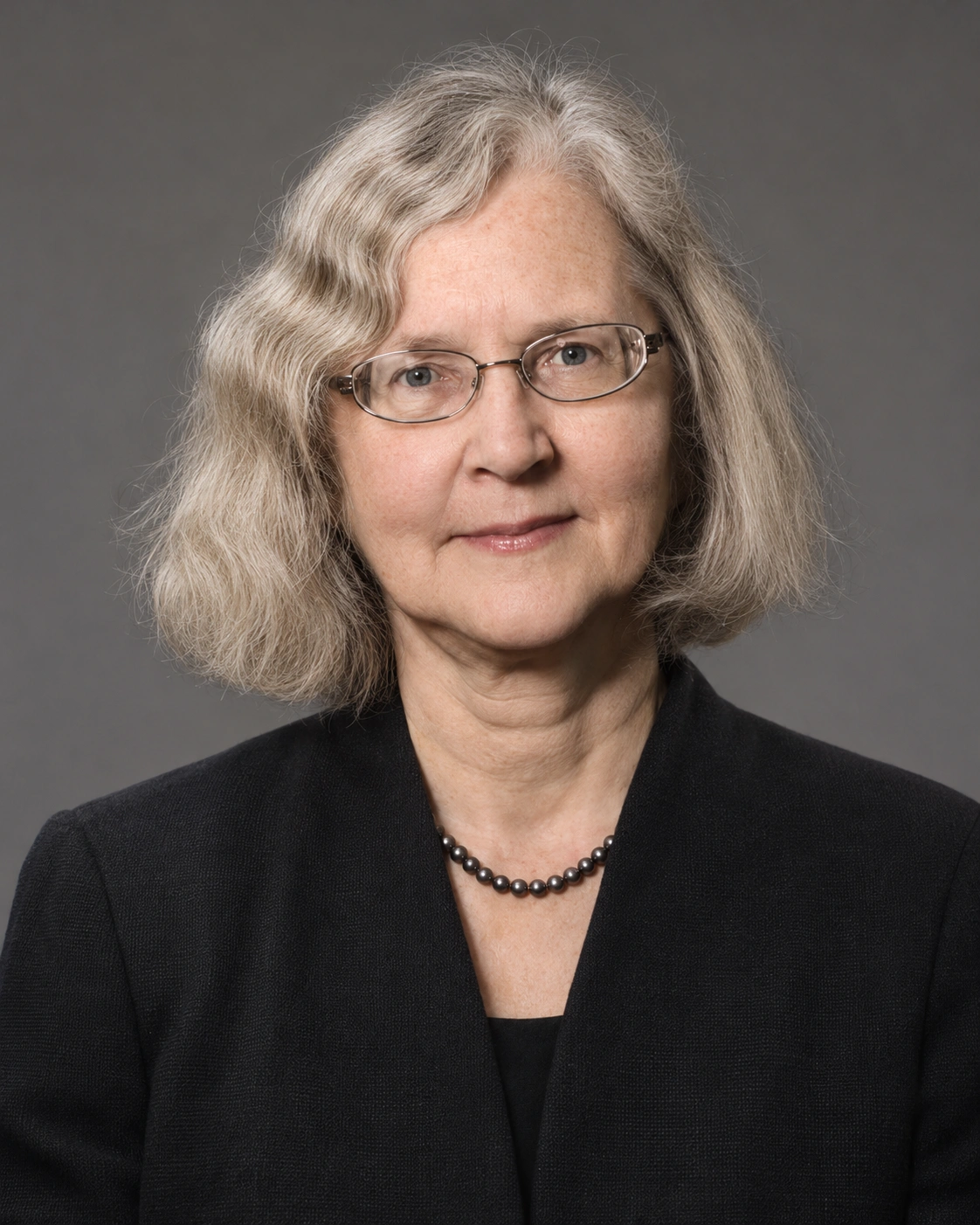
Elizabeth Blackburn
1975
Her work on telomeres and telomerase earned a share of the 2009 Nobel Prize in Physiology or Medicine.
College connection
Completed her PhD at Darwin in 1975.
Fellows, founders and other connections
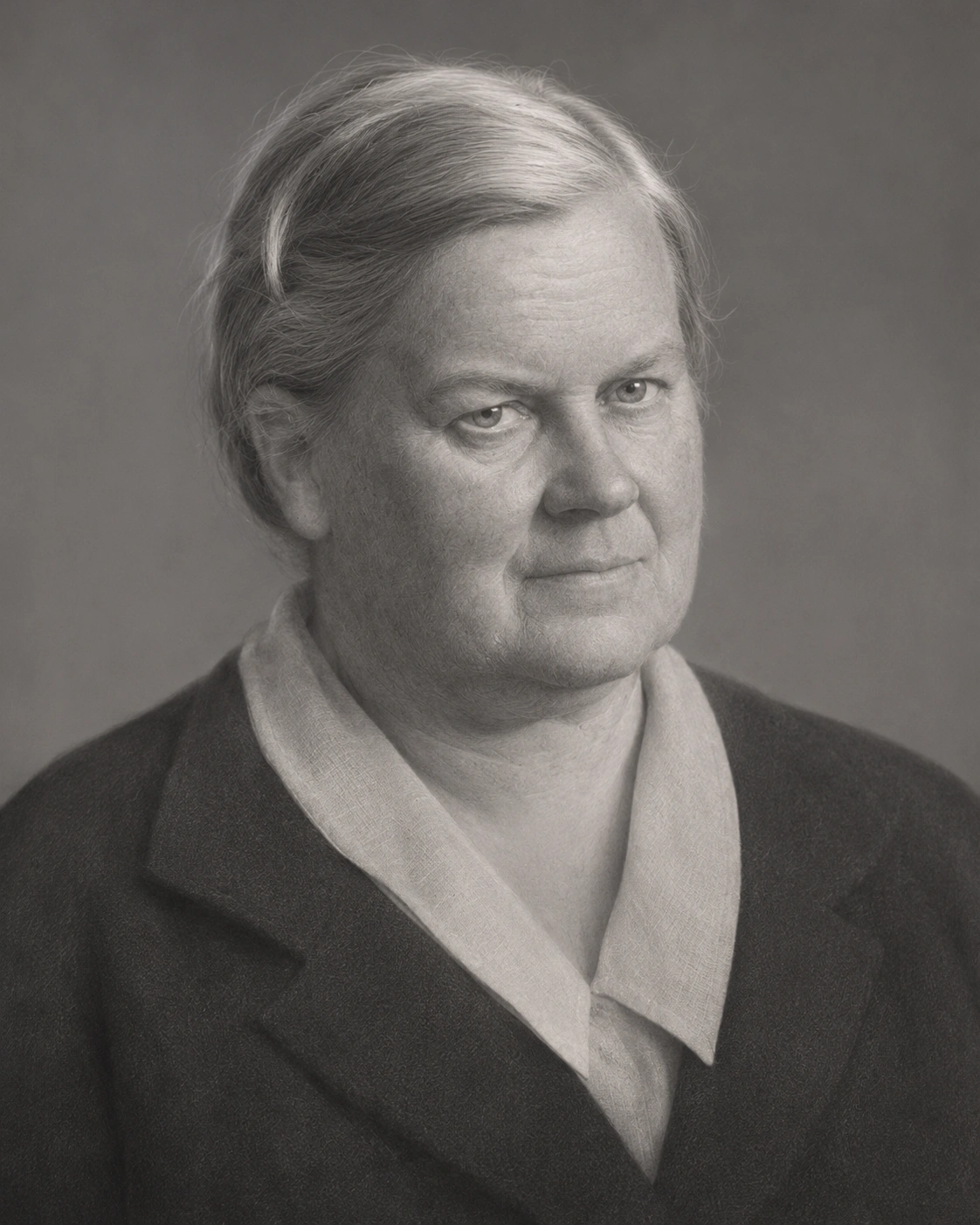
Gwen Raverat
The artist and writer grew up at Newnham Grange and recalled her childhood in Period Piece.
The story
History & character.
A house by the river
In 1885 George Darwin, son of the naturalist Charles Darwin, acquired Newnham Grange and the Old Granary beside the Cam. His daughter Gwen Raverat grew up here and later recalled her Cambridge childhood in Period Piece. Raverat was an artist as well as a writer, and the college holds examples of her work, including views around Newnham Grange. She returned to live in the Old Granary in later life.
A college for researchers
Trinity, St John’s and Gonville & Caius founded Darwin in 1964 as a home for research students. It was Cambridge’s first postgraduate-only college and admitted women and men from the start. Its site connected the new institution with the Darwin family, whose descendants had lived at Newnham Grange until 1963.
Elizabeth Blackburn completed her PhD at Darwin in 1975, having lived in a room in the Old Granary overlooking Mill Pond. Blackburn at Darwin She later shared the 2009 Nobel Prize in Physiology or Medicine for work on how telomeres and the enzyme telomerase protect chromosomes.
Houses become a college
The estate was assembled over time. Newnham Grange and the Old Granary had belonged to George Darwin’s family; the nearby Hermitage was a separate house that briefly housed New Hall, now Murray Edwards College, in the 1950s. Darwin acquired the Hermitage in 1966. The college gardens were made by joining the riverside plots behind these houses, and the Newnham Terrace houses were gradually added as the community grew.
A landscape assembled from gardens
Two islands form part of the riverside garden, reached by a bridge beside Newnham Grange. They extend the college grounds into the Cam, near the open water of the Mill Pond.
A public lecture tradition
Darwin’s annual public lecture series began in 1986. Each year eight speakers approach a shared theme from different disciplines, bringing the college’s research culture to a wider audience. The lectures take place at the university’s Lady Mitchell Hall rather than in the riverside gardens.
New architecture on the river
The post-war Rayne Building links Newnham Grange and the Hermitage. It and the dining hall were designed by Howell, Killick, Partridge and Amis with the older houses and riverside landscape in mind. Both are now Grade II listed. More recently, John Bradfield Court added an entrance and multipurpose space close to the city side of the college.
Look closer
What to see.
Newnham Grange
The former Darwin family home is part of the college’s historic riverside range.
Old Granary
The listed weatherboarded building was part of the family’s home and grounds.
River islands
Small bridges connect the garden spaces on the Cam, close to Mill Pond.
Modern college buildings
The dining hall and Rayne Building complement the older houses; John Bradfield Court forms a newer entrance.
Make it work
Plan your visit.
Members of the public are generally welcome in the gardens from 09:00 to 18:00. Picnics and animals are not permitted; contact the college in advance about assistance dogs. Commercial tours and tourist groups cannot be accommodated; academic, school and similar groups need prior arrangements. The college may close without notice.
Visit your way
Access and family planning.
The main front entrance has four steps and a handrail. There is level access to the gardens through a gate on Newnham Road and a side entrance on Silver Street. A wheelchair lift serves the garden entrance to the main building. Contact the college in advance about assistance dogs.
The gardens and small river bridges offer an outdoor visit beside Mill Pond. Picnics are not permitted, and the college cannot accommodate tourist groups.
See it
In pictures.
10 views, full screen. Tap any one to open the viewer.Around here
Make more of the area.
Good to know
Questions, answered.
Can the public visit Darwin College Cambridge gardens?
Members of the public are generally welcome in the gardens from 09:00 to 18:00, although the college may close without notice. Commercial tours and tourist groups cannot be accommodated.
Can I picnic in Darwin College gardens?
No. Picnics and animals are not permitted in the gardens. Visitors who need to bring an assistance dog should contact the college in advance.
Is Darwin College in Cambridge named after Charles Darwin?
Darwin College in Cambridge takes its name from the Darwin family, who lived at Newnham Grange beside the Cam. Charles Darwin’s son George acquired the house in 1885.
Did Charles Darwin study at Darwin College Cambridge?
No. The naturalist studied at Christ’s College in the nineteenth century; Darwin College was founded in 1964 and occupies a former home of his family.
Is Darwin College Cambridge for postgraduates only?
Yes. Founded in 1964, Darwin was Cambridge’s first postgraduate-only college and admitted women and men from the beginning.
Which Cambridge college did Nobel laureate Elizabeth Blackburn attend?
Elizabeth Blackburn completed her PhD at Darwin College in 1975. She later shared the 2009 Nobel Prize in Physiology or Medicine for work on telomeres and telomerase.
What are the islands at Darwin College Cambridge?
Two small islands form part of the college’s riverside garden, reached by a bridge near Newnham Grange. They sit close to the Mill Pond on the Cam.
Who was Gwen Raverat and how is she connected to Darwin College?
The artist and writer grew up at Newnham Grange, later part of Darwin College, and recalled her Cambridge childhood in Period Piece. She was Charles Darwin’s granddaughter.
Can tourist groups visit the gardens at Darwin College in Cambridge?
Darwin College in Cambridge cannot accommodate commercial tours or tourist groups. Academic, school and similar groups need to arrange access ahead.
Are the Darwin College lectures open to the public?
Yes. The annual public lecture series brings speakers from different disciplines together around a theme. The lectures take place at the university’s Lady Mitchell Hall.
Editorial notes
Sources and further reading.
Sources for this guide
- https://www.darwin.cam.ac.uk/study/accommodation/on-site/
- https://www.darwin.cam.ac.uk/wp-content/uploads/2024/11/Darwin-College-Fellows-Handbook-compressed.pdf
- https://www.darwin.cam.ac.uk/news/rayne/
- https://www.darwin.cam.ac.uk/news/riba-award-for-john-bradfield-court/
- https://www.darwin.cam.ac.uk/members/archive-collections/
- https://www.darwin.cam.ac.uk/contact/
- https://www.darwin.cam.ac.uk/members/accessibility/
- https://www.darwin.cam.ac.uk/news/painting-by-gwen-raverat-donated-to-the-college/
- https://history.queens.cam.ac.uk/college/mathematical-bridge
- https://www.corpus.cam.ac.uk/parker-library
- https://www.darwin.cam.ac.uk/wp-content/uploads/2023/09/Darwinian-Nov-2018-online.pdf
- https://www.darwin.cam.ac.uk/wp-content/uploads/2025/10/Fellows-Handbook-2025-FINAL-1.pdf
Reviewed 4 November 2026.
Further reading and sources
Opening hours, prices, programmes and access arrangements can change. Confirm critical details with the venue.
Keep exploring