Central-N · Founded 1496
Jesus College
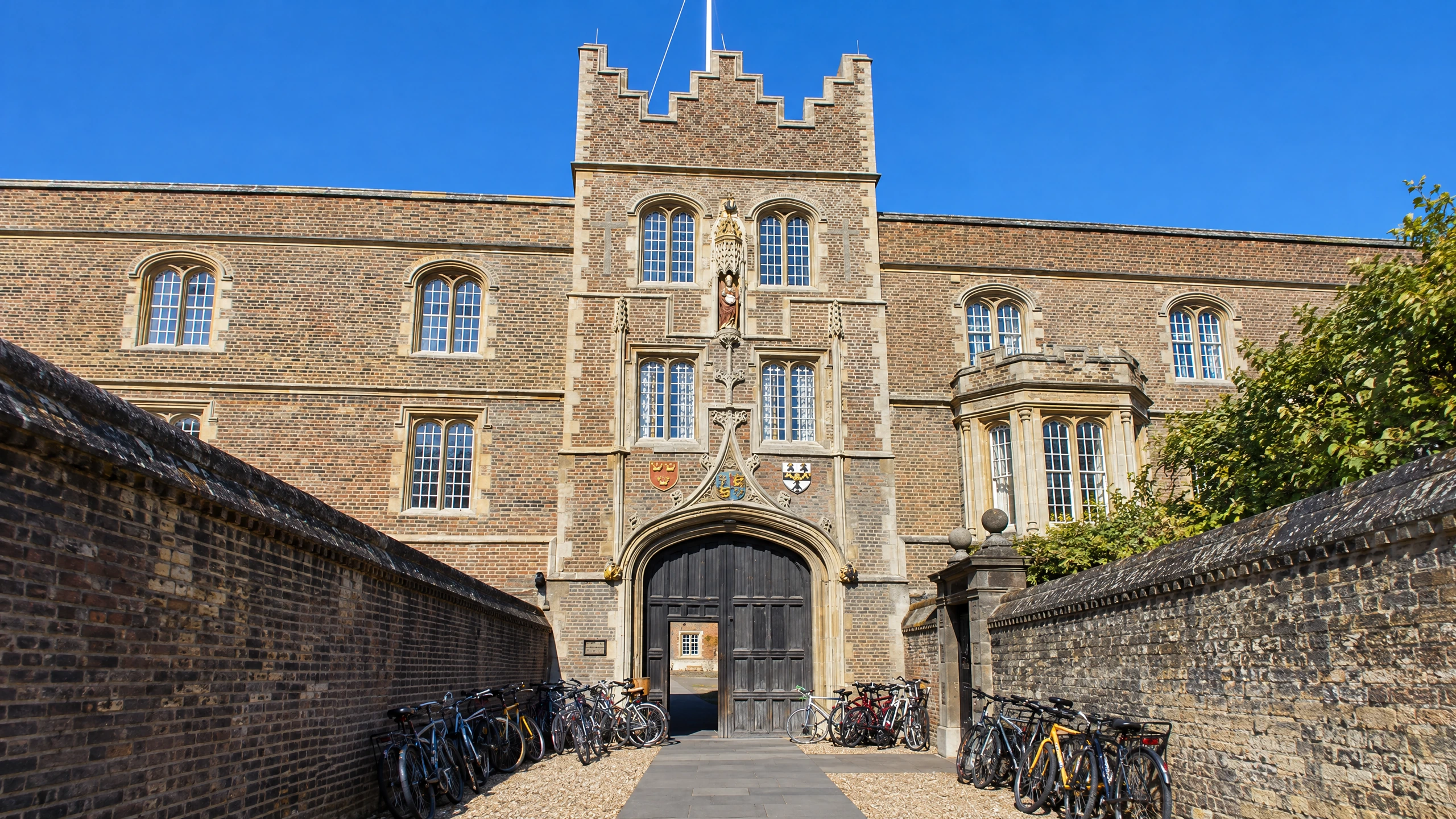
A spacious, quieter counterpart to the central colleges, where medieval priory fabric and Pre-Raphaelite chapel interiors sit within extensive grounds dotted with contemporary sculpture.
- Founded
- 1496
- Location
- Jesus Lane
- Visiting
- Sculpture when open to public
- Institution
- College
01 The experience
What to expect.
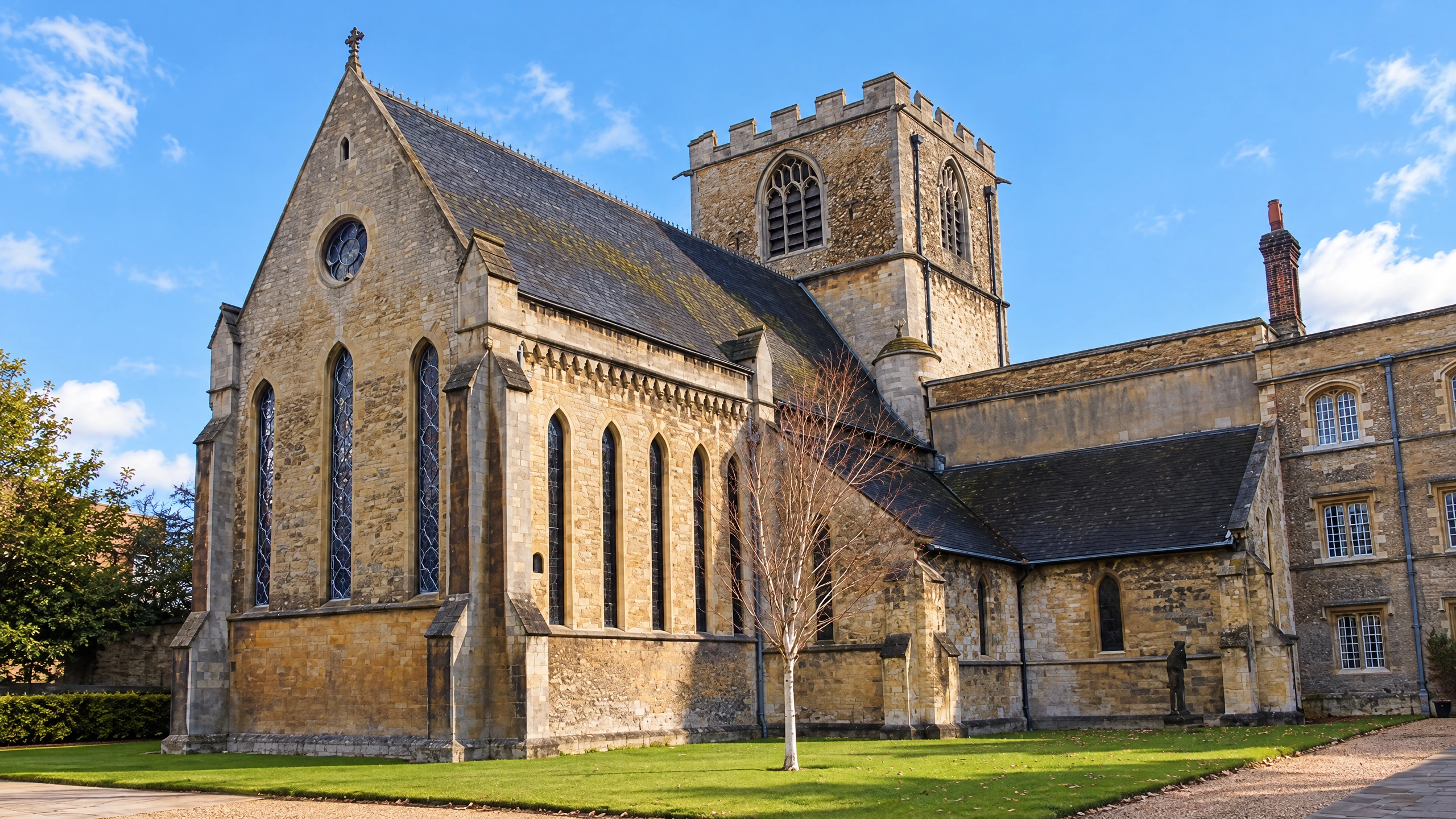
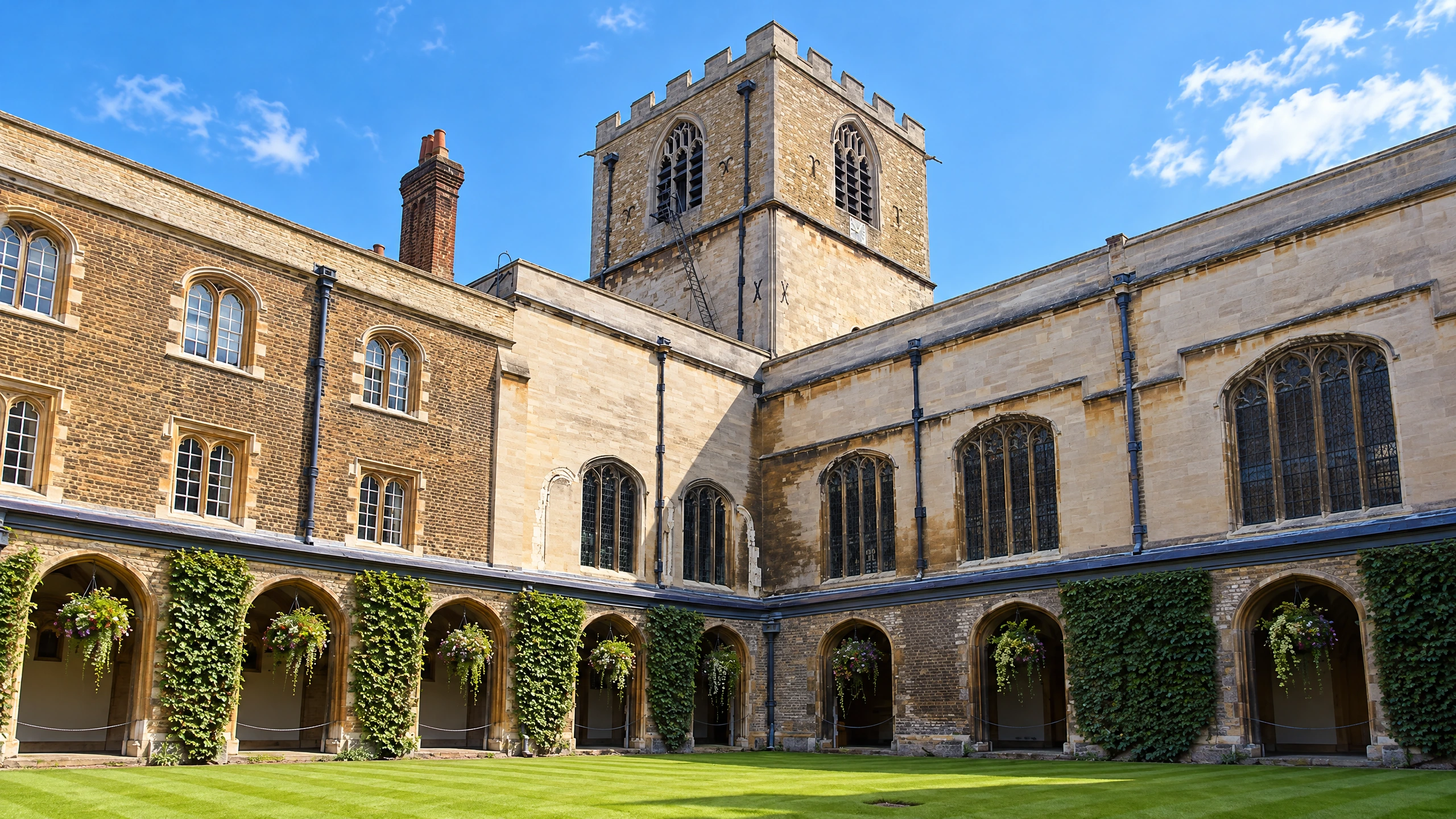
Jesus College occupies the site of the medieval priory of St Radegund. Its chapel began as the priory church, and Cloister Court preserves the arrangement of the earlier religious community. The long walled entrance passage from Jesus Lane, known as the Chimney, makes the transition from the street into the college especially memorable.
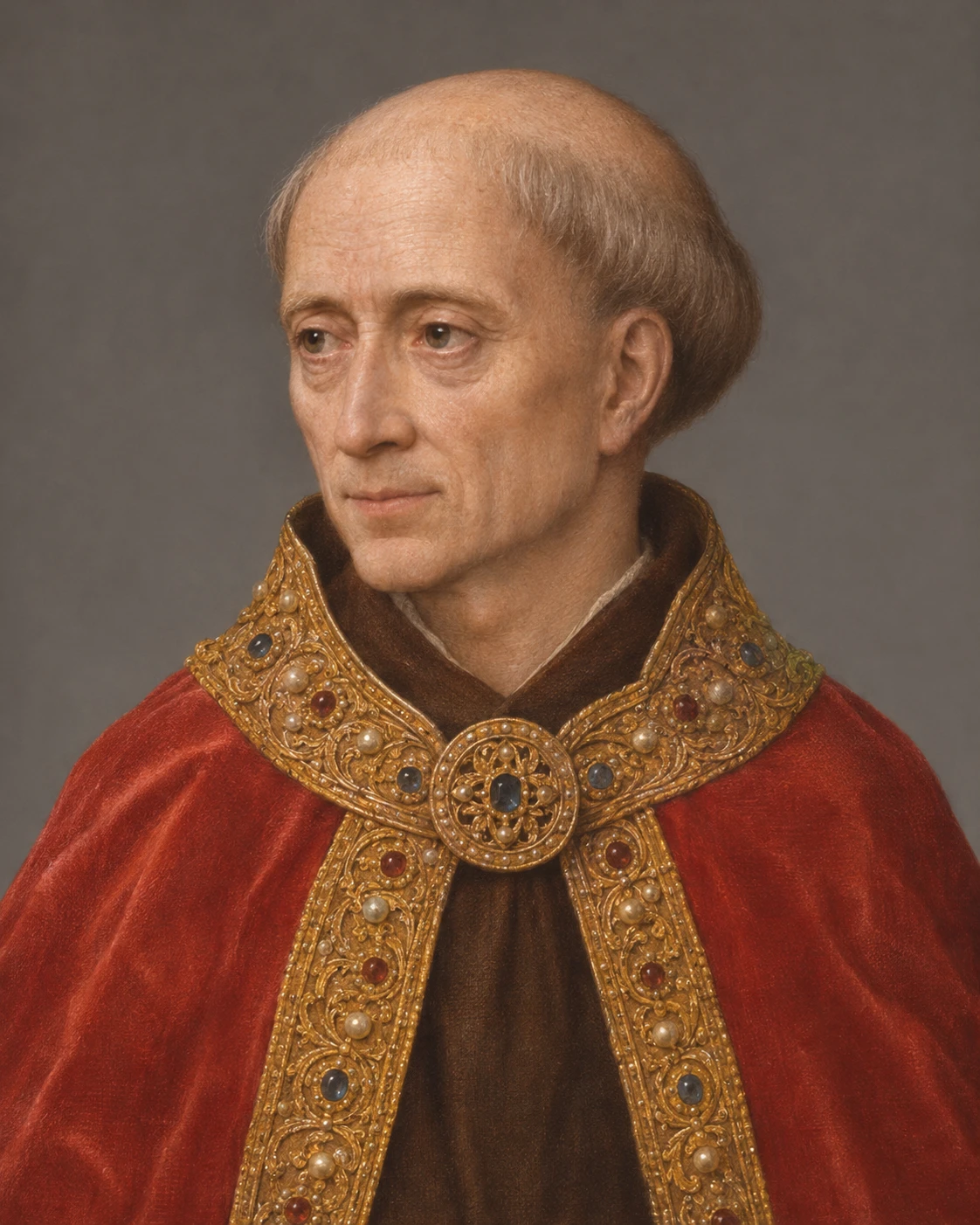
Bishop John Alcock founded the college in 1496. The church was reduced in size and remodelled as the college chapel, while other buildings around the cloister were adapted for their new use.
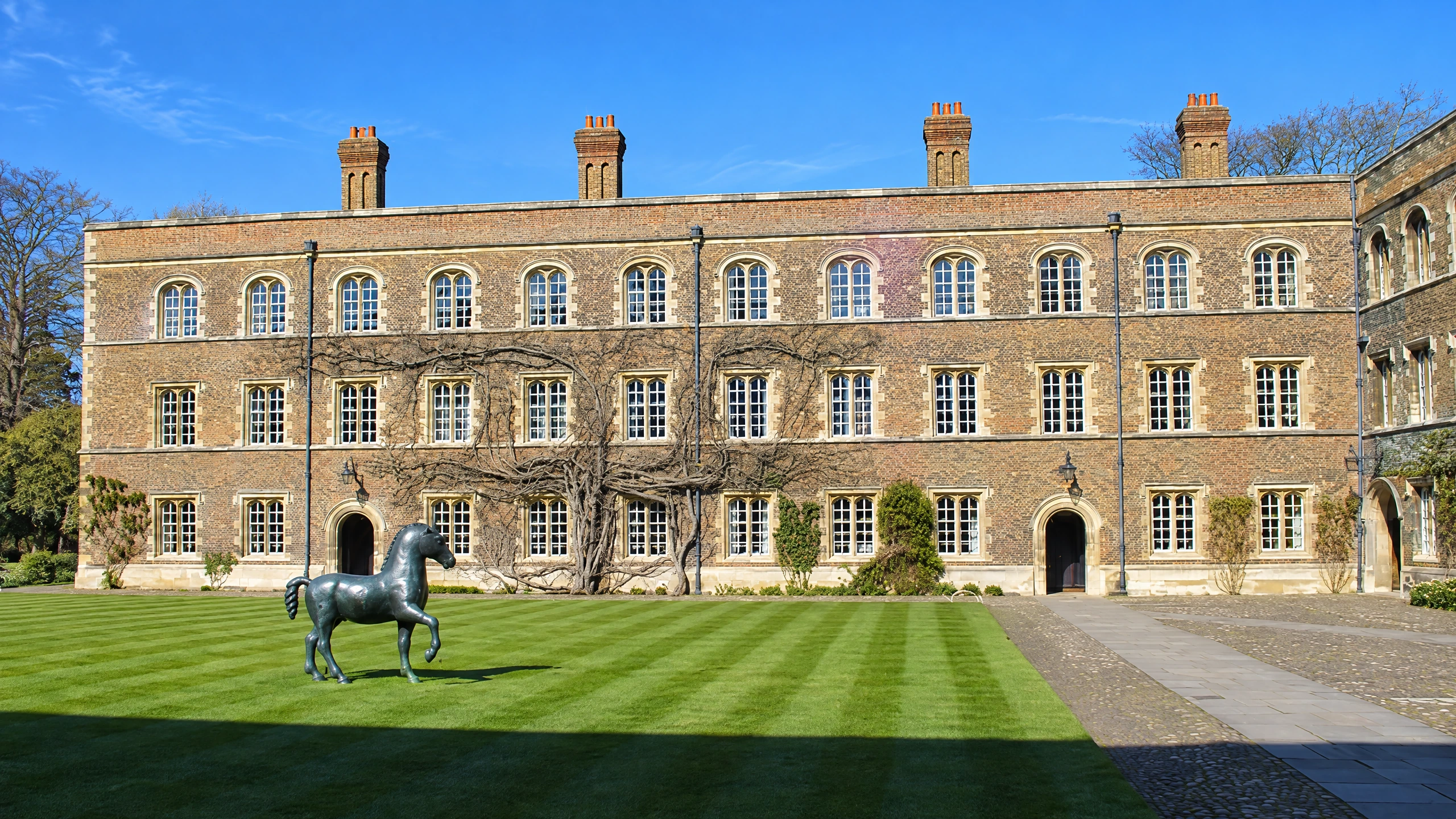
The grounds also contain a permanent collection of sculpture, including work by Barry Flanagan, Antony Gormley, Henry Moore, Eduardo Paolozzi and Cornelia Parker. The outdoor sculptures are free to see when the college is open to the public, and a downloadable map identifies their locations.
People and ideas
Famous former students
Samuel Taylor Coleridge
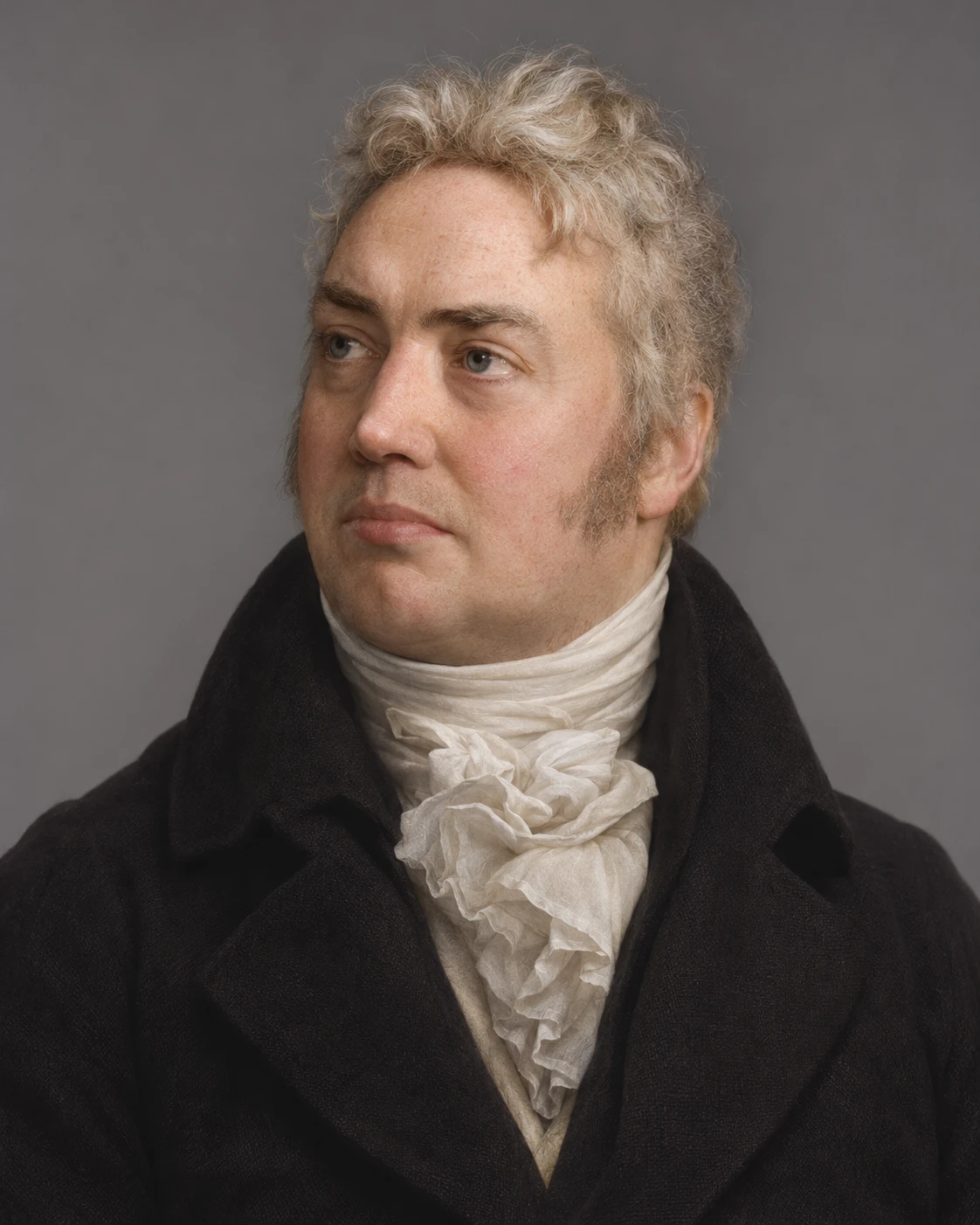
The Romantic poet began his literary career while an undergraduate at Jesus from 1791 to 1794.
Fellows, founders and other connections
John Alcock
The Bishop of Ely founded Jesus College in 1496.

William Morris
Designs by Morris appear among the chapel’s nineteenth-century stained-glass windows.

Edward Burne-Jones
The artist designed some of the stained-glass windows in the Outer Chapel.
The story
History & character.
A priory becomes a college
The Benedictine priory of St Radegund occupied this site before Bishop John Alcock founded Jesus College in 1496. Its cloister was a working centre of religious life: the refectory, or dining room, stood in the north range above a storage cellar, and the nuns ate in silence while one read a religious text. Fragments of late medieval floor tiles have been found during work in the chapter-house area and Cloister Court.
The priory church and buildings around its cloister were adapted for the new college. The church was reduced to less than half its former size and remodelled in the Gothic Perpendicular style as the chapel. Cloister Court retains the arrangement of church, refectory and chapter house, while a new brick entrance tower provided rooms for the college master and the master of its grammar school.
Stories in glass
The chapel’s stained glass has changed dramatically. In 1643 a parliamentary committee ordered every pane broken. An 1840s reconstruction drew on surviving fragments and archaeological evidence, with Robert Willis working with Anthony Salvin and then A. W. N. Pugin.
Pugin recreated features of the original chancel, including eastern lancet windows and the roof, and designed new choir stalls, a screen and organ case. John Sutton helped fund the work and established a choir school for the restored chapel. Completion of the broader restoration took almost thirty years.
The Outer Chapel’s later windows, installed between 1867 and 1878, include designs by William Morris, Edward Burne-Jones and Ford Madox Brown. Subjects range from virtues and vices to scenes from the Old and New Testaments. St Radegund appears among the figures in the great south window, linking the glass to the priory that preceded the college.
Groves, poetry and sculpture
A 1610 town plan marked walks and groves in the college grounds. Poet Samuel Taylor Coleridge studied at Jesus from 1791 to 1794, writing about “Jesus Wood” while he was a student. He left before taking a degree.
From 1988 to 2017 the college held regular summer Sculpture in the Close exhibitions. Barry Flanagan’s Bronze Horse appeared in the first Sculpture in the Close exhibition in 1988 and later joined the college collection. College archive A permanent collection continues the relationship between contemporary sculpture, historic buildings and grounds, with works by Barry Flanagan, Antony Gormley, Henry Moore and others. The outdoor collection can be visited free when the college is open to the public.
Look closer
What to see.
The Chimney
A long walled passage from Jesus Lane leads towards the college entrance.
Cloister Court
Its layout preserves the arrangement of the former priory cloister.
The chapel
The former priory church was remodelled for the college after 1496.
Outdoor sculpture
A permanent collection places modern works around the college; a map shows their positions.
Make it work
Plan your visit.
Outdoor sculpture is free to see when Jesus is open to the public. Ask at the Porters’ Lodge off Jesus Lane or telephone the college; a downloadable sculpture map is available. The chapel is open during the day and evening, subject to college access and services.
Visit your way
Access and family planning.
The Chimney is a level paved walkway from Jesus Lane to the Porters’ Lodge. The West Court entrance also has step-free access, with automatic doors and small threshold lips. The historic chapel doorway is 79 cm wide and has no push-pad access; services and college access can affect a visit.
The college publishes a map of its outdoor sculpture collection. Seeing the works is free when the college is open to the public; ask at the Porters’ Lodge first.
See it
In pictures.
10 views, full screen. Tap any one to open the viewer.Around here
Make more of the area.
Good to know
Questions, answered.
What makes Jesus College Cambridge distinctive?
Jesus College in Cambridge occupies the site of a medieval nunnery, retains its former priory church as a college chapel and displays a permanent collection of outdoor sculpture.
Was Jesus College Cambridge a nunnery?
Yes. A Benedictine priory dedicated to St Radegund stood on the site before Bishop John Alcock founded the college in 1496. Parts of the priory survive, including its church and cloister.
Is Jesus College Chapel older than the college?
Yes. The chapel began as the priory church in the twelfth century, centuries before the college was founded. The church was reduced and adapted for the college.
Why is the entrance to Jesus College called the Chimney?
The long walled path from Jesus Lane to the gatehouse is known as the Chimney. The college suggests the name may refer to the gate tower’s former ornate chimneys, or derive from a French word for a path; its origin is uncertain.
Can the public visit the Jesus College sculpture collection?
Yes. The outdoor sculptures are free to see when the college is open to the public. Ask at the Porters’ Lodge off Jesus Lane about access that day.
Which artists have sculptures at Jesus College Cambridge?
The permanent collection includes works by Barry Flanagan, Antony Gormley, Henry Moore, Eduardo Paolozzi and Cornelia Parker.
Is there a map of the sculptures at Jesus College in Cambridge?
Jesus College in Cambridge offers a downloadable map of its outdoor sculptures. Buy a printed self-guided booklet at the Porters’ Lodge or West Court reception.
Can visitors go into Jesus College Chapel?
The chapel is open during the day and evening, subject to college access and services. The college’s access guide describes the entrance and routes inside.
Did William Morris and Burne-Jones design windows at Jesus College?
Yes. Stained glass in the Outer Chapel includes designs by William Morris and Edward Burne-Jones, alongside work by Ford Madox Brown.
Did Coleridge study at Jesus College Cambridge?
The poet Samuel Taylor Coleridge was an undergraduate at Jesus from 1791 to 1794. He left before taking a degree.
Who founded Jesus College Cambridge?
John Alcock, Bishop of Ely, founded the college in 1496 on the former priory site.
Editorial notes
Sources and further reading.
Sources for this guide
- https://www.jesus.cam.ac.uk/college/about-us/history/1496-1559
- https://www.jesus.cam.ac.uk/college/about-us/history/college-architecture
- https://www.jesus.cam.ac.uk/college/events-and-exhibitions/permanent-collection
- https://www.jesus.cam.ac.uk/college/life-jesus/accessibility/buildings-access-guide/chapel
- https://www.jesus.cam.ac.uk/college/about-us/history/people-note/samuel-taylor-coleridge
- https://www.jesus.cam.ac.uk/chapel-and-choir/about-chapel/artworks-chapel/stained-glass
- https://www.christs.cam.ac.uk/about/collegegardens
- https://www.cai.cam.ac.uk/news/reading-gate-honour
- https://www.jesus.cam.ac.uk/college/about-us/history/women-jesus-college/founders
- https://collegecollections.jesus.cam.ac.uk/index.php/bronze-horse-by-barry-flanagan
- https://www.jesus.cam.ac.uk/college/about-us/history/1671-1863
Reviewed 4 November 2026.
Opening hours, prices, programmes and access arrangements can change. Confirm critical details with the venue.
Keep exploring