Central-E · Founded 1962
St Catherine's College
Discover Arne Jacobsen’s buildings and gardens at a modern college with roots in widening access to Oxford.
- Founded
- 1962
- Location
- Manor Road
- Visiting
- Tours suspended during restoration
- Institution
- College
01 The experience
What to expect.
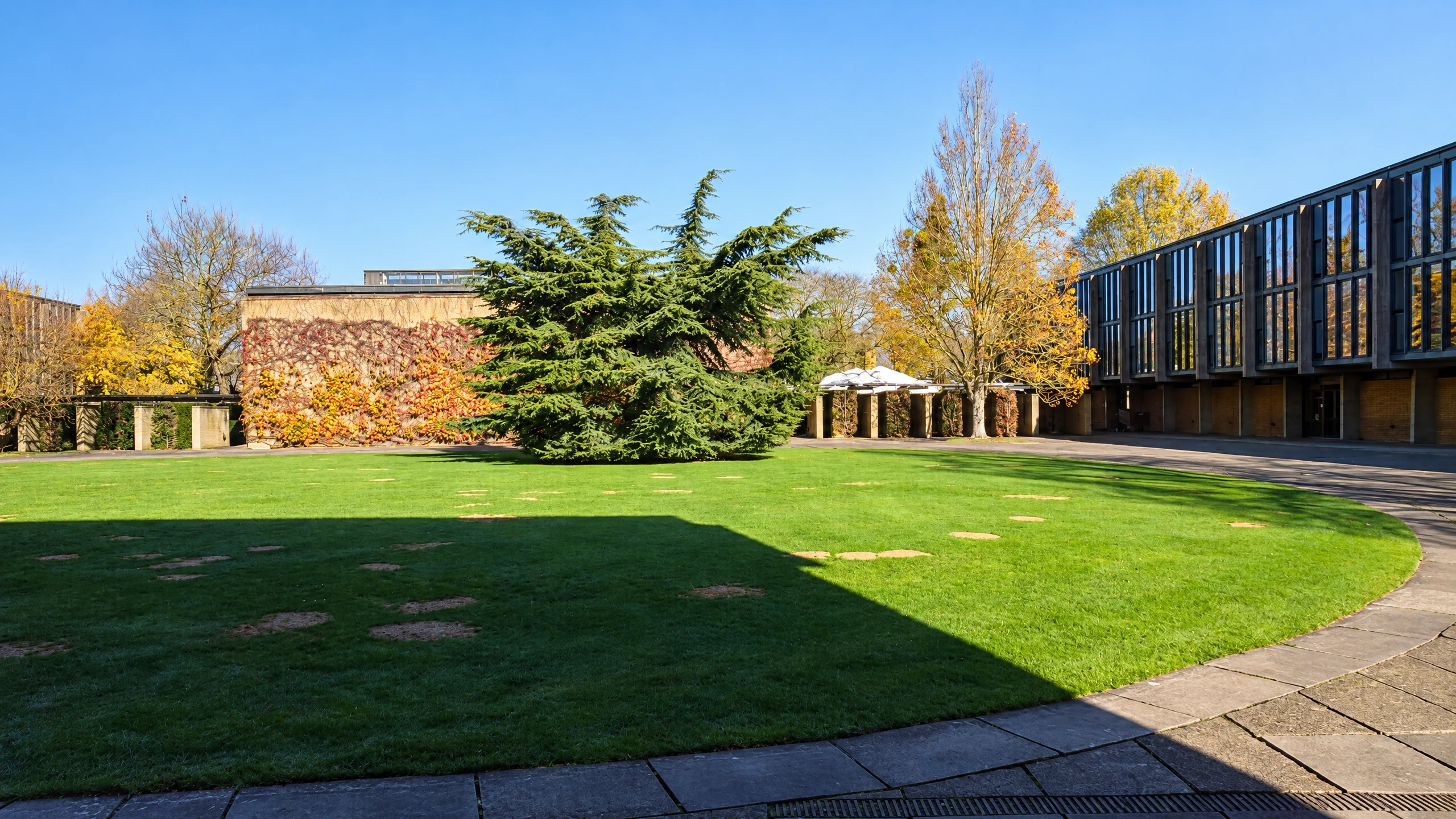
St Catherine’s is a college designed as a whole: Arne Jacobsen planned its buildings and gardens, as well as furniture, lighting and cutlery. Glass, concrete, brick and hedges give a familiar Oxford quadrangle a very different appearance. Restoration is continuing and the college is not currently offering tours.
The college opened in 1962, but its roots go back to 1868, when the Delegacy for Unattached Students helped men study at Oxford without the expense of living in a college. St Catherine’s Society grew from that idea; Alan Bullock later helped establish a residential college on Holywell Great Meadow.
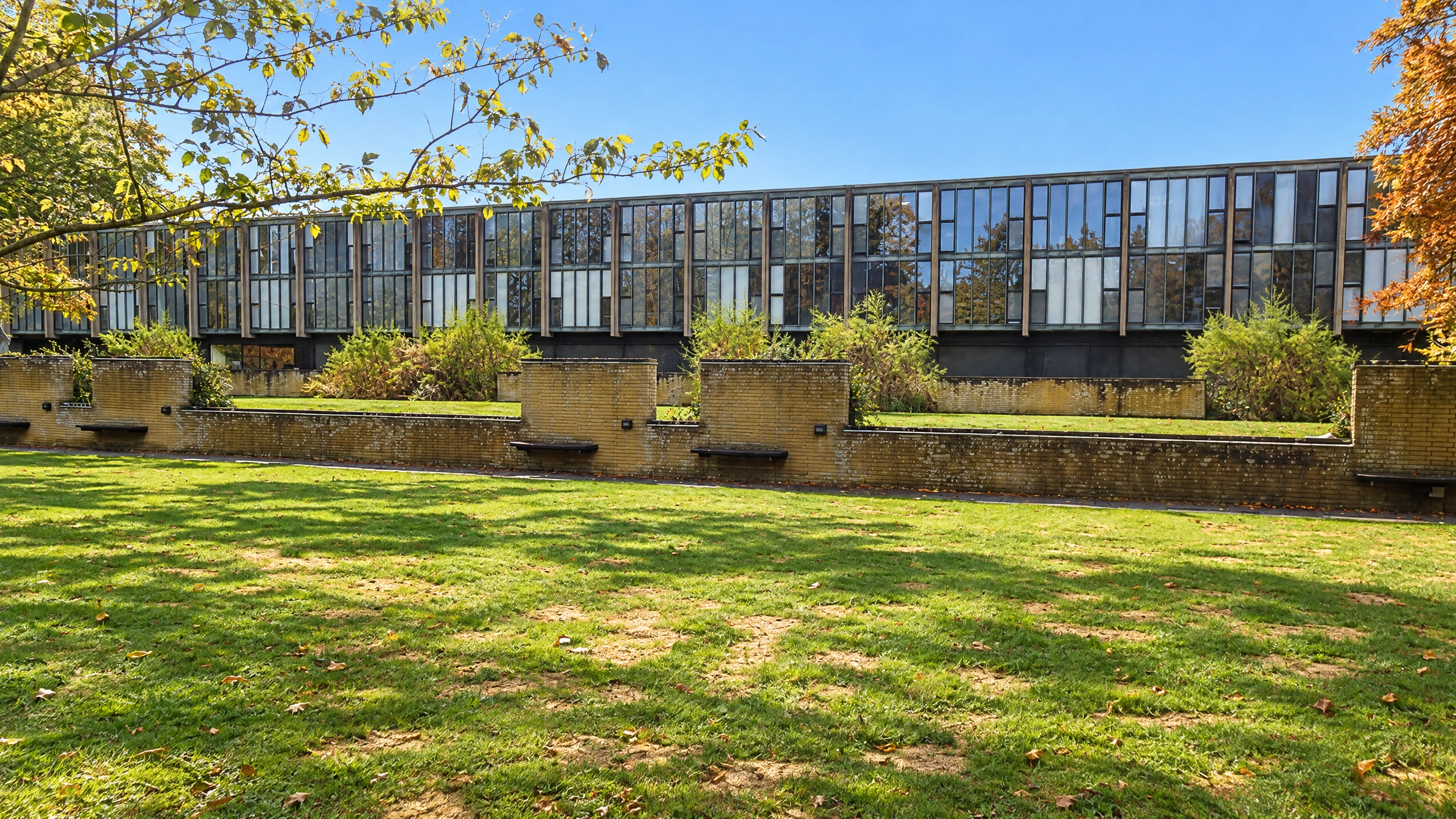
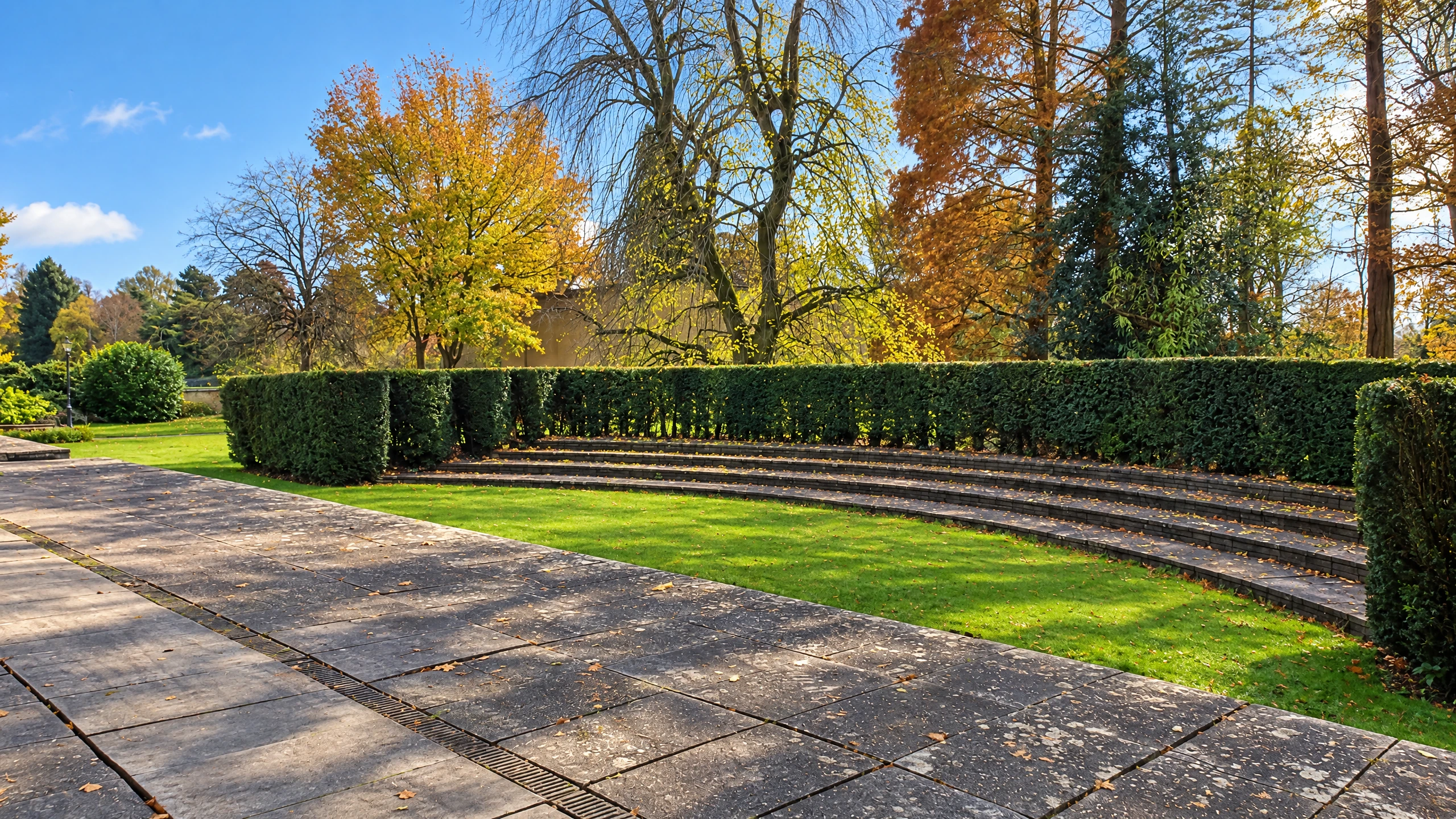
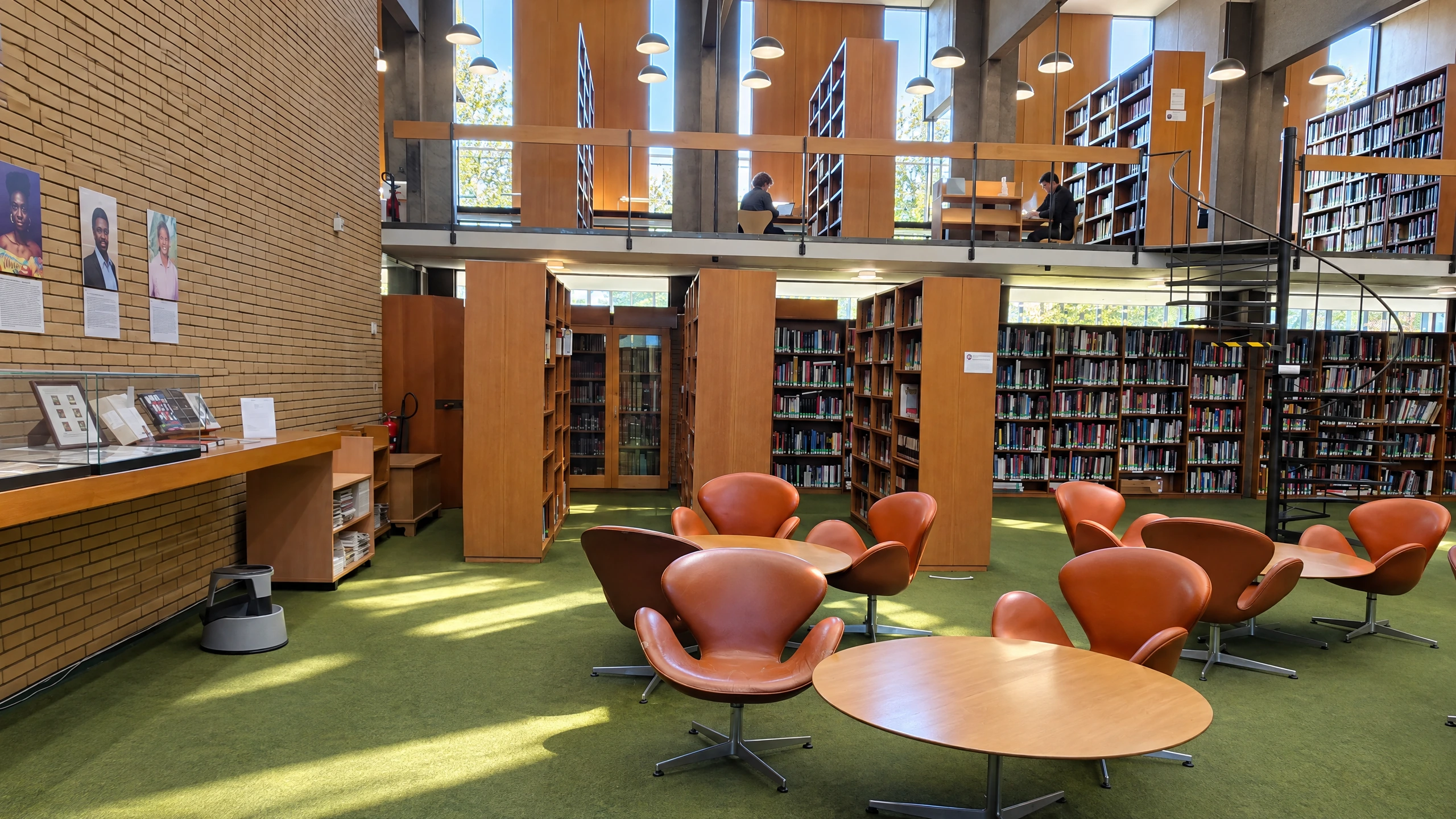
Jacobsen arranged student rooms along the sides of the open court, with the dining hall and library at either end. A three-metre grid also shapes the gardens, where yew hedges, walls and covered walks make smaller spaces around the buildings.
Former students include novelist Jeanette Winterson, population-ageing researcher Sarah Harper and Olympic rower Matthew Pinsent. Catch-22 author Joseph Heller studied with the earlier St Catherine’s Society; the college’s literary society, Catz-22, remembers that connection.
Roof restoration began after reinforced autoclaved aerated concrete, known as RAAC, was found in college buildings. The common room reopened in December 2025 and the dining hall in April 2026. The Wolfson Library remains closed during Michaelmas 2026, with a return anticipated in Hilary 2027.
The public approach is on Manor Road; University Parks and the museum quarter make nearby additions to a walk.
People and ideas
Famous former students

Jeanette Winterson
Entered 1978
The novelist entered St Catherine’s in 1978 to study English.
College connection
English undergraduate. Matriculated 1978.

Matthew Pinsent
Entered 1989
The four-time Olympic rowing gold medallist studied Geography at St Catherine’s from 1989 to 1992.
College connection
Geography student. Matriculated 1989; graduated 1992.

Sarah Harper
Entered 1979
The population-ageing researcher studied Anthropology and Geography at St Catherine’s.
College connection
Student of Anthropology and Geography. Matriculated 1979.

Joseph Heller
1962
The Catch-22 author studied with the earlier St Catherine’s Society; the college’s Catz-22 literary society remembers him.
College connection
Graduate student of predecessor St Catherine’s Society; later Honorary Fellow. Pre 1962.

John Cornforth
1962
The Nobel Prize-winning chemist studied with the predecessor St Catherine’s Society.
College connection
Student of predecessor St Catherine’s Society. Pre 1962.

Eric Williams
1962
The historian and future prime minister of Trinidad and Tobago studied with the predecessor St Catherine’s Society.
College connection
Student of predecessor St Catherine’s Society. Pre 1962.

Benazir Bhutto
The future prime minister of Pakistan studied at St Catherine’s after her time at Lady Margaret Hall.
College connection
Former student.

Andrew Triggs Hodge
The Olympic champion rower studied Water Science, Policy and Management at St Catherine’s.
College connection
Master’s student in Water Science, Policy and Management.

Zoe de Toledo
Entered 2010
The Olympic silver-medal cox studied Psychological Research and Criminology and Criminal Justice at St Catherine’s.
College connection
Master’s student in Psychological Research and in Criminology and Criminal Justice; later Medicine study at Harris Manchester is separate. St Catherine’s entry label 2010.
Fellows, founders and other connections

Arne Jacobsen
The architect designed St Catherine’s buildings, gardens, furniture, lighting and cutlery.
College connection
Architect and designer.
The story
History & character.
St Catherine’s began as the Delegacy for Unattached Students in 1868. It offered men a way to study at Oxford without the cost of college residence. The organisation became the Non-Collegiate Delegacy and later St Catherine’s Society, taking the name in 1931. It acquired a shared home on St Aldate’s in 1936.
Alan Bullock became Censor in 1952 and secured agreement in 1956 to create a residential college. In 1960 St Catherine’s acquired eight acres of Holywell Great Meadow from Merton, appointed Danish architect Arne Jacobsen and laid the foundation stone. The college opened in 1962, received its Royal Charter in 1963 and held its ceremonial opening in 1964.
Jacobsen’s design placed student staircases along the sides of a rectangular court, with the dining hall and library at opposite ends. The court opens towards its landscape. His work extended to furniture, lamps and cutlery; a three-metre grid, hedges, walls and covered walks gave the gardens their structure. Individual plants have changed as the landscape has grown.
The first residents were nicknamed the “Dirty Thirty” because the new college lacked running hot water when they arrived. Later buildings followed as the community grew, including the Bernard Sunley Building in 1968 and the Mary Sunley and Alan Bullock buildings in 1982. Women were first admitted in 1974.
Joseph Heller studied with the earlier St Catherine’s Society and later became an Honorary Fellow. The literary society Catz-22 is named for his novel Catch-22. Other predecessor students included Nobel Prize-winning chemist John Cornforth and historian Eric Williams, later prime minister of Trinidad and Tobago.
Novelist Jeanette Winterson entered in 1978, and population-ageing researcher Sarah Harper came in 1979. Rower Matthew Pinsent studied Geography from 1989 to 1992; later graduate students included Olympic rowers Andrew Triggs Hodge and Zoe de Toledo.
In 2023 the discovery of RAAC in roof structures led to restrictions and a phased restoration of Jacobsen’s protected buildings. The common room reopened in December 2025 and the dining hall in April 2026; other work continues.
Look closer
What to see.
Jacobsen’s open court
Student staircases line the sides, with the dining hall and library at either end. The court opens towards the grounds.
Buildings and gardens together
A three-metre grid connects the architecture with hedges, walls and garden spaces.
Furniture and lighting
Jacobsen also designed furnishings, lamps and cutlery as part of the college setting.
An older educational idea
The college grew from an 1868 organisation that helped students attend Oxford without paying for college residence.
Catz-22
The literary society takes its name from Catch-22 by Joseph Heller, a student of the predecessor St Catherine’s Society.
Make it work
Plan your visit.
The college is not currently offering tours during restoration. The Manor Road approach gives an exterior view, and the college offers a virtual tour.
The common room reopened in December 2025 and the dining hall in April 2026. The Wolfson Library remains closed during Michaelmas 2026; the college anticipates returning in Hilary 2027. Special collections and archives are unavailable during the work.
The Manor Road entrance is level with powered doors. Lifts, accessible toilets and hearing support serve parts of the site, though restoration can change the routes available to invited visitors.
Visit your way
Access and family planning.
Tours are currently suspended during restoration. The Manor Road entrance is level with powered doors; lifts, accessible toilets and hearing support serve parts of the site. Restoration can affect routes for invited visitors.
The Wolfson Library remains closed during Michaelmas 2026, with a return anticipated in Hilary 2027.
The Manor Road approach offers a brief introduction to Arne Jacobsen’s modern design. Tours are currently suspended during restoration; University Parks and the Natural History Museum are nearby for a longer outing.
Self-guided walk
A walk from St Catherine’s
A public-street circuit follows Manor Road and St Cross Road towards Holywell Street.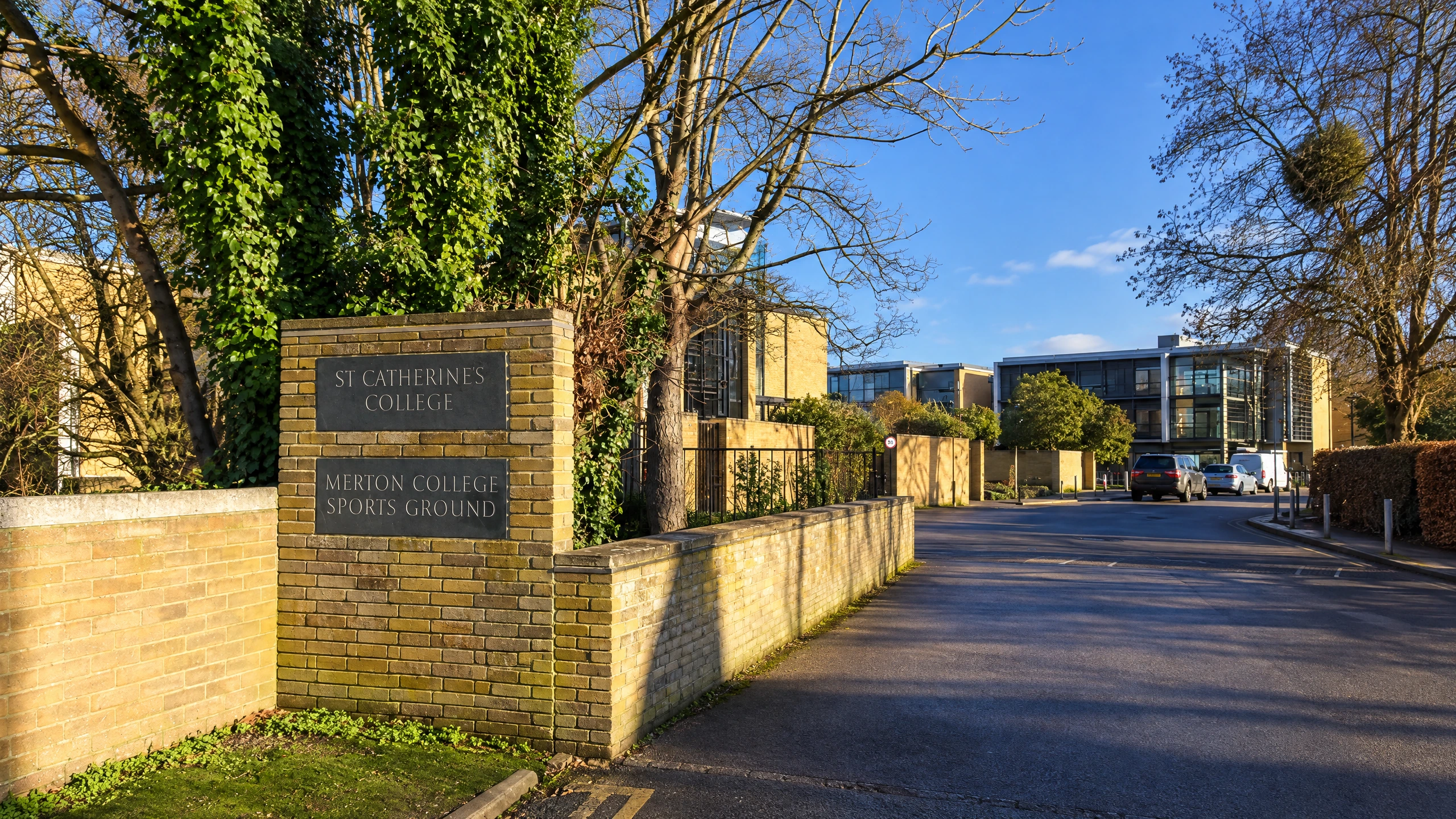
Manor Road approach
The college approach leads towards Jacobsen’s modern buildings and gardens.
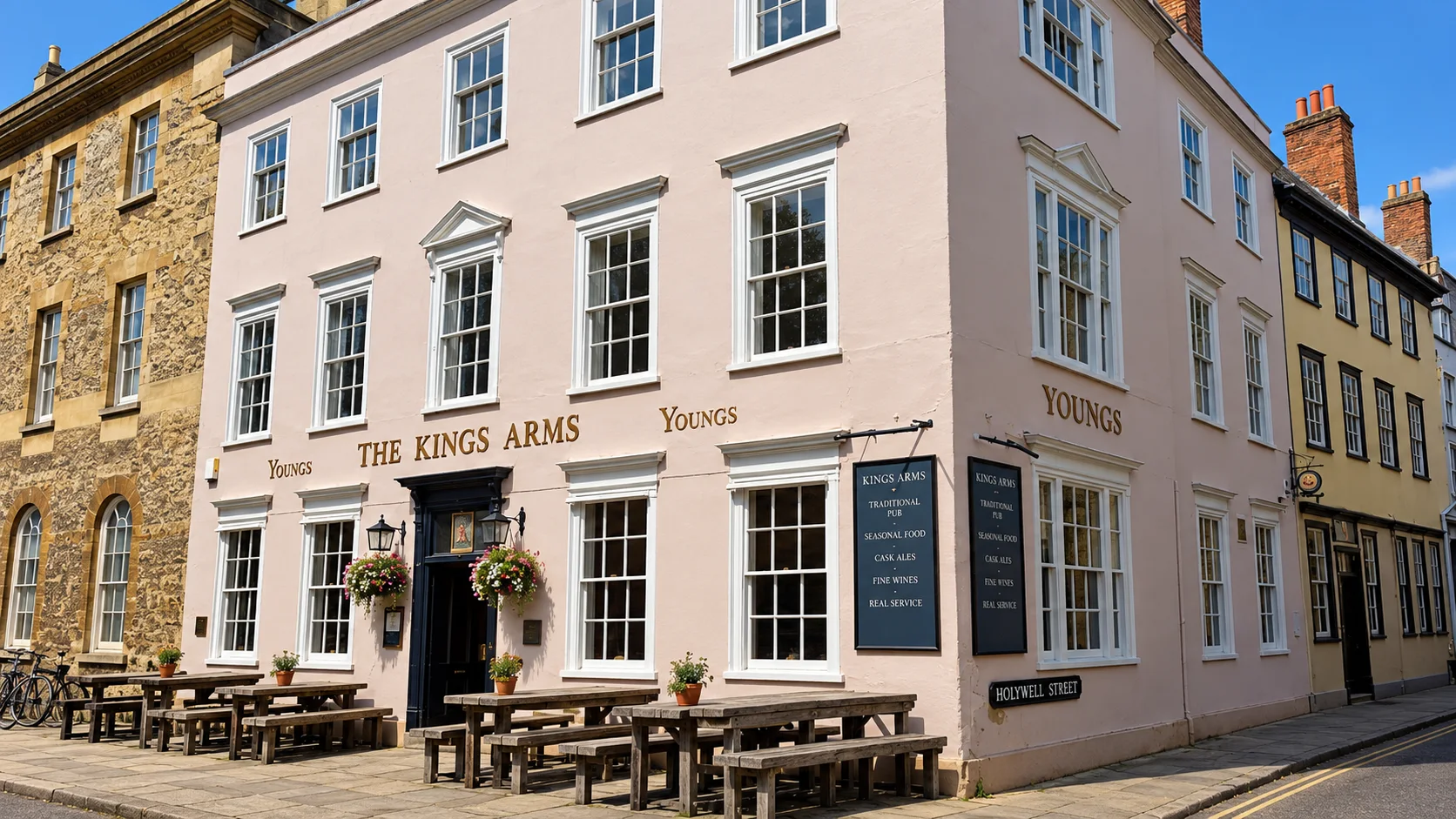
Holywell Street
The historic street leads west towards colleges, cafés and the Bodleian quarter.
Optional college extension
Tours remain suspended during restoration; the college offers a virtual tour.
See it
In pictures.
10 views, full screen. Tap any one to open the viewer.Around here
Make more of the area.
about 10 min walk on foot
Holywell Street
Holywell Street leads west towards the historic centre and its colleges.

The parks offer paths and open green space. Mesopotamia Path is currently closed for maintenance.
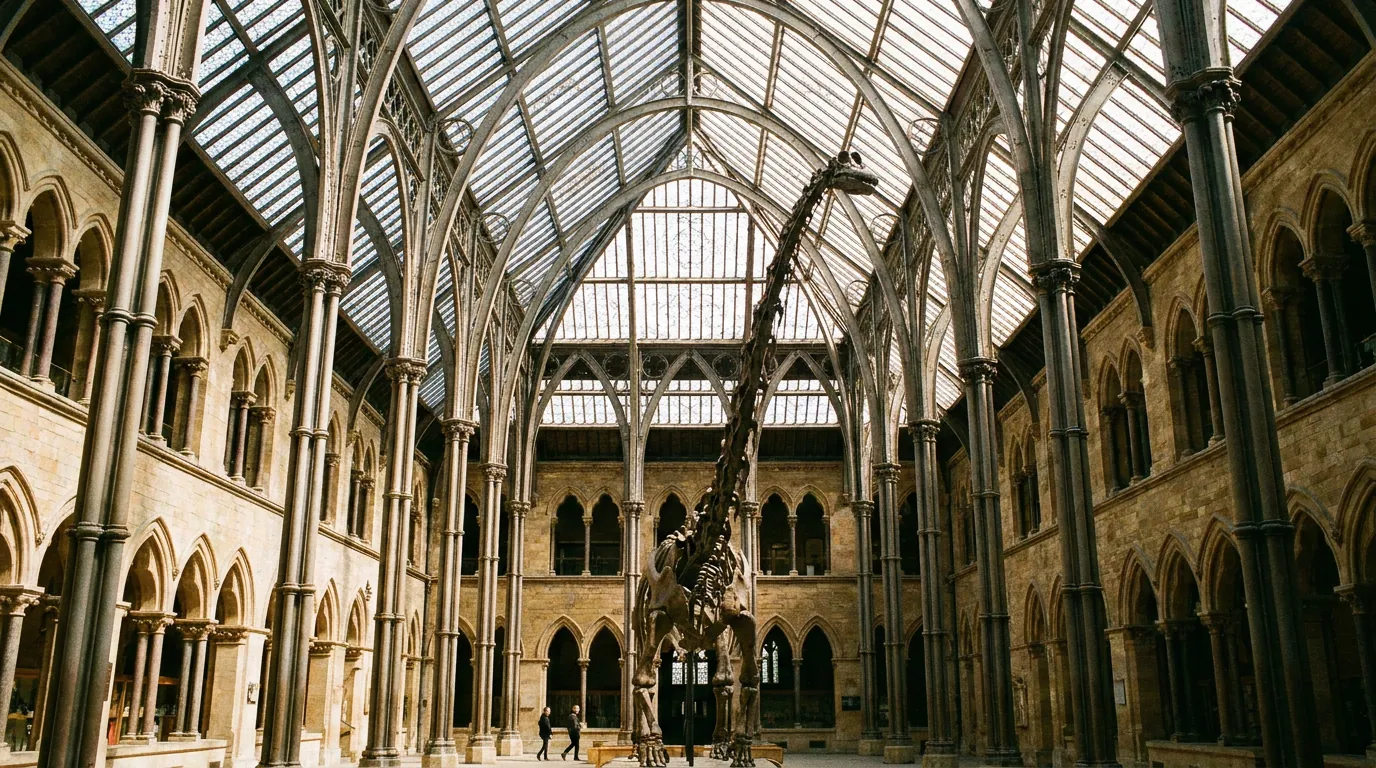
The Parks Road museum brings natural history collections together beneath its glass roof.
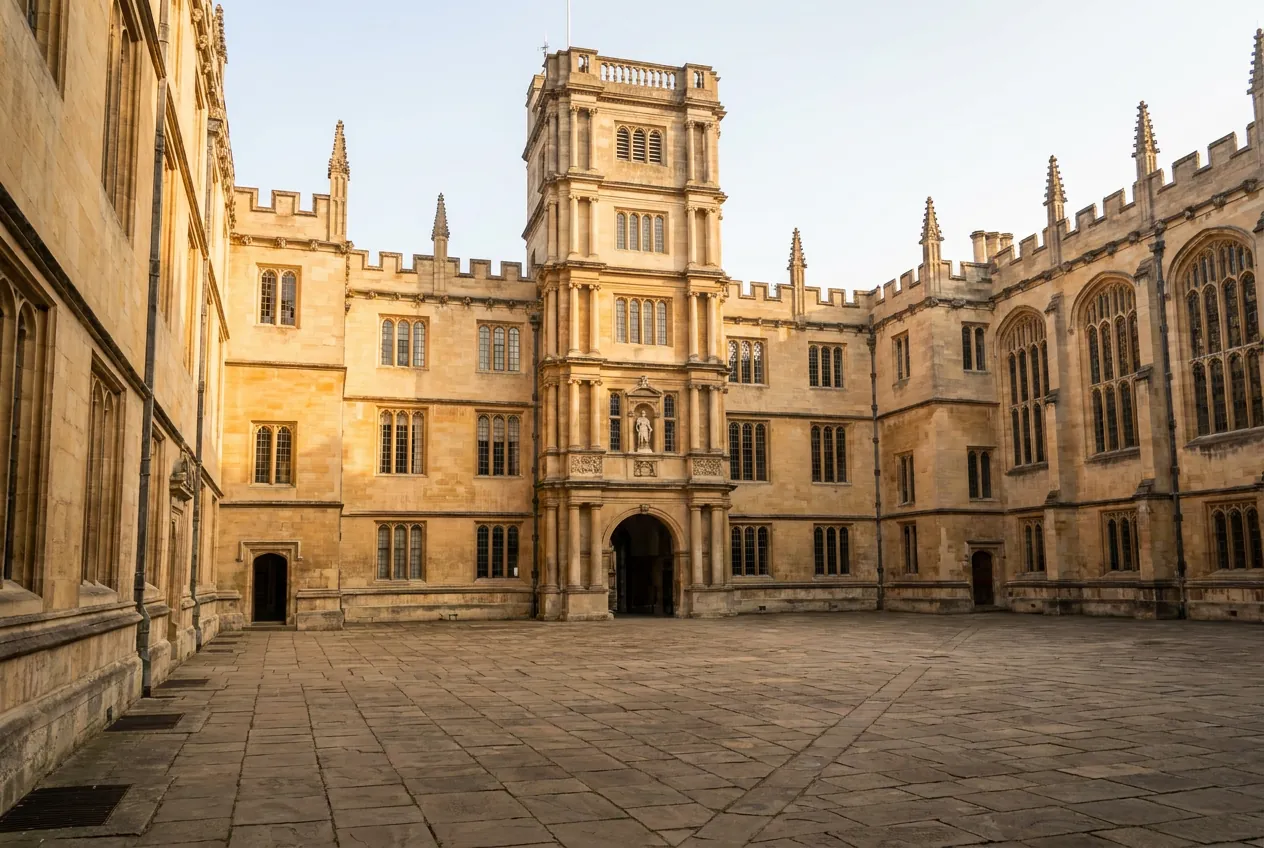
The historic library quarter lies west towards Catte Street and Radcliffe Square.
Good to know
Questions, answered.
Can visitors enter St Catherine’s College Oxford?
College tours are suspended during restoration work. The college offers a virtual tour, and its buildings can be seen from the public approach on Manor Road.
How did St Catherine’s originate outside Oxford’s colleges?
The Delegacy for Unattached Students began in 1868, allowing men to study at Oxford without the cost of college residence.
Why does the St Catherine’s name predate its modern campus?
St Catherine’s Society adopted the name in 1931. The residential college opened in 1962, inheriting the earlier non-collegiate community.
How did Alan Bullock help create residential St Catherine’s?
Bullock became Censor in 1952 and secured agreement in 1956 to turn the Society into a residential college.
How did Arne Jacobsen reinterpret the quadrangle at St Catherine’s?
Jacobsen placed student staircases along an open court, with the dining hall and library at either end and the grounds beyond.
Did Jacobsen design St Catherine’s furniture as well as its buildings?
Yes. Jacobsen designed furniture, lighting, lampshades and cutlery as well as the college’s buildings and gardens.
How do St Catherine’s garden rooms work?
Hedges, walls and covered walks define planted spaces across the open campus, following the same grid as Jacobsen’s buildings.
When did women first enter St Catherine’s?
St Catherine’s admitted women in 1974, twelve years after the residential college opened. Novelist Jeanette Winterson arrived in 1978.
What did Jeanette Winterson study at St Catherine’s?
Winterson entered in 1978 to study English before her career as a novelist, including Oranges Are Not the Only Fruit.
Which Nobel-winning scientist attended St Catherine’s predecessor?
Chemist John Cornforth studied with St Catherine’s Society before the residential college existed and later won a Nobel Prize.
How is Eric Williams connected with St Catherine’s?
Historian Eric Williams, later prime minister of Trinidad and Tobago, studied with the predecessor St Catherine’s Society.
What did Matthew Pinsent study at St Catherine’s?
Pinsent studied Geography while developing the rowing career that brought him four Olympic gold medals.
Why did St Catherine’s need RAAC restoration?
RAAC was found in roof structures, leading to restrictions from 2023 and a phased programme to replace affected roofs.
Which St Catherine’s communal rooms have reopened after roof work?
The Junior Common Room reopened in December 2025 and the dining hall followed in April 2026. Restoration continues elsewhere.
Can St Catherine’s Wolfson Library be visited in Michaelmas 2026?
The permanent library remains closed during Michaelmas 2026. A temporary library serves members; return is anticipated in Hilary 2027.
Editorial notes
Sources and further reading.
Sources for this guide
Researched 1 November 2026. Each source’s scope is specified so later updates can target the affected claim. Sources marked retained evidence come from locally saved earlier research; a failed collection job is not a completed bundle.
C1 — St Catherine’s historical timeline
St Catherine’s historical timeline
Supports: 1868 delegacy, 1884 rename, 1931 society, 1936 Worthington, 1956 agreement, 1960 site, 1962/63/64 milestones, women 1974.
Status: reviewed-public-source.
C2 — Jacobsen buildings and grounds
Jacobsen buildings and grounds
Supports: Integrated buildings/furniture, three-metre grid, open quad, Cherwell, yew rooms; registered garden.
Status: reviewed-public-source.
C3 — RAAC restoration update
Supports: Last updated 15 June 2026; JCR December 2025, Hall April 2026, library Hilary 2027 anticipated.
Status: reviewed-public-source.
C4 — Library and archives during works
Library and archives during works
Supports: Michaelmas 2026 temporary library 10%collection; permanent library, special collections and archives unavailable.
Status: reviewed-public-source.
C5 — Oxford college visiting directory
Oxford college visiting directory
Supports: No tours during final restoration; Lodge enquiry staffing.
Status: reviewed-public-source.
C6 — Oxford physical access survey: St Catherine’s
Oxford physical access survey: St Catherine’s
Supports: Baseline powered entrance, level/ramped paths, lifts, toilets, hearing systems; not current works access.
Status: reviewed-public-source.
C7 — Oxford College Archives: St Catherine’s
Oxford College Archives: St Catherine’s
Supports: Predecessor history and named actual alumni; administrative archive scope.
Status: reviewed-public-source.
C8 — Catz-22 literary society
Supports: Heller graduate student then Honorary Fellow; Winterson, Rundell and literary activity.
Status: reviewed-public-source.
C9 — Winterson and Harper honours
Supports: Winterson English 1978, Harper Anthropology/Geography 1979.
Status: reviewed-public-source.
C10 — Matthew Pinsent’s biography
Supports: Geography graduation 1992; rowing career.
Status: reviewed-public-source.
C11 — Oxford Olympians
Supports: St Catherine’s affiliations including Pinsent, Triggs Hodge andde Toledo.
Status: reviewed-public-source.
C12 — St Catherine’s 2025 news
Supports: Pinsent 1989 Geography and theatre/leadership context.
Status: reviewed-public-source.
C13 — Historic England: St Catherine’s garden
Historic England: St Catherine’s garden
Supports: Registered landscape record; architecture and garden protected together.
Status: manifest-carried-source; factual landscape corroborated by C 2.
Conflict ledger
The generic University access survey describes the underlying site, not a current permission to enter RAAC-affected buildings.
Official RAAC page retains a July 2025 message alongside an updated June 2026 timeline. Use actual JCR December 2025 and Hall April 2026 returns, and the latest stated library target Hilary 2027.
Wolfson Library page explicitly says Michaelmas 2026 temporary arrangements. Do not carry over older expectations of reopening October 2026.
Foundation roots 1868, college opening 1962, Royal Charter 1963 and ceremonial opening 1964 are distinct.
Heller, Cornforth and Williams belong to the predecessor era; their attendance cannot be illustrated as student life in buildings opened 1962.
Benazir Bhutto is listed as alumna by Oxford College Archives, but this dossier does not establish her precise St Catz programme/dates; no PPE-undergraduate claim is made.
Editorial interpretation
Walking allowances, pairings, family activity suggestions and visual composition choices are editorial judgments. They do not supply evidence of admission, facilities, a person’s attendance or a booking inclusion. Current admission conditions remain visible in the practical sections.
GEO1 — College-location coordinates
Supports: sourced numeric WGS84 latitude 51.757066, longitude -1.245098, read 1 November 2026. This pin represents the college location rather than a surveyed visitor entrance.
Status: reviewed-public-source-2026-11-01.
MAP1 — University of Oxford Explore Map2026
University of Oxford Explore Map2026
Supports: Current official map places colleges, streets, museums, gardens and public approaches. Walking durations are editorial allowances; access restrictions follow current college and venue pages, not a presumed route through a private quad.
Status: reviewed-public-source-2026-11-01.
C14 — University of Staffordshire: Andrew Triggs Hodge
University of Staffordshire: Andrew Triggs Hodge
Supports: Explicitly states continued study at St Catherine’s for a Master’s Degree in Water Science, Policy and Management; 2005 Boat Race and Olympic gold career.
Status: reviewed-public-source-2026-11-01.
C15 — Oxford Alumni Voices: Zoe de Toledo
Oxford Alumni Voices: Zoe de Toledo
Supports: St Catherine’s 2010; master’s degrees in Psychological Research and Criminology and Criminal Justice; 2016 Olympic silver. Later Medicine at Harris Manchester is a separate college connection.
Status: reviewed-public-source-2026-11-01.
NEAR2 — University Parks visitor information
University Parks visitor information
Supports: University-owned landscape welcomes visitors; opens7:45 and closes at/before sunset. Mesopotamia Path currently closed for maintenance.
Status: reviewed-public-source-2026-11-01.
NEAR3 — Oxford museum visitor directory
Oxford museum visitor directory
Supports: Natural History museum on Parks Road with public access; museum admission separate from Reuben College.
Status: reviewed-public-source-2026-11-01.
NEAR4 — Bodleian visitor information
Supports: Public visitor spaces, tours and exhibitions have separate entitlements from research-reader access.
Status: reviewed-public-source-2026-11-01.
Further reading and sources
Opening hours, prices, programmes and access arrangements can change. Confirm critical details with the venue.
Keep exploring