Central-S · Founded 1800
Downing College
The purest neo-classical ensemble in Cambridge, laid out as open parkland rather than enclosed courts, and often called the oldest of the new colleges and the newest of the old.
- Founded
- 1800
- Location
- Regent Street
- Visiting
- Grounds open to visitors
- Institution
- College
01 The experience
What to expect.
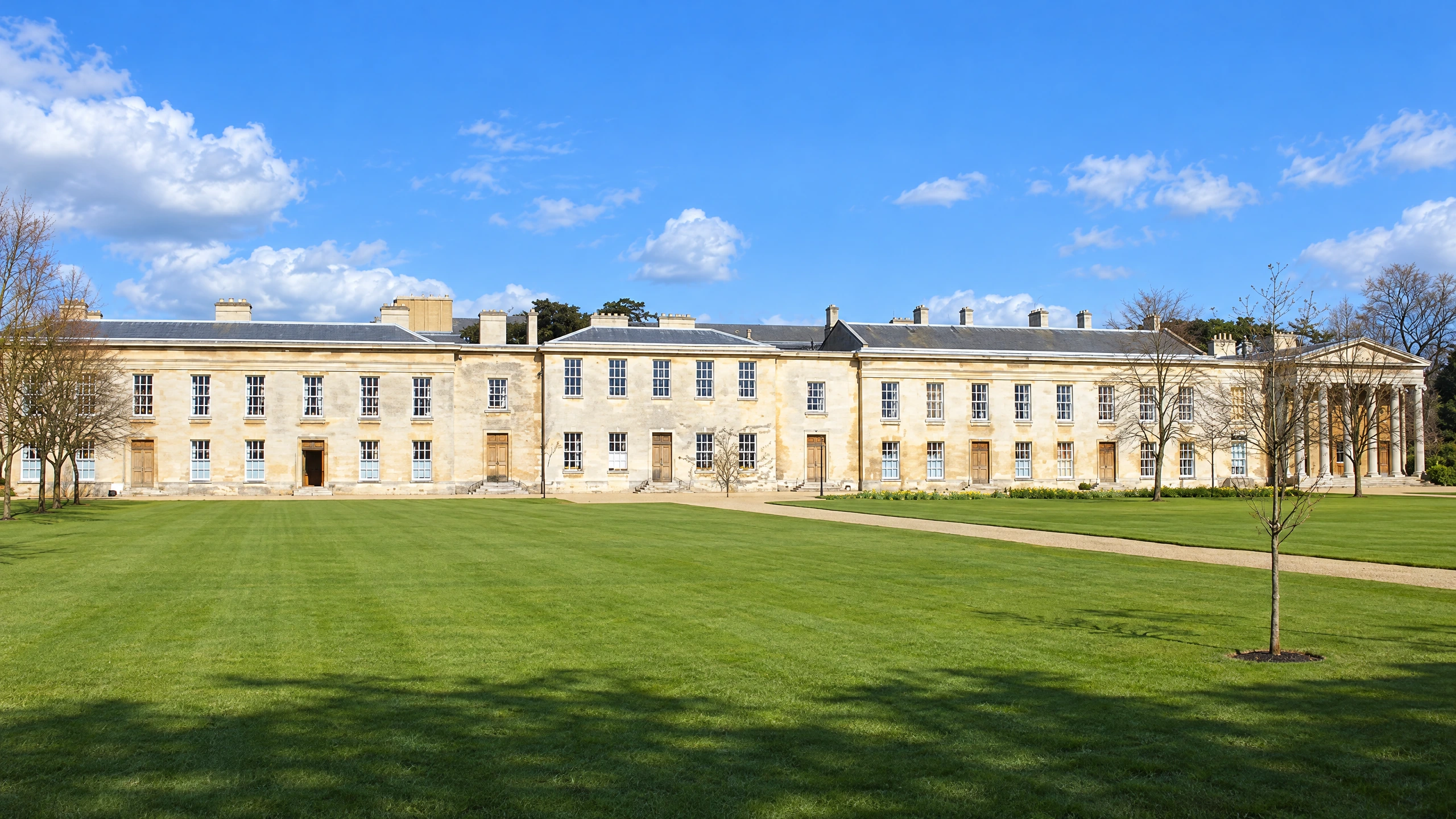
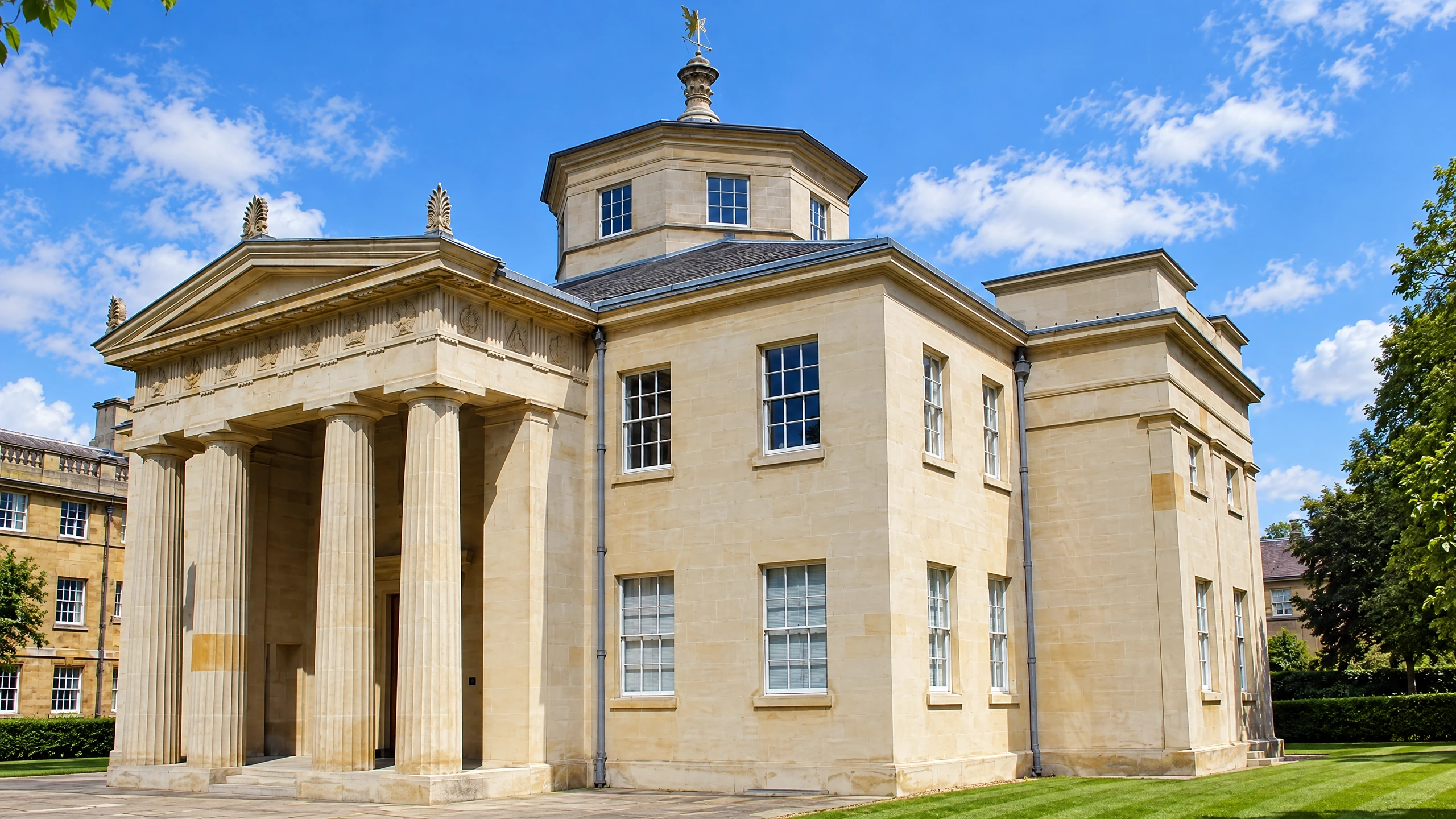
Downing’s broad lawns and pale classical ranges make it distinctive among Cambridge colleges. Instead of entering a succession of enclosed courts, visitors encounter a spacious campus whose earliest buildings were designed by William Wilkins in a Greek-inspired style.
The East and West Ranges frame the central open space. Wilkins intended four ranges, but money ran out before his full design was completed. That incomplete plan helps explain the college’s unusually open appearance. The first buildings went up from 1807 to 1812, with the West Range following from 1818.
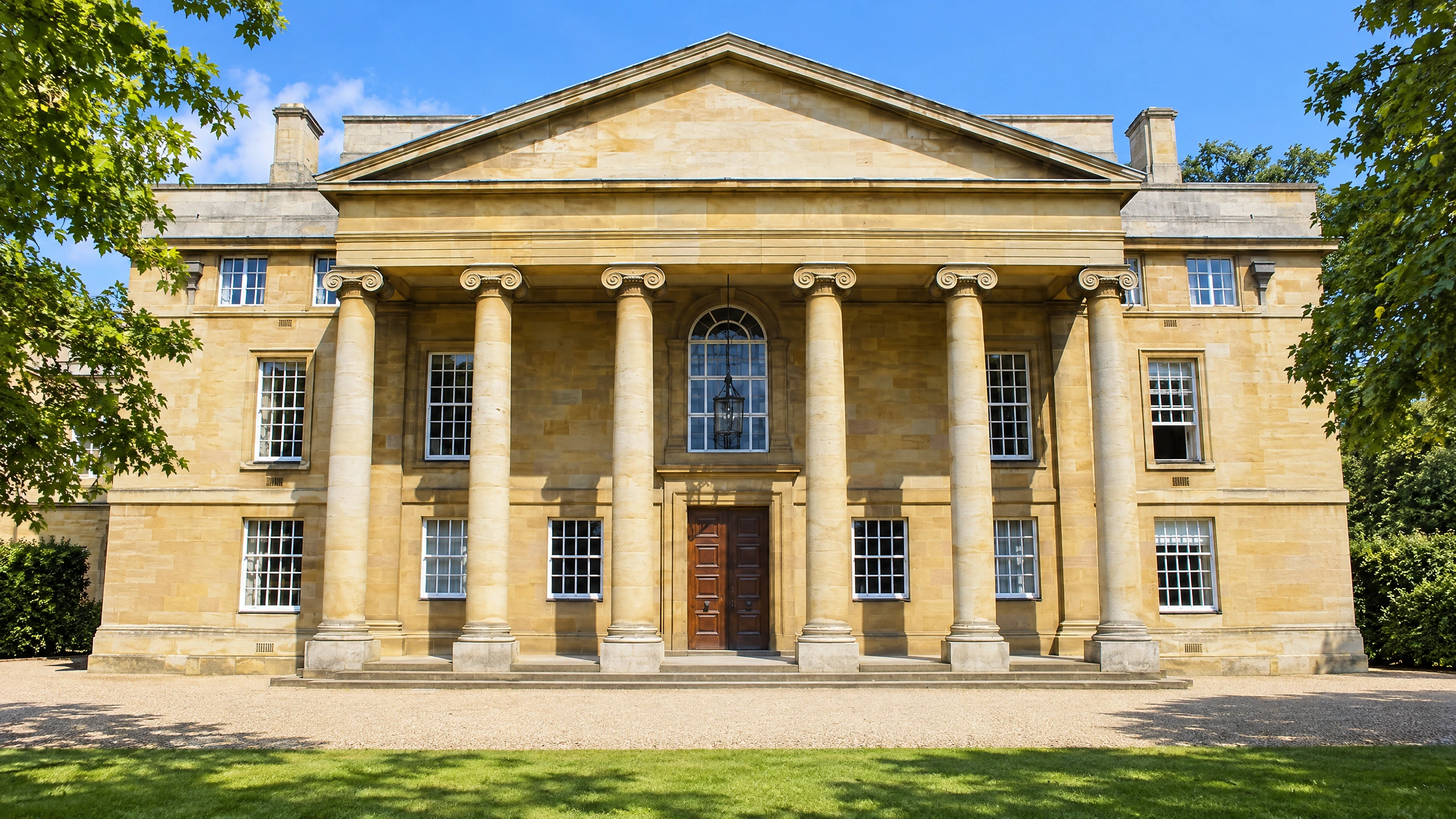
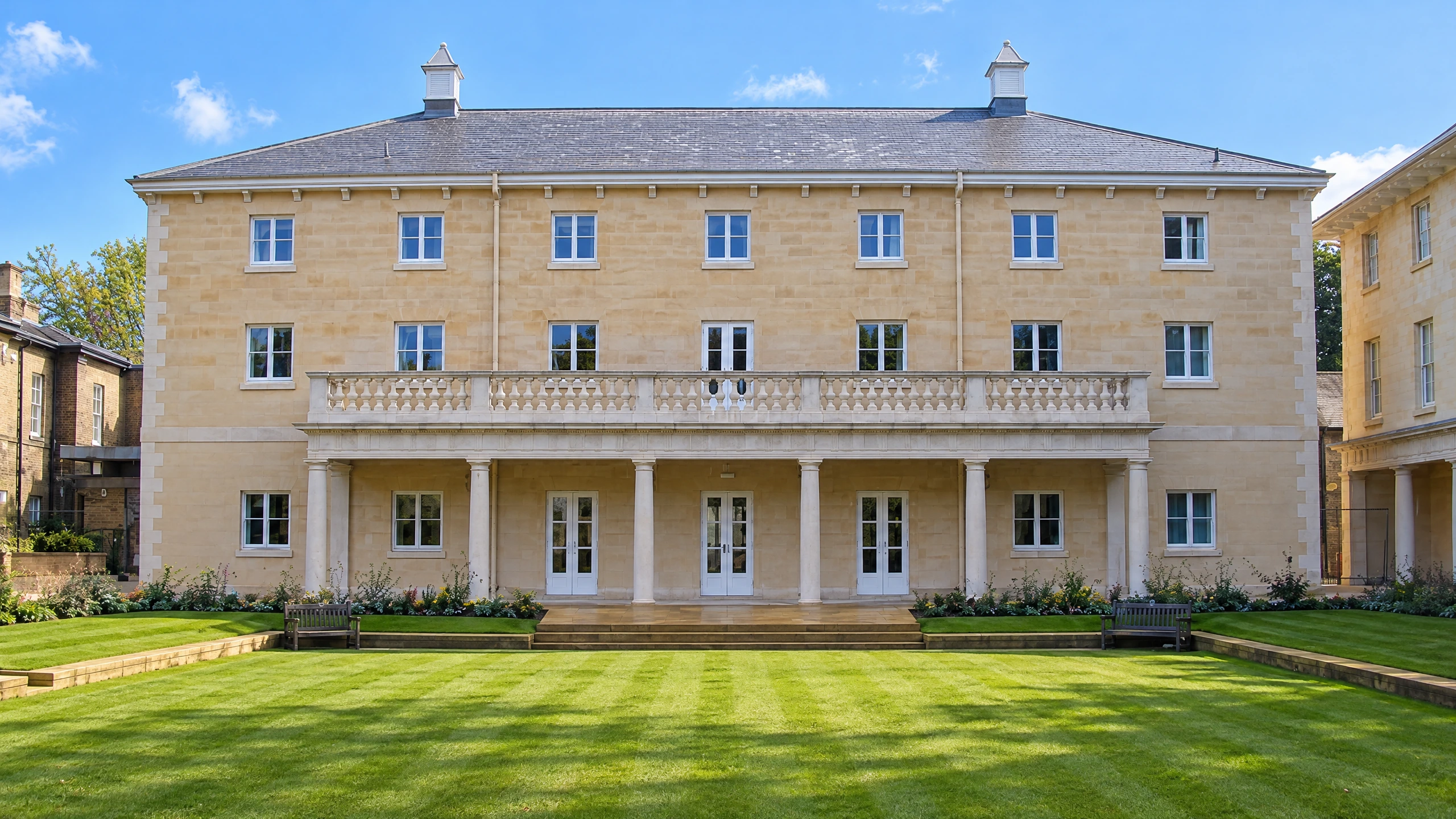
Downing’s classical story continued into the twentieth century with the chapel and the Maitland Robinson Library. The Heong Gallery, in a converted stable building, gives the college a separate focus for exhibitions. The grounds are open to the public; the Porters’ Lodge can advise which areas are available on the day.
People and ideas
Famous former students
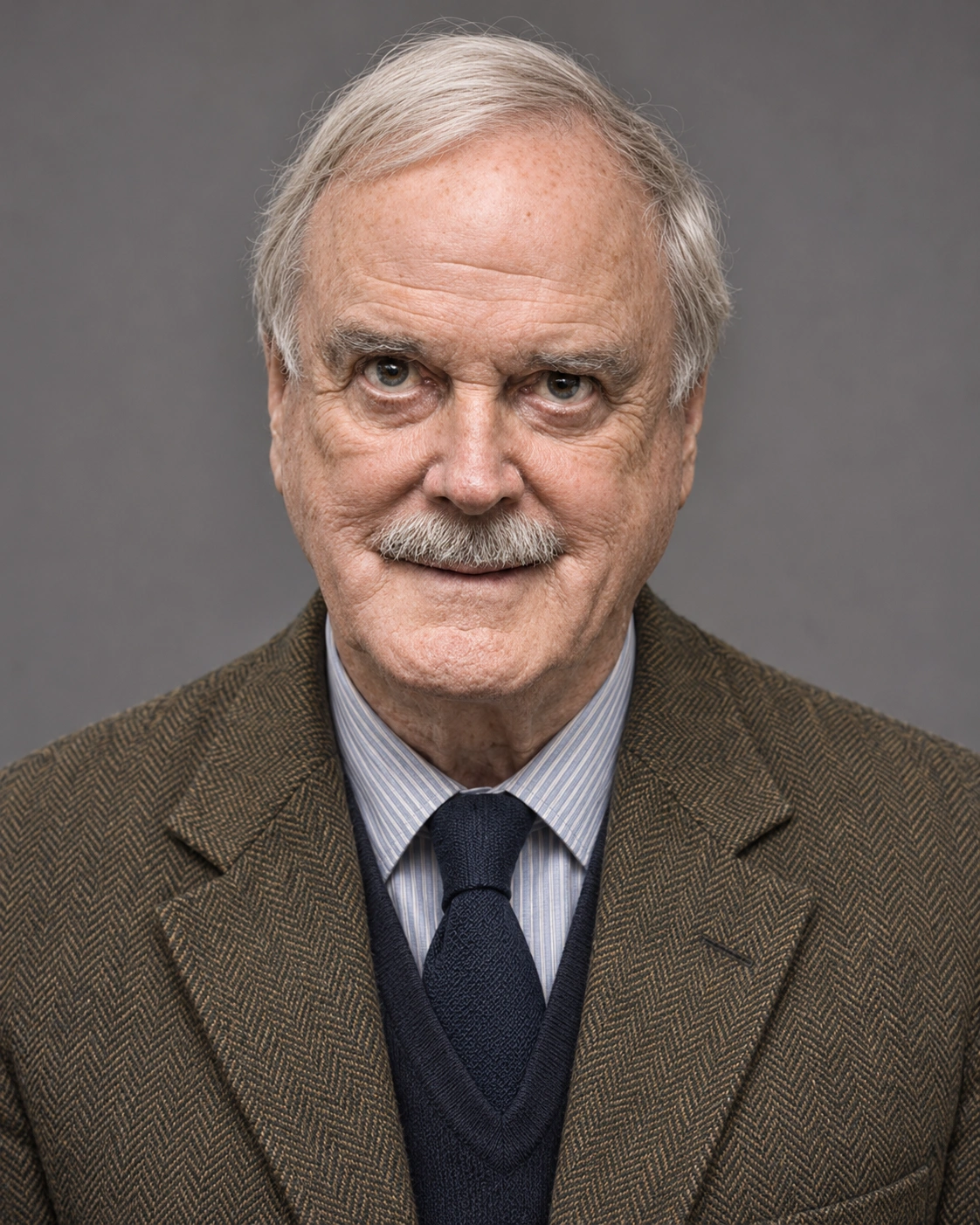
John Cleese
The actor and comedian studied law at Downing and became involved in Cambridge theatre.
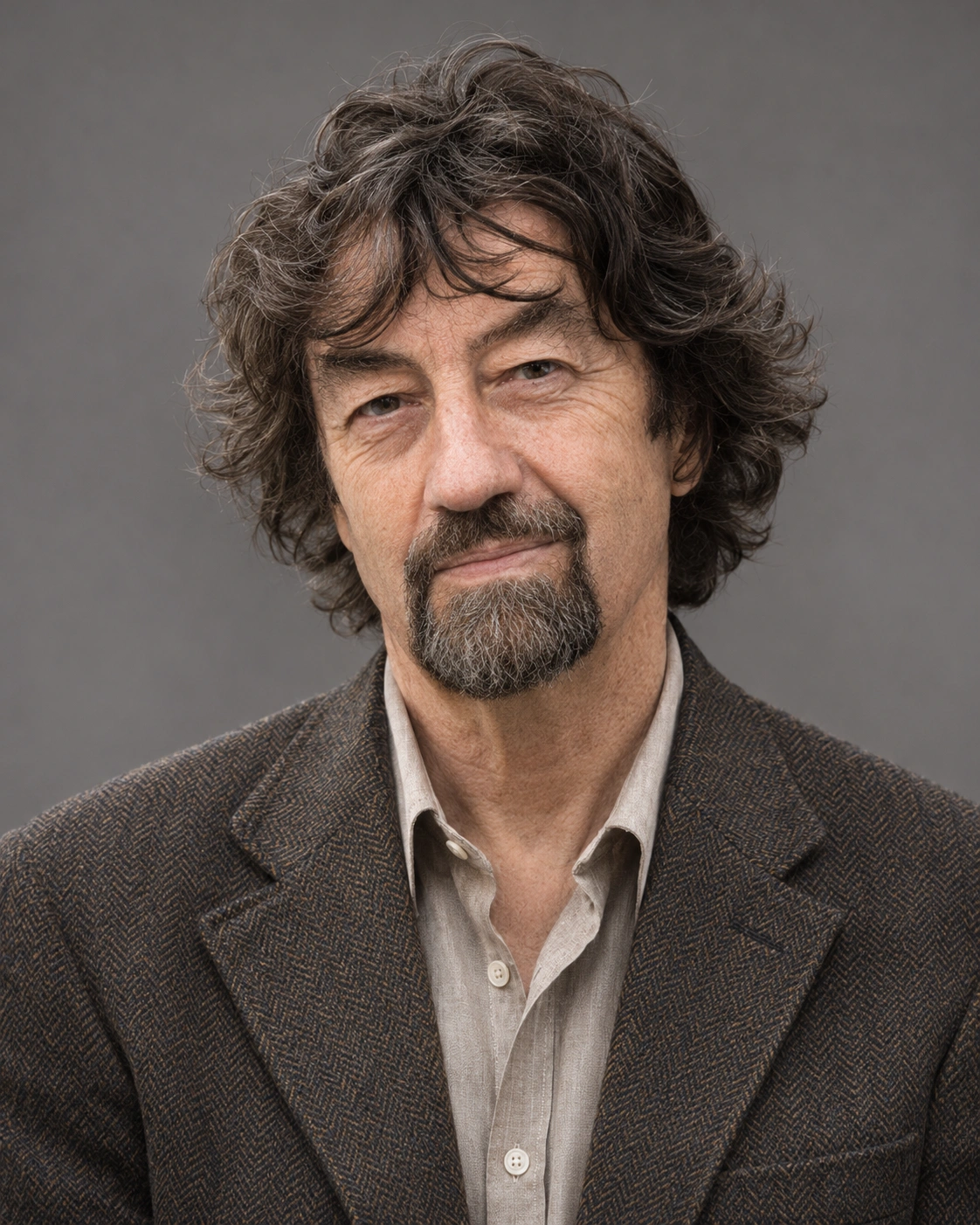
Trevor Nunn
The theatre director developed his interest in theatre while at Downing.
Fellows, founders and other connections
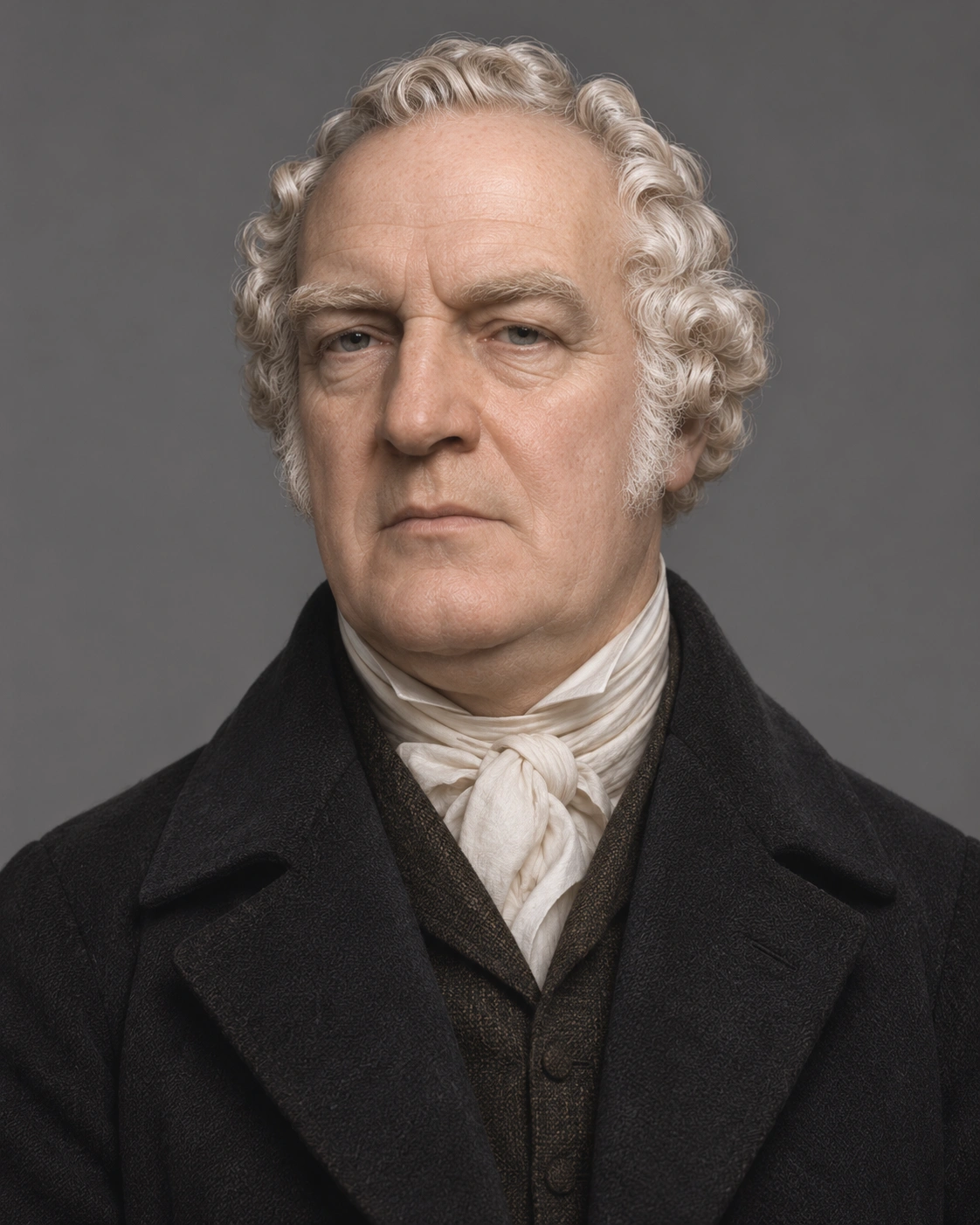
William Wilkins
The architect designed the college’s early Greek-inspired ranges.
The story
History & character.
The contested estate
Sir George Downing’s 1717 will provided for a college only if four named heirs died without surviving heirs. When the last heir died in 1764, his widow Lady Margaret contested the provision. The lawsuit continued after her death and the endowment lost value before Downing College finally received a royal charter in 1800.
Wilkins’ classical plan
William Wilkins designed the first buildings after travelling in the eastern Mediterranean and studying Greek architecture. The East Range was built between 1807 and 1812; the West Range, including the hall, followed between 1818 and 1820. Wilkins proposed four ranges around a quadrangle, but funds ran out before the full scheme was completed. This unfinished plan helps explain the broad, open character of the college today.
Most of the college was built in Ketton stone, while the East Lodge used Portland stone. Former professors’ houses in the ranges have since been adapted for college use.
Wilkins and the wider classical world
Wilkins had travelled in the eastern Mediterranean before working at Downing, studying and recording ancient Greek buildings. His college plan brought that interest to Cambridge in a style very different from its medieval neighbours. The open ground between the ranges was part of a larger architectural idea, even though financial constraints prevented the complete scheme.
The first resident
The first person to live at Downing was not a student but Sir Busick Harwood, its first Professor of Medicine. He moved into the East Lodge in 1811, six years before the college admitted its first undergraduate. Harwood asked to be buried on the intended chapel site, and a vault was made on the grounds after his death in 1814.
A continuing design
The college’s classical design continued through later generations of building. The chapel completed the northern range in 1953, while the Heong Gallery opened in 2016 in the converted Edwardian stables. Its exhibitions bring contemporary art into a space once built for horses.
The gallery’s building has had several lives. Its stables, constructed in 1902–03, later served as a bicycle shed before Caruso St John Architects converted it for exhibitions. Since opening, the gallery has shown work by artists including Ai Weiwei and Yoko Ono, and by Downing alumnus Quentin Blake. Exhibitions change, so the building is best paired with the current programme.
Look closer
What to see.
East and West Ranges
Wilkins’ Greek-inspired ranges define the sides of the broad central lawn.
The open lawn
The four-sided scheme was never completed, leaving the spacious character visible today.
East Lodge
This early building uses Portland stone, unlike the Ketton stone used for much of the college.
Heong Gallery
A converted stable building provides a setting for changing art exhibitions.
Make it work
Plan your visit.
The grounds are open to the public. Enter by the Regent Street Porters’ Lodge for a map and information about which areas are open. Access can change for examinations and college events; there is no public right of way through the site. Gallery exhibitions have their own opening arrangements.
Visit your way
Access and family planning.
The Porters’ Lodge main door has three steps; an accessible entrance is at the rear. The Regent Street pedestrian gate has a 100 cm opening and may be difficult for some visitors to open.
See it
In pictures.
10 views, full screen. Tap any one to open the viewer.Around here
Make more of the area.
Good to know
Questions, answered.
Can the public visit Downing College, Cambridge?
The grounds of Downing College, Cambridge, are open to the public. Enter through the Regent Street Porters’ Lodge for a map and information about the areas open; events and examinations can affect access.
Is there a public right of way through Downing College?
No. The grounds can welcome visitors, but the college does not provide a public right of way through the site.
Can I visit the Heong Gallery at Downing College?
Yes, during its advertised exhibitions. The gallery presents modern and contemporary art, and opening hours vary with the programme.
Is the Heong Gallery free to visit?
The gallery’s public exhibitions are free. Check the current exhibition dates and hours before setting out.
Why does Downing College look different from Cambridge’s medieval colleges?
Architect William Wilkins drew on ancient Greek architecture for its neoclassical stone ranges, giving Downing a different character from Cambridge’s older medieval courts.
Why is Downing College Cambridge so open?
Wilkins proposed a four-sided court, but the money ran out before the complete scheme was built. The space between the stone ranges remains one of the college’s defining features.
Who founded Downing College Cambridge?
Sir George Downing left a provision for a college in his 1717 will. A dispute over his estate delayed the foundation until Downing received its royal charter in 1800.
Who designed Downing College Cambridge?
William Wilkins designed its original neoclassical buildings after studying ancient Greek architecture during travels in the eastern Mediterranean.
What was the Heong Gallery at Downing College, Cambridge, built for?
The Heong Gallery building at Downing College, Cambridge, was built as college stables in 1902–03 and later used as a bicycle shed. Caruso St John Architects converted it for exhibitions; the gallery opened in 2016.
Where is Downing College Cambridge?
The main visitor entrance and Porters’ Lodge are on Regent Street, south-east of the historic centre.
Which famous people studied at Downing College Cambridge?
Downing alumni include comedian John Cleese, actor Thandiwe Newton, theatre director Trevor Nunn and illustrator Quentin Blake.
Editorial notes
Sources and further reading.
Sources for this guide
- https://www.dow.cam.ac.uk/about/downing-college-history
- https://www.dow.cam.ac.uk/widening-participation/tours
- https://www.dow.cam.ac.uk/current-students/downing-college-rules-and-guidelines/gates-and-guests
- https://www.dow.cam.ac.uk/creative-arts/heong-gallery
- https://dow.cam.ac.uk/about/downing-college-history/downing-college-timeline
- https://www.dow.cam.ac.uk/about/downing-college-archive/archives-college-history/sir-busick-harwood
- https://www.accessable.co.uk/downing-college/access-guides/porters-lodge-inc-post-room-accommodation-office
- https://www.dow.cam.ac.uk/sites/default/files/2025%20Downing%20Magazine.pdf
- https://dow.cam.ac.uk/creative-arts/drama-downing
- https://www.emma.cam.ac.uk/contact/findus
- https://www.corpus.cam.ac.uk/articles/secrets-corpus-clock
- https://dow.cam.ac.uk/about/downing-college-archive/archives-college-history/william-wilkins-grand-tour
- https://www.dow.cam.ac.uk/about/downing-college-archive/archives-college-history/history-heong-gallery-building
- https://dow.cam.ac.uk/creative-arts/heong-gallery/past-exhibitions
Reviewed 4 November 2026.
Further reading and sources
Opening hours, prices, programmes and access arrangements can change. Confirm critical details with the venue.
Keep exploring