Central · Founded 1352
Corpus Christi College
The only Cambridge college founded by the town keeps the university's oldest court and, in the Parker Library, one of the world's great collections of medieval manuscripts.
- Founded
- 1352
- Location
- Trumpington Street
- Visiting
- Seasonal visitor opening
- Institution
- College
01 The experience
What to expect.
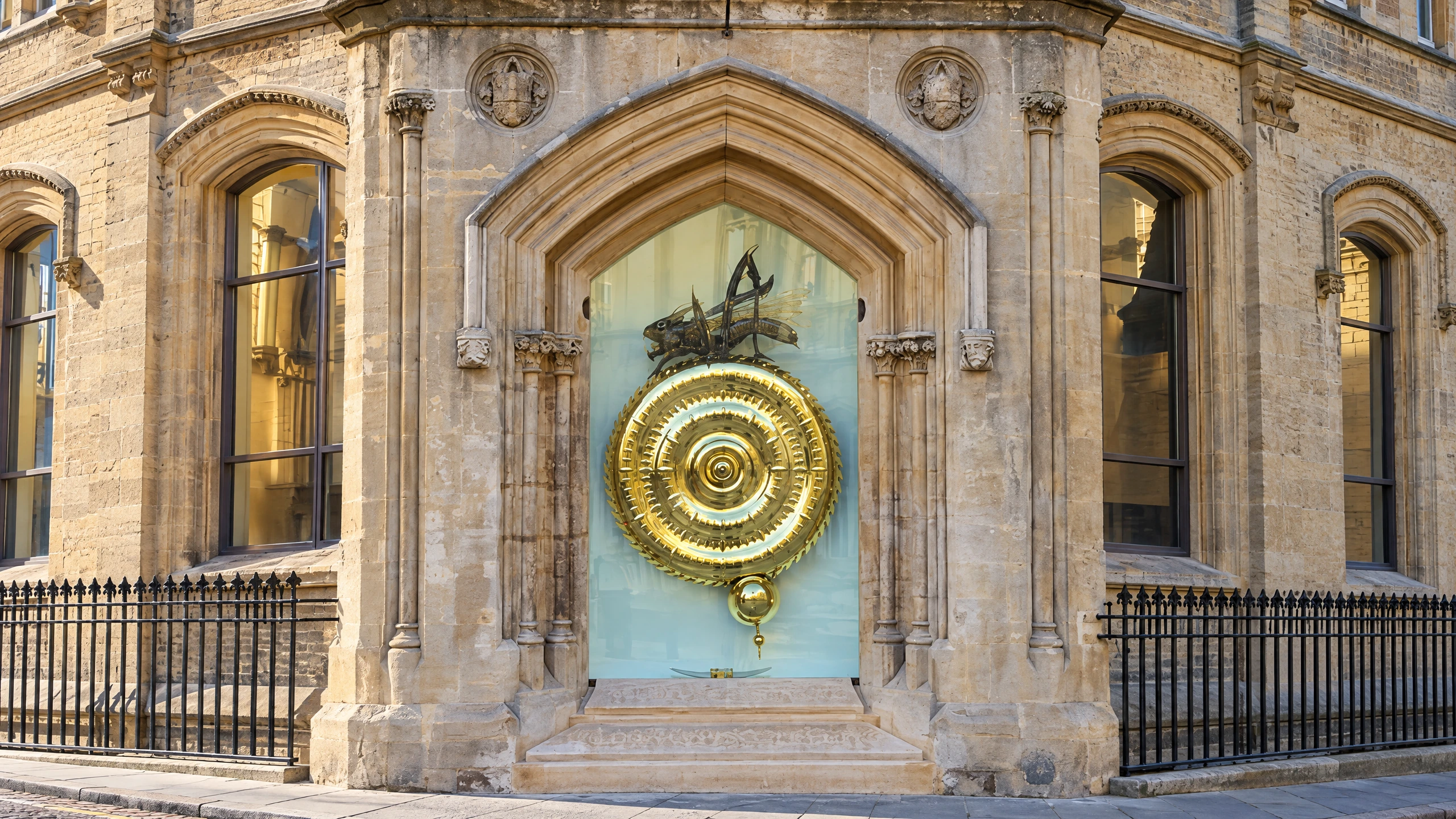
A clock with a giant grasshopper-like creature above its golden dial attracts a crowd at the corner of King’s Parade and Bene’t Street. This is the Corpus Clock, created by alumnus John C. Taylor. The creature is the Chronophage, or time-eater, and the clock occupies a former bank doorway beside the college’s Taylor Library.
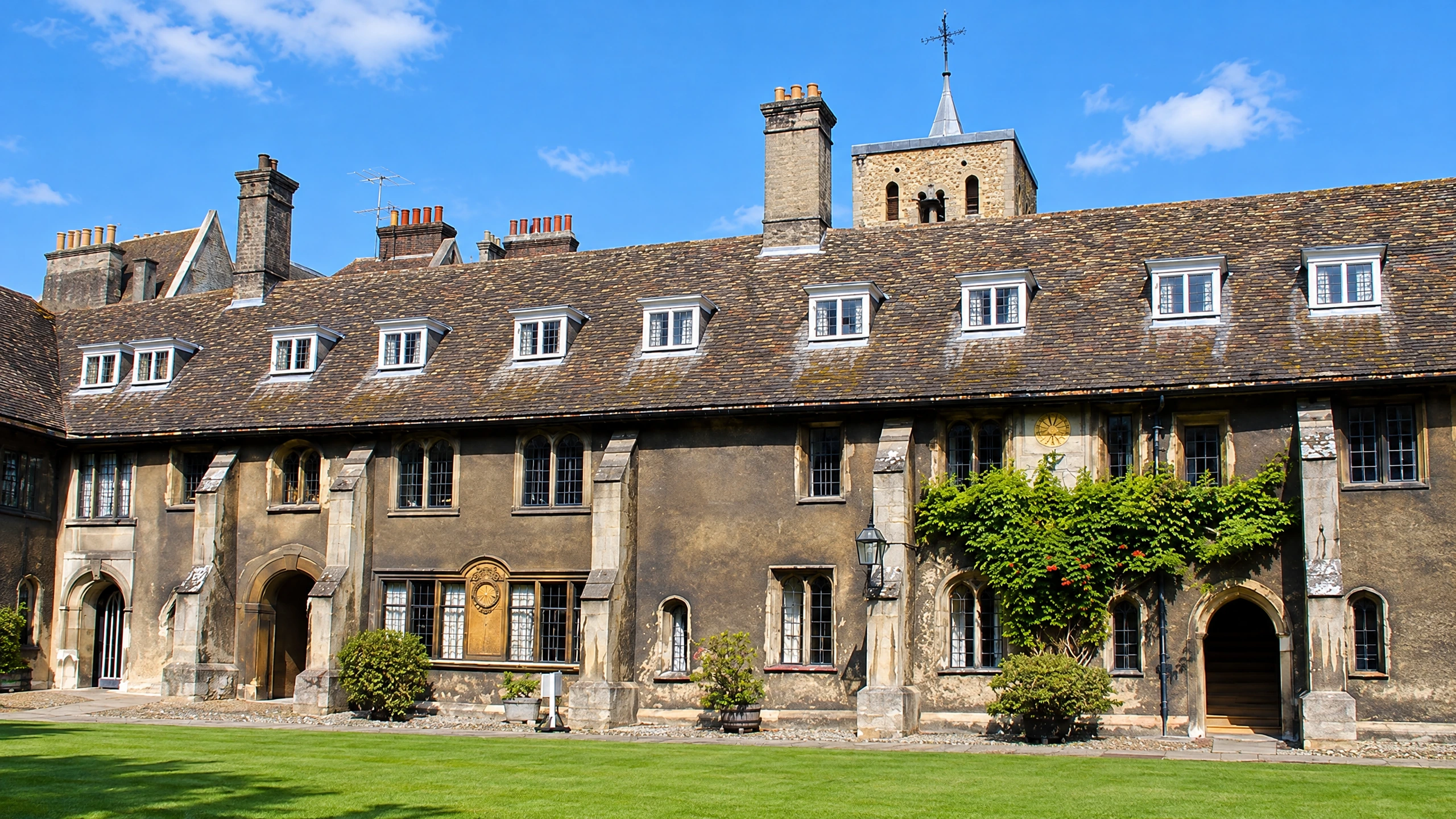
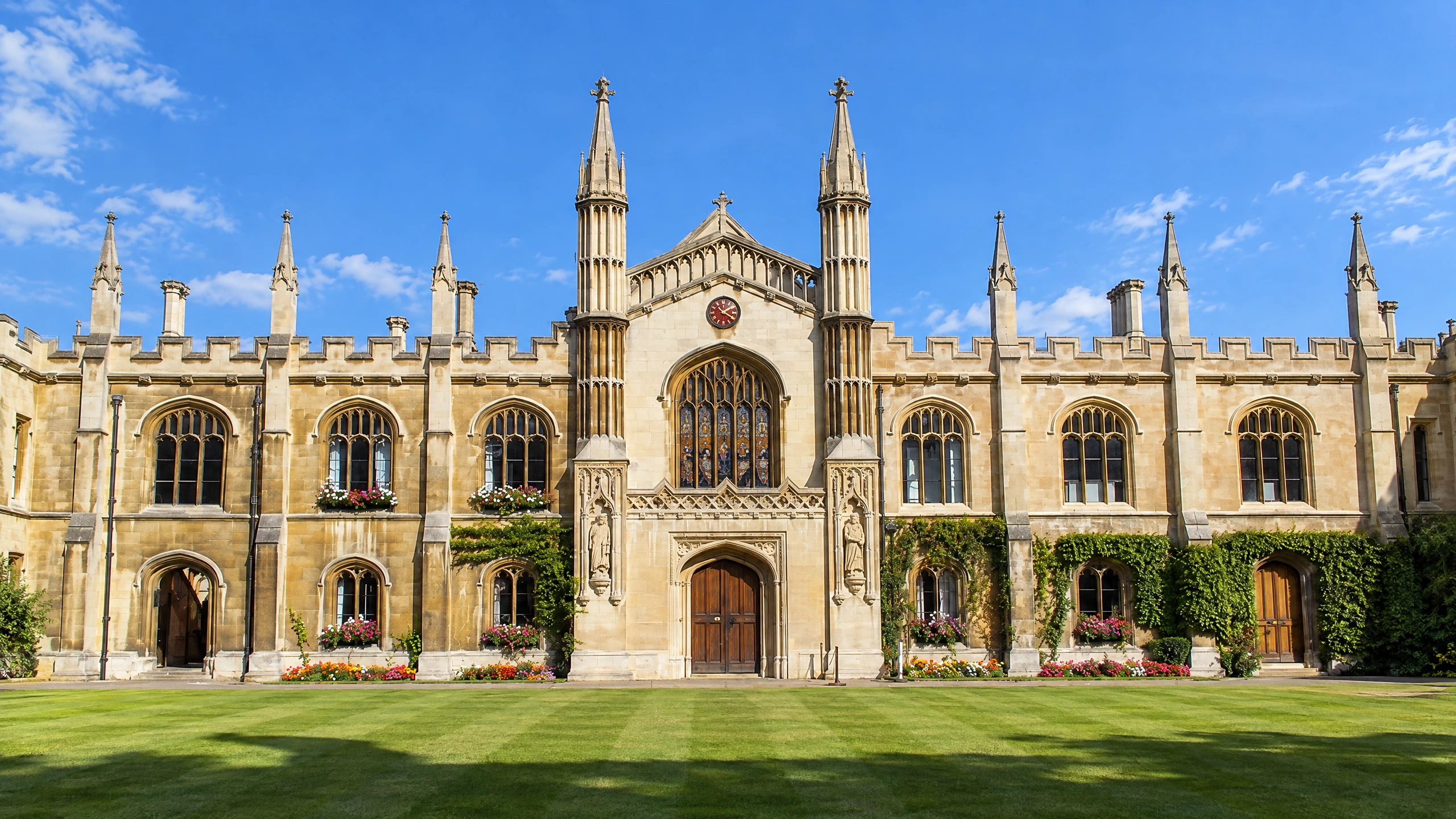
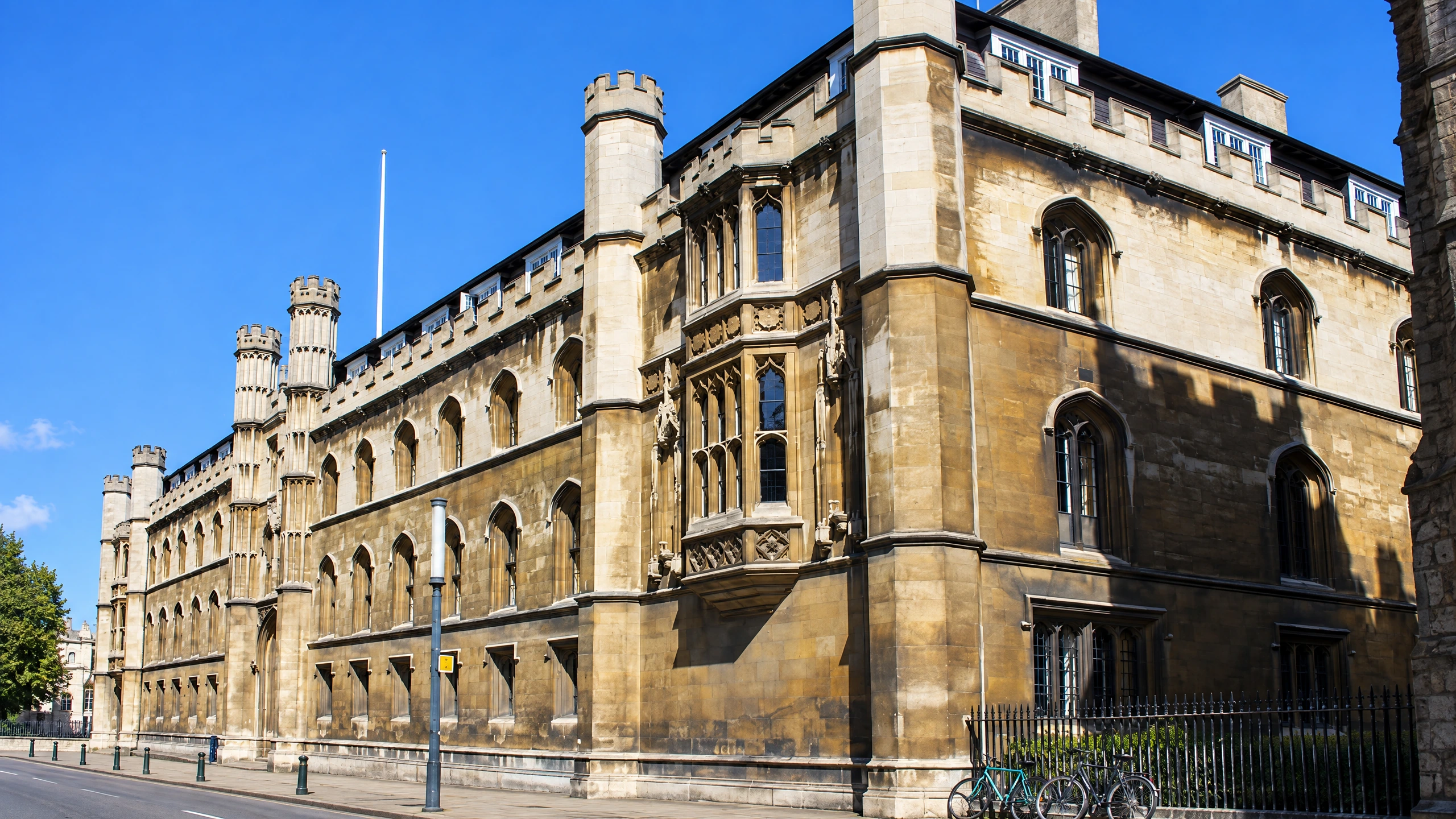
Behind the busy street is a much older Cambridge. Corpus Christi was founded by two town guilds in 1352, and Old Court preserves the scale of an early college courtyard. New Court, with hall, chapel and the Parker Library, was built in the nineteenth century.
The Parker Library holds manuscripts gathered by Matthew Parker, a former master and Archbishop of Canterbury. Its collections include the oldest version of the Anglo-Saxon Chronicle and around 40 Old English manuscripts. General tours are arranged separately, and visits to the library must be pre-arranged.
People and ideas
Famous former students
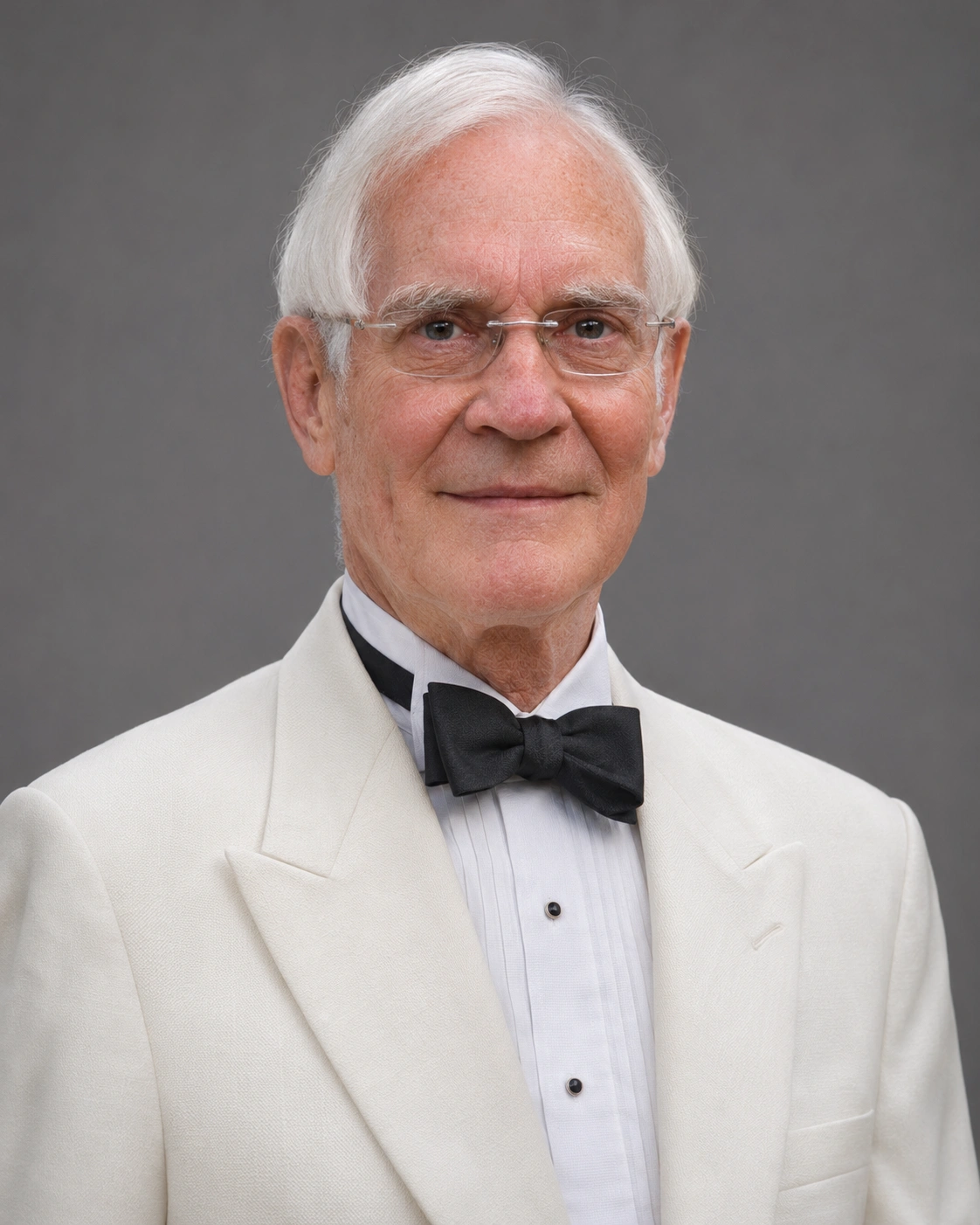
John C. Taylor
The alumnus created and gave the Corpus Clock to the college.
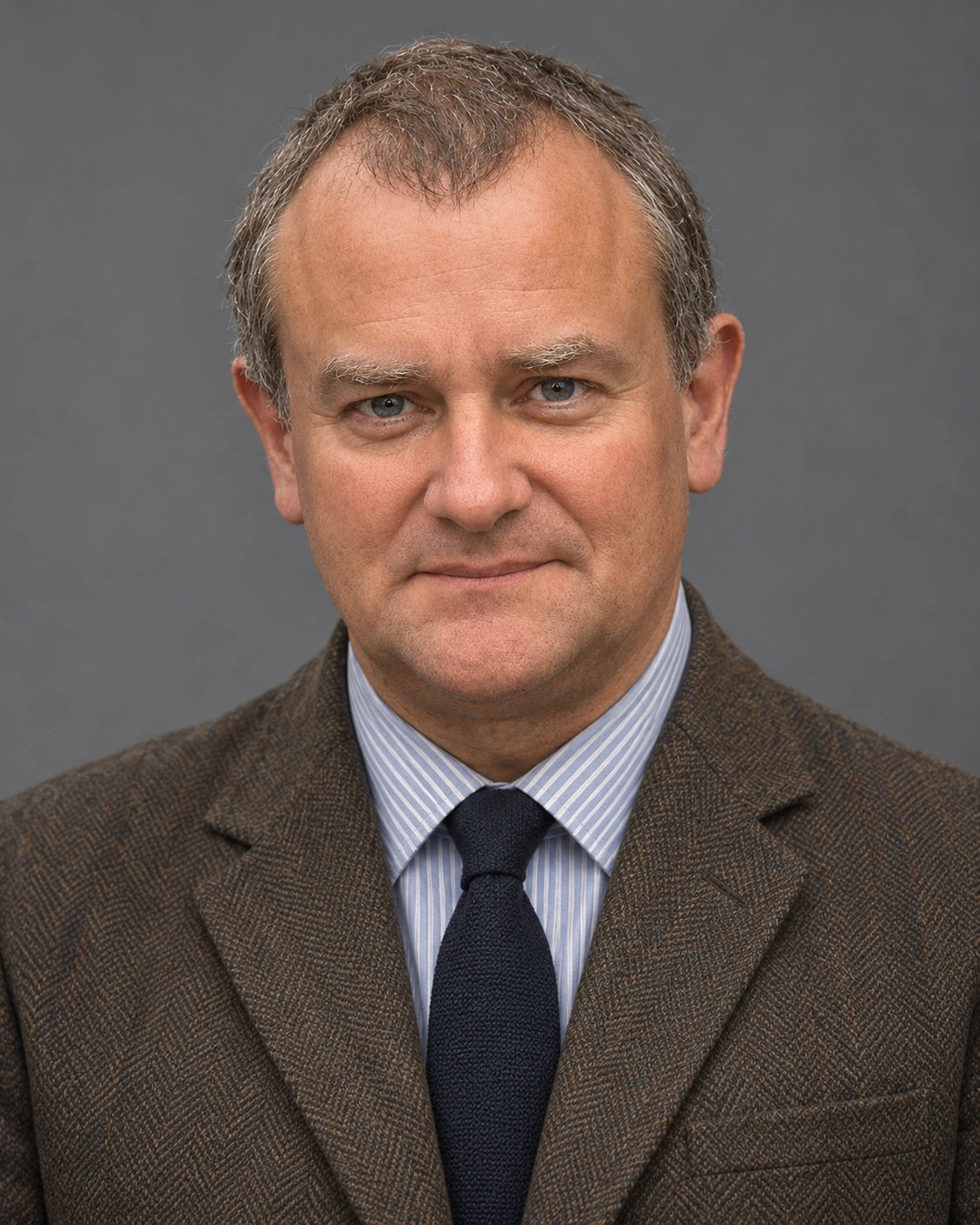
Hugh Bonneville
The actor studied theology at Corpus before training for the stage.
Christopher Marlowe
The Elizabethan playwright lived in Old Court as a Corpus student and wrote plays including Doctor Faustus and Tamburlaine.
Fellows, founders and other connections
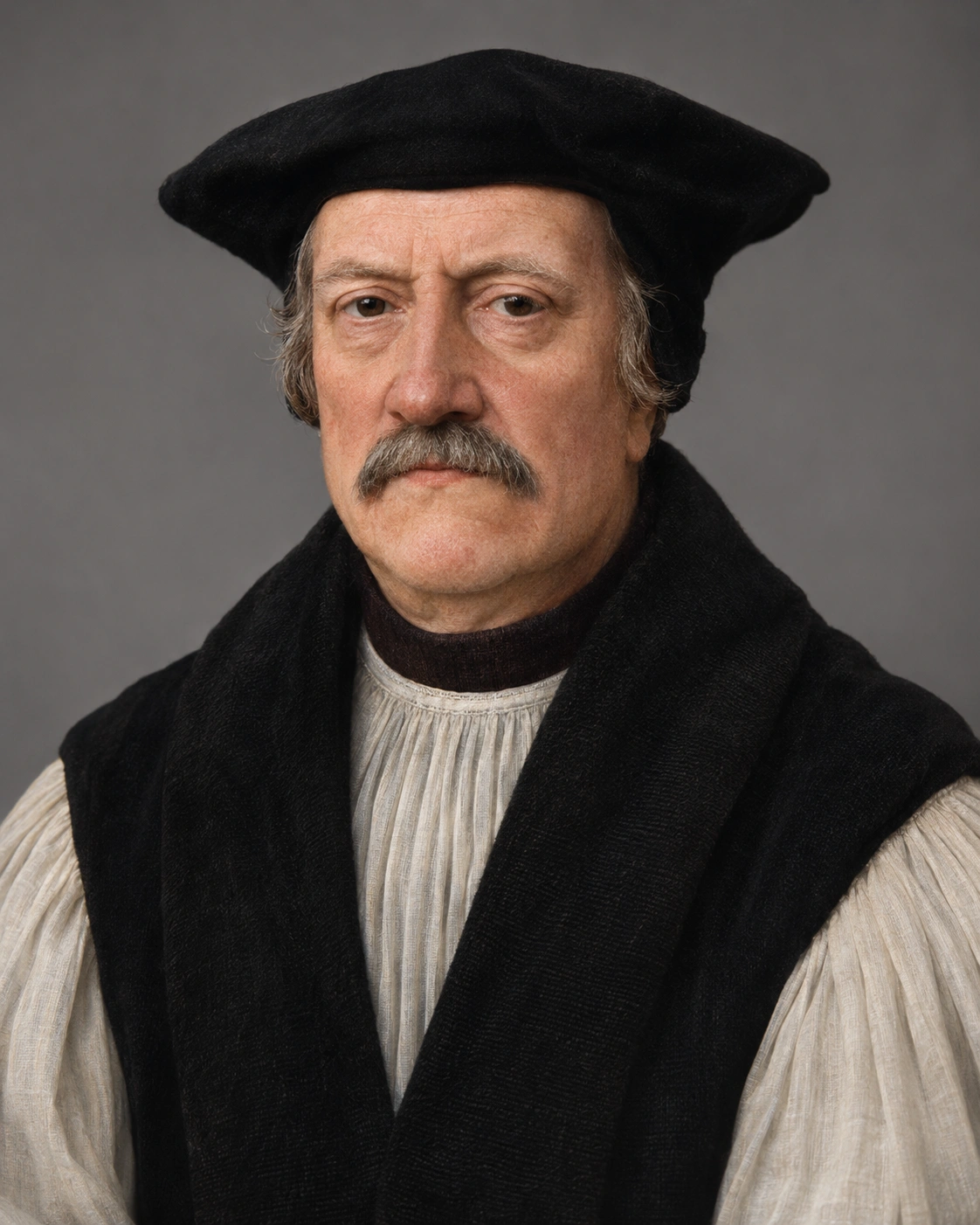
Matthew Parker
The former Master and Archbishop of Canterbury assembled the manuscript collection that bears his name.
The story
History & character.
Founded by the town
The guilds of Corpus Christi and the Blessed Virgin Mary founded the college in 1352, following the Black Death. Their support paid for fellows and scholars to pray for guild members, connecting the new college with Cambridge’s townspeople. Research on burials beside St Bene’t’s Church has connected its early entrance with the years after the plague: a strip of churchyard became a route between Bene’t Street and the college in the decades after its foundation.
The town’s relationship with the college was not always harmonious. In 1381 a crowd led by the mayor attacked Corpus amid resentment over rents, and many college books and documents were burned. The episode sits alongside the unusual story of a college founded by the town’s own guilds.
Marlowe in Old Court
The medieval Old Court preserves the scale of the early college. Playwright Christopher Marlowe arrived in December 1580 and lived here before writing plays including Doctor Faustus and Tamburlaine. A plaque in the court recalls Marlowe and fellow dramatist John Fletcher, connecting the space with the Elizabethan and Jacobean stage.
A dog on the gable
From Free School Lane, a carved stone dog called a talbot can be seen on the gable of Old Court. It commemorates Eleanor Talbot, whose sister Elizabeth, Duchess of Norfolk, endowed a scholarship in her memory. Before Corpus had its own chapel, members worshipped in the neighbouring church of St Bene’t; its Saxon tower and a gallery connecting it to Old Court preserve another close link between college and town.
The Parker Library
Former Master and Archbishop of Canterbury Matthew Parker assembled the collection that bears his name. Its Old English manuscripts include the Bath Gospels, the Corpus Glossary and an early version of the Anglo-Saxon Chronicle. The sixth-century Augustine Gospels were made in Italy and brought to Canterbury; they are still used at the enthronement of Archbishops of Canterbury. Not every manuscript is on display at every visit, and the digitised collection offers another way to explore the books.
New Court and the clock
The nineteenth-century New Court brought a hall, chapel and Parker Library together around a larger courtyard. Two centuries later, the college converted a former bank into the Taylor Library for students. Planning restrictions prevented the redundant bank doorway from simply being closed up; alumnus John C. Taylor’s clock became the work of art placed there. Its moving Chronophage, or time-eater, is based on the grasshopper escapement, a clock mechanism associated with John Harrison.
Look closer
What to see.
Corpus Clock
See John C. Taylor’s moving Chronophage above the gold-coloured dial on the street corner.
Old Court
The medieval court preserves the intimate scale of the college’s earliest buildings.
New Court
The nineteenth-century court brings together the hall, chapel and Parker Library.
Parker Library
Its manuscript collection can be explored through pre-arranged tours and exhibitions; manuscripts are also digitised online.
Make it work
Plan your visit.
During the summer months the college normally opens 10:30–16:30, with a possible short closure over lunch. Admission is £5 per person aged 18 and over. Enter from Trumpington Street and report to the Porters’ Lodge; larger groups should contact the Head Porter. The Parker Library runs pre-arranged tours and exhibitions.
Visit your way
Access and family planning.
The Corpus Clock is visible from a level, block-paved pavement. Bollards stand along the pavement, and the glass covering the clock may produce glare.
The moving Chronophage on the Corpus Clock is visible from the pavement without entering the college. The Parker Library’s manuscripts can also be explored online; in-person visits are pre-arranged.
See it
In pictures.
10 views, full screen. Tap any one to open the viewer.Around here
Make more of the area.
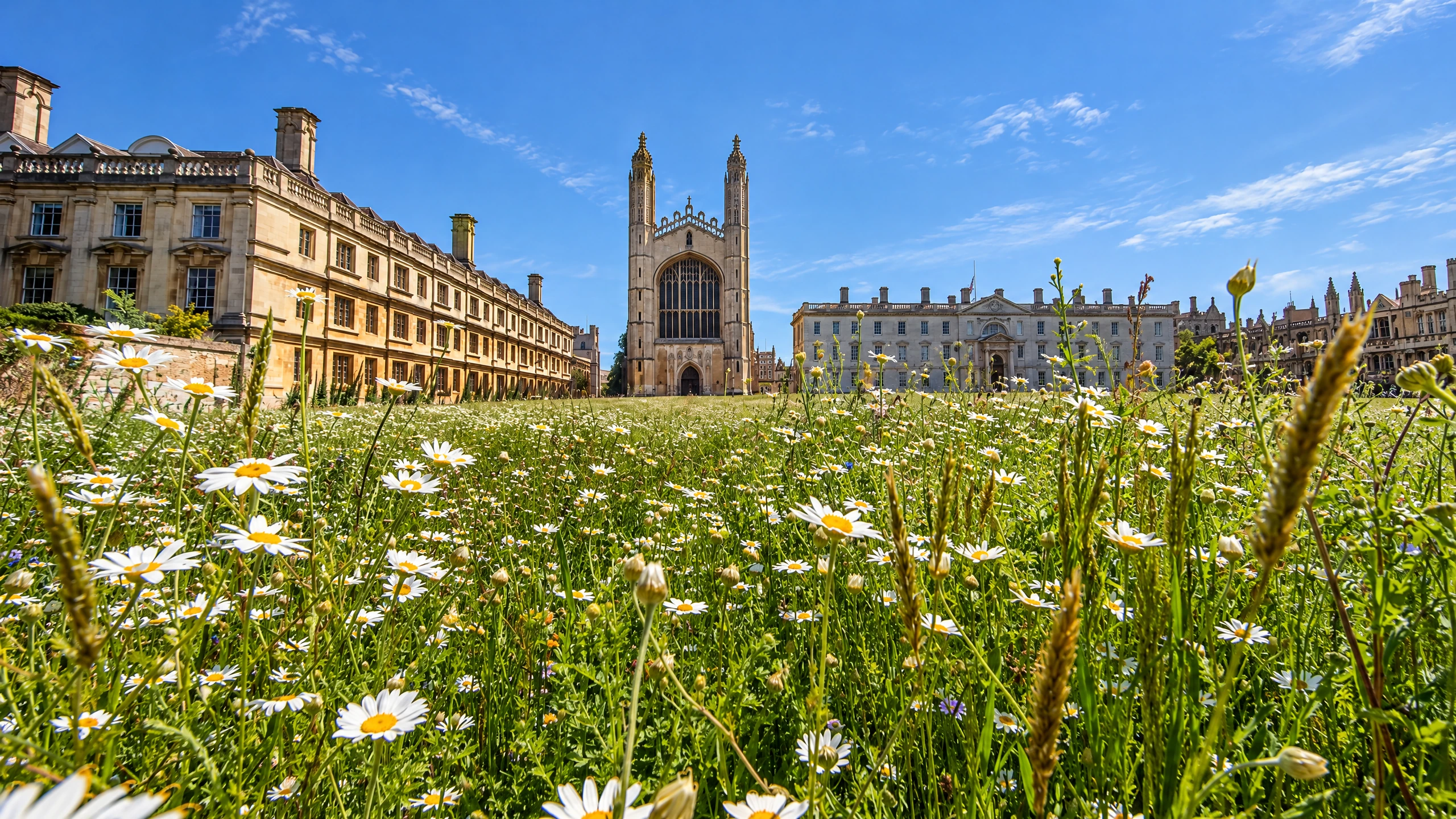
The chapel is a short distance along King’s Parade. Its fan vault and stained glass form the centrepiece of a ticketed visit.
Good to know
Questions, answered.
Can I see the Corpus Clock without entering Corpus Christi College?
Yes. The clock is on the public street at the corner of King’s Parade and Bene’t Street. Its large moving creature is called the Chronophage, or time-eater.
What is the creature on top of the Corpus Clock?
The Chronophage is a moving time-eater based on a grasshopper escapement, a clock mechanism associated with inventor John Harrison. It sits above the clock’s gold-coloured dial.
Who made the Corpus Clock in Cambridge?
Corpus alumnus and inventor John C. Taylor gave the clock to the college. It occupies a former bank entrance incorporated into the Taylor Library.
Can I visit the Parker Library at Corpus Christi College?
Yes, by prior arrangement. The library holds regular exhibitions and offers bookable general tours; all visits must be arranged in advance.
Can I see Parker Library manuscripts online?
Yes. The library’s significant premodern manuscripts have been digitised and can be viewed through Parker Library On the Web.
Why is the Parker Library famous?
Its medieval manuscripts include an early Anglo-Saxon Chronicle and the sixth-century Augustine Gospels. The Gospels are used at the enthronement of Archbishops of Canterbury.
How much does Corpus Christi College Cambridge cost to visit?
During the summer visitor opening, admission is £5 per person aged 18 and over. The college normally opens 10:30–16:30, with a possible short lunch closure. Parker Library visits are arranged separately.
Where is the entrance to Corpus Christi College Cambridge?
For a college visit, enter from Trumpington Street and report to the Porters’ Lodge. The Corpus Clock is outside on the King’s Parade and Bene’t Street corner.
Which Cambridge college did Christopher Marlowe attend?
Playwright Christopher Marlowe arrived at Corpus Christi in 1580. A plaque in Old Court remembers him and fellow dramatist John Fletcher.
Who founded Corpus Christi College Cambridge?
Two Cambridge town guilds, Corpus Christi and the Blessed Virgin Mary, founded the college in 1352. Their support linked the new institution closely to the town.
What is Old Court at Corpus Christi College?
Old Court is the college’s medieval courtyard. Its small scale preserves a sense of the early college, and a plaque there recalls Marlowe and John Fletcher.
Who was Matthew Parker of Corpus Christi College?
Matthew Parker was a Master of Corpus Christi and later Archbishop of Canterbury. He assembled the manuscript collection now known as the Parker Library.
Editorial notes
Sources and further reading.
Sources for this guide
- https://www.corpus.cam.ac.uk/articles/secrets-corpus-clock
- https://www.corpus.cam.ac.uk/articles/two-centuries-new-court
- https://www.corpus.cam.ac.uk/parker-library/collections
- https://www.corpus.cam.ac.uk/parker-library
- https://www.corpus.cam.ac.uk/sites/default/files/downloads/a-short-history-of-corpus-christi-web-complete_0.pdf
- https://www.corpus.cam.ac.uk/contact/how-find-us
- https://www.corpus.cam.ac.uk/articles/was-college-entrance-deliberately-built-note-victims-plague
- https://www.accessable.co.uk/cambridgeshire/cambridgeshire-county-council/access-guides/corpus-clock
- https://www.corpus.cam.ac.uk/articles/visit-alumnus-hugh-bonneville
- https://www.corpus.cam.ac.uk/about/college-history
- https://www.corpus.cam.ac.uk/articles/corpuscle-corpuscle-michael-yelton-publishes-book-work-architect-thomas-henry-lyon
- https://www.rsc.org.uk/shakespeares-contemporaries/meet-the-contemporaries
- https://www.kings.cam.ac.uk/your-visit-kings
- https://www.emma.cam.ac.uk/contact/findus
Reviewed 4 November 2026.
Further reading and sources
Opening hours, prices, programmes and access arrangements can change. Confirm critical details with the venue.
Keep exploring