boat-trip / Oxford
In depth
Salter's Steamers
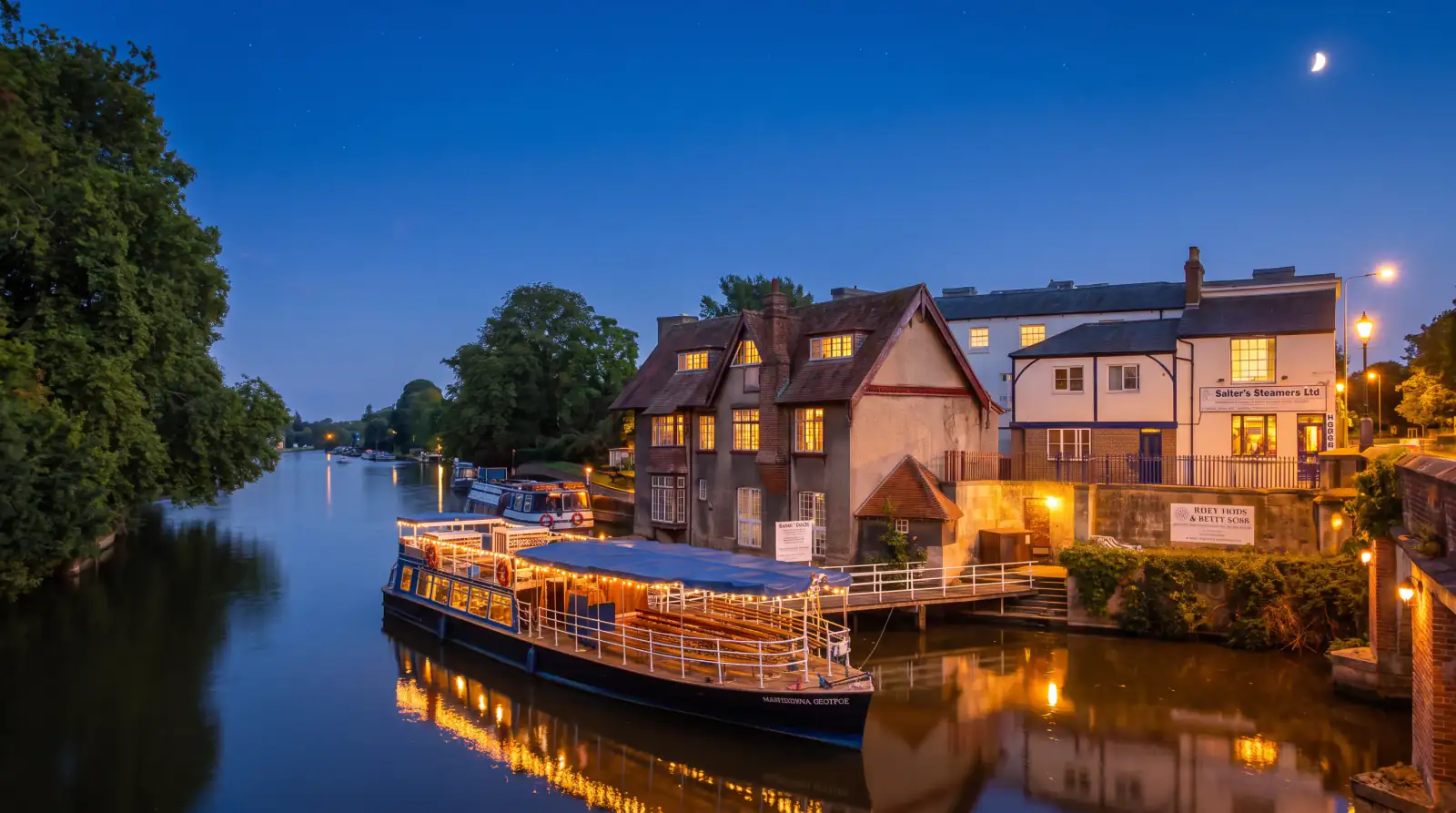
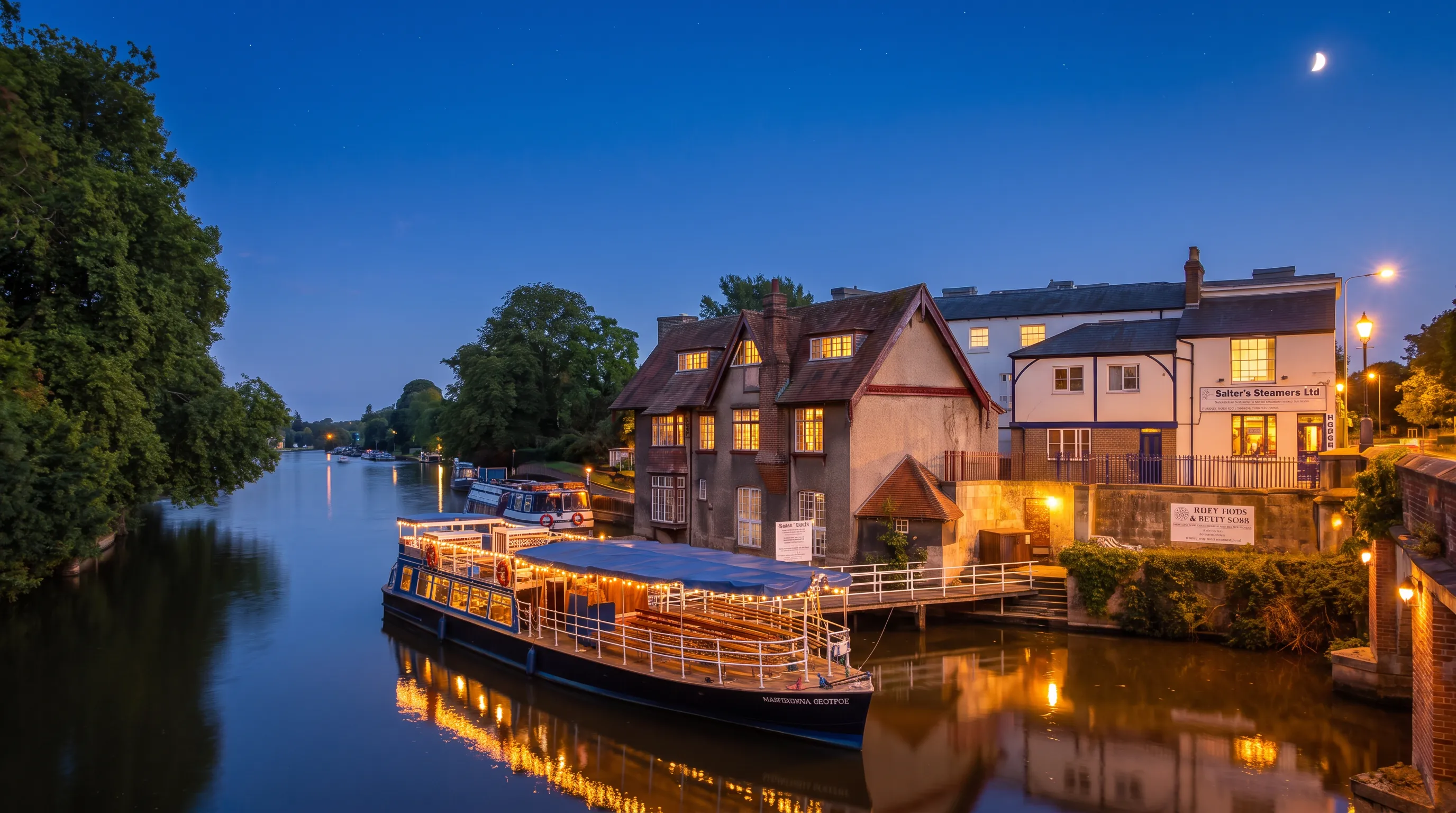
Thames cruises and self-hire from Folly Bridge, run by the same family since 1858 — the firm that built the boats Oxford raced in.
Story · Visit · Route · Links
Visitor Essentials & Quick Answers
Should I choose a river cruise or punting?
Choose a passenger cruise if you want to sit back and watch Oxford’s river landscape without steering. Choose punting for the hands-on experience of moving a small boat along the water. Salter’s operates from Folly Bridge on the Thames; the best-known Cherwell punting routes start at different boathouses.
What does Oxford look like from the river?
The emphasis shifts from college gateways to meadows, boathouses and rowing life. On a route towards Iffley, the water reveals a side of Oxford that a walk through the central streets cannot. Choose your sailing for its actual route rather than expecting every famous dome and spire to line the riverbank.
Why is Salter’s part of Oxford’s history?
John and Stephen Salter established their Folly Bridge boatbuilding business in 1858. Racing boats and later passenger steamers linked the firm to both university rowing and leisure travel on the Thames. The departure point is more than a convenient pier: it belongs to a long-established riverside industry.
What can I combine with a trip from Folly Bridge?
Pair the boat trip with Christ Church Meadow or the Head of the River. The pub occupies the former wharf and warehouse associated with Salter’s, so the combination has a real historical connection. Seeing the working-river traces on land adds context to what you have just watched from the boat.
Choose your depth
Essentials or more detail?
See visiting essentials, or read more about the history and places nearby.Start here
Understand the place.
The context, character and reasons this experience earns time in your Oxford plans.Salter's is not a sightseeing boat company that happens to be in Oxford. It is the firm that built the boats Oxford raced in, then more or less invented Thames leisure travel, and it is still run by the same family from the same bend in the river.
John and Stephen Salter set up as racing boat builders at Folly Bridge in 1858. By the 1860s they were the country's leading racing boat builder, with their craft in the University Boat Race and exports going out to India and New Zealand. In 1888 they launched a steamer service between Oxford and Kingston, partnered it with the Great Western Railway as combined rail-and-river circular tours, and opened the Upper Thames to a scale of visitor traffic it had never seen. By the early 1900s they were the largest passenger boat operator on the non-tidal Thames.
They are still there. The business is now in the hands of fifth and sixth generation family members, which makes it one of the oldest continuously family-owned firms in Oxford.
Why it matters
Most visitors meet Salter's as a forty-minute cruise, and taken on those terms it is a pleasant, slightly expensive hour on the water. Taken on the terms of what it actually is, it is one of the few surviving businesses in the city whose continuity you can stand inside.
The yard they bought in 1858 is still there too — it is now the Head of the River pub, immediately opposite the pier. The warehouse and the wharf are the pub; the boats moved thirty metres across the bridge approach. Almost nobody makes the connection, and it is the single most interesting thing about either business.
It also gives you the one view of Oxford that walking cannot. The college boathouses, the Eights Week course, Christ Church Meadow from the water rather than the path — these are the river's own frontage, and the city was arranged to face it long before it was arranged to face the road.
What is actually on offer
Three different things, and it is worth being clear which you want.
Short cruises — a 40-minute run down to Iffley Lock and back, hourly through the season. The default, and the one most people take.
Longer cruises with food — a lunch trip towards Port Meadow, and an afternoon tea cruise. Both are a couple of hours and priced accordingly.
Self-hire — punts, rowing boats and diesel day-boats you drive yourself, from the bank beside the Head of the River. This is the cheaper and, for many people, the better experience: you go where you like, and there is no commentary.
Who will enjoy it
Anyone who wants the college boathouses and the Eights Week course explained from the water. Families, especially on the short cruise, where a lock cycling through is genuinely good value as a spectacle. Groups, because self-hire day-boats take six, eight or twelve. And anyone interested in how Oxford's river was industrialised and then made into leisure — this firm did both.
Who may find it difficult
Step-free boarding is not confirmed. Telephone +44 (0)1865 243421 before travelling to discuss the vessel and pontoon arrangements for your sailing.
It is not cheap. £16 an adult for forty minutes is at the top of what an Oxford hour costs, and the food cruises are £44 a head. Self-hire is much better value if there are three or four of you.
It is weather- and river-dependent. High water closes the Thames to passenger craft, sometimes at short notice, and self-hire runs Easter to October only.
Visitor verdict
Take the short cruise if you want the boathouses explained and a lock demonstrated. Take a day-boat or a punt if you would rather be in charge and stay out longer. Do either, and then walk thirty metres to the pub that used to be the boatyard — that is the version of this afternoon that will stay with you.
The full story
How it came to matter.
1858 — two brothers and a boatyard
John and Stephen Salter established the business at Folly Bridge in 1858 as racing boat builders. Not as a pleasure-cruise operator: as a workshop making the fastest possible hulls for competitive rowing.
The site they took was the working boatyard on the east side of St Aldate's, which had been Isaac King's St Aldate's Yard — a wharf house, warehouses, stables and sheds around a wharf that had been in use since at least 1638. That yard is now the Head of the River pub. The warehouse became the bar in 1977; the boats simply moved across the bridge approach and carried on.
So the pub and the boats are two halves of one nineteenth-century business, and the firm that owned the site is the one still selling tickets beside it.
The racing years
By the 1860s Salter's were the country's leading racing boat builder. Their craft competed in the University Boat Race, and the firm exported to India and New Zealand — a Folly Bridge workshop supplying rowing clubs across the empire.
The competitive line runs a very long way. Oxford won the 1976 Boat Race in a Salter's-built eight, the third record-breaking craft the firm had produced for that event.
This is the part of the history that explains everything else. The reason Salter's sits where it does, on the stretch of the Isis used for Eights Week and opposite the college boathouses, is that it was built to serve the rowing, not the tourism.
1888 — the steamers, and the invention of Thames leisure travel
In 1888 Salter's launched a passenger steamer service between Oxford and Kingston.
It is difficult to overstate how much this changed the river. The Upper Thames had been a working waterway and a rowing river; the steamer service opened it to what the company describes as "unprecedented numbers of visitors". Salter's then partnered with the Great Western Railway to sell circular tours combining rail and river — take the train one way, the boat the other.
That is a recognisably modern piece of leisure infrastructure, assembled in the 1880s. By the early 1900s Salter's was the largest passenger boat operator on the non-tidal Thames.
Two wars
In both World Wars the yard turned to military work, building dinghies, launches and motor boats.
Some of the passenger fleet was converted into hospital ships. Others went to Dunkirk.
A firm that had spent fifty years carrying day-trippers between Oxford and Kingston sent its boats across the Channel, which is the kind of fact that sits oddly beside an afternoon tea cruise and is worth knowing anyway.
The Bosphorus and C. S. Lewis
The *Bosphorus, built in 1936, was used by C. S. Lewis*.
For a visitor doing Oxford's literary geography — the Inklings at the Eagle and Child and later the Lamb & Flag, Magdalen, the Kilns — this quietly adds the river to the map. Lewis on a Salter's steamer is a more ordinary and more believable image than most of the literary-Oxford repertoire.
Six generations
The business is currently run by fifth and sixth generation family members, which makes it one of Oxford's oldest continuously family-owned firms.
It operates a fleet the company describes as more than twenty vessels across seven locations on the Thames, with Folly Bridge as the head office and main Oxford departure point.
What the history explains about the visit
Three things, if you are on the water and wondering why it is arranged this way.
The college boathouses you pass on the short cruise are the customers the firm was founded to serve. The Eights Week course runs past the pier because the pier was put where the racing was. And the pub opposite is the yard, which is why the boats are on that side of the bridge and the beer garden is a wharf.
Look closer
Highlights and hidden details.
The objects, spaces and small observations that turn a visit into a memorable one.1. The college boathouses from the water
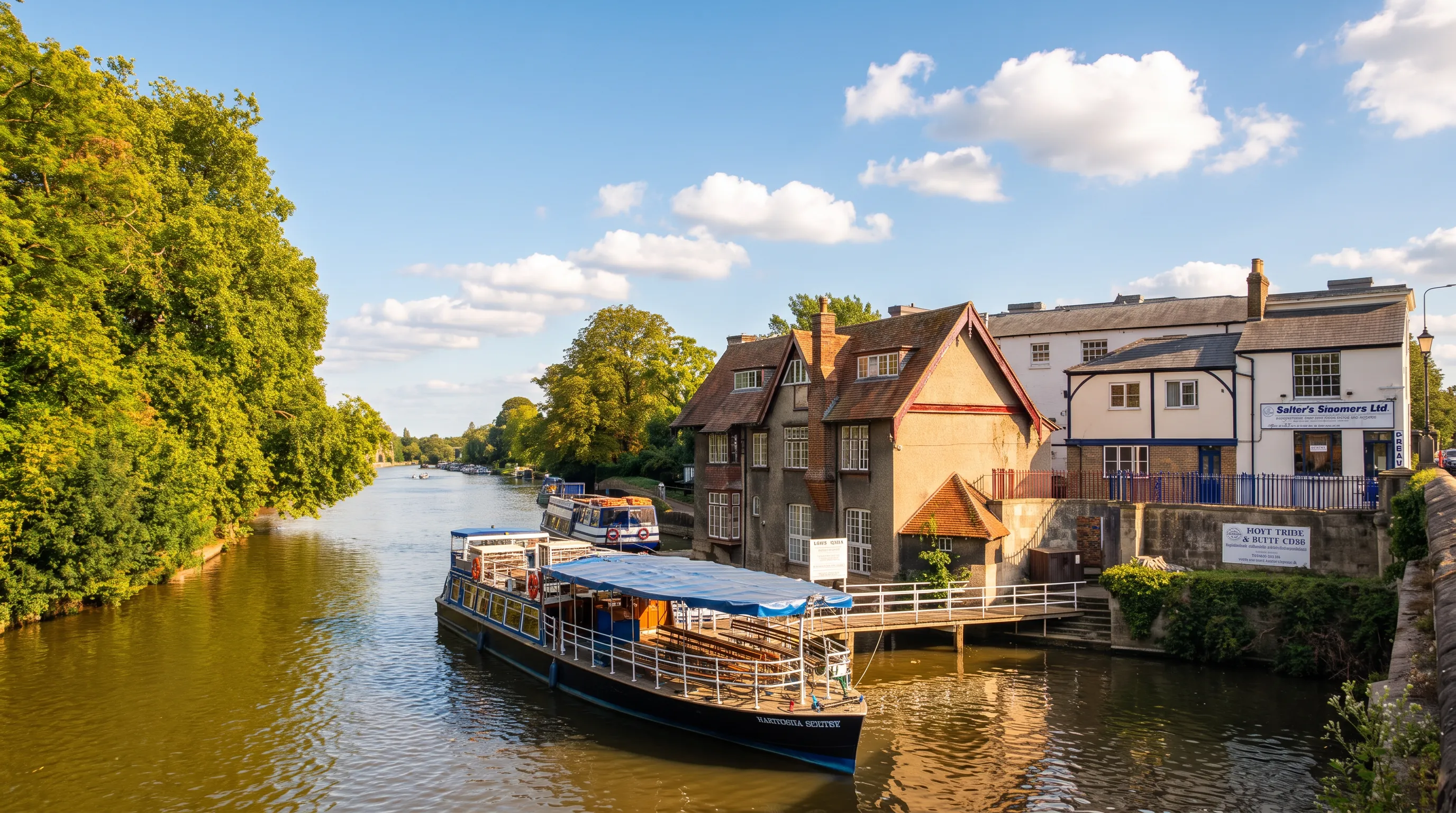
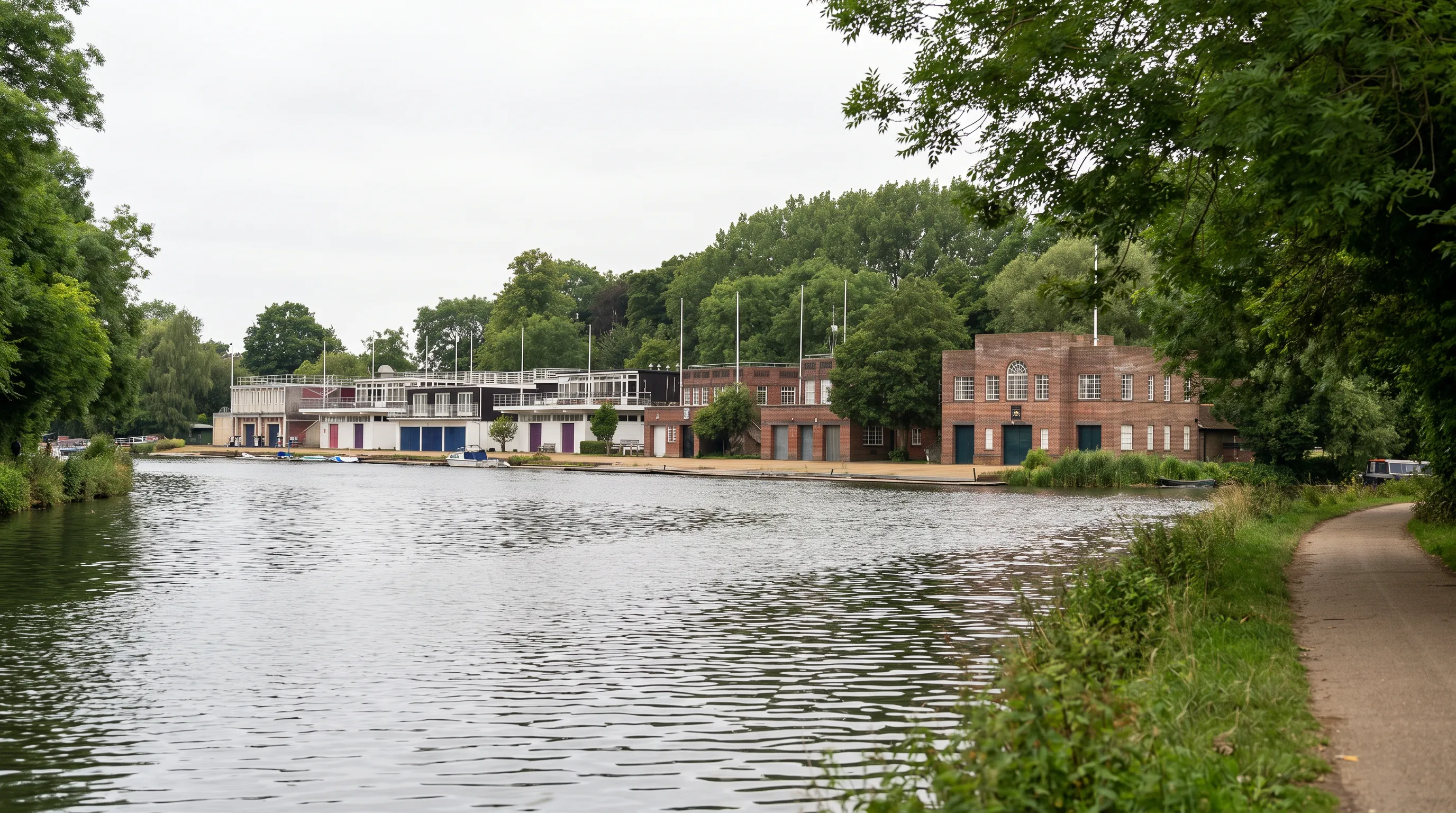
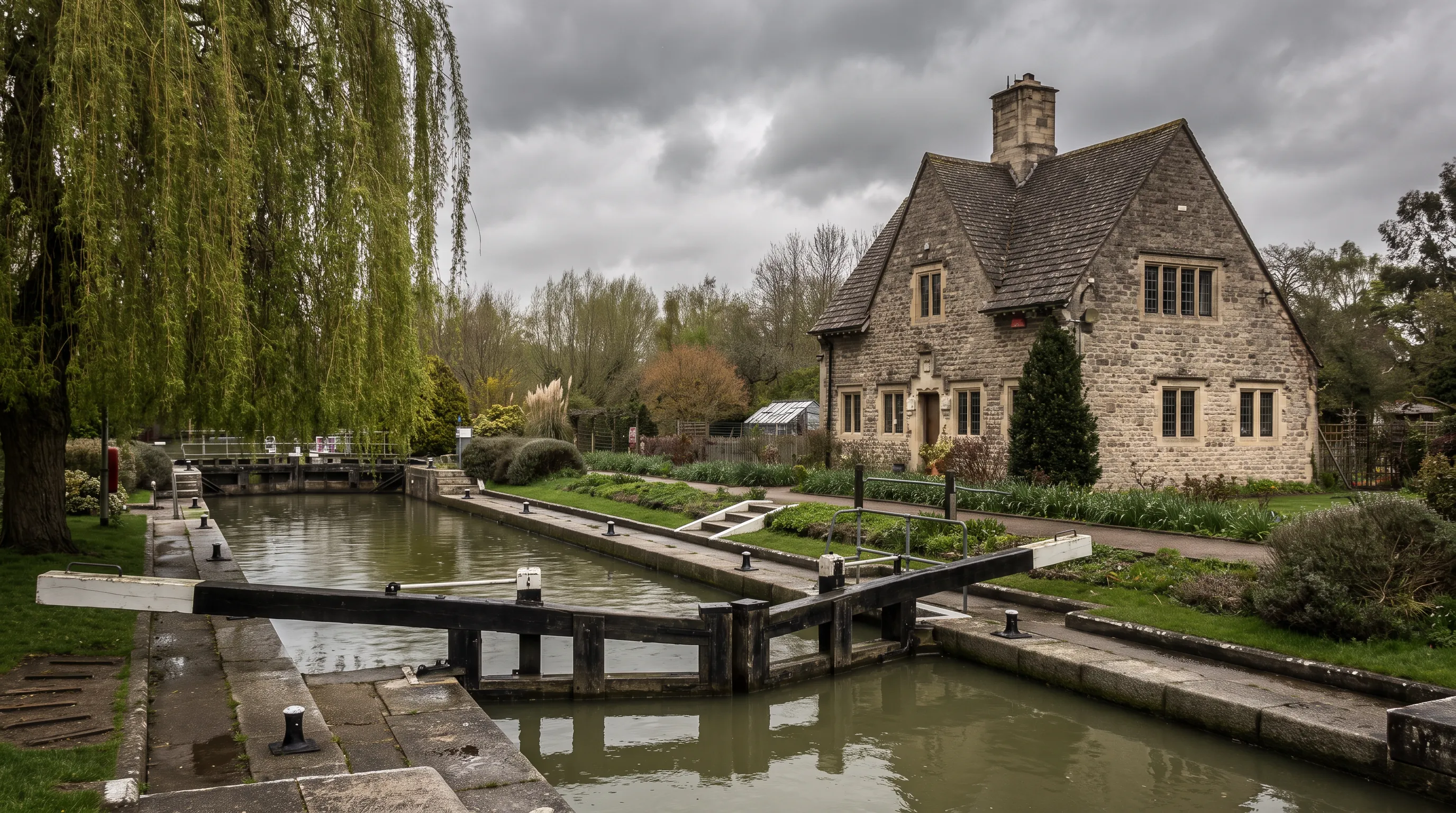
Within minutes of leaving Folly Bridge the short cruise passes the terrace of college boathouses along the Christ Church Meadow bank.
Why it matters: this is the frontage Oxford presents to its river, and it is effectively invisible from the city. From the towpath you see the backs of them; from the water you see what they were built to face. These are also the customers Salter's was founded in 1858 to supply.
The visit: on the 40-minute cruise, starboard side going downstream.
Time: the first ten minutes.
2. Iffley Lock working
The short cruise turns at Iffley Lock, which means you go through it or watch it cycle.
Why it matters: a Thames lock is a piece of working engineering operating in public, free, on a principle unchanged for centuries. Watching a boat rise or fall inside a chamber is the most reliably interesting ten minutes on the water and it is the part children remember.
Time: about ten minutes, and worth the trip on its own.
3. The Eights Week course
The stretch between Folly Bridge and Iffley is the course for Oxford's Summer Eights bumps racing, with the finishing line just east of the Head of the River — which is where the pub's name comes from.
Why it matters: in late May you are not looking at the course, you are on it. The rest of the year it is an ordinary reach of river that suddenly makes sense once you know what happens on it.
4. Sandford Lock, the deepest on the non-tidal Thames
On the Abingdon run, the second of three locks is Sandford, at 8 feet 10 inches the deepest lock on the non-tidal Thames.
Why it matters: the drop is genuinely startling from inside a boat — you sink below the level of the bank and the walls close over you. The short cruise does not reach it; this is the reward for the longer trip.
Check first: see 03-visitor-guide.md on the Abingdon service's uncertain status.
5. Port Meadow from the river
The Midday River Retreat is the only Salter's trip that runs upstream, towards Port Meadow.
Why it matters: Port Meadow is ancient common land that has never been ploughed, grazed by horses and cattle that wander to the water's edge. Almost everyone sees it on foot from Walton Well Road. Seeing it from the river, with the animals coming down to drink, is a completely different meadow.
Time: 1 hour 50 minutes, with lunch aboard.
6. Driving it yourself
Punts, rowing boats and diesel day-boats for six, eight or twelve, from the bank beside the pub.
Why it matters: it is the cheaper option and often the better one. No commentary, no timetable, and you stop where you like. For a group of four, an hour in a day-boat costs less per head than a seat on the 40-minute cruise.
Manage expectations: self-drive only. Somebody has to steer, and if it is a punt, somebody has to punt. No experience is needed and Salter's gives instruction, but the first twenty minutes are usually spent going sideways.
7. The boatyard that became a pub
Look across the bridge approach at the Head of the River. That building is the yard Salter's took over in 1858 — a warehouse of 1827 on a wharf worked since 1638, which became a pub in 1977.
Why it matters: the pier and the pub are two halves of one business, separated by thirty metres and a change of use. The cargo crane still standing on the pub's terrace is the gear of the wharf Salter's bought. Nobody tells you this, and it is the best fact on the river here.
Time: thirty seconds to look, and a pint afterwards if you like.
8. The 1888 idea, still running
The service you are on is the direct descendant of the Oxford–Kingston steamer route Salter's launched in 1888, sold in partnership with the Great Western Railway as combined rail-and-river circular tours.
Why it matters: that is a piece of Victorian leisure infrastructure that worked so well it is still operating, from the same pier, under the same family name, into a sixth generation.
Details worth slowing down for.
The pub across the water is the company's old yard
Salter's took over St Aldate's Yard in 1858. The main warehouse on it, built in 1827, became the Head of the River pub in 1977.
So the firm did not move away from its founding site — it moved its passenger operation thirty metres across the bridge approach and let the buildings go. The beer garden opposite the pier is the wharf Salter's bought, and the black cargo crane standing in it is the gear that loaded the boats.
Two businesses, one origin, thirty metres apart, and no sign at either end saying so.
They built racing boats for thirty years before they carried a passenger
The company was founded in 1858 as racing boat builders and was the country's leading one by the 1860s. The steamers came in 1888.
Every popular description leads with the cruises. The cruises are the third act.
Oxford won the 1976 Boat Race in one of their hulls
And it was the third record-breaking craft the firm had built for that event.
A tourist boat company that has three Boat Race records to its name is not really a tourist boat company.
The pier is where it is because the racing is where it is
Folly Bridge sits at the head of the Eights Week course, opposite the college boathouses. That is not a scenic choice — it is where the customers were when the firm was making boats for them.
The tourism arranged itself around the rowing, not the other way round.
C. S. Lewis used the Bosphorus
The Bosphorus was built in 1936 and was used by C. S. Lewis.
Oxford's literary geography is usually pubs and colleges. This puts Lewis on the water, which is both more ordinary and easier to picture than most of the repertoire.
Some of the fleet went to Dunkirk
In both wars the yard built dinghies, launches and motor boats. Passenger vessels were converted into hospital ships, and some took part in the Dunkirk evacuations.
The same hulls that had spent the 1930s carrying day-trippers between Oxford and Kingston crossed the Channel.
Sandford Lock drops you 8 feet 10 inches
The deepest lock on the non-tidal Thames, and the second of three on the Abingdon run.
From inside a boat the walls rise over you as the water goes down. It is the most physical thing that happens on any Salter's trip, and the short cruise never reaches it.
Two postcodes, thirty metres apart
The pier is OX1 4LA. The pub is OX1 4LB. Both correct, both routed to by navigation apps, and the bridge approach between them is not obvious on foot.
Name the side of the bridge when arranging to meet, not the postcode.
The Great Western Railway sold the tickets
The 1888 steamer service was marketed with the GWR as circular tours — train one way, boat the other.
An integrated rail-and-river leisure product, assembled in the 1880s, and the river half of it is still running.
Only one trip goes upstream
Every Salter's cruise from Folly Bridge runs downstream — Iffley, Sandford, Abingdon — except the Midday River Retreat, which goes up towards Port Meadow.
If you want the meadow, the horses and the cattle from the water, that is the only sailing that offers it, and it runs Tuesday to Friday, May to August.
Six generations, one bend in the river
Fifth and sixth generation family members run the business today, from the same Folly Bridge site the brothers took in 1858.
There are older institutions in Oxford, but almost none of them are companies, and very few of them are still doing what they were set up to do.
Make it work
Plan the visit properly.
Current practical detail, kept separate from the story so it is easy to scan when you need it.Choose your sailing date first, then check departure times, fares and seasonal availability.
Where it leaves from
Folly Bridge, Oxford OX1 4LA — the landing stage below the head office on Folly Bridge, where St Aldate's becomes the Abingdon road. Salter's describes it as "opposite the riverside pub Head of the River", which is the easiest way to find it.
Note the two postcodes: the pier is OX1 4LA, the pub is OX1 4LB. They are metres apart across the bridge approach, and navigation apps will route you to whichever you type. If you are meeting someone, say which side.
A second site at Donnington Bridge, Meadow Lane, OX4 4BL handles private charters and has free on-site parking. It is not the public departure point.
The cruises
Oxford 40-minute cruise
Folly Bridge to Iffley Lock and back, passing the college boathouses and Christ Church Meadow.
- Every hour, 11:00 to 17:00
- April to September
- Adult £16.00, child £11.00, under 3s free
The default trip and the one most visitors take. Forty minutes is enough to see the boathouses and watch the lock, and not long enough to get cold.
Midday River Retreat
Towards Port Meadow, with a gourmet lunch served on board.
- 11:30, Tuesday to Friday
- May to August
- 1 hour 50 minutes
- Adult £44.00, child £35.00
The only Salter's trip that goes upstream rather than down, and therefore the only one that shows you Port Meadow's horses and cattle from the water.
Afternoon tea cruise
Folly Bridge to Iffley Lock and back, with tea or coffee, freshly baked scones, finger sandwiches and cakes.
- 14:00, Tuesday to Friday
- May to August
- 90 minutes
Salter's notes an allergen cross-contamination risk on this service and will supply allergen details on request. Ask when booking, not on the day.
Oxford to Abingdon
Down the Thames through three locks — Iffley, Sandford (the deepest lock on the non-tidal Thames at 8 feet 10 inches) and Abingdon.
- Departs Folly Bridge 09:15 and 14:30
- Returns from Abingdon Bridge Marine 11:15 and 16:45
- About 1 hour 50 minutes each way
- Adult single £22.00, child single £14.50; adult return £30.00, child return £19.50
Confirm availability before planning around this route. Telephone +44 (0)1865 243421 to ask whether Oxford–Abingdon runs as a scheduled sailing on your date or requires a private charter.
Self-hire — usually the better value
From the bank beside the pub, Easter to October, weather permitting.
| Craft | Capacity | Weekday hour | Weekend hour | Weekday day (7hrs) |
|---|---|---|---|---|
| Punt | 5 | £25 | £30 | £125 |
| Rowing boat | 4 | £25 | £30 | £125 |
| Diesel day-boat | 6 | £60 | £65 | £285 |
| Diesel day-boat | 8 | £70 | £75 | £335 |
| Diesel day-boat | 12 | £90 | £95 | £415 |
Half-days (3 hours) sit between: £75 weekday for a punt or rowing boat, £170 for a six-berth day-boat.
No experience is needed — Salter's gives instruction before you set off. At least one member of the party must be 18 or over, and children must be accompanied by an adult. Valid photo ID is required for the security deposit. Alcohol and drugs are prohibited while operating a boat.
Cancellations are non-refundable, though one postponement is allowed with 24 hours' notice.
For four people, an hour in a day-boat costs less per head than the 40-minute cruise and lasts as long as you like.
Which river you are on
Punts and boats from Folly Bridge go onto the Isis — the name the Thames takes through Oxford — downstream past Christ Church Meadow towards Iffley.
This is not Cherwell punting. That is a different river on the other side of the city, from Magdalen Bridge or the Cherwell Boathouse, and it is where you go if you want somebody to punt for you. Salter's self-hire is self-drive only.
Booking
All cruises are booked online through FareHarbor. Self-hire is bookable online, with walk-up one-hour hires taken when there is capacity — but on a warm weekend in August, do not count on it.
Best time
Late morning on a weekday for the short cruise: the light is good downstream and the boat is quieter than the afternoon sailings.
Eights Week, in late May, puts you on the racing course itself — the most interesting time to be on this water and the busiest.
Early season, April, is the quietest and coldest. Bring a layer; an open boat on the Thames is several degrees colder than St Aldate's.
Weather and river conditions
Sailings are weather- and river-dependent, and high water closes the Thames to passenger craft at short notice. There is no way to plan around this except to check on the day.
Self-hire runs Easter to October and stops for the winter.
Getting there
Walking — eight minutes south from Carfax down St Aldate's; five from Christ Church.
Rail — Oxford station is about 0.8 miles, roughly fifteen minutes on foot.
Bus — St Aldate's is a main corridor with stops a minute from the pier.
Car — no parking at Folly Bridge. Salter's suggests the Westgate centre on Oxpens Road, or Park & Ride from the Redbridge roundabout. Coach parking is on Oxpens Road by the ice rink.
Visit your way
Access and family planning.
Confirm boarding arrangements before booking. Ask about the vessel, pontoon, steps and toilet facilities for your chosen sailing.
Verified 3 August 2026. Salter's website carries a "Disabled Access" link, but no substantive detail was retrievable from the pages consulted.
What that means in practice
Boarding a vessel from a river pontoon is precisely the situation where a visitor needs specifics — the gradient of the brow, whether there is a step down into the boat, how much the pontoon moves, whether a wheelchair can be accommodated once aboard, and whether any of that changes with the river level.
None of it is published. A page that said "accessible" without those specifics would be worse than saying nothing, because a wrong assurance wastes a journey and can strand someone on a pontoon.
Telephone +44 (0)1865 243421 before booking if any of the following matters, and ask about your specific sailing and date.
Not confirmed
Every item below is recorded as unknown rather than assumed:
- Step-free or ramped boarding at Folly Bridge.
- Wheelchair spaces aboard the passenger vessels, and whether they differ by vessel — the fleet is not uniform.
- Accessible toilets at the pier or on board.
- Assistance available for boarding, and whether it must be arranged ahead.
- Hearing support for the on-board commentary.
- Buggy and pushchair boarding.
- Dogs, including assistance dogs.
- What happens if the river level changes the pontoon gradient between booking and sailing.
What can be said with confidence
Self-hire is not accessible in any adapted sense. Boarding a punt or a rowing boat means stepping down into an unstable craft from a bank, and punting requires standing on a rear deck. The diesel day-boats are the most plausible self-hire option for a visitor with limited mobility — they are larger, have proper seating and sides, and are steered from a seated position — but boarding is still from a pontoon and Salter's publishes nothing about it.
The crewed cruises are the better prospect than self-hire, because boarding is from a pier with staff present rather than a bank.
The Donnington Bridge site has free on-site parking, which Folly Bridge does not. It handles private charters rather than public sailings, but if parking close by is essential, a charter enquiry may be the more workable route.
Getting to the pier
The approach itself is straightforward: St Aldate's has wide, level pavements and the pier sits at the bottom of a continuous gentle slope from Carfax, about eight minutes. Bus stops are within a minute.
There is no parking at Folly Bridge. Salter's directs visitors to the Westgate centre on Oxpens Road or to Park & Ride from the Redbridge roundabout.
Sensory notes
- Cold and exposed. An open boat on the Thames runs several degrees colder than the street, with wind across open water.
- Little shade in high summer on the open decks.
- Engine noise and vibration throughout on the motor vessels.
- The lock is the loudest part of any trip — sluices, gates and echo inside the chamber.
- Movement. These are river craft on a calm waterway, so motion is slight, but the pontoon moves when boarding and that is the moment that unsettles people rather than the voyage.
The honest summary
If step-free boarding is essential, do not book online. Telephone, describe what you need, and ask which vessel is scheduled for your sailing.
Contact +44 (0)1865 243421 with your access requirements and the sailing you would like to join.
Short version
Good, and better value than it first looks — but choose the right product. The 40-minute cruise is the safe option; a self-hire day-boat is usually the better afternoon if there are four or more of you.
Ages
Under 3 — free on the 40-minute cruise, which effectively makes it a two-adult ticket. Forty minutes is about right; the longer food cruises are not.
3 to 7 — the sweet spot for the short cruise. The lock is the event: a boat going up or down inside a chamber holds this age completely.
7 to 12 — good for either, and the age at which self-hire starts to be more fun than being carried. Steering a day-boat is a real thing to have done.
Teenagers — self-hire, without question. Being driven round for forty minutes with commentary is a harder sell than being handed a boat.
The cost comparison worth doing
For a family of four, the 40-minute cruise is £16 × 2 + £11 × 2 = £54 for forty minutes.
An hour in a six-berth diesel day-boat is £60 on a weekday, and you go where you like for the full hour. A punt is £25.
The cruise buys commentary and a guaranteed lock. Self-hire buys time and control. With small children the cruise is easier; from about seven upwards the day-boat is usually the better afternoon.
Self-hire with children — the rules
- At least one member of the party must be 18 or over.
- All children must be accompanied by an adult.
- Punts take five; rowing boats take four; day-boats take six, eight or twelve. Those numbers include children, so a family of six needs a day-boat rather than a punt.
- Valid photo ID is required for the security deposit.
- Alcohol is prohibited while operating a boat, which for a family day out is worth knowing before you pack a picnic.
No experience is needed — instruction is given before you set off.
Punt or day-boat?
With children under about ten, take the day-boat. Punting is a skill acquired in public while a small audience comments, and doing it with a toddler aboard is a lot of jobs at once.
The rowing boats take four and are the middle option: cheaper than a day-boat, less exposed than a punt, and the children can take an oar.
Safety, honestly
This is open water in an open boat. Buoyancy aids, supervision and where children sit are your responsibility on a self-hire craft, and the Thames at Oxford is deep and moving.
On the crewed cruises this is not a concern. On self-hire it is the main one, and it is the reason the day-boat — with proper seating and sides — is easier with small children than a punt.
Practicalities
Toilets — go before you board. Facilities on the short cruise are not described, and there are none on a punt.
Weather — an open boat on the Thames is several degrees colder than St Aldate's, and there is little shade in July. Bring a layer and sun cream, not one or the other.
Buggies — boarding from a pontoon with a pushchair is the part to ask about when booking. Salter's does not publish this detail.
Food — the short cruise is 40 minutes, so eat before or after. The Head of the River is thirty metres away, and Christ Church Meadow is a four-minute walk for a picnic.
Boredom risk
Low for forty minutes, real beyond ninety unless the children are steering. The lunch and tea cruises are nearly two hours of sitting still and are aimed at adults — take children on those only if they will genuinely enjoy a long meal afloat.
The best family version
Short cruise or an hour in a day-boat, then Christ Church Meadow for the walk and the space, four minutes away. That fills an afternoon properly and only one half of it costs anything.
Self-guided walk
Explore beyond the venue.
A practical, step-by-step route connecting this experience with more of Oxford.Stop 1 — Folly Bridge, and the yard that became a pub
Start on Folly Bridge, OX1 4LA.
Below you on one side is the Salter's landing stage; across the bridge approach is the Head of the River. That pub is the boatyard Salter's took over in 1858 — an 1827 warehouse on a wharf worked since 1638, converted in 1977. The black cargo crane on the terrace is the gear that loaded the boats.
Two halves of one nineteenth-century business, thirty metres apart.
Buy your return ticket for the 40-minute cruise before you set off, or check the departure times — hourly, 11:00 to 17:00, April to September.
10 minutes.
Stop 2 — The towpath and the boathouses
Take the towpath east and downstream, with Christ Church Meadow opening on your left.
The terrace of college boathouses comes up on the far bank. From here you see their backs; in ninety minutes you will pass their fronts from the water, which is the frontage they were built to present.
This is also the Eights Week course, running towards the pub, not away from it — which is where the pub's name comes from.
20 minutes.
Stop 3 — Christ Church Meadow
Stay on the towpath with the Meadow to your left.
Open grazing land between the Isis and the Cherwell, free, and the reason this bank has no buildings on it. Cattle are usually out.
10 minutes, longer if you detour into the meadow proper.
Stop 4 — Iffley Lock
The lock, about 25 minutes' walk from Folly Bridge.
Watch a boat through if one is coming. A Thames lock is working engineering operating in public and free, and the cycle takes about ten minutes.
This is where the short cruise turns, so you may well see the boat you are about to catch arrive, turn and leave.
25 minutes here, including waiting for a cycle.
Stop 5 — The boat back
Board for the return leg to Folly Bridge.
Now take the same reach from the water. The boathouses from the front. The meadow bank at eye level rather than from above. The willows. The city arriving around the bend rather than receding.
Sit on the starboard side going upstream for the boathouses.
20 minutes.
Stop 6 — The wharf, and a pint
Back at Folly Bridge, walk into the Head of the River and out onto the terrace.
You are standing on the wharf. The crane beside you loaded the boats of the firm whose boat you have just got off. The pier is thirty metres away across the bridge approach.
Very few afternoons in Oxford end with the two ends of the same story that close together.
As long as you like.
The shorter version
If three hours is too much: take the 40-minute cruise both ways and skip the walk. You lose the towpath and the meadow, but you keep the boathouses, the lock and the pub — and it costs one ticket and an hour.
The longer version
If the Abingdon service is running as a scheduled sailing on your date — check first, see 03-visitor-guide.md — take it one way and return by bus. Three locks including Sandford, the deepest on the non-tidal Thames at 8 feet 10 inches, and a proper half-day on the water.
Make a record
Photograph it thoughtfully.
Why the river is the best camera position in Oxford
Almost every photograph of Oxford is taken from a street. The city's river frontage — the boathouses, the meadow bank, the willows, the backs of the buildings that face the water — is only available from a boat or from the opposite towpath, and the boat gives you the angle the towpath cannot.
That is the case for bringing a camera on a forty-minute cruise even if you have photographed Oxford before.
The conditions
Shooting from a moving boat, so: shutter speed first. Even a slow river craft plus a slight swing means 1/500 or faster for anything with detail. Image stabilisation helps and does not solve it.
Low viewpoint. You are at water level, which flatters the boathouses and the willows and does nothing for the colleges, most of which disappear behind the bank.
High contrast in summer. Bright water, dark bank, strong overheads. A polariser is the single most useful accessory here — it cuts the surface glare and lets you see into the water, and it also deepens a pale summer sky.
Best subjects
The college boathouses, starboard side going downstream in the first ten minutes. The only decent angle on them anywhere.
Inside the lock. The walls, the gates, the water dropping. Wide lens, and shoot it as the gates close rather than after — the moment of enclosure is the picture.
Sandford Lock on the Abingdon run, where the 8-foot-10 drop makes the wall tower over the boat.
Port Meadow from the water, on the upstream lunch cruise — horses and cattle at the bank, with a long low horizon you cannot get on foot.
The Head of the River and Folly Bridge from midstream, looking back as you leave. This is the shot the pub's own bundle wants and cannot take from land.
Willows and reflections on the reach below Christ Church Meadow, best in early morning or the last hour of light.
Light
Early morning is the best light on this water and the quietest sailing. The downstream run has the sun behind you for most of the morning.
The last hour before sunset is better still for reflections but the timetable runs out — the last short cruise leaves at 17:00.
Overcast is genuinely good here: it removes the glare problem entirely and the greens of the bank saturate.
People and consent
The boats are small and everyone aboard is in frame. For anything beyond personal use, shoot the river and the bank rather than your fellow passengers, and do not photograph crew at work without asking.
Rowing crews on the water during Eights Week are participants in a public sporting event and are ordinarily fine to photograph. Individuals in a punt are not in the same category.
Rules
Personal photography is unrestricted in the ordinary way. Anything commercial, and anything involving crew, staged shots or equipment beyond a handheld camera, needs permission from Salter's in advance: +44 (0)1865 243421.
Tripods are impractical on a moving boat and will not be welcome in a full one.
Drones: no. Central Oxford, controlled airspace, over a navigable river and crowds. There is no lawful casual flight here, and launching from a boat does not change that.
Self-hire as a photography platform
A day-boat is the best camera position on this stretch of river, because you control where you stop and for how long. An hour on a weekday is £60 for six people and buys you the willows, the boathouses and the meadow at your own pace.
A punt is a poor camera platform — unstable, and you are either punting or photographing, not both.
Equipment
One versatile zoom, a polariser, and a fast shutter. Nothing long — you are close to everything and a telephoto will fight the boat's movement. Keep a dry bag for the return leg; open boats and the Thames have obvious implications.
See it
In pictures.
All 4 photographs from this page, full screen. Tap any one to open the viewer.Around here
Make more of the area.
The Head of the River — 1 minute
Directly opposite the pier, across the bridge approach.
Why it complements a trip: it is Salter's old boatyard. The firm took the site in 1858; the 1827 warehouse became a pub in 1977, and the cargo crane still stands on the terrace. The obvious before-or-after, and the connection is the best fact on this stretch of river.
The punt station — 1 minute
On the bank beside the pub, OX1 4LA.
Why it complements a trip: the alternative to being carried. Self-drive punts, rowing boats and day-boats, Easter to October. For four people an hour in a day-boat costs less per head than the 40-minute cruise.
Christ Church Meadow — 4 minutes
Open grazing land between the Isis and the Cherwell, free, along the towpath from the bridge.
Why it complements a trip: it is the bank you have just cruised past, seen from the other side. Walking the towpath after the boat closes the loop, and the college boathouses read completely differently on foot.
Christ Church — 5 minutes
North up St Aldate's. Cathedral, hall, picture gallery — ticketed.
Why it complements a trip: the meadow you passed belongs to it. Boat in the morning, college in the afternoon, is a coherent day.
Iffley Lock — 25 minutes on foot, or by boat
Where the 40-minute cruise turns.
Why it complements a trip: walk one way along the towpath and take the boat back, which is the best-value version of the whole thing and gets you the river from both bank and water.
Oxford Botanic Garden — 12 minutes
At the far end of Christ Church Meadow on the High Street.
Why it complements a trip: Britain's oldest botanic garden, reached by a level riverside walk from the pier. The natural second half of a river morning.
Port Meadow — by boat, or 30 minutes north on foot
Ancient common land, never ploughed, grazed by horses and cattle.
Why it complements a trip: it is the destination of the Midday River Retreat, the only Salter's sailing that goes upstream. Seeing it from the water with the animals at the bank is a different meadow from the one you reach from Walton Well Road.
Punting on the Cherwell — 15 minutes across the city
Magdalen Bridge or the Cherwell Boathouse.
Why it complements a trip: it is the deliberate contrast, and the thing visitors most often confuse. Salter's punts go onto the Isis, downstream past Christ Church Meadow — self-drive only. Cherwell punting is a different river, narrower and more enclosed, and it is where you go if you want somebody to punt for you.
Making a day of it
River morning: 40-minute cruise from Folly Bridge, then the towpath walk to Christ Church Meadow and back, then the Head of the River.
River afternoon: a day-boat for two hours, out past the boathouses towards Iffley, back for a pint at the old boatyard.
The long version: the Abingdon sailing, if it is running as a scheduled service on your date — three locks including Sandford, and a genuine half-day on the Thames.
Good to know
Questions, answered.
01Where do Salter's boats leave from in Oxford?
The landing stage below the head office on Folly Bridge, OX1 4LA, opposite the Head of the River pub. Note the pub is OX1 4LB — two postcodes, thirty metres apart.
02How much is the short cruise?
Adult £16.00, child £11.00, under 3s free for the 40-minute Folly Bridge to Iffley Lock return.
03How often does it run?
Every hour from 11:00 to 17:00, April to September.
04What do you see on the 40-minute cruise?
The college boathouses, Christ Church Meadow from the water, and Iffley Lock, where the boat turns.
05Is there a longer trip?
Yes — the Midday River Retreat towards Port Meadow (11:30, Tuesday to Friday, May to August, 1 hour 50 minutes, adult £44, child £35, lunch on board) and an afternoon tea cruise (14:00, Tuesday to Friday, May to August, 90 minutes).
06Can I go to Abingdon by boat?
There is an Oxford to Abingdon service — departing Folly Bridge 09:15 and 14:30, returning from Abingdon 11:15 and 16:45, about 1 hour 50 minutes each way, adult single £22.00 and return £30.00.
Check before planning around it. Salter's page lists those per-person fares alongside a statement that this is a private charter requiring a minimum of 30 guests. Telephone +44 (0)1865 243421 and ask whether it is running as a scheduled sailing on your date.
07How many locks are there on the Abingdon run?
Three: Iffley, Sandford — the deepest lock on the non-tidal Thames at 8 feet 10 inches — and Abingdon.
08Can I hire a boat and drive it myself?
Yes, from the bank beside the Head of the River, Easter to October. Punts (5 people), rowing boats (4) and diesel day-boats (6, 8 or 12).
09How much is self-hire?
Punts and rowing boats: £25 an hour weekday, £30 weekend; £75 or £85 for a half-day, £125 or £145 for a full day. Day-boats run from £60 an hour weekday for a six-berth to £95 weekend for a twelve.
10Is self-hire better value than the cruise?
For a group, usually. Four people on the 40-minute cruise costs £54. An hour in a six-berth day-boat is £60 on a weekday and you go where you like.
11Do I need experience to hire a boat?
No. Salter's gives instruction before you set off. At least one member of the party must be 18 or over, all children must be accompanied by an adult, and valid photo ID is required for the security deposit.
12Can I drink on a hire boat?
No. Alcohol and drugs are prohibited while operating the boat.
13Do you need to book?
Cruises are booked online through FareHarbor. Self-hire is bookable online, with walk-up one-hour hires taken when there is capacity — but not reliably on a warm weekend.
14What if I need to cancel?
Cancellations are non-refundable. One postponement is allowed with 24 hours' notice.
15Which river do the punts go on?
The Isis — the name the Thames takes through Oxford — downstream past Christ Church Meadow towards Iffley. This is not the Cherwell.
16Can someone punt for me?
Not here. Salter's self-hire is self-drive only. For a chauffeured punt, go to Magdalen Bridge or the Cherwell Boathouse on the other side of the city.
17Is it wheelchair accessible?
Not documented. Salter's carries a "Disabled Access" link but publishes no detail on step-free boarding, wheelchair spaces aboard, or assistance. Boarding from a river pontoon is exactly where specifics matter, so telephone +44 (0)1865 243421 before booking and ask about your sailing and vessel. Self-hire punts and rowing boats are not accessible in any adapted sense.
18Are dogs allowed?
Not stated in the information consulted. Telephone to check.
19When was Salter's founded?
1858, by brothers John and Stephen Salter, at Folly Bridge — as racing boat builders, not as a cruise operator.
20When did the passenger service start?
1888, with a steamer service between Oxford and Kingston, marketed with the Great Western Railway as combined rail-and-river circular tours. By the early 1900s Salter's was the largest passenger boat operator on the non-tidal Thames.
21Is it still family-run?
Yes — by fifth and sixth generation family members, making it one of Oxford's oldest continuously family-owned businesses.
22Did Salter's build racing boats?
Yes, and it was the country's leading racing boat builder by the 1860s, exporting to India and New Zealand. Oxford won the 1976 Boat Race in a Salter's-built eight — the third record-breaking craft the firm made for that event.
23Is there a connection to the Head of the River pub?
Historically, yes. Salter's took over that boatyard in 1858; its 1827 warehouse became the pub in 1977. Today they are separate businesses — Fuller's runs the pub — that share an origin and a bridge.
24What happens if the weather is bad?
Sailings are weather- and river-dependent, and high water closes the Thames to passenger craft at short notice. Self-hire runs Easter to October only.
25Is there parking?
Not at Folly Bridge. Salter's directs visitors to the Westgate centre on Oxpens Road or Park & Ride from the Redbridge roundabout. The Donnington Bridge site, used for private charters, has free on-site parking.
26How far is the railway station?
About 0.8 miles from Folly Bridge, roughly fifteen minutes on foot.
27What is the best way to do the river cheaply?
Walk down the towpath to Iffley Lock — about 25 minutes — and take the boat back. One fare, both perspectives, and the lock in the middle.
Before you visit
Useful links.
Venue and visitor information
Every factual claim in this bundle traces to a source below. Sources are prioritised: the operator's own website → statutory heritage for the adjacent site → the existing Above Guide bundles. No AI-generated source is cited.
Research and verification carried out 3 August 2026.
Sources
S01 — Salter's Steamers, family history
https://salterssteamers.co.uk/family-history Used for: the founding in 1858 by brothers John and Stephen Salter at Folly Bridge; the original business as racing boat builders; the description of the firm as "the country's leading racing boat builder by the 1860s"; competition in the University Boat Race and export to India and New Zealand; the 1888 steamer service between Oxford and Kingston and the phrase "opening the Upper Thames to unprecedented numbers of visitors"; the Great Western Railway partnership on combined rail-and-river circular tours; the standing as the largest passenger boat operator on the non-tidal Thames by the early 1900s; the *Bosphorus, built 1936, used by C. S. Lewis; the 1976 Boat Race won by Oxford in a Salter's-built eight, the third record-breaking craft for that event; wartime construction of dinghies, launches and motor boats, conversion of passenger vessels to hospital ships, and participation in the Dunkirk evacuations; and the business being run today by "fifth and sixth generation family members". Accessed 3 August 2026.*
S02 — Salter's Steamers, short trips
https://salterssteamers.co.uk/short-trips Used for: the Oxford 40-minute cruise — Folly Bridge to Iffley Lock and back, "Every hour from 11:00am to 5:00pm", April to September, adult £16.00, child £11.00, under 3s free, passing "famous university boat clubs and Christ Church Meadow"; the Midday River Retreat — Port Meadow route, 1 hour 50 minutes, 11:30, Tuesday to Friday, May to August, adult £44.00, child £35.00, "gourmet lunch served on board"; and the afternoon tea cruise — Folly Bridge to Iffley Lock, 90 minutes, 14:00, Tuesday to Friday, May to August, with tea or coffee, scones, finger sandwiches and cakes, and a stated allergen cross-contamination risk with details on request.
Fares for the afternoon tea cruise were not published on this page and are recorded as null. Accessed 3 August 2026.
S03 — Salter's Steamers, self-hire
https://salterssteamers.co.uk/self-hire Used for: the full self-hire price table — punts (5 capacity) and rowing boats (4) at £25/hour weekday and £30 weekend, £75/£85 half-day and £125/£145 full day; diesel day-boats at 6, 8 and 12 capacity from £60/hour weekday to £95/hour weekend; the Easter to October season; Folly Bridge as the only self-hire location; the statement that no experience is required and that "thorough guidance and instruction" is given; the rule that "At least one member of your party must be aged 18 or over, and all children must be accompanied by an adult"; the photo ID requirement for the security deposit; the prohibition on alcohol and drugs while operating the boat; and the cancellation terms — non-refundable with one postponement permitted on 24 hours' notice.
Half-day is defined as 3 hours and full day as 7 hours. Accessed 3 August 2026.
S04 — Salter's Steamers, Oxford to Abingdon service
https://salterssteamers.co.uk/oxford-to-abingdon-service Used for: departures from Folly Bridge at 09:15 and 14:30 and from Abingdon Bridge Marine at 11:15 and 16:45; a journey of about 1 hour 50 minutes; fares of adult single £22.00, child single £14.50, adult return £30.00, child return £19.50; and the three locks — Iffley, Sandford ("the deepest lock on the non-tidal Thames at 8 feet 10 inches") and Abingdon.
Also the source of the charter statement recorded in conflict C1.
Days of operation, season dates and any accessibility, dog or refreshment information were not stated on this page. Accessed 3 August 2026.
S05 — Salter's Steamers, directions to Oxford
https://salterssteamers.co.uk/directions-to-oxford Used for: the Folly Bridge pier location "below head office on Folly Bridge, linking St Aldates to Abingdon road", postcode OX1 4LA, described as "opposite the riverside pub Head of the River"; the approach from the south via the Abingdon road (A4144) from the Redbridge roundabout; the Donnington Bridge charter site at Meadow Lane, OX4 4BL, with free on-site parking; parking guidance (Westgate on Oxpens Road, Park & Ride from Redbridge, coach parking on Oxpens Road); and the distance to Oxford station of 0.8 miles.
This page carries a "Disabled Access" link but no substantive accessibility detail was retrievable. That absence is the basis of 07-accessibility.md. Accessed 3 August 2026.
S06 — Salter's Steamers, homepage
https://www.salterssteamers.co.uk/ Used for: the founding year 1858 and "165+ Years on the Thames"; the fleet described as "20+ Vessels in Our Fleet" across seven locations; the telephone number +44 (0)1865 243421 and email; and Folly Bridge as a departure location. Accessed 3 August 2026.
S07 — Salter's Steamers, punting at Oxford
https://salterssteamers.co.uk/punting-oxford Used for: the punt hire location "situated beside the historic Head of the River pub"; the maximum of five people per punt; the self-drive nature of the hire ("guests will operate the punt themselves") and the absence of any chauffeured option; FareHarbor booking with walk-up one-hour hires "when capacity allows"; and the route onto the Thames/Isis towards Christ Church Meadow and Iffley. Accessed 3 August 2026.
S08 — Above Guide, head-of-the-river bundle and Historic England 1348481
research/head-of-the-river/ · https://historicengland.org.uk/listing/the-list/list-entry/1348481 Used for the adjacent site's history, which this bundle depends on: the yard Salter's took over in 1858 was Isaac King's St Aldate's Yard; its main warehouse was built in 1827 when Folly Bridge was rebuilt; the wharf beneath had been in use since at least 1638; the warehouse became a pub in 1977 and the wharf its courtyard garden, with the cargo crane left in place; and the north-west wing is Grade II listed as "Wharf House", NHLE 1348481.
Also used for the pub's verified coordinate (51.74667, −1.25602), from which the pier coordinate in this bundle is offset — see the geo block, marked production_status: derived.
Conflict ledger
C1 — Is the Abingdon service scheduled or chartered?
- S04 lists per-person fares — adult single £22.00, child single £14.50, adult return £30.00, child return £19.50 — alongside specific departure times from both ends.
- S04, on the same page: "This is a private charter service that requires a minimum of 30 guests for booking."
Not resolved. Per-person single and return fares are the pricing structure of a scheduled public sailing; a 30-guest minimum is the structure of a charter. Both statements are recorded, and 03-visitor-guide.md, 04-highlights.md and 11-faq.md all tell the reader to telephone before planning around it.
This is the bundle's most consequential unresolved item, because a visitor could build a half-day around a service that turns out not to run for individuals. Flagged in 16-editor-notes.md.
C2 — Which craft are available for self-hire
- S06 and secondary search results referred to "electric and diesel day boats" available for self-hire.
- S03, the dedicated self-hire page, lists punts, rowing boats and diesel day-boats only, in three capacities, with no electric option.
Used: S03, the specific page over the general one. If electric craft exist they are both the better product and the better story, so this is worth resolving rather than leaving.
C3 — The tea cruise season
- S02 gives the afternoon tea cruise as running Tuesday to Friday, May to August.
- A secondary search result during earlier research on the Head of the River gave a public service running 20 July – 27 August 2026.
Used: S02, the operator's own current page. The narrower dates may describe a particular public-booking window within the wider season rather than the season itself. Either way, treated as an annually-reset value.
Note: research/head-of-the-river/ carries the 20 July – 27 August dates. That bundle should be reconciled to S02 at its next revision.
Claims deliberately not made
Recorded so a future editor knows these were considered and rejected, not overlooked.
- Any accessibility claim whatsoever. See S05 and
07-accessibility.md. A wrong "accessible" for a pontoon boarding could strand someone. - That Salter's still builds boats. The record covers historic racing-boat and wartime construction. Nothing was found either way about today.
- That Salter's runs the Head of the River. It owned the site from 1858. The pub is a Fuller's house dating from 1977.
- A paddle-steamer fleet. The name is "Steamers"; the working fleet is modern motor vessels. See the image constraints in
15-image-shot-list.md. - Dog and toilet policies, neither of which was stated.
- Days of operation or season dates for the Abingdon service, which S04 does not give.
- Any claim that this is a hidden gem. It is the most prominent boat operator in Oxford, on the busiest bridge in the city.
Opening hours, prices, programmes and access arrangements can change. Confirm critical details with the venue.
Continue exploring / Oxford
What will you
do next?
Compare the practical essentials first, then open the experiences that earn a place in your plans.
 01Culture & historyBate Collection of Musical InstrumentsExplore experience →
 02Culture & historyBodleian Library guided tourExplore experience →
 03Culture & historyChrist ChurchExplore experience →
 04Culture & historyChrist Church CathedralExplore experience →
 05Culture & historyHistory of Science MuseumExplore experience →
 06Culture & historyOxford CastleExplore experience →
 07Culture & historyOxford University Museum of Natural HistoryExplore experience →
 08Culture & historyPitt Rivers MuseumExplore experience →
 09Culture & historySheldonian TheatreExplore experience →
 10Culture & historyStephen A. Schwarzman Centre for the HumanitiesExplore experience →
 11Culture & historyThe Ashmolean MuseumExplore experience →
 12Culture & historyThe Radcliffe CameraExplore experience →
 13Culture & historyThe Weston LibraryExplore experience →
 14Culture & historyUniversity Church of St Mary the VirginExplore experience →
 15Food & drinkHead of the RiverExplore experience →
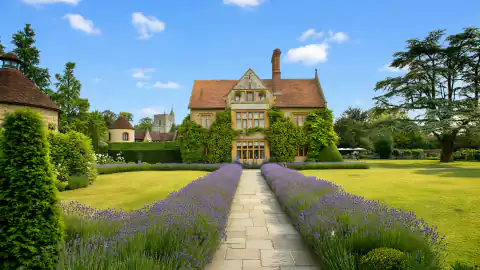 16Food & drinkLe Manoir aux Quat’SaisonsExplore experience →
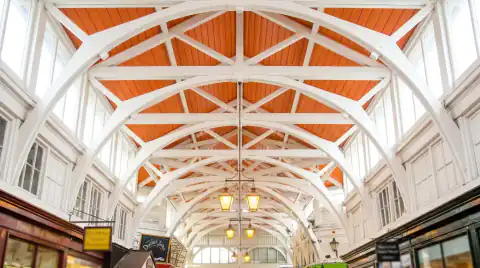 17Food & drinkOxford Covered MarketExplore experience →
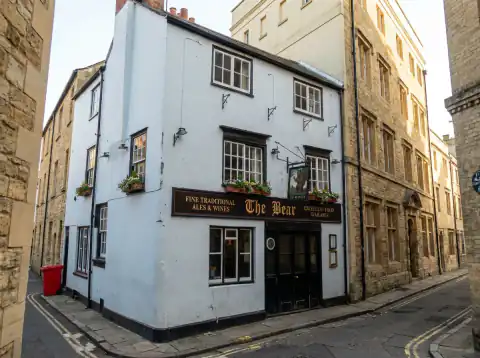 18Food & drinkThe Bear InnExplore experience →
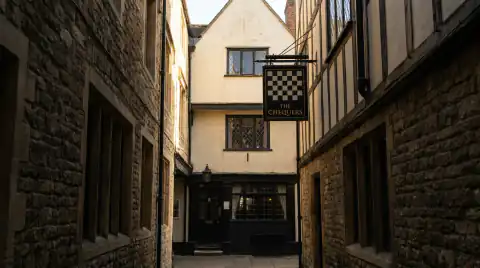 19Food & drinkThe ChequersExplore experience →
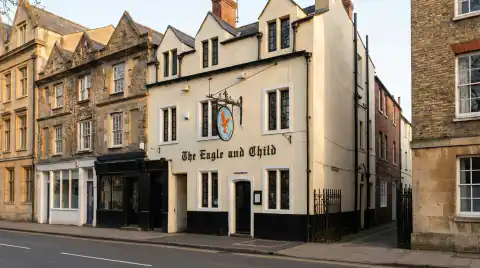 20Food & drinkThe Eagle and ChildExplore experience →
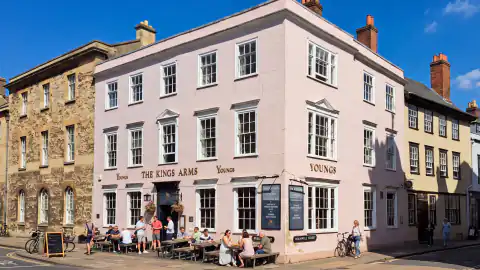 21Food & drinkThe King’s ArmsExplore experience →
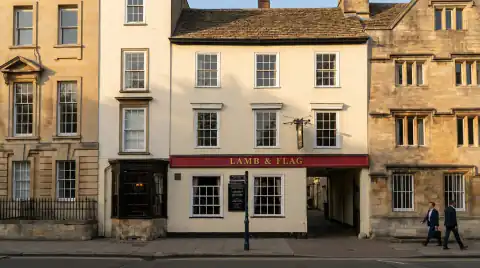 22Food & drinkThe Lamb & FlagExplore experience →
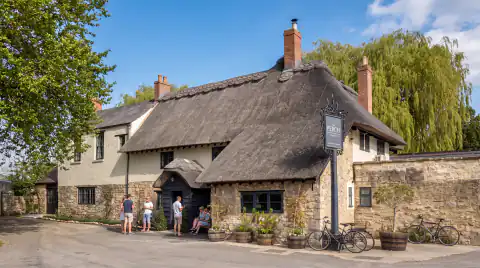 23Food & drinkThe PerchExplore experience →
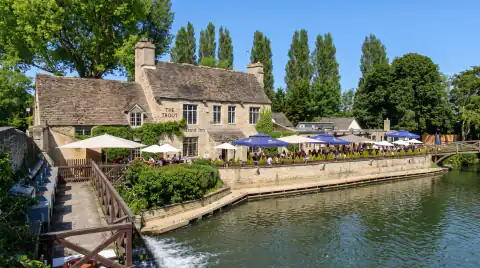 24Food & drinkThe Trout InnExplore experience →
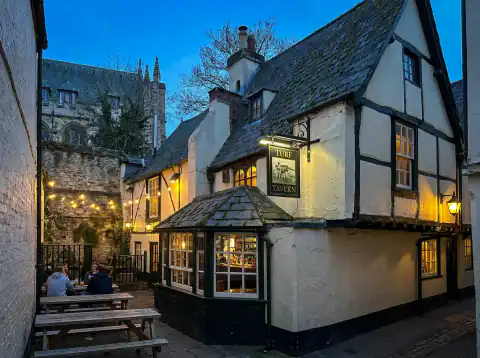 25Food & drinkThe Turf TavernExplore experience →
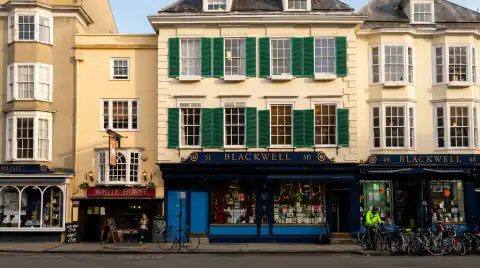 26Food & drinkThe White HorseExplore experience →
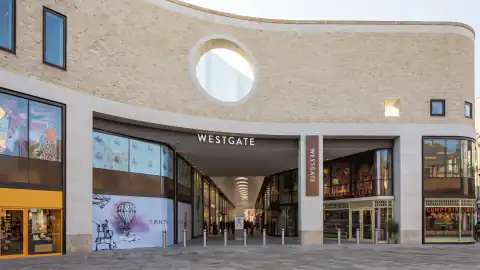 27Food & drinkWestgate OxfordExplore experience →
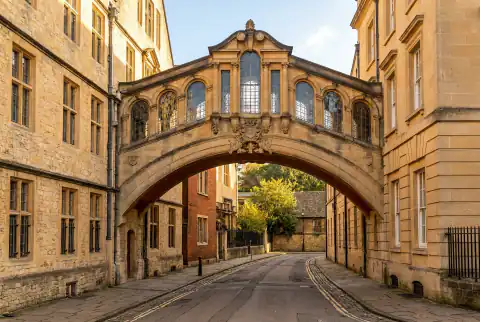 28Walks & viewsThe Bridge of SighsExplore experience →
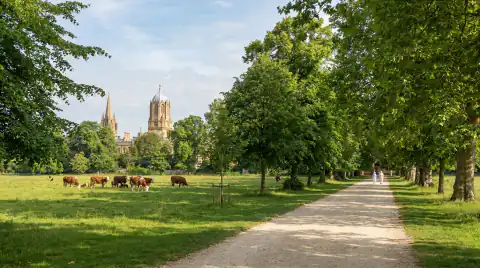 29Parks & meadowsChrist Church MeadowExplore experience →
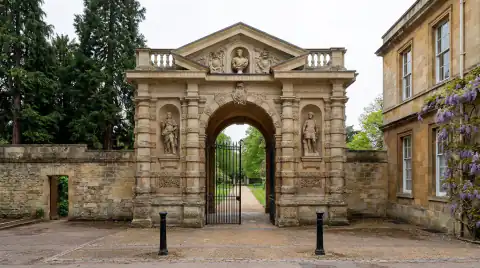 30Parks & meadowsOxford Botanic GardenExplore experience →
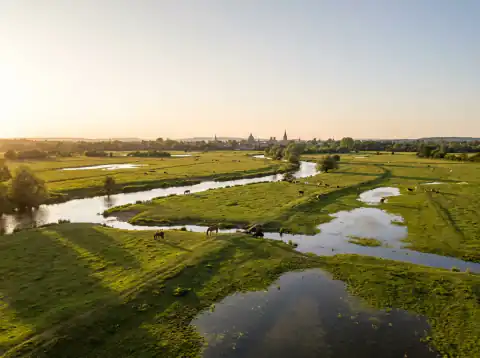 31Parks & meadowsPort MeadowExplore experience →
 32Parks & meadowsUniversity ParksExplore experience →
 33On the waterPunt the CherwellExplore experience →
 43CollegesAll the collegesEvery Oxford collegeOpen the college guide →Food & drink / a storyThe nine oldest pubsWalk the timeline →
 Plan / Itinerary builderBuild your Oxford dayStart planning →