North · Founded 1879
St Anne's College
Discover a college that began by helping women study across Oxford, with Hartland House and its carved beavers.
- Founded
- 1879
- Location
- Between the Woodstock Road and Banbury Road
- Visiting
- Public visiting hours
- Institution
- College
01 The experience
What to expect.
St Anne’s began in 1879 without a campus. Its predecessor, the Society of Oxford Home-Students, helped women study while living at home, in lodgings or in religious houses across the city. That offered a less expensive alternative to a residential college at a time when women were only beginning to gain access to Oxford education.
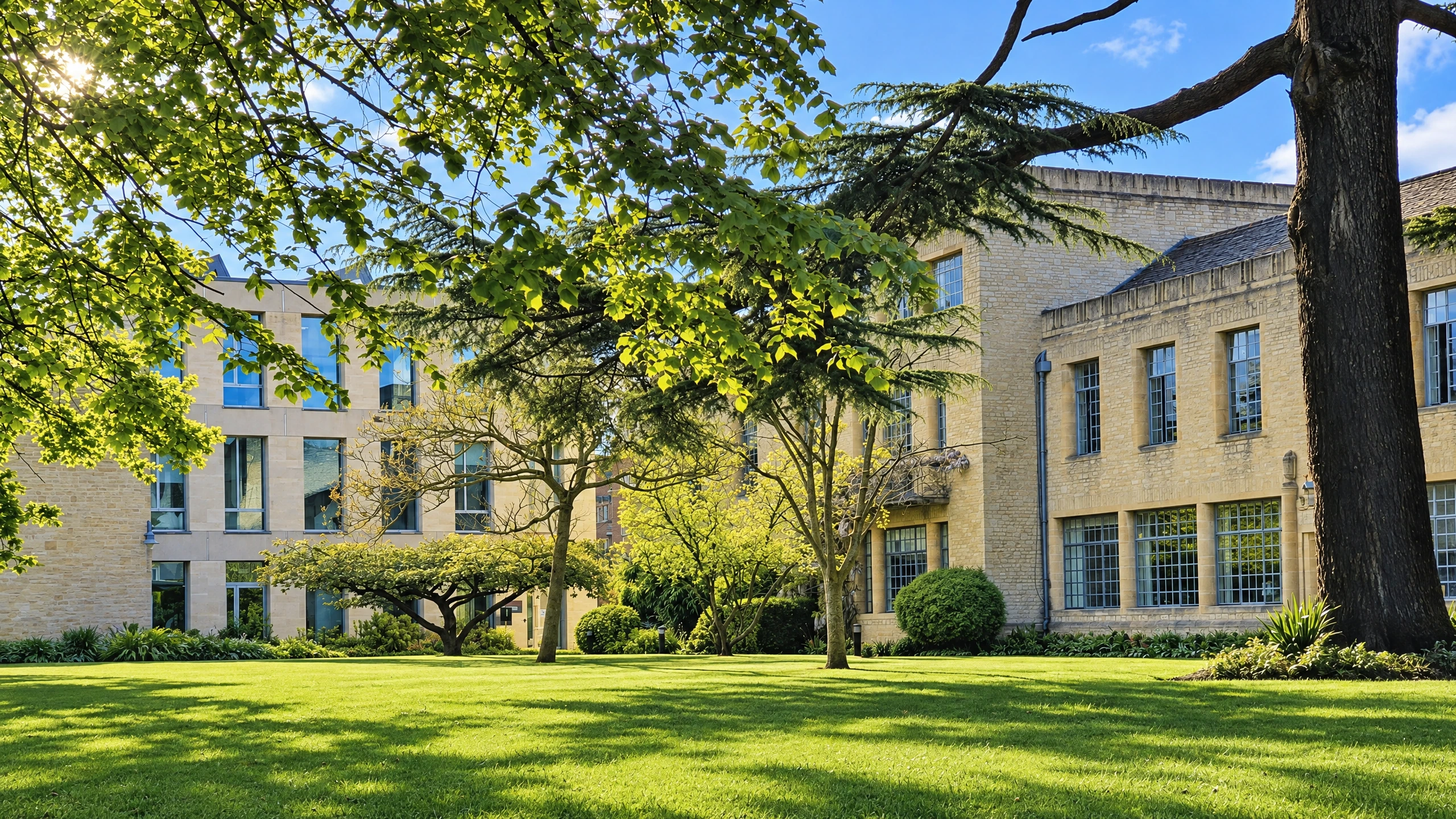
The Woodstock Road campus came later. Hartland House, designed by Giles Gilbert Scott, was the first major building; its carved beavers and shields sit near the contemporary Tim Gardam Building. Together the libraries hold around 100,000 books, including fiction in translation and works by St Anne’s authors. The libraries are working spaces for members, with separate arrangements for research visitors.
Diplomatic historian Merze Tate studied with the Home-Students from 1932 to 1935 and was the first African American woman to study at Oxford. A study room in the newer library is named for her. Māori scholar Makereti Papakura came to study anthropology in 1927; she died before her thesis could be examined, and her work appeared after her death as The Old-Time Maori.
Later students include novelist Helen Fielding, journalist Tina Brown, novelist Zoë Heller and poet U. A. Fanthorpe. Philosopher and novelist Iris Murdoch was a fellow and tutor after studying at Somerville.
St Anne’s is normally open free to visitors daily from 9am to 5pm, with donations welcome; large groups arrange visits in advance. Somerville, Jericho and the Ashmolean are nearby.
People and ideas
Famous former students

Merze Tate
1932–1935
The diplomatic historian studied with the Home-Students from 1932 to 1935 and was the first African American woman to study at Oxford.
College connection
Student of predecessor Society of Oxford Home-Students. 1932–1935; BLitt 1935.

Makereti Papakura
1927
The Māori scholar studied anthropology with the Home-Students. Her work was published after her death as The Old-Time Maori.
College connection
Anthropology student of predecessor Home-Students; died before examination. Registered January 1927; died April 1930.

Helen Fielding
Entered 1976
The novelist known for Bridget Jones studied English at St Anne’s.
College connection
English undergraduate. Matriculated 1976.

Tina Brown
Entered 1971
The journalist and magazine editor studied at St Anne’s from 1971.
College connection
Undergraduate. Matriculated 1971.

Zoë Heller
Entered 1984
The novelist and journalist studied English at St Anne’s from 1984.
College connection
English undergraduate. Matriculated 1984.

U. A. Fanthorpe
Entered 1949
The poet studied at St Anne’s from 1949.
College connection
Undergraduate. Matriculated 1949.

Mary Archer, née Weeden
Entered 1962
The scientist, known for work on solar energy, entered St Anne’s in 1962.
College connection
Undergraduate. Matriculated 1962.

Gillian Beer
The literary scholar studied English at St Anne’s before her academic career.
College connection
English undergraduate.
Fellows, founders and other connections

Iris Murdoch
The philosopher and novelist taught at St Anne’s as a fellow after studying at Somerville.
College connection
Fellow and tutor; not a St Anne’s student.
The story
History & character.
The Society of Oxford Home-Students began in 1879, enabling women to study while living at home, in lodgings or in religious houses rather than a residential hall. Its early common room was on Ship Street, a connection preserved in the name of the college magazine, The Ship.
The Nettleship Library began in 1895, giving the dispersed students a shared collection long before the present campus existed. Oxford admitted women to degrees in 1920, and the society rented rooms on Jowett Walk from 1921.
Māori scholar Makereti Papakura registered with the Home-Students in 1927 to study anthropology. Her research drew on Māori knowledge and experience. She died in 1930 before her thesis could be examined; her work appeared posthumously in 1938 as The Old-Time Maori.
Merze Tate studied from 1932 to 1935 and became the first African American woman to study at Oxford. After financial difficulties and revisions to her research, she completed a BLitt. She later contributed to the building of Hartland House; a study room in the Tim Gardam Building now carries her name.
Giles Gilbert Scott designed Hartland House, the first major building on the Woodstock Road site. Its first phase was used from 1937–38, with later additions in 1951 and 1972. Carved beavers, shields and an inscription about understanding are part of its exterior. The society adopted the St Anne’s name in 1942 and received its Royal Charter as a college in 1952.
A postwar housing plan called the String of Pearls produced the Wolfson, Gatehouse and Rayne buildings, although its full scheme was never completed. St Anne’s opened a nursery in 1963, which its history identifies as Oxford’s first college nursery. Men joined the student body in 1979. The college continues to use “alumnae” for former students of all genders in recognition of its origins.
The Tim Gardam Building opened to readers in 2017, adding a contemporary library beside Hartland House. Its space brought together almost two thousand works by college members in the St Anne’s Authors collection.
Look closer
What to see.
Hartland House
Giles Gilbert Scott’s stone building has carved beavers, shields and an inscription about the pursuit of understanding.
The Tim Gardam Building
The contemporary library opened in 2017 beside Hartland House, adding space for study and the St Anne’s Authors collection.
Merze Tate’s story
The first African American woman to study at Oxford joined the Home-Students in 1932. A study room in the newer library is named for her.
Makereti Papakura
The Māori scholar studied anthropology with the Home-Students, bringing knowledge from within her own culture to her research.
A college without a campus
The first Home-Students lived across Oxford rather than in one residential hall, making study possible for women with different circumstances.

Make it work
Plan your visit.
St Anne’s normally opens daily from 9am to 5pm. Entry is free and donations are welcome; large groups need advance arrangements. The entrance is on Woodstock Road.
The grounds offer views of Hartland House and the Tim Gardam Building. The working libraries and archives have separate access arrangements.
The main entrance has automatic doors, and level and ramped routes cross the site. Five accessible toilets, a passenger lift and a platform lift are recorded; some older rooms and doors are more difficult to access. Two Blue Badge parking spaces require advance arrangements.

Visit your way
Access and family planning.
The main entrance has automatic doors, with level and ramped routes across the site. Five accessible toilets, a passenger lift and a platform lift are available; some older rooms and doors are more difficult to access.
Two Blue Badge spaces need advance arrangements. Library and archive visits require separate permission.
Hartland House’s carved beavers and shields give children details to look for, with the modern Tim Gardam Building nearby. The grounds make a manageable short visit.
Self-guided walk
A walk around St Anne’s
A public-street circuit follows Woodstock Road through Jericho and back to St Anne’s.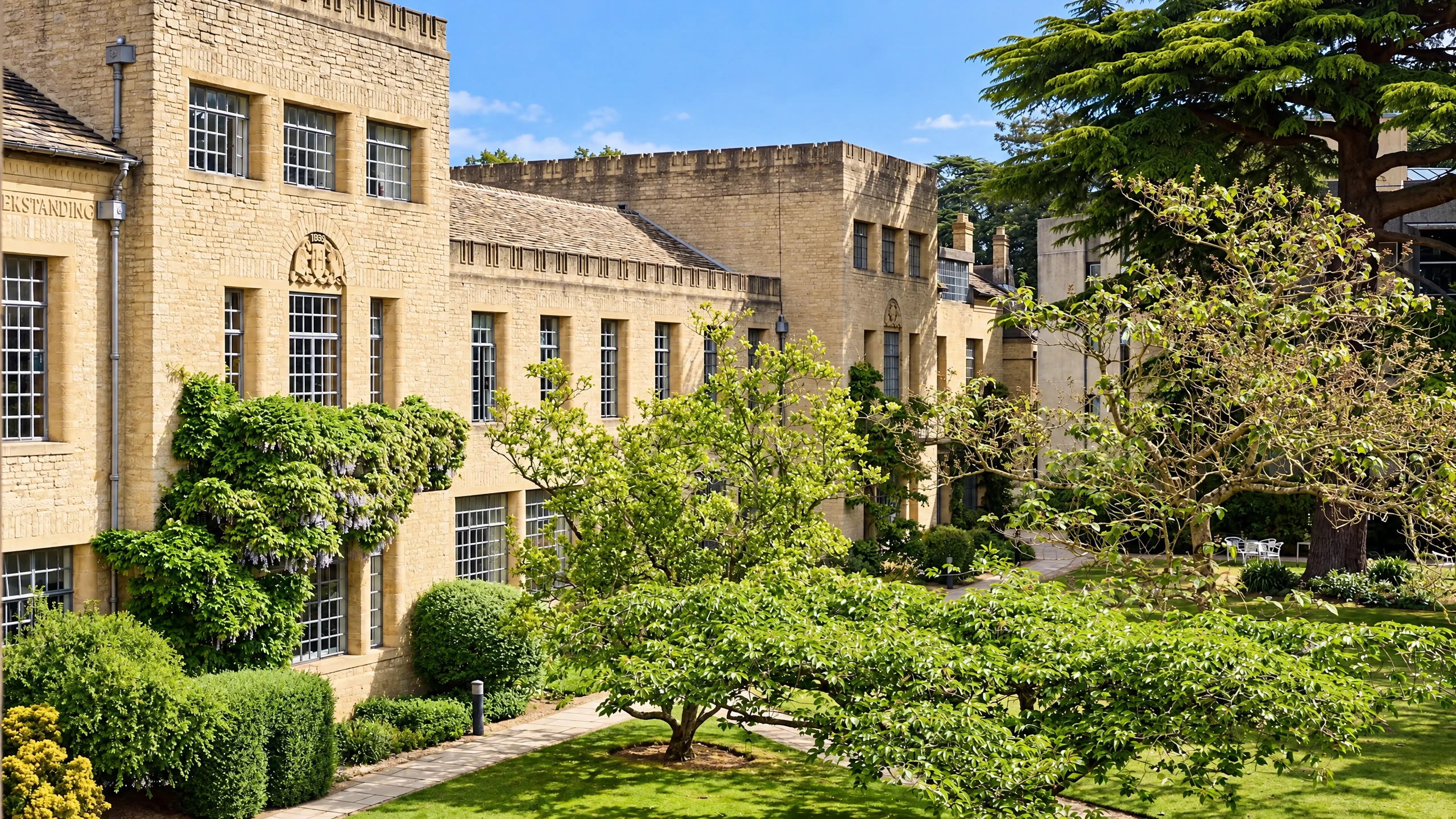
Woodstock Road frontage
Hartland House and the Tim Gardam Building represent two generations of college architecture.
Woodstock Road south
Woodstock Road leads towards Little Clarendon Street and the city centre.
Walton Street north
Walton Street continues north through the neighbourhood towards Bevington Road.
Optional college extension
St Anne’s normally opens free daily from 9am to 5pm, with donations welcome. Large groups need advance arrangements.
See it
In pictures.
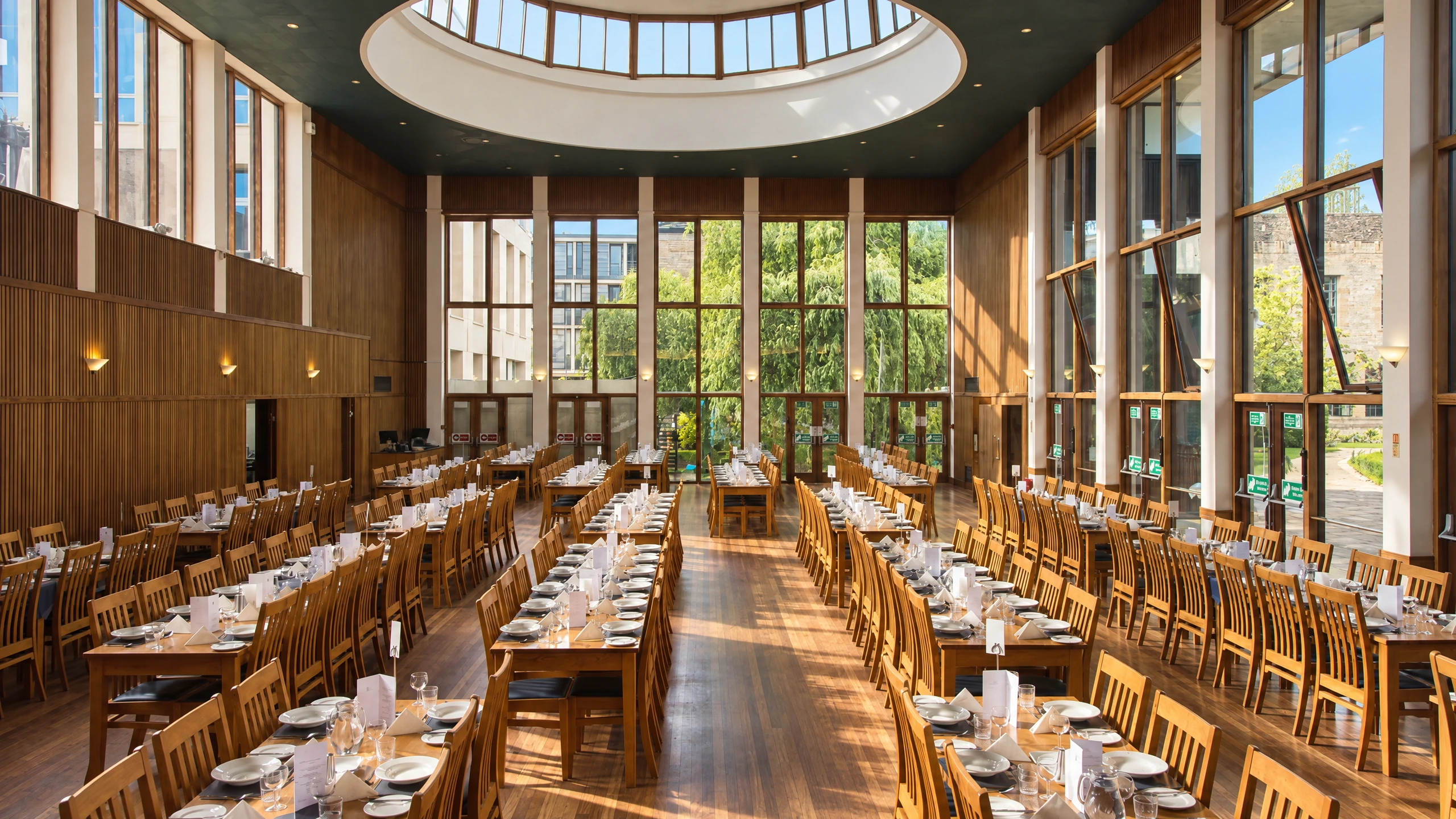
10 views, full screen. Tap any one to open the viewer.Around here
Make more of the area.
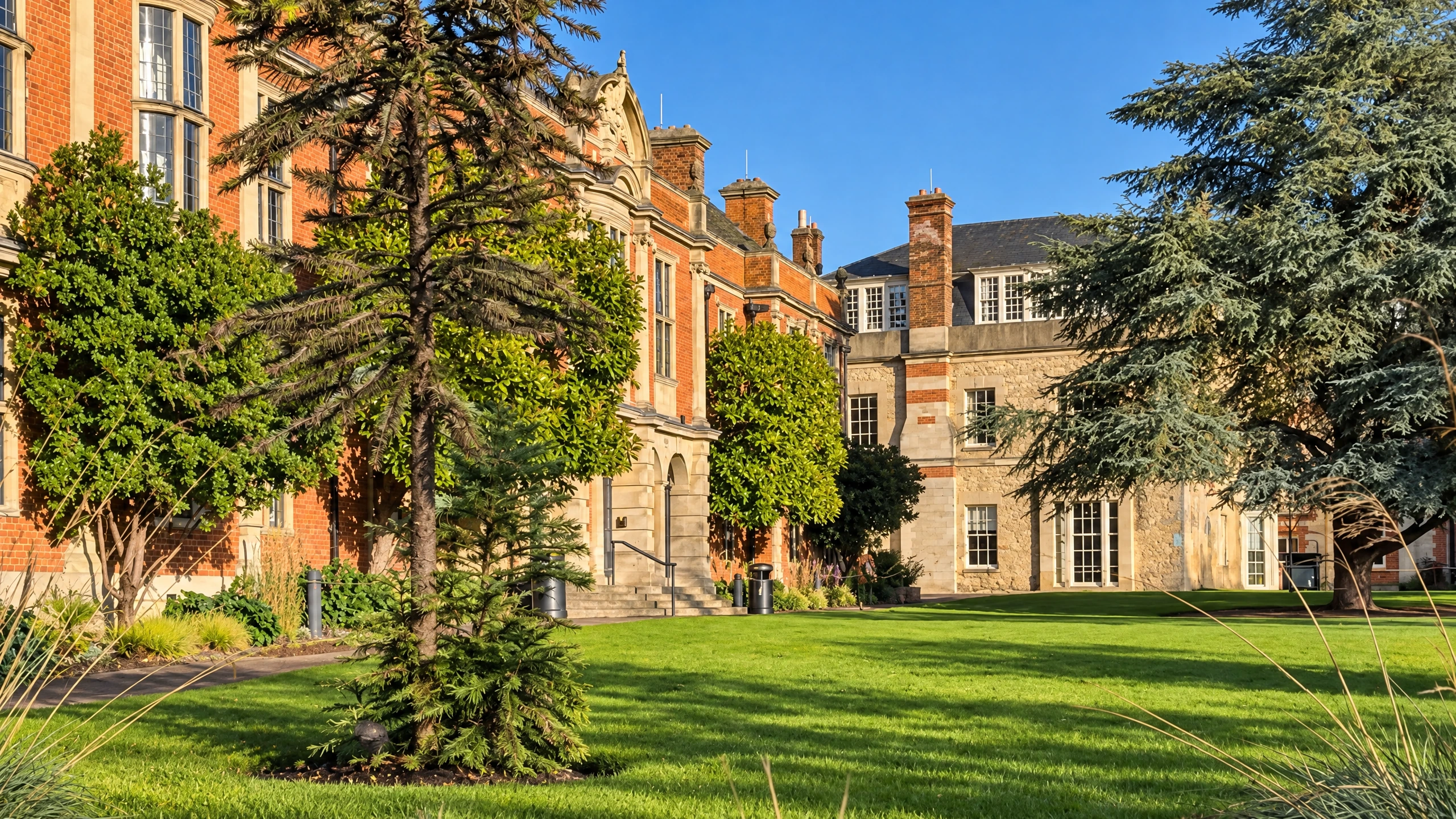
Somerville also began as a women’s educational foundation in 1879, with its own visitor arrangements.

The parks offer paths and open lawns nearby. Mesopotamia Path is currently closed for maintenance.
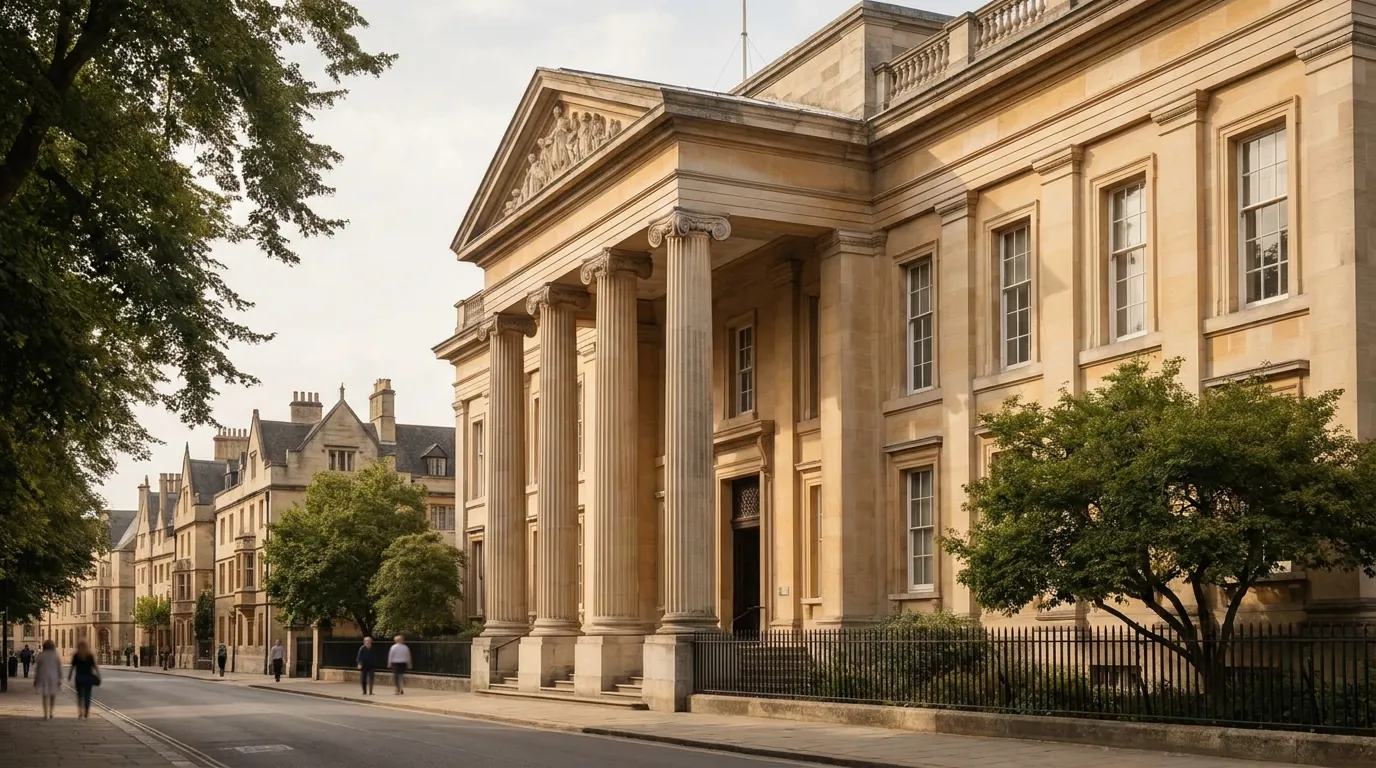
The Ashmolean on Beaumont Street has art and archaeology collections.
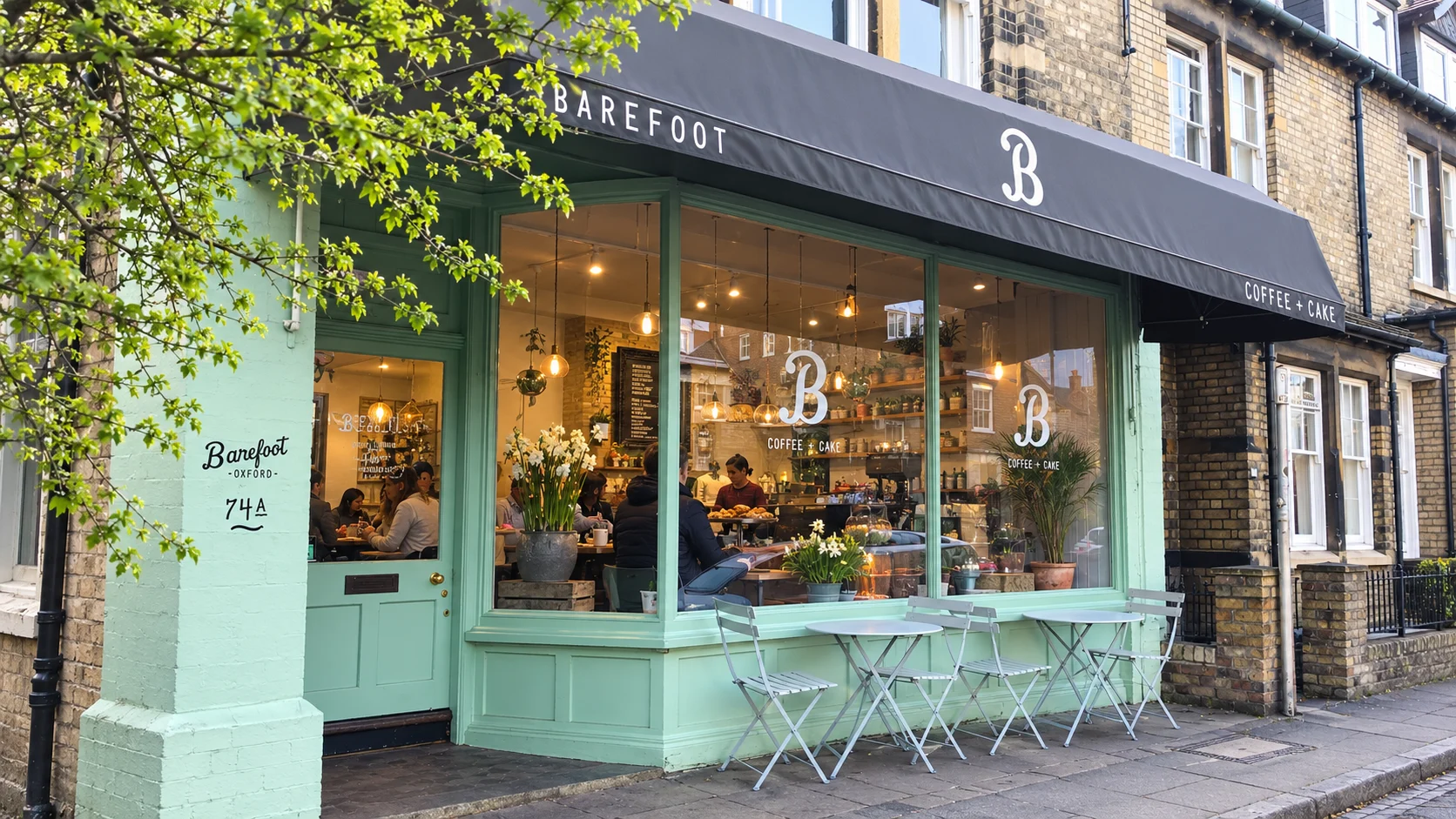
Jericho’s streets have independent cafés, shops and pubs west of the college.
Good to know
Questions, answered.
How did St Anne’s begin without a residential campus?
The Society of Oxford Home-Students began in 1879. Women lived at home, in lodgings or religious houses while studying across Oxford.
Why does the Nettleship Library matter in St Anne’s history?
Founded in 1895, the library gave Home-Students a shared collection long before the college had its permanent Woodstock Road campus.
What did 1920 mean for St Anne’s Home-Students?
Oxford began awarding degrees to women in 1920. Home-Students could receive recognition for academic work completed under earlier arrangements.
Who designed Hartland House at St Anne’s?
Giles Gilbert Scott designed Hartland House. The first phase opened in 1937–38, with later additions in 1951 and 1972.
Why do St Anne’s histories give both 1942 and 1952?
The society adopted the St Anne’s name in 1942 and received a Royal Charter as a college in 1952. Its origins go back to 1879.
Why is the nursery at St Anne’s College in Oxford historically significant?
St Anne’s College in Oxford opened its nursery in 1963 and identifies it as Oxford’s first college nursery, supporting people combining care and academic life.
What gives St Anne’s library a distinctive reading range?
The library holds around 100,000 books across Hartland House and the Tim Gardam Building, with a notable range of fiction in translation.
Why is Merze Tate commemorated in St Anne’s library?
Tate studied with the Home-Students from 1932 to 1935 and was the first African American woman at Oxford. A study room bears her name.
What did Makereti Papakura study with St Anne’s Home-Students?
Makereti registered to study Anthropology in 1927. Her research drew on Māori knowledge; she died in 1930 before her thesis was examined.
Which novelists were actual St Anne’s students?
Novelists Helen Fielding and Zoë Heller studied at St Anne’s before their later writing careers.
What connects U. A. Fanthorpe and Tina Brown with St Anne’s?
Poet U. A. Fanthorpe and journalist Tina Brown both studied at St Anne’s.
Was Iris Murdoch a student at St Anne’s?
No. The novelist and philosopher studied at Somerville before becoming a philosophy tutor and fellow at St Anne’s.
Why does St Anne’s College in Oxford call former students of all genders alumnae?
St Anne’s College in Oxford uses “alumnae” for former students of all genders to recognise its origins in women’s education. Men first joined as students in 1979.
When did men join St Anne’s academic community?
Male tutorial fellows were appointed in 1978, followed by the first male student cohort in 1979. The college kept its links to its women’s origins.
Can visitors enter St Anne’s College Oxford?
St Anne’s College in Oxford normally opens daily from 9am to 5pm. Entry is free, with donations welcome; large groups need to arrange their visit in advance.
Can a St Anne’s grounds visit include its working libraries?
The Hartland and Tim Gardam libraries serve college members. Public grounds access does not automatically include their working rooms or collections.
What physical access should be considered at St Anne’s?
The main entrance is level with automatic doors; routes include ramps and lifts. Some older rooms and heavier doors remain difficult to access.
How does a St Anne’s visit compare with nearby Somerville?
Both began as women’s educational initiatives in 1879. St Anne’s Home-Students lived across Oxford, while Somerville developed as a residential foundation.
Editorial notes
Sources and further reading.
Sources for this guide
Researched 1 November 2026. Each source’s scope is specified so later updates can target the affected claim. Sources marked retained evidence come from locally saved earlier research; a failed collection job is not a completed bundle.
A1 — St Anne’s history and timeline
St Anne’s history and timeline
Supports: 1879 Home Students, 1942 name, 1952 charter, Hartland, nursery, housing, men 1979 and redevelopment.
Status: reviewed-public-source.
A2 — Historic England: Hartland House
Historic England: Hartland House
Supports: Grade II; Scott 1937, 1951 and 1972 phases; beavers, inscription, material and library.
Status: reviewed-public-source.
A3 — St Anne’s libraries
Supports: Hartland 1937 and Tim Gardam 2017; 100000 books, member 24/7 access, translation fiction.
Status: reviewed-public-source.
A4 — Tim Gardam Building history
Supports: Fletcher Priest; opened readers 3 January 2017, formal 20 October; 2000 member-authored works gathered.
Status: reviewed-public-source.
A5 — Merze Tate archive biography
Supports: Home Students 1932–1935, BLitt 1935, hardship and resubmission; room named for Tate.
Status: reviewed-public-source.
A6 — Makereti at Oxford
Supports: January 1927 Home Students registration; Indigenous insider anthropology.
Status: reviewed-public-source.
A7 — Oxford Anthropology: Makereti
Supports: Diploma to graduate research; death 1930 before examination; The Old-Time Maori 1938.
Status: reviewed-public-source.
A8 — St Anne’s visiting-student handbook
St Anne’s visiting-student handbook
Supports: Named students and matriculation years; Murdoch explicitly not an alumna.
Status: reviewed-public-source.
A9 — Classics and English at St Anne’s
Classics and English at St Anne’s
Supports: Fielding, Heller and Gillian Beer students; Murdoch Fellow.
Status: reviewed-public-source.
A10 — St Anne’s alumnae information
Supports: Feminine plural convention after coeducation; alumni access.
Status: reviewed-public-source.
A11 — Oxford physical access survey: St Anne’s
Oxford physical access survey: St Anne’s
Supports: Doors, ramps, toilets, lifts, hearing support and parking.
Status: reviewed-public-source.
A12 — Oxford college visiting directory
Oxford college visiting directory
Supports: Daily 9–5, free, large-group booking.
Status: reviewed-public-source.
Conflict ledger
Origins 1879, St Anne’s Society 1942 and Royal Charter 1952 refer to different stages; the college did not begin from nothing in 1952.
Official history says Hartland first module came into use 1938; library page and statutory list use 1937. Use 1937–1938 for first phase; later extensions 1951 and curtailed completion 1972 in Historic England.
Iris Murdoch was a Fellow and tutor at St Anne’s, with undergraduate study at Somerville. Simon Rattle appears in honorary contexts and is not listed here as a student.
Makereti registered for the Anthropology Diploma in 1927 and died before thesis examination 1930. Her posthumous book 1938 does not make her a graduate.
Merze Tate arrival 1932 and BLitt 1935 are distinct; external alumni marketing sometimes confuses the two. Use the college archive account.
Editorial interpretation
Walking allowances, pairings, family activity suggestions and visual composition choices are editorial judgments. They do not supply evidence of admission, facilities, a person’s attendance or a booking inclusion. Current admission conditions remain visible in the practical sections.
GEO1 — College-location coordinates
Supports: sourced numeric WGS84 latitude 51.762, longitude -1.2617, read 1 November 2026. This pin represents the college location rather than a surveyed visitor entrance.
Status: reviewed-public-source-2026-11-01.
MAP1 — University of Oxford Explore Map2026
University of Oxford Explore Map2026
Supports: Current official map places colleges, streets, museums, gardens and public approaches. Walking durations are editorial allowances; access restrictions follow current college and venue pages, not a presumed route through a private quad.
Status: reviewed-public-source-2026-11-01.
NEAR1 — Somerville College contextual history
Somerville College contextual history
Supports: Kemp gift, 1935 opening, non-denominational design and debate.
Status: reviewed-public-source-2026-11-01.
NEAR2 — University Parks visitor information
University Parks visitor information
Supports: University-owned landscape welcomes visitors; opens7:45 and closes at/before sunset. Mesopotamia Path currently closed for maintenance.
Status: reviewed-public-source-2026-11-01.
College-specific FAQ source review — 1 November 2026
Primary college, university, archive or author-estate material used for the revised FAQs. Retained primary pages were reused; additional primary readings were reviewed during the FAQ pass. These links supplement the earlier register without upgrading its blocked or partial entries.
- Somerville: from Hall to College — Retained read primary material or newly read primary page; see the FAQ question for claim scope.
Further reading and sources
Opening hours, prices, programmes and access arrangements can change. Confirm critical details with the venue.
Keep exploring