Central-W · Founded 1937
Nuffield College
Spot the copper-topped library tower and discover a modern college dedicated to the social sciences.
- Founded
- 1937
- Location
- New Road
- Visiting
- Closed to general visitors
- Institution
- College
01 The experience
What to expect.
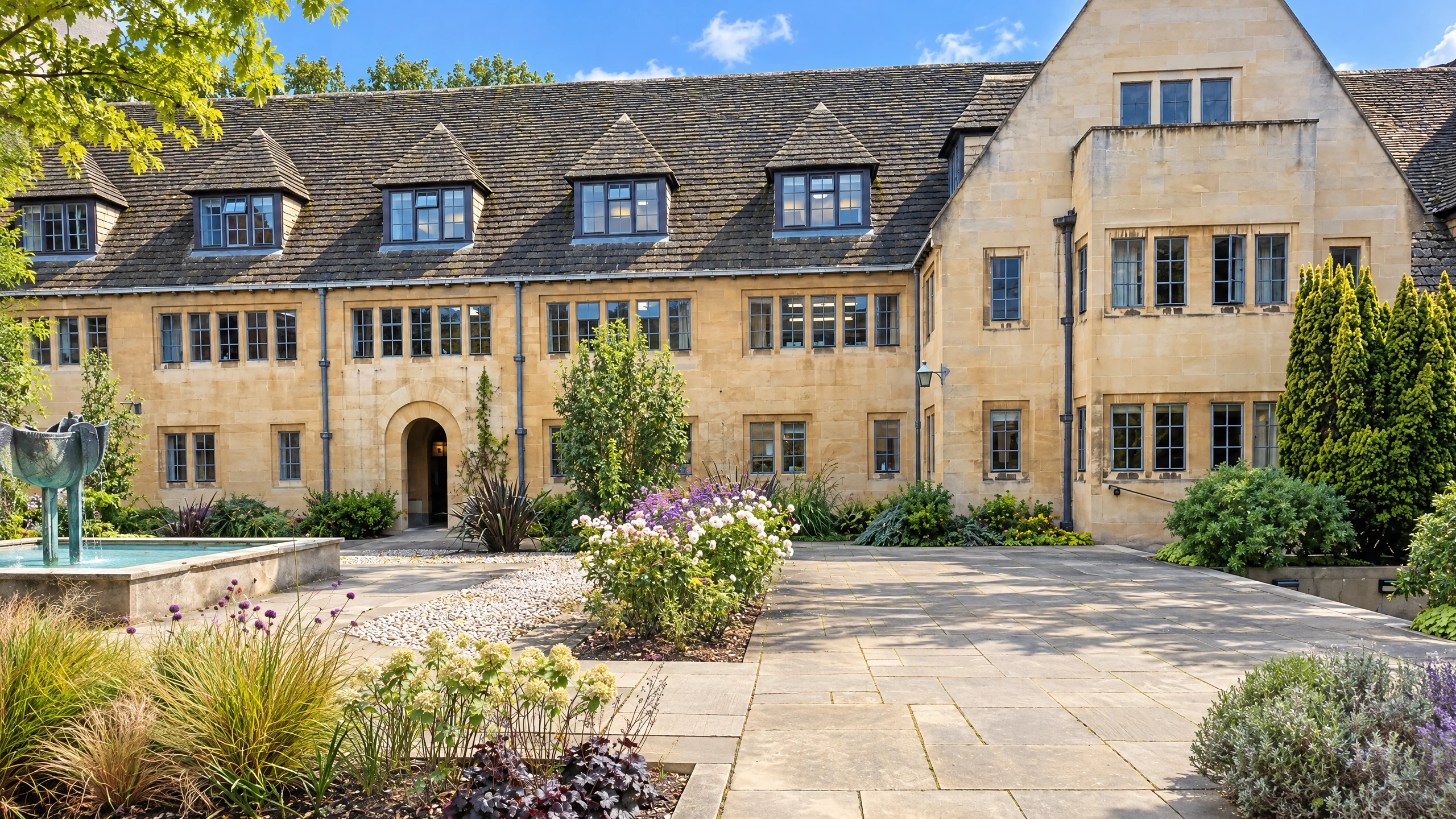
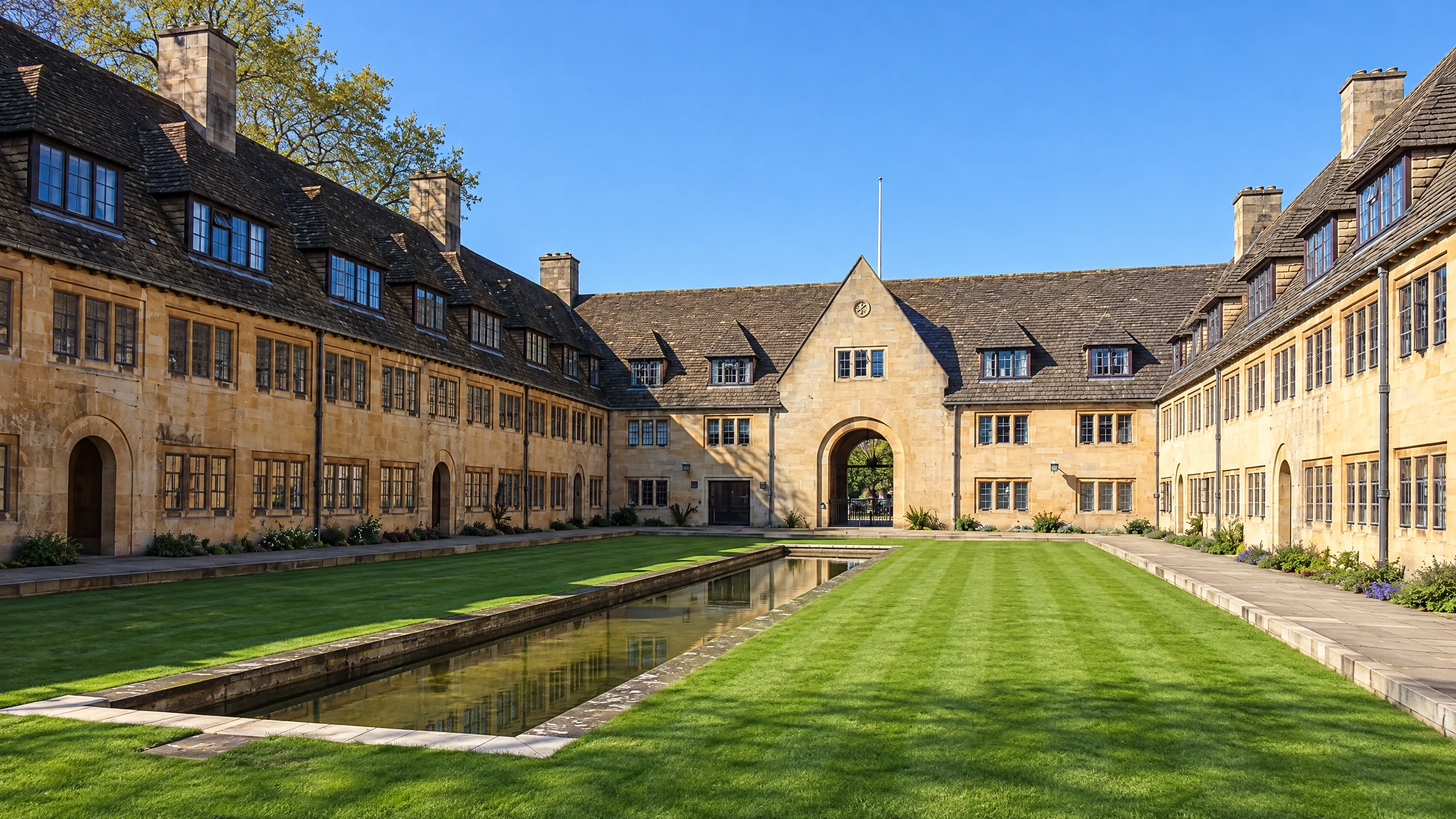
Nuffield’s copper-topped library tower rises above the west end of Oxford, close to the station and the former canal basin. Its stone courts look traditional, but the college was founded in 1937 for a modern purpose: bringing graduate researchers together to study economics, politics and society. It is closed to general visitors, although the tower can be seen from the street.
Motor manufacturer William Morris, Lord Nuffield, gave land and money for the college. It admitted women and men as students and academics from the beginning, specialised in the social sciences and recruited only graduate students. The first fellows were appointed in 1939; students arrived in 1945, while war delayed the buildings’ completion until 1962.
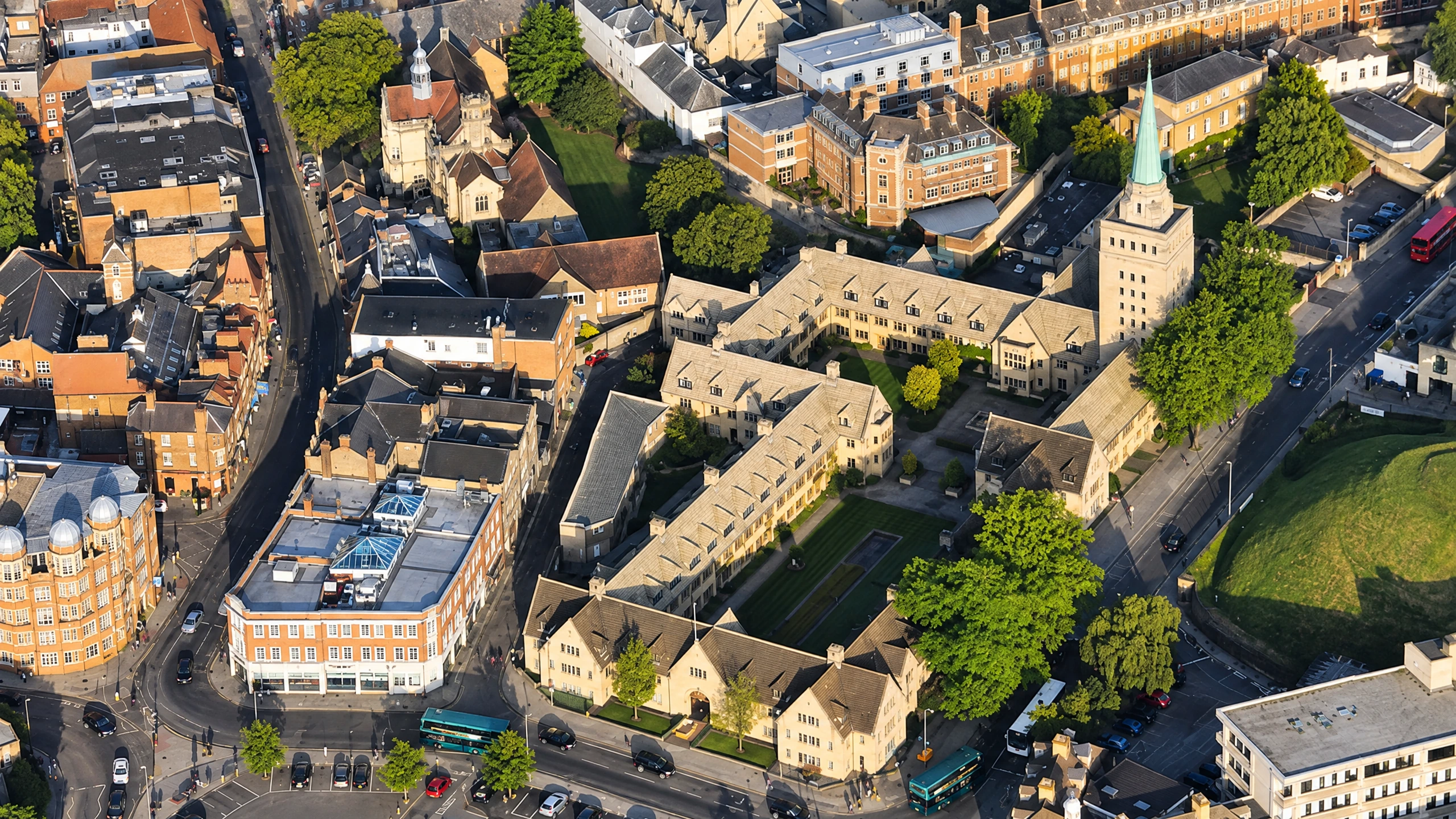
Architect Austen Harrison’s college includes a working library tower, with books and reading rooms behind its familiar silhouette. The site once belonged to Oxford’s canal and commercial landscape.
The chapel is a collaboration between artists. John Piper designed its glass, altar and original candlesticks; Patrick Reyntiens made the stained glass, and John Hoskin created the cross and screen behind the altar. The chapel normally opens to the public during Oxford Open Doors in September.
In 2026 Edmund de Waal added Wind, Water, Stone to the Fellows’ Garden and a ceramics cabinet, For Those Who Live In Cities, to the neighbouring Cox Room. These are private college spaces, with access through suitable events or arrangements.
Former graduate students include economists Mark Carney, Manmohan Singh and Nicholas Stern, and Geoff Gallop, later Premier of Western Australia. Nuffield’s archives hold government, political and trade-union material for research by arrangement.
People and ideas
Famous former students
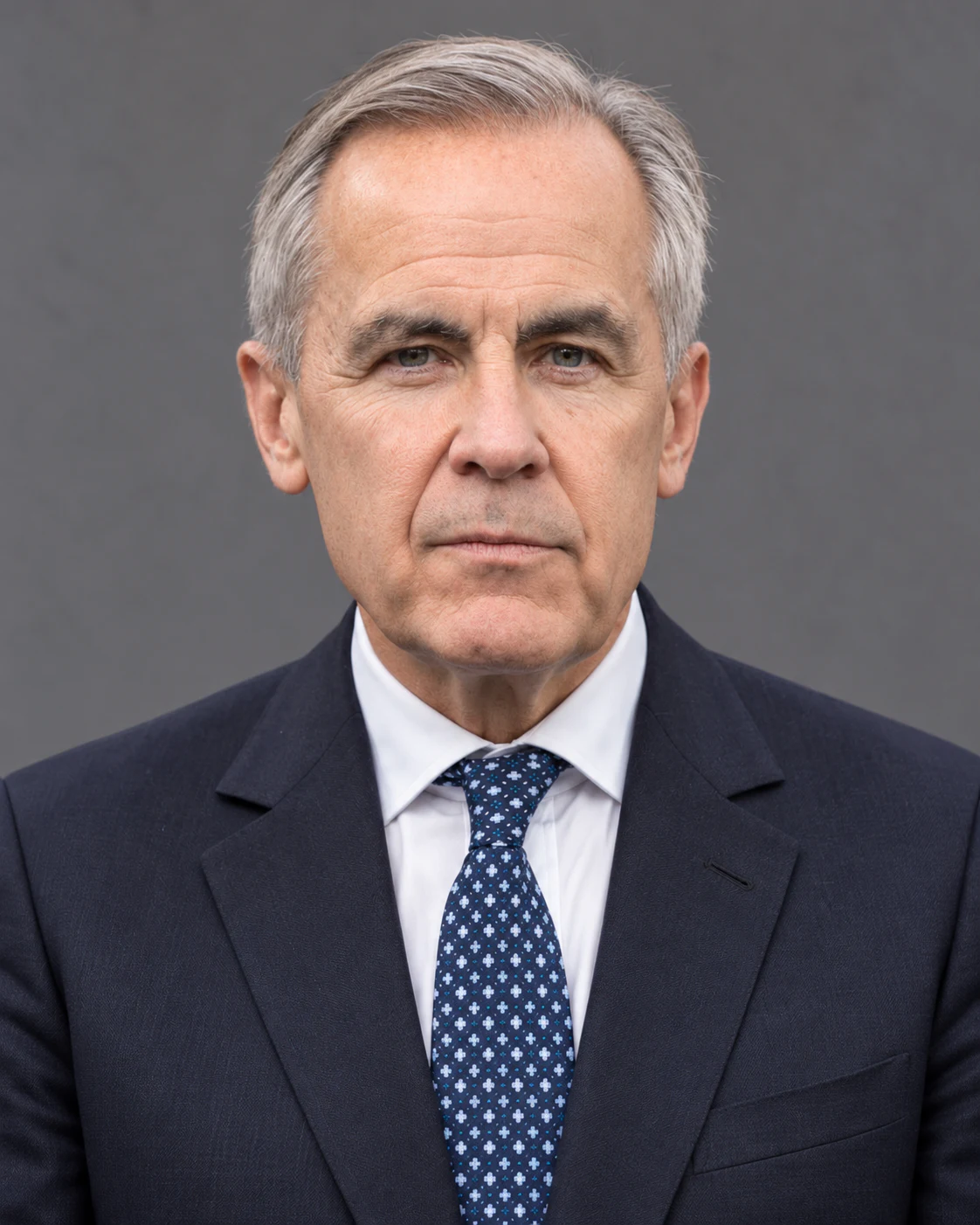
Mark Carney
1993
The economist studied at Nuffield for a doctorate on competition and international competitiveness before his work in central banking and government.
College connection
DPhil student and later Honorary Fellow. DPhil cohort 1993.
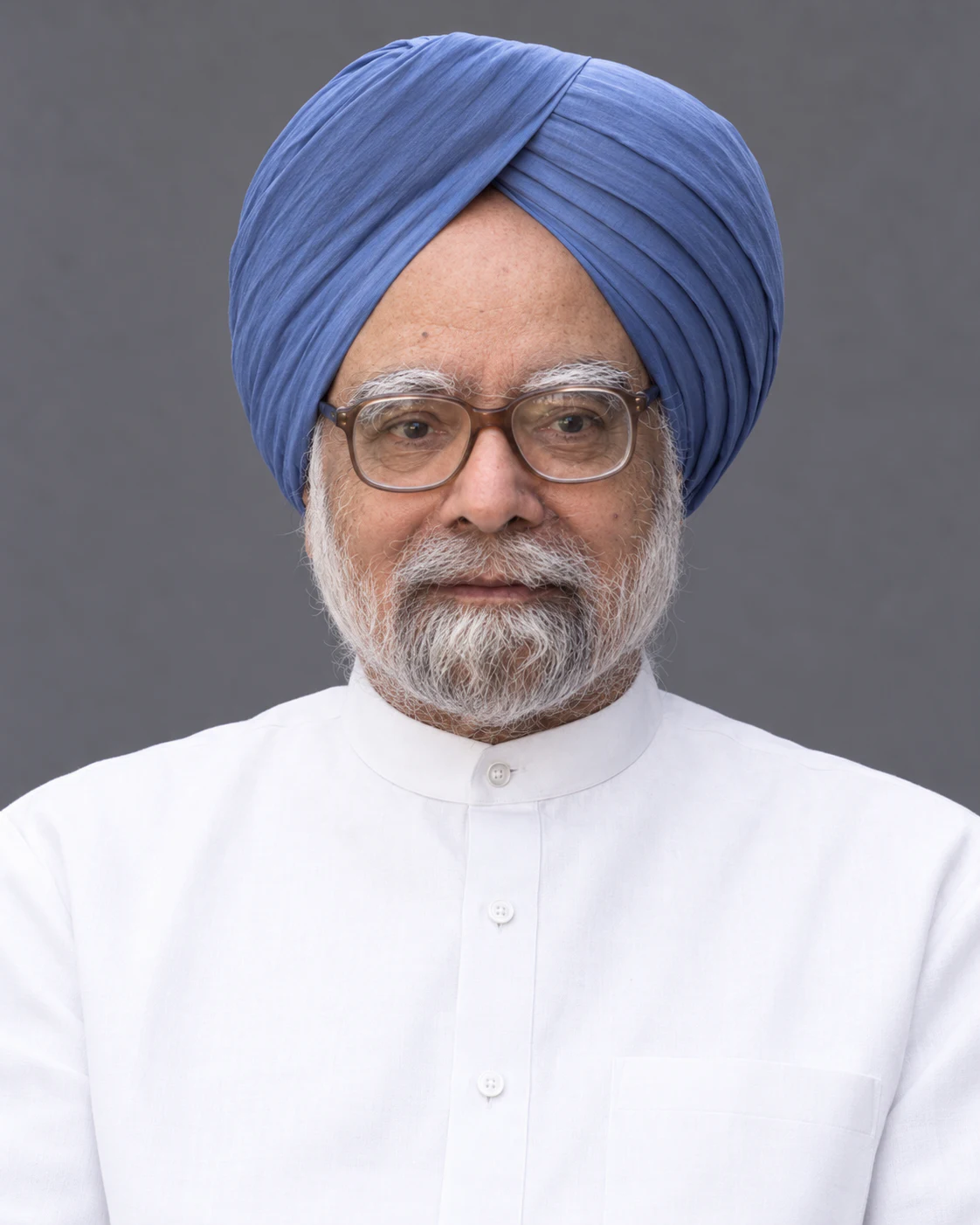
Manmohan Singh
1960
The future Indian prime minister researched India’s export performance and policy for his Nuffield doctorate.
College connection
DPhil student and later Honorary Fellow. DPhil Economics cohort 1960.
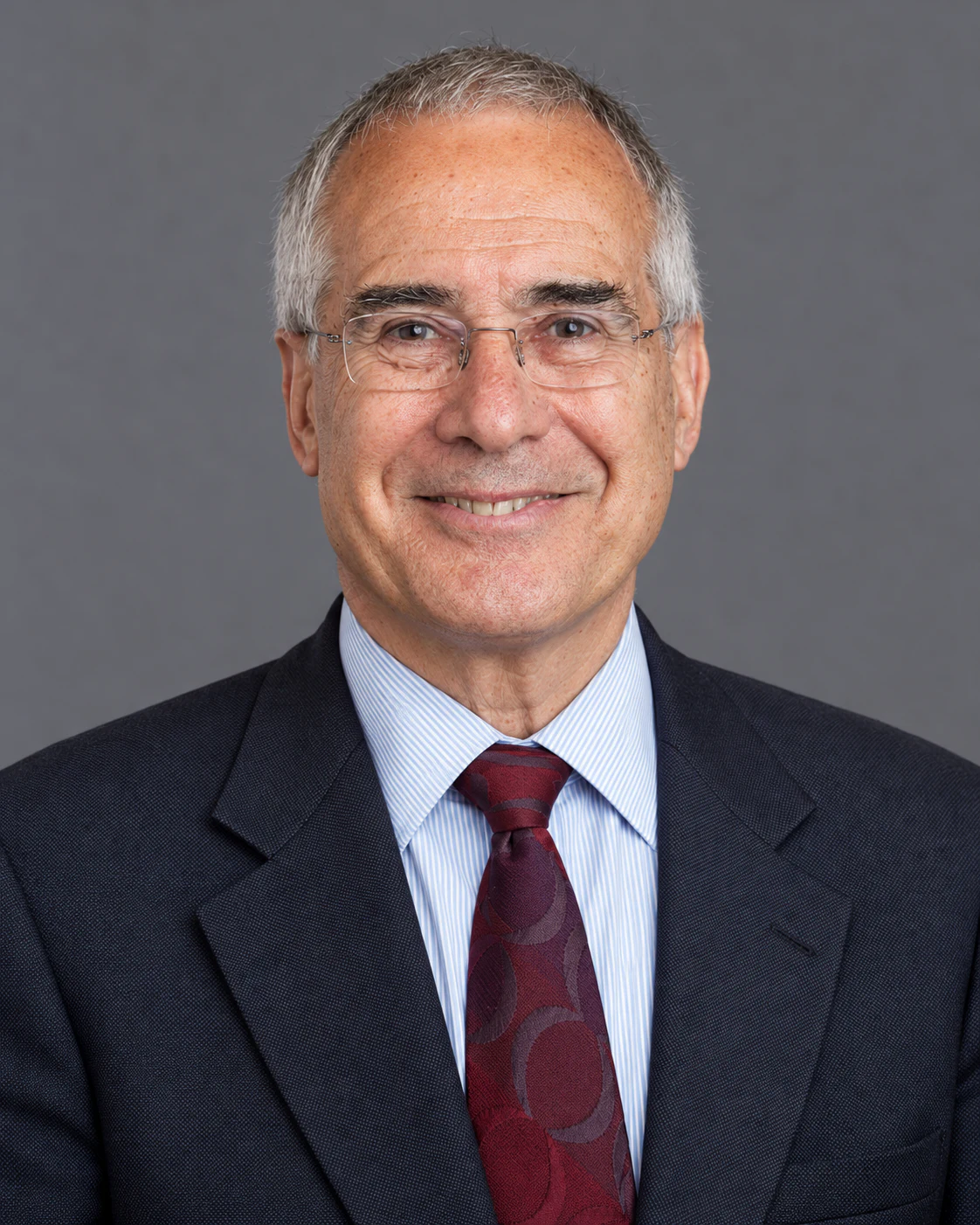
Nicholas Stern
The economist studied at Nuffield before his work on climate and development policy.
College connection
Graduate degree student.
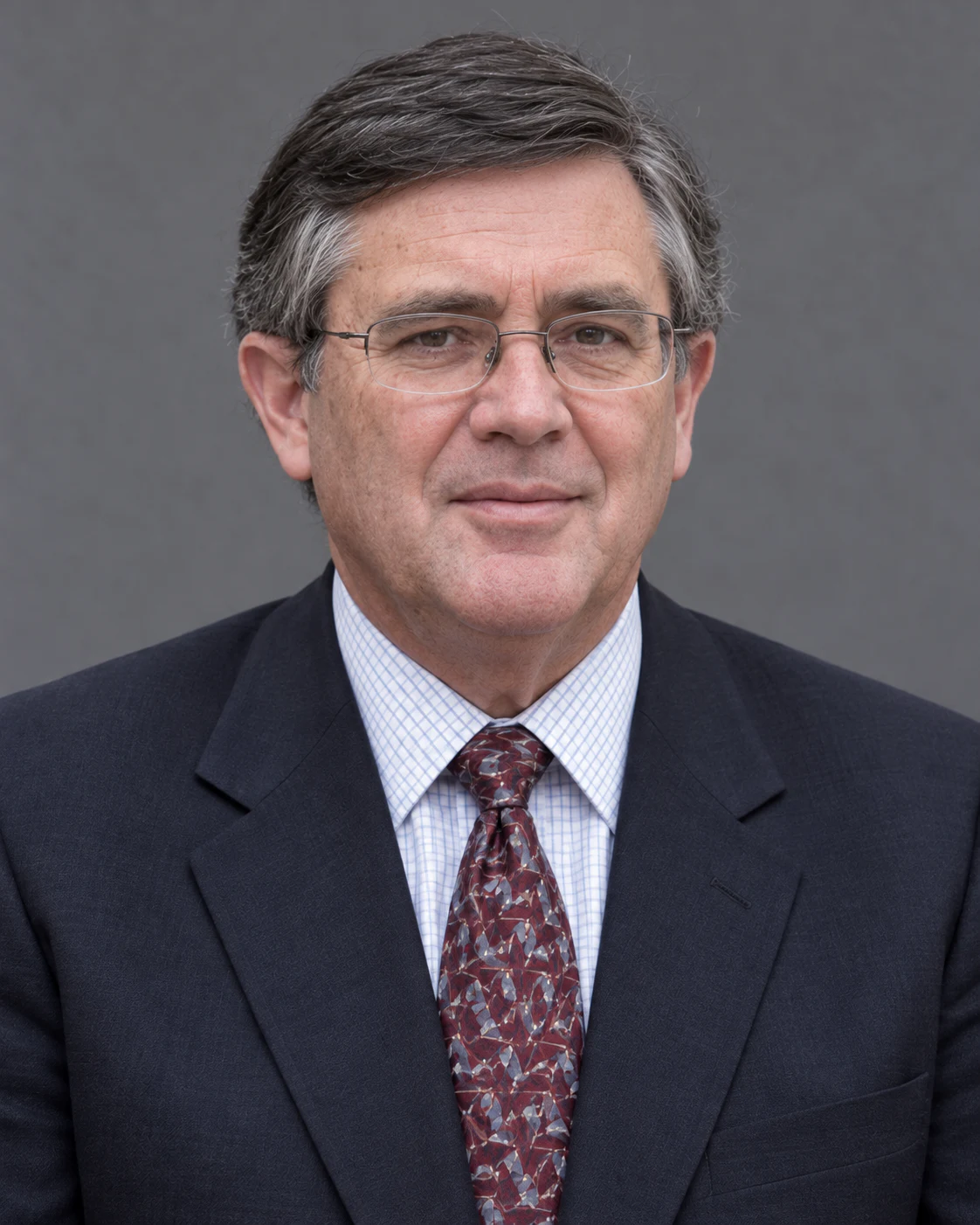
Geoffrey (Geoff) Gallop
The Nuffield graduate went on to become Premier of Western Australia.
College connection
Graduate degree student.
The story
History & character.
William Morris, Lord Nuffield, founded the college in 1937 with land and £900,000 for buildings and an endowment. The motor manufacturer wanted researchers to engage with social, economic and political questions beyond the university.
Nuffield was conceived as a graduate-only social-science college, welcoming women and men as students and academics. Historian Margery Perham became its first fellow in 1939. The first students arrived in 1945; the Second World War delayed building, but research continued, including a Social Reconstruction Survey considering the postwar future.
Austen Harrison designed the stone buildings with Thomas Barnes and Piers Hubbard. The site had been part of Oxford’s canal basin and wharfs. The college received its Royal Charter on 6 June 1958, when the first hall meal was served, and its buildings were completed in 1962. The library tower rises 160 feet to the top of its spire and holds research books and reading rooms.
The art collection began in 1950 with a portrait of first Warden Sir Harold Butler. It grew through commissions, purchases and gifts, including sculpture, furniture and silver.
The chapel was completed in 1961. John Piper directed its design and created designs for the stained glass, altar and original candlesticks. Patrick Reyntiens made the glass; John Hoskin made the cross and reredos, the screen behind the altar; and Royal College of Art students wove the golden curtain.
Nuffield’s researchers have contributed to British election studies, social mobility, industrial relations and economic methods. Its graduates include Mark Carney, whose doctorate examined competition and international competitiveness, and Manmohan Singh, whose research focused on Indian exports before he became India’s prime minister.
In 2026 Edmund de Waal’s Wind, Water, Stone was installed in the refurbished Fellows’ Garden. His ceramics cabinet For Those Who Live In Cities and a marble bench connect the garden with the adjacent Cox Room.
Look closer
What to see.
The library tower
The copper-topped tower holds research books and rises 160 feet to the top of its spire. It is a landmark visible from the street.
John Piper’s chapel
Piper’s designs, Patrick Reyntiens’s stained glass and John Hoskin’s metalwork come together in the 1961 chapel. It normally opens during Oxford Open Doors.
Edmund de Waal’s works
Wind, Water, Stone stands in the Fellows’ Garden, while For Those Who Live In Cities is in the adjacent Cox Room. Both are in private college spaces.
The social-science archives
Government publications, political records and labour and trade-union papers support research by appointment.
Make it work
Plan your visit.
Nuffield is closed to general visitors. The library tower and stone ranges can be seen from public streets; the chapel normally opens during the annual Oxford Open Doors event in September. Research visits, alumni access and events have separate arrangements.
The current Lodge entrance is on Worcester Street, about five minutes on foot from Oxford station and close to Gloucester Green bus station.
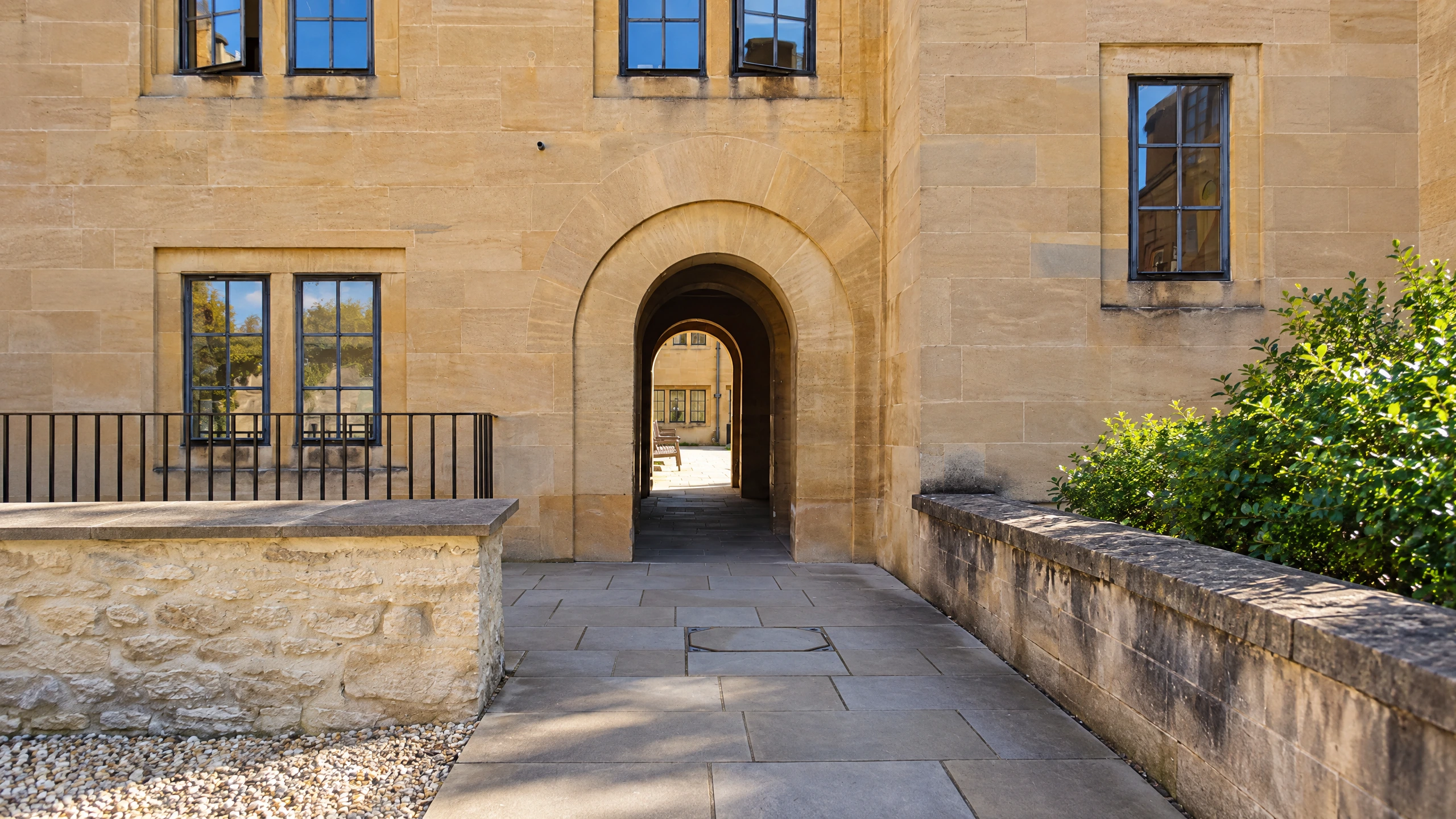
Worcester Street has a step-free entrance and routes to the quads. Refurbishment has changed paving and facilities, and the college is updating its access guide; the route to a particular event or appointment can be arranged with the Lodge.
Visit your way
Access and family planning.
Worcester Street has a step-free entrance and routes to the quads. Recent refurbishment has changed paving and facilities, and the college is updating its access guide. The Lodge can advise on the route for an arranged visit.
The copper-topped library tower makes a distinctive landmark on a walk near the station. Nuffield is closed to general visitors; the nearby castle and Ashmolean have their own visitor arrangements.
Self-guided walk
A walk from Nuffield College
A 50–65 minute walk around Nuffield takes in the tower, Oxford Castle and Gloucester Green.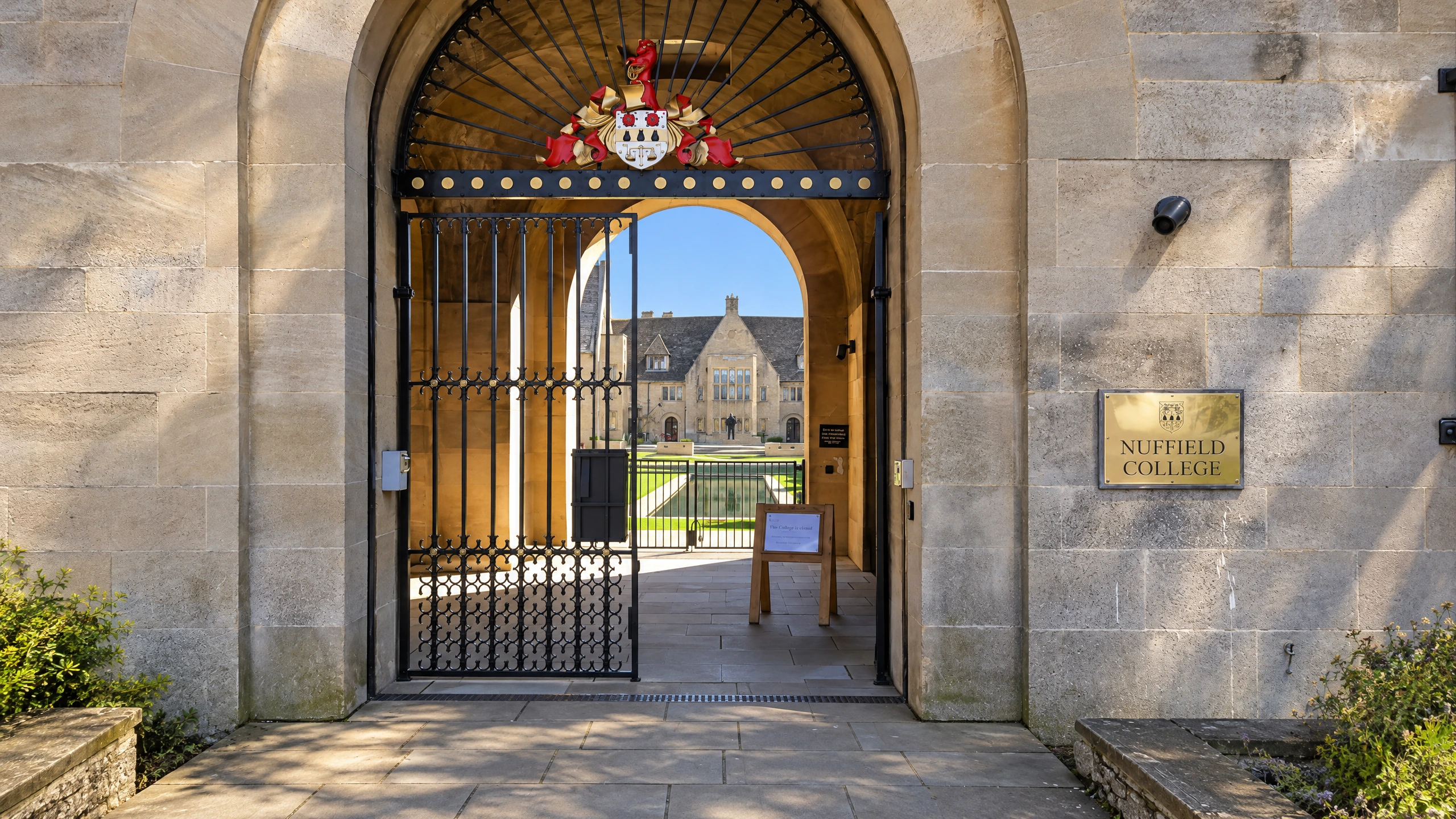
5 min
The college entrance
The current Lodge is on Worcester Street, close to Gloucester Green and the railway station.
10 min
New Road tower view
The copper-topped library tower can be seen above the college’s stone buildings from New Road.
10 min
Castle approach
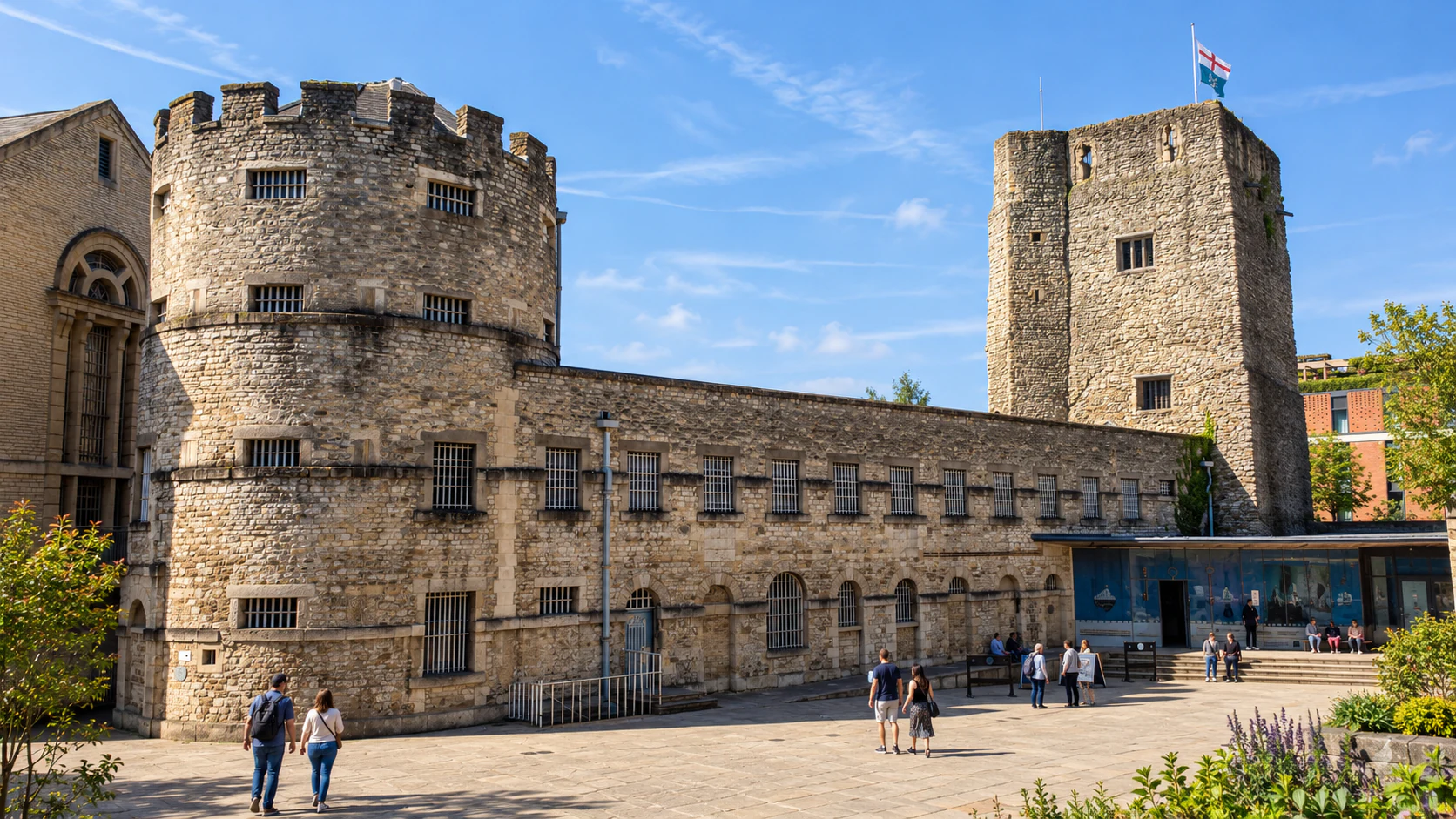
Oxford Castle lies west along New Road. Its visitor attraction has separate admission.
15 min
Gloucester Green return
Worcester Street and George Street lead towards Gloucester Green and its square.
5 min
Return to the starting gate
The walk returns to Worcester Street and the college entrance.
Optional refreshments
Gloucester Green and the surrounding streets offer places to eat and drink.
See it
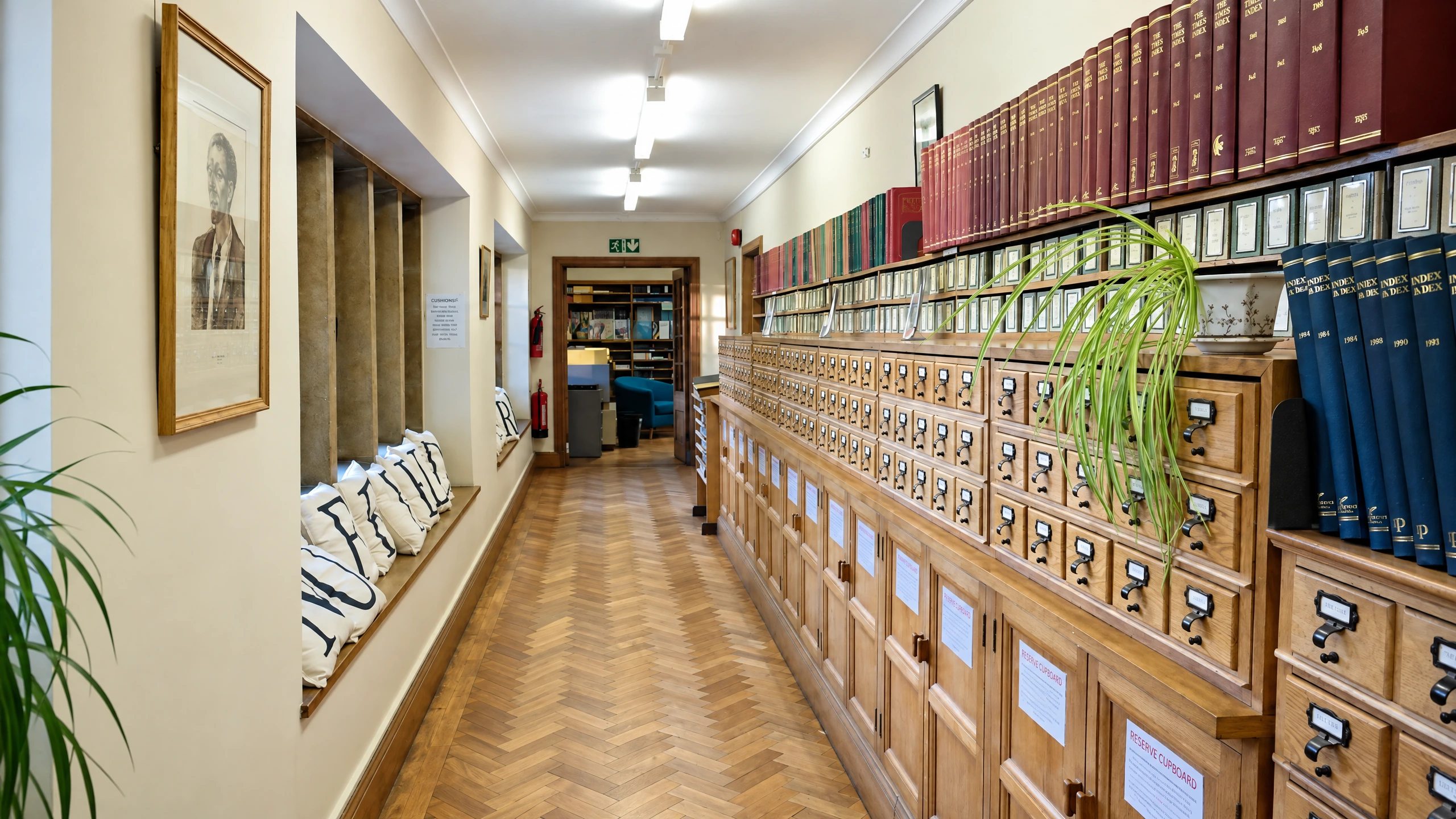
In pictures.
10 views, full screen. Tap any one to open the viewer.Around here
Make more of the area.
Oxford Castle’s tower and former prison stand close to Nuffield on New Road. The attraction has separate admission.
The square and bus station are just north of the college, near George Street.
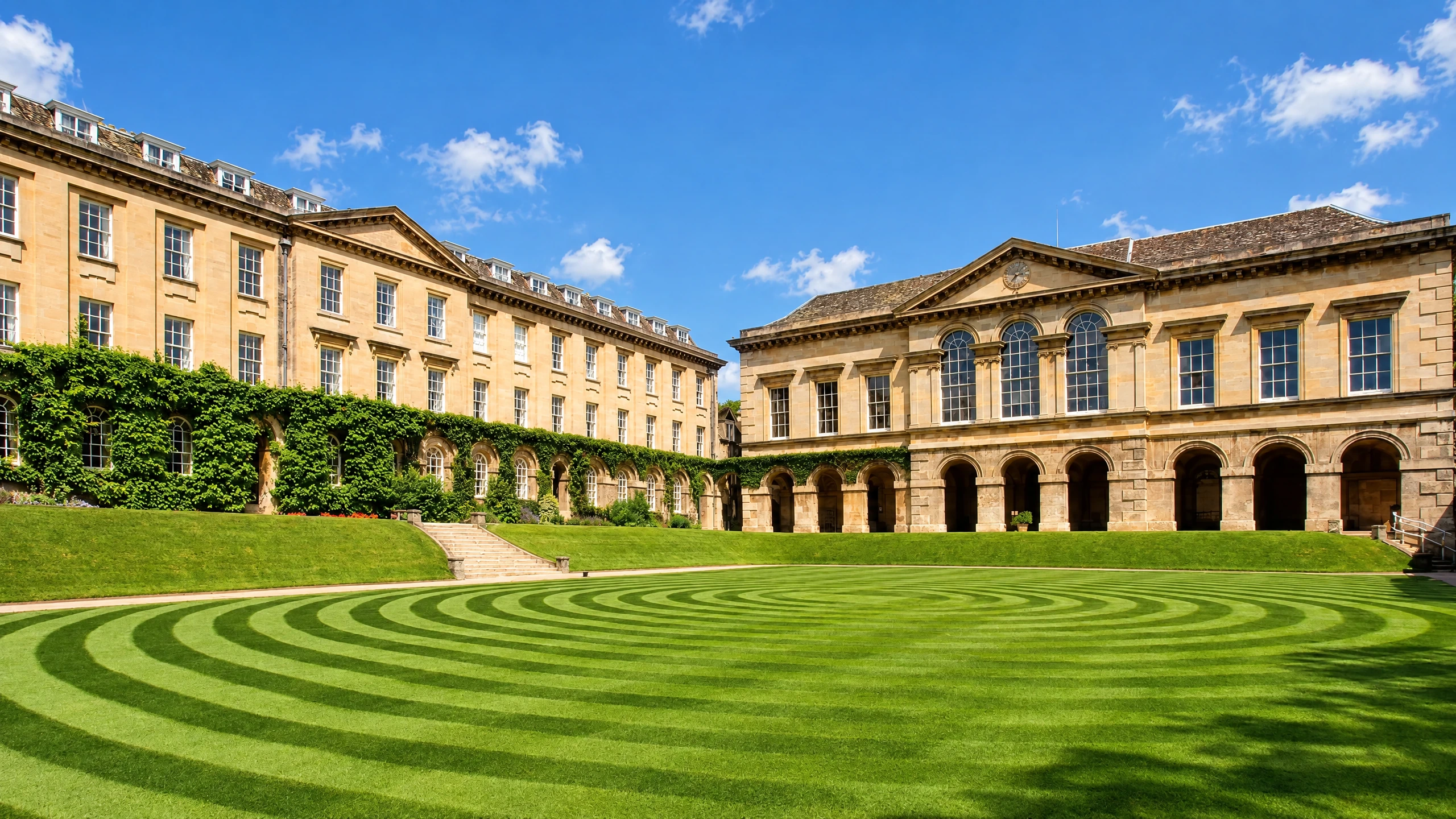
Worcester College lies north along Worcester Street, with its own visitor arrangements.
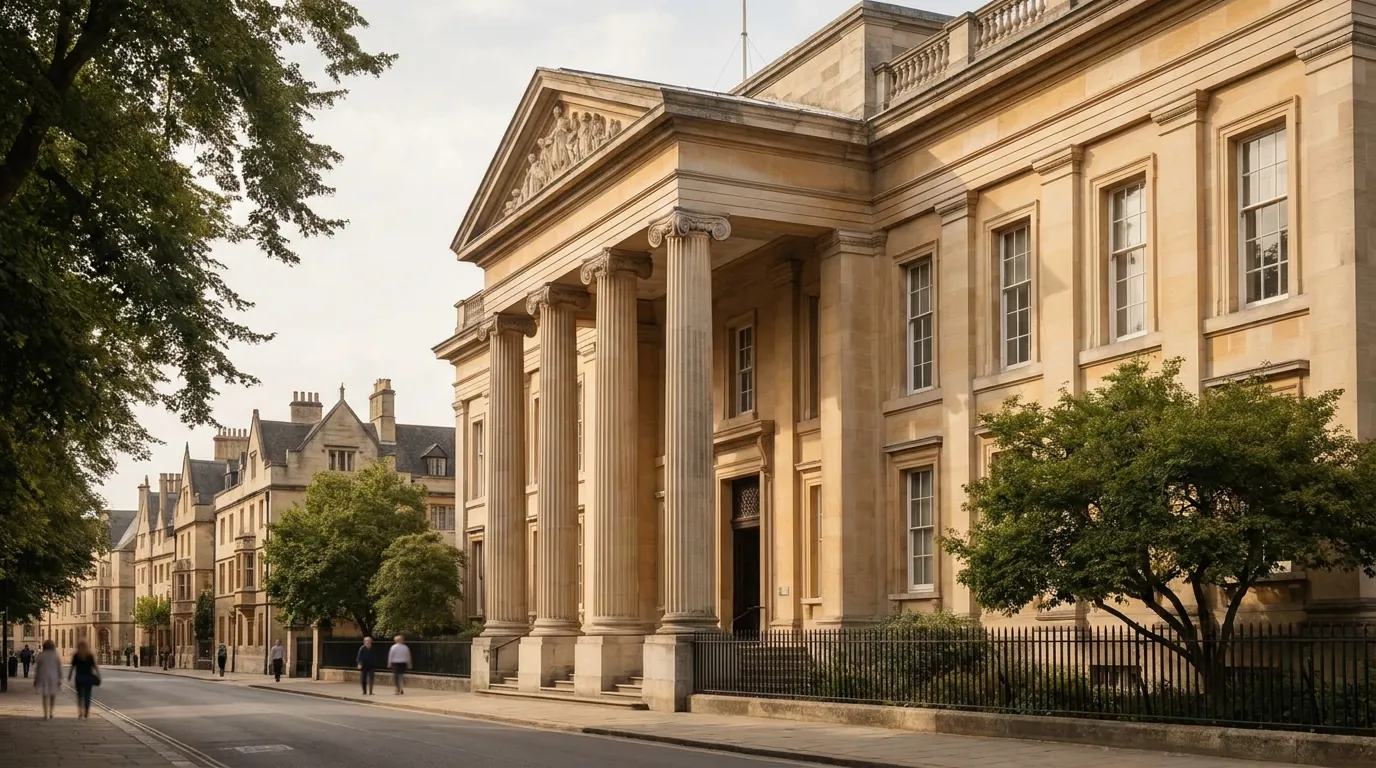
The Ashmolean on Beaumont Street houses art and archaeology collections from around the world.
Good to know
Questions, answered.
How did William Morris’s gift create Nuffield?
Motor manufacturer William Morris gave land and £900,000 in 1937 to establish a graduate college for research on social, economic and political questions.
What was unusual about Nuffield’s intended membership?
Nuffield was designed for graduate students in the social sciences and admitted women and men as students and academics from the beginning.
Who designed Nuffield’s traditional-looking buildings?
Austen Harrison designed the stone buildings with Thomas Barnes and Piers Hubbard. The traditional-looking scheme was completed in 1962.
What is the copper-topped tower at Nuffield College in Oxford used for?
Nuffield College’s copper-topped tower in Oxford is a working library tower, housing research books. It rises 100 feet to the parapet and 160 feet to the top of the spire.
What was the first artwork commissioned by Nuffield?
A portrait of first Warden Sir Harold Butler, commissioned in 1950, began the collection before the college buildings were complete.
What did John Piper design for Nuffield’s Chapel?
John Piper helped direct the chapel’s design and created the stained-glass designs, altar and original candlesticks. The chapel was dedicated in 1961.
Who made Nuffield Chapel’s glass, and what does its North Window depict?
Patrick Reyntiens made the glass from John Piper’s designs. The North Window depicts the Five Wounds of Christ.
What is Edmund de Waal’s Wind, Water, Stone at Nuffield?
De Waal’s sculpture was installed in the refurbished Fellows’ Garden in 2026. Its title comes from an Octavio Paz poem.
What is Edmund de Waal’s For Those Who Live In Cities at Nuffield College in Oxford?
For Those Who Live In Cities at Nuffield College in Oxford is a ceramics cabinet by Edmund de Waal in the Cox Room, beside the Fellows’ Garden and his outdoor work.
What makes Nuffield’s political and trade-union archives distinctive?
The archives include political-party and trade-union records, labour history and papers from college research projects. External research visits are arranged in advance.
How is Nuffield connected with British Election Studies?
Nuffield has played a major role in the British Election Study, including through the work of David Butler and later college researchers.
Why is social-mobility research part of Nuffield College’s history in Oxford?
Nuffield College in Oxford developed research on social mobility in Britain, alongside work on elections, industrial relations and other aspects of social change.
What did Mark Carney research as a Nuffield student?
Carney’s doctorate examined domestic competition and international competitiveness under Jim Mirrlees and Meg Meyer. He later worked in central banking and government.
What was Manmohan Singh’s Nuffield doctoral subject?
Singh’s doctorate examined India’s export performance, prospects and policy under Ian Little. He later became India’s prime minister.
Was Nicholas Stern a Nuffield student?
Yes. Economist Nicholas Stern studied at Nuffield before his later work on development, climate change and international economic policy.
Is Nuffield open for an ordinary sightseeing visit?
No. Nuffield is closed to general visitors. Its tower can be seen from public streets; interiors require an event or separate arrangement.
When can the public normally see Nuffield’s John Piper Chapel?
The chapel normally opens during the annual Oxford Open Doors event in September. Other visits require an arrangement with the college.
Can an external researcher use Nuffield’s archives?
Yes. External researchers can consult special collections and archives by advance arrangement. The collections include government, political and labour records.
Can de Waal’s Nuffield installation be visited as a public sculpture garden?
The works are in the private Fellows’ Garden and Cox Room. Viewing depends on a suitable event or arrangement with the college.
Editorial notes
Sources and further reading.
Sources for this guide
Research date: 1 November 2026. Inline links accompany claims. Source status distinguishes full material read from retained partial leads and carried-forward coordinate metadata.
H — About Nuffield
- URL: https://www.nuffield.ox.ac.uk/the-college/about-the-college/
- Status: read
- Supports: 1937 founding gift, graduate/social-science purpose, women and men, first fellows/students, research and alumni.
V — Nuffield contact and arrival
- URL: https://www.nuffield.ox.ac.uk/the-college/contact-us/
- Status: read
- Supports: Worcester Street Lodge relocation, staffed hours and warning that access guide is being updated.
B — Art and architecture
- URL: https://www.nuffield.ox.ac.uk/the-college/about-the-college/art-architecture/
- Status: read
- Supports: Harrison, building sequence, tower function, Chapel and art collection.
C — Nuffield Chapel
- URL: https://www.nuffield.ox.ac.uk/the-college/about-the-college/the-chapel/
- Status: read
- Supports: 1961 dedication, Piper/Reyntiens/Hoskin works and annual Open Doors access.
L — Nuffield collections and archives
- URL: https://www.nuffield.ox.ac.uk/the-college/library/special-collections-and-archives/
- Status: read
- Supports: Government, labour, political and trade-union material; external appointments.
D — Edmund de Waal works unveiled
- URL: https://www.nuffield.ox.ac.uk/news-events/news/new-artwork-unveiled-at-nuffield-college/
- Status: read
- Supports: May 2026 Wind, Water, Stone, bench and Cox Room cabinet with garden refurbishment.
R — Ground-floor refurbishment
- URL: https://www.nuffield.ox.ac.uk/news-events/news/major-refurbishment-project-begins-at-nuffield/
- Status: read
- Supports: 2023 plan for raised paving, slope, accessible toilets, new lecture space and Lodge.
P1 — Mark Carney alumnus profile
- URL: https://www.nuffield.ox.ac.uk/news-events/news/honorary-fellow-and-alumnus-becomes-prime-minister-of-canada/
- Status: read
- Supports: Explicit graduate relationship, DPhil cohort 1993 and completion in under two years.
P2 — Manmohan Singh alumnus profile
- URL: https://www.nuffield.ox.ac.uk/news-events/news/alumnus-and-honorary-fellow-dr-manmohan-singh-awarded-lifetime-achievement-honour/
- Status: read
- Supports: DPhil Economics cohort label 1960, thesis topic, supervisor and later career.
W — Nuffield historical context
- URL: https://en.wikipedia.org/wiki/Nuffield_College,_Oxford
- Status: read
- Supports: Canal-basin site, Harrison design debate and student/fellow distinctions.
AL — Nuffield alumni privileges
- URL: https://www.nuffield.ox.ac.uk/alumni-development/alumni-privileges/
- Status: read
- Supports: Advance library registration and separate alumni access; accommodation requests within six weeks from July 2026.
A — University physical access guide
- URL: https://www.ox.ac.uk/about/how-we-are-run/equality-diversity/access-guide/colleges/nuffield
- Status: read
- Supports: Retained full physical site survey: entrances, thresholds, ramps, lifts, toilets, parking and hearing support. Not a website-accessibility statement.
U — University college visiting directory
- URL: https://www.ox.ac.uk/about/visit-us/visiting-colleges
- Status: read
- Supports: Public access summary; college pages take precedence where explicitly conflicting.
G — Fresh college coordinate reference
- URL: https://en.wikipedia.org/wiki/Nuffield_College,_Oxford
- Status: read
- Supports: Numeric WGS84 college coordinates read directly from Wikipedia on 1 November 2026. Campus pin, not a surveyed visitor or accessible entrance.
Conflict ledger
The college’s architecture page uses 1948 for site work while summaries use 1949 for construction; retain staged postwar development without forcing a false single date. Use its 1962 completion date rather than secondary 1960 shorthand. Current contact page relocates Lodge to Worcester Street and says the access guide is being updated. General-visitor closure coexists with authorised appointments and annual Open Doors; no ordinary access follows from Lodge staffing. Carney’s 1993 and Singh’s 1960 course labels are not automatically degree-award dates.
Editorial calculations
Walking times, recommended visit durations, comparisons and scores are editorial judgements. No pin is an accessible-entrance certification; no unlisted ticket is described as available.
Further reading and sources
Opening hours, prices, programmes and access arrangements can change. Confirm critical details with the venue.
Keep exploring