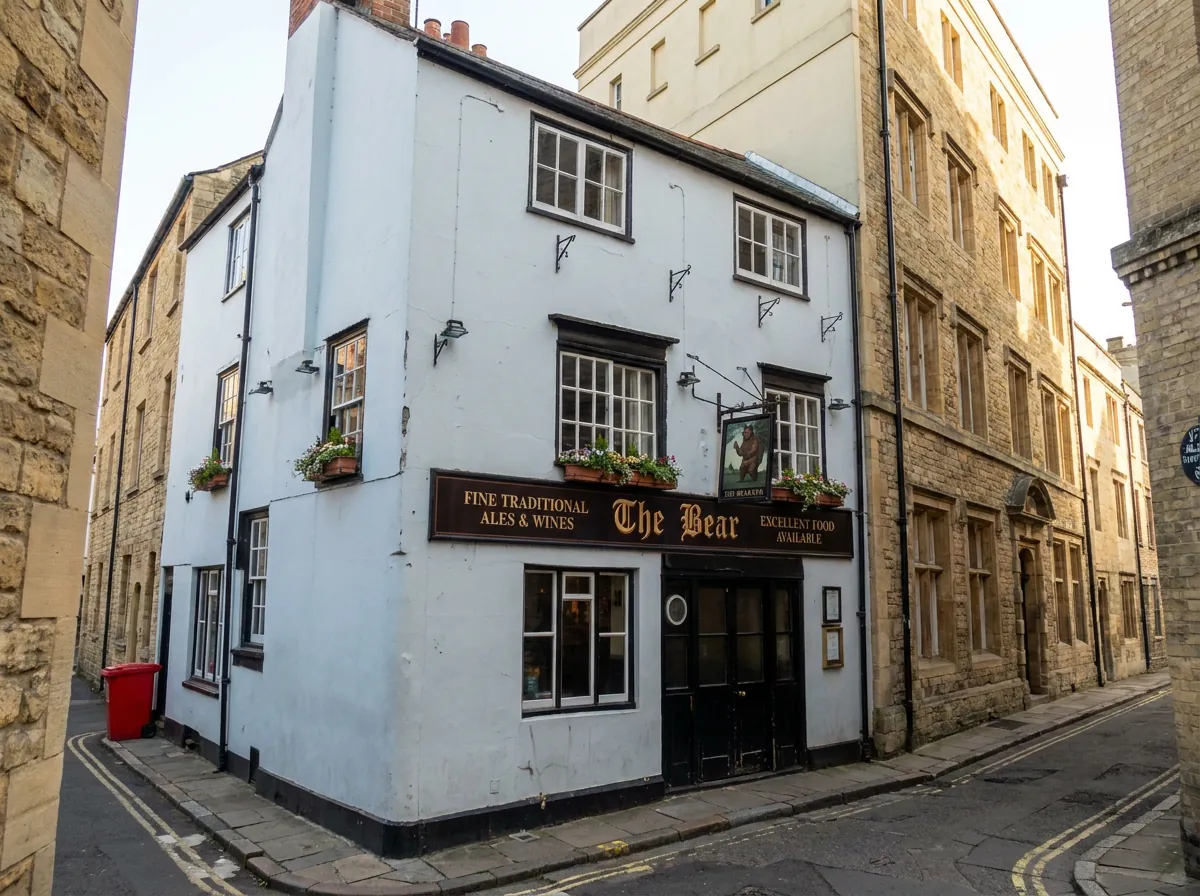
1241The Bearsite recorded / Oxford’s oldest pub name, in a 17th-century ostler’s house
Oxford / Food & drink
Dated from the archives rather than from the sign above the door — which is not always the same number.
Walk the timeline01 / Read the small print
Pub ages are the most heavily marketed dates in Oxford, and two quite different things get run together: how long there has been a licensed house on a plot, and how long the building in front of you has actually been a pub.
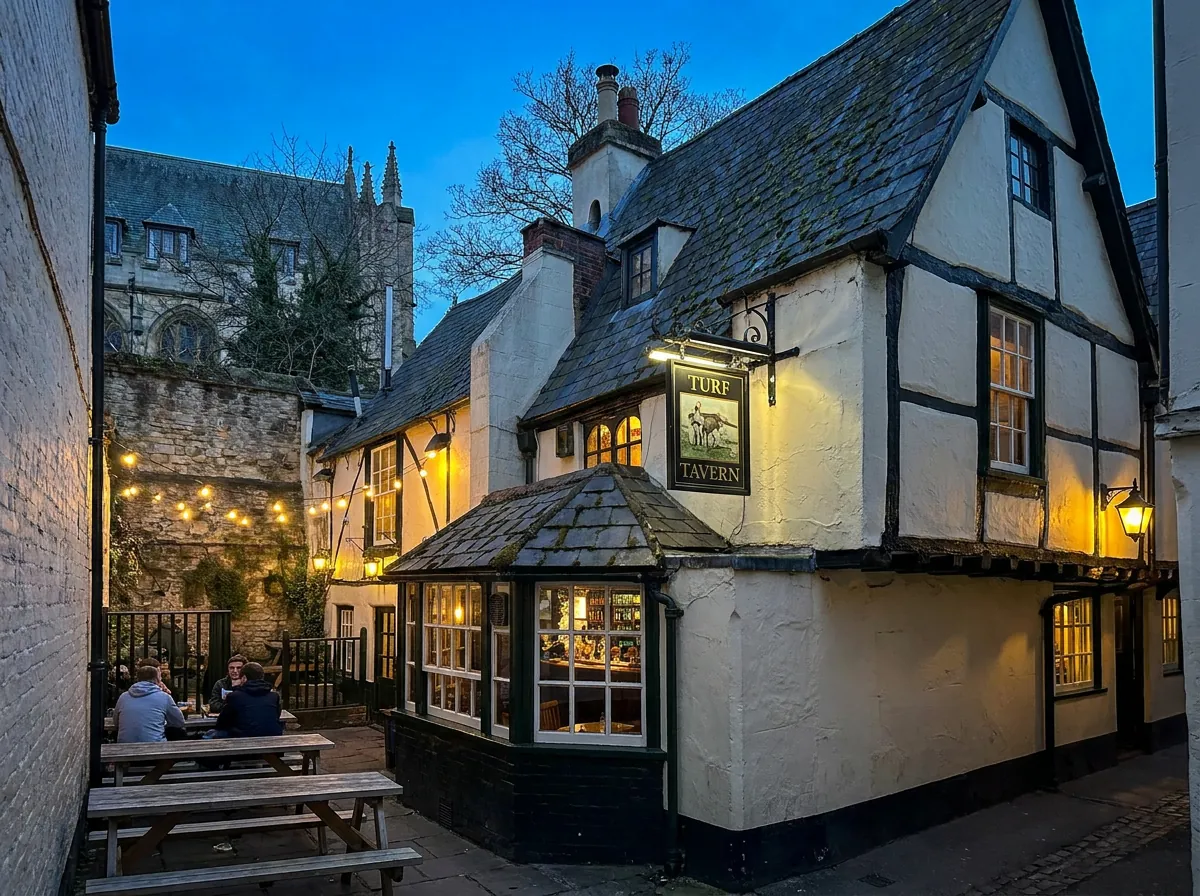
The Bear advertises 1242. A bequest concerning that site really is dated 1241 — but the inn it refers to stood on the High Street and closed in 1801, and the room you drink in was its stableman’s house. The Turf claims 1381 and opened around 1790 as the Spotted Cow. Neither pub is less interesting for it.
02 / Where they are
Oxford / Poured over time
From a 13th-century bequest to a Georgian tavern built just outside the colleges’ reach — Oxford’s drinking history, in the order it actually happened.
Drag or swipe through the timeline →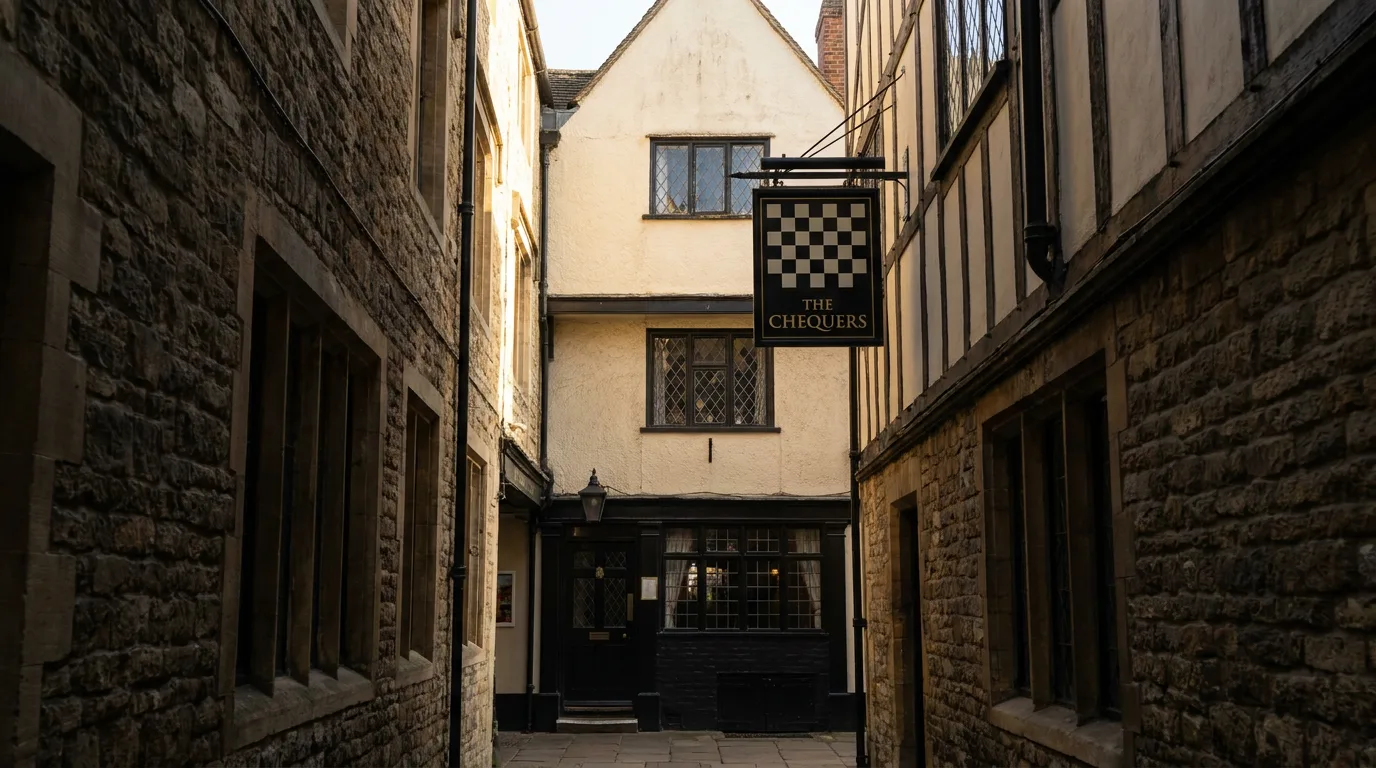
Dates are the earliest a source supports — a licence, a lease or the fabric of the building — not the date on the sign.
179003 / The full record
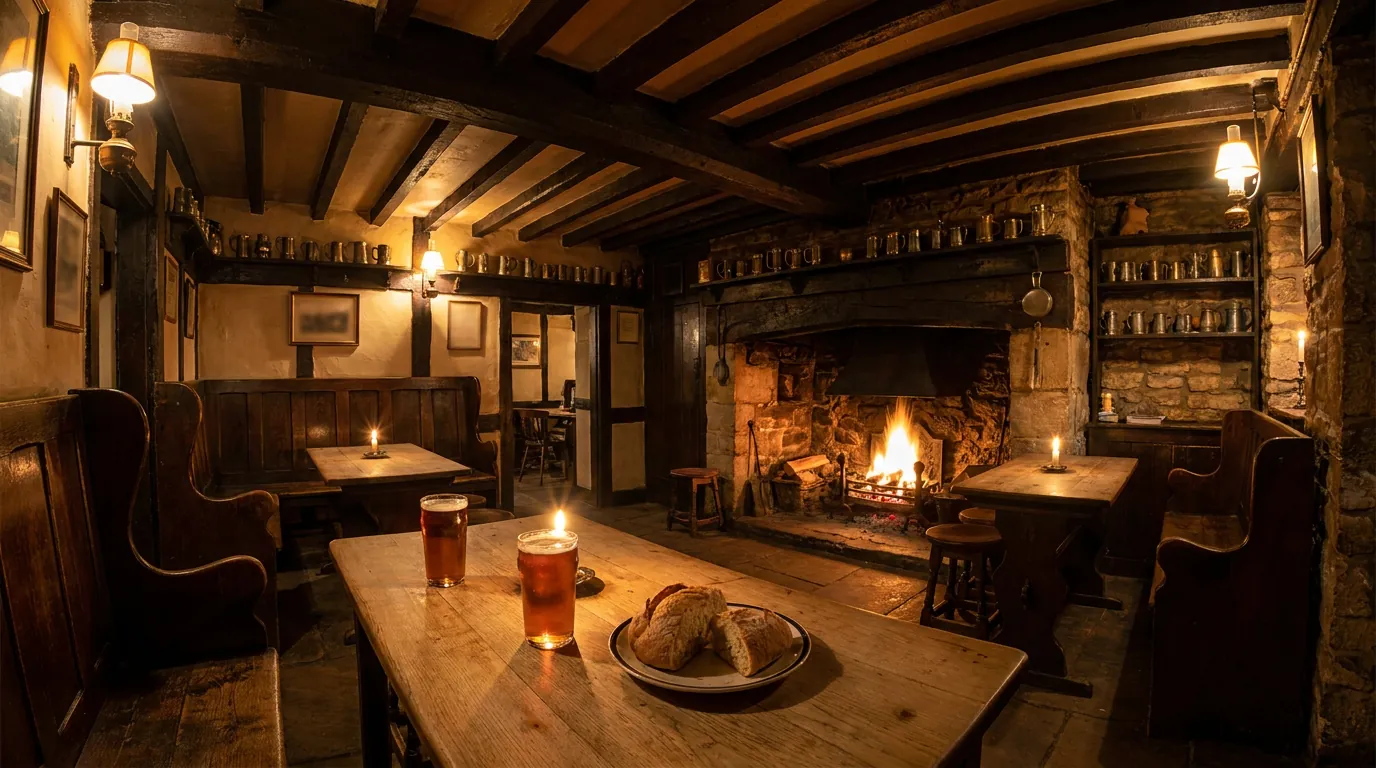
Lady Christina Pady left the site to St Frideswide’s Priory on 28 April 1241. It was Le Tabard by 1432 and The Bear Inn by 1457 — but that inn stood on the High Street and closed in 1801. The tiny pub you drink in today was its ostler’s house, built in the early 17th century. Over 4,500 club tie-ends have been collected here since 1952.
Advertises 1242. Earliest supported date: 1241 (site recorded).
A 15th-century private house belonging to a moneylender — the chequerboard was the money-changer’s sign, and it gave the pub its name. Much of the interior dates from the 1500s, when the tenement was rebuilt as a tavern. Reached down a narrow passage most people walk straight past.
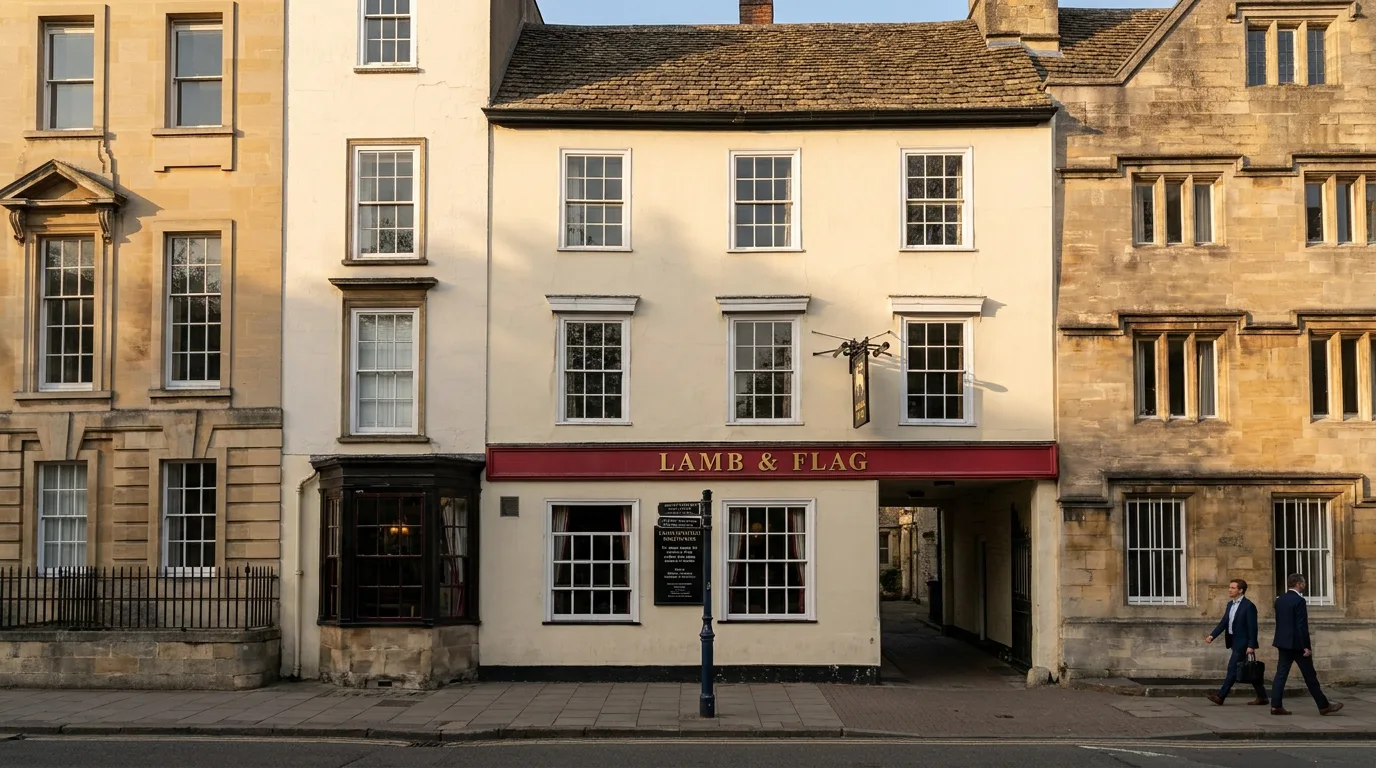
The Lamb was operating just south of St John’s by at least 1566; the Lamb & Flag followed in 1613. St John’s took over its management in 1997 and puts the profits into graduate scholarships. It closed in 2021 and reopened in 2022. The Inklings moved their Tuesday sessions here in 1962.
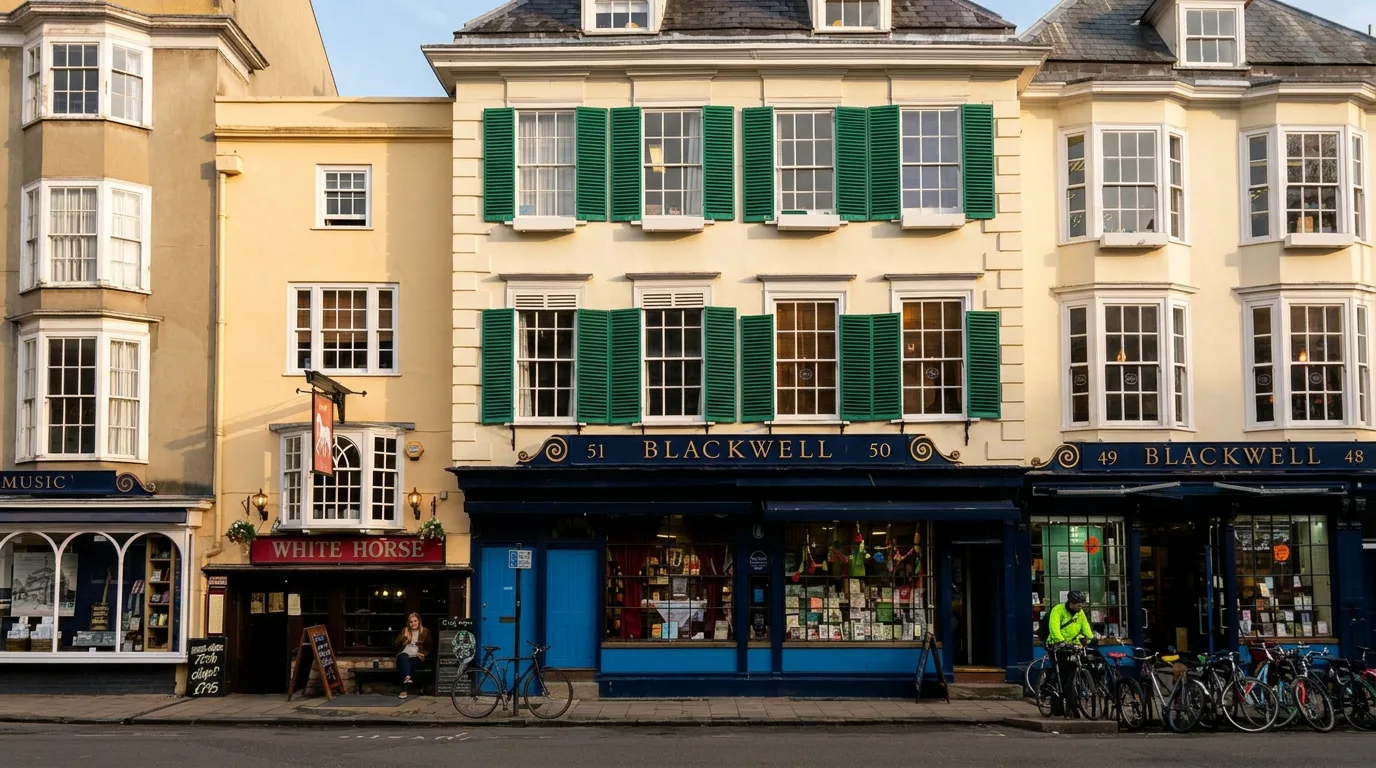
Licensed in 1591 to the whitebaker Roger Scott — as The Mermaid. It became the White Mermaid, then The Jolly Volunteer, then The Elephant when the Elephant next door shut in 1820, and has only been the White Horse consistently since the late 1830s. The building is 16th century; it belonged to the city, then Exeter College until 1980. Grade II listed.
Pouring since 1607 and advertises itself as Oxford’s oldest pub — a claim that runs directly against the Bear’s. Both are defensible depending on whether you date the licence or the site. Long said to have the highest average IQ of any bar in the world, which is the sort of thing Oxford says about itself.
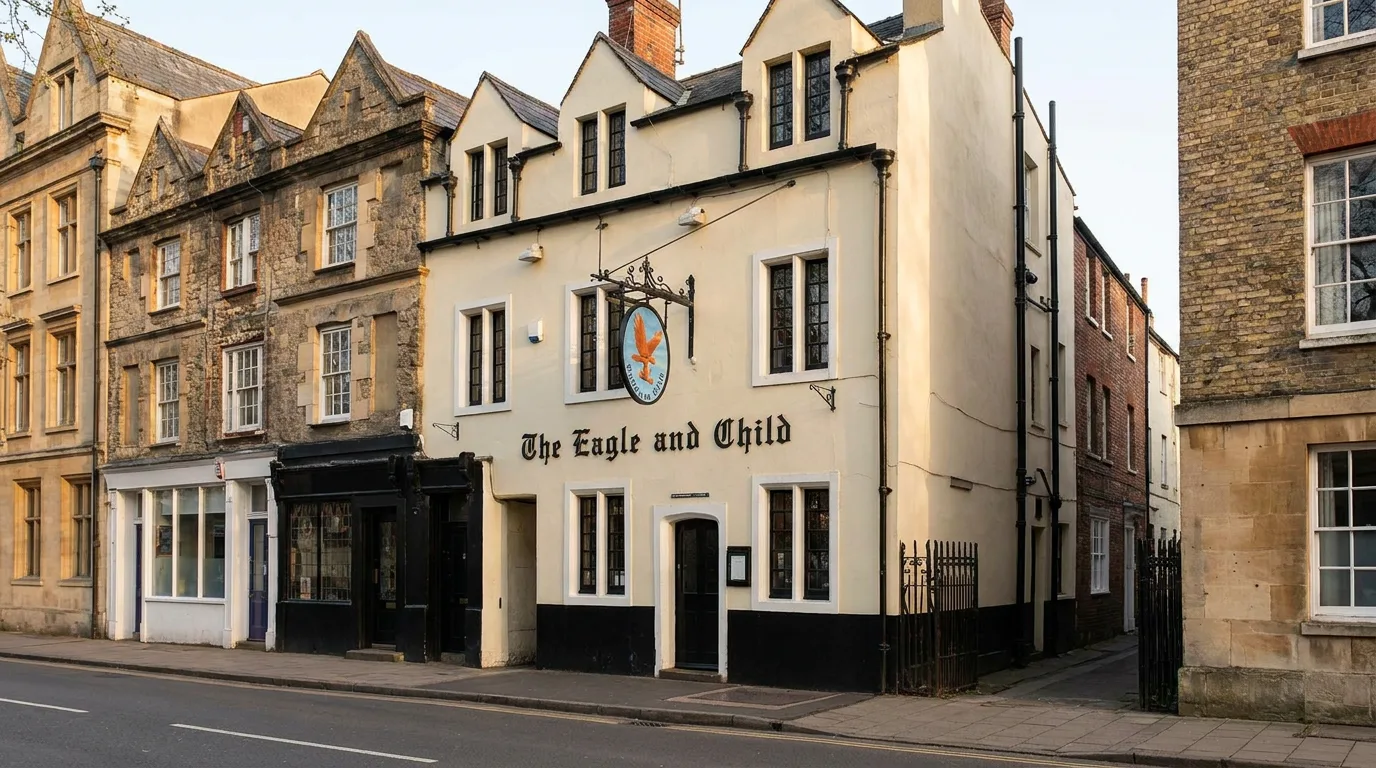
A pub on the site from 1650, though the name is first recorded in 1684. Lewis, Tolkien and the rest of the Inklings met in the back Rabbit Room from the 1930s until 1962. Grade II listed, closed since March 2020, and bought by the Ellison Institute of Technology in 2023 for restoration — so it is a landmark you currently read about rather than drink in.
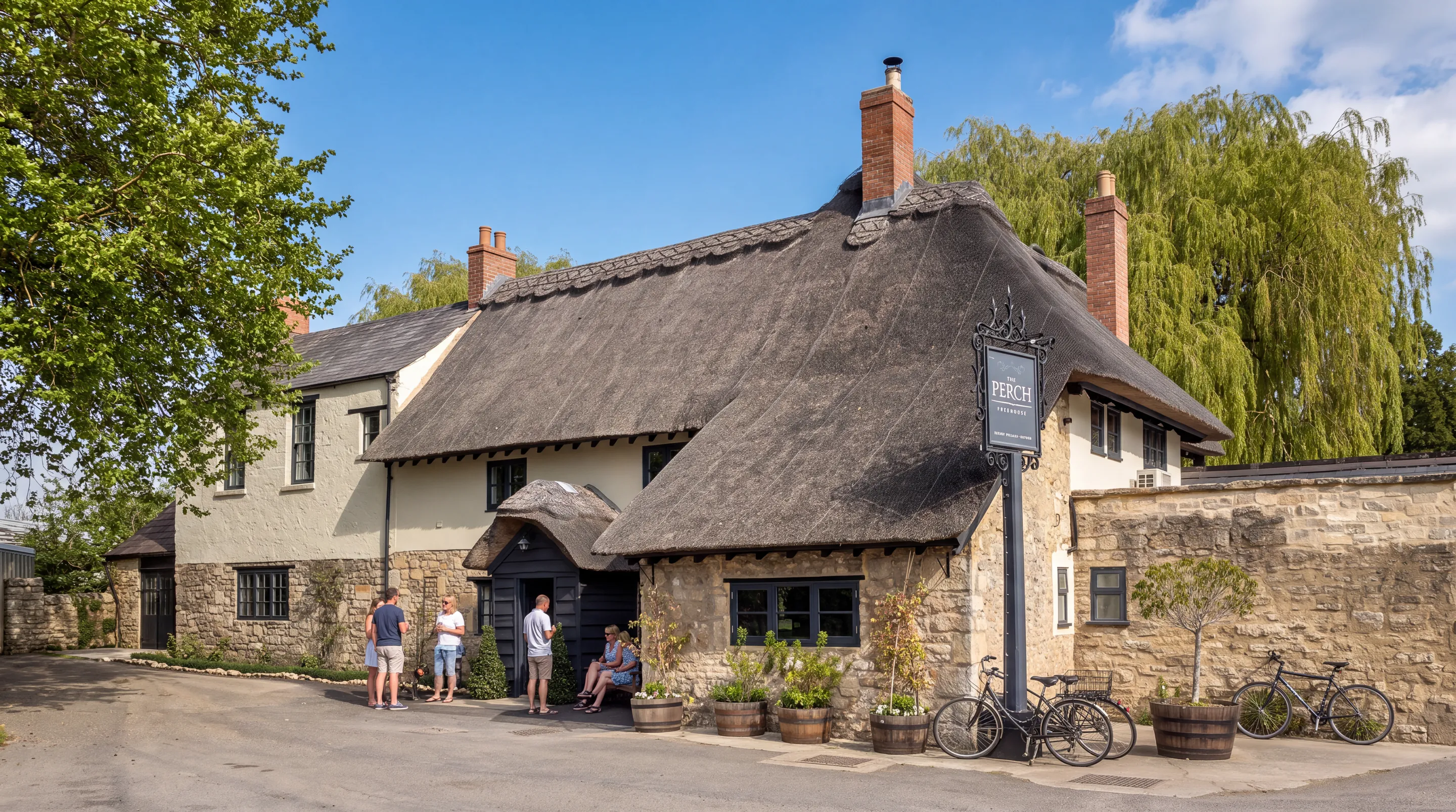
The inn claims 800 years; the thatched building is dated to at least the 17th century and is Grade II listed. Lewis Carroll walked out here from Christ Church and is said to have given one of the first public readings of Alice. Burnt in 1977 and again in 2007, reopening in September 2008. Reached on foot across Port Meadow.
Advertises 1225. Earliest supported date: 1650 (building dated).
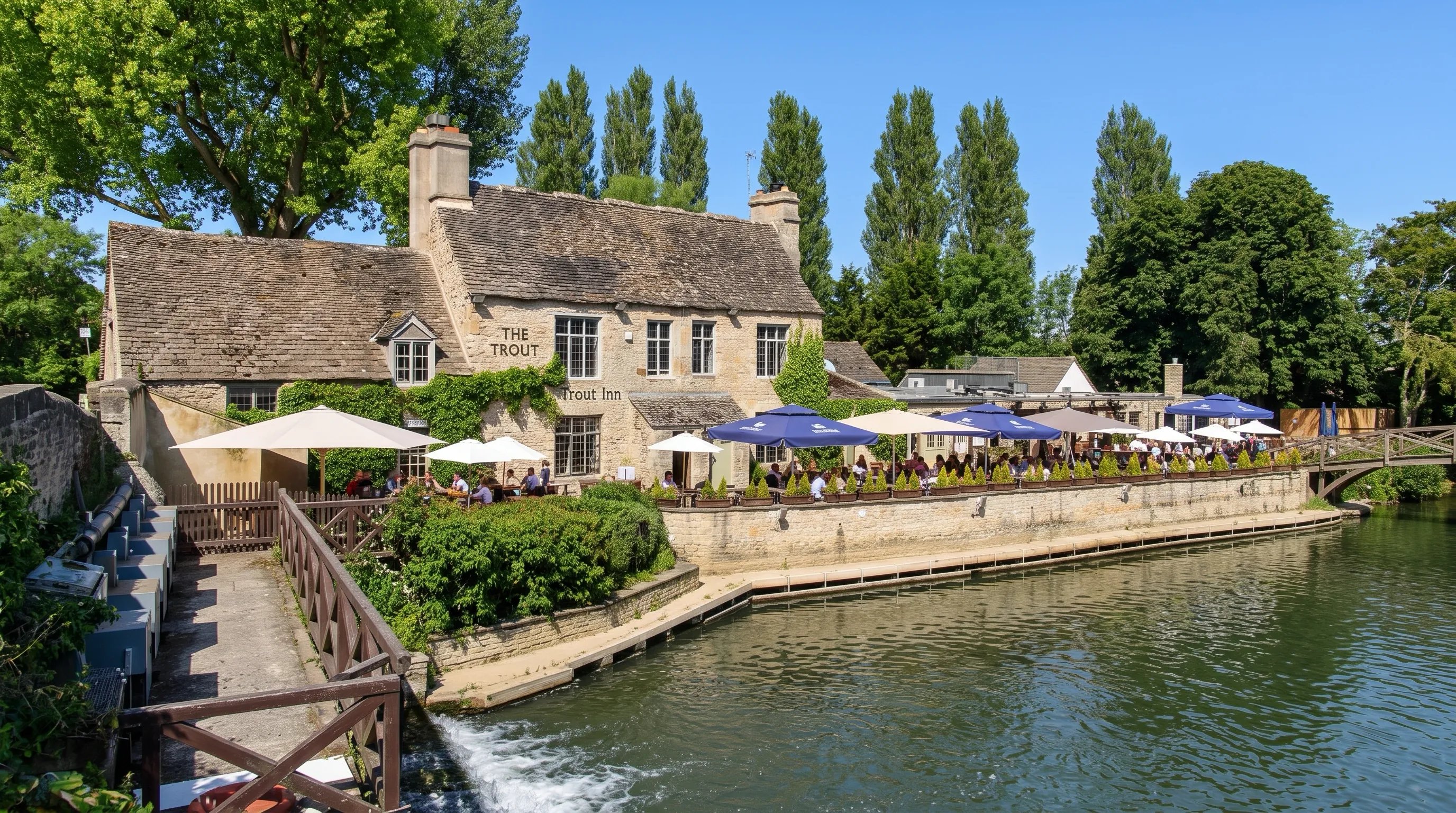
Principally 17th century with 18th-century alterations, Grade II listed, sitting where the Thames splits beside Godstow Bridge and the ruins of the abbey. It appears in Brideshead Revisited and became a fixture of Inspector Morse. The far end of the Port Meadow walk, and the reason most people finish it.
Opened around the end of the 18th century as The Spotted Cow, despite the sign outside. Its real distinction is the location: hard against the old city wall, down an alley once called Hell Passage, deliberately outside the jurisdiction of the colleges — which is exactly why undergraduates went there, and still do.
Advertises 1381. Earliest supported date: 1790 (opened).
Dates checked against Historic England listings, the Oxford History local archive, Lincoln College’s archive for the Mitre, and cited Wikipedia entries. Verified 26 July 2026 — opening hours and ownership change; the dates do not.