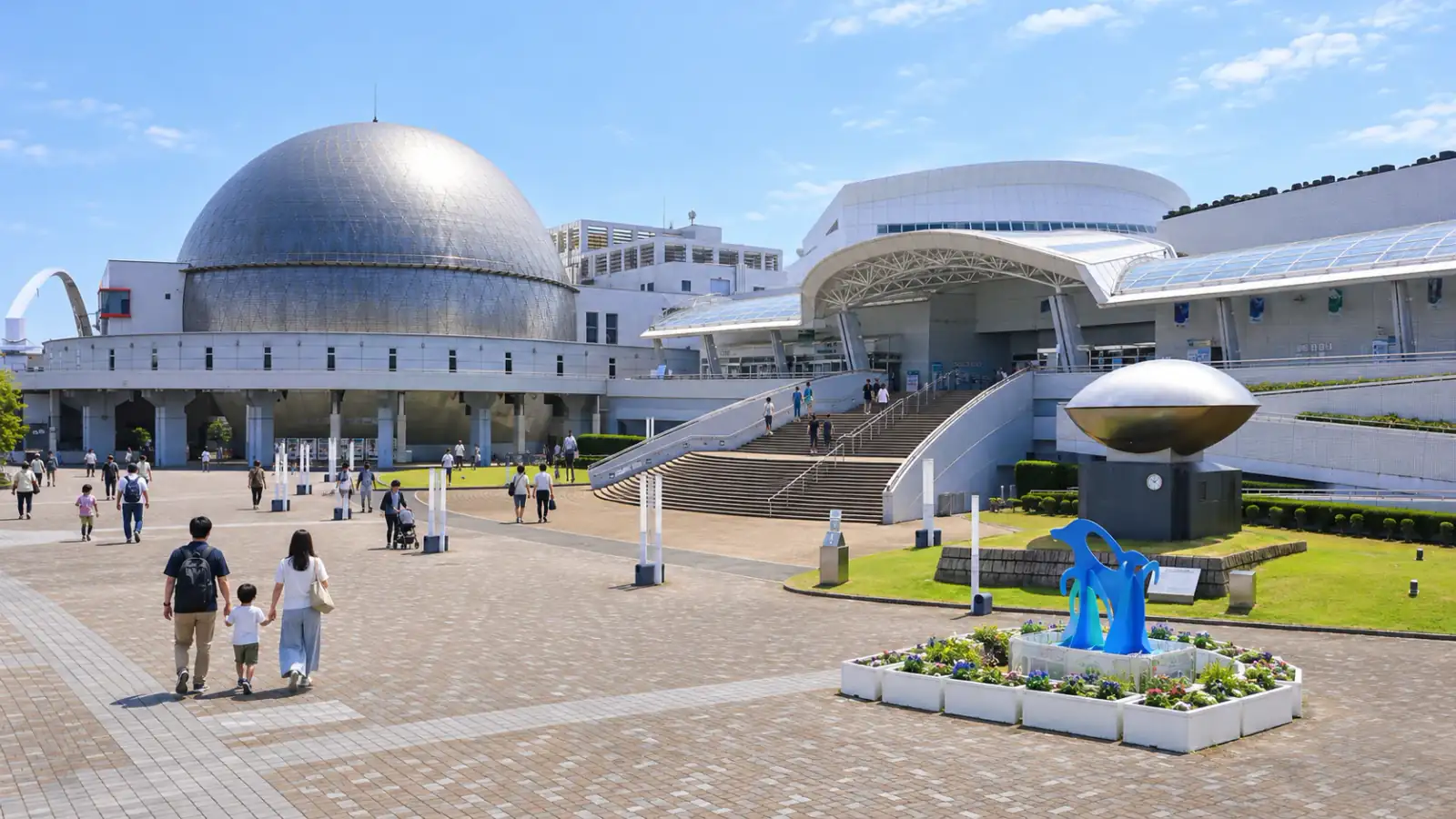
Port of Nagoya Public Aquarium
Explore marine mammals, the Kuroshio sardine tank and penguins, with time for a waterfront meal.
01 / The experience
Belugas and dolphins, the Kuroshio sardine shoal and Antarctic penguins
Spend a Nagoya day between marine mammals, the Kuroshio sardine tank and penguin displays.
The sardines are a compelling reason to start thinking about the South Building at the Port of Nagoya Public Aquarium. Thousands turn through the Large Kuroshio Tank, changing the shape of the shoal as they move. During the Tornado of Sardines feeding presentation, that movement becomes the event, but the tank has plenty to watch between scheduled sessions too.
The South Building follows a journey from Japanese waters towards Antarctica. That gives its different environments a thread, from the Kuroshio displays through tropical reef life to penguins in colder conditions. It is a good part of the aquarium for anyone who enjoys looking closely at tanks rather than building the entire visit around a stadium show. Fish, turtles and penguins give you several very different things to spend time with.
The coral-reef tank adds height to the route, extending through three floors. Its setting takes inspiration from Australia's Great Barrier Reef, with live-coral displays explaining more about the animals that make a reef. Views at different levels change what you see: fish moving through the water, the shapes around them and smaller details in the habitat. It makes a useful contrast with the open movement of the sardine shoal.
Sea-turtle exhibits bring another kind of swimming into the same building. Keeper-led sessions can add explanations of feeding and the different species, while the penguin area introduces life in much colder water. You can enjoy those sections as part of the route even when a particular talk does not fit your day. The variety is what makes the South Building rewarding as a visit in its own right.
The North Building has a different focus: whales and dolphins, alongside the story of mammals returning to life in the sea. Skeletons, fossil replicas and illustrations help connect the animals in the pools with that longer history. Orcas, dolphins and belugas are central to this half of the aquarium. The beluga area provides views from above and below the water, so the same animal can be seen from quite different positions.
Underwater windows are one of the most useful choices in the North Building. From below, you can follow a dolphin's movement through the pool rather than only the moment it breaks the surface. The stadium supplies the larger presentation setting, with performances and training sessions adding their own focus. A visit that includes both perspectives gives you more variety than spending all the available time at one scheduled event.
For families, that two-building layout helps make a substantial day away from the circuit. One part can centre on fish and penguins, another on the marine-mammal areas, with a meal between them. JETTY beside the aquarium has restaurants and a food court, giving the port outing a lunch option without a return to central Nagoya. Harbour views add an outdoor change of scene when you want one.
The aquarium is a good choice if your party wants a complete attraction with a broad mix of displays. There is enough here to give different interests a turn, from reef details to the scale of the main pools. Allow the visit to include both buildings and a lunch break, and the waterfront becomes a proper Nagoya day rather than a short diversion between museums.
Highlights
- 01
¥2,030 adult admission
- 02
Allow 3–4 hours, plus travel and lunch
- 03
Monday is the usual closure; event times vary
04 / Before you go
Plan your visit
Admission & cost
¥2,030 adult admission
Adults and high-school students ¥2,030; elementary/junior-high pupils ¥1,010; children aged 4+ ¥500. Other port attractions and meals are separate. Seasonal night prices apply only on advertised night-opening dates.
When to visit
Check the dated calendar. Ordinary spring daytime hours are generally 09:30–17:30, with admission ending one hour before closing. Normally closed Monday outside seasonal exceptions; April 2027 dates and event times need confirmation.
Allow 3–4 hours, plus travel and lunch
Monday is the usual closure outside seasonal exceptions. Do not assign Monday 12 April 2027 without an announced opening.
Arrival & access
Use the Meiko subway line to Nagoyako. From Nagoya Station, one straightforward option is JR or Meitetsu to Kanayama, then the Meiko line towards Nagoyako. The aquarium gives a five-minute walk from exit 3. Check a step-free station exit separately if needed.
1-3 Minato-machi, Minato-ku, Nagoya, Aichi
Plan your visit
Admission does not reserve an event seat. Presentations and talks follow the daily programme and can change with weather or animal care. Same-day re-entry requires a hand stamp before leaving, including for JETTY lunch; return before final admission. Staff can advise on access and viewing arrangements.
Location & nearby places
Continue exploring / Japan
More to explore
in Japan
Find another place for your itinerary, or explore all things to do in Japan.
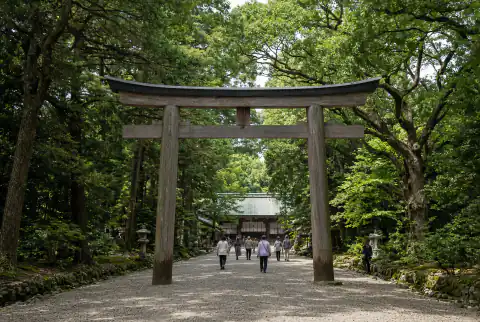 Landmarks & gardensAtsuta Jingu ShrineExplore experience →
 Museums, markets & cultureSCMAGLEV and Railway ParkExplore experience →
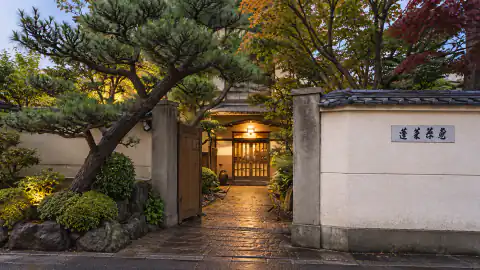 Japanese restaurantsAtsuta Houraiken HontenRelative food and drink guide: $ budget-friendly · $$ casual dining · $$$ signature meal · $$$$ special occasion. Check the exact menu price and inclusions; drinks, supplements, tax or service may be extra as stated.Nagoya regional cuisineExplore experience →
 Street food & local diningShinsuzume HontenRelative food and drink guide: $ budget-friendly · $$ casual dining · $$$ signature meal · $$$$ special occasion. Check the exact menu price and inclusions; drinks, supplements, tax or service may be extra as stated.Japanese street foodExplore experience →
Good to know
Port of Nagoya Public Aquarium: frequently asked questions
Which animals and tanks are in Nagoya Aquarium’s North and South buildings?
Port of Nagoya Public Aquarium’s North Building is the marine-mammal side, with dolphins, orcas and belugas. Head south for the Large Kuroshio Tank, sea turtles and Antarctic penguins.
Where can I see Nagoya Aquarium’s Tornado of Sardines?
To see Nagoya Aquarium’s Tornado of Sardines, go to the South Building’s Large Kuroshio Tank. Tornado of Sardines is the feeding presentation, but you can also watch the shoal outside presentation times.
Does Port of Nagoya Aquarium admission reserve a dolphin-show seat?
At Port of Nagoya Public Aquarium, no seats are reserved with ordinary admission. Use the day’s programme to plan your visit; weather or animal care can change presentation arrangements.
Can I leave Nagoya Aquarium for lunch at JETTY and return?
At Nagoya Aquarium, get the same-day re-entry hand stamp before leaving, then return before final admission. That lets you fit a JETTY lunch between aquarium stops without missing a presentation you want to see.
Which subway station and exit serve Port of Nagoya Aquarium?
For Port of Nagoya Aquarium, use Nagoyako on the Meiko line: Exit 3 is about five minutes away on foot. For step-free access, use a separately planned accessible exit route. Kinjofuto serves the railway museum on a different railway.
Does Port of Nagoya Public Aquarium admission include the port observation lounge and icebreaker?
At Port of Nagoya Aquarium, the observation lounge, maritime museum and icebreaker need separate admission or a combined ticket that includes them. Add time for them beyond the aquarium’s three-to-four-hour visit.