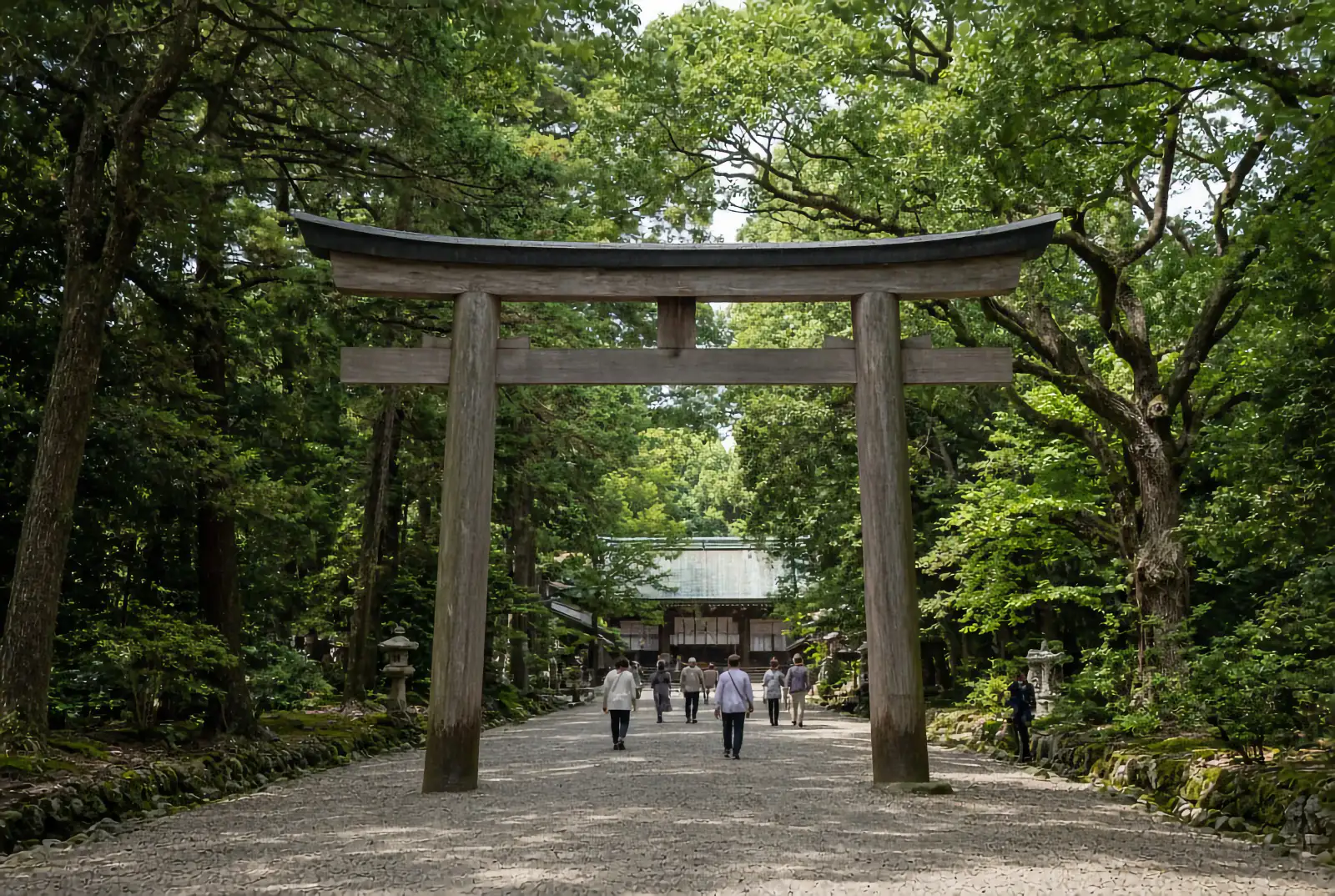
Atsuta Jingu Shrine
Walk Atsuta Jingu’s wooded grounds, pausing at the great camphor tree and historic Nobunaga wall.
01 / The experience
Atsuta’s camphor tree and Nobunaga’s earthen wall
Visit the main worship area, great camphor tree and Nobunaga wall in Atsuta’s wooded grounds.
Atsuta Jingu gives you a wooded walk through Nagoya with several very different things to see along the way. The main shrine is the focus, but the great camphor tree, a roofed earthen wall and the sword displays give the grounds more depth than a quick stop at the worship area. It works well as a city outing with a Japanese lunch afterwards, particularly if you would like part of the holiday to be about Nagoya beyond its cars and railway stations.
The shrine's history is bound to Kusanagi-no-tsurugi, the sacred sword associated with the Imperial regalia. Shrine tradition connects its arrival here with Miyasuhime and Prince Yamatotakeru, placing Atsuta's origins around 1,900 years ago. The sword itself is not displayed to ordinary visitors. What you encounter is an active place of worship, with its public approach and buildings giving a setting to that continuing tradition.
The architecture has changed through that long history. Atsuta adopted the Shinmei-zukuri style in the nineteenth century, and the main buildings were rebuilt after wartime destruction, with the principal post-war works completed in 1955. That helps explain the simplicity of the timber forms. This is a different architectural experience from Honmaru Palace's decorated audience rooms: the approach, shrine boundaries and surrounding trees carry much of the visit.
Nobunaga-Bei is a particularly good landmark to find on the way. Oda Nobunaga offered the wall in gratitude after his victory at Okehazama in 1560. Mud, lime and grease were combined to form its substantial body, protected by a tiled roof. It puts a recognisable figure from Japan's wars into the shrine grounds, and its heavy earthen construction makes a striking companion to the timber buildings.
The giant camphor tree provides another familiar meeting point within the precinct. The shrine describes it as around 1,300 years old and associates its planting with Kobo Daishi in tradition. The breadth of the tree and the woodland around it make the outdoor part of Atsuta appealing even on a visit that does not include an exhibition. The precinct is the main experience; the smaller landmarks give the walk its individual stops.
For an interest in Japanese blades, Kusanagi-kan adds a substantial optional visit. Its collection comes from swords offered to the shrine in prayer and gratitude over many generations. Glass displays allow views of both sides of the blades, and the great Magara swords show how dramatically their scale can vary. A supervised experience area lets visitors feel the weight of example swords and full-size replicas of the oversized blades. It is a separate exhibition, with its own admission and visitor arrangements, rather than access to the hidden sacred sword.
You can shape the outing around those interests: shrine and woodland alone, or the grounds with more time for the sword exhibition. Atsuta Houraiken Honten offers a separate reason to stay in this part of the city for hitsumabushi, the grilled-eel rice meal eaten with condiments and broth. Together, the shrine and a proper lunch give Atsuta a clear place in a free Nagoya day, with enough character to deserve more than the gap between two museum visits.
Highlights
- 01
Free grounds; exhibitions separate
- 02
Allow 60–90 minutes
- 03
A place of worship: respect barriers and photography notices
04 / Before you go
Plan your visit
Admission & cost
Free shrine grounds
The shrine grounds are free to visit. Treasure exhibitions and other paid facilities have separate admission.
When to visit
Shrine worship is available 24 hours. Choose daylight for the wooded grounds; exhibition buildings and visitor services have separate hours.
Allow 60–90 minutes
Choose a daylight visit before or after the race weekend; keep worship areas quiet.
Arrival & access
Walk about three minutes from Meitetsu Jingumae Station or eight minutes from JR Atsuta Station. Use the shrine entrance signs and precinct map.
1-1-1 Jingu, Atsuta-ku, Nagoya 456-8585
Plan your visit
General grounds entry is free. Exhibition buildings have separate admission and hours; the sacred Kusanagi sword is not on view during an ordinary visit. Ceremony barriers and photography notices apply around worship spaces.
Location & nearby places
Continue exploring / Japan
More to explore
in Japan
Find another place for your itinerary, or explore all things to do in Japan.
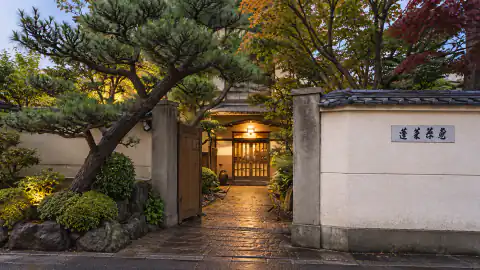 Japanese restaurantsAtsuta Houraiken HontenRelative food and drink guide: $ budget-friendly · $$ casual dining · $$$ signature meal · $$$$ special occasion. Check the exact menu price and inclusions; drinks, supplements, tax or service may be extra as stated.Nagoya regional cuisineExplore experience →
 Street food & local diningShinsuzume HontenRelative food and drink guide: $ budget-friendly · $$ casual dining · $$$ signature meal · $$$$ special occasion. Check the exact menu price and inclusions; drinks, supplements, tax or service may be extra as stated.Japanese street foodExplore experience →
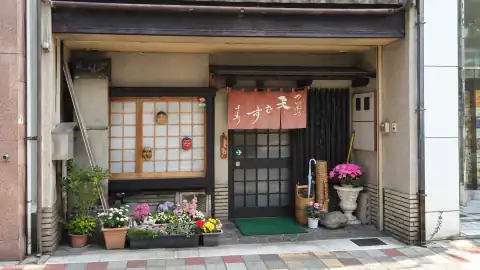 Street food & local diningTenmusu Senju HontenRelative food and drink guide: $ budget-friendly · $$ casual dining · $$$ signature meal · $$$$ special occasion. Check the exact menu price and inclusions; drinks, supplements, tax or service may be extra as stated.Japanese street foodExplore experience →
 Kissaten & breakfastKonparu Osu HontenRelative food and drink guide: $ budget-friendly · $$ casual dining · $$$ signature meal · $$$$ special occasion. Check the exact menu price and inclusions; drinks, supplements, tax or service may be extra as stated.Japanese kissaten & coffeeExplore experience →
Good to know
Atsuta Jingu Shrine: frequently asked questions
Is the sacred Kusanagi sword displayed at Atsuta Jingu?
The sacred Kusanagi sword at Atsuta Jingu is not on public display. You can explore the wooded grounds, main worship area, great camphor tree and Nobunaga wall.
What can I see during a 60–90-minute visit to Atsuta Jingu?
Atsuta Jingu’s main worship area, great camphor tree and Nobunaga-Bei wall fit a 60–90-minute visit. Add time and a separate ticket for Kusanagi-kan’s sword exhibition. The sacred Kusanagi sword is not displayed there.
Is Atsuta Jingu free, and which exhibitions cost extra?
Atsuta Jingu’s shrine grounds are free. Treasure exhibitions and other paid facilities have separate tickets and opening hours.
Can I combine Atsuta Jingu with hitsumabushi at Houraiken Honten?
Atsuta Jingu and Houraiken Honten can be combined; leave time for the journey and a restaurant queue. Honten is in Godo-cho, separate from the Jingu branch. It normally closes Wednesdays and the second and fourth Thursdays, including Thursday 8 April 2027.
Where do photography restrictions apply at Atsuta Jingu?
At Atsuta Jingu, follow the photography signs in each area, especially around worship and ceremonies. Stay on the public paths and behind the barriers.
What is inside Atsuta Jingu’s Kusanagi-kan sword exhibition?
Atsuta Jingu’s Kusanagi-kan displays swords donated to the shrine, including the oversized Magara blades. A supervised experience area lets you feel the weight of example swords and full-size replicas. Kusanagi-kan has its own ticket, hours and participation arrangements; the sacred Kusanagi sword is not on display.