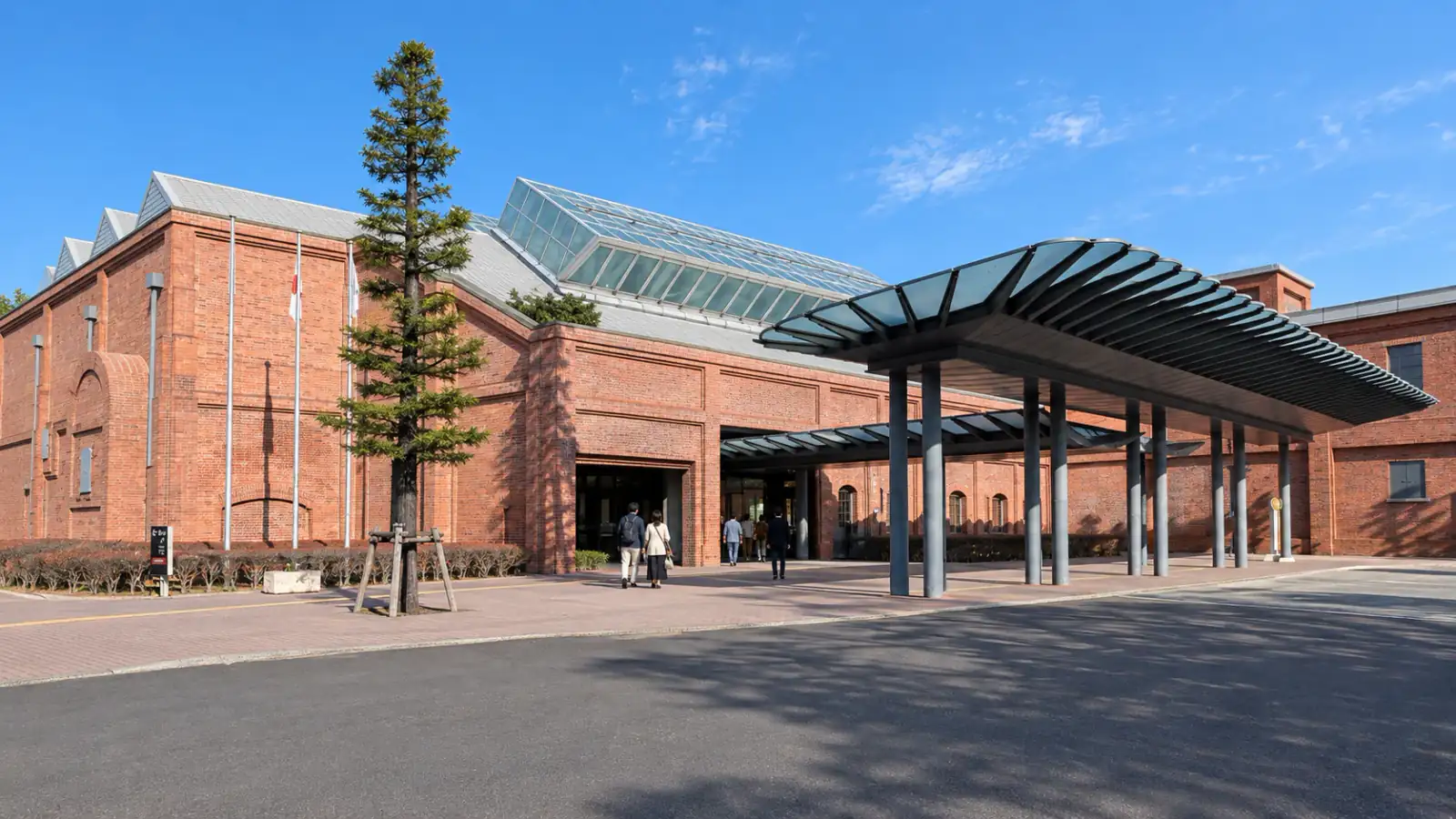
Toyota Commemorative Museum of Industry and Technology
Explore working textile machinery and car-production displays in Toyota’s preserved Nagoya factory.
01 / The experience
Working looms and car-production machinery in Toyota’s old factory
See working textile machinery and automobile-production exhibits in Toyota’s preserved Nagoya factory.
Toyota's manufacturing story starts here with a loom. The circular machine in the lobby was designed to weave broad cloth with less noise and energy, a project Sakichi Toyoda pursued after automating conventional weaving. The example on display was made in 1924, from a design invented in 1906. It is an unexpected opening for a car enthusiast, and a good indication that this museum will give you more than a row of familiar badges.
The Textile Machinery Pavilion occupies a preserved spinning mill. Red-brick walls, pillars and beams remain around the exhibits, so the building is part of what you have come to see. About a hundred machines take the story from early spinning and weaving tools towards automated textile production. Staff demonstrations turn fibre into thread and thread into cloth, making the work of each machine easier to follow than a diagram alone could.
That first hall is worth time even if cars brought you through the door. A loom has to repeat a precise sequence reliably, with each moving part doing its job at the right moment. Watching one operate gives you a direct way into the engineering: follow the material, then the motion that changes it. You can become interested in a particular mechanism before knowing its name, and the preserved factory makes sense of the machinery's original purpose.
The Automobile Pavilion changes the scale. Its broad floor holds production equipment, cross-section models and working exhibits arranged around the development and manufacture of cars. There are displays on the early automobile business, changing vehicle technology and the processes used to build it. Kiichiro Toyoda's role in the move into carmaking gives the people behind those changes a place alongside the machines.
Cross-sections are especially useful for anyone who has spent time looking at complete cars without seeing what is inside. Components and assemblies become easier to understand when the surrounding bodywork is removed. Button-operated exhibits bring parts of production into motion, letting you connect a finished object with the machine that shapes or assembles it. It is a different pleasure from admiring a restored sports car: here, the process itself gets much of the floor space.
For a motorsport fan, that makes this one of Nagoya's strongest off-track visits. Racing can draw your attention to the final vehicle and its performance; this museum gives you time with the less visible work behind making vehicles at all. Repeated movement, controlled production and the development of equipment are tangible subjects here. The textile and automobile halls also make the progression unusually clear, with two different industries sharing the same larger story.
A visit can comfortably centre on those two pavilions, with a demonstration supplying the point where the machinery becomes most memorable. There is no need to arrive already interested in textiles to enjoy the first half, or to study every production stage to get something from the second. The museum's strength is having enough real machinery to let different interests find their own focus.
This is the Toyota museum close to central Nagoya. The Automobile Museum in Nagakute gives historic cars from many manufacturers the lead role, while Kaikan in Toyota City covers current vehicles and mobility technology. Choose the Commemorative Museum when you want the factory setting, working mechanisms and the route from textile invention to car production to form the afternoon.
Highlights
- 01
Textile and automobile pavilions at the historic factory site
- 02
Allow 2–3 hours
- 03
Separate from the Toyota Automobile Museum
04 / Before you go
Plan your visit
Admission & cost
¥1,000 adult admission
General admission: adults ¥1,000; university students ¥600; junior/senior high school students ¥500; elementary pupils ¥300; seniors aged 65+ ¥200. Bring proof for student or senior rates. Confirm charges for your visit date.
When to visit
09:30–17:00, last admission 16:30. Closed Mondays, or Tuesday when Monday is a public holiday, plus year-end holidays. Demonstration times vary.
Allow 2–3 hours
Monday is the regular closing day, including 12 April 2027 under the ordinary pattern. Use another day unless the museum announces a special opening.
Arrival & access
Walk about three minutes from Meitetsu Sako Station. The Me-guru sightseeing bus also stops at the museum.
4-1-35 Noritake Shinmachi, Nishi-ku, Nagoya 451-0051
Plan your visit
Machinery demonstrations follow the day’s programme; ordinary admission reserves no particular demonstration or tour. Group and school visits have separate arrangements. Student and senior rates require proof.
Location & nearby places
Continue exploring / Japan
More to explore
in Japan
Find another place for your itinerary, or explore all things to do in Japan.
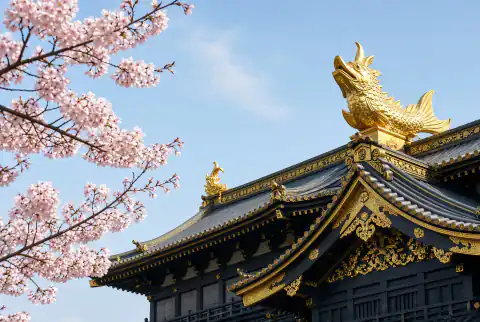 Landmarks & gardensNagoya Castle & Honmaru PalaceExplore experience →
 Street food & local diningSekai no Yamachan Meieki NishiguchiRelative food and drink guide: $ budget-friendly · $$ casual dining · $$$ signature meal · $$$$ special occasion. Check the exact menu price and inclusions; drinks, supplements, tax or service may be extra as stated.Nagoya regional cuisineExplore experience →
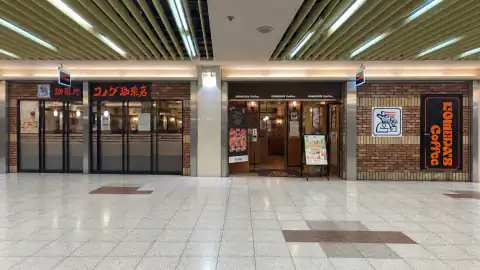 Kissaten & breakfastKomeda Coffee EscaRelative food and drink guide: $ budget-friendly · $$ casual dining · $$$ signature meal · $$$$ special occasion. Check the exact menu price and inclusions; drinks, supplements, tax or service may be extra as stated.Japanese kissaten & coffeeExplore experience →
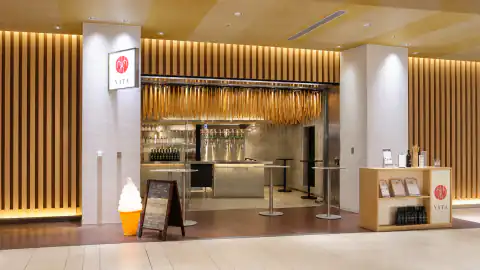 Sake & barsJunmaishu YATA Nagoya KITTERelative food and drink guide: $ budget-friendly · $$ casual dining · $$$ signature meal · $$$$ special occasion. Check the exact menu price and inclusions; drinks, supplements, tax or service may be extra as stated.Junmai sakeExplore experience →
Good to know
Toyota Commemorative Museum of Industry and Technology: frequently asked questions
Why does Toyota’s Nagoya museum start with looms rather than cars?
Toyota began with textile machinery, the starting point of the Toyota Commemorative Museum in Nagoya. The spinning and weaving displays tell that part of the story before you move into car development and automobile production.
What is Sakichi Toyoda’s circular loom at the Toyota Commemorative Museum?
At the Toyota Commemorative Museum, Sakichi Toyoda’s circular loom arranged the weaving mechanism in a circle to make broad cloth with less noise and lower energy use. The machine in the lobby dates from 1924.
Are working machinery demonstrations included at Toyota’s Nagoya museum?
The Toyota Commemorative Museum has working machinery demonstrations in the Textile Machinery and Automobile pavilions. Look at the day’s programme when you arrive to choose the ones you want to see. Admission does not book a demonstration or guided tour.
Should I choose Toyota Commemorative Museum, Toyota Automobile Museum or Toyota Kaikan?
Visit the Toyota Commemorative Museum for looms and car manufacturing. Choose Toyota Automobile Museum in Nagakute for historic cars from different manufacturers, or Kaikan in Toyota City for current vehicles, mobility and GAZOO Racing.
Is Toyota Commemorative Museum open on Monday 12 April 2027?
Plan for the Toyota Commemorative Museum to be closed: Monday is the regular closing day, including 12 April 2027. A special opening would need to be announced before that date becomes an option.