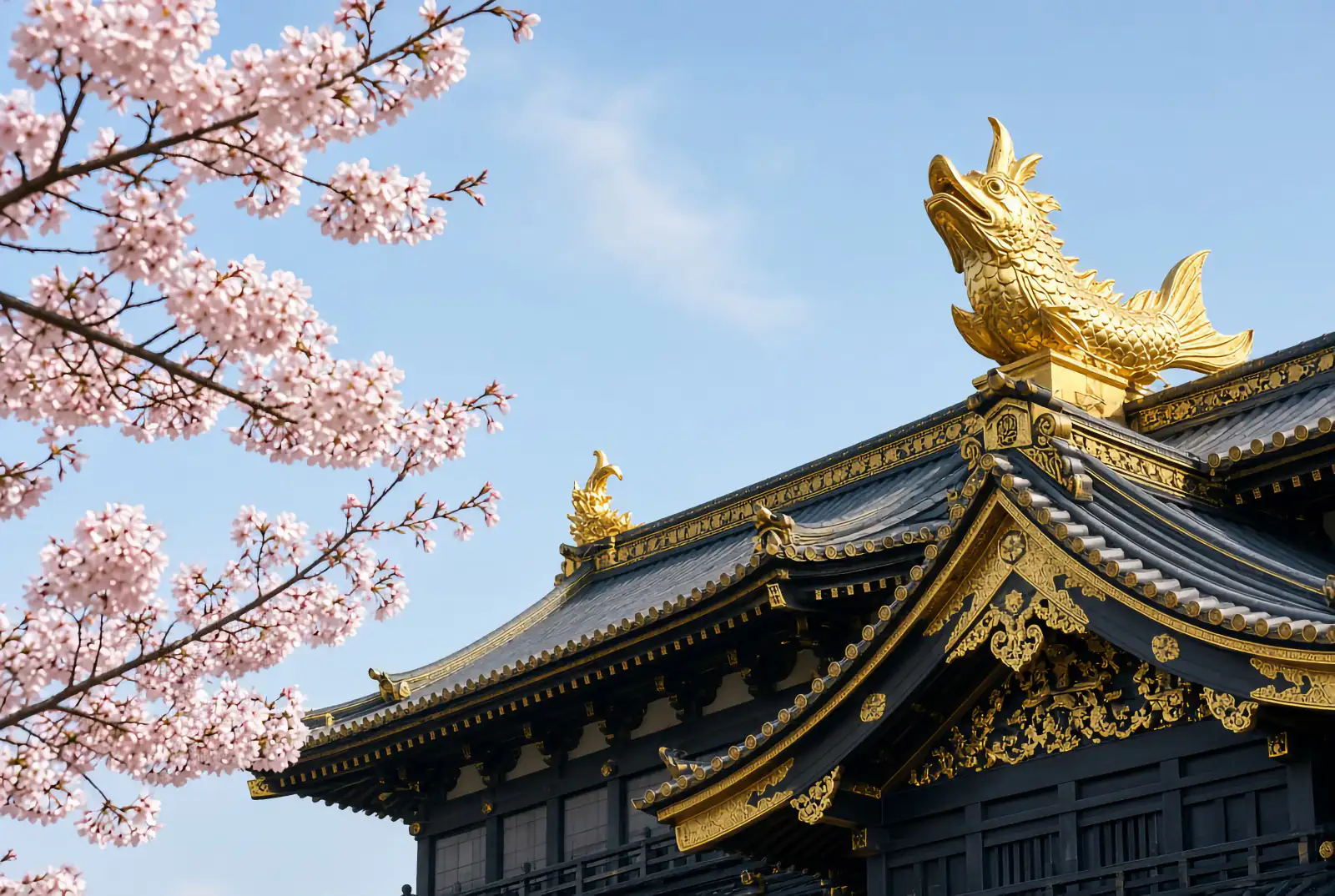
Nagoya Castle & Honmaru Palace
Explore Honmaru Palace’s painted rooms and Nagoya Castle’s grounds; the main keep remains closed.
01 / The experience
Inside Honmaru Palace: tigers, painted screens and the shogun’s rooms
The tigers in Honmaru Palace are a good reason to come inside Nagoya Castle. Painted against gold alongside leopards, they fill the rooms where visitors once waited for an audience. Beyond them, the palace becomes a sequence of cypress interiors, painted screens and increasingly elaborate ceilings. The main keep is closed, but the palace gives this visit a substantial centre of its own.
Honmaru was both a residence and an administrative headquarters for the Owari Tokugawa family. Completed in 1615, it was destroyed in the air raids of 1945. The building you enter is the reconstruction completed in 2018, using historic plans and surviving evidence to recreate the rooms. Many original paintings escaped destruction because they had been removed for storage. That distinction matters: you are walking through a rebuilt palace whose decoration and layout draw on an unusually rich record of the earlier one.
The formal entrance makes power visible straight away. The tiger paintings lead into spaces designed to sort guests by status, with the lord's position raised above those of his visitors. Omote Shoin was the official audience chamber. Its arrangement turns a room into a statement about who could approach, where they would sit and who was in charge. You can follow that through the changes in floor level and decoration without needing to read every label.
Taimenjo brings a different subject to the screens. Scenes of Kyoto and Wakayama show seasonal life and townspeople, giving you more to look at than the formal symbols of authority. Jorakuden raises the level of ornament again: it was made for the third shogun, Tokugawa Iemitsu. Painted surfaces, elaborate ceilings and metal fittings make the importance of that guest clear. The contrast between these spaces is what makes the palace rewarding as a whole, rather than a single gold-screen photograph.
Outside, the stone walls supply the military half of the castle. Some blocks carry identification marks associated with the daimyo ordered to help build it. Their work was part of Tokugawa Ieyasu's construction programme after his rise to power, and the castle helped establish the shape of modern Nagoya. Against the palace's fine materials, the walls and moats bring you back to the scale of the fortress.
The keep's green roofs and golden shachihoko ornaments remain the familiar skyline, while corner watchtowers give other views across the grounds. Ninomaru Garden offers a separate stretch of the visit beyond the main palace area. A walk through the site helps put the decorated rooms inside their larger defensive setting. In spring, blossom may add another reason to linger outdoors, but it is a seasonal extra rather than the foundation of the day.
For a first Nagoya visit, a palace-and-grounds afternoon is a strong choice. The indoor sequence has enough variety for anyone interested in art or architecture, and the grounds give the outing space beyond the building. It also makes an interesting companion to Inuyama on another day: Honmaru supplies the formal rooms and rebuilt splendour of a Tokugawa headquarters, while Inuyama has the surviving timber keep and river outlook. Each tells a different part of a castle visit.
Highlights
- 01
Main keep closed; visit the palace and grounds
- 02
Allow 2–3 hours
- 03
Reach the palace before its separate 16:00 admission cutoff
04 / Before you go
Plan your visit
Admission & cost
¥1,000 adult admission
Adult admission is ¥1,000; junior high school children and younger enter free. Confirm the price for your visit date.
When to visit
Normally 09:00–16:30, with final entry to the castle and Honmaru Palace at 16:00. Closed 29 December–1 January; special openings may differ.
Allow 2–3 hours
Choose a non-race day and leave time for the palace queue. Blossom is not guaranteed for 9–11 April 2027.
Arrival & access
Use Nagoyajo Station on the Meijo subway line or Sengencho on the Tsurumai line; follow the castle entrance signs.
1-1 Honmaru, Naka-ku, Nagoya
Plan your visit
Ordinary admission includes Honmaru Palace and the grounds; the main keep is closed. Palace entry ends at 16:00. Shoes come off and large bags go in entrance lockers; interior lighting is subdued. Wheelchair visitors use the north-side approach and the palace’s dedicated interior wheelchairs. Cash, major cards and listed electronic payments are accepted.
Location & nearby places
Continue exploring / Japan
More to explore
in Japan
Find another place for your itinerary, or explore all things to do in Japan.
 Museums, markets & cultureToyota Commemorative Museum of Industry and TechnologyExplore experience →
 Japanese restaurantsSuzunami HontenRelative food and drink guide: $ budget-friendly · $$ casual dining · $$$ signature meal · $$$$ special occasion. Check the exact menu price and inclusions; drinks, supplements, tax or service may be extra as stated.Japanese set mealsExplore experience →
 Street food & local diningYamamotoya Sohonke HonkeRelative food and drink guide: $ budget-friendly · $$ casual dining · $$$ signature meal · $$$$ special occasion. Check the exact menu price and inclusions; drinks, supplements, tax or service may be extra as stated.Nagoya regional cuisineExplore experience →
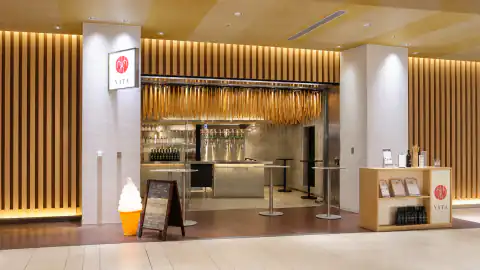 Sake & barsJunmaishu YATA Nagoya KITTERelative food and drink guide: $ budget-friendly · $$ casual dining · $$$ signature meal · $$$$ special occasion. Check the exact menu price and inclusions; drinks, supplements, tax or service may be extra as stated.Junmai sakeExplore experience →
Good to know
Nagoya Castle & Honmaru Palace: frequently asked questions
Is Nagoya Castle’s main keep open, and what can I visit instead?
Nagoya Castle’s main keep is closed, but you can visit the grounds and Honmaru Palace and see the keep from outside. Allow two to three hours for the palace and grounds.
Is Honmaru Palace original or a modern reconstruction?
Nagoya Castle’s Honmaru Palace was completed in 2018. The original, built in 1615, was destroyed in 1945. Surviving paintings, drawings and photographs helped recreate the rooms.
What are the highlights inside Nagoya Castle’s Honmaru Palace?
Inside Nagoya Castle’s Honmaru Palace, look for the entrance-room tigers and leopards, the Omote Shoin audience chamber, Taimenjo’s seasonal scenes and the ornate Jorakuden. The painted rooms are the main indoor highlight while the keep is closed.
Does Nagoya Castle admission include Honmaru Palace, and when is last entry?
Ordinary Nagoya Castle admission includes Honmaru Palace. Last palace entry is 16:00. Special events may need another ticket; the keep remains closed.
Are shoes, luggage and wheelchairs allowed inside Honmaru Palace?
Visitors take their shoes off inside Nagoya Castle’s Honmaru Palace, so easy-to-remove footwear helps. Large bags go in entrance lockers. Wheelchair visitors use the north-side approach and dedicated interior wheelchairs.