Fushimi Inari Taisha
Visit Fushimi Inari’s lower shrine and torii paths, choosing a short hillside walk or a longer mountain route.
01 / The experience
Senbon Torii, Inari’s foxes and the paths above the main shrine
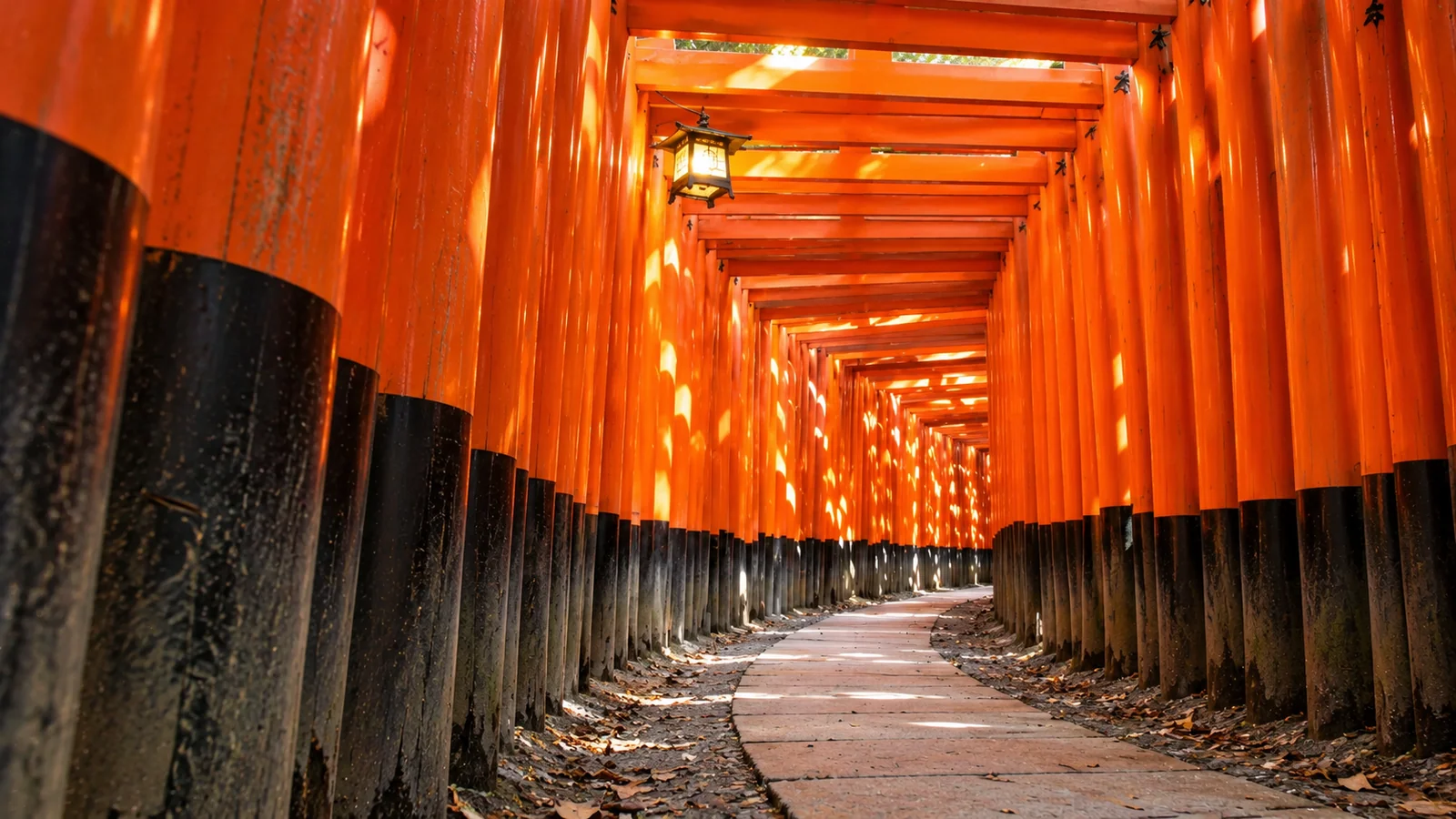
The red gates at Fushimi Inari quickly become more than a distant landmark. Once you enter Senbon Torii, the repeated uprights and crosspieces fill the path ahead, with gaps opening towards the hillside beyond. It is the familiar Kyoto view at walking pace, and the beginning of a shrine landscape that continues much farther up Mount Inari.
There is plenty to see before that longer climb. The Romon gate gives the lower precinct its formal entrance, with the main shrine beyond. The gate is associated with Toyotomi Hideyoshi's donation in 1589 after he prayed for his mother's recovery. Behind the famous torii photographs is a place with centuries of personal offerings and a continuing role in worship. The lower buildings make a worthwhile part of the visit in their own right.
Fushimi Inari's foundation is dated to 711. Inari is associated with rice, harvests, business prosperity and the wellbeing of homes and families, which helps explain the range of people who come here. Fox figures appear as messengers of the deity, rather than as the deity itself. Knowing that distinction gives the statues a place in the shrine's story as you pass them around the precinct.
The torii are offerings too. Worshippers have donated gates in prayer and gratitude since the Edo period, and the dense Senbon Torii passage is one part of a much larger network. The vermilion paint belongs to the shrine's visual tradition, linking the gateways with the buildings below. Walking among them gives you an immediate sense of repetition and scale, while their purpose connects each individual gate with someone who chose to offer it.
Okusha Hohaisho, often called Okuno-in, makes a useful destination beyond that first passage. Here, worship faces towards the mountain, bringing the landscape more clearly into the visit. The omokaruishi stone lanterns add a small local custom: visitors make a wish and lift a lantern's stone top, interpreting its unexpected lightness or heaviness as an omen. It is one of the details that gives this stopping point its own identity, beyond being the end of the first stretch of gates.
From there, the mountain paths continue into a wider sacred area. Inariyama rises to 233 metres above sea level, with three peaks and routes passing smaller shrines and inscribed worship stones called otsuka. Those stones carry names associated with the worshippers' beliefs. The upper walk therefore has more to it than reaching a viewpoint: it extends the pattern of individual devotion from the gates into the wooded mountain.
You can choose the version that fits your Kyoto day. The lower precinct, Senbon Torii and Okusha Hohaisho give a clear first visit with an outward route and a natural turning point. Continuing uphill makes the shrine the main walking outing, with more steps and time among the smaller sacred sites. Both let you experience the gates; the longer version adds the mountain landscape around them.
For an extension after Suzuka, Fushimi Inari works well as a chosen part of Kyoto rather than one stop in a hurried tour of every district. The lower route leaves time for a separate meal or another modest outing afterwards. A fuller mountain visit can carry the day by itself, especially if you enjoy walking and would like the shrine paths to be as much of the experience as the entrance buildings.
04 / Before you go
Plan your visit
Admission & cost
Free general shrine visit
Ordinary shrine grounds are free to visit. Offerings, charms, transport, food and any separately arranged guided visit cost extra.
When to visit
Outdoor shrine access extends beyond office, shop and ceremony hours. Temporary access notices may affect the route.
Allow 90–120 minutes for the lower precinct and a partial torii walk; substantially longer for the mountain circuit.
Leave bags at your Kyoto hotel before taking the torii paths; the mountain circuit needs a longer daylight block than the lower-shrine walk.
Arrival & access
JR Nara Line local trains stop at Inari beside the shrine approach; faster services do not all stop. Keihan Fushimi-Inari is a separate station with a street walk and may suit a different Kyoto hotel.
68 Fukakusa Yabunouchi-cho, Fushimi-ku, Kyoto 612-0882
Plan your visit
Ordinary shrine entry is free, with any guided tour charged separately. The hillside paths include steps and uneven sections; the lower precinct needs its own route advice for wheelchairs and pushchairs. Longer mountain walks need water, secure footwear and sufficient daylight. Keep luggage at the hotel.
Location & nearby places
Continue exploring / Japan
More to explore
in Japan
Find another place for your itinerary, or explore all things to do in Japan.
 Adventure & active daysKyoto Japanese archery experienceExplore experience →
 Landmarks & gardensKiyomizu-deraExplore experience →
 Museums, markets & cultureNishiki MarketExplore experience →
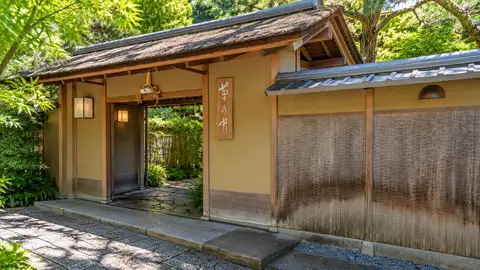 Restaurants & fine diningKikunoi HontenExplore experience →
Good to know
Fushimi Inari Taisha: frequently asked questions
Why are there fox statues at Fushimi Inari Taisha?
Fushimi Inari Taisha’s foxes are messengers of Inari, rather than the deity itself.
What do Fushimi Inari’s vermilion torii gates represent?
Fushimi Inari Taisha’s vermilion torii gates are offerings connected with prayers and gratitude, lining the paths between worship areas on the hillside.
Can I see Fushimi Inari Taisha’s Senbon Torii without climbing the full Mount Inari circuit?
At Fushimi Inari Taisha, explore the lower precinct and follow Senbon Torii towards Okusha Hohaisho for a shorter visit. There are still steps and slopes, so this is not a step-free route.
Are Fushimi Inari’s hillside paths open beyond shrine-office hours?
Fushimi Inari Taisha’s outdoor paths remain accessible beyond office and shop hours. Allow daylight for a longer hillside walk, and follow any ceremony or temporary access notices.
Which parts of Fushimi Inari are suitable for wheelchairs or pushchairs?
Use a suitable route around Fushimi Inari Taisha’s lower precinct. The hillside paths have steps and uneven sections, making the full mountain circuit unsuitable for a wheelchair or pushchair.
Should I use JR Inari or Keihan Fushimi-Inari Station for Fushimi Inari Taisha?
JR Inari is beside the Fushimi Inari Taisha shrine approach. Keihan Fushimi-Inari is a separate station with a street walk, and may suit a different hotel or next stop.