Musée de la Vie wallonne
Discover everyday Walloon life, from tools and dialect recordings to school desks and Liège’s rod puppets, in an old convent.
01 / The experience
Wallonia told through the things people kept
Follow a region’s history through the objects people worked with, lived with and passed down.
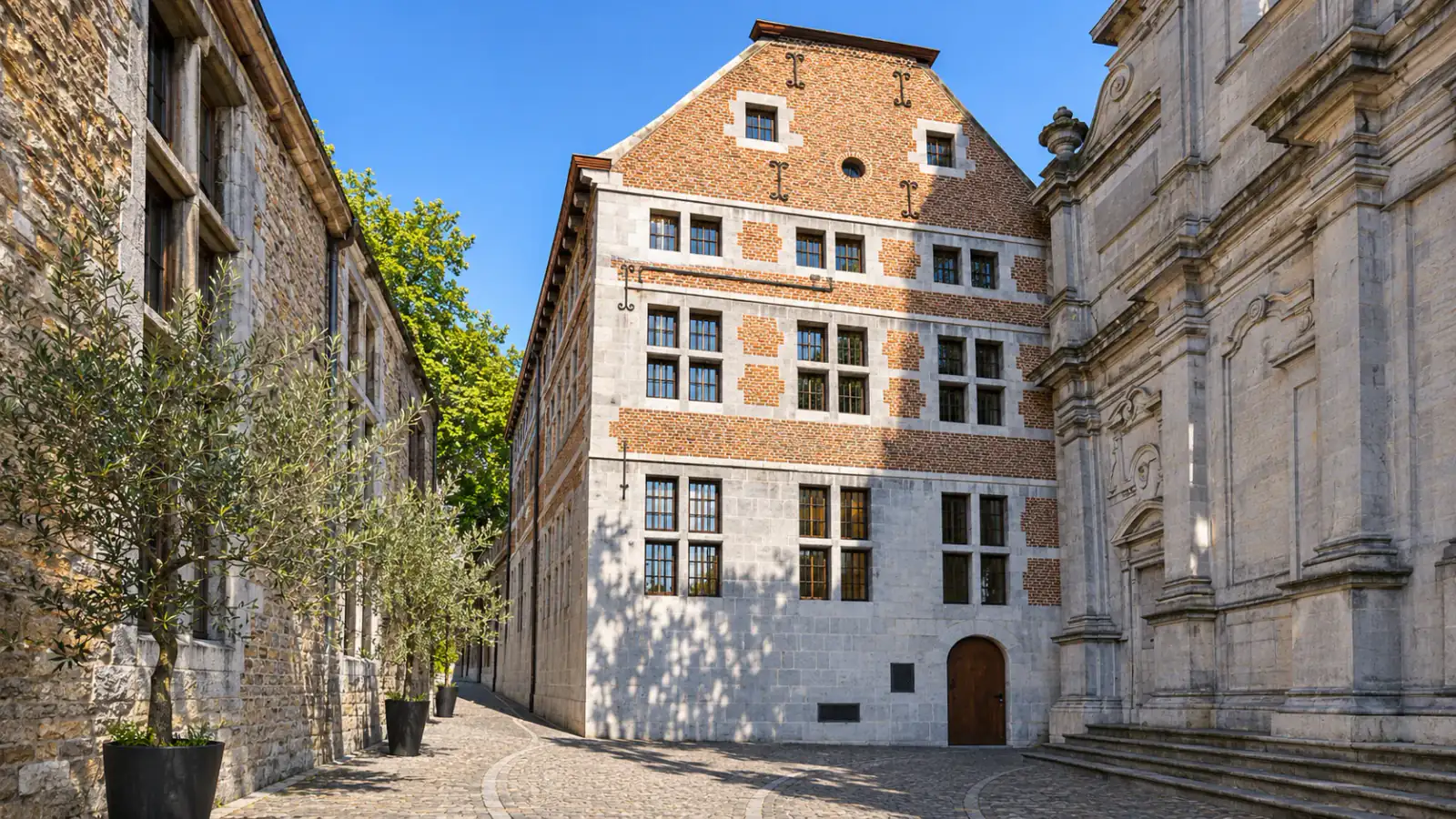
A lump of coal, a school desk and a wooden puppet can say as much about a place as its grandest buildings. At the Musée de la Vie wallonne, these are the kinds of things that tell the story. The museum occupies the former Franciscan convent of the Friars Minor in central Liège. The courtyard gives you an immediate sense of the older building: a stone arcade runs around the paved square, while a glass gallery above one side belongs to the present-day museum.
The first section, *Wallonie(s)*, opens with cubes made from or representing materials that shaped the region, including coal, stone and wood. Reeds rising from the display carry recordings of regional speech. Liège Walloon sounds different from the speech of Namur or the Picard spoken farther west. The display makes those differences part of the geography. It also asks what happens when objects pass out of everyday use. An old plough can end up as a garden ornament and a milk churn as a letterbox; the reuse tells its own story about what people choose to keep.
The technology rooms trace how people worked and stayed in touch. Wooden models show techniques that can be hard to picture from a description alone, while the industrial section puts animals such as the working dog alongside the better known machinery and transport of the period. Elsewhere, the route follows communications from carrier pigeons to satellites. The small devices and tools bring the big changes down to a human scale: somebody had to make them, know how to use them and, eventually, learn to work without them.
The upper rooms turn to what people did together and what happened at home. Displays on leisure and celebrations share a route with changes in working life and civic rights. The signs and advertisements in *Jour après jour* show how shopping and household habits changed. A reconstructed classroom in *Vie de l’esprit* makes a particularly vivid contrast: sloping wooden desks and attached benches give the room a very different shape from a present-day classroom. The same section looks at the training of artisans and designers, so education extends from school into learning a trade.
The puppet theatre is a separate reason to come. Liège’s traditional figures are worked by a rod rather than a cluster of strings, and Tchantchès is the best-known local character. Seeing the wooden figures in the collection gives a sense of their size and costumes; a scheduled performance shows what a puppeteer can do with them. The theatre has its own programme, so families who want a show should plan around the performance rather than assume one is included with admission.
The museum is only a short walk from Place Saint-Lambert. Its cloister offers a quiet end to a visit that ranges across centuries, from the work that shaped the region to the ordinary pleasures and customs people carried home with them.
Highlights
- 01
Allow 1½–2 hours for the museum
- 02
€7 adult · museum
- 03
Indoor galleries and a sheltered cloister.
- 04
Puppet shows follow a separate seasonal programme.
04 / Before you go
Plan your visit
Admission & cost
Museum: €7 adult, €5 senior, student or child aged 3 and over; under 3 free. Family admission €15 for 1 adult and 2 children up to 2 adults and 3 children. Museum plus temporary exhibition: €9 adult. Museum admission is free on the first Sunday of the month.
When to visit
Tuesday–Sunday 09:30–18:00. Closed Mondays to individual visitors and on 1 January, 1 May, 1 November and 25 December.
Allow 1½–2 hours for the museum
Puppet shows follow a separate seasonal programme.
Arrival & access
Use the Cour des Mineurs entrance near Place Saint-Lambert. The rear accessible entrance is in Cour Chamart.
Cour des Mineurs, 4000 Liège, Belgium
Plan your visit
The museum has separate links for ordinary admission and first-Sunday free admission. Paid online tickets cannot be changed or cancelled.
Accessibility
The rear entrance at Cour Chamart has accessible parking. A lift serves the basement facilities. Some display spaces can accommodate one wheelchair at a time.
Location & nearby places
Continue exploring / the Ardennes during F1
More to explore
in the Ardennes during F1
Find another place for your itinerary, or explore all things to do in the Ardennes during F1.
 Heritage visitsCoteaux de la Citadelle & Montagne de BuerenExplore experience →
 Heritage visitsGrand CurtiusExplore experience →
 Heritage visitsAquarium-Muséum Universitaire de LiègeExplore experience →
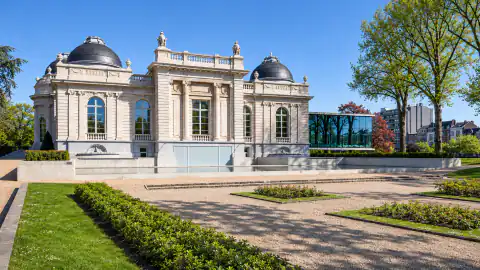 Heritage visitsLa BoverieExplore experience →
Good to know
Musée de la Vie wallonne: frequently asked questions
Are there puppet shows at the Musée de la Vie wallonne in Liège during the Belgian Grand Prix?
The Musée de la Vie wallonne in Liège ends its regular puppet-theatre season after the spring holidays. Its extra summer performances are on Wednesdays in August, outside the July Belgian Grand Prix weekend.
Can I visit the Musée de la Vie wallonne in Liège without a puppet-show ticket?
The Musée de la Vie wallonne’s museum route and puppet theatre in Liège have separate admission and programmes. A museum visit does not require a puppet-show booking.
Where is the wheelchair entrance to the Musée de la Vie wallonne in Liège?
The Musée de la Vie wallonne in Liège has a rear entrance at Cour Chamart for wheelchair access. Contact the museum for arrival assistance or to borrow a wheelchair.