Kuromon Market
Browse Kuromon for tuna sushi and rice bowls, duck soba, takoyaki and fresh fruit.
01 / The experience
Tuna rice bowls, duck soba and smaller tastes at Kuromon
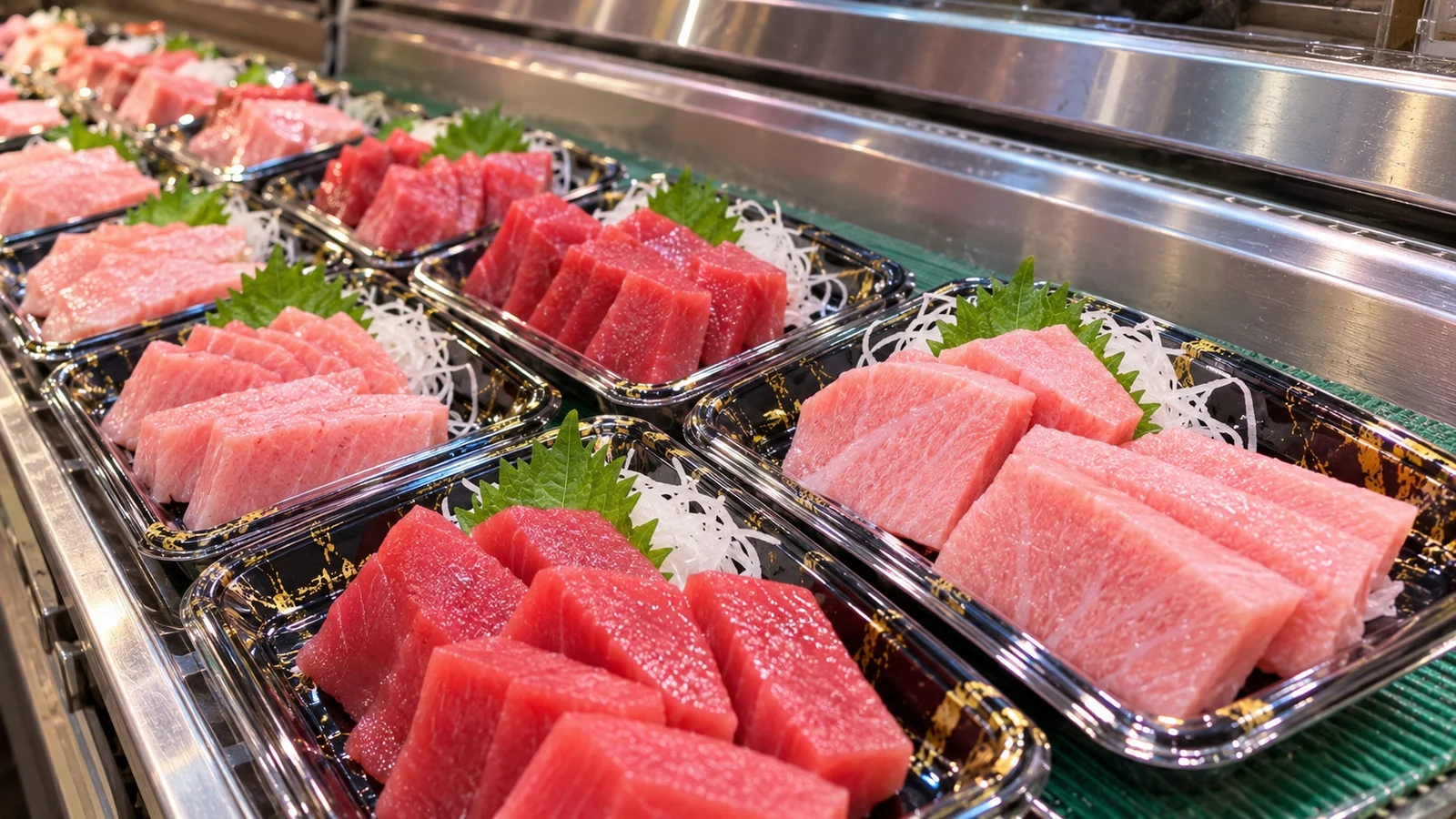
A tuna rice bowl can provide the whole reason for lunch at Kuromon. The market's specialists offer sashimi, sushi and bowls with different cuts, including richer fatty tuna. Starting with one main order gives the outing a centre, leaving the rest of the arcade for browsing or a smaller extra rather than a succession of full meals.
The choice of cut makes the tuna worth some attention. Leaner red meat and the fattier portions give quite different mouthfuls, even when the fish comes from the same species. A mixed bowl is one way to compare them over rice, while a sashimi order puts the fish itself first. You can choose how much of lunch you want to devote to that comparison before moving on to the cooked food elsewhere in the market.
A bowl of kamonanban offers a different sort of meal. Soba comes with duck and scallion in a Kansai-style broth built with kombu and bonito flakes. It supplies hot noodles and a seat, which can be more appealing than putting together lunch from several separate seafood portions. Kuromon has room for both approaches: the premium fish order and the ordinary pleasure of sitting down to a bowl of noodles.
Around those meals, the roughly 580-metre arcade mixes fishmongers, butchers, fruit sellers and prepared-food counters. Takoyaki and grilled seafood suit a small addition, while fruit gives another way to finish. Some displays are ingredients intended for a kitchen, others are ready to eat. That mixture is part of the market's character, making it useful to anyone who enjoys food shopping as well as a tasting stop.
The Nipponbashi location fits particularly well with a Namba hotel stay. You can give Kuromon a daytime lunch of its own and save Dotonbori's canal-side streets for an evening. The two outings then offer different things: market counters and a chosen meal here, signs, riverwalk and dinner later in the trip. There is no need to make both the same sort of snack circuit.
Your main spending decision is how many premium orders to build into lunch. A tuna bowl or noodle meal, followed by one extra that appeals, gives a clearer shape to the visit than buying at every seafood counter. It leaves time for the ordinary market displays too. Kuromon is a good choice for an Osaka food day when you want enough variety to follow different appetites within one compact outing.
04 / Before you go
Plan your visit
Admission & cost
Free market-street access
Public market-street access is free. Food, drinks and any guided tour cost extra. Compare displayed portions and prices before choosing premium seafood or meat.
When to visit
Each shop sets its own opening days and hours; some kitchens close early or when sold out. Daytime is the best fit for a market lunch.
Allow 60–120 minutes for browsing and a seated or designated eat-in meal.
Visit while based in Namba, with luggage stored at the hotel. Keep fresh-food shopping clear of a tight airport departure.
Arrival & access
From the Namba hotels, use a manageable street route or a suitable Osaka Metro journey to Nipponbashi, then the original Kuromon Market approach. This is not the Kuromon-branded food area at LaLaport Kadoma.
Nipponbashi, Chuo-ku, Osaka
Plan your visit
No reservation for an independent market visit. Seating and permitted eating areas vary by shop. For seafood, the price may be per piece, portion, set or weight, with preparation charged separately. Stocks and sauces need individual dietary enquiries; some goods need cooking or refrigeration. Tours and restaurant bookings are separate.
Location & nearby places
Continue exploring / Japan
More to explore
in Japan
Find another place for your itinerary, or explore all things to do in Japan.
 Landmarks & gardensOsaka Castle MuseumExplore experience →
 Landmarks & gardensFushimi Inari TaishaExplore experience →
 Museums, markets & cultureHIRAKUZA Osaka sumo showExplore experience →
 Museums, markets & cultureDotonboriExplore experience →
Good to know
Kuromon Market: frequently asked questions
What can I eat at Kuromon Market besides a large seafood platter?
At Kuromon Market, try takoyaki, a smaller sushi portion, grilled seafood or eel, or fresh fruit. For a full hot lunch, kamonanban duck soba is another choice.
What is kamonanban duck soba at Kuromon Market?
Kuromon Market’s kamonanban is soba noodle soup with duck and scallion. The Kansai-style broth includes kombu and bonito flakes, so it is not vegetarian.
Are Kuromon Market seafood prices per piece, portion or weight?
At Kuromon Market, it depends on the item: the price can be per piece, portion, set or weight, and preparation may cost extra. Get the complete price for what you are ordering before choosing premium seafood or meat.
Where can I sit down to eat at Kuromon Market?
At Kuromon Market, use the seats or eating space provided by the shop you buy from. Some have more room than others, and the arcade needs to stay clear for shoppers passing through.
Can I buy raw ingredients at Kuromon as well as prepared lunch?
At Kuromon Market, fishmongers, butchers and food retailers share the arcade with prepared-food counters. Anything bought fresh may need cooking, refrigeration or both.
Does Kuromon Market have one opening time for every shop?
Each business at Kuromon Market has its own opening hours and closing days. Some kitchens finish early or sell out, so daytime is the best fit for a market meal.